EP4002086A1 - Procédé et dispositif de synthèse d'image, appareil électronique et support de stockage - Google Patents
Procédé et dispositif de synthèse d'image, appareil électronique et support de stockage Download PDFInfo
- Publication number
- EP4002086A1 EP4002086A1 EP20840542.3A EP20840542A EP4002086A1 EP 4002086 A1 EP4002086 A1 EP 4002086A1 EP 20840542 A EP20840542 A EP 20840542A EP 4002086 A1 EP4002086 A1 EP 4002086A1
- Authority
- EP
- European Patent Office
- Prior art keywords
- layer
- screen
- layers
- image
- attribute
- Prior art date
- Legal status (The legal status is an assumption and is not a legal conclusion. Google has not performed a legal analysis and makes no representation as to the accuracy of the status listed.)
- Withdrawn
Links
Images




Classifications
-
- G—PHYSICS
- G09—EDUCATION; CRYPTOGRAPHY; DISPLAY; ADVERTISING; SEALS
- G09G—ARRANGEMENTS OR CIRCUITS FOR CONTROL OF INDICATING DEVICES USING STATIC MEANS TO PRESENT VARIABLE INFORMATION
- G09G5/00—Control arrangements or circuits for visual indicators common to cathode-ray tube indicators and other visual indicators
- G09G5/36—Control arrangements or circuits for visual indicators common to cathode-ray tube indicators and other visual indicators characterised by the display of a graphic pattern, e.g. using an all-points-addressable [APA] memory
- G09G5/363—Graphics controllers
-
- G—PHYSICS
- G09—EDUCATION; CRYPTOGRAPHY; DISPLAY; ADVERTISING; SEALS
- G09G—ARRANGEMENTS OR CIRCUITS FOR CONTROL OF INDICATING DEVICES USING STATIC MEANS TO PRESENT VARIABLE INFORMATION
- G09G5/00—Control arrangements or circuits for visual indicators common to cathode-ray tube indicators and other visual indicators
- G09G5/003—Details of a display terminal, the details relating to the control arrangement of the display terminal and to the interfaces thereto
- G09G5/005—Adapting incoming signals to the display format of the display terminal
-
- G—PHYSICS
- G06—COMPUTING OR CALCULATING; COUNTING
- G06F—ELECTRIC DIGITAL DATA PROCESSING
- G06F3/00—Input arrangements for transferring data to be processed into a form capable of being handled by the computer; Output arrangements for transferring data from processing unit to output unit, e.g. interface arrangements
- G06F3/14—Digital output to display device ; Cooperation and interconnection of the display device with other functional units
- G06F3/1407—General aspects irrespective of display type, e.g. determination of decimal point position, display with fixed or driving decimal point, suppression of non-significant zeros
-
- G—PHYSICS
- G06—COMPUTING OR CALCULATING; COUNTING
- G06F—ELECTRIC DIGITAL DATA PROCESSING
- G06F3/00—Input arrangements for transferring data to be processed into a form capable of being handled by the computer; Output arrangements for transferring data from processing unit to output unit, e.g. interface arrangements
- G06F3/14—Digital output to display device ; Cooperation and interconnection of the display device with other functional units
- G06F3/147—Digital output to display device ; Cooperation and interconnection of the display device with other functional units using display panels
-
- G—PHYSICS
- G06—COMPUTING OR CALCULATING; COUNTING
- G06T—IMAGE DATA PROCESSING OR GENERATION, IN GENERAL
- G06T1/00—General purpose image data processing
- G06T1/20—Processor architectures; Processor configuration, e.g. pipelining
-
- G—PHYSICS
- G06—COMPUTING OR CALCULATING; COUNTING
- G06T—IMAGE DATA PROCESSING OR GENERATION, IN GENERAL
- G06T1/00—General purpose image data processing
- G06T1/60—Memory management
-
- G—PHYSICS
- G06—COMPUTING OR CALCULATING; COUNTING
- G06T—IMAGE DATA PROCESSING OR GENERATION, IN GENERAL
- G06T11/00—Two-dimensional [2D] image generation
- G06T11/60—Creating or editing images; Combining images with text
-
- G—PHYSICS
- G09—EDUCATION; CRYPTOGRAPHY; DISPLAY; ADVERTISING; SEALS
- G09G—ARRANGEMENTS OR CIRCUITS FOR CONTROL OF INDICATING DEVICES USING STATIC MEANS TO PRESENT VARIABLE INFORMATION
- G09G5/00—Control arrangements or circuits for visual indicators common to cathode-ray tube indicators and other visual indicators
- G09G5/003—Details of a display terminal, the details relating to the control arrangement of the display terminal and to the interfaces thereto
- G09G5/006—Details of the interface to the display terminal
-
- G—PHYSICS
- G09—EDUCATION; CRYPTOGRAPHY; DISPLAY; ADVERTISING; SEALS
- G09G—ARRANGEMENTS OR CIRCUITS FOR CONTROL OF INDICATING DEVICES USING STATIC MEANS TO PRESENT VARIABLE INFORMATION
- G09G5/00—Control arrangements or circuits for visual indicators common to cathode-ray tube indicators and other visual indicators
- G09G5/36—Control arrangements or circuits for visual indicators common to cathode-ray tube indicators and other visual indicators characterised by the display of a graphic pattern, e.g. using an all-points-addressable [APA] memory
- G09G5/39—Control of the bit-mapped memory
- G09G5/395—Arrangements specially adapted for transferring the contents of the bit-mapped memory to the screen
- G09G5/397—Arrangements specially adapted for transferring the contents of two or more bit-mapped memories to the screen simultaneously, e.g. for mixing or overlay
-
- G—PHYSICS
- G06—COMPUTING OR CALCULATING; COUNTING
- G06T—IMAGE DATA PROCESSING OR GENERATION, IN GENERAL
- G06T2200/00—Indexing scheme for image data processing or generation, in general
- G06T2200/24—Indexing scheme for image data processing or generation, in general involving graphical user interfaces [GUIs]
-
- G—PHYSICS
- G09—EDUCATION; CRYPTOGRAPHY; DISPLAY; ADVERTISING; SEALS
- G09G—ARRANGEMENTS OR CIRCUITS FOR CONTROL OF INDICATING DEVICES USING STATIC MEANS TO PRESENT VARIABLE INFORMATION
- G09G2340/00—Aspects of display data processing
- G09G2340/10—Mixing of images, i.e. displayed pixel being the result of an operation, e.g. adding, on the corresponding input pixels
-
- G—PHYSICS
- G09—EDUCATION; CRYPTOGRAPHY; DISPLAY; ADVERTISING; SEALS
- G09G—ARRANGEMENTS OR CIRCUITS FOR CONTROL OF INDICATING DEVICES USING STATIC MEANS TO PRESENT VARIABLE INFORMATION
- G09G2340/00—Aspects of display data processing
- G09G2340/12—Overlay of images, i.e. displayed pixel being the result of switching between the corresponding input pixels
-
- G—PHYSICS
- G09—EDUCATION; CRYPTOGRAPHY; DISPLAY; ADVERTISING; SEALS
- G09G—ARRANGEMENTS OR CIRCUITS FOR CONTROL OF INDICATING DEVICES USING STATIC MEANS TO PRESENT VARIABLE INFORMATION
- G09G2360/00—Aspects of the architecture of display systems
- G09G2360/04—Display device controller operating with a plurality of display units
-
- G—PHYSICS
- G09—EDUCATION; CRYPTOGRAPHY; DISPLAY; ADVERTISING; SEALS
- G09G—ARRANGEMENTS OR CIRCUITS FOR CONTROL OF INDICATING DEVICES USING STATIC MEANS TO PRESENT VARIABLE INFORMATION
- G09G2360/00—Aspects of the architecture of display systems
- G09G2360/06—Use of more than one graphics processor to process data before displaying to one or more screens
-
- G—PHYSICS
- G09—EDUCATION; CRYPTOGRAPHY; DISPLAY; ADVERTISING; SEALS
- G09G—ARRANGEMENTS OR CIRCUITS FOR CONTROL OF INDICATING DEVICES USING STATIC MEANS TO PRESENT VARIABLE INFORMATION
- G09G2370/00—Aspects of data communication
- G09G2370/08—Details of image data interface between the display device controller and the data line driver circuit
-
- G—PHYSICS
- G09—EDUCATION; CRYPTOGRAPHY; DISPLAY; ADVERTISING; SEALS
- G09G—ARRANGEMENTS OR CIRCUITS FOR CONTROL OF INDICATING DEVICES USING STATIC MEANS TO PRESENT VARIABLE INFORMATION
- G09G2370/00—Aspects of data communication
- G09G2370/20—Details of the management of multiple sources of image data
Definitions
- the present disclosure relates to the field of image display technologies, and in particular, to a method and a device for image composition, an electronic device and a storage medium.
- a display interface of an electronic device usually has a plurality of display layers.
- the plurality of display layers are composed and displayed on the electronic device.
- the present disclosure provides a method and a device for image composition, an electronic device and a storage medium to solve a problem that the composition ability and composition speed cannot be considered in image composition.
- some embodiments of the present disclosure provide an image composition method.
- the image composition method includes acquiring a plurality of layers of an image to be displayed; determining a layer attribute of each of the plurality of layers, and the layer attribute including a first attribute and a second attribute; composing layers with the first attribute into a layer to be mixed by a graphics processor unit (GPU); composing the layer to be mixed and layers with the second attribute by a multimedia display processor, and displaying a composition result through a display screen.
- a graphics processor unit GPU
- some embodiments of the present disclosure provide an image composition device.
- the image composition device includes an acquisition module configured to acquire a plurality of layers of an image to be displayed; a determination module configured to determine a layer attribute of each of the plurality of layers, and the layer attribute comprising a first attribute and a second attribute; an intermediate module configured to compose layers with first attributes into a layer to be mixed by using a graphics processor unit (GPU); a composite module configured to compose the layer to be mixed and layers with second attributes by using a multimedia display processor (MDP), and display a composition result through a display screen.
- GPU graphics processor unit
- MDP multimedia display processor
- some embodiments of the present disclosure provide an electronic device.
- the electronic device includes one or more processors, a memory electrically connected to the one or more processors, and one or more applications, wherein the one or more applications are stored in the memory and configured to be executed by the one or more processors, and the one or more applications are configured to execute the method for the electronic apparatus as described above.
- some embodiments of the present disclosure provide a computer-readable storage medium.
- a program code is stored in the computer-readable storage medium.
- the program code can be called by a processor to execute the above method.
- An application can create windows through a window manager.
- the window manager creates a drawing surface for each window to draw various elements to be displayed on the drawing surface.
- Each drawing surface corresponds to a layer, that is, a layer can be drawn on each drawing surface.
- the display interface (such as activity) can include a plurality of layers, such as a navigation bar, a status bar, a program interface, and the like.
- Each of the plurality of layers is rendered before composing. That is, each of the plurality of layers is drawn on a corresponding surface, that is, a corresponding layer is correspondingly drawn on each surface.
- the layer can be drawn on canvas of the surface through a hardware accelerated renderer (i.e. HWUI) and/ or Skia graphics library.
- HWUI hardware accelerated renderer
- a System uses a layer transfer module (i.e. surface flinger) service to compose each surface, that is, each of the plurality of layers.
- the surface flinger service runs in system process and is used to uniformly manage a frame buffer of the system.
- the surface flinger acquires all layers, and can compose all or part of layers by using a graphics processing unit (GPU), and save composed results to the frame buffer.
- a multimedia display processor (MDP) can compose results composed by the surface flinger through the GPU with other layers.
- HWC can call the multimedia display processor (MDP) to compose the layers, and finally form a buffer in bufferqueue, and then use images composed in the buffer for display under an action of display driving.
- a specific composition strategy of which part of the layers are composed by the GPU and HWC can be determined based on actual situations.
- a display screen of an electronic device can display the display interface.
- the display interface may include a plurality of layers, that is, the display interface is composed of the plurality of layers.
- Each of the plurality of layers is composed of a plurality of pixels. All the plurality of layers form a whole image by superposition and form the display interface of the electronic device.
- the plurality of layers can accurately locate elements on a page. Text, pictures, tables and plugins can be added to the plurality of layers, or layers can be nested inside the plurality of layers.
- the layer is like a film containing elements such as text or graphics.
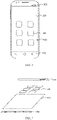
- a desktop display interface 100 of the electronic device shown in FIG. 2 includes the plurality of layers, that is, a status bar 101, a navigation bar 102, a wallpaper 103 and an icon layer 104.
- the status bar 101, the navigation bar 102, the wallpaper 103 and the icon layer 104 shown in FIG. 3 are composed into the display interface 100 shown in FIG. 2 .
- the system will use the GPU to compose image layers.
- a composition method can be to determine a position relationship among all the plurality of layers based on positions of all the plurality of layers in the image, render contents of all the plurality of layers to a temporary buffer with the GPU to make the position relationship among all the plurality of layers in the buffer be a position relationship in the image, and finally transfer the temporary buffer to a display hardware so that when all the plurality of layers are displayed on the display screen, a display position of each of the plurality of layers is a position of each of the plurality of layers in the image.
- the GPU when the GPU is used to process the image layers, the GPU has a strong composition ability when composing the plurality of layers, that is, there are no limitations on the number of composition layers, but a composition speed is slow, causing problems such as jamming, thus affecting a user's use experience.
- the plurality of layers can also be composed through a hardware composition mechanism of the multimedia display processor (MDP).
- the hardware composition mechanism of the MDP calls a MDP hardware module through HWC for composition.
- the composition method is fast, but the number of processed layers is limited. When the number of layers exceeds the number the MDP hardware module can handle, a task of layer composition cannot be completed, resulting in affecting display on the display screen.
- the layer composition is carried out through GPU image, although there are no limitations on the number of the processed layers compared with the MDP composition method, a speed of the layer composition carried out through the GPU image is slow, resulting in affecting fluency of the electronic device. If the layer composition is carried out through the MDP, although a speed of the layer composition carried out through the MDP is fast, the number of layers that can be processed is limited, and scenes with too many layers cannot be processed, resulting in affecting the display on the display screen.
- the inventors proposes a method and a device for image composition, an electronic device and a storage medium in the present disclosure as a composition strategy by the following operations: acquiring a plurality of layers of an image to be displayed; determining a layer attribute of each of the plurality of layers, and the layer attribute including a first attribute and a second attribute; composing a layer with a first attribute into a layer to be mixed by the graphics processing unit (GPU); composing the layer to be mixed and a layer with a second attribute by using the multimedia display processor (MDP), and displaying a composition result through the display screen.
- An appropriate composition method is selected based on the layer attribute of each of the plurality of layers, taking into account a layer composition ability and a composition speed of the electronic device, so as to improve the image processing ability of the electronic device.
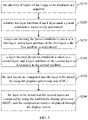
- some embodiments of the present disclosure provide an image composition method, and an execution subject of processing flow described in the embodiments may be an electronic device. Specifically, the method may include the following operations.
- An existing electronic device usually has a display screen.
- a user usually interacts with the electronic device based on content displayed on the display screen, and define all the content displayed on the display screen as the image to be displayed.
- the desktop scene is the image to be displayed, as shown in FIG. 2 .
- the desktop scene is displayed, it is essentially a result of superposition of the plurality of layers.
- the desktop scene can be composed of four layers.
- the four layers can be a status bar layer, a navigation bar layer, a wallpaper layer and an icon layer.
- the electronic device composes the four layers to acquire the image to be displayed, that is, the desktop scene, as shown in FIG. 3 .
- the plurality of layers of the image to be displayed can be acquired for a next step of processing.
- a layer attribute of each of the plurality of layers is determined, and the layer attribute includes a first attribute and a second attribute.
- the layer attribute of each of the plurality of layers can be determined. If the image to be displayed has four layers, layer attributes of the four layers are determined successively.
- the layer attribute include the first attribute and the second attribute.
- a layer with the first attribute can have relatively simple data content in the layer, and time consumed by composing the layer in a same composition method is less than a preset time.
- a layer with the second attribute can have complex data content in the layer. Under the same composition method, time consumed by composing the layer is greater than or equal to the preset time.
- layers with the first attribute are composed into a layer to be mixed by a graphics processing unit (GPU).
- GPU graphics processing unit
- the electronic device there are usually a variety of layer composition methods.
- layer composition methods there are two methods for layer composition.
- One is to compose the plurality of layers for display by using the graphics processing unit (GPU), that is, a GPU composition method.
- the other is to use the multimedia display processor (MDP) to compose the plurality of layers for display, that is, a MDP composition method.
- MDP multimedia display processor
- the GPU composition method has a lower processing speed, but there are no limitations on the number of processing layers.
- the MDP composition method has a faster image processing speed, but the number of the processing layers is limited.
- part of the plurality of layers can be composed by the GPU and part of the plurality of layers can be composed by the MDP.
- the layers with the first attribute can be composed into the layer to be mixed by the GPU. It can be understood that if all the plurality of layers in the image to be displayed are the layers with the first attribute, the layer to be mixed composed by the GPU is a final layer to be displayed, that is, the image to be displayed. If part of the plurality of layers in the image to be displayed are layers with first attribute, the layers with the first attribute are composed into the layer to be mixed by the GPU, and then the image to be displayed can be acquired after the layer to be mixed is composed with other layers.
- the layer to be mixed and layers with the second attribute are composed by a multimedia display processor (MDP), and a composition result is displayed through the display screen.
- MDP multimedia display processor
- the layers with the first attribute are composed into the layer to be mixed by the GPU
- the layers with the second attribute and the layer to be mixed can be composed by the MDP, and the composition result can be sent to the display screen for display.
- the layer to be mixed is sent to a frame buffer for caching.
- the MDP composes the layers with the second attribute into a pre-composite layer to speed up the composition speed.
- the layer to be mixed is acquired from the frame buffer, the layer to be mixed and the pre-composite layer are composed into the image to be displayed by the MDP, and then the image to be displayed is sent to the display screen for display.
- the image to be displayed can be displayed on the display screen of the electronic device.
- the layer to be mixed is sent to the frame buffer for caching, the MDP acquires the layer to be mixed from the frame buffer, and composes the layer to be mixed and the layers with the second attribute into the image to be displayed. Then, the image to be displayed is sent to the display screen for display, so that the image to be displayed can be displayed on the display screen of the electronic device.
- the image composition method provided by the present disclosure is realized by the following operations.
- the plurality of layers of the image to be displayed are acquired.
- the layer attribute of each of the plurality of layers is determined, and the layer attribute includes a first attribute and a second attribute.
- the layers with the first attribute are composed into the layer to be mixed by the graphics processing unit (GPU).
- the layer to be mixed and the layers with the second attribute are composed by using the multimedia display processor (MDP).
- MDP multimedia display processor
- the composition result is displayed through the display screen.
- An appropriate composition method is selected based on the layer attribute of each of the plurality of layers, taking into account the layer composition ability and the composition speed of the electronic device, so as to improve the image processing ability of the electronic device.
- embodiments of the present disclosure provide an image composition method. Based on the previous embodiments, the embodiments focuse on process of determining the attribute of each of the plurality of layers through a preset condition.
- the method may include the following operations.
- the plurality of layers of the image to be displayed are acquired.
- Operations at block S210 may refer to corresponding part of the above embodiments and will not be repeated here.
- the layer attribute of each of the plurality of layers meets the preset condition is successively determined to determine the layer attribute of each of the plurality of layers.
- the layer meets the preset condition means that the layer takes more time to be composed through the GPU and a running speed of electronic device is greatly affected.
- the layer does not meet the preset condition means that the layer takes less time to be composed through the GPU and the running speed of electronic device is not greatly affected.
- whether the preset condition is met can determined based on image data in a layer and the preset condition is met is determined when the image data is greater than a preset data value. Whether the preset condition is met can also be determined base on whether the layer is static or dynamic. For example, in split screen display, when a static layer and a dynamic layer is included, the static layer does not meet the preset condition can be determined. If only one of two screens in a split screen includes the dynamic layer, the dynamic layer meets the preset condition can be determined. If dynamic layers are included in the two screens in the split screen, a dynamic layer with high a frame rate meets the preset condition can be determined.
- a layer of the plurality of layers not meeting the preset condition is taken as a first layer, and a layer attribute of the first layer is the first attribute is determined.
- the layers can be configured as the first layers, and the layer attribute of the first layers can be determined as the first attribute.
- the first attribute For layers not meeting the preset condition, the layers can be configured as the first layers, and the layer attribute of the first layers can be determined as the first attribute.
- the layers not meeting the preset condition are the status bar layer and wallpaper layer, the status bar layer and wallpaper layer can be configured as the first layers, and layer attribute of the status bar layer and wallpaper layer can be determined as the first attribute.
- a layer of the plurality of layers meeting the preset condition is taken as a second layer, and a layer attribute of the second layer is determined as the second attribute.
- the layers can be configured as the second layers, and the layer attribute of the second layers can be determined as the second attribute.
- the second attribute For layers meeting the preset condition, the layers can be configured as the second layers, and the layer attribute of the second layers can be determined as the second attribute.
- the navigation bar layer and the icon layer can be configured as second layers, and layer attribute of the navigation bar layer and the icon layer can be determined as second attribute.
- the first layers are composed into the layer to be mixed by using the graphics processing unit (GPU).
- GPU graphics processing unit
- the layers with the first attribute are composed by using the GPU. For example, if the layer attribute of the status bar layer and wallpaper layer in the desktop scene is the first attribute, images of the status bar layer and wallpaper layer are composed into the layer to be mixed using the GPU for further processing.
- the layer to be mixed and the second layers are composed by using the multimedia display processor (MDP), and the composition result is displayed through the display screen.
- MDP multimedia display processor
- the second layers and the layer to be mixed composed by the GPU are composed by the MDP.
- the status bar layer and wallpaper layer with the first attribute have been composed into the layer to be mixed by the GPU, and remaining two layers are the navigation bar layer and icon layer with the second attribute, that is, the second layers.
- the layer to be mixed, the navigation bar layer and the icon layer can be composed into a final image to be displayed by the MDP, and then the final image to be displayed is sent to the display screen for display.
- the user can see the desktop scene on the display screen of the electronic device.
- the layer to be mixed is sent to the frame buffer for caching
- the MDP composes the navigation bar layer and the icon layer into the pre-composite layer, and acquires the layer to be mixed from the frame buffer after the MDP composes the pre-composite layer.
- the MDP composes the layer to be mixed and the pre-composite layer into the image to be displayed, and then sends the image to be displayed to the display screen for display.
- the layer to be mixed is sent to the frame buffer for caching, the MDP acquires the layer to be mixed from the frame buffer, composes the layer to be mixed, the navigation bar layer and the icon layer into the image to be displayed, and sends the image to be displayed to the display screen for display.
- the image composition method provided by the present disclosure is realized by the following operations.
- the plurality of layers of the image to be displayed are acquired. Whether the layer attribute of each of the plurality of layers meets the preset condition is successively determined. If yes, the layer of the plurality of layers is taken as the second layer and the layer attribute of the second layer is determined as the second attribute. If not, the layer of the plurality of layers is taken as the first layer, and the layer attribute of the first layer is determined as the first attribute.
- the layers with the first attribute are composed into the layer to be mixed by GPU, the layer to be mixed and the layers with the second attribute are composed into the image to be displayed by the MDP, and the image to be displayed is sent to the display screen for display.
- An appropriate composition method is selected based on the layer attribute of each of the plurality of layers, taking into account the layer composition ability and the composition speed of the electronic device, so as to improve the image processing ability of the electronic device.
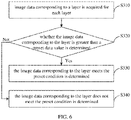
- embodiments of the present disclosure provide an image composition method. Based on the above embodiments, the embodiments focuse on process of determining whether layers meet the preset condition through image data, that is, the embodiments of the present disclosure describe operations at block S220 in the above embodiments. Operations at other blocks of the image composition method can refer to other embodiments and will not be repeated here. Specifically, the method may include following operations.
- image data corresponding to a layer is acquired for each of the plurality of layers.
- Each of the plurality of layers contains a corresponding image
- image data corresponding to each of the plurality of layers can be acquired. Whether image data corresponding to the layer is greater than the preset data value can be determined in response to the image data corresponding to the layer being acquired.
- the preset data value can be a critical value. When the image data is greater than the preset data value, it can be considered that the layer contains more content and the layer takes longer to be composed.
- the image data corresponding to the layer may be an image resolution value or an image size.
- Resolution represents the number of pixels per inch of the image.
- a unit is PPI (pixels per inch) and can represent the amount of data contained in the image.
- PPI pixels per inch
- the image size represents the amount of image data, that is, the number of bytes, bits or storage space occupied by the image. The larger the image size, the larger the storage space occupied by the image.
- the image data can be acquired by capturing an image in each of the plurality of layers, and the image resolution value or the image size can be acquired by analyzing the image. If acquired image data is the image resolution value, the preset data value is a preset resolution value. Determining whether the image data corresponding to the layer is greater than the preset data value can be comparing the image resolution value and the preset resolution value. If the acquired image data is the image size, the preset data value is a preset size value. Determining whether the image data corresponding to the layer is greater than the preset data value can be determining the image size and the preset size value. The image data corresponding to the layer can be determined through experiments in advance based on performance of the GPU and the MDP, regardless of what parameters are defined. A size relationship between the image size corresponding to the layer and the preset size value can also be determined. Whether the image data corresponding to the layer meets the preset condition can be determined through the size relationship.
- the parameters configured to represent the image data are not limited to the image resolution value and the image size, but can also include an image frame rate and an image depth value.
- the higher the image frame rate value the faster the composition speed is required.
- If the image frame rate value is greater than a preset frame rate value of the image frame rate value a faster layer composition method is required to compose the layer.
- whether the image data of the layer meets the preset condition can be determined based on whether the image frame rate is greater than the preset data value.
- the preset data value corresponding to the image frame rate can be a preset frame rate value. Whether the image data corresponding to the layer is greater than the preset data value can be determined by comparing whether the image frame rate in the layer is greater than the preset frame rate value.
- the image data corresponding to the layer is greater than the preset data value is determined in response to the image frame rate in the layer being greater than the preset frame rate value.
- the image data corresponding to the layer is not greater than the preset data value is determined in response to the image frame rate in the layer not being greater than the preset frame rate value.
- the image depth value is greater than a preset depth value indicates that there are more content in the image, and the layer of the image takes a long time to be composed. Thus the faster layer composition method is required to compose the layer. Therefore, whether the image data of the layer meets the preset condition can be determined based on whether the image depth value is greater than the preset data value. That is, the preset data value corresponding to the image depth value can be the preset depth value, whether the image data corresponding to the layer is greater than the preset data value can be determined by comparing whether the image depth value in the layer is greater than the preset depth value. The image data corresponding to the layer is greater than the preset data value is determined in response to the image depth value in the layer being greater than the preset depth value. The image data corresponding to the layer is not greater than the preset data value is determined in response to the image depth value in the layer not being greater than the preset depth value.
- the image data corresponding to the layer meets the preset condition is determined.
- the image data corresponding to the layer is greater than the preset data value indicates that the layer composition is more time-consuming and requires a faster composition speed and the image data corresponding to the layer meets the preset condition can be determined for composition by the multimedia display processor.
- the image data corresponding to an acquired layer is the image resolution value.
- the image data corresponding to the layer meets the preset condition is determined in response to the image resolution value being greater than the preset resolution value.
- the layer can be configured as the second layer, and the layer attribute of the second layer is determined as the second attribute, indicating that the second layer contains more data. It takes a long time to compose the second layer. It is necessary to select a method with the faster composition speed to compose the second layer.
- the image data corresponding to the acquired layer is the image size.
- the image data corresponding to the layer meets the preset condition is determined in response to the image size being greater than the preset size value, the layer can be configured as the second layer, and the layer attribute of the second layer can be further determined as the second attribute, indicating that the second layer contains more data content. It takes a long time to compose the second layer. It is necessary to select the method with the faster composition speed to compose the second layer.
- the image data corresponding to the layer does not meet the preset condition is determined.
- the image data corresponding to the layer does not meet the preset condition can be determined in response to the image data corresponding to the layer being less than the preset data value.
- the image data corresponding to the acquired layer is the image resolution value.
- the image data corresponding to the layer does not meet the preset condition is determined in response to the image resolution value being less than or equal to the preset resolution value, the layer can be taken as the first layer, and the layer attribute of the first layer can be determined as the first attribute, indicating that the first layer contains less data, and it will not take a long time to compose the first layer.
- a method with a better composition ability to compose the first layer is selected.
- the image data corresponding to the acquired layer is the image size.
- the image data corresponding to the layer does not meet the preset condition is determined in response to the image size being less than or equal to the preset size value, the layer can be configured as the first layer, and the layer attribute of the first layer can be determined as the first attribute, indicating that the first layer contains less data content. It will not take a long time to compose the first layer.
- the method with the better composition ability to compose the first layer is selected.
- the image composition method provided by the present disclosure is realized by the following operations. Whether the image data corresponding to the layer is greater than the preset data value is determined by acquiring the image data corresponding to each of the plurality of layers. The image data corresponding to the layer meets the preset condition is determined in response to the image data corresponding to the layer being greater than the preset data value. The image data corresponding to the layer does not meet the preset condition is determined in response to the image data corresponding to the layer not being greater than the preset data value.
- the layer attribute corresponding to each of the plurality of layers is determined to process the layer by selecting an appropriate layer composition method, taking into account the layer composition ability and the composition speed of the electronic device, so as to improve the image processing ability of the electronic device.
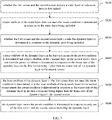
- embodiments of the present disclosure provide an image composition method. Based on the above embodiments, the embodiments focuse on process of determining whether the layer attribute of each of the plurality of layers meets the preset condition through the static layer or the dynamic layer in a split screen display state of the electronic device, that is, operations at block S220 in the above embodiments. Operations at other blocks of the image composition method can refer to other embodiments and will not be repeated here. Specifically, the method may include following operations.
- the electronic device usually has a split screen display function, that is, there are two screens in one display screen of the electronic device display different content respectively, and content characteristics of the two screens may be completely different. For example, content displayed on one screen is static content and content displayed on the other screen is dynamic content. Therefore, layers can be composed in the two screens respectively based on the display characteristics of each screen. For example, the display screen of the electronic device is divided into upper and lower screens taking a middle of the display screen as a boundary. A wechat chat interface is displayed on the upper screen, and a video is played on the lower screen.
- the two screens of the electronic device in the split screen display state can be configured as the first screen and the second screen respectively.
- the electronic device composes layers in the first screen and layers in the second screen for display. Then, during split screen display, the content displayed on the first screen and the second screen of the electronic device can be static content such as photos or dynamic content such as video. Then, whether the first screen and the second screen include the static layer or the dynamic layer can be determined.
- whether the layer is the static layer or the dynamic layer can be determined based on the frame rate of the layer.
- a preset frame rate can be set to compare the frame rate of the layer in the first screen and the second screen with the preset frame rate. If the frame rate of the layer is greater than the preset frame rate, the layer is the dynamic layer is determined. If the frame rate of the layer is less than or equal to the preset frame rate, the layer is the static layer is determined.
- a layer attribute of the static layer does not meet the preset condition is determined in response to the static layer being included.
- the static layer in the first screen and the second screen can be configured as the first layer, and a layer attribute of the static layer in the first screen and the second screen can be determined as the first attribute.
- the first screen and the second screen include the dynamic layer, and dynamic layers are in both screens, all dynamic layers are composed through the MDP, resulting in exceeding the composition ability of the MDP. It is necessary to select a dynamic layer of one screen to be composed by the MDP. If only one screen includes the dynamic layer, the dynamic layer can be composed by the MDP.
- whether the first screen and the second screen both include the dynamic layer can be further determined.
- the dynamic layer can be first acquired, and then a source file corresponding to the dynamic layer can be acquired. Whether the dynamic layer comes from the first screen or the second screen is determined based on the source file. Only one of the first screen and the second screen includes the dynamic layer is determined in response to the dynamic layer only coming from the first screen. One of the first screen and the second screen including the dynamic layer is determined in response to the dynamic layer only coming from the second screen.
- the dynamic layers are included in both the first screen and the second screen both include the dynamic layer is determined in response to the dynamic layer coming from both the first screen and the second screen.
- a plurality of layers in the first screen can be first acquired, a plurality of frame rates of the plurality of layers in one-to-one correspondence can be acquired, and the plurality of frame rates in the first screen are compared with the preset frame rate. If none of the plurality of frame rates in the first screen is greater than the preset frame rate, the dynamic layer is not included in the first screen, and only one of the first screen and the second screen includes the dynamic layer is determined.
- a plurality of frame rates of the plurality of layers in the second screen in one-to-one correspondence are continued to be acquired, and the plurality of frame rates in the second screen are compared with the preset frame rate. If none of the plurality of frame rates in the second screen is greater than the preset frame rate, the dynamic layer is not included in the second screen. Then only one of the first screen and the second screen includes the dynamic layer is determined. If at least one of the plurality of frame rates in the second screen is greater than the preset frame rate, the first screen and the second screen both include the dynamic layer is determined. In the embodiments, if there is only one layer in one screen, the plurality of layers of the screen are one layer.
- a frame rate of the one layer in the screen is compared with the preset frame rate to determine whether the layer included in the screen is the dynamic layer.
- the one layer is the dynamic layer can be determined in response to the frame rate of the one layer being greater than the preset frame rate.
- the one layer is the static layer can be determined in response to the frame rate of the one layer being not greater than the preset frame rate.
- a layer attribute of the dynamic layer in the first screen meets the preset condition is determined and a layer attribute of the dynamic layer in the second screen does not meet the preset condition is determined in response to a frame rate of the dynamic layer in the first screen being higher than a frame rate of the dynamic layer in the second screen.
- the frame rate corresponding to the dynamic layer can be acquired to determine whether the dynamic layer meets the preset condition in response to the first screen and the second screen both including dynamic layer is determined. Specifically, the frame rate of the dynamic layer in the first screen and the frame rate of the dynamic layer in the second screen can be acquired. Composition of the dynamic layer in the first screen takes more time in response to the frame rate of the dynamic layer in the first screen being greater than the frame rate of the dynamic layer in the second screen. Then, the layer attribute of the dynamic layer in the first screen meets the preset condition can be determined, and the layer attribute of the dynamic layer in the second screen does not meet the preset condition can be determined.
- the frame rate of the dynamic layer acquired in first screen is 30fps and the frame rate of the dynamic layer acquired in the second screen is 24fps
- the frame rate of the dynamic layer in the first screen is greater than the frame rate of the dynamic layer in the second screen, that is, 30fps > 24fps
- the layer attribute of the dynamic layer in the first screen meets the preset condition is determined and the layer attribute of the dynamic layer in the second screen does not meet the preset condition is determined, indicating that a content refresh speed in the first screen is fast, and a faster composition method is needed to compose the layer. If a content refresh speed in the second screen is slow, a composition method with the better composition ability can be selected to compose the layer.
- an average frame rate of dynamic layers in the screen can be configured as the frame rate of the dynamic layer in the screen in response to there being more than one dynamic layer in the screen.
- the average frame rate of the dynamic layers in the screen can be calculated as the frame rate of the dynamic layer in the screen in response to there being the more than one dynamic layer in the screenscreen.
- the layer attribute of the dynamic layer in the first screen does not meet the preset condition is determined, and the layer attribute of the dynamic layer in the second screen meets the preset condition is determined in response to the frame rate of the dynamic layer in the first screen not being higher than the frame rate of the dynamic layer in the second screen.
- a frame rate corresponding to each dynamic layer can be acquired to determine whether the dynamic layer meets the preset condition in response to the first screen and the second screen both including the dynamic layer is determined.
- frame rates of all dynamic layers in the first screen and frame rates of all dynamic layers in the second screen can be acquired.
- the composition of dynamic layers in the second screen may take more time in response to the frame rates of all dynamic layers in the first screen being less than or equal to the frame rates of all dynamic layers in the second screen. Then, the layer attribute of the dynamic layers in the first screen does not meet the preset condition is determined, and the layer attribute of the dynamic layers in the second screen meets the preset condition is determined.
- the frame rate of the dynamic layer in the first screen is 26 FPS and the frame rate of the dynamic layer in the second screen is 29 FPS
- the frame rate of the dynamic layer in the first screen is less than the frame rate of the dynamic layer in the second screen, that is, 26 FPS ⁇ 29 FPS
- the layer attribute of the dynamic layer in the first screen does not meet the preset condition is determined.
- the layer attribute of the dynamic layer of the second screen meets the preset condition is determined, indicating that the content refresh speed in the first screen is slow, the composition method with the better composition ability can be selected to compose the layer, and the content refresh speed in the second screen is fast, so the faster composition method is needed to compose the layer.
- the dynamic layer meets the preset condition is determined in response to only one of the first screen and the second screen including the dynamic layer.
- the dynamic layer meets the preset condition can be directly determined in response to only one of the first screen and the second screen including the dynamic layer.
- Layer composition pressure of the electronic device is small in response to only one screen including the dynamic layer, but because the dynamic layer needs to constantly update the display content, the composition method with the faster composition speed can be selected to compose the dynamic layer.
- the image composition method provided by the present disclosure is realized by the following operations. Whether the first screen and the second screen include the static layer or the dynamic layer is determined in the electronic device with split screen display. The layer attribute of the static layer does not meet the preset condition is determined in response to the static layer being included. Whether the first screen and the second screen both include the dynamic layer is determined in response to the dynamic layer being included. Whether the preset condition is met based on the frame rate of the dynamic layer is determined in response to the first screen and the second screen both including the dynamic layer, then the layer attribute corresponding to each of the plurality of layers is determined, an appropriate layer composition method to process the layer is selected, taking into account the layer composition ability and the composition speed of the electronic device, to improve the image processing capability of the electronic device.
- FIG. 8 shows an image composition device 500 provided by some embodiments of the present disclosure.
- the device 500 includes an acquisition module 510, a determination module 520, an intermediate module 530 and a composite module 540.
- the acquisition module 510 is configured to acquire a plurality of layers of an image to be displayed.
- the determination module 520 is configured to determine a layer attribute of each of the plurality of layers.
- the layer attribute includes a first attribute and a second attribute.
- the intermediate module 530 is configured to compose layers with the first attribute into a layer to be mixed by using a graphics processing unit (GPU).
- the composite module 540 is configured to compose the layer to be mixed with layers with second attribute by using a multimedia display processor (MDP), and display a composition result through a display screen.
- MDP multimedia display processor
- the determination module 520 is also configured to successively determine whether a layer attribute of each of the plurality of layers meets a preset condition, take a layer of the plurality of layers not meeting a preset condition as a first layer, and determine a layer attribute of the first layer as the first attribute, take a layer of the plurality of layers meeting the preset condition as a second layer, and determine a layer attribute of the second layer as the second attribute.
- the determination module 520 is also configured to acquire image data corresponding to each of the plurality of layers, determine whether image data corresponding to a layer is greater than a preset data value, determine that the image data corresponding to the layer meets the preset condition in response to the image data corresponding to the layer being greater than the preset data value, and determine that the image data corresponding to the layer does not meet the preset condition in response to the image data corresponding to the layer not being greater than the preset data value.
- the determination module 520 is also configured to compare whether an image resolution value corresponding to the layer is greater than the preset resolution value, and determine that the image data corresponding to the layer is greater than the preset data value in response to the image resolution value corresponding to the layer being greater than the preset resolution value.
- the determination module 520 is also configured to compare whether an image size corresponding to the layer is greater than a preset size value, and determine that the image data corresponding to the layer is greater than the preset data value in response to the image size corresponding to the layer being greater than the preset size value.
- the determination module 520 is also configured to determine whether the first screen and the second screen include a static layer or a dynamic layer, determine that a layer attribute of the static layer does not meet the preset condition in response to the static layer being included, determine whether the first screen and the second screen both include the dynamic layer in response to the dynamic layer being included, determine whether a frame rate of the dynamic layer in the first screen is higher than a frame rate of the dynamic layer in the second screen in response to the first screen and the second screen both including the dynamic layer, determine that the layer attribute of the dynamic layer in the first screen meets the preset condition, and determine that the layer attribute of the dynamic layer in the second screen does not meet the preset condition in response to the frame rate of the dynamic layer in the first screen being higher than the frame rate of the dynamic layer in the second screen, determine that the layer attribute of the dynamic layer in the first screen does not meet the preset condition, and determine that the layer attribute of the dynamic layer in the second screen meets the preset condition in response to the frame rate of the dynamic layer in the first screen not being higher than the frame rate of
- the intermediate module 530 is also configured to send the composed layer to be mixed to the frame buffer for caching
- the composite module is also configured to compose the layers with the second attribute into a pre-composite layer by using the multimedia display processor, acquire the layer to be mixed from the frame buffer, and then compose the layer to be mixed and the pre-composite layer into the image to be displayed by using the multimedia display processor, and send the image to be displayed to the display screen for display.
- the image composition method provided by the present disclosure is realized by the following operations.
- the plurality of layers of the image to be displayed are acquired.
- the layer attribute of each of the plurality of layers is determined, and the layer attribute includes the first attribute and the second attribute.
- the layers with the first attribute are composed into the layer to be mixed by the graphics processing unit (GPU).
- the layer to be mixed and the layers with the second attribute are composed by using the multimedia display processor (MDP), and the composition result is displayed through the display screen.
- An appropriate composition method is selected based on the layer attribute of each of the plurality of layers, taking into account the layer composition ability and the composition speed of electronic device, so as to improve the image processing ability of electronic device.
- coupling or direct coupling or communication connection between the modules shown or discussed may be indirect coupling or communication connection through some interfaces, devices or modules, and may be electrical, mechanical or other forms.
- all functional modules in each embodiment of the present disclosure can be integrated into one processing module, each module can exist separately, or two or more modules can be integrated into one module.
- the above integrated module can be realized in the form of hardware or software function modules.
- FIG. 9 shows a structural block diagram of an electronic device provided by some embodiments of the present disclosure.
- the electronic device 600 may be an electronic device capable of running an application such as a smartphone, a tablet computer, an e-book, etc.
- the electronic device 600 in the present disclosure may include one or more following components: a processor 610, a memory 620, and one or more application.
- the one or more applications may be stored in the memory 620 and configured to be executed by the one or more processors 610, and one or more applications are configured to execute the method described in the above method embodiments.
- the processor 610 may include one or more processing cores.
- the processor 610 connects various parts of the electronic device 600 by using various interfaces and lines, executes various functions and processes data of the electronic device 600 by running or executing instructions, programs, code sets or instruction sets stored in the memory 620, and calling data stored in the memory 620.
- the processor 610 may be implemented in at least one hardware form of digital signal processing (DSP), field programmable gate array (FPGA) and programmable logic array (PLA).
- DSP digital signal processing
- FPGA field programmable gate array
- PDA programmable logic array
- the processor 610 may integrate one or more combinations of a central processing unit (CPU), a graphics processing unit (GPU), a modem, etc.
- the CPU mainly deals with an operating system, a user interface, applications, and the like.
- the GPU is configured to render and draw the displayed content.
- the modem is configured to handle wireless communications. It can be understood that the above modem may not be integrated into the processor 610 and
- the memory 620 may include a random access memory (RAM) or a read only memory.
- the memory 620 may be configured to store instructions, programs, codes, code sets, or instruction sets.
- the memory 620 may include a storage program area and a storage data area.
- the storage program area may store instructions for realizing the operating system, instructions for realizing at least one function (such as touch function, sound playback function, image playback function, etc.), instructions for realizing the following method embodiments, and the like.
- the storage data area can also store data (such as phonebook, audio and video data, chat record data) created by the electronic device 600 in use.
- FIG. 10 shows a structural block diagram of a computer-readable storage medium provided by some embodiments of the present disclosure.
- the computer-readable storage medium 700 stores program code that can be called by the processor to execute the method described in the above method embodiments.
- the computer-readable storage medium 700 may be an electronic memory such as a flash memory, an electrically erasable programmable read only memory (EEPROM), an EPROM, a hard disk, or a ROM. Alternatively, the computer-readable storage medium 700 includes a non transitory computer-readable storage medium.
- the computer-readable storage medium 700 has a storage space for program codes 710 that perform any of method operations described above. These program codes can be read from or written into one or more computer program products.
- the program code 710 may be compressed, for example, in an appropriate form.
Landscapes
- Engineering & Computer Science (AREA)
- Theoretical Computer Science (AREA)
- Physics & Mathematics (AREA)
- General Physics & Mathematics (AREA)
- Computer Hardware Design (AREA)
- Human Computer Interaction (AREA)
- General Engineering & Computer Science (AREA)
- Computer Graphics (AREA)
- User Interface Of Digital Computer (AREA)
- Controls And Circuits For Display Device (AREA)
- Processing Or Creating Images (AREA)
Applications Claiming Priority (2)
| Application Number | Priority Date | Filing Date | Title |
|---|---|---|---|
| CN201910647137.9A CN110377263B (zh) | 2019-07-17 | 2019-07-17 | 图像合成方法、装置、电子设备及存储介质 |
| PCT/CN2020/100970 WO2021008424A1 (fr) | 2019-07-17 | 2020-07-09 | Procédé et dispositif de synthèse d'image, appareil électronique et support de stockage |
Publications (2)
| Publication Number | Publication Date |
|---|---|
| EP4002086A1 true EP4002086A1 (fr) | 2022-05-25 |
| EP4002086A4 EP4002086A4 (fr) | 2022-10-26 |
Family
ID=68253733
Family Applications (1)
| Application Number | Title | Priority Date | Filing Date |
|---|---|---|---|
| EP20840542.3A Withdrawn EP4002086A4 (fr) | 2019-07-17 | 2020-07-09 | Procédé et dispositif de synthèse d'image, appareil électronique et support de stockage |
Country Status (4)
| Country | Link |
|---|---|
| US (1) | US20220139352A1 (fr) |
| EP (1) | EP4002086A4 (fr) |
| CN (1) | CN110377263B (fr) |
| WO (1) | WO2021008424A1 (fr) |
Families Citing this family (15)
| Publication number | Priority date | Publication date | Assignee | Title |
|---|---|---|---|---|
| CN110377263B (zh) * | 2019-07-17 | 2021-08-17 | Oppo广东移动通信有限公司 | 图像合成方法、装置、电子设备及存储介质 |
| CN110908757B (zh) * | 2019-11-18 | 2022-01-28 | 腾讯科技(深圳)有限公司 | 一种媒体内容显示的方法以及相关装置 |
| CN111325702B (zh) * | 2020-01-19 | 2024-03-19 | Oppo广东移动通信有限公司 | 图像融合方法及装置 |
| CN111356026B (zh) * | 2020-03-06 | 2022-03-29 | Oppo广东移动通信有限公司 | 图像数据处理方法及相关装置 |
| CN114327312B (zh) * | 2020-09-25 | 2023-10-20 | 华为技术有限公司 | 投屏控制方法和装置 |
| CN116391199B (zh) * | 2020-10-19 | 2025-12-12 | 高通股份有限公司 | 通过使层属性优先化来处理图像数据 |
| CN114531519B (zh) * | 2020-10-31 | 2024-04-26 | 华为技术有限公司 | 一种基于垂直同步信号的控制方法及电子设备 |
| CN112330707A (zh) * | 2020-11-17 | 2021-02-05 | 武汉联影医疗科技有限公司 | 图像处理方法、装置、计算机设备和存储介质 |
| CN113012263B (zh) * | 2021-03-16 | 2024-10-01 | 维沃移动通信有限公司 | 图层合成方式的配置方法和电子设备 |
| CN112767231B (zh) * | 2021-04-02 | 2021-06-22 | 荣耀终端有限公司 | 图层合成方法和设备 |
| CN113110910B (zh) * | 2021-04-20 | 2024-01-23 | 上海卓易科技股份有限公司 | 一种安卓容器实现的方法、系统及设备 |
| CN113986162B (zh) * | 2021-09-22 | 2022-11-11 | 荣耀终端有限公司 | 图层合成方法、设备及计算机可读存储介质 |
| CN118823177A (zh) * | 2023-04-20 | 2024-10-22 | 华为技术有限公司 | 一种图层处理方法及相关装置 |
| KR20250044592A (ko) * | 2023-09-22 | 2025-04-01 | 베리실리콘 마이크로일렉트로닉스 (청두) 컴퍼니 리미티드 | 디스플레이 데이터 처리 방법, 전자 기기 및 디스플레이 처리 유닛 |
| US12567222B2 (en) * | 2024-02-13 | 2026-03-03 | Boom Interactive, Inc. | Generative multi-layered image rendering based on data prompts |
Family Cites Families (17)
| Publication number | Priority date | Publication date | Assignee | Title |
|---|---|---|---|---|
| US8018472B2 (en) * | 2006-06-08 | 2011-09-13 | Qualcomm Incorporated | Blending multiple display layers |
| US8629886B2 (en) * | 2010-12-07 | 2014-01-14 | Microsoft Corporation | Layer combination in a surface composition system |
| CN105359503B (zh) * | 2013-07-16 | 2019-03-19 | 哈曼国际工业有限公司 | 图像层组合 |
| CN103927710B (zh) * | 2014-04-18 | 2018-08-03 | Tcl集团股份有限公司 | 一种应用图层分流混合方法、系统以及装置 |
| CN104010212A (zh) * | 2014-05-28 | 2014-08-27 | 华为技术有限公司 | 一种多图层合成的方法和装置 |
| US9953620B2 (en) * | 2015-07-29 | 2018-04-24 | Qualcomm Incorporated | Updating image regions during composition |
| GB2544333B (en) * | 2015-11-13 | 2018-02-21 | Advanced Risc Mach Ltd | Display controller |
| KR101876007B1 (ko) * | 2015-12-28 | 2018-07-06 | 전자부품연구원 | 분산 및 병렬 프로그래밍 기반의 실시간 초다시점 3d 콘텐츠 합성 시스템 및 방법 |
| KR102488333B1 (ko) * | 2016-04-27 | 2023-01-13 | 삼성전자주식회사 | 그래픽 데이터를 합성하는 전자 장치 및 방법 |
| CN106331831B (zh) * | 2016-09-07 | 2019-05-03 | 珠海市魅族科技有限公司 | 图像处理的方法及装置 |
| CN106527656B (zh) * | 2016-10-19 | 2019-07-12 | 北京安云世纪科技有限公司 | 显示方法、装置及终端设备 |
| US10140679B2 (en) * | 2016-12-31 | 2018-11-27 | Intel IP Corporation | Smart composition of output layers |
| CN108509239B (zh) * | 2018-03-07 | 2021-08-20 | 斑马网络技术有限公司 | 图层显示方法、装置、电子设备及存储介质 |
| US20200226964A1 (en) * | 2019-01-15 | 2020-07-16 | Qualcomm Incorporated | System and method for power-efficient ddic scaling utilization |
| CN110363831B (zh) * | 2019-07-17 | 2023-04-07 | Oppo广东移动通信有限公司 | 图层合成方法、装置、电子设备及存储介质 |
| CN110377264B (zh) * | 2019-07-17 | 2023-07-21 | Oppo广东移动通信有限公司 | 图层合成方法、装置、电子设备及存储介质 |
| CN110377263B (zh) * | 2019-07-17 | 2021-08-17 | Oppo广东移动通信有限公司 | 图像合成方法、装置、电子设备及存储介质 |
-
2019
- 2019-07-17 CN CN201910647137.9A patent/CN110377263B/zh not_active Expired - Fee Related
-
2020
- 2020-07-09 WO PCT/CN2020/100970 patent/WO2021008424A1/fr not_active Ceased
- 2020-07-09 EP EP20840542.3A patent/EP4002086A4/fr not_active Withdrawn
-
2022
- 2022-01-14 US US17/576,195 patent/US20220139352A1/en not_active Abandoned
Also Published As
| Publication number | Publication date |
|---|---|
| EP4002086A4 (fr) | 2022-10-26 |
| WO2021008424A1 (fr) | 2021-01-21 |
| CN110377263A (zh) | 2019-10-25 |
| US20220139352A1 (en) | 2022-05-05 |
| CN110377263B (zh) | 2021-08-17 |
Similar Documents
| Publication | Publication Date | Title |
|---|---|---|
| US20220139352A1 (en) | Method and Device for Image Composition, Electronic Device and Storage Medium | |
| CN110377264B (zh) | 图层合成方法、装置、电子设备及存储介质 | |
| CN110377257B (zh) | 图层合成方法、装置、电子设备及存储介质 | |
| US20220139353A1 (en) | Display method, electronic device, and non-transitory computer-readable storage medium | |
| US20220139017A1 (en) | Layer composition method, electronic device, and storage medium | |
| JP7114633B2 (ja) | 画面ミラーリング方法、装置、端末及び記憶媒体 | |
| CN110362186B (zh) | 图层处理方法、装置、电子设备及计算机可读介质 | |
| WO2021008427A1 (fr) | Procédé et appareil de synthèse d'image, dispositif électronique et support d'informations | |
| KR101623415B1 (ko) | 드로잉 방법, 장치, 및 단말 | |
| CN109587546B (zh) | 视频处理方法、装置、电子设备和计算机可读介质 | |
| CN112596843A (zh) | 图像处理方法、装置、电子设备及计算机可读存储介质 | |
| US20090309808A1 (en) | Providing a coherent user interface across multiple output devices | |
| WO2018000372A1 (fr) | Procédé et terminal d'affichage d'image | |
| US9899004B2 (en) | Method and device for generating graphical user interface (GUI) for displaying | |
| CN112184538B (zh) | 图像加速方法、相关装置、设备及存储介质 | |
| CN110377258B (zh) | 图像渲染方法、装置、电子设备及存储介质 | |
| CN105023285A (zh) | 图片拆分方法和装置、图片加载方法和装置 | |
| WO2026056547A1 (fr) | Procédé de rafraîchissement d'écran d'affichage et appareil associé | |
| CN110362188B (zh) | 图片处理方法、装置、移动终端以及存储介质 | |
| CN116966546A (zh) | 图像处理方法、装置、介质、设备和程序产品 | |
| CN119135820B (zh) | 视频录制方法、装置、存储介质以及终端 | |
| CN121277394A (zh) | 一种电子设备的显示方法、电子设备、存储介质和芯片 | |
| CN116954780A (zh) | 显示画面的渲染方法、装置、设备、存储介质及程序产品 | |
| WO2025232257A1 (fr) | Procédé et appareil de rendu de couche, dispositif et support de stockage | |
| CN121277452A (zh) | 一种电子设备的显示方法、电子设备、存储介质和芯片 |
Legal Events
| Date | Code | Title | Description |
|---|---|---|---|
| STAA | Information on the status of an ep patent application or granted ep patent |
Free format text: STATUS: THE INTERNATIONAL PUBLICATION HAS BEEN MADE |
|
| PUAI | Public reference made under article 153(3) epc to a published international application that has entered the european phase |
Free format text: ORIGINAL CODE: 0009012 |
|
| STAA | Information on the status of an ep patent application or granted ep patent |
Free format text: STATUS: REQUEST FOR EXAMINATION WAS MADE |
|
| 17P | Request for examination filed |
Effective date: 20220216 |
|
| AK | Designated contracting states |
Kind code of ref document: A1 Designated state(s): AL AT BE BG CH CY CZ DE DK EE ES FI FR GB GR HR HU IE IS IT LI LT LU LV MC MK MT NL NO PL PT RO RS SE SI SK SM TR |
|
| A4 | Supplementary search report drawn up and despatched |
Effective date: 20220922 |
|
| DAV | Request for validation of the european patent (deleted) | ||
| DAX | Request for extension of the european patent (deleted) | ||
| RIC1 | Information provided on ipc code assigned before grant |
Ipc: G06T 1/20 20060101ALI20220916BHEP Ipc: G06F 3/14 20060101ALI20220916BHEP Ipc: G06F 3/147 20060101AFI20220916BHEP |
|
| STAA | Information on the status of an ep patent application or granted ep patent |
Free format text: STATUS: EXAMINATION IS IN PROGRESS |
|
| 17Q | First examination report despatched |
Effective date: 20240617 |
|
| STAA | Information on the status of an ep patent application or granted ep patent |
Free format text: STATUS: THE APPLICATION HAS BEEN WITHDRAWN |
|
| 18W | Application withdrawn |
Effective date: 20240829 |