EP4002100A1 - Dynamische prozeduren für software-produkte - Google Patents
Dynamische prozeduren für software-produkte Download PDFInfo
- Publication number
- EP4002100A1 EP4002100A1 EP21207787.9A EP21207787A EP4002100A1 EP 4002100 A1 EP4002100 A1 EP 4002100A1 EP 21207787 A EP21207787 A EP 21207787A EP 4002100 A1 EP4002100 A1 EP 4002100A1
- Authority
- EP
- European Patent Office
- Prior art keywords
- software product
- runtime
- dynamic
- source code
- executable software
- Prior art date
- Legal status (The legal status is an assumption and is not a legal conclusion. Google has not performed a legal analysis and makes no representation as to the accuracy of the status listed.)
- Granted
Links
Images

Classifications
-
- G—PHYSICS
- G06—COMPUTING OR CALCULATING; COUNTING
- G06F—ELECTRIC DIGITAL DATA PROCESSING
- G06F8/00—Arrangements for software engineering
- G06F8/60—Software deployment
- G06F8/65—Updates
- G06F8/656—Updates while running
-
- G—PHYSICS
- G06—COMPUTING OR CALCULATING; COUNTING
- G06F—ELECTRIC DIGITAL DATA PROCESSING
- G06F8/00—Arrangements for software engineering
- G06F8/40—Transformation of program code
- G06F8/41—Compilation
- G06F8/44—Encoding
-
- G—PHYSICS
- G06—COMPUTING OR CALCULATING; COUNTING
- G06F—ELECTRIC DIGITAL DATA PROCESSING
- G06F8/00—Arrangements for software engineering
- G06F8/40—Transformation of program code
- G06F8/41—Compilation
- G06F8/48—Incremental compilation
-
- G—PHYSICS
- G06—COMPUTING OR CALCULATING; COUNTING
- G06F—ELECTRIC DIGITAL DATA PROCESSING
- G06F8/00—Arrangements for software engineering
- G06F8/40—Transformation of program code
- G06F8/54—Link editing before load time
-
- G—PHYSICS
- G06—COMPUTING OR CALCULATING; COUNTING
- G06F—ELECTRIC DIGITAL DATA PROCESSING
- G06F9/00—Arrangements for program control, e.g. control units
- G06F9/06—Arrangements for program control, e.g. control units using stored programs, i.e. using an internal store of processing equipment to receive or retain programs
- G06F9/30—Arrangements for executing machine instructions, e.g. instruction decode
- G06F9/32—Address formation of the next instruction, e.g. by incrementing the instruction counter
- G06F9/322—Address formation of the next instruction, e.g. by incrementing the instruction counter for non-sequential address
- G06F9/328—Address formation of the next instruction, e.g. by incrementing the instruction counter for non-sequential address for runtime instruction patching
-
- G—PHYSICS
- G06—COMPUTING OR CALCULATING; COUNTING
- G06F—ELECTRIC DIGITAL DATA PROCESSING
- G06F9/00—Arrangements for program control, e.g. control units
- G06F9/06—Arrangements for program control, e.g. control units using stored programs, i.e. using an internal store of processing equipment to receive or retain programs
- G06F9/44—Arrangements for executing specific programs
- G06F9/445—Program loading or initiating
- G06F9/44521—Dynamic linking or loading; Link editing at or after load time, e.g. Java class loading
-
- G—PHYSICS
- G06—COMPUTING OR CALCULATING; COUNTING
- G06F—ELECTRIC DIGITAL DATA PROCESSING
- G06F8/00—Arrangements for software engineering
- G06F8/20—Software design
-
- G—PHYSICS
- G06—COMPUTING OR CALCULATING; COUNTING
- G06F—ELECTRIC DIGITAL DATA PROCESSING
- G06F8/00—Arrangements for software engineering
- G06F8/20—Software design
- G06F8/24—Object-oriented
-
- G—PHYSICS
- G06—COMPUTING OR CALCULATING; COUNTING
- G06F—ELECTRIC DIGITAL DATA PROCESSING
- G06F8/00—Arrangements for software engineering
- G06F8/30—Creation or generation of source code
- G06F8/38—Creation or generation of source code for implementing user interfaces
-
- G—PHYSICS
- G06—COMPUTING OR CALCULATING; COUNTING
- G06F—ELECTRIC DIGITAL DATA PROCESSING
- G06F9/00—Arrangements for program control, e.g. control units
- G06F9/06—Arrangements for program control, e.g. control units using stored programs, i.e. using an internal store of processing equipment to receive or retain programs
- G06F9/44—Arrangements for executing specific programs
- G06F9/445—Program loading or initiating
- G06F9/44521—Dynamic linking or loading; Link editing at or after load time, e.g. Java class loading
- G06F9/44526—Plug-ins; Add-ons
-
- G—PHYSICS
- G06—COMPUTING OR CALCULATING; COUNTING
- G06F—ELECTRIC DIGITAL DATA PROCESSING
- G06F9/00—Arrangements for program control, e.g. control units
- G06F9/06—Arrangements for program control, e.g. control units using stored programs, i.e. using an internal store of processing equipment to receive or retain programs
- G06F9/44—Arrangements for executing specific programs
- G06F9/448—Execution paradigms, e.g. implementations of programming paradigms
- G06F9/4488—Object-oriented
- G06F9/449—Object-oriented method invocation or resolution
Definitions
- the present invention relates to a method, computerized system, and computer program product for changing the functionality of a software product, without altering the software product itself.
- a software framework is a special kind of library where the invocation works the other way around compared to a normal library by using object-oriented techniques such as polymorphism and dynamic binding.
- the framework invokes the product code.
- Typical applications are handling of user interface events - when an object is clicked the "OnClick” method is invoked, but it is up to the product developer to define what "OnClick” should do by overriding the functionality provided by the framework.
- Scripting is a method that allows the customer/user to define business logic/workflow actions to be invoked by the product at predefined trigger points.
- Scripts can be defined and stored in many different ways, e.g., as separate script files (as for Power shell) or by an embedded script file in the product itself (as for Excel).
- the scripts except from the features in the script language, which can be quite extensive, usually also have access to a predefined set of operations or data in the product. Scrips are usually run by an interpreter. However, scripting can only access the predefined set of operations or data in the product, i.e., the set of operations or data variables that is explicitly exposed by the product developer, and its functionality is therefore static after development.
- the object of the present invention is to eliminate or at least to minimize the problems discussed above. This is achieved by a method, computerized system, and computer program product for changing the functionality of a software product, without altering the software product itself according to the appended independent claims.
- a method for changing the functionality of an executing software product in runtime comprising providing, in a memory of a system, an executable software product, wherein the executable software product is generated using an object-oriented programming language.
- the executable software product comprises at least one first programming interface; at least one trigger point indicative of a location in the software code for invocation of one or more detected dynamic procedure associated with the respective trigger point; a trigger point detector, configured to detect one or more trigger point comprised in the executable software product; and a change detector configured to detect, in runtime, any addition, deletion or change of any dynamic procedure source code stored in the memory.
- the executable software product further comprises a runtime compiler, a runtime linker and a runtime loader configured to compile, link, and load dynamic procedure source code in runtime, i.e., during execution of the executable software product.
- the method further comprises providing, in the memory, dynamic procedure source code of at least one dynamic procedure designed to introduce a change in functionality in the executable software product, wherein the dynamic procedure source code of each dynamic procedure comprises at least one second programming interface, wherein each of the at least one second programming interface complies with one of the at least one first programming interface.
- the method further comprises creating an executing program in a dynamic runtime environment by loading the executable software product using a system loader comprised in or communicatively connected to the system, and performing the following method steps in runtime, i.e., during execution of the executable software product:
- altering of the functionality of the software product is thereby enabled, since the dynamic procedures that alter the software product execute as if they are part of the executing software product.
- dynamic procedures use of all operations, classes and/or data variables in the software product on a source code level is thereby enabled, achieving adaptation on a per-customer/user level while still using the same product, i.e., without changing the binary code of the product.
- the method further comprises returning control to the executing software product after the last of the one or more dynamic procedure associated with each detected trigger point has been executed, by a processor comprised in the system and communicatively connected to the memory.
- dynamic procedure source code may be provided in the memory before execution of the executable software product and/or during execution of the executable software product.
- the executable software product is generated, during development, by: compiling software product source code into binary or intermediate code, by an external compiler; and linking the binary or intermediate code into an executable software product, by an external linker.
- a computerized system for changing the functionality of an executing software product in runtime.
- the system comprises a memory configured to store an executable software product, wherein the executable software product is generated using an object-oriented programming language.
- the executable software product comprises at least one first programming interface; at least one trigger point indicative of a location in the software code for invocation of one or more detected dynamic procedure associated with the respective trigger point; a trigger point detector, configured to detect one or more trigger point comprised in the executable software product; and a change detector configured to detect, in runtime, any addition, deletion or change of any dynamic procedure source code stored in the memory.
- the executable software product further comprises a runtime compiler, a runtime linker and a runtime loader configured to compile, link, and load dynamic procedure source code in runtime, i.e., during execution of the executable software product.
- the memory is further configured to store dynamic procedure source code of at least one dynamic procedure designed to introduce a change in functionality in the executable software product, wherein the dynamic procedure source code of each dynamic procedure comprises at least one second programming interface, wherein each of the at least one second programming interface complies with one of the at least one first programming interface.
- the system further comprises or is communicatively connected to a system loader configured to create an executing program in a dynamic runtime environment by loading the executable software product into the memory.
- the change detector is configured to, in runtime, i.e., during execution of the executable software product, detect any addition, deletion or change of the dynamic procedure source code in the memory.
- the runtime compiler is configured to, in runtime, compile a selection of the dynamic procedure source code comprised .
- the runtime linker is configured to, in runtime, link the compiled dynamic procedures.
- the trigger point detector is configured to detect, in runtime, one or more trigger point comprised in the executable software product.
- the system is further configured to invoke from the memory, in runtime and in response to detection of one or more trigger point, one or more dynamic procedure associated with each detected trigger point; and the runtime loader is configured to, in runtime, load, or execute, the one or more invoked dynamic procedure within the executing software product.
- system further comprising a processor communicatively connected to the memory, the processor being configured to return control to the executing software product after the last of the one or more dynamic procedure associated with each detected trigger point has been executed.
- the system may be configured to perform suitable method steps repeatedly, as further described in the detailed description.
- the memory may be configured to receive or retrieve, and store, dynamic procedure source code of at least one dynamic procedure in runtime, i.e., during execution of the executable software product.
- the system may further be communicatively connected to an external compiler configured to compile software product source code into binary or intermediate code, and be communicatively connected to an external linker configured to link the binary or intermediate code into an executable software product during development, thereby generating the executable software product.
- an external compiler configured to compile software product source code into binary or intermediate code
- an external linker configured to link the binary or intermediate code into an executable software product during development, thereby generating the executable software product.
- a computer program loadable into a non-volatile data carrier communicatively connected to a processing unit, the computer program comprising software for executing the method according any of the embodiments presented herein when the program is run on the processing unit.
- the filter technique used by e.g., the IIS pipeline, offers custom defined logic to be "plugged in” and work together with the product.
- the product is a web service, and the filter transforms incoming data, but the same basic technique can be applied in other situations to change functionality dynamically.
- the filter in the case of IIS pipeline is defined using the same language as the product itself (e.g., C#) and is compiled in runtime, it basically has the same role as a script in relation to the product, i.e., it cannot access the internal operations or data variables in the product on a source code level. This is true even if IIS itself is considered to be the product.
- the filter from the IIS vendors point of view
- IIS the product
- the filter is not executed within IIS but as an external program component.
- dynamic procedures are enabled to execute as if they are a part of the executing software product and already linked with it whereby the dynamic procedures are provided access to the same internal operations, classes and/or data variables as the executing software product itself.
- the names, references or symbols of internal operations, classes and/or data variables given in the source code of the software product are used.
- the software product has in the development phase been adapted to include trigger points, e.g., pre-set locations in the source code at which the executable code can be altered during execution that trigger execution of detected dynamic processes during execution of the executable software product, i.e., in runtime.
- the trigger points may e.g., be compared to links, which are introduced once into the source code and remain static, but where the content, functions, dynamic processes, or the like with which the link or trigger point is associated can be altered at any time.
- a further significant advantage is that the execution of the executable software product does not have to be started over each time a new customization is introduced, since the runtime compiler, linker and loader are configured to compile, link and load software code of any dynamic process that is associated with a specific trigger point, which trigger point is already defined as part of the software product.
- any number of links can advantageously be associated with the same trigger point simultaneously, enabling separate customizations for different users, typically different customers using the same runtime instance of the software product.
- a dynamic library (or dynamic link library, dll) is a library that can be loaded dynamically by the product and thus be used to change the functionality provided by the entire product dynamically.
- the dynamic library provides an interface to a set of operations that can be invoked by the product. The key is that even if the interface itself must be known to the product when the product is created, the implementation of those operations can be changed dynamically.
- Typical applications are adaptors or drivers, e.g., a printer driver where the print-command is implemented differently for different printers.
- a dynamic library does not access the operations or data variables in the product on a source code level (if not designed as a dynamic procedure).
- a stored procedure is a method used by database engines to encapsulate logic that operates upon data in the database and data passed as argument.
- the typical use is to reuse complex queries and maintain application level consistency.
- Stored procedures can be defined dynamically by the customer, i.e., they are not part of the database and are usually accessible by the customer even when bundled with the product that uses the database (the software product/software application). Thus, stored procedures can be considered a technique to change functionality of a product without changing the product itself. However, just as for scrips and filters, a stored procedure does not access the operations or data variables in the application product on a source code level.
- Dynamic procedures are herein defined as methods that allows business logic/workflow etc. to be dynamically defined and embedded into the software product/software application in such a way that it is given access to the operations and data variables in the software product/software application on a source code level, without changing the actual product, as described in embodiments herein.
- a dynamic procedure is a software subroutine that defines a piece of logic, typically some custom specific workflow.
- the interface of the dynamic procedure complies with one of the interfaces defined by the software product in which it shall be used, the host, typically by inheriting from an interface definition.
- the host which may be a host application or a host device, is herein defined as a user's software product instance, or the user's "account" if provided as a service.
- the dynamic procedure is defined (programmed) using the same programming language as the host, e.g., but not limited to C#.
- the dynamic procedure is compiled in runtime, dynamically, by the host itself and integrated in the host runtime environment in such a way that it is given access to the same process and memory as the host itself, according to embodiments presented herein.
- the dynamic procedure is invoked by the host at trigger points defined by the host. Once the dynamic procedure is invoked it has access to all the operations, classes and/or variables that are available to the software product, on a source code level.
- the business logic or workflow rules of a specific software product may include a rule controlling that if an email is sent by a user of a software product instance and the recipient email address is invalid, the email is sent to collecting email address.
- the rule is implemented in the source code of the software product.
- a user of the software product is interested in applying a second rule related to automatic sending of emails.
- the customer/user of the software product could be any party or organisation that could have an interest in specific adaptation and configuration of software system's functionality and access of data.
- a customer/user will use a product with a database and the business logic is represented as workflow functionality or any kind of functionality related to such as access to registering number of steps, weight, electrocardiography measures, spirometer measures, blood pressure, degree of patient's perceptive of pain etc. or access to edit patient phone number.
- Execution of functionality means that the dynamic procedure becomes the main function controlling calling other functions in the program, also including the possibility to reject the user the possibility to call one or several functions.
- Example 1 dynamic procedures can be used for automatically triggering the next step in a workflow related for a patient that is to undertake an upcoming knee surgery, e.g., not until a patient has confirmed a date for surgery will the patient's to-do list be illustrated for the patient. Dynamic procedures are used to save time and money when customers wish to apply the application to their specific workflow needs.
- Example 2 A product for activity planning has some built-in business logic for dealing with different activity types. E.g., "recurring activities” do not post on dates that has passed. Such business logic is typically implemented in the products "application layer”, not in the database.
- workflow definition must then access the application layer to make use of the built-in business logic.
- business logic usually constitutes the core of the product and by-passing the business logic in this example by accessing the products database level directly requires the business logic being re-implemented which is contradictory to the reason why the product was used in the first place.
- Dynamic procedures need not be customer specific. On the contrary, such algorithms used for standardized calculations (e.g., medical scores such as BMI, PASI and DLQI) are well suited to be packaged as dynamic procedures.
- medical scores such as BMI, PASI and DLQI
- a BMI calculation may e.g., differ in how the input data is retrieved or whether standard deviation should also be calculated etc.
- Dynamic procedures can be granted other access rights than the users have that trigger those dynamic procedures. This might seem as a potential security breach, but keep in mind that it is not the individual user that defines the dynamic procedures, but the customer (i.e., the same organization that grants users access rights in the first place). Dynamic procedures can be used as a lifeline, i.e., a way to allow operations that are crucial but normally not allowed. E.g., aggregating statistics from data that the user normally has no access to. Dynamic procedures can also be used to protect against injection attacks where a user via a client program sends (malicious) data to a server to invoke unwanted behaviour.
- the dynamic procedures are invoked by the host, i.e., the server, not by the client directly.
- the parameters passed to dynamic procedures are already plain data (on a source code level). This is in contrast to e.g., stored procedures, where an SQL-command containing both commands and data is parsed, which allows for opens for (malicious) data being parsed as commands.
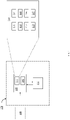
- Fig. 1 shows a schematic view of a computerized system 100 for changing the functionality of an executing software product 230 in runtime.
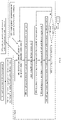
- Fig. 2 is a schematic view of development and execution of a software product in a runtime environment.
- the product development phase is herein denoted 200 and the product execution phase is denoted 220.
- the steps and functions leading up to the generation of the executable software product 210 are part of the product development phase 200, while loading 222 of the executable software product 210 and all steps and functions performed in runtime, i.e., during execution of the executable software product 210 within the dynamic runtime environment 230, are part of the product execution phase 220.
- the system 100 comprises a memory 120 configured to store an executable software product 210, wherein the executable software product 210 is generated using an object-oriented programming language.
- the executable software product 210 comprises at least one first programming interface 211; at least one trigger point 212 indicative of a location in the software code for invocation of one or more detected dynamic procedure associated with the respective trigger point 212 and a trigger point detector 213, configured to detect one or more trigger point 212 comprised in the executable software product 210.
- the executable software product 210 further comprises a change detector 214 configured to detect, in runtime, any addition, deletion or change of any dynamic procedure source code 240 stored in the memory 120 and a runtime compiler 215, a runtime linker 216 and a runtime loader 217 configured to compile, link, and load dynamic procedure source code in runtime, i.e., during execution of the executable software product 210.
- the memory 120 is further configured to store dynamic procedure source code 240 of at least one dynamic procedure designed to introduce a change in functionality in the executable software product 210, wherein the dynamic procedure source code 240 of each dynamic procedure comprises at least one second programming interface, wherein each of the at least one second programming interface complies with one of the at least one first programming interface.
- the system further comprises or is communicatively connected to a system loader 140 configured to create an executing program 232 in a dynamic runtime environment 230 by loading the executable software product 210 into the memory 120.
- the change detector 214 is configured to, in runtime, i.e., during execution of the executable software product 210, detect any addition, deletion or change of the dynamic procedure source code 240 in the memory 120.
- the runtime compiler 215 is configured to, in runtime, compile a selection of the dynamic procedure source code and the runtime linker 216 is configured to, in runtime, link the compiled dynamic procedures.
- the change detector 214 may be configured to detect such an addition, deletion or change in runtime by comparing the dynamic procedure source code 240 in the memory 120, i.e., previously compiled and linked dynamic procedure source code 240, to corresponding dynamic procedure source code stored in a repository accessible to the system 100.
- the dynamic procedure source code stored in the repository may be altered by developers who are enabled through a suitable interface to introduce additions, deletions and/or changes to the dynamic procedure source code stored in the repository.
- the change detector 214 is configured to detect that there is an addition, deletion or change to the dynamic procedure source code 240 if the comparison shows that there is a difference between the dynamic procedure source code 240 in the memory 120 and the dynamic procedure source code stored in the repository.
- the change detector 214 further causes a selection of dynamic procedure source code 240 for compilation, and linking, to be made.
- the selection may e.g., comprise all dynamic procedures stored in the dynamic source code repository, only the stored dynamic procedures that have been altered, or the stored dynamic procedures that have been altered and any stored dynamic procedure that depend on one of the altered dynamic procedures.
- the selection of dynamic procedure source code 240 for compilation by the runtime compiler 215 and linking by the runtime linker 216 is thus based on, and performed in response to, the detection of any addition, deletion or change of the dynamic procedure source code 240.
- the system 100 may therefore in turn be configured to, in runtime, perform a selection of dynamic procedure source code for compilation and linking, from the dynamic procedure source code repository, in response to the change detector 215 detecting at least one addition, deletion or change of the dynamic procedure source code 240.
- the system 100 may be configured to select for compilation and linking all dynamic procedures stored in the repository, only the stored dynamic procedures that have been altered, or the stored dynamic procedures that have been altered and any stored dynamic procedure that depend on one of the altered dynamic procedures, depending on which selection rules are applied. Since the detection of any addition, deletion or change of the dynamic procedure source code causes selection of dynamic procedure source code 240 for compilation and linking, and further causes compilation and linking of the selection of dynamic procedure source code, the change detector 214 may also be referred to as a compilation trigger.
- the trigger point detector 213 is configured to detect, in runtime, one or more trigger point comprised in the executable software product 210.
- the system 100 is in turn configured to invoke from the memory 120, in runtime and in response to detection of one or more trigger point, one or more dynamic procedure associated with each detected trigger point.
- the runtime loader 217 is configured to, in runtime, load, or execute, the one or more invoked dynamic procedure within the executing software product.
- the runtime loader 217 is configured to, in runtime, load, or execute, the one or more invoked dynamic procedure within the executing program 232, in the dynamic runtime environment 230. Since the detection of one or more trigger point comprised in the executable software product 210 causes execution of one or more dynamic procedure associated with each detected trigger point, the trigger point detector 213 may also be referred to as an execution trigger.
- the system 100 may be configured to invoke from the memory 120, in runtime and in response to detection of one or more trigger point, one or more dynamic procedure associated with each detected trigger point dependent on at least one rule accessible to the system 100, e.g., stored in the memory 120, wherein the at least one rule governs which of the dynamic procedures associated with a certain trigger point are to be invoked.
- each of a number of clients may be using a common instance of the software product, wherein information is stored in the memory regarding which dynamic procedures are associated with which client. Thereby, customization of the software product instance for each client is enabled.
- the change detector 214 need only detect any addition, deletion or change in the dynamic procedure source code 240 associated with the specific client, thereby making the change detection and the subsequent processing as described herein less computationally expensive.
- the system 100 may further comprise a processor 110 communicatively connected to the memory 120, the processor 110 being configured to return control to the executing software product after the last of the one or more dynamic procedure associated with each detected trigger point has been executed.
- the memory 120 may further be configured to store dynamic procedure source code 240 of at least one dynamic procedure in runtime, i.e., during execution of the executable software product 210.
- the computerized system may further be communicatively connected to an external compiler configured to compile 204 software product source code 202 into binary or intermediate code 206, wherein the system 100 is further communicatively connected to an external linker configured to linking 208 the binary or intermediate code 206 into an executable software product 210 during development, thereby generating the executable software product 230.
- an external compiler configured to compile 204 software product source code 202 into binary or intermediate code 206
- the system 100 is further communicatively connected to an external linker configured to linking 208 the binary or intermediate code 206 into an executable software product 210 during development, thereby generating the executable software product 230.
- the compilation 204 by the external compiler and the linking 208 by the external linker are performed during the product development phase 200 leading up to the generation of the executable software product 210, i.e., not in runtime.
- Fig. 3 shows a flow chart of a method for changing the functionality of a software product (software program, software application) without changing the software product itself, which may also be referred to as a method of using dynamic procedures, the method comprising: In step 310: providing, in a memory 120 of a system 100, an executable software product 210, wherein the executable software product 210 is generated using an object-oriented programming language.
- the executable software product 210 comprises:
- the executable software product 230 has before the start of the method according to Fig. 3 typically generated, during development, by compiling 204 software product source code 202 into binary or intermediate code 206, by an external compiler communicatively connected to the system 100; and linking 208 the binary or intermediate code 206 into an executable software product 210, by an external linker.
- the software product may be designed, during development, to allow hosting of dynamic procedures by: providing a software product by using an object-oriented programming language, in a dynamic runtime environment; defining a specification of programming interfaces in the source code for each potential dynamic procedure; inserting one or more dynamic procedure trigger point (hereinafter referred to as trigger point), in the software product source code, i.e. one or more point in the software product source code where a selection of the dynamic procedures stored in the memory 120 are to be invoked; and inserting functionality to detect, in runtime, new, deleted or changed dynamic procedures source code, e.g. in the form of the change detector 214.
- trigger point dynamic procedure trigger point
- Designing the software product, during development, to allow hosting of dynamic procedures may in these embodiments further include inserting functionality into the software product source code to compile and link the dynamic procedure source code in runtime, e.g., in the form of the runtime compiler 215 and runtime linker 216, taking into account that the dynamic procedure source code may contain references to data, and operations provided by the executing software product itself.
- the symbols, i.e., the addresses of data variables and operations, in the executing software product itself are passed as input to the runtime compiler and runtime linker.
- Designing the software product, during development, to allow hosting of dynamic procedures may in these embodiments further include inserting functionality into the software product source code to load the compiled and linked dynamic procedure source code in runtime, e.g., in the form of the runtime loader 217.
- any, or all of the runtime compiler 215, the runtime linker 216 and the runtime loader are in other words part of the executable software product 210 itself and thereby configured to operate during execution of the executable software product, i.e., in runtime.
- the software product is typically installed either as separate instances on user devices or hosted centrally as a service (software as a service, SAAS) by a service provider.
- SAAS software as a service
- Users with user devices on which a software product instance is installed, or users having an account or the like accessing the SAAS, may be e.g., companies or organisations that are interested in adapting or customizing the software product for use by their respective client base.
- One or more user of the respective user devices or accounts may e.g., have needs to adopt the software product to conform to customized and/or specific requirements.
- designing the software product, during development may further comprise receiving or defining requirements or rules for a specific customization of the software product and assessing whether the requirements can be fulfilled by dynamic procedures already provided in the software product.
- a software product is designed to handle e-forms filled out by users and comprises a dynamic procedure trigger point that is invoked when an e-form is submitted by a user. This can be used to invoke a dynamic procedure that sends a confirmation e-mail to the user ("Thanks for your answer").
- the same software product may have no trigger point that is invoked when the user is logging out. Thus, it is not possible at this point to trigger a dynamic procedure to send an e-mail confirmation for logging out ("Thanks for your visit").
- designing the software product, during development may further comprise generating one or more dynamic procedure in response to the fulfilled requirements. After generation, the one or more dynamic procedures are typically tested in manners known in the art.
- step 320 providing, in the memory 120, dynamic procedure source code 240 of at least one dynamic procedure designed to introduce a change in functionality in the executable software product 210, wherein the dynamic procedure source code 240 of each dynamic procedure comprises at least one second programming interface, wherein each of the at least one second programming interface complies with one of the at least one first programming interface.
- dynamic procedure source code which may indicate one or more dynamic procedure to be added, or removal or alteration of a previously stored dynamic procedure, may be provided in step 320 before creating an executing program in step 330, in parallel with creating an executing program in step 330, and/or after creating an executing program in step 330, i.e., in runtime.
- the dynamic procedure source code may thereby be present in the memory 120 when the inventive method starts.
- dynamic procedure source code may be received or retrieved in the memory 120 during execution of the executable software product 210, e.g., from a storage device 130 external to and communicatively connected to the system 100.
- an instruction to remove or alter dynamic procedure source code may be received or retrieved in the memory 120 during execution of the executable software product 210, e.g., from the external storage device 130, whereby a removal or alteration of the dynamic procedure source code corresponding to, the alteration instruction is performed by the processor 110 in response to receiving the instruction.
- Such new dynamic procedure source code and/or instructions for removal and/or alteration may be generated in response to a user, e.g., a developer, providing input via an input device connected to the external storage device 130.
- the external storage device 130 may also be configured to send new dynamic procedure source code and/or instructions for removal and/or alteration to the memory 120 in response to input from a user via the input device.
- step 330 creating an executing program 232 in a dynamic runtime environment 230 by loading the executable software product 210 using a system loader comprised in or communicatively connected to the system 100.
- steps 340 to 390 which are performed in runtime, i.e., during execution of the executable software product 210, comprising: In step 340: detecting any addition, deletion or change of the dynamic procedure source code 240 in the memory 120 using the change detector.
- Step 340 may further comprise detecting, by the change detector 214, any addition, deletion or change in runtime by comparing the dynamic procedure source code 240 in the memory 120, i.e., previously compiled and linked dynamic procedure source code 240, to corresponding dynamic procedure source code stored in a repository accessible to the system 100.
- the dynamic procedure source code stored in the repository may be altered by developers who are enabled through a suitable interface to introduce additions, deletions and/or changes to the dynamic procedure source code stored in the repository.
- Step 340 may further comprise detecting that there is an addition, deletion or change to the dynamic procedure source code 240 if the comparison shows that there is a difference between the dynamic procedure source code 240 in the memory 120 and the dynamic procedure source code stored in the repository.
- Detection of any such addition, deletion or change to the dynamic procedure source code 240 in the above manner or in any other suitable manner, further causes a selection of dynamic procedure source code 240 for compilation, and linking, to be made.
- the selection of dynamic procedure source code 240 for compilation by the runtime compiler 215 and linking by the runtime linker 216 in step 350 and 360 is thus based on, and performed in response to, the detection of any addition, deletion or change of the dynamic procedure source code 240.
- step 350 compiling a selection of the detected dynamic procedure source code 240, using the runtime compiler 215.
- Step 350 may further comprise or be preceded by a method step of selecting, by the system 100, dynamic procedure source code for compilation and linking, from the dynamic procedure source code repository, in response to the change detector 215 detecting at least one addition, deletion or change of the dynamic procedure source code 240.
- the selection may e.g. comprise selecting, from the dynamic procedures stored in the dynamic procedure source code repository, all stored dynamic procedures, only the stored dynamic procedures that have been altered, or the stored dynamic procedures that have been altered and any stored dynamic procedure that depend on one of the altered dynamic procedures, depending on which selection rule is applied.
- step 360 linking the compiled dynamic procedure, using the runtime linker 216.
- step 370 detecting one or more trigger point comprised in the executable software product 210 by the trigger point detector 213.
- the trigger point detector 213 may be configured to detect a trigger point by detecting a first programming interface 211 in the software program source code and determining mapping the detected first programming interface 211 with one or more stored dynamic procedure in the memory 120 having a second programming interface that matches the detected first programming interface.
- step 380 in response to detection of one or more trigger point invoking, from the memory 120, one or more dynamic procedure associated with each detected trigger point.
- step 390 loading, or executing, the one or more invoked dynamic procedure within the executing software product, using the runtime loader 217.
- step 390 comprises loading, or executing, the one or more invoked dynamic procedure within the executing program 232, in the dynamic runtime environment 230, using the runtime loader 217.
- executing the one or more dynamic procedure comprises accessing data and operations in the host, or the executing software product 232, also referred to herein as the executing program 232, on a source code level.
- the method may further comprise: In an optional step 400: returning, by a processor 110 comprised in the system 100 and communicatively connected to the memory 120, control to the executing software product or executing program 232 after the last of the one or more dynamic procedure associated with each detected trigger point has been executed.
- step 410 checking of the host is terminated.
- step 410 is performed and it is determined that the host is terminated, the method is ended.
- step 410 if optional step 410 is performed and it is determined that the host is not terminated, the method returns to step 370 to look for another trigger point. In other embodiments, if optional step 410 is performed and it is determined that the host is not terminated, the method returns to step 340 to look for changes of the dynamic procedure source code.
- steps 340 to 390 or steps 370 to 390, and optionally also steps 400 and 410 in combination with any of these alternatives, may be performed repeatedly.
- the host may keep executing until a trigger point is reached and the invocation sequence is repeated, or until the host is terminated.
- system may be configured to perform any or all of the relevant method steps and functions presented herein.
- All of the method/process steps, as well as any sub-sequence of steps, described with reference to Fig. 3 above may be controlled by means of a programmed processor.
- the embodiments of the invention described above with reference to the drawings comprise processor and processes performed in at least one processor, the invention thus also extends to computer programs, particularly computer programs on or in a carrier, adapted for putting the invention into practice.
- the program may be in the form of source code, object code, a code intermediate source and object code such as in partially compiled form, or in any other form suitable for use in the implementation of the process according to the invention.
- the program may either be a part of an operating system or be a separate application.
- the carrier may be any entity or device capable of carrying the program.
- the carrier may comprise a storage medium, such as a Flash memory, a ROM (Read Only Memory), for example a DVD (Digital Video/Versatile Disk), a CD (Compact Disc) or a semiconductor ROM, an EPROM (Erasable Programmable Read-Only Memory), an EEPROM (Electrically Erasable Programmable Read-Only Memory), or a magnetic recording medium, for example a floppy disc or hard disc.
- the carrier may be a transmissible carrier such as an electrical or optical signal which may be conveyed via electrical or optical cable or by radio or by other means.
- the carrier may be constituted by such cable or device or means.
- the carrier may be an integrated circuit in which the program is embedded, the integrated circuit being adapted for performing, or for use in the performance of, the relevant processes.
- a computer program loadable into a non-volatile data carrier communicatively connected to a processing unit, the computer program comprising software for executing the method according any of the method embodiments presented herein when the program is run on the processing unit.
- a non-volatile data carrier containing the computer program.
Landscapes
- Engineering & Computer Science (AREA)
- Software Systems (AREA)
- Theoretical Computer Science (AREA)
- General Engineering & Computer Science (AREA)
- Physics & Mathematics (AREA)
- General Physics & Mathematics (AREA)
- Computer Security & Cryptography (AREA)
- Stored Programmes (AREA)
- Preparation Of Compounds By Using Micro-Organisms (AREA)
Applications Claiming Priority (1)
| Application Number | Priority Date | Filing Date | Title |
|---|---|---|---|
| SE2051321A SE2051321A1 (en) | 2020-11-12 | 2020-11-12 | Dynamic procedures for software products |
Publications (3)
| Publication Number | Publication Date |
|---|---|
| EP4002100A1 true EP4002100A1 (de) | 2022-05-25 |
| EP4002100B1 EP4002100B1 (de) | 2026-01-28 |
| EP4002100C0 EP4002100C0 (de) | 2026-01-28 |
Family
ID=78617187
Family Applications (1)
| Application Number | Title | Priority Date | Filing Date |
|---|---|---|---|
| EP21207787.9A Active EP4002100B1 (de) | 2020-11-12 | 2021-11-11 | Dynamische prozeduren für software-produkte |
Country Status (6)
| Country | Link |
|---|---|
| US (1) | US11983545B2 (de) |
| EP (1) | EP4002100B1 (de) |
| CN (1) | CN116710892A (de) |
| ES (1) | ES3062589T3 (de) |
| SE (1) | SE2051321A1 (de) |
| WO (1) | WO2022101347A1 (de) |
Families Citing this family (2)
| Publication number | Priority date | Publication date | Assignee | Title |
|---|---|---|---|---|
| US11755313B2 (en) * | 2021-07-12 | 2023-09-12 | Microsoft Technology Licensing, Llc | Implementing changes made to source code of reloadable types at runtime |
| US20240095044A1 (en) * | 2022-05-20 | 2024-03-21 | Nvidia Corporation | Application programming interface to modify code |
Citations (3)
| Publication number | Priority date | Publication date | Assignee | Title |
|---|---|---|---|---|
| US20090249368A1 (en) * | 2008-03-25 | 2009-10-01 | Microsoft Corporation | Runtime Code Hooking |
| US20150370552A1 (en) | 2014-06-20 | 2015-12-24 | Microsoft Technology Licensing, Llc | Subscriber defined dynamic eventing |
| US10146515B1 (en) * | 2015-03-10 | 2018-12-04 | Twitter, Inc. | Live code updates |
Family Cites Families (9)
| Publication number | Priority date | Publication date | Assignee | Title |
|---|---|---|---|---|
| US6442752B1 (en) * | 1999-08-26 | 2002-08-27 | Unisys Corporation | Method, apparatus, and computer program product for replacing a dynamic link library (dll) of a first computing environment with a dll of a second computing environment that can be invoked from the first computing environment in a transparent manner |
| US7073168B2 (en) * | 2001-12-06 | 2006-07-04 | Microsoft Corporation | Customizing binary content files |
| US8286154B2 (en) * | 2006-03-22 | 2012-10-09 | Honeywell International Inc. | Apparatus and method for live loading of version upgrades in a process control environment |
| US8250559B2 (en) * | 2006-04-12 | 2012-08-21 | Oracle America, Inc. | Supporting per-program classpaths with class sharing in a multi-tasking virtual machine |
| US20080059949A1 (en) * | 2006-09-01 | 2008-03-06 | Sap Ag | System and method for implementing a safe framework |
| US20100146481A1 (en) * | 2008-12-09 | 2010-06-10 | Microsoft Corporation | Developing applications at runtime |
| US20110126179A1 (en) * | 2009-11-24 | 2011-05-26 | Thomas Hartman | Method and System for Dynamic Patching Software Using Source Code |
| US8595715B2 (en) * | 2010-12-31 | 2013-11-26 | International Business Machines Corporation | Dynamic software version selection |
| US20190095187A1 (en) * | 2017-09-28 | 2019-03-28 | Trillium Incorporated | Incremental updates in static libraries |
-
2020
- 2020-11-12 SE SE2051321A patent/SE2051321A1/en not_active Application Discontinuation
-
2021
- 2021-11-11 EP EP21207787.9A patent/EP4002100B1/de active Active
- 2021-11-11 WO PCT/EP2021/081399 patent/WO2022101347A1/en not_active Ceased
- 2021-11-11 CN CN202180090386.8A patent/CN116710892A/zh active Pending
- 2021-11-11 ES ES21207787T patent/ES3062589T3/es active Active
- 2021-11-12 US US17/524,774 patent/US11983545B2/en active Active
Patent Citations (3)
| Publication number | Priority date | Publication date | Assignee | Title |
|---|---|---|---|---|
| US20090249368A1 (en) * | 2008-03-25 | 2009-10-01 | Microsoft Corporation | Runtime Code Hooking |
| US20150370552A1 (en) | 2014-06-20 | 2015-12-24 | Microsoft Technology Licensing, Llc | Subscriber defined dynamic eventing |
| US10146515B1 (en) * | 2015-03-10 | 2018-12-04 | Twitter, Inc. | Live code updates |
Also Published As
| Publication number | Publication date |
|---|---|
| US11983545B2 (en) | 2024-05-14 |
| WO2022101347A1 (en) | 2022-05-19 |
| EP4002100B1 (de) | 2026-01-28 |
| ES3062589T3 (en) | 2026-04-13 |
| US20220147374A1 (en) | 2022-05-12 |
| CN116710892A (zh) | 2023-09-05 |
| EP4002100C0 (de) | 2026-01-28 |
| SE2051321A1 (en) | 2022-05-13 |
Similar Documents
| Publication | Publication Date | Title |
|---|---|---|
| US20240118915A1 (en) | Automated Management of Machine Images | |
| US8020146B2 (en) | Applying deferred refactoring and API changes in an IDE | |
| JP5726214B2 (ja) | バーチャルソフトウェアアプリケーションデプロイメント構成 | |
| US5617533A (en) | System and method for determining whether a software package conforms to packaging rules and requirements | |
| US8789188B2 (en) | Method and apparatus for automatic determination of authorization requirements while editing or generating code | |
| US20150254456A1 (en) | Low-cost specification and enforcement of a privacy-by-consent- policy for online services | |
| CN110389829A (zh) | 多租户环境中扩展对象的分类与分发 | |
| CN100468356C (zh) | 通过属性控制的测试实例继承 | |
| US9569181B2 (en) | System and method for supporting an object oriented scripting tool | |
| JP2008507775A (ja) | ソフトウェアアプリケーションリポジトリ内のアプリケーションメタ情報の抽出と作成のためのシステムおよび方法 | |
| JPH10283189A (ja) | 内蔵実行可能アプリケーション及びコンピュータ読み取り可能な記憶媒体並びに内蔵実行可能アプリケーションの作成方法及びその作成システム | |
| EP4002100B1 (de) | Dynamische prozeduren für software-produkte | |
| WO2018032653A1 (zh) | 一种Java卡应用的功能实现方法及装置 | |
| NO965546L (no) | Fremgangsmåte for å sikre samvirke mellom objekter i et objektorientert program | |
| CN113168320B (zh) | 用类选择性替换遗留加载模块程序以在java虚拟机中执行 | |
| CN113296834A (zh) | 一种基于逆向工程的安卓闭源服务类型信息提取方法 | |
| US8869177B2 (en) | Decoupling components of a software system at compile time and load time | |
| CN114398102A (zh) | 一种应用程序包生成方法、装置、编译服务器及计算机可读存储介质 | |
| Sharfuddin et al. | An In-memory Embedding of CPython for Offensive Use | |
| Beernink et al. | Scopes and Contexts | |
| CA3003053C (en) | Method and system for controlling software risks for software development | |
| HK40052953A (en) | Selective substitution of legacy load module programs with classes for execution in a java virtual machine | |
| Should | Understanding the Java ClassLoader | |
| LAZARI | Towards Secure Virtual Apps: Bringing Android Permission Model to Application Virtualization | |
| Härtl | Framework Migration of a Cloud-based Web App Backend |
Legal Events
| Date | Code | Title | Description |
|---|---|---|---|
| PUAI | Public reference made under article 153(3) epc to a published international application that has entered the european phase |
Free format text: ORIGINAL CODE: 0009012 |
|
| STAA | Information on the status of an ep patent application or granted ep patent |
Free format text: STATUS: REQUEST FOR EXAMINATION WAS MADE |
|
| 17P | Request for examination filed |
Effective date: 20211111 |
|
| AK | Designated contracting states |
Kind code of ref document: A1 Designated state(s): AL AT BE BG CH CY CZ DE DK EE ES FI FR GB GR HR HU IE IS IT LI LT LU LV MC MK MT NL NO PL PT RO RS SE SI SK SM TR |
|
| STAA | Information on the status of an ep patent application or granted ep patent |
Free format text: STATUS: EXAMINATION IS IN PROGRESS |
|
| 17Q | First examination report despatched |
Effective date: 20231206 |
|
| GRAP | Despatch of communication of intention to grant a patent |
Free format text: ORIGINAL CODE: EPIDOSNIGR1 |
|
| STAA | Information on the status of an ep patent application or granted ep patent |
Free format text: STATUS: GRANT OF PATENT IS INTENDED |
|
| RIC1 | Information provided on ipc code assigned before grant |
Ipc: G06F 8/656 20180101AFI20250804BHEP Ipc: G06F 8/20 20180101ALN20250804BHEP Ipc: G06F 8/41 20180101ALN20250804BHEP Ipc: G06F 9/445 20180101ALN20250804BHEP Ipc: G06F 8/38 20180101ALN20250804BHEP |
|
| RIC1 | Information provided on ipc code assigned before grant |
Ipc: G06F 8/656 20180101AFI20250813BHEP Ipc: G06F 8/20 20180101ALN20250813BHEP Ipc: G06F 8/41 20180101ALN20250813BHEP Ipc: G06F 9/445 20180101ALN20250813BHEP Ipc: G06F 8/38 20180101ALN20250813BHEP |
|
| INTG | Intention to grant announced |
Effective date: 20250827 |
|
| GRAS | Grant fee paid |
Free format text: ORIGINAL CODE: EPIDOSNIGR3 |
|
| GRAA | (expected) grant |
Free format text: ORIGINAL CODE: 0009210 |
|
| STAA | Information on the status of an ep patent application or granted ep patent |
Free format text: STATUS: THE PATENT HAS BEEN GRANTED |
|
| AK | Designated contracting states |
Kind code of ref document: B1 Designated state(s): AL AT BE BG CH CY CZ DE DK EE ES FI FR GB GR HR HU IE IS IT LI LT LU LV MC MK MT NL NO PL PT RO RS SE SI SK SM TR |
|
| REG | Reference to a national code |
Ref country code: CH Ref legal event code: F10 Free format text: ST27 STATUS EVENT CODE: U-0-0-F10-F00 (AS PROVIDED BY THE NATIONAL OFFICE) Effective date: 20260128 Ref country code: GB Ref legal event code: FG4D |
|
| REG | Reference to a national code |
Ref country code: DE Ref legal event code: R096 Ref document number: 602021046702 Country of ref document: DE |
|
| REG | Reference to a national code |
Ref country code: IE Ref legal event code: FG4D |
|
| U01 | Request for unitary effect filed |
Effective date: 20260205 |
|
| U07 | Unitary effect registered |
Designated state(s): AT BE BG DE DK EE FI FR IT LT LU LV MT NL PT RO SE SI Effective date: 20260210 |
|
| REG | Reference to a national code |
Ref country code: ES Ref legal event code: FG2A Ref document number: 3062589 Country of ref document: ES Kind code of ref document: T3 Effective date: 20260413 |