EP4002115A1 - Procédé d'attribution de ressources et procédé de déchargement de ressources - Google Patents
Procédé d'attribution de ressources et procédé de déchargement de ressources Download PDFInfo
- Publication number
- EP4002115A1 EP4002115A1 EP20846626.8A EP20846626A EP4002115A1 EP 4002115 A1 EP4002115 A1 EP 4002115A1 EP 20846626 A EP20846626 A EP 20846626A EP 4002115 A1 EP4002115 A1 EP 4002115A1
- Authority
- EP
- European Patent Office
- Prior art keywords
- cluster
- node
- hash
- target
- resource
- Prior art date
- Legal status (The legal status is an assumption and is not a legal conclusion. Google has not performed a legal analysis and makes no representation as to the accuracy of the status listed.)
- Pending
Links
Images






Classifications
-
- G—PHYSICS
- G06—COMPUTING OR CALCULATING; COUNTING
- G06F—ELECTRIC DIGITAL DATA PROCESSING
- G06F9/00—Arrangements for program control, e.g. control units
- G06F9/06—Arrangements for program control, e.g. control units using stored programs, i.e. using an internal store of processing equipment to receive or retain programs
- G06F9/46—Multiprogramming arrangements
- G06F9/50—Allocation of resources, e.g. of the central processing unit [CPU]
- G06F9/5005—Allocation of resources, e.g. of the central processing unit [CPU] to service a request
- G06F9/5027—Allocation of resources, e.g. of the central processing unit [CPU] to service a request the resource being a machine, e.g. CPUs, Servers, Terminals
- G06F9/505—Allocation of resources, e.g. of the central processing unit [CPU] to service a request the resource being a machine, e.g. CPUs, Servers, Terminals considering the load
-
- G—PHYSICS
- G06—COMPUTING OR CALCULATING; COUNTING
- G06F—ELECTRIC DIGITAL DATA PROCESSING
- G06F9/00—Arrangements for program control, e.g. control units
- G06F9/06—Arrangements for program control, e.g. control units using stored programs, i.e. using an internal store of processing equipment to receive or retain programs
- G06F9/46—Multiprogramming arrangements
- G06F9/50—Allocation of resources, e.g. of the central processing unit [CPU]
- G06F9/5061—Partitioning or combining of resources
- G06F9/5072—Grid computing
-
- G—PHYSICS
- G06—COMPUTING OR CALCULATING; COUNTING
- G06F—ELECTRIC DIGITAL DATA PROCESSING
- G06F9/00—Arrangements for program control, e.g. control units
- G06F9/06—Arrangements for program control, e.g. control units using stored programs, i.e. using an internal store of processing equipment to receive or retain programs
- G06F9/46—Multiprogramming arrangements
- G06F9/48—Program initiating; Program switching, e.g. by interrupt
- G06F9/4806—Task transfer initiation or dispatching
- G06F9/4843—Task transfer initiation or dispatching by program, e.g. task dispatcher, supervisor, operating system
- G06F9/4881—Scheduling strategies for dispatcher, e.g. round robin, multi-level priority queues
-
- G—PHYSICS
- G06—COMPUTING OR CALCULATING; COUNTING
- G06F—ELECTRIC DIGITAL DATA PROCESSING
- G06F9/00—Arrangements for program control, e.g. control units
- G06F9/06—Arrangements for program control, e.g. control units using stored programs, i.e. using an internal store of processing equipment to receive or retain programs
- G06F9/46—Multiprogramming arrangements
- G06F9/50—Allocation of resources, e.g. of the central processing unit [CPU]
- G06F9/5005—Allocation of resources, e.g. of the central processing unit [CPU] to service a request
- G06F9/5027—Allocation of resources, e.g. of the central processing unit [CPU] to service a request the resource being a machine, e.g. CPUs, Servers, Terminals
- G06F9/5038—Allocation of resources, e.g. of the central processing unit [CPU] to service a request the resource being a machine, e.g. CPUs, Servers, Terminals considering the execution order of a plurality of tasks, e.g. taking priority or time dependency constraints into consideration
-
- G—PHYSICS
- G06—COMPUTING OR CALCULATING; COUNTING
- G06F—ELECTRIC DIGITAL DATA PROCESSING
- G06F9/00—Arrangements for program control, e.g. control units
- G06F9/06—Arrangements for program control, e.g. control units using stored programs, i.e. using an internal store of processing equipment to receive or retain programs
- G06F9/46—Multiprogramming arrangements
- G06F9/50—Allocation of resources, e.g. of the central processing unit [CPU]
- G06F9/5083—Techniques for rebalancing the load in a distributed system
-
- G—PHYSICS
- G06—COMPUTING OR CALCULATING; COUNTING
- G06F—ELECTRIC DIGITAL DATA PROCESSING
- G06F2209/00—Indexing scheme relating to G06F9/00
- G06F2209/50—Indexing scheme relating to G06F9/50
- G06F2209/505—Clust
Definitions
- This application relates to the field of distributed systems, and in particular, to a resource allocation method and a resource borrowing method.
- AI artificial intelligence
- IoT internet of things
- virtual reality virtual reality
- AR augmented reality
- a cloud computing technology is affected by factors such as a network link capacity limitation, and may likely cause problems such as an excessively slow data transmission rate and an excessively high response delay, and cannot meet an application service requirement.
- edge devices close to data sources for computing to improve service response performance gradually becomes a trend.
- a single edge device has a small computing capability, and it is difficult to perform a task by using only the single edge device to meet a requirement of a large-scale task. Therefore, computing capabilities of multi-edge devices are combined for use, and the multi-edge devices share and cooperate to complete data processing of a complex task, and this effectively ensures quality of service.
- One is hierarchical resource assistance between heterogeneous devices, for example, cooperation between an edge device and an edge server and a central cloud processor with different computing capabilities.
- the other type is resource cooperation between devices at a same layer. In other words, when resources of the edge device are insufficient, the edge device may borrow resources from another edge device.
- a master node in the busy cluster needs to send a resource query request to a randomly selected idle cluster, and after receiving a response, the busy cluster borrows resources.
- a plurality of busy clusters concurrently borrow resources from a same idle cluster, a borrowing conflict occurs.
- Embodiments of this application provide a resource allocation method and a resource borrowing method, to resolve a problem that a borrowing conflict occurs because a plurality of busy clusters concurrently borrow resources from a same idle cluster.
- this application provides a resource allocation method, including:
- a first node determines a hash value corresponding to a first cluster; the first node obtains a hash ring, where the hash ring includes at least one hash value interval, and each hash value interval corresponds to one second cluster; the first node determines a corresponding target second cluster based on the hash value corresponding to the first cluster, where the hash value corresponding to the first cluster belongs to a target hash interval, the target hash interval is a hash value interval in the at least one hash value interval, and the target hash interval corresponds to the target second cluster; and the first node establishes an association relationship between the first cluster and the target second cluster, where the target second cluster that has the association relationship with the first cluster is allowed to apply for a resource from the first cluster.
- a correspondence for resource borrowing is determined based on a correspondence that is on the hash ring generated based on the second cluster and that is of the hash value of the first cluster, and the correspondence is unique, the first cluster can be borrowed by only a corresponding second cluster on the hash ring. Therefore, there is no borrowing conflict caused by concurrent borrowing of resources from a plurality of clusters to a same cluster.
- the first node may determine, based on distributiona of the hash value corresponding to the first cluster on the hash ring (generated based on a hash value corresponding to the second cluster), the target second cluster corresponding to the first cluster, and establish the association relationship between the target second cluster and the first cluster.
- Distribution of the hash value corresponding to the first cluster and a hash node corresponding to the second cluster on the hash ring that is according to a consistent hash algorithm is determined, and each cluster is allowed to be borrowed only by a fixed cluster.
- the target second cluster when the target second cluster needs to borrow an idle resource of the first cluster, the target second cluster does not need to randomly send a resource query request to a cluster to borrow the resource after receiving a response, and can directly borrow a resource from a specific first cluster. This reduces delay overheads of one round-trip information.
- the first cluster is an idle cluster including a plurality of idle nodes
- the second cluster is a busy cluster including a plurality of busy nodes.
- the idle nodes and the busy nodes are distinguished based on load of the nodes. For example, a node whose load is higher than a specific threshold is a busy node, a node whose load is not higher than the specified threshold is an idle node.
- the first cluster is a fat cluster including a plurality of fat nodes
- the second cluster is a thin cluster including a plurality of thin nodes.
- the fat nodes and the thin nodes are distinguished based on resources or capabilities of the nodes. For example, a node with limited resources or weak capabilities is a thin node, and a node with rich resources and strong processing capabilities is a fat node.
- the hash ring includes a first hash node and a second hash node
- the first hash node corresponds to the target second cluster
- the first hash node is an adjacent successor node that is of the second hash node and that is on the hash ring
- the target hash interval is a hash interval between a hash value of the first hash node and a hash value of the second hash node.
- the method further includes: The first node divides an idle cluster including a plurality of computing nodes, to obtain a plurality of sub-clusters, where the first cluster is one of the plurality of sub-clusters.
- the plurality of sub-clusters include a third sub-cluster and a fourth sub-cluster
- the third sub-cluster is a sub-cluster having a maximum idle resource amount in the plurality of sub-clusters
- the fourth sub-cluster is a cluster having a minimum idle resource amount in the plurality of sub-clusters
- an absolute value of a difference between the idle resource amount of the third sub-cluster and the idle resource amount of the fourth sub-cluster is less than a first threshold.
- the first node may divide the plurality of computing nodes in the idle cluster, so that a difference between idle resource amounts of first clusters in the plurality of sub-clusters obtained through division is not excessively large.
- an absolute value of a difference between an idle resource amount of each of the plurality of sub-clusters and a preset idle resource amount is less than or equal to a second threshold, and the preset idle resource amount is related to a historical requested resource amount.
- the first node divides the plurality of computing nodes in the idle cluster based on a historical resource request, so that the idle resource amount of each of the plurality of sub-clusters obtained through division is close to the historical requested resource amount.
- a quantity of the plurality of sub-clusters and a quantity of second clusters are less than a third threshold.
- the method further includes: The first node receives a first resource borrowing request sent by the target second cluster, where the first resource borrowing request includes task data and an identifier of the first cluster; and the first node sends the task data to the first cluster based on the identifier of the first cluster.
- the method further includes: The first node receives a first resource borrowing request sent by the target second cluster, where the first resource borrowing request includes task data; and the first node sends the task data to the first cluster.
- that the first node sends the task data to the first cluster includes: The first node sends the task data to the first cluster based on the association relationship between the first cluster and the target second cluster.
- the hash ring includes Y hash nodes, and each second cluster corresponds to at least one hash node, hash values corresponding to the Y hash nodes and the hash value corresponding to the first cluster are generated according to a same hash algorithm, and Y is a positive integer.
- the hash value corresponding to the hash node on the hash ring and the hash value corresponding to the first cluster are generated according to the same hash algorithm, so that a case in which the hash value corresponding to the first cluster overlaps the hash node on the hash ring does not occur.
- the method further includes: The first node determines Y hash values corresponding to X second clusters, where each second cluster corresponds to at least one hash value, X is a positive integer, and Y is a positive integer greater than or equal to X; and the first node generates the hash ring based on the Y hash values, where the hash ring includes the Y hash nodes, each second cluster corresponds to the at least one hash node, the Y hash nodes divide the hash ring into Y hash value intervals, and each hash node corresponds to one hash value interval. In this way, the hash ring may be generated by the first node.
- the method further includes: The first node receives the hash ring sent by the second cluster.
- the method further includes: The first node sends an idle resource amount of the first cluster to the target second cluster.
- this application provides a resource borrowing method, where the method includes: A second node determines a first cluster that has an association relationship with a target second cluster, where the second node belongs to the target second cluster, the target second cluster corresponds to a target hash value interval in a hash ring, and a hash value corresponding to the first cluster belongs to the target hash value interval; the second node receives task data; and the second node sends a first resource borrowing request to a first node, where the first resource borrowing request is used to instruct the first node to allocate the task data to the first cluster for processing.
- each idle cluster is allowed to be borrowed only by a fixed empty cluster. Therefore, when the target second cluster needs to borrow an idle resource of the first cluster, the target second cluster does not need to randomly send a resource query request to a selected idle cluster to borrow the resource after receiving a response, and can directly borrow a resource from the first cluster. This reduces delay overheads of one round-trip information.
- the method further includes: The second node determines, based on sending the first resource borrowing request to the first node, that the first cluster is in a resource non-borrowing state. In this way, after the second node sends the first resource borrowing request to the first node, it is equivalent to that an idle resource of the first cluster is occupied, and it may be determined that the first cluster is in the resource non-borrowing state.
- the second node may mark, in a mapping table, that a resource borrowing state of the first cluster is the resource non-borrowing state.
- the first node may also determine that the first cluster is in the resource non-borrowing state. In other words, the first node may determine that the first cluster cannot provide an available resource for another busy cluster. This ensures resource locking and implements cross-cluster resource scheduling without a conflict.
- a second node determines a first cluster that has an association relationship with a target second cluster includes: The second node determines one of the plurality of clusters that have the association relationship with the target second cluster as the first cluster.
- that the second node determines one of the plurality of clusters that have the association relationship with the target second cluster as the first cluster includes: The second node determines that a cluster corresponding to an idle resource amount that is in idle resource amounts of the plurality of clusters that have the association relationship with the target second cluster and that has a minimum difference with a required resource amount of the task data is the first cluster. In this way, the second node determines that the cluster corresponding to the idle resource amount that is in the idle resource amounts of the plurality of clusters that have the association relationship with the target second cluster and that has the minimum difference with the required resource amount of the task data is the first cluster. This improves resource utilization during resource borrowing.
- the method further includes: The second node receives the required resource amount, of the task data, sent by a third node; and the second node sends an identifier of the first cluster and the idle resource amount of the first cluster to the third node based on that the idle resource amount of the first cluster is greater than or equal to the required resource amount.
- that the second node receives task data includes: The second node receives a second resource borrowing request sent by the third node, where the second resource borrowing request includes the task data, and the second borrowing request is used to instruct the second node to allocate the task data to the first cluster for processing.
- this application provides a resource borrowing method, including: a second node receives a required resource amount, of task data, sent by a third node; the second node determines a first cluster that has an association relationship with a target second cluster, where the second node belongs to the target second cluster, the target second cluster corresponds to a target hash value interval in a hash ring, and a hash value corresponding to the first cluster belongs to the target hash value interval; and the second node sends a third resource borrowing request to the third node based on that an idle resource amount of the first cluster is greater than or equal to the required resource amount, where the third resource borrowing request is used to indicate that the third node is allowed to apply for a resource from the first cluster.
- the first node may determine, based on distribution of the hash value corresponding to the first cluster on the hash ring (generated based on a hash value corresponding to the second cluster), the target second cluster corresponding to the first cluster, and establish the association relationship between the target second cluster and the first cluster.
- Distribution of the hash value corresponding to the first cluster and a hash node corresponding to the second cluster on the hash ring that is according to a consistent hash algorithm is determined, and each idle cluster is allowed to be borrowed only by a fixed empty cluster.
- the second node when the third node needs to borrow a resource from the second node, the second node does not need to randomly send a resource query request to a selected idle cluster to borrow the resource after receiving a response, and can directly determine the first cluster that can borrow the resource. This reduces delay overheads of one round-trip information.
- there are a plurality of clusters that have the association relationship with the target second cluster, and that the second node determines a first cluster that has an association relationship with a target second cluster includes: The second node determines one of the plurality of clusters that have the association relationship with the target second cluster as the first cluster.
- this application provides a resource borrowing method, including: A third node receives task data; the third node sends a required resource amount of the task data to a second node; the third node receives a third resource borrowing request sent by the second node, where the third resource borrowing request is used to indicate that the third node is allowed to apply for a resource from a first cluster, the second node belongs to a target second cluster, the target second cluster corresponds to a target hash value interval in a hash ring, a hash value corresponding to the first cluster belongs to the target hash value interval, and an idle resource amount of the first cluster is greater than or equal to the required resource amount; and the third node sends a first resource borrowing request to a first node, where the first borrowing request is used to instruct the first node to allocate the task data to the first cluster for processing.
- that the third node sends a required resource amount of the task data to a second node includes: The third node sends the required resource amount of the task data to a plurality of nodes, where the second node is one of the plurality of nodes; and that the third node receives a third resource borrowing request sent by the second node includes: The third node receives third resource borrowing requests sent by the plurality of nodes, where the third resource borrowing request is used to indicate that the third node is allowed to apply for a resource from a plurality of sub-clusters, and the first cluster is one of the plurality of sub-clusters.
- the method further includes: the third node determines that a sub-cluster corresponding to an idle resource amount that is in idle resource amounts of the plurality of sub-clusters and that has a minimum difference with the required resource amount of the task data is the first cluster.
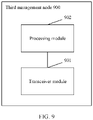
- this application provides a first management node, where the first management node includes:
- the hash ring includes a first hash node and a second hash node, the first hash node corresponds to the target second cluster, the first hash node is an adjacent successor node that is of the second hash node and that is on the hash ring, and the target hash interval is a hash interval between a hash value of the first hash node and a hash value of the second hash node.
- the processing module is further configured to divide an idle cluster including a plurality of computing nodes, to obtain a plurality of sub-clusters, where the first cluster is one of the plurality of sub-clusters.
- the plurality of sub-clusters include a third sub-cluster and a fourth sub-cluster
- the third sub-cluster is a sub-cluster having a maximum idle resource amount in the plurality of sub-clusters
- the fourth sub-cluster is a cluster having a minimum idle resource amount in the plurality of sub-clusters
- an absolute value of a difference between the idle resource amount of the third sub-cluster and the idle resource amount of the fourth sub-cluster is less than a first threshold.
- an absolute value of a difference between an idle resource amount of each of the plurality of sub-clusters and a preset idle resource amount is less than or equal to a second threshold, and the preset idle resource amount is related to a historical requested resource amount.
- a quantity of the plurality of sub-clusters and a quantity of second clusters are less than a third threshold.
- the transceiver module is further configured to:
- the transceiver module is further configured to: receive a first resource borrowing request sent by the target second cluster, where the first resource borrowing request includes task data, and send the task data to the first cluster.
- the transceiver module is specifically configured to send the task data to the first cluster based on the association relationship between the first cluster and the target second cluster.
- the hash ring includes Y hash nodes, and each second cluster corresponds to at least one hash node, hash values corresponding to the Y hash nodes and the hash value corresponding to the first cluster are generated according to a same hash algorithm, and Y is a positive integer.
- the processing module is further configured to: determine Y hash values corresponding to X second clusters, where each second cluster corresponds to at least one hash value, X is a positive integer, and Y is a positive integer greater than or equal to X; and generate the hash ring based on the Y hash values, where the hash ring includes the Y hash nodes, each second cluster corresponds to the at least one hash node, the Y hash nodes divide the hash ring into Y hash value intervals, and each hash node corresponds to one hash value interval.
- the transceiver module is further configured to receive the hash ring sent by the second cluster.
- the transceiver module is further configured to send an idle resource amount of the first cluster to the target second cluster.
- this application provides a second management node, where the second management node includes:
- the processing module is further configured to determine, based on that the transceiver module sends the first resource borrowing request to the first node, that the first cluster is in a resource non-borrowing state.
- the processing module is specifically configured to determine one of the plurality of clusters that have the association relationship with the target second cluster as the first cluster.
- the processing module is specifically configured to determine that a cluster corresponding to an idle resource amount that is in idle resource amounts of the plurality of clusters that have the association relationship with the target second cluster and that has a minimum difference with a required resource amount of the task data is the first cluster.
- the transceiver module is further configured to receive the required resource amount, of the task data, sent by a third node, and send an identifier of the first cluster and the idle resource amount of the first cluster to the third node based on that the idle resource amount of the first cluster is greater than or equal to the required resource amount.
- the transceiver module is specifically configured to receive a second resource borrowing request sent by the third node, where the second resource borrowing request includes the task data, and the second borrowing request is used to instruct the second node to allocate the task data to the first cluster for processing.
- this application provides a second management node, where the second management node includes:
- the processing module is specifically configured to determine one of the plurality of clusters that have the association relationship with the target second cluster as the first cluster.
- this application provides a third management node, where the third management node includes: a transceiver module, configured to: receive task data; send a required resource amount of the task data to a second node; receive a third resource borrowing request sent by the second node, where the third resource borrowing request is used to indicate that the third node is allowed to apply for a resource from a first cluster, the second node belongs to a target second cluster, the target second cluster corresponds to a target hash value interval in a hash ring, a hash value corresponding to the first cluster belongs to the target hash value interval, and an idle resource amount of the first cluster is greater than or equal to the required resource amount; and send a first resource borrowing request to a first node, where the first borrowing request is used to instruct the first node to allocate the task data to the first cluster for processing.
- a transceiver module configured to: receive task data; send a required resource amount of the task data to a second node; receive a third resource borrowing request sent by the second node,
- the transceiver module is specifically configured to: send the required resource amount of the task data to a plurality of nodes, where the second node is one of the plurality of nodes; and receive third resource borrowing requests sent by the plurality of nodes, where the third resource borrowing request is used to indicate that the third node is allowed to apply for a resource from a plurality of sub-clusters, and the first cluster is one of the plurality of sub-clusters.
- the third management node further includes: a processing module, configured to determine that a sub-cluster corresponding to an idle resource amount that is in idle resource amounts of the plurality of sub-clusters and that has a minimum difference with the required resource amount of the task data is the first cluster.
- this application provides a cluster, where the cluster includes a plurality of computing nodes, the computing nodes provide a required resource for task data to execute the task data, and the cluster further includes the first management node according to any one of the foregoing aspects.
- this application provides a cluster, where the cluster includes a plurality of computing nodes, the computing nodes provide a required resource for task data to execute the task data, and the cluster further includes the second management node according to any one of the foregoing aspects.
- this application provides a cluster, where the cluster includes a plurality of computing nodes, the computing nodes provide a required resource for task data to execute the task data, and the cluster further includes the third management node according to any one of the foregoing aspects.
- this application provides a distributed system, where the distributed system includes the cluster described in the ninth aspect and the cluster described in the tenth aspect.
- this application provides a distributed system, where the distributed system includes the cluster described in the ninth aspect, the cluster described in the tenth aspect, and the cluster described in the eleventh aspect.
- this application provides a computer storage medium, configured to store a computer software instruction used by the first management node.
- the computer storage medium includes a program designed for performing the foregoing aspect.
- this application provides a computer storage medium, configured to store a computer software instruction used by the second management node.
- the computer storage medium includes a program designed for performing the foregoing aspect.
- this application provides a computer storage medium, configured to store a computer software instruction used by the third management node.
- the computer storage medium includes a program designed for performing the foregoing aspect.
- a first node determines a hash value corresponding to a first cluster; the first node obtains a hash ring, where the hash ring includes at least one hash value interval, and each hash value interval corresponds to one second cluster; the first node determines a corresponding target second cluster based on the hash value corresponding to the first cluster, where the hash value corresponding to the first cluster belongs to a target hash interval, the target hash interval is a hash value interval in the at least one hash value interval, and the target hash interval corresponds to the target second cluster; and the first node establishes an association relationship between the first cluster and the target second cluster, where the target second cluster that has the association relationship with the first cluster is allowed to apply for a resource from the first cluster.
- the first node may determine, based on distribution of the hash value corresponding to the first cluster on the hash ring (generated based on a hash value corresponding to the second cluster), the target second cluster corresponding to the first cluster, and establish the association relationship between the target second cluster and the first cluster. Distribution of the hash value corresponding to the first cluster and a hash node corresponding to the second cluster on the hash ring that is according to a consistent hash algorithm is determined, and each idle cluster is allowed to be borrowed only by a fixed empty cluster.
- the target second cluster when the target second cluster needs to borrow an idle resource of the first cluster, the target second cluster does not need to randomly send a resource query request to a selected idle cluster to borrow the resource after receiving a response, and can directly borrow the resource from the first cluster. This reduces delay overheads of one round-trip information.
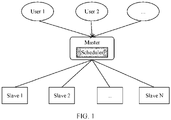
- FIG. 1 a system architecture of a distributed system to which an embodiment of the present invention is applied.
- FIG. 1 is a schematic diagram of an architecture of a centralized distributed system with a one-layer architecture.
- users (user 1, user 2, 7) can submit task data to a master node (master) of a node cluster.
- the master node uses a scheduler to schedule and allocate resources required by the task data.
- the task is assigned to slave nodes (slave 1, slave 2, ..., slave N) that meet resource requirements of the task.
- master node in this application may also be understood as a management node, and a slave node (slave) may be understood as a computing node.
- the scheduler may be a hardware device integrated on a related node, or may be implemented by general purpose hardware of a node by using software.
- a specific manner of implementing a function of the scheduler by a management node is not limited.
- Resource scheduling described in the embodiments of the present invention refers to allocating a resource of a computing node in a distributed manner to task data.
- the computing node refers to a resource set used as a resource scheduling unit in the distributed system.
- the computing node uses a server or a physical computer as a unit.
- the computing node may be obtained based on a different division unit. For example, when a CPU is used as a monitored resource, a processor or a processing core may be used as a division unit.
- each processor or processing core in the distributed system is used as one computing node, and one server may include a plurality of computing nodes.
- a data fragment may be used as a division unit for a computing node.
- one data fragment in a distributed database is used as one computing node, and one server may include a plurality of data fragments, that is, include a plurality of computing nodes.
- AI artificial intelligence
- IoT internet of things
- virtual reality virtual reality
- AR augmented reality
- a cloud computing technology is affected by factors such as a network link capacity limitation, and may likely cause problems such as an excessively slow data transmission rate and an excessively high response delay, and cannot meet an application service requirement.
- edge devices close to data sources for computing to improve service response performance gradually becomes a trend.
- a single edge device has a small computing capability, and it is difficult to perform a task by using only the single edge device to meet a requirement of a large-scale task. Therefore, computing capabilities of multi-edge devices are combined for use, and the multi-edge devices share and cooperate to complete data processing of a complex task, and this effectively ensures quality of service.
- One is hierarchical resource assistance between heterogeneous devices, for example, cooperation between an edge device and an edge server and a central cloud processor with different computing capabilities.
- the other type is resource cooperation between devices at a same layer. In other words, when resources of the edge device are insufficient, the edge device may borrow resources from another edge device.
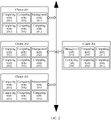
- FIG. 2 is a schematic diagram of an architecture of a resource borrowing scenario.
- the architecture includes a cluster 201, a cluster 202, a cluster 203, and a cluster 204.
- the cluster 201, the cluster 202, and the cluster 203 are idle clusters with a relatively large idle resource amount, and the cluster 204 is a busy cluster with a relatively small idle resource amount.
- the cluster 201 includes a management node 2011 and a plurality of computing nodes 2012.
- the cluster 202 includes a management node 2021 and a plurality of computing nodes 2022.
- the cluster 203 includes a management node 2031 and a plurality of computing nodes 2032.
- the cluster 204 includes a management node 2041 and a plurality of computing nodes 2042.
- the cluster 204 has an insufficient idle resource amount, and cross-cluster resource borrowing may be performed according to the following policy.
- the management node 2041 sorts the cluster 201, the cluster 202, and the cluster 203 in descending order of sizes of the idle resource amounts, to obtain a first cluster list.
- the first cluster list is ⁇ the cluster 201, the cluster 203, and the cluster 202 ⁇ .
- the management node 2041 receives task data, and determines that an available idle resource amount of the plurality of computing nodes 2042 is less than a required resource amount of the task data.
- the management node 2041 selects, from the first cluster list, a cluster whose idle resource amount meets a resource requirement of the task data, to obtain a second cluster list.
- the second cluster list is ⁇ the cluster 201, the cluster 203, and the cluster 202 ⁇ .
- the management node 2041 randomly selects two clusters from the second cluster list, and sends a resource query request to the selected two clusters.
- the management node 2041 selects the cluster 201 and the cluster 203. In this case, the management node 2041 may send the resource query request to the management node 2011 and the management node 2021.
- the management node 2041 selects the first cluster that returns a borrowing result and that meets the resource requirement of the task data, and performs cross-cluster resource borrowing.
- the management node may send the task data to the management node 2011, so that the management node 2011 schedules a plurality of computing nodes to process the task data.
- the management node 2041 needs to send the resource query request to randomly selected k clusters when performing cross-cluster resource borrowing, and performs resource borrowing after receiving a returned borrowing result. Therefore, before resource borrowing, delay overheads of one round-trip information are required, which increases a delay.
- resources are borrowed by cluster.
- a quantity of clusters is small but a quantity of nodes in a cluster is large
- resources may be borrowed by a plurality of busy clusters from a same idle cluster.
- the foregoing embodiment is used as an example. If the cluster 201 and the cluster 203 are both being borrowed by another busy cluster, a resource borrowing conflict occurs between the cluster 201 and the cluster 203. Consequently, no cluster returns a borrowing result.
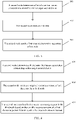
- FIG. 3a is a schematic diagram of an embodiment of a resource allocation method according to an embodiment of this application. As shown in FIG. 3a , the resource allocation method provided in this application includes the following steps.
- a first node determines a hash value corresponding to a first cluster.
- the first node may be a management node of an idle cluster.
- the idle cluster includes the first node and a plurality of computing nodes.
- the first cluster may be a node cluster including all or some of the plurality of computing nodes, or the first cluster may include the first node. This is not limited herein.
- the first node may first determine a busy/idle state of a cluster in which the first node is located.
- the first node may evaluate a busy/idle state of a node based on an occupation rate of a primary resource of the computing node in the cluster in which the first node is located, and evaluate the busy/idle state of the cluster based on the number of busy nodes and the number of idle nodes in the cluster in which the first node is located.
- the first node when a maximum resource occupation rate of the computing node is greater than or equal to the threshold a, the first node may determine that the computing node is a busy node; or when the maximum resource occupation rate of the computing node is less than the threshold a, the first node may determine that the computing node is an idle node.
- the threshold a may be adjusted in real time based on a requirement, and may be configured based on different scenarios. This is not limited in this application.
- the first node may define a busy/idle state of the cluster in which the first node is located in the following manner.
- the number of busy nodes is n
- the number of idle nodes is m.
- the first node may determine that the cluster in which the first node is located is a busy cluster.
- the threshold b may be adjusted in real time based on a requirement, and may be configured based on different scenarios. This is not limited in this application.
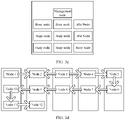
- p 1.25. If it is determined that the threshold b is 0.3, because 1.25 f 0.3, the cluster shown in FIG. 3b is an idle cluster, and may provide an idle resource.
- the first node when determining that the idle/busy state of the cluster in which the first node is located is idle, the first node may determine the hash value corresponding to the first cluster.
- the idle cluster in which the first node is located includes a plurality of computing nodes, and the first node may divide the plurality of computing nodes in the idle cluster to obtain a plurality of sub-clusters.
- the idle cluster in which the first node is located includes a plurality of idle nodes, and the first node may divide the plurality of idle nodes in the idle cluster to obtain a plurality of sub-clusters.
- the plurality of sub-clusters include a third cluster and a fourth cluster
- the third cluster is a cluster having a maximum idle resource amount in the plurality of sub-clusters
- the fourth cluster is a cluster having a minimum idle resource amount in the plurality of sub-clusters
- an absolute value of a difference between the idle resource amount of the third cluster and the idle resource amount of the fourth cluster is less than a first threshold.
- the first node may divide the plurality of computing nodes in the idle cluster, so that a difference between resource idle amounts of first clusters in the plurality of sub-clusters obtained after the division is not excessively large (the absolute value of the difference between the maximum resource idle amount and the minimum resource idle amount is less than the first threshold).
- the first node may randomly select some idle nodes or all idle nodes from a plurality of idle nodes of the idle cluster as a reserved resource, to provide a resource for local busy nodes of the idle cluster.
- the first node may determine remaining idle nodes other than the idle nodes used as the reserved resource as borrowable resources, and group the borrowable resources.
- ⁇ j is greater than ⁇ j -1 , the algorithm terminates, and j-1 group is used as a grouping result, where n represents the number of the borrowable nodes.
- j is a configurable parameter, and may be selected based on a requirement in actual application, which is not limited herein.
- the first node may determine that the remaining idle nodes in the idle nodes except the nodes used as the reserved resources include: ⁇ a node 1, a node 2, a node 3, a node 4, a node 5, a node 6, a node 7, a node 8, a node 9, a node 10, a node 11, and a node 12 ⁇ .
- Each node has been sorted in descending order of idle rates (in other words, an idle rate of the node 1 is the highest, and an idle rate of the node 12 is the lowest).
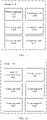
- FIG. 3d is a schematic diagram of a packing result according to an embodiment of this application. When it is determined that a quantity j of groups is 5, a schematic diagram of an "S"-shaped packing result is shown in FIG. 3d . In FIG. 3d , five sub-clusters are obtained after the division.
- an absolute value of a difference between an idle resource amount of each of the plurality of sub-clusters and a preset idle resource amount is less than or equal to a second threshold, and the preset idle resource amount is related to a historical requested resource amount.
- the idle resource amount may include an idle CPU resource amount and an idle memory resource amount
- the preset idle resource amount may include a preset idle CPU resource amount and a preset idle memory resource amount.
- the preset idle resource amount is related to the historical requested resource amount, and correspondingly, the preset idle CPU resource amount is related to a historical requested CPU resource amount, and the preset idle memory resource amount is related to a historical requested memory resource amount.
- an absolute value of a difference between an idle CPU resource amount of each of the plurality of sub-clusters and a preset idle CPU resource amount is less than or equal to a third threshold
- an absolute value of a difference between an idle memory resource amount of each of the plurality of sub-clusters and a preset idle memory resource amount is less than or equal to a fourth threshold.
- the preset idle CPU resource amount and the preset idle memory resource amount may be determined based on a requested resource amount in a historical borrowing request.
- the first node may record information about requested resources in the idle cluster in which the first node is located in recent k periods, where k is an adjustable parameter.
- the first node may first respectively perform statistical averaging on a requested CPU resource amount and a memory requested resource amount in the k periods based on a historical requested resource table, to obtain a historical average CPU requested amount CPU and a historical average memory requested amount MEM of each idle resource group in a single period.
- CPU i represents a total requested CPU resource amount in an i th period
- s i represents the number of idle resource groups in the i th period
- MEM i represents a total requested memory resource amount in the i th period.
- the first node may determine that the historical average CPU requested amount CPU is the preset idle CPU resource amount, and the historical average memory requested amount MEM is the preset memory resource amount.
- the first node may group the borrowable resources by using CPU and MEM as indicators, so that the idle CPU resource amount and the idle memory resource amount in each sub-cluster after grouping are close to CPU and MEM
- idle _ c i represents the idle CPU amount
- idle _ m i represents the idle memory amount
- ⁇ and ⁇ represent the weight parameters of the CPU and the memory
- sum _ cpu represents a total borrowable idle CPU amount in the idle cluster
- sum _ mem represents a total borrowable memory amount in the idle cluster.
- the first node performs the "S"-shaped packing on all idle nodes to obtain the plurality of sub-clusters. Details are not described herein again.
- a management node in a cluster may determine, at an interval of preset time, an idle/busy state of the cluster in which the management node is located.
- the management node may divide all or some idle nodes in the idle cluster in the foregoing manner, to obtain a plurality of sub-clusters.
- the management node may broadcast a busy/idle state (a busy state) of the management node to another management node.
- the first node may determine the hash value corresponding to the first cluster. Specifically, the first node may determine a hash value corresponding to each of the plurality of sub-clusters. It should be understood that the first node is one of the plurality of sub-clusters.
- the first cluster may uniquely correspond to an identifier.
- an IP and an ID may be used to uniquely identify the first cluster.
- the IP is an identifier of an idle cluster in which the first node is located, and the ID is an identifier of a group.
- the IP may be an IP address of a server on which the idle cluster is located, and the IP address can contain the IP address and a port number of the server.
- the hash value corresponding to the first cluster may be calculated based on the IP address of the server, port number information of the server, and the ID that is used to identify the group and that is of the server and according to a preset hash algorithm
- the first node may calculate, according to the preset hash algorithm, the hash value corresponding to each sub-cluster. Specifically, the first node may calculate a hash value of an identifier of each sub-cluster according to the preset hash algorithm. Because identifiers of the plurality of sub-clusters are different from each other, corresponding hash values are also different.
- the first node obtains a hash ring, where the hash ring includes at least one hash value interval, and each hash value interval corresponds to one second cluster.
- the hash ring may be understood as a data structure that includes hash values of a plurality of hash nodes and a hash value interval between two adjacent hash nodes.
- the data structure may be in a form of a list or an array.
- a specific form of the hash value is not limited in this application. Any data structure that can reflect a distribution feature of at least one second cluster shall fall within the protection scope of this application.
- the first node may construct the hash ring according to the preset hash algorithm
- clusters may be distributed on a value space logical ring based on hash values respectively corresponding to the clusters, which is referred to as the hash ring.
- the hash ring is usually generated and stored by the management node.
- a segment of data range (for example, a hash value range of 1000 to 20000 on the hash ring) on the hash ring is referred to as the hash value interval.
- the management node may broadcast a busy/idle state (a busy state) of the management node to another management node.
- the first node may determine a busy cluster (the at least one second cluster) included in the distributed system.
- the first node may calculate, according to a preset hash algorithm, a hash value corresponding to each second cluster.
- the preset hash algorithm may be a jhash hash algorithm, or may be another type of hash algorithm. This is not specifically limited in this embodiment of this application.
- the first node may select a proper hash algorithm based on a system requirement, provided that a same hash algorithm is used to calculate the hash value of the first cluster and calculate the hash value of the second cluster.
- the first node may generate the hash ring based on the hash value corresponding to each second cluster.
- FIG. 4a is a schematic diagram of a structure of a hash ring according to an embodiment of this application.
- a data range of the hash ring is from 0 to 232
- each large circle in the hash ring is a hash value obtained through calculation based on the identifier of the second cluster, and represents one second cluster.
- Second clusters are distributed at different positions on the hash ring based on hash values corresponding to the second clusters.
- the hash values corresponding to the second cluster divide the entire hash ring into a same quantity of hash value intervals as the second cluster, and one hash value interval is a data range of a segment of hash values on the hash ring.
- the hash ring includes a first hash node and a second hash node, the first hash node corresponds to a target second cluster, the first hash node is an adjacent successor node that is of the second hash node and that is on the hash ring, and a target hash interval is a hash interval between the first hash node and the second hash node.
- each hash value interval on the hash ring corresponds to one second cluster.
- searching starts from the hash value interval in a first direction, and a first found second cluster is determined as the second cluster corresponding to the hash value interval.
- the hash value of the second cluster is a boundary hash value of the hash value interval in the first direction, it may be considered that the second cluster corresponds to the hash value interval.
- the first direction is a positive direction of the hash ring, and may be a clockwise direction or a counterclockwise direction. This is not specifically limited in this embodiment of this application. For example, in FIG. 4a , the clockwise direction is selected as the first direction.
- the first node may determine hash values corresponding to X second clusters.
- Each second cluster corresponds to at least one hash value
- X is a positive integer
- Y is a positive integer greater than or equal to X.
- Y is greater than X.
- the second cluster corresponds to a plurality of hash values.
- FIG. 4b is a schematic diagram of a structure of a hash ring according to an embodiment of this application.
- the second clusters may correspond to a plurality of nodes on the hash ring. In other words, a virtual node is introduced.
- FIG. 4c is a schematic diagram of a structure of a hash ring according to an embodiment of this application. As shown in FIG.
- the target second cluster may correspond to two hash nodes on the hash ring.
- the second clusters may correspond to the plurality of nodes on the hash ring, so that the distribution of the second clusters on the hash ring is not excessively sparse.
- the plurality of nodes on the hash ring corresponding to the second cluster refer to implementation in an existing solution. Details are not described herein.
- the first node generates the hash ring based on the Y hash values.
- the hash ring includes Y hash nodes, each second cluster corresponds to at least one hash node, the Y hash nodes divide the hash ring into Y hash value intervals, and each hash node corresponds to one hash value interval.
- each hash node corresponds to one second cluster, and one second cluster may correspond to the plurality of hash nodes on the hash ring.
- the first node may periodically receive an idle/busy state broadcast by another cluster, and periodically update the hash ring based on the idle/busy state broadcast by the another cluster.
- the first node may receive a hash table sent by the second cluster.
- a management node for example, a second node in the second cluster may receive an idle/busy state broadcast by another cluster, and construct a hash ring based on the idle/busy state broadcast by the another cluster.
- a management node for example, a second node
- construct a hash ring based on the idle/busy state broadcast by the another cluster For how the second cluster constructs the hash ring based on the idle/busy state broadcast by the another cluster, refer to the description in the foregoing embodiment. Details are not described herein again.
- the first node determines a corresponding target second cluster based on the hash value corresponding to the first cluster, where the hash value corresponding to the first cluster belongs to a target hash interval, the target hash interval is a hash value interval in the at least one hash value interval, and the target hash interval corresponds to the target second cluster.
- the first node may determine the corresponding target second cluster from the hash ring based on the hash value corresponding to the first cluster.
- the first node may determine a hash value interval to which the hash value corresponding to the first cluster belongs on the hash ring as the target hash interval, and determine a second cluster corresponding to the target hash interval as the target second cluster.
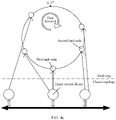
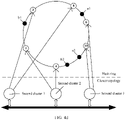
- FIG. 4d is a schematic diagram of a structure of a hash ring according to an embodiment of this application.
- the hash ring includes six hash nodes ⁇ a hash node 1, a hash node 3, a hash node 4, a hash node 6, a hash node 8, and a hash node 10 ⁇ .
- the hash node 3 and the hash node 8 correspond to a second cluster 1
- the hash node 1 and the hash node 4 correspond to a second cluster 2
- the hash node 6 and the hash node 10 correspond to the second cluster 3.
- a hash value interval between the hash node 1 and the hash node 3 corresponds to the second cluster 1
- a hash value interval between the hash node 3 and the hash node 4 corresponds to the second cluster 2
- a hash value interval between the hash node 4 and the hash node 6 corresponds to the second cluster 3
- a hash value interval between the hash node 6 and the hash node 8 corresponds to the second cluster 1
- a hash value interval between the hash node 8 and the hash node 10 corresponds to the second cluster 3
- a hash value interval between the hash node 10 and the hash node 1 corresponds to the second cluster 2.
- An idle cluster a includes two sub-clusters ⁇ a first cluster a1 and a first cluster a2 ⁇
- an idle cluster b includes two sub-clusters ⁇ a first cluster b1 and a first cluster b2 ⁇ .
- a hash value corresponding to the first cluster a1 belongs to the hash value interval between the hash node 8 and the hash node 6
- a hash value corresponding to the first cluster a2 belongs to a hash value interval between the hash node 4 and the hash node 10
- a hash value corresponding to the first cluster b1 belongs to the hash value interval between the hash node 1 and the hash node 3
- a hash value corresponding to the first cluster b2 belongs to the hash value interval between the hash node 4 and the hash node 10.
- a first node in the idle cluster a may determine that the first cluster a1 corresponds to a second cluster 6, the first node in the idle cluster a may determine that the first cluster a2 corresponds to a second cluster 4, a first node in the idle cluster b may determine that the first cluster b1 corresponds to the second cluster 3, and the first node in the idle cluster b may determine that the first cluster b2 corresponds to the second cluster 4.
- the first node establishes an association relationship between the first cluster and the target second cluster, where the target second cluster that has the association relationship with the first cluster is allowed to apply for a resource from the first cluster.
- the first node may send an identifier of the first cluster to the target second cluster. Specifically, after determining the corresponding target second cluster based on the hash value corresponding to the first cluster, the first node may send a resource allocation indication to the management node (the second node) in the target second cluster.
- the resource allocation indication includes the identifier of the first cluster, and the resource allocation indication may indicate that the target second node is allowed to apply for a resource from the first cluster.
- the first node may further send an idle resource amount of the first cluster to the target second cluster.
- the first node may further send an idle CPU resource amount and an idle memory resource amount of the first cluster to the target second cluster.
- the first node may determine, based on distribution of the hash value corresponding to the first cluster on the hash ring (generated based on the hash value corresponding to the second cluster), the target second cluster corresponding to the first cluster, and establish the association relationship between the target second cluster and the first cluster. Distribution of the hash value corresponding to the first cluster and a hash node corresponding to the second cluster on the hash ring that is according to a consistent hash algorithm is determined, and each idle cluster is allowed to be borrowed only by a fixed empty cluster.
- the target second cluster when the target second cluster needs to borrow an idle resource of the first cluster, the target second cluster does not need to randomly send a resource query request to a selected idle cluster to borrow the resource after receiving a response, and can directly borrow the resource from the first cluster. This reduces delay overheads of one round-trip information.
- a correspondence for resource borrowing is determined based on a correspondence that is on the hash ring generated based on a busy cluster and that is of the hash value of the first cluster, and the correspondence is unique, the idle cluster can be borrowed by only a corresponding busy cluster on the hash ring. Therefore, there is no borrowing conflict caused by concurrent borrowing of resources from a plurality of busy clusters to a same idle cluster.
- the first node divides the plurality of computing nodes in the idle cluster to obtain the plurality of sub-clusters, and then may borrow a resource for another busy cluster in a unit of a sub-cluster, so that relatively balanced borrowing of idle resources in the idle cluster can be implemented.
- the second cluster (for example, the target second cluster) may correspond to the plurality of nodes on the hash ring. In other words, a virtual node is introduced. In this way, a case in which one second cluster corresponds to a plurality of first clusters because the second clusters are excessively sparsely distributed on the hash ring does not occur. This improves resource allocation balance.
- a first node determines a hash value corresponding to a first cluster; the first node obtains a hash ring, where the hash ring includes at least one hash value interval, and each hash value interval corresponds to one second cluster; the first node determines a corresponding target second cluster based on the hash value corresponding to the first cluster, where the hash value corresponding to the first cluster belongs to a target hash interval, the target hash interval is a hash value interval in the at least one hash value interval, and the target hash interval corresponds to the target second cluster; and the first node establishes an association relationship between the first cluster and the target second cluster, where the target second cluster that has the association relationship with the first cluster is allowed to apply for a resource from the first cluster.
- the first node may determine, based on distribution of the hash value corresponding to the first cluster on the hash ring (generated based on the hash value corresponding to the second cluster), the target second cluster corresponding to the first cluster, and establish the association relationship between the target second cluster and the first cluster. Distribution of the hash value corresponding to the first cluster and a hash node corresponding to the second cluster on the hash ring that is according to a consistent hash algorithm is determined, and each idle cluster is allowed to be borrowed only by a fixed empty cluster.
- the target second cluster when the target second cluster needs to borrow an idle resource of the first cluster, the target second cluster does not need to randomly send a resource query request to a selected idle cluster to borrow the resource after receiving a response, and can directly borrow the resource from the first cluster. This reduces delay overheads of one round-trip information.
- a correspondence for resource borrowing is determined based on a correspondence that is on the hash ring generated based on a busy cluster and that is of the hash value of the first cluster, and the correspondence is unique, the idle cluster can be borrowed by only a corresponding busy cluster on the hash ring. Therefore, there is no borrowing conflict caused by concurrent borrowing of resources from a plurality of busy clusters to a same idle cluster.
- the first node may not determine the corresponding target second cluster based on distribution of the hash value corresponding to the first cluster on the hash ring, but determines the corresponding target second cluster in a random allocation manner or a sequential allocation manner.
- the first node may randomly select one second cluster from a plurality of second clusters in the distributed system as the target second cluster.
- the at least one second cluster may be sorted, and the plurality of sub-clusters (including the first cluster) are sequentially mounted to the corresponding second cluster (in other words, an association relationship between each sub-cluster and the second cluster is established) in a preset sequence.
- the first node may alternatively determine the corresponding target second cluster in the foregoing manner.
- the foregoing implementation may not be limited.
- the method can be implemented.
- the busy cluster borrows a resource
- the busy cluster does not need to randomly send a resource query request sent to a selected idle cluster to borrow the resource after receiving a response, and can directly borrow the resource from the first cluster. This reduces delay overheads of one round-trip information.
- a correspondence for resource borrowing is determined based on a correspondence that is on the hash ring generated based on a busy cluster and that is of the hash value of the first cluster, and the correspondence is unique, the idle cluster can be borrowed by only a corresponding busy cluster on the hash ring. Therefore, there is no borrowing conflict caused by concurrent borrowing of resources from a plurality of busy clusters to a same idle cluster.
- FIG. 5 is a schematic diagram of an embodiment of a resource borrowing method according to an embodiment of this application. As shown in FIG. 5 , the resource borrowing method provided in this application includes the following steps.
- a second node determines a first cluster that has an association relationship with a target second cluster, where the second node belongs to the target second cluster, the target second cluster corresponds to a target hash value interval in a hash ring, and a hash value corresponding to the first cluster belongs to the target hash value interval.
- the second node belongs to the target second cluster, and the target second cluster is a busy cluster.
- the second node may receive a resource allocation indication sent by the first node, where the resource allocation indication includes an identifier of the first cluster, and the resource allocation indication may indicate that the second node can borrow an idle resource of the first cluster.
- the resource allocation indication includes an identifier of the first cluster
- the resource allocation indication may indicate that the second node can borrow an idle resource of the first cluster.
- the second node may receive identifiers of a plurality of sub-clusters.
- the second node may determine one of the plurality of clusters that have the association relationship with the target second cluster as the first cluster.
- the second node may further receive an idle resource amount of each of the plurality of sub-clusters.
- the second node receives task data.
- the second node may receive the task data.
- the second node may determine a required resource amount of the received task data, and determine an idle resource amount of an idle node in a busy cluster (the target second cluster) in which the second node is located. If the idle resource amount of the idle node in the busy cluster to which the second node belongs is greater than or equal to the required resource amount of the task data, it is equivalent to that the second node may determine that a local cluster has a sufficient idle resource amount to process the task data. If the idle resource amount of the idle node in the busy cluster to which the second node belongs is less than the required resource amount of the task data, it is equivalent to that the second node may determine that the local cluster does not have a sufficient idle resource amount to process the task data.
- an idle CPU resource amount of the idle node in the busy cluster to which the second node belongs is greater than or equal to an idle CPU resource amount of the task data
- an idle memory resource amount of the idle node in the busy cluster to which the second node belongs is greater than or equal to an idle memory resource amount of the task data
- the second node may determine that the local cluster does not have a sufficient idle resource amount to process the task data.
- the third node sends a first resource borrowing request to the first node, where the first borrowing request is used to instruct the first node to allocate the task data to the first cluster for processing.
- the second node determines that the local cluster does not have a sufficient idle resource amount to process the task data, the second node needs to borrow a resource from another cluster to execute the task data.
- the second node may send the first resource borrowing request to the first node, and the first borrowing request may include the task data and the identifier of the first cluster.
- the first node may allocate the task data included in the first resource borrowing request to the first cluster for processing.
- the second node may receive the identifiers of the plurality of sub-clusters and idle resource amounts of the plurality of sub-clusters. In this case, the second node needs to determine, from the plurality of sub-clusters, one cluster as a resource borrowing object. The following describes how the second node determines, from the plurality of sub-clusters, the first cluster used as the resource borrowing object.
- the second node may maintain a mapping table.
- the mapping table stores the identifiers of the plurality of sub-clusters and corresponding idle resource amounts.
- the second node may search the mapping table for a cluster set that is in the plurality of sub-clusters and whose idle resource amount is greater than or equal to the required resource amount of the task data, to obtain a sub-cluster set ⁇ slices 1, slices 2, ..., and slices n ⁇ that meets the required resource amount.
- the slices n represents an identifier of an n th sub-cluster.
- the second node may perform priority sorting on the plurality of sub-clusters in the sub-cluster set, an indicator of priority sorting is an approximation degree between an idle resource amount of a sub-cluster and the required resource amount of the task data.
- a higher approximation degree indicates a higher priority of a corresponding sub-cluster, and the second node may select a sub-cluster with a highest priority to initiate the first borrowing request.
- the second node may maintain the following mapping table. Identifier of the first cluster Idle resource amount Idle CPU resource amount Idle memory resource amount slices 1 0.5 0.45 slices 2 0.45 0.45 slices 3 0.63 0.6 slices 4 0.4 0.46 slices 5 0.55 0.65 slices 6 0.65 0.75 slices 7 0.74 0.7 slices 8 0.68 0.55 slices 9 0.52 0.65
- the second node receives the task data, and determines that a required CPU resource amount corresponding to the task data is 0.6, and a required memory resource amount corresponding to the task data is 0.65.
- the second node may search the mapping table for a cluster set whose idle resource amount is greater than or equal to the required resource amount of the task data and that is in the plurality of first clusters, to obtain a first cluster set ⁇ slices 6, and slices 7 ⁇ that meets the required resource amount.
- the second node may determine, according to the following formula, the first cluster whose idle resource amount is closest to the required resource amount of the task data: min i ⁇ ⁇ cpi i b ⁇ cpu j r + ⁇ ⁇ mem i b ⁇ mem j r s . t .
- cpu i b ⁇ cpu j r mem i b ⁇ mem j r ⁇ represents a weight parameter of a CPU
- ⁇ represents a weight parameter of a memory
- cpi i b represents an idle CPU resource amount of a first cluster i registered with a second cluster j
- cpu j r represents an idle CPU resource amount that is determined in the second cluster j and that is required by the task data
- mem i b represents an idle memory resource amount of the first cluster i registered with the second cluster j
- mem j r represents an idle memory resource amount that is determined in the second cluster j and that is required by the task data.
- ⁇ is 0.6
- ⁇ is 0.4.
- the second node may determine that an idle resource amount of the first cluster corresponding to the slices 6 is closest to the required resource amount of the task data, and initiate the first borrowing request to the first cluster corresponding to the slices 6.
- the second node determines that a cluster corresponding to the idle resource amount that is in the idle resource amounts of the plurality of clusters that have the association relationship with the target second cluster and that has a minimum difference with the required resource amount of the task data is the first cluster. This improves resource utilization during resource borrowing.
- the second node may determine, based on the received identifier that is of the first cluster and that is sent by the first node, that the first cluster is in a resource borrowable state.
- the second node determines, based on sending a resource borrowing request to the first node, that the first cluster is in a resource non-borrowing state.
- the second node after the second node sends the resource borrowing request to the first node, it is equivalent to that the idle resource of the first cluster is occupied, and it may be determined that the first cluster is in the resource non-borrowing state.
- the second node may mark, in a mapping table, that a resource borrowing state of the first cluster is the resource non-borrowing state.
- the first node may also determine that the first cluster is in the resource non-borrowing state. In other words, the first node may determine that the first cluster cannot provide an available resource for another busy cluster. This ensures resource locking and implements cross-cluster resource scheduling without a conflict.
- the first cluster may return a processing result to the first node, and the first node sends the processing result to the second node.
- the second node determines the first cluster that has the association relationship with the target second cluster, where the second node belongs to the target second cluster, the target second cluster corresponds to a target hash value interval in a hash ring, and a hash value corresponding to the first cluster belongs to the target hash value interval; the second node receives the task data; and the second node sends the first resource borrowing request to the first node, where the first resource borrowing request is used to instruct the first node to allocate the task data to the first cluster for processing.
- each first node determines, by using distribution of the hash value corresponding to the first clusters on the hash ring generated based on a hash value corresponding to the second cluster, a target second cluster corresponding to the first cluster, and indicates that the target second cluster may borrow an idle resource of the first cluster.
- Distribution of the hash value corresponding to the first clusters on the hash ring that is according to a consistent hashing algorithm and a hash node corresponding to the second cluster are determined and relatively balanced.
- the target second cluster when the target second cluster needs to borrow an idle resource of the first cluster, the target second cluster does not need to randomly send a resource query request to a selected idle cluster to borrow the resource after receiving a response, but can directly determine the first cluster from which the target second cluster needs to borrow the resource, and send the first resource borrowing request to the first node. This reduces delay overheads of one round-trip information.
- a correspondence for resource borrowing is determined based on a correspondence that is on the hash ring generated based on a busy cluster and that is of the hash value of the first cluster, and the correspondence is unique, the idle cluster can be borrowed by only a corresponding busy cluster on the hash ring. Therefore, there is no borrowing conflict caused by concurrent borrowing of resources from a plurality of busy clusters to a same idle cluster.
- FIG. 6 is a schematic diagram of an embodiment of a resource borrowing method according to an embodiment of this application. As shown in FIG. 5 , the resource borrowing method provided in this application includes the following steps.
- a second node determines a first cluster that has an association relationship with a target second cluster, where the second node belongs to the target second cluster, the target second cluster corresponds to a target hash value interval in a hash ring, and a hash value corresponding to the first cluster belongs to the target hash value interval.
- step 601 For a specific description of the step 601, refer to the specific description of the step 501 in the embodiment corresponding to FIG. 5 . Details are not described herein again.
- the second node receives a required resource amount, of task data, sent by a third node.
- the third node may determine the required resource amount of the received task data, and determine an idle resource amount of an idle node in a busy cluster to which the third node belongs. If the idle resource amount of the idle node in the busy cluster to which the third node belongs is less than the required resource amount of the task data, the third node determines that a local cluster does not have a sufficient idle resource amount to process the task data.
- the third node may traverse a mapping table that stores identifiers of a plurality of sub-clusters and a corresponding idle resource amount, and search the mapping table for a cluster set that is in the plurality of sub-clusters and in which an idle resource amount is greater than or equal to the required resource amount of the task data. If the third node determines that an idle resource amount of each of the plurality of sub-clusters is less than the required resource amount of the task data, or determines that all the plurality of sub-clusters are in a resource non-borrowing state, the third node needs to borrow a resource from another busy cluster.
- the third node may determine, in a first direction in a maintained hash ring, an adjacent successor node of the hash node corresponding to the third node.
- the adjacent successor node corresponds to the second cluster.
- the third node may send the required resource amount of the task data to a management node (a second node) of the second cluster.
- the third node may send the required resource amount of the task data to the second node.
- the third node may determine, in the first direction in the maintained hash ring, a plurality of subsequent nodes of the hash node corresponding to the third node, and the plurality of subsequent nodes correspond to a plurality of second clusters.
- the third node may send the required resource amount of the task data to a plurality of management nodes (second nodes) of the second cluster.
- the second node may receive the required resource amount, of the task data, sent by the third node
- the second node sends a third resource borrowing request to the third node based on that an idle resource amount of the first cluster is greater than or equal to the required resource amount, where the third resource borrowing request is used to indicate that the third node is allowed to apply for a resource from the first cluster.
- the second node may search a mapping table maintained by the second node, determine a first cluster whose idle resource amount is greater than or equal to the required resource amount, and send the third resource borrowing request to the third node.
- the third resource borrowing request includes an identifier of the first cluster, and the third resource borrowing request is used to indicate that the third node is allowed to apply for a resource from the first cluster.
- the second node may determine that an idle resource amount of the plurality of sub-clusters is greater than or equal to the required resource amount, the second node may send identifiers of the plurality of determined sub-clusters to the third node.
- the first cluster is one of the plurality of sub-clusters.
- the second node may determine that the idle resource amount of the plurality of sub-clusters is greater than or equal to the required resource amount, randomly select some sub-clusters from the plurality of determined sub-clusters, and send identifiers of some sub-clusters to the third node.
- the second node may receive a second resource borrowing request sent by the third node.
- the second resource borrowing request includes the task data, and the second borrowing request is used to instruct the second node to allocate the task data to the first cluster for processing.
- the third node after receiving the identifier that is of the first cluster and that is sent by the second node, the third node obtains, from the second node, the identifier of the first cluster that can perform resource borrowing.
- the third node after receiving the identifiers that are of the plurality of sub-clusters and that are sent by a plurality of second nodes, or after receiving the identifiers that are of the plurality of sub-clusters and that are sent by one second node, the third node needs to determine one of the plurality of sub-clusters as a resource borrowing object, for how the third node determines one of a plurality of first clusters as the resource borrowing object, refer to the description of how the second node determines the first cluster of the plurality of sub-clusters as the resource borrowing object in the foregoing embodiment. Details are not described herein again.
- the second node may receive the second resource borrowing request sent by the third node.
- the second resource borrowing request includes the task data and the identifier of the first cluster, and the second borrowing request is used to instruct the second node to allocate the task data to the first cluster for processing.
- the second node may send the task data and the identifier of the first cluster to the first node.
- the first node may allocate the task data to the first cluster for processing.
- the third node may not send the second resource borrowing request to the second node to instruct the second node to allocate the task data to the first cluster for processing, but directly send a first resource borrowing request to the first node.
- the first borrowing request is used to instruct the first node to allocate the task data to the first cluster for processing. This reduces forwarding overheads of one step of information.
- FIG. 7 is a schematic diagram of a structure of a first management node 700 according to an embodiment of this application. As shown in FIG. 7 , the first management node 700 includes:
- the hash ring includes a first hash node and a second hash node
- the first hash node corresponds to the target second cluster
- the first hash node is an adjacent successor node that is of the second hash node and that is on the hash ring
- the target hash interval is a hash interval between a hash value of the first hash node and a hash value of the second hash node.
- the processing module 701 is further configured to divide an idle cluster including a plurality of computing nodes, to obtain a plurality of sub-clusters, where the first cluster is one of the plurality of sub-clusters.
- the plurality of sub-clusters include a third sub-cluster and a fourth sub-cluster
- the third sub-cluster is a sub-cluster having a maximum idle resource amount in the plurality of sub-clusters
- the fourth sub-cluster is a cluster having a minimum idle resource amount in the plurality of sub-clusters
- an absolute value of a difference between the idle resource amount of the third sub-cluster and the idle resource amount of the fourth sub-cluster is less than a first threshold.
- an absolute value of a difference between an idle resource amount of each of the plurality of sub-clusters and a preset idle resource amount is less than or equal to a second threshold, and the preset idle resource amount is related to a historical requested resource amount.
- the transceiver module 702 is further configured to:
- the hash ring includes Y hash nodes, and each second cluster corresponds to at least one hash node, hash values corresponding to the Y hash nodes and the hash value corresponding to the first cluster are generated according to a same hash algorithm, and Y is a positive integer.
- the processing module 701 is further configured to: determine Y hash values corresponding to X second clusters, where each second cluster corresponds to at least one hash value, X is a positive integer, and Y is a positive integer greater than or equal to X; and generate the hash ring based on the Y hash values, where the hash ring includes the Y hash nodes, each second cluster corresponds to the at least one hash node, the Y hash nodes divide the hash ring into Y hash value intervals, and each hash node corresponds to one hash value interval.
- the transceiver module 702 is further configured to receive the hash ring sent by the second cluster.
- the transceiver module 702 is further configured to send an idle resource amount of the first cluster to the target second cluster.
- FIG. 8 is a schematic diagram of a structure of a second management node 800 according to an embodiment of this application. As shown in FIG. 8 , the second management node 800 includes:
- the processing module 801 is further configured to: send a resource borrowing request to the first node based on the transceiver module, and determine that the first cluster is in a resource non-borrowing state.
- the processing module 801 is specifically configured to determine one of the plurality of clusters that have the association relationship with the target second cluster as the first cluster.
- the processing module 801 is specifically configured to determine that a cluster corresponding to an idle resource amount that is in idle resource amounts of the plurality of clusters that have the association relationship with the target second cluster and that has a minimum difference with a required resource amount of the task data is the first cluster.
- the transceiver module 802 is further configured to receive the required resource amount, of the task data, sent by a third node, and send an identifier of the first cluster and the idle resource amount of the first cluster to the third node based on that the idle resource amount of the first cluster is greater than or equal to the required resource amount.
- the transceiver module 802 is specifically configured to receive a second resource borrowing request sent by the third node, where the second resource borrowing request includes the task data, and the second borrowing request is used to instruct the second node to allocate the task data to the first cluster for processing.
- FIG. 8 is a schematic diagram of a structure of a second management node 800 according to an embodiment of this application. As shown in FIG. 8 , the second management node 800 includes:
- the processing module is specifically configured to determine one of the plurality of clusters that have the association relationship with the target second cluster as the first cluster.
- FIG. 9 is a schematic diagram of a structure of a third management node 900 according to an embodiment of this application.
- the third management node 900 includes: a transceiver module 901, configured to: receive task data; send a required resource amount of the task data to a second node; receive a third resource borrowing request sent by the second node, where the third resource borrowing request is used to indicate that the third node is allowed to apply for a resource from a first cluster, the second node belongs to a target second cluster, the target second cluster corresponds to a target hash value interval in a hash ring, a hash value corresponding to the first cluster belongs to the target hash value interval, and an idle resource amount of the first cluster is greater than or equal to the required resource amount; and send a first resource borrowing request to a first node, where the first borrowing request is used to instruct the first node to allocate the task data to the first cluster for processing.
- the transceiver module 901 is specifically configured to: send the required resource amount of the task data to a plurality of nodes, where the second node is one of the plurality of nodes; and receive third resource borrowing requests sent by the plurality of nodes, where the third resource borrowing request is used to indicate that the third node is allowed to apply for a resource from a plurality of sub-clusters, and the first cluster is one of the plurality of sub-clusters.
- the third management node 900 further includes: a processing module 902, configured to determine that a sub-cluster corresponding to an idle resource amount that is in idle resource amounts of the plurality of sub-clusters and that has a minimum difference with the required resource amount of the task data is the first cluster.
- a processing module 902 configured to determine that a sub-cluster corresponding to an idle resource amount that is in idle resource amounts of the plurality of sub-clusters and that has a minimum difference with the required resource amount of the task data is the first cluster.
- FIG. 10 illustrates a system instance applicable to a management node according to an embodiment of the present invention.
- the management node may be any one of the first management node, the second management node, and the third management node described in the foregoing embodiments.
- Functions of logical modules of the management node in the foregoing embodiment can be implemented based on a system environment in this embodiment.
- This embodiment is an instance applicable to the present invention, and does not intend to exert any limitation on a function and structure of the management node provided in the present invention.
- a general purpose computer system environment is used as an example in this embodiment of the present invention to describe the management node. It is well known that the management node may alternatively use another hardware architecture to implement a similar function.
- the another hardware architecture includes but is not limited to a personal computer, a serving computer, a multi-processor system, a microprocessor-based system, a programmable consumer electrical appliance, a network PC, a small-scale computer, a large-scale computer, or a distributed computing environment including any one of the foregoing systems or devices.
- the system used as an example to implement the present invention includes a general purpose computing device in a form of a management node 1000.
- the management node in this embodiment may execute the embodiment of the present invention described in the foregoing system scenario and architecture.
- the management node may be a master node, a management node, or any node in a decentralized architecture.
- Elements of the management node 1000 may include, but are not limited to, a processing unit 1020, a system memory 1030, and a system bus 1010.
- the system bus couples various system elements including the system memory with the processing unit 1020.
- the system bus 1010 may be any bus in several types of bus structures. These buses may include a memory bus or a memory controller, a peripheral bus, and a local bus that uses one bus structure.
- the bus structure may include an industry standard architecture (ISA) bus, a micro-channel architecture (MCA) bus, an extended ISA (EISA) bus, a video electronics standards association (VESA) local bus, and a peripheral component interconnect (PCI) bus.
- ISA industry standard architecture
- MCA micro-channel architecture
- EISA extended ISA
- VESA video electronics standards association
- PCI peripheral component interconnect
- the management node 1000 usually includes a plurality of types of management node readable media.
- the management node readable media may be any medium effectively accessible by the management node 1000, and include a volatile or non-volatile medium and a detachable or non-detachable medium.
- the management node readable media may include but be not limited to a management node storage medium and a communications medium. Any method or technique for managing information about readable instructions, data structures, program modules, or other data of a management node.
- the management node storage medium includes but is not limited to a RAM, a ROM an EEPROM, a flash memory, or another memory technology; or a hard disk storage, a solid-state hard disk storage, an optical disc storage, a magnetic disk cartridge, a magnetic disk storage, or another storage device; or any other media that can store required information and that is accessible by the management node 1000.
- the communications medium usually includes an embedded computer-readable instruction, a data structure, a program module, or other data in a modular data signal (for example, a carrier or another transmission mechanism), and further includes any information transmission medium.
- modular data signal refers to a signal that has one or more signal feature groups or that is changed by encoding information in a signal.
- the communications medium includes but is not limited to a wired network or a wired medium based on a direct wired connection, and a wireless medium including a sound medium, an RF infrared, or another wireless medium.
- a wireless medium including a sound medium, an RF infrared, or another wireless medium.
- the system memory 1030 includes the management node storage medium, and may be a volatile memory or a non-volatile memory, for example, a read-only memory (ROM) 1031 and a random access memory (RAM) 1032.
- a basic input/output system 1033 (BIOS) is usually stored in the ROM 1031 and includes a basic routine. The basic routine contributes to information transmission between elements in a management node 1010.
- the RAM 1032 usually includes a data and/or program module, and can be accessed and/or operated immediately by the processing unit 1020.
- FIG. 10 illustrates an operating system 1034, an application program 1035, another program module 1036, and program data 1037.
- the management node 1000 may also include another detachable/non-detachable management node storage medium and another volatile/non-volatile management node storage medium.
- FIG. 10 illustrates a hard disk memory 1041, which may be a non-detachable and non-volatile readable and writable magnetic medium; and an external memory 1051, which may be various removable and non-volatile external memories, such as an optical disc, a magnetic disk, a flash memory, or a removable hard disk.
- the hard disk memory 1041 is usually connected to the system bus 1010 through a non-detachable storage interface (for example, an interface 1040), and the external memory is usually connected to the system bus 1010 through a detachable storage interface (for example, an interface 1060).
- the above-described driver shown in FIG. 10 and the management node storage medium related to the driver store the management node readable instruction, the data structure, the program module, and other data of the management node 1000.
- the hard disk drive 1041 is configured to store an operating system 1042, an application program 1043, another application program 1044, and program data 1045. It should be noted that these components may be the same as or different from the operating system 1034, the application program 1035, the another program module 1036, and the program data 1037.
- the method in the foregoing embodiment or the function of the logical module in the foregoing embodiment may be performed by using code or a readable instruction stored in a storage medium of the management node, and the processing unit 1020 reads the code or the readable instruction, to execute the method.
- a user may enter a command or information on the management node 1000 by using various input devices 1061.
- Various input devices are usually connected to the processing unit 1020 through the user input interface 1060, and the user input interface 1060 is coupled to the system bus.
- the various input devices may alternatively be connected to the bus structure through another interface, for example, a parallel interface, or a universal serial interface (USB).
- a display device 1091 may also be connected to the system bus 1010 through an interface (for example, the video interface 1090).
- the computing device 1000 may also include various peripheral output devices 1020, and the output devices may be connected through an output interface 10100 or the like.
- the management node 1000 may be logically connected to one or more computing devices, for example, a remote computer 1071.
- a remote computing node includes the management node, a computing node, a server, a router, a network PC, an equivalent device, or another universal network node, and usually includes numerous or all components that are discussed above and that are related to the management node 1000.
- the remote computing node may be a slave node, a computing node, or another management node.
- the logical connection described in FIG. 10 includes a local area network (LAN) and a wide area network (WAN), and may also include another network. Through the logical connection, the management node may implement interaction with other subjects in the present invention with other nodes.
- task information and data may be transmitted through a logical connection to a user to obtain task data of the user; resource data and a task assignment command are transmitted through a logical connection to a computing node, to implement obtaining of resource information and allocation of the task data of each node.
- FIG. 11 is a schematic diagram of a structure of a cluster 1100 according to an embodiment of this application.
- the cluster 1100 includes a plurality of computing nodes 1101, and the computing nodes 1101 provide a required resource for task data to execute the task data.
- the cluster 1100 further includes the first management node 700 described in the embodiment corresponding to FIG. 7 .
- FIG. 12 is a schematic diagram of a structure of a cluster according to an embodiment of this application.
- the cluster 1200 includes a plurality of computing nodes 1201, and the computing nodes 1201 provide a required resource for task data to execute the task data.
- the cluster 1200 further includes the second management node 800 described in the embodiment corresponding to FIG. 8 .
- FIG. 13 is a schematic diagram of a structure of a cluster according to an embodiment of this application.
- the cluster 1300 includes a plurality of computing nodes 1301, and the computing nodes 1301 provide a required resource for task data to execute the task data.
- the cluster 1300 further includes the third management node 900 described in the embodiment corresponding to FIG. 9 .
- FIG. 14 is a schematic diagram of a structure of a distributed system 1400 according to an embodiment of this application.
- the distributed system 1400 includes the cluster 1100 described in the embodiment corresponding to FIG. 11 and the cluster 1200 described in the embodiment corresponding to FIG. 12 .
- FIG. 15 is a schematic diagram of a structure of a distributed system according to an embodiment of this application.
- the distributed system 1500 includes the cluster 1100 described in the embodiment corresponding to FIG. 11 , the cluster 1200 described in the embodiment corresponding to FIG. 12 , and the cluster 1300 described in the embodiment corresponding to FIG. 13 .
- All or some of the foregoing embodiments may be implemented through software, hardware, firmware, or any combination thereof.
- the embodiments may be implemented completely or partially in a form of a computer program product.
- the computer program product includes one or more computer instructions.
- the computer may be a general-purpose computer, a dedicated computer, a computer network, or another programmable apparatus.
- the computer instructions may be stored in a computer-readable storage medium or may be transmitted from a computer-readable storage medium to another computer-readable storage medium.
- the computer instructions may be transmitted from a website, computer, server, or data center to another website, computer, server, or data center in a wired (for example, a coaxial cable, an optical fiber, or a digital subscriber line (Digital Subscriber Line, DSL)) or wireless (for example, infrared, radio, and microwave, or the like) manner.
- the computer-readable storage medium may be any usable medium accessible by a computer, or a data storage device, such as a server or a data center, integrating one or more usable media.
- the usable medium may be a magnetic medium (for example, a floppy disk, a hard disk, or a magnetic tape), an optical medium (for example, a DVD), a semiconductor medium (for example, a solid-state drive Solid State Disk (SSD)), or the like.
- a magnetic medium for example, a floppy disk, a hard disk, or a magnetic tape
- an optical medium for example, a DVD
- a semiconductor medium for example, a solid-state drive Solid State Disk (SSD)
- the disclosed system, apparatus, and method may be implemented in other manners.
- the described apparatus embodiment is merely an example.
- division into units is merely logical function division and may be other division in actual implementation.
- a plurality of units or components may be combined or integrated into another system, or some features may be ignored or not performed.
- the displayed or discussed mutual couplings or direct couplings or communication connections may be implemented through some interfaces.
- the indirect couplings or communication connections between the apparatuses or units may be implemented in electronic, mechanical, or other forms.
- the units described as separate parts may or may not be physically separate, and parts displayed as units may or may not be physical units, may be located in one position, or may be distributed on a plurality of network units. Some or all of the units may be selected based on actual requirements to achieve the objectives of the solutions of the embodiments.
- function units in the embodiments of this application may be integrated into one processing unit, or each of the units may exist alone physically, or two or more units are integrated into one unit.
- the integrated unit may be implemented in a form of hardware, or may be implemented in a form of a software functional unit.
- the integrated unit When the integrated unit is implemented in the form of a software function unit and sold or used as an independent product, the integrated unit may be stored in a computer-readable storage medium. Based on such an understanding, the technical solutions of this application essentially, or the part contributing to the prior art, or all or some of the technical solutions may be implemented in the form of a software product.
- the software product is stored in a storage medium and includes several instructions for instructing a computer device (which may be a personal computer, a server, or a network device) to perform all or some of the steps of the methods described in the embodiments of this application.
- the foregoing storage medium includes any medium that can store program code, such as a USB flash drive, a removable hard disk, a read-only memory (ROM, Read-Only Memory), a random access memory (RAM, Random Access Memory), a magnetic disk, or an optical disc.
- program code such as a USB flash drive, a removable hard disk, a read-only memory (ROM, Read-Only Memory), a random access memory (RAM, Random Access Memory), a magnetic disk, or an optical disc.
Landscapes
- Engineering & Computer Science (AREA)
- Software Systems (AREA)
- Theoretical Computer Science (AREA)
- Physics & Mathematics (AREA)
- General Engineering & Computer Science (AREA)
- General Physics & Mathematics (AREA)
- Mathematical Physics (AREA)
- Mobile Radio Communication Systems (AREA)
- Data Exchanges In Wide-Area Networks (AREA)
Applications Claiming Priority (2)
| Application Number | Priority Date | Filing Date | Title |
|---|---|---|---|
| CN201910704756.7A CN112306651B (zh) | 2019-07-31 | 2019-07-31 | 一种资源分配方法和资源借调方法 |
| PCT/CN2020/105476 WO2021018183A1 (fr) | 2019-07-31 | 2020-07-29 | Procédé d'attribution de ressources et procédé de déchargement de ressources |
Publications (2)
| Publication Number | Publication Date |
|---|---|
| EP4002115A1 true EP4002115A1 (fr) | 2022-05-25 |
| EP4002115A4 EP4002115A4 (fr) | 2022-12-07 |
Family
ID=74229226
Family Applications (1)
| Application Number | Title | Priority Date | Filing Date |
|---|---|---|---|
| EP20846626.8A Pending EP4002115A4 (fr) | 2019-07-31 | 2020-07-29 | Procédé d'attribution de ressources et procédé de déchargement de ressources |
Country Status (4)
| Country | Link |
|---|---|
| US (1) | US12386671B2 (fr) |
| EP (1) | EP4002115A4 (fr) |
| CN (1) | CN112306651B (fr) |
| WO (1) | WO2021018183A1 (fr) |
Cited By (1)
| Publication number | Priority date | Publication date | Assignee | Title |
|---|---|---|---|---|
| US12664024B2 (en) | 2023-03-24 | 2026-06-23 | Hamilton Sundstrand Corporation | Decentralized scheduler of computation jobs for unstable network of heterogenous nodes |
Families Citing this family (14)
| Publication number | Priority date | Publication date | Assignee | Title |
|---|---|---|---|---|
| US11847503B2 (en) * | 2020-01-28 | 2023-12-19 | Hewlett Packard Enterprise Development Lp | Execution of functions by clusters of computing nodes |
| CN113473488B (zh) * | 2021-07-02 | 2024-01-30 | 福建晶一科技有限公司 | 一种基于容器的cu与mec共平台部署方法 |
| CN115695419A (zh) * | 2021-07-27 | 2023-02-03 | 华为技术有限公司 | 通信系统、方法及装置 |
| CN114185661B (zh) * | 2021-12-10 | 2026-01-13 | 北京百度网讯科技有限公司 | 一种任务处理方法、装置、设备以及存储介质 |
| CN115001969B (zh) * | 2022-05-24 | 2024-06-14 | 北京金玖银玖数字科技有限公司 | 一种数据存储节点部署方法、数据存储方法、装置及设备 |
| US20230419327A1 (en) * | 2022-06-22 | 2023-12-28 | AnChain.ai, Inc. | Secure and scalable blockchain smart contract-based digital asset platform |
| US12524720B1 (en) * | 2022-06-30 | 2026-01-13 | Amazon Technologies, Inc. | Resource sharing between vehicles |
| US12645477B2 (en) * | 2022-07-07 | 2026-06-02 | Vmware, Inc. | Cross-cluster service resource discovery |
| CN114979282B (zh) * | 2022-07-28 | 2023-01-20 | 北京金山云网络技术有限公司 | 任务调度方法、装置、存储介质以及电子设备 |
| CN115562853B (zh) * | 2022-09-16 | 2025-07-15 | 华中科技大学 | 一种面向混合负载的资源动态管理方法及管理系统 |
| CN117950815A (zh) * | 2022-10-21 | 2024-04-30 | 华为技术有限公司 | 执行任务的方法和异构服务器 |
| CN115941660A (zh) * | 2022-11-23 | 2023-04-07 | 内蒙古欣荣惠信息技术有限公司 | 未成年人保护系统及方法 |
| CN117195054B (zh) * | 2023-09-15 | 2024-03-26 | 苏州优鲜生网络科技有限公司 | 基于集群的跨节点数据识别方法与系统 |
| US12463918B2 (en) * | 2024-03-18 | 2025-11-04 | Cisco Technology, Inc. | Decentralized approach to identify objects across a federation in a network |
Family Cites Families (33)
| Publication number | Priority date | Publication date | Assignee | Title |
|---|---|---|---|---|
| US5612865A (en) * | 1995-06-01 | 1997-03-18 | Ncr Corporation | Dynamic hashing method for optimal distribution of locks within a clustered system |
| US7779415B2 (en) * | 2003-11-21 | 2010-08-17 | International Business Machines Corporation | Adaptive load distribution in managing dynamic and transient data for distributed applications |
| GB2417580A (en) * | 2004-08-26 | 2006-03-01 | Hewlett Packard Development Co | Method for executing a bag of tasks application on a cluster by loading a slave process onto an idle node in the cluster |
| JP4961833B2 (ja) * | 2006-05-19 | 2012-06-27 | 日本電気株式会社 | クラスタシステム、負荷分散方法、最適化クライアントプログラム、及び調停サーバプログラム |
| JP2007325235A (ja) * | 2006-06-05 | 2007-12-13 | Ricoh Co Ltd | 電子機器 |
| US8244846B2 (en) * | 2007-12-26 | 2012-08-14 | Symantec Corporation | Balanced consistent hashing for distributed resource management |
| US8484354B2 (en) | 2009-11-02 | 2013-07-09 | Beaumaris Networks, Inc. | Distributed resource management |
| US20110153826A1 (en) | 2009-12-22 | 2011-06-23 | Microsoft Corporation | Fault tolerant and scalable load distribution of resources |
| CN102130938B (zh) * | 2010-12-03 | 2012-02-15 | 中国科学院软件研究所 | 一种面向Web应用宿主平台的资源供给方法 |
| US8510267B2 (en) * | 2011-03-08 | 2013-08-13 | Rackspace Us, Inc. | Synchronization of structured information repositories |
| US8949308B2 (en) * | 2012-01-23 | 2015-02-03 | Microsoft Corporation | Building large scale infrastructure using hybrid clusters |
| US9448966B2 (en) * | 2013-04-26 | 2016-09-20 | Futurewei Technologies, Inc. | System and method for creating highly scalable high availability cluster in a massively parallel processing cluster of machines in a network |
| US9871855B2 (en) * | 2014-09-19 | 2018-01-16 | Facebook, Inc. | Balancing load across cache servers in a distributed data store |
| US20160105323A1 (en) * | 2014-10-14 | 2016-04-14 | Microsoft Corporation | Node identification using clusters |
| CN104461740B (zh) | 2014-12-12 | 2018-03-20 | 国家电网公司 | 一种跨域集群计算资源聚合和分配的方法 |
| US9619391B2 (en) * | 2015-05-28 | 2017-04-11 | International Business Machines Corporation | In-memory caching with on-demand migration |
| US20160378846A1 (en) * | 2015-06-26 | 2016-12-29 | Intel Corporation | Object based storage cluster with multiple selectable data handling policies |
| KR20170029263A (ko) * | 2015-09-07 | 2017-03-15 | 한국전자통신연구원 | 부하 분산 장치 및 방법 |
| CN106991008B (zh) * | 2016-01-20 | 2020-12-18 | 华为技术有限公司 | 一种资源锁管理方法、相关设备及系统 |
| CN108009016B (zh) * | 2016-10-31 | 2021-10-22 | 华为技术有限公司 | 一种资源负载均衡控制方法及集群调度器 |
| CN108132830B (zh) * | 2016-12-01 | 2020-12-25 | 北京金山云网络技术有限公司 | 一种任务调度方法、装置及系统 |
| US10346191B2 (en) * | 2016-12-02 | 2019-07-09 | Wmware, Inc. | System and method for managing size of clusters in a computing environment |
| CN107197035A (zh) * | 2017-06-21 | 2017-09-22 | 中国民航大学 | 一种基于一致性哈希算法的亲和性动态负载均衡方法 |
| CN107801086B (zh) * | 2017-10-20 | 2019-01-04 | 广东省南方数字电视无线传播有限公司 | 多缓存服务器的调度方法和系统 |
| CN108173937A (zh) * | 2017-12-28 | 2018-06-15 | 北京中电普华信息技术有限公司 | 访问控制方法和装置 |
| CN110022337A (zh) * | 2018-01-09 | 2019-07-16 | 阿里巴巴集团控股有限公司 | 资源调度方法、装置、设备和系统 |
| CN110169008B (zh) * | 2018-07-10 | 2022-06-03 | 深圳花儿数据技术有限公司 | 一种基于一致性哈希算法的分布式数据冗余存储方法 |
| CN109040212B (zh) * | 2018-07-24 | 2021-09-21 | 苏州科达科技股份有限公司 | 设备接入服务器集群方法、系统、设备及存储介质 |
| CN109347917A (zh) * | 2018-09-14 | 2019-02-15 | 北京沃杰知识产权有限公司 | 区块链数据共识处理方法、系统、存储介质和电子设备 |
| CN110071978B (zh) * | 2019-04-28 | 2022-04-22 | 新华三信息安全技术有限公司 | 一种集群管理的方法及装置 |
| CN112019581B (zh) | 2019-05-30 | 2022-02-25 | 华为技术有限公司 | 一种调度任务处理实体的方法及装置 |
| CN110489059B (zh) * | 2019-07-11 | 2022-04-12 | 平安科技(深圳)有限公司 | 数据集群存储的方法、装置及计算机设备 |
| US11023145B2 (en) * | 2019-07-30 | 2021-06-01 | EMC IP Holding Company LLC | Hybrid mapped clusters for data storage |
-
2019
- 2019-07-31 CN CN201910704756.7A patent/CN112306651B/zh active Active
-
2020
- 2020-07-29 EP EP20846626.8A patent/EP4002115A4/fr active Pending
- 2020-07-29 WO PCT/CN2020/105476 patent/WO2021018183A1/fr not_active Ceased
-
2022
- 2022-01-31 US US17/588,983 patent/US12386671B2/en active Active
Cited By (1)
| Publication number | Priority date | Publication date | Assignee | Title |
|---|---|---|---|---|
| US12664024B2 (en) | 2023-03-24 | 2026-06-23 | Hamilton Sundstrand Corporation | Decentralized scheduler of computation jobs for unstable network of heterogenous nodes |
Also Published As
| Publication number | Publication date |
|---|---|
| EP4002115A4 (fr) | 2022-12-07 |
| WO2021018183A1 (fr) | 2021-02-04 |
| US12386671B2 (en) | 2025-08-12 |
| CN112306651A (zh) | 2021-02-02 |
| CN112306651B (zh) | 2024-09-06 |
| US20220156115A1 (en) | 2022-05-19 |
Similar Documents
| Publication | Publication Date | Title |
|---|---|---|
| US12386671B2 (en) | Resource allocation method and resource borrowing method | |
| CN111176792B (zh) | 一种资源调度方法、装置及相关设备 | |
| US20190324819A1 (en) | Distributed-system task assignment method and apparatus | |
| US9652150B2 (en) | Global memory sharing method and apparatus, and communications system | |
| US10686728B2 (en) | Systems and methods for allocating computing resources in distributed computing | |
| CN107688492B (zh) | 资源的控制方法、装置和集群资源管理系统 | |
| CN108667748B (zh) | 一种控制带宽的方法、装置、设备和存储介质 | |
| CN112153700A (zh) | 一种网络切片资源管理方法及设备 | |
| US20220300323A1 (en) | Job Scheduling Method and Job Scheduling Apparatus | |
| CN109451540B (zh) | 一种网络切片的资源分配方法和设备 | |
| CN107682417B (zh) | 一种数据节点的任务分配方法和装置 | |
| CN112817728A (zh) | 任务调度方法、网络设备和存储介质 | |
| CN107205030B (zh) | 服务器资源调度方法及系统 | |
| CN106790332B (zh) | 一种资源调度方法、系统及主节点 | |
| CN114764371A (zh) | 任务调度方法及管理系统 | |
| CN112506821A (zh) | 一种系统总线接口请求仲裁方法及相关组件 | |
| CN108228350A (zh) | 一种资源分配方法及装置 | |
| CN115665251A (zh) | 边缘云资源分配方法及系统 | |
| WO2018157768A1 (fr) | Procédé et dispositif d'ordonnancement de dispositif d'exécution, et dispositif d'exécution | |
| EP3804381B1 (fr) | Réseau de télécommunications cellulaire | |
| CN113395700B (zh) | 基本服务集管理方法、通信设备及存储介质 | |
| WO2026051571A1 (fr) | Procédé et système de traitement de données, dispositif électronique et support de stockage | |
| CN110209475B (zh) | 数据采集方法及装置 | |
| CN116225612B (zh) | 一种容器调度方法、装置和系统 | |
| WO2025035664A1 (fr) | Procédé et appareil de gestion de partitions de données, et dispositif électronique |
Legal Events
| Date | Code | Title | Description |
|---|---|---|---|
| STAA | Information on the status of an ep patent application or granted ep patent |
Free format text: STATUS: THE INTERNATIONAL PUBLICATION HAS BEEN MADE |
|
| PUAI | Public reference made under article 153(3) epc to a published international application that has entered the european phase |
Free format text: ORIGINAL CODE: 0009012 |
|
| STAA | Information on the status of an ep patent application or granted ep patent |
Free format text: STATUS: REQUEST FOR EXAMINATION WAS MADE |
|
| 17P | Request for examination filed |
Effective date: 20220218 |
|
| AK | Designated contracting states |
Kind code of ref document: A1 Designated state(s): AL AT BE BG CH CY CZ DE DK EE ES FI FR GB GR HR HU IE IS IT LI LT LU LV MC MK MT NL NO PL PT RO RS SE SI SK SM TR |
|
| DAV | Request for validation of the european patent (deleted) | ||
| DAX | Request for extension of the european patent (deleted) | ||
| A4 | Supplementary search report drawn up and despatched |
Effective date: 20221109 |
|
| RIC1 | Information provided on ipc code assigned before grant |
Ipc: G06F 9/50 20060101ALI20221103BHEP Ipc: G06F 9/48 20060101AFI20221103BHEP |
|
| STAA | Information on the status of an ep patent application or granted ep patent |
Free format text: STATUS: EXAMINATION IS IN PROGRESS |
|
| 17Q | First examination report despatched |
Effective date: 20250805 |