EP4002122A1 - Réseau de véhicule pour gérer une panne d'intégrité de démarrage - Google Patents
Réseau de véhicule pour gérer une panne d'intégrité de démarrage Download PDFInfo
- Publication number
- EP4002122A1 EP4002122A1 EP20207824.2A EP20207824A EP4002122A1 EP 4002122 A1 EP4002122 A1 EP 4002122A1 EP 20207824 A EP20207824 A EP 20207824A EP 4002122 A1 EP4002122 A1 EP 4002122A1
- Authority
- EP
- European Patent Office
- Prior art keywords
- integrity
- supervisor
- vehicle
- communication channel
- vehicle network
- Prior art date
- Legal status (The legal status is an assumption and is not a legal conclusion. Google has not performed a legal analysis and makes no representation as to the accuracy of the status listed.)
- Pending
Links
Images



Classifications
-
- G—PHYSICS
- G06—COMPUTING OR CALCULATING; COUNTING
- G06F—ELECTRIC DIGITAL DATA PROCESSING
- G06F11/00—Error detection; Error correction; Monitoring
- G06F11/07—Responding to the occurrence of a fault, e.g. fault tolerance
- G06F11/0703—Error or fault processing not based on redundancy, i.e. by taking additional measures to deal with the error or fault not making use of redundancy in operation, in hardware, or in data representation
- G06F11/0706—Error or fault processing not based on redundancy, i.e. by taking additional measures to deal with the error or fault not making use of redundancy in operation, in hardware, or in data representation the processing taking place on a specific hardware platform or in a specific software environment
- G06F11/0736—Error or fault processing not based on redundancy, i.e. by taking additional measures to deal with the error or fault not making use of redundancy in operation, in hardware, or in data representation the processing taking place on a specific hardware platform or in a specific software environment in functional embedded systems, i.e. in a data processing system designed as a combination of hardware and software dedicated to performing a certain function
- G06F11/0739—Error or fault processing not based on redundancy, i.e. by taking additional measures to deal with the error or fault not making use of redundancy in operation, in hardware, or in data representation the processing taking place on a specific hardware platform or in a specific software environment in functional embedded systems, i.e. in a data processing system designed as a combination of hardware and software dedicated to performing a certain function in a data processing system embedded in automotive or aircraft systems
-
- G—PHYSICS
- G06—COMPUTING OR CALCULATING; COUNTING
- G06F—ELECTRIC DIGITAL DATA PROCESSING
- G06F11/00—Error detection; Error correction; Monitoring
- G06F11/07—Responding to the occurrence of a fault, e.g. fault tolerance
- G06F11/0703—Error or fault processing not based on redundancy, i.e. by taking additional measures to deal with the error or fault not making use of redundancy in operation, in hardware, or in data representation
- G06F11/0751—Error or fault detection not based on redundancy
-
- G—PHYSICS
- G06—COMPUTING OR CALCULATING; COUNTING
- G06F—ELECTRIC DIGITAL DATA PROCESSING
- G06F11/00—Error detection; Error correction; Monitoring
- G06F11/07—Responding to the occurrence of a fault, e.g. fault tolerance
- G06F11/0703—Error or fault processing not based on redundancy, i.e. by taking additional measures to deal with the error or fault not making use of redundancy in operation, in hardware, or in data representation
- G06F11/0766—Error or fault reporting or storing
-
- G—PHYSICS
- G06—COMPUTING OR CALCULATING; COUNTING
- G06F—ELECTRIC DIGITAL DATA PROCESSING
- G06F11/00—Error detection; Error correction; Monitoring
- G06F11/07—Responding to the occurrence of a fault, e.g. fault tolerance
- G06F11/0703—Error or fault processing not based on redundancy, i.e. by taking additional measures to deal with the error or fault not making use of redundancy in operation, in hardware, or in data representation
- G06F11/0793—Remedial or corrective actions
-
- G—PHYSICS
- G06—COMPUTING OR CALCULATING; COUNTING
- G06F—ELECTRIC DIGITAL DATA PROCESSING
- G06F21/00—Security arrangements for protecting computers, components thereof, programs or data against unauthorised activity
- G06F21/50—Monitoring users, programs or devices to maintain the integrity of platforms, e.g. of processors, firmware or operating systems
- G06F21/55—Detecting local intrusion or implementing counter-measures
- G06F21/552—Detecting local intrusion or implementing counter-measures involving long-term monitoring or reporting
-
- G—PHYSICS
- G06—COMPUTING OR CALCULATING; COUNTING
- G06F—ELECTRIC DIGITAL DATA PROCESSING
- G06F21/00—Security arrangements for protecting computers, components thereof, programs or data against unauthorised activity
- G06F21/50—Monitoring users, programs or devices to maintain the integrity of platforms, e.g. of processors, firmware or operating systems
- G06F21/57—Certifying or maintaining trusted computer platforms, e.g. secure boots or power-downs, version controls, system software checks, secure updates or assessing vulnerabilities
- G06F21/575—Secure boot
-
- G—PHYSICS
- G06—COMPUTING OR CALCULATING; COUNTING
- G06F—ELECTRIC DIGITAL DATA PROCESSING
- G06F21/00—Security arrangements for protecting computers, components thereof, programs or data against unauthorised activity
- G06F21/70—Protecting specific internal or peripheral components, in which the protection of a component leads to protection of the entire computer
- G06F21/82—Protecting input, output or interconnection devices
- G06F21/85—Protecting input, output or interconnection devices interconnection devices, e.g. bus-connected or in-line devices
-
- H—ELECTRICITY
- H04—ELECTRIC COMMUNICATION TECHNIQUE
- H04L—TRANSMISSION OF DIGITAL INFORMATION, e.g. TELEGRAPHIC COMMUNICATION
- H04L63/00—Network architectures or network communication protocols for network security
- H04L63/08—Network architectures or network communication protocols for network security for authentication of entities
- H04L63/083—Network architectures or network communication protocols for network security for authentication of entities using passwords
- H04L63/0838—Network architectures or network communication protocols for network security for authentication of entities using passwords using one-time-passwords
-
- H—ELECTRICITY
- H04—ELECTRIC COMMUNICATION TECHNIQUE
- H04L—TRANSMISSION OF DIGITAL INFORMATION, e.g. TELEGRAPHIC COMMUNICATION
- H04L63/00—Network architectures or network communication protocols for network security
- H04L63/10—Network architectures or network communication protocols for network security for controlling access to devices or network resources
-
- G—PHYSICS
- G06—COMPUTING OR CALCULATING; COUNTING
- G06F—ELECTRIC DIGITAL DATA PROCESSING
- G06F2221/00—Indexing scheme relating to security arrangements for protecting computers, components thereof, programs or data against unauthorised activity
- G06F2221/21—Indexing scheme relating to G06F21/00 and subgroups addressing additional information or applications relating to security arrangements for protecting computers, components thereof, programs or data against unauthorised activity
- G06F2221/2103—Challenge-response
-
- G—PHYSICS
- G06—COMPUTING OR CALCULATING; COUNTING
- G06F—ELECTRIC DIGITAL DATA PROCESSING
- G06F2221/00—Indexing scheme relating to security arrangements for protecting computers, components thereof, programs or data against unauthorised activity
- G06F2221/21—Indexing scheme relating to G06F21/00 and subgroups addressing additional information or applications relating to security arrangements for protecting computers, components thereof, programs or data against unauthorised activity
- G06F2221/2125—Just-in-time application of countermeasures, e.g., on-the-fly decryption, just-in-time obfuscation or de-obfuscation
Definitions
- the present invention relates to a vehicle network for managing a boot integrity failure. It also relates to a method for managing a boot integrity failure within a vehicle network. Such a vehicle network may be used, but not exclusively, in a motor vehicle.
- a vehicle network for managing a boot integrity failure comprises:
- One drawback of this prior art is that when there is a boot integrity failure, an electronic control unit cannot send back the type of boot integrity failure to the central communication unit via said primary communication channel as the electronic control unit may be corrupted with some malicious code within, and thus the primary communication channel is open to attackers who are able to send back some malicious data.
- a vehicle network for managing a boot integrity failure comprising:
- vehicle network further comprises:
- the secondary communication channel guarantee the isolation of the affected electronic control unit and also allows the local integrity supervisor of said electronic control unit to communicate with the vehicle integrity supervisor on intrusion detection events and in particular on the type of boot integrity failure. Thus, appropriated countermeasures may be applied when necessary and sent back via the secondary communication channel.
- the vehicle network for managing a boot integrity failure in accordance with the invention further comprises the following characteristics.
- said appropriate countermeasure command is an update of the electronic control unit.
- said vehicle integrity supervisor is centralized or a distributed.
- said vehicle integrity supervisor is part of the central communication unit or is part of a main domain electronic controller of each domain.
- said vehicle integrity supervisor is composed of instructions stored in a one-time programmable read-only memory
- said local integrity supervisors are composed of instructions stored in a one-time programmable read-only memory.
- said secondary communication channel is disabled by default.
- a local integrity supervisor is further configured to enable said secondary communication channel when there is a boot integrity failure.
- an electronic control unit is isolated from the vehicle network when there is a boot integrity failure.
- the local integrity supervisors are further configured to communicate to the vehicle integrity supervisor via said secondary communication channels any other detected intrusion events.
- the communication between the local integrity supervisors and vehicle integrity supervisor are secured against spoofing, tampering and information disclosure.
- the domains of the vehicle network comprise a power train domain, a chassis control domain and an ADAS domain.
- the domains of the vehicle network further comprise a domain body electronics domain.
- a method for managing a boot integrity failure within a vehicle network comprising a central communication unit, a plurality of domains comprising one or a plurality of electronic control units, each electronic control unit being configured to execute a secure boot process, said central communication unit being configured to communicate with each electronic control unit via a primary communication channel, wherein some electronic control units comprise a local integrity supervisor, said method comprising:
- said method further comprises enabling said secondary communication channel when there is a boot integrity failure.
- the present invention relates to a vehicle network 1 for managing a boot integrity failure illustrated in figures 1 to 4 , according to non-limitative embodiments. It also relates to a method 4 for managing a boot integrity failure illustrated in figures 5 and 6 .
- Said vehicle network 1 may be used in a vehicle.
- said vehicle is an automobile vehicle.
- said automobile vehicle is a motor vehicle, or an electrical vehicle or a hybrid vehicle.
- the vehicle network 1 comprises:
- the vehicle network 1 comprises a primary communication channel 15 for each electronic control unit 13 and a secondary communication channel 16 for each electronic control unit 13.
- a primary communication channel 15 for each electronic control unit 13
- a secondary communication channel 16 for each electronic control unit 13.
- all the primary communication channels 15 have not been drawn
- all the secondary communication channels 16 have not been drawn.
- the central communication unit 10 is also referred as CCU
- the vehicle integrity supervisor 11 is also referred as VIS
- an electronic control unit 13 is also referred as ECU
- a local integrity supervisor 14 is also referred as LIS.
- the primary communication channel 15 is used for the communication between said central communication unit 10 and said electronic control units 13, in particular, for exchanging messages msg.
- These messages msg are in non-limitative examples update messages to update the ECU software, reset messages to reset the ECU, remote execution messages to execute vehicle functions vf, remote diagnostic messages to execute diagnostic function etc...
- the ECUs When using the primary communication channel 15, the ECUs are operating in a normal mode m1.
- the primary communication channel 15 is a CAN bus or a LIN bus.
- the secondary communication channel 16 is a parallel and highly secured dedicated communication channel used for communicating the boot integrity failure btf from the local integrity supervisors 14 to the vehicle integrity supervisor 11 and to get back the response from the VIS in order to recover from the boot integrity failure btf, also called booting integrity failure.
- the secondary communication channel 16 is secured so that an attacker cannot perform false triggers like resetting an ECU, false updates, read critical confidential data etc.
- the secondary communication channel 16 is secured against the following threats.
- the communication between an LIS and the VIS guarantees authenticity, confidentiality and integrity.
- a local integrity supervisor 14 and the vehicle integrity supervisor 11 are secured against spoofing, tampering and information disclosure.
- the ECU When using the primary communication channel 15, the ECU are operating in a secure mode m2.
- the secondary communication channel 16 is a CAN bus, a LIN bus, an Ethernet link, or a SPA bus.
- the central communication unit 10 is configured to communicate with a distant unit (not illustrated), such as in non-limitative examples a distant server or a Smartphone. It allows the network vehicle 1 to communicate with such distant units and to send some information dt to said distant units such as vehicle data (speed, location, etc), diagnostic data etc. (function illustrated in figure 2 f11(10, dt)).
- a distant unit such as in non-limitative examples a distant server or a Smartphone. It allows the network vehicle 1 to communicate with such distant units and to send some information dt to said distant units such as vehicle data (speed, location, etc), diagnostic data etc. (function illustrated in figure 2 f11(10, dt)).
- the CCU comprises primary instructions referred as instructions 110.
- the central communication unit 10 is configured to communicate with each electronic control unit 13 of each domain 12 via the first communication channel 15 as mentioned above (function illustrated in figure 2 f10(10, 13, 15, msg)).
- the CCU is configured to execute instructions 110 to perform the exchange of messages msg.
- the instructions 110 also called program instructions 110, may be assembler instructions, instruction-set-architecture (ISA) instructions, machine instructions, microcode, firmware instructions, configuration data for integrated circuitry, or either source code, or object code written in any combination of one or more programming languages, including compiled of interpreted languages, such as procedural programming language or object-oriented programming language.
- ISA instruction-set-architecture
- machine instructions machine instructions
- microcode firmware instructions
- configuration data configuration data for integrated circuitry
- source code or object code written in any combination of one or more programming languages, including compiled of interpreted languages, such as procedural programming language or object-oriented programming language.
- the instructions 110 are stored in a memory 18.
- the memory 18 is a non-transitory computer readable storage medium comprising instructions 110 which when executed by the CCU, causes the CCU to carry out the function f10.
- the memory 18 is also referred to as non-transitory computer readable storage medium 18, a computer readable storage medium 18, a computer readable storage device 18, or a storage memory 18.
- the memory 18 is an erasable programmable read-only memory EPROM or the like such as EEPROM, a Flash memory etc.
- the domains 12 comprise a power train domain (referred as D_PTN in figure 1 ), a chassis control domain (referred as D_CCL in figure 1 ) and an advanced driver-assistance system domain also called ADAS domain (referred as D_ADAS in figure 1 ).
- the domains 12 further comprise a body electronics domain (referred as D_BES in figure 1 ).
- Each domain 12 comprises one or a plurality of electronic control units 13 for controlling a vehicle function vf of the vehicle.
- the power train domain D_PTN comprises an engine control's ECU (illustrated EC in figure 1 ) for controlling the power train of the vehicle, a transmission's ECU (illustrated TR in figure 1 ) for controlling the transmission of the vehicle, an hybrid drive's ECU (illustrated HD in figure 1 ).
- a hybrid drive's ECU is controlling the speed (acceleration/deceleration) of the vehicle.
- the chassis control domain D_CCL comprises a brake control's ECU (illustrated BC in figure 1 ) for controlling the brakes of the vehicle, a steering control's ECU (illustrated ST in figure 1 ) for controlling the steering of the vehicle, a passive safety's ECU (illustrated PS in figure 1 ).
- a passive safety's ECU is controlling the air bags.
- the ADAS domain D_ADAS comprises a park assist's ECU (illustrated PA in figure 1 ), a driver assist's ECU (illustrated DA in figure 1 ).
- the body electronics domain D_BES comprises a door control's ECU (illustrated DC in figure 1 )) for controlling the doors of the vehicle, a seat control's ECU (illustrated SC in figure 1 )) for controlling the seats of the vehicle, and a climate control's ECU) for controlling the HVAC (Heat/Ventilation and/or Conditioning) of the vehicle (illustrated CC in figure 1 ).
- a door control's ECU illustrated DC in figure 1
- a seat control's ECU illustrated SC in figure 1
- HVAC Heating/Ventilation and/or Conditioning
- Each domain 12 further comprises a main domain electronic controller ECUd that manages the security aspects of its ECUs such as secure communication, firewall, secure software updates, secure storage, access control etc. As it is well-known by the man skilled in the art, it is not described here.
- the vehicle integrity supervisor 11 is a security component which is responsible for handling the vehicle level security events such as in non-limitative examples software update failures, secured communication failures, boot integrity failure btf.
- the VIS is configured to communicate to the stakeholders (OEM security servers) the intrusion logs periodically or on demand (including the failure log Lg sent by the LIS described in the following) (function illustrated in figure 2 f12(10, 11, OEM)).
- the VIS is centralized or distributed.
- the VIS is integrated within the CCU.
- the VIS is integrated within each main domain electronic controller ECUd of each domain 12.
- the CCU comprises the VIS.
- the vehicle integrity supervisor 11 is part of the central communication unit 10 or is part of a main domain electronic controller ECUd of each domain 12.
- the vehicle integrity supervisor 11 is composed of secondary instructions referred as instructions 111 (illustrated in figure 3 ) within a read-only memory ROM.
- the CCU when the CCU comprises the VIS, the CCU is split between an EPROM or the like for the communication with the different ECU via the primary communication channel 15, and a ROM, in particular for the communication with the different LIS via the secondary communication channel 16.
- the vehicle integrity supervisor 11 is configured to receive from the local integrity supervisors 14 a failure log Lg via the secondary communication channel 16, where there is a boot integrity failure btf, that is to say when an electronic control unit 13 fails to execute a secure boot process (function illustrated in figure 2 f13(11, 14, 16, Lg, btf)).
- the failure log Lg comprises log labels indicated that:
- boot integrity failure btf When there is a boot integrity failure btf, it means that there is a part of the instructions 130 (illustrated in figure 4 ) within the ECU that have been corrupted by an attacker, said corrupted instructions being also called malicious software.
- an attacker can transmit some messages to the CCU such as malicious commands for the different vehicle functions vf causing the vehicle to act wrongfully.
- the malicious commands are some malicious breaking commands, malicious transmission command, malicious speed command etc. Therefore, the cyber-security of the vehicle may be in jeopardy, hence the safety of its passengers.
- the vehicle integrity supervisor 11 is further configured to send back to said local integrity supervisors 14 via said secondary communication channel 16 an acknowledgment Ack and/or an appropriate countermeasure command Cd regarding said failure log Lg (function illustrated in figure 2 f14(11, 14, 16, Ack, Cd)).
- the acknowledgment Ack allows the vehicle integrity supervisor 11 to warn the local integrity supervisors 14 that it acknowledges the boot integrity failure btf but nothing is to be done.
- an appropriate counter measure command Cd is an update of the electronic control unit 13, in particular the update of the malicious software within said electronic control unit 1 with some right software, that is to say the corrupted instructions 130 are replaced by some rightful instructions 130.
- the instructions 111 which composed the VIS perform the receiving of the failure log Lg and the sending of the acknowledgment Ack and/or the appropriate countermeasure command Cd via the secondary communication channel 16.
- the instructions 111 also called program instructions 111, may be assembler instructions, instruction-set-architecture (ISA) instructions, machine instructions, microcode, firmware instructions, configuration data for integrated circuitry, or either source code, or object code written in any combination of one or more programming languages, including compiled of interpreted languages, such as procedural programming language or object-oriented programming language.
- ISA instruction-set-architecture
- machine instructions machine instructions
- microcode firmware instructions
- configuration data configuration data for integrated circuitry
- source code or object code written in any combination of one or more programming languages, including compiled of interpreted languages, such as procedural programming language or object-oriented programming language.
- the instructions 111 are stored in a memory 19.
- the memory 19 is a non-transitory computer readable storage medium comprising instructions 111 which when executed by a CCU or a main domain electronic controller ECUd, causes the CCU or a main domain electronic controller ECUd to carry out the functions f13 and f14.
- the memory 19 is also referred to as non-transitory computer readable storage medium 19, a computer readable storage medium 19, or a computer readable storage device 19, or a storage memory 19.
- the memory 19 is a read-only memory ROM.
- the fact that the memory 19 is a read-only memory ROM means that it cannot be corrupted by an attacker. Hence the instructions 111 for a communication of information regarding the boot integrity failure btf between the VIS and the different LIS cannot be corrupted.
- an electronic control unit 13 is a microcontroller.
- en electronic control unit 13 is a processor.
- the processor is a central processing unit (CPU), a graphics processing unit (GPU), a digital signal processor (DSP), an application specific integrated circuit (ASICs), a radiofrequency integrated circuits (RFICs), a reduced instruction set computing processor (RISC), a complex instruction set computing processor (CISC), or any suitable combination thereof.
- CPU central processing unit
- GPU graphics processing unit
- DSP digital signal processor
- ASICs application specific integrated circuit
- RFICs radiofrequency integrated circuits
- RISC reduced instruction set computing processor
- CISC complex instruction set computing processor
- Each electronic control unit 13 is configured to execute a secure boot process bt (function illustrated in figure 2 f30(13, bt)), and the vehicle function vf for which it is dedicated to (function illustrated in figure 2 f31(13, vf)) using the first communication channel 15. It is to be noted that when the electronic control unit 13 is powered on, the secure boot process bt will start automatically.
- Each electronic control unit 13 is further configured to communicate with the CCU via the primary communication channel 15 for exchanging the messages msg above-mentioned (function illustrated in figure 2 f32(13, 10, 15, msg)).
- each electronic control unit 13 comprises a memory 20 (when it is a microcontroller) or cooperate with said memory 20 (when it is a processor), and is configured to execute instructions 130 to perform the functions f30, f31 and f32.
- the instructions 130 also called program instructions 130, may be assembler instructions, instruction-set-architecture (ISA) instructions, machine instructions, microcode, firmware instructions, configuration data for integrated circuitry, or either source code, or object code written in any combination of one or more programming languages, including compiled of interpreted languages, such as procedural programming language or object-oriented programming language.
- ISA instruction-set-architecture
- machine instructions machine instructions
- microcode firmware instructions
- configuration data configuration data for integrated circuitry
- source code or object code written in any combination of one or more programming languages, including compiled of interpreted languages, such as procedural programming language or object-oriented programming language.
- the instructions 130 are stored in said memory 20.
- the memory 20 is a non-transitory computer readable storage medium comprising instructions 130 which when executed by an ECU, causes the ECU to carry out the secure boot process bt and said vehicle function vf.
- the memory 20 is also referred to as non-transitory computer readable storage medium 20, a computer readable storage medium 20, a computer readable storage device 20, or a storage memory 20.
- the memory 20 is an erasable programmable read-only memory EPROM or the like such as EEPROM, a Flash memory etc.
- Some of the electronic control units 13 comprise a local integrity supervisor 14. Only the ones whose domain 12 can affect the cyber-security aspects of the vehicle comprise a LIS. Hence, it depends on whether the particular ECU is exposed to some security threats.
- the ECU of the power train domain D_PTN, the chassis control D_CCL, the ADAS domain D_ADAS comprises a LIS.
- the ECU of the body electronics domain D_BES don't comprise any LIS because in this case, the D_BES doesn't impact the cyber-security of the vehicle.
- the body electronics domain D_BES impacts the cyber-security of the vehicle, its ECU will each have a LIS within.
- the body electronics domain D_BES may impact the cyber-security aspects of the vehicle when there is a remote door opening via a Smartphone. A malicious command could be send to open the door when the vehicle is on move.
- each ECU is further configured to stop its own execution (function illustrated in figure 2 f33(13, btf)) using the first communication channel 15.
- the affected ECU when there is a boot integrity failure btf, the affected ECU is isolated from the vehicle network 1, that is to say the it cannot communicates anymore with the CCU or any other elements of the vehicle network 1 via the primary communication channel 15. It prevents the affected ECU from accessing the primary communication channel 15.
- a local integrity supervisor 14 comprises secondary instructions referred as instructions 140 within a one-time programmable read-only memory ROM.
- an ECU is split between an EPROM or the like in particular for the communication with the CCU via the primary communication channel 15, and a ROM for the communication with the VIS via the secondary communication channel 16.
- the counterpart of the vehicle integrity supervisor 11 is integrated in the ECUs' locally as part of a secure boot process in order to handle the secure communication of the boot integrity failure btf to the vehicle integrity supervisor 11.
- the secure boot process is the process to verify the integrity of the software of the ECU before giving the control to it. It is the process of boot integrity validation during the bootup.To this end, the secondary communication channel 16 is used. It is a dedicated communication channel used for a secure communication of the boot integrity failure btf.
- the secure boot process itself is not described here as it is well-known by the man skilled in the art.
- each local integrity supervisor 14 is configured to send a failure log Lg to the vehicle integrity supervisor 11 via the secondary communication channel 16 when there is a boot integrity failure btf (function illustrated in figure 2 f22(14, 11, 16, Lg, btf)), that is to say when the ECU is not able to boot correctly.
- each local integrity supervisor 14 is further configured to receive from the vehicle integrity supervisor 11 via said secondary communication channel 16 an acknowledgment Ack and/or an appropriate countermeasure command Cd regarding said failure log Lg (function illustrated in figure 2 f23(14, 11, 16, Ack, Cd)).
- each local integrity supervisor 14 is further configured to enforce the appropriate countermeasure command Cd, when it exists, that is to say when the ECU receives it (function illustrated in figure 2 f24(14, Cd)).
- the instructions 140 which composed an LIS perform the sending of the failure log Lg and the receiving of the acknowledgment Ack and/or the appropriate countermeasure command Cd via the secondary communication channel 16, and the enforcement of the appropriate countermeasure command Cd.
- the instructions 140 also called program instructions 140, may be assembler instructions, instruction-set-architecture (ISA) instructions, machine instructions, microcode, firmware instructions, configuration data for integrated circuitry, or either source code, or object code written in any combination of one or more programming languages, including compiled of interpreted languages, such as procedural programming language or object-oriented programming language.
- ISA instruction-set-architecture
- machine instructions machine instructions
- microcode firmware instructions
- configuration data configuration data for integrated circuitry
- source code or object code written in any combination of one or more programming languages, including compiled of interpreted languages, such as procedural programming language or object-oriented programming language.
- the instructions 140 are stored in a memory 22.
- the memory 22 is a non-transitory computer readable storage medium comprising instructions 140 which when executed by a LIS, causes the LIS to carry out the functions f22 to f24, and f25, f26 and f27 described in the following.
- the memory 22 is also referred to as non-transitory computer readable storage medium 22, a computer readable storage medium 20, a computer readable storage device 22, or a storage memory.
- the memory 22 is a one-time programmable read-only memory ROM.
- the fact that the memory 22 is a read-only memory ROM means that it cannot be corrupted by an attacker.
- the instructions 140 for the secure communication of the boot integrity failure btf between a LIS and the VIS cannot be corrupted.
- the instructions 140 within the read-only memory ROM are executed.
- the instructions 140 within the read-only memory ROM are not executed. In other words, there is no call of the part of this software within the ECU that is composed of these instructions 140. In other words, when the secure boot process bt succeeds, the instructions 130 are executed.
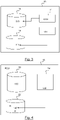
- the exchange of the failure log Lg between a LIS and the VIS and the response back of the VIS is controlled by a trusted software (that is to say the instructions 111 and the instructions 140) coming from some the one-time programmable read-only memories ROM (referenced 19 in figure 3 and 22 in figure 4 ).
- the secondary communication channel 16 is controlled by trusted software.
- the boot integrity failure btf means that there is an intrusion of an attacker and that the affected ECU is corrupted, that is to say it has been maliciously updated or tampered. There may be other detected intrusion events such as in non-limitative examples firewall violations, access control violations, malicious commands and data, invalid software.
- the local integrity supervisors 14 are further configured to communicate to the vehicle integrity supervisor 11 via said secondary communication channels 16 any other detected intrusions I (function illustrated in figure 2 f25(14, 11, 16, I)).
- the local integrity supervisor 14 and vehicle integrity supervisor 11 are secured against spoofing, tampering and information disclosure.
- the communication via the secondary communication channel 16 between the different LIS and the VIS guarantees authenticity, confidentiality and integrity.
- a hash function H is used for the transmitted messages between the LIS and the VIS via the secondary communication channel 16.
- the hash function H is stored in the one-time programmable read only memory ROM (referenced 22 in figure 4 ).
- an algorithm using a HMAC Hash Based MAC is be used.
- the communication between the LIS of an affected ECU and the VIS via the secondary communication channel 16 is encrypted with a pre-shared secret K between the LIS and the VIS.
- a pre-shared secret K is stored in the one-time programmable read-only memories ROM (referenced 19 in figure 3 and 22 in figure 4 ) so that is cannot be corrupted as illustrated in figure 3 and figure 4 .
- a monotonic counter or a time stamp is appended to the messages (acknowledgment Ack and/or appropriate countermeasure command Cd) via the secondary communication channel 16 sent between the LIS of an affected ECU and the VIS. It is to be reminded that a monotonic counter is a counter which can only be incremented and never be decremented.
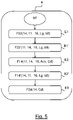
- the secondary communication channel 16 is disabled by default (referred as disable mode d1 illustrated in figure 6 ), that is to say initially disabled. It means that the communication port used for the secondary communication channel 16 is deactivated by default. It means that the electronic control units ECU are initially disconnected from their corresponding secondary communication channels 16. That means they are disconnected by default. Hence, an attacker cannot make a point to point connection. Hence, an attacker cannot send any malicious message via said secondary communication channel 16 when there is no boot integrity failure btf.
- the secondary communication channel 16 When there is a boot integrity failure btf, the secondary communication channel 16 is enabled (referred as enable mode e1 illustrated in figure 6 ). It means that the communication port used for the secondary communication channel 16 is activated.
- the local integrity supervisors 14 are further configured to enable said secondary communication channel 16 when there is a boot integrity failure btf of their corresponding ECU (function illustrated in figure 2 f26(14(m2), 16(e1))).
- the secondary communication channel 16 when the ECU is operating in a normal mode m1, the secondary communication channel 16 is disabled, whereas when the ECU is operating in a secured mode m2 via its LIS, the secondary communication channel 16 is enabled. Hence, the secondary communication channel 16 is enabled by the LIS only when required.
- the vehicle network 1 provides a way to securely communicate the boot integrity failure btf and to securely recover from the boot integrity failure through secured updates.
- the vehicle network 1 is configured to carry out a method 4 for managing a boot integrity failure btf. Said method 4 is illustrated in figures 5 and 6 .
- the non-limitative embodiment hereinafter describes the execution of the secure boot process bt by one ECU. OF course, it applies for each ECU that executes a secure boot process bt.
- the method 4 comprises the following steps: When an ECU executes a secure boot process bt and when it fails, there is a boot integrity failure btf.
- step E1 illustrated F22(14, 11, 16, Lg, btf)
- the local integrity supervisor 14 of the ECU sends a failure log Lg to the vehicle integrity supervisor 11 via the secondary communication channel 16 when there is a boot integrity failure btf.
- the vehicle network 1 comprises a plurality of secondary communication channel 16, one between each LIS and VIS. It is to be noted that only the LIS whose ECU fails to execute the secure boot process bt sends said failure log Lg.
- step E1' the VIS receives said failure log(s) Ld from said local integrity supervisor 14 (step illustrated F22'(11, 14, 16, Lg, btf)).
- step E2 illustrated F14(11, 14, 16, Ack, Cd)
- said vehicle integrity supervisor 11 sends back to said local integrity supervisor 14 via said secondary communication channel 16 an acknowledgment Ack and/or an appropriate countermeasure command Cd regarding said failure log.
- step E2' the LIS receives said acknowledgment Ack and/or an appropriate countermeasure command Cd from said VIS (step illustrated F14'(14, 11, 16, Ack, Cd)).
- step E3) illustrated F24(14, Cd) the local integrity supervisor 14 enforces said appropriate countermeasure command Cd when there is such an appropriate countermeasure command Cd, that is to say when it exists.
- the method 4 further comprises a step E02) of enabling said secondary communication channel 16 when there is a boot integrity failure btf (branch A illustrated in figure 6 and function illustrated in figure 6 F26(14(m2), 16(e1))).
- the secondary communication channel 16 is set up to the enable mode e1. Then, the steps E1 to E3 described above are executed.
- step E0 illustrated F30(13, bt)).
- some embodiments of the invention may comprise one or a plurality of the following advantages:
Landscapes
- Engineering & Computer Science (AREA)
- Theoretical Computer Science (AREA)
- General Engineering & Computer Science (AREA)
- General Physics & Mathematics (AREA)
- Physics & Mathematics (AREA)
- Computer Hardware Design (AREA)
- Computer Security & Cryptography (AREA)
- Software Systems (AREA)
- Quality & Reliability (AREA)
- Computing Systems (AREA)
- Computer Networks & Wireless Communication (AREA)
- Signal Processing (AREA)
- Small-Scale Networks (AREA)
Priority Applications (2)
| Application Number | Priority Date | Filing Date | Title |
|---|---|---|---|
| EP20207824.2A EP4002122A1 (fr) | 2020-11-16 | 2020-11-16 | Réseau de véhicule pour gérer une panne d'intégrité de démarrage |
| PCT/EP2021/073334 WO2022100903A1 (fr) | 2020-11-16 | 2021-08-24 | Réseau de véhicule destiné à prendre en charge un défaut d'intégrité de démarrage |
Applications Claiming Priority (1)
| Application Number | Priority Date | Filing Date | Title |
|---|---|---|---|
| EP20207824.2A EP4002122A1 (fr) | 2020-11-16 | 2020-11-16 | Réseau de véhicule pour gérer une panne d'intégrité de démarrage |
Publications (1)
| Publication Number | Publication Date |
|---|---|
| EP4002122A1 true EP4002122A1 (fr) | 2022-05-25 |
Family
ID=73452089
Family Applications (1)
| Application Number | Title | Priority Date | Filing Date |
|---|---|---|---|
| EP20207824.2A Pending EP4002122A1 (fr) | 2020-11-16 | 2020-11-16 | Réseau de véhicule pour gérer une panne d'intégrité de démarrage |
Country Status (2)
| Country | Link |
|---|---|
| EP (1) | EP4002122A1 (fr) |
| WO (1) | WO2022100903A1 (fr) |
Citations (4)
| Publication number | Priority date | Publication date | Assignee | Title |
|---|---|---|---|---|
| EP0415548A2 (fr) * | 1989-08-01 | 1991-03-06 | Digital Equipment Corporation | Procédé et dispositif de commande du lancement de chargement "bootstrap" |
| EP3293659A1 (fr) * | 2016-09-13 | 2018-03-14 | Kabushiki Kaisha Toshiba | Dispositif de surveillance du réseau, système et stockage |
| US20180084599A1 (en) * | 2016-09-21 | 2018-03-22 | Reporty Homeland Security LTD. | System and method for ensuring continuous communication between a user device and an emergency dispatcher unit |
| EP3547192A1 (fr) * | 2018-03-30 | 2019-10-02 | AO Kaspersky Lab | Système et procédé de blocage d'une attaque informatique sur un moyen de transport |
-
2020
- 2020-11-16 EP EP20207824.2A patent/EP4002122A1/fr active Pending
-
2021
- 2021-08-24 WO PCT/EP2021/073334 patent/WO2022100903A1/fr not_active Ceased
Patent Citations (4)
| Publication number | Priority date | Publication date | Assignee | Title |
|---|---|---|---|---|
| EP0415548A2 (fr) * | 1989-08-01 | 1991-03-06 | Digital Equipment Corporation | Procédé et dispositif de commande du lancement de chargement "bootstrap" |
| EP3293659A1 (fr) * | 2016-09-13 | 2018-03-14 | Kabushiki Kaisha Toshiba | Dispositif de surveillance du réseau, système et stockage |
| US20180084599A1 (en) * | 2016-09-21 | 2018-03-22 | Reporty Homeland Security LTD. | System and method for ensuring continuous communication between a user device and an emergency dispatcher unit |
| EP3547192A1 (fr) * | 2018-03-30 | 2019-10-02 | AO Kaspersky Lab | Système et procédé de blocage d'une attaque informatique sur un moyen de transport |
Also Published As
| Publication number | Publication date |
|---|---|
| WO2022100903A1 (fr) | 2022-05-19 |
Similar Documents
| Publication | Publication Date | Title |
|---|---|---|
| EP3348036B1 (fr) | Notification d'événements d'accès non autorisé pour unités de commande électronique de véhicule | |
| JP6782444B2 (ja) | 監視装置、監視方法およびコンピュータプログラム | |
| CN110582430B (zh) | 车载认证系统、车辆通信装置、认证管理装置、车载认证方法以及计算机能读取的存储介质 | |
| KR20190125047A (ko) | 차량용 네트워크의 침입 대응 장치 및 방법 | |
| US12039050B2 (en) | Information processing device | |
| CN111077883A (zh) | 一种基于can总线的车载网络安全防护方法及装置 | |
| Nilsson et al. | A Defense-in-Depth Approach to Securing the Wireless Vehicle Infrastructure. | |
| EP3565212A1 (fr) | Procédé permettant de fournir une mise à jour authentifiée dans un réseau distribué | |
| US20220407872A1 (en) | Method and device for counteracting intrusion into in-vehicle network | |
| JP2019071572A (ja) | 制御装置及び制御方法 | |
| JP2023170125A (ja) | セキュリティ方法、および、セキュリティ装置 | |
| CN109416711B (zh) | 用于安全验证机动车中的控制装置的方法 | |
| CN117041958A (zh) | 车载v2x-obu与智能域控制器通信内容的认证方法 | |
| JP2023122637A (ja) | 車両のソフトウェアの改竄の軽減 | |
| EP4002122A1 (fr) | Réseau de véhicule pour gérer une panne d'intégrité de démarrage | |
| Hamad | A multilayer secure framework for vehicular systems | |
| Park et al. | Case study for defining security goals and requirements for automotive security parts using threat modeling | |
| CN116489656B (zh) | 轨道车辆车载网络安全通信方法和轨道车辆 | |
| JP4321303B2 (ja) | プログラム配信システムおよび車載ゲートウェイ装置 | |
| CN112866248B (zh) | 车辆网络安全控制系统、方法以及车辆 | |
| CN115706676A (zh) | 在车辆的控制器之间进行可信的数据传输的方法、具有控制器的组件、计算机程序和车辆 | |
| Maggi | A vulnerability in modern automotive standards and how we exploited it | |
| van Roermund | In-vehicle networks and security | |
| CN111127919A (zh) | 一种交通数据校验方法、交通数据广播方法及系统 | |
| Iclodean et al. | Safety and cybersecurity |
Legal Events
| Date | Code | Title | Description |
|---|---|---|---|
| PUAI | Public reference made under article 153(3) epc to a published international application that has entered the european phase |
Free format text: ORIGINAL CODE: 0009012 |
|
| STAA | Information on the status of an ep patent application or granted ep patent |
Free format text: STATUS: THE APPLICATION HAS BEEN PUBLISHED |
|
| AK | Designated contracting states |
Kind code of ref document: A1 Designated state(s): AL AT BE BG CH CY CZ DE DK EE ES FI FR GB GR HR HU IE IS IT LI LT LU LV MC MK MT NL NO PL PT RO RS SE SI SK SM TR |
|
| STAA | Information on the status of an ep patent application or granted ep patent |
Free format text: STATUS: REQUEST FOR EXAMINATION WAS MADE |
|
| 17P | Request for examination filed |
Effective date: 20221124 |
|
| RBV | Designated contracting states (corrected) |
Designated state(s): AL AT BE BG CH CY CZ DE DK EE ES FI FR GB GR HR HU IE IS IT LI LT LU LV MC MK MT NL NO PL PT RO RS SE SI SK SM TR |
|
| RAP3 | Party data changed (applicant data changed or rights of an application transferred) |
Owner name: VALEO COMFORT AND DRIVING ASSISTANCE |
|
| P01 | Opt-out of the competence of the unified patent court (upc) registered |
Effective date: 20230528 |
|
| STAA | Information on the status of an ep patent application or granted ep patent |
Free format text: STATUS: EXAMINATION IS IN PROGRESS |
|
| 17Q | First examination report despatched |
Effective date: 20230727 |
|
| RAP3 | Party data changed (applicant data changed or rights of an application transferred) |
Owner name: VALEO COMFORT AND DRIVING ASSISTANCE |