EP4002221A1 - Générateur de données d'apprentissage et procédé de génération de données d'apprentissage - Google Patents
Générateur de données d'apprentissage et procédé de génération de données d'apprentissage Download PDFInfo
- Publication number
- EP4002221A1 EP4002221A1 EP20207873.9A EP20207873A EP4002221A1 EP 4002221 A1 EP4002221 A1 EP 4002221A1 EP 20207873 A EP20207873 A EP 20207873A EP 4002221 A1 EP4002221 A1 EP 4002221A1
- Authority
- EP
- European Patent Office
- Prior art keywords
- symbol
- plan
- training data
- symbols
- plant
- Prior art date
- Legal status (The legal status is an assumption and is not a legal conclusion. Google has not performed a legal analysis and makes no representation as to the accuracy of the status listed.)
- Withdrawn
Links
Images

Classifications
-
- G—PHYSICS
- G06—COMPUTING OR CALCULATING; COUNTING
- G06N—COMPUTING ARRANGEMENTS BASED ON SPECIFIC COMPUTATIONAL MODELS
- G06N3/00—Computing arrangements based on biological models
- G06N3/02—Neural networks
- G06N3/08—Learning methods
-
- G—PHYSICS
- G06—COMPUTING OR CALCULATING; COUNTING
- G06F—ELECTRIC DIGITAL DATA PROCESSING
- G06F18/00—Pattern recognition
- G06F18/20—Analysing
- G06F18/21—Design or setup of recognition systems or techniques; Extraction of features in feature space; Blind source separation
- G06F18/214—Generating training patterns; Bootstrap methods, e.g. bagging or boosting
-
- G—PHYSICS
- G06—COMPUTING OR CALCULATING; COUNTING
- G06N—COMPUTING ARRANGEMENTS BASED ON SPECIFIC COMPUTATIONAL MODELS
- G06N3/00—Computing arrangements based on biological models
- G06N3/02—Neural networks
- G06N3/04—Architecture, e.g. interconnection topology
- G06N3/0464—Convolutional networks [CNN, ConvNet]
-
- G—PHYSICS
- G06—COMPUTING OR CALCULATING; COUNTING
- G06N—COMPUTING ARRANGEMENTS BASED ON SPECIFIC COMPUTATIONAL MODELS
- G06N3/00—Computing arrangements based on biological models
- G06N3/02—Neural networks
- G06N3/08—Learning methods
- G06N3/09—Supervised learning
-
- G—PHYSICS
- G06—COMPUTING OR CALCULATING; COUNTING
- G06T—IMAGE DATA PROCESSING OR GENERATION, IN GENERAL
- G06T11/00—Two-dimensional [2D] image generation
- G06T11/20—Drawing from basic elements
- G06T11/26—Drawing of charts or graphs
-
- G—PHYSICS
- G06—COMPUTING OR CALCULATING; COUNTING
- G06V—IMAGE OR VIDEO RECOGNITION OR UNDERSTANDING
- G06V30/00—Character recognition; Recognising digital ink; Document-oriented image-based pattern recognition
- G06V30/10—Character recognition
- G06V30/19—Recognition using electronic means
- G06V30/191—Design or setup of recognition systems or techniques; Extraction of features in feature space; Clustering techniques; Blind source separation
- G06V30/19147—Obtaining sets of training patterns; Bootstrap methods, e.g. bagging or boosting
-
- G—PHYSICS
- G06—COMPUTING OR CALCULATING; COUNTING
- G06V—IMAGE OR VIDEO RECOGNITION OR UNDERSTANDING
- G06V30/00—Character recognition; Recognising digital ink; Document-oriented image-based pattern recognition
- G06V30/40—Document-oriented image-based pattern recognition
- G06V30/42—Document-oriented image-based pattern recognition based on the type of document
- G06V30/422—Technical drawings; Geographical maps
Definitions
- the invention relates to a training data generator and a method for generating training data sets for training a trainable image recognition module, as well as a computer program product.
- Schematic plans/plant plans are required for the construction, design, operation and/or maintenance of technical plants and systems. For existing systems, these are usually only available in paper form or as graphic files. In addition, there is no standardized exchange format, so plans often have different signs/symbols for the same technical objects, devices and/or functions, or different conventions are followed when creating or maintaining such plans.
- the plan information is required as a digital, editable model in an engineering tool, ie existing paper plans must be digitized for this purpose.
- digitization the recognition and/or classification of symbols depicted on the plan documents is particularly important.
- methods of supervised machine learning can be used for digitization.
- training phase these are trained using example plans with existing annotations of the symbols shown there, their type and their positions, in order to be able to recognize the corresponding symbols later in the so-called inference phase on new, unknown plan documents.
- they In order to achieve high recognition accuracy with such methods, they have to be trained on a very large number of annotated plan examples. However, such a large number of training data, ie plant plans or symbol examples, is often not guaranteed.
- “computer-aided” can be understood, for example, as an implementation of the method in which, in particular, a processor executes at least one method step of the method.
- a training data generator can, for example, comprise a processor.
- a processor can be understood to mean, for example, a machine or an electronic circuit.
- a processor can in particular be a central processing unit (CPU), a microprocessor or a microcontroller, for example an application-specific integrated circuit or a digital signal processor, possibly in combination with a memory unit for storing program instructions, etc .
- a processor can, for example, also be an IC (integrated circuit), in particular an FPGA (field programmable gate array) or an ASIC (application-specific integrated circuit), or a DSP (Digital Signal Processor) or a GPU (Graphic Processing Unit).
- a processor can also be a virtualized processor, a virtual machine or a Soft CPU can be understood.
- a “memory unit” or “memory module” and the like can be understood in connection with the invention, for example, a volatile memory in the form of random access memory (RAM) or a permanent memory such as a hard disk or a data carrier.
- RAM random access memory
- permanent memory such as a hard disk or a data carrier.
- a “module” can be understood to mean, for example, a processor and/or a memory unit for storing program instructions.
- the processor is specially set up to execute the program instructions in such a way that the processor executes functions in order to implement or realize the method according to the invention or a step of the method according to the invention.
- a “digital system plan” also referred to below as a (digital) plan—can in particular be a circuit diagram, a circuit diagram, a function plan, or a piping diagram/piping and instrument flow diagram.
- the system plan schematically depicts the technical system, its properties, its functions and/or information assigned to this technical system.
- a plant plan can in particular be in digitized form, such as a PDF file.
- a technical system in particular a technical system, such as a industrial plant/a factory, a technical device or a machine or an infrastructure network, such as a water network, a process engineering plant, but also partial aspects such as circuit diagrams, logic diagrams or HVACs.
- a "synthetic system plan” can be understood in particular as an artificially produced system plan which, for example, does not depict a real technical system or is not assigned to a real technical system.
- a synthetic plant plan can initially be created as a net list, i.e. a textual description of the electrical, process engineering and/or logical connections between plan elements, for example, from selected symbols.
- a synthetic plant diagram can also only exist as a net list.
- a synthetic plant plan is preferably similar to a digitized plant plan, i.e. has comparable properties and/or symbols.
- a synthetic plant plan differs from a plant plan of a technical plant in the number of symbols.
- a synthetic plant plan can, for example, have supplements or modifications to a plant plan of a technical system.
- a plan/plant plan includes, in particular, a large number of symbols.
- symbols can be understood to mean, for example, signs, connecting lines, graphic representations or the like that depict a technical system or a technical function.
- a symbol in a piping diagram can represent a pump, valve, or pipe.
- the symbols are preferably already extracted from at least one system plan.
- a symbol library can be imported.
- information that Associated with symbols and describing them can be stored in the symbol library.
- a “trainable image recognition module” can be understood to mean, for example, image recognition software/an image recognition program/algorithm based on a machine learning method.
- a variety of synthetic plant plans can be automatically generated, which can be used as input/training data for training an image recognition module. Any number of realistic training examples can be generated.
- symbols are extracted from existing, digitized plant plans. A subset of the symbols is randomly selected and arranged in a synthetic layout plan. In particular, a network list of the selected symbols can be created from the subset and a synthetic system plan, for example in graphic representation, can be generated from this.
- a further advantage results from the fact that a (manual) description/classification of individual symbol instances (and their connection points) requires significantly less technical effort than the (manual) description/classification of a large number of as-built plans.
- the description/classification can therefore be switched from a (complicated) instance-based procedure to an efficient type-based procedure.
- a much higher degree of flexibility, scaling, throughput and automation is achieved.
- a realistic or usual design form of the respective symbols can thus be achieved.
- This additional information can be stored in a symbol library, for example. Also, this allows for a greater variation of the symbols to be achieved. For example, an annotation or a form of representation of a symbol can be modified in order to generate different symbol representations and thus also different synthetic plant plans.
- the interface can also be set up to read in a relative position to the symbol and/or dimensions of the annotation for an annotation.
- the generator can also be set up to generate at least one synthetic system plan as a function of additional information.
- At least one piece of additional information assigned to a symbol can be taken into account when generating a synthetic installation plan. This enables the generation of realistic synthetic plant plans.
- the interface can be set up further, at least one Read in the provided positioning rule for positioning a symbol in a system plan.
- the generator can also be set up to generate the synthetic system plan as a function of at least one positioning rule.
- plan generation taking into account a positioning rule makes it possible, for example, to prevent symbol connections and/or placements that are not permissible or less desirable.
- the readability and clarity of the synthetic plant plan can be increased.
- the generator can also be set up to generate the synthetic system plan taking into account at least one predefined boundary condition of the system plan.
- a boundary condition can be, for example, a predetermined size or a predetermined format of the system plan.
- a boundary condition can relate to the positioning of connecting lines, so that the connecting lines are, for example, as short as possible, have few crossing points and/or consist only of consecutively connected horizontal or vertical line segments. This can In particular, increase the readability and clarity of a synthetic plant plan.
- the generator can also be set up to supplement and/or modify a synthetic system plan and/or only at least one symbol of the synthetic system plan using provided artefacts.
- the output module can be set up to output this supplemented and/or modified synthetic system plan as an additional synthetic system plan.
- an artifact can be, for example, a rotation, a contrast modification, a distortion or an interference line.
- Such artefacts can usually be found on paper plans and/or digitized plant plans.
- the generator allows to generate synthetic plans that show similar artefacts. This enables the creation of realistic training examples and increases the number of training examples.
- the training data generator can further include a graphics module that is set up in such a way to create a graphical representation of the synthetic plant plan and the output module is further set up to output the graphical representation of the synthetic plant plan.
- One advantage is that for a graphical representation of a synthetic plan generated in this way, the positions and dimensions of the symbols, connecting lines and/or annotations appearing on the plant plan are known. Accordingly, such a synthetic installation plan can advantageously be used as input data for training an image recognition module, since no (manual) extraction and/or marking of symbols is necessary.
- the facility schematics may include electrical schematics, functional schematics, and/or piping and instrumentation flow diagrams.
- the invention relates to a computer program product which can be loaded directly into a programmable computer, comprising program code parts which, when the program is executed by a computer, cause the latter to carry out the steps of a method according to the invention.
- a computer program product can, for example, be stored on a storage medium such as a memory card, USB stick, CD-ROM, DVD, a non-transitory storage medium or in the form of a downloadable medium File provided or delivered by a server on a network.
- a storage medium such as a memory card, USB stick, CD-ROM, DVD, a non-transitory storage medium or in the form of a downloadable medium File provided or delivered by a server on a network.
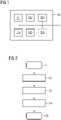
- figure 1 shows a schematic block diagram of an embodiment of a training data generator 100 according to the invention.
- the training data generator 100 can be configured at least partially in hardware and/or software.
- the training data generator can preferably be coupled to a trainable image recognition module, so that generated training data can be transmitted for training the image recognition module.
- the training data generator 100 includes an interface 101 which is set up to read in symbols extracted from provided digital system plans for technical systems, the system plans each depicting a structure and/or a functionality of a technical system using symbols and being of the same type.
- System diagrams can be, for example, circuit diagrams, functional diagrams, and/or piping and instrument flow diagrams.
- only symbols from plant diagrams of the same type, such as only circuit diagrams, are read, i.e. from diagrams that are similar.
- At least one symbol library for a system diagram type can be read in via the interface 101, which library includes a large number of symbols for similar system diagrams.
- the symbols can be extracted from the existing plant plans as a preceding step.
- a position relative to the symbol and/or dimensions of the annotation can be read in via the interface 101 for an annotation.
- the interface 101 can also be set up to read in at least one provided positioning rule for positioning a symbol in a system plan.
- a positioning rule can be directed, for example, to a relative positioning of the symbol on a system plan, a relative positioning of the symbol to an annotation, a predetermined coupling to a further symbol, and/or a symbol-specific dependency on at least one further symbol.
- the training data generator also includes a storage module 102 that is set up to store the extracted symbols.
- the training data generator also includes a selection module 103, which is set up to randomly select a symbol subset of the stored symbols by means of a random number generator.
- the selection module 103 is coupled to the storage module 102 .
- the selected subset of symbols is transmitted from the selection module 103 to a generator 104 of the training data generator 100 .
- the generator 104 is set up in such a way that it depends on at least one network list or a synthetic plant plan of the selected symbol subset.
- the generator 104 can generate a network list or a synthetic system plan depending on at least one piece of additional information which has been read in and which is assigned to a symbol, and/or at least one positioning rule.
- at least one specified boundary condition can be taken into account when generating the network list or the synthetic system plan.
- a boundary condition can be a format of the plant plan, for example.
- a boundary condition can depend in particular on the type of system plan.
- the generator 104 can also supplement and/or modify a synthetic plant plan and/or just at least one symbol of the synthetic plant plan using provided artifacts.
- An artifact can relate to a contrast and/or a distortion of a symbol, for example.
- the training data generator 100 also includes an output module 105, which is set up in such a way that the network list, the at least one synthetic system plan and/or a synthetic system plan modified/supplemented by means of artifacts is output as training data for training a trainable image recognition module, with the trainable image recognition module being set up based on to generate a digital plant plan from an analog plant plan of a technical plant.
- an output module 105 which is set up in such a way that the network list, the at least one synthetic system plan and/or a synthetic system plan modified/supplemented by means of artifacts is output as training data for training a trainable image recognition module, with the trainable image recognition module being set up based on to generate a digital plant plan from an analog plant plan of a technical plant.
- the training data generator 100 can also include a graphics module 106 .
- the training data generator 100 can also only be coupled to such a graphics module 106 .
- the graphics module 106 is set up in such a way as to create a graphic representation of the synthetic plant plan. For example, a graphical representation can be created from the net list.
- figure 2 shows a flow chart of a computer-implemented method according to the invention for generating training data records for training a trainable image recognition module, which is preferably set up to generate a digital plant plan using an analog plant plan of a technical plant.
- Training data for the image recognition module can be generated with the method in order to improve its recognition accuracy.
- a large number of plant symbols are read. These are preferably extracted from provided, already digitized system plans.
- a symbol library can be provided for a given type of plant diagram, such as circuit diagrams.
- the extracted symbols are (temporarily) stored.
- step S3 a symbol subset of the stored symbols is randomly selected by means of a random number generator.
- the random number generator can output a set of random numbers. These random numbers can be used to select symbols from the symbol library.
- At least one network list or a synthetic system plan is generated depending on the selected subset of symbols.
- a large number of different network lists or synthetic system plans are preferably generated.
- the generated synthetic plant plans can be output in particular in graphic form.
- a synthetic plant plan can be modified using artifacts in such a way that another synthetic plant plan can be output.
- step S5 the generated synthetic plant plans are output as training data for training a trainable image recognition module.
- the trainable image recognition module can then be trained using the training data to generate a digital plant plan using an analog plant plan, e.g. a scanned paper plan, of a technical plant.
- figure 3 shows a further embodiment of the invention in a schematic representation.
- a digital system plan DP which includes a large number of symbols SYM, is shown as an example.
- this can be a digitized paper plan.
- the symbols can be extracted from the digital installation plan DP and made available to a training data generator 100 as a symbol library, for example.
- a large number of symbols SYM from a large number of digital system plans DP are preferably provided.
- Additional information assigned to the symbol can be extracted and provided. Additional information can, for example, include information about a connection option to another symbol, e.g. an available interface. Additional information can also be information about an annotation assigned to the symbol, e.g. a name or designation. Additional information can also relate to a form of representation of the symbol and/or information about representation of the symbol, such as a symbol size, font size or formatting (e.g. dashed lines).
- a positioning rule can be provided for an extracted symbol.
- a positioning rule can be, for example, a relative positioning of the symbol on the layout plan, to an annotation, relate to a predetermined coupling to a further symbol and/or a symbol-specific dependency on at least one further symbol.
- a respective symbol can be characterized in that it is typically positioned in a predetermined edge area of the system plan, a symbol designation is in a predetermined relative position to the symbol and/or can be linked to a predetermined further symbol.
- a library of symbols SYM can be compiled, for example by cutting out existing digital system plans DP, which shows the graphic expression of the symbols SYM, the position of the connection points (which serve to connect to connection points of other symbols) and the position of annotations such as object or connection names contain.
- information on the width, color and display type (e.g. solid, dashed, dotted, etc.) of the existing connecting line types and the display of crossing points can be added to the library.
- it can also be specified whether their position is fixed or variable in relation to the symbol or the associated connection point. Also, if given, which font with associated parameters (size, character spacing, etc.) is used for the annotation. If the text contained in annotations follows certain rules (e.g.
- connection points can have different types and can only be connected with connection lines of a certain representation type.
- connection points can be specified for a group of connection points that the group is in the form of a bus must be connected in parallel with another group of connection points. This information/additional information can be assigned to the respective symbols SYM and stored in this way.
- the extracted symbols SYM and the associated additional information are entered into the training data generator 100 .
- a partial symbol set is randomly selected from this symbol set.
- netlists can be generated with randomly selected symbols from the library, a random interconnection of their connection points that follows the stored rules, and randomly selected annotations (but that comply with the specified syntax/format). In particular, this can be independent of whether the network list generated represents a sensible system in relation to the described interconnection of components described by the symbols, or whether the interconnection generated is physically possible at all.
- the training data generator 100 uses the selected symbols to generate at least one network list, from which a synthetic system plan SP is created.
- An algorithm for generating the network list or the synthetic plant plan can be used for this purpose.
- the positioning rules assigned to the symbols and/or specified boundary conditions for the respective system plan to be generated are taken into account.
- This algorithm can place the symbols, connections and annotations from the network list on a plan page in such a way that, for example, the connecting lines are as short as possible and there are as few crossing points as possible, and there are no unnecessary overlaps.
- the algorithm can also take into account that connecting lines only consist of consecutively connected horizontal or vertical line segments, which is desirable for many schematic plans for reasons of clarity.
- a large number of synthetic plant plans are preferably generated and output in the form of a graphic representation.
- the generated synthetic plant plans can be supplemented by augmentation with other typical artifacts, such as rotation, contrast, distortions, interference lines. Typically, real plant plans show such artefacts. This modification or addition allows the synthetic plant plans to be supplemented with further examples and/or made realistic.
- the generated synthetic installation plans SP are output as training data TD.
- the training data TD can preferably be used to train a trainable image recognition module IRS.
- the training data preferably include the synthetic plant plans and respectively associated information on the symbols and associated annotations contained in the plant plans.
- the trainable image recognition module IRS preferably includes a method for machine learning, e.g. an artificial neural network. This can be trained using the training data TD.
- the synthetic system plans are transferred as input data to the trainable image recognition module IRS.
- Target values, i.e. output data from the image recognition module IRS are symbols and associated annotations, for example.
- Such a trained image recognition module IRS can be set up to generate a digital system plan based on an analog system plan of a technical system, ie digitizing a paper plan based on a scan, for example.
- the trained image recognition module IRS can recognize and output symbols on the scanned system plan.
- the method described is particularly advantageous since the variance to which the symbols are subject when they are used can be described in the form of rules.
- rules for possible forms of use of the symbols and connections can also be recorded in a symbol library.
- the rules can concern the placement of annotations of the symbols, the use of connections, mutual dependencies, etc.
- Such rules which can also be specified by a domain expert, for example, can be used to generate a wide range of variants for the placement of symbols, connections and annotations in the generated training examples. This allows the machine learning process to be optimized in the training process with additional information that is helpful for recognizing the symbols. Numerous variants can be generated that could appear in real plans, even if they do not appear in the actual plans.
- a digital (real) system plan (or the symbol legend of such) is required for each symbol that can appear on the training examples. If certain symbols are not recognized with sufficient accuracy by the trained recognition algorithm, further training examples containing this symbol can be generated as needed. Even for the recognition of difficult constellations of several symbols, texts and connections, the synthetic plan generation can be specifically adjusted and the training data set can be enriched with it in order to improve the recognition accuracy.
- the synthetic plans can use different symbols Combine symbol libraries to give machine learning more generality. If new symbols are added to a symbol library to be recognized, further synthetic plant plans can easily be generated as training data. The synthetic plant plans can also be combined with annotated real plant plans to further supplement the training data.
Landscapes
- Engineering & Computer Science (AREA)
- Theoretical Computer Science (AREA)
- Physics & Mathematics (AREA)
- General Physics & Mathematics (AREA)
- Artificial Intelligence (AREA)
- Computer Vision & Pattern Recognition (AREA)
- Data Mining & Analysis (AREA)
- General Engineering & Computer Science (AREA)
- Evolutionary Computation (AREA)
- Life Sciences & Earth Sciences (AREA)
- Computational Linguistics (AREA)
- General Health & Medical Sciences (AREA)
- Software Systems (AREA)
- Health & Medical Sciences (AREA)
- Biomedical Technology (AREA)
- Biophysics (AREA)
- Mathematical Physics (AREA)
- Computing Systems (AREA)
- Molecular Biology (AREA)
- Multimedia (AREA)
- Evolutionary Biology (AREA)
- Bioinformatics & Computational Biology (AREA)
- Bioinformatics & Cheminformatics (AREA)
- Image Analysis (AREA)
Priority Applications (5)
| Application Number | Priority Date | Filing Date | Title |
|---|---|---|---|
| EP20207873.9A EP4002221A1 (fr) | 2020-11-16 | 2020-11-16 | Générateur de données d'apprentissage et procédé de génération de données d'apprentissage |
| US18/035,802 US12462595B2 (en) | 2020-11-16 | 2021-10-19 | Training data generator and method for generation of training datasets |
| CN202180077087.0A CN116457841A (zh) | 2020-11-16 | 2021-10-19 | 训练数据生成器和生成训练数据集的方法 |
| PCT/EP2021/078861 WO2022100965A1 (fr) | 2020-11-16 | 2021-10-19 | Générateur de données d'apprentissage et procédé de génération de données d'apprentissage |
| EP21797998.8A EP4217932B1 (fr) | 2020-11-16 | 2021-10-19 | Générateur de données d'apprentissage et procédé de génération de données d'apprentissage |
Applications Claiming Priority (1)
| Application Number | Priority Date | Filing Date | Title |
|---|---|---|---|
| EP20207873.9A EP4002221A1 (fr) | 2020-11-16 | 2020-11-16 | Générateur de données d'apprentissage et procédé de génération de données d'apprentissage |
Publications (1)
| Publication Number | Publication Date |
|---|---|
| EP4002221A1 true EP4002221A1 (fr) | 2022-05-25 |
Family
ID=73452123
Family Applications (2)
| Application Number | Title | Priority Date | Filing Date |
|---|---|---|---|
| EP20207873.9A Withdrawn EP4002221A1 (fr) | 2020-11-16 | 2020-11-16 | Générateur de données d'apprentissage et procédé de génération de données d'apprentissage |
| EP21797998.8A Active EP4217932B1 (fr) | 2020-11-16 | 2021-10-19 | Générateur de données d'apprentissage et procédé de génération de données d'apprentissage |
Family Applications After (1)
| Application Number | Title | Priority Date | Filing Date |
|---|---|---|---|
| EP21797998.8A Active EP4217932B1 (fr) | 2020-11-16 | 2021-10-19 | Générateur de données d'apprentissage et procédé de génération de données d'apprentissage |
Country Status (4)
| Country | Link |
|---|---|
| US (1) | US12462595B2 (fr) |
| EP (2) | EP4002221A1 (fr) |
| CN (1) | CN116457841A (fr) |
| WO (1) | WO2022100965A1 (fr) |
Cited By (1)
| Publication number | Priority date | Publication date | Assignee | Title |
|---|---|---|---|---|
| CN115293282A (zh) * | 2022-08-18 | 2022-11-04 | 昆山润石智能科技有限公司 | 制程问题分析方法、设备及存储介质 |
Citations (1)
| Publication number | Priority date | Publication date | Assignee | Title |
|---|---|---|---|---|
| US20190080164A1 (en) * | 2017-09-14 | 2019-03-14 | Chevron U.S.A. Inc. | Classification of character strings using machine-learning |
Family Cites Families (6)
| Publication number | Priority date | Publication date | Assignee | Title |
|---|---|---|---|---|
| EP2104885B8 (fr) * | 2008-01-18 | 2012-12-12 | Siemens Aktiengesellschaft | Dispositif de planification et procédé pour planifier une installation technique |
| DE102011101973A1 (de) * | 2011-05-19 | 2012-11-22 | tec generation GmbH | Verfahren zur Authentifizierung eines Benutzers an einer Rechnereinheit sowie Gerät zur Durchführung des Verfahrens |
| US9317327B2 (en) * | 2013-02-28 | 2016-04-19 | Bmc Software, Inc. | Computing infrastructure planning |
| DE102014207874A1 (de) * | 2014-04-25 | 2015-10-29 | Siemens Aktiengesellschaft | Verfahren zur automatisierten Erstellung eines eine technische Zeichnung charakterisierenden Datensatzes |
| US11200257B2 (en) * | 2016-04-25 | 2021-12-14 | Securboration, Inc. | Classifying social media users |
| WO2019195736A2 (fr) * | 2018-04-05 | 2019-10-10 | Chevron U.S.A. Inc. | Classification d'informations de canaux et de diagrammes instrumentaux au moyen de l'apprentissage automatique |
-
2020
- 2020-11-16 EP EP20207873.9A patent/EP4002221A1/fr not_active Withdrawn
-
2021
- 2021-10-19 US US18/035,802 patent/US12462595B2/en active Active
- 2021-10-19 EP EP21797998.8A patent/EP4217932B1/fr active Active
- 2021-10-19 WO PCT/EP2021/078861 patent/WO2022100965A1/fr not_active Ceased
- 2021-10-19 CN CN202180077087.0A patent/CN116457841A/zh active Pending
Patent Citations (1)
| Publication number | Priority date | Publication date | Assignee | Title |
|---|---|---|---|---|
| US20190080164A1 (en) * | 2017-09-14 | 2019-03-14 | Chevron U.S.A. Inc. | Classification of character strings using machine-learning |
Non-Patent Citations (1)
| Title |
|---|
| LUOTING FU ET AL: "From engineering diagrams to engineering models: Visual recognition and applications", COMPUTER-AIDED DESIGN, ELSEVIER PUBLISHERS BV., BARKING, GB, vol. 43, no. 3, 25 December 2010 (2010-12-25), pages 278 - 292, XP028144142, ISSN: 0010-4485, [retrieved on 20101231], DOI: 10.1016/J.CAD.2010.12.011 * |
Cited By (2)
| Publication number | Priority date | Publication date | Assignee | Title |
|---|---|---|---|---|
| CN115293282A (zh) * | 2022-08-18 | 2022-11-04 | 昆山润石智能科技有限公司 | 制程问题分析方法、设备及存储介质 |
| CN115293282B (zh) * | 2022-08-18 | 2023-08-29 | 昆山润石智能科技有限公司 | 制程问题分析方法、设备及存储介质 |
Also Published As
| Publication number | Publication date |
|---|---|
| EP4217932B1 (fr) | 2025-11-26 |
| EP4217932A1 (fr) | 2023-08-02 |
| CN116457841A (zh) | 2023-07-18 |
| US20230401880A1 (en) | 2023-12-14 |
| WO2022100965A1 (fr) | 2022-05-19 |
| US12462595B2 (en) | 2025-11-04 |
| EP4217932C0 (fr) | 2025-11-26 |
Similar Documents
| Publication | Publication Date | Title |
|---|---|---|
| DE112020002961T5 (de) | Übersetzen einer abfrage in natürlicher sprache in eine formale datenabfrage | |
| DE112018005244T5 (de) | Strukturieren von inkohärenten knoten durch überlagern eines basis-wissensgraphen | |
| DE112016007220T5 (de) | Kontaktplanprogrammbearbeitungsunterstützungsvorrichtung und Kontaktplanprogrammbearbeitungsverfahren | |
| EP1215589A2 (fr) | Provision de données de projets dans un format d'une meta-langue standardisée | |
| DE69225527T2 (de) | Verfahren und System zur automatischen Bestimmung der logischen Funktion einer Schaltung | |
| DE112020003365T5 (de) | Überwachte kreuzmodale wiedergewinnung für zeitreihen und text unter verwendung von multimodalen triplettverlusten | |
| DE102021212276A1 (de) | Wissensgetriebenes und selbstüberwachtes system zur fragenbeantwortung | |
| DE102020115968A1 (de) | Systeme und verfahren für multi-bit-speicher mit eingebetteter logik | |
| DE69710478T2 (de) | System zur übersetzung von dateien mit visuellen wiedergabeobjekten und methode zur durchführung | |
| DE112016002532T5 (de) | Systeme und Verfahren für eine lochrasterplattenartige gedruckte Leiterplatte | |
| EP2799983A1 (fr) | Répartition flexible des canaux E/S d'un composant matériel | |
| EP3629151A1 (fr) | Procédé de changement de modèles pour la génération du code source | |
| DE112021000371T5 (de) | Digitale bildbearbeitung | |
| EP4217932B1 (fr) | Générateur de données d'apprentissage et procédé de génération de données d'apprentissage | |
| WO2026017216A1 (fr) | Procédé de réalisation d'une simulation pour produire un composant géométrique, produit programme d'ordinateur et dispositif informatique électronique | |
| DE112021000741T5 (de) | Crossbar arrays für berechnungen in neuronalen netzwerken mit arbeitsspeicher-erweiterung | |
| EP4455804A1 (fr) | Procédé assisté par ordinateur et agencement pour la formation d'un modèle cinématique tridimensionnel d'une installation, en particulier dans un environnement industriel, pour former un jumeau numérique de l'installation | |
| DE102015115797B4 (de) | Verfahren zum Erzeugen von elektronischen Dokumenten | |
| DE102012201451A1 (de) | Verfahren zum Identifizieren von Messsignalen und Geräten zum Einfügen in eine spezifische Projektierungsunterlage für eine zu projektierende Leittechnik einer technischen Anlage, Prozessleitsystem und Computerprogrammprodukt | |
| DE102017130842A1 (de) | Konfigurationssystem zur Konfiguration eines zum Testen eines elektronischen Steuergeräts geeigneten Testsystems | |
| DE112021007684T5 (de) | Störungsprüfvorrichtung | |
| WO2016188669A1 (fr) | Procédé et système de transfert assisté par ordinateur d'un concept d'architecture d'un système technique à une spécification d'architecture | |
| EP4083719A1 (fr) | Génération d'un modèle de simulation assistée par ordinateur pour une installation d'automatisation | |
| DE102014220118A1 (de) | Verfahren und System zur computerunterstützten Erzeugung technischer Dokumentation zur Beschreibung einer technischen Anlage | |
| EP3828655B1 (fr) | Procédé et dispositif de détermination des causes d'une défaillance dans un circuit électrique |
Legal Events
| Date | Code | Title | Description |
|---|---|---|---|
| PUAI | Public reference made under article 153(3) epc to a published international application that has entered the european phase |
Free format text: ORIGINAL CODE: 0009012 |
|
| STAA | Information on the status of an ep patent application or granted ep patent |
Free format text: STATUS: THE APPLICATION HAS BEEN PUBLISHED |
|
| AK | Designated contracting states |
Kind code of ref document: A1 Designated state(s): AL AT BE BG CH CY CZ DE DK EE ES FI FR GB GR HR HU IE IS IT LI LT LU LV MC MK MT NL NO PL PT RO RS SE SI SK SM TR |
|
| STAA | Information on the status of an ep patent application or granted ep patent |
Free format text: STATUS: THE APPLICATION IS DEEMED TO BE WITHDRAWN |
|
| 18D | Application deemed to be withdrawn |
Effective date: 20221126 |