EP4002263B1 - Appareil électronique et son procédé de commande - Google Patents
Appareil électronique et son procédé de commande Download PDFInfo
- Publication number
- EP4002263B1 EP4002263B1 EP21171724.4A EP21171724A EP4002263B1 EP 4002263 B1 EP4002263 B1 EP 4002263B1 EP 21171724 A EP21171724 A EP 21171724A EP 4002263 B1 EP4002263 B1 EP 4002263B1
- Authority
- EP
- European Patent Office
- Prior art keywords
- image
- neural network
- input image
- input
- resolution
- Prior art date
- Legal status (The legal status is an assumption and is not a legal conclusion. Google has not performed a legal analysis and makes no representation as to the accuracy of the status listed.)
- Active
Links
Images




Classifications
-
- G—PHYSICS
- G06—COMPUTING OR CALCULATING; COUNTING
- G06T—IMAGE DATA PROCESSING OR GENERATION, IN GENERAL
- G06T3/00—Geometric image transformations in the plane of the image
- G06T3/40—Scaling of whole images or parts thereof, e.g. expanding or contracting
- G06T3/4046—Scaling of whole images or parts thereof, e.g. expanding or contracting using neural networks
-
- G—PHYSICS
- G06—COMPUTING OR CALCULATING; COUNTING
- G06T—IMAGE DATA PROCESSING OR GENERATION, IN GENERAL
- G06T5/00—Image enhancement or restoration
- G06T5/73—Deblurring; Sharpening
-
- G—PHYSICS
- G06—COMPUTING OR CALCULATING; COUNTING
- G06F—ELECTRIC DIGITAL DATA PROCESSING
- G06F18/00—Pattern recognition
- G06F18/20—Analysing
- G06F18/21—Design or setup of recognition systems or techniques; Extraction of features in feature space; Blind source separation
- G06F18/2163—Partitioning the feature space
-
- G—PHYSICS
- G06—COMPUTING OR CALCULATING; COUNTING
- G06N—COMPUTING ARRANGEMENTS BASED ON SPECIFIC COMPUTATIONAL MODELS
- G06N3/00—Computing arrangements based on biological models
- G06N3/02—Neural networks
- G06N3/04—Architecture, e.g. interconnection topology
- G06N3/045—Combinations of networks
-
- G—PHYSICS
- G06—COMPUTING OR CALCULATING; COUNTING
- G06N—COMPUTING ARRANGEMENTS BASED ON SPECIFIC COMPUTATIONAL MODELS
- G06N3/00—Computing arrangements based on biological models
- G06N3/02—Neural networks
- G06N3/04—Architecture, e.g. interconnection topology
- G06N3/0464—Convolutional networks [CNN, ConvNet]
-
- G—PHYSICS
- G06—COMPUTING OR CALCULATING; COUNTING
- G06N—COMPUTING ARRANGEMENTS BASED ON SPECIFIC COMPUTATIONAL MODELS
- G06N3/00—Computing arrangements based on biological models
- G06N3/02—Neural networks
- G06N3/04—Architecture, e.g. interconnection topology
- G06N3/047—Probabilistic or stochastic networks
-
- G—PHYSICS
- G06—COMPUTING OR CALCULATING; COUNTING
- G06N—COMPUTING ARRANGEMENTS BASED ON SPECIFIC COMPUTATIONAL MODELS
- G06N3/00—Computing arrangements based on biological models
- G06N3/02—Neural networks
- G06N3/04—Architecture, e.g. interconnection topology
- G06N3/0495—Quantised networks; Sparse networks; Compressed networks
-
- G—PHYSICS
- G06—COMPUTING OR CALCULATING; COUNTING
- G06N—COMPUTING ARRANGEMENTS BASED ON SPECIFIC COMPUTATIONAL MODELS
- G06N3/00—Computing arrangements based on biological models
- G06N3/02—Neural networks
- G06N3/08—Learning methods
-
- G—PHYSICS
- G06—COMPUTING OR CALCULATING; COUNTING
- G06N—COMPUTING ARRANGEMENTS BASED ON SPECIFIC COMPUTATIONAL MODELS
- G06N3/00—Computing arrangements based on biological models
- G06N3/02—Neural networks
- G06N3/08—Learning methods
- G06N3/09—Supervised learning
-
- G—PHYSICS
- G06—COMPUTING OR CALCULATING; COUNTING
- G06T—IMAGE DATA PROCESSING OR GENERATION, IN GENERAL
- G06T5/00—Image enhancement or restoration
- G06T5/60—Image enhancement or restoration using machine learning, e.g. neural networks
-
- G—PHYSICS
- G06—COMPUTING OR CALCULATING; COUNTING
- G06T—IMAGE DATA PROCESSING OR GENERATION, IN GENERAL
- G06T7/00—Image analysis
- G06T7/10—Segmentation; Edge detection
- G06T7/11—Region-based segmentation
-
- G—PHYSICS
- G06—COMPUTING OR CALCULATING; COUNTING
- G06N—COMPUTING ARRANGEMENTS BASED ON SPECIFIC COMPUTATIONAL MODELS
- G06N3/00—Computing arrangements based on biological models
- G06N3/02—Neural networks
- G06N3/04—Architecture, e.g. interconnection topology
- G06N3/044—Recurrent networks, e.g. Hopfield networks
-
- G—PHYSICS
- G06—COMPUTING OR CALCULATING; COUNTING
- G06N—COMPUTING ARRANGEMENTS BASED ON SPECIFIC COMPUTATIONAL MODELS
- G06N3/00—Computing arrangements based on biological models
- G06N3/02—Neural networks
- G06N3/04—Architecture, e.g. interconnection topology
- G06N3/048—Activation functions
-
- G—PHYSICS
- G06—COMPUTING OR CALCULATING; COUNTING
- G06N—COMPUTING ARRANGEMENTS BASED ON SPECIFIC COMPUTATIONAL MODELS
- G06N7/00—Computing arrangements based on specific mathematical models
- G06N7/01—Probabilistic graphical models, e.g. probabilistic networks
-
- G—PHYSICS
- G06—COMPUTING OR CALCULATING; COUNTING
- G06T—IMAGE DATA PROCESSING OR GENERATION, IN GENERAL
- G06T2207/00—Indexing scheme for image analysis or image enhancement
- G06T2207/20—Special algorithmic details
- G06T2207/20021—Dividing image into blocks, subimages or windows
-
- G—PHYSICS
- G06—COMPUTING OR CALCULATING; COUNTING
- G06T—IMAGE DATA PROCESSING OR GENERATION, IN GENERAL
- G06T2207/00—Indexing scheme for image analysis or image enhancement
- G06T2207/20—Special algorithmic details
- G06T2207/20081—Training; Learning
-
- G—PHYSICS
- G06—COMPUTING OR CALCULATING; COUNTING
- G06T—IMAGE DATA PROCESSING OR GENERATION, IN GENERAL
- G06T2207/00—Indexing scheme for image analysis or image enhancement
- G06T2207/20—Special algorithmic details
- G06T2207/20084—Artificial neural networks [ANN]
Definitions
- the disclosure relates to an electronic apparatus and a method for controlling the same. More particularly, the disclosure relates to an electronic apparatus for processing an image and a method for controlling the same.
- AI artificial intelligence
- the AI system is a computer system that realizes human-level intelligence, and a machine learns and determines itself, and its recognition rate increases as it is used.
- the AI technology consists of machine learning (deep learning) technology that uses an algorithm that classifies/learns features of input data by itself, and element technologies that simulate the functions of human brain's cognition, determination, etc. by using machine learning algorithms.
- Element technologies may include, for example, linguistic understanding technology that recognizes human language/text, visual understanding technology that recognizes objects like human vision, reasoning/predicting technology that logically reasons and predicts by identifying information, knowledge expression technology that processes human experience information as knowledge data, and motion control technology that controls a movement of robots.
- the network of single input and single output has a problem in that characteristics of various objects cannot be considered in the restoration process.
- various objects may include people, text, graphic objects, artificial objects (buildings, sculptures, automobiles), natural objects (animals, plants), or the like, and have distinct characteristics.
- text or graphic objects have a sharp outline and strong connection
- a human face has a smooth outline
- face components such as eyes, nose, and mouth are contrasted
- natural objects are made of materials with strong noise characteristics (stochastic).
- SFTGAN shows excellent performance when an accuracy of state information is guaranteed.
- an output of condition network lower left network
- inference network upper network
- This connection does not take into account a limit of memory and minimum operations required for reproduction for each object, and requires a high-capacity network for proper operation since all objects must be processed in one network.
- the method can be used in an environment such as a cloud system capable of massive calculation of non-real-time processing, but it is difficult to use in a limited environment such as a TV or mobile device.
- REN HAOYU ET AL "Image Super Resolution Based on Fusing Multiple Convolution Neural Networks", 21 July 2017 , discloses a method for constructing an accurate super resolution system based on multiple Convolution Neural Networks.
- WANG XINTAO ET AL "Recovering Realistic Texture in Image Super-Resolution by Deep Spatial Feature Transform", 18 June 2018 , discloses a novel Spatial Feature Transform layer for high-quality reconstruction for single-image super-resolution.
- the disclosure is to provide an electronic apparatus with improved processing performance while reducing a weight of a model for processing an image.
- the plurality of neural network models may include a first neural network model and a second neural network model, wherein the processor is configured to obtain a first image by inputting the input image to the first neural network model, obtain a second image by inputting the input image to the second neural network model, based on the weight map, obtain the output image by weighting the first image and the second image, wherein the first neural network model is a model in which upscaling processing of the object area is enhanced, and wherein the second neural network model is a model in which upscaling processing of a background area included in the input image is enhanced.
- the processor may be configured to assign a higher value to an object area included in the first image than an object area included in the second image, and assign a lower value to a background area included in the first image than a background area included in the second image to weight the first image and the second image.
- the processor is configured to identify the object area from the input image, and obtain a map in which a weight corresponding to the object area is different from a weight corresponding to the other area included in the input image.
- the processor is configured to obtain a weight map in which a weight gradually changes based on a center of the object area.
- the processor may be configured to, based on a resolution of the input image being a critical resolution, input the input image to each of first models corresponding to the critical resolution among the plurality of neural network models, and based on the resolution of the input image being higher than the critical resolution, preprocess the input image, and input the preprocessed image to each of second models among the plurality of neural network models.
- the processor may be configured to, based on the resolution of the input image being higher than the critical resolution, divide the input image into a plurality of sub-images by shuffling, and input the plurality of sub-images into each of the second models.
- the processor may be configured to, based on a resolution of the input image being a critical resolution, input the input image to each of first models corresponding to the critical resolution among the plurality of neural network models, and based on the resolution of the input image being higher than the critical resolution, change the input image to an image having the critical resolution by sampling the input image, and input the changed image having the critical resolution to each of the first models.
- the plurality of neural network models may include a first neural network model and a second neural network model, wherein the obtaining the plurality of images includes obtaining a first image by inputting the input image to the first neural network model, and obtaining a second image by inputting the input image to the second neural network model, wherein the obtaining the output image includes, based on the weight map, obtaining the output image by weighting the first image and the second image, wherein the first neural network model is a model in which upscaling processing of the object area is enhanced, and wherein the second neural network model is a model in which upscaling processing of a background area included in the input image is enhanced.
- the obtaining the output image may include assigning a higher value to an object area included in the first image than an object area included in the second image, and assigning a lower value to a background area included in the first image than a background area included in the second image to weight the first image and the second image.
- the obtaining the weight map includes identifying the object area from the input image, and obtaining a map in which a weight corresponding to the object area is different from a weight corresponding to the other area included in the input image.
- the obtaining the weight map includes obtaining a weight map in which a weight gradually changes based on a center of the object area.
- the obtaining the plurality of images may include, based on a resolution of the input image being a critical resolution, inputting the input image to each of first models corresponding to the critical resolution among the plurality of neural network models, and based on the resolution of the input image being higher than the critical resolution, preprocessing the input image, and inputting the preprocessed image to each of second models among the plurality of neural network models.
- the inputting the preprocessed image to each of the second models may include, based on the resolution of the input image being higher than the critical resolution, dividing the input image into a plurality of sub-images by shuffling, and inputting the plurality of sub-images into each of the second models.
- the obtaining the plurality of images may include, based on a resolution of the input image being a critical resolution, inputting the input image to each of first models corresponding to the critical resolution among the plurality of neural network models, and based on the resolution of the input image being higher than the critical resolution, changing the input image to an image having the critical resolution by sampling the input image, and inputting the changed image having the critical resolution to each of the first models.
- the object area may be configured to include at least one of a human body area, a face area, a text area, a graphic area, an artifact area, and a natural object area.
- a non-transitory computer-readable recording medium in which a program for executing a method of operating an electronic apparatus is stored, wherein the method includes obtaining a weight map based on an object area included in an input image, obtaining a plurality of images by inputting the input image to each of a plurality of neural network models, and obtaining an output image by weighting the plurality of images based on the weight map, wherein each of the plurality of neural network models is a model trained to upscale an image.
- the electronic apparatus may improve image processing performance by using a plurality of neural network models specialized for each object type.
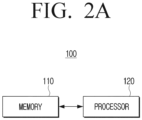
- the memory 110 may store data, which is information in units of bits or bytes capable of representing texts, numbers, images, or the like.
- a plurality of neural network models may be stored in the memory 110.
- Each of the plurality of neural network models may be a model trained to upscale an image.
- the disclosure is not limited thereto, and each of the plurality of neural network models may be a model for removing noise, and any model used to process the image may be used.
- the memory 110 may be accessed by the processor 120, and readout/record/modify/delete/update for instructions, modules, or data by the processor 120 may be performed.
- the processor 120 controls the overall operation of the electronic apparatus 100.
- the processor 120 may be connected to each component of the electronic apparatus 100 to control the overall operation of the electronic apparatus 100.
- the processor 120 may be connected to a component such as the memory 110 to control the operation of the electronic apparatus 100.
- the processor 120 may be implemented as a digital signal processor (DSP), a microprocessor, or a time controller (TCON), but is not limited thereto, and may include one or more of a central processing unit (CPU), microcontroller unit (MCU), micro processing unit (MPU), controller, application processor (AP), or communication processor (CP), ARM processor, or may be defined with a corresponding term.
- the processor 120 may be implemented as a system on chip (SoC) or large-scale integration (LSI) with a built-in processing algorithm, or may be implemented in the form of field programmable gate array (FPGA).
- SoC system on chip
- LSI large-scale integration
- FPGA field programmable gate array
- the processor 120 may acquire a weight map based on an object area included in an input image.
- the processor 120 may identify the object area from the input image and acquire a weight map in which a weight corresponding to the object area is different from a weight corresponding to the other area in the input image.
- the processor 120 may identify a predetermined object area such as a face area, or the like in the input image, and generate a weight map to distinguish the identified object area from other areas.
- the processor 120 may acquire a weight map in which the weight is gradually changed based on a center of the object area.
- the weight map may be the same as a size of the input image
- the object area may be expressed in white in the weight map, and the further away from the center of the object area, the darker color may be expressed.
- the object area may include at least one of a human body area, a face area, a text area, a graphic area, an artificial object area, and a natural object area.
- the disclosure is not limited thereto, and the processor 120 may acquire the weight map in any number of various forms.
- the processor 120 may acquire a coordinate value representing the object area instead of the weight map, and any method may be used as long as it is a method capable of indicating a location of the object area.
- the size of the weight map may be larger than a size of the input image.
- the size of the weight map may be the same as a size of an upscaled image of the input image to be described below.
- the processor 120 may acquire a weight map based on a plurality of types of object areas included in the input image. For example, the processor 120 may acquire a weight map based on the face area and the text area included in the input image. In this case, the face area may be expressed in white, the text area may be expressed in red, and the background area may be expressed in black.
- the processor 120 may acquire a plurality of images by inputting the input image to each of the plurality of neural network models, and acquire an output image by weighting the plurality of images based on the weight map.
- the plurality of neural network models may include a first neural network model and a second neural network model
- the processor 120 may acquire a first image by inputting the input image to the first neural network model, acquire a second image by inputting the input image to the second neural network mode, and acquire an output image by weighting the first image and the second image based on the weight map.
- the first neural network model may be a model in which an upscaling process of the object area is enhanced
- the second neural network model may be a model in which the upscaling process of the background area is enhanced.
- the output image may be an image in which the input image is upscaled, a weight of the first image processed by the first neural network model may be highly reflected in the object area, and a weight of the second image processed by the second neural network model may be highly reflected in the background area.
- the processor 120 may give the object area included in the first image a higher weight than the object area included in the second image, and the background area included in the first image a lower weight than the background area included in the second image to weight the first image and the second image.
- a boundary between the object area and the background area may have the same weight. As the weights are reflected differently for each area, upscaling processing in which area characteristics are more reflected for each area may be possible.
- the plurality of neural network models may include a first neural network model with enhanced upscaling processing of the face area, a second neural network model with enhanced upscaling processing of a text area, and a third neural network model with enhanced upscaling processing of an artifact area.
- the processor 120 may acquire three images by inputting the input image to each of the first neural network model to the third neural network model.
- the processor 120 may acquire an output image by weighting the three images using a weight map based on the face area, the text area, and the artifact area.
- the processor 120 may input the input image to each of first models corresponding to the critical resolution among the plurality of neural network models, and if the resolution of the input image is greater than the critical resolution, the processor may preprocess the input image and input the preprocessed input image to each of second models among the plurality of neural network models.
- the processor 120 may input the input image to each of first models corresponding to the SD resolution among the plurality of neural network models, and if the resolution of the input image is greater than the SD resolution, the processor may preprocess the input image, and input the preprocessed image to each of the second models among the plurality of neural network models.
- the first models may be models trained based on sample images of SD resolution
- the second models may be models trained based on sample images equal to the resolution of the input image greater than the SD resolution.
- the processor 120 may shuffle the input image to divide the input image into a plurality of sub-images, and input the plurality of sub-images to each of the second models. For example, if the input image has FHD resolution, the processor 120 may divide the input image into four channels based on a position of a pixel. For example, the processor 120 may divide a first pixel into a first channel, a second pixel to the right of the first pixel into a second channel, a third pixel below the first pixel into a third channel, and a fourth pixel to the right of the third pixel into a fourth channel, and the same method thereof may apply to the rest of the pixels to divide the input image into four channels. In other words, the processor 120 may perform preprocessing of dividing the input image into a plurality of channels.
- the processor 120 may input the input image to each of the first models corresponding to the critical resolution among the plurality of neural network models, and if the resolution of the input image is greater than the critical resolution, the processor 120 may sample the input image to change the input image to an image having the critical resolution, and the changed image having the critical resolution may be input to each of the first models.
- the processor 120 may input the input image to each of the first models corresponding to the SD resolution among the plurality of neural network models, and if the resolution of the input image is greater than the SD resolution, the processor may sample the input image to change the input image to an image having the SD resolution, input the changed image having the SD resolution to each of the first models.
- the electronic apparatus 100 does not need to include a line memory (SRAM) for processing a high-resolution image, and may process a high-resolution image even if the apparatus includes a line memory for processing a low-resolution image. Also, as the electronic apparatus 100 includes a line memory for processing the low-resolution image, manufacturing cost may be reduced.
- SRAM line memory
- FIG. 2B is a block diagram illustrating a detailed configuration of an electronic apparatus 100 according to an embodiment of the disclosure.
- the electronic apparatus 100 may include a memory 110 and a processor 120.
- the electronic apparatus 100 may further include at least one of a communication interface 130, a display 140, and a user interface 150.
- a communication interface 130 may be included in the electronic apparatus 100.
- a display 140 may be included in the electronic apparatus 100.
- a user interface 150 may be described in FIG. 2B .
- the electronic apparatus 100 may be an apparatus without a display such as an STB, but may be implemented as an apparatus including the display 140 such as a TV
- the electronic apparatus 100 may include the communication interface 130, the display 140, and the user interface 150 to receive an input image from the outside, and may process and display the input image according to a user command.
- the communication interface 130 is a component that communicates with various types of external devices according to various types of communication methods.
- the electronic apparatus 100 may receive an input image, a neural network model, or the like from an external device through the communication interface 130.
- the communication interface 130 may include a Wi-Fi module, a Bluetooth module, an infrared communication module, a wireless communication module, or the like.
- each communication module may be implemented in the form of at least one hardware chip.
- the Wi-Fi module and the Bluetooth module communicate with each other in a Wi-Fi method and a Bluetooth method.
- various types of connection information such as an SSID, a session key, or the like, may be transmitted and received first, and various types of information may be transmitted and received after a communication connection using the same.
- the infrared communication module performs communication according to an infrared data association (IrDA) technology, which wirelessly transmits data in a short distance using infrared rays between sight rays and millimeter waves.
- IrDA infrared data association
Landscapes
- Engineering & Computer Science (AREA)
- Theoretical Computer Science (AREA)
- Physics & Mathematics (AREA)
- General Physics & Mathematics (AREA)
- Artificial Intelligence (AREA)
- Evolutionary Computation (AREA)
- Data Mining & Analysis (AREA)
- Life Sciences & Earth Sciences (AREA)
- General Engineering & Computer Science (AREA)
- General Health & Medical Sciences (AREA)
- Molecular Biology (AREA)
- Software Systems (AREA)
- Mathematical Physics (AREA)
- Computing Systems (AREA)
- Health & Medical Sciences (AREA)
- Biomedical Technology (AREA)
- Biophysics (AREA)
- Computational Linguistics (AREA)
- Computer Vision & Pattern Recognition (AREA)
- Bioinformatics & Cheminformatics (AREA)
- Evolutionary Biology (AREA)
- Bioinformatics & Computational Biology (AREA)
- Probability & Statistics with Applications (AREA)
- Image Analysis (AREA)
- Image Processing (AREA)
Claims (11)
- Appareil électronique (100) comprenant :une mémoire (110) configurée pour stocker une pluralité de modèles de réseau neuronal ; etun processeur (120) connecté à la mémoire (110) et configuré pour commander l'appareil électronique (100),dans lequel le processeur (120) est configuré pour :obtenir une carte de poids sur la base d'une zone d'objet comprise dans une image de saisie,obtenir une pluralité d'images en saisissant l'image de saisie dans chacun de la pluralité de modèles de réseau neuronal, etobtenir une image de sortie en pondérant la pluralité d'images sur la base de la carte de poids,dans lequel chacun de la pluralité de modèles de réseau neuronal est un modèle entraîné pour améliorer une image, etdans lequel le processeur est configuré pour identifier la zone d'objet à partir de l'image de saisie, obtenir une carte dans laquelle un poids correspondant à la zone d'objet est différent d'un poids correspondant à l'autre zone comprise dans l'image de saisie et obtenir la carte de poids dans laquelle le poids change progressivement sur la base d'un centre de la zone d'objet.
- Appareil selon la revendication 1, dans lequel la pluralité de modèles de réseau neuronal comprend un premier modèle de réseau neuronal et un second modèle de réseau neuronal,
dans lequel le processeur est configuré pour :obtenir une première image en saisissant l'image de saisie dans le premier modèle de réseau neuronal,obtenir une deuxième image en saisissant l'image de saisie dans le second modèle de réseau neuronal,sur la base de la carte de poids, obtenir l'image de sortie en pondérant la première image et la deuxième image,dans lequel le premier modèle de réseau neuronal est un modèle dans lequel un traitement de mise à l'échelle de la zone objet est amélioré, etdans lequel le second modèle de réseau neuronal est un modèle dans lequel un traitement de mise à l'échelle d'une zone d'arrière-plan comprise dans l'image de saisie est amélioré. - Appareil selon la revendication 2, dans lequel le processeur est configuré pour attribuer une valeur supérieure à une zone d'objet comprise dans la première image par rapport à une zone d'objet comprise dans la deuxième image, et pour attribuer une valeur inférieure à une zone d'arrière-plan comprise dans la première image par rapport à une zone d'arrière-plan comprise dans la deuxième image pour pondérer la première image et la deuxième image.
- Appareil selon la revendication 1 à la revendication 3, dans lequel le processeur est configuré pour, sur la base du fait qu'une résolution de l'image de saisie est une résolution critique, saisir l'image de saisie dans chacun des premiers modèles correspondant à la résolution critique parmi la pluralité de modèles de réseau neuronal, et
sur la base du fait que la résolution de l'image de saisie est supérieure à la résolution critique, pré-traiter l'image de saisie et saisir l'image pré-traitée dans chacun des seconds modèles parmi la pluralité de modèles de réseau neuronal. - Appareil selon la revendication 4, dans lequel le processeur est configuré pour, sur la base du fait que la résolution de l'image de saisie est supérieure à la résolution critique, diviser l'image de saisie en une pluralité de sous-images par mélange, et
saisir la pluralité de sous-images dans chacun des seconds modèles. - Appareil selon la revendication 1 à la revendication 5, dans lequel le processeur est configuré pour, sur la base du fait qu'une résolution de l'image de saisie est une résolution critique, saisir l'image de saisie dans chacun des premiers modèles correspondant à la résolution critique parmi la pluralité de modèles de réseau neuronal, et
sur la base du fait que la résolution de l'image de saisie est supérieure à la résolution critique, modifier l'image de saisie en une image comportant la résolution critique en échantillonnant l'image de saisie et saisir l'image modifiée comportant la résolution critique dans chacun des premiers modèles. - Appareil selon la revendication 1 à la revendication 6, dans lequel la zone d'objet est configurée pour comprendre au moins l'une d'une zone de corps humain, d'une zone de visage, d'une zone de texte, d'une zone graphique, d'une zone d'artefact et d'une zone d'objet naturel.
- Appareil selon la revendication 1 à la revendication 7, dans lequel la pluralité de modèles de réseau neuronal comprend un premier modèle de réseau neuronal et un second modèle de réseau neuronal,
dans lequel le processeur est configuré pour :obtenir une première image et une deuxième image en saisissant l'image de saisie dans le premier modèle de réseau neuronal,obtenir une troisième image en saisissant l'image de saisie dans le second modèle de réseau neuronal,sur la base de la carte de poids, obtenir l'image de sortie en pondérant la première image, la deuxième image et la troisième image,dans lequel le premier modèle de réseau neuronal est un modèle dans lequel un traitement de mise à l'échelle d'un premier type d'une zone d'objet comprise dans l'image d'entrée et correspondant à la première image et un traitement de mise à l'échelle d'un deuxième type d'une zone d'objet comprise dans la zone d'image d'entrée correspondant à la deuxième image sont améliorés,dans lequel le second modèle de réseau neuronal est un modèle dans lequel un traitement de mise à l'échelle d'un troisième type d'une zone objet comprise dans l'image d'entrée et correspondant à la troisième image est amélioré, etdans lequel le premier type, le deuxième type et le troisième type sont différents les uns des autres. - Procédé de commande d'un appareil électronique (100) comprenant :l'obtention d'une carte de poids sur la base d'une zone d'objet comprise dans une image de saisie ;l'obtention d'une pluralité d'images en saisissant l'image de saisie dans chacun d'une pluralité de modèles de réseau neuronal ; etl'obtention d'une image de sortie en pondérant la pluralité d'images sur la base de la carte de poids,dans lequel chacun de la pluralité de modèles de réseau neuronal est un modèle entraîné pour améliorer une image, etdans lequel l'obtention de la carte de poids comprend l'identification de la zone d'objet à partir de l'image de saisie, l'obtention d'une carte dans laquelle un poids correspondant à la zone d'objet est différent d'un poids correspondant à l'autre zone comprise dans l'image d'entrée et l'obtention de la carte de poids dans laquelle le poids change progressivement sur la base d'un centre de la zone d'objet.
- Procédé selon la revendication 9, dans lequel la pluralité de modèles de réseau neuronal comprend un premier modèle de réseau neuronal et un second modèle de réseau neuronal,dans lequel l'obtention de la pluralité d'images comprend l'obtention d'une première image en saisissant l'image de saisie dans le premier modèle de réseau neuronal, et l'obtention d'une deuxième image en saisissant l'image de saisie dans le second modèle de réseau neuronal,dans lequel l'obtention de l'image de sortie comprend, sur la base de la carte de poids, l'obtention de l'image de sortie en pondérant la première image et la deuxième image,dans lequel le premier modèle de réseau neuronal est un modèle dans lequel un traitement de mise à l'échelle de la zone objet est amélioré, etdans lequel le second modèle de réseau neuronal est un modèle dans lequel un traitement de mise à l'échelle d'une zone d'arrière-plan comprise dans l'image de saisie est amélioré.
- Procédé selon la revendication 10, dans lequel l'obtention de l'image de sortie comprend l'attribution d'une valeur supérieure à une zone d'objet comprise dans la première image par rapport à une zone d'objet comprise dans la deuxième image, et l'attribution d'une valeur inférieure à une zone d'arrière-plan comprise dans la première image par rapport à une zone d'arrière-plan comprise dans la deuxième image pour pondérer la première image et la deuxième image.
Priority Applications (1)
| Application Number | Priority Date | Filing Date | Title |
|---|---|---|---|
| EP25158114.6A EP4530930A3 (fr) | 2020-11-23 | 2021-04-30 | Appareil électronique et son procédé de commande |
Applications Claiming Priority (1)
| Application Number | Priority Date | Filing Date | Title |
|---|---|---|---|
| KR1020200158173A KR20220071011A (ko) | 2020-11-23 | 2020-11-23 | 전자 장치 및 그 제어 방법 |
Related Child Applications (2)
| Application Number | Title | Priority Date | Filing Date |
|---|---|---|---|
| EP25158114.6A Division EP4530930A3 (fr) | 2020-11-23 | 2021-04-30 | Appareil électronique et son procédé de commande |
| EP25158114.6A Division-Into EP4530930A3 (fr) | 2020-11-23 | 2021-04-30 | Appareil électronique et son procédé de commande |
Publications (3)
| Publication Number | Publication Date |
|---|---|
| EP4002263A1 EP4002263A1 (fr) | 2022-05-25 |
| EP4002263B1 true EP4002263B1 (fr) | 2025-04-02 |
| EP4002263C0 EP4002263C0 (fr) | 2025-04-02 |
Family
ID=75786916
Family Applications (2)
| Application Number | Title | Priority Date | Filing Date |
|---|---|---|---|
| EP25158114.6A Pending EP4530930A3 (fr) | 2020-11-23 | 2021-04-30 | Appareil électronique et son procédé de commande |
| EP21171724.4A Active EP4002263B1 (fr) | 2020-11-23 | 2021-04-30 | Appareil électronique et son procédé de commande |
Family Applications Before (1)
| Application Number | Title | Priority Date | Filing Date |
|---|---|---|---|
| EP25158114.6A Pending EP4530930A3 (fr) | 2020-11-23 | 2021-04-30 | Appareil électronique et son procédé de commande |
Country Status (5)
| Country | Link |
|---|---|
| US (2) | US12100118B2 (fr) |
| EP (2) | EP4530930A3 (fr) |
| KR (1) | KR20220071011A (fr) |
| CN (1) | CN116348905A (fr) |
| WO (1) | WO2022108008A1 (fr) |
Families Citing this family (3)
| Publication number | Priority date | Publication date | Assignee | Title |
|---|---|---|---|---|
| US12205292B2 (en) * | 2021-07-16 | 2025-01-21 | Huawei Technologies Co., Ltd. | Methods and systems for semantic segmentation of a point cloud |
| CN117561537A (zh) | 2021-10-07 | 2024-02-13 | 三星电子株式会社 | 显示设备及其操作方法 |
| KR20240115657A (ko) * | 2023-01-19 | 2024-07-26 | 삼성전자주식회사 | 전자 장치 및 이의 제어 방법 |
Family Cites Families (21)
| Publication number | Priority date | Publication date | Assignee | Title |
|---|---|---|---|---|
| CN106874921B (zh) * | 2015-12-11 | 2020-12-04 | 清华大学 | 图像分类方法和装置 |
| US9836820B2 (en) | 2016-03-03 | 2017-12-05 | Mitsubishi Electric Research Laboratories, Inc. | Image upsampling using global and local constraints |
| US10366328B2 (en) * | 2017-09-19 | 2019-07-30 | Gyrfalcon Technology Inc. | Approximating fully-connected layers with multiple arrays of 3x3 convolutional filter kernels in a CNN based integrated circuit |
| EP3526765B1 (fr) | 2017-02-24 | 2024-04-17 | DeepMind Technologies Limited | Génération d'image à échelles multiples |
| US10489887B2 (en) | 2017-04-10 | 2019-11-26 | Samsung Electronics Co., Ltd. | System and method for deep learning image super resolution |
| EP3631754B1 (fr) | 2017-06-28 | 2021-03-31 | Huawei Technologies Co., Ltd. | Appareil et procédé de traitement d'image |
| EP3649618A1 (fr) * | 2017-07-03 | 2020-05-13 | Artomatix Ltd. | Systèmes et procédés de fourniture de synthèse de texture non paramétrique de forme arbitraire et/ou de données de matériau dans un cadre unifié |
| US10552944B2 (en) * | 2017-10-13 | 2020-02-04 | Adobe Inc. | Image upscaling with controllable noise reduction using a neural network |
| CN107767343B (zh) | 2017-11-09 | 2021-08-31 | 京东方科技集团股份有限公司 | 图像处理方法、处理装置和处理设备 |
| US10360482B1 (en) * | 2017-12-04 | 2019-07-23 | Amazon Technologies, Inc. | Crowd-sourced artificial intelligence image processing services |
| CN110087084B (zh) | 2018-01-25 | 2022-03-18 | 联咏科技股份有限公司 | 视频处理装置及视频处理方法 |
| US10990820B2 (en) | 2018-03-06 | 2021-04-27 | Dus Operating Inc. | Heterogeneous convolutional neural network for multi-problem solving |
| CN109903221B (zh) * | 2018-04-04 | 2023-08-22 | 华为技术有限公司 | 图像超分方法及装置 |
| US11244195B2 (en) | 2018-05-01 | 2022-02-08 | Adobe Inc. | Iteratively applying neural networks to automatically identify pixels of salient objects portrayed in digital images |
| US11756160B2 (en) | 2018-07-27 | 2023-09-12 | Washington University | ML-based methods for pseudo-CT and HR MR image estimation |
| KR102814129B1 (ko) | 2018-08-02 | 2025-05-29 | 삼성전자주식회사 | 영상 처리 장치 및 그 동작방법 |
| CN109543548A (zh) * | 2018-10-26 | 2019-03-29 | 桂林电子科技大学 | 一种人脸识别方法、装置及存储介质 |
| KR102130073B1 (ko) | 2018-11-15 | 2020-07-03 | 주식회사 지디에프랩 | 객체 중심의 해상도 복원 기능을 수행하는 영상 학습 시스템 |
| CN111339695B (zh) | 2018-12-18 | 2023-07-25 | 富士通株式会社 | 用于电磁场仿真的装置和方法 |
| KR102210940B1 (ko) * | 2019-05-02 | 2021-02-03 | 삼성전자주식회사 | 전자 장치 및 그 영상 처리 방법 |
| KR102770525B1 (ko) | 2019-09-26 | 2025-02-19 | 엘지전자 주식회사 | 동영상 프레임 해상도를 향상시키기 위한 방법 및 장치 |
-
2020
- 2020-11-23 KR KR1020200158173A patent/KR20220071011A/ko active Pending
-
2021
- 2021-03-30 CN CN202180068324.7A patent/CN116348905A/zh active Pending
- 2021-03-30 WO PCT/KR2021/003937 patent/WO2022108008A1/fr not_active Ceased
- 2021-04-02 US US17/221,105 patent/US12100118B2/en active Active
- 2021-04-30 EP EP25158114.6A patent/EP4530930A3/fr active Pending
- 2021-04-30 EP EP21171724.4A patent/EP4002263B1/fr active Active
-
2024
- 2024-08-22 US US18/811,938 patent/US20240412325A1/en active Pending
Also Published As
| Publication number | Publication date |
|---|---|
| EP4002263A1 (fr) | 2022-05-25 |
| EP4530930A2 (fr) | 2025-04-02 |
| US12100118B2 (en) | 2024-09-24 |
| EP4530930A3 (fr) | 2025-06-11 |
| KR20220071011A (ko) | 2022-05-31 |
| WO2022108008A1 (fr) | 2022-05-27 |
| CN116348905A (zh) | 2023-06-27 |
| EP4002263C0 (fr) | 2025-04-02 |
| US20220164923A1 (en) | 2022-05-26 |
| US20240412325A1 (en) | 2024-12-12 |
Similar Documents
| Publication | Publication Date | Title |
|---|---|---|
| US20240412325A1 (en) | Electronic apparatus and controlling method thereof | |
| EP3499416B1 (fr) | Appareil électronique et son procédé de commande | |
| KR102863767B1 (ko) | 전자 장치 및 그 제어 방법 | |
| US11074671B2 (en) | Electronic apparatus and control method thereof | |
| KR20210061146A (ko) | 전자 장치 및 그 제어 방법 | |
| KR20200090453A (ko) | 전자 장치 및 그 제어 방법 | |
| KR20200027080A (ko) | 전자 장치 및 그 제어 방법 | |
| US20190371268A1 (en) | Electronic device and control method thereof | |
| KR20200081527A (ko) | 전자 장치 및 그 제어 방법 | |
| US12511867B2 (en) | Machine learning model training using synthetic data for under-display camera (UDC) image restoration | |
| US12299913B2 (en) | Image processing framework for performing object depth estimation | |
| US20250265676A1 (en) | Electronic apparatus and controlling method thereof | |
| KR102825504B1 (ko) | 전자 장치 및 그 제어 방법 | |
| KR20210114315A (ko) | 전자 장치 및 그 제어 방법 | |
| US12450704B2 (en) | Machine learning model training using synthetic data for under-display camera (UDC) image restoration | |
| KR102604016B1 (ko) | 전자 장치 및 이의 제어방법 | |
| KR102161690B1 (ko) | 전자 장치 및 그 제어 방법 | |
| US12211172B2 (en) | Display device and operating method of the same | |
| US20260120436A1 (en) | Learned dilation in a convolutional neural network | |
| EP4553757A1 (fr) | Procédé de restauration d'image udc et dispositif d'électrode | |
| WO2026096163A1 (fr) | Architecture de réseau enchevêtré pour représentations précises d'avatars faciaux |
Legal Events
| Date | Code | Title | Description |
|---|---|---|---|
| PUAI | Public reference made under article 153(3) epc to a published international application that has entered the european phase |
Free format text: ORIGINAL CODE: 0009012 |
|
| STAA | Information on the status of an ep patent application or granted ep patent |
Free format text: STATUS: REQUEST FOR EXAMINATION WAS MADE |
|
| 17P | Request for examination filed |
Effective date: 20220228 |
|
| AK | Designated contracting states |
Kind code of ref document: A1 Designated state(s): AL AT BE BG CH CY CZ DE DK EE ES FI FR GB GR HR HU IE IS IT LI LT LU LV MC MK MT NL NO PL PT RO RS SE SI SK SM TR |
|
| STAA | Information on the status of an ep patent application or granted ep patent |
Free format text: STATUS: EXAMINATION IS IN PROGRESS |
|
| 17Q | First examination report despatched |
Effective date: 20240314 |
|
| REG | Reference to a national code |
Ref country code: DE Ref legal event code: R079 Free format text: PREVIOUS MAIN CLASS: G06T0005000000 Ipc: G06T0005730000 Ref document number: 602021028386 Country of ref document: DE |
|
| GRAP | Despatch of communication of intention to grant a patent |
Free format text: ORIGINAL CODE: EPIDOSNIGR1 |
|
| STAA | Information on the status of an ep patent application or granted ep patent |
Free format text: STATUS: GRANT OF PATENT IS INTENDED |
|
| RIC1 | Information provided on ipc code assigned before grant |
Ipc: G06N 3/08 20060101ALI20241018BHEP Ipc: G06N 3/047 20230101ALI20241018BHEP Ipc: G06N 3/045 20230101ALI20241018BHEP Ipc: G06T 7/11 20170101ALI20241018BHEP Ipc: G06T 5/60 20240101ALI20241018BHEP Ipc: G06T 5/73 20240101AFI20241018BHEP |
|
| INTG | Intention to grant announced |
Effective date: 20241113 |
|
| GRAS | Grant fee paid |
Free format text: ORIGINAL CODE: EPIDOSNIGR3 |
|
| GRAA | (expected) grant |
Free format text: ORIGINAL CODE: 0009210 |
|
| STAA | Information on the status of an ep patent application or granted ep patent |
Free format text: STATUS: THE PATENT HAS BEEN GRANTED |
|
| AK | Designated contracting states |
Kind code of ref document: B1 Designated state(s): AL AT BE BG CH CY CZ DE DK EE ES FI FR GB GR HR HU IE IS IT LI LT LU LV MC MK MT NL NO PL PT RO RS SE SI SK SM TR |
|
| REG | Reference to a national code |
Ref country code: GB Ref legal event code: FG4D |
|
| REG | Reference to a national code |
Ref country code: CH Ref legal event code: EP |
|
| REG | Reference to a national code |
Ref country code: IE Ref legal event code: FG4D |
|
| REG | Reference to a national code |
Ref country code: DE Ref legal event code: R096 Ref document number: 602021028386 Country of ref document: DE |
|
| U01 | Request for unitary effect filed |
Effective date: 20250402 |
|
| U07 | Unitary effect registered |
Designated state(s): AT BE BG DE DK EE FI FR IT LT LU LV MT NL PT RO SE SI Effective date: 20250409 |
|
| U20 | Renewal fee for the european patent with unitary effect paid |
Year of fee payment: 5 Effective date: 20250423 |
|
| PG25 | Lapsed in a contracting state [announced via postgrant information from national office to epo] |
Ref country code: ES Free format text: LAPSE BECAUSE OF FAILURE TO SUBMIT A TRANSLATION OF THE DESCRIPTION OR TO PAY THE FEE WITHIN THE PRESCRIBED TIME-LIMIT Effective date: 20250402 |
|
| PG25 | Lapsed in a contracting state [announced via postgrant information from national office to epo] |
Ref country code: NO Free format text: LAPSE BECAUSE OF FAILURE TO SUBMIT A TRANSLATION OF THE DESCRIPTION OR TO PAY THE FEE WITHIN THE PRESCRIBED TIME-LIMIT Effective date: 20250702 Ref country code: GR Free format text: LAPSE BECAUSE OF FAILURE TO SUBMIT A TRANSLATION OF THE DESCRIPTION OR TO PAY THE FEE WITHIN THE PRESCRIBED TIME-LIMIT Effective date: 20250703 |
|
| PG25 | Lapsed in a contracting state [announced via postgrant information from national office to epo] |
Ref country code: PL Free format text: LAPSE BECAUSE OF FAILURE TO SUBMIT A TRANSLATION OF THE DESCRIPTION OR TO PAY THE FEE WITHIN THE PRESCRIBED TIME-LIMIT Effective date: 20250402 |
|
| PG25 | Lapsed in a contracting state [announced via postgrant information from national office to epo] |
Ref country code: HR Free format text: LAPSE BECAUSE OF FAILURE TO SUBMIT A TRANSLATION OF THE DESCRIPTION OR TO PAY THE FEE WITHIN THE PRESCRIBED TIME-LIMIT Effective date: 20250402 |
|
| PG25 | Lapsed in a contracting state [announced via postgrant information from national office to epo] |
Ref country code: RS Free format text: LAPSE BECAUSE OF FAILURE TO SUBMIT A TRANSLATION OF THE DESCRIPTION OR TO PAY THE FEE WITHIN THE PRESCRIBED TIME-LIMIT Effective date: 20250702 |
|
| PG25 | Lapsed in a contracting state [announced via postgrant information from national office to epo] |
Ref country code: IS Free format text: LAPSE BECAUSE OF FAILURE TO SUBMIT A TRANSLATION OF THE DESCRIPTION OR TO PAY THE FEE WITHIN THE PRESCRIBED TIME-LIMIT Effective date: 20250802 |
|
| REG | Reference to a national code |
Ref country code: CH Ref legal event code: H13 Free format text: ST27 STATUS EVENT CODE: U-0-0-H10-H13 (AS PROVIDED BY THE NATIONAL OFFICE) Effective date: 20251125 |
|
| PG25 | Lapsed in a contracting state [announced via postgrant information from national office to epo] |
Ref country code: SM Free format text: LAPSE BECAUSE OF FAILURE TO SUBMIT A TRANSLATION OF THE DESCRIPTION OR TO PAY THE FEE WITHIN THE PRESCRIBED TIME-LIMIT Effective date: 20250402 |
|
| PG25 | Lapsed in a contracting state [announced via postgrant information from national office to epo] |
Ref country code: CH Free format text: LAPSE BECAUSE OF NON-PAYMENT OF DUE FEES Effective date: 20250430 |
|
| PG25 | Lapsed in a contracting state [announced via postgrant information from national office to epo] |
Ref country code: CZ Free format text: LAPSE BECAUSE OF FAILURE TO SUBMIT A TRANSLATION OF THE DESCRIPTION OR TO PAY THE FEE WITHIN THE PRESCRIBED TIME-LIMIT Effective date: 20250402 |
|
| PG25 | Lapsed in a contracting state [announced via postgrant information from national office to epo] |
Ref country code: SK Free format text: LAPSE BECAUSE OF FAILURE TO SUBMIT A TRANSLATION OF THE DESCRIPTION OR TO PAY THE FEE WITHIN THE PRESCRIBED TIME-LIMIT Effective date: 20250402 |
|
| PG25 | Lapsed in a contracting state [announced via postgrant information from national office to epo] |
Ref country code: MC Free format text: LAPSE BECAUSE OF FAILURE TO SUBMIT A TRANSLATION OF THE DESCRIPTION OR TO PAY THE FEE WITHIN THE PRESCRIBED TIME-LIMIT Effective date: 20250402 |
|
| PLBE | No opposition filed within time limit |
Free format text: ORIGINAL CODE: 0009261 |
|
| STAA | Information on the status of an ep patent application or granted ep patent |
Free format text: STATUS: NO OPPOSITION FILED WITHIN TIME LIMIT |
|
| REG | Reference to a national code |
Ref country code: CH Ref legal event code: L10 Free format text: ST27 STATUS EVENT CODE: U-0-0-L10-L00 (AS PROVIDED BY THE NATIONAL OFFICE) Effective date: 20260211 |
|
| 26N | No opposition filed |
Effective date: 20260105 |
|
| PGFP | Annual fee paid to national office [announced via postgrant information from national office to epo] |
Ref country code: GB Payment date: 20260324 Year of fee payment: 6 |
|
| PG25 | Lapsed in a contracting state [announced via postgrant information from national office to epo] |
Ref country code: IE Free format text: LAPSE BECAUSE OF NON-PAYMENT OF DUE FEES Effective date: 20250430 |