EP4002306A1 - Système de transport en boucle ouverte doté d'un système d'arrière-plan - Google Patents
Système de transport en boucle ouverte doté d'un système d'arrière-plan Download PDFInfo
- Publication number
- EP4002306A1 EP4002306A1 EP21204268.3A EP21204268A EP4002306A1 EP 4002306 A1 EP4002306 A1 EP 4002306A1 EP 21204268 A EP21204268 A EP 21204268A EP 4002306 A1 EP4002306 A1 EP 4002306A1
- Authority
- EP
- European Patent Office
- Prior art keywords
- tariff
- date
- requested
- trip
- information
- Prior art date
- Legal status (The legal status is an assumption and is not a legal conclusion. Google has not performed a legal analysis and makes no representation as to the accuracy of the status listed.)
- Withdrawn
Links
Images


Classifications
-
- G—PHYSICS
- G07—CHECKING-DEVICES
- G07B—TICKET-ISSUING APPARATUS; FARE-REGISTERING APPARATUS; FRANKING APPARATUS
- G07B15/00—Arrangements or apparatus for collecting fares, tolls or entrance fees at one or more control points
- G07B15/02—Arrangements or apparatus for collecting fares, tolls or entrance fees at one or more control points taking into account a variable factor such as distance or time, e.g. for passenger transport, parking systems or car rental systems
-
- G—PHYSICS
- G06—COMPUTING OR CALCULATING; COUNTING
- G06Q—INFORMATION AND COMMUNICATION TECHNOLOGY [ICT] SPECIALLY ADAPTED FOR ADMINISTRATIVE, COMMERCIAL, FINANCIAL, MANAGERIAL OR SUPERVISORY PURPOSES; SYSTEMS OR METHODS SPECIALLY ADAPTED FOR ADMINISTRATIVE, COMMERCIAL, FINANCIAL, MANAGERIAL OR SUPERVISORY PURPOSES, NOT OTHERWISE PROVIDED FOR
- G06Q10/00—Administration; Management
- G06Q10/02—Reservations, e.g. for tickets, services or events
-
- G—PHYSICS
- G06—COMPUTING OR CALCULATING; COUNTING
- G06Q—INFORMATION AND COMMUNICATION TECHNOLOGY [ICT] SPECIALLY ADAPTED FOR ADMINISTRATIVE, COMMERCIAL, FINANCIAL, MANAGERIAL OR SUPERVISORY PURPOSES; SYSTEMS OR METHODS SPECIALLY ADAPTED FOR ADMINISTRATIVE, COMMERCIAL, FINANCIAL, MANAGERIAL OR SUPERVISORY PURPOSES, NOT OTHERWISE PROVIDED FOR
- G06Q30/00—Commerce
- G06Q30/02—Marketing; Price estimation or determination; Fundraising
- G06Q30/0283—Price estimation or determination
-
- G—PHYSICS
- G06—COMPUTING OR CALCULATING; COUNTING
- G06Q—INFORMATION AND COMMUNICATION TECHNOLOGY [ICT] SPECIALLY ADAPTED FOR ADMINISTRATIVE, COMMERCIAL, FINANCIAL, MANAGERIAL OR SUPERVISORY PURPOSES; SYSTEMS OR METHODS SPECIALLY ADAPTED FOR ADMINISTRATIVE, COMMERCIAL, FINANCIAL, MANAGERIAL OR SUPERVISORY PURPOSES, NOT OTHERWISE PROVIDED FOR
- G06Q50/00—Information and communication technology [ICT] specially adapted for implementation of business processes of specific business sectors, e.g. utilities or tourism
- G06Q50/40—Business processes related to the transportation industry
Definitions
- the application relates to a background system of an open-loop transport system, comprising at least one billing module, set up for billing a trip that has been carried out, at least based on a received start data record, a received end data record and a fixed, predetermined tariff date, the start data record and the end data record each having the same medium identifier reference, determined (in particular calculated) from the electronic medium identifier detected by at least one validator device of the transport system, and contain at least one transport information item.
- the application relates to an open-loop transport system and a method for operating an open-loop transport system.
- a journey in a transport system is to be understood in particular as the use of a transport device, preferably a transport vehicle (e.g. bus, train, plane, watercraft, etc.) by a user.
- a transport system can include at least one transport vehicle for transporting users or people.
- a user can obtain the travel authorization, typically before the journey, for example by purchasing a ticket.
- travel authorizations for transport systems are single or multi- journey tickets, as well as time tickets, such as weekly or monthly tickets.
- ticket media with electronic user authorizations are used become, like electronic tickets.
- Transportation systems that use proprietary ticket media from the provider of the transportation system are common. It is characteristic here that these electronic ticket media store validity and usage information as data on the ticket medium (so-called card-based ticketing).
- card-based ticketing is a "pre-paid" method in which the travel authorization is purchased in advance and encoded as electronic data on the ticket medium.
- card-based ticketing electronically reproduces the printed paper ticket together with the validator imprint.
- These ticket media are primarily proprietary to the extent that they have their own data content and/or their own data structure and/or their own data encryption for the transport system and/or for the provider of the ticket system.
- a travel authorization is an electronic medium identifier of a (portable) ticket medium that can be read by a validator device, such as an electronic card identifier of a ticket medium in the form of a credit card and/or debit card or an electronic identifier of a payment service application installed on a mobile terminal device of a user.
- a user can make an authorized journey as follows: When the user enters a pay area (e.g. transport vehicle, a platform at a starting station, etc.), the electronic medium identifier stored on the ticket medium can be recorded by a validator device of the open-loop transport system .
- the validator device can be installed at the at least one entrance (e.g. entrance and/or exit) to the chargeable room.
- a validator device can have at least one ticket medium interface, such as a ticket medium reading device, for example in the form of a card reader. A ticket medium held against (with a sufficient range) or in the ticket medium reading device can be read out so that the electronic medium identifier stored in a data memory of the ticket medium can be detected.
- a validator device is designed with at least one blocking element (eg as an access block or so-called "gate") or without a blocking element (eg as a validator).
- the electronic medium identifier stored on the ticket medium can be recorded again by a further or the same validator device of the transport system, as described above.
- the at least one validator device can transmit the medium identifier reference of the electronic medium identifier recorded in each case in the form of a start data record or end data record to a (central) background system (e.g. formed by one or more distributed computing device(s)) of the transport system.
- a start data record and an end data record can each include at least one piece of transport information data, such as a system-wide unique identifier (in particular an identification number) of the validator device and/or a respective recording time and/or a recording location.
- a billing module of the background system (e.g. implemented on a computing device of the background system) can, based on the medium identification reference (which in particular contains billing data, such as a hashed May include credit card number or the like) and the at least one transport information data item (eg the location information and/or time information) of the start data record and end data record carry out an accounting of the trip carried out.
- the medium identification reference which in particular contains billing data, such as a hashed May include credit card number or the like
- transport information data item eg the location information and/or time information
- the billing module can be set up to carry out time-based and/or distance-based billing based on the data received.
- billing is always based on at least one fixed tariff date, ie an unchangeable tariff date.
- An open-loop system differs from the card-based ticketing described above primarily in that the open-loop ticket media are non-proprietary (they are credit cards, for example), that the open-loop ticket media do not contain any tariff validity information and neither only have an identifier (e.g. the EPAN, i.e. the electronically encoded credit card number), that the trip is billed in a background system, in particular with the help of a user account that is assigned to the identifier, and that the payment is "post-paid". , i.e. the payment for the journey made is made after the journey, because the journey data is only known then. Because of the billing, in particular with the help of a user account, one also speaks of account-based ticketing.
- the open-loop ticket media are non-proprietary (they are credit cards, for example), that the open-loop ticket media do not contain any tariff validity information and neither only have an identifier (e.g. the EPAN, i.e. the electronically encoded credit card number), that the trip is
- open-loop (or account-based) ticketing has the disadvantage from the point of view of the transport company that so that no reservations can be made, since no travel authorization can be saved on the open-loop ticket medium.
- transport companies especially in heavily used metropolitan regions, have an urgent need to control the utilization of their transport vehicles and/or to adjust transport capacities to demand.
- over-utilization of a transport vehicle or other chargeable space has the disadvantage that infectious diseases such as Covid-19 can easily be transmitted due to the short distances between users.
- infectious diseases such as Covid-19 can easily be transmitted due to the short distances between users.
- the application is therefore based on the object of providing a background system for an open-loop transport system in which the disadvantages of the prior art are at least reduced and in particular the risk of excessive capacity utilization of rooms that are subject to payment is reduced.
- the object is achieved according to a first aspect of the application by a background system of an open-loop transport system according to claim 1.
- the background system comprises at least one billing module, set up for billing a trip that has been carried out, at least based on a received start data record, a received end data record and a fixed one rate date.
- the start data record and the end data record each contain the same medium identifier reference, determined from the electronic medium identifier of a ticket medium detected by at least one validator device of the transport system, and at least one transport information datum.
- the background system also includes at least one dynamic fare determination module set up to determine an instantaneous fare date based on requested trip information and at least one fare criterion.
- the current tariff date differs from the fixed tariff date.
- the background system includes at least one output module set up to output the current tariff date determined for the requested trip information.
- the background system comprises at least one memory module configured to store a trip data record containing the requested trip information, the current tariff date issued and an electronic medium identification reference upon receipt of a confirmation data record in response to the current tariff date issued for the requested trip information.
- the billing module is set up for billing the requested trip information based on the stored trip data record at least when it is detected that the trip information stored for the electronic medium identifier reference has been used.
- a background system for an open-loop transport system in which a dynamic tariff determination module is provided, which, depending on a usage request received and at least one specific tariff criterion, determines a currently valid tariff date for the requested journey, which is determined by a user can be accepted for the trip, the disadvantages of the prior art and in particular the risk of an excessive utilization of rooms that are subject to payment are at least reduced.
- the background system according to the application can provide utilization control, in which the capacity adjustment of transport operations and the comfort of users can be improved in an open-loop transport system, and the risk of transmission of an infectious disease (e.g. Covid-19) can be reduced , for example by making it easier to comply with distance rules between users.
- an infectious disease e.g. Covid-19
- the background system serves to control and/or manage an open-loop transport system, in particular the utilization of the transport vehicles of the open-loop transport system.
- a background system also referred to as a backend system, can include one or more (distributedly arranged) computing device(s) and can serve in particular as a server arrangement.
- on (Software) modules that can be executed by a processor can be installed in the background system.
- An open-loop transport system is an open-loop passenger transport system.
- a transport system usually includes a number of transport vehicles, such as buses, trains, planes, watercraft, etc.
- An open-loop transport system (hereinafter also referred to as transport system for short) means a transport system in which (at least also) non-proprietary ticket media can be used for a proper journey. It goes without saying that an open-loop transport system can also allow the use of proprietary ticket media.
- a ticket medium according to the application is in particular a portable medium with at least one readable data memory or storage means, set up at least for storing an electronic medium identifier.
- the ticketing medium can be a card-based ticketing medium, such as a credit card-based and/or debit card-based ticketing medium.
- the ticket medium can be a credit card and/or a debit card.
- the card-based ticket medium can also be a mobile device on which a credit card and/or debit card is electronically displayed or to which a credit card and/or debit card is linked electronically (one-to-one).
- Non-exhaustive examples of such a concept are Apple Pay, Google Pay or PayPal.
- Examples of mobile end devices that are not exhaustive here are smartphones, tablet computers, mobile game consoles, laptops, netbooks, data glasses, smart watches and similar wearables.
- An electronic medium identifier means in particular that it is stored in its entirety in the data memory of the ticket medium.
- a ticket medium interface for example with a (contactless or contract-related) interface, required for recording the electronic medium identifier.
- the electronic medium identifier is the electronic primary account number (EPAN) of that card.
- the EPAN usually consists of the "Primary Account Number" (PAN), which corresponds to the printed or embossed card number, and a card sequence number, which identifies the individual card.
- the (contactless or contract-based) interface for reading corresponds to the interface of the ticket medium.
- Non-exhaustive examples of contact-based ticket medium interfaces are magnetic strips and Europay Mastercard VISA chips (EMV chips);
- Examples of contactless ticket medium interfaces are Nearfield Communication interfaces (NFC interfaces) according to ISO 14443.
- NFC interfaces Nearfield Communication interfaces
- the EPAN ie the medium identifier, can be read contactlessly via this interface.
- the electronic medium identifier is a unique (system-wide) electronic medium identifier.
- a ticket medium can be uniquely identified by this medium identifier (system-wide).
- an electronic medium identifier for credit cards and/or debit cards enables a differentiation between different card individuals, each of which has the same credit card number but different electronic medium identifiers.
- the credit card number can be determined from the respective electronic medium identifier. Different card individuals can, for example, be partner cards (the same credit card number for different users) or sequence cards (expired and new credit card for the same user).
- the electronic medium identifier can be an electronic Primary Account Number (ePAN).
- ePAN contains the well-known human-readable PAN that is printed, embossed or engraved on a debit or credit card, plus additional encoded data, such as the card sequence number, which identifies the individual card at hand.
- the ePAN must therefore be read electronically from the card and is not human-readable.
- the ePAN uniquely identifies ticket media such as individual credit cards and/or debit cards and/or mobile devices (as described above).
- the country, bank, sort code and/or account number can be determined from the ePAN, in particular with the help of databases.
- a trip can be billed in a simple manner.
- the background system has at least one billing module in order (in particular in a conventional manner) to bill for a trip that has been carried out, based on start and end data sets received.
- Each start data record and each end data record contains a medium identification reference which allows an association of a start data record with an end data record.
- the start record and end record are associated with each other if they have identical medium identifier references.
- a start data record is generated in particular at the start or start of a journey, for example when entering a chargeable room, such as a transport vehicle, a station area, etc.
- An end data record is generated in particular at the end of a journey, for example when leaving a chargeable room , such as a transport vehicle, a station area, etc.
- Start data records and end data records can be identical in their data structure.
- the medium identifier reference in a start or end data record is a value that is determined, in particular calculated, from the medium identifier of the open-loop medium used. In a simple case, the Medium identifier reference must be identical to the medium identifier. In application of the security standard for processing credit card transactions (Payment Card Industry Data Security Standard, PCI DSS), the medium identifier reference is typically a hash value of the medium identifier, for example the hash value of an ePAN.
- PCI DSS Payment Card Industry Data Security Standard
- the transport system can comprise a plurality of validator devices.
- a validator device is a device of a transport system that is used to record the correct journey by a user.
- a validator device may be located at an entrance (e.g., entrance and/or exit) to a billable room. In particular, entering this room is equivalent to making a journey.
- the room subject to payment can be, for example, the interior of a transport vehicle, or a (delimited) anteroom to a transport vehicle, such as a platform or the like.
- Capturing the journey by a validator device includes in particular capturing the electronic medium identifier of a ticket medium, for example as part of a registration process ("check-in”) and/or de-registration process ("check-out”).
- a registration process for example, it is necessary for the user to register in the transport system (“check-in") when entering the room that is subject to payment, in that at least one electronic medium identifier is recorded by the validator device as part of a registration process.
- check out it may be necessary for the user to log out of the transport system ("check out") when leaving the room where payment is required, in that at least one electronic medium identifier is recorded by the validator device as part of a logout process.
- a passage barrier can optionally be provided at the entrance, which in cooperation with the validator device (in a conventional manner) releases and/or blocks the entrance.
- the validator device transfers the start data set or the end data set to the background system (distant from the validator device).
- the at least one validator device and the background system can be connected in terms of communication via at least one (wireless and/or wired) communication network.
- the data sets are preferably transmitted in encrypted form. In other words, the validator device can encrypt a data set and the background system can decrypt this data set again.
- a data record also contains at least one item of transport information.
- the at least one transport information datum is in particular a piece of information that enables (time-based and/or distance-based) billing of the journey made.
- a data record can preferably contain a time specification, in particular in the form of a time stamp.
- the time stamp e.g. calendar date and time
- the time stamp represents, in particular, the start of a journey that has been carried out
- the time stamp particularly represents the end of a journey that has been carried out.
- a data record can include information about the location or location of the validator device (detecting the medium identifier).
- Location or location information means, in particular, information from which the location or installation location of the validator device can at least be derived, ie the location when the medium identifier was recorded.
- the location information can include an identifier of the validator device, from which the location of the validator device can be derived with the aid of a location database.
- the location information can include geographic position data (e.g. GPS coordinates).
- the location information can be determined from the infrastructure present on the vehicle; alternatively, the location information can also be determined from the time stamp and the data from the operational management of the traffic system in the background system.
- the location information represents in particular the starting point or starting station of a journey that has been carried out
- the location information in particular represents the end point or destination station of a journey that has been carried out.
- the billing module is set up to bill for the trip made based on a start data record and an end data record that can be assigned via the respective medium identification reference.
- the billing module can generate a billing data record.
- the billing data record can be generated in particular for billing and then output by the background system (to the relevant user).
- the background system includes a dynamic tariff determination module, set up to dynamically determine a current tariff date, based on at least one (predetermined) tariff criterion and a requested trip information.
- the current tariff date differs from the fixed tariff date.
- a distinction is made between a static tariff date, ie the fixed and in particular unchangeable tariff date, and a dynamic tariff datum, ie an instantaneous and in particular variable tariff date.
- a requested trip information specifies in particular a trip that will (potentially) be carried out by a user. It is therefore a journey that will be used in the future (and therefore not immediately).
- the at least one travel date of a travel information can in particular uniquely identify the requested travel (system-wide).
- a starting point or a starting stop represents, in particular, the place where the journey is started, ie where the user enters a room that is subject to payment.
- a destination or a final stop represents in particular the place where the trip will end, i.e. the user leaves a room that is subject to payment (final).
- the calendar date is in particular the (scheduled) day of the requested journey.
- the starting time is in particular the (scheduled) departure time of a specific transport vehicle from a specific starting point of the requested trip, ie in particular a specific starting stop or a specific starting station.
- the end time is in particular the (scheduled) arrival time of a specific transport vehicle at a specific destination of the requested journey, ie in particular a specific terminal stop or a specific terminal station.
- a transport vehicle (system-wide) can have a unique identifier.
- a requested trip information can preferably contain a starting location and a destination and at least a starting time or an ending time.
- possible start times and end times for a requested trip can be automatically offered to the user for selection based on a stored timetable as soon as the start location, destination and calendar date of the requested trip have been entered.
- the at least one tariff criterion means in particular a utilization control criterion with which utilization of a chargeable room can at least potentially be influenced.
- the tariff criterion has a relationship to the requested travel information and to the fixed tariff date. Depending on an evaluation of this relationship, the tariff determination module determines in particular a current tariff date.
- the tariff criterion can specify that the current tariff date (e.g. an amount of money to be paid for the desired journey) is lower than the fixed tariff date (e.g. also an amount of money to be paid for the desired journey) if a low utilization is forecast for the requested journey at least at the time of receiving the request for use.
- the current tariff date e.g. an amount of money to be paid for the desired journey
- the fixed tariff date e.g. also an amount of money to be paid for the desired journey
- the tariff criterion can be such that the instantaneous tariff date can be determined as lower depending on this tariff criterion and the requested trip information, the lower the utilization of the at least one transport vehicle to be used is at least predicted.
- the tariff criterion can be selected in such a way that the current tariff date (e.g. an amount of money to be paid for the desired trip information) is greater than or equal to/as the fixed tariff date (e.g. also an amount of money to be paid for the desired trip information), if for the requested trip information a high utilization is at least predicted.
- the current tariff date e.g. an amount of money to be paid for the desired trip information
- the fixed tariff date e.g. also an amount of money to be paid for the desired trip information
- a minimum tariff limit and/or a maximum tariff limit e.g. the fixed tariff date, can be specified.
- a current tariff date means, in particular, a tariff date that only has a limited validity.
- the length of the period of validity can be predetermined (eg max. 30 min, 15 min, 5 min, 30 sec, 10 sec, etc.).
- the period of validity can be variable or dynamically specifiable, depending on at least one time criterion (e.g. number of requests received from different users in a specific time window, current time of day, etc.).
- the background system has an output module set up to output the current fare date determined for the requested trip information.
- the determined instantaneous tariff date can be output to the requesting entity (in particular to the user's user terminal).
- the background system has a memory module configured to store a trip data record containing the current tariff date issued, the requested trip information and a medium identification reference upon receipt of a confirmation data record as a response to the current tariff date output for the requested trip information.
- the medium identifier reference may preferably be included in the confirmation record. It goes without saying that this can also be transmitted alternatively or additionally in another message or can be determined from a user account.
- the confirmation data record indicates at least implicitly that the user accepts the issued current fare date and will make use of the requested travel information for the issued current fare date.
- the (temporary) storage of the trip data record can ensure that when the requested trip is subsequently used, the current tariff date that is output and stored is used and not the fixed tariff date that is predefined.
- the billing module is set up for billing the requested trip information based on the stored trip data record. at least when it is detected that the trip information stored for the medium identification reference is being used. In other words, a corresponding billing can take place at least in the event of a determination that the requested journey information was actually used as requested. In the case of variants of the registration, billing can always take place, regardless of a finding that the requested journey information was actually used as requested.
- a receiving module can include a communication interface to a (wireless and/or wired) communication network.
- a receiving module can be a web interface (also called a web interface) that enables a user to transmit a usage request to the background system.
- a receiving module can be set up to receive and/or process transmitted messages.
- a usage request contains at least the journey information described above.
- a usage request can contain further data, such as a medium identification reference, and/or further user data, such as user name, address data of the user, etc.
- the receiving module can be set up to receive a usage confirmation from a user terminal, containing the confirmation data record described above.
- a user terminal can be a mobile terminal as described above, or a stationary terminal such as a stationary personal computer or the like.
- registration means in particular that the user’s ticket medium used for the journey is/is registered, i.e. in particular a user data record (e.g. in the form of a user account) is/is created that contains at least the medium identification reference of the user’s ticket medium. Further user data can preferably be included.
- the storage module can be set up to store the trip data record in the user account or at least to provide a link to it.
- the media identifier reference Upon receipt of a final record, the media identifier reference can be extracted from that record. A stored trip record containing this medium identifier reference can then be searched for by the allocation module. If a trip data set can be identified by the allocation module, the data sets are allocated accordingly.
- the verification module can then check whether the journey information was actually claimed as requested.
- the checking module can at least check whether the at least one transport information data item (e.g. the destination station (e.g. derived from the validator identifier) and the time stamp of the acquisition of the electronic medium identifier of the validator device) of the end data record corresponds to the stored journey information (e.g. destination station and end time). If, for example, the location details (e.g. station details) are identical and the time details are at least within a specified tolerance range (a possible delay in a transport vehicle can also be taken into account here), then it can be determined that the Journey information was actually claimed as requested. If, on the other hand, a discrepancy is found, ie if the at least one transport information item of the end data record does not correspond to the stored journey information, the journey information was not claimed as requested.
- the at least one transport information data item e.g. the destination station (e.g. derived from the validator identifier) and the time stamp of the acquisition
- a start data record and an end data record can fundamentally be formed in the same way. It should also be noted that the assignment module can in particular also be set up to search for an associated start data record when an end data record is received. If there is no start record and no trip record, it can be concluded that the record obtained is a start record.
- At least one assignment module is set up for assigning a received start data record to a stored trip data record, based on the medium identification reference contained in each case.
- At least one checking module can be set up to check whether the at least one piece of transport information data of the start data record corresponds to the stored trip details of the trip data record (if an assignment between the named data records could be made), in particular in a similar way to checking an assigned end data record.
- the billing module can be set up in such a way that the requested trip information is billed according to the stored current tariff date only if the checking module determines that the at least one transport information date (of the end and/or Start data record) corresponds to the stored trip information of the trip data record. This can ensure that a user only has to pay a changed (especially lower) amount (compared to the fixed (standard) tariff date) if the user actually made the trip as requested. Otherwise, billing can be based, for example, on the fixed tariff date or a combination of the fixed tariff date and the current stored tariff date.
- the confirmation data record can replace the start data record, ie in particular the registration process at a validator device. This further improves usability. In this way, the user can enter a paid room without registering as described above.
- the registration itself takes place by issuing the confirmation data record. In other words, a web registration can take place.
- a previously described cancellation (and thus generation of an end data record) may only be necessary when leaving a room that is subject to payment.
- the at least one tariff criterion can preferably be a utilization control criterion and in particular serve to control the utilization of the at least one transport vehicle of the transport system.
- the at least one tariff criterion can be a time difference criterion.
- the time difference criterion can specify a dependency between a time difference and the current tariff date, the time difference being in particular the time difference between the time a usage request (described above) was received by the background system and a start time of the requested journey.
- the time difference criterion can preferably be in the form of a time difference table.
- the time difference between the time the usage request was received and a (planned or actual) start time of the requested trip information can be listed in this table.
- An instantaneous tariff date can be assigned to each time difference value or range.
- An example of a time difference table is shown in Table 1 below. Table 1 Time difference between the time of receipt of the usage request and a start time of the requested transport vehicle Current tariff date (in % depending on the fixed tariff date TD F ) Greater than 1 day -15% 24 h to 12 h - 10% 12 h to 3 h -5% 3 hours to 1 hour 0 1 hour to 0 hours +2%
- a table is only an example (e.g. the criterion can be in the form of a mathematical function) and/or a table can include other entries (e.g. absolute amounts, other time difference ranges).
- the dynamic tariff determination module can be set up, upon receipt of a usage request, to determine the time difference between the time the usage request was received and a planned start time or actual start time (which takes into account any delay in the transport vehicle that may already exist) of the requested trip information. Then depending on the specific time difference and the time difference criterion (e.g. the time difference table) the current tariff date can be determined.
- TD F is the fixed tariff date.
- the at least one tariff criterion can be a transport capacity utilization criterion.
- the transport capacity utilization criterion can indicate a dependency between a transport capacity utilization of at least one transport vehicle and the current tariff date.
- a predicted and/or measured utilization of a transport vehicle for the requested journey information can preferably be provided to the dynamic tariff determination module.
- the transport utilization criterion can preferably be in the form of a transport utilization table.
- This table can show the difference between the transport load and a full load or maximum transport capacity of the transport vehicle.
- Each transport utilization value or range can be assigned a current tariff date.
- An example of a transport utilization table is shown in Table 2 below. Table 2 Difference between the transport utilization and a full utilization of the requested transport vehicle Current tariff date (in % depending on the fixed tariff date TD F ) Less than 40% -15% 40% to 60% - 10% 60% to 80% -5% 80% to 95% 0 95%h to 110% +2%
- a table is only an example (e.g. the criterion can be in the form of a mathematical function) and/or a table can include other entries (e.g. absolute amounts, other ranges).
- the background system can include at least one utilization determination module set up to determine the utilization of a transport vehicle.
- a database with historical load data from transport vehicles can be present in the background system. Based on the historical utilization data, the utilization determination module can determine, in particular forecast, the utilization of a transport vehicle.
- an AI artificial intelligence
- the capacity utilization determination module can be set up to determine the capacity utilization of a transport vehicle based on the start data records actually present for this transport vehicle, ie the number of users actually registered in this transport vehicle.
- the utilization determination module can know the transport capacity of the transport vehicle (in particular from a corresponding database in the background system).
- that can Determining the capacity utilization of the transport vehicle is based on the stored travel data records that are actually available for this transport vehicle. As a result, the utilization of a transport vehicle can be determined precisely and easily.
- At least one other or additional date can alternatively or additionally be taken into account, such as a number of people recorded by at least one sensor (e.g. camera with image evaluation module, passage counter of a gate, etc.), which is relevant for a transport vehicle, number of received Usage requests for a specific journey (e.g. within a specific period of time) etc.
- a sensor e.g. camera with image evaluation module, passage counter of a gate, etc.
- the dynamic tariff determination module can be set up to query a provided and determined (predicted and/or measured) utilization of the requested transport vehicle (preferably (unambiguously) determined from the content of the usage request) upon receipt of a usage request.
- the current tariff date can then be determined depending on this utilization and the transport utilization criterion (e.g. the transport utilization table).
- the at least one tariff criterion can be a meteorological criterion.
- a meteorological criterion it can be determined in advance how certain meteorological conditions/criteria (e.g. temperature, Wind speed, probability of precipitation, type of precipitation (e.g. snow, rain, hail) etc.) affect the utilization of transport vehicles.
- the first meteorological condition can be assigned a lower instantaneous tariff date than the second (different from the first meteorological condition) condition.
- the meteorological criterion can also be in tabular form.
- An example table is Table 3 below.
- Table 3 meteorological condition Current tariff date (in % depending on the fixed tariff date TD F ) First condition (e.g. temperature between 10 and 20°C; probability of precipitation between 0% and 20%, type of precipitation: rain) -15%
- Second condition e.g. temperature between -5 and 5°C; probability of precipitation between 0% and 20% type of precipitation: snow, sleet) +2%
- Third condition e.g. temperature between 20 and 30°C; probability of precipitation between 70% and 100%, type of precipitation: rain, thunderstorm etc.
- a table is only an example (e.g. the criterion can be in the form of a mathematical function) and/or can contain other entries (e.g. absolute amounts, in particular a variety of conditions).
- the dynamic tariff determination module can be set up to query a provided (predicted and/or measured) meteorological condition for the requested trip information (ie during the use and for the use location) upon receipt of a use request.
- the current tariff date can then be determined depending on this meteorological condition and the meteorological criterion (e.g. the meteorological condition table).
- the at least one tariff criterion can be at least one event criterion.
- An event that takes place during (or shortly before or after) the period of the requested trip can have an impact on the utilization of a transport vehicle.
- local and/or global events e.g. local soccer league game, global soccer world cup game (i.e. taking place away from the location of the transport system), local demonstration, local trade fair, etc.
- certain local and/or global events e.g. local soccer league game, global soccer world cup game (i.e. taking place away from the location of the transport system), local demonstration, local trade fair, etc.) affect the utilization of transport vehicles.
- the first event can be assigned a lower instantaneous tariff date than the second event (which differs from the first event).
- the event criterion can also be in tabular form.
- An example table is Table 4 below. Table 4 event condition Current tariff date (in % depending on the fixed tariff date TD F First event -10% Second Event 0 Third Event + 2%
- a table is only an example (e.g. the criterion can be in the form of a mathematical function) and/or can include other entries (e.g. absolute amounts, other events).
- the dynamic tariff determination module can be set up to query events that lie within the period of the requested trip information when it receives a usage request. Then depending on the particular event and the event criterion (e.g. an event table) the current tariff date can be determined.
- the event criterion e.g. an event table
- At least two of the aforementioned tariff criteria can preferably be specified and, in particular, have a specific functional relationship to one another.
- the determination of the current tariff date by the dynamic tariff determination module can be based on two or more tariff criteria and according to the predetermined functional (e.g. weighted) relationship between these criteria. Load control can be further improved.
- a Blocking message are preferably sent to all validator devices of the transport system.
- the blocking message can contain at least the medium identifier or medium identifier reference to be blocked. This can be stored in a local data memory of the at least one validator device.
- the recorded medium identifier can be checked, for example by a comparison operation. If it is determined that these belong to a stored (illegal) Corresponds medium identification reference, access can remain blocked.
- a display device of the validator device can also indicate that the (desired) journey may not be carried out with the ticket medium used. Then further measures can be initiated.
- Capturing an electronic start data set and/or end data set includes in particular capturing an electronic medium identifier or medium identifier reference and at least one item of transport information, in particular in the form of the time of capture (and/or the location of capture).
- a start data set and/or end data set can be transmitted to the background system, in particular immediately after acquisition.
- the service application is in particular a software application that can be installed on a (mobile) user terminal and executed by a processor of the user terminal.
- the transport system can include at least one (mobile) user terminal with a service application.
- program memory is non-volatile memory such as flash memory, magnetic memory, EEPROM memory (Electrically Erasable Programmable Read Only Memory), and/or optical memory.
- a (mobile) user terminal can have a main memory, for example a volatile or non-volatile memory, in particular a memory with random access (RAM), such as a static RAM memory (SRAM), a dynamic RAM memory (DRAM) , ferroelectric random access memory (FeRAM) and/or magnetic random access memory (MRAM).
- RAM random access
- SRAM static RAM memory
- DRAM dynamic RAM memory
- FeRAM ferroelectric random access memory
- MRAM magnetic random access memory
- the processor of the user terminal can, for example, store intermediate results or the like in the main memory.
- the service application can have at least one (software) module for interacting with the background system (via a communication network).
- a request module is set up to cause a usage request described above to be transmitted to the background system.
- a receiving module is set up to receive an output instantaneous tariff data.
- a The confirmation module is set up to bring about a transmission of a previously described confirmation of use to the background system. An interaction between the user and the service application can take place via a user interface of the user terminal.
- a previously described module, element etc. can at least partially comprise hardware elements (eg processor, memory means etc.) and/or at least partially software elements (eg executable code). It should also be noted that terms such as “first”, “second” etc. do not indicate an order, but rather used in particular to differentiate between two elements (e.g. module, end device, condition, event, etc.).
- the figure 1 shows a schematic view of an embodiment of an open-loop transport system 100 (or a transport system 100 with an open-loop ticket system) according to the present application with a Embodiment of a background system 102 according to the present application.
- the transport system 100 shown comprises at least one background system 102 and at least one validator device 126. Furthermore, the transport system 100 comprises at least one transport vehicle 122, in the present example in the form of a bus 122. It is understood that a transport system 100 can alternatively or additionally have further and/or other transport vehicles (e.g. cable car, train, watercraft, etc.).
- transport vehicles e.g. cable car, train, watercraft, etc.
- the at least one validator device 126 is arranged in the transport vehicle 122 .
- the at least one validator device 126 is arranged at an entrance 134 (e.g. entrance and/or exit) of the transport vehicle 122 to a room where payment is required, preferably the interior of the transport vehicle 122.
- an entrance 134 e.g. entrance and/or exit
- At each entrance 134 of a transport vehicle 122 at least one Validator device 126 may be arranged.
- the validator device can also be arranged in a train station or the like.
- a user of the transport vehicle 122 can register for an authorized journey when boarding the transport vehicle 122 ("check-in"). For this purpose, the user can bring his ticket medium 124 within range of a ticket medium interface 128 of the validator device 126 .
- the at least one ticket media interface 128 may be a contact or contactless ticket media interface 128 . It goes without saying that two or more ticket medium interfaces can be provided for a corresponding number of different ticket media.
- At least one electronic medium identifier of the ticket medium 124 can be recorded by the ticket medium interface 128 in the registration process.
- the ticket medium 124 is a credit card 124 with an ePAN stored in a data memory of the credit card 124 . This can be detected via a (contact or contactless) interface of the ticket medium 124 .
- the validator device 126 can have at least one communication module 132 and/or can be connectable to at least one communication module (not shown) of the vehicle infrastructure.
- the communication module 132 can at least be set up to transmit a medium identifier reference of the detected electronic (one-to-one) medium identifier and at least one transport information datum, preferably together with further data, to the (central) background system 102 of the transport system 100 .
- a corresponding data record is transmitted, such as a (previously described) start or end data record.
- the at least one piece of transport information data of a start or end data record can in particular be a time stamp (e.g. calendar date and time of the acquisition time) and/or at least one piece of location information from which the location of the validator device (or the transport vehicle 122) during the acquisition of the electronic medium identifier can at least be derived is.
- a time stamp e.g. calendar date and time of the acquisition time
- the validator device 126 can have at least one local data storage 130 .
- a list of blocked or unauthorized medium identifier references can be stored in the at least one data store 130 . If the electronic medium identifier is recorded, the Media identifier reference can be calculated and this can be compared to the stored and locked media identifier references. If correspondence (especially identity) is detected, the journey can be denied.
- a display device (not shown) of the validator device 126 can show that the ticket medium 124 is not authorized to use the transport vehicle 122 properly, and the validator device 126 can also report the refusal to travel with an acoustic signal.
- an access device e.g. a passage barrier
- This can only be released if it is determined during the comparison that the recorded electronic medium identifier is not a blocked medium identifier.
- a validator device (for example the same validator device 126) can transmit at least the medium identification reference and at least one transport information data item to the background system 102, preferably together with the other data mentioned. In particular, an end data record is transmitted.
- the inspector can use an inspection device (not shown) to retrieve, in particular receive, the medium identification references transmitted to the background system 102 and use them for the inspection.
- the ticket media can be checked by the inspection device by reading out the respective medium identifier, calculating the medium identifier reference therefrom and comparing it with the medium identifier references received from the background system 102 .
- the controller can take known measures.
- the background system 102 can be formed by one or more (possibly distributed) arranged computing device/s.
- the background system 102 has a plurality of modules. These can be formed at least partially as software modules and/or hardware modules.
- a communication module 132 of the validator device 126 can exchange data with a communication module 104 of the background system 102 (preferably bidirectionally).
- the background system 102 includes an output module 106 and a receiving module 108.
- a common bidirectional communication module can also be provided.
- the at least one receiving module 108 is set up in particular to receive a usage request and/or a usage confirmation from a user terminal 136.
- the usage request includes at least the requested travel information.
- the confirmation of use includes at least the confirmation data record.
- the output module 106 is at least set up to output an instantaneous tariff date determined for a requested trip information.
- the current tariff date is determined by the dynamic tariff determination module 112.
- the dynamic tariff determination module 112 is set up to determine a current tariff date based on at least one tariff criterion and a requested trip information.
- the current tariff date differs from a fixed tariff date.
- At least one billing module 110 is implemented in the background system 102 .
- the billing module 110 is set up for billing a trip that has been carried out, at least based on a received start data record, a received end data record and a permanently specified tariff date (in a conventional manner).
- the billing module 110 is set up to bill the requested trip information based on the stored trip data record, at least when it is detected that the trip information stored for the medium identification reference has been used.
- two billing modules can also be provided for the different types of billing.
- the at least one trip data set is stored by a memory module 114.
- a trip data set can be stored by the memory module 114 in a data memory 116 of the background system 102.
- the trip record contains at least the issued current fare date, the requested trip information (with at least one trip date) and a medium identifier reference associated with the ticket medium with which the user will use the requested trip information.
- the storage takes place in particular upon receipt of a confirmation data record as a response to the current tariff date issued for the requested trip information. In this case, it is necessary for the response to be received within a specific validity period.
- the validity period (starting time is in particular the output time of the current tariff date) specifies in particular how long the current tariff date that is output is valid. If a confirmation data record is received after the period of validity has expired, then in particular no storage takes place.
- a message can be sent out informing that no storage due to the no longer valid current tariff date. This message can preferably also contain a newly determined current tariff date or a request for a further request for use.
- a plurality of user data sets or user accounts of registered users or registered medium identification references can preferably be stored in the at least one data memory 116 .
- the billing module 110 can access the stored user data of a user account to carry out billing.
- the background system 102 comprises at least one assignment module 118 and at least one examination module 120.
- a common module can be provided for variants of the application.
- the allocation module 118 is set up to allocate a received end data set to a stored journey data set, based on the medium identification reference contained in each case. In particular, the assignment module 118 carries out a corresponding comparison. If it is established that a received medium identification reference of an end data record (and/or start data record) corresponds, in particular is identical, to a medium identification reference stored in a journey data record, the assignment module 118 assigns the corresponding data records to one another.
- the checking module 120 checks whether the at least one transport information data item of the assigned end data record (and/or start data record) corresponds to the stored trip information. This means in particular that it is checked whether a location contained in the final data record or at least derivable from it (e.g. from a validator identifier or the like), in particular a destination, corresponds to a location contained in the trip, in particular a destination. Accordingly, the acquisition time of the end data set with the stored end time of the requested trip can be compared. A start data record can be checked in a similar way.
- the billing module 110 can only bill using the stored current tariff date if the data mentioned correspond to one another.
- the background system 102 optionally also has a utilization determination module 150 , a blocking check module 152 and/or a blocking module 154 .
- Utilization determination module 150 can be set up to determine the predicted and/or actual utilization of a transport vehicle 122.
- the utilization determination module 150 can determine the utilization of a transportation vehicle 122 .
- an AI artificial intelligence
- the utilization determination module 150 can preferably be set up to determine the utilization of a transport vehicle 122, based on the start data sets that are actually available for this transport vehicle 122, ie actual registrations made by users.
- the utilization determination module 150 can know the transport capacity of the transport vehicle 122 (in particular from a corresponding database of the background system 102).
- the determination of the capacity utilization of the transport vehicle 122 can preferably be based on the stored trip data records that are actually available for this transport vehicle 122 .
- the blocking check module 152 can be set up to check whether an amount to be paid for the trip made has been paid within a specific period of time. Alternatively or additionally, the blocking check module 152 can check, for example by communicating with a payment service provider of the ticket medium 124, whether the balance of the account associated with the medium identifier reference meets a certain credit criterion (e.g. a certain amount). If it is determined that this is not the case or that the amount has not been paid within a certain period of time, a blocking module 154 can cause a blocking message to be sent to the at least one validator device 126 in such a way that the use of the ticket medium 124 on the at least one validator device 126 is blocked. Otherwise use remains permitted.
- a certain credit criterion e.g. a certain amount
- the transport system 100 also includes a user terminal 136 in the form of a mobile terminal 136 with a communication module 138.
- the communication module 138 is at least set up to communicate with the output module 106 and the receiving module 108.
- a service application 142 is installed on the mobile terminal device 136 (eg a smartphone).
- the service application 142 has at least one request module 144, set up to cause the described usage request to be sent, containing at least the requested journey information.
- the service application 142 has at least one receiving module 146 set up to receive the current tariff data described.
- at least one confirmation module 148 is also provided, which is set up to cause the usage confirmation to be sent, containing at least one confirmation data record.
- the user can interact with the service application 142 via a user interface (e.g. touch display or the like), for example request a current fare date for a specific trip that can be specified by the service application 142 .
- the current tariff date that was issued and received by the service application 142 can be displayed to the user via a display of the mobile terminal device 136 in such a way that the user can confirm acceptance of the current tariff date displayed by means of a user action. If a corresponding user action is detected, the confirmation module 148 in particular causes a corresponding confirmation of use or the confirmation data record to be sent.
- At least one (wireless and/or wired) communication network 140 can be provided in order to enable communication at least between the elements 102, 126, 136 shown.
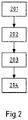
- FIG. 12 shows a diagram of an embodiment of a method according to the present application.
- the dynamic tariff determination module 112 of the background system 102 determines a current tariff date, based on a requested trip information and at least one tariff criterion.
- the tariff criterion is in particular a time difference criterion (cf. e.g. Table 1) and/or a transport utilization criterion (cf. e.g. Table 2) and/or a meteorological criterion (cf. e.g. Table 3) and/or an event criterion (cf. e.g. Table 4) , as previously described.
- a current fare date is determined as previously described.
- a usage request can be received by the background system 102 in a previous step.
- the request module 144 of a service application 142 can cause the communication module 138 of the mobile terminal device 136 to send it out.
- a web interface can also be provided, via which a usage request can be sent to the dynamic tariff determination module 112 .
- the output module 108 of the background system 102 outputs the current tariff date determined for the requested trip information. For example, a corresponding notification can be sent to the communication module 138 and displayed on a screen of the mobile terminal device 136 by the service application 142, for example.
- the web interface can output the current tariff date, in particular display it.
- the storage module 114 of the background system 102 stores a service data record containing the current tariff date that has been issued, the requested journey information and a medium identification reference (which can be contained in the usage request or the confirmation data record, for example, or can be obtained from a user account (e.g. based on a user ID) can be determined).
- the storage takes place at least when a confirmation data record is received as a response to the current tariff date output for the requested trip information, as previously described. It goes without saying that part of this data can already be stored when or after the current tariff date is output can take place and that if there is no confirmation data record within the validity period, this data can be deleted again. Saving a trip data record means in particular that it was previously confirmed by a confirmation record.
- step 202 may be performed multiple times until the user accepts (or ultimately rejects) an issued current tariff date.
- a user can thus receive periodically updated fares until he selects the trip (ie accepts an issued current tariff date) or rejects the requested trip.
- the billing module 110 of the background system 102 bills the requested trip information based on the stored trip data set. Billing takes place at least whenever actual use of the journey information stored for the medium identification reference is detected.
- Detection takes place in particular by receiving and evaluating an end data record which contains a medium identification reference which corresponds (in particular is identical) to the stored medium identification reference and preferably a transport information data item which corresponds to the stored trip information, as described above.
- the confirmation data record can preferably replace the start data record.
- FIG. 12 shows a diagram of another embodiment of a method according to the present application.
- reference number 301 designates the service application or the mobile terminal device on which the service application is installed.
- Reference number 302 designates the validator device, reference number 303 the background system and reference number 304 a server system of a payment service provider (in particular the provider of the ticket medium, for example a credit card).
- FIG 3 an exemplary conventional use of the open-loop transport system according to the application is shown.
- the open-loop transport system can, for example, accordingly figure 1 be educated.
- the validator device 302 After a user has logged on to a validator device 302, i.e. in particular after the electronic medium identifier has been detected by the validator device 302, the validator device 302 transmits a start data record in step 305 to the background system 303.
- the start data record contains in particular the medium identifier reference of the detected electronic medium identifier, a time stamp the collection of the electronic medium identifier by the validator device 302 and a location specification (e.g. geographic coordinates, validator identifier, etc.). This data set can be stored in the background system 303 .
- the background system 303 can query the payment service provider 304 whether the account associated with the received medium identification reference meets at least one specific credit criterion (e.g. a credit limit), as described above.
- at least one specific credit criterion e.g. a credit limit
- the payment service provider 304 After a check by the payment service provider 304, the latter sends the response (criterion met or not) back to the background system 303 in step 307. If the criterion is not met, a blocking message can be sent in step 308 to the at least one validator device 302, in particular to the ticket medium to block for use in the transport system. If the criterion is met, this step is omitted.
- the validator device 302 After the user has logged off from a (further) validator device 302, i.e. in particular after the electronic medium identifier has been detected by the validator device 302, the validator device 302 transmits an end data record to the background system 303 in step 309.
- the end data record contains in particular the medium identifier reference of the detected electronic medium identifier , a timestamp of the acquisition of the electronic medium identifier by the validator device 302 (which may be different from the previous validator device), and a location (e.g., geographic coordinates, validator identifier, etc.).
- the billing module bills the at least one trip made by the user.
- the start and end data records that belong to one another can be assigned to one another.
- a billing data record can then be created using the time and/or location information in these data records and a fixed (unchangeable) tariff date. This can be issued to the user.
- a usage request is transmitted to the background system 303 in step 311 .
- the usage request contains at least one requested trip information, ie in particular a start time, end time, start location and destination of the requested trip.
- further or different journey data and/or further or different data e.g User ID, medium ID reference, ID of the trip and / or a transport vehicle, etc.
- the service application 301 can call up timetable data from the background system 303 (not shown in Figure 3 ) to generate a usage request from it,
- the dynamic tariff determination module of the background system 303 determines a current tariff date, in particular based on the data content of the usage request received and at least one tariff criterion (cf. e.g. the statements on tables 1, 2, 3 and/or 4).
- step 313 the specific current tariff date is output by transmission to the requesting user terminal or the requesting service application 301.
- a timer can be started at the same time.
- the specific current tariff date is only valid for a specific period of validity. After this time has elapsed, i.e. after the timer has expired, the current tariff date is invalid. For example, a new usage request can then be sent in order to initiate a new determination.
- step 314) If the user does not agree with the current tariff date received, he can (e.g. after a certain period of time) make a new usage request (step 314). A current tariff date can then be determined again as previously described (step 315).
- step 316 the determined current tariff date is output in a manner analogous to step 313.
- the service application 301 can also be set up in such a way that it periodically automatically makes a new usage request with the same journey information (step 314) as before, so that a new current tariff date is periodically repeatedly determined for a usage request set by the user (step 315) and sent to the service application 301 (step 316) until the user accepts the received current tariff date or rejects the request.
- the background system 303 can be configured such that it automatically periodically determines a new current tariff date (step 315) and outputs it to the service application 301 (step 316) until the user accepts the received current tariff date or rejects the request.
- the service application 301 causes a confirmation data record to be transmitted (step 317), which at least states that the current tariff data that was output is accepted for the requested trip information. It goes without saying that further or different data (e.g. user ID, medium ID reference, etc.) may be included.
- the background system 303 stores a trip data record containing at least the requested trip information, the medium identifier reference (with which the requested trip information is to be claimed) and the confirmed current tariff date.
- the background system 303 can transmit an authorization request via the stored current tariff date to the server system 304 (step 319) in order to authorize payment for the claim according to the current tariff date due amount. This can happen in particular if a certain limit (e.g. €50) has been exceeded.
- a certain limit e.g. €50
- the server system 304 After a payment authorization, the server system 304 transmits a corresponding confirmation to the background system 303 in step 320. It goes without saying that an authorization request can also be made before the corresponding trip data record is saved. In particular, it is understood that the process can be aborted if an authorization fails.
- the confirmation data record preferably replaces the start data record.
- a start data record can also be taken into account and, in particular, a corresponding registration (“check-in”) can be recorded and evaluated at a validator device.
- the validator device 302 transmits an end data record to the background system 303 after the user has logged off ("check-out") at the validator device 302, i.e. in particular after the electronic medium identifier has been recorded by the validator device 302.
- the end data record contains in particular the medium identifier reference the captured electronic medium identifier, a timestamp of when the validator device 302 captured the electronic medium identifier (which may be different from the previous validator device), and a location of the validator device 302 (e.g., geographic coordinates, validator identifier, etc.).
- step 322 in particular, the end data set received is initially assigned to a stored trip data set using the medium identifier reference.
- a positive check result is made, i.e. if it is determined that the trip was carried out as requested by the user Invoice.
- the billing module of the background system 303 performs in particular a billing of the requested trip information based on the stored trip data set, ie in particular the stored current tariff date.
- billing can be carried out according to at least one specific rule.
- the rule can specify that billing is then to be carried out according to the fixed tariff date.
- the dynamic "pricing" method according to the application can also be used in a transport system in which a room that is subject to payment does not include a validator device, but rather a determination of whether a user is within a room that is subject to payment (exclusively) by the mobile terminal device (or its sensors ( GPS sensor, Bluetooth sensor, acceleration sensor, etc.)) takes place.
Landscapes
- Business, Economics & Management (AREA)
- Engineering & Computer Science (AREA)
- Strategic Management (AREA)
- Physics & Mathematics (AREA)
- General Physics & Mathematics (AREA)
- Development Economics (AREA)
- Economics (AREA)
- Theoretical Computer Science (AREA)
- Tourism & Hospitality (AREA)
- General Business, Economics & Management (AREA)
- Finance (AREA)
- Marketing (AREA)
- Accounting & Taxation (AREA)
- Entrepreneurship & Innovation (AREA)
- Human Resources & Organizations (AREA)
- Game Theory and Decision Science (AREA)
- Operations Research (AREA)
- Quality & Reliability (AREA)
- Health & Medical Sciences (AREA)
- General Health & Medical Sciences (AREA)
- Primary Health Care (AREA)
- Devices For Checking Fares Or Tickets At Control Points (AREA)
Applications Claiming Priority (1)
| Application Number | Priority Date | Filing Date | Title |
|---|---|---|---|
| DE102020130696.2A DE102020130696A1 (de) | 2020-11-20 | 2020-11-20 | Open-Loop Transportsystem mit einem Hintergrundsystem |
Publications (1)
| Publication Number | Publication Date |
|---|---|
| EP4002306A1 true EP4002306A1 (fr) | 2022-05-25 |
Family
ID=78592449
Family Applications (1)
| Application Number | Title | Priority Date | Filing Date |
|---|---|---|---|
| EP21204268.3A Withdrawn EP4002306A1 (fr) | 2020-11-20 | 2021-10-22 | Système de transport en boucle ouverte doté d'un système d'arrière-plan |
Country Status (2)
| Country | Link |
|---|---|
| EP (1) | EP4002306A1 (fr) |
| DE (1) | DE102020130696A1 (fr) |
Cited By (1)
| Publication number | Priority date | Publication date | Assignee | Title |
|---|---|---|---|---|
| EP4300384A1 (fr) * | 2022-06-30 | 2024-01-03 | Scheidt & Bachmann GmbH | Système d'arrière-plan pour un système de transport de personnes |
Citations (4)
| Publication number | Priority date | Publication date | Assignee | Title |
|---|---|---|---|---|
| WO2004051580A1 (fr) * | 2002-12-05 | 2004-06-17 | Koninklijke Philips Electronics N.V. | Paiement de transport |
| US20140289026A1 (en) * | 2011-11-11 | 2014-09-25 | Siemens Aktiengesellschaft | Apparatus and method for determining trip information |
| US20150178698A1 (en) * | 2013-12-23 | 2015-06-25 | Egan Schulz | Systems and methods for transportation check-in and payment using beacons |
| US20150324708A1 (en) * | 2014-05-06 | 2015-11-12 | Ford Global Technologies, Llc | On-demand transportation |
Family Cites Families (1)
| Publication number | Priority date | Publication date | Assignee | Title |
|---|---|---|---|---|
| EP1638052A1 (fr) | 2004-09-20 | 2006-03-22 | Atron electronic GmbH | Système électronique avec un contrôle d'avance et contrôle de secteur |
-
2020
- 2020-11-20 DE DE102020130696.2A patent/DE102020130696A1/de not_active Withdrawn
-
2021
- 2021-10-22 EP EP21204268.3A patent/EP4002306A1/fr not_active Withdrawn
Patent Citations (4)
| Publication number | Priority date | Publication date | Assignee | Title |
|---|---|---|---|---|
| WO2004051580A1 (fr) * | 2002-12-05 | 2004-06-17 | Koninklijke Philips Electronics N.V. | Paiement de transport |
| US20140289026A1 (en) * | 2011-11-11 | 2014-09-25 | Siemens Aktiengesellschaft | Apparatus and method for determining trip information |
| US20150178698A1 (en) * | 2013-12-23 | 2015-06-25 | Egan Schulz | Systems and methods for transportation check-in and payment using beacons |
| US20150324708A1 (en) * | 2014-05-06 | 2015-11-12 | Ford Global Technologies, Llc | On-demand transportation |
Cited By (2)
| Publication number | Priority date | Publication date | Assignee | Title |
|---|---|---|---|---|
| EP4300384A1 (fr) * | 2022-06-30 | 2024-01-03 | Scheidt & Bachmann GmbH | Système d'arrière-plan pour un système de transport de personnes |
| US12579595B2 (en) | 2022-06-30 | 2026-03-17 | Scheidt & Bachmann Gmbh | Backend system for a passenger transport system |
Also Published As
| Publication number | Publication date |
|---|---|
| DE102020130696A1 (de) | 2022-05-25 |
Similar Documents
| Publication | Publication Date | Title |
|---|---|---|
| DE60100852T2 (de) | Verfahren und system zum registrieren und verschaffen von informationen auf elektronischem wege über den gebrauch eines transportmittels | |
| EP0741891B1 (fr) | Procede et dispositif permettant de determiner les droits de peage a encaisser pour des voies et/ou des zones de circulation empruntees par des vehicules | |
| DE69013180T4 (de) | Elektronisches Chipkartenzahlungssystem für öffentliche Transport- oder Dienstleistungen. | |
| EP1358635B1 (fr) | Méthode de collecte de droits de peage | |
| EP1210693B1 (fr) | Procede et systeme d'enregistrement de billets | |
| DE69835129T2 (de) | Verfahren zur Einbringung von Serviceleistungen für Benutzer und Serviceprozedursystem dafür | |
| CN108010331A (zh) | 智慧停车云平台管理系统 | |
| EP2539872A1 (fr) | Système et procédé permettant de fournir une habilitation d'accès par voie électronique | |
| EP1192600B1 (fr) | Dispositif de collecte de taxes flexible | |
| EP2994890B1 (fr) | Procédé et dispositif de fourniture de données pour la perception de péage et système de péage | |
| EP2561484A1 (fr) | Procédé de manipulation de billets électroniques | |
| EP3955219A2 (fr) | Procédé de fonctionnement d'un dispositif de stationnement | |
| EP4002306A1 (fr) | Système de transport en boucle ouverte doté d'un système d'arrière-plan | |
| EP3929851A1 (fr) | Procédé d'enregistrement d'un support billet | |
| DE102004063600B4 (de) | Verfahren zur Erfassung von Leistungsentgelten für Reisen in öffentlichen Verkehrsmitteln | |
| EP0713188A2 (fr) | Procédé et carte intelligente pour la documentation d'une autorisation acquise | |
| US20220164715A1 (en) | Open loop transit system with a backend system | |
| DE102022120499A1 (de) | Entwertervorrichtung für ein Personentransportsystem | |
| DE102016200194A1 (de) | Temporäre Nutzung von für den Verkehr gesperrten Flächen mittels zentralem Erfassungs- und Meldewesen | |
| WO2014044307A1 (fr) | Exploitation d'un système d'autorisation d'accès | |
| DE102023122831A1 (de) | Datenverarbeitungsvorrichtung für ein Parksystem mit mindestens einer Ladestation | |
| EP4300384A1 (fr) | Système d'arrière-plan pour un système de transport de personnes | |
| DE102004035985A1 (de) | Verfahren und Vorrichtung zum Erfassen einer Nutzung eines mautpflichtigen Straßensystems | |
| DE19616943C2 (de) | Adapter-Vorrichtung zum Manipulieren eines Speicherbausteins einer Chipkarte und einen Anbieterterminal zum Erwerb von Waren und/oder Dienstleistungen mittels einer Chipkarte | |
| DE102022130353A1 (de) | Verfahren zum Betreiben eines Energieabgabesystems |
Legal Events
| Date | Code | Title | Description |
|---|---|---|---|
| PUAI | Public reference made under article 153(3) epc to a published international application that has entered the european phase |
Free format text: ORIGINAL CODE: 0009012 |
|
| STAA | Information on the status of an ep patent application or granted ep patent |
Free format text: STATUS: THE APPLICATION HAS BEEN PUBLISHED |
|
| AK | Designated contracting states |
Kind code of ref document: A1 Designated state(s): AL AT BE BG CH CY CZ DE DK EE ES FI FR GB GR HR HU IE IS IT LI LT LU LV MC MK MT NL NO PL PT RO RS SE SI SK SM TR |
|
| STAA | Information on the status of an ep patent application or granted ep patent |
Free format text: STATUS: REQUEST FOR EXAMINATION WAS MADE |
|
| 17P | Request for examination filed |
Effective date: 20221117 |
|
| RBV | Designated contracting states (corrected) |
Designated state(s): AL AT BE BG CH CY CZ DE DK EE ES FI FR GB GR HR HU IE IS IT LI LT LU LV MC MK MT NL NO PL PT RO RS SE SI SK SM TR |
|
| P01 | Opt-out of the competence of the unified patent court (upc) registered |
Effective date: 20230427 |
|
| STAA | Information on the status of an ep patent application or granted ep patent |
Free format text: STATUS: THE APPLICATION HAS BEEN WITHDRAWN |
|
| 18W | Application withdrawn |
Effective date: 20240321 |