EP4002328A1 - Procede d'assistance artificielle, dispositif et systeme associes - Google Patents
Procede d'assistance artificielle, dispositif et systeme associes Download PDFInfo
- Publication number
- EP4002328A1 EP4002328A1 EP21205698.0A EP21205698A EP4002328A1 EP 4002328 A1 EP4002328 A1 EP 4002328A1 EP 21205698 A EP21205698 A EP 21205698A EP 4002328 A1 EP4002328 A1 EP 4002328A1
- Authority
- EP
- European Patent Office
- Prior art keywords
- environment
- user
- action
- time instant
- data set
- Prior art date
- Legal status (The legal status is an assumption and is not a legal conclusion. Google has not performed a legal analysis and makes no representation as to the accuracy of the status listed.)
- Withdrawn
Links
Images

Classifications
-
- G—PHYSICS
- G09—EDUCATION; CRYPTOGRAPHY; DISPLAY; ADVERTISING; SEALS
- G09B—EDUCATIONAL OR DEMONSTRATION APPLIANCES; APPLIANCES FOR TEACHING, OR COMMUNICATING WITH, THE BLIND, DEAF OR MUTE; MODELS; PLANETARIA; GLOBES; MAPS; DIAGRAMS
- G09B9/00—Simulators for teaching or training purposes
-
- G—PHYSICS
- G05—CONTROLLING; REGULATING
- G05B—CONTROL OR REGULATING SYSTEMS IN GENERAL; FUNCTIONAL ELEMENTS OF SUCH SYSTEMS; MONITORING OR TESTING ARRANGEMENTS FOR SUCH SYSTEMS OR ELEMENTS
- G05B19/00—Program-control systems
- G05B19/02—Program-control systems electric
- G05B19/04—Program control other than numerical control, i.e. in sequence controllers or logic controllers
- G05B19/042—Program control other than numerical control, i.e. in sequence controllers or logic controllers using digital processors
-
- G—PHYSICS
- G09—EDUCATION; CRYPTOGRAPHY; DISPLAY; ADVERTISING; SEALS
- G09B—EDUCATIONAL OR DEMONSTRATION APPLIANCES; APPLIANCES FOR TEACHING, OR COMMUNICATING WITH, THE BLIND, DEAF OR MUTE; MODELS; PLANETARIA; GLOBES; MAPS; DIAGRAMS
- G09B5/00—Electrically-operated educational appliances
- G09B5/06—Electrically-operated educational appliances with both visual and audible presentation of the material to be studied
-
- G—PHYSICS
- G09—EDUCATION; CRYPTOGRAPHY; DISPLAY; ADVERTISING; SEALS
- G09B—EDUCATIONAL OR DEMONSTRATION APPLIANCES; APPLIANCES FOR TEACHING, OR COMMUNICATING WITH, THE BLIND, DEAF OR MUTE; MODELS; PLANETARIA; GLOBES; MAPS; DIAGRAMS
- G09B7/00—Electrically-operated teaching apparatus or devices working with questions and answers
- G09B7/02—Electrically-operated teaching apparatus or devices working with questions and answers of the type wherein the student is expected to construct an answer to the question which is presented or wherein the machine gives an answer to the question presented by a student
-
- G—PHYSICS
- G05—CONTROLLING; REGULATING
- G05B—CONTROL OR REGULATING SYSTEMS IN GENERAL; FUNCTIONAL ELEMENTS OF SUCH SYSTEMS; MONITORING OR TESTING ARRANGEMENTS FOR SUCH SYSTEMS OR ELEMENTS
- G05B2219/00—Program-control systems
- G05B2219/30—Nc systems
- G05B2219/32—Operator till task planning
- G05B2219/32014—Augmented reality assists operator in maintenance, repair, programming, assembly, use of head mounted display with 2-D 3-D display and voice feedback, voice and gesture command
Definitions
- the present invention relates to a method of artificial assistance to a user capable of supporting the user in different activities, both work and non-work, as well as for alerting the user with the prediction of any hazards which may occur in the future.
- the object of the present invention is also a device for artificial assistance and a system for artificial assistance.
- wearable devices are known from the state of the art, such as glasses and/or visors, but also mobile devices such as smartphones which support the user in different work activities as well as allow the implementation of a video game component.
- Such devices propose simple augmented reality which as a function of the visual field of the user project, according to known algorithms, additional elements positioned in the environment which in that instant the user is observing such as a video or a map or a false screen for the user's selection of a given application.
- document US2018190020 describes a predictive augmented reality system based on the use of a device provided with a display capable of tracking the wearer's interactions with augmented reality content proposed on the display.
- document US2018190020 describes the user's interaction with augmented reality content (not present in the environment surrounding the user but only virtual) visible from the display.
- the system envisages determining a context of the interactions. Based on this context of interactions, a behavioural analysis of the user of the device is developed and lastly it is possible to generate a predictive model of the behaviour of the user of the device at a virtual level.
- the devices of the known art act substantially in a passive manner by projecting what is desired by the user and chosen through an application or a program.
- the interactions which the user has with the augmented reality content are present and visible by the user wearing the relative device.
- the interactions which the user has with the augmented reality content projected on the display of the device are virtual.
- the management of user localization, in the known art, and therefore his virtual interactions depend on the virtual objects themselves projected in augmented reality. As anticipated, this fact constrains the user and his location to a virtual environment which is different from the environment in which he is actually positioned, making it difficult if not impossible to interact with it in an accurate, safe and concrete manner.
- the object of the invention in question is to obtain a method, a device and a system capable of overcoming the drawbacks of the prior art mentioned above.
- the method, device and system of the present invention make it possible to recognize the scene and locate the user, monitor the objects used by the user, recognize and anticipate the user's interactions with objects and the actions performed by the user. It is thereby possible to improve user and object safety, energy saving, support in the teaching/training for the activities carried out and the verification of the correctness of the procedures performed by the user to ensure the quality of the processes and the products. It should be noted that such interactions with objects and with the environment are of the concrete and direct (real) type in the (real) environment in which the user is positioned
- the method, device and system of the present invention allow to adopt context and object aware computing rules for the better management of spaces and to reduce the margins of errors in the activities carried out.
- the method, the device and the system of the present invention allow to monitor the use (and consequently monitor the wear and need for recalibration) of the instrumentation with the consequent reduction of maintenance times of the instrumentation and incentivising maintenance interventions only when necessary and consequently prolonging the duration of the operational use of the instrumentation.
- the method, the device and the system of the present invention allow to reduce the risk of injury by means of artificial intelligence technologies useful for anticipating the user's actions and interactions with objects and instruments.
- the method, the device and the system of the present invention allow for energy savings given by the activation of the instrumentation only in the event of its next use and/or presence of the operator in the context of the instrumentation, with an impact on cost reduction.
- the method, the device and the system of the present invention allow to reduce the users' training times, with an impact on the reduction of training costs.
- the method, the device and the system of the present invention allow to verify procedures in order to improve the quality of the process for a user's carrying out of activities.
- the method, the device and the system of the present invention allow remote communication between users.
- the method, the device and the system of the present invention allow to make automation and collaborative robotics scenarios in which there is an interaction between man and machine, with an impact on innovation and improvement of process procedures.
- the present invention relates to an Egocentric Navigator for Industrial Guidance, Monitoring and Anticipation (ENIGMA) able to anticipate the interactions and/or actions which the user will have with the environment and support the user himself in the interactions and/or actions with objects and/or with the environment.
- ENIGMA Egocentric Navigator for Industrial Guidance, Monitoring and Anticipation
- the interactions and/or actions are anticipated and are not to be understood as real interactions and/or actions in the environment in which the user is inserted (for example actions and/or iterations with physical objects present in the environment and/or with the environment itself).
- such an invention is applied in an industrial context to improve safety at work for the user, but it can also be applied in other areas such as training or in the operating theatre.
- the advantages of the present invention as explained in detail below, are possible by virtue of navigation in environments and guidance, monitoring and anticipation.
- the present invention comprises a method of artificial assistance 100, an artificial assistance device 1000 and an artificial assistance system 2000.
- the present invention relates to a method of artificial assistance 100 to a user 10 interacting with an environment 20 in which he is inserted. Specifically, the method 100 is focused on actual actions and/or interactions with an environment 20 and/or with objects present in the environment 20.
- the user 10 interacts physically/directly with the environment 20 in which he is inserted, for example with physical objects and/or with the environment itself.
- the method of artificial assistance is obtained by means of an artificial assistance device 1000 wearable by the user 10.
- the device 1000 allows to process the information from the environment and/or from a context in which the user 10 is located (for example a place where he is and/or the operations which he must perform) and to provide the user with feedback, as clarified below, with indications to be followed to really interact with the environment and/or physical objects.
- the artificial assistance device 1000 also an object of the present invention, comprises at least one set of sensors 1010 configured to acquire information related to the environment 20 and information related to the user 10.
- the set of sensors 1010 is configured to acquire a first data set related to the environment 20 and a second data set related to the user 10.
- information related to the environment 20 comprises objects 30 arranged in the environment as well as information related to the environment itself as places of interest or otherwise.
- the objects 30 can be physical objects arranged in the environment 20 with which the user 10 can interact (directly by means of method indications: by acting on the objects 30 themselves and/or by receiving/sending information/commands).
- the objects 30 comprise IoT (Internet of Things) devices 1100 in signal communication with the same artificial assistance device 1000.
- the IoT devices 1100 are in signal communication with a control unit 1040 in turn in signal communication with the artificial assistance device 1000.
- the control unit is configured to mediate the interaction between the IoT devices 1100 and the artificial assistance device 1000.
- the first data set can comprise information sent by the IoT devices which can for example be sensors arranged in the environment 20 and of the type described below.
- the first data set comprises information sent by the same objects 30, such as IoT devices.
- the objects 30 also comprise elements of daily life, for example, present in a business, home, shipyard or workshop environment.
- the information related to the environment 20 comprises information related to the same (e.g., places of interest) with which the user 10 can interact directly (e.g., by moving within and/or going from one place to another).
- the information related to the user 10 comprises current and future information regarding the location of the user in the environment 20 (regardless of the positioning of the objects in the environment and/or augmented reality), the relative position of the user 10 with respect to one or more objects 30 arranged in the environment 20, one or more interactions of the user 10 with the environment 20 or with the objects 30, the actions of the user 10 in the environment 20.
- the set of sensors 1010 is configured to acquire information such as audio, video, depth, thermal, geolocation and/or gestures of the environment 20 and of the user 10 as well as direct information from the IoT devices 1100 arranged in the environment 20 for the detection of data representative of possible health risks.
- the set of sensors 1010 is selected from video, audio, IMU, gazebo, gyroscope, GPS, thermal, depth, infrared, gesturing, hand pose, head pose, human pose, environmental sensors for detecting gases, fumes, fine dust, particulate matter, or a combination thereof.
- Such sensors also comprise communication modules configured to put the IoT devices 1100 in signal communication with the artificial assistance device 1000.
- the artificial assistance device 1000 comprises an augmented reality viewer 1020 configured to allow the user to see an augmented reality. It should be noted that the artificial assistance device 1000 allows both augmented reality and mixed reality vision by means of the augmented reality viewer 1020.
- a data processing unit 1030 is in signal communication with the artificial assistance device 1000.
- the data processing unit 1030 is configured to perform one or more algorithms in accordance with the steps of the method and to perform the steps of the method themselves.
- the artificial assistance device 1000 comprises the data processing unit 1030.
- the artificial assistance device 1000 comprises a communication module, not illustrated, in signal communication with the data processing unit 1030 arranged in a remote position with respect to the artificial assistance device 1000.
- the communication module is configured to send the acquired data set to the data processing unit and to receive in turn a plurality of data, as better illustrated below, generated by the data processing unit 1030. Thereby the onerous part of the data processing is delegated to an external unit with respect to the artificial assistance device 1000.
- each artificial assistance device 1000 comprises an interaction module configured to put in signal communication one or more artificial assistance devices 1000, preferably worn by users 10 present in the environment 20 and electronic devices such as mobile phones and/or computers associated with users also external to the environment 20.
- each artificial assistance device 1000 by means of the interaction module, is in signal communication with the control unit 1040 which in turn puts one or more artificial assistance devices 1000 in signal communication with each other.
- the control unit 1040 is also configured to put the electronic devices in signal communication with one or more artificial assistance devices 1000. Thereby, remote communication is made possible between users 10 wearing an artificial assistance device 1000 and/or users associated with electronic devices also external to the environment.
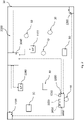
- the method of artificial assistance 100 object of the present invention comprises the following steps, performed according to a preferred embodiment and shown in figure 1 .
- the method of artificial assistance comprises the step of acquiring 110 by means of the set of sensors 1010 for each acquisition time instant a first data set related to the environment 20 and a second data set related to the user 10.
- the method includes continuously acquiring, from switching on, the first data set and the second data set.
- the method of artificial assistance 100 comprises the step of sending 120 the first data set and the second data set to the data processing unit 1030 in signal communication with the device 1000.
- the method of artificial assistance comprises the step of generating 130 as a function of the first data set and the second data set by means of algorithms resident in the data processing unit 1030 a set of action signals representative of a prediction of the action and/or interaction of the user 10 with the environment 20 at a time instant following the acquisition time instant.
- the generating step 130 allows to anticipate the action and interaction of the user 10 with the environment.
- the algorithms resident in the data processing unit 1030 as a function of the data sets preferably multimodal (e.g., video signals, IMUs, GPS, etc.) is configured to extract discriminatory features.
- Such features, together with any other environmental signals acquired with IOT devices are subsequently automatically processed and classified to interpret the context in which the user 10 is inserted.
- action and interaction with the environment 20 means the action of the user 10 in the environment 20, the interaction with the objects 30 arranged in the environment 20 but also interaction with the environment itself.
- action and/or interaction means an actual action/interaction between user 10 and environment 20 and/or between user 10 and objects 30.
- action and interaction with the environment 20 means a concrete and direct action/interaction (e.g., physical or signal) with physical objects present in the environment and/or with the environment itself.
- action and/or interaction can mean a movement/positioning/localization/passage of the user within the environment and/or an act (grasp/touch) on a physical object arranged in the environment by the user and/or the sending/receiving of information/commands to/from physical objects present in the environment and/or to/from the environment itself.
- important zones are defined within the environment 20 by an algorithm resident in the data processing unit 1030 and/or by a user.
- the important zones are determined and saved in the data processing unit.
- Such important zones define the spaces within the environment 20 in which the user can move and interact.
- such important zones may be environments within a building, exit or entrance routes, processing areas, security areas or refreshment areas, as well as areas in the context of specific objects (e.g., area in which a control panel or electrical panel is present).
- the step of generating a set of action signals 130 comprises the steps of recognizing 131 at the acquisition time instant one or more objects 30 present in the environment 20 as a function of the first data set. Subsequently, the step of generating a set of action signals 130 comprises the step of determining 132 at the acquisition time instant a relative position between the user 10 and the one or more recognized objects 30 as a function of the second data set. Once the objects 30 present in the environment 20 are recognized and the relative position of the user 10 with respect to said objects 30 is determined, the step of generating a set of action signals 130 includes determining 133 a future position between the user 10 and the one or more recognized objects 30 relative to the time instant following the acquisition time instant.
- the step of determining 133 a future position includes anticipating the position between the user 10 and the one or more objects 30 at a time instant following the data acquisition time instant.
- the step of generating a set of action signals 130 comprises the step of associating 134 the determined future position with the action signals so as to process it in subsequent steps.
- the step of generating a set of action signals 130 comprises the step of identifying 135 at the acquisition time instant a reference point PR present in the environment 20 as a function of the first data set. Subsequently, the step of generating a set of action signals 130 comprises the step of determining 136 at the acquisition time instant a location of the user 10 with respect to the identified reference point PR. Once the location of the user at the acquisition time instant has been determined, the step of generating a set of action signals 130 includes determining 137 a future location of the user with respect to the reference point PR related to the time instant following the acquisition time instant.
- the method not only determines the user's position at the acquisition time instant but is also able to anticipate the user's position at a time instant following the acquisition time instant.
- the step of generating a set of action signals 130 includes associating 138 the determined future location with the action signals so as to process it in the subsequent steps.
- the step of generating a set of action signals 130 comprises the step of recognizing 139 at the acquisition time instant a type of action and/or interaction of the user 10 with the environment 20 among a plurality of types of reference actions and/or interactions as a function of the first data set and the second data set.
- the type of action and interaction with the environment 20 comprises user interactions in the environment and/or with the objects 30 arranged in the environment itself.
- action and/or interaction with the environment 20 by the user means not only his movements within the environment itself but the actions and interactions which the user has with the objects 30 arranged and recognized in the environment itself 20.
- interaction with the environment 20 by the user not only means his actual and concrete movements within the environment itself, but the actual actions and interactions (direct and concrete interaction, e.g., grasping/touching a physical object or in signal communication, e.g., receiving/sending information/commands) which the user has with the objects 30 arranged and recognized in the environment 20 itself.
- the step of generating a set of action signals 130 includes determining 140 a future action and/or interaction of the user 10 with the environment 20 related to the time instant following the acquisition time instant.
- the method not only determines the type of action and/or interaction at the acquisition time instant but is able to anticipate the action and/or interaction which the user must have with the environment 20 at a time instant following the acquisition time instant.
- the step of generating a set of action signals 130 includes associating 141 the determined future action and/or interaction with the action signals.
- the step of generating a set of action signals 130 comprises the step of receiving 142 a set of reference instructions in the data processing unit 1030.
- the reference instructions comprise a list of actions and interactions with the environment 20, objects 30 as well as with the IoT devices which the user must perform for a given activity. More preferably, the reference instructions comprise threshold actions and interactions with the environment 20, objects 30 as well as with the IoT devices so as to generate an alarm signal when exceeded.
- the method of artificial assistance 100 comprises the step of reporting a hazard to the user 10 as a function of the first data set and the second data set and preferably as a function of reference instructions.
- the step of signalling a hazard to the user 10 includes generating an alarm signal.
- the step of generating a set of action signals 130 includes associating safeguard instructions with the set of action signals for the user, for example indicating an exit route and/or an approaching obstacle. Thereby, the method allows to anticipate an imminent hazard to the user 10, indicating the action and/or interaction with the objects 30 and/or the environment 20 to be carried out and/or to be avoided in order to prevent risks.
- the step of signalling a danger to the user 10, in the presence of an alarm signal includes sending an activation signal to alarm devices 1200, belonging to the artificial assistance system 2000, as described below, arranged in the environment 20.
- alarm devices 1200 are configured to generate an environmental alarm signal and, therefore, alert one or more users 10 present in the environment.
- the step of receiving 142 a reference set of instructions can be conducted by a user interface preferably associated with the artificial assistance device 1000 and/or by an update/load module associated with the data processing unit.
- the step of generating a set of action signals 130 comprises the step of generating 143 the set of action signals as a function of the set of reference signals, the first data set and the second data set. Thereby, the generation of the set of action signals takes into account the environment 20, the user 10 and reference instructions to optimize the generation process in a prediction.
- the method of artificial assistance 100 is characterized by distinctiveness and detectability as it allows to anticipate the actions and interactions between the user 10 wearing the artificial assistance device 1000 and the environment 20 generating the action signals.
- the method of artificial assistance 100 is characterized by stability.
- the method of artificial assistance 100 is independent of the user and does not require periodic interventions which depend on the user who uses it.
- the method of artificial assistance comprises the step of generating 180 as a function of the first data set and the second data set by means of algorithms resident in the data processing unit a set of environment signals representative of the environment 20 at the acquisition time instant.
- the step of generating 180 environment signals includes the recognition of the objects 30 arranged in the environment 20 and in the important zones defined in the environment 20. More preferably, the step of generating 180 environment signals includes locating the objects 30 in the environment 20.
- the generated environment signals comprise object recognition information 30 and preferably comprise spatial information about the recognized objects 30.
- the environment signals further comprise information sent by the same objects 30, such as IoT devices.
- the method of artificial assistance 100 comprises the step of showing 170b the set of environment signals on the augmented reality viewer 1020. More preferably, the step of showing the determined environment signals on the augmented reality viewer 170b comprises the step of projecting 171b the environment signals onto the augmented reality viewer 1020.
- the projecting step 171b includes identifying, surrounding and/or indicating one or more objects 30 present in the environment and the important zones.
- the method of artificial assistance comprises the step of generating 190 as a function of the first data set and the second data set by means of algorithms resident in the data processing unit a set of action and/or interaction signals representative of one or more user interactions 10 with the environment 20 related to the acquisition time instant.
- the method of artificial assistance comprises the step of showing 170c the environment signal set on the augmented reality viewer 1020.
- the step of showing the determined interaction signals on the augmented reality viewer 170c comprises the step of projecting 171c the interaction signals onto the augmented reality viewer 1020.
- the projecting step 171c includes signalling to the user the action and/or interaction in progress at the acquisition time instant. It should be noted that such an action and/or interaction can be defined with an object and/or one or more important zones.
- the method of artificial assistance 100 comprises the step of determining 160 an action and/or interaction instruction with the environment 20 as a function of the set of action signals.
- an action and/or interaction instruction with the environment 20 is to be understood for the purposes of the present invention as an instruction for a real action and/or interaction with the environment 20 (specifically with physical objects or with the environment itself).
- an instruction for a real action and/or interaction with the environment 20 includes instructions to interact directly (physically and/or via signal) with the environment 20 (objects and/or environment itself) which the user can perform.
- the step of determining an interaction instruction 160 includes determining the action and/or the interaction instruction based on the set of action and/or interaction signals combined with the first data set and the second data set. More preferably, the step of determining an action and/or interaction instruction 160 includes determining the action and/or interaction instruction as a function of the set of action and/or interaction signals combined with the first data set, the second data set, the set of environment signals, the set of action and/or interaction signals, or a combination thereof.
- the step of determining an interaction instruction 160 includes determining the action and/or interaction instruction as a function of the set of action and/or interaction signals combined with the first data set, the second data set, the set of environment signals, the set of action and/or interaction signals, the reference instructions, or a combination thereof.
- the action and/or interaction instructions allow the user to give commands to the IoT devices, interact with the objects 30 and/or receive information related to safety and/or the activities carried out as well as to move within the environment between the important zones.
- the step of determining an interaction instruction 160 comprises the step of drawing up 161 a list of actions to be taken by the user 10 as a function of the set of action signals.
- the list of actions which the user 10 must take comprises a list of actions with the environment 20, for example moving from one important zone to another, and with the objects 30 as well as with the IoT devices 1100.
- the list of actions which the user 10 must take is a list of real actions to be actually performed with the environment 20 and/or with the objects 30.
- the step of determining an action and/or interaction instruction 160 comprises the step of drawing up a list of actions which the IoT devices must carry out as a function of the action signals, the environment signals, the interaction signals, or a combination thereof.
- Such instructions are then sent to the relevant IoT device.
- the step of determining an action and/or interaction instruction 160 comprises the step of generating 162 one or more indication signals as a function of the list of actions.
- the step of determining an interaction instruction 160 includes associating 163 the list of actions and indication signals with the interaction instruction.
- the step of generating a set of action signals 130 is carried out by an algorithm based on neural networks and/or artificial intelligence and/or machine learning and/or computer vision.
- the step of determining an action and/or interaction instruction is also conducted by neural network-based algorithms and/or artificial intelligence and/or machine learning and/or computer vision.
- the method of artificial assistance 100 is characterized by uniformity and scalability.
- the method in question is applicable in any internal and/or external environment 20 without having to undergo architectural re-design interventions.
- the customization to new environments/objects only requires the acquisition of new data and training algorithms without further intervention to the architecture and/or the environment in which the method must operate.
- the method comprises a step of training the algorithms used as a function of the environment 20.
- the method of artificial assistance 100 comprises the step of showing 170a the action and/or interaction instruction on the augmented reality viewer 1020.
- the method includes the step of projecting the environment signals and the interaction signals 171a onto the augmented reality viewer 1020.
- the user is able to view and interact with the environment through the list of actions and the indication signals.
- the user is able to actually and directly view and interact with the environment by means of the list of actions and the indication signals.
- the projecting step 171a includes for example identifying by surrounding and/or indicating one or more objects 30 with which the user 10 will interact at the time instant following the time instant and/or showing a text message on the commands to be performed on an IoT device and/or indicating a path in the environment from one important zone to another. It should be noted that the step of projecting 171a includes highlighting objects 30 and/or elements (e.g., places or paths) in the environment actually present therein so that the user 10 can interact with them directly. In the presence of an alarm signal, the projecting step 171a includes showing the user an imminent hazard signal combined with an action and/or interaction instruction on the augmented reality viewer 1020. Preferably, the projecting step 171a, in the presence of an alarm signal, includes generating an acoustic signal by the artificial assistance device 1000 so as to warn the user 10.
- the method of artificial assistance facilitates the interaction of the user 10 with the environment.
- the method of artificial assistance allows to implement automatic risk prevention (safety) and energy saving actions.
- a further object of the present invention is an artificial assistance system 2000 for a user.
- the artificial assistance system 2000 comprises the artificial assistance device 1000 configured to implement the method of artificial assistance.
- the artificial assistance system 2000 comprises one or more IoT devices 1100 positioned in the environment 20 and in signal communication with the artificial assistance device 1000, preferably by means of the control unit 1040 belonging to the artificial assistance system 2000.
- the IoT devices 1100 are associated with the artificial assistance device 1000 and can be controlled by the user by means of the artificial assistance device 1000 itself.
- the artificial assistance system 2000 comprises one or more alarm devices 1200 arranged in the environment 20 and in signal communication with the artificial assistance device 1000.
- the alarm devices 1200 are activatable by the activation signal generated by the artificial assistance device 1000 and/or the control unit 1040 manually by a user. It is thereby possible to warn one or more users 10 present in the environment 20.
Landscapes
- Engineering & Computer Science (AREA)
- Theoretical Computer Science (AREA)
- Physics & Mathematics (AREA)
- General Physics & Mathematics (AREA)
- Business, Economics & Management (AREA)
- Educational Administration (AREA)
- Educational Technology (AREA)
- Automation & Control Theory (AREA)
- User Interface Of Digital Computer (AREA)
Applications Claiming Priority (1)
| Application Number | Priority Date | Filing Date | Title |
|---|---|---|---|
| IT202000027759 | 2020-11-19 |
Publications (1)
| Publication Number | Publication Date |
|---|---|
| EP4002328A1 true EP4002328A1 (fr) | 2022-05-25 |
Family
ID=74557078
Family Applications (1)
| Application Number | Title | Priority Date | Filing Date |
|---|---|---|---|
| EP21205698.0A Withdrawn EP4002328A1 (fr) | 2020-11-19 | 2021-10-29 | Procede d'assistance artificielle, dispositif et systeme associes |
Country Status (1)
| Country | Link |
|---|---|
| EP (1) | EP4002328A1 (fr) |
Cited By (1)
| Publication number | Priority date | Publication date | Assignee | Title |
|---|---|---|---|---|
| WO2024008678A1 (fr) * | 2022-07-07 | 2024-01-11 | Inter Ikea Systems B.V. | Système de recommandation virtuelle |
Citations (3)
| Publication number | Priority date | Publication date | Assignee | Title |
|---|---|---|---|---|
| WO2015036903A2 (fr) * | 2013-09-13 | 2015-03-19 | Koninklijke Philips N.V. | Système et procédé pour support de réalité augmentée |
| KR20180075419A (ko) * | 2016-12-26 | 2018-07-04 | 주식회사 티오이십일 | 지식 서비스 제공 시스템 및 방법 |
| US20180190020A1 (en) | 2016-12-29 | 2018-07-05 | Daqri, Llc | Predictive augmented reality assistance system |
-
2021
- 2021-10-29 EP EP21205698.0A patent/EP4002328A1/fr not_active Withdrawn
Patent Citations (3)
| Publication number | Priority date | Publication date | Assignee | Title |
|---|---|---|---|---|
| WO2015036903A2 (fr) * | 2013-09-13 | 2015-03-19 | Koninklijke Philips N.V. | Système et procédé pour support de réalité augmentée |
| KR20180075419A (ko) * | 2016-12-26 | 2018-07-04 | 주식회사 티오이십일 | 지식 서비스 제공 시스템 및 방법 |
| US20180190020A1 (en) | 2016-12-29 | 2018-07-05 | Daqri, Llc | Predictive augmented reality assistance system |
Cited By (1)
| Publication number | Priority date | Publication date | Assignee | Title |
|---|---|---|---|---|
| WO2024008678A1 (fr) * | 2022-07-07 | 2024-01-11 | Inter Ikea Systems B.V. | Système de recommandation virtuelle |
Similar Documents
| Publication | Publication Date | Title |
|---|---|---|
| US11669156B2 (en) | Methods, systems, apparatuses, and techniques for employing augmented reality and virtual reality | |
| US20210343182A1 (en) | Virtual-reality-based personal protective equipment training system | |
| JP5003731B2 (ja) | 巡回警備支援システム、方法及びプログラム | |
| US20210216773A1 (en) | Personal protective equipment system with augmented reality for safety event detection and visualization | |
| Ahmetovic et al. | Impact of expertise on interaction preferences for navigation assistance of visually impaired individuals | |
| US10551826B2 (en) | Method and system to increase operator awareness | |
| CN109478267B (zh) | 基于观察的事件跟踪 | |
| Chen et al. | Attention-based user interface design for a tele-operated crane | |
| JP2005332309A (ja) | ユーザ支援装置 | |
| EP4228769A1 (fr) | Équipement de protection individuelle pour la navigation et la génération de cartes dans un environnement visuellement obscurci | |
| CN119763296A (zh) | 安全预警方法、装置、设备、存储介质及计算机程序产品 | |
| Patalas-Maliszewska et al. | Improving safety in human–robot collaboration towards sustainable production in Industry 5.0 | |
| EP4002328A1 (fr) | Procede d'assistance artificielle, dispositif et systeme associes | |
| CN115659452A (zh) | 一种智能巡视方法、智能巡视系统及计算机可读存储介质 | |
| JP2009238251A (ja) | ユーザ支援装置 | |
| CN117606482B (zh) | 一种集成路径导航功能的应急照明系统及方法 | |
| Huber et al. | Addressing worker safety and accident prevention with AI | |
| Singh et al. | IoT-Based Shoe for Enhanced Mobility and Safety of Visually Impaired Individuals. | |
| CN120976259A (zh) | 基于fpga的雷达信号实时处理方法及系统 | |
| JP7517871B2 (ja) | 監視装置、監視方法及びプログラム | |
| EP4579370A1 (fr) | Système et procédé d'évaluation continue de risque pour robots mobiles | |
| KR20190063489A (ko) | 딥러닝 학습을 통한 위치정보 기반 개인 맞춤형 위험 예측 시스템 및 그 동작 방법 | |
| Mansoor et al. | Crane signalman hand-signal classification framework using sensor-based smart construction glove and machine-learning algorithms | |
| Speiser et al. | Smart signalperson for safe tower crane operations on a future digital construction site | |
| JP7222387B2 (ja) | 装置、方法およびプログラム |
Legal Events
| Date | Code | Title | Description |
|---|---|---|---|
| PUAI | Public reference made under article 153(3) epc to a published international application that has entered the european phase |
Free format text: ORIGINAL CODE: 0009012 |
|
| STAA | Information on the status of an ep patent application or granted ep patent |
Free format text: STATUS: THE APPLICATION HAS BEEN PUBLISHED |
|
| AK | Designated contracting states |
Kind code of ref document: A1 Designated state(s): AL AT BE BG CH CY CZ DE DK EE ES FI FR GB GR HR HU IE IS IT LI LT LU LV MC MK MT NL NO PL PT RO RS SE SI SK SM TR |
|
| STAA | Information on the status of an ep patent application or granted ep patent |
Free format text: STATUS: REQUEST FOR EXAMINATION WAS MADE |
|
| 17P | Request for examination filed |
Effective date: 20221118 |
|
| RBV | Designated contracting states (corrected) |
Designated state(s): AL AT BE BG CH CY CZ DE DK EE ES FI FR GB GR HR HU IE IS IT LI LT LU LV MC MK MT NL NO PL PT RO RS SE SI SK SM TR |
|
| STAA | Information on the status of an ep patent application or granted ep patent |
Free format text: STATUS: EXAMINATION IS IN PROGRESS |
|
| 17Q | First examination report despatched |
Effective date: 20240212 |
|
| STAA | Information on the status of an ep patent application or granted ep patent |
Free format text: STATUS: THE APPLICATION IS DEEMED TO BE WITHDRAWN |
|
| 18D | Application deemed to be withdrawn |
Effective date: 20251001 |