EP4002676B1 - Procédé de fonctionnement d'un moteur triphasé - Google Patents
Procédé de fonctionnement d'un moteur triphasé Download PDFInfo
- Publication number
- EP4002676B1 EP4002676B1 EP20208065.1A EP20208065A EP4002676B1 EP 4002676 B1 EP4002676 B1 EP 4002676B1 EP 20208065 A EP20208065 A EP 20208065A EP 4002676 B1 EP4002676 B1 EP 4002676B1
- Authority
- EP
- European Patent Office
- Prior art keywords
- ignition
- firing
- flux
- current
- rotor
- Prior art date
- Legal status (The legal status is an assumption and is not a legal conclusion. Google has not performed a legal analysis and makes no representation as to the accuracy of the status listed.)
- Active
Links
Images


Classifications
-
- H—ELECTRICITY
- H02—GENERATION; CONVERSION OR DISTRIBUTION OF ELECTRIC POWER
- H02P—CONTROL OR REGULATION OF ELECTRIC MOTORS, ELECTRIC GENERATORS OR DYNAMO-ELECTRIC CONVERTERS; CONTROLLING TRANSFORMERS, REACTORS OR CHOKE COILS
- H02P21/00—Arrangements or methods for the control of electric machines by vector control, e.g. by control of field orientation
- H02P21/06—Rotor flux based control involving the use of rotor position or rotor speed sensors
- H02P21/08—Indirect field-oriented control; Rotor flux feed-forward control
- H02P21/09—Field phase angle calculation based on rotor voltage equation by adding slip frequency and speed proportional frequency
-
- H—ELECTRICITY
- H02—GENERATION; CONVERSION OR DISTRIBUTION OF ELECTRIC POWER
- H02P—CONTROL OR REGULATION OF ELECTRIC MOTORS, ELECTRIC GENERATORS OR DYNAMO-ELECTRIC CONVERTERS; CONTROLLING TRANSFORMERS, REACTORS OR CHOKE COILS
- H02P1/00—Arrangements for starting electric motors or dynamo-electric converters
- H02P1/16—Arrangements for starting electric motors or dynamo-electric converters for starting dynamo-electric motors or dynamo-electric converters
- H02P1/26—Arrangements for starting electric motors or dynamo-electric converters for starting dynamo-electric motors or dynamo-electric converters for starting an individual polyphase induction motor
- H02P1/28—Arrangements for starting electric motors or dynamo-electric converters for starting dynamo-electric motors or dynamo-electric converters for starting an individual polyphase induction motor by progressive increase of voltage applied to primary circuit of motor
-
- H—ELECTRICITY
- H02—GENERATION; CONVERSION OR DISTRIBUTION OF ELECTRIC POWER
- H02P—CONTROL OR REGULATION OF ELECTRIC MOTORS, ELECTRIC GENERATORS OR DYNAMO-ELECTRIC CONVERTERS; CONTROLLING TRANSFORMERS, REACTORS OR CHOKE COILS
- H02P21/00—Arrangements or methods for the control of electric machines by vector control, e.g. by control of field orientation
- H02P21/14—Estimation or adaptation of machine parameters, e.g. flux, current or voltage
-
- H—ELECTRICITY
- H02—GENERATION; CONVERSION OR DISTRIBUTION OF ELECTRIC POWER
- H02P—CONTROL OR REGULATION OF ELECTRIC MOTORS, ELECTRIC GENERATORS OR DYNAMO-ELECTRIC CONVERTERS; CONTROLLING TRANSFORMERS, REACTORS OR CHOKE COILS
- H02P21/00—Arrangements or methods for the control of electric machines by vector control, e.g. by control of field orientation
- H02P21/06—Rotor flux based control involving the use of rotor position or rotor speed sensors
-
- H—ELECTRICITY
- H02—GENERATION; CONVERSION OR DISTRIBUTION OF ELECTRIC POWER
- H02P—CONTROL OR REGULATION OF ELECTRIC MOTORS, ELECTRIC GENERATORS OR DYNAMO-ELECTRIC CONVERTERS; CONTROLLING TRANSFORMERS, REACTORS OR CHOKE COILS
- H02P1/00—Arrangements for starting electric motors or dynamo-electric converters
- H02P1/02—Details of starting control
-
- H—ELECTRICITY
- H02—GENERATION; CONVERSION OR DISTRIBUTION OF ELECTRIC POWER
- H02P—CONTROL OR REGULATION OF ELECTRIC MOTORS, ELECTRIC GENERATORS OR DYNAMO-ELECTRIC CONVERTERS; CONTROLLING TRANSFORMERS, REACTORS OR CHOKE COILS
- H02P1/00—Arrangements for starting electric motors or dynamo-electric converters
- H02P1/16—Arrangements for starting electric motors or dynamo-electric converters for starting dynamo-electric motors or dynamo-electric converters
- H02P1/26—Arrangements for starting electric motors or dynamo-electric converters for starting dynamo-electric motors or dynamo-electric converters for starting an individual polyphase induction motor
-
- H—ELECTRICITY
- H02—GENERATION; CONVERSION OR DISTRIBUTION OF ELECTRIC POWER
- H02P—CONTROL OR REGULATION OF ELECTRIC MOTORS, ELECTRIC GENERATORS OR DYNAMO-ELECTRIC CONVERTERS; CONTROLLING TRANSFORMERS, REACTORS OR CHOKE COILS
- H02P21/00—Arrangements or methods for the control of electric machines by vector control, e.g. by control of field orientation
- H02P21/14—Estimation or adaptation of machine parameters, e.g. flux, current or voltage
- H02P21/18—Estimation of position or speed
-
- H—ELECTRICITY
- H02—GENERATION; CONVERSION OR DISTRIBUTION OF ELECTRIC POWER
- H02P—CONTROL OR REGULATION OF ELECTRIC MOTORS, ELECTRIC GENERATORS OR DYNAMO-ELECTRIC CONVERTERS; CONTROLLING TRANSFORMERS, REACTORS OR CHOKE COILS
- H02P21/00—Arrangements or methods for the control of electric machines by vector control, e.g. by control of field orientation
- H02P21/14—Estimation or adaptation of machine parameters, e.g. flux, current or voltage
- H02P21/20—Estimation of torque
-
- H—ELECTRICITY
- H02—GENERATION; CONVERSION OR DISTRIBUTION OF ELECTRIC POWER
- H02P—CONTROL OR REGULATION OF ELECTRIC MOTORS, ELECTRIC GENERATORS OR DYNAMO-ELECTRIC CONVERTERS; CONTROLLING TRANSFORMERS, REACTORS OR CHOKE COILS
- H02P21/00—Arrangements or methods for the control of electric machines by vector control, e.g. by control of field orientation
- H02P21/22—Current control, e.g. using a current control loop
-
- H—ELECTRICITY
- H02—GENERATION; CONVERSION OR DISTRIBUTION OF ELECTRIC POWER
- H02P—CONTROL OR REGULATION OF ELECTRIC MOTORS, ELECTRIC GENERATORS OR DYNAMO-ELECTRIC CONVERTERS; CONTROLLING TRANSFORMERS, REACTORS OR CHOKE COILS
- H02P21/00—Arrangements or methods for the control of electric machines by vector control, e.g. by control of field orientation
- H02P21/24—Vector control not involving the use of rotor position or rotor speed sensors
-
- H—ELECTRICITY
- H02—GENERATION; CONVERSION OR DISTRIBUTION OF ELECTRIC POWER
- H02P—CONTROL OR REGULATION OF ELECTRIC MOTORS, ELECTRIC GENERATORS OR DYNAMO-ELECTRIC CONVERTERS; CONTROLLING TRANSFORMERS, REACTORS OR CHOKE COILS
- H02P21/00—Arrangements or methods for the control of electric machines by vector control, e.g. by control of field orientation
- H02P21/34—Arrangements for starting
-
- H—ELECTRICITY
- H02—GENERATION; CONVERSION OR DISTRIBUTION OF ELECTRIC POWER
- H02P—CONTROL OR REGULATION OF ELECTRIC MOTORS, ELECTRIC GENERATORS OR DYNAMO-ELECTRIC CONVERTERS; CONTROLLING TRANSFORMERS, REACTORS OR CHOKE COILS
- H02P2207/00—Indexing scheme relating to controlling arrangements characterised by the type of motor
- H02P2207/01—Asynchronous machines
-
- H—ELECTRICITY
- H02—GENERATION; CONVERSION OR DISTRIBUTION OF ELECTRIC POWER
- H02P—CONTROL OR REGULATION OF ELECTRIC MOTORS, ELECTRIC GENERATORS OR DYNAMO-ELECTRIC CONVERTERS; CONTROLLING TRANSFORMERS, REACTORS OR CHOKE COILS
- H02P2207/00—Indexing scheme relating to controlling arrangements characterised by the type of motor
- H02P2207/05—Synchronous machines, e.g. with permanent magnets or DC excitation
Definitions
- the invention relates to a method for operating a three-phase motor.
- the invention also relates to a soft starter.
- the invention relates to a computer program product with which the method can be carried out.
- the present invention was made against the background of the prior art described above, the object of the present invention being to define a method which, on the one hand, offers similar operating behavior to the model-predictive approach, but on the other hand, not as high requires computing power.
- the task is solved by a method according to claim 1.
- This is a process that is used to operate a three-phase motor on a multi-phase electrical network. It is operated using a soft starter, with which one or more network phases of the network can be switched by igniting thyristors.
- the operating method also takes into account at least one rotor flux-related ignition criterion.
- the invention is based on the idea that a decision to ignite a thyristor is made with reference to a network-related ignition criterion, e.g. B. the position of the voltage vector, and a rotor flux-related ignition criterion, e.g. B. the position of the rotor flux vector is taken.
- a network-related ignition criterion e.g. B. the position of the voltage vector
- a rotor flux-related ignition criterion e.g. B. the position of the rotor flux vector
- the method presented does not require any detailed motor parameters or predictions, but only a few angular operations and comparisons and is therefore many times easier to implement in an industrial product than the well-known model-predictive control method.
- Initial estimates showed that the method according to the invention only requires approximately 10% of the computing power of the model-predictive control method. In addition, the new process even makes regulated operation possible.
- both the network-related ignition criterion and the rotor flux-related ignition criterion must be fulfilled.
- Each ignition option is checked to see whether it meets both the grid-related ignition criterion and the rotor flux-related ignition criterion. Only in the case that an ignition option fulfills both the network-related ignition criterion and the rotor flux-related ignition criterion can the ignition option actually be used by ignition.
- the network-related ignition criterion is fulfilled if an ignition possibility of two or more network phases lies within an ignition angle range which is defined by a lower ignition angle range limit and an upper ignition angle range limit in relation to a network size, the network size being the network voltage and / or the network current .
- the lower ignition angle range limit determines the ignition at which the current flow reaches the maximum length and the largest current amplitude.
- the lower ignition angle range limit can be analogous to the ignition angle ⁇ in the classic control methods, e.g. B. can be specified via a characteristic curve or regulated taking the current amplitude into account. It is also possible to take the current rotor flux amplitude into account to limit the maximum possible torque.
- the lower ignition angle range limit can take a value from the following definition range: [-90°; upper ignition angle range limit], measured in relation to the vector of the mains voltage.
- the upper ignition angle range limit indirectly defines the shortest current flow that can be triggered by an ignition.
- the upper ignition angle range limit can be selected so that even in a network in which zero crossing determination is difficult, it is ensured that the ignition always behaves in such a way that the current is in the desired direction flows and there is no unwanted ignition with a current amplitude that is far too high.
- the rotor flux-related ignition criterion is fulfilled if an ignition possibility of two or more network phases lies within a flux and torque angle range whose range limit values are defined in relation to the rotor flux.
- a flux and torque angle range whose range limit values are defined in relation to the rotor flux.
- the other range limit value of the flux and torque angle range can be used to define how much positive torque and how much rotor flux linkage is generated in the rotor: it may be that a build-up of positive torque leads to a reduction of rotor flux and vice versa. The choice of this other range limit value must therefore be examined carefully. This parameter can be used for "flow guidance” or "flow control" during startup. Using this limit value, the mean absolute rotor flux can be determined ⁇ ⁇ 2 S to be influenced. If the motor is to be accelerated, the difference of the range limits of the flux and torque angle ranges can take a value from the following definition range: [90°, 180°], measured with respect to the vector of the rotor flux.
- the presence of an ignition criterion is determined using a space vector representation of rotor flux ⁇ ⁇ 2 S , mains voltage U ⁇ 1 S and stator current I ⁇ 1 S checked.
- a space vector representation the relationships between network variables such as voltage and current, the rotor flux variables, the ignition angle range and the flux and torque angle range can be clearly represented.
- the main difference between the present invention and the conventional control methods lies in the space vector representation in that the rotor flux space vector is taken into account when selecting an ignition point.
- the calculation of a network space vector, e.g. B. the voltage space vector, and the rotor flux space vector and the ignition angle and the flux and torque angle range can be done cyclically.
- thyristor control can occur. This leads to ignition pulses that take both the mains voltage and the rotor flux into account. In this way, positive torque, limited stator current and sufficient rotor flux for subsequent ignitions can be obtained.
- the flow and torque angle range is shifted by a twist angle in order to compensate for a time delay between an ignition decision and ignition.
- This can reduce the effect that because of the rotating rotor, estimates of positive torque and rotor flux development are made on a different basis than they actually occur during ignition.
- the rotation made in the space vector representation by the angle of rotation aims to compensate the deviation caused by the rotating rotor as best as possible.
- the testing of network-related and rotor flux-related ignition criteria is preceded by a time period of the flux build-up in which rotor flux is generated by ignition of thyristors.
- only those ignition options are determined which result in negative torques and thus make the three-phase motor active brake.
- the method can therefore also be used for active braking.
- the object is also achieved by a soft starter according to the invention, which is suitable for carrying out the steps of the method according to the invention.
- the soft starter has an ignition signal unit for generating ignition signals and the thyristors.
- the ignition signal unit can be controlled to generate ignition signals for one or more of the thyristors.
- the soft starter also has means that are suitable for carrying out the steps of the method described. These means can e.g. B. be a control unit which has a computing unit and a storage unit. A computer program can be loaded into the storage unit and permanently stored there, from where it can be loaded into the computing unit for execution.
- the task outlined is also solved by a computer program product according to the invention and a computer-readable medium on which the computer program product is stored.
- the computer program product is designed to be executable in at least one processor.
- the computer program product can be used as software, e.g. B. can be designed as an app that can be downloaded from the Internet, or as firmware in a memory and executable by a processor or an arithmetic unit.
- the computer program product according to the invention includes commands which cause the soft starter according to the invention to carry out the method steps of the method described.
- the computer program product is therefore designed to carry out the method for operating a three-phase motor using a soft starter.
- it is designed to take into account a rotor flux-related ignition criterion in addition to a network-related ignition criterion.
- the computer program product includes instructions that cause: the ignition signal unit of the soft starter according to the invention generates one or more ignition signals for one or more thyristors if the decision for an ignition option has been made.
- the computer program product is designed to implement and carry out at least one embodiment of the method outlined.
- the computer program product can combine all partial functions of the method, i.e. be designed monolithically.
- the computer program product can also be designed to be segmented and distribute partial functions to segments that are executed on separate hardware.
- the computer program product can thus be designed to be executable partly in a control unit of the soft starter and partly in an external control unit.
- part of the method can be carried out in a soft starter device and another part of the method can be carried out in a control unit superordinate to the soft starter device, such as a PLC, a manual parameterization device or a computer cloud.
- ASM asynchronous motor
- the soft starter 1 uses grid-side line-to-line measurements u A,B , u B,C , u C,A to determine the grid voltages u A , u B , u C , and motor-side line-to-line measurements, etc a,b , u b,c , u c,a to calculate the motor voltages u a , u b , u c .
- Similar topologies, in which only two of three network phases can be switched in the soft starter are in the Siemens device manual for the SIRIUS 3RW50 soft starter, Siemens AG, Amberg, 09/2019, A5E35628455001A/RS-AA/001, Chapter A.1. to find.
- the structure for generating control pulses has remained the same in its essential basic features and has the in FIG 2 shown Structure, which essentially includes three blocks, which are explained below:
- the control value of the ignition angle ⁇ also called the control or control angle
- the ignition angle ⁇ can be determined by input parameters 25, e.g. B.
- RMS Root Mean Square
- a second block of the soft starter 1, a control signal block 22, is used to generate control signals 27 for triggering thyristor ignitions, the control signals 27 depending on a measured voltage, e.g. B. the mains voltage 26, and / or a measured current, preferably with a defined time between a thyristor being switched off when the current falls below a minimum and the thyristor being re-ignited.
- a measured voltage e.g. B. the mains voltage 26, and / or a measured current
- a third block of the soft starter 1, a hardware block 23, includes thyristors and ignition devices, e.g. B. an ignition signal unit; it uses those received from the control signal block 22 Control signals 27 for generating the output voltage.
- FIG 3 shows a structure for generating control pulses according to a model-predictive control method, as described in the European patent application EP20176295.2 as well as in Nannen et al. is described.
- the soft starter 1 can, for example, be in a topology as shown in FIG 1 shown can be used.
- the soft starter 1 has a control unit 41 with a computing unit 46, also referred to as a processor, and a memory unit 43.
- the computing unit 46 executes a computer program stored in the storage unit 43, which contains an algorithm for executing the method.
- ignition options are determined for at least one next time step, the engine behavior corresponding to the ignition options is precalculated using an engine model, and finally, based on the predicted engine behavior, a decision is made as to whether and which ignition option should be selected.
- state variables of the system are measured or calculated.
- the computing unit 46 receives a series of measured values 44, e.g. B. the motor current I 1 , the motor voltage U 1 and the speed n of the rotor, as input values.
- Grid voltages u A , u B , u C are measured to calculate the grid angle ⁇ grid and the grid voltage amplitude U grid .
- the motor currents i a , i b , i c and motor voltages u a , u b , u c are also used for a model-based calculation of the rotor flux. All system variables are defined together with the measured mechanical rotor speed n and the grid frequency f grid . After the prediction, it is clear which possibilities for ignition exist at the time in question in the future, ie which ignition possibilities. These ignition options can then be based on a variety of decision criteria 45, e.g. B. a maximum torque or a maximum stator current can be checked and evaluated.
- the controller 41 If the decision has been made for a specific ignition option, the controller 41 generates one or more control signals 47 to one Ignition block 42 of the soft starter 1, which has thyristors and an ignition signal unit 48 for generating ignition signals for the thyristors.
- the control signals 47 cause the ignition signal unit 48 to generate ignition signals for one or more of the thyristors, so that the pre-calculated engine behavior is achieved.
- the present description of the invention is based on space vector representations: they offer the possibility of representing multi-phase physical quantities occurring in a multi-phase network in a simpler, two-axis coordinate system with the axes ⁇ , ⁇ as space vectors rotating around the zero point, or simply: pointers.
- the transition to the ⁇ - ⁇ coordinate system occurs by applying the Clarke transformation.
- physical quantities can be represented in the system at any time; in the present invention these are primarily magnetic flux, voltage and current.
- FIG 4 shows an example of a space vector representation:
- a three-phase alternating voltage U comes from a standard 50 Hz supply network and consists of three individual sinusoidal alternating voltages u A , u B , u C of the same frequency with a peak value of 325 volts, the phase angles of which are fixed by 120° to each other.
- the voltage curve is shown over the period from 0 to 100 ms.
- the lower part of FIG 4 shows space vector representations of voltage and current in the time interval from 12 ms to 21 ms, in time steps of 1 ms.
- the scaling of the pointers is irrelevant for the analysis here.
- the voltage pointer is thicker U shown, with thinner line width of the current pointer I .
- the first thing you notice is that the voltage indicator U turned a little further. This can also be seen in the subsequent time steps.
- the amplitude and thus the pointer length of the voltage pointer U remain constant in the ideal network, in which there is no impedance and no voltage drops on the line.
- This example shows how the space vector representation can be used to clearly represent relationships between different physical quantities, here: voltage and current.
- the soft starter With the soft starter, different ignitions are possible, which trigger different engine behavior. Either the ignition is 2-phase (phases a&b, b&c, c&a) or 3-phase (phases a&b&c).
- the 2-phase ignition leads, as already in FIG 4 shown, to current vectors that are fixed in their orientation and pulsating in their amplitude.
- the thyristors in the two network phases a, b of the three network phases a, b, c are ignited, these phases a, b become current-conducting, whereas the thyristor in the third phase c remains current-blocking. Because the sum of the currents I in all three phases a, b, c must always be zero, the current that flows towards the motor in one of the conductive phases a, b must be identical to the current that flows in the other conductive phase flows away from the engine; Therefore, the current amplitudes in the two conducting phases a, b are exactly the same, just with opposite signs.
- FIG 5 concerns a 2-phase ignition of phases a and b.
- the present invention is generally applicable to a three-phase machine connected to a soft starter.
- the three-phase motor can be designed as an asynchronous machine, a synchronous machine or a PM line start motor.
- the subscript (subscript) 1 identifies a stator-related quantity, the subscript 2 a rotor-related quantity.
- the superscript (superscript) S indicates that the size refers to a stator-fixed coordinate system.
- the motor model uses the stator current I ⁇ 1 S , the scattering coefficient ⁇ (Blondel's coefficient), the inductances L 1 , L 2 , the voltage U ⁇ 1 S , the resistors R 1 , R 2 , the interlinked rotor flux ⁇ ⁇ 2 S , the main inductance L h (mutual inductance), the rotor speed ⁇ L and the motor torque M M .
- the angle of rotation ⁇ K is chosen so that the rotor flux vector ⁇ ⁇ 2 S after completion of the rotation points in the positive direction of the d-axis of the dq coordinate system.
- the value d represents the magnetic flux density of the magnetic excitation in the rotor
- q is an expression for the torque generated by the rotor.
- FIG 6 illustrates the turning operation: in the left part of the FIG 6 is the position of the flow pointer ⁇ ⁇ 2 S shown before the rotation by the rotation angle ⁇ K and the rotation of the flow pointer by the rotation angle ⁇ K indicated.
- a 2-phase ignition leads to a current vector with a fixed direction but a pulsating amplitude.
- These fixed directions of the current vector which result from the three possible 2-phase ignition combinations a&b, b&c, a&c, are in FIG 6 dashed 7 shown; in this description these fixed directions 7, in which the through a 2-phase Ignition generated current vector pulsates, also known as trajectories.
- This rotation operation 6 becomes the flow pointer ⁇ ⁇ 2 S and the lanes 7 in the right part of the FIG 6 positions shown: the flow pointer ⁇ ⁇ 2 S points in the direction of the d-axis.
- first area 8 with ignitions for positive torque comprising the half space with a dash-dotted border with positive q values
- second area 9 with ignitions for negative torque comprising the dashed-bordered half space with negative q values
- the representation obtained by the rotation operation 6, in which the dq coordinate system is at any time on the rotor flux pointer ⁇ ⁇ 2 S is aligned, i.e. the entire rotor flux is in the d direction, makes it possible to divide the current into a field-forming current, which corresponds to the current vector component along the d-axis, and a torque-forming current, which corresponds to the current vector component along the q-axis.
- FIG 7 illustrates the conventional definition of the ignition angle ⁇ , which determines the ignition point in relation to the mains voltage, or more precisely: to the zero crossings 10 of the mains voltage.
- An ignition of the thyristors is always at a fixed distance ⁇ from the immediately preceding mains voltage zero crossing 10.
- FIG 7 also shows the current pulses i(t) triggered by the respective ignitions as dashed curves; The sign of a current pulse i(t) corresponds to the sign of the voltage u(t) at the respective ignition point.
- This conventional definition of the ignition angle ⁇ makes it difficult to integrate further criteria with regard to an ignition decision: since an exact ignition point is defined at which the ignition must take place, a further criterion could only influence whether the ignition takes place at all or not. Since this restrictive definition does not leave any scope for including another criterion, e.g. B. the inclusion of the rotor flux as a further ignition criterion in addition to the grid angle/grid voltage zero crossing, this definition is modified as in FIG 8 shown: instead of a specific ignition point, the ignition angle ⁇ , an angular range, the so-called ignition angle range 11, is now defined, within which the ignition point should lie.
- the firing angle range 11 is also referred to as the firing sector or firing window.
- the ignition point can be chosen from a range of values [ ⁇ min ; ⁇ max ] can be selected, which depends on a lower limit ⁇ min , the minimum ignition angle, and an upper limit ⁇ max , the maximum ignition angle, is limited.
- ⁇ min the minimum ignition angle
- ⁇ max the maximum ignition angle
- an asynchronous motor can be represented as a series connection of an inductor and a resistor; So it always works ohmic-inductively.
- the result is that the current that flows due to an applied voltage always lags behind it.
- this means that the ignition must always be carried out before the associated voltage zero crossing 10. The further before the voltage zero crossing 10 the ignition occurs, the greater the current generated.
- FIG 9 An example illustrates the consequences that can occur if a zero crossing of the mains voltage is not correctly recognized: the amplitude of a sinusoidal mains voltage u(t) is plotted over time t. The thyristors are ignited at a fixed angular distance ⁇ from the zero crossings 10 of the mains voltage u(t).
- a non-sinusoidal voltage area 51 can arise.
- the theoretical zero crossing 10 ⁇ of the ideal mains voltage u ⁇ (t) is delayed by a delay period 52 due to the non-sinusoidal voltage range 51; Accordingly, the measurement of the ignition angle ⁇ does not begin at the theoretical zero crossing 10 ', but at the actually measured zero crossing 10.
- the subsequent ignition 2 therefore takes place, due to the delay of the last voltage zero crossing 10, not before but after the renewed voltage zero crossing 10: this means instead of one very large control angle, a very small control angle is set, and thus a second current pulse i 2 (t) is generated, the amplitude of which is many times larger than that of the previous first current pulse i 1 (t).
- Such an unfavorable scenario can be excluded by appropriately selecting the upper limit value ⁇ max of the ignition angle range 11, so that only those ignition pulses that lead to acceptable current amplitudes are allowed through, even if there are uncertainties in the system with regard to the zero crossing of the mains voltage.
- the network is described in the space vector representation by a voltage vector that rotates at the network voltage angular frequency.
- FIG 11 in it is the space vector diagram of FIG 10 an example voltage indicator U ⁇ 1 S and an area 13 in which the possible ignitions are located.
- FIG 11 is compared to FIG 10 Area 13 has been added, in which the ignition constellations (trajectories) that are possible due to the network location are located.
- the torque range should also be restricted. If the goal is to accelerate the engine, all ignition options in the first range 8 are attractive because they produce positive torque, and all options in the second range 9 are unattractive because they produce negative torque.
- FIG 14 shows, neglecting rotor resistance R2 and iron losses, where flux would be built up and where it would be reduced: there is an area 14 framed in dashed lines in which those ignition options are located that strengthen the rotor flux linkage, and an area 15 framed in dash-dotted lines in which those ignition options are located , which weaken the rotor flux linkage.
- FIG 15 summarizes the information from FIG 10 and FIG 14 in one representation: the areas 8 and 9, in which positive torque +M M or negative torque -M M is generated, and the areas 14 and 15, in which flux is built up ⁇ ⁇ 2 S ⁇ or river mined ⁇ ⁇ 2 S ⁇ will overlap each other and lead to the four different sectors 16 to 19 shown.
- FIG 16 shows a flux and torque angle range 12, also referred to for simplicity as a flux window, which takes this behavior into account: the flux and torque angle range 12, which refers to the rotor flux pointer ⁇ ⁇ 2 S is limited by the angles ⁇ start and ⁇ end , which are determined by the rotor flux pointer ⁇ ⁇ 2 S be measured from.
- the flux and torque angle range 12 was based on the relationships in FIG 15 , together with the requirement that, statistically speaking, more flow should be generated by the ignitions than is lost, as an example.
- the now defined flux and torque angle range 12 therefore includes sectors with positive torque and sectors with flux build-up or only slight flux reduction. Now the two defined areas, the ignition angle range 11 and the flux and torque angle range 12, should be combined into one decision criterion. If an ignition option 7 lies both within the ignition angle range 11 and within the flux and torque angle range 12, this ignition should be carried out. In the in FIG 17 In the example shown, this is not the case for any of the ignition options; therefore no ignition should be carried out. Now you can wait for a certain amount of time, during which the voltage pointer U ⁇ 1 S keeps turning.
- the constellation looks like in FIG 18 :
- the voltage indicator U ⁇ 1 S has rotated further by 90°, the rotor flux pointer ⁇ ⁇ 2 S
- its amplitude and direction remained constant (motor stands still, no iron or rotor losses).
- the path 7 of the firing combination b&c lies in both sector 11 and sector 12. So this firing combination b&c can be executed to produce positive torque +M M , the rotor flux ⁇ 2 S to increase something and not to exceed a maximum current amplitude.
- twist angle ⁇ rot could look like this, although other systematic determinations are also conceivable: assuming that the conditions in the middle of a current pulse represent approximately the average of the conditions over the entire current pulse, this can be used as a reference. Now you take the last current pulse as a basis and determine the time interval t delay between the ignition point and the current maximum, as in FIG 30 illustrated. Now it can be assumed with a good approximation that the time interval t delay in the case now to be evaluated is identical to that of the previous ignition pulse. In other words: If the time interval between ignition and current maximum is equal to t delay for the previous ignition pulse, it will probably be very similar or identical for the next ignition pulse. Accordingly, the flow and torque angle range 12 can be pre-rotated by a twist angle ⁇ red corresponding to the time interval t delay , as in FIG 30 shown to minimize the influence of the rotating rotor on the ignition decision.
- twist angle ⁇ rot is determined in the manner described, a large part of the changes occurring due to the rotating rotor can be compensated for.
- This limit is crucial; it indirectly defines the shortest current flow through an ignition.
- This angle ⁇ max should be chosen so that even in a network in which determining the zero crossing is difficult (high harmonic load or distortions in the area before and after the zero crossing), it is ensured that the ignition always behaves in such a way that the current in flows in the desired direction and there is no unwanted ignition with a current amplitude that is far too high.
- This limit determines the ignition at which the current flow reaches the maximum length and greatest amplitude.
- This angle ⁇ min can be analogous to the ignition angle ⁇ in the classic control methods, e.g. B. can be specified via a characteristic curve or regulated taking the current amplitude into account.
- ⁇ min can take a value from the following definition range: [-90°, a max ], measured with respect to the voltage vector U ⁇ 1 S .
- This angle ⁇ end determines how long the ignitions continue to generate positive torque +M M. Depending on how this limit is set, ignition is either carried out for a long time and thereby reduces the rotor flux linkage, or it is only fired if there is no reduction in the rotor flux linkage on average.
- This parameter can be used for "flow guidance” or "flow control" during startup.
- the mean absolute rotor flux can be determined ⁇ ⁇ 2 S to be influenced. If the motor is to be accelerated, the difference ⁇ end - ⁇ start can take a value from the following definition range: [90°, 180°], measured with respect to the flow vector ⁇ ⁇ 2 S .
- the angles ⁇ min , ⁇ max , ⁇ start , ⁇ end can be used to influence startup.
- the method presented here offers advantages over conventional control methods based only on an ignition angle ⁇ , but probably also some disadvantages. Therefore, as an alternative to its exclusive use for determining control signals, the invention can also be used as a supplement to the existing methods. It is possible that the present method is more suitable for certain speed ranges than others. Accordingly, it is also possible for the new method presented here and a known method to be combined during a startup. In a preferred embodiment, the start could initially begin with the new process; Subsequently, during startup, a quality criterion is used, e.g. B. the speed, it was decided to switch to a conventional control in order to combine the advantages of both methods.
- a quality criterion e.g. B. the speed, it was decided to switch to a conventional control in order to combine the advantages of both methods.
- the stator current is used for this I ⁇ 1 S and the rotor speed ⁇ L is required.
- the stator current Is can be measured easily: the two or three phase currents are measured, then the current vector is calculated using Clarke transformation I ⁇ 1 S calculated.
- the mechanical speed can also be recorded using suitable measuring technology.
- this is atypical when using soft starters in an industrial environment, as the costs and effort required for installation make the use of soft starters uneconomical. Accordingly, determining the speed without an additional sensor appears to be very advantageous.
- There are a variety of options for determining the speed based on a model which have been developed over the last few decades with regard to the sensorless control of three-phase machines.
- FIG 33 shows a flowchart according to an embodiment of the method according to the invention.
- a first step S1 the network-related ignition criterion and the rotor-related ignition criterion are defined.
- the network-related ignition criterion is fulfilled if an ignition possibility lies within the ignition angle range 11, which has a lower ignition angle range limit ⁇ min and an upper ignition angle range limit ⁇ max in relation to the voltage vector U ⁇ 1 S .
- the rotor-related ignition criterion is fulfilled if an ignition possibility lies within the flux and torque angle range 12, the range limit values ⁇ start and ⁇ end of which are defined in relation to the rotor flux.
- thyristors are also ignited in order to set the rotor in rotation so that the rotor flux is not equal to zero.
- a second step S2 following the first step S1 it is checked whether the network-related ignition criterion is fulfilled.
- the network-related ignition criterion is fulfilled if an ignition possibility of two or more network phases a, b, c lies within the ignition angle range 11.
- a third step S3 following the second step S2 it is checked whether the rotor flux-related ignition criterion is fulfilled.
- the rotor flux-related ignition criterion is fulfilled if an ignition possibility of two or more network phases a, b, c lies within the flux and torque angle range 12.
- a jump is made back to the second step S2, from where the repeated execution of steps S2 to S4 begins again.
- FIG 1 The basis for all considerations made is the in FIG 1 topology shown. In principle, the method can also be used for any other thyristor-based topology.
- a control unit 61 receives setpoint values 65, for example a desired motor torque, a maximum setpoint current or a speed ramp, and measured values 64, e.g. B. stator current I 1 , stator voltage U 1 , torque M and/or rotor speed n of the motor. Based on the received target values 65 and the received measured values 64, the control unit 61 sets one or more of the control values 68, ie ⁇ min , ⁇ max , ⁇ start , ⁇ end , so that the target values can be achieved.
- setpoint values 65 for example a desired motor torque, a maximum setpoint current or a speed ramp
- measured values 64 e.g. stator current I 1 , stator voltage U 1 , torque M and/or rotor speed n of the motor.
- the control unit 61 sets one or more of the control values 68, ie ⁇ min , ⁇ max , ⁇ start , ⁇ end , so that the target values can be achieved.
- control values 68 are transferred to a second block of the soft starter 100, a computing unit 62, which has a processor and a memory unit.
- the processor executes a computer program stored in the memory unit, which contains an algorithm for carrying out the method according to the invention.
- the computing unit 62 generates control signals 67 from the control values 68 received.
- a third block 63 of the soft starter 100 includes thyristors and ignition devices, for example an ignition signal unit.
- the control signals 67 received by the computing unit 62 cause the ignition signal unit to generate ignition signals for one or more of the thyristors, so that the thyristor(s) are switched on.
Landscapes
- Engineering & Computer Science (AREA)
- Power Engineering (AREA)
- Control Of Ac Motors In General (AREA)
- Motor And Converter Starters (AREA)
Claims (9)
- Procédé pour faire fonctionner un moteur (4) triphasé sur un réseau (5) électrique polyphasé au moyen d'un démarreur (1) doux, par lequel une ou plusieurs phases (a, b, c) du réseau (5) peuvent être mises en circuit respectivement par amorçage de thyristors (2),dans lequel on prend en compte, outre un critère d'amorçage rapporté au réseau, un critère d'amorçage rapporté au flux du rotor,dans lequel pour une décision d'amorçage, d'utiliser une possibilité d'amorçage d'un ou de plusieurs thyristors (2), tant le critère d'amorçage rapporté au réseau qu'également le critère d'amorçage rapporté au flux du rotor doivent être satisfaits,dans lequel on amorce soit en 2 phases, soit en 3 phases, dans lequel, dans une représentation à vecteur d'espace, un amorçage à 2 phases donne un vecteur de courant, qui est fixe dans sa direction et pulsé dans son amplitude, et un amorçage à 3 phases donne un vecteur de courant tournant, caractérisé en ce que le critère d'amorçage rapporté au réseau est satisfait si, dans une représentation en vecteur d'espace, le vecteur de courant d'une possibilité d'amorçage de deux ou plusieurs phases (a, b, c) du réseau se trouve dans une partie (11) angulaire d'amorçage, qui est définie par une limite (αmin) inférieure de plage angulaire d'amorçage et une limite (αmax) supérieure de plage angulaire d'amorçage relativement à la tension du réseau et/ou au courant du réseau etle critère d'amorçage rapporté au flux du rotor est satisfait si, dans une représentation en vecteur d'espace, une possibilité d'amorçage de deux ou de plusieurs phases (a, b, c) du réseau se trouve à l'intérieur d'une plage (12) angulaire de flux et de couple, dont les valeurs (γ start ; γ end) limites de plage sont définies relativement au flux du rotor.
- Procédé suivant la revendication précédente, dans lequel on contrôle une présence d'un critère d'amorçage à l'aide d'une représentation en vecteur d'espace de flux
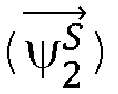


- Procédé suivant l'une des revendications précédentes, dans lequel on décale la plage (12) angulaire de flux et de couple d'un angle (δrot) de rotation, pour compenser un retard dans le temps entre une décision d'amorçage et l'amorçage.
- Procédé suivant l'une des revendications précédentes, dans lequel le moteur triphasé est un moteur asynchrone, un moteur synchrone ou un moteur PM-Line-Start.
- Procédé suivant l'une des revendications précédentes, dans lequel on met avant le contrôle de critères d'amorçage relativement au réseau et relativement au flux du rotor un laps de temps d'établissement du flux, dans lequel on produit un flux de rotor par des amorçages de thyristors.
- Procédé suivant l'une des revendications précédentes, dans lequel on ne détermine que des possibilités d'amorçage, qui ont pour conséquence des couples négatifs et ainsi freinent activement le moteur (4) triphasé.
- Démarreur (100) doux, qui est propre à effectuer les stades d'un procédé suivant l'une des revendications 1 à 6.
- Produit de programme d'ordinateur comprenant des instructions, qui font qu'un démarreur (100) doux suivant la revendication 7 effectue les stades de procédé suivant l'une des revendications 1 à 6.
- Support déchiffrable par ordinateur, sur lequel est mis en mémoire un produit de programme d'ordinateur suivant la revendication 8.
Priority Applications (4)
| Application Number | Priority Date | Filing Date | Title |
|---|---|---|---|
| EP20208065.1A EP4002676B1 (fr) | 2020-11-17 | 2020-11-17 | Procédé de fonctionnement d'un moteur triphasé |
| BR102021022196-8A BR102021022196B1 (pt) | 2020-11-17 | 2021-11-05 | Método para operar um motor trifásico de gaiola, dispositivo de arranque suave, produto de programa de computador, e, meio legível por computador |
| US17/519,860 US11552585B2 (en) | 2020-11-17 | 2021-11-05 | Method to operate a three-phase cage motor |
| CN202111346231.4A CN114513153B (zh) | 2020-11-17 | 2021-11-15 | 用于运行三相电动机的方法 |
Applications Claiming Priority (1)
| Application Number | Priority Date | Filing Date | Title |
|---|---|---|---|
| EP20208065.1A EP4002676B1 (fr) | 2020-11-17 | 2020-11-17 | Procédé de fonctionnement d'un moteur triphasé |
Publications (2)
| Publication Number | Publication Date |
|---|---|
| EP4002676A1 EP4002676A1 (fr) | 2022-05-25 |
| EP4002676B1 true EP4002676B1 (fr) | 2024-02-21 |
Family
ID=73597758
Family Applications (1)
| Application Number | Title | Priority Date | Filing Date |
|---|---|---|---|
| EP20208065.1A Active EP4002676B1 (fr) | 2020-11-17 | 2020-11-17 | Procédé de fonctionnement d'un moteur triphasé |
Country Status (3)
| Country | Link |
|---|---|
| US (1) | US11552585B2 (fr) |
| EP (1) | EP4002676B1 (fr) |
| CN (1) | CN114513153B (fr) |
Families Citing this family (1)
| Publication number | Priority date | Publication date | Assignee | Title |
|---|---|---|---|---|
| DE102024210595A1 (de) * | 2024-11-05 | 2026-05-07 | Siemens Aktiengesellschaft | Verfahren zum Betreiben eines Drehstrommotors |
Citations (1)
| Publication number | Priority date | Publication date | Assignee | Title |
|---|---|---|---|---|
| EP3916998A1 (fr) * | 2020-05-25 | 2021-12-01 | Siemens Aktiengesellschaft | Procédé de fonctionnement d'un moteur asynchrone |
Family Cites Families (11)
| Publication number | Priority date | Publication date | Assignee | Title |
|---|---|---|---|---|
| EP0379608B1 (fr) * | 1989-01-23 | 1993-03-31 | Siemens Aktiengesellschaft | Méthode et appareil pour la commande d'organes de réglage de courant alternatif monophasés ou polyphasés |
| CA2395500C (fr) * | 1999-12-23 | 2011-01-25 | Siemens Aktiengesellschaft | Procede pour faire fonctionner des moteurs asynchrones, et dispositif correspondant |
| US7345449B2 (en) * | 2005-08-29 | 2008-03-18 | Benshaw, Inc. | Method of rotating a polyphase motor at less than rated speed |
| US8203304B2 (en) * | 2007-08-31 | 2012-06-19 | Rockwell Automation Technologies, Inc. | Control method and system with feedback indicative of load flux |
| WO2011057660A1 (fr) * | 2009-11-10 | 2011-05-19 | Abb Research Ltd. | Appareil et procédé de génération de moment électromagnétique dans une machine électrique |
| DE102011085853A1 (de) * | 2011-11-07 | 2013-05-08 | Siemens Aktiengesellschaft | Verfahren und Anordnung zum Betrieb von Synchronmotoren |
| IN2015DN01650A (fr) * | 2012-09-03 | 2015-07-03 | Vestas Wind Sys As | |
| US9157406B2 (en) * | 2014-02-05 | 2015-10-13 | General Electric Company | Systems and methods for initializing a generator |
| EP3557760A1 (fr) * | 2018-04-19 | 2019-10-23 | Siemens Aktiengesellschaft | Procédé de surveillance d'un temps de démarrage d'un moteur électrique |
| US10931212B2 (en) * | 2018-09-04 | 2021-02-23 | Abb Schweiz Ag | Motor starter for synchronous machine |
| EP3629468B1 (fr) * | 2018-09-27 | 2022-01-19 | Siemens Aktiengesellschaft | Procédé de fonctionnement d'une machine triphasée |
-
2020
- 2020-11-17 EP EP20208065.1A patent/EP4002676B1/fr active Active
-
2021
- 2021-11-05 US US17/519,860 patent/US11552585B2/en active Active
- 2021-11-15 CN CN202111346231.4A patent/CN114513153B/zh active Active
Patent Citations (1)
| Publication number | Priority date | Publication date | Assignee | Title |
|---|---|---|---|---|
| EP3916998A1 (fr) * | 2020-05-25 | 2021-12-01 | Siemens Aktiengesellschaft | Procédé de fonctionnement d'un moteur asynchrone |
Also Published As
| Publication number | Publication date |
|---|---|
| CN114513153B (zh) | 2026-04-24 |
| US20220158576A1 (en) | 2022-05-19 |
| BR102021022196A2 (pt) | 2022-05-31 |
| EP4002676A1 (fr) | 2022-05-25 |
| US11552585B2 (en) | 2023-01-10 |
| CN114513153A (zh) | 2022-05-17 |
Similar Documents
| Publication | Publication Date | Title |
|---|---|---|
| EP3172829B1 (fr) | Procédé de détermination d'une fréquence de rotor et/ou d'un angle de rotor d'une machine à réluctance, dispositif de commande et entraînement | |
| DE112011100096T5 (de) | Steuerungsvorrichtung einer Motorantriebsvorrichtung | |
| DE10111795A1 (de) | Vektorsteuerungsverfahren für einen Reluktanz-Synchronmotor | |
| DE112008003590T5 (de) | Magnetpolpositions-Schätzverfahren für einen AC-Synchronmotor | |
| EP3288179B1 (fr) | Procédé de détermination sans capteur de l'orientation du rotor d'un moteur pmsm sans fer | |
| EP3837763B1 (fr) | Procédé et dispositif de réglage d'un moteur synchrone sans capteur de position par l'affectation univoque de l'admittance ou de l'inductance à la position du rotor | |
| EP2026461B1 (fr) | Procédé de régulation sans capteur d'un moteur à courant triphasé | |
| DE102016225117A1 (de) | Synchronmaschinensteuerung | |
| WO1997008820A1 (fr) | Procede et dispositif de correction de la direction de flux d'un modele de flux d'un moteur a champ rotatif, commande sans capteur et par orientation de champ jusqu'a une frequence zero | |
| EP0690556B1 (fr) | Reconnaissance de l'arrêt d'un moteur tournant alimenté par un onduleur sans capteur de vitesse, dans le cas d'un redémarrage | |
| EP2887538B1 (fr) | Procédé de commande et de régulation d'une machine électromagnétique | |
| AT408591B (de) | Verfahren zur sensorlosen drehwinkelerfassung von dämpferlosen, vorzugsweise permanentmagneterregten, synchronmaschinen | |
| DE102014107949A1 (de) | Verfahren und Vorrichtung zur Erkennung eines Nulldurchgangs eines Stroms durch einen Strang eines bürstenlosen Gleichstrom- motors | |
| EP4002676A1 (fr) | Procédé de fonctionnement d'un moteur triphasé | |
| EP3916998A1 (fr) | Procédé de fonctionnement d'un moteur asynchrone | |
| DE102006026560B4 (de) | Anlaufverfahren für einen sensor- und bürstenlosen Gleichstrommotor | |
| EP3651347B1 (fr) | Procédé de régulation d'un moteur synchrone à aimants permanents, dispositif de commande et appareil sous vide | |
| DE102015002196B4 (de) | Motorsteuerung für einen Synchronmotor | |
| WO2018095482A1 (fr) | Procédé et agencement de circuit pour déterminer la position d'un rotor d'un moteur électrique | |
| DE102024210595A1 (de) | Verfahren zum Betreiben eines Drehstrommotors | |
| EP3871331A1 (fr) | Procédé et dispositif pour la détermination sans charge de paramètres d'affectation de position en fonction de la charge d'une machine synchrone sans capteur de position | |
| DE60210458T2 (de) | Verfahren zur ankopplung eines wechselrichters an wechselspannung | |
| EP3683953B1 (fr) | Dispositif et procédé de commande pour un lave-linge | |
| EP1746717B1 (fr) | Procédé d'estimation de la vitesse d'une machine asynchrone sans capteur | |
| EP1746718B1 (fr) | Procédé pour contrôler directement la réactance d'une machine à champ tournant |
Legal Events
| Date | Code | Title | Description |
|---|---|---|---|
| PUAI | Public reference made under article 153(3) epc to a published international application that has entered the european phase |
Free format text: ORIGINAL CODE: 0009012 |
|
| STAA | Information on the status of an ep patent application or granted ep patent |
Free format text: STATUS: THE APPLICATION HAS BEEN PUBLISHED |
|
| AK | Designated contracting states |
Kind code of ref document: A1 Designated state(s): AL AT BE BG CH CY CZ DE DK EE ES FI FR GB GR HR HU IE IS IT LI LT LU LV MC MK MT NL NO PL PT RO RS SE SI SK SM TR |
|
| STAA | Information on the status of an ep patent application or granted ep patent |
Free format text: STATUS: REQUEST FOR EXAMINATION WAS MADE |
|
| 17P | Request for examination filed |
Effective date: 20221118 |
|
| RBV | Designated contracting states (corrected) |
Designated state(s): AL AT BE BG CH CY CZ DE DK EE ES FI FR GB GR HR HU IE IS IT LI LT LU LV MC MK MT NL NO PL PT RO RS SE SI SK SM TR |
|
| GRAP | Despatch of communication of intention to grant a patent |
Free format text: ORIGINAL CODE: EPIDOSNIGR1 |
|
| STAA | Information on the status of an ep patent application or granted ep patent |
Free format text: STATUS: GRANT OF PATENT IS INTENDED |
|
| INTG | Intention to grant announced |
Effective date: 20231025 |
|
| GRAS | Grant fee paid |
Free format text: ORIGINAL CODE: EPIDOSNIGR3 |
|
| GRAA | (expected) grant |
Free format text: ORIGINAL CODE: 0009210 |
|
| STAA | Information on the status of an ep patent application or granted ep patent |
Free format text: STATUS: THE PATENT HAS BEEN GRANTED |
|
| AK | Designated contracting states |
Kind code of ref document: B1 Designated state(s): AL AT BE BG CH CY CZ DE DK EE ES FI FR GB GR HR HU IE IS IT LI LT LU LV MC MK MT NL NO PL PT RO RS SE SI SK SM TR |
|
| REG | Reference to a national code |
Ref country code: GB Ref legal event code: FG4D Free format text: NOT ENGLISH |
|
| REG | Reference to a national code |
Ref country code: CH Ref legal event code: EP |
|
| REG | Reference to a national code |
Ref country code: IE Ref legal event code: FG4D Free format text: LANGUAGE OF EP DOCUMENT: GERMAN |
|
| REG | Reference to a national code |
Ref country code: DE Ref legal event code: R096 Ref document number: 502020007073 Country of ref document: DE |
|
| REG | Reference to a national code |
Ref country code: LT Ref legal event code: MG9D |
|
| REG | Reference to a national code |
Ref country code: NL Ref legal event code: MP Effective date: 20240221 |
|
| PG25 | Lapsed in a contracting state [announced via postgrant information from national office to epo] |
Ref country code: IS Free format text: LAPSE BECAUSE OF FAILURE TO SUBMIT A TRANSLATION OF THE DESCRIPTION OR TO PAY THE FEE WITHIN THE PRESCRIBED TIME-LIMIT Effective date: 20240621 |
|
| PG25 | Lapsed in a contracting state [announced via postgrant information from national office to epo] |
Ref country code: LT Free format text: LAPSE BECAUSE OF FAILURE TO SUBMIT A TRANSLATION OF THE DESCRIPTION OR TO PAY THE FEE WITHIN THE PRESCRIBED TIME-LIMIT Effective date: 20240221 |
|
| PG25 | Lapsed in a contracting state [announced via postgrant information from national office to epo] |
Ref country code: GR Free format text: LAPSE BECAUSE OF FAILURE TO SUBMIT A TRANSLATION OF THE DESCRIPTION OR TO PAY THE FEE WITHIN THE PRESCRIBED TIME-LIMIT Effective date: 20240522 |
|
| PG25 | Lapsed in a contracting state [announced via postgrant information from national office to epo] |
Ref country code: NL Free format text: LAPSE BECAUSE OF FAILURE TO SUBMIT A TRANSLATION OF THE DESCRIPTION OR TO PAY THE FEE WITHIN THE PRESCRIBED TIME-LIMIT Effective date: 20240221 Ref country code: RS Free format text: LAPSE BECAUSE OF FAILURE TO SUBMIT A TRANSLATION OF THE DESCRIPTION OR TO PAY THE FEE WITHIN THE PRESCRIBED TIME-LIMIT Effective date: 20240521 Ref country code: HR Free format text: LAPSE BECAUSE OF FAILURE TO SUBMIT A TRANSLATION OF THE DESCRIPTION OR TO PAY THE FEE WITHIN THE PRESCRIBED TIME-LIMIT Effective date: 20240221 |
|
| PG25 | Lapsed in a contracting state [announced via postgrant information from national office to epo] |
Ref country code: ES Free format text: LAPSE BECAUSE OF FAILURE TO SUBMIT A TRANSLATION OF THE DESCRIPTION OR TO PAY THE FEE WITHIN THE PRESCRIBED TIME-LIMIT Effective date: 20240221 |
|
| PG25 | Lapsed in a contracting state [announced via postgrant information from national office to epo] |
Ref country code: RS Free format text: LAPSE BECAUSE OF FAILURE TO SUBMIT A TRANSLATION OF THE DESCRIPTION OR TO PAY THE FEE WITHIN THE PRESCRIBED TIME-LIMIT Effective date: 20240521 Ref country code: NO Free format text: LAPSE BECAUSE OF FAILURE TO SUBMIT A TRANSLATION OF THE DESCRIPTION OR TO PAY THE FEE WITHIN THE PRESCRIBED TIME-LIMIT Effective date: 20240521 Ref country code: NL Free format text: LAPSE BECAUSE OF FAILURE TO SUBMIT A TRANSLATION OF THE DESCRIPTION OR TO PAY THE FEE WITHIN THE PRESCRIBED TIME-LIMIT Effective date: 20240221 Ref country code: LT Free format text: LAPSE BECAUSE OF FAILURE TO SUBMIT A TRANSLATION OF THE DESCRIPTION OR TO PAY THE FEE WITHIN THE PRESCRIBED TIME-LIMIT Effective date: 20240221 Ref country code: IS Free format text: LAPSE BECAUSE OF FAILURE TO SUBMIT A TRANSLATION OF THE DESCRIPTION OR TO PAY THE FEE WITHIN THE PRESCRIBED TIME-LIMIT Effective date: 20240621 Ref country code: HR Free format text: LAPSE BECAUSE OF FAILURE TO SUBMIT A TRANSLATION OF THE DESCRIPTION OR TO PAY THE FEE WITHIN THE PRESCRIBED TIME-LIMIT Effective date: 20240221 Ref country code: GR Free format text: LAPSE BECAUSE OF FAILURE TO SUBMIT A TRANSLATION OF THE DESCRIPTION OR TO PAY THE FEE WITHIN THE PRESCRIBED TIME-LIMIT Effective date: 20240522 Ref country code: FI Free format text: LAPSE BECAUSE OF FAILURE TO SUBMIT A TRANSLATION OF THE DESCRIPTION OR TO PAY THE FEE WITHIN THE PRESCRIBED TIME-LIMIT Effective date: 20240221 Ref country code: ES Free format text: LAPSE BECAUSE OF FAILURE TO SUBMIT A TRANSLATION OF THE DESCRIPTION OR TO PAY THE FEE WITHIN THE PRESCRIBED TIME-LIMIT Effective date: 20240221 Ref country code: BG Free format text: LAPSE BECAUSE OF FAILURE TO SUBMIT A TRANSLATION OF THE DESCRIPTION OR TO PAY THE FEE WITHIN THE PRESCRIBED TIME-LIMIT Effective date: 20240221 |
|
| PG25 | Lapsed in a contracting state [announced via postgrant information from national office to epo] |
Ref country code: PT Free format text: LAPSE BECAUSE OF FAILURE TO SUBMIT A TRANSLATION OF THE DESCRIPTION OR TO PAY THE FEE WITHIN THE PRESCRIBED TIME-LIMIT Effective date: 20240621 Ref country code: PL Free format text: LAPSE BECAUSE OF FAILURE TO SUBMIT A TRANSLATION OF THE DESCRIPTION OR TO PAY THE FEE WITHIN THE PRESCRIBED TIME-LIMIT Effective date: 20240221 |
|
| PG25 | Lapsed in a contracting state [announced via postgrant information from national office to epo] |
Ref country code: SE Free format text: LAPSE BECAUSE OF FAILURE TO SUBMIT A TRANSLATION OF THE DESCRIPTION OR TO PAY THE FEE WITHIN THE PRESCRIBED TIME-LIMIT Effective date: 20240221 Ref country code: PT Free format text: LAPSE BECAUSE OF FAILURE TO SUBMIT A TRANSLATION OF THE DESCRIPTION OR TO PAY THE FEE WITHIN THE PRESCRIBED TIME-LIMIT Effective date: 20240621 Ref country code: PL Free format text: LAPSE BECAUSE OF FAILURE TO SUBMIT A TRANSLATION OF THE DESCRIPTION OR TO PAY THE FEE WITHIN THE PRESCRIBED TIME-LIMIT Effective date: 20240221 Ref country code: LV Free format text: LAPSE BECAUSE OF FAILURE TO SUBMIT A TRANSLATION OF THE DESCRIPTION OR TO PAY THE FEE WITHIN THE PRESCRIBED TIME-LIMIT Effective date: 20240221 |
|
| PG25 | Lapsed in a contracting state [announced via postgrant information from national office to epo] |
Ref country code: DK Free format text: LAPSE BECAUSE OF FAILURE TO SUBMIT A TRANSLATION OF THE DESCRIPTION OR TO PAY THE FEE WITHIN THE PRESCRIBED TIME-LIMIT Effective date: 20240221 |
|
| PG25 | Lapsed in a contracting state [announced via postgrant information from national office to epo] |
Ref country code: SM Free format text: LAPSE BECAUSE OF FAILURE TO SUBMIT A TRANSLATION OF THE DESCRIPTION OR TO PAY THE FEE WITHIN THE PRESCRIBED TIME-LIMIT Effective date: 20240221 |
|
| PG25 | Lapsed in a contracting state [announced via postgrant information from national office to epo] |
Ref country code: CZ Free format text: LAPSE BECAUSE OF FAILURE TO SUBMIT A TRANSLATION OF THE DESCRIPTION OR TO PAY THE FEE WITHIN THE PRESCRIBED TIME-LIMIT Effective date: 20240221 Ref country code: EE Free format text: LAPSE BECAUSE OF FAILURE TO SUBMIT A TRANSLATION OF THE DESCRIPTION OR TO PAY THE FEE WITHIN THE PRESCRIBED TIME-LIMIT Effective date: 20240221 |
|
| PG25 | Lapsed in a contracting state [announced via postgrant information from national office to epo] |
Ref country code: SK Free format text: LAPSE BECAUSE OF FAILURE TO SUBMIT A TRANSLATION OF THE DESCRIPTION OR TO PAY THE FEE WITHIN THE PRESCRIBED TIME-LIMIT Effective date: 20240221 |
|
| PG25 | Lapsed in a contracting state [announced via postgrant information from national office to epo] |
Ref country code: SM Free format text: LAPSE BECAUSE OF FAILURE TO SUBMIT A TRANSLATION OF THE DESCRIPTION OR TO PAY THE FEE WITHIN THE PRESCRIBED TIME-LIMIT Effective date: 20240221 Ref country code: SK Free format text: LAPSE BECAUSE OF FAILURE TO SUBMIT A TRANSLATION OF THE DESCRIPTION OR TO PAY THE FEE WITHIN THE PRESCRIBED TIME-LIMIT Effective date: 20240221 Ref country code: RO Free format text: LAPSE BECAUSE OF FAILURE TO SUBMIT A TRANSLATION OF THE DESCRIPTION OR TO PAY THE FEE WITHIN THE PRESCRIBED TIME-LIMIT Effective date: 20240221 Ref country code: EE Free format text: LAPSE BECAUSE OF FAILURE TO SUBMIT A TRANSLATION OF THE DESCRIPTION OR TO PAY THE FEE WITHIN THE PRESCRIBED TIME-LIMIT Effective date: 20240221 Ref country code: DK Free format text: LAPSE BECAUSE OF FAILURE TO SUBMIT A TRANSLATION OF THE DESCRIPTION OR TO PAY THE FEE WITHIN THE PRESCRIBED TIME-LIMIT Effective date: 20240221 Ref country code: CZ Free format text: LAPSE BECAUSE OF FAILURE TO SUBMIT A TRANSLATION OF THE DESCRIPTION OR TO PAY THE FEE WITHIN THE PRESCRIBED TIME-LIMIT Effective date: 20240221 |
|
| REG | Reference to a national code |
Ref country code: DE Ref legal event code: R097 Ref document number: 502020007073 Country of ref document: DE |
|
| PLBE | No opposition filed within time limit |
Free format text: ORIGINAL CODE: 0009261 |
|
| STAA | Information on the status of an ep patent application or granted ep patent |
Free format text: STATUS: NO OPPOSITION FILED WITHIN TIME LIMIT |
|
| 26N | No opposition filed |
Effective date: 20241122 |
|
| PG25 | Lapsed in a contracting state [announced via postgrant information from national office to epo] |
Ref country code: SI Free format text: LAPSE BECAUSE OF FAILURE TO SUBMIT A TRANSLATION OF THE DESCRIPTION OR TO PAY THE FEE WITHIN THE PRESCRIBED TIME-LIMIT Effective date: 20240221 |
|
| REG | Reference to a national code |
Ref country code: CH Ref legal event code: PL |
|
| PG25 | Lapsed in a contracting state [announced via postgrant information from national office to epo] |
Ref country code: MC Free format text: LAPSE BECAUSE OF FAILURE TO SUBMIT A TRANSLATION OF THE DESCRIPTION OR TO PAY THE FEE WITHIN THE PRESCRIBED TIME-LIMIT Effective date: 20240221 |
|
| PG25 | Lapsed in a contracting state [announced via postgrant information from national office to epo] |
Ref country code: LU Free format text: LAPSE BECAUSE OF NON-PAYMENT OF DUE FEES Effective date: 20241117 |
|
| REG | Reference to a national code |
Ref country code: CH Ref legal event code: PL |
|
| GBPC | Gb: european patent ceased through non-payment of renewal fee |
Effective date: 20241117 |
|
| PG25 | Lapsed in a contracting state [announced via postgrant information from national office to epo] |
Ref country code: CH Free format text: LAPSE BECAUSE OF NON-PAYMENT OF DUE FEES Effective date: 20241130 |
|
| REG | Reference to a national code |
Ref country code: BE Ref legal event code: MM Effective date: 20241130 |
|
| PG25 | Lapsed in a contracting state [announced via postgrant information from national office to epo] |
Ref country code: BE Free format text: LAPSE BECAUSE OF NON-PAYMENT OF DUE FEES Effective date: 20241130 Ref country code: GB Free format text: LAPSE BECAUSE OF NON-PAYMENT OF DUE FEES Effective date: 20241117 |
|
| PG25 | Lapsed in a contracting state [announced via postgrant information from national office to epo] |
Ref country code: FR Free format text: LAPSE BECAUSE OF NON-PAYMENT OF DUE FEES Effective date: 20241130 |
|
| PG25 | Lapsed in a contracting state [announced via postgrant information from national office to epo] |
Ref country code: IE Free format text: LAPSE BECAUSE OF NON-PAYMENT OF DUE FEES Effective date: 20241117 |
|
| PGFP | Annual fee paid to national office [announced via postgrant information from national office to epo] |
Ref country code: DE Payment date: 20250714 Year of fee payment: 6 |
|
| PGFP | Annual fee paid to national office [announced via postgrant information from national office to epo] |
Ref country code: AT Payment date: 20260113 Year of fee payment: 5 |
|
| PGFP | Annual fee paid to national office [announced via postgrant information from national office to epo] |
Ref country code: IT Payment date: 20251125 Year of fee payment: 6 |
|
| PG25 | Lapsed in a contracting state [announced via postgrant information from national office to epo] |
Ref country code: HU Free format text: LAPSE BECAUSE OF FAILURE TO SUBMIT A TRANSLATION OF THE DESCRIPTION OR TO PAY THE FEE WITHIN THE PRESCRIBED TIME-LIMIT; INVALID AB INITIO Effective date: 20201117 |
|
| PG25 | Lapsed in a contracting state [announced via postgrant information from national office to epo] |
Ref country code: CY Free format text: LAPSE BECAUSE OF FAILURE TO SUBMIT A TRANSLATION OF THE DESCRIPTION OR TO PAY THE FEE WITHIN THE PRESCRIBED TIME-LIMIT; INVALID AB INITIO Effective date: 20201117 |
|
| PG25 | Lapsed in a contracting state [announced via postgrant information from national office to epo] |
Ref country code: TR Free format text: LAPSE BECAUSE OF FAILURE TO SUBMIT A TRANSLATION OF THE DESCRIPTION OR TO PAY THE FEE WITHIN THE PRESCRIBED TIME-LIMIT Effective date: 20240221 |