EP4002923B1 - Verfahren zur realisierung einer netzwerkauswahl durch ein benutzergerät in einer funkumgebung mit einer vielzahl von funkzellen einer vielzahl von mobilkommunikationsnetzen, benutzergerät, system oder mobilkommunikationsnetz, programm und computerprogrammprodukt - Google Patents
Verfahren zur realisierung einer netzwerkauswahl durch ein benutzergerät in einer funkumgebung mit einer vielzahl von funkzellen einer vielzahl von mobilkommunikationsnetzen, benutzergerät, system oder mobilkommunikationsnetz, programm und computerprogrammprodukt Download PDFInfo
- Publication number
- EP4002923B1 EP4002923B1 EP20209264.9A EP20209264A EP4002923B1 EP 4002923 B1 EP4002923 B1 EP 4002923B1 EP 20209264 A EP20209264 A EP 20209264A EP 4002923 B1 EP4002923 B1 EP 4002923B1
- Authority
- EP
- European Patent Office
- Prior art keywords
- user equipment
- hplmn
- cell selection
- selection criterion
- mobile communication
- Prior art date
- Legal status (The legal status is an assumption and is not a legal conclusion. Google has not performed a legal analysis and makes no representation as to the accuracy of the status listed.)
- Active
Links
Images
Classifications
-
- H—ELECTRICITY
- H04—ELECTRIC COMMUNICATION TECHNIQUE
- H04W—WIRELESS COMMUNICATION NETWORKS
- H04W48/00—Access restriction; Network selection; Access point selection
- H04W48/16—Discovering, processing access restriction or access information
-
- H—ELECTRICITY
- H04—ELECTRIC COMMUNICATION TECHNIQUE
- H04W—WIRELESS COMMUNICATION NETWORKS
- H04W48/00—Access restriction; Network selection; Access point selection
- H04W48/18—Selecting a network or a communication service
-
- H—ELECTRICITY
- H04—ELECTRIC COMMUNICATION TECHNIQUE
- H04W—WIRELESS COMMUNICATION NETWORKS
- H04W48/00—Access restriction; Network selection; Access point selection
- H04W48/20—Selecting an access point
-
- H—ELECTRICITY
- H04—ELECTRIC COMMUNICATION TECHNIQUE
- H04W—WIRELESS COMMUNICATION NETWORKS
- H04W88/00—Devices specially adapted for wireless communication networks, e.g. terminals, base stations or access point devices
- H04W88/02—Terminal devices
- H04W88/06—Terminal devices adapted for operation in multiple networks or having at least two operational modes, e.g. multi-mode terminals
Definitions
- the present invention relates to a method for realizing cell selection by a user equipment being in a radio environment comprising a plurality of radio cells of a plurality of mobile communication networks, each one of these radio cells being associated, respectively, to at least one mobile communication network of the plurality of mobile communication networks, wherein the user equipment measures or detects reception conditions regarding the plurality of radio cells, and subsequently selects and/or registers to a mobile communication network out of the plurality of mobile communication networks.
- the present invention relates to a user equipment for realizing cell selection within a radio environment comprising a plurality of radio cells of a plurality of mobile communication networks, each one of these radio cells being associated, respectively, to at least one mobile communication network of the plurality of mobile communication networks, wherein the user equipment is configured to measure or to detect reception conditions regarding the plurality of radio cells, and is configured to subsequently select and/or register to a mobile communication network out of the plurality of mobile communication networks.
- the present invention relates to a system or a mobile communication network for realizing cell selection by a user equipment being in a radio environment comprising a plurality of radio cells of a plurality of mobile communication networks, each one of these radio cells being associated, respectively, to at least one mobile communication network of the plurality of mobile communication networks, wherein the user equipment is configured to measure or to detect reception conditions regarding the plurality of radio cells, and is configured to subsequently select and/or register to a mobile communication network out of the plurality of mobile communication networks.
- the present invention relates to a program and to a computer-readable medium for realizing cell selection by a user equipment being in a radio environment comprising a plurality of radio cells of a plurality of mobile communication networks according to the inventive method.
- a user equipment or mobile station typically experiences a radio environment (i.e. the different radio frequency signals that the user equipment - at its current position or location - is potentially able to receive on different frequencies and/or frequency bands and/or at different points in time or time intervals or time slots) comprising a plurality of radio cells that are at least detectable and/or receivable by the respective user equipment or mobile station.
- a radio cell is typically provided by a base station entity, i.e. an antenna arrangement of a specific base station entity emits radio frequency signals such that the user equipment, at its current position or location, is able to receive such radio frequency signals with a sufficient quality, typically with a sufficient signal to noise ratio.
- the radio environment of the user equipment comprises the considered radio cell.
- a plurality of radio cells i.e. of base station entities
- the plurality of radio cells of the radio environment of the user equipment are typically part of a plurality of mobile communication networks, typically each one of these radio cells being associated, respectively, to either one mobile communication network of the plurality of mobile communication networks or to more than one mobile communication networks of the plurality of mobile communication networks.
- the user equipment selects a mobile communication network (that is associated to that radio cell).
- a mobile communication network is considered as a network selection candidate (i.e. a candidate mobile communication network) at all, the user equipment needs to find a suitable radio cell of a mobile communication network or public land mobile network to camp on.
- the criteria for a radio cell to be considered as suitable radio cell (to camp on) is dependent on the considered network technology (or radio access technology) being defined in or by means of the relevant standardization documents, mostly referred to 3GPP (third generation partnership project) documents.
- Such situations include cases where some user equipments may fail obtaining data services, even though the selected public land mobile network fulfilled the cell selection criteria for considering the respective mobile communication network (public land mobile network) in the network selection (or PLMN selection) process.
- the applicable cell selection criteria e.g. "RX Access Lev min” criteria
- the applicable cell selection criteria might be barely fulfilled, conducting the user equipment to consider the respective public land mobile network for PLMN selection, but in fact due to, e.g., fading or local interference at the location of the user equipment, data transport between the network and the user equipment may fail subsequently.
- Such cases occur, especially regarding cellular user equipments or devices for internet-of-things or M2M (Machine to Machine) communications services, which devices are often used in a stationary manner (e.g. meters or all kinds of sensors or the like) and in case of unfavorable radio (reception) conditions, this kind of problem is likely to subsist permanently for such user equipments, leading to the situation of such a user equipment (especially if in automatic network selection mode) being stuck on a PLMN, while not being able to transmit data.
- M2M Machine to Machine
- Such user equipments may currently need manual interventions on site since they are likewise not reachable anymore; hence such user equipments might need to be switched or reconfigured to manual network selection (PLMN Selection) mode, and an appropriate mobile communication network might need to be selected permanently, potentially leading to further difficulties in selecting the appropriate mobile communication network in case of network modifications and/or local modification of the respective base station entities involved.
- PLMN Selection manual network selection
- Such interventions might be costly for users of such user equipments (especially internet-of-things devices but not necessarily), and due to the use of manual network selection mode, the advantages of an automatic network selection, e.g. re-selection to another mobile communication network in case of an outage of the registered network (registered public land mobile network, RPLMN), are not possible to realize anymore.
- An object of the present invention is to provide a technically simple, effective and cost effective solution for an enhanced cell selection by a user equipment being in a radio environment comprising a plurality of radio cells of a plurality of mobile communication networks.
- a further object of the present invention is to provide a corresponding user equipment, system or mobile communication network, and a corresponding program and computer-readable medium.
- the object of the present invention is achieved by a method for realizing cell selection by a user equipment being in a radio environment comprising a plurality of radio cells of a plurality of mobile communication networks, each one of these radio cells being associated, respectively, to at least one mobile communication network of the plurality of mobile communication networks,
- the conventionally used criteria for a radio cell to be considered as a suitable radio cell is dependent on the considered network technology (or radio access technology) used, i.e. the radio access technology that both the user equipment and the radio cell are using.
- network technology or radio access technology
- radio access technology typically, different generations of mobile communication systems (i.e. different radio access technologies) are considered, most often including one, all or a subset of the following: 2G, 3G, 4G and 5G technology (i.e.
- GSM global system for mobile communications
- third generation mobile communication systems UMTS, Universal Mobile Telecommunications System including its radio technology E-UTRA, evolved UMTS Terrestrial Radio Access
- fourth generation mobile communication systems LTE, long term evolution including its radio technology E-UTRA, evolved UMTS Terrestrial Radio Access
- fifth generation mobile communication systems 5GS, 5G system including its radio technology NR, New Radio
- the conventionally used cell selection criteria (or cell selection criterion) are (is) provided according to the different, currently most often deployed radio access technologies:
- the signalled values Qrxlevminoffset and Qqualminoffset are only applied when a cell is evaluated for cell selection as a result of a periodic search for a higher priority PLMN while camped normally in a VPLMN, as specified in TS 23.122.
- cell selection criterion S in normal coverage is not fulfilled for a cell
- UE shall consider itself to be in enhanced coverage if the cell selection criterion S for enhanced coverage is fulfilled, where:
- UE may consider itself to be in enhanced coverage if SystemInformationBlockType1 cannot be acquired but UE is able to acquire MasterInformationBlock, SystemlnformationBlockType1-BR and SystemInformationBlockType2.
- cell selection criterion S in normal coverage is not fulfilled for a cell and UE does not consider itself in enhanced coverage based on coverage specific values Qrxlevmin_CE and Qqualmin_CE, UE shall consider itself to be in enhanced coverage if UE supports CE Mode B and CE mode B is not restricted by upper layers and the cell selection criterion S for enhanced coverage is fulfilled, where:
- coverage specific values Qrxlevmin_CE and Qqualmin_CE are only applied for the suitability check in enhanced coverage (i.e. not used for measurement and reselection thresholds).
- the radio cells or public land mobile networks that passed the cell selection criterion are reported to the so-called NAS, Non Access Stratum, (or NAS part of the user equipment) for the subsequent stage (or step) of network selection.
- this reporting includes also the transmission of the respective field strength values (measured by the user equipment) such as, e.g., the RSRP (Reference Signals Received Power) value.
- respective field strength values are not reported to the NAS regarding such radio cells that not only fulfill the cell selection criterion (to be applied, respectively, regarding the considered radio access technology) but that also fulfill a so-called high quality criterion; however, also regarding such high quality radio cells, the AS indicates their high quality property (or the fact these radio cells have been measured to fulfill the high quality criterion) to the NAS, and hence, at least implicitly, also transmits a field strength value regarding these radio cells.
- the conventionally used high quality criteria (or high quality criterion) are (is) provided according to the different, currently most often deployed radio access technologies:
- the actual network selection takes place.
- the last registered PLMN or an equivalent PLMN to the last registered PLMN or as an option configured on the SIM
- subscriber identity module of the user equipment either the HPLMN (home public land mobile network) or the highest priority EHPLMN (equivalent home public land mobile network) that is available is selected.
- HPLMN home public land mobile network
- EHPLMN Equivalent home public land mobile network
- the selection of a (mobile communication) network (among the radio cells reported to be receivable, by the user equipment, with sufficient signal strength) in Automatic Network Selection Mode, is defined depending on the actual condition of the user equipment, especially whether the user equipment has been switched on or recovers from lack of coverage, or whether a re-selection has been triggered by the user (of the user equipment), which is provided as follows:.
- the user equipment or mobile station selects the registered PLMN (RPLMN) or equivalent PLMN, i.e. the ERPLMN.
- the user equipment or mobile station may register to that EHPLMN and not return to the registered PLMN or equivalent PLMN.
- the operator shall be able to control by SIM configuration whether a user equipment or mobile station that supports this option is permitted to perform this alternative behavior. If the above network selection attempt is not successful, the user equipment or mobile station selects and attempts registration on other PLMN/access technology combinations, if available and allowable, in the following order:
- Reselection triggered by the User At any time the user may request the user equipment or mobile station to initiate reselection and registration onto an available PLMN, according to the following procedure.
- the MS selects and attempts registration on PLMN/access technology combinations, if available and allowable, in all of its bands of operation in accordance with the following order:
- the user equipment or mobile station shall periodically attempt to obtain service on its HPLMN (if the EHPLMN list is not present or is empty) or one of its EHPLMNs (if the EHPLMN list is present) or a higher priority PLMN/access technology combinations listed in "user controlled PLMN selector" or "operator controlled PLMN selector” by scanning in accordance with the requirements that are applicable to i), ii) and iii) as defined above regarding the situation of "at switch on or recovery from lack of coverage".
- HPLMN if the EHPLMN list is not present or is empty
- EHPLMNs if the EHPLMN list is present
- a higher priority PLMN/access technology combinations listed in "user controlled PLMN selector" or "operator controlled PLMN selector” by scanning in accordance with the requirements that are applicable to i), ii) and iii) as defined above regarding the situation of "at switch on or recovery from lack of coverage”.
- the user equipment or mobile station has a stored "Equivalent PLMNs" list
- the user equipment shall only select a PLMN if it is of a higher priority than those of the same country as the current serving PLMN which are stored in the "Equivalent PLMNs" list.
- a considered user equipment is just able to register (to a radio cell due to the applicable cell selection criterion being fulfilled), but subsequently fails in actually transmitting data, since such a user equipment might be in comparatively bad or unfavorable coverage conditions, e.g. experiencing fading or local interference at the user equipment location.
- a user equipment remains stuck with the selected mobile communication network by applying the above mentioned conventionally known procedure.
- a HPLMN-provided cell selection criterion - or new cell selection criterion - is defined and used by the user equipment (or mobile station).
- a radio cell of a considered radio access technology is considered to be a suitable radio cell only in case that the corresponding reception conditions, as measured by the user equipment, correspond to or exceed the HPLMN-provided cell selection criterion regarding the considered radio access technology, i.e. the definition of what is considered to be suitable radio cell differs, according to the present invention, from the definition as applied or defined in conventionally known mobile communication networks.
- the HPLMN-provided cell selection criterion according to the present invention i.e. the modification proposed to apply to the currently known and used cell selection criterion
- the HPLMN-provided cell selection criterion will have the effect - by means of requiring, by the HPLMN-provided cell selection criterion, e.g., a higher level of received radio signal strength or field strength - that possibly a smaller number of radio cells are considered to be suitable radio cells (compared to the specific situation of the user equipment applying (only) the conventionally known cell selection criterion).
- a possibly reduced number of "new" suitable cells i.e.
- suitable radio cells fulfilling the proposed HPLMN-provided cell selection criterion, it is likely that the user equipment is not only able to just register to these radio cells but also to actually transmit (payload) data according to the intended application the user equipment is used for.
- the user equipment determines suitable radio cells (of a considered radio access technology) based on the HPLMN-provided (or new) cell selection criterion (likewise regarding the considered (respective) radio access technology), which results in - in a second step, during the network selection stage (especially according to the automatic network selection mode) - only such suitable radio cells being considered (for network selection purposes of the user equipment) that have or correspond to reception conditions corresponding to or exceeding the HPLMN-provided (i.e. new) cell selection criterion.
- the HPLMN-provided cell selection criterion comprises or takes into account a home-operator-controlled value being set or being able to be adjusted by the HPLMN or its operator, wherein the HPLMN-provided cell selection criterion is especially more restrictive compared to a cell selection criterion lacking a home-operator-controlled component.
- the HPLMN-provided cell selection criterion comprises or takes into account a home-operator-controlled value being set or being able to be adjusted by the HPLMN or its operator, wherein the HPLMN-provided cell selection criterion is also applied during the normal cell-selection procedure once the network selection has taken place.
- the HPLMN-provided cell selection criterion comprises or takes into account a home-operator-controlled value being set or being able to be adjusted by the HPLMN or its operator, wherein the HPLMN-provided cell selection criterion triggers the network selection in case the corresponding reception conditions, as measured by the user equipment do not correspond to or do not exceed the HPLMN-provided cell selection criterion.
- the home public land mobile network is able to influence the behavior of the user equipment, even though the user equipment is using a visited mobile communication network.
- user-equipment-individually (or groupwise) adjust the value of the HPLMN-provided cell selection criterion in order to steer the cell selection of those user equipments in such a manner that the required or intended communication services is able to be provided by whichever (home or visited or further) mobile communication network in a stable and reliable manner.
- the home-operator-controlled value of the HPLMN-provided cell selection criterion corresponds to:
- the home-operator-controlled value of the HPLMN-provided cell selection criterion it is furthermore advantageously possible and preferred that the home-operator-controlled value of the HPLMN-provided cell selection criterion
- a third step especially after the second step, an analogous determination of or regarding suitable radio cells is performed by the user equipment for purposes of cell re-selection, wherein also this determination, by the user equipment, of suitable radio cells of a considered radio access technology is based on the at least one HPLMN-provided cell selection criterion.
- HPLMN-provided (or new) cell selection criterion it is advantageously possible to apply the HPLMN-provided (or new) cell selection criterion in different situations, and not only after switching on of the user equipment and after recovery from lack of coverage.
- the present invention relates to a user equipment for realizing cell selection within a radio environment comprising a plurality of radio cells of a plurality of mobile communication networks, each one of these radio cells being associated, respectively, to at least one mobile communication network of the plurality of mobile communication networks,
- the present invention relates to a system or mobile communication network for realizing cell selection by a user equipment being in a radio environment comprising a plurality of radio cells of a plurality of mobile communication networks, each one of these radio cells being associated, respectively, to at least one mobile communication network of the plurality of mobile communication networks, wherein the user equipment is configured to measure or to detect reception conditions regarding the plurality of radio cells, and is configured to subsequently select and/or register to a mobile communication network out of the plurality of mobile communication networks, wherein the user equipment has or is associated with a home public land mobile network, HPLMN,
- HPLMN home public land mobile network
- the present invention relates to a program comprising a computer readable program code which, when executed on a computer and/or on a user equipment and/or on a network node of a mobile communication network, or in part on a user equipment and/or in part on network node of a mobile communication network, causes the computer and/or the user equipment and/or the network node of the mobile communication network to perform the inventive method.
- the present invention relates to a computer-readable medium comprising instructions which when executed on a computer and/or on a user equipment and/or on a network node of a mobile communication network, or in part on a user equipment and/or in part on network node of a mobile communication network, causes the computer and/or the user equipment and/or the network node of the mobile communication network to perform the inventive method.
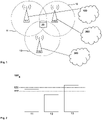
- a user equipment 20 is schematically shown in a radio environment comprising a plurality of radio cells of a plurality of mobile communication networks.
- a first radio cell 11 is associated with or related to a first mobile communication network 100
- a second radio cell 12 is associated with or related to a second mobile communication network 200
- a third radio cell 13 is associated with or related to a third mobile communication network 300.
- a base station entity is represented regarding each one of the three radio cells 11, 12, 13 that the user equipment 20 detects or "sees”:
- a first base station entity 111 (typically but not necessarily of the first mobile communication network 100) generates or provides radio coverage of or regarding the first radio cell 11
- a second base station entity 112 (typically but not necessarily of the second mobile communication network 200) generates or provides radio coverage of or regarding the second radio cell 12
- a third base station entity 113 typically but not necessarily of the third mobile communication network 200 generates or provides radio coverage of or regarding the third radio cell 13.
- the user equipment 20 is shown being located within the radio coverage area (illustrated by means of dashed circles) of the first radio cell 11, the second radio cell 12, as well as the third radio cell 13.
- the user equipment 20 measures or detects reception conditions regarding the plurality of radio cells 11, 12, 13, and subsequently selects and/or registers to a mobile communication network out of the plurality of mobile communication networks 100, 200, 300.
- a HPLMN-provided cell selection criterion is defined that the user equipment 20 uses regarding cell selection.
- the HPLMN-provided cell selection criterion is schematically shown in Figure 2 which represents a situation of the user equipment 20 measuring different signal strength of the different radio cells 11, 12, 13.
- the ordinate of the diagram shown corresponds to the signal strength 500 or an indicator thereof (such as a field strength value or signal quality parameter).
- the user equipment 20 would apply a conventionally defined cell selection criterion 510.
- both the first radio cell 11 and the third radio cell 13 would be regarded as suitable radio cells (according to or applying the conventionally defined cell selection criterion 510) as both radio cells 11, 13 are schematically shown as having or providing (at the location of the user equipment 20) a signal strength corresponding to or exceeding the conventionally defined cell selection criterion 510.
- the HPLMN-provided cell selection criterion 520 is defined and taken into consideration when it comes to select a radio cell.
- the HPLMN-provided cell selection criterion 520 is typically more demanding or requires an increased reception signal level or quality (schematically indicated, in Figure 2 , by means of the HPLMN-provided cell selection criterion 520 being represented above the conventionally defined cell selection criterion 510, i.e. the HPLMN-provided cell selection criterion 520 is especially more restrictive compared to the conventionally defined cell selection criterion 510), only the third radio cell 13 is considered, by the user equipment 20 and due to measurements conducted by the user equipment 20, to be a suitable radio cell according to the present invention.
- the third radio cell 13 is considered to be a suitable radio cell (as it is the only one (of the three radio cells represented) that the corresponding reception conditions, as measured by the user equipment 20, correspond to or exceed the HPLMN-provided cell selection criterion 520 regarding the considered radio access technology.
- the corresponding reception conditions as measured by the user equipment 20
- the HPLMN-provided cell selection criterion 520 regarding the considered radio access technology.
- the third radio cell 13 might exceed the HPLMN-provided cell selection criterion 520 only regarding one specific radio access technology, but a radio cell (not specifically represented in Figures 1 or 2 ) of another radio access technology and also provided or generated by the third base station entity 113 might not exceed the respective HPLMN-provided cell selection criterion 520 to be applied regarding the other radio access technology, and, perhaps, vice versa for the other radio cells 11, 12.
- this cell selection i.e. the determination of suitable radio cells, by the user equipment 20 and based on the HPLMN-provided cell selection criterion 520 regarding the considered radio access technology
- this cell selection is done in a first step, and in a second step, upon initiating network selection according to the automatic network selection mode, only such suitable radio cells are considered for network selection of the user equipment 20 that have or correspond to reception conditions corresponding to or exceeding the HPLMN-provided cell selection criterion 520.
- the HPLMN-provided cell selection criterion 520 comprises or takes into account a home-operator-controlled value being set or being able to be adjusted by the HPLMN or its operator, it is advantageously possible according to the present invention, that the home operator is able to influence the cell selection process, and thereby also the network selection process of the user equipment 20, and further or additional cell re-selection processes of the user equipment 20.
- another cell selection criterion i.e. the HPLMN-provided cell selection criterion 520, (different from the conventionally defined cell selection criterion 510) is able to be applied by the user equipment 20.
- the HPLMN-provided cell selection criterion 520 (different from the conventionally defined cell selection criterion 510) is able to be applied by the user equipment 20.
- the HPLMN-provided cell selection criterion 520 (instead of the conventionally defined cell selection criterion 510), wherein, however and despite the different definition of the HPLMN-provided cell selection criterion 520 (with respect to the conventionally defined cell selection criterion 510), the actual (field strength) value to compare with might correspond to the same value (e.g. in dB, i.e. if the HPLMN-provided cell selection criterion 520 is defined as comprising an additional summand compared to the conventionally defined cell selection criterion 510, wherein, however, the additional summand amounts to zero (e.g.
- the present invention provides the possibility - by means of the proposed modified definition of the cell selection criterion, i.e. the HPLMN-provided cell selection criterion 520 - for the home public land mobile network to apply a more restrictive cell selection criterion (compared to the conventionally defined cell selection criterion 510), leading to a reduced rate of failures of such user equipments when communicating with the respective mobile communication network they are connected to.
- the present invention it is, hence, proposed to introduce and to apply a new, HPLMN-provided cell selection criterion on the access network layer, (either in the form of absolute values or in the form of offset values, per radio access technology) possibly stored on the subscriber identity module of the user equipment 20, and especially to be set by the HPLMN (or its provider) or provided by signaling means from the HPLMN.
- a new, HPLMN-provided cell selection criterion possibly stored on the subscriber identity module of the user equipment 20, and especially to be set by the HPLMN (or its provider) or provided by signaling means from the HPLMN.
- the variant of providing an offset i.e. an additional summand to add to the definition of the conventionally defined cell selection criterion 510 is preferred as an absolute value on top of the conventionally known procedure, carries the disadvantage of the visited public land mobile network not any more being able to apply the VPLMN cell specific offsets as introduced with UTRAN.
- the actual network selection process remains unchanged, as only PLMNs with a higher field strength than the one set by the new, HPLMN-provided, cell selection criterion are reported to the NAS.
- This requires to change the AS logic i.e. the definition of the cell selection criterion to apply, i.e. to use the HPLMN-provided cell selection criterion 520 instead of the conventionally defined cell selection criterion 510) as described below.
- the changes to the cell selection criteria i.e. with regard to the conventionally defined cell selection criterion 510) proposed according to the present invention are provided (regarding both the cases where the home-operator-controlled value of the HPLMN-provided cell selection criterion 520 corresponds to an offset value being additionally applied compared to the cell selection criterion 510, or being an absolute value) with respect to each radio access technology of the currently most often deployed radio access technologies:
Landscapes
- Engineering & Computer Science (AREA)
- Computer Security & Cryptography (AREA)
- Computer Networks & Wireless Communication (AREA)
- Signal Processing (AREA)
- Mobile Radio Communication Systems (AREA)
Claims (10)
- Verfahren zum Realisieren einer Zellenauswahl durch eine Benutzerausrüstung (20), die sich in einer Funkumgebung befindet, die mehrere Funkzellen (11, 12, 13) von mehreren Mobilkommunikationsnetzen (100, 200, 300) umfasst, wobei jede dieser Funkzellen (11, 12, 13) jeweils mit mindestens einem Mobilkommunikationsnetz der mehreren Mobilkommunikationsnetze (100, 200, 300) verknüpft ist, wobei die Benutzerausrüstung (20) so konfiguriert ist, dass sie Empfangsbedingungen bezüglich der mehreren Funkzellen (11, 12, 13) misst oder detektiert und anschließend ein Mobilkommunikationsnetz aus den mehreren Mobilkommunikationsnetzen (100, 200, 300) auswählt und/oder sich bei einem Mobilkommunikationsnetz aus den mehreren Mobilkommunikationsnetzen (100, 200, 300) registriert, wobei die Benutzerausrüstung (20) ein Home Public Land Mobile Network (HPLMN) aufweist oder mit einem Home Public Land Mobile Network (HPLMN) verknüpft ist, wobei bezüglich der Zellenauswahl durch die Benutzerausrüstung (20) ein durch das HPLMN bereitgestelltes Zellenauswahlkriterium (520) definiert wird, wobei eine Funkzelle einer in Betracht gezogenen Funkzugangstechnologie nur dann als geeignete Funkzelle angesehen wird, wenn die entsprechenden Empfangsbedingungen - gemäß Messung durch die Benutzerausrüstung (20) - dem durch das HPLMN bereitgestellten Zellenauswahlkriterium (520) bezüglich der in Betracht gezogenen Funkzugangstechnologie entsprechen oder es übertreffen,
wobei das Verfahren die folgenden Schritte umfasst:- in einem ersten Schritt werden geeignete Funkzellen einer in Betracht gezogenen Funkzugangstechnologie durch die Benutzerausrüstung (20) auf der Grundlage des durch das HPLMN bereitgestellten Zellenauswahlkriteriums (520) bezüglich der in Betracht gezogenen Funkzugangstechnologie bestimmt, wobei das durch das HPLMN bereitgestellte Zellenauswahlkriterium (520) einen durch den Home-Operator gesteuerten Wert umfasst oder berücksichtigt, der durch das HPLMN oder seinen Betreiber eingestellt wird oder eingestellt werden kann, wobei das durch das HPLMN bereitgestellte Zellenauswahlkriterium (520) im Vergleich zu einem Zellenauswahlkriterium (510) ohne eine durch den Home-Operator gesteuerte Komponente restriktiver ist, wobei der durch den Home-Operator gesteuerte Wert des durch das HPLMN bereitgestellten Zellenauswahlkriteriums (520) einem im Vergleich zu dem Zellenauswahlkriterium (510) zusätzlich angewendeten Versatzwert oder einem absoluten Wert entspricht,- in einem zweiten Schritt werden beim Initiieren einer Netzauswahl gemäß dem automatischen Netzauswahlmodus nur solche geeigneten Funkzellen für die Netzauswahl durch die Benutzerausrüstung (20) in Betracht gezogen, die Empfangsbedingungen aufweisen oder entsprechen, die dem durch das HPLMN bereitgestellten Zellenauswahlkriterium (520) entsprechen oder es übertreffen. - Verfahren nach Anspruch 1, wobei das durch das HPLMN bereitgestellte Zellenauswahlkriterium auch während des normalen Zellenauswahlvorgangs angewendet wird, sobald die Netzauswahl stattgefunden hat, und/oder wobei das durch das HPLMN bereitgestellte Zellenauswahlkriterium die Netzauswahl auslöst, falls die entsprechenden Empfangsbedingungen - gemäß Messung durch die Benutzereinrichtung - nicht dem durch das HPLMN bereitgestellten Zellenauswahlkriterium entsprechen oder es nicht übertreffen.
- Verfahren nach einem der vorangehenden Ansprüche, wobei der durch den Home-Operator gesteuerte Wert des durch das HPLMN bereitgestellten Zellenauswahlkriteriums (520)- in der Benutzerausrüstung (20) innerhalb oder als Teil des Teilnehmeridentitätsmoduls oder eines anderen sicheren Elements oder Teils der Benutzerausrüstung (20) gespeichert wird und/oder- durch das HPLMN oder seinen Betreiber mittels eines drahtlosen Übertragungsverfahrens für die Benutzerausrüstung (20) bereitgestellt oder an sie übertragen wird.
- Verfahren nach einem der vorangehenden Ansprüche, wobei die Bestimmung - durch die Benutzerausrüstung (20) und in dem ersten Schritt oder während des ersten Schrittes - geeigneter Funkzellen einer in Betracht gezogenen Funkzugangstechnologie, die auf dem durch das HPLMN bereitgestellten Zellenauswahlkriterium (520) basiert, durchgeführt wird:- nach dem Einschalten der Benutzerausrüstung (20) oder- nach der Wiederherstellung nach fehlender Funkversorgung oder- periodisch, falls sich die Benutzerausrüstung (20) in einem besuchten Kommunikationsnetz befindet.
- Verfahren nach einem der vorangehenden Ansprüche, wobei in einem dritten Schritt, nach dem zweiten Schritt, eine analoge Bestimmung geeigneter, oder bezüglich geeigneter, Funkzellen durch die Benutzerausrüstung (20) zum Zweck der Zellenneuauswahl durchgeführt wird, wobei auch diese Bestimmung - durch die Benutzerausrüstung (20) - geeigneter Funkzellen einer in Betracht gezogenen Funkzugangstechnologie auf dem durch das HPLMN bereitgestellten Zellenauswahlkriterium (520) basiert.
- Verfahren nach einem der vorangehenden Ansprüche, wobei- in Bezug auf GSM (Global System for Mobile Communications) als Funkzugangstechnologie der durch den Home-Operator gesteuerte Wert des durch das HPLMN bereitgestellten Zellenauswahlkriteriums (520) entweder einem Versatzwert home-operator controlled_cell_selection_offset, der zu dem Parameter RXLEV_ACCESS_MIN zu addieren ist, entspricht, oder stattdessen der Parameter RXLEV_ACCESS_MIN durch einen absoluten Wert eines Parameters home-operator controlled_ RXLEV_ACCESS_MIN ersetzt wird,- in Bezug auf UTRAN (UMTS Terrestrial Radio Access Network), E-UTRA (evolved UMTS Terrestrial Radio Access), NB-loT (Narrow-Band Internet-of-Things) oder NR (New Radio) in 5G-Systemen als Funkzugangstechnologie der durch den Home-Operator gesteuerte Wert des durch das HPLMN bereitgestellten Zellenauswahlkriteriums (520) entweder einem Versatzwert home-operator-controlled_cell_selection_offset entspricht, der von den Termen, die den Parameter Srxlev definieren, abzuziehen ist, oder stattdessen die Terme, die den Parameter Srxlev definieren, durch einen absoluten Wert eines Parameters home-operator-controlled_ RXLEV_ACCESS_MIN ersetzt werden.
- Benutzerausrüstung (20) zum Realisieren einer Zellenauswahl innerhalb einer Funkumgebung, die mehrere Funkzellen (11, 12, 13) von mehreren Mobilkommunikationsnetzen (100, 200, 300) umfasst, wobei jede dieser Funkzellen (11, 12, 13) jeweils mit mindestens einem Mobilkommunikationsnetz der mehreren Mobilkommunikationsnetze (100, 200, 300) verknüpft ist, wobei die Benutzerausrüstung (20) so konfiguriert ist, dass sie Empfangsbedingungen bezüglich der mehreren Funkzellen (11, 12, 13) misst oder detektiert, und so konfiguriert ist, dass sie anschließend ein Mobilkommunikationsnetz aus den mehreren Mobilkommunikationsnetzen (100, 200, 300) auswählt und/oder sich bei einem Mobilkommunikationsnetz aus den mehreren Mobilkommunikationsnetzen (100, 200, 300) registriert, wobei die Benutzerausrüstung (20) ein Home Public Land Mobile Network (HPLMN) aufweist oder mit einem Home Public Land Mobile Network (HPLMN) verknüpft ist, wobei bezüglich der Zellenauswahl durch die Benutzerausrüstung (20) ein durch das HPLMN bereitgestelltes Zellenauswahlkriterium (520) definiert wird, wobei eine Funkzelle einer in Betracht gezogenen Funkzugangstechnologie nur dann als geeignete Funkzelle angesehen wird, wenn die entsprechenden Empfangsbedingungen - gemäß Messung durch die Benutzerausrüstung (20) - dem durch das HPLMN bereitgestellten Zellenauswahlkriterium (520) bezüglich der in Betracht gezogenen Funkzugangstechnologie entsprechen oder es übertreffen,
wobei die Benutzerausrüstung (20) so konfiguriert ist, dass:- geeignete Funkzellen einer in Betracht gezogenen Funkzugangstechnologie durch die Benutzerausrüstung (20) auf der Grundlage des durch das HPLMN bereitgestellten Zellenauswahlkriteriums (520) bezüglich der in Betracht gezogenen Funkzugangstechnologie bestimmt werden, wobei das durch das HPLMN bereitgestellte Zellenauswahlkriterium (520) einen durch den Home-Operator gesteuerten Wert umfasst oder berücksichtigt, der durch das HPLMN oder seinen Betreiber eingestellt wird oder eingestellt werden kann, wobei das durch das HPLMN bereitgestellte Zellenauswahlkriterium (520) im Vergleich zu einem Zellenauswahlkriterium (510) ohne eine durch den Home-Operator gesteuerte Komponente restriktiver ist, wobei der durch den Home-Operator gesteuerte Wert des durch das HPLMN bereitgestellten Zellenauswahlkriteriums (520) einem im Vergleich zu dem Zellenauswahlkriterium (510) zusätzlich angewendeten Versatzwert oder einem absoluten Wert entspricht,- beim Initiieren einer Netzauswahl gemäß dem automatischen Netzauswahlmodus nur solche geeigneten Funkzellen für die Netzauswahl durch die Benutzerausrüstung (20) in Betracht gezogen werden, die Empfangsbedingungen aufweisen oder entsprechen, die dem durch das HPLMN bereitgestellten Zellenauswahlkriterium (520) entsprechen oder es übertreffen. - System oder Mobilkommunikationsnetz (100) zum Realisieren einer Zellenauswahl durch eine Benutzerausrüstung (20), die sich in einer Funkumgebung befindet, die mehrere Funkzellen (11, 12, 13) von mehreren Mobilkommunikationsnetzen (100, 200, 300) umfasst, wobei jede dieser Funkzellen (11, 12, 13) jeweils mit mindestens einem Mobilkommunikationsnetz der mehreren Mobilkommunikationsnetze (100, 200, 300) verknüpft ist,wobei die Benutzerausrüstung (20) so konfiguriert ist, dass sie Empfangsbedingungen bezüglich der mehreren Funkzellen (11, 12, 13) misst oder detektiert, und so konfiguriert ist, dass sie anschließend ein Mobilkommunikationsnetz aus den mehreren Mobilkommunikationsnetzen (100, 200, 300) auswählt und/oder sich bei einem Mobilkommunikationsnetz aus den mehreren Mobilkommunikationsnetzen (100, 200, 300) registriert, wobei die Benutzerausrüstung (20) ein Home Public Land Mobile Network (HPLMN) aufweist oder mit einem Home Public Land Mobile Network (HPLMN) verknüpft ist, wobei bezüglich der Zellenauswahl durch die Benutzerausrüstung (20) ein durch das HPLMN bereitgestelltes Zellenauswahlkriterium (520) definiert und durch die Benutzerausrüstung verwendet wird,wobei eine Funkzelle einer in Betracht gezogenen Funkzugangstechnologie nur dann als geeignete Funkzelle angesehen wird, wenn die entsprechenden Empfangsbedingungen - gemäß Messung durch die Benutzerausrüstung (20) - dem durch das HPLMN bereitgestellten Zellenauswahlkriterium (520) bezüglich der in Betracht gezogenen Funkzugangstechnologie entsprechen oder es übertreffen, wobei das System oder das Mobilkommunikationsnetz (100) so konfiguriert ist, dass:- geeignete Funkzellen einer in Betracht gezogenen Funkzugangstechnologie durch die Benutzerausrüstung (20) auf der Grundlage des durch das HPLMN bereitgestellten Zellenauswahlkriteriums (520) bezüglich der in Betracht gezogenen Funkzugangstechnologie bestimmt werden, wobei das durch das HPLMN bereitgestellte Zellenauswahlkriterium (520) einen durch den Home-Operator gesteuerten Wert umfasst oder berücksichtigt, der durch das HPLMN oder seinen Betreiber eingestellt wird oder eingestellt werden kann, wobei das durch das HPLMN bereitgestellte Zellenauswahlkriterium (520) im Vergleich zu einem Zellenauswahlkriterium (510) ohne eine durch den Home-Operator gesteuerte Komponente restriktiver ist, wobei der durch den Home-Operator gesteuerte Wert des durch das HPLMN bereitgestellten Zellenauswahlkriteriums (520) einem im Vergleich zu dem Zellenauswahlkriterium (510) zusätzlich angewendeten Versatzwert oder einem absoluten Wert entspricht,- beim Initiieren einer Netzauswahl gemäß dem automatischen Netzauswahlmodus nur solche geeigneten Funkzellen für die Netzauswahl durch die Benutzerausrüstung (20) in Betracht gezogen werden, die Empfangsbedingungen aufweisen oder entsprechen, die dem durch das HPLMN bereitgestellten Zellenauswahlkriterium (520) entsprechen oder es übertreffen,wobei ein einzelnes Mobilkommunikationsnetz (100) der mehreren Mobilkommunikationsnetze dem Home Public Land Mobile Network (HPLMN) der Benutzerausrüstung (20) entspricht und wobei das Mobilkommunikationsnetz (100) einen Hinweis bezüglich des durch das HPLMN bereitgestellten Zellenauswahlkriteriums (520) oder dessen durch den Home-Operator gesteuerten Wertes an die Benutzerausrüstung (20) sendet.
- Programm, umfassend einen computerlesbaren Programmcode, der, wenn er in einer Benutzerausrüstung (20) ausgeführt wird, die Benutzerausrüstung (20) veranlasst, ein Verfahren nach einem der Ansprüche 1 bis 6 durchzuführen.
- Computerlesbares Medium, umfassend Instruktionen, die, wenn sie in einer Benutzerausrüstung (20) ausgeführt werden, die Benutzerausrüstung (20) veranlassen, ein Verfahren nach einem der Ansprüche 1 bis 6 durchzuführen.
Priority Applications (6)
| Application Number | Priority Date | Filing Date | Title |
|---|---|---|---|
| ES20209264T ES2931300T3 (es) | 2020-11-23 | 2020-11-23 | Método para realizar la selección de celdas mediante un equipo de usuario que se encuentra en un entorno de radio que comprende una pluralidad de celdas de radio de una pluralidad de redes de comunicación móvil, equipo de usuario, sistema o red de comunicación móvil, programa y producto de programa informático |
| EP20209264.9A EP4002923B1 (de) | 2020-11-23 | 2020-11-23 | Verfahren zur realisierung einer netzwerkauswahl durch ein benutzergerät in einer funkumgebung mit einer vielzahl von funkzellen einer vielzahl von mobilkommunikationsnetzen, benutzergerät, system oder mobilkommunikationsnetz, programm und computerprogrammprodukt |
| PL20209264.9T PL4002923T3 (pl) | 2020-11-23 | 2020-11-23 | Sposób realizacji wyboru komórki przez urządzenie użytkownika znajdujące się w środowisku radiowym zawierającym liczne komórki radiowe z licznych sieci łączności komórkowej, urządzenie użytkownika, system albo sieć łączności komórkowej, program i produkt w postaci programu komputerowego |
| US18/037,810 US12439330B2 (en) | 2020-11-23 | 2021-11-02 | Method for realizing cell selection by a user equipment being in a radio environment comprising a plurality of radio cells of a plurality of mobile communication networks |
| CN202180078487.3A CN116548020B (zh) | 2020-11-23 | 2021-11-02 | 用于实现蜂窝小区选择的方法、系统或计算机可读介质 |
| PCT/EP2021/080395 WO2022106191A1 (en) | 2020-11-23 | 2021-11-02 | Method for realizing cell selection by a user equipment being in a radio environment comprising a plurality of radio cells of a plurality of mobile communication networks, user equipment, system or mobile communication network, program and computer program product |
Applications Claiming Priority (1)
| Application Number | Priority Date | Filing Date | Title |
|---|---|---|---|
| EP20209264.9A EP4002923B1 (de) | 2020-11-23 | 2020-11-23 | Verfahren zur realisierung einer netzwerkauswahl durch ein benutzergerät in einer funkumgebung mit einer vielzahl von funkzellen einer vielzahl von mobilkommunikationsnetzen, benutzergerät, system oder mobilkommunikationsnetz, programm und computerprogrammprodukt |
Publications (2)
| Publication Number | Publication Date |
|---|---|
| EP4002923A1 EP4002923A1 (de) | 2022-05-25 |
| EP4002923B1 true EP4002923B1 (de) | 2022-10-26 |
Family
ID=73544075
Family Applications (1)
| Application Number | Title | Priority Date | Filing Date |
|---|---|---|---|
| EP20209264.9A Active EP4002923B1 (de) | 2020-11-23 | 2020-11-23 | Verfahren zur realisierung einer netzwerkauswahl durch ein benutzergerät in einer funkumgebung mit einer vielzahl von funkzellen einer vielzahl von mobilkommunikationsnetzen, benutzergerät, system oder mobilkommunikationsnetz, programm und computerprogrammprodukt |
Country Status (6)
| Country | Link |
|---|---|
| US (1) | US12439330B2 (de) |
| EP (1) | EP4002923B1 (de) |
| CN (1) | CN116548020B (de) |
| ES (1) | ES2931300T3 (de) |
| PL (1) | PL4002923T3 (de) |
| WO (1) | WO2022106191A1 (de) |
Families Citing this family (4)
| Publication number | Priority date | Publication date | Assignee | Title |
|---|---|---|---|---|
| WO2024053389A1 (en) | 2022-09-07 | 2024-03-14 | Nec Corporation | User equipment (ue), method of ue and access and mobility management function (amf) |
| CN118265103A (zh) * | 2022-12-27 | 2024-06-28 | RealMe重庆移动通信有限公司 | 小区选择方法、装置、用户设备及存储介质 |
| EP4503751B1 (de) * | 2023-07-31 | 2025-09-03 | Deutsche Telekom AG | Verfahren zur netzwerkauswahl durch eine mobilstation in einer funkumgebung |
| EP4503752B1 (de) * | 2023-07-31 | 2026-01-21 | Deutsche Telekom AG | Übertragung von empfangsmessdaten zur nachfolgenden netzauswahl durch eine mobilstation nach einem erweiterten zellauswahlkriterium gemäss einem netzbetreiber-kontrollierten signalschwellwert |
Family Cites Families (16)
| Publication number | Priority date | Publication date | Assignee | Title |
|---|---|---|---|---|
| US7773990B2 (en) * | 2005-05-23 | 2010-08-10 | Telefonaktiebolaget L M Ericsson (Publ) | Avoidance of service interruptions in visited public land mobile network (VPLMNs) |
| JP2013258562A (ja) | 2012-06-13 | 2013-12-26 | Nec Corp | 無線基地局およびそのセル選択方法ならびに通信システム |
| KR20140017883A (ko) * | 2012-08-01 | 2014-02-12 | 삼성전자주식회사 | 이동 통신 시스템에서 단말의 lte 주파수 간 또는 시스템 간 셀 재선택 방법 및 장치 |
| US9155036B1 (en) * | 2013-01-15 | 2015-10-06 | Sprint Communications Company L.P. | Cell selection offset used to indicate wireless cell unsuitable for communications |
| GB2512382B (en) * | 2013-03-28 | 2015-11-11 | Broadcom Corp | Methods, apparatus and computer programs for operating a user equipment |
| US20160150450A1 (en) * | 2014-11-26 | 2016-05-26 | Qualcomm Incorporated | Cell selection for devices with asymmetry between uplink and downlink communications |
| WO2016144099A1 (ko) * | 2015-03-10 | 2016-09-15 | 엘지전자 주식회사 | 단말이 셀을 재 선택하는 방법 및 장치 |
| US9877257B2 (en) | 2015-06-22 | 2018-01-23 | Qualcomm Incorporated | Performance improvements for high gain devices |
| US10225777B2 (en) * | 2015-09-30 | 2019-03-05 | Apple Inc. | Apparatus, systems and methods for an enhanced handover mechanism and cell re-selection |
| EP3332583B1 (de) * | 2015-10-27 | 2020-07-08 | Samsung Electronics Co., Ltd. | Verfahren zur durchführung von zellauswahl und -neuauswahl unter verwendung von pmax-parametern und dafür angepasstes system |
| JP6737897B2 (ja) * | 2016-04-27 | 2020-08-12 | クアルコム,インコーポレイテッド | マルチsimデバイスのためのネットワークキャンプオン |
| WO2018188914A1 (en) * | 2017-04-14 | 2018-10-18 | Telefonaktiebolaget Lm Ericsson (Publ) | Nb-iot device performing neighboring link measurement despite refraining condition |
| WO2020000237A1 (en) | 2018-06-27 | 2020-01-02 | Qualcomm Incorporated | Enhancement for public land mobile network selection procedure followed by cell selection procedure |
| CN112640534B (zh) * | 2018-08-31 | 2023-06-20 | Lg电子株式会社 | 在无线通信系统中选择公共陆地移动网络(plmn)的方法和设备 |
| WO2022031806A1 (en) * | 2020-08-05 | 2022-02-10 | Google Llc | Ran support for network slicing |
| ES2966143T3 (es) * | 2020-11-23 | 2024-04-18 | Deutsche Telekom Ag | Procedimiento para realizar una selección de red mediante un equipo de usuario que está en un entorno de radio que comprende una pluralidad de células de radio de una pluralidad de redes de comunicación móvil, equipo de usuario, sistema o red de comunicación móvil, programa y producto de programa informático |
-
2020
- 2020-11-23 EP EP20209264.9A patent/EP4002923B1/de active Active
- 2020-11-23 PL PL20209264.9T patent/PL4002923T3/pl unknown
- 2020-11-23 ES ES20209264T patent/ES2931300T3/es active Active
-
2021
- 2021-11-02 WO PCT/EP2021/080395 patent/WO2022106191A1/en not_active Ceased
- 2021-11-02 CN CN202180078487.3A patent/CN116548020B/zh active Active
- 2021-11-02 US US18/037,810 patent/US12439330B2/en active Active
Also Published As
| Publication number | Publication date |
|---|---|
| EP4002923A1 (de) | 2022-05-25 |
| US12439330B2 (en) | 2025-10-07 |
| US20230422163A1 (en) | 2023-12-28 |
| CN116548020B (zh) | 2024-07-12 |
| PL4002923T3 (pl) | 2023-04-24 |
| WO2022106191A1 (en) | 2022-05-27 |
| CN116548020A (zh) | 2023-08-04 |
| ES2931300T3 (es) | 2022-12-28 |
Similar Documents
| Publication | Publication Date | Title |
|---|---|---|
| US12439330B2 (en) | Method for realizing cell selection by a user equipment being in a radio environment comprising a plurality of radio cells of a plurality of mobile communication networks | |
| JP6370355B2 (ja) | 無線通信システムにおけるmbms情報報告方法及びそれをサポートする装置 | |
| RU2372752C2 (ru) | Усовершенствование межсистемного перевыбора соты от сети geran к сети utran | |
| EP3261387B1 (de) | Kommunikationsvorrichtungen und verfahren zur auswahl einer drahtloszugangsschnittstelle | |
| KR20180070550A (ko) | 거주 셀을 선택하는 방법 및 장치 | |
| WO2014098531A1 (ko) | 무선 통신 시스템에서 이동 방법 및 이를 지원하는 장치 | |
| US20240007939A1 (en) | Method for realizing network selection by a user equipment being in a radio environment comprising a plurality of radio cells of a plurality of mobile communication networks | |
| WO2015069091A1 (ko) | 단말의 셀에 대한 rrc 연결 확립 방법 및 이를 이용하는 단말 | |
| EP2647246A1 (de) | Zellwiederauswahl unter verwendung eines ranglistenalgorithmus | |
| US20250261151A1 (en) | Operating a user equipment in a radio environment comprising a plurality of radio cells of a plurality of mobile communication networks |
Legal Events
| Date | Code | Title | Description |
|---|---|---|---|
| PUAI | Public reference made under article 153(3) epc to a published international application that has entered the european phase |
Free format text: ORIGINAL CODE: 0009012 |
|
| STAA | Information on the status of an ep patent application or granted ep patent |
Free format text: STATUS: REQUEST FOR EXAMINATION WAS MADE |
|
| 17P | Request for examination filed |
Effective date: 20210929 |
|
| AK | Designated contracting states |
Kind code of ref document: A1 Designated state(s): AL AT BE BG CH CY CZ DE DK EE ES FI FR GB GR HR HU IE IS IT LI LT LU LV MC MK MT NL NO PL PT RO RS SE SI SK SM TR |
|
| RIC1 | Information provided on ipc code assigned before grant |
Ipc: H04W 88/06 20090101ALN20220527BHEP Ipc: H04W 48/20 20090101ALI20220527BHEP Ipc: H04W 48/18 20090101ALI20220527BHEP Ipc: H04W 48/16 20090101AFI20220527BHEP |
|
| GRAP | Despatch of communication of intention to grant a patent |
Free format text: ORIGINAL CODE: EPIDOSNIGR1 |
|
| STAA | Information on the status of an ep patent application or granted ep patent |
Free format text: STATUS: GRANT OF PATENT IS INTENDED |
|
| RIC1 | Information provided on ipc code assigned before grant |
Ipc: H04W 88/06 20090101ALN20220628BHEP Ipc: H04W 48/20 20090101ALI20220628BHEP Ipc: H04W 48/18 20090101ALI20220628BHEP Ipc: H04W 48/16 20090101AFI20220628BHEP |
|
| RIC1 | Information provided on ipc code assigned before grant |
Ipc: H04W 88/06 20090101ALN20220706BHEP Ipc: H04W 48/20 20090101ALI20220706BHEP Ipc: H04W 48/18 20090101ALI20220706BHEP Ipc: H04W 48/16 20090101AFI20220706BHEP |
|
| INTG | Intention to grant announced |
Effective date: 20220803 |
|
| GRAS | Grant fee paid |
Free format text: ORIGINAL CODE: EPIDOSNIGR3 |
|
| GRAA | (expected) grant |
Free format text: ORIGINAL CODE: 0009210 |
|
| STAA | Information on the status of an ep patent application or granted ep patent |
Free format text: STATUS: THE PATENT HAS BEEN GRANTED |
|
| AK | Designated contracting states |
Kind code of ref document: B1 Designated state(s): AL AT BE BG CH CY CZ DE DK EE ES FI FR GB GR HR HU IE IS IT LI LT LU LV MC MK MT NL NO PL PT RO RS SE SI SK SM TR |
|
| REG | Reference to a national code |
Ref country code: GB Ref legal event code: FG4D |
|
| REG | Reference to a national code |
Ref country code: CH Ref legal event code: EP |
|
| REG | Reference to a national code |
Ref country code: AT Ref legal event code: REF Ref document number: 1527996 Country of ref document: AT Kind code of ref document: T Effective date: 20221115 |
|
| REG | Reference to a national code |
Ref country code: DE Ref legal event code: R096 Ref document number: 602020005873 Country of ref document: DE |
|
| REG | Reference to a national code |
Ref country code: IE Ref legal event code: FG4D |
|
| REG | Reference to a national code |
Ref country code: ES Ref legal event code: FG2A Ref document number: 2931300 Country of ref document: ES Kind code of ref document: T3 Effective date: 20221228 |
|
| REG | Reference to a national code |
Ref country code: LT Ref legal event code: MG9D |
|
| REG | Reference to a national code |
Ref country code: NL Ref legal event code: MP Effective date: 20221026 |
|
| REG | Reference to a national code |
Ref country code: AT Ref legal event code: MK05 Ref document number: 1527996 Country of ref document: AT Kind code of ref document: T Effective date: 20221026 |
|
| PG25 | Lapsed in a contracting state [announced via postgrant information from national office to epo] |
Ref country code: NL Free format text: LAPSE BECAUSE OF FAILURE TO SUBMIT A TRANSLATION OF THE DESCRIPTION OR TO PAY THE FEE WITHIN THE PRESCRIBED TIME-LIMIT Effective date: 20221026 |
|
| PG25 | Lapsed in a contracting state [announced via postgrant information from national office to epo] |
Ref country code: SE Free format text: LAPSE BECAUSE OF FAILURE TO SUBMIT A TRANSLATION OF THE DESCRIPTION OR TO PAY THE FEE WITHIN THE PRESCRIBED TIME-LIMIT Effective date: 20221026 Ref country code: PT Free format text: LAPSE BECAUSE OF FAILURE TO SUBMIT A TRANSLATION OF THE DESCRIPTION OR TO PAY THE FEE WITHIN THE PRESCRIBED TIME-LIMIT Effective date: 20230227 Ref country code: NO Free format text: LAPSE BECAUSE OF FAILURE TO SUBMIT A TRANSLATION OF THE DESCRIPTION OR TO PAY THE FEE WITHIN THE PRESCRIBED TIME-LIMIT Effective date: 20230126 Ref country code: LT Free format text: LAPSE BECAUSE OF FAILURE TO SUBMIT A TRANSLATION OF THE DESCRIPTION OR TO PAY THE FEE WITHIN THE PRESCRIBED TIME-LIMIT Effective date: 20221026 Ref country code: FI Free format text: LAPSE BECAUSE OF FAILURE TO SUBMIT A TRANSLATION OF THE DESCRIPTION OR TO PAY THE FEE WITHIN THE PRESCRIBED TIME-LIMIT Effective date: 20221026 Ref country code: AT Free format text: LAPSE BECAUSE OF FAILURE TO SUBMIT A TRANSLATION OF THE DESCRIPTION OR TO PAY THE FEE WITHIN THE PRESCRIBED TIME-LIMIT Effective date: 20221026 |
|
| PG25 | Lapsed in a contracting state [announced via postgrant information from national office to epo] |
Ref country code: RS Free format text: LAPSE BECAUSE OF FAILURE TO SUBMIT A TRANSLATION OF THE DESCRIPTION OR TO PAY THE FEE WITHIN THE PRESCRIBED TIME-LIMIT Effective date: 20221026 Ref country code: LV Free format text: LAPSE BECAUSE OF FAILURE TO SUBMIT A TRANSLATION OF THE DESCRIPTION OR TO PAY THE FEE WITHIN THE PRESCRIBED TIME-LIMIT Effective date: 20221026 Ref country code: IS Free format text: LAPSE BECAUSE OF FAILURE TO SUBMIT A TRANSLATION OF THE DESCRIPTION OR TO PAY THE FEE WITHIN THE PRESCRIBED TIME-LIMIT Effective date: 20230226 Ref country code: HR Free format text: LAPSE BECAUSE OF FAILURE TO SUBMIT A TRANSLATION OF THE DESCRIPTION OR TO PAY THE FEE WITHIN THE PRESCRIBED TIME-LIMIT Effective date: 20221026 Ref country code: GR Free format text: LAPSE BECAUSE OF FAILURE TO SUBMIT A TRANSLATION OF THE DESCRIPTION OR TO PAY THE FEE WITHIN THE PRESCRIBED TIME-LIMIT Effective date: 20230127 |
|
| REG | Reference to a national code |
Ref country code: DE Ref legal event code: R097 Ref document number: 602020005873 Country of ref document: DE Ref country code: BE Ref legal event code: MM Effective date: 20221130 |
|
| PG25 | Lapsed in a contracting state [announced via postgrant information from national office to epo] |
Ref country code: SM Free format text: LAPSE BECAUSE OF FAILURE TO SUBMIT A TRANSLATION OF THE DESCRIPTION OR TO PAY THE FEE WITHIN THE PRESCRIBED TIME-LIMIT Effective date: 20221026 Ref country code: RO Free format text: LAPSE BECAUSE OF FAILURE TO SUBMIT A TRANSLATION OF THE DESCRIPTION OR TO PAY THE FEE WITHIN THE PRESCRIBED TIME-LIMIT Effective date: 20221026 Ref country code: MC Free format text: LAPSE BECAUSE OF FAILURE TO SUBMIT A TRANSLATION OF THE DESCRIPTION OR TO PAY THE FEE WITHIN THE PRESCRIBED TIME-LIMIT Effective date: 20221026 Ref country code: EE Free format text: LAPSE BECAUSE OF FAILURE TO SUBMIT A TRANSLATION OF THE DESCRIPTION OR TO PAY THE FEE WITHIN THE PRESCRIBED TIME-LIMIT Effective date: 20221026 Ref country code: DK Free format text: LAPSE BECAUSE OF FAILURE TO SUBMIT A TRANSLATION OF THE DESCRIPTION OR TO PAY THE FEE WITHIN THE PRESCRIBED TIME-LIMIT Effective date: 20221026 Ref country code: CZ Free format text: LAPSE BECAUSE OF FAILURE TO SUBMIT A TRANSLATION OF THE DESCRIPTION OR TO PAY THE FEE WITHIN THE PRESCRIBED TIME-LIMIT Effective date: 20221026 |
|
| PG25 | Lapsed in a contracting state [announced via postgrant information from national office to epo] |
Ref country code: SK Free format text: LAPSE BECAUSE OF FAILURE TO SUBMIT A TRANSLATION OF THE DESCRIPTION OR TO PAY THE FEE WITHIN THE PRESCRIBED TIME-LIMIT Effective date: 20221026 Ref country code: LU Free format text: LAPSE BECAUSE OF NON-PAYMENT OF DUE FEES Effective date: 20221123 Ref country code: AL Free format text: LAPSE BECAUSE OF FAILURE TO SUBMIT A TRANSLATION OF THE DESCRIPTION OR TO PAY THE FEE WITHIN THE PRESCRIBED TIME-LIMIT Effective date: 20221026 |
|
| PLBE | No opposition filed within time limit |
Free format text: ORIGINAL CODE: 0009261 |
|
| STAA | Information on the status of an ep patent application or granted ep patent |
Free format text: STATUS: NO OPPOSITION FILED WITHIN TIME LIMIT |
|
| 26N | No opposition filed |
Effective date: 20230727 |
|
| PG25 | Lapsed in a contracting state [announced via postgrant information from national office to epo] |
Ref country code: IE Free format text: LAPSE BECAUSE OF NON-PAYMENT OF DUE FEES Effective date: 20221123 |
|
| PG25 | Lapsed in a contracting state [announced via postgrant information from national office to epo] |
Ref country code: SI Free format text: LAPSE BECAUSE OF FAILURE TO SUBMIT A TRANSLATION OF THE DESCRIPTION OR TO PAY THE FEE WITHIN THE PRESCRIBED TIME-LIMIT Effective date: 20221026 Ref country code: BE Free format text: LAPSE BECAUSE OF NON-PAYMENT OF DUE FEES Effective date: 20221130 |
|
| PG25 | Lapsed in a contracting state [announced via postgrant information from national office to epo] |
Ref country code: CY Free format text: LAPSE BECAUSE OF FAILURE TO SUBMIT A TRANSLATION OF THE DESCRIPTION OR TO PAY THE FEE WITHIN THE PRESCRIBED TIME-LIMIT Effective date: 20221026 |
|
| PG25 | Lapsed in a contracting state [announced via postgrant information from national office to epo] |
Ref country code: MK Free format text: LAPSE BECAUSE OF FAILURE TO SUBMIT A TRANSLATION OF THE DESCRIPTION OR TO PAY THE FEE WITHIN THE PRESCRIBED TIME-LIMIT Effective date: 20221026 |
|
| REG | Reference to a national code |
Ref country code: CH Ref legal event code: PL |
|
| PG25 | Lapsed in a contracting state [announced via postgrant information from national office to epo] |
Ref country code: CH Free format text: LAPSE BECAUSE OF NON-PAYMENT OF DUE FEES Effective date: 20231130 |
|
| PG25 | Lapsed in a contracting state [announced via postgrant information from national office to epo] |
Ref country code: CH Free format text: LAPSE BECAUSE OF NON-PAYMENT OF DUE FEES Effective date: 20231130 Ref country code: BG Free format text: LAPSE BECAUSE OF FAILURE TO SUBMIT A TRANSLATION OF THE DESCRIPTION OR TO PAY THE FEE WITHIN THE PRESCRIBED TIME-LIMIT Effective date: 20221026 |
|
| PG25 | Lapsed in a contracting state [announced via postgrant information from national office to epo] |
Ref country code: MT Free format text: LAPSE BECAUSE OF FAILURE TO SUBMIT A TRANSLATION OF THE DESCRIPTION OR TO PAY THE FEE WITHIN THE PRESCRIBED TIME-LIMIT Effective date: 20221026 |
|
| PG25 | Lapsed in a contracting state [announced via postgrant information from national office to epo] |
Ref country code: HU Free format text: LAPSE BECAUSE OF FAILURE TO SUBMIT A TRANSLATION OF THE DESCRIPTION OR TO PAY THE FEE WITHIN THE PRESCRIBED TIME-LIMIT; INVALID AB INITIO Effective date: 20201123 |
|
| PGFP | Annual fee paid to national office [announced via postgrant information from national office to epo] |
Ref country code: DE Payment date: 20251118 Year of fee payment: 6 |
|
| PGFP | Annual fee paid to national office [announced via postgrant information from national office to epo] |
Ref country code: GB Payment date: 20251120 Year of fee payment: 6 |
|
| PGFP | Annual fee paid to national office [announced via postgrant information from national office to epo] |
Ref country code: IT Payment date: 20251128 Year of fee payment: 6 |
|
| PGFP | Annual fee paid to national office [announced via postgrant information from national office to epo] |
Ref country code: FR Payment date: 20251125 Year of fee payment: 6 |
|
| PGFP | Annual fee paid to national office [announced via postgrant information from national office to epo] |
Ref country code: TR Payment date: 20251117 Year of fee payment: 6 |
|
| PGFP | Annual fee paid to national office [announced via postgrant information from national office to epo] |
Ref country code: PL Payment date: 20251110 Year of fee payment: 6 |
|
| PGFP | Annual fee paid to national office [announced via postgrant information from national office to epo] |
Ref country code: ES Payment date: 20251216 Year of fee payment: 6 |
|
| PG25 | Lapsed in a contracting state [announced via postgrant information from national office to epo] |
Ref country code: CH Free format text: THE PATENT HAS BEEN ANNULLED BY A DECISION OF A NATIONAL AUTHORITY Effective date: 20231130 |