EP4002955B1 - Induktionsheizeinheit, induktionskochvorrichtung und verfahren zum betrieb einer induktionsheizeinheit - Google Patents
Induktionsheizeinheit, induktionskochvorrichtung und verfahren zum betrieb einer induktionsheizeinheit Download PDFInfo
- Publication number
- EP4002955B1 EP4002955B1 EP20207654.3A EP20207654A EP4002955B1 EP 4002955 B1 EP4002955 B1 EP 4002955B1 EP 20207654 A EP20207654 A EP 20207654A EP 4002955 B1 EP4002955 B1 EP 4002955B1
- Authority
- EP
- European Patent Office
- Prior art keywords
- subsequence
- duration
- power
- driving signal
- induction heating
- Prior art date
- Legal status (The legal status is an assumption and is not a legal conclusion. Google has not performed a legal analysis and makes no representation as to the accuracy of the status listed.)
- Active
Links
Images

Classifications
-
- H—ELECTRICITY
- H05—ELECTRIC TECHNIQUES NOT OTHERWISE PROVIDED FOR
- H05B—ELECTRIC HEATING; ELECTRIC LIGHT SOURCES NOT OTHERWISE PROVIDED FOR; CIRCUIT ARRANGEMENTS FOR ELECTRIC LIGHT SOURCES, IN GENERAL
- H05B6/00—Heating by electric, magnetic or electromagnetic fields
- H05B6/02—Induction heating
- H05B6/06—Control, e.g. of temperature, of power
- H05B6/062—Control, e.g. of temperature, of power for cooking plates or the like
Definitions
- the invention relates to an induction heating unit for a cooking device, in particular for an induction cooking device, more particularly for an induction hob, to a corresponding induction cooking device, and to a method for operating an induction heating unit.
- the electric components in the induction heating unit are chosen to resonate at a frequency corresponding to high level of power.
- a pulsed power mode might be implemented with a period of order of ten of seconds in which the induction heating unit operates at a minimum continuous power for a part of the period as active part and stays off for the other part of the period as non-active part.
- the average power delivered to a cookware can be less than the minimum continuous heating power, but a possible disadvantage of this approach is that the cooking experience might be poor as food can become overcooked in the active part and undercooked in the non-active part.
- EP-A-1951003 discloses a method of powering two resonant tanks simultaneously. According to one embodiment, three sequence steps of duration T1, T2 and T3 are executed. During the first sequence step both resonant tanks are powered, during the second sequence step only one of the resonant tanks is powered and during the third sequence step none of the two resonant tanks are powered.
- the invention relates in particular to an induction heating unit for a cooking device, in particular for an induction cooking device, more particularly for an induction hob, comprising
- low power can be delivered smoothly by an induction heating unit for a cooking device, in particular for an induction cooking device, more particularly for an induction hob.
- noise and/or thermal losses can be avoided or at least reduced by the repeated activation and deactivation of the resonant tank according to the invention.
- the heating power is generated corresponding or at least essentially equal to or in a predetermined relation to the or a requested power.
- the driving signal toggles and/or is configured to toggle, in particular in or during one, two, at least one, at least two or each subsequence(s), between at least one first driving state, in particular resulting in or effecting a partly or gradually closed state or in an at least essentially closed state of the switching element, and at least one second driving state, in particular resulting in or effecting an opened or in an at least essentially opened state of the switching element, preferably with a first, second and/or third drive frequency.
- the first driving state is determined by a first driving signal parameter, preferably by a first driving signal voltage or by a first driving signal current.
- the second driving state is determined by a second driving signal parameter, preferably by a second driving signal voltage or by a second driving signal current.
- the first driving state and/or the second driving state vary between the first, the second and the third subsequence.
- the first driving signal parameter and/or the second driving signal parameter vary between the first, the second and/or the third subsequence.
- first driving state and/or the second driving state of the third subsequence vary compared to the first driving states and/or the second driving states of the first subsequence and the second subsequence.
- first driving state and/or the second driving state of the first subsequence is/are at least essentially identical to the first driving state and/or the second driving state of the second subsequence.
- first driving signal parameter and/or the second driving signal parameter of the third subsequence vary compared to the first driving signal parameters and/or the second driving signal parameters of the first subsequence and the second subsequence.
- first driving signal parameter and/or the second driving signal parameter of the first subsequence is/are at least essentially identical to the first driving signal parameter and/or the second driving signal parameter of the second subsequence.
- the first driving signal voltage and/or the second driving signal voltage of the third subsequence is lower or higher than the first driving signal voltage and/or the second driving signal voltage of the first subsequence and/or the second subsequence.
- the first driving signal voltage of the third subsequence is or can be lower than the first driving signal voltage of the first subsequence and/or the first driving signal voltage of the second subsequence.
- the second driving signal voltage of the third subsequence is or can be the same voltage or at least essentially the same voltage as the second driving signal voltage of the first subsequence and/or the second driving signal voltage of the second subsequence.
- the first driving signal voltage and/or the second driving signal voltage are (or: correspond to) gate voltages of the switching element.
- the first driving signal voltage can be a voltage which closes the switching element, in particular drives it to a closed state
- the second driving signal voltage can be a voltage which opens the switching element or leaves it open, in particular drives it to an opened state.
- the switching element is or comprises a transistor, more in particular an insulated gate bipolar transistor, IGBT.
- the switching element is gradually closed by gradually, preferably linearly or at least essentially linearly, increasing the first driving signal voltage, preferably from a predetermined first voltage value to a predetermined second voltage value. More in particular, the switching element is or can be gradually closed by gradually increasing the first driving signal voltage over a predetermined number of pulses or periods of the first driving signal.
- the first subsequence duration and the second subsequence duration are selected such that a variation and/or the reduction of the heating power is in a predetermined range, in particular such that the variation and/or the reduction of the power in relation to the requested power is more than a predetermined minimum variation and/or reduction and less than a predetermined maximum variation and/or reduction.
- the cooking result can be improved, as the corresponding variation and/or reduction of the cooking temperature can be limited, in particular while still avoiding or at least reducing noise and/or thermal losses due to the repeated activation and deactivation of the resonant tank.
- the minimum variation and/or reduction of the power can be 3%, more in particular 5%.
- the maximum variation and/or reduction of the power can be 30%, more in particular 20%, more in particular 10%.
- the heating power is generated at least essentially corresponding to the requested power.
- the minimum reduction of the heating power can be 3%, corresponding to a power reduction of at least 30W, i. e. to a power of 970W or less, whereas the maximum reduction of the heating power can be 30%, corresponding to a power reduction of 300W or less, i. e. to a power of 700W or more. More in particular, for a power reduction between 3% and 30%, for an assumed requested and/or continuous power of 1000W, the reduction of the power will or can result in a power between 700W and 1000W.
- a subsequent sequence is a sequence which immediately follows a previous sequence, so that more in particular the first sequence is immediately followed by the second sequence and/or the second sequence is immediately followed by the third sequence and/or the third sequence is immediately followed by the first sequence.
- At least one resonant tank is supplied with power by a pulsed supply signal, in particular a pulsed DC supply signal, more in particular a pulsed DC bus supply signal
- a pulsed DC supply signal comprises DC pulses, wherein a DC pulse is a rectified half-period of an external AC supply signal, in particular of an AC supply signal with in input voltage of 110 to 240 V and a frequency of 50 to 60 Hz.
- the rectified AC supply signal is smoothened by a filter unit, in particular a DC capacitor.
- a DC pulse may have a pulse length between 5ms and 20 ms, in particular between 8ms and 10ms.
- the heating power is an effective heating power and/or an average heating power, in particular averaged over one, at least one, two, at least two, ten or at least ten periods of an AC supply signal and/or averaged over a period of 20ms, at least 20ms, 40ms, at least 40ms, 100ms, at least 100ms, 200ms or at least 200ms, more in particular dependent on the AC supply signal frequency.
- the heating power is or can be an effective heating power and/or an average heating power, in particular averaged over a period of 1 to 10 DC pulses.
- 1 to 10 more in particular, 2 to 9, DC pulses over a period of 10 DC pulses contribute or can contribute to the average of power.
- one or more (1 to 10) DC pulses over a period of 10 DC pulses contribute or at least can contribute to the average of power, in particular to the effective heating power and/or the average heating power.
- the DC pulse duration depends on the AC voltage frequency.
- the AC voltage frequency is 50Hz or 60Hz.
- the period is 20ms and a DC pulse duration is 10ms, so that when the heating power is an effective heating power and/or an average heating power averaged over five periods, it is averaged over 100ms.
- the period is about 16.6ms and a DC pulse duration is about 8.3ms, so that when the heating power is an effective heating power and/or an average heating power averaged over five periods, it is averaged over about 83ms.
- the actual heating power or instantaneous heating power can vary, for example due to the oscillation of the AC supply signal.
- the minimum duration for measuring an effective heating power can especially be at least one period or at least two periods, in particular 1 to 10 periods of the AC supply signal.
- the heating power is in particular an electrical power consumed by the induction heating unit and/or at least essentially transferred to a cooking vessel.
- the heating power can vary in a predetermined range between a predetermined minimum variation and a predetermined maximum variation.
- the actual or instantaneous heating power varies between a predetermined power, in particular a minimum continuous heating power during the first subsequence and at least essentially a zero power during the second subsequence as a power difference.
- the minimum continuous heating power is the minimum continuous heating power where the losses, in particular thermal losses in the induction heating unit, more in particular in the switching element, are below a predetermined value, in particular below 20%.
- the switching element is or at least can be a switching unit.
- the resonant tank in particular has a resonance frequency which is determined by the capacitive element and the inductive element which is also influenced by the coupling with a cooking vessel arranged on the induction heating unit.
- the first subsequence with first alternating signals starts at a first starting time of a first DC pulse and ends at a second starting time of an, in particular subsequent, second DC pulse, with a first subsequence duration, a first drive frequency, a first duty cycle and/or a first Ton time.
- Ton time can also be expressed as an ON time.
- a Ton time is preferably the pulse duration of a signal or the duration in which a signal is active.
- the switching element is closed and/or in a closed state during the ON time or Ton time.
- the switching element is opened and/or in an opened state during the OFF time or Toff time.
- a Toff time can also be expressed as an OFF time.
- a Toff time is preferably the duration between two pulses of a signal or the duration in which a signal is inactive.
- the first subsequence duration is determined by or at least essentially equal to the duration of the first DC pulse or determined by or at least essentially equal to the added duration of multiple DC pulses.
- the second subsequence with non-alternating signals starts at the second starting time of the/a second DC pulse and ends at an activation start time, at a third subsequence duration before a third starting time of a third DC pulse, in particular at a third subsequence duration between the second starting time of a second DC pulse and the third starting time of the DC third pulse, with a second subsequence duration, a second drive frequency of at least essentially zero, a second duty cycle of at least essentially zero and/or a second Ton time of at least essentially zero.
- the second subsequence duration is preferably determined by the duration of the second DC pulse or equal to the added duration of multiple DC pulses, minus the third subsequence duration.
- the third subsequence with second alternating signals starts at an activation start time, a third subsequence duration before the third starting time of a third DC pulse, between a second starting time of a second DC pulse and a third starting time of the DC third pulse, and ends at the starting time of the third DC pulse, with a third drive frequency as well as duty cycles and/or a Ton time increasing from the third duty cycle or third Ton time to the first duty cycle or first Ton time.
- the third subsequence duration is less than 30%, in particular less than 20%, more in particular equal to 10% or less than 10% of the DC pulse duration.
- the first alternating signal is a pulse wave and/or comprises a, in particular constant, first drive pulse length, in particular Ton time and/or Toff time and/or a first duty cycle and/or first frequency, wherein the first alternating signal generates the predetermined power, that could be in particular the minimum continuous heating power by means of the resonant tank.
- the first duty cycle causes an activation of the resonant tank with a predetermined heating power, for example a minimum continuous heating power, by generating an oscillation of the resonant tank.
- a predetermined heating power for example a minimum continuous heating power
- the switching losses are increased, as the switching is performed in the so called hard switching region, wherein an at least relatively large voltage is switched together with at least relatively large current.
- the duty cycle is between 15% and 50%, more in particular between 20% and 40%, more in particular between 25% and 30%.
- the pulse length is between 15% and 50%, more in particular between 20% and 40%, more in particular between 25% and 30% of the wavelength at the resonance frequency.
- the switching element is in a closed state only between 15% and 50%, more in particular between 20% and 40%, more in particular between 25% and 30% of the wavelength at the resonance frequency.
- the at least essentially non-alternating signal with a second pulse length, a second duty cycle and a second frequency at least essentially deactivates or shuts off the resonant tank.
- the non-alternating signal is or can be a constant signal, which is more in particular constantly zero.
- the second duty cycle causes a deactivation of the resonant tank, as due to the zero or at least short opening time based on the zero or at least short pulse length, a charging or discharging of the capacitive element and hence an activation of the resonant tank does not occur.
- the second duty cycle is or can be between 0 and 1/10, more in particular between 0 and 1/30, more in particular between 0 and 1/100.
- the switching element is in a closed state only between 0 and 1/10, more in particular between 0 and 1/30, more in particular between 0 and 1/100 of each switching period.
- the pulse length is between 0 and 1/10, more in particular between 0 and 1/30, more in particular between 0 and 1/100 of the wavelength at the resonance frequency.
- the switching element is in a closed state only between 1/1000 and 1/10, more in particular between 1/1000 and 1/100, more in particular between 2/1000 and 20/1000 of the wavelength at the resonance frequency.
- the period or wavelength of the driving signal is or can be 50ns.
- the pulse length and/or the duration wherein the switching element is in a closed state, in particular during the second duty cycle is or can be between 0ns and 5ns.
- the switching element is in an opened state between 45ns and 50ns.
- the switching element is or can be not driven into the closed state at all during the second duty cycle.
- the wavelength at the resonance frequency is the inverse value of the resonance frequency.
- the second alternating signal comprises increasing third drive pulse lengths, in particular increasing third Ton times, increasing third duty cycles and/or an, in particular at least essentially constant, third drive frequency and/or generates a heating power starting from less than to at least essentially equal to the minimum continuous power in the resonant tank.
- the third drive pulse lengths and/or third duty cycles and/or an Ton times are in particular increasing linearly and/or stepwise from a first third drive pulse length and/or a first third duty cycle and/or a first third drive Ton time on the one hand to a second third drive pulse length and/or a second third duty cycle and/or a second third drive Ton time.
- the second third duty cycle or second third Ton time is at least essentially identical to the first duty cycle or the first Ton time.
- the first and/or third drive frequency is/are or can be different from the resonance frequency of the resonant tank.
- the drive frequency depends on the power request and/or on the requested power. More in particular, at minimum continuous power or at minimum not pulsed power, the drive frequency is not at resonance and/or the drive frequency is not the resonance frequency of the resonant tank.
- a resonance detection means detects an oscillation duration of the resonance tank, in particular by determining a dropping of the voltage in the resonance tank.
- a Toff time of a signal is obtained by the difference of the oscillation duration or oscillation period and/or of the inverse of the drive frequency of the signal on the one hand and of the Ton time of the signal on the other hand.
- the first duty cycle and/or the first Ton time generate the minimum continuous heating power, wherein the losses, in particular thermal losses in the induction heating unit, more in particular in the switching element, are below a predetermined value, in particular below 20%.
- first drive frequency and/or the second third drive frequency at least essentially are the same during the first subsequence and/or at the end of the third subsequence.
- the third duty cycles and the third Ton times generate a heating power starting from smaller than to at least essentially equal to the minimum continuous heating power, in particular from less than 1/10 of the minimum possible heating power to at least essentially the minimum possible heating power.
- the third duty cycles cause a gentle activation of the resonant tank with starting from less than to equal to the minimum continuous drive pulse length, by generating an oscillation of the resonant tank.
- the first duty cycle is between 15% and 50%, more in particular between 20% and 40%, more in particular between 25% and 35%.
- the third duty cycles are increasing from at least 1% to below 50%, more in particular from 2% to below 40%, more in particular from 3% to below 35%.
- the third drive pulse lengths increase stepwise within the third subsequence duration as predetermined switch-on time from the first third drive pulse length as start fraction of the minimum drive pulse length to the first drive pulse length as minimum drive pulse length.
- the third drive pulse lengths might increase from 1 ⁇ s to 11 ⁇ s by 0.5ps every 100 ⁇ s, so that, after 2ms, a minimum continuous drive pulse length is obtained.
- the switching element is preferably in a closed state from below 10% to 100% of the minimum pulse length.
- the third drive pulse lengths increase from at least 9% to 100% of the minimum pulse length.
- the switching element is in a closed state from starting form at least 9% to 100% of the minimum pulse length.
- a DC pulse detection means detects the minimum of the DC pulses and hence a DC pulse duration.
- the activation start time is a switch-on time start time for the third duty cycles which is determined based on the end of the previous DC pulse and the difference of the DC pulse duration and the third subsequence duration as switch-on time or activation time.
- a sequence duration detection means detects a sequence duration as a number of sequence DC pulses by stepwise increasing a number of DC pulses until the variation of the heating power during a sequence is in the predetermined range.
- a sequence duration setting means sets a sequence duration such that the variation of the heating power is in the predetermined range.
- the number of DC pulses in a sequence determines the sequence duration, wherein the number of DC pulses in the first subsequence determines the first subsequence duration, wherein the number of DC pulses in the second subsequence determines the second subsequence duration.
- the first subsequence duration and the second subsequence duration are determined such that a required power is obtained as heating power.
- the number of DC pulses in the first subsequence and the number of DC pulses in the second subsequence are determined such that a required power is obtained.
- the number of DC pulses in the first subsequence is obtained by multiplying the number of DC pulses in the sequence with the quotient of the requested power and the minimum continuous power with, and, in particular, rounding up or down the result.
- the heating unit comprises a power driving control unit for determining the ratio between the first and the second subsequence duration and/or for determining the first and the second subsequence duration determined based on a requested power level.
- the predetermined power is the minimum continuous power and the requested power is lower than the predetermined power.
- the minimum continuous power is or can be the minimum power, preferably in continuous operation, for which the switching losses for generating the heating power and/or the thermal losses for generating the heating power do not exceed a predetermined value.
- the switching element is a quasi-resonant switching element.
- the resonant tank is in particular a quasi-resonant oscillation circuit or quasi-resonant tank.
- a quasi-resonant oscillation circuit is in particular an oscillation circuit wherein the oscillation circuit can, for excitation, only be switchably connected to one of the voltage nodes.
- the oscillation circuit can, for excitation, only be switchably connected to one of the voltage nodes.
- the resonant tank comprises or can comprise a capacitive and an inductive element, in particular for oscillating the resonant tank.
- the resonant tank is switched off, if the pulse length is much smaller than the resonance pulse length, in particular if it is smaller than 1/100 of the resonance pulse length.
- the invention also relates to an induction heating device, comprising
- the invention also relates to method for operating an induction heating unit, in particular according to the invention and/or in at least one operating mode, the method comprising
- the method for operating an induction heating unit further comprises by a power driving control unit, determining the ratio between the first and the second duration and/or determining the first and the second duration determined based on a requested power level, wherein in particular the predetermined power is the minimum continuous power and the requested power is lower than the predetermined power (PM).
- a power driving control unit determining the ratio between the first and the second duration and/or determining the first and the second duration determined based on a requested power level, wherein in particular the predetermined power is the minimum continuous power and the requested power is lower than the predetermined power (PM).
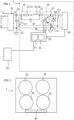
- FIG. 1 shows an induction heating unit 1 according to an embodiment of the present invention.
- the induction heating unit 1 comprises a resonant tank 30 with an induction heating element 32, 33.
- the induction heating unit 1 further comprises a power requesting unit 60 for requesting a power PR of the induction heating element 32.
- the induction heating unit 1 further comprises a driving unit 52 for driving the resonant tank 30, by oscillating the resonant tank 30 by means of a switching element 35, by a driving signal comprising a series of subsequent sequences for generating a heating power PH, in particular in at least one operating mode.
- Each sequence comprises
- the heating power PH is generated corresponding to the requested power PR.
- the driving signal 38 toggles between at least one first driving state resulting in an closed state or gradually closed state of the switching element and at least one second driving state resulting in an opened state of the switching element.
- the first driving state is determined by a first driving signal parameter, preferably by a first driving signal voltage or by a first driving signal current.
- the second driving state is determined by a second driving signal parameter, preferably by a second driving signal voltage or by a second driving signal current.
- the first driving state and/or the second driving state vary between the first, the second and the third subsequence.
- the first driving state and/or the second driving state of the third subsequence vary compared to the first driving states and/or the second driving states of the first subsequence and/or the second subsequence.
- the first driving signal parameter and/or the second driving signal parameter of the third subsequence vary compared to the first driving signal parameters and/or the second driving signal parameters of the first subsequence and/or the second subsequence.
- the first driving signal voltage and/or the second driving signal voltage of the third subsequence is lower or higher than the first driving signal voltage and/or the second driving signal voltage of the first subsequence and the second subsequence.
- the first driving signal voltage of the third subsequence is lower than the first driving signal voltage of the first subsequence and of the second subsequence.
- the first driving signal voltage and the second driving signal voltage are (or: correspond to) gate voltages of the switching element.
- the switching element is or comprises a transistor, in particular an insulated gate bipolar transistor, IGBT.
- the switching element is or can be gradually closed by gradually, preferably linearly or at least essentially linearly, increasing the first driving signal voltage, preferably from a predetermined first voltage value to a predetermined second voltage value.
- a first subsequence duration D1 and a second subsequence duration D2 are selected such that a variation of the heating power PH is in a predetermined range.
- the variation of the power PH in relation to the requested power PR is more than a predetermined minimum variation and less than a predetermined maximum variation.
- the minimum variation is, in an embodiment, 3%, in particular 5%.
- the maximum variation is, in an embodiment, 30%, in particular 20%, more in particular 10%.
- the minimum reduction of the heating power can be 3%, corresponding to a power reduction of at least 30W, i. e. to a power of 970W or less, whereas the maximum reduction of the heating power can be 30%, corresponding to a power reduction of 300W or less, i. e. to a power of 700W or more.
- the reduction of the power will or can result in a power value between 700W and 1000W.
- a subsequent sequence is a sequence which immediately follows a previous sequence.
- the first sequence is immediately followed by the second sequence
- the second sequence is immediately followed by the third sequence
- the third sequence is immediately followed by the first sequence.
- the resonant tank 30 is supplied with power by a pulsed supply signal, in particular a pulsed DC supply signal, more in particular a pulsed DC bus supply signal 21, 22.
- a pulsed DC supply signal comprises DC pulses, wherein a DC pulse is a rectified half-period of an external AC supply signal, in particular of an AC supply signal with in input voltage of 110 to 240 V and a frequency of 50 to 60 Hz, wherein in particular the rectified AC supply signal is smoothened by a filter unit, in particular a DC capacitor.
- the heating power PH is an effective heating power and/or an average heating power, in particular averaged over one, at least one, two, at least two, ten or at least ten periods of an AC supply signal and/or averaged over a period of 20ms, at least 20ms, 40ms, at least 40ms, 100ms, at least 100ms, 200ms or at least 200ms, more in particular dependent on the AC supply signal frequency.
- the heating power is or can be an effective heating power and/or an average heating power, in particular averaged over a period of 1 to 10 DC pulses.
- 1 to 10 more in particular, 2 to 9, DC pulses over a period of 10 DC pulses contribute or can contribute to the average of power.
- one or more (1 to 10) DC pulses over a period of 10 DC pulses contribute or at least can contribute to the average of power, in particular to the effective heating power and/or the average heating power.
- the DC pulse duration depends on the AC voltage frequency of the AC supply signal.
- the AC voltage frequency is 50Hz or 60Hz.
- the period is 20ms and a DC pulse duration is 10ms, so that when the heating power is an effective heating power and/or an average heating power averaged over five periods, it is averaged over 100ms.
- the period is about 16.6ms and a DC pulse duration is about 8.3ms, so that when the heating power is an effective heating power and/or an average heating power averaged over five periods, it is averaged over about 83ms.
- the actual heating power or instantaneous heating power varies, for example due to the oscillation of the AC supply signal.
- the minimum duration for measuring an effective heating power is at least one period or at least two periods of the AC supply signal.
- the heating power PH is an electrical power consumed by the induction heating unit and/or at least essentially transferred to a cooking vessel.
- the heating power varies in a predetermined range between a predetermined minimum variation and a predetermined maximum variation.
- the actual or instantaneous heating power varies between a predetermined power, in particular a minimum continuous heating power PM during the first subsequence and at least essentially a zero power during the second subsequence by a power difference.
- the minimum continuous heating power is the minimum continuous heating power where the losses, in particular thermal losses in the induction heating unit, more in particular in the switching element, are below a predetermined value, in particular below 20%.
- the resonant tank has a resonance frequency which is determined by the capacitive element and the inductive element which is also influenced by the coupling with a cooking vessel arranged on the induction heating unit.
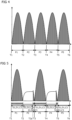
- the first subsequence S1 with first alternating signals starts at a first starting time T1 of a first DC pulse P1 and ends at a second starting time T2 of an, in particular subsequent, second DC pulse P2, with a first subsequence duration D1, a first drive frequency, a first duty cycle C1 and/or a first Ton time.
- the first subsequence duration D1 is determined by the duration of the first DC pulse P1 or determined by the added duration of multiple DC pulses.
- the second subsequence S2 with non-alternating signals starts at the second starting time T2 of the second DC pulse P2 and ends at an activation start time T2a, at a third subsequence duration D3 before a third starting time T3 of the third DC pulse P3, in particular at a third subsequence duration D3 between the second starting time T2 of a second DC pulse P2 and the third starting time T3 of the DC third pulse P3.
- the second subsequence S2 has a second subsequence duration D2, a second drive frequency of at least essentially zero, a second duty cycle of at least essentially zero C2 and a first Ton time of at least essentially zero.
- the second subsequence duration D2 is determined by the duration of the second DC pulse P2 or equal to the added duration of multiple DC pulses, minus the third subsequence duration D3.
- the third subsequence S3 with second alternating signals starts at an activation start time T2a, a third subsequence duration D3 before the third starting time T3 of a third DC pulse P3, between a second starting time T2 of a second DC pulse P2 and a third starting time T3 of the DC third pulse P3, and ends at the starting time T3 of the third DC pulse P3, with a third drive frequency as well as duty cycles and/or a Ton time increasing from the second duty cycle or second Ton time to the third duty cycle C3 or third Ton time.
- the third subsequence duration D3 is less than 30%, in particular less than 20%, more in particular equal to 10% or less than 10% of the DC pulse duration.
- the first alternating signal C1 is a pulse wave and/or comprises a, in particular constant, first drive pulse length, in particular Ton time and/or Toff time and/or a first duty cycle and/or first frequency.
- the first alternating signal generates the predetermined power, in particular the minimum continuous heating power by means of the resonant tank 30.
- the first duty cycle C1 causes an activation of the resonant tank 30 with a predetermined minimum continuous heating power PM, by generating an oscillation of the resonant tank 30.
- the switching losses are increased, as the switching is performed in the so called hard switching region, wherein an at least relatively large voltage is switched together with at least relatively large current.
- the first duty cycle is between 15% and 50%, more in particular between 20% and 40%, more in particular between 25% and 30%.
- the first pulse length is between 15% and 50%, more in particular between 20% and 40%, more in particular between 25% and 30% of the wavelength 2*pi*sqrt(L*C) at the resonance frequency 1/(2*pi*sqrt(L*C)).
- the switching element 35 is in a closed state only between 15% and 50%, more in particular between 20% and 40%, more in particular between 25% and 30% of the wavelength 2*pi*sqrt(L*C) at the resonance frequency 1/(2*pi*sqrt(L*C)).
- the at least essentially non-alternating signal C2 with a second pulse length, a second duty cycle and a second frequency at least essentially deactivates or shuts off the resonant tank.
- the non-alternating signal C2 is a constant signal, which is more in particular constantly zero.
- the second duty cycle C2 causes a deactivation of the resonant tank 30, as due to the zero or at least short opening time based on the zero or at least short pulse length, a charging for a series resonant tank or discharging for a parallel resonant tank of the capacitive element and hence an activation of the resonant tank does not occur.
- the second duty cycle is between 0 and 1/10, more in particular between 0 and 1/30, more in particular between 0 and 1/100.
- the switching element 35 is in a closed state only between 0 and 1/10, more in particular between 0 and 1/30, more in particular between 0 and 1/100 of each switching period.
- the pulse length is between 0 and 1/10, more in particular between 0 and 1/30, more in particular between 0 and 1/100 of the wavelength pi*sqrt(L*C) at the resonance frequency pi*sqrt(L*C).
- the switching element 35 is in a closed state only between 1/1000 and 1/10, more in particular between 1/1000 and 1/100, more in particular between 2/1000 and 20/1000 of the wavelength 2*pi*sqrt(L*C) at the resonance frequency 1/(2*pi*sqrt(L*C)).
- the wavelength at the resonance frequency is the inverse value of the resonance frequency.
- the second alternating signal C3 comprises increasing third drive pulse lengths, in particular increasing third Ton times, increasing third duty cycles and/or an, in particular at least essentially constant, third drive frequency.
- the second alternating signal C3 generates a heating power starting from less than to at least essentially equal to the minimum continuous power in the resonant tank 30.
- the third drive pulse lengths and/or third duty cycles and/or a Ton times are in particular increasing linearly and/or stepwise from a first third drive pulse length, a first third duty cycle and a first third drive Ton time on the one hand to a second third drive pulse length, a second third duty cycle and a second third drive Ton time.
- the second third duty cycle C2 or second third Ton time is at least essentially identical to the first duty cycle C1 or the first Ton time.
- the first and third drive frequency are at least essentially the resonance frequency of the resonant tank.
- a resonance detection means detects an oscillation duration of the resonance tank, in particular by determining a dropping of the voltage in the resonance tank.
- a Toff time is obtained by the difference of oscillation duration and/or the inverse of the drive frequency and the Ton time.
- the first duty cycle C1 and the first Ton time generate the minimum continuous heating power, wherein the losses, in particular thermal losses in the induction heating unit, more in particular in the switching element, are below a predetermined value, in particular below 20%.
- the first drive frequency and the second third drive frequency at least essentially are the same during the first subsequence and at the end of the third subsequence.
- the third duty cycles C3 and the third Ton times generate a heating power starting from smaller than to at least essentially equal to the minimum continuous heating power, in particular from less than 1/10 of the minimum possible heating power to at least essentially the minimum possible heating power.
- the third duty cycles C3 cause a gentle activation of the resonant tank 30 with starting from less than to equal to the minimum continuous drive pulse length PM, by generating an oscillation of the resonant tank 30.
- the first duty cycle C1 is between 15% and 50%, more in particular between 20% and 40%, more in particular between 25% and 35%.
- the third duty cycles C3 are increasing from at least 1% to below 50%, more in particular from 2% to below 40%, more in particular from 3% to below 35%.
- the third drive pulse lengths increase stepwise within the third subsequence duration D3 as predetermined switch-on time from the first third drive pulse length as start fraction of the minimum drive pulse length to the first drive pulse length as minimum drive pulse length.
- the third drive pulse lengths might increase from 1 ⁇ s to 11 ⁇ s by 0.5ps every 100 ⁇ s, so that, after 2ms, a minimum continuous drive pulse length is obtained.
- the switching element 35 is in a closed state from below 10% to 100% of the minimum pulse length.
- the third drive pulse lengths increase from at least 9% to 100% of the minimum pulse length.
- the switching element 35 is in a closed state from starting form at least 9% to 100% of the minimum pulse length.
- a DC pulse detection means detects the minimum of the DC pulses and hence a DC pulse duration.
- the activation start time T2a is a switch-on time start time for the third duty cycles which is determined based on the end of the previous DC pulse and the difference of the DC pulse duration and the third subsequence duration D3 as switch-on time or activation time.
- a sequence duration detection means detects a sequence duration as a number of sequence DC pulses by stepwise increasing a number of DC pulses until the variation of the heating power during a sequence is in the predetermined range.
- a sequence duration setting means sets a sequence duration such that the variation and/or reduction of the heating power is in the predetermined range.
- a sequence duration of 5, 8 or 10 DC pulses may be required. This can also be evaluated stepwise, by stepwise increasing the number of DC pulses.
- the number of DC pulses in a sequence determines the sequence duration, wherein the number of DC pulses in the first subsequence determines the first subsequence duration, wherein the number of DC pulses in the second subsequence determines the second subsequence duration.
- the first subsequence duration and the second subsequence duration are determined such that a required power is obtained as heating power.
- the number of DC pulses in the first subsequence and the number of DC pulses in the second subsequence are determined such that a required power is obtained.
- the number of DC pulses in the first subsequence is obtained by multiplying the number of DC pulses in the sequence with the quotient of the requested power and the minimum continuous power with, and, in particular, rounding up or down the result.
- the heating unit 2 comprises a power driving control unit 51 for determining the ratio between the first and the second duration and/or for determining the first and the second duration determined based on a requested power level.
- the predetermined power PM is the minimum continuous power and the requested power PR is lower than the predetermined power PM.
- PM is the minimum continuous power.
- the switching element 35 is a quasi-resonant switching element.
- the resonant tank 30 comprises a capacitive element 31 and an inductive element 32.
- the resonant tank 30 is switched off, if the pulse length is much smaller than the resonance pulse length, in particular if it is smaller than 1/100 of the resonance pulse length.
- the induction heating device 1 comprises at least one, two, at least two, four, at least four, six or at least six induction heating units 2.
- the induction heating device 1 further comprises a rectifying means 10 for rectifying an external AC power supply signal into a pulsed bus DC supply signal comprising a series of DC pulses for supplying at least one, two, at least two, four, at least four, six or at least six induction heating units 2.
- the induction heating device 1 comprises a power level defining unit 60, in particular a user interface, for determining at least one requested power level of the induction heating device 1.
- the induction heating device 1 comprises at least one detecting unit for detecting starting times of the DC pulses.
- FIG. 2 and 3 show an induction cooking appliance 1, in particular domestic induction cooking appliance and/or induction hob, comprising one, at least one, two, at least two, four, at least four, six or at least six oscillation circuits.
- the induction cooking appliance 1 comprises a user interface 60 for requesting a power for the quasi-resonant oscillation circuit.
- the induction cooking appliance 1 comprises a voltage supply unit 10 for supplying voltage to the power supply connector of the oscillation circuits.
- the induction hob 1 comprises four oscillation circuits, which each comprise an inductor, as well as a user interface 60 for requesting power from each of the inductors.
- a domestic induction cooking appliance is in particular an induction cooking appliance which is specifically designed for use in household and/or at home. Such devices have considerably different requirements compared to professional cooking appliances, for example cost and/or usability and/or space requirements.
- a domestic induction cooking appliance is in particular not an induction cooking appliance which is specifically designed for professional use, for example in canteen kitchens, restaurants or in general for commercial cooking.
- the voltage supply unit 10 comprises a bridge rectifier and/or a bus capacitor 11.
- the voltage supply unit 10 is in particular, more in particular only, supplied with power by a one-phase power supply, which in particular means that the voltage supply unit 10 is supplied with power by a phase connector and neutral connector, which in particular supply power from an AC power supply with a frequency of about 50 to 60 Hz and a voltage of about 100 to 240 V.
- FIG 3 shows four oscillation units 2 according to the invention, wherein a first power supply 10 supplies power from a first voltage phase to two oscillation units 2 by means of a first DC bus.
- a second power supply 10 supplies power from a second voltage phase to two oscillation units 2 by means of a second DC bus.
- a first power supply 10 supplies power from a first voltage phase to at least two oscillation units 2, for example by means of a first DC bus.
- a second power supply 10 supplies power from a second voltage phase to at least two oscillation units 2, for example by means of a second DC bus.
- the switching element 35 is closed and current flows through it, accumulating power in the inductor 32.
- the voltage VCE across the switching element 35 is short-circuited to ground 22 so its value is 0.
- the switching element 35 is open so that current and voltage resonate in the resonant tank 30.
- the switching element 35 is or at least can be an IGBT (insulated gate bipolar transistor), and preferably the transistor 36 and the diode 37 are operated in parallel.
- IGBT insulated gate bipolar transistor
Landscapes
- Physics & Mathematics (AREA)
- Electromagnetism (AREA)
- General Induction Heating (AREA)
Claims (16)
- Induktionsheizeinheit (1) für eine Kochvorrichtung, insbesondere für eine Induktionskochvorrichtung, spezieller für ein Induktionskochfeld, die Folgendes umfasst- mindestens einen Resonanzkreis (30) mit mindestens einem Induktionsheizelement (32),- eine Leistungsanforderungseinheit (60) zum Anfordern einer Leistung (PR) des mindestens einen Induktionsheizelements (32),- eine Ansteuereinheit (52) zum Ansteuern des Resonanzkreises (30), insbesondere durch Schwingen des Resonanzkreises (30) mittels eines Schaltelements (35), durch ein Ansteuersignal (38), das zum Erzeugen einer Heizleistung (PH) eine Reihe von nachfolgenden Sequenzen umfasst, dadurch gekennzeichnet, dass jede Sequenz Folgendes umfassto eine erste Untersequenz (S1) mit einem ersten alternierenden Signal und mit einer ersten Untersequenzdauer (D1), die eine Aktivierung des Resonanzkreises (30) mit einer vorbestimmten Leistung (PM) bewirkt,o eine nachfolgende zweite Untersequenz (S2) mit einem mindestens im Wesentlichen nicht alternierenden Signal und mit einer zweiten Untersequenzdauer (D2), die eine Deaktivierung des Resonanzkreises (30) bewirkt, undo eine nachfolgende dritte Untersequenz (S3) mit einem zweiten alternierenden Signal und mit einer dritten Untersequenzdauer (D3), die eine Aktivierung des Resonanzkreises (30) mit weniger als der vorbestimmten Leistung (PM) bewirkt.
- Induktionsheizeinheit nach Anspruch 1,- wobei das Ansteuersignal (38) insbesondere in mindestens einer oder in jeder Untersequenz zwischen mindestens einem ersten Ansteuerzustand, was insbesondere in einem mindestens im Wesentlichen geschlossenen Zustand des Schaltelements (35) resultiert, und mindestens einem zweiten Ansteuerzustand, was insbesondere in einem mindestens im Wesentlichen geöffneten Zustand des Schaltelements (35) resultiert, umschaltet oder dazu ausgelegt ist, dazwischen umzuschalten,- wobei insbesondere der erste Ansteuerzustand durch einen ersten Ansteuersignalparameter, vorzugsweise durch eine erste Ansteuersignalspannung oder durch einen ersten Ansteuersignalstrom, und der zweite Ansteuerzustand durch einen zweiten Ansteuersignalparameter, vorzugsweise durch eine zweite Ansteuersignalspannung oder durch einen zweiten Ansteuersignalstrom bestimmt wird,- wobei insbesondere der erste Ansteuerzustand und/oder der zweite Ansteuerzustand zwischen der ersten, der zweiten und/oder der dritten Untersequenz variieren,- wobei insbesondere der erste Ansteuersignalparameter und/oder der zweite Ansteuersignalparameter der dritten Untersequenz verglichen mit den ersten Ansteuersignalparametern und/oder den zweiten Ansteuersignalparametern der ersten Untersequenz und/oder der zweiten Untersequenz variieren,- wobei insbesondere die erste Ansteuersignalspannung und/oder die zweite Ansteuersignalspannung der dritten Untersequenz niedriger oder höher als die erste Ansteuersignalspannung und/oder die zweite Ansteuersignalspannung der ersten Untersequenz und/oder der zweiten Untersequenz ist/sind,- wobei insbesondere die erste Ansteuersignalspannung und/oder die zweite Ansteuersignalspannung Gatespannungen des Schaltelements (35) sind,- wobei insbesondere das Schaltelement (35) ein Transistor ist, spezieller ein Bipolartransistor mit offener Gate-Elektrode, IGBT, oder einen solchen umfasst.
- Induktionsheizeinheit nach Anspruch 1 oder 2, wobei die Heizleistung (PH) entsprechend der angeforderten Leistung (PR) erzeugt wird.
- Induktionsheizeinheit nach Anspruch 1, 2 oder 3, wobei mindestens in einem Betriebsmodus eine erste Untersequenzdauer (D1) und eine zweite Untersequenzdauer (D2) derart ausgewählt werden, dass eine Variierung und/oder eine Reduzierung der Heizleistung (PH) in einem vorbestimmten Bereich liegt, insbesondere derart, dass die Variierung und/oder die Reduzierung der Leistung (PH) mit Bezug auf die angeforderte Leistung (PR) größer ist als eine vorbestimmte minimale Variierung und/oder Reduzierung und kleiner ist als eine vorbestimmte maximale Variierung und/oder Reduzierung, wobei spezieller die minimale Variierung und/oder Reduzierung 3 % beträgt, insbesondere 5 %, und/oder wobei die maximale Variierung und/oder Reduzierung 30 % beträgt, insbesondere 20 %, spezieller 10 %.
- Induktionsheizeinheit nach einem der vorhergehenden Ansprüche,
wobei die erste Untersequenz (S1) mit ersten alternierenden Signalen zu einer ersten Startzeit (T1) eines ersten DC-Impulses (P1) startet und zu einer zweiten Startzeit (T2) eines, insbesondere nachfolgenden, zweiten DC-Impulses (P2) endet, und zwar mit einer ersten Untersequenzdauer (D1), einer ersten Ansteuerfrequenz, einem ersten Tastverhältnis (C1) und/oder einer ersten Ton-Zeit, wobei insbesondere die erste Untersequenzdauer (D1) durch die Dauer des ersten DC-Impulses (P1) bestimmt wird und/oder mit dieser mindestens im Wesentlichen gleich ist oder durch die addierte Dauer von mehreren DC-Impulsen bestimmt wird und/oder mit dieser mindestens im Wesentlichen gleich ist. - Induktionsheizeinheit nach einem der vorhergehenden Ansprüche,
wobei die zweite Untersequenz (S2) mit nicht alternierenden Signalen zur zweiten Startzeit (T2) des/eines zweiten DC-Impulses (P2) startet und zu einer Aktivierungsstartzeit (T2a) bei der dritten Untersequenzdauer (D3) vor einer dritten Startzeit (T3) eines dritten DC-Impulses (P3), insbesondere bei einer dritten Untersequenzdauer (D3) zwischen der zweiten Startzeit (T2) eines zweiten DC-Impulses (P2) und der dritten Startzeit (T3) des dritten DC-Impulses (P3) endet, und zwar mit einer zweiten Untersequenzdauer (D2), einer zweiten Ansteuerfrequenz von mindestens im Wesentlichen null, einem zweiten Tastverhältnis von mindestens im Wesentlichen null (C2) und/oder einer zweiten Ton-Zeit von mindestens im Wesentlichen null, wobei insbesondere die zweite Untersequenzdauer (D2) durch die Dauer des zweiten DC-Impulses (P2) bestimmt wird oder mit der addierten Dauer von mehreren DC-Impulsen gleich ist minus der dritten Untersequenzdauer (D3) . - Induktionsheizeinheit nach einem der vorhergehenden Ansprüche,
wobei die dritte Untersequenz (S3) mit zweiten alternierenden Signalen zu einer Aktivierungsstartzeit (T2a) bei einer dritten Untersequenzdauer (D3) von der dritten Startzeit (T3) eines dritten DC-Impulses (P3) zwischen einer zweiten Startzeit (T2) eines zweiten DC-Impulses (P2) und einer dritten Startzeit (T3) des dritten DC-Impulses (P3) startet und zur Startzeit (T3) des dritten DC-Impulses (P3) endet, und zwar mit einer dritten Ansteuerfrequenz sowie mit Tastverhältnissen und/oder einer Ton-Zeit, die gegenüber einem dritten Tastverhältnis oder einer dritten Ton-Zeit auf das erste Tastverhältnis (C1) oder die erste Ton-Zeit erhöht sind, wobei insbesondere die dritte Untersequenzdauer (D3) weniger beträgt als 30 %, insbesondere weniger als 20 %, spezieller gleich 10 % oder weniger als 10 % der DC-Impulsdauer,- wobei insbesondere die oder eine erste Ansteuersignalspannung und/oder die oder eine zweite Ansteuersignalspannung der dritten Untersequenz niedriger oder höher als die oder eine erste Ansteuersignalspannung und/oder die oder eine zweite Ansteuersignalspannung der ersten Untersequenz und/oder der zweiten Untersequenz ist/sind,- wobei insbesondere die erste Ansteuersignalspannung und/oder die zweite Ansteuersignalspannung Gatespannungen des Schaltelements (35) sind,- wobei insbesondere das Schaltelement (35) ein Transistor ist oder einen solchen umfasst, spezieller ein Bipolartransistor mit offener Gate-Elektrode, IGBT. - Induktionsheizeinheit nach einem der vorhergehenden Ansprüche,
wobei das erste alternierende Signal (C1) eine Impulswelle ist und/oder eine, insbesondere konstante, erste Ansteuerimpulslänge, insbesondere Ton-Zeit und/oder Toff-Zeit und/oder ein erstes Tastverhältnis und/oder eine erste Frequenz umfasst, wobei das erste alternierende Signal eine vorbestimmte Leistung (PM) erzeugt. - Induktionsheizeinheit nach einem der vorhergehenden Ansprüche,
wobei das mindestens im Wesentlichen nicht alternierende Signal (C2) mit einer zweiten Impulslänge, einem zweiten Tastverhältnis und einer zweiten Frequenz mindestens im Wesentlichen den Resonanzkreis deaktiviert oder abschaltet, insbesondere wobei das nicht alternierende Signal (C2) ein konstantes Signal ist, das spezieller konstant null ist. - Induktionsheizeinheit nach einem der vorhergehenden Ansprüche,
wobei das zweite alternierende Signal (C3) zunehmende dritte Ansteuerimpulslängen umfasst, insbesondere zunehmende dritte Ton-Zeiten, zunehmende dritte Tastverhältnisse und/oder eine, insbesondere mindestens im Wesentlichen konstante, dritte Ansteuerfrequenz und/oder eine Heizleistung von weniger als bis mindestens im Wesentlichen gleich der minimalen kontinuierlichen Leistung des Resonanzkreises (30) und/oder der vordefinierten und/oder angeforderten Leistung erzeugt,- wobei insbesondere die/eine erste Ansteuersignalspannung und/oder die/eine zweite Ansteuersignalspannung der dritten Untersequenz niedriger oder höher als die erste Ansteuersignalspannung und/oder die zweite Ansteuersignalspannung der ersten Untersequenz und/oder der zweiten Untersequenz ist/sind,- wobei insbesondere die erste Ansteuersignalspannung und/oder die zweite Ansteuersignalspannung Gatespannungen des Schaltelements (35) sind,- wobei insbesondere das Schaltelement (35) ein Transistor ist, spezieller ein Bipolartransistor mit offener Gate-Elektrode, IGBT, oder einen solchen umfasst. - Induktionsheizeinheit nach einem der vorhergehenden Ansprüche,wobei ein Sequenzdauerdetektionsmittel eine Sequenzdauer durch schrittweises Erhöhen einer Anzahl von DC-Impulsen, bis die Variierung der Heizleistung während einer Sequenz in einem vorbestimmten Bereich liegt, als eine Anzahl von Sequenz-DC-Impulsen detektiert und/oderwobei ein Sequenzdauereinstellmittel eine Sequenzdauer derart einstellt, dass die Variierung der Heizleistung im/in einem vorbestimmten Bereich liegt.
- Induktionsheizeinheit nach einem der vorhergehenden Ansprüche,wobei die Anzahl von DC-Impulsen in einer Sequenz die Sequenzdauer bestimmt, wobei die Anzahl von DC-Impulsen in der ersten Untersequenz die erste Untersequenzdauer bestimmt,wobei die Anzahl von DC-Impulsen in der zweiten Untersequenz die zweite Untersequenzdauer bestimmt und/oderwobei die erste Untersequenzdauer und die zweite Untersequenzdauer derart bestimmt werden, dass eine erforderliche Leistung als eine Heizleistung erhalten wird, und/oderwobei die Anzahl von DC-Impulsen in der ersten Untersequenz und die Anzahl von DC-Impulsen in der zweiten Untersequenz derart bestimmt werden, dass eine erforderliche Leistung erhalten wird, und/oderwobei die Anzahl von DC-Impulsen in der ersten Untersequenz durch Multiplizieren der Anzahl von DC-Impulsen in der Sequenz mit dem Quotienten der angeforderten Leistung und der minimalen kontinuierlichen Leistung und, insbesondere, durch Auf- oder Abrunden des Ergebnisses erhalten wird.
- Induktionsheizeinheit nach einem der vorhergehenden Ansprüche mit- einer Leistungsansteuerungssteuereinheit (51) zum Bestimmen des Verhältnisses zwischen der ersten Untersequenzdauer und der zweiten Untersequenzdauer und/oder zum Bestimmen der ersten Untersequenzdauer und der zweiten Untersequenzdauer auf Basis eines angeforderten Leistungsniveaus, und/oder- wobei insbesondere die vorbestimmte Leistung (PM) die minimale kontinuierliche Leistung ist und/oder wobei die angeforderte Leistung (PR) niedriger ist als die vorbestimmte Leistung und/oder- wobei das Schaltelement (35) ein Quasiresonanzschaltelement ist und/oder- wobei der Resonanzkreis (30) ein kapazitives und ein induktives Element umfasst.
- Induktionskochvorrichtung (1) mit mindestens einer Induktionsheizeinheit nach einem der vorhergehenden Ansprüche, die Folgendes umfasst- mindestens eine, zwei, mindestens zwei, vier, mindestens vier, sechs oder mindestens sechs Induktionsheizeinheiten nach einem der vorhergehenden Ansprüche, die insbesondere ferner Folgendes umfasst- ein Gleichrichtmittel zum Gleichrichten eines externen AC-Leistungsversorgungssignals zu einem gepulsten Bus-DC-Versorgungsignal, das eine Reihe von DC-Impulsen zum Versorgen der mindestens einen, zwei, mindestens zwei, vier, mindestens vier, sechs oder mindestens sechs Induktionsheizeinheiten umfasst, und/oder- eine Leistungsniveaudefinitionseinheit (60), insbesondere eine Benutzerschnittstelle, zum Bestimmen von mindestens einem angeforderten Leistungsniveau der Induktionsheizvorrichtung (1) und/oder- mindestens eine Detektionseinheit zum Detektieren von Startzeiten der DC-Impulse.
- Verfahren zum Betreiben einer Induktionsheizeinheit (1), insbesondere gemäß einem der vorhergehenden Ansprüche 1 bis 13, wobei das Verfahren Folgendes umfasst- Anfordern einer Leistung (PR) des mindestens einen Induktionsheizelements (32) durch eine Leistungsanforderungseinheit (60),- Ansteuern des Resonanzkreises (30) durch eine Ansteuereinheit (52), insbesondere Schwingen des Resonanzkreises (30) mittels eines Schaltelements (35), durch ein Ansteuersignal, das zum Erzeugen einer Heizleistung (PH) eine Reihe von nachfolgenden Sequenzen umfasst, dadurch gekennzeichnet, dass jede Sequenz Folgendes umfasst∘ eine erste Untersequenz (S1) mit einem ersten alternierenden Signal und mit einer ersten Untersequenzdauer (D1), die eine Aktivierung des Resonanzkreises (30) mit einer vorbestimmten Leistung (PM) bewirkt,∘ eine nachfolgende zweite Untersequenz (S2) mit einem mindestens im Wesentlichen nicht alternierenden Signal und mit einer zweiten Untersequenzdauer (D2), die eine Deaktivierung des Resonanzkreises (30) bewirkt, und∘ eine nachfolgende dritte Untersequenz (S3) mit einem zweiten alternierenden Signal, die eine Aktivierung des Resonanzkreises (30) mit weniger als der vorbestimmten Leistung (PM) bewirkt.
- Verfahren zum Betreiben einer Induktionsheizeinheit (1) nach Anspruch 15, wobei das Verfahren ferner Folgendes umfasst- Bestimmen des Verhältnisses zwischen der ersten Untersequenzdauer und der zweiten Untersequenzdauer und/oder Bestimmen der ersten Untersequenzdauer und der zweiten Dauer, die auf Basis eines angeforderten Leistungsniveaus (PR) bestimmt werden, durch eine Leistungsansteuerungssteuereinheit (51), wobei insbesondere die vorbestimmte Leistung (PM) die minimale kontinuierliche Leistung ist und die angeforderte Leistung (PR) niedriger ist als die vorbestimmte Leistung (PM).
Priority Applications (1)
| Application Number | Priority Date | Filing Date | Title |
|---|---|---|---|
| EP20207654.3A EP4002955B1 (de) | 2020-11-13 | 2020-11-13 | Induktionsheizeinheit, induktionskochvorrichtung und verfahren zum betrieb einer induktionsheizeinheit |
Applications Claiming Priority (1)
| Application Number | Priority Date | Filing Date | Title |
|---|---|---|---|
| EP20207654.3A EP4002955B1 (de) | 2020-11-13 | 2020-11-13 | Induktionsheizeinheit, induktionskochvorrichtung und verfahren zum betrieb einer induktionsheizeinheit |
Publications (2)
| Publication Number | Publication Date |
|---|---|
| EP4002955A1 EP4002955A1 (de) | 2022-05-25 |
| EP4002955B1 true EP4002955B1 (de) | 2023-09-06 |
Family
ID=73448992
Family Applications (1)
| Application Number | Title | Priority Date | Filing Date |
|---|---|---|---|
| EP20207654.3A Active EP4002955B1 (de) | 2020-11-13 | 2020-11-13 | Induktionsheizeinheit, induktionskochvorrichtung und verfahren zum betrieb einer induktionsheizeinheit |
Country Status (1)
| Country | Link |
|---|---|
| EP (1) | EP4002955B1 (de) |
Families Citing this family (1)
| Publication number | Priority date | Publication date | Assignee | Title |
|---|---|---|---|---|
| EP3982538A1 (de) * | 2020-10-12 | 2022-04-13 | Electrolux Appliances Aktiebolag | Oszillationseinheit, induktionskochgerät und verfahren zum betrieb einer oszillationseinheit |
Family Cites Families (3)
| Publication number | Priority date | Publication date | Assignee | Title |
|---|---|---|---|---|
| ATE451819T1 (de) * | 2007-01-23 | 2009-12-15 | Whirlpool Co | Verfahren zur regelung eines induktionskochfeldes und zur ausführung dieses verfahrens adaptiertes induktionskochfeld |
| FR2966688B1 (fr) * | 2010-10-21 | 2015-11-20 | Fagorbrandt Sas | Procede de commande en fonctionnement d'une table de cuisson a induction et table de cuisson a induction utilisant ce procede. |
| KR102629987B1 (ko) * | 2016-09-01 | 2024-01-29 | 삼성전자주식회사 | 조리 장치 및 그 제어 방법 |
-
2020
- 2020-11-13 EP EP20207654.3A patent/EP4002955B1/de active Active
Also Published As
| Publication number | Publication date |
|---|---|
| EP4002955A1 (de) | 2022-05-25 |
Similar Documents
| Publication | Publication Date | Title |
|---|---|---|
| CN101326856B (zh) | 感应加热装置及其相应操作和烹饪器具检测方法 | |
| EP1951003B1 (de) | Verfahren zur Regelung eines Induktionskochfeldes und zur Ausführung dieses Verfahrens adaptiertes Induktionskochfeld | |
| CN103931272B (zh) | 感应加热装置 | |
| US11395378B2 (en) | Induction heating device having improved interference noise removal function and power control function | |
| KR102031875B1 (ko) | 전자 유도 가열 조리기 및 이의 구동 방법 | |
| US11064573B2 (en) | Determining resonant frequency for quasi-resonant induction cooking devices | |
| WO1997034446A1 (en) | High-frequency inverter and induction cooking device using the same | |
| US20190261466A1 (en) | Domestic appliance | |
| EP4002955A1 (de) | Induktionsheizeinheit, induktionskochvorrichtung und verfahren zum betrieb einer induktionsheizeinheit | |
| JP5223315B2 (ja) | 誘導加熱装置 | |
| CN110324921B (zh) | 感应加热装置及其驱动控制方法 | |
| CN102612186B (zh) | 电热装置及其准谐振式反流器的控制系统与方法 | |
| JP2011165418A (ja) | 炊飯器 | |
| JP4383942B2 (ja) | 誘導加熱調理器 | |
| KR102782751B1 (ko) | 유도 가열 장치 | |
| KR102782755B1 (ko) | 유도 가열 장치 | |
| KR100961812B1 (ko) | 유도 가열 조리기의 인버터 스위칭 제어회로 | |
| JP4752159B2 (ja) | 高周波電源装置 | |
| GB2470959A (en) | Constant current resonant circuit | |
| JPH02270293A (ja) | 誘導加熱調理器 | |
| CN112888100B (zh) | 半桥电磁器具的电磁加热控制方法和半桥电磁器具 | |
| EP4240106A1 (de) | Verfahren zur steuerung eines quasi-resonanzkonverters und zugehöriges induktionskochfeld | |
| EP4240107A1 (de) | Verfahren zur steuerung eines schaltwandlers und zugehöriges induktionskochfeld | |
| KR20200045796A (ko) | 안정성이 강화된 전자 조리 기기 | |
| JP2004171934A (ja) | 誘導加熱装置 |
Legal Events
| Date | Code | Title | Description |
|---|---|---|---|
| PUAI | Public reference made under article 153(3) epc to a published international application that has entered the european phase |
Free format text: ORIGINAL CODE: 0009012 |
|
| STAA | Information on the status of an ep patent application or granted ep patent |
Free format text: STATUS: THE APPLICATION HAS BEEN PUBLISHED |
|
| AK | Designated contracting states |
Kind code of ref document: A1 Designated state(s): AL AT BE BG CH CY CZ DE DK EE ES FI FR GB GR HR HU IE IS IT LI LT LU LV MC MK MT NL NO PL PT RO RS SE SI SK SM TR |
|
| STAA | Information on the status of an ep patent application or granted ep patent |
Free format text: STATUS: REQUEST FOR EXAMINATION WAS MADE |
|
| 17P | Request for examination filed |
Effective date: 20221125 |
|
| RBV | Designated contracting states (corrected) |
Designated state(s): AL AT BE BG CH CY CZ DE DK EE ES FI FR GB GR HR HU IE IS IT LI LT LU LV MC MK MT NL NO PL PT RO RS SE SI SK SM TR |
|
| GRAP | Despatch of communication of intention to grant a patent |
Free format text: ORIGINAL CODE: EPIDOSNIGR1 |
|
| STAA | Information on the status of an ep patent application or granted ep patent |
Free format text: STATUS: GRANT OF PATENT IS INTENDED |
|
| INTG | Intention to grant announced |
Effective date: 20230412 |
|
| GRAS | Grant fee paid |
Free format text: ORIGINAL CODE: EPIDOSNIGR3 |
|
| GRAA | (expected) grant |
Free format text: ORIGINAL CODE: 0009210 |
|
| STAA | Information on the status of an ep patent application or granted ep patent |
Free format text: STATUS: THE PATENT HAS BEEN GRANTED |
|
| AK | Designated contracting states |
Kind code of ref document: B1 Designated state(s): AL AT BE BG CH CY CZ DE DK EE ES FI FR GB GR HR HU IE IS IT LI LT LU LV MC MK MT NL NO PL PT RO RS SE SI SK SM TR |
|
| REG | Reference to a national code |
Ref country code: GB Ref legal event code: FG4D |
|
| REG | Reference to a national code |
Ref country code: CH Ref legal event code: EP |
|
| REG | Reference to a national code |
Ref country code: IE Ref legal event code: FG4D |
|
| REG | Reference to a national code |
Ref country code: DE Ref legal event code: R096 Ref document number: 602020017137 Country of ref document: DE |
|
| P01 | Opt-out of the competence of the unified patent court (upc) registered |
Effective date: 20230901 |
|
| REG | Reference to a national code |
Ref country code: LT Ref legal event code: MG9D |
|
| PG25 | Lapsed in a contracting state [announced via postgrant information from national office to epo] |
Ref country code: GR Free format text: LAPSE BECAUSE OF FAILURE TO SUBMIT A TRANSLATION OF THE DESCRIPTION OR TO PAY THE FEE WITHIN THE PRESCRIBED TIME-LIMIT Effective date: 20231207 |
|
| PG25 | Lapsed in a contracting state [announced via postgrant information from national office to epo] |
Ref country code: SE Free format text: LAPSE BECAUSE OF FAILURE TO SUBMIT A TRANSLATION OF THE DESCRIPTION OR TO PAY THE FEE WITHIN THE PRESCRIBED TIME-LIMIT Effective date: 20230906 Ref country code: RS Free format text: LAPSE BECAUSE OF FAILURE TO SUBMIT A TRANSLATION OF THE DESCRIPTION OR TO PAY THE FEE WITHIN THE PRESCRIBED TIME-LIMIT Effective date: 20230906 Ref country code: NO Free format text: LAPSE BECAUSE OF FAILURE TO SUBMIT A TRANSLATION OF THE DESCRIPTION OR TO PAY THE FEE WITHIN THE PRESCRIBED TIME-LIMIT Effective date: 20231206 Ref country code: LV Free format text: LAPSE BECAUSE OF FAILURE TO SUBMIT A TRANSLATION OF THE DESCRIPTION OR TO PAY THE FEE WITHIN THE PRESCRIBED TIME-LIMIT Effective date: 20230906 Ref country code: LT Free format text: LAPSE BECAUSE OF FAILURE TO SUBMIT A TRANSLATION OF THE DESCRIPTION OR TO PAY THE FEE WITHIN THE PRESCRIBED TIME-LIMIT Effective date: 20230906 Ref country code: HR Free format text: LAPSE BECAUSE OF FAILURE TO SUBMIT A TRANSLATION OF THE DESCRIPTION OR TO PAY THE FEE WITHIN THE PRESCRIBED TIME-LIMIT Effective date: 20230906 Ref country code: GR Free format text: LAPSE BECAUSE OF FAILURE TO SUBMIT A TRANSLATION OF THE DESCRIPTION OR TO PAY THE FEE WITHIN THE PRESCRIBED TIME-LIMIT Effective date: 20231207 Ref country code: FI Free format text: LAPSE BECAUSE OF FAILURE TO SUBMIT A TRANSLATION OF THE DESCRIPTION OR TO PAY THE FEE WITHIN THE PRESCRIBED TIME-LIMIT Effective date: 20230906 |
|
| REG | Reference to a national code |
Ref country code: AT Ref legal event code: MK05 Ref document number: 1610264 Country of ref document: AT Kind code of ref document: T Effective date: 20230906 |
|
| PG25 | Lapsed in a contracting state [announced via postgrant information from national office to epo] |
Ref country code: NL Free format text: LAPSE BECAUSE OF FAILURE TO SUBMIT A TRANSLATION OF THE DESCRIPTION OR TO PAY THE FEE WITHIN THE PRESCRIBED TIME-LIMIT Effective date: 20230906 |
|
| PG25 | Lapsed in a contracting state [announced via postgrant information from national office to epo] |
Ref country code: IS Free format text: LAPSE BECAUSE OF FAILURE TO SUBMIT A TRANSLATION OF THE DESCRIPTION OR TO PAY THE FEE WITHIN THE PRESCRIBED TIME-LIMIT Effective date: 20240106 |
|
| PG25 | Lapsed in a contracting state [announced via postgrant information from national office to epo] |
Ref country code: AT Free format text: LAPSE BECAUSE OF FAILURE TO SUBMIT A TRANSLATION OF THE DESCRIPTION OR TO PAY THE FEE WITHIN THE PRESCRIBED TIME-LIMIT Effective date: 20230906 |
|
| PG25 | Lapsed in a contracting state [announced via postgrant information from national office to epo] |
Ref country code: ES Free format text: LAPSE BECAUSE OF FAILURE TO SUBMIT A TRANSLATION OF THE DESCRIPTION OR TO PAY THE FEE WITHIN THE PRESCRIBED TIME-LIMIT Effective date: 20230906 |
|
| PG25 | Lapsed in a contracting state [announced via postgrant information from national office to epo] |
Ref country code: SM Free format text: LAPSE BECAUSE OF FAILURE TO SUBMIT A TRANSLATION OF THE DESCRIPTION OR TO PAY THE FEE WITHIN THE PRESCRIBED TIME-LIMIT Effective date: 20230906 Ref country code: RO Free format text: LAPSE BECAUSE OF FAILURE TO SUBMIT A TRANSLATION OF THE DESCRIPTION OR TO PAY THE FEE WITHIN THE PRESCRIBED TIME-LIMIT Effective date: 20230906 Ref country code: IS Free format text: LAPSE BECAUSE OF FAILURE TO SUBMIT A TRANSLATION OF THE DESCRIPTION OR TO PAY THE FEE WITHIN THE PRESCRIBED TIME-LIMIT Effective date: 20240106 Ref country code: ES Free format text: LAPSE BECAUSE OF FAILURE TO SUBMIT A TRANSLATION OF THE DESCRIPTION OR TO PAY THE FEE WITHIN THE PRESCRIBED TIME-LIMIT Effective date: 20230906 Ref country code: EE Free format text: LAPSE BECAUSE OF FAILURE TO SUBMIT A TRANSLATION OF THE DESCRIPTION OR TO PAY THE FEE WITHIN THE PRESCRIBED TIME-LIMIT Effective date: 20230906 Ref country code: CZ Free format text: LAPSE BECAUSE OF FAILURE TO SUBMIT A TRANSLATION OF THE DESCRIPTION OR TO PAY THE FEE WITHIN THE PRESCRIBED TIME-LIMIT Effective date: 20230906 Ref country code: AT Free format text: LAPSE BECAUSE OF FAILURE TO SUBMIT A TRANSLATION OF THE DESCRIPTION OR TO PAY THE FEE WITHIN THE PRESCRIBED TIME-LIMIT Effective date: 20230906 Ref country code: SK Free format text: LAPSE BECAUSE OF FAILURE TO SUBMIT A TRANSLATION OF THE DESCRIPTION OR TO PAY THE FEE WITHIN THE PRESCRIBED TIME-LIMIT Effective date: 20230906 Ref country code: PT Free format text: LAPSE BECAUSE OF FAILURE TO SUBMIT A TRANSLATION OF THE DESCRIPTION OR TO PAY THE FEE WITHIN THE PRESCRIBED TIME-LIMIT Effective date: 20240108 |
|
| PG25 | Lapsed in a contracting state [announced via postgrant information from national office to epo] |
Ref country code: PL Free format text: LAPSE BECAUSE OF FAILURE TO SUBMIT A TRANSLATION OF THE DESCRIPTION OR TO PAY THE FEE WITHIN THE PRESCRIBED TIME-LIMIT Effective date: 20230906 |
|
| REG | Reference to a national code |
Ref country code: DE Ref legal event code: R097 Ref document number: 602020017137 Country of ref document: DE |
|
| REG | Reference to a national code |
Ref country code: CH Ref legal event code: PL |
|
| PG25 | Lapsed in a contracting state [announced via postgrant information from national office to epo] |
Ref country code: MC Free format text: LAPSE BECAUSE OF FAILURE TO SUBMIT A TRANSLATION OF THE DESCRIPTION OR TO PAY THE FEE WITHIN THE PRESCRIBED TIME-LIMIT Effective date: 20230906 |
|
| PG25 | Lapsed in a contracting state [announced via postgrant information from national office to epo] |
Ref country code: DK Free format text: LAPSE BECAUSE OF FAILURE TO SUBMIT A TRANSLATION OF THE DESCRIPTION OR TO PAY THE FEE WITHIN THE PRESCRIBED TIME-LIMIT Effective date: 20230906 |
|
| PLBE | No opposition filed within time limit |
Free format text: ORIGINAL CODE: 0009261 |
|
| STAA | Information on the status of an ep patent application or granted ep patent |
Free format text: STATUS: NO OPPOSITION FILED WITHIN TIME LIMIT |
|
| PG25 | Lapsed in a contracting state [announced via postgrant information from national office to epo] |
Ref country code: LU Free format text: LAPSE BECAUSE OF NON-PAYMENT OF DUE FEES Effective date: 20231113 |
|
| PG25 | Lapsed in a contracting state [announced via postgrant information from national office to epo] |
Ref country code: CH Free format text: LAPSE BECAUSE OF NON-PAYMENT OF DUE FEES Effective date: 20231130 |
|
| PG25 | Lapsed in a contracting state [announced via postgrant information from national office to epo] |
Ref country code: MC Free format text: LAPSE BECAUSE OF FAILURE TO SUBMIT A TRANSLATION OF THE DESCRIPTION OR TO PAY THE FEE WITHIN THE PRESCRIBED TIME-LIMIT Effective date: 20230906 Ref country code: LU Free format text: LAPSE BECAUSE OF NON-PAYMENT OF DUE FEES Effective date: 20231113 Ref country code: DK Free format text: LAPSE BECAUSE OF FAILURE TO SUBMIT A TRANSLATION OF THE DESCRIPTION OR TO PAY THE FEE WITHIN THE PRESCRIBED TIME-LIMIT Effective date: 20230906 Ref country code: CH Free format text: LAPSE BECAUSE OF NON-PAYMENT OF DUE FEES Effective date: 20231130 Ref country code: SI Free format text: LAPSE BECAUSE OF FAILURE TO SUBMIT A TRANSLATION OF THE DESCRIPTION OR TO PAY THE FEE WITHIN THE PRESCRIBED TIME-LIMIT Effective date: 20230906 |
|
| REG | Reference to a national code |
Ref country code: BE Ref legal event code: MM Effective date: 20231130 |
|
| 26N | No opposition filed |
Effective date: 20240607 |
|
| REG | Reference to a national code |
Ref country code: IE Ref legal event code: MM4A |
|
| PG25 | Lapsed in a contracting state [announced via postgrant information from national office to epo] |
Ref country code: IE Free format text: LAPSE BECAUSE OF NON-PAYMENT OF DUE FEES Effective date: 20231113 |
|
| PG25 | Lapsed in a contracting state [announced via postgrant information from national office to epo] |
Ref country code: BE Free format text: LAPSE BECAUSE OF NON-PAYMENT OF DUE FEES Effective date: 20231130 |
|
| PG25 | Lapsed in a contracting state [announced via postgrant information from national office to epo] |
Ref country code: IE Free format text: LAPSE BECAUSE OF NON-PAYMENT OF DUE FEES Effective date: 20231113 Ref country code: BE Free format text: LAPSE BECAUSE OF NON-PAYMENT OF DUE FEES Effective date: 20231130 |
|
| PG25 | Lapsed in a contracting state [announced via postgrant information from national office to epo] |
Ref country code: BG Free format text: LAPSE BECAUSE OF FAILURE TO SUBMIT A TRANSLATION OF THE DESCRIPTION OR TO PAY THE FEE WITHIN THE PRESCRIBED TIME-LIMIT Effective date: 20230906 |
|
| PG25 | Lapsed in a contracting state [announced via postgrant information from national office to epo] |
Ref country code: BG Free format text: LAPSE BECAUSE OF FAILURE TO SUBMIT A TRANSLATION OF THE DESCRIPTION OR TO PAY THE FEE WITHIN THE PRESCRIBED TIME-LIMIT Effective date: 20230906 |
|
| PGFP | Annual fee paid to national office [announced via postgrant information from national office to epo] |
Ref country code: IT Payment date: 20241125 Year of fee payment: 5 |
|
| GBPC | Gb: european patent ceased through non-payment of renewal fee |
Effective date: 20241113 |
|
| PG25 | Lapsed in a contracting state [announced via postgrant information from national office to epo] |
Ref country code: CY Free format text: LAPSE BECAUSE OF FAILURE TO SUBMIT A TRANSLATION OF THE DESCRIPTION OR TO PAY THE FEE WITHIN THE PRESCRIBED TIME-LIMIT; INVALID AB INITIO Effective date: 20201113 |
|
| PG25 | Lapsed in a contracting state [announced via postgrant information from national office to epo] |
Ref country code: HU Free format text: LAPSE BECAUSE OF FAILURE TO SUBMIT A TRANSLATION OF THE DESCRIPTION OR TO PAY THE FEE WITHIN THE PRESCRIBED TIME-LIMIT; INVALID AB INITIO Effective date: 20201113 |
|
| PG25 | Lapsed in a contracting state [announced via postgrant information from national office to epo] |
Ref country code: GB Free format text: LAPSE BECAUSE OF NON-PAYMENT OF DUE FEES Effective date: 20241113 |
|
| PG25 | Lapsed in a contracting state [announced via postgrant information from national office to epo] |
Ref country code: TR Free format text: LAPSE BECAUSE OF FAILURE TO SUBMIT A TRANSLATION OF THE DESCRIPTION OR TO PAY THE FEE WITHIN THE PRESCRIBED TIME-LIMIT Effective date: 20230906 |
|
| PGFP | Annual fee paid to national office [announced via postgrant information from national office to epo] |
Ref country code: DE Payment date: 20251126 Year of fee payment: 6 |
|
| PGFP | Annual fee paid to national office [announced via postgrant information from national office to epo] |
Ref country code: FR Payment date: 20251124 Year of fee payment: 6 |