EP4003165B1 - Method of synthesizing chemical compounds - Google Patents
Method of synthesizing chemical compounds Download PDFInfo
- Publication number
- EP4003165B1 EP4003165B1 EP19939568.2A EP19939568A EP4003165B1 EP 4003165 B1 EP4003165 B1 EP 4003165B1 EP 19939568 A EP19939568 A EP 19939568A EP 4003165 B1 EP4003165 B1 EP 4003165B1
- Authority
- EP
- European Patent Office
- Prior art keywords
- database
- hashed
- entries
- synthons
- customer
- Prior art date
- Legal status (The legal status is an assumption and is not a legal conclusion. Google has not performed a legal analysis and makes no representation as to the accuracy of the status listed.)
- Active
Links
Images


Classifications
-
- G—PHYSICS
- G16—INFORMATION AND COMMUNICATION TECHNOLOGY [ICT] SPECIALLY ADAPTED FOR SPECIFIC APPLICATION FIELDS
- G16C—COMPUTATIONAL CHEMISTRY; CHEMOINFORMATICS; COMPUTATIONAL MATERIALS SCIENCE
- G16C60/00—Computational materials science, i.e. ICT specially adapted for investigating the physical or chemical properties of materials or phenomena associated with their design, synthesis, processing, characterisation or utilisation
-
- G—PHYSICS
- G06—COMPUTING OR CALCULATING; COUNTING
- G06F—ELECTRIC DIGITAL DATA PROCESSING
- G06F21/00—Security arrangements for protecting computers, components thereof, programs or data against unauthorised activity
- G06F21/60—Protecting data
- G06F21/62—Protecting access to data via a platform, e.g. using keys or access control rules
- G06F21/6218—Protecting access to data via a platform, e.g. using keys or access control rules to a system of files or objects, e.g. local or distributed file system or database
- G06F21/6227—Protecting access to data via a platform, e.g. using keys or access control rules to a system of files or objects, e.g. local or distributed file system or database where protection concerns the structure of data, e.g. records, types, queries
-
- G—PHYSICS
- G06—COMPUTING OR CALCULATING; COUNTING
- G06F—ELECTRIC DIGITAL DATA PROCESSING
- G06F21/00—Security arrangements for protecting computers, components thereof, programs or data against unauthorised activity
- G06F21/60—Protecting data
- G06F21/602—Providing cryptographic facilities or services
-
- G—PHYSICS
- G06—COMPUTING OR CALCULATING; COUNTING
- G06F—ELECTRIC DIGITAL DATA PROCESSING
- G06F21/00—Security arrangements for protecting computers, components thereof, programs or data against unauthorised activity
- G06F21/60—Protecting data
- G06F21/62—Protecting access to data via a platform, e.g. using keys or access control rules
- G06F21/6209—Protecting access to data via a platform, e.g. using keys or access control rules to a single file or object, e.g. in a secure envelope, encrypted and accessed using a key, or with access control rules appended to the object itself
-
- G—PHYSICS
- G16—INFORMATION AND COMMUNICATION TECHNOLOGY [ICT] SPECIALLY ADAPTED FOR SPECIFIC APPLICATION FIELDS
- G16C—COMPUTATIONAL CHEMISTRY; CHEMOINFORMATICS; COMPUTATIONAL MATERIALS SCIENCE
- G16C20/00—Chemoinformatics, i.e. ICT specially adapted for the handling of physicochemical or structural data of chemical particles, elements, compounds or mixtures
- G16C20/10—Analysis or design of chemical reactions, syntheses or processes
-
- G—PHYSICS
- G16—INFORMATION AND COMMUNICATION TECHNOLOGY [ICT] SPECIALLY ADAPTED FOR SPECIFIC APPLICATION FIELDS
- G16C—COMPUTATIONAL CHEMISTRY; CHEMOINFORMATICS; COMPUTATIONAL MATERIALS SCIENCE
- G16C20/00—Chemoinformatics, i.e. ICT specially adapted for the handling of physicochemical or structural data of chemical particles, elements, compounds or mixtures
- G16C20/90—Programming languages; Computing architectures; Database systems; Data warehousing
Definitions
- This disclosure describes systems and methods for synthesizing pathways to create chemical compounds, also referred to as retrosynthetic analysis.
- Synthia TM software application
- Synthia TM one software application, referred to as Synthia TM
- Synthia TM one software application, designed, with minimal human supervision, complete pathways leading to structurally diverse and medicinally relevant targets.
- These theoretical pathways were subsequently executed in the laboratory, offering substantial improvements over previous approaches or providing the first documented routes to a given target.
- a system, software application and method that allows a customer to protect their proprietary database of compounds and substances while utilizing a retrosynthesis software application is disclosed.
- the customer's proprietary database is encrypted prior to being provided to the retrosynthesis system. This encrypted is performed using a hash and optionally a salt.
- the retrosynthesis algorithm then creates synthons as is traditionally done. However, after their creation, the synthons are hashed so that they may be compared to the entries in the customer's proprietary database. In this way, the actual contents of the customer's database are never made available in a molecular format to the retrosynthesis system or software application.
- the present disclosure represents an advancement in the retrosynthesis of chemical compounds.
- the present disclosure describes a system, method and software application that allow for retrosynthesis analysis that protects the confidentiality of a customer's library.
- the software application may be written in any suitable language and may be executed on any system.
- the software application comprises one or more processing blocks. Each of these processing blocks may be a software module or application that is executed on a computer or other processing unit.
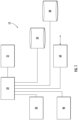
- a representative retrosynthesis system 10 that executes the software application is shown in FIG. 1 .
- the processing unit 20 can be implemented in numerous ways, such as with dedicated hardware, or with general purpose hardware, such as personal computers, that is programmed using microcode or software to perform the functions recited herein.
- a local memory device 25 may contain the software application and instructions, which, when executed by the processing unit 20, enable the retrosynthesis system 10 to perform the functions described herein.
- This local memory device 25 may be a non-volatile memory, such as a FLASH ROM, an electrically erasable ROM or other suitable devices. In other embodiments, the local memory device 25 may be a volatile memory, such as a RAM or DRAM.
- the retrosynthesis system 10 also comprises a data store 50.
- the data store 50 may be used to store large amounts of data, such as lists of reaction rules, lists of commercial compounds and their prices per gram. Additionally, the retrosynthesis system 10 may include a user input device 30, such as a keyboard, mouse, touch screen or another suitable device.
- the retrosynthesis system 10 may also include a display device 40, such as a computer screen, LED display, touch screen or the like.
- the data store 50, the user input device 30 and the display device 40 are all in communication with the processing unit 20.
- the retrosynthesis system 10 may also have a network interface 60, in communication with an external network, such as the internet, which allows the processing unit 20 to access information that is stored remotely from the retrosynthesis system 10.
- the data store 50 may store a vast knowledge base of methodologies that describe known reactions. In one embodiment, the data store 50 may include in excess of 70,000 reaction rules. In addition, the retrosynthesis system 10 may have access to diverse collections of starting materials. This information may be stored in the data store 50 or another storage element. Alternatively, this information may be accessible to the processing unit 20 via the network interface 60. In one embodiment, information regarding more than 7 million literature-known substances is available to the processing unit 20. This information may also include pricing per gram for at least some of these substances. Each of these substances may be stored in a text format, as opposed to a graphical format. For example, the substances may be depicted using Simplified Molecular Input Lines Entry System (SMILES) strings.
- SILES Simplified Molecular Input Lines Entry System
- SMILES is a notation that describes the structure of chemical species using ASCII strings. Other notations include IUPAC International Chemical Identifier (InChI), and InChI-Keys. Commonly, regardless of which notation is used, the same compound may be expressed using different strings. Therefore, in certain embodiments, all strings are rewritten using canonical representation.
- the processing unit 20 has access to a proprietary database 80, which is encrypted.
- This proprietary database 80 contains the library of compounds and substances that are available to a particular customer of the software application.
- This proprietary database 80 contains a number of canonical representations, each representation corresponding to a specific substance that is available to that particular user.
- Each canonical representation is then encrypted using a hash.
- the hash may be SHA-1, SHA-2, SHA-3, MD5 or another algorithm.
- the particular hash algorithm is not limited by this disclosure.
- each entry is the proprietary database 80 is salted prior to being hashed.
- a "salt" is an arbitrary string that is prepended or appended to each canonical representation. This added input further protects the confidentiality of the proprietary database 80.
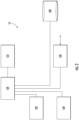
- a representative customer's system 100 is shown in FIG. 2 .
- the processing unit 120 can be implemented in numerous ways, such as with dedicated hardware, or with general purpose hardware, such as personal computers, that is programmed using microcode or software to perform the functions recited herein.
- a local memory device 125 may contain instructions, which, when executed by the processing unit 120, enable the customer's system 100 to perform the functions described herein.
- This local memory device 125 may be a non-volatile memory, such as a FLASH ROM, an electrically erasable ROM or other suitable devices. In other embodiments, the local memory device 125 may be a volatile memory, such as a RAM or DRAM.
- the customer's system 100 may include a user input device 130, such as a keyboard, mouse, touch screen or another suitable device.
- the customer's system 100 may also include a display device 140, such as a computer screen, LED display, touch screen or the like.
- the user input device 130 and the display device 140 are all in communication with the processing unit 120.
- the customer's system 100 may also have a network interface 160, in communication with an external network, such as the internet, which allows the processing unit 120 to provide its proprietary database to the retrosynthesis system 10.
- the customer's system 100 may also have a data store that contains the customer's database 180 of compounds and substances.
- FIG. 3 shows a method that may be used to create the hashed proprietary database 80 that is provided to the retrosynthesis system 10.
- This method may be executed by providing an executable file to the customer's system 100.
- the executable file contains instructions, which when executed by the processing unit 120 on the customer's system 100, performs the functions described herein. In other words, the processes shown in FIG. 3 may be performed on the customer's system 100. In this way, the unencrypted customer's database 180 is never made available to the retrosynthesis system 10 or the software application.
- This executable file may be created by the retrosynthesis system 10 and transmitted to the customer's system 100, such as via download across the internet.
- Process 300 each entry in the customer's database 180 is reviewed to ensure that it is in canonical form. This is necessary, as the comparison of hashed synthons can only be successful if each compound is denoted using only a single representation.
- a salt may be added to each entry, as shown in Process 310.
- This salt may be unique to the particular customer and may be kept confidential.
- the executable file contains the unique salt, which is not made visible to the customer.
- the executable file and the software application use the same salt for a particular customer. In other embodiments, a salt may not be used. In these embodiments, Process 310 may be omitted.
- each entry which is a canonical representation with a salt, is hashed.
- the particular hashing algorithm is not limited by this disclosure.
- Each of these salted and hashed entries is then compiled into the proprietary database 80. Once this is complete, the proprietary database 80 may be made available to the software application, as the unencrypted contents are no longer accessible to the retrosynthesis system 10 or the software application.
- FIG. 4 shows several representative canonical SMILES strings and the resultant hashed values. Note that there is no way to recreate the canonical SMILES strings from the hashed values. Further, note that the hashed values do not provide any insight as to the original SMILES strings.
- the salted and hashed canonical representations may be sorted, such as in alphabetical order, as shown in Process 330. This enhancement may reduce the time required for the software application to search the proprietary database 80 looking for a match.
- the proprietary database 80 is made available to the processing unit 20 of the retrosynthesis system 10. This may be achieved by uploading the proprietary database 80 to the retrosynthesis system 10, or by allowing the retrosynthesis system 10 to access the proprietary database 80 remotely.
- a retron is a minimal molecular substructure that enables certain transformations.
- a synthon is a fragment of a compound that assists in the formation of a synthesis, derived from that target molecule.
- each synthon must be in canonical form.
- Each synthon is then salted (if this was performed to the proprietary database 80) using the same salt that was used in Process 310 in FIG. 3 .
- the salted canonical representation of each synthon is hashed using the same hash algorithm that was used in Process 320 of FIG. 3 .
- the hashed synthons will only match to the exact same compound in the customer's database.
- the hashed synthons are compared to the entries in the proprietary database 80. If a match is found, the synthon is recorded and/or displayed, as shown in Process 450.
- This path of the retrosynthesis is now complete, and this synthon does not need to undergo further analysis.
- the sequence continues by checking to see if there are other synthons that have not been matched to the proprietary database 80, as shown in Process 460. If there are other synthons that have not been identified yet, the retrosynthesis process continues. For example, the remaining synthons now are treated as the target molecule, as shown in Process 480. The retrosynthesis process then continues using these remaining synthons as the targets.
- the resulting synthesis paths are then provided to the customer, such as by displaying a result on the display device 140 associated with the customer's system 100.
- the resulting synthesis paths may be provided to the customer via a text file, email, or other means.
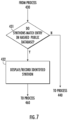
- FIG. 6 shows an enhancement to the sequence of FIG. 5 .
- the retrosynthesis system 10 may include both the proprietary database 80 and a data store 50 of commercially available compounds and substances. While the proprietary database 80 is salted and hashed, the data store 50 may not be.
- the sequence includes Processes 421 and 422, which follow Process 420. As shown in Process 421, the synthons may be compared to the entries in the data store 50. These comparisons are made before the synthons are hashed. If any of the synthons match an entry in the data store 50, that synthon is displayed and/or recorded, as shown in Process 422. The sequence then proceeds to Process 460. If the synthon does not match any of the entries in the data store 50, the sequence continues with Process 430. In this way, both commercially available substances and proprietary substances may be included in the search algorithm.
- the data store 50 is also salted and hashed using the same parameters as the proprietary database 80.
- the synthons are then salted and hashed, as shown in Process 430, the salted hashed synthons are then compared to the entries in the hashed public database, as shown in Process 431. If a match is found, the synthon is displayed and/or recorded, as shown in Process 432. The sequence would then continue with Process 460. If a match is not found, the sequence would then proceed to Process 440, where the hashed synthon is compared to entries in the proprietary database 80.
- the executable file provides the unique salt to the customer
- the executable file may allow the customer to enter a password which will serve as the salt. This password is then used by the executable file to salt the customer's database 180 to create the proprietary database 80, as shown in Process 310. Further, this password is transmitted to the retrosynthesis system 10 so that the same password is used to perform the salt process shown in Process 430.
- the present disclosure describes a system, method and software application that allows the user to utilize a propriety database without allowing the software application to access the contents of that proprietary database. This may reduce customer's uneasiness of providing their confidential information to another party, while still allowing them to make use of this software application.
- a unique salt for each customer also increases the security of the customer's database. Specifically, if a salt is not used, it may be possible to compare the proprietary databases of multiple customers to determine commonality. However, the use of a salt implies that the same compound, in two different customer's proprietary databases, will not have the same final hash, thus making it impossible to make comparisons between databases.
Landscapes
- Engineering & Computer Science (AREA)
- Theoretical Computer Science (AREA)
- Software Systems (AREA)
- Computing Systems (AREA)
- General Physics & Mathematics (AREA)
- Computer Hardware Design (AREA)
- Computer Security & Cryptography (AREA)
- General Health & Medical Sciences (AREA)
- Physics & Mathematics (AREA)
- General Engineering & Computer Science (AREA)
- Bioethics (AREA)
- Health & Medical Sciences (AREA)
- Databases & Information Systems (AREA)
- Life Sciences & Earth Sciences (AREA)
- Bioinformatics & Cheminformatics (AREA)
- Bioinformatics & Computational Biology (AREA)
- Chemical & Material Sciences (AREA)
- Crystallography & Structural Chemistry (AREA)
- Information Retrieval, Db Structures And Fs Structures Therefor (AREA)
- Stored Programmes (AREA)
- Management, Administration, Business Operations System, And Electronic Commerce (AREA)
- Storage Device Security (AREA)
Applications Claiming Priority (1)
| Application Number | Priority Date | Filing Date | Title |
|---|---|---|---|
| PCT/US2019/044068 WO2021021120A1 (en) | 2019-07-30 | 2019-07-30 | Method of synthesizing chemical compounds |
Publications (3)
| Publication Number | Publication Date |
|---|---|
| EP4003165A1 EP4003165A1 (en) | 2022-06-01 |
| EP4003165A4 EP4003165A4 (en) | 2023-04-26 |
| EP4003165B1 true EP4003165B1 (en) | 2024-02-14 |
Family
ID=74229770
Family Applications (1)
| Application Number | Title | Priority Date | Filing Date |
|---|---|---|---|
| EP19939568.2A Active EP4003165B1 (en) | 2019-07-30 | 2019-07-30 | Method of synthesizing chemical compounds |
Country Status (8)
| Country | Link |
|---|---|
| US (1) | US11410752B2 (pl) |
| EP (1) | EP4003165B1 (pl) |
| JP (1) | JP7231786B2 (pl) |
| CN (1) | CN114144110B (pl) |
| ES (1) | ES2973350T3 (pl) |
| PL (1) | PL4003165T3 (pl) |
| SG (1) | SG11202113371VA (pl) |
| WO (1) | WO2021021120A1 (pl) |
Families Citing this family (7)
| Publication number | Priority date | Publication date | Assignee | Title |
|---|---|---|---|---|
| US12494914B2 (en) | 2019-01-31 | 2025-12-09 | Global Bionic Optics Limited | System and method for complex confirmation of biometric information without stored biometric data |
| US11750390B2 (en) | 2019-01-31 | 2023-09-05 | Global Bionic Optics Limited | System and method for producing a unique stable biometric code for a biometric hash |
| US20250292873A1 (en) * | 2022-02-09 | 2025-09-18 | ESEP Inc. | Development support system and development support device of membrane reactor |
| JP2025528438A (ja) * | 2022-08-22 | 2025-08-28 | ルカ シャイ セラピューティクス, エルエルシー | V型atpアーゼ機能不全を処置するための組成物および方法 |
| US12587274B2 (en) | 2023-03-28 | 2026-03-24 | Quantum Generative Materials Llc | Satellite optimization management system based on natural language input and artificial intelligence |
| US12368503B2 (en) | 2023-12-27 | 2025-07-22 | Quantum Generative Materials Llc | Intent-based satellite transmit management based on preexisting historical location and machine learning |
| US12603701B2 (en) | 2023-12-27 | 2026-04-14 | Quantum Generative Materials Llc | Distributed satellite constellation management and control system |
Family Cites Families (17)
| Publication number | Priority date | Publication date | Assignee | Title |
|---|---|---|---|---|
| IL131978A0 (en) | 1997-03-20 | 2001-03-19 | Univ Washington | Solvent for biopolymer synthesis solvent microdots and methods of use |
| US7321828B2 (en) * | 1998-04-13 | 2008-01-22 | Isis Pharmaceuticals, Inc. | System of components for preparing oligonucleotides |
| EP1673627A4 (en) * | 2003-10-14 | 2008-02-20 | Verseon | METHOD AND DEVICE FOR PARTITIONING A MOLECULE |
| CN101789047B (zh) * | 2010-02-05 | 2011-10-26 | 四川大学 | 基于逆向合成的有机小分子化合物可合成性评价方法 |
| US9215068B2 (en) * | 2011-09-14 | 2015-12-15 | National Institute Of Advanced Industrial Science And Technology | Search system, search method, and program |
| US20130226549A1 (en) * | 2012-02-27 | 2013-08-29 | Yufeng J. Tseng | Structure-based fragment hopping for lead optimization and improvement in synthetic accessibility |
| GB201207392D0 (en) * | 2012-04-27 | 2012-06-13 | Univ Bristol | Novel compounds |
| US8965066B1 (en) * | 2013-09-16 | 2015-02-24 | Eye Verify LLC | Biometric template security and key generation |
| US10607726B2 (en) * | 2013-11-27 | 2020-03-31 | Accenture Global Services Limited | System for anonymizing and aggregating protected health information |
| US9824236B2 (en) * | 2015-05-19 | 2017-11-21 | Accenture Global Services Limited | System for anonymizing and aggregating protected information |
| EP3264314B1 (en) * | 2016-06-30 | 2021-02-17 | Huawei Technologies Co., Ltd. | System and method for searching over encrypted data |
| US10679733B2 (en) | 2016-10-06 | 2020-06-09 | International Business Machines Corporation | Efficient retrosynthesis analysis |
| WO2019010101A1 (en) * | 2017-07-01 | 2019-01-10 | Shape Security, Inc. | SECURE DETECTION AND MANAGEMENT OF COMPROMISED IDENTITY SUPPORTERS |
| CN107592298B (zh) * | 2017-08-11 | 2020-07-14 | 中国科学院大学 | 一种基于单服务器模型的序列比较算法安全外包方法、用户终端和服务器 |
| US10622098B2 (en) * | 2017-09-12 | 2020-04-14 | Massachusetts Institute Of Technology | Systems and methods for predicting chemical reactions |
| US11750390B2 (en) * | 2019-01-31 | 2023-09-05 | Global Bionic Optics Limited | System and method for producing a unique stable biometric code for a biometric hash |
| US11604767B2 (en) * | 2019-04-05 | 2023-03-14 | Comcast Cable Communications, Llc | Systems and methods for data distillation |
-
2019
- 2019-07-30 WO PCT/US2019/044068 patent/WO2021021120A1/en not_active Ceased
- 2019-07-30 JP JP2022506295A patent/JP7231786B2/ja active Active
- 2019-07-30 CN CN201980098923.6A patent/CN114144110B/zh active Active
- 2019-07-30 ES ES19939568T patent/ES2973350T3/es active Active
- 2019-07-30 US US16/772,293 patent/US11410752B2/en active Active
- 2019-07-30 SG SG11202113371VA patent/SG11202113371VA/en unknown
- 2019-07-30 EP EP19939568.2A patent/EP4003165B1/en active Active
- 2019-07-30 PL PL19939568.2T patent/PL4003165T3/pl unknown
Also Published As
| Publication number | Publication date |
|---|---|
| WO2021021120A1 (en) | 2021-02-04 |
| JP2022537076A (ja) | 2022-08-23 |
| ES2973350T3 (es) | 2024-06-19 |
| PL4003165T3 (pl) | 2024-06-10 |
| SG11202113371VA (en) | 2021-12-30 |
| US20220148686A1 (en) | 2022-05-12 |
| JP7231786B2 (ja) | 2023-03-01 |
| CN114144110A (zh) | 2022-03-04 |
| EP4003165A4 (en) | 2023-04-26 |
| US11410752B2 (en) | 2022-08-09 |
| CN114144110B (zh) | 2023-02-03 |
| EP4003165A1 (en) | 2022-06-01 |
Similar Documents
| Publication | Publication Date | Title |
|---|---|---|
| EP4003165B1 (en) | Method of synthesizing chemical compounds | |
| Martinez-Val et al. | Data processing and analysis for DIA-based phosphoproteomics using spectronaut | |
| Awale et al. | Chemical space: big data challenge for molecular diversity | |
| Sharan et al. | Modeling cellular machinery through biological network comparison | |
| Xenarios et al. | Protein interaction databases | |
| Masso et al. | AUTO‐MUTE 2.0: a portable framework with enhanced capabilities for predicting protein functional consequences upon mutation | |
| Holman et al. | Identifying Proteomic LC‐MS/MS Data Sets with Bumbershoot and IDPicker | |
| Rahn et al. | Journaled string tree—a scalable data structure for analyzing thousands of similar genomes on your laptop | |
| Kavya et al. | Sequence alignment on directed graphs | |
| Kelil et al. | Exhaustive search of linear information encoding protein-peptide recognition | |
| Guruharsha et al. | Drosophila Protein interaction Map (DPiM) A paradigm for metazoan protein complex interactions | |
| Uversky | How to predict disorder in a protein of interest | |
| Chakrabarty et al. | DbStRiPs: Database of structural repeats in proteins | |
| Choi et al. | Synthesis-Aware Materials Redesign via Large Language Models | |
| Thorne et al. | Generating confidence intervals on biological networks | |
| Pop et al. | Using the TIGR assembler in shotgun sequencing projects | |
| Bottacini et al. | Bifidobacterium genome assembly and methylome analysis using Pacbio SMRT sequencing | |
| Guerrero-Sanchez et al. | Specific protein database creation from transcriptomics data in nonmodel species: Holm oak (Quercus ilex L.) | |
| Shin et al. | Construction of functional gene networks using phylogenetic profiles | |
| Li et al. | Efficient seeding for error-prone sequences with SubseqHash2 | |
| US8504302B2 (en) | Template constrained fragment alignment used to identify fragments of similar shape and activity in drug development | |
| Jacob et al. | DockoMatic: Automated peptide analog creation for high throughput virtual screening | |
| Cadoret et al. | Genome-wide approaches to determining origin distribution | |
| Sun et al. | RecMotif: a novel fast algorithm for weak motif discovery | |
| Wang | Efficient algorithm for conformational search of macrocyclic molecules |
Legal Events
| Date | Code | Title | Description |
|---|---|---|---|
| STAA | Information on the status of an ep patent application or granted ep patent |
Free format text: STATUS: THE INTERNATIONAL PUBLICATION HAS BEEN MADE |
|
| PUAI | Public reference made under article 153(3) epc to a published international application that has entered the european phase |
Free format text: ORIGINAL CODE: 0009012 |
|
| STAA | Information on the status of an ep patent application or granted ep patent |
Free format text: STATUS: REQUEST FOR EXAMINATION WAS MADE |
|
| 17P | Request for examination filed |
Effective date: 20220114 |
|
| AK | Designated contracting states |
Kind code of ref document: A1 Designated state(s): AL AT BE BG CH CY CZ DE DK EE ES FI FR GB GR HR HU IE IS IT LI LT LU LV MC MK MT NL NO PL PT RO RS SE SI SK SM TR |
|
| DAV | Request for validation of the european patent (deleted) | ||
| DAX | Request for extension of the european patent (deleted) | ||
| A4 | Supplementary search report drawn up and despatched |
Effective date: 20230324 |
|
| RIC1 | Information provided on ipc code assigned before grant |
Ipc: G06F 21/62 20130101ALI20230320BHEP Ipc: G01N 33/537 20060101ALI20230320BHEP Ipc: G01N 33/536 20060101ALI20230320BHEP Ipc: G01N 33/53 20060101ALI20230320BHEP Ipc: C07D 257/10 20060101ALI20230320BHEP Ipc: A61B 5/1455 20060101ALI20230320BHEP Ipc: A61B 5/145 20060101AFI20230320BHEP |
|
| P01 | Opt-out of the competence of the unified patent court (upc) registered |
Effective date: 20230602 |
|
| GRAP | Despatch of communication of intention to grant a patent |
Free format text: ORIGINAL CODE: EPIDOSNIGR1 |
|
| STAA | Information on the status of an ep patent application or granted ep patent |
Free format text: STATUS: GRANT OF PATENT IS INTENDED |
|
| INTG | Intention to grant announced |
Effective date: 20230929 |
|
| RIC1 | Information provided on ipc code assigned before grant |
Ipc: G06F 21/62 20130101ALI20230915BHEP Ipc: G01N 33/537 20060101ALI20230915BHEP Ipc: G01N 33/536 20060101ALI20230915BHEP Ipc: G01N 33/53 20060101ALI20230915BHEP Ipc: C07D 257/10 20060101ALI20230915BHEP Ipc: A61B 5/1455 20060101ALI20230915BHEP Ipc: A61B 5/145 20060101AFI20230915BHEP |
|
| GRAS | Grant fee paid |
Free format text: ORIGINAL CODE: EPIDOSNIGR3 |
|
| GRAA | (expected) grant |
Free format text: ORIGINAL CODE: 0009210 |
|
| STAA | Information on the status of an ep patent application or granted ep patent |
Free format text: STATUS: THE PATENT HAS BEEN GRANTED |
|
| AK | Designated contracting states |
Kind code of ref document: B1 Designated state(s): AL AT BE BG CH CY CZ DE DK EE ES FI FR GB GR HR HU IE IS IT LI LT LU LV MC MK MT NL NO PL PT RO RS SE SI SK SM TR |
|
| REG | Reference to a national code |
Ref country code: GB Ref legal event code: FG4D |
|
| REG | Reference to a national code |
Ref country code: CH Ref legal event code: EP |
|
| REG | Reference to a national code |
Ref country code: NL Ref legal event code: FP |
|
| REG | Reference to a national code |
Ref country code: DE Ref legal event code: R096 Ref document number: 602019046752 Country of ref document: DE |
|
| REG | Reference to a national code |
Ref country code: IE Ref legal event code: FG4D |
|
| REG | Reference to a national code |
Ref country code: LT Ref legal event code: MG9D |
|
| REG | Reference to a national code |
Ref country code: ES Ref legal event code: FG2A Ref document number: 2973350 Country of ref document: ES Kind code of ref document: T3 Effective date: 20240619 |
|
| PG25 | Lapsed in a contracting state [announced via postgrant information from national office to epo] |
Ref country code: IS Free format text: LAPSE BECAUSE OF FAILURE TO SUBMIT A TRANSLATION OF THE DESCRIPTION OR TO PAY THE FEE WITHIN THE PRESCRIBED TIME-LIMIT Effective date: 20240614 |
|
| PG25 | Lapsed in a contracting state [announced via postgrant information from national office to epo] |
Ref country code: LT Free format text: LAPSE BECAUSE OF FAILURE TO SUBMIT A TRANSLATION OF THE DESCRIPTION OR TO PAY THE FEE WITHIN THE PRESCRIBED TIME-LIMIT Effective date: 20240214 |
|
| PG25 | Lapsed in a contracting state [announced via postgrant information from national office to epo] |
Ref country code: GR Free format text: LAPSE BECAUSE OF FAILURE TO SUBMIT A TRANSLATION OF THE DESCRIPTION OR TO PAY THE FEE WITHIN THE PRESCRIBED TIME-LIMIT Effective date: 20240515 |
|
| REG | Reference to a national code |
Ref country code: AT Ref legal event code: MK05 Ref document number: 1656325 Country of ref document: AT Kind code of ref document: T Effective date: 20240214 |
|
| PG25 | Lapsed in a contracting state [announced via postgrant information from national office to epo] |
Ref country code: RS Free format text: LAPSE BECAUSE OF FAILURE TO SUBMIT A TRANSLATION OF THE DESCRIPTION OR TO PAY THE FEE WITHIN THE PRESCRIBED TIME-LIMIT Effective date: 20240514 Ref country code: HR Free format text: LAPSE BECAUSE OF FAILURE TO SUBMIT A TRANSLATION OF THE DESCRIPTION OR TO PAY THE FEE WITHIN THE PRESCRIBED TIME-LIMIT Effective date: 20240214 |
|
| PG25 | Lapsed in a contracting state [announced via postgrant information from national office to epo] |
Ref country code: AT Free format text: LAPSE BECAUSE OF FAILURE TO SUBMIT A TRANSLATION OF THE DESCRIPTION OR TO PAY THE FEE WITHIN THE PRESCRIBED TIME-LIMIT Effective date: 20240214 |
|
| PG25 | Lapsed in a contracting state [announced via postgrant information from national office to epo] |
Ref country code: RS Free format text: LAPSE BECAUSE OF FAILURE TO SUBMIT A TRANSLATION OF THE DESCRIPTION OR TO PAY THE FEE WITHIN THE PRESCRIBED TIME-LIMIT Effective date: 20240514 Ref country code: NO Free format text: LAPSE BECAUSE OF FAILURE TO SUBMIT A TRANSLATION OF THE DESCRIPTION OR TO PAY THE FEE WITHIN THE PRESCRIBED TIME-LIMIT Effective date: 20240514 Ref country code: LT Free format text: LAPSE BECAUSE OF FAILURE TO SUBMIT A TRANSLATION OF THE DESCRIPTION OR TO PAY THE FEE WITHIN THE PRESCRIBED TIME-LIMIT Effective date: 20240214 Ref country code: IS Free format text: LAPSE BECAUSE OF FAILURE TO SUBMIT A TRANSLATION OF THE DESCRIPTION OR TO PAY THE FEE WITHIN THE PRESCRIBED TIME-LIMIT Effective date: 20240614 Ref country code: HR Free format text: LAPSE BECAUSE OF FAILURE TO SUBMIT A TRANSLATION OF THE DESCRIPTION OR TO PAY THE FEE WITHIN THE PRESCRIBED TIME-LIMIT Effective date: 20240214 Ref country code: GR Free format text: LAPSE BECAUSE OF FAILURE TO SUBMIT A TRANSLATION OF THE DESCRIPTION OR TO PAY THE FEE WITHIN THE PRESCRIBED TIME-LIMIT Effective date: 20240515 Ref country code: FI Free format text: LAPSE BECAUSE OF FAILURE TO SUBMIT A TRANSLATION OF THE DESCRIPTION OR TO PAY THE FEE WITHIN THE PRESCRIBED TIME-LIMIT Effective date: 20240214 Ref country code: BG Free format text: LAPSE BECAUSE OF FAILURE TO SUBMIT A TRANSLATION OF THE DESCRIPTION OR TO PAY THE FEE WITHIN THE PRESCRIBED TIME-LIMIT Effective date: 20240214 Ref country code: AT Free format text: LAPSE BECAUSE OF FAILURE TO SUBMIT A TRANSLATION OF THE DESCRIPTION OR TO PAY THE FEE WITHIN THE PRESCRIBED TIME-LIMIT Effective date: 20240214 |
|
| PG25 | Lapsed in a contracting state [announced via postgrant information from national office to epo] |
Ref country code: PT Free format text: LAPSE BECAUSE OF FAILURE TO SUBMIT A TRANSLATION OF THE DESCRIPTION OR TO PAY THE FEE WITHIN THE PRESCRIBED TIME-LIMIT Effective date: 20240614 |
|
| PG25 | Lapsed in a contracting state [announced via postgrant information from national office to epo] |
Ref country code: SE Free format text: LAPSE BECAUSE OF FAILURE TO SUBMIT A TRANSLATION OF THE DESCRIPTION OR TO PAY THE FEE WITHIN THE PRESCRIBED TIME-LIMIT Effective date: 20240214 Ref country code: PT Free format text: LAPSE BECAUSE OF FAILURE TO SUBMIT A TRANSLATION OF THE DESCRIPTION OR TO PAY THE FEE WITHIN THE PRESCRIBED TIME-LIMIT Effective date: 20240614 Ref country code: LV Free format text: LAPSE BECAUSE OF FAILURE TO SUBMIT A TRANSLATION OF THE DESCRIPTION OR TO PAY THE FEE WITHIN THE PRESCRIBED TIME-LIMIT Effective date: 20240214 |
|
| PG25 | Lapsed in a contracting state [announced via postgrant information from national office to epo] |
Ref country code: DK Free format text: LAPSE BECAUSE OF FAILURE TO SUBMIT A TRANSLATION OF THE DESCRIPTION OR TO PAY THE FEE WITHIN THE PRESCRIBED TIME-LIMIT Effective date: 20240214 |
|
| PG25 | Lapsed in a contracting state [announced via postgrant information from national office to epo] |
Ref country code: SM Free format text: LAPSE BECAUSE OF FAILURE TO SUBMIT A TRANSLATION OF THE DESCRIPTION OR TO PAY THE FEE WITHIN THE PRESCRIBED TIME-LIMIT Effective date: 20240214 |
|
| PG25 | Lapsed in a contracting state [announced via postgrant information from national office to epo] |
Ref country code: CZ Free format text: LAPSE BECAUSE OF FAILURE TO SUBMIT A TRANSLATION OF THE DESCRIPTION OR TO PAY THE FEE WITHIN THE PRESCRIBED TIME-LIMIT Effective date: 20240214 Ref country code: EE Free format text: LAPSE BECAUSE OF FAILURE TO SUBMIT A TRANSLATION OF THE DESCRIPTION OR TO PAY THE FEE WITHIN THE PRESCRIBED TIME-LIMIT Effective date: 20240214 |
|
| PG25 | Lapsed in a contracting state [announced via postgrant information from national office to epo] |
Ref country code: SK Free format text: LAPSE BECAUSE OF FAILURE TO SUBMIT A TRANSLATION OF THE DESCRIPTION OR TO PAY THE FEE WITHIN THE PRESCRIBED TIME-LIMIT Effective date: 20240214 |
|
| PG25 | Lapsed in a contracting state [announced via postgrant information from national office to epo] |
Ref country code: SM Free format text: LAPSE BECAUSE OF FAILURE TO SUBMIT A TRANSLATION OF THE DESCRIPTION OR TO PAY THE FEE WITHIN THE PRESCRIBED TIME-LIMIT Effective date: 20240214 Ref country code: SK Free format text: LAPSE BECAUSE OF FAILURE TO SUBMIT A TRANSLATION OF THE DESCRIPTION OR TO PAY THE FEE WITHIN THE PRESCRIBED TIME-LIMIT Effective date: 20240214 Ref country code: RO Free format text: LAPSE BECAUSE OF FAILURE TO SUBMIT A TRANSLATION OF THE DESCRIPTION OR TO PAY THE FEE WITHIN THE PRESCRIBED TIME-LIMIT Effective date: 20240214 Ref country code: EE Free format text: LAPSE BECAUSE OF FAILURE TO SUBMIT A TRANSLATION OF THE DESCRIPTION OR TO PAY THE FEE WITHIN THE PRESCRIBED TIME-LIMIT Effective date: 20240214 Ref country code: DK Free format text: LAPSE BECAUSE OF FAILURE TO SUBMIT A TRANSLATION OF THE DESCRIPTION OR TO PAY THE FEE WITHIN THE PRESCRIBED TIME-LIMIT Effective date: 20240214 Ref country code: CZ Free format text: LAPSE BECAUSE OF FAILURE TO SUBMIT A TRANSLATION OF THE DESCRIPTION OR TO PAY THE FEE WITHIN THE PRESCRIBED TIME-LIMIT Effective date: 20240214 |
|
| REG | Reference to a national code |
Ref country code: DE Ref legal event code: R097 Ref document number: 602019046752 Country of ref document: DE |
|
| PLBE | No opposition filed within time limit |
Free format text: ORIGINAL CODE: 0009261 |
|
| STAA | Information on the status of an ep patent application or granted ep patent |
Free format text: STATUS: NO OPPOSITION FILED WITHIN TIME LIMIT |
|
| 26N | No opposition filed |
Effective date: 20241115 |
|
| PG25 | Lapsed in a contracting state [announced via postgrant information from national office to epo] |
Ref country code: MC Free format text: LAPSE BECAUSE OF FAILURE TO SUBMIT A TRANSLATION OF THE DESCRIPTION OR TO PAY THE FEE WITHIN THE PRESCRIBED TIME-LIMIT Effective date: 20240214 |
|
| PG25 | Lapsed in a contracting state [announced via postgrant information from national office to epo] |
Ref country code: LU Free format text: LAPSE BECAUSE OF NON-PAYMENT OF DUE FEES Effective date: 20240730 |
|
| PG25 | Lapsed in a contracting state [announced via postgrant information from national office to epo] |
Ref country code: LU Free format text: LAPSE BECAUSE OF NON-PAYMENT OF DUE FEES Effective date: 20240730 |
|
| PG25 | Lapsed in a contracting state [announced via postgrant information from national office to epo] |
Ref country code: SI Free format text: LAPSE BECAUSE OF FAILURE TO SUBMIT A TRANSLATION OF THE DESCRIPTION OR TO PAY THE FEE WITHIN THE PRESCRIBED TIME-LIMIT Effective date: 20240214 |
|
| PGFP | Annual fee paid to national office [announced via postgrant information from national office to epo] |
Ref country code: PL Payment date: 20250626 Year of fee payment: 7 |
|
| PGFP | Annual fee paid to national office [announced via postgrant information from national office to epo] |
Ref country code: GB Payment date: 20250619 Year of fee payment: 7 |
|
| PGFP | Annual fee paid to national office [announced via postgrant information from national office to epo] |
Ref country code: NL Payment date: 20250620 Year of fee payment: 7 Ref country code: BE Payment date: 20250619 Year of fee payment: 7 |
|
| PGFP | Annual fee paid to national office [announced via postgrant information from national office to epo] |
Ref country code: FR Payment date: 20250620 Year of fee payment: 7 |
|
| PG25 | Lapsed in a contracting state [announced via postgrant information from national office to epo] |
Ref country code: IE Free format text: LAPSE BECAUSE OF NON-PAYMENT OF DUE FEES Effective date: 20240730 |
|
| PGFP | Annual fee paid to national office [announced via postgrant information from national office to epo] |
Ref country code: ES Payment date: 20250801 Year of fee payment: 7 |
|
| PGFP | Annual fee paid to national office [announced via postgrant information from national office to epo] |
Ref country code: DE Payment date: 20250620 Year of fee payment: 7 |
|
| PGFP | Annual fee paid to national office [announced via postgrant information from national office to epo] |
Ref country code: IT Payment date: 20250619 Year of fee payment: 7 |
|
| PGFP | Annual fee paid to national office [announced via postgrant information from national office to epo] |
Ref country code: CH Payment date: 20250801 Year of fee payment: 7 |
|
| PG25 | Lapsed in a contracting state [announced via postgrant information from national office to epo] |
Ref country code: CY Free format text: LAPSE BECAUSE OF FAILURE TO SUBMIT A TRANSLATION OF THE DESCRIPTION OR TO PAY THE FEE WITHIN THE PRESCRIBED TIME-LIMIT; INVALID AB INITIO Effective date: 20190730 |
|
| PG25 | Lapsed in a contracting state [announced via postgrant information from national office to epo] |
Ref country code: HU Free format text: LAPSE BECAUSE OF FAILURE TO SUBMIT A TRANSLATION OF THE DESCRIPTION OR TO PAY THE FEE WITHIN THE PRESCRIBED TIME-LIMIT; INVALID AB INITIO Effective date: 20190730 |