EP4003320B1 - Microparticles with golf ball depressions for use in the treatment and prevention of pulmonary diseases - Google Patents
Microparticles with golf ball depressions for use in the treatment and prevention of pulmonary diseases Download PDFInfo
- Publication number
- EP4003320B1 EP4003320B1 EP20780106.9A EP20780106A EP4003320B1 EP 4003320 B1 EP4003320 B1 EP 4003320B1 EP 20780106 A EP20780106 A EP 20780106A EP 4003320 B1 EP4003320 B1 EP 4003320B1
- Authority
- EP
- European Patent Office
- Prior art keywords
- microparticles
- active pharmaceutical
- compared
- cyclodextrin
- use according
- Prior art date
- Legal status (The legal status is an assumption and is not a legal conclusion. Google has not performed a legal analysis and makes no representation as to the accuracy of the status listed.)
- Active
Links
Images






Classifications
-
- A—HUMAN NECESSITIES
- A61—MEDICAL OR VETERINARY SCIENCE; HYGIENE
- A61K—PREPARATIONS FOR MEDICAL, DENTAL OR TOILETRY PURPOSES
- A61K9/00—Medicinal preparations characterised by special physical form
- A61K9/14—Particulate form, e.g. powders, Processes for size reducing of pure drugs or the resulting products, Pure drug nanoparticles
- A61K9/16—Agglomerates; Granulates; Microbeadlets ; Microspheres; Pellets; Solid products obtained by spray drying, spray freeze drying, spray congealing,(multiple) emulsion solvent evaporation or extraction
- A61K9/1605—Excipients; Inactive ingredients
- A61K9/1629—Organic macromolecular compounds
- A61K9/1652—Polysaccharides, e.g. alginate, cellulose derivatives; Cyclodextrin
-
- A—HUMAN NECESSITIES
- A61—MEDICAL OR VETERINARY SCIENCE; HYGIENE
- A61K—PREPARATIONS FOR MEDICAL, DENTAL OR TOILETRY PURPOSES
- A61K31/00—Medicinal preparations containing organic active ingredients
- A61K31/56—Compounds containing cyclopenta[a]hydrophenanthrene ring systems; Derivatives thereof, e.g. steroids
- A61K31/57—Compounds containing cyclopenta[a]hydrophenanthrene ring systems; Derivatives thereof, e.g. steroids substituted in position 17 beta by a chain of two carbon atoms, e.g. pregnane or progesterone
- A61K31/573—Compounds containing cyclopenta[a]hydrophenanthrene ring systems; Derivatives thereof, e.g. steroids substituted in position 17 beta by a chain of two carbon atoms, e.g. pregnane or progesterone substituted in position 21, e.g. cortisone, dexamethasone, prednisone or aldosterone
-
- A—HUMAN NECESSITIES
- A61—MEDICAL OR VETERINARY SCIENCE; HYGIENE
- A61K—PREPARATIONS FOR MEDICAL, DENTAL OR TOILETRY PURPOSES
- A61K31/00—Medicinal preparations containing organic active ingredients
- A61K31/13—Amines
- A61K31/135—Amines having aromatic rings, e.g. ketamine, nortriptyline
- A61K31/137—Arylalkylamines, e.g. amphetamine, epinephrine, salbutamol, ephedrine or methadone
-
- A—HUMAN NECESSITIES
- A61—MEDICAL OR VETERINARY SCIENCE; HYGIENE
- A61K—PREPARATIONS FOR MEDICAL, DENTAL OR TOILETRY PURPOSES
- A61K31/00—Medicinal preparations containing organic active ingredients
- A61K31/16—Amides, e.g. hydroxamic acids
- A61K31/165—Amides, e.g. hydroxamic acids having aromatic rings, e.g. colchicine, atenolol, progabide
- A61K31/167—Amides, e.g. hydroxamic acids having aromatic rings, e.g. colchicine, atenolol, progabide having the nitrogen of a carboxamide group directly attached to the aromatic ring, e.g. lidocaine, paracetamol
-
- A—HUMAN NECESSITIES
- A61—MEDICAL OR VETERINARY SCIENCE; HYGIENE
- A61K—PREPARATIONS FOR MEDICAL, DENTAL OR TOILETRY PURPOSES
- A61K31/00—Medicinal preparations containing organic active ingredients
- A61K31/185—Acids; Anhydrides, halides or salts thereof, e.g. sulfur acids, imidic, hydrazonic or hydroximic acids
- A61K31/19—Carboxylic acids, e.g. valproic acid
- A61K31/195—Carboxylic acids, e.g. valproic acid having an amino group
- A61K31/197—Carboxylic acids, e.g. valproic acid having an amino group the amino and the carboxyl groups being attached to the same acyclic carbon chain, e.g. gamma-aminobutyric acid [GABA], beta-alanine, epsilon-aminocaproic acid or pantothenic acid
- A61K31/198—Alpha-amino acids, e.g. alanine or edetic acid [EDTA]
-
- A—HUMAN NECESSITIES
- A61—MEDICAL OR VETERINARY SCIENCE; HYGIENE
- A61K—PREPARATIONS FOR MEDICAL, DENTAL OR TOILETRY PURPOSES
- A61K31/00—Medicinal preparations containing organic active ingredients
- A61K31/56—Compounds containing cyclopenta[a]hydrophenanthrene ring systems; Derivatives thereof, e.g. steroids
- A61K31/58—Compounds containing cyclopenta[a]hydrophenanthrene ring systems; Derivatives thereof, e.g. steroids containing heterocyclic rings, e.g. danazol, stanozolol, pancuronium or digitogenin
-
- A—HUMAN NECESSITIES
- A61—MEDICAL OR VETERINARY SCIENCE; HYGIENE
- A61K—PREPARATIONS FOR MEDICAL, DENTAL OR TOILETRY PURPOSES
- A61K45/00—Medicinal preparations containing active ingredients not provided for in groups A61K31/00 - A61K41/00
- A61K45/06—Mixtures of active ingredients without chemical characterisation, e.g. antiphlogistics and cardiaca
-
- A—HUMAN NECESSITIES
- A61—MEDICAL OR VETERINARY SCIENCE; HYGIENE
- A61K—PREPARATIONS FOR MEDICAL, DENTAL OR TOILETRY PURPOSES
- A61K47/00—Medicinal preparations characterised by the non-active ingredients used, e.g. carriers or inert additives; Targeting or modifying agents chemically bound to the active ingredient
- A61K47/30—Macromolecular organic or inorganic compounds, e.g. inorganic polyphosphates
- A61K47/36—Polysaccharides; Derivatives thereof, e.g. gums, starch, alginate, dextrin, hyaluronic acid, chitosan, inulin, agar or pectin
- A61K47/40—Cyclodextrins; Derivatives thereof
-
- A—HUMAN NECESSITIES
- A61—MEDICAL OR VETERINARY SCIENCE; HYGIENE
- A61K—PREPARATIONS FOR MEDICAL, DENTAL OR TOILETRY PURPOSES
- A61K9/00—Medicinal preparations characterised by special physical form
- A61K9/0012—Galenical forms characterised by the site of application
- A61K9/007—Pulmonary tract; Aromatherapy
- A61K9/0073—Sprays or powders for inhalation; Aerolised or nebulised preparations generated by other means than thermal energy
- A61K9/0075—Sprays or powders for inhalation; Aerolised or nebulised preparations generated by other means than thermal energy for inhalation via a dry powder inhaler [DPI], e.g. comprising micronized drug mixed with lactose carrier particles
-
- A—HUMAN NECESSITIES
- A61—MEDICAL OR VETERINARY SCIENCE; HYGIENE
- A61K—PREPARATIONS FOR MEDICAL, DENTAL OR TOILETRY PURPOSES
- A61K9/00—Medicinal preparations characterised by special physical form
- A61K9/14—Particulate form, e.g. powders, Processes for size reducing of pure drugs or the resulting products, Pure drug nanoparticles
- A61K9/16—Agglomerates; Granulates; Microbeadlets ; Microspheres; Pellets; Solid products obtained by spray drying, spray freeze drying, spray congealing,(multiple) emulsion solvent evaporation or extraction
- A61K9/1605—Excipients; Inactive ingredients
- A61K9/1617—Organic compounds, e.g. phospholipids, fats
-
- A—HUMAN NECESSITIES
- A61—MEDICAL OR VETERINARY SCIENCE; HYGIENE
- A61K—PREPARATIONS FOR MEDICAL, DENTAL OR TOILETRY PURPOSES
- A61K9/00—Medicinal preparations characterised by special physical form
- A61K9/14—Particulate form, e.g. powders, Processes for size reducing of pure drugs or the resulting products, Pure drug nanoparticles
- A61K9/16—Agglomerates; Granulates; Microbeadlets ; Microspheres; Pellets; Solid products obtained by spray drying, spray freeze drying, spray congealing,(multiple) emulsion solvent evaporation or extraction
- A61K9/1682—Processes
-
- A—HUMAN NECESSITIES
- A61—MEDICAL OR VETERINARY SCIENCE; HYGIENE
- A61P—SPECIFIC THERAPEUTIC ACTIVITY OF CHEMICAL COMPOUNDS OR MEDICINAL PREPARATIONS
- A61P11/00—Drugs for disorders of the respiratory system
-
- A—HUMAN NECESSITIES
- A61—MEDICAL OR VETERINARY SCIENCE; HYGIENE
- A61P—SPECIFIC THERAPEUTIC ACTIVITY OF CHEMICAL COMPOUNDS OR MEDICINAL PREPARATIONS
- A61P11/00—Drugs for disorders of the respiratory system
- A61P11/08—Bronchodilators
Definitions
- the present invention relates to a golf ball-like microparticles obtained by atomization of nanosuspensions of nanoparticles or solutions for dry powder inhalers for use in the treatment and prevention of diseases, in particular pulmonary diseases.
- Inhalation therapy is popular to treat lower respiratory tract infections.
- Pulmonary cancer and pulmonary inflammations may be treated by inhalation of active pharmaceutical ingredients (API) through dry powder inhalers.
- API active pharmaceutical ingredients
- Existing dry powder formulations may for example only deliver around 30% of the API uniformly throughout the lungs. Whilst lactose is the most widely used carrier, and new carriers are under investigation. For example, raffinose is reported to possess comparable aerosolization performance with traditional lactose carrier.
- EP2785326 to the University of North Carolina discloses geometrically engineered molded lactose particles having varied shapes and sizes and surface charge which can incorporate drugs and/or other biomaterials for targeted delivery, such as pulmonary delivery.
- the particles also may have a range of physical features such as fenestrations, angled arms, asymmetry and surface roughness, charge which alter the interactions with cells and tissues.
- CN106924193 to Songwen discloses a high-porosity lactose dry powder inhaler carrier and supersaturated synthesis method and applications thereof.
- the carrier is a flower- shaped porous dry powder particulate with a rough surface. Through a high-porosity nano-pore system.
- WO2004052334 to Okpala discloses a method of engineering changes in the morphological, chemical or physical features of a particle, to promote, for example, the formation of hairs and pores on the surface of the particle. This document stipulates that contrary to the general trend of the prior art, such rough surfaces in this invention are advantageous and promotes roughness of the particle surface by the presence of projections, hairs and/or pores.
- Cyclodextrins are mentioned as one of a plurality of suitable excipients.
- EP1906919 to Boehringer Ingelheim discloses spray-dried lactase inhalation particles with a formoterol to budesonide mass ratio of 1:20.
- the inhalation particles are described as unagglomerated, discrete, fine, white, easily dispersible powder consisting of mainly toroidal-shaped particles of less than 5 micron in diameter.
- Cyclodextrins are mentioned as one of a plurality of suitable excipients.
- AU2006200277 to Nektar Therapeutics discloses lactose particles with very low bulk density, thus reducing the minimum powder mass that can be filled into a unit dose container of a dry powder inhaler and eliminating the need for carrier particles.
- the formulations are based on polymer materials and surfactants and may further comprise rigidifying excipients, such as dextrose, mannitol, 0-mannose, sorbitol, sorbose, lactose, maltose, sucrose, trehalose, raffinose, starches, cyclodextrins and maltodextrins.
- Cyclodextrins are frequently used as excipients in order to increase the water-solubility of APIs such a budesonide.
- EP3151836 to the University of Liège and Paul Maes discloses the use of cyclodextrin in conjunction with the corticosteroid budesonide for the treatment and prevention of bronchial inflammatory diseases.
- EP1799231 to the University of Liège proposes the direct administration of cyclodextrins for the treatment of bronchial inflammatory disease.
- Cyclodextrins have been used to compensate for the hygroscopic properties of new carriers such as raffinose which are seen as alternative to the predominantly used lactose carriers.
- HP-beta-CD in dry powder inhaler formulations can inhibit the access of moisture to raffinose, surmounting the hygroscopicity and the associated agglomeration.
- the spray-dried particles of Zhao are described as a core-shell structure formed of a core of raffinose and a shell of cyclodextrin and to appear as jujube-like microstructure with a rough surface in scanning electron microscopy.
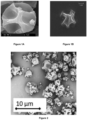
- Dufour 2015 assesses the aerodynamic behavior of budesonide/HPBCD spray-dried powder compared to a formulation comprising budesonide and lactose as a carrier and the impact of a "deflated-ball like" shape as shown in Figure 1B on aerodynamic properties of the spray-dried powder. It claims that higher budesonide respirable fraction and lower permeability through lung epithelium are of interest in the management of inflammation associated with asthma.
- the surface depressions of the microparticles shown in Dufour 2015 are shown in comparative Figure 1A and are characterized by an increased deflation.
- Average depth of the surface depressions (1) is 40 % or even 45 % or more as compared to the average maximum diameter of the microparticles of Dufour 2015 shown in Figure 1A .
- the fine particle fraction (FPF) is 44,05 %.
- the increased deflation of the microparticles of Dufour 2015 adversely impacts the flight stability and flight trajectory of such microparticles in the respiratory system.
- the increased deflation of Dufour increases stickiness of the microparticles and reduces flowability.
- the present inventors now have surprisingly found, that spray- drying of improved cyclodextrin formulations directly lead to golf-ball like microparticles that might enable an improved and uniform deposition of one or more API's throughout the lungs for the treatment and prevention of any disease, in particular of lung cancer, pulmonary inflammations or other pulmonary diseases.
- the present inventors have found that both the fine particle fraction and the aerodynamic stability of spray-dried cyclodextrin formulations may be further improved through the golf-ball like shape.
- the Fine Particle Fraction of the plurality of microparticles according to the present invention is increased over Dufour 2015 with 50 % or more against the 44,05% of Dufour.
- the microparticles of the present inventions are less sticky than the particles of Dufour 2015.
- the present invention relates to a plurality of microparticles, in particular spherical microparticles, for use in the treatment and prevention of respiratory diseases comprising one or more carriers and one or more active pharmaceutical ingredients, wherein
- the surface depressions are arranged in a substantially symmetrical way.
- the carrier is selected from one or more carriers chosen from the group consisting of alpha-cyclodextrin, beta-cyclodextrin and ⁇ -cyclodextrin, 2- hydroxypropyl-beta-cyclodextrin (HPBCD), 2-hydroxypropyl- ⁇ -cyclodextrin (HPGCD), sulfobutylether-beta-cyclodextrin (SBEBCD), and methyl-beta-cyclodextrin (MBCD).
- HPBCD 2- hydroxypropyl-beta-cyclodextrin
- HPGCD 2-hydroxypropyl- ⁇ -cyclodextrin
- SBEBCD sulfobutylether-beta-cyclodextrin
- MBCD methyl-beta-cyclodextrin
- the carrier is hydroxypropyl-beta- cyclodextrin.
- the carrier is present in an amount of 90 w.% or more as compared to the total weight of the microparticle.
- the carrier is present in an amount of 95 w.% or more as compared to the total weight of the microparticle.
- the one or more active pharmaceutical ingredients are selected from the group consisting of corticosteroids, bronchodilators, antibacterial or anti-inflammatory compounds or combinations thereof.
- the one or more active pharmaceutical ingredient is budesonide or formoterol or a combination thereof.
- the molar ratio of the active pharmaceutical ingredient and the carrier is 1:1.
- microparticles further comprise amino acids. In another embodiment, the microparticles further comprise leucine.
- the microparticles are obtained by spray-drying.
- a further object of the present invention is the microparticles of the invention for use in delivering an active pharmaceutical ingredient through the respiratory system or the pulmonary system.
- a further object of the present invention is the microparticles for use in delivering an active pharmaceutical ingredient through the respiratory system or the pulmonary system comprising one or more carriers and one or more active pharmaceutical ingredients, wherein
- a further object of the present invention is the microparticles of the invention for use in delivering an active pharmaceutical ingredient through the respiratory system or the pulmonary system, wherein the active pharmaceutical ingredient is an active pharmaceutical ingredient for the treatment or prevention of asthma, chronic obstructive pulmonary disease (COPD), pulmonary fibrosis, pneumonia, and lung cancer.
- COPD chronic obstructive pulmonary disease
- a further object of the present invention is the microparticles for use in the treatment or prevention of asthma, chronic obstructive pulmonary disease (COPD), pulmonary fibrosis, pneumonia, and lung cancer.
- COPD chronic obstructive pulmonary disease
- microparticles for use in a method of treatment of a disease, in particular a respiratory disease, comprising one or more carriers and one or more active pharmaceutical ingredients, wherein
- a further object of the present invention is a process for the manufacturing of microparticles of the invention, comprising the steps of:
- Particles of the present invention may be obtained by atomization or spray drying of a liquid formulation.
- the present invention relates to a plurality of microparticles, in particular spherical microparticles, for use in the treatment and prevention of respiratory diseases comprising one or more carriers and one or more active pharmaceutical ingredients, wherein
- Golf-ball like surface depressions are areas on the surface of the spherical microparticles that are deflated, as for example the surface area (1) shown in Figure 2 A and Figure 2B .
- the golf-ball like surface depressions have the advantage of increased and uniform deposition when inhaled for example with a dry powder inhaler. Consequently, the microparticles of the present invention appear like golf balls under a scanning electron microscope.
- Substantially spherical in the sense of the present inventions means is a an essentially round geometrical shape, in particular an essentially round ball, like for example shown in Figures 2Aand 2B .
- Some variations may be acceptable since the spherical microparticles of the present inventions are obtainable by spray drying.
- the spherical microparticles of the invention resemble a golf ball. Whilst a golf ball may be precisely molded, the microparticles of the present invention are obtainable by spray-drying. Consequently, variations in the spherical shape and the surface depression as well as the symmetry associated with micronization of nanosuspensions through atomization or spray-draying are inevitable. This is why average dimensions are used to describe the dimensional choices that give the golf-ball like microparticles their flight or trajectory stability.
- the average maximum depth d is measured using scanning electron microscopy (SEM) images. An average may for example be assessed by measuring 5, 10, 15, 20, 25, 50 or even 100 microparticles and calculating the arithmetic means.
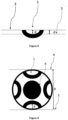
- Figure 7 illustrates in an exemplary and simplified way, how the maximum depth of a surface depression (1)may be measured.
- a first line (2) is drawn between two opposing border points of the surface depression.
- a second line (3) is drawn parallel to the first line (2) and going through the deepest point of the surface depression (1).
- the maximum depth d is evaluated.
- the average maximum diameter D is measured using scanning electron microscopy images, preferably by either a Philips XL30 ESEM, or a FEI Quanta 600 after metallization with Au ( ⁇ 50 nm). An average may for example be assessed by measuring 5, 10, 15, 20, 25, 10 or even 100 microparticles and calculating the arithmetic means.
- Figure 9 illustrates in an exemplary and simplified way, how the maximum depth of a surface depression (1) may be measured. Two lines (4) and (5) are drawn between two opposing points of the microparticle with the provision that the surface depressions are ignored and a hypothetical surface without depressions is taken. In a second step the maximum distance D is evaluated. Some variations may be acceptable since the microparticles of the present inventions are obtainable by spray drying.
- the average maximal depth d of the surface depressions (1) is 30 % or less, preferably, 25 % or less, even more preferably 20 % or less, even more preferably 15 % or less as compared to the maximum diameter D of the microparticle as measurable with a scanning electron microscope.
- the average maximal depth d of the surface depressions (1) is 5 % or more, preferably, 7,5 % or more, even more preferably 10% or less, even more preferably 12,5 % or more as compared to the maximum diameter D of the microparticle as measurable with a scanning electron microscope.
- the average depressed surface (1) is 50 % or more, preferably 60 % or more, even more preferably 70 % or more as compared to the total surface of the microparticle as measurable with a scanning electron microscope.
- the average depressed surface is measured using scanning electron microscopy images. An average may for example be assessed by measuring 5, 10, 15, 20, 25, 10 or even 100 microparticles and calculating the arithmetic means.
- Figure 9 illustrates in an exemplary and simplified way an exemplary surface depression (1) at the example of the black surface 6.
- the depressed surface (1) is 95 % or less, preferably 90 % or less, even more preferably 80 % or less as compared to the total surface of the microparticle as measurable with a scanning electron microscope. Some variations may be acceptable since the microparticles of the present inventions are obtainable by spray drying.
- the Fine Particle Fraction as compared to the residual dose described below is 50 % or more, preferably, 55 % or more, even more preferably 60% or more, even more preferably 65 % or more, even more preferably 70 % or more, even more preferably 75% or more and even more preferably 80 % or more.
- the Fine Particle Fraction is 85 % or more and even more preferably 90% or even 95 % or more.
- the Fine Particle Fraction (FPF) of the plurality of microparticles of the present invention is measured using Next Generation Impacter with three repetitions.
- the pulmonary deposition profile of the powder produced during spray drying is determined in vitro by a New Generation Impactor (NGI).
- NGI New Generation Impactor
- the device a dry powder inhaler, is connected to the induction port by a mouthpiece mimicking the mouth.
- the NGI is divided into 8 stages characterized by a pore diameter covering a particle size range between 0.206 ⁇ m and 12.8 ⁇ m.
- a pump, connected to the NGI allows the pressure and flow to be adjusted. Twelve capsules, containing a known mass of powder, are perforated by the device, of the Aerolizer ® type, and emptied of their contents.
- the fine particle dose (FPD) is defined as the total mass ranging from 0 ⁇ m to 5 ⁇ m. The fine particle fraction is calculated by dividing the FPD by the RD expressed as a percentage.
- the carrier is selected from one or more carriers chosen from the group consisting of alpha-cyclodextrin, beta-cyclodextrin and ⁇ -cyclodextrin, or pharmaceutically acceptable derivatives thereof, for example 2-hydroxypropyl-beta-cyclodextrin (HPBCD), 2-hydroxypropyl- ⁇ -cyclodextrin (HPGCD), sulfobutylether-beta-cyclodextrin (SBEBCD), and methyl-beta- cyclodextrin (MBCD).
- HPBCD 2-hydroxypropyl-beta-cyclodextrin
- HPGCD 2-hydroxypropyl- ⁇ -cyclodextrin
- SBEBCD sulfobutylether-beta-cyclodextrin
- MBCD methyl-beta- cyclodextrin
- the carrier is hydroxypropyl-beta- cyclodextrin.
- the carrier does not contain any cyclodextrin-raffinose.
- the carrier is present in an amount of 80 w% or more, preferably, 85 w% or more, even more preferably 90 w% or more and even more preferably 95 w% and even more preferably 97,5 w% or more as compared to the total dry weight of the microparticle.
- the carrier is present in an amount of 99 w.% or more as compared to the total weight of the microparticle.
- the one or more active pharmaceutical ingredients are selected from the group consisting of corticosteroids, anti-inflammatory compounds and combinations thereof.
- the one or more active pharmaceutical ingredients are budesonide or formoterol or a combination thereof.
- the active pharmaceutical ingredient is present in an amount of 0,01 w% or more, preferably, 0,1 w% or more, even more preferably 0, 5 w% or more and even more preferably 0,75 w% and even more preferably 0,90 w% or more as compared to the total dry weight of the microparticle.
- the active pharmaceutical ingredient is present in an amount of 5 w% or less, preferably 2,5 w% or less, even more preferably 1 w% or less as compared to the total dry weight of the microparticle.
- the microparticles are formed of the carrier, in particular of a cyclodextrin carrier, and in particular of a cyclodextrin carrier not containing raffinose.
- the molar ratio of the active pharmaceutical ingredient and the carrier is 1:1.
- microparticles further comprise amino acids. In another embodiment, the microparticles further comprise leucine.
- the microparticles are obtained by spray-drying.
- a further object of the present invention is the microparticles of the invention for use in delivering an active pharmaceutical ingredient through the respiratory system or the pulmonary system. It has been surprisingly found that the morphology of the particles primarily is responsible for an effective delivery of any active pharmaceutical ingredient through the respiratory system, in particular the pulmonary system. Consequently, the active pharmaceutical composition may also be for the treatment of other diseases than respiratory diseases.
- a further object of the present invention is the microparticles of the invention for use in delivering an active pharmaceutical ingredient through the respiratory system or the pulmonary system, wherein the active pharmaceutical ingredient is an active pharmaceutical ingredient for the treatment or prevention of asthma, chronic obstructive pulmonary disease (COPD), pulmonary fibrosis, pneumonia, and lung cancer.
- COPD chronic obstructive pulmonary disease
- a further object of the present invention is the microparticles for use in the treatment or prevention of asthma, chronic obstructive pulmonary disease (COPD), pulmonary fibrosis, pneumonia, and lung cancer.
- COPD chronic obstructive pulmonary disease
- a further object of the present invention is a process for the manufacturing of microparticles of any of the preceding claims, comprising the steps of:
- the solution or nanosuspension of the invention is obtained by mixing with a polar solvent, preferably water.
- the liquid formulation for atomization or spray-drying may comprise one or more excipients.
- the excipient selected from the group consisting of lactose, mannitol, raffinose, maltodextrin and cyclodextrins, in particular HP-beta-CD and combinations thereof.
- the API in particular budesonide and formoterol and the one or more excipients are dissolved or suspended.
- the process parameters of the atomization of the present invention may vary widely. Any parameters may be chosen that deliver the golf ball-like structure of the present invention.
- the gas temperature typically is from 100 °C to 200 °C, preferably from 110 °C to 150 °C, and more preferably from 115 °C to145 °C.
- Liquid feed rate may vary widely and typically is from 200 to 500 ml/h, preferably from 350 and 450 ml/h, even more preferably from 375 and 450 25 ml/h.
- the nozzle of the atomization unit is chosen to allow for micronization through the formation of microparticles of the size of 0,1 to 5 microns.
- the obtained particles have physico-chemical properties that allow of uniform and homogenous deposition of one or more APIS throughout the lung with increased delivery rates.
- the golf-ball like shape may be determined using standard two- and three-dimensional technologies, for example microtomography RX. Suitable devices are commercially available under the commercial brand Skyscan 1172.
- EEM Environmental Scanning Electron Microscope
- 2D morphology of the particles of the present invention may also be measured by Transmission electron microscopy.
- the uniform deposition of the particles of the present invention may be further measured for example by Functional Respiratory Imaging (FRI) technology, available for example from Fluidda using for example Computer Tomography (CT) scans.
- FPI Functional Respiratory Imaging
- CT Computer Tomography
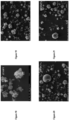
- Example 1 also referred to as HPBCD JT shows microparticles according to the invention comprising hydroxypropyl-beta-cyclodextrin (HPBCD) as carrier and budesonide and formoterol as active pharmaceutical ingredients.
- HPBCD hydroxypropyl-beta-cyclodextrin
- 99;29 w% of the dry weight are HPBCD and 0,0.71 of the dry weight of the solution are active pharmaceutical ingredient.
- 97w% of the active pharmaceutical ingredient are budesonide and 3 w% of the active pharmaceutical ingredient are formoterol.
- microparticles of example 1 are obtained by spray-drying with 10 w% HPBCD of the dry weight, a nozzle diameter of 0,5 mm, an inlat temperature of 160 °C, a pump speed of 50 RPM and a nozzle gas pressure 2.25 bar.
- the SEM is shown in Figure 11 .
- Example 2 also referred to as HPBCD 100 shows microparticles are obtained by spray- drying of a liquid with a 10% HPBCD, a nozzle diameter of 0,4 mm, an inlat temperature of 140 °C, a pump speed of 200 RPM and a nozzle gas pressure 4 bar.
- the SEM is shown in Figure 12 .
- the less deflated balls of comparative example 1 - also referred to as HPBCD AQ June 2020 2% - are obtained by spray-drying of a liquid with a 2% HPBCD, a nozzle diameter of 0,2 mm, an inlat temperature of 160 °C, a pump speed of 200 RPM and a nozzle gas pressure of 4 bar.
- the SEM is shown in Figure 13 .
- the less deflated balls of comparative example 2 - also referred to as HPBCD AQ June 2020 5% - are obtained by spray-drying of a liquid with a 5% HPBCD, a nozzle diameter of 0,2 mm, an inlat temperature of 100 °C, a pump speed of 200 RPM and a nozzle gas pressure of 4 bar.
- the SEM is shown in Figure 14 .
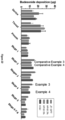
- Figures 15 and 16 show the NGI deposition described below of three repetitions.
- the golf- ball-like particles of the invention perform better than Symbicort ® on the one and side and less deflated balls on the other hand side.
- the deposition in the device (dispositive) is higher with Symbicort.
- the deposition in the deep lung (stages 2, 3, 4, 5) are better by the golf-ball like microparticles of the invention according to examples 1 and 1 as compared to the less deflated balls of comparative examples 1 and 2.
- Figure 17 shows the Fine Particle Fraction (FPF) of the budesonide and formoterol of examples 1 and 2 and comparative examples 1 and 2 as well as Symbicort.
- FPF Fine Particle Fraction
- Active pharmaceutical ingredients were budesonide and formoterol with varying levels of the carrier hydroxypropyl-beta-cyclodextrin of 2, 5 and 10 w% of the solid content and varying spray-drying conditions as to nozzle size, temperature and pressure.
- Budesonide Ph. Eur. 8.3 Micronized was obtained from Crystal Pharma and Formoterol Fumarate dehydrate Micronized from CHEMO Industrialeca.
- High performance liquid chromatography was used to quantify budesonide and formoterol using a HPLC Agilent manufacture1100, UV detector operating at 243 nm and with a 3*50mm column filled 3,5 ⁇ m C18 (X Bridge BEH C18).
- the mobile phase was composed of Acetate ammonium buffer pH 10/methanol at this gradient mode (0min - 55/45(v/v); 1 min - 55/45(v/v); 2min - 35/65(v/v); 7min - 35/65(v/v); 8min- 55/45(v/v); 20min - 55/45(v/v)) at a flow rate of 0.7 ml/min.
- the column is heated up at 30°C and sampler at 10°C.
- the solutions containing the two active ingredients budesonide and formoterol are prepared as follows. Concentration of HPBCD were 2, 5 or 10% (g/100ml). The excipients (99.29w%) are first weighed and diluted in miQ water. After complete dissolution, this solution is divided in half and placed on a heating stirring bath (37°C). The active ingredients (0.71w%) are added separately in one of the two excipient solutions and dissolved under magnetic stirring at 37 ° C for 2 hours. Budesonide is present at 97% and formoterol at 3% in the solution. After complete dissolution, the two solutions are combined before atom ization.
- the particulate structure was observed by scanning electron microscopy (SEM) using either a Philips XL30 ESEM, or a FEI Quanta 600 after metallization with Au ( ⁇ 50 nm). Representative micrographs were captured, and a dozen particles were sampled for each powder to measure their diameter, and quantify their structure in terms of number and depth of the surface depressions also referred to as dimples.
- SEM scanning electron microscopy
- the residual moisture content of the samples was investigated directly after spray-drying by using a TGA 7 (Perkin Elmer, Norwalk, CT). Powder samples between 3 and 12 mg were loaded onto a platinum sample pan and heated from 25 to 150 °C at a rate of 10 °C/min.
- the tapped density is obtained by mechanically tapping a graduated measuring cylinder containing the powder sample [15]. The tapped density is read after 1250 taps corresponding to 5 min at a tapping height of 3 mm. The mean value of three replicates is recorded along with the observed variances among the experiments.
- Tapped density g / ml weight of powder / tapped powder volume
- the pulmonary deposition profile of the powder produced during spray drying is determined in vitro by a New Generation Impactor (NGI).
- NGI New Generation Impactor
- the device a dry powder inhaler, is connected to the induction port by a mouthpiece mimicking the mouth.
- the NGI is divided into 8 stages characterized by a pore diameter covering a particle size range between 0.206 ⁇ m and 12.8 ⁇ m.
- a pump connected to the NGI, allows the pressure and flow to be adjusted. Twelve capsules, containing a known mass of powder, are perforated by the device, of the Aerolizer ® type, and emptied of their contents. This passes through the NGI at a flow rate of 100 mL / min for a period of 2.4 seconds.
- the powder deposited at each level is recovered using a methanol / water solvent (65/35 V / V) and analyzed by HPLC.
- the total mass measured after each test in the throat and in stages 1 to 8 is defined as the recovered dose (RD).
- the fine particle dose (FPD) is defined as the total mass ranging from 0 ⁇ m to 5 ⁇ m.
- the fine particle fraction is calculated by dividing the FPD by the RD expressed as a percentage.
- Figures 22 and 23 show the evaluation of the powders according to examples 3 and 4 and comparative examples 3 and 4.
- Microparticles with the API Budesonide (BD)-Hydroxypropylbetacyclodextrin (HPBCD) and cyclodextrins were 15 obtained through spray-drying.
- Budenoside was used in the amount of 106 ⁇ g in 15 mg of spray-dried powder. Following combinations were tested:
- Tested formulations and their particle size distribution are shown in table 1.
- the spray-drying parameters are shown in Table 2.
- the golf-ball like microparticles of Table 1 spray-dried according to the process conditions shown in Table 2 were then evaluated for their aerodynamic properties using Next Generation Impactor (NGI) as recommended by European Pharmacopeia and USP, the results of which are shown in Tables 4 to 6. Aerolizer ® was used for 5 testing. HPLC standard reagents Methanol and Milli-Q water were used.
- NTI Next Generation Impactor
- the NGI was assembled and a pre-separator was used for Miflonide since the formulation contains lactose.
- the flow rate was adjusted to provide a steady state of 100 L / min plus, minus 5% in the apparatus. 10
- the air circulation was stopped.
- the nozzle adapter at the end of the intake nozzle was installed. A certain number of doses was released from the inhaler according to the directions for use:
- the inhaler and mouthpiece adapter were removed from the NGI Induction Port.
- the active ingredient was extracted from the inhaler 25 and mouthpiece in the same flask (see volume in Table 3 below) with the mix methanol/water 65/35.
- the active ingredients from the induction port were extracted in a flask with the mix methanol/water 65/35.
- the active ingredients were extracted from the pre-separator in a flask.
- the volumes are indicated in Table 3A below.
- Fine Particle Dose (FPD), MMAD and GSD were calculated by the software CITDAS (Copley).
- Fine Particle Fraction (FPF) which is the 15 percentage of FPD over the nominal dose, is calculated manually.
- Table 1 Formulations and particle size distribution Example Formulation % Budes onide % Formo terol % Leucine % HPBC D Solid content (%w/w) D10 ( ⁇ m) D50 ( ⁇ m) D90 ( ⁇ m) SPA N %Frac ⁇ 5 ⁇ m (%) 13 Budesonide-HPBCD-10% Leucine 0,01 0,00 0,10 0,89 0,05 0,53 2,29 5,06 1,98 89,67 14 Budesonide-HPBCD 0,01 0,00 0,00 0,99 0,05 0,56 2,28 5,11 1,99 89,40 15 Budesonide-HPBCD-5% Leucine 0,01 0,00 0,05 0,94 0,05 0,53 2,16 4,83 1,99 91,45 16&17 Budesonide-HPBCD-Formoterol 0,01 0,00 0,00 0,99 0,05 0,58 2,37 5,04 1,88 89,76 19 HPB
Landscapes
- Health & Medical Sciences (AREA)
- Chemical & Material Sciences (AREA)
- Life Sciences & Earth Sciences (AREA)
- Veterinary Medicine (AREA)
- Medicinal Chemistry (AREA)
- Pharmacology & Pharmacy (AREA)
- Animal Behavior & Ethology (AREA)
- General Health & Medical Sciences (AREA)
- Public Health (AREA)
- Bioinformatics & Cheminformatics (AREA)
- Engineering & Computer Science (AREA)
- Epidemiology (AREA)
- Pulmonology (AREA)
- General Chemical & Material Sciences (AREA)
- Organic Chemistry (AREA)
- Nuclear Medicine, Radiotherapy & Molecular Imaging (AREA)
- Chemical Kinetics & Catalysis (AREA)
- Otolaryngology (AREA)
- Pain & Pain Management (AREA)
- Molecular Biology (AREA)
- Biophysics (AREA)
- Emergency Medicine (AREA)
- Inorganic Chemistry (AREA)
- Medicinal Preparation (AREA)
- Acyclic And Carbocyclic Compounds In Medicinal Compositions (AREA)
- Pharmaceuticals Containing Other Organic And Inorganic Compounds (AREA)
Priority Applications (2)
| Application Number | Priority Date | Filing Date | Title |
|---|---|---|---|
| EP23152796.1A EP4190321B1 (en) | 2019-09-10 | 2020-09-10 | Microparticles with golf ball depressions for use in the treatment and prevention of diseases per inhalation |
| EP25221204.8A EP4729051A2 (en) | 2019-09-10 | 2020-09-10 | Golf ball-like microparticles for use in the treatment and prevention of pulmonary diseases |
Applications Claiming Priority (2)
| Application Number | Priority Date | Filing Date | Title |
|---|---|---|---|
| BE20195603A BE1027612B1 (fr) | 2019-09-10 | 2019-09-10 | Microparticules en forme de balle de golf pour une utilisation dans le traitement et la prevention de maladies pulmonaires |
| PCT/EP2020/075416 WO2021048322A1 (en) | 2019-09-10 | 2020-09-10 | Golf ball-like microparticles for use in the treatment and prevention of pulmonary diseases |
Related Child Applications (3)
| Application Number | Title | Priority Date | Filing Date |
|---|---|---|---|
| EP25221204.8A Division EP4729051A2 (en) | 2019-09-10 | 2020-09-10 | Golf ball-like microparticles for use in the treatment and prevention of pulmonary diseases |
| EP23152796.1A Division EP4190321B1 (en) | 2019-09-10 | 2020-09-10 | Microparticles with golf ball depressions for use in the treatment and prevention of diseases per inhalation |
| EP23152796.1A Division-Into EP4190321B1 (en) | 2019-09-10 | 2020-09-10 | Microparticles with golf ball depressions for use in the treatment and prevention of diseases per inhalation |
Publications (2)
| Publication Number | Publication Date |
|---|---|
| EP4003320A1 EP4003320A1 (en) | 2022-06-01 |
| EP4003320B1 true EP4003320B1 (en) | 2023-03-08 |
Family
ID=68426040
Family Applications (3)
| Application Number | Title | Priority Date | Filing Date |
|---|---|---|---|
| EP25221204.8A Pending EP4729051A2 (en) | 2019-09-10 | 2020-09-10 | Golf ball-like microparticles for use in the treatment and prevention of pulmonary diseases |
| EP23152796.1A Active EP4190321B1 (en) | 2019-09-10 | 2020-09-10 | Microparticles with golf ball depressions for use in the treatment and prevention of diseases per inhalation |
| EP20780106.9A Active EP4003320B1 (en) | 2019-09-10 | 2020-09-10 | Microparticles with golf ball depressions for use in the treatment and prevention of pulmonary diseases |
Family Applications Before (2)
| Application Number | Title | Priority Date | Filing Date |
|---|---|---|---|
| EP25221204.8A Pending EP4729051A2 (en) | 2019-09-10 | 2020-09-10 | Golf ball-like microparticles for use in the treatment and prevention of pulmonary diseases |
| EP23152796.1A Active EP4190321B1 (en) | 2019-09-10 | 2020-09-10 | Microparticles with golf ball depressions for use in the treatment and prevention of diseases per inhalation |
Country Status (10)
| Country | Link |
|---|---|
| US (1) | US12558313B2 (es) |
| EP (3) | EP4729051A2 (es) |
| KR (1) | KR102839920B1 (es) |
| CN (1) | CN114364374A (es) |
| BE (1) | BE1027612B1 (es) |
| BR (1) | BR112022003696A2 (es) |
| CA (1) | CA3150551C (es) |
| ES (1) | ES2942901T3 (es) |
| MX (1) | MX2022001356A (es) |
| WO (1) | WO2021048322A1 (es) |
Families Citing this family (8)
| Publication number | Priority date | Publication date | Assignee | Title |
|---|---|---|---|---|
| BE1027425B1 (fr) * | 2019-07-01 | 2021-02-08 | Aquilon Pharmaceuticals | Composition inhalable comprenant de la cyclodextrine a utiliser dans le traitement d’inflammations nasales |
| KR102665978B1 (ko) * | 2021-11-22 | 2024-05-13 | 충북대학교 산학협력단 | 딤플 구조의 표면을 가진 마이크로 입자의 제조 방법 |
| BE1029585B1 (fr) * | 2021-12-20 | 2023-02-03 | Aquilon Pharmaceuticals | Compositions inhalables comprenant un complexe de hpbcd et de budesonide ou ciclesonide pour le traitement ou la prevention d'une maladie virale respiratoire |
| WO2023118014A1 (en) | 2021-12-20 | 2023-06-29 | Aquilon Pharmaceuticals | Inhalable compositions comprising a complex of hpbcd and budesonide or ciclesonide for the treatment or prevention of a respiratory viral disease or lipopolysaccharide-induced inflammation, in particular lipopolysaccharide-induced inflammation associated with a respiratory viral disease |
| BE1030002B1 (fr) | 2021-12-29 | 2023-09-01 | Aquilon Pharmaceuticals | Compositions inhalables comprenant un complexe de hpbcd et de budesonide ou ciclesonide pour le traitement ou la prevention d'une maladie virale respiratoire |
| BE1031691B1 (fr) | 2023-06-07 | 2025-01-23 | Aquilon Pharmaceuticals | Compositions sans conservateur comprenant un complexe de corticostéroïde et d'hpbcd pour le traitement ou la prévention d'une maladie inflammatoire par administration nasale |
| BE1031693B1 (fr) | 2023-06-07 | 2025-01-23 | Aquilon Pharmaceuticals | Compositions sans conservateur comprenant un complexe de corticostéroïde et d'hpbcd pour le traitement ou la prévention d'une maladie inflammatoire par administration nasale |
| WO2024251923A1 (en) | 2023-06-07 | 2024-12-12 | Aquilon Pharmaceuticals | Preservative-free compositions comprising a complex of a corticosteroid and hpbcd for the treatment or prevention of an inflammatory disease through nasal administration |
Family Cites Families (11)
| Publication number | Priority date | Publication date | Assignee | Title |
|---|---|---|---|---|
| AU2006200277B2 (en) | 1997-09-29 | 2008-04-10 | Novartis Ag | Perforated microparticles and methods of use |
| FI20002215A0 (fi) * | 2000-10-06 | 2000-10-06 | Orion Yhtymae Oyj | Yhdistelmäpartikkelit |
| GB0228826D0 (en) | 2002-12-11 | 2003-01-15 | Okpala Joseph | Hair technology in creating particles with improved delivery capabilities |
| EP1655034A1 (en) | 2004-10-10 | 2006-05-10 | Université de Liège | Use of cyclodextrin for treatment and prevention of bronchial inflammatory diseases. |
| WO2007011989A2 (en) | 2005-07-15 | 2007-01-25 | Map Pharmaceuticals, Inc. | Multiple active pharmaceutical ingredients combined in discrete inhalation particles and formulations thereof |
| AU2007208998A1 (en) * | 2006-01-27 | 2007-08-02 | The Provost, Fellows And Scholars Of The College Of The Holy And Undivided Trinity Of Queen Elizabeth Near Dublin | A method of producing porous microparticles |
| US20150037428A1 (en) | 2011-11-29 | 2015-02-05 | The University Of North Carolina At Chapel Hill | Geometrically engineered particles and methods for modulating macrophage or immune responses |
| CA2907566C (en) * | 2013-04-01 | 2023-08-22 | Pulmatrix, Inc. | Tiotropium dry powders |
| EP2923792A1 (en) | 2014-03-27 | 2015-09-30 | Continental Automotive GmbH | Component, laser-welding apparatus and method for manufacturing a laser-welded joint |
| EP2923702A1 (en) * | 2014-03-28 | 2015-09-30 | Universite De Liege | Composition of cyclodextrin with budesonide derivatives for treatment and prevention of pulmonary inflammatory disease |
| CN106924193A (zh) | 2017-03-20 | 2017-07-07 | 谭淞文 | 一种高孔隙率干粉吸入剂载体及其超饱和合成法和应用 |
-
2019
- 2019-09-10 BE BE20195603A patent/BE1027612B1/fr active IP Right Grant
-
2020
- 2020-09-10 WO PCT/EP2020/075416 patent/WO2021048322A1/en not_active Ceased
- 2020-09-10 EP EP25221204.8A patent/EP4729051A2/en active Pending
- 2020-09-10 BR BR112022003696A patent/BR112022003696A2/pt not_active Application Discontinuation
- 2020-09-10 ES ES20780106T patent/ES2942901T3/es active Active
- 2020-09-10 KR KR1020227009234A patent/KR102839920B1/ko active Active
- 2020-09-10 CN CN202080063138.XA patent/CN114364374A/zh active Pending
- 2020-09-10 EP EP23152796.1A patent/EP4190321B1/en active Active
- 2020-09-10 EP EP20780106.9A patent/EP4003320B1/en active Active
- 2020-09-10 CA CA3150551A patent/CA3150551C/en active Active
- 2020-09-10 MX MX2022001356A patent/MX2022001356A/es unknown
- 2020-09-10 US US17/641,416 patent/US12558313B2/en active Active
Also Published As
| Publication number | Publication date |
|---|---|
| CA3150551A1 (en) | 2021-03-18 |
| BR112022003696A2 (pt) | 2022-05-24 |
| US20230218515A1 (en) | 2023-07-13 |
| CN114364374A (zh) | 2022-04-15 |
| EP4190321A1 (en) | 2023-06-07 |
| US12558313B2 (en) | 2026-02-24 |
| BE1027612A1 (fr) | 2021-04-27 |
| BE1027612B1 (fr) | 2021-05-03 |
| EP4003320A1 (en) | 2022-06-01 |
| KR20220050951A (ko) | 2022-04-25 |
| EP4190321C0 (en) | 2026-01-21 |
| WO2021048322A1 (en) | 2021-03-18 |
| KR102839920B1 (ko) | 2025-07-29 |
| ES2942901T3 (es) | 2023-06-07 |
| EP4729051A2 (en) | 2026-04-22 |
| EP4190321B1 (en) | 2026-01-21 |
| CA3150551C (en) | 2023-10-10 |
| MX2022001356A (es) | 2022-07-19 |
Similar Documents
| Publication | Publication Date | Title |
|---|---|---|
| EP4190321B1 (en) | Microparticles with golf ball depressions for use in the treatment and prevention of diseases per inhalation | |
| US7399528B2 (en) | Powder particles with smooth surface for use in inhalation therapy | |
| JP7048642B2 (ja) | 肺、鼻、舌下および/または咽頭への送達に適した、少なくとも1つの生物活性化合物をロードした多孔質シリカ粒子の製造方法 | |
| Liu et al. | Influence of stabilizer type and concentration on the lung deposition and retention of resveratrol nanosuspension-in-microparticles | |
| KR102408798B1 (ko) | 항진균성 건조 분말 | |
| SK14912002A3 (sk) | Prášok na použitie v suchom práškovom inhalátore a spôsob jeho výroby | |
| US20140099379A1 (en) | Bio-compatible nano and microparticles coated with stabilizers for pulmonary application | |
| Lechanteur et al. | Engineered-inhaled particles: Influence of carbohydrates excipients nature on powder properties and behavior | |
| CN102805733A (zh) | 颗粒制剂及其制造方法 | |
| Zhao et al. | Hydroxypropyl-β-cyclodextrin as anti-hygroscopicity agent inamorphous lactose carriers for dry powder inhalers | |
| Paul et al. | Potentials and challenges of Levodopa particle formulation for treatment of Parkinson’s disease through intranasal and pulmonary delivery | |
| JP2004517834A (ja) | 粒子吸入キャリア | |
| EA046379B1 (ru) | Микрочастицы, подобные мячикам для гольфа, для применения при лечении и профилактике лёгочных заболеваний | |
| Zhang et al. | Chitosan and β-cyclodextrin microspheres as pulmonary sustained delivery systems | |
| Lu et al. | Alginate-based Bioaerogel Microparticles for Controlled Pulmonary Drug Delivery | |
| US12357572B2 (en) | Powder composition based on microparticles embedding nanoparticles for the delivery of therapeutic/diagnostic compounds | |
| KR20240172320A (ko) | 흡입용 이트라코나졸 함유 건조분말 제형 및 이의 제조방법 | |
| CN120112290A (zh) | 使用伊曲康唑干粉的方法 | |
| Sosnowski | Katarzyna Jabłczyńska*, Michał Wojnarowicz | |
| Tse | Application of Phytoglycogen in Dry Powder Inhaler Formulation Design | |
| Nabavi et al. | Enabling Pulmonary Drug Delivery with Nanoporous Particles |
Legal Events
| Date | Code | Title | Description |
|---|---|---|---|
| STAA | Information on the status of an ep patent application or granted ep patent |
Free format text: STATUS: UNKNOWN |
|
| STAA | Information on the status of an ep patent application or granted ep patent |
Free format text: STATUS: THE INTERNATIONAL PUBLICATION HAS BEEN MADE |
|
| PUAI | Public reference made under article 153(3) epc to a published international application that has entered the european phase |
Free format text: ORIGINAL CODE: 0009012 |
|
| STAA | Information on the status of an ep patent application or granted ep patent |
Free format text: STATUS: REQUEST FOR EXAMINATION WAS MADE |
|
| 17P | Request for examination filed |
Effective date: 20220222 |
|
| AK | Designated contracting states |
Kind code of ref document: A1 Designated state(s): AL AT BE BG CH CY CZ DE DK EE ES FI FR GB GR HR HU IE IS IT LI LT LU LV MC MK MT NL NO PL PT RO RS SE SI SK SM TR |
|
| RIC1 | Information provided on ipc code assigned before grant |
Ipc: A61K 9/16 20060101ALI20220810BHEP Ipc: A61P 11/08 20060101ALI20220810BHEP Ipc: A61P 11/00 20060101ALI20220810BHEP Ipc: A61K 45/06 20060101ALI20220810BHEP Ipc: A61K 31/573 20060101ALI20220810BHEP Ipc: A61K 31/198 20060101ALI20220810BHEP Ipc: A61K 9/50 20060101ALI20220810BHEP Ipc: A61K 9/00 20060101ALI20220810BHEP Ipc: A61K 31/167 20060101AFI20220810BHEP |
|
| GRAP | Despatch of communication of intention to grant a patent |
Free format text: ORIGINAL CODE: EPIDOSNIGR1 |
|
| STAA | Information on the status of an ep patent application or granted ep patent |
Free format text: STATUS: GRANT OF PATENT IS INTENDED |
|
| DAV | Request for validation of the european patent (deleted) | ||
| DAX | Request for extension of the european patent (deleted) | ||
| INTG | Intention to grant announced |
Effective date: 20221207 |
|
| GRAS | Grant fee paid |
Free format text: ORIGINAL CODE: EPIDOSNIGR3 |
|
| GRAA | (expected) grant |
Free format text: ORIGINAL CODE: 0009210 |
|
| STAA | Information on the status of an ep patent application or granted ep patent |
Free format text: STATUS: THE PATENT HAS BEEN GRANTED |
|
| AK | Designated contracting states |
Kind code of ref document: B1 Designated state(s): AL AT BE BG CH CY CZ DE DK EE ES FI FR GB GR HR HU IE IS IT LI LT LU LV MC MK MT NL NO PL PT RO RS SE SI SK SM TR |
|
| REG | Reference to a national code |
Ref country code: CH Ref legal event code: EP Ref country code: AT Ref legal event code: REF Ref document number: 1552114 Country of ref document: AT Kind code of ref document: T Effective date: 20230315 |
|
| REG | Reference to a national code |
Ref country code: IE Ref legal event code: FG4D |
|
| REG | Reference to a national code |
Ref country code: DE Ref legal event code: R096 Ref document number: 602020008765 Country of ref document: DE |
|
| REG | Reference to a national code |
Ref country code: NL Ref legal event code: FP |
|
| REG | Reference to a national code |
Ref country code: ES Ref legal event code: FG2A Ref document number: 2942901 Country of ref document: ES Kind code of ref document: T3 Effective date: 20230607 |
|
| REG | Reference to a national code |
Ref country code: LT Ref legal event code: MG9D |
|
| PG25 | Lapsed in a contracting state [announced via postgrant information from national office to epo] |
Ref country code: RS Free format text: LAPSE BECAUSE OF FAILURE TO SUBMIT A TRANSLATION OF THE DESCRIPTION OR TO PAY THE FEE WITHIN THE PRESCRIBED TIME-LIMIT Effective date: 20230308 Ref country code: NO Free format text: LAPSE BECAUSE OF FAILURE TO SUBMIT A TRANSLATION OF THE DESCRIPTION OR TO PAY THE FEE WITHIN THE PRESCRIBED TIME-LIMIT Effective date: 20230608 Ref country code: LV Free format text: LAPSE BECAUSE OF FAILURE TO SUBMIT A TRANSLATION OF THE DESCRIPTION OR TO PAY THE FEE WITHIN THE PRESCRIBED TIME-LIMIT Effective date: 20230308 Ref country code: LT Free format text: LAPSE BECAUSE OF FAILURE TO SUBMIT A TRANSLATION OF THE DESCRIPTION OR TO PAY THE FEE WITHIN THE PRESCRIBED TIME-LIMIT Effective date: 20230308 Ref country code: HR Free format text: LAPSE BECAUSE OF FAILURE TO SUBMIT A TRANSLATION OF THE DESCRIPTION OR TO PAY THE FEE WITHIN THE PRESCRIBED TIME-LIMIT Effective date: 20230308 |
|
| REG | Reference to a national code |
Ref country code: AT Ref legal event code: MK05 Ref document number: 1552114 Country of ref document: AT Kind code of ref document: T Effective date: 20230308 |
|
| PG25 | Lapsed in a contracting state [announced via postgrant information from national office to epo] |
Ref country code: SE Free format text: LAPSE BECAUSE OF FAILURE TO SUBMIT A TRANSLATION OF THE DESCRIPTION OR TO PAY THE FEE WITHIN THE PRESCRIBED TIME-LIMIT Effective date: 20230308 Ref country code: GR Free format text: LAPSE BECAUSE OF FAILURE TO SUBMIT A TRANSLATION OF THE DESCRIPTION OR TO PAY THE FEE WITHIN THE PRESCRIBED TIME-LIMIT Effective date: 20230609 Ref country code: FI Free format text: LAPSE BECAUSE OF FAILURE TO SUBMIT A TRANSLATION OF THE DESCRIPTION OR TO PAY THE FEE WITHIN THE PRESCRIBED TIME-LIMIT Effective date: 20230308 |
|
| PG25 | Lapsed in a contracting state [announced via postgrant information from national office to epo] |
Ref country code: SM Free format text: LAPSE BECAUSE OF FAILURE TO SUBMIT A TRANSLATION OF THE DESCRIPTION OR TO PAY THE FEE WITHIN THE PRESCRIBED TIME-LIMIT Effective date: 20230308 Ref country code: RO Free format text: LAPSE BECAUSE OF FAILURE TO SUBMIT A TRANSLATION OF THE DESCRIPTION OR TO PAY THE FEE WITHIN THE PRESCRIBED TIME-LIMIT Effective date: 20230308 Ref country code: PT Free format text: LAPSE BECAUSE OF FAILURE TO SUBMIT A TRANSLATION OF THE DESCRIPTION OR TO PAY THE FEE WITHIN THE PRESCRIBED TIME-LIMIT Effective date: 20230710 Ref country code: EE Free format text: LAPSE BECAUSE OF FAILURE TO SUBMIT A TRANSLATION OF THE DESCRIPTION OR TO PAY THE FEE WITHIN THE PRESCRIBED TIME-LIMIT Effective date: 20230308 Ref country code: CZ Free format text: LAPSE BECAUSE OF FAILURE TO SUBMIT A TRANSLATION OF THE DESCRIPTION OR TO PAY THE FEE WITHIN THE PRESCRIBED TIME-LIMIT Effective date: 20230308 Ref country code: AT Free format text: LAPSE BECAUSE OF FAILURE TO SUBMIT A TRANSLATION OF THE DESCRIPTION OR TO PAY THE FEE WITHIN THE PRESCRIBED TIME-LIMIT Effective date: 20230308 |
|
| PG25 | Lapsed in a contracting state [announced via postgrant information from national office to epo] |
Ref country code: SK Free format text: LAPSE BECAUSE OF FAILURE TO SUBMIT A TRANSLATION OF THE DESCRIPTION OR TO PAY THE FEE WITHIN THE PRESCRIBED TIME-LIMIT Effective date: 20230308 Ref country code: PL Free format text: LAPSE BECAUSE OF FAILURE TO SUBMIT A TRANSLATION OF THE DESCRIPTION OR TO PAY THE FEE WITHIN THE PRESCRIBED TIME-LIMIT Effective date: 20230308 Ref country code: IS Free format text: LAPSE BECAUSE OF FAILURE TO SUBMIT A TRANSLATION OF THE DESCRIPTION OR TO PAY THE FEE WITHIN THE PRESCRIBED TIME-LIMIT Effective date: 20230708 |
|
| REG | Reference to a national code |
Ref country code: DE Ref legal event code: R097 Ref document number: 602020008765 Country of ref document: DE |
|
| PLBE | No opposition filed within time limit |
Free format text: ORIGINAL CODE: 0009261 |
|
| STAA | Information on the status of an ep patent application or granted ep patent |
Free format text: STATUS: NO OPPOSITION FILED WITHIN TIME LIMIT |
|
| PG25 | Lapsed in a contracting state [announced via postgrant information from national office to epo] |
Ref country code: SI Free format text: LAPSE BECAUSE OF FAILURE TO SUBMIT A TRANSLATION OF THE DESCRIPTION OR TO PAY THE FEE WITHIN THE PRESCRIBED TIME-LIMIT Effective date: 20230308 Ref country code: DK Free format text: LAPSE BECAUSE OF FAILURE TO SUBMIT A TRANSLATION OF THE DESCRIPTION OR TO PAY THE FEE WITHIN THE PRESCRIBED TIME-LIMIT Effective date: 20230308 |
|
| PGFP | Annual fee paid to national office [announced via postgrant information from national office to epo] |
Ref country code: CH Payment date: 20231001 Year of fee payment: 4 |
|
| 26N | No opposition filed |
Effective date: 20231211 |
|
| PG25 | Lapsed in a contracting state [announced via postgrant information from national office to epo] |
Ref country code: MC Free format text: LAPSE BECAUSE OF FAILURE TO SUBMIT A TRANSLATION OF THE DESCRIPTION OR TO PAY THE FEE WITHIN THE PRESCRIBED TIME-LIMIT Effective date: 20230308 |
|
| PG25 | Lapsed in a contracting state [announced via postgrant information from national office to epo] |
Ref country code: BG Free format text: LAPSE BECAUSE OF FAILURE TO SUBMIT A TRANSLATION OF THE DESCRIPTION OR TO PAY THE FEE WITHIN THE PRESCRIBED TIME-LIMIT Effective date: 20230308 |
|
| PG25 | Lapsed in a contracting state [announced via postgrant information from national office to epo] |
Ref country code: BG Free format text: LAPSE BECAUSE OF FAILURE TO SUBMIT A TRANSLATION OF THE DESCRIPTION OR TO PAY THE FEE WITHIN THE PRESCRIBED TIME-LIMIT Effective date: 20230308 |
|
| REG | Reference to a national code |
Ref country code: CH Ref legal event code: PL |
|
| GBPC | Gb: european patent ceased through non-payment of renewal fee |
Effective date: 20240910 |
|
| PG25 | Lapsed in a contracting state [announced via postgrant information from national office to epo] |
Ref country code: GB Free format text: LAPSE BECAUSE OF NON-PAYMENT OF DUE FEES Effective date: 20240910 |
|
| PG25 | Lapsed in a contracting state [announced via postgrant information from national office to epo] |
Ref country code: CH Free format text: LAPSE BECAUSE OF NON-PAYMENT OF DUE FEES Effective date: 20240930 |
|
| PG25 | Lapsed in a contracting state [announced via postgrant information from national office to epo] |
Ref country code: CY Free format text: LAPSE BECAUSE OF FAILURE TO SUBMIT A TRANSLATION OF THE DESCRIPTION OR TO PAY THE FEE WITHIN THE PRESCRIBED TIME-LIMIT; INVALID AB INITIO Effective date: 20200910 |
|
| PG25 | Lapsed in a contracting state [announced via postgrant information from national office to epo] |
Ref country code: HU Free format text: LAPSE BECAUSE OF FAILURE TO SUBMIT A TRANSLATION OF THE DESCRIPTION OR TO PAY THE FEE WITHIN THE PRESCRIBED TIME-LIMIT; INVALID AB INITIO Effective date: 20200910 |
|
| PGFP | Annual fee paid to national office [announced via postgrant information from national office to epo] |
Ref country code: DE Payment date: 20250919 Year of fee payment: 6 |
|
| PGFP | Annual fee paid to national office [announced via postgrant information from national office to epo] |
Ref country code: IT Payment date: 20250923 Year of fee payment: 6 Ref country code: LU Payment date: 20250919 Year of fee payment: 6 Ref country code: NL Payment date: 20250918 Year of fee payment: 6 |
|
| PGFP | Annual fee paid to national office [announced via postgrant information from national office to epo] |
Ref country code: BE Payment date: 20250918 Year of fee payment: 6 |
|
| PGFP | Annual fee paid to national office [announced via postgrant information from national office to epo] |
Ref country code: FR Payment date: 20250922 Year of fee payment: 6 |
|
| PGFP | Annual fee paid to national office [announced via postgrant information from national office to epo] |
Ref country code: IE Payment date: 20250918 Year of fee payment: 6 |
|
| PG25 | Lapsed in a contracting state [announced via postgrant information from national office to epo] |
Ref country code: TR Free format text: LAPSE BECAUSE OF FAILURE TO SUBMIT A TRANSLATION OF THE DESCRIPTION OR TO PAY THE FEE WITHIN THE PRESCRIBED TIME-LIMIT Effective date: 20230308 |
|
| PGFP | Annual fee paid to national office [announced via postgrant information from national office to epo] |
Ref country code: ES Payment date: 20251030 Year of fee payment: 6 |