EP4004236B1 - Method for analysing loss-of-heterozygosity (loh) following deterministic restriction-site whole genome amplification (drs-wga) - Google Patents
Method for analysing loss-of-heterozygosity (loh) following deterministic restriction-site whole genome amplification (drs-wga) Download PDFInfo
- Publication number
- EP4004236B1 EP4004236B1 EP20747479.2A EP20747479A EP4004236B1 EP 4004236 B1 EP4004236 B1 EP 4004236B1 EP 20747479 A EP20747479 A EP 20747479A EP 4004236 B1 EP4004236 B1 EP 4004236B1
- Authority
- EP
- European Patent Office
- Prior art keywords
- loh
- loci
- genomic
- sample
- wga
- Prior art date
- Legal status (The legal status is an assumption and is not a legal conclusion. Google has not performed a legal analysis and makes no representation as to the accuracy of the status listed.)
- Active
Links
Images









Classifications
-
- C—CHEMISTRY; METALLURGY
- C12—BIOCHEMISTRY; BEER; SPIRITS; WINE; VINEGAR; MICROBIOLOGY; ENZYMOLOGY; MUTATION OR GENETIC ENGINEERING
- C12Q—MEASURING OR TESTING PROCESSES INVOLVING ENZYMES, NUCLEIC ACIDS OR MICROORGANISMS; COMPOSITIONS OR TEST PAPERS THEREFOR; PROCESSES OF PREPARING SUCH COMPOSITIONS; CONDITION-RESPONSIVE CONTROL IN MICROBIOLOGICAL OR ENZYMOLOGICAL PROCESSES
- C12Q1/00—Measuring or testing processes involving enzymes, nucleic acids or microorganisms; Compositions therefor; Processes of preparing such compositions
- C12Q1/68—Measuring or testing processes involving enzymes, nucleic acids or microorganisms; Compositions therefor; Processes of preparing such compositions involving nucleic acids
- C12Q1/6869—Methods for sequencing
-
- C—CHEMISTRY; METALLURGY
- C12—BIOCHEMISTRY; BEER; SPIRITS; WINE; VINEGAR; MICROBIOLOGY; ENZYMOLOGY; MUTATION OR GENETIC ENGINEERING
- C12Q—MEASURING OR TESTING PROCESSES INVOLVING ENZYMES, NUCLEIC ACIDS OR MICROORGANISMS; COMPOSITIONS OR TEST PAPERS THEREFOR; PROCESSES OF PREPARING SUCH COMPOSITIONS; CONDITION-RESPONSIVE CONTROL IN MICROBIOLOGICAL OR ENZYMOLOGICAL PROCESSES
- C12Q1/00—Measuring or testing processes involving enzymes, nucleic acids or microorganisms; Compositions therefor; Processes of preparing such compositions
- C12Q1/68—Measuring or testing processes involving enzymes, nucleic acids or microorganisms; Compositions therefor; Processes of preparing such compositions involving nucleic acids
- C12Q1/6876—Nucleic acid products used in the analysis of nucleic acids, e.g. primers or probes
- C12Q1/6883—Nucleic acid products used in the analysis of nucleic acids, e.g. primers or probes for diseases caused by alterations of genetic material
- C12Q1/6886—Nucleic acid products used in the analysis of nucleic acids, e.g. primers or probes for diseases caused by alterations of genetic material for cancer
-
- G—PHYSICS
- G16—INFORMATION AND COMMUNICATION TECHNOLOGY [ICT] SPECIALLY ADAPTED FOR SPECIFIC APPLICATION FIELDS
- G16B—BIOINFORMATICS, i.e. INFORMATION AND COMMUNICATION TECHNOLOGY [ICT] SPECIALLY ADAPTED FOR GENETIC OR PROTEIN-RELATED DATA PROCESSING IN COMPUTATIONAL MOLECULAR BIOLOGY
- G16B20/00—ICT specially adapted for functional genomics or proteomics, e.g. genotype-phenotype associations
- G16B20/10—Ploidy or copy number detection
-
- G—PHYSICS
- G16—INFORMATION AND COMMUNICATION TECHNOLOGY [ICT] SPECIALLY ADAPTED FOR SPECIFIC APPLICATION FIELDS
- G16B—BIOINFORMATICS, i.e. INFORMATION AND COMMUNICATION TECHNOLOGY [ICT] SPECIALLY ADAPTED FOR GENETIC OR PROTEIN-RELATED DATA PROCESSING IN COMPUTATIONAL MOLECULAR BIOLOGY
- G16B20/00—ICT specially adapted for functional genomics or proteomics, e.g. genotype-phenotype associations
- G16B20/20—Allele or variant detection, e.g. single nucleotide polymorphism [SNP] detection
-
- G—PHYSICS
- G16—INFORMATION AND COMMUNICATION TECHNOLOGY [ICT] SPECIALLY ADAPTED FOR SPECIFIC APPLICATION FIELDS
- G16B—BIOINFORMATICS, i.e. INFORMATION AND COMMUNICATION TECHNOLOGY [ICT] SPECIALLY ADAPTED FOR GENETIC OR PROTEIN-RELATED DATA PROCESSING IN COMPUTATIONAL MOLECULAR BIOLOGY
- G16B30/00—ICT specially adapted for sequence analysis involving nucleotides or amino acids
- G16B30/10—Sequence alignment; Homology search
-
- C—CHEMISTRY; METALLURGY
- C12—BIOCHEMISTRY; BEER; SPIRITS; WINE; VINEGAR; MICROBIOLOGY; ENZYMOLOGY; MUTATION OR GENETIC ENGINEERING
- C12Q—MEASURING OR TESTING PROCESSES INVOLVING ENZYMES, NUCLEIC ACIDS OR MICROORGANISMS; COMPOSITIONS OR TEST PAPERS THEREFOR; PROCESSES OF PREPARING SUCH COMPOSITIONS; CONDITION-RESPONSIVE CONTROL IN MICROBIOLOGICAL OR ENZYMOLOGICAL PROCESSES
- C12Q2521/00—Reaction characterised by the enzymatic activity
- C12Q2521/30—Phosphoric diester hydrolysing, i.e. nuclease
- C12Q2521/301—Endonuclease
-
- C—CHEMISTRY; METALLURGY
- C12—BIOCHEMISTRY; BEER; SPIRITS; WINE; VINEGAR; MICROBIOLOGY; ENZYMOLOGY; MUTATION OR GENETIC ENGINEERING
- C12Q—MEASURING OR TESTING PROCESSES INVOLVING ENZYMES, NUCLEIC ACIDS OR MICROORGANISMS; COMPOSITIONS OR TEST PAPERS THEREFOR; PROCESSES OF PREPARING SUCH COMPOSITIONS; CONDITION-RESPONSIVE CONTROL IN MICROBIOLOGICAL OR ENZYMOLOGICAL PROCESSES
- C12Q2525/00—Reactions involving modified oligonucleotides, nucleic acids, or nucleotides
- C12Q2525/10—Modifications characterised by
- C12Q2525/191—Modifications characterised by incorporating an adaptor
-
- C—CHEMISTRY; METALLURGY
- C12—BIOCHEMISTRY; BEER; SPIRITS; WINE; VINEGAR; MICROBIOLOGY; ENZYMOLOGY; MUTATION OR GENETIC ENGINEERING
- C12Q—MEASURING OR TESTING PROCESSES INVOLVING ENZYMES, NUCLEIC ACIDS OR MICROORGANISMS; COMPOSITIONS OR TEST PAPERS THEREFOR; PROCESSES OF PREPARING SUCH COMPOSITIONS; CONDITION-RESPONSIVE CONTROL IN MICROBIOLOGICAL OR ENZYMOLOGICAL PROCESSES
- C12Q2535/00—Reactions characterised by the assay type for determining the identity of a nucleotide base or a sequence of oligonucleotides
- C12Q2535/122—Massive parallel sequencing
Definitions
- the present invention relates to a method for analysing loss-of-heterozygosity (LoH) in a sample from low-pass whole genome sequencing data from deterministic restriction-site whole genome amplification (DRS-WGA), achieving single-cell resolution, with or without the use of normal controls.
- the method can be applied in several single-cell applications, such as in oncology, including analysis of circulating tumor cells, and single-cell heterogeneity in tissue samples, or reproductive medicine, including pre-implantation genetic screening (PGS).
- WGA Whole Genome Amplification
- DRS-WGA Deterministic Restriction Site
- DRS-WGA has been shown to be the best-in-class WGA method in many perspectives, in particular in terms of lower allelic drop-out from single cells (Borgstrom et al., 2017; Normand et al., 2016; Babayan et al., 2016; Binder et al., 2014).
- WO2017/178655 and WO2019/016401A1 teach a simplified method to prepare massively parallel sequencing libraries from DRS-WGA (e.g. Ampli1) or MALBAC for low-pass whole genome sequencing and copy number profiling.
- DRS-WGA e.g. Ampli1
- MALBAC massively parallel sequencing libraries
- Ferrarini et al. PLoSONE 13(3):e0193689 https://doi.org/10.1371/journal.pone.0193689
- the method performance of WO2017/178655 using the Ion Torrent Platform has been detailed with reference to copy number profiling.
- Ampli1 TM WGA is compatible with array Comparative Genomic Hybridization (aCGH) .
- aCGH array Comparative Genomic Hybridization
- DRS-WGA has been shown to be better than DOP-PCR for the analysis of copy-number profiles from minute amounts of microdissected FFPE material ( Stoecklein et al., Am J Pathol. 2002 Jul; 161 (1) :43-51 ; Arneson et al., ISRN Oncol. 2012;2012:710692. doi: 10.5402/2012/710692. Epub 2012 Mar 14 .), when using array CGH, metaphase CGH, as well as for other genetic analysis assay such as Loss of heterozygosity using targeted primers and PCR for analysis of selected microsatellites.
- US 7,424,368 B2 teaches a method for estimating the copy number of a genomic region in an experimental sample, comprising the analysis of SNPs using microarray.
- Microarray techniques are less processive and flexible with respect to next-generation sequencing, and do not provide absolute counts but only relative signals. Besides, there are set-up costs related to the synthesis of the probes and the manufacturing of a microarray, contrary to next generation sequencing (NGS).
- NGS next generation sequencing
- This method has the following drawbacks.
- LoH has been shown to be important in several contexts, including the assessment of the so-called BRCAness signature, associated with efficacy of platinum therapy and poly(ADP-ribose) polymerase (PARP) - inhibitors in several cancer types (e.g. Watkins et al., Breast Cancer Research 2014, 16:211).
- BRCAness signature e.g. Watkins et al., Breast Cancer Research 2014, 16:211
- PARP poly(ADP-ribose) polymerase
- pre-implantation genetic screening PPS
- PTD pre-implantation genetic diagnosis
- UPD Uniparental disomy
- Binder V. et al. "A new workflow for whole-genome sequencing of single human cells", Human mutation, Vol. 35, No. 10, pp. 1260-1270, 2014 , discloses a workflow combining an efficient adapter-linker PCR-based WGA method with second-generation sequencing. This approach allows comparison of single cells at base pair resolution. This method however is based on genotyped SNPs, i.e. polymorphic genomic positions for which a sufficient coverage can be obtained so as to call a genotype with a certain confidence.
- the above said method and the method of the present invention have significantly different aims.
- the aim of the present invention is not to genotype polymorphic positions as in Binder et al., but instead to infer genome-wide LoH status (and/or gene specific LoH status) down to single-cell resolution.
- Binder et al. implies a number of reads greater by two orders of magnitude. Instead, according to the present invention LoH can be called from a single sample e.g. starting from 2 million reads, which corresponds to less than 1% of the reads used in Binder et al.
- the object of the present invention is to provide a method for analysing LoH from few cells, down to single-cell resolution, following whole genome amplification, that involves the use of less cells for analysis, less normal controls, less sequencing reads per cell than generally reported in the art.
- NGS or MPS massive-parallel next generation sequencing
- a method of sequencing DNA comprising the creation of a library of DNA molecules separated spatially and/or in time, clonally sequenced (with or without prior clonal amplification).
- Examples include the Illumina platform (Illumina Inc), the Ion Torrent platform (Thermo Fisher Scientific Inc), the Pacific Biosciences platform, the MinIon (Oxford Nanopore Technologies Ltd).
- reference genome there is intended a reference DNA sequence for the specific species.
- locus means a fixed position on a chromosome (relative to the reference genome).
- polymorphic locus there is intended a locus having 2 or more alleles with an observed frequency larger than 1% in a population.
- heterozygous locus there is intended a locus having 2 or more alleles observed in a specific sample.
- genomic window there is intended an interval of the reference genome included in a single chromosome, having fixed or variable length.
- genomic region there is intended an interval comprising one or more adjacent genomic windows in the same chromosome.
- covered genome there is intended the portion of reference genome covered by at least one read.
- read there is intended the piece of DNA that is sequenced (“read") by the sequencer.
- copy-number region there is intended a genomic region associated to the same copy number value.
- tumor suppressor gene there is intended a gene for which loss-of-function, due for example to sequence variants - germline or somatic -, is associated with increased probability of occurrence of a tumor.
- reduction ratio there is intended the total number of bases of fragments, obtained by in-silico digestion of a reference genome according to a restriction enzyme employed in a DRS-WGA, comprised in a specified base-pair range, divided by the total number of bases in the reference genome.
- LoH call there is intended the assignment of the presence of LoH (in a genomic region).
- a locus will be referred to as homozygous or monoallelic interchangeably, if only one allele is detected, and heterozygous or biallelic, in case of presence of at least two alleles, regardless of the real genotype of the locus, unless otherwise noted.
- the method according to the present invention for analysing loss-of-heterozygosity (LoH) in at least one sample comprising genomic DNA comprises the following steps.
- step a at least one sample comprising genomic DNA is provided.
- step b a deterministic restriction-site whole genome amplification (DRS-WGA) of said genomic DNA is carried out.
- DRS-WGA deterministic restriction-site whole genome amplification
- step c a massively parallel sequencing library is prepared from the product of said DRS-WGA.
- step d low-pass whole genome sequencing is carried out at a mean coverage depth of ⁇ 1, preferably ⁇ 0.05, more preferably ⁇ 0.01 on said massively parallel sequencing library.
- step e the reads obtained in step d. are aligned on a reference genome for said at least one sample.
- step f the allelic content at a plurality of loci is extracted.
- Said plurality of loci comprises polymorphic loci and/or heterozygous loci.
- an LoH score is assigned to at least one genomic window of said reference genome for said at least one sample as a function of the number of loci with at least two different alleles in said plurality of loci.
- a step of size selection is performed before, during or after step c. of preparing a massively parallel sequencing library and the step of preparing a massively parallel sequencing library does not include a random fragmentation step.
- the step of size-selection preferably retains fragments in the range from 100 to 800 base pairs.
- size-selection preferably retains fragments in the range from 300 to 450 base pairs.
- the peak of fragments retained in the step of size-selection is preferably centered on a base pair range from 150bp to 600bp,more preferably, the step of size selection retains fragments in the range 425-575 base pairs.
- the at least one genomic window is preferably a genomic window
- the plurality of loci preferably comprises polymorphic loci obtained from a database, such as dbSNP, for the reference genome of said at least one sample, or obtained by genotyping a reference set of samples.
- the plurality of loci preferably comprises known heterozygous loci for the control-sample.
- the LoH score preferably corresponds to the number of heterozygous loci in said at least one genomic window.
- the LoH score corresponds to the proportion of heterozygous loci with respect to the total number of polymorphic loci in the at least one genomic window.
- the LoH score preferably corresponds to the p-value of a statistical test.
- the statistical test preferably assesses the significance of over-representation of biallelic loci with respect to sequencing and WGA error rates or the significance of under-representation of biallelic loci with respect to a control sample.
- the control sample preferably comprises at least one genomic region at main ploidy from the at least one sample.
- the control sample is preferably an at least one normal sample, which is more preferably obtained from the same individual under test from which said at least one sample was obtained.
- the control sample is preferably a normal (non-tumor) sample.
- control sample is preferably a maternal sample.
- a paternal sample when available, it may be a paternal sample or a combination of the maternal and paternal sample. Availability of maternal and/or paternal genotype can be exploited to select a subset of loci which are known to be heterozygous in said parental control.
- the method more preferably comprises a step of assigning an LoH status to at least one genomic region if the LoH scores for each genomic window comprised in that region passes said threshold or a step of assigning an LoH status to at least one genomic region as a function of the LoH status of genomic windows comprised in that region.
- the at least one genomic region comprises a tumor suppressor gene, which is selected even more preferably from the group consisting of BRCA1, BRCA2, PALB2, TP53, CDKN2A, RB1, APC, PTEN, CDKN1B, DMP1, NF1, AML1, EGR1, TGFBR1, TGFBR2 and SMAD4.
- a tumor suppressor gene which is selected even more preferably from the group consisting of BRCA1, BRCA2, PALB2, TP53, CDKN2A, RB1, APC, PTEN, CDKN1B, DMP1, NF1, AML1, EGR1, TGFBR1, TGFBR2 and SMAD4.
- the at least one sample preferably has a purity of at least 50%. More preferably said at least one sample is a single cell.
- the method according to the invention exploits the fact that in DRS-WGA, such as the Ampli1 TM WGA, each locus in the genome is represented in the WGA library only in fragments having a specific length in base-pairs. This property may be designated "Locus to Fragment-Length Univocal Relationship" (L2FLUR). Considering a general normal locus, e.g.
- locus for a polymorphic SNP said locus will be represented only in a fragment of a given length, equal to the size of the corresponding fragment (measured on either of the single-strands) following digestion by the restriction enzyme, plus double the length of the universal WGA adaptors (the length of the LIB1 primer in case of Ampli1 WGA) .
- WGA is sequenced following library preparation according to Ampli1 LowPass kits, a predictable additional length is introduced linked to the sequencing adaptors and barcodes lengths, which are known.
- Non-idealities such as undigested restriction sites or sequence variants, as well as other factors, may impact and skew the frequency of representation of a given fragment in the WGA product with respect to what would be expected theoretically. These factors are typically moderate, and in addition, insofar that they are reproducible, their non-random nature can be partially offset by compensating their effect. Therefore, their effect will be neglected in the present description, unless otherwise noted.
- the L2FLURL property is exploited to produce a reduced representation of the genome, whereby the low-pass sequencing data, for a given number of reads, achieves an effective higher coverage of the covered genome, by effectively reducing the size of the covered genome with respect to the original size of the sample reference genome.
- size selection of the WGA fragments produces a deterministic subsampling of the reference genome.
- deterministic is essential, in that - increasing the number of reads - the same genomic loci are eventually resampled (see Fig. 2 ).
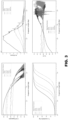
- Figure 2 shows the effect of the reduced genome representation on the observed coverage.
- Figure 2A shows MseI fragment length distribution according to 3 different approaches: Ampli1 LowPass for Ion Torrent with size selection collecting fragments between 300 and 450bp (A1LP_ss), Ampli1 LowPass with the selection derived by the sequencing step (A1LP) and libraries obtained after Ampli1 WGA followed by a random fragmentation and sequencing (A1_wFrg) (Binder V et al. 2014).
- A1LP_ss Ampli1 LowPass for Ion Torrent with size selection collecting fragments between 300 and 450bp
- A1_wFrg Ampli1 LowPass with the selection derived by the sequencing step
- A1_wFrg random fragmentation and sequencing
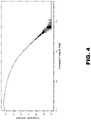
- Figure 2B shows Lorenz curves obtained with the different approaches which show a gradual decrease of coverage uniformity with size selection level.
- the lower A1LP_ss uniformity can be explained by saturation of the DNA templates and the recurring sequencing of same fragments.
- the template saturation is confirmed by plots in Figures 2C and 2D , which show the total amount of covered bases and mean coverage per base respectively at incremental intervals of mapped reads. These plots clearly show that the size selection step (A1LP_ss) reduces the amount of DNA available with the effect of a limited covered target but with a higher coverage.
- the approach is flexible in that, different deterministic enzymes may be suitable depending on the desired resolution and/or sequencing platform and sequencing protocol used. For example, different frequent cutters may be used.
- the TTAA motif is the Restriction Site.
- Other four-base cutters may be used to cut at different Restriction Site, such as GTAC, CTAG, ( Figure 3 ), obtaining a different distribution of fragments.
- Figure 3 shows in-silico digestion of human genome with different Restriction Sites (four or six base pairs). For a given range of fragment lengths (e.g. suitable for a certain sequencer and size selection method), different restriction sites yield a different number of fragments.
- the method uses a further step of selection.
- This additional step of selection can be achieved by either size-selecting certain fragments from the primary WGA and/or generating the massively parallel sequencing library by a method which restricts the sequenceable fragments.
- Ampli1 LowPass kits include an inherent size selection step which is sufficient to positively impact the process.
- a size selection on a gel is carried out.
- successive steps of purification using SPRI-beads effectively produce a first size selection, whereby the length of base-pairs is restricted to a range substantially depending on the SPRI-beads concentration.
- the sequencer may also introduce a size selection per se, as longer fragments will generate sequence data with lower and lower efficiency (e.g. due to emulsion PCR efficiency in Ion Torrent, or bridge PCR for cluster formation in Illumina platforms).
- FMAX is the size of fragments above which fragments are represented at the same conventional relative level or less with respect to the normalized in-band peak number of fragments per bin.
- the sequencing mode is preferably paired end sequencing, as the covered genome increases and thus the number of loci per-million read-pairs increases, augmenting the resolution.
- the paired-end sequencing will not increase the coverage as the two paired reads overlap completely.
- One advantage of pooling the samples and size-selecting the library for sequencing thereafter is that all samples will have the same distribution of fragment lengths, and in turn this will maximize the overlap of covered genome across different samples. This is relevant when using an approach based on controls (e.g. normal control or maternal control) to identify the potential heterozygous loci in the sample under test (SUT).
- controls e.g. normal control or maternal control
- the different LowPass libraries are at first size-selected and then pooled obtaining slightly different size-selections across different samples, thus reducing the covered genome across different samples on a per-Million reads basis.
- a size-selection after library pooling may be employed to increase the overlap across samples, which may be beneficial in analysis based on controls.
- the combination of DRS-WGA and LPWGS unexpectedly leads to a reduced representation from the input sample.
- this reduced representation library of the reference genome shrinks the covered genome in the selected (or any way sequenceable) base-pair range, and an effectively higher coverage for the covered genome on a per-Million reads basis is obtained, as compared to alternative WGA methods using random priming or random shearing.
- An example is the availability of one or more control samples - such as "matched normal” and availability of one or more samples under test (SUT), such as a tumor sample.
- SUT samples under test
- DRS-WGA increases the overlap of reads between SUT and control.
- DRS-WGA increases the number of loci covered by more than one read.
- the library preparation from the DRS-WGA is one of the methods disclosed in WO2017/178655 and WO2019/016401 , as the resulting reduction ratio is higher as opposed to digesting the WGA adaptors, fragmenting the DNA, and creating a sequenceable library thereafter, as carried out in Binder V. et al., 2014, or Hodgkinson C.L. et al., 2014.
- the DNA shearing increases the number of possible different fragments of the original DRS-WGA that can be found in a given base pair range selected for sequencing, because - once fragmented - longer fragments will fall back in the above said range, whereas only a fraction of the primary WGA fragments natively in-range will be kicked out of range due to the fragmentation, as smaller fragments tend to shear less efficiently with respect to longer fragments (see Figure 2 ).
- the massively parallel sequencing library is preferably obtained using Ampli1 LowPass kit (for Ion Torrent or for Illumina).
- the sample is sequenced using a compatible sequencer.
- the sequenced reads obtained from said library are mapped to the reference human genome and the alleles present in known and/or polymorphic loci are extracted. Preferably, such loci are covered by at least 2 sequencing reads. It should be noted that the detection of a single allele does not necessarily imply a real homozygous genotype, but may be a result of the low sequencing coverage.
- Said plurality of loci is preferably subdivided in genomic windows according to different criteria of genome partitioning.
- This partitioning is optional as in certain embodiments one may be interested only in the analysis of one or few predetermined genomic windows, for example a single chromosome or a single genomic locus comprising one or more genes of interest.
- the allelic status of loci detected in genomic windows is used to obtain a measurement.
- Such measurement hereafter named LoH score
- LoH score can be obtained by a variety of methods according to the invention, such as counting the number of heterozygous loci in the genomic window, or calculating the proportion of heterozygous loci.
- a statistical test is preferably applied to determine the significance of heterozygous loci drop in correspondence of LoH events by comparison with either an internal control or by using an external control (from the same individual/s or from a different individual/s) .
- a statistical test is preferably applied to determine the significance of heterozygous loci over-representation, in correspondence of genomic regions not in LoH, with respect to what expected based on sequencing and WGA error rates.
- LoH score thresholding based on a fixed threshold calculated from a training dataset with known LoH events, is preferably applied to define genomic regions corresponding to LoH events.
- the optional step of partitioning may be carried out in three alternative manners:
- the genomic window has a constant width.
- Each genomic window contains a plurality of loci, the number of which depends on the genomic location. This approach may be advantageous when comparing a sample against a set of control normal samples as the reference genome is partitioned in the same way in all the samples, thus allowing a direct comparison of the LoH score for each genomic window across multiple samples.
- the number and proportion of heterozygous loci detected in a genomic window of defined width will increase at higher read depths, to allow the comparison of a sample against a control (or multiple) control samples, the number of mapped reads in each sample is preferably normalized to a fixed number of reads.
- the normalized number of reads may be, for example, 1 million or 2 millions of reads, preferably 3 millions, 4 millions, 5 millions, 6 millions, 7 millions, 8 millions or 9 millions of reads.
- Figure 6 shows a schematic representation of an example of partitioning based on constant base-pair genomic windows. Paired control (top) and test (bottom) samples are represented. A continuous line represents (a portion of) the genome. Diamond markers delimit genomic windows of constant width and known polymorphic loci are represented by dots (heterozygous loci: white filled dots; homozygous loci: grey filled dots). The number of loci detected per genomic window varies across the genome but is expected to be similar, on average, for a given window, between two different samples the total read mappings of which have been normalized to a defined read count. A genomic window in LoH in a test sample is expected to show a drop in heterozygous loci compared to the same window in a normal control sample. The same window cannot be directly compared with genomic windows located on different genome positions on the same (or other) sample because of the bias in SNP densities along the genome.
- the genomic window has a constant number of loci.
- This approach allows to normalize the LoH score for different SNP densities across the genome.
- the method may be advantageous when using a control-free approach as it allows, for example, to apply the same threshold for all genomic windows irrespectively of their position in the genome and of their underlying SNP density.
- the method may be disadvantageous when comparing the test sample to control samples as different genomic windows may be generated for different samples depending on the distribution of loci sampled and detected by low-pass sequencing.
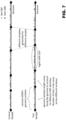
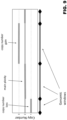
- Figure 7 shows a schematic representation of an example of partitioning based on constant number of loci per window. Paired control (top) and test (bottom) samples are represented. A continuous line represents (a portion of) the genome. Diamond markers delimit genomic windows containing a constant number of loci. Known polymorphic loci are represented by dots (heterozygous loci: white filled dots; homozygous loci: grey filled dots). Because of the low sequencing coverage not all loci in a genomic region will be detected. Thus, genomic window ends can vary between different samples based on loci sampling by sequencing reads and, as such, genomic windows detected in a test sample are not directly comparable to corresponding genomic windows in other (control) samples. A genomic window in LoH in a test sample is expected to show a drop in heterozygous loci with respect to genomic windows of the same sample which are not in LoH.
- the number and proportion of heterozygous loci detected in a genomic window with a constant number of loci will increase at higher read depths (see Figure 8 ).
- the number of mapped reads in each sample is normalized to a fixed number of reads. Such normalization is performed by randomly sampling reads, mapping to the reference genome, until the desired number is reached.
- the normalized number of reads may be, for example, 1 million or 2 millions of reads, preferably 3 millions, 4 millions, 5 millions, 6 millions, 7 millions, 8 millions or 9 millions of reads.
- the genomic window is a segmented genome region between two copy number breakpoints, contained in a chromosome arm, which may be defined by normalizing raw copy number counts in genomic windows by GC-content ( Boeva, V. et al., 2011, Bioinformatics, 27(2), 268-269 ) and by applying a segmentation algorithm such as a LASSO-based algorithm ( Harchaoui,Z. et al., 2008, Adv. Neural Inform. Process. Syst., 20, 617-624 ), circular binary segmentation (CBS) ( Seshan VE. et al., 2019, DNAcopy: DNA copy number data analysis.
- a LASSO-based algorithm Harchaoui,Z. et al., 2008, Adv. Neural Inform. Process. Syst., 20, 617-624
- CBS circular binary segmentation
- R package version 1.58.0 or similar algorithm to normalize read counts.
- This method is based on the assumption that a genomic region showing a copy number level change, with respect to sample main "normal" ploidy, has likely been affected by a single genomic copy-number aberration event and thus is expected to have a uniform LoH status.
- genomic windows defined by this method are generally much larger (up to 2-3 orders of magnitude) and will contain a larger number of known heterozygous and/or polymorphic loci, thus allowing to get a higher statistical power.
- by combining 2 different biological dimensions (copy-number, LoH score) more accurate results, with lower false positive rate, can be achieved with this method.
- the method may be disadvantageous in case of small LoH events located into larger copy number events which would remain undetected with this method.
- a chromosome arm undergoes an LoH event followed by a duplication
- chromosome arms will be used as segmentation unit in chromosomes without copy number changes. This prevents the miscall as LoH of a shorter chromosome arm when only the longer arm is affected (false-positive), or in the dual case, the miscall as no-LoH for the shorter chromosome arm when only the shorter is affected (false negative).
- Segmentation may also be employed leveraging copy-number information to exclude false positives deriving from high-level amplifications.
- a high-level amplification most probably derives from a single allele, and thus introduces a bias in the allelic representation in the region, whereby the minor allele, even if present, will be under-represented and may induce a false-positive LoH call.
- Table 2 shows the main features and pros and cons of each alternative step of partitioning according to the present invention.
- Table 2 Genome partitioning Features Pros Cons
- Genomic windows have the same length across the genome and across different samples. • Easy to apply in test-vs-control cases • Dependent on loci density • Not easily applicable to a control-free setup • Different loci density along the genome, resulting in genomic windows with different number of loci.
- (ii) • Independent from loci density variation along the genome Applicable to control-free setup • Test vs control not applicable
- iii) • Assume that copy-number segments are likely to have the same LoH status • Takes into account copy-number profiles information Potentially small false negative events in larger copy-number segments • Higher statistical power
- Step g. of assigning an LoH score to at least one genomic window of said reference genome for said at least one sample as a function of the number of loci with at least two different alleles in said plurality of loci also involves alternative preferred embodiments.
- the LoH score corresponds to the number of heterozygous loci in said at least one genomic window.
- a genomic window in LoH is expected to show a scarcity of heterozygous loci compared to regions or samples which are not in LoH (see Figure 10 ).
- an LoH score is defined as the proportion of heterozygous loci detected in that genomic window with respect to the total number of polymorphic loci in the same genomic window ( Figure 11 ).
- a consistent reduction of the LoH score is expected in the presence of an LoH event. This method may be advantageous when the windows do not contain an homogeneous number of loci detected, for example when a constant base-pair genomic window is used or copy number segments are used to partition the genome.
- an LoH score is defined by the results of a statistical test on the frequency of biallelic loci observed.
- the significance of under-representation of heterozygous loci with respect to an internal/external control can be assessed by performing a statistical test.
- a contingency table is built for each genomic window considering the two following classifications: 1) sample type (test, control); 2) loci type (heterozygous, homozygous).
- a statistical test such as the Fisher Exact test or comparable test for the analysis of contingency tables (e.g.: chi-squared test, G-test, Barnard's exact test, Fisher-Freeman-Halton test) is then applied.
- the statistical test should be performed one-sided in order to restrict the detection to the case where there is an under-representation of heterozygous loci due to LoH.
- the significance of over-representation of heterozygous loci with respect to that expected from sequencing and WGA error rates can be tested.
- This approach may be of advantage when testing for 'gain of heterozygosity' (hereinafter GoH) in haploid single-cells, such as gametes. This may occur for example due to errors in unbalanced disjunction during meiosis resulting in a gain of a chromosome.
- GoH heterozygosity'
- the control may be "internal" and can be defined, for example, by considering the genomic regions with ploidy equal to the likeliest main (average) genome ploidy. This approach assumes that most genomic regions not showing copy number alterations are not in LoH.
- control may be "external" and can be generated for example by using one or multiple normal samples from the same individual under test or from different individuals.
- an internal control may be advantageous for diploid or polyploid samples (e.g.: tumor samples) as it is independent of the number of reads (does not require normalization of the number of mapped reads) and in case of damaged samples (e.g.: FFPE samples). Indeed, damaged samples may show a higher occurrence of dropouts, in which one of the 2 alleles at a loci is lost because of DNA damage, compared to non-damaged ones and, thus, a lower number of heterozygous sites than expected for genomic regions not in LoH. This may hinder the comparison of test vs external control samples with different levels of damaging. By using an internal control, such bias is removed as control and test genomic windows will have the same level of dropout rate.
- the LoH score obtained from previous steps may be thresholded to define genomic regions in LoH.
- the number and proportion of heterozygous loci detected in a genomic window with a constant number of loci will increase at higher read depths.
- the number of mapped reads in each sample is preferably normalized to a fixed number of reads. Such normalization is performed by randomly sampling reads, mapping to the reference genome, until the desired number is reached (preferably contained in the range going from 1,000,000 mapped reads to 10,000,000 mapped reads). The above considerations do not apply when the LoH score is calculated by performing a statistical test against an "internal" control.
- LoH score calculated as number of heterozygous loci
- data is first downsampled to 1.000.000 mapped reads.
- Some preferred threshold values are 3, 6, 9 heterozygous SNPs out of 500, 1000 and 1500 loci, respectively ( Figure 12 ).
- LoH is then called in a given genomic window if the LoH score is lower than the selected threshold.
- LoH score calculated as p-value, resulting from the application of a statistical test
- some preferred thresholds may be, for example, 5*10 -2 or 1*10 -2 .
- LoH is then called in a genomic window if the LoH score is lower than the selected threshold.
- LoH status can be assigned to genomic regions according to different criteria described below.
- said gene is selected from the group consisting of BRCA1, BRCA2, PALB2, TP53, CDKN2A, RB1, APC, PTEN, CDKN1B, DMP1, NF1, AML1, EGR1, TGFBR1, TGFBR2, and SMAD4.
- LoH may be identified in a DNA deriving from a mixture of different kinds of cells (e.g.: tumor cells and normal cells).
- Sample purity is defined as the percentage of sample in the mixture which belongs to the type of interest (e.g.: tumor cells).
- #TC tumor cells which are clonal, i.e. genomically identical and thus having the same pattern of LoH and CNAs are mixed with #NC normal cells from the same individual, the purity of the resulting sample will be #TC/(#TC+#NC) and will be homogenous across the genome.
- Region of Interest may be as large as the entire reference genome (as in the previous example) or as small as a 100kbp.
- the purity may vary across different genomic regions from a minimum of 1/Number of cells in the pool - when an LoH region is represented in only one cell - to a maximum of 100%, when a Genomic region LoH status is common across all clones derived from the Last common ancestor.
- the sample analysed for LoH preferably has a purity of at least 50%, more preferably at least 70%, as can be appreciated from Figure 13 , which shows receiver operating characteristic (ROC) area under curve (AUC) values for LoH score at different number of mapped reads (1.000.000 - 10.000.000 reads) and sample purity (10% - 90%).
- Samples at different purities are obtained by mixing in silico reads obtained from the analysis of a tumor cell and a normal cell in proportions (tumor:normal) equivalent to the target purity. LoHs detected in the tumor cell by high pass whole genome sequencing are used as reference.
- a size selection is preferably performed during or after step c. of preparing a massively parallel sequencing library.
- the size of the fragments may be chosen according to different criteria.
- the sequencing method may be chosen by different criteria, also depending on the fragment size. In general, the higher the number of loci (polymorphic or heterozygous) contributing to the LoH analysis the better is the resolution (per Million reads) .
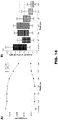
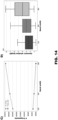
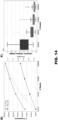
- Figure 14 shows data obtained by selecting in silico a subset of sequenced fragments from data obtained from a real single cell sample of increasing Fcenter (sequencing libraries prepared with Ampli1 LowPass for Illumina).
- Figure 14A shows the effect of size selection (band width 100) on coverage of DRS-WGA fragments respect to fragments mean length, with 250.000 reads;
- Figure 14B shows the effect of size selection (band width 100) on resolution in terms of base pairs (windows of 150 SNPs covered by at least 2 reads), with 250.000 reads;
- Figure 14C shows the effect of size selection band width on coverage of DRS-WGA fragments at a fixed fragments mean length (500bp), with 250.000 reads;
- Figure 14D shows the effect of size selection band width on resolution (bp) at a fixed fragments mean length (500bp), with 250.000 reads;
- Figure 14E shows the effect of number of reads on coverage of DRS-WGA fragments at a fixed fragments mean length (500bp).
- Table 3 below summarises the features of the methods used in 3 examples disclosed in the following.
- Table 3 Example ID 1 2 3 Analysis method Partitioning Constant bp genomic window x Constant number of loci x Segments defined by copy-number X LoH Scoring Heterozygous number x Heterozygous proportion x x P-value x X Thresholding Heterozygous number x Heterozygous proportion P-value X Controls Internal X External
- Example 1 Ampli1 LowPass for Illumina DNA libraries of 1 circulating tumor cell (CTC; test) and 1 white blood cell (WBC; control) obtained from a male patient affected by Multiple Myeloma were considered.
- the sequenced reads were mapped to the hg19 reference human genome and downsampled at 1, 2, 3, 4, 5, 6, 7, 8, 9 million reads.
- the alleles present at dbSNP polymorphic loci (dbSNP150 common variants with a minor allele frequency ⁇ 5%) were extracted from both libraries. Loci were partitioned with a fixed 10.000.000 bp genomic window.
- Figure 15 shows, on top, a copy-number plot of a CTC from a patient suffering from multiple myeloma.
- On the x axis are the chromosomes; on the y axis is the copy number. Each dot represents a genomic window of fixed size. Copy number segments are represented as solid lines.
- a reference (Ref) track is shown below the copy number plot, which represents known LoH regions detected by high pass whole genome sequencing of the same CTC are shown in solid black.
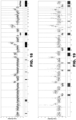
- Figure 16 shows the detection of LoH by using genomic windows with constant number of loci.
- a copy-number plot of the same CTC of Example 1 is shown on top.
- On the x axis are the chromosomes; on the y axis is the copy number.
- Each dot represents a genomic window of fixed size. Copy number segments are represented as solid lines.
- Below the plot is a heatmap representing the heterozygous count for each genomic window.
- Windows with a lower LoH score (lower number of Heterozygous loci), which are more likely to be in LoH status, are represented by a deeper shade of gray.
- Chromosome 11, large arm of chromosome 13 and chromosome X (which is in single copy in a male individual) show the lower LoH score.
- LoH score threshold 6 was determined as the point of best tradeoff between sensitivity and specificity ( Figure 17 , in which the x axis represents 1-specificity (lower values mean a more specific detection) and the y axis represents sensitivity. LoHs detected in the tumor cell by high pass whole genome sequencing were used as reference).
- Example 3 Ampli1 LowPass for Illumina libraries of 2 single Hodgkin Reed/Sternberg (HRS) cells obtained from a FFPE tissue of a classical Hodgkin Lymphoma sample from a male patient were analyzed. The two HRS cells share the same copy number profile. The sequenced reads were mapped to the hg19 reference human genome and the alleles present at dbSNP polymorphic loci (dbSNP150 common variants with a minor allele frequency ⁇ 5%) were extracted from both libraries. Loci were partitioned using copy number segments obtained by using Control-FREEC software, implementing GC-based normalization and copy number signal segmentation [ Boeva, V.
- HRS Hodgkin Reed/Sternberg
- the method according to the present invention is suitable to analyze data obtained from low-pass sequencing of genomic DNA from a test sample to detect LoH events. Contrary to other methods, inferring LoHs as runs of contiguous homozygous loci and requiring to extract the real genotype at a certain number of loci, the method of the present invention is based on the principle that, by analyzing a genomic window containing a sufficient number of loci sequenced at low coverage, and by extracting the alleles observed at said loci, not necessarily representative of the sample genotype, it may be possible to detect an LoH event as a decrease in biallelic loci, compared to that observed by analyzing a normal diploid sample.
- the method for analyzing LoH from a sample according to the present invention allows to infer LoH regions across the genome from low-pass whole genome sequencing data down to the single-cell resolution, using very few samples, as it may be the case where only few (down to a single one) CTCs are available, with the additional optional possibility to run the analysis without a normal control, and with a relatively small number of reads.
- particular embodiments of the method enable to increase the resolution in LoH calling by introducing certain processing steps in the library preparation process, without incremental sequencing costs.
- the method according to the invention surprisingly advances the state of the art with performances previously thought unachievable by the skilled in the art.
- the method allows to:
- the method according to the present invention allows to determine whole-genome copy number profile and LoH even from minute amount of cells, FFPE or tissue biopsies.
Landscapes
- Life Sciences & Earth Sciences (AREA)
- Chemical & Material Sciences (AREA)
- Health & Medical Sciences (AREA)
- Proteomics, Peptides & Aminoacids (AREA)
- Engineering & Computer Science (AREA)
- Organic Chemistry (AREA)
- Physics & Mathematics (AREA)
- Bioinformatics & Cheminformatics (AREA)
- Analytical Chemistry (AREA)
- Wood Science & Technology (AREA)
- Zoology (AREA)
- Biotechnology (AREA)
- General Health & Medical Sciences (AREA)
- Biophysics (AREA)
- Genetics & Genomics (AREA)
- Molecular Biology (AREA)
- Immunology (AREA)
- General Engineering & Computer Science (AREA)
- Biochemistry (AREA)
- Microbiology (AREA)
- Bioinformatics & Computational Biology (AREA)
- Theoretical Computer Science (AREA)
- Spectroscopy & Molecular Physics (AREA)
- Medical Informatics (AREA)
- Evolutionary Biology (AREA)
- Pathology (AREA)
- Hospice & Palliative Care (AREA)
- Oncology (AREA)
- Measuring Or Testing Involving Enzymes Or Micro-Organisms (AREA)
- Preparation Of Compounds By Using Micro-Organisms (AREA)
Applications Claiming Priority (2)
| Application Number | Priority Date | Filing Date | Title |
|---|---|---|---|
| IT102019000013335A IT201900013335A1 (it) | 2019-07-30 | 2019-07-30 | Metodo per analizzare la perdita di eterozigosi (loh) a seguito di amplificazione totale del genoma basata su un sito di restrizione deterministico (drs-wga) |
| PCT/IB2020/057149 WO2021019459A1 (en) | 2019-07-30 | 2020-07-29 | Method for analysing loss-of-heterozygosity (loh) following deterministic restriction-site whole genome amplification (drs-wga) |
Publications (2)
| Publication Number | Publication Date |
|---|---|
| EP4004236A1 EP4004236A1 (en) | 2022-06-01 |
| EP4004236B1 true EP4004236B1 (en) | 2023-02-15 |
Family
ID=68733545
Family Applications (1)
| Application Number | Title | Priority Date | Filing Date |
|---|---|---|---|
| EP20747479.2A Active EP4004236B1 (en) | 2019-07-30 | 2020-07-29 | Method for analysing loss-of-heterozygosity (loh) following deterministic restriction-site whole genome amplification (drs-wga) |
Country Status (13)
| Country | Link |
|---|---|
| US (1) | US20230175053A1 (pt) |
| EP (1) | EP4004236B1 (pt) |
| JP (1) | JP7684277B2 (pt) |
| CN (1) | CN114466936B (pt) |
| AU (1) | AU2020322242B2 (pt) |
| CA (1) | CA3149486A1 (pt) |
| DK (1) | DK4004236T3 (pt) |
| ES (1) | ES2944080T3 (pt) |
| FI (1) | FI4004236T3 (pt) |
| IL (1) | IL290176B2 (pt) |
| IT (1) | IT201900013335A1 (pt) |
| PT (1) | PT4004236T (pt) |
| WO (1) | WO2021019459A1 (pt) |
Families Citing this family (5)
| Publication number | Priority date | Publication date | Assignee | Title |
|---|---|---|---|---|
| WO2021037016A1 (en) * | 2019-08-30 | 2021-03-04 | The Chinese University Of Hong Kong | Methods for detecting absence of heterozygosity by low-pass genome sequencing |
| IT202100024101A1 (it) | 2021-09-20 | 2023-03-20 | Menarini Silicon Biosystems Spa | Metodo per analizzare il grado di similarita' di almeno due campioni utilizzando amplificazione deterministica dell'intero genoma mediante siti di restrizione (drs-wga) |
| EP4605937A1 (en) | 2022-10-19 | 2025-08-27 | Vib Vzw | Method of determining loss of heterozygosity status of a tumor |
| WO2025078387A1 (en) * | 2023-10-10 | 2025-04-17 | Vib Vzw | Method of detecting loss of heterozygosity status of a tumor |
| WO2026083244A1 (en) | 2024-10-14 | 2026-04-23 | Menarini Silicon Biosystems S.P.A. | Method for analysing the copy-number profile of a sample using deterministic restriction-site whole genome amplification (drs-wga) |
Family Cites Families (9)
| Publication number | Priority date | Publication date | Assignee | Title |
|---|---|---|---|---|
| IL141749A0 (en) | 1998-09-18 | 2002-03-10 | Micromet Ag | Dna amplification of a single cell |
| EP1578994A2 (en) | 2002-11-11 | 2005-09-28 | Affymetrix, Inc. | Methods for identifying dna copy number changes |
| BR112014015152A2 (pt) * | 2011-12-21 | 2017-07-04 | Myriad Genetics Inc | métodos e materiais para a avaliação da perda de heterozigosidade |
| ITUA20162640A1 (it) * | 2016-04-15 | 2017-10-15 | Menarini Silicon Biosystems Spa | Metodo e kit per la generazione di librerie di dna per sequenziamento massivo parallelo |
| EP3431611A1 (en) | 2017-07-21 | 2019-01-23 | Menarini Silicon Biosystems S.p.A. | Improved method and kit for the generation of dna libraries for massively parallel sequencing |
| EP3723096A1 (en) * | 2019-04-12 | 2020-10-14 | European Molecular Biology Laboratory | Comprehensive detection of single cell genetic structural variations |
| WO2021037016A1 (en) * | 2019-08-30 | 2021-03-04 | The Chinese University Of Hong Kong | Methods for detecting absence of heterozygosity by low-pass genome sequencing |
| CN112885406B (zh) * | 2020-04-16 | 2023-01-31 | 深圳裕策生物科技有限公司 | 检测hla杂合性缺失的方法及系统 |
| EP3945525A1 (en) * | 2020-07-27 | 2022-02-02 | Sophia Genetics S.A. | Methods for identifying chromosomal spatial instability such as homologous repair deficiency in low coverage next-generation sequencing data |
-
2019
- 2019-07-30 IT IT102019000013335A patent/IT201900013335A1/it unknown
-
2020
- 2020-07-29 CA CA3149486A patent/CA3149486A1/en active Pending
- 2020-07-29 CN CN202080068436.8A patent/CN114466936B/zh active Active
- 2020-07-29 EP EP20747479.2A patent/EP4004236B1/en active Active
- 2020-07-29 ES ES20747479T patent/ES2944080T3/es active Active
- 2020-07-29 FI FIEP20747479.2T patent/FI4004236T3/fi active
- 2020-07-29 JP JP2022506443A patent/JP7684277B2/ja active Active
- 2020-07-29 DK DK20747479.2T patent/DK4004236T3/da active
- 2020-07-29 US US17/631,269 patent/US20230175053A1/en active Pending
- 2020-07-29 IL IL290176A patent/IL290176B2/en unknown
- 2020-07-29 PT PT207474792T patent/PT4004236T/pt unknown
- 2020-07-29 AU AU2020322242A patent/AU2020322242B2/en active Active
- 2020-07-29 WO PCT/IB2020/057149 patent/WO2021019459A1/en not_active Ceased
Also Published As
| Publication number | Publication date |
|---|---|
| CA3149486A1 (en) | 2021-02-04 |
| AU2020322242B2 (en) | 2026-01-22 |
| IL290176A (en) | 2022-03-01 |
| IT201900013335A1 (it) | 2021-01-30 |
| WO2021019459A1 (en) | 2021-02-04 |
| EP4004236A1 (en) | 2022-06-01 |
| IL290176B2 (en) | 2025-06-01 |
| CN114466936A (zh) | 2022-05-10 |
| DK4004236T3 (da) | 2023-04-24 |
| ES2944080T3 (es) | 2023-06-19 |
| FI4004236T3 (fi) | 2023-05-05 |
| JP7684277B2 (ja) | 2025-05-27 |
| IL290176B1 (en) | 2025-02-01 |
| AU2020322242A1 (en) | 2022-03-24 |
| CN114466936B (zh) | 2025-01-21 |
| US20230175053A1 (en) | 2023-06-08 |
| JP2022543585A (ja) | 2022-10-13 |
| KR20220070203A (ko) | 2022-05-30 |
| PT4004236T (pt) | 2023-05-03 |
Similar Documents
| Publication | Publication Date | Title |
|---|---|---|
| EP4004236B1 (en) | Method for analysing loss-of-heterozygosity (loh) following deterministic restriction-site whole genome amplification (drs-wga) | |
| US11371074B2 (en) | Method and system for determining copy number variation | |
| EP4357461A2 (en) | Determination of base modifications of nucleic acids | |
| EP3143537B1 (en) | Rare variant calls in ultra-deep sequencing | |
| EP4095258A1 (en) | Target-enriched multiplexed parallel analysis for assesment of tumor biomarkers | |
| EP4521411A2 (en) | Method for analysing the degree of similarity of at least two samples using deterministic restriction-site whole genome amplification (drs-wga) | |
| EP4328920A1 (en) | Microsatellite instability detection method based on second-generation sequencing | |
| EP3979251A1 (en) | Methods for characterizing the limitations of detecting variants in next-generation sequencing workflows | |
| KR102960905B1 (ko) | 결정적 제한 부위 전체 게놈 증폭(DRS-WGA)에 따른 이형접합 소실(LoH)을 분석하기 위한 방법 | |
| US20220223226A1 (en) | Methods for detecting and characterizing microsatellite instability with high throughput sequencing | |
| Phipps | An evaluation of massively parallel sequencing for forensic applications | |
| Wang | Copy number variation characterization using nanopore sequencing | |
| HK40004815B (en) | Method and device for acquiring fetal free dna concentration | |
| HK40004815A (en) | Method and device for acquiring fetal free dna concentration |
Legal Events
| Date | Code | Title | Description |
|---|---|---|---|
| STAA | Information on the status of an ep patent application or granted ep patent |
Free format text: STATUS: UNKNOWN |
|
| STAA | Information on the status of an ep patent application or granted ep patent |
Free format text: STATUS: THE INTERNATIONAL PUBLICATION HAS BEEN MADE |
|
| PUAI | Public reference made under article 153(3) epc to a published international application that has entered the european phase |
Free format text: ORIGINAL CODE: 0009012 |
|
| STAA | Information on the status of an ep patent application or granted ep patent |
Free format text: STATUS: REQUEST FOR EXAMINATION WAS MADE |
|
| 17P | Request for examination filed |
Effective date: 20220225 |
|
| AK | Designated contracting states |
Kind code of ref document: A1 Designated state(s): AL AT BE BG CH CY CZ DE DK EE ES FI FR GB GR HR HU IE IS IT LI LT LU LV MC MK MT NL NO PL PT RO RS SE SI SK SM TR |
|
| GRAP | Despatch of communication of intention to grant a patent |
Free format text: ORIGINAL CODE: EPIDOSNIGR1 |
|
| STAA | Information on the status of an ep patent application or granted ep patent |
Free format text: STATUS: GRANT OF PATENT IS INTENDED |
|
| DAV | Request for validation of the european patent (deleted) | ||
| DAX | Request for extension of the european patent (deleted) | ||
| INTG | Intention to grant announced |
Effective date: 20220928 |
|
| GRAS | Grant fee paid |
Free format text: ORIGINAL CODE: EPIDOSNIGR3 |
|
| GRAA | (expected) grant |
Free format text: ORIGINAL CODE: 0009210 |
|
| STAA | Information on the status of an ep patent application or granted ep patent |
Free format text: STATUS: THE PATENT HAS BEEN GRANTED |
|
| AK | Designated contracting states |
Kind code of ref document: B1 Designated state(s): AL AT BE BG CH CY CZ DE DK EE ES FI FR GB GR HR HU IE IS IT LI LT LU LV MC MK MT NL NO PL PT RO RS SE SI SK SM TR |
|
| REG | Reference to a national code |
Ref country code: CH Ref legal event code: EP Ref country code: GB Ref legal event code: FG4D |
|
| REG | Reference to a national code |
Ref country code: DE Ref legal event code: R096 Ref document number: 602020008131 Country of ref document: DE |
|
| REG | Reference to a national code |
Ref country code: AT Ref legal event code: REF Ref document number: 1548241 Country of ref document: AT Kind code of ref document: T Effective date: 20230315 Ref country code: IE Ref legal event code: FG4D |
|
| REG | Reference to a national code |
Ref country code: NL Ref legal event code: FP |
|
| REG | Reference to a national code |
Ref country code: DK Ref legal event code: T3 Effective date: 20230421 |
|
| REG | Reference to a national code |
Ref country code: PT Ref legal event code: SC4A Ref document number: 4004236 Country of ref document: PT Date of ref document: 20230503 Kind code of ref document: T Free format text: AVAILABILITY OF NATIONAL TRANSLATION Effective date: 20230426 |
|
| REG | Reference to a national code |
Ref country code: SE Ref legal event code: TRGR |
|
| REG | Reference to a national code |
Ref country code: LT Ref legal event code: MG9D |
|
| REG | Reference to a national code |
Ref country code: ES Ref legal event code: FG2A Ref document number: 2944080 Country of ref document: ES Kind code of ref document: T3 Effective date: 20230619 |
|
| P01 | Opt-out of the competence of the unified patent court (upc) registered |
Effective date: 20230524 |
|
| PG25 | Lapsed in a contracting state [announced via postgrant information from national office to epo] |
Ref country code: RS Free format text: LAPSE BECAUSE OF FAILURE TO SUBMIT A TRANSLATION OF THE DESCRIPTION OR TO PAY THE FEE WITHIN THE PRESCRIBED TIME-LIMIT Effective date: 20230215 Ref country code: NO Free format text: LAPSE BECAUSE OF FAILURE TO SUBMIT A TRANSLATION OF THE DESCRIPTION OR TO PAY THE FEE WITHIN THE PRESCRIBED TIME-LIMIT Effective date: 20230515 Ref country code: LV Free format text: LAPSE BECAUSE OF FAILURE TO SUBMIT A TRANSLATION OF THE DESCRIPTION OR TO PAY THE FEE WITHIN THE PRESCRIBED TIME-LIMIT Effective date: 20230215 Ref country code: LT Free format text: LAPSE BECAUSE OF FAILURE TO SUBMIT A TRANSLATION OF THE DESCRIPTION OR TO PAY THE FEE WITHIN THE PRESCRIBED TIME-LIMIT Effective date: 20230215 Ref country code: HR Free format text: LAPSE BECAUSE OF FAILURE TO SUBMIT A TRANSLATION OF THE DESCRIPTION OR TO PAY THE FEE WITHIN THE PRESCRIBED TIME-LIMIT Effective date: 20230215 |
|
| PG25 | Lapsed in a contracting state [announced via postgrant information from national office to epo] |
Ref country code: PL Free format text: LAPSE BECAUSE OF FAILURE TO SUBMIT A TRANSLATION OF THE DESCRIPTION OR TO PAY THE FEE WITHIN THE PRESCRIBED TIME-LIMIT Effective date: 20230215 Ref country code: IS Free format text: LAPSE BECAUSE OF FAILURE TO SUBMIT A TRANSLATION OF THE DESCRIPTION OR TO PAY THE FEE WITHIN THE PRESCRIBED TIME-LIMIT Effective date: 20230615 Ref country code: GR Free format text: LAPSE BECAUSE OF FAILURE TO SUBMIT A TRANSLATION OF THE DESCRIPTION OR TO PAY THE FEE WITHIN THE PRESCRIBED TIME-LIMIT Effective date: 20230516 |
|
| PG25 | Lapsed in a contracting state [announced via postgrant information from national office to epo] |
Ref country code: SM Free format text: LAPSE BECAUSE OF FAILURE TO SUBMIT A TRANSLATION OF THE DESCRIPTION OR TO PAY THE FEE WITHIN THE PRESCRIBED TIME-LIMIT Effective date: 20230215 Ref country code: RO Free format text: LAPSE BECAUSE OF FAILURE TO SUBMIT A TRANSLATION OF THE DESCRIPTION OR TO PAY THE FEE WITHIN THE PRESCRIBED TIME-LIMIT Effective date: 20230215 Ref country code: EE Free format text: LAPSE BECAUSE OF FAILURE TO SUBMIT A TRANSLATION OF THE DESCRIPTION OR TO PAY THE FEE WITHIN THE PRESCRIBED TIME-LIMIT Effective date: 20230215 Ref country code: CZ Free format text: LAPSE BECAUSE OF FAILURE TO SUBMIT A TRANSLATION OF THE DESCRIPTION OR TO PAY THE FEE WITHIN THE PRESCRIBED TIME-LIMIT Effective date: 20230215 |
|
| REG | Reference to a national code |
Ref country code: DE Ref legal event code: R097 Ref document number: 602020008131 Country of ref document: DE |
|
| PG25 | Lapsed in a contracting state [announced via postgrant information from national office to epo] |
Ref country code: SK Free format text: LAPSE BECAUSE OF FAILURE TO SUBMIT A TRANSLATION OF THE DESCRIPTION OR TO PAY THE FEE WITHIN THE PRESCRIBED TIME-LIMIT Effective date: 20230215 |
|
| PLBE | No opposition filed within time limit |
Free format text: ORIGINAL CODE: 0009261 |
|
| STAA | Information on the status of an ep patent application or granted ep patent |
Free format text: STATUS: NO OPPOSITION FILED WITHIN TIME LIMIT |
|
| 26N | No opposition filed |
Effective date: 20231116 |
|
| PG25 | Lapsed in a contracting state [announced via postgrant information from national office to epo] |
Ref country code: SI Free format text: LAPSE BECAUSE OF FAILURE TO SUBMIT A TRANSLATION OF THE DESCRIPTION OR TO PAY THE FEE WITHIN THE PRESCRIBED TIME-LIMIT Effective date: 20230215 |
|
| PG25 | Lapsed in a contracting state [announced via postgrant information from national office to epo] |
Ref country code: MC Free format text: LAPSE BECAUSE OF FAILURE TO SUBMIT A TRANSLATION OF THE DESCRIPTION OR TO PAY THE FEE WITHIN THE PRESCRIBED TIME-LIMIT Effective date: 20230215 |
|
| PG25 | Lapsed in a contracting state [announced via postgrant information from national office to epo] |
Ref country code: MC Free format text: LAPSE BECAUSE OF FAILURE TO SUBMIT A TRANSLATION OF THE DESCRIPTION OR TO PAY THE FEE WITHIN THE PRESCRIBED TIME-LIMIT Effective date: 20230215 |
|
| PG25 | Lapsed in a contracting state [announced via postgrant information from national office to epo] |
Ref country code: LU Free format text: LAPSE BECAUSE OF NON-PAYMENT OF DUE FEES Effective date: 20230729 |
|
| PG25 | Lapsed in a contracting state [announced via postgrant information from national office to epo] |
Ref country code: LU Free format text: LAPSE BECAUSE OF NON-PAYMENT OF DUE FEES Effective date: 20230729 |
|
| PG25 | Lapsed in a contracting state [announced via postgrant information from national office to epo] |
Ref country code: BG Free format text: LAPSE BECAUSE OF FAILURE TO SUBMIT A TRANSLATION OF THE DESCRIPTION OR TO PAY THE FEE WITHIN THE PRESCRIBED TIME-LIMIT Effective date: 20230215 |
|
| PG25 | Lapsed in a contracting state [announced via postgrant information from national office to epo] |
Ref country code: BG Free format text: LAPSE BECAUSE OF FAILURE TO SUBMIT A TRANSLATION OF THE DESCRIPTION OR TO PAY THE FEE WITHIN THE PRESCRIBED TIME-LIMIT Effective date: 20230215 |
|
| PG25 | Lapsed in a contracting state [announced via postgrant information from national office to epo] |
Ref country code: CY Free format text: LAPSE BECAUSE OF FAILURE TO SUBMIT A TRANSLATION OF THE DESCRIPTION OR TO PAY THE FEE WITHIN THE PRESCRIBED TIME-LIMIT; INVALID AB INITIO Effective date: 20200729 |
|
| PG25 | Lapsed in a contracting state [announced via postgrant information from national office to epo] |
Ref country code: HU Free format text: LAPSE BECAUSE OF FAILURE TO SUBMIT A TRANSLATION OF THE DESCRIPTION OR TO PAY THE FEE WITHIN THE PRESCRIBED TIME-LIMIT; INVALID AB INITIO Effective date: 20200729 |
|
| PGFP | Annual fee paid to national office [announced via postgrant information from national office to epo] |
Ref country code: NL Payment date: 20250724 Year of fee payment: 6 |
|
| PGFP | Annual fee paid to national office [announced via postgrant information from national office to epo] |
Ref country code: FI Payment date: 20250724 Year of fee payment: 6 Ref country code: PT Payment date: 20250708 Year of fee payment: 6 Ref country code: ES Payment date: 20250812 Year of fee payment: 6 |
|
| PGFP | Annual fee paid to national office [announced via postgrant information from national office to epo] |
Ref country code: DE Payment date: 20250728 Year of fee payment: 6 Ref country code: DK Payment date: 20250725 Year of fee payment: 6 |
|
| PGFP | Annual fee paid to national office [announced via postgrant information from national office to epo] |
Ref country code: TR Payment date: 20250710 Year of fee payment: 6 Ref country code: IT Payment date: 20250702 Year of fee payment: 6 |
|
| PGFP | Annual fee paid to national office [announced via postgrant information from national office to epo] |
Ref country code: BE Payment date: 20250724 Year of fee payment: 6 Ref country code: GB Payment date: 20250722 Year of fee payment: 6 |
|
| PGFP | Annual fee paid to national office [announced via postgrant information from national office to epo] |
Ref country code: AT Payment date: 20250718 Year of fee payment: 6 Ref country code: FR Payment date: 20250725 Year of fee payment: 6 |
|
| PGFP | Annual fee paid to national office [announced via postgrant information from national office to epo] |
Ref country code: CH Payment date: 20250801 Year of fee payment: 6 Ref country code: SE Payment date: 20250725 Year of fee payment: 6 |
|
| PGFP | Annual fee paid to national office [announced via postgrant information from national office to epo] |
Ref country code: IE Payment date: 20250718 Year of fee payment: 6 |
|
| REG | Reference to a national code |
Ref country code: AT Ref legal event code: UEP Ref document number: 1548241 Country of ref document: AT Kind code of ref document: T Effective date: 20230215 |