EP4004867B1 - Verfahren und datenverarbeitungssystem zur bereitstellung eines berechneten beginns eines schlaganfalls - Google Patents
Verfahren und datenverarbeitungssystem zur bereitstellung eines berechneten beginns eines schlaganfalls Download PDFInfo
- Publication number
- EP4004867B1 EP4004867B1 EP20780971.6A EP20780971A EP4004867B1 EP 4004867 B1 EP4004867 B1 EP 4004867B1 EP 20780971 A EP20780971 A EP 20780971A EP 4004867 B1 EP4004867 B1 EP 4004867B1
- Authority
- EP
- European Patent Office
- Prior art keywords
- brain
- stroke
- imaging data
- brain region
- data
- Prior art date
- Legal status (The legal status is an assumption and is not a legal conclusion. Google has not performed a legal analysis and makes no representation as to the accuracy of the status listed.)
- Active
Links
Images

Classifications
-
- G—PHYSICS
- G06—COMPUTING OR CALCULATING; COUNTING
- G06T—IMAGE DATA PROCESSING OR GENERATION, IN GENERAL
- G06T7/00—Image analysis
- G06T7/0002—Inspection of images, e.g. flaw detection
- G06T7/0012—Biomedical image inspection
- G06T7/0014—Biomedical image inspection using an image reference approach
-
- A—HUMAN NECESSITIES
- A61—MEDICAL OR VETERINARY SCIENCE; HYGIENE
- A61B—DIAGNOSIS; SURGERY; IDENTIFICATION
- A61B6/00—Apparatus or devices for radiation diagnosis; Apparatus or devices for radiation diagnosis combined with radiation therapy equipment
- A61B6/52—Devices using data or image processing specially adapted for radiation diagnosis
- A61B6/5211—Devices using data or image processing specially adapted for radiation diagnosis involving processing of medical diagnostic data
-
- G—PHYSICS
- G06—COMPUTING OR CALCULATING; COUNTING
- G06T—IMAGE DATA PROCESSING OR GENERATION, IN GENERAL
- G06T7/00—Image analysis
- G06T7/0002—Inspection of images, e.g. flaw detection
- G06T7/0012—Biomedical image inspection
-
- A—HUMAN NECESSITIES
- A61—MEDICAL OR VETERINARY SCIENCE; HYGIENE
- A61B—DIAGNOSIS; SURGERY; IDENTIFICATION
- A61B6/00—Apparatus or devices for radiation diagnosis; Apparatus or devices for radiation diagnosis combined with radiation therapy equipment
- A61B6/02—Arrangements for diagnosis sequentially in different planes; Stereoscopic radiation diagnosis
- A61B6/03—Computed tomography [CT]
- A61B6/037—Emission tomography
-
- A—HUMAN NECESSITIES
- A61—MEDICAL OR VETERINARY SCIENCE; HYGIENE
- A61B—DIAGNOSIS; SURGERY; IDENTIFICATION
- A61B6/00—Apparatus or devices for radiation diagnosis; Apparatus or devices for radiation diagnosis combined with radiation therapy equipment
- A61B6/50—Apparatus or devices for radiation diagnosis; Apparatus or devices for radiation diagnosis combined with radiation therapy equipment specially adapted for specific body parts; specially adapted for specific clinical applications
- A61B6/501—Apparatus or devices for radiation diagnosis; Apparatus or devices for radiation diagnosis combined with radiation therapy equipment specially adapted for specific body parts; specially adapted for specific clinical applications for diagnosis of the head, e.g. neuroimaging or craniography
-
- G—PHYSICS
- G06—COMPUTING OR CALCULATING; COUNTING
- G06T—IMAGE DATA PROCESSING OR GENERATION, IN GENERAL
- G06T7/00—Image analysis
- G06T7/0002—Inspection of images, e.g. flaw detection
- G06T7/0012—Biomedical image inspection
- G06T7/0014—Biomedical image inspection using an image reference approach
- G06T7/0016—Biomedical image inspection using an image reference approach involving temporal comparison
-
- G—PHYSICS
- G06—COMPUTING OR CALCULATING; COUNTING
- G06T—IMAGE DATA PROCESSING OR GENERATION, IN GENERAL
- G06T7/00—Image analysis
- G06T7/10—Segmentation; Edge detection
-
- G—PHYSICS
- G06—COMPUTING OR CALCULATING; COUNTING
- G06T—IMAGE DATA PROCESSING OR GENERATION, IN GENERAL
- G06T7/00—Image analysis
- G06T7/30—Determination of transform parameters for the alignment of images, i.e. image registration
-
- G—PHYSICS
- G06—COMPUTING OR CALCULATING; COUNTING
- G06T—IMAGE DATA PROCESSING OR GENERATION, IN GENERAL
- G06T7/00—Image analysis
- G06T7/30—Determination of transform parameters for the alignment of images, i.e. image registration
- G06T7/33—Determination of transform parameters for the alignment of images, i.e. image registration using feature-based methods
- G06T7/344—Determination of transform parameters for the alignment of images, i.e. image registration using feature-based methods involving models
-
- A—HUMAN NECESSITIES
- A61—MEDICAL OR VETERINARY SCIENCE; HYGIENE
- A61B—DIAGNOSIS; SURGERY; IDENTIFICATION
- A61B6/00—Apparatus or devices for radiation diagnosis; Apparatus or devices for radiation diagnosis combined with radiation therapy equipment
- A61B6/02—Arrangements for diagnosis sequentially in different planes; Stereoscopic radiation diagnosis
- A61B6/03—Computed tomography [CT]
- A61B6/032—Transmission computed tomography [CT]
-
- A—HUMAN NECESSITIES
- A61—MEDICAL OR VETERINARY SCIENCE; HYGIENE
- A61B—DIAGNOSIS; SURGERY; IDENTIFICATION
- A61B6/00—Apparatus or devices for radiation diagnosis; Apparatus or devices for radiation diagnosis combined with radiation therapy equipment
- A61B6/48—Diagnostic techniques
- A61B6/482—Diagnostic techniques involving multiple energy imaging
-
- A—HUMAN NECESSITIES
- A61—MEDICAL OR VETERINARY SCIENCE; HYGIENE
- A61B—DIAGNOSIS; SURGERY; IDENTIFICATION
- A61B6/00—Apparatus or devices for radiation diagnosis; Apparatus or devices for radiation diagnosis combined with radiation therapy equipment
- A61B6/52—Devices using data or image processing specially adapted for radiation diagnosis
- A61B6/5205—Devices using data or image processing specially adapted for radiation diagnosis involving processing of raw data to produce diagnostic data
-
- G—PHYSICS
- G06—COMPUTING OR CALCULATING; COUNTING
- G06T—IMAGE DATA PROCESSING OR GENERATION, IN GENERAL
- G06T2207/00—Indexing scheme for image analysis or image enhancement
- G06T2207/10—Image acquisition modality
- G06T2207/10072—Tomographic images
- G06T2207/10081—Computed x-ray tomography [CT]
-
- G—PHYSICS
- G06—COMPUTING OR CALCULATING; COUNTING
- G06T—IMAGE DATA PROCESSING OR GENERATION, IN GENERAL
- G06T2207/00—Indexing scheme for image analysis or image enhancement
- G06T2207/10—Image acquisition modality
- G06T2207/10072—Tomographic images
- G06T2207/10101—Optical tomography; Optical coherence tomography [OCT]
-
- G—PHYSICS
- G06—COMPUTING OR CALCULATING; COUNTING
- G06T—IMAGE DATA PROCESSING OR GENERATION, IN GENERAL
- G06T2207/00—Indexing scheme for image analysis or image enhancement
- G06T2207/20—Special algorithmic details
- G06T2207/20081—Training; Learning
-
- G—PHYSICS
- G06—COMPUTING OR CALCULATING; COUNTING
- G06T—IMAGE DATA PROCESSING OR GENERATION, IN GENERAL
- G06T2207/00—Indexing scheme for image analysis or image enhancement
- G06T2207/20—Special algorithmic details
- G06T2207/20084—Artificial neural networks [ANN]
-
- G—PHYSICS
- G06—COMPUTING OR CALCULATING; COUNTING
- G06T—IMAGE DATA PROCESSING OR GENERATION, IN GENERAL
- G06T2207/00—Indexing scheme for image analysis or image enhancement
- G06T2207/30—Subject of image; Context of image processing
- G06T2207/30004—Biomedical image processing
- G06T2207/30016—Brain
-
- G—PHYSICS
- G06—COMPUTING OR CALCULATING; COUNTING
- G06T—IMAGE DATA PROCESSING OR GENERATION, IN GENERAL
- G06T2207/00—Indexing scheme for image analysis or image enhancement
- G06T2207/30—Subject of image; Context of image processing
- G06T2207/30004—Biomedical image processing
- G06T2207/30101—Blood vessel; Artery; Vein; Vascular
Definitions
- the invention relates to a computer-implemented method for providing a stroke information, wherein the stroke information comprises the calculated onset time of the stroke.
- the invention relates to a data processing system, to a computer program product and to a computer-readable medium.
- Stroke remains one of the leading causes of death in developed countries. Nearly nine out of ten strokes are ischemic, i.e. they are caused by a thrombus (blood clot) occluding a vessel, thereby preventing part of the brain from being supplied with oxygenated blood.
- thrombus blood clot
- CT computed tomography
- CTA CT angiography
- penumbra hyperoxic, but potentially salvageable tissue
- ischemic stroke in non-contrast scans is typically performed by visual inspection, often guided by the ASPECT score (Alberta Stroke Program Early CT score).
- the ASPECT score is an established clinical tool that defines 10 regions of both brain hemispheres to check for early stroke signs in order to compute a quantitative score between 0 and 10 quantifying the severity of the stroke. It is specific to the brain area supplied by the anterior circulation. Determining whether a region is affected is, to a considerable degree, subjective.
- US 2019/122363 A1 discloses a method of analyzing data from a tomographic scan that provides three-dimensional information about a patient's brain.
- US 2019/099145 A1 discloses a method of identifying and visualizing a thrombosis.
- KR 2019 0068254 A discloses a method for estimating a time point of occurrence of a lesion in a cerebral infarction patient.
- KUANG HULIN ET AL "Segmenting Hemorrhagic and Ischemic Infarct Simultaneously From Follow-Up Non-Contrast CT Images in Patients With Acute Ischemic Stroke", IEEE ACCESS, vol. 7, pages 39842-39851, 2019 , discloses a method for segmenting ischemic and hemorrhage infarct simultaneously.
- the underlying technical problem of the invention is to calculate onset time of stroke with high reliability.
- the invention is set out in the appended set of claims.
- the invention relates to a computer-implemented method for providing a stroke information, the method comprising
- the generating of the stroke information regarding the stroke can be further based on the brain atlas data.
- the brain atlas data can be, for example, probabilistic brain atlas data.
- the generating of the registered imaging data can comprise, for example, a segmenting of the plurality of brain regions based on the computed tomography imaging data, thereby generating, for each brain region of the plurality of brain regions, a representation of that brain region.
- the generating of the registered imaging data can comprise, for example, a scaling the computed tomography imaging data and/or a rigid pre-registration of the computed tomography imaging data.
- the generating of the registered imaging data can comprise, for example, a rigid or non-rigid registration of the computed tomography imaging data to the brain atlas data.
- a common coordinate system can be provided to which the computed tomography data, the brain atlas data and/or training data, on which a trained machine learning model is based, can be related.
- the computed tomography imaging data can comprise, for example, at least one non-contrast computed tomography image and/or computed tomography angiography (CTA) data, in particular digital subtraction computed tomography angiography data.
- CTA computed tomography angiography
- the CTA data can be related to a single phase or to multiple phases.
- the computed tomography imaging data can further comprise, for example, computed tomography perfusion data and/or spectral computed tomography imaging data.
- Spectral computed tomography imaging data can be based, for example, on dual-energy, in particular, dual-source, computed tomography imaging and/or photon-counting computed tomography imaging.
- the brain atlas data can comprise, for example, at least one of a vessel probability map, vessel labels and an average local density map.
- the set of algorithms can comprise one or more algorithms.
- the stroke information can further comprise, for example, at least one of a location of the blood clot, a name of a vessel comprising the blood clot, a marking of a region affected by the blood clot, a value and/or a graphical representation related to a density reduction of brain tissue.
- the method for providing a stroke information further comprises receiving, in addition to the computed tomography imaging data, medical information related to the patient.
- the medical information can comprise, for example, an onset time of a stroke that has occurred in the brain, and/or a result of a prior medical assessment, in particular a non-imaging-based prior medical assessment, of the examination area (e. g. NIHSS - National Institutes of Health Stroke Scale) and/or a set of physiological parameters of the patient.
- the method further comprises
- the calculating of the left-right difference image can comprise, for example, a rigid or non-rigid registration of the mirrored imaging data to the computed tomography imaging data and/or a smoothing of the mirrored imaging data and/or the computed tomography imaging data.
- a location of a blood clot of a vessel can be determined as the vessels downstream of the occlusion will be missing only on the cerebral hemisphere that is affected by the stroke, and/or an extent of the infarcted brain region can be determined as the affected tissue will be darker than the corresponding region on the contralateral side.
- the extent of the infarcted brain region can be determined (similar to the CTA case above), in particular if some time has passed since the onset of the stroke, for example, roughly 2.5 hours, and/or a density reduction with respect to the contralateral side can be determined.
- the method further comprises
- the method further comprises
- the sagittal plane of the patient can be, for example, a midsagittal plane of the patient, the midsagittal plane of the patient being located between the left cerebral hemisphere and the right cerebral hemisphere.
- the plane that is perpendicular to the sagittal plane of the patient can be, for example a coronal plane of the patient or a transverse plane of the patient or a linear combination of a coronal plane of the patient and a transverse plane of the patient.
- the reference brain region comprises, for each brain region of the plurality of brain regions, a respective subregion, such that that brain region and the respective subregion are located within the same cerebral hemisphere.
- the reference brain region can comprise at least one further brain region, the plurality of brain regions not comprising the at least one further brain region.
- the reference brain region can comprise, for example, one or more or all brain regions of the plurality of brain regions.
- the reference brain region can extend, for example, over an entire cross-section of the brain of the patient.
- the action of calculating, for each brain region of the plurality of brain regions, a local density average of that brain region based on the computed tomography imaging data and/or the registered imaging data can comprise the action of calculating, for a reference brain region, a density average of the reference brain region based on the computed tomography imaging data and/or the registered imaging data, the examination area of the patient comprising the reference brain region.
- the coronal plane can be, for example, a mid-coronal plane.
- each brain region of the plurality of brain regions is located anterior with respect to the coronal plane and the reference brain region or the subregion of the reference brain region is located posterior with respect to the coronal plane.
- each brain region of the plurality of brain regions is located posterior with respect to the coronal plane and the reference brain region or the subregion of the reference brain region is located anterior with respect to the coronal plane.
- the density difference information of any brain region of the plurality of brain regions can comprise, for example, an absolute and/or relative difference of the local density average of that brain region and the density average of the reference brain region.
- the density difference information of any brain region of the plurality of brain regions can comprise, for example, an absolute and/or relative difference of the local density average of that brain region and the local density average of the at least one other brain region of the plurality of brain regions.
- the density difference information of any brain region of the plurality of brain regions can comprise, for example, an absolute and/or relative difference of the local density average of that brain region and a global density average.
- the global density average can be calculated, for example, based on the respective local density average of each brain region of the plurality of brain regions.
- the global density average can be, for example, the density average of the reference brain region.
- relative differences regarding the local density average can be calculated based on CTA data.
- absolute and/or relative differences regarding the local density average can be calculated based on the at least one non-contrast computed tomography image.
- the density difference information of each brain region of the plurality of brain regions can be calculated, for example, further based on the brain atlas data and/or a statistical comparison of that brain region with the at least one other brain region of the plurality of brain regions.
- an atlas-based local density average of that brain region can be calculated based on the brain atlas data and/or a comparison result of that brain region can be calculated based on a comparing of the local density average of that brain region and the atlas-based local density average of that brain region.
- the density difference information of any brain region of the plurality of brain regions can comprise, for example, the comparison result of that brain region.
- the density difference map can comprise, for each brain region of the plurality of brain regions, the respective density difference information. Based on the density difference map, a stroke information can be obtained that is robust to an individual variation of density. Based on the density difference map, abnormalities can be revealed that may not be detected by left-right asymmetry analysis, e.g. in case of prior infarcts or occlusions that affect both hemispheres.
- the onset time of the stroke is calculated by applying the algorithm for calculating the onset time of the stroke onto the left-right difference image and onto the density difference map.
- the onset time of the stroke can be calculated in case it is unavailable as an input in form of the medical information related to the patient.
- a density reduction can be calculated based on the left-right difference image and/or based on the density difference map.
- the water uptake quantification can be calculated based on the density reduction. Based on the water uptake quantification, the onset time of the stroke can be calculated.
- the set of algorithms comprises an algorithm for generating a representation of a blood clot
- the algorithm for generating the representation of the blood clot can be based, for example, on an image-to-image model that maps input non-contrast CT imaging/CTA data to the representation of the blood clot and can be trained, for example, based on annotated ground truth imaging data in which one or more blood clots are segmented.
- the algorithm for generating the representation of the blood clot can be configured, for example, to use the at least one non-contrast computed tomography image as mandatory input and the CTA data as optional input. This may be realized as a single model trained on both inputs, but designed to handle missing input, or as two separate sub-models whose output is merged when both the mandatory input and the optional input are available.
- the representation of the clot can be, for example, a mask image of the clot. Based on the representation of the blood clot, the location and/or the size of the blood clot, in particular in form of a thrombus, can be determined. A label of the occluded vessel can be determined by automatically looking up the vessel label in the brain atlas data at the found location of the blood clot.
- the set of algorithms comprises an algorithm for generating a clot composition information
- the clot composition information can be based on and/or comprise a degree of calcification of the blood clot.
- the algorithm for generating the clot composition can be configured to analyze at least one of a shape, a density and a texture of the blood clot to generate the clot composition information that characterizes the clot composition.
- the clot composition information can be generated based on spectral information, for example, based on a decomposition of materials of the representation of the blood clot.
- the set of algorithms comprises an algorithm for generating a viability map, the viability map being indicative, for each brain region of the plurality of brain regions, of a brain tissue viability of that brain region,
- the viability map may comprise, for each brain region of the plurality of brain regions of the brain, a probability regarding the brain tissue viability of that brain region, in particular a probability that the brain tissue of that brain region belongs to either core or penumbra.
- the algorithm for generating the viability map can be based, for example, on an image-to-image model that maps input non-contrast CT imaging/CTA data to the viability map. From the viability map, location and size of the at least one brain region that is affected by the stroke can be determined.
- the algorithm for generating the viability map can be trained, for example, based on a plurality of training datasets, each dataset of the plurality of training datasets comprising at least one training non-contrast CT image and/or training CTA data as a training input and a training viability map generated, for example, based on CT perfusion data and/or follow-up CT imaging data, as a training output.
- the CTA data as an optional training input can be handled as described above for the algorithm for generating the representation of the blood clot.
- regions with neither early nor late enhancement are likely non-viable, regions with late enhancement only (due to slower distribution of the contrast medium via collaterals) may still be salvageable.
- non-imaging-based prior assessment of the patient is received, this can be utilized to reduce the likelihood of false positives (both in terms of affected regions and blood clots).
- the brain hemisphere that is affected by the stroke may be known in advance.
- Prior assessment may yield probabilities regarding which brain regions may be affected by the stroke. This can be cross-checked with the viability map.
- the method further comprises
- the output-output consistency information can be generated based on a cross-check of the output of the algorithm of the set of algorithms and the output selected from the group consisting of the left-right difference image, the density difference map and the output of the at least one other algorithm of the set of algorithms.
- the output-output consistency information can be further generated based on the registered image and/or the brain atlas data.
- the algorithm of the set of algorithms can be an algorithm for processing the at least one non-contrast computed tomography image and/or the at least one other algorithm of the set of algorithms can be an algorithm for processing the computed tomography angiography data.
- the output of the algorithm of the set of algorithms can be generated by applying the algorithm of the set of algorithms onto the at least on non-contrast computed tomography image and/or the output of the at least one other algorithm of the set of algorithms can be generated by applying the at least one other algorithm of the set of algorithms onto the computed tomography angiography data.
- the output-output consistency information can be generated based on an output of the algorithm for generating the representation of the blood clot, the left-right difference image and the brain atlas data.
- a blood clot location that has been determined based on the left-right difference image and the brain atlas data can be used to increase a fidelity of the algorithm for generating the representation of the blood clot, for example, in form of a prior probability for the blood clot location or in form of an elimination of false positive outputs of the algorithm for generating the representation of the blood clot.
- the output-output consistency information can be generated based on an output of the algorithm for generating the viability map and the left-right difference image and/or based on an output of the algorithm for generating the viability map and the density difference map.
- the consistency information can be indicative of a consistency of the viability map with respect to the left-right difference image and/or the density difference map.
- the output-output consistency information can be generated based on an output of the algorithm for generating the representation of the blood clot and an output of the algorithm for generating the viability map.
- the consistency information can be indicative of a consistency of the representation of the blood clot and the viability map, for example be indicative of whether the affected regions according to the viability map are plausible in view of the blood clot location according to the representation of the blood clot (Would vessels downstream of the presumed occlusion supply blood to these regions?) - and vice versa.
- the brain atlas data can comprise blood flow information indicative of which regions might be supplied by which vessels.
- the blood flow information can be probabilistic to account for anatomical variation.
- the method further comprises
- the input-output consistency information can be generated based on a cross-check of the prior information and the output selected from the group consisting of the left-right difference image, the density difference map and the output of the algorithm of the set of algorithms.
- the prior information can comprise, for example, an onset time of the stroke.
- the onset time of the stroke can be used to calculate an expected degree of density reduction.
- the algorithm of the set of algorithms can be, for example, an image-processing algorithm.
- an onset time is received as prior information, it can be used to calculate an expected degree of density reduction which can be compared to the corresponding reduction observed in the left-right difference image and/or the density difference map.
- the reliability of the stroke information can be further improved.
- the method further comprises
- an attention map for example in form of a saliency map, can be computed to visualize which image regions in which image contributed the most to arriving at the output of a given algorithm.
- the attention map can be visualized, for example, as an overlay on the at least one non-contrast computed tomography image and/or the CTA data.
- the attention map can be used to visually explain which parts of the registered imaging data were most influential for the output of the at least one algorithm, thereby facilitating reasoning and explicable results.
- the at least one algorithm can be selected, for example, from the group consisting of the algorithm for calculating an onset time of a stroke, the algorithm for generating a representation of a blood clot, the algorithm for generating a clot composition information and the algorithm for generating a viability map.
- the attention map can be generated, for example, based on a machine learning model, in particular a neural network model, on which the at least one algorithm is based.
- the attention map can be generated, for example, further based on an input, onto which the at least one algorithm is applied, and/or an output of the at least one algorithm, the output corresponding to the input.
- the attention map can be generated based on a derivative of the output of the at least one algorithm with respect to voxels of the corresponding input.
- At least one algorithm of the set of algorithms is based on a trained machine learning model, wherein the generating of the stroke information regarding the stroke is based on the trained machine learning model and the registered imaging data.
- the generating of the stroke information regarding the stroke based on the trained machine learning model and the registered imaging data can comprise applying the trained machine learning model onto the registered imaging data.
- the generating of the stroke information regarding the stroke is further based on the brain atlas data.
- the generating of the stroke information regarding the stroke based on the trained machine learning model, the registered imaging data and the brain atlas data can comprise applying the trained machine learning model onto the registered imaging data and the brain atlas data.
- any of the algorithm for calculating an onset time of a stroke, the algorithm for generating a representation of a blood clot, the algorithm for generating a clot composition information and the algorithm for generating a viability map can be based on a respective machine learning model.
- the machine learning model can be based on a deep neural network and/or another technique, for example random forest regression. For localization of blood clots, a classifier/detector approach may be used as well, potentially followed by a distinct segmentation step that may or may not be machine-learning based itself.
- the machine learning model can be based, for example, on an image-to-image model, for example, with an encoding path followed by a decoding path, where individual stages are coupled by skip connections.
- any of the algorithms mentioned herein can be based on one or more of the following architectures: convolutional neural network, deep belief network, random forest, deep residual learning, deep reinforcement learning, recurrent neural network, Siamese network, generative adversarial network or auto-encoder.
- the trained machine learning model can be embodied as a deep learning model, in particular as a deep convolutional neural network.
- the trained machine learning model is based on a plurality of training datasets, each training dataset of the plurality of training datasets comprising a training input in form of training computed tomography imaging data and a corresponding training output in form of a training stroke information.
- the trained machine learning model can be trained based on a plurality of training datasets, each training dataset of the plurality of training datasets comprising a training input in form of training computed tomography imaging data and a corresponding training output in form of a training stroke information.
- the training computed tomography imaging data can comprise, for example, at least one training non-contrast computed tomography image and/or training CTA data.
- the training stroke information can be determined, for example based on computed tomography perfusion data and/or based on related follow-up scans.
- the training stroke information can comprise, for example, an annotation, in particular an annotation of a blood clot and/or a vessel and/or a brain region. Such annotations can be provided by expert readers.
- one of the left and right cerebral hemispheres is selected, wherein onto each of those training datasets of the plurality of training datasets, for which the cerebral hemisphere, that is affected by a respective stroke, does not correspond to the selected cerebral hemisphere, a left-right mirroring is applied, in particular to make the hemisphere, that is affected by the respective stroke, corresponding to the selected cerebral hemisphere.
- the left-right mirroring can be applied onto any training dataset, for example, by applying the left-right mirroring onto the training input of that training dataset and onto the training output of that training dataset.
- the left-right mirroring can be understood as a left-right interchanging, if applicable.
- Each left-right mirrored training dataset can be used for training the machine learning model instead of the respective original training dataset.
- the images of the training datasets can be first brought in the coordinate system of the brain atlas data by non-rigid reformation to reduce irrelevant variation due to positioning and anatomy. Registered images are then left-right mirrored (flipped), if necessary, such that the affected hemisphere always appears on the same, pre-defined side, for example left. In this way, the machine learning model does not have to learn the same features twice for comparing a stroke sign on the left cerebral hemisphere with its healthy counterpart on the right cerebral hemisphere, and vice versa.
- Each normalized training input can be used for training the machine learning model, in particular instead of the respective original training input.
- the generating of the stroke information regarding the stroke based on the trained machine learning model, the registered imaging data and the normalization information for the registered imaging data can comprise applying the trained machine learning model onto normalized registered imaging data, the normalized registered imaging data being obtained by applying the normalization onto the registered imaging data based on the normalization information for the registered imaging data.
- a normalization scale and offset can be found that allows standardizing the input intensities to the level of the brain atlas data.
- the distinction between healthy and affected tissue can be derived from a preliminary assessment based on left-right comparison, in particular for one-sided infarcts, and/or a comparison of local vs. global density.
- the invention relates to a data processing system according to claim 10.
- the data processing system is configured to implement the method according to one or more of the claimed aspects.
- the invention relates to a medical imaging device comprising a data processing system for providing a stroke information according to one or more of the claimed aspects.
- the medical imaging device may be, for example, a computed tomography device or a combination of different medical imaging modalities, for example, a PET-CT-imaging device.
- the invention in another aspect relates to a computer program product comprising program elements which induce a data processing system to carry out the steps of the method according to one or more of the claimed aspects, when the program elements are loaded into a memory of the data processing system.
- the invention in another aspect relates to a computer-readable medium on which program elements are stored that can be read and executed by a data processing system, in order to perform the steps of the method according to one or more of the claimed aspects, when the program elements are executed by the data processing system.
- any of the components of the data processing system mentioned herein or any interface between the components of the data processing system can be embodied in form of hardware and/or software.
- an interface can be embodied in form of at least one of a PCI-Bus, a USB or a Firewire.
- a unit can comprise hardware elements and/or software elements, for example a microprocessor, a field programmable gate array (an acronym is "FPGA”) or an application specific integrated circuit (an acronym is "ASIC").
- the data processing system can, for example, comprise at least one of a cloud-computing system, a distributed computing system, a computer network, a computer, a tablet computer, a smartphone or the like.
- the data processing system can comprise hardware and/or software.
- the hardware can be, for example, a processor system, a memory system and combinations thereof.
- the hardware can be configurable by the software and/or be operable by the software. Calculations for performing a step of a method and/or for training a machine learning model may be carried out in a processor.
- Data in particular, the computed tomography data, the brain atlas data, the prior information regarding the stroke and the plurality of training datasets, can be received, for example, by receiving a signal that carries the data and/or by reading the data from a computer-readable medium.
- Data in particular, the stroke information and the attention map, can be provided, for example, by transmitting a signal that carries the data and/or by writing the data into a computer-readable medium and/or by displaying the data on a display.
- the computer program product can be, for example, a computer program or comprise another element apart from the computer program.
- This other element can be hardware, for example a memory device, on which the computer program is stored, a hardware key for using the computer program and the like, and/or software, for example, a documentation or a software key for using the computer program.
- a computer-readable medium can be embodied as non-permanent main memory (e.g. random-access memory) or as permanent mass storage (e.g. hard disk, USB stick, SD card, solid state disk).
- the proposed solution allows a standardized, fully automated and comprehensive assessment of ischemic stroke cases based on native CT scans. Both non-contrast computed tomography imaging data and CTA data can be considered in a joint fashion and/or cross-checked with regard to each other.
- the proposed solution is applicable, in particular, to occlusions in the anterior and in the posterior regions of the brain and is not limited to a specific brain region, the specific brain region being defined, for example, by the artery supplying that specific brain region.
- the expression "based on” can in particular be understood as meaning “using, inter alia”.
- wording according to which a first feature is calculated (or generated, determined etc.) based on a second feature does not preclude the possibility of the first feature being calculated (or generated, determined etc.) based on a third feature.
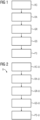
- Fig. 1 shows a diagram illustrating a computer-implemented method for providing a stroke information, the method comprising
- Fig. 2 shows a data processing system U for providing a prediction of a medical target variable, the data processing system comprising
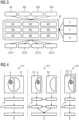
- Fig. 3 shows an overview of exemplary inputs, outputs, resources and algorithmic components of the method for providing a stroke information.
- Exemplary inputs are the non-contrast computed tomography image IN1, in particular in form of volume image, the CTA data IN2, in particular in form of CTA volume data, the stroke onset time IN3 and the information from prior assessment IN4, in particular in form of NIHSS data.
- the method is configured to handle missing inputs.
- Exemplary algorithmic components are the atlas registration M1, the left-right comparison M2, the local vs. global density comparison M3, the infarct segmentation model M4, the clot segmentation model M5, the clot composition characterization M6, the saliency map computation M7, the onset time calculation M8 and the establishing of consistency M9. These exemplary algorithmic components form the set of algorithms M.
- Exemplary resources are the brain atlas A comprising a probabilistic vessel map and vessel labels, the training data T1 based on perfusion and/or follow-up scans, and the training data T2 based on blood clot annotations.
- Exemplary outputs are the first output OU1, comprising the clot location, size and composition, the second output OUT2, comprising the name of the occluded vessel, the third output OUT3, comprising a marking of the affected regions, a predicted tissue viability and an estimated onset time, and the fourth marking OUT4, comprising a visualization, for example in form of an attention map, of individual inputs' contributions to the output of the corresponding algorithm.
- These exemplary outputs form the stroke information for the case shown.
- Fig. 4 shows an overview of different configurations of training inputs for training the machine learning model.
- the training input D1 is fed into the network N1 as one image comprising both the left cerebral hemisphere and the right cerebral hemisphere.
- One of the two cerebral hemispheres comprises brain tissue X that is affected by the stroke.
- the other one of the two cerebral hemispheres is unaffected by the stroke.
- the training input D2 is split into a sub-image for the left cerebral hemisphere and a sub-image for the right hemisphere, that first go through distinct legs of the network (though possibly with the same network weights shared in both legs) before being merged to a single path, e.g. by concatenation or subtraction.
- This facilitates comparisons between both cerebral hemispheres as the network is structured such that it first analyzes each side individually before comparing the extracted features of both.
- the training input D2 can be pre-processed such that one of the two legs receives the sub-images of the hemisphere comprising the affected brain tissue X and the other one of the two legs receives the sub-images hemisphere that is unaffected by the stroke, independently from which of the left and right hemisphere comprises the affected brain tissue X and in matching orientations.
- the sub-images of the training input D3 are stacked on top of each other as two channels before being fed into the network N3, with corresponding areas being aligned on both channels. This is another way to facilitate left-right comparisons as local operations such as convolutions will operate on corresponding regions on both hemispheres.
- any of the configurations P1, P2 and P3 can be used with both slice-wise 2D models as well as fully volumetric 3D models.
- the output of the network may also be modeled in any of the described variants. It can then be reformatted in such a way as to first bring it back into the space of the atlas, from which it can be propagated back into the coordinate space of the original scan so that it can be shown as an overlay or an individual image aligned with the input.
- Fig. 5 shows a plurality of brain regions 51, 52 and a reference brain region 50.
- the plane 5C that is perpendicular to the sagittal plane 5S of the patient is located between the brain region 51 and a first subregion of the reference brain region 50, in particular between the brain region 51 and the reference brain region 50.
- the plane 5C that is perpendicular to the sagittal plane 5S of the patient is located between the brain region 52 and a second subregion of the reference brain region 50, in particular between the brain region 52 and the reference brain region 50.
- the sagittal plane 5S of the patient is a midsagittal plane of the patient, the midsagittal plane of the patient being located between the left cerebral hemisphere 5L and the right cerebral hemisphere 5R.
- the plane 5C is a coronal plane of the patient.
- the brain region 51 and the first subregion of the reference brain region 50 are located within the left cerebral hemisphere 5L.
- the brain region 52 and the second subregion of the reference brain region 50 are located within the right cerebral hemisphere 5R.
Landscapes
- Engineering & Computer Science (AREA)
- Health & Medical Sciences (AREA)
- Physics & Mathematics (AREA)
- Life Sciences & Earth Sciences (AREA)
- Medical Informatics (AREA)
- Computer Vision & Pattern Recognition (AREA)
- General Physics & Mathematics (AREA)
- Theoretical Computer Science (AREA)
- General Health & Medical Sciences (AREA)
- Nuclear Medicine, Radiotherapy & Molecular Imaging (AREA)
- Radiology & Medical Imaging (AREA)
- Optics & Photonics (AREA)
- Animal Behavior & Ethology (AREA)
- High Energy & Nuclear Physics (AREA)
- Veterinary Medicine (AREA)
- Pathology (AREA)
- Biomedical Technology (AREA)
- Heart & Thoracic Surgery (AREA)
- Molecular Biology (AREA)
- Surgery (AREA)
- Biophysics (AREA)
- Public Health (AREA)
- Quality & Reliability (AREA)
- Neurology (AREA)
- Neurosurgery (AREA)
- Dentistry (AREA)
- Oral & Maxillofacial Surgery (AREA)
- Apparatus For Radiation Diagnosis (AREA)
Claims (12)
- Computerimplementiertes Verfahren zum Bereitstellen einer Schlaganfallinformation, wobei das Verfahren umfasst- Empfangen (RC) von Computertomographiebildgebungsdaten eines Untersuchungsareals eines Patienten, wobei das Untersuchungsareal des Patienten eine Vielzahl von Hirnregionen (51, 52) umfasst, wobei mindestens eine Hirnregion von der Vielzahl der Hirnregionen (51, 52) durch einen Schlaganfall betroffen ist,- Empfangen (RA) von Hirnatlasdaten,- Generieren (GR) von registrierten Bildgebungsdaten basierend auf den Computertomographiebildgebungsdaten und den Hirnatlasdaten, wobei die registrierten Bildgebungsdaten auf die Hirnatlasdaten registriert werden,- Berechnen eines lokalen Dichtemittelwerts jener Hirnregion basierend auf den Computertomographiebildgebungsdaten und/oder den registrierten Bildgebungsdaten für jede Hirnregion der Vielzahl von Hirnregionen (51, 52),- Berechnen eines Dichtemittelwerts der Referenzhirnregion (50) basierend auf den Computertomographiebildgebungsdaten und/oder den registrierten Bildgebungsdaten für eine Referenzhirnregion (50), wobei das Untersuchungsareal des Patienten die Referenzhirnregion (50) umfasst, wobei die Referenzhirnregion (50) für jede Hirnregion von der Vielzahl der Hirnregionen (51, 52) eine jeweilige Teilregion umfasst, so dass eine Ebene, die senkrecht zu einer Sagittalebene (5S) des Patienten ist, sich zwischen jener Hirnregion und der jeweiligen Teilregion befindet,- Berechnen einer Dichtedifferenzinformation jener Hirnregion basierend auf dem lokalen Dichtemittelwert jener Hirnregion und dem Dichtemittelwert der Referenzhirnregion (50) für jede Hirnregion der Vielzahl von Hirnregionen (51, 52), wodurch eine Dichtedifferenzkarte erhalten wird,- Generieren (GS) der Schlaganfallinformation hinsichtlich des Schlaganfalls basierend auf einem Satz von Algorithmen (M), den registrierten Bildgebungsdaten und der Dichtedifferenzkarte, wobei der Satz von Algorithmen (M) einen Algorithmus zum Berechnen einer Eintrittszeit des Schlaganfalls umfasst, wobei die Eintrittszeit des Schlaganfalls berechnet wird, indem der Algorithmus zum Berechnen der Eintrittszeit des Schlaganfalls auf die Dichtedifferenzkarte angewendet wird, wobei die Schlaganfallinformation die berechnete Eintrittszeit des Schlaganfalls umfasst, und- Bereitstellen (PS) der Schlaganfallinformation.
- Verfahren nach Anspruch 1,- wobei die Referenzhirnregion (50) für jede Hirnregion der Vielzahl von Hirnregionen (51, 52) eine jeweilige Teilregion umfasst, so dass jene Hirnregion und die jeweilige Teilregion sich innerhalb derselben Hirnhälfte befinden.
- Verfahren nach einem der Ansprüche 1 bis 2, des Weiteren umfassend- Generieren von gespiegelten Bildgebungsdaten basierend auf einer links-rechts-Spiegelung der berechneten Tomographiebildgebungsdaten und/oder der registrierten Bildgebungsdaten,- Berechnen eines links-rechts-Differenzbildes basierend auf den Computertomographiebildgebungsdaten und den gespiegelten Bildgebungsdaten,- wobei die Schlaganfallinformation des Weiteren basierend auf dem links-rechts-Differenzbild generiert wird.
- Verfahren nach Anspruch 3,- wobei die Eintrittszeit des Schlaganfalls berechnet wird, indem der Algorithmus zum Berechnen der Eintrittszeit des Schlaganfalls auf das links-rechts-Differenzbild und auf die Dichtedifferenzkarte angewendet wird.
- Verfahren nach einem der Ansprüche 1 bis 4,- wobei eine Dichtereduktion basierend auf der Dichtedifferenzkarte berechnet wird,- wobei eine Quantifizierung der Wasseraufnahme basierend auf der Dichtereduktion berechnet wird,- wobei die Eintrittszeit des Schlaganfalls basierend auf der Quantifizierung der Wasseraufnahme berechnet wird.
- Verfahren nach einem der Ansprüche 1 bis 5,- wobei die Ebene, die senkrecht zu der Sagittalebene (5S) des Patienten ist, eine Koronalebene (5C) des Patienten ist.
- Verfahren nach Anspruch 6,- wobei die Koronalebene (5C) eine mittlere Koronalebene ist.
- Verfahren nach Anspruch 6 oder 7,- wobei jede Hirnregion von der Vielzahl der Hirnregionen (51, 52) sich in Bezug auf die Koronalebene (5C) anterior befindet, und die Referenzhirnregion (50) sich in Bezug auf die Koronalebene (5C) posterior befindet, oder- wobei jede Hirnregion von der Vielzahl der Hirnregionen (51, 52) sich in Bezug auf die Koronalebene (5C) posterior befindet, und die Referenzhirnregion (50) sich in Bezug auf die Koronalebene (5C) anterior befindet.
- Verfahren nach einem der Ansprüche 1 bis 5,- wobei die Ebene, die senkrecht zu der Sagittalebene (5S) des Patienten ist, eine Transversalebene (5C) des Patienten ist.
- Datenverarbeitungssystem (U) zum Bereitstellen einer Schlaganfallinformation, wobei das Datenverarbeitungssystem (U) ausgelegt ist, um das Verfahren nach einem der Ansprüche 1 bis 9 zu implementieren, und umfassend- einen Bildgebungsdatenempfänger (RC-U) zum Empfangen (RC) von Computertomographiebildgebungsdaten eines Untersuchungsareals eines Patienten, wobei das Untersuchungsareal des Patienten eine Vielzahl von Hirnregionen (51, 52) umfasst, wobei mindestens eine Hirnregion von der Vielzahl der Hirnregionen (51, 52) durch einen Schlaganfall betroffen ist,- einen Hirnatlasempfänger (RA-U) zum Empfangen (RA) von Hirnatlasdaten,- einen Generator des registrierten Bildes (GR-U) zum Generieren (GR) von registrierten Bildgebungsdaten basierend auf den Computertomographiebildgebungsdaten und den Hirnatlasdaten, wobei die registrierten Bildgebungsdaten auf die Hirnatlasdaten registriert sind,- einen Schlaganfallinformationsgenerator (GS-U) zum Generieren (GS) der Schlaganfallinformation hinsichtlich des Schlaganfalls basierend auf einem Satz von Algorithmen (M) und den registrierten Bildgebungsdaten,- einen Schlaganfallinformationsbereitsteller (PS-U) zum Bereitstellen (PS) der Schlaganfallinformation.
- Computerprogrammprodukt, umfassend Programmelemente, die induzieren, dass ein Datenverarbeitungssystem (U) die Schritte des Verfahrens nach einem der Ansprüche 1 bis 9 durchführt, wenn die Programmelemente in einen Speicher des Datenverarbeitungssystems (U) geladen werden.
- Computerlesbares Medium, auf dem Programmelemente gespeichert sind, die durch ein Datenverarbeitungssystem (U) gelesen und ausgeführt werden können, um die Schritte des Verfahrens nach einem der Ansprüche 1 bis 9 durchzuführen, wenn die Programmelemente durch das Datenverarbeitungssystem (U) ausgeführt werden.
Applications Claiming Priority (2)
| Application Number | Priority Date | Filing Date | Title |
|---|---|---|---|
| EP19200370.5A EP3798971A1 (de) | 2019-09-30 | 2019-09-30 | Verfahren und datenverarbeitungssystem zur bereitstellung von schlaganfallinformationen |
| PCT/EP2020/076154 WO2021063709A1 (en) | 2019-09-30 | 2020-09-18 | Method and data processing system for providing a stroke information |
Publications (3)
| Publication Number | Publication Date |
|---|---|
| EP4004867A1 EP4004867A1 (de) | 2022-06-01 |
| EP4004867B1 true EP4004867B1 (de) | 2023-06-28 |
| EP4004867C0 EP4004867C0 (de) | 2023-06-28 |
Family
ID=68137833
Family Applications (2)
| Application Number | Title | Priority Date | Filing Date |
|---|---|---|---|
| EP19200370.5A Withdrawn EP3798971A1 (de) | 2019-09-30 | 2019-09-30 | Verfahren und datenverarbeitungssystem zur bereitstellung von schlaganfallinformationen |
| EP20780971.6A Active EP4004867B1 (de) | 2019-09-30 | 2020-09-18 | Verfahren und datenverarbeitungssystem zur bereitstellung eines berechneten beginns eines schlaganfalls |
Family Applications Before (1)
| Application Number | Title | Priority Date | Filing Date |
|---|---|---|---|
| EP19200370.5A Withdrawn EP3798971A1 (de) | 2019-09-30 | 2019-09-30 | Verfahren und datenverarbeitungssystem zur bereitstellung von schlaganfallinformationen |
Country Status (4)
| Country | Link |
|---|---|
| US (1) | US12213827B2 (de) |
| EP (2) | EP3798971A1 (de) |
| CN (1) | CN114514556B (de) |
| WO (1) | WO2021063709A1 (de) |
Families Citing this family (10)
| Publication number | Priority date | Publication date | Assignee | Title |
|---|---|---|---|---|
| US9600778B2 (en) * | 2013-07-02 | 2017-03-21 | Surgical Information Sciences, Inc. | Method for a brain region location and shape prediction |
| KR102490967B1 (ko) * | 2020-09-25 | 2023-01-26 | 서울대학교병원 | 흉부 단순 촬영 영상을 이용한 심장색전성 뇌경색의 진단 보조 방법 및 장치 |
| US11941825B2 (en) | 2021-10-28 | 2024-03-26 | Canon Medical Systems Corporation | Method and apparatus for registering image volumes |
| US12094136B2 (en) | 2021-10-28 | 2024-09-17 | Canon Medical Systems Corporation | Image processing method and apparatus |
| EP4198883A1 (de) * | 2021-12-17 | 2023-06-21 | Koninklijke Philips N.V. | Interventionelle charakterisierung von intrazerebralen thromben mittels 3d-kegelstrahl-computertomographie |
| EP4235685A1 (de) * | 2022-02-23 | 2023-08-30 | Siemens Healthcare GmbH | Verfahren, system und computerprogramm zur erkennung von krankheitsinformationen |
| EP4254427A1 (de) * | 2022-03-31 | 2023-10-04 | Siemens Healthcare GmbH | Verfahren und datenverarbeitungssystem zur bereitstellung von schlaganfallinformationen |
| EP4397246B1 (de) * | 2023-01-09 | 2025-08-13 | Canon Medical Systems Corporation | Verfahren zur erzeugung einer abschwächungskarte und medizinische bildverarbeitungsvorrichtung |
| KR102855719B1 (ko) * | 2023-04-24 | 2025-09-05 | 인제대학교 산학협력단 | 급성기 뇌경색 환자의 3차원 혈전 영상화 방법 및 이를 지원하는 전자 장치 |
| US12555234B2 (en) * | 2024-01-05 | 2026-02-17 | Taipei Medical University | Image processing system and method thereof for early detection of ischemic core of ischemic stroke patient |
Family Cites Families (11)
| Publication number | Priority date | Publication date | Assignee | Title |
|---|---|---|---|---|
| US8374414B2 (en) | 2010-11-05 | 2013-02-12 | The Hong Kong Polytechnic University | Method and system for detecting ischemic stroke |
| US8977029B2 (en) * | 2012-08-24 | 2015-03-10 | Siemens Aktiengesellschaft | Method and system for multi-atlas segmentation of brain computed tomography image data |
| US20140142060A1 (en) * | 2012-11-20 | 2014-05-22 | Hyde Park West, LLC | Method and device for identification of one carbon pathway gene variants as stroke risk markers, combined data mining, logistic regression, and pathway analysis |
| US20180025055A1 (en) * | 2016-07-19 | 2018-01-25 | Sap Se | Fault-tolerant database query execution plans using non-volatile memories |
| US10163040B2 (en) * | 2016-07-21 | 2018-12-25 | Toshiba Medical Systems Corporation | Classification method and apparatus |
| KR101865110B1 (ko) * | 2016-11-21 | 2018-06-07 | 재단법인 아산사회복지재단 | 급성뇌경색 발생시점 추정시스템, 방법 및 프로그램 |
| US11139079B2 (en) * | 2017-03-06 | 2021-10-05 | International Business Machines Corporation | Cognitive stroke detection and notification |
| US10335106B2 (en) * | 2017-09-29 | 2019-07-02 | Infinitt Healthcare Co., Ltd. | Computing system and method for identifying and visualizing cerebral thrombosis based on medical images |
| GB201717397D0 (en) * | 2017-10-23 | 2017-12-06 | Brainomix Ltd | Tomographic data analysis |
| KR102043829B1 (ko) * | 2017-12-08 | 2019-11-12 | 사회복지법인 삼성생명공익재단 | 병변 발생 시점 추정 방법, 장치 및 프로그램 |
| CN109191422B (zh) * | 2018-07-09 | 2021-04-30 | 复旦大学 | 基于常规ct图像的缺血性脑卒中早期检测系统和方法 |
-
2019
- 2019-09-30 EP EP19200370.5A patent/EP3798971A1/de not_active Withdrawn
-
2020
- 2020-09-18 CN CN202080068633.XA patent/CN114514556B/zh active Active
- 2020-09-18 US US17/764,326 patent/US12213827B2/en active Active
- 2020-09-18 WO PCT/EP2020/076154 patent/WO2021063709A1/en not_active Ceased
- 2020-09-18 EP EP20780971.6A patent/EP4004867B1/de active Active
Also Published As
| Publication number | Publication date |
|---|---|
| CN114514556B (zh) | 2025-05-09 |
| CN114514556A (zh) | 2022-05-17 |
| US20220395244A1 (en) | 2022-12-15 |
| EP3798971A1 (de) | 2021-03-31 |
| WO2021063709A1 (en) | 2021-04-08 |
| EP4004867C0 (de) | 2023-06-28 |
| US12213827B2 (en) | 2025-02-04 |
| EP4004867A1 (de) | 2022-06-01 |
Similar Documents
| Publication | Publication Date | Title |
|---|---|---|
| EP4004867B1 (de) | Verfahren und datenverarbeitungssystem zur bereitstellung eines berechneten beginns eines schlaganfalls | |
| US10878564B2 (en) | Systems and methods for processing 3D anatomical volumes based on localization of 2D slices thereof | |
| US11127138B2 (en) | Automatic detection and quantification of the aorta from medical images | |
| CN116368516B (zh) | 使用联合合成、分割和配准的多模态临床图像对齐方法和设备 | |
| Kim et al. | Automatic segmentation of the left ventricle in echocardiographic images using convolutional neural networks | |
| Zakharov et al. | Interpretable vertebral fracture quantification via anchor-free landmarks localization | |
| CN111311536A (zh) | 医学图像数据 | |
| CN102938013A (zh) | 医用图像处理装置及医用图像处理方法 | |
| EP3719745A1 (de) | Verarbeitung eines medizinischen bildes | |
| Lin et al. | High-throughput 3DRA segmentation of brain vasculature and aneurysms using deep learning | |
| US9905002B2 (en) | Method and system for determining the prognosis of a patient suffering from pulmonary embolism | |
| Yang et al. | Deep rib fracture instance segmentation and classification from ct on the ribfrac challenge | |
| EP2750102B2 (de) | Verfahren, System und computerlesbares Medium zur Leberanalyse | |
| Dai et al. | A one-stage deep learning method for fully automated mesiodens localization on panoramic radiographs | |
| Tiefenthaler et al. | Shape-aware inference scheme for selective extraction of head-neck arteries on computer tomography angiography images | |
| Batool et al. | EFNet: A multitask deep learning network for simultaneous quantification of left ventricle structure and function | |
| Ramos et al. | Fast and smart segmentation of paraspinal muscles in magnetic resonance imaging with CleverSeg | |
| Delmoral et al. | Segmentation of pathological liver tissue with dilated fully convolutional networks: A preliminary study | |
| CN116645316A (zh) | 数据生成、算法训练、疾病信息检测方法以及系统和程序 | |
| KR20230037195A (ko) | 기계 학습 모델 기반의 이미지 분석을 통한 의료 영상 분류 방법 | |
| Xu et al. | CVFSNet: A Cross View Fusion Scoring Network for end-to-end mTICI scoring | |
| Wang et al. | A benchmark dataset for segmenting liver, vasculature and lesions from large-scale computed tomography data | |
| Ram et al. | Lung Lobe Segmentation With Automated Quality Assurance Using Deep Convolutional Neural Networks | |
| Methari et al. | 3D reconstruction of the left atrial geometry from 2D echocardiographic images using deep learning | |
| Zhuang et al. | Enhancing Lung Segmentation Algorithms to Ensure Inclusion of Juxtapleural Nodules |
Legal Events
| Date | Code | Title | Description |
|---|---|---|---|
| STAA | Information on the status of an ep patent application or granted ep patent |
Free format text: STATUS: UNKNOWN |
|
| STAA | Information on the status of an ep patent application or granted ep patent |
Free format text: STATUS: THE INTERNATIONAL PUBLICATION HAS BEEN MADE |
|
| PUAI | Public reference made under article 153(3) epc to a published international application that has entered the european phase |
Free format text: ORIGINAL CODE: 0009012 |
|
| STAA | Information on the status of an ep patent application or granted ep patent |
Free format text: STATUS: REQUEST FOR EXAMINATION WAS MADE |
|
| 17P | Request for examination filed |
Effective date: 20220228 |
|
| AK | Designated contracting states |
Kind code of ref document: A1 Designated state(s): AL AT BE BG CH CY CZ DE DK EE ES FI FR GB GR HR HU IE IS IT LI LT LU LV MC MK MT NL NO PL PT RO RS SE SI SK SM TR |
|
| DAV | Request for validation of the european patent (deleted) | ||
| DAX | Request for extension of the european patent (deleted) | ||
| GRAP | Despatch of communication of intention to grant a patent |
Free format text: ORIGINAL CODE: EPIDOSNIGR1 |
|
| STAA | Information on the status of an ep patent application or granted ep patent |
Free format text: STATUS: GRANT OF PATENT IS INTENDED |
|
| INTG | Intention to grant announced |
Effective date: 20230221 |
|
| GRAS | Grant fee paid |
Free format text: ORIGINAL CODE: EPIDOSNIGR3 |
|
| GRAA | (expected) grant |
Free format text: ORIGINAL CODE: 0009210 |
|
| STAA | Information on the status of an ep patent application or granted ep patent |
Free format text: STATUS: THE PATENT HAS BEEN GRANTED |
|
| AK | Designated contracting states |
Kind code of ref document: B1 Designated state(s): AL AT BE BG CH CY CZ DE DK EE ES FI FR GB GR HR HU IE IS IT LI LT LU LV MC MK MT NL NO PL PT RO RS SE SI SK SM TR |
|
| REG | Reference to a national code |
Ref country code: CH Ref legal event code: EP |
|
| REG | Reference to a national code |
Ref country code: AT Ref legal event code: REF Ref document number: 1583393 Country of ref document: AT Kind code of ref document: T Effective date: 20230715 |
|
| REG | Reference to a national code |
Ref country code: IE Ref legal event code: FG4D |
|
| REG | Reference to a national code |
Ref country code: DE Ref legal event code: R096 Ref document number: 602020013099 Country of ref document: DE |
|
| U01 | Request for unitary effect filed |
Effective date: 20230629 |
|
| U07 | Unitary effect registered |
Designated state(s): AT BE BG DE DK EE FI FR IT LT LU LV MT NL PT SE SI Effective date: 20230727 |
|
| REG | Reference to a national code |
Ref country code: LT Ref legal event code: MG9D |
|
| U20 | Renewal fee for the european patent with unitary effect paid |
Year of fee payment: 4 Effective date: 20230918 |
|
| PG25 | Lapsed in a contracting state [announced via postgrant information from national office to epo] |
Ref country code: NO Free format text: LAPSE BECAUSE OF FAILURE TO SUBMIT A TRANSLATION OF THE DESCRIPTION OR TO PAY THE FEE WITHIN THE PRESCRIBED TIME-LIMIT Effective date: 20230928 |
|
| PG25 | Lapsed in a contracting state [announced via postgrant information from national office to epo] |
Ref country code: RS Free format text: LAPSE BECAUSE OF FAILURE TO SUBMIT A TRANSLATION OF THE DESCRIPTION OR TO PAY THE FEE WITHIN THE PRESCRIBED TIME-LIMIT Effective date: 20230628 Ref country code: HR Free format text: LAPSE BECAUSE OF FAILURE TO SUBMIT A TRANSLATION OF THE DESCRIPTION OR TO PAY THE FEE WITHIN THE PRESCRIBED TIME-LIMIT Effective date: 20230628 Ref country code: GR Free format text: LAPSE BECAUSE OF FAILURE TO SUBMIT A TRANSLATION OF THE DESCRIPTION OR TO PAY THE FEE WITHIN THE PRESCRIBED TIME-LIMIT Effective date: 20230929 |
|
| U1N | Appointed representative for the unitary patent procedure changed after the registration of the unitary effect |
Representative=s name: SIEMENS HEALTHINEERS PATENT ATTORNEYS; DE |
|
| PG25 | Lapsed in a contracting state [announced via postgrant information from national office to epo] |
Ref country code: SK Free format text: LAPSE BECAUSE OF FAILURE TO SUBMIT A TRANSLATION OF THE DESCRIPTION OR TO PAY THE FEE WITHIN THE PRESCRIBED TIME-LIMIT Effective date: 20230628 |
|
| PG25 | Lapsed in a contracting state [announced via postgrant information from national office to epo] |
Ref country code: ES Free format text: LAPSE BECAUSE OF FAILURE TO SUBMIT A TRANSLATION OF THE DESCRIPTION OR TO PAY THE FEE WITHIN THE PRESCRIBED TIME-LIMIT Effective date: 20230628 |
|
| PG25 | Lapsed in a contracting state [announced via postgrant information from national office to epo] |
Ref country code: IS Free format text: LAPSE BECAUSE OF FAILURE TO SUBMIT A TRANSLATION OF THE DESCRIPTION OR TO PAY THE FEE WITHIN THE PRESCRIBED TIME-LIMIT Effective date: 20231028 |
|
| PG25 | Lapsed in a contracting state [announced via postgrant information from national office to epo] |
Ref country code: SM Free format text: LAPSE BECAUSE OF FAILURE TO SUBMIT A TRANSLATION OF THE DESCRIPTION OR TO PAY THE FEE WITHIN THE PRESCRIBED TIME-LIMIT Effective date: 20230628 Ref country code: SK Free format text: LAPSE BECAUSE OF FAILURE TO SUBMIT A TRANSLATION OF THE DESCRIPTION OR TO PAY THE FEE WITHIN THE PRESCRIBED TIME-LIMIT Effective date: 20230628 Ref country code: RO Free format text: LAPSE BECAUSE OF FAILURE TO SUBMIT A TRANSLATION OF THE DESCRIPTION OR TO PAY THE FEE WITHIN THE PRESCRIBED TIME-LIMIT Effective date: 20230628 Ref country code: IS Free format text: LAPSE BECAUSE OF FAILURE TO SUBMIT A TRANSLATION OF THE DESCRIPTION OR TO PAY THE FEE WITHIN THE PRESCRIBED TIME-LIMIT Effective date: 20231028 Ref country code: ES Free format text: LAPSE BECAUSE OF FAILURE TO SUBMIT A TRANSLATION OF THE DESCRIPTION OR TO PAY THE FEE WITHIN THE PRESCRIBED TIME-LIMIT Effective date: 20230628 Ref country code: CZ Free format text: LAPSE BECAUSE OF FAILURE TO SUBMIT A TRANSLATION OF THE DESCRIPTION OR TO PAY THE FEE WITHIN THE PRESCRIBED TIME-LIMIT Effective date: 20230628 |
|
| RAP2 | Party data changed (patent owner data changed or rights of a patent transferred) |
Owner name: SIEMENS HEALTHINEERS AG |
|
| U1K | Transfer of rights of the unitary patent after the registration of the unitary effect |
Owner name: SIEMENS HEALTHINEERS AG; DE |
|
| PG25 | Lapsed in a contracting state [announced via postgrant information from national office to epo] |
Ref country code: PL Free format text: LAPSE BECAUSE OF FAILURE TO SUBMIT A TRANSLATION OF THE DESCRIPTION OR TO PAY THE FEE WITHIN THE PRESCRIBED TIME-LIMIT Effective date: 20230628 |
|
| REG | Reference to a national code |
Ref country code: DE Ref legal event code: R097 Ref document number: 602020013099 Country of ref document: DE |
|
| REG | Reference to a national code |
Ref country code: CH Ref legal event code: PL |
|
| PLBE | No opposition filed within time limit |
Free format text: ORIGINAL CODE: 0009261 |
|
| STAA | Information on the status of an ep patent application or granted ep patent |
Free format text: STATUS: NO OPPOSITION FILED WITHIN TIME LIMIT |
|
| PG25 | Lapsed in a contracting state [announced via postgrant information from national office to epo] |
Ref country code: MC Free format text: LAPSE BECAUSE OF FAILURE TO SUBMIT A TRANSLATION OF THE DESCRIPTION OR TO PAY THE FEE WITHIN THE PRESCRIBED TIME-LIMIT Effective date: 20230628 |
|
| 26N | No opposition filed |
Effective date: 20240402 |
|
| U1N | Appointed representative for the unitary patent procedure changed after the registration of the unitary effect |
Representative=s name: SIEMENS HEALTHINEERS PATENT ATTORNEYS; DE |
|
| REG | Reference to a national code |
Ref country code: IE Ref legal event code: MM4A |
|
| PG25 | Lapsed in a contracting state [announced via postgrant information from national office to epo] |
Ref country code: IE Free format text: LAPSE BECAUSE OF NON-PAYMENT OF DUE FEES Effective date: 20230918 |
|
| PG25 | Lapsed in a contracting state [announced via postgrant information from national office to epo] |
Ref country code: CH Free format text: LAPSE BECAUSE OF NON-PAYMENT OF DUE FEES Effective date: 20230930 |
|
| PG25 | Lapsed in a contracting state [announced via postgrant information from national office to epo] |
Ref country code: IE Free format text: LAPSE BECAUSE OF NON-PAYMENT OF DUE FEES Effective date: 20230918 Ref country code: CH Free format text: LAPSE BECAUSE OF NON-PAYMENT OF DUE FEES Effective date: 20230930 |
|
| U20 | Renewal fee for the european patent with unitary effect paid |
Year of fee payment: 5 Effective date: 20240919 |
|
| GBPC | Gb: european patent ceased through non-payment of renewal fee |
Effective date: 20240918 |
|
| PG25 | Lapsed in a contracting state [announced via postgrant information from national office to epo] |
Ref country code: GB Free format text: LAPSE BECAUSE OF NON-PAYMENT OF DUE FEES Effective date: 20240918 |
|
| PG25 | Lapsed in a contracting state [announced via postgrant information from national office to epo] |
Ref country code: CY Free format text: LAPSE BECAUSE OF FAILURE TO SUBMIT A TRANSLATION OF THE DESCRIPTION OR TO PAY THE FEE WITHIN THE PRESCRIBED TIME-LIMIT; INVALID AB INITIO Effective date: 20200918 |
|
| PG25 | Lapsed in a contracting state [announced via postgrant information from national office to epo] |
Ref country code: HU Free format text: LAPSE BECAUSE OF FAILURE TO SUBMIT A TRANSLATION OF THE DESCRIPTION OR TO PAY THE FEE WITHIN THE PRESCRIBED TIME-LIMIT; INVALID AB INITIO Effective date: 20200918 |
|
| U20 | Renewal fee for the european patent with unitary effect paid |
Year of fee payment: 6 Effective date: 20250919 |
|
| PG25 | Lapsed in a contracting state [announced via postgrant information from national office to epo] |
Ref country code: TR Free format text: LAPSE BECAUSE OF FAILURE TO SUBMIT A TRANSLATION OF THE DESCRIPTION OR TO PAY THE FEE WITHIN THE PRESCRIBED TIME-LIMIT Effective date: 20230628 |