EP4004906B1 - Datenergänzung nach epoche zum trainieren von akustischen modellen - Google Patents
Datenergänzung nach epoche zum trainieren von akustischen modellen Download PDFInfo
- Publication number
- EP4004906B1 EP4004906B1 EP20758024.2A EP20758024A EP4004906B1 EP 4004906 B1 EP4004906 B1 EP 4004906B1 EP 20758024 A EP20758024 A EP 20758024A EP 4004906 B1 EP4004906 B1 EP 4004906B1
- Authority
- EP
- European Patent Office
- Prior art keywords
- training
- data
- noise
- training data
- spectrum
- Prior art date
- Legal status (The legal status is an assumption and is not a legal conclusion. Google has not performed a legal analysis and makes no representation as to the accuracy of the status listed.)
- Active
Links
Images




Classifications
-
- G—PHYSICS
- G10—MUSICAL INSTRUMENTS; ACOUSTICS
- G10L—SPEECH ANALYSIS TECHNIQUES OR SPEECH SYNTHESIS; SPEECH RECOGNITION; SPEECH OR VOICE PROCESSING TECHNIQUES; SPEECH OR AUDIO CODING OR DECODING
- G10L15/00—Speech recognition
- G10L15/08—Speech classification or search
- G10L15/14—Speech classification or search using statistical models, e.g. Hidden Markov Models [HMMs]
- G10L15/142—Hidden Markov Models [HMMs]
- G10L15/144—Training of HMMs
-
- G—PHYSICS
- G10—MUSICAL INSTRUMENTS; ACOUSTICS
- G10L—SPEECH ANALYSIS TECHNIQUES OR SPEECH SYNTHESIS; SPEECH RECOGNITION; SPEECH OR VOICE PROCESSING TECHNIQUES; SPEECH OR AUDIO CODING OR DECODING
- G10L15/00—Speech recognition
- G10L15/06—Creation of reference templates; Training of speech recognition systems, e.g. adaptation to the characteristics of the speaker's voice
- G10L15/063—Training
-
- G—PHYSICS
- G06—COMPUTING OR CALCULATING; COUNTING
- G06F—ELECTRIC DIGITAL DATA PROCESSING
- G06F17/00—Digital computing or data processing equipment or methods, specially adapted for specific functions
- G06F17/10—Complex mathematical operations
- G06F17/18—Complex mathematical operations for evaluating statistical data, e.g. average values, frequency distributions, probability functions, regression analysis
-
- G—PHYSICS
- G06—COMPUTING OR CALCULATING; COUNTING
- G06N—COMPUTING ARRANGEMENTS BASED ON SPECIFIC COMPUTATIONAL MODELS
- G06N3/00—Computing arrangements based on biological models
- G06N3/02—Neural networks
- G06N3/04—Architecture, e.g. interconnection topology
- G06N3/045—Combinations of networks
-
- G—PHYSICS
- G06—COMPUTING OR CALCULATING; COUNTING
- G06N—COMPUTING ARRANGEMENTS BASED ON SPECIFIC COMPUTATIONAL MODELS
- G06N3/00—Computing arrangements based on biological models
- G06N3/02—Neural networks
- G06N3/08—Learning methods
-
- G—PHYSICS
- G06—COMPUTING OR CALCULATING; COUNTING
- G06N—COMPUTING ARRANGEMENTS BASED ON SPECIFIC COMPUTATIONAL MODELS
- G06N3/00—Computing arrangements based on biological models
- G06N3/02—Neural networks
- G06N3/08—Learning methods
- G06N3/084—Backpropagation, e.g. using gradient descent
-
- G—PHYSICS
- G06—COMPUTING OR CALCULATING; COUNTING
- G06N—COMPUTING ARRANGEMENTS BASED ON SPECIFIC COMPUTATIONAL MODELS
- G06N7/00—Computing arrangements based on specific mathematical models
- G06N7/01—Probabilistic graphical models, e.g. probabilistic networks
-
- G—PHYSICS
- G06—COMPUTING OR CALCULATING; COUNTING
- G06T—IMAGE DATA PROCESSING OR GENERATION, IN GENERAL
- G06T1/00—General purpose image data processing
- G06T1/20—Processor architectures; Processor configuration, e.g. pipelining
-
- G—PHYSICS
- G10—MUSICAL INSTRUMENTS; ACOUSTICS
- G10L—SPEECH ANALYSIS TECHNIQUES OR SPEECH SYNTHESIS; SPEECH RECOGNITION; SPEECH OR VOICE PROCESSING TECHNIQUES; SPEECH OR AUDIO CODING OR DECODING
- G10L15/00—Speech recognition
- G10L15/08—Speech classification or search
- G10L15/14—Speech classification or search using statistical models, e.g. Hidden Markov Models [HMMs]
- G10L15/142—Hidden Markov Models [HMMs]
-
- G—PHYSICS
- G10—MUSICAL INSTRUMENTS; ACOUSTICS
- G10L—SPEECH ANALYSIS TECHNIQUES OR SPEECH SYNTHESIS; SPEECH RECOGNITION; SPEECH OR VOICE PROCESSING TECHNIQUES; SPEECH OR AUDIO CODING OR DECODING
- G10L15/00—Speech recognition
- G10L15/08—Speech classification or search
- G10L15/16—Speech classification or search using artificial neural networks
-
- G—PHYSICS
- G10—MUSICAL INSTRUMENTS; ACOUSTICS
- G10L—SPEECH ANALYSIS TECHNIQUES OR SPEECH SYNTHESIS; SPEECH RECOGNITION; SPEECH OR VOICE PROCESSING TECHNIQUES; SPEECH OR AUDIO CODING OR DECODING
- G10L21/00—Speech or voice signal processing techniques to produce another audible or non-audible signal, e.g. visual or tactile, in order to modify its quality or its intelligibility
- G10L21/02—Speech enhancement, e.g. noise reduction or echo cancellation
- G10L21/0208—Noise filtering
Definitions
- the invention pertains to systems and methods for implementing speech analytics (e.g., wakeword detection, voice activity detection, speech recognition, or speaker (talker) recognition) and/or noise suppression, with training. Some embodiments pertain to systems and methods for training acoustic models (e.g., to be implemented by smart audio devices).
- speech analytics e.g., wakeword detection, voice activity detection, speech recognition, or speaker (talker) recognition
- noise suppression e.g., speech recognition, or speaker (talker) recognition
- Some embodiments pertain to systems and methods for training acoustic models (e.g., to be implemented by smart audio devices).
- a single purpose audio device is a device (e.g., a TV or a mobile phone) including or coupled to at least one microphone (and optionally also including or coupled to at least one speaker), and/or at least one speaker (and optionally also including or coupled to at least one microphone), and which is designed largely or primarily to achieve a single purpose.
- a TV typically can play (and is thought of as being capable of playing) audio from program material, in most instances a modern TV runs some operating system on which applications run locally, including the application of watching television.
- the audio input and output in a mobile phone may do many things, but these are serviced by the applications running on the phone.
- a single purpose audio device having speaker(s) and microphone(s) is often configured to run a local application and/or service to use the speaker(s) and microphone(s) directly.
- Some single purpose audio devices may be configured to group together to achieve playing of audio over a zone or user configured area.
- a virtual assistant e.g., a connected virtual assistant
- a device e.g., a smart speaker or voice assistant integrated device
- at least one microphone and optionally also including or coupled to at least one speaker
- Virtual assistants may sometimes work together, e.g., in a very discrete and conditionally defined way. For example, two or more virtual assistants may work together in the sense that one of them, i.e., the one which is most confident that it has heard a wakeword, responds to the word.
- Connected devices may form a sort of constellation, which may be managed by one main application which may be (or include or implement) a virtual assistant.
- wakeword is used in a broad sense to denote any sound (e.g., a word uttered by a human, or some other sound), where a smart audio device is configured to awake in response to detection of ("hearing") the sound (using at least one microphone included in or coupled to the smart audio device, or at least one other microphone).
- to "awake” denotes that the device enters a state in which it awaits (i.e., is listening for) a sound command.
- wakeword detector denotes a device configured (or software, e.g., a lightweight piece of code, for configuring a device) to search (e.g., continuously) for alignment between realtime sound (e.g., speech) features and a pretrained model.
- a wakeword event is triggered whenever it is determined by a wakeword detector that wakeword likelihood (probability that a wakeword has been detected) exceeds a predefined threshold.
- the threshold may be a predetermined threshold which is tuned to give a good compromise between rates of false acceptance and false rejection.
- a device may enter a state (i.e., an "awakened” state or a state of “attentiveness") in which it listens for a command and passes on a received command to a larger, more computationally-intensive device (e.g., recognizer) or system.
- a state i.e., an "awakened” state or a state of “attentiveness”
- it listens for a command and passes on a received command to a larger, more computationally-intensive device (e.g., recognizer) or system.
- An orchestrated system including multiple smart audio devices requires some understanding of the location of a user in order to at least: (a) select a best microphone for voice pickup; and (b) emit audio from sensible locations.
- Existing techniques include selecting a single microphone (which captures audio indicative of high wakeword confidence) and acoustic source localization algorithms using multiple synchronous microphones to estimate the coordinates of the user relative to the devices.
- training audio machine learning systems e.g., wakeword detectors, voice activity detectors, speech recognition systems, speaker recognizers, or other speech analytics systems, and/or noise suppressors
- Speech analytics systems for example, noise suppression systems, wakeword detectors, speech recognizers, and speaker (talker) recognizers
- speech recognizers are often trained from a corpus of training examples.
- a speech recognizer may be training from a large number of recordings of people uttering individual words or phrases along with a transcription or label of what was said.
- one or more devices are playing music (or other sound, e.g., podcast, talkback radio, or phone call content) as the person speaks.
- music or other sound, e.g., podcast, talkback radio, or phone call content
- Such music may be considered echo and may be cancelled, suppressed or managed by an echo management system that runs ahead of the speech analytics system.
- echo management systems are not perfectly able to remove echo from the recorded microphone signal and echo residuals may be present in the signal presented to the speech analytics system.
- speech analytics systems often need to run without complete knowledge of the frequency response and sensitivity parameters of the microphones. These parameters may also change over time as microphones age and as talkers move their location within the acoustic environment.
- the conventional approach to multi-style training often involves augmenting PCM data to create new PCM data in a data preparation stage prior to the training process proper. Since the augmented data must be saved to disc, memory, etc., ahead of training, the diversity of the augmentation that can be applied is limited. For example, a 100 GB training set augmented with 10 different sets of augmentation parameters (e.g., 10 different room acoustics) will occupy 1000 GB. This limits the number of distinct augmentation parameters that can be chosen and often leads to overfitting of the acoustic model to the particular set of chosen augmentation parameters leading to suboptimal performance in the real world.
- 10 different sets of augmentation parameters e.g. 10 different room acoustics
- US 2019/043482A1 discloses a method comprising blending near field speech training data with far field speech training data to generate blended speech training data, wherein the far field speech training data is obtained by performing data augmentation processing for the near field speech training data; using the blended speech training data to train a deep neural network to generate a far field recognition acoustic model.
- loudspeaker and “loudspeaker” are used synonymously to denote any sound-emitting transducer (or set of transducers) driven by a single speaker feed.
- a typical set of headphones includes two speakers.
- a speaker may be implemented to include multiple transducers (e.g., a woofer and a tweeter), all driven by a single, common speaker feed (the speaker feed may undergo different processing in different circuitry branches coupled to the different transducers).
- performing an operation "on" a signal or data e.g., filtering, scaling, transforming, or applying gain to, the signal or data
- a signal or data e.g., filtering, scaling, transforming, or applying gain to, the signal or data
- performing the operation directly on the signal or data or on a processed version of the signal or data (e.g., on a version of the signal that has undergone preliminary filtering or pre-processing prior to performance of the operation thereon).
- system is used in a broad sense to denote a device, system, or subsystem.
- a subsystem that implements a decoder may be referred to as a decoder system, and a system including such a subsystem (e.g., a system that generates X output signals in response to multiple inputs, in which the subsystem generates M of the inputs and the other X - M inputs are received from an external source) may also be referred to as a decoder system.
- processor is used in a broad sense to denote a system or device programmable or otherwise configurable (e.g., with software or firmware) to perform operations on data (e.g., audio data).
- processors include a field-programmable gate array (or other configurable integrated circuit or chip set), a digital signal processor programmed and/or otherwise configured to perform pipelined processing on audio data, a graphics processing unit (GPU) configured to perform processing on audio data, a programmable general purpose processor or computer, and a programmable microprocessor chip or chip set.
- Coupled is used to mean either a direct or indirect connection.
- that connection may be through a direct connection, or through an indirect connection via other devices and connections.
- audio data denotes data indicative of sound (e.g., speech) captured by at least one microphone, or data generated (e.g., synthesized) so that said data are renderable for playback (by at least one speaker) as sound (e.g., speech) or are useful in training a speech analytics system (e.g., a speech analytics system which operates only in the band energy domain).
- audio data may be generated so as to be useful as a substitute for data indicative of sound (e.g., speech) captured by at least one microphone.
- training data denotes audio data which is useful (or intended for use) for training an acoustic model.
- the term “adding” e.g., a step of “adding” augmentation to training data
- adding e.g., mixing or otherwise combining
- Figure 1 is a diagram of an environment (a living space) which includes a system including a set of smart audio devices (devices 1.1) for audio interaction, speakers (1.3) for audio output, and controllable lights (1.2).
- each of the devices 1.1 contains (and/or is coupled to) at least one microphone, so that the environment also includes the microphones, and the microphones provide devices 1.1 a sense of where (e.g., in which zone of the living space) is a user (1.4) who issues a wakeword command (a sound which the devices 1.1 are configured to recognize, under specific circumstances, as a wakeword).
- the system e.g., one or more of devices 1.1 thereof
- information may be obtained collectively from the devices of Fig. 1 and used to provide a positional estimate of the user who issues (e.g., speaks) the wakeword.
- a living space e.g., that of Fig. 1
- action areas zones
- these action areas are where there may be an effort to estimate the location (e.g., to determine an uncertain location) or context of a user.
- the key zones are
- a system that estimates (e.g., determines an uncertain estimate of) where a signal (e.g., a wakeword or other signal for attention) arises or originates may have some determined confidence in (or multiple hypotheses for) the estimate.
- a signal e.g., a wakeword or other signal for attention
- an uncertain estimate of location of the user may include a determined confidence that the user is in each of the zones.
- voice interface e.g., Alexa
- voice assistant's voice is only issued from one location at a time, this forcing a single choice for the single location (e.g., one of the eight speaker locations, 1.1 and 1.3, in Fig. 1 ).
- the likelihood of the selected location of the source of the assistant's voice i.e., the location of a speaker included in or coupled to the assistant
- the focus point or natural return response for expressing attention may be low.
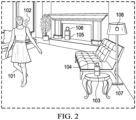
- Fig. 2 is a diagram of another environment (109) which is an acoustic space including a user (101) who utters direct speech 102.
- the environment also includes a system including a set of smart audio devices (103 and 105), speakers for audio output, and microphones.
- the system may be configured in accordance with an embodiment of the invention.
- the speech uttered by user 101 (sometimes referred to herein as a talker) may be recognized by element(s) of the system as a wakeword.
- elements of the Fig. 2 system include:
- the Fig. 2 system may also include at least one speech analytics subsystem (e.g., the below-described system of Fig. 3 including classifier 207) configured to perform speech analytics on (e.g., including by classifying features derived from) microphone outputs of the system (e.g., to indicate a probability that the user is in each zone, of a number of zones of environment 109).
- speech analytics subsystem e.g., the below-described system of Fig. 3 including classifier 207
- device 103 may include a speech analytics subsystem, or the speech analytics subsystem may be implemented apart from (but coupled to) devices 103 and 105.
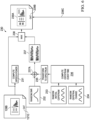
- Figure 3 is a block diagram of elements of a system which may be implemented in accordance with embodiment of the invention (e.g., by implementing wakeword detection, or other speech analytics processing, with training in accordance with an embodiment of the invention).
- the Fig. 3 system (which includes a zone classifier) is implemented in an environment having zones, and includes:
- zone classifier 207 of Fig. 3 We next describe example implementations of zone classifier 207 of Fig. 3 .
- Clean signals e i ( n ) referred to as 203A in Fig. 3 , are fed to wakeword detectors 206.
- the zones may include a couch zone, a kitchen zone, a reading chair zone, etc.
- classifier 207 estimates (and outputs signals indicative of) posterior probabilities p ( C k
- W ( j )) indicate a probability (for the " j "th utterance and the " k "th zone, for each of the zones C k , and each of the utterances) that the user is in each of the zones C k , and are an example of output 208 of classifier 207.
- training data are gathered (e.g., for each zone) by having the user utter the wakeword in the vicinity of the intended zone, for example at the center and extreme edges of a couch. Utterances may be repeated several times. The user then moves to the next zone and continues until all zones have been covered.
- An automated prompting system may be used to collect these training data. For example, the user may see the following prompts on a screen or hear them announced during the process:
- training of the model implemented by classifier 207 includes automatically splitting data into K clusters, where K may also be unknown.
- the unlabeled automatic splitting can be performed, for example, by using a classical clustering technique, e.g., the k-means algorithm or Gaussian Mixture Modelling.
- model training (which may be performed in accordance with an embodiment of the inventive method) and model parameters may be updated over time as new utterances are made.
- An example feature set (e.g., features 206A of Fig. 3 , derived from outputs of microphones in zones of an environment) includes features indicative of the likelihood of wakeword confidence, mean received level over the estimated duration of the most confident wakeword, and maximum received level over the duration of the most confident wakeword. Features may be normalized relative to their maximum values for each wakeword utterance. Training data may be labeled and a full covariance Gaussian Mixture Model (GMM) trained to maximize expectation of the training labels. The estimated zone is the class that maximizes posterior probability.
- GMM Gaussian Mixture Model
- the above description pertains to learning an acoustic zone model from a set of training data collected during a collection process (e.g., a prompted collection process).
- training time operation in a configuration mode
- run time operation in a regular mode
- An extension to this scheme is online learning, in which some or all of the acoustic zone model is learnt or adapted online (i.e., during operation in the regular mode).
- An online learning mode may include steps of:
- Explicit techniques for obtaining feedback include:
- the goal of predicting the acoustic zone may be to inform a microphone selection or adaptive beamforming scheme that attempts to pick up sound from the acoustic zone of the user more effectively, for example, in order to better recognize a command that follows the wakeword.
- implicit techniques for obtaining feedback on the quality of zone prediction may include:
- Figure 3A is a block diagram that shows examples of components of an apparatus (5) that may be configured to perform at least some of the methods disclosed herein.
- apparatus 5 may be or may include a personal computer, a desktop computer, a graphics processing unit (GPU), or another local device that is configured to provide audio processing.
- apparatus 5 may be or may include a server.
- apparatus 5 may be a client device that is configured for communication with a server, via a network interface.
- the components of apparatus 5 may be implemented via hardware, via software stored on non-transitory media, via firmware and/or by combinations thereof.
- the types and numbers of components shown in Figure 3A , as well as other figures disclosed herein, are merely shown by way of example. Alternative implementations may include more, fewer and/or different components.
- Apparatus 5 of Fig. 3A includes an interface system 10 and a control system 15.
- Apparatus 5 may be referred to as a system, and elements 10 and 15 thereof may be referred to as subsystems of such system.
- Interface system 10 may include one or more network interfaces, one or more interfaces between control system 15 and a memory system and/or one or more external device interfaces (e.g., one or more universal serial bus (USB) interfaces).
- interface system 10 may include a user interface system.
- the user interface system may be configured for receiving input from a user.
- user interface system may be configured for providing feedback to a user.
- the user interface system may include one or more displays with corresponding touch and/or gesture detection systems.
- control system 15 may, for example, include a general purpose single- or multi-chip processor, a digital signal processor (DSP), a graphics processing unit (GPU), an application specific integrated circuit (ASIC), a field programmable gate array (FPGA) or other programmable logic device, discrete gate or transistor logic, and/or discrete hardware components. Control system 15 may also include one or more devices implementing non-transitory memory.
- DSP digital signal processor
- GPU graphics processing unit
- ASIC application specific integrated circuit
- FPGA field programmable gate array
- Control system 15 may also include one or more devices implementing non-transitory memory.
- apparatus 5 may be implemented in a single device. However, in some implementations, the apparatus 5 may be implemented in more than one device. In some such implementations, functionality of control system 15 may be included in more than one device. In some examples, apparatus 5 may be a component of another device.
- apparatus 5 is or implements a system for training an acoustic model, wherein the training includes a data preparation phase and a training loop which follows the data preparation phase, and wherein the training loop includes at least one epoch.
- the training includes a data preparation phase and a training loop which follows the data preparation phase, and wherein the training loop includes at least one epoch.
- elements 201, 203, 206, and 207 of the Fig. 3 system may be implemented via one or more systems (e.g., control system 15 of Fig. 3A ).
- elements of other embodiments of the invention e.g., elements configured to implement the method described herein with reference to Fig. 1B
- elements of Fig. 3A may be implemented via one or more systems (e.g., control system 15 of Fig. 3A ).
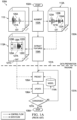
- Fig. 1A is a flowchart (100A) of a conventional multi-style training method for training acoustic model 114A.
- the method may be implemented by a programmed processor or other system (e.g., control system 15 of Fig. 3A ), and steps (or phases) of the method may be implemented by one or more subsystems of the system.
- a subsystem is sometimes referred to as a "unit” and the step (or phase) implemented thereby is sometimes referred to as a function.
- the Fig. 1A method includes a data preparation phase 130A, and a training loop (training phase) 131A which is performed after the data preparation phase 130A.
- augmentation function (unit) 103A augments audio training data (110) during data preparation phase 130A.
- FIG. 1A Elements of Fig. 1A include the following:
- the method may be implemented by a programmed processor or other system (e.g., control system 15 of Fig. 3A ), and steps (or phases) of the method may be implemented by one or more subsystems of the system.
- a subsystem is sometimes referred to as a "unit” and the step (or phase) implemented thereby is sometimes referred to as a function.
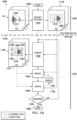
- Fig. 1B is a flowchart (100B) of the multi-style training method for training acoustic model 114B.
- the Fig. 1B method includes data preparation phase 130B, and training loop (training phase) 131B which is performed after the data preparation phase 130B.
- augmentation function 103B augments audio training data (features 111B generated from training data 110) during training loop 131B to generate augmented features 113B.
- Fig. 1B In contrast to the conventional approach of Fig. 1A , the augmentation (by function/unit 103B of Fig. 1B ) is performed in the feature domain and during the training loop (phase 131B) rather than directly on input audio training data (110) in the data preparation phase (phase 130A of Fig. 1A ).
- Elements of Fig. 1B include the following:
- Examples of types of augmentations that may be applied (e.g., by augmentation function 103B of Fig. 1B on training data features) in accordance with embodiments of the invention include (but are not limited to) the following:
- training data e.g., features 111B of Fig. 1B
- function/unit 103B of Fig. 1b e.g., by function/unit 103B of Fig. 1b
- fixed spectrum stationary noise addition thereto e.g., by function/unit 103B of Fig. 1b
- Elements of Fig. 4 include the following:
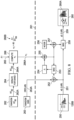
- FIG. 5 Another embodiment of the invention, which includes microphone equalization augmentation, will be described with reference to Fig. 5 .
- training data e.g., features 111B of Fig. 1B
- a filter e.g., a different filter for each different epoch
- the characteristics of the filter are determined from a randomly chosen microphone tilt (e.g., a tilt, in dB/octave, chosen from a normal distribution of microphone tilts).
- a randomly chosen microphone tilt e.g., a tilt, in dB/octave, chosen from a normal distribution of microphone tilts.
- a Signal to Noise Ratio is drawn from an SNR distribution (as in an embodiment employing fixed spectrum stationary noise addition).
- a random stationary noise spectrum is selected from a distribution of noise spectrum shapes (for example, a distribution of linear slope values in dB/octave, or a distribution over DCT values of the log mel spectrum (cepstral)).
- an augmentation i.e., noise, whose power as a function of frequency is determined from the chosen SNR and the chosen shape
- the shape of the noise is varied slowly over time (e.g., during one epoch) by, for example, choosing a rate of change for each cepstral value per second and using that to modulate the noise shape.
- FIG. 7 we next describe another embodiment of augmentation applied to training data (e.g., by unit 103B of Fig. 1B ) in accordance with the invention, in which the augmentation includes non-stationary noise addition.
- Elements of Fig. 7 include the following:
- the augmentation implements and applies a simplified reverberation model.
- the model is an improved (simplified) version of a band-energy domain reverberation algorithm described in above-referenced US Patent Application Publication No. 2019/0362711 .
- the simplified reverberation model has only two parameters: RT60, and Direct To Reverb Ratio (DRR). Mean free path and source distance are summarized into the DRR parameter.
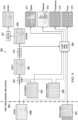
- Training pipeline 300 (e.g., implemented in some embodiments of training loop 131B of Fig. 1B ) augments training data (input features 128B) in a training loop of a multi-style training method and also generates class label data (311, 312, 313, and 314) in the training loop.
- the augmented training data (310) and class labels (311-314) can be used (e.g., in the training loop) to train a model (e.g., model 114B of Fig. 1B ) so that the trained model (e.g., implemented by classifier 207 of Fig.
- Fig. 9 includes steps 303, 315, and 307 which are performed to augment the incoming training data at training time (for example in the "logmelspec" band energy domain on a GPU).
- the class labels 311-314 can be compared with the model output (the output of the model being trained) in order to compute a loss gradient to backpropagate during training.
- a classifier e.g., a classifier implementing model 114B of Fig. 1B ) which has been (or is being) trained using the Fig. 9 scheme could, for example, include an element-wise softmax in its output (e.g., the output of prediction step 105B of the training loop of Fig. 1B ) which indicates speech, stationary noise, nonstationary noise, and reverb probabilities in each time-frequency tile.
- These predicted probabilities could be compared with the class labels 311-314 using, for example, cross entropy loss and gradients backpropagated to update (e.g., in step 106B of the training loop of Fig. 1B ) the model parameters.
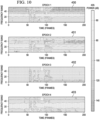
- Figure 10 shows examples of four augmented training vectors (400, 401, 402, and 403), each generated by applying a different augmentation to the same training vector (e.g., input features 128B of Fig. 9 ) for use during a different training epoch of a training loop.
- Each of the augmented training vectors (400-403) is an example of augmented features 310 (of Fig. 9 ), which has been generated for use during a different training epoch of a training loop which implements the Fig. 9 method.
- Fig. 10 shows examples of four augmented training vectors (400, 401, 402, and 403), each generated by applying a different augmentation to the same training vector (e.g., input features 128B of Fig. 9 ) for use during a different training epoch of a training loop.
- Each of the augmented training vectors (400-403) is an example of augmented features 310 (of Fig. 9 ), which has been generated for use during a different training ep
- Each of vectors 400-403 includes banded frequency components (in frequency bands) for each of a sequence of frames, with frequency indicated on the vertical axis and time indicated (in frames) on the horizontal axis.
- scale 405 indicates how shades of (i.e., different degrees of brightness of different areas in) vectors 400-403 correspond to powers in dB.
- Julia 1.1 code listing (“Listing 1").
- the Julia 1.1 code of Listing 1 When executed by a processor (e.g., a processor programmed to implement function 103B of Fig. 1B ), the Julia 1.1 code of Listing 1 generates simulated echo residuals (music-like noise, determined using data values indicative of melody, tempo, and pitchiness, as indicated in the code) to be added to training data (e.g., features 111B of Fig. 1B ) to be augmented.
- the residuals may then be added to frames of features (the training data to be augmented) to generate augmented features for use in one epoch of a training loop to train an acoustic model (e.g., an echo cancellation or echo suppression model).
- an acoustic model e.g., an echo cancellation or echo suppression model
- simulated music (or other simulated sound) residuals may be combined with (e.g., added to) training data to generate augmented training data for use in an epoch of a training loop (e.g., an epoch of training loop 131B of Fig. 1B ) to train an acoustic model.
- a training loop e.g., an epoch of training loop 131B of Fig. 1B
- the following function generates a 3D array of residual band energies in dB of dimensions (nband, nframe, nvector).
- Listing 1B When executed by a processor (e.g., a processor programmed to implement function 103B of Fig. 1B ), the code of Listing 1B generates simulated echo residuals (synthesized music-like noise) to be added to training data (e.g., features 111B of Fig. 1B ) to be augmented.
- the amount (magnitude) of simulated echo residuals is varied according to the position of an utterance in the training data (a training vector).
- Listing 2 An example implementation of augmentation of training data by adding variable spectrum stationary noise thereto (e.g., as described above with reference to Fig. 6 ) will be described with reference to the following Julia 1.4 code listing ("Listing 2").
- a processor e.g., a processor programmed to implement function 103B of Fig. 1B
- the code of Listing 2 When executed by a processor (e.g., a processor programmed to implement function 103B of Fig. 1B ), the code of Listing 2 generates stationary noise (having a variable spectrum), to be combined with (e.g., in step 238 of Fig. 6 ) the unaugmented training data to generate augmented training data for use in training an acoustic model.
- Listing 3 An example implementation of augmentation of training data by adding non-stationary noise thereto (e.g., as described above with reference to Fig. 7 ) will be described with reference to the following Julia 1.4 code listing ("Listing 3").
- a processor e.g., a GPU or other processor programmed to implement function 103B of Fig. 1B
- the code of Listing 3 When executed by a processor (e.g., a GPU or other processor programmed to implement function 103B of Fig. 1B ), the code of Listing 3 generates non-stationary noise, to be combined with (e.g., in step 238 of Fig. 7 ) the unaugmented training data to generate augmented training data for use in training an acoustic model.
- Listing 4 When executed by a processor (e.g., a GPU or other processor programmed to implement function 103B of Fig. 1B ), the code of Listing 4 generates reverberant energy values to be combined with the unaugmented training data and combines (i.e., implements step 258 of Fig. 8 ) the values with the training data to generate augmented training data for use in training an acoustic model.
- a processor e.g., a GPU or other processor programmed to implement function 103B of Fig. 1B
- the code of Listing 4 When executed by a processor (e.g., a GPU or other processor programmed to implement function 103B of Fig. 1B ), the code of Listing 4 generates reverberant energy values to be combined with the unaugmented training data and combines (i.e., implements step 258 of Fig. 8 ) the values with the training data to generate augmented training data for use in training an acoustic model.
- x is a 3D array describing the band energies in dB of a batch of training vectors in which:
- This function returns a tuple (y,mask) where y is a 3D array of reverberated band energies of the same size as x.
- Mask is a 3D array of the same size as y which is:
- aspects of the invention include a system or device configured (e.g., programmed) to perform any embodiment of the inventive method, and a tangible computer readable medium (e.g., a disc) which stores code for implementing any embodiment of the inventive method or steps thereof.
- the inventive system can be or include a programmable general purpose processor, digital signal processor, or microprocessor, programmed with software or firmware and/or otherwise configured to perform any of a variety of operations on data, including an embodiment of the inventive method or steps thereof.
- a general purpose processor may be or include a computer system including an input device, a memory, and a processing subsystem that is programmed (and/or otherwise configured) to perform an embodiment of the inventive method (or steps thereof) in response to data asserted thereto.
- Some embodiments of the inventive system are implemented as a configurable (e.g., programmable) digital signal processor (DSP) or graphics processing unit (GPU) that is configured (e.g., programmed and otherwise configured) to perform required processing on audio signal(s), including performance of an embodiment of the inventive method or steps thereof.
- DSP digital signal processor
- GPU graphics processing unit
- embodiments of the inventive system (or elements thereof) are implemented as a general purpose processor (e.g., a personal computer (PC) or other computer system or microprocessor, which may include an input device and a memory) which is programmed with software or firmware and/or otherwise configured to perform any of a variety of operations including an embodiment of the inventive method.
- PC personal computer
- microprocessor which may include an input device and a memory
- elements of some embodiments of the inventive system are implemented as a general purpose processor, or GPU, or DSP configured (e.g., programmed) to perform an embodiment of the inventive method, and the system also includes other elements (e.g., one or more loudspeakers and/or one or more microphones).
- a general purpose processor configured to perform an embodiment of the inventive method would typically be coupled to an input device (e.g., a mouse and/or a keyboard), a memory, and a display device.
- Another aspect of the invention is a computer readable medium (for example, a disc or other tangible storage medium) which stores code for performing (e.g., coder executable to perform) any embodiment of the inventive method or steps thereof.
- code for performing e.g., coder executable to perform
Landscapes
- Engineering & Computer Science (AREA)
- Physics & Mathematics (AREA)
- Theoretical Computer Science (AREA)
- General Physics & Mathematics (AREA)
- Health & Medical Sciences (AREA)
- Computational Linguistics (AREA)
- Data Mining & Analysis (AREA)
- Artificial Intelligence (AREA)
- Acoustics & Sound (AREA)
- Human Computer Interaction (AREA)
- Audiology, Speech & Language Pathology (AREA)
- Mathematical Physics (AREA)
- Multimedia (AREA)
- Evolutionary Computation (AREA)
- General Engineering & Computer Science (AREA)
- Software Systems (AREA)
- Probability & Statistics with Applications (AREA)
- Computing Systems (AREA)
- Mathematical Analysis (AREA)
- Pure & Applied Mathematics (AREA)
- Computational Mathematics (AREA)
- Life Sciences & Earth Sciences (AREA)
- Mathematical Optimization (AREA)
- Molecular Biology (AREA)
- Biomedical Technology (AREA)
- General Health & Medical Sciences (AREA)
- Biophysics (AREA)
- Algebra (AREA)
- Quality & Reliability (AREA)
- Signal Processing (AREA)
- Bioinformatics & Cheminformatics (AREA)
- Bioinformatics & Computational Biology (AREA)
- Evolutionary Biology (AREA)
- Operations Research (AREA)
- Databases & Information Systems (AREA)
- Circuit For Audible Band Transducer (AREA)
Claims (12)
- Verfahren zum Trainieren eines akustischen Modells (114B), wobei das Trainieren eine Datenaufbereitungsphase (130B), die in einem Datenaufbereitungs-Subsystem implementiert ist, und eine Trainingsschleife (131B), die in einem Trainings-Subsystem implementiert ist, beinhaltet, wobei die Trainingsschleife (131B) auf die Datenaufbereitungsphase (130B) folgt und eine Vielzahl von aufeinanderfolgenden Epochen beinhaltet, wobei das Verfahren einschließt:in der Datenaufbereitungsphase (130B):Bereitstellen von Zeitdomänen-Trainingsdaten (110), wobei die Trainingsdaten (110) mindestens ein Beispiel von Audiodaten sind oder einschließen,Extrahieren von mindestens einem Merkmal (111B) der Zeitdomänen-Trainingsdaten (110) undBereitstellen des mindestens einen Merkmals (111B) für das Trainings-Subsystem;während jeder Epoche der Trainingsschleife:Erweitern des mindestens einen Merkmals (111B), wobei das Erweitern in mindestens einer Merkmalsdomäne erfolgt, wodurch erweiterte Trainingsdaten (113B) erzeugt werden, die temporär sind und nur während des Trainierens in einer Epoche verwendet werden; undVerwenden von mindestens einigen der erweiterten Trainingsdaten (113B) zum Trainieren des Modells (114B),wobei die Trainingsdaten (110) Merkmale anzeigen, die Frequenzbänder umfassen, und die Erweiterung im Frequenzbereich erfolgt, undwobei das Erweitern des mindestens einen Merkmals Ziehen eines zufälligen Signal-Rausch-Verhältnisses, SNR, aus einer SNR-Verteilung (232) und Ziehen einer zufälligen stationären Rauschspektrumsform (233) aus einer Verteilung von Rauschspektrumsformen umfasst, und Bestimmen der Erweiterung als Rauschen, dessen Leistung als eine Funktion der Frequenz aus dem gezogenen zufälligen SNR und dem gezogenen zufälligen stationären Rauschspektrum bestimmt wird.
- Verfahren nach Anspruch 1, wobei unterschiedliche Teilmengen der erweiterten Trainingsdaten (113B) während der Trainingsschleife (131B) zur Verwendung in unterschiedlichen Epochen der Trainingsschleife (131B) erzeugt werden, indem mindestens einige der Trainingsdaten (111B) unter Verwendung unterschiedlicher Sätze von Erweiterungsparametern aus einer Vielzahl von Wahrscheinlichkeitsverteilungen erweitert werden, und/oderwobei die Trainingsdaten eine Vielzahl von Äußerungen eines Benutzers anzeigen, und/oderwobei die Frequenzbänder jeweils einen konstanten Anteil des Mel-Spektrums einnehmen, oder in logarithmischer Frequenz gleichmäßig beabstandet sind, oder in logarithmischer Frequenz gleichmäßig beabstandet sind, wobei der Logarithmus so skaliert ist, dass die Merkmale die Bandleistungen in Dezibel (dB) darstellen.
- Verfahren nach Anspruch 1, wobei das akustische Modell (114B) ein Sprachanalysemodell oder ein Rauschunterdrückungsmodell ist.
- Verfahren nach Anspruch 1, wobei das Erweitern mindestens eines von Hinzufügen von stationärem Rauschen mit festem Spektrum, Hinzufügen von stationärem Rauschen mit variablem Spektrum, Hinzufügen von Rauschen, das einen oder mehrere zufällige stationäre Schmalbandtöne einschließt, Hinzufügen von Nachhall, Hinzufügen von nicht-stationärem Rauschen, Hinzufügen von simulierten Echoresten, Simulieren der Mikrofonentzerrung, Simulieren der Mikrofonabschaltung oder Variieren des Breitbandpegels einschließt, und/oderwobei das Erweitern in oder auf einer oder mehreren Grafikverarbeitungseinheiten (GPUs) implementiert ist, und/oderwobei das Erweitern in einer Weise durchgeführt wird, die zum Teil aus den Trainingsdaten (110) bestimmt wird.
- Verfahren nach Anspruch 1, wobei das Trainieren durch ein Steuersystem implementiert wird, das Steuersystem einen oder mehrere Prozessoren und eine oder mehrere Vorrichtungen, die einen nichtflüchtigen Speicher implementieren, einschließt, das Trainieren das Bereitstellen der Trainingsdaten an das Steuersystem einschließt, und das Trainieren ein trainiertes akustisches Modell (114B) erzeugt, wobei das Verfahren einschließt:
Speichern von Parametern des trainierten akustischen Modells (114B) in einer oder mehreren der Vorrichtungen. - System, konfiguriert zum Trainieren eines akustischen Modells (114B), wobei das Trainieren eine Datenaufbereitungsphase (130B) und eine Trainingsschleife (131B) einschließt, die auf die Datenaufbereitungsphase (130B) folgt, wobei die Trainingsschleife eine Vielzahl von aufeinanderfolgenden Epochen einschließt, wobei das System einschließt:ein Datenaufbereitungs-Subsystem, das gekoppelt und konfiguriert ist, um die Datenaufbereitungsphase (130B) zu implementieren, einschließlich Empfangen oder Erzeugen von Zeitdomänen-Trainingsdaten (110), wobei die Zeitdomänen-Trainingsdaten (110) mindestens ein Beispiel von Audiodaten sind oder einschließen, wobei das Datenaufbereitungs-Subsystem weiter konfiguriert ist, um mindestens ein Merkmal (111B) aus den Zeitdomänen-Trainingsdaten zu extrahieren und das mindestens eine Merkmal (111B) dem Trainings-Subsystem bereitzustellen; undein Trainings-Subsystem, das mit dem Datenaufbereitungs-Subsystem gekoppelt und konfiguriert ist, um das mindestens eine Merkmal (111B) während jeder Epoche der Trainingsschleife zu erweitern,wobei die Erweiterung in mindestens einer Merkmalsdomäne erfolgt, wodurch erweiterte Trainingsdaten (113B) erzeugt werden, die temporär sind und nur während des Trainings in einer Epoche verwendet werden, und um mindestens einige der erweiterten Trainingsdaten (113B) zu verwenden, um das Modell (114B) während jeder Epoche der Trainingsschleife zu trainieren,wobei die Trainingsdaten (110) Merkmale anzeigen, die Frequenzbänder umfassen, und die Erweiterung im Frequenzbereich erfolgt, undwobei das Erweitern des mindestens einen Merkmals Ziehen eines zufälligen Signal-Rausch-Verhältnisses, SNR, aus einer SNR-Verteilung (232) und Ziehen einer zufälligen stationären Rauschspektrumsform aus einer Verteilung von Rauschspektrumsformen (233) umfasst, und Bestimmen der Erweiterung als Rauschen, dessen Leistung als eine Funktion der Frequenz aus dem gezogenen zufälligen SNR und dem gezogenen zufälligen stationären Rauschspektrum bestimmt wird.
- System nach Anspruch 6, wobei das Trainings-Subsystem konfiguriert ist, um während der Trainingsschleife (131B) verschiedene Teilmengen der erweiterten Trainingsdaten (113B) zur Verwendung in verschiedenen Epochen der Trainingsschleife (131B) zu erzeugen, einschließlich durch Erweitern mindestens einiger der Trainingsdaten (110) unter Verwendung verschiedener Sätze von Erweiterungsparametern, die aus einer Vielzahl von Wahrscheinlichkeitsverteilungen gezogen werden, und/oder
wobei die Trainingsdaten eine Vielzahl von Äußerungen eines Benutzers anzeigen. - System nach Anspruch 6, wobei das akustische Modell ein Sprachanalysemodell oder ein Rauschunterdrückungsmodell ist.
- System nach Anspruch 6, wobei das Trainingssubsystem konfiguriert ist, um ein tiefes neuronales Netzwerk (DNN) oder ein neuronales Faltungsnetzwerk (CNN) oder ein rekurrentes neuronales Netzwerk (RNN) oder ein HMM-GMM-akustisches Modell zu trainieren.
- System nach Anspruch 6, wobei das Trainings-Subsystem konfiguriert ist, um die Trainingsdaten (111B) zu erweitern, einschließlich durch Ausführen von mindestens einem von Hinzufügen von stationärem Rauschen mit festem Spektrum, Hinzufügen von stationärem Rauschen mit variablem Spektrum, Hinzufügen von Rauschen, das einen oder mehrere zufällige stationäre Schmalbandtöne einschließt, Hinzufügen von Nachhall, Hinzufügen von nicht-stationärem Rauschen, Hinzufügen von simulierten Echoresten, Simulieren der Mikrofonentzerrung, Simulieren der Mikrofonabschaltung oder Variieren des Breitbandpegels, und/oderin oder auf einer oder mehreren Grafikverarbeitungseinheiten (GPUs) implementiert ist, und/oderkonfiguriert ist, um die Trainingsdaten (111B) in einer Weise zu erweitern, die zum Teil aus den Trainingsdaten bestimmt wird.
- System nach Anspruch 6, wobei die Frequenzbänder jeweils einen konstanten Anteil des Mel-Spektrums einnehmen, oder in logarithmischer Frequenz gleichmäßig beabstandet sind, oder in logarithmischer Frequenz gleichmäßig beabstandet sind, wobei der Logarithmus so skaliert ist, dass die Merkmale die Bandleistungen in Dezibel (dB) darstellen.
- System nach Anspruch 6, wobei das Trainings-Subsystem einen oder mehrere Prozessoren und eine oder mehrere Vorrichtungen einschließt, die einen nichtflüchtigen Speicher implementieren, und das Trainings-Subsystem konfiguriert ist, um ein trainiertes akustisches Modell zu erzeugen und Parameter des trainierten akustischen Modells in einer oder mehreren der Vorrichtungen zu speichern.
Applications Claiming Priority (3)
| Application Number | Priority Date | Filing Date | Title |
|---|---|---|---|
| US201962880117P | 2019-07-30 | 2019-07-30 | |
| US16/936,673 US20210035563A1 (en) | 2019-07-30 | 2020-07-23 | Per-epoch data augmentation for training acoustic models |
| PCT/US2020/044354 WO2021022094A1 (en) | 2019-07-30 | 2020-07-30 | Per-epoch data augmentation for training acoustic models |
Publications (2)
| Publication Number | Publication Date |
|---|---|
| EP4004906A1 EP4004906A1 (de) | 2022-06-01 |
| EP4004906B1 true EP4004906B1 (de) | 2025-02-19 |
Family
ID=72145489
Family Applications (1)
| Application Number | Title | Priority Date | Filing Date |
|---|---|---|---|
| EP20758024.2A Active EP4004906B1 (de) | 2019-07-30 | 2020-07-30 | Datenergänzung nach epoche zum trainieren von akustischen modellen |
Country Status (4)
| Country | Link |
|---|---|
| US (1) | US20210035563A1 (de) |
| EP (1) | EP4004906B1 (de) |
| CN (1) | CN114175144B (de) |
| WO (1) | WO2021022094A1 (de) |
Cited By (1)
| Publication number | Priority date | Publication date | Assignee | Title |
|---|---|---|---|---|
| US20240161765A1 (en) * | 2022-11-16 | 2024-05-16 | Cisco Technology, Inc. | Transforming speech signals to attenuate speech of competing individuals and other noise |
Families Citing this family (36)
| Publication number | Priority date | Publication date | Assignee | Title |
|---|---|---|---|---|
| WO2019089432A1 (en) | 2017-10-30 | 2019-05-09 | The Research Foundation For The State University Of New York | System and method associated with user authentication based on an acoustic-based echo-signature |
| EP3918813A4 (de) | 2019-01-29 | 2022-10-26 | Nureva Inc. | Verfahren, vorrichtung und computerlesbares medium zur erzeugung von audio-fokusbereichen, die vom mikrofonsystem dissoziiert sind, zur optimierung der audiobearbeitung an genauen räumlichen orten in einem 3d-raum |
| US11227579B2 (en) * | 2019-08-08 | 2022-01-18 | International Business Machines Corporation | Data augmentation by frame insertion for speech data |
| WO2021072109A1 (en) * | 2019-10-11 | 2021-04-15 | Pindrop Security, Inc. | Z-vectors: speaker embeddings from raw audio using sincnet, extended cnn architecture, and in-network augmentation techniques |
| US11651767B2 (en) | 2020-03-03 | 2023-05-16 | International Business Machines Corporation | Metric learning of speaker diarization |
| US11443748B2 (en) * | 2020-03-03 | 2022-09-13 | International Business Machines Corporation | Metric learning of speaker diarization |
| US11361749B2 (en) * | 2020-03-11 | 2022-06-14 | Nuance Communications, Inc. | Ambient cooperative intelligence system and method |
| US11394799B2 (en) | 2020-05-07 | 2022-07-19 | Freeman Augustus Jackson | Methods, systems, apparatuses, and devices for facilitating for generation of an interactive story based on non-interactive data |
| CN115605953B (zh) | 2020-05-08 | 2026-03-17 | 微软技术许可有限责任公司 | 用于多麦克风信号处理的数据增强的系统和方法 |
| US12014748B1 (en) * | 2020-08-07 | 2024-06-18 | Amazon Technologies, Inc. | Speech enhancement machine learning model for estimation of reverberation in a multi-task learning framework |
| US12223946B2 (en) * | 2020-09-11 | 2025-02-11 | International Business Machines Corporation | Artificial intelligence voice response system for speech impaired users |
| US12112741B2 (en) * | 2021-02-18 | 2024-10-08 | Microsoft Technology Licensing, Llc | System and method for data augmentation and speech processing in dynamic acoustic environments |
| US11769486B2 (en) * | 2021-02-18 | 2023-09-26 | Nuance Communications, Inc. | System and method for data augmentation and speech processing in dynamic acoustic environments |
| US11783826B2 (en) * | 2021-02-18 | 2023-10-10 | Nuance Communications, Inc. | System and method for data augmentation and speech processing in dynamic acoustic environments |
| DE202021102338U1 (de) * | 2021-04-30 | 2021-05-14 | Robert Bosch Gesellschaft mit beschränkter Haftung | Steuergerät zum Erzeugen von Trainingsdaten zum Trainieren eines Algorithmus des maschinellen Lernens |
| US12342137B2 (en) | 2021-05-10 | 2025-06-24 | Nureva Inc. | System and method utilizing discrete microphones and virtual microphones to simultaneously provide in-room amplification and remote communication during a collaboration session |
| US12340792B2 (en) * | 2021-05-17 | 2025-06-24 | Salesforce, Inc. | Systems and methods for few-shot intent classifier models |
| CN113241062B (zh) * | 2021-06-01 | 2023-12-26 | 平安科技(深圳)有限公司 | 语音训练数据集的增强方法、装置、设备及存储介质 |
| WO2023059958A1 (en) * | 2021-10-05 | 2023-04-13 | Google Llc | Guided data selection for masked speech modeling |
| US12585960B2 (en) * | 2022-02-17 | 2026-03-24 | International Business Machines Corporation | Dynamically tuning hyperparameters during ML model training |
| US12356146B2 (en) | 2022-03-03 | 2025-07-08 | Nureva, Inc. | System for dynamically determining the location of and calibration of spatially placed transducers for the purpose of forming a single physical microphone array |
| US12413916B2 (en) * | 2022-03-09 | 2025-09-09 | Starkey Laboratories, Inc. | Apparatus and method for speech enhancement and feedback cancellation using a neural network |
| US12549917B2 (en) | 2022-03-22 | 2026-02-10 | Nureva, Inc. | System for dynamically forming a virtual microphone coverage map from a combined array to any dimension, size and shape based on individual microphone element locations |
| US12457465B2 (en) | 2022-03-28 | 2025-10-28 | Nureva, Inc. | System for dynamically deriving and using positional based gain output parameters across one or more microphone element locations |
| CN117994600A (zh) * | 2022-04-14 | 2024-05-07 | 鸿海精密工业股份有限公司 | 数据扩增装置、方法以及非挥发性计算机可读存储介质 |
| CN115019760B (zh) * | 2022-05-19 | 2025-08-01 | 上海理工大学 | 一种针对音频的数据扩增方法及实时声音事件检测系统及方法 |
| CN117238282A (zh) * | 2022-06-06 | 2023-12-15 | 北京嘀嘀无限科技发展有限公司 | 语音数据增强系统、方法、设备和存储介质 |
| US11935174B2 (en) * | 2022-06-27 | 2024-03-19 | Dish Network L.L.C. | Machine learning avatar for consolidating and presenting data in virtual environments |
| US20250184119A1 (en) * | 2022-08-23 | 2025-06-05 | Lenovo (Beijing) Limited | Apparatus, method, and program product for producing synthetic fake data |
| CN115758082B (zh) * | 2022-11-10 | 2025-09-02 | 成都交大光芒科技股份有限公司 | 一种轨道交通变压器故障诊断方法 |
| CN115575896B (zh) * | 2022-12-01 | 2023-03-10 | 杭州兆华电子股份有限公司 | 一种针对非点声源声源图像的特征增强方法 |
| CN115910044B (zh) * | 2023-01-10 | 2023-06-30 | 广州小鹏汽车科技有限公司 | 语音识别方法、装置及车辆 |
| JP2024099337A (ja) * | 2023-01-12 | 2024-07-25 | 株式会社東芝 | 情報学習装置、方法およびプログラム |
| GB202302913D0 (en) * | 2023-02-28 | 2023-04-12 | Samsung Electronics Co Ltd | Persoda: personalized data augmentation for personalized asr |
| US12587787B2 (en) * | 2023-05-09 | 2026-03-24 | Nureva, Inc. | System for dynamically adjusting the gain structure of sound sources contained within one or more inclusion and exclusion zones |
| EP4510079A1 (de) | 2024-01-05 | 2025-02-19 | Univerza v Mariboru | Verfahren zur rauschinjektion in geometrische 2d-formen, die durch freeman-kettencodes beschrieben werden |
Family Cites Families (16)
| Publication number | Priority date | Publication date | Assignee | Title |
|---|---|---|---|---|
| US5903884A (en) * | 1995-08-08 | 1999-05-11 | Apple Computer, Inc. | Method for training a statistical classifier with reduced tendency for overfitting |
| KR100304666B1 (ko) * | 1999-08-28 | 2001-11-01 | 윤종용 | 음성 향상 방법 |
| US6785648B2 (en) * | 2001-05-31 | 2004-08-31 | Sony Corporation | System and method for performing speech recognition in cyclostationary noise environments |
| US9495955B1 (en) * | 2013-01-02 | 2016-11-15 | Amazon Technologies, Inc. | Acoustic model training |
| KR101506547B1 (ko) * | 2013-08-02 | 2015-03-30 | 서강대학교산학협력단 | 반향 환경에서의 음성특징 향상방법 및 장치 |
| US9721559B2 (en) * | 2015-04-17 | 2017-08-01 | International Business Machines Corporation | Data augmentation method based on stochastic feature mapping for automatic speech recognition |
| US9786270B2 (en) * | 2015-07-09 | 2017-10-10 | Google Inc. | Generating acoustic models |
| US10373073B2 (en) * | 2016-01-11 | 2019-08-06 | International Business Machines Corporation | Creating deep learning models using feature augmentation |
| US11144889B2 (en) * | 2016-04-06 | 2021-10-12 | American International Group, Inc. | Automatic assessment of damage and repair costs in vehicles |
| US10475471B2 (en) * | 2016-10-11 | 2019-11-12 | Cirrus Logic, Inc. | Detection of acoustic impulse events in voice applications using a neural network |
| US10540961B2 (en) * | 2017-03-13 | 2020-01-21 | Baidu Usa Llc | Convolutional recurrent neural networks for small-footprint keyword spotting |
| CN107680586B (zh) * | 2017-08-01 | 2020-09-29 | 百度在线网络技术(北京)有限公司 | 远场语音声学模型训练方法及系统 |
| US10872602B2 (en) | 2018-05-24 | 2020-12-22 | Dolby Laboratories Licensing Corporation | Training of acoustic models for far-field vocalization processing systems |
| US10720151B2 (en) * | 2018-07-27 | 2020-07-21 | Deepgram, Inc. | End-to-end neural networks for speech recognition and classification |
| US11934944B2 (en) * | 2018-10-04 | 2024-03-19 | International Business Machines Corporation | Neural networks using intra-loop data augmentation during network training |
| CN109256144B (zh) * | 2018-11-20 | 2022-09-06 | 中国科学技术大学 | 基于集成学习与噪声感知训练的语音增强方法 |
-
2020
- 2020-07-23 US US16/936,673 patent/US20210035563A1/en not_active Abandoned
- 2020-07-30 WO PCT/US2020/044354 patent/WO2021022094A1/en not_active Ceased
- 2020-07-30 CN CN202080054978.XA patent/CN114175144B/zh active Active
- 2020-07-30 EP EP20758024.2A patent/EP4004906B1/de active Active
Non-Patent Citations (1)
| Title |
|---|
| TERRANCE DEVRIES ET AL: "Workshop track -ICLR 2017 DATASET AUGMENTATION IN FEATURE SPACE", 17 February 2017 (2017-02-17), XP055617306, Retrieved from the Internet <URL:https://arxiv.org/pdf/1702.05538.pdf> [retrieved on 20190902] * |
Cited By (2)
| Publication number | Priority date | Publication date | Assignee | Title |
|---|---|---|---|---|
| US20240161765A1 (en) * | 2022-11-16 | 2024-05-16 | Cisco Technology, Inc. | Transforming speech signals to attenuate speech of competing individuals and other noise |
| US12469510B2 (en) * | 2022-11-16 | 2025-11-11 | Cisco Technology, Inc. | Transforming speech signals to attenuate speech of competing individuals and other noise |
Also Published As
| Publication number | Publication date |
|---|---|
| EP4004906A1 (de) | 2022-06-01 |
| CN114175144B (zh) | 2026-03-17 |
| US20210035563A1 (en) | 2021-02-04 |
| WO2021022094A1 (en) | 2021-02-04 |
| CN114175144A (zh) | 2022-03-11 |
Similar Documents
| Publication | Publication Date | Title |
|---|---|---|
| EP4004906B1 (de) | Datenergänzung nach epoche zum trainieren von akustischen modellen | |
| US12555578B2 (en) | Method and system of audio false keyphrase rejection using speaker recognition | |
| US10622009B1 (en) | Methods for detecting double-talk | |
| KR102877670B1 (ko) | 분산형 오디오 디바이스들을 위한 음향 반향 소거 제어 | |
| US11404073B1 (en) | Methods for detecting double-talk | |
| US11521635B1 (en) | Systems and methods for noise cancellation | |
| US9269368B2 (en) | Speaker-identification-assisted uplink speech processing systems and methods | |
| JP2020115206A (ja) | システム及び方法 | |
| CN110268470A (zh) | 音频设备滤波器修改 | |
| US10937441B1 (en) | Beam level based adaptive target selection | |
| JP7383122B2 (ja) | 信号認識または修正のために音声データから抽出した特徴を正規化するための方法および装置 | |
| US11727926B1 (en) | Systems and methods for noise reduction | |
| JP7690138B2 (ja) | 自動音声認識のためのマイクロフォンアレイ構成でインバリアントな、ストリーミングな、マルチチャネルな、ニューラル強調フロントエンド | |
| US11528571B1 (en) | Microphone occlusion detection | |
| Huang et al. | Supervised noise reduction for multichannel keyword spotting | |
| KR20210137146A (ko) | 큐의 클러스터링을 사용한 음성 증강 | |
| CN118985025A (zh) | 用于联合声学回声消除、语音增强和话音分离的通用自动语音辨识 | |
| US11792570B1 (en) | Parallel noise suppression | |
| Nakajima et al. | An easily-configurable robot audition system using histogram-based recursive level estimation | |
| JP2023551704A (ja) | サブ帯域ドメイン音響エコーキャンセラに基づく音響状態推定器 | |
| HK40067354A (zh) | 具有分布式麦克风的声学分区 | |
| CN118235435A (zh) | 分布式音频设备闪避 | |
| HK40067354B (zh) | 具有分布式麦克风的声学分区 | |
| HK40066118A (zh) | 用於归一化从音频数据提取的特徵以进行信号识别或修改的方法和装置 | |
| HK40073191A (en) | Normalizing features extracted from audio data for signal recognition or modification |
Legal Events
| Date | Code | Title | Description |
|---|---|---|---|
| STAA | Information on the status of an ep patent application or granted ep patent |
Free format text: STATUS: UNKNOWN |
|
| STAA | Information on the status of an ep patent application or granted ep patent |
Free format text: STATUS: THE INTERNATIONAL PUBLICATION HAS BEEN MADE |
|
| PUAI | Public reference made under article 153(3) epc to a published international application that has entered the european phase |
Free format text: ORIGINAL CODE: 0009012 |
|
| STAA | Information on the status of an ep patent application or granted ep patent |
Free format text: STATUS: REQUEST FOR EXAMINATION WAS MADE |
|
| 17P | Request for examination filed |
Effective date: 20220228 |
|
| AK | Designated contracting states |
Kind code of ref document: A1 Designated state(s): AL AT BE BG CH CY CZ DE DK EE ES FI FR GB GR HR HU IE IS IT LI LT LU LV MC MK MT NL NO PL PT RO RS SE SI SK SM TR |
|
| DAV | Request for validation of the european patent (deleted) | ||
| DAX | Request for extension of the european patent (deleted) | ||
| P01 | Opt-out of the competence of the unified patent court (upc) registered |
Effective date: 20230417 |
|
| STAA | Information on the status of an ep patent application or granted ep patent |
Free format text: STATUS: EXAMINATION IS IN PROGRESS |
|
| 17Q | First examination report despatched |
Effective date: 20230830 |
|
| GRAP | Despatch of communication of intention to grant a patent |
Free format text: ORIGINAL CODE: EPIDOSNIGR1 |
|
| STAA | Information on the status of an ep patent application or granted ep patent |
Free format text: STATUS: GRANT OF PATENT IS INTENDED |
|
| INTG | Intention to grant announced |
Effective date: 20240918 |
|
| GRAS | Grant fee paid |
Free format text: ORIGINAL CODE: EPIDOSNIGR3 |
|
| GRAA | (expected) grant |
Free format text: ORIGINAL CODE: 0009210 |
|
| STAA | Information on the status of an ep patent application or granted ep patent |
Free format text: STATUS: THE PATENT HAS BEEN GRANTED |
|
| AK | Designated contracting states |
Kind code of ref document: B1 Designated state(s): AL AT BE BG CH CY CZ DE DK EE ES FI FR GB GR HR HU IE IS IT LI LT LU LV MC MK MT NL NO PL PT RO RS SE SI SK SM TR |
|
| REG | Reference to a national code |
Ref country code: GB Ref legal event code: FG4D |
|
| REG | Reference to a national code |
Ref country code: CH Ref legal event code: EP |
|
| REG | Reference to a national code |
Ref country code: IE Ref legal event code: FG4D |
|
| REG | Reference to a national code |
Ref country code: DE Ref legal event code: R096 Ref document number: 602020046336 Country of ref document: DE |
|
| REG | Reference to a national code |
Ref country code: NL Ref legal event code: MP Effective date: 20250219 |
|
| PG25 | Lapsed in a contracting state [announced via postgrant information from national office to epo] |
Ref country code: RS Free format text: LAPSE BECAUSE OF FAILURE TO SUBMIT A TRANSLATION OF THE DESCRIPTION OR TO PAY THE FEE WITHIN THE PRESCRIBED TIME-LIMIT Effective date: 20250519 |
|
| PG25 | Lapsed in a contracting state [announced via postgrant information from national office to epo] |
Ref country code: FI Free format text: LAPSE BECAUSE OF FAILURE TO SUBMIT A TRANSLATION OF THE DESCRIPTION OR TO PAY THE FEE WITHIN THE PRESCRIBED TIME-LIMIT Effective date: 20250219 |
|
| PG25 | Lapsed in a contracting state [announced via postgrant information from national office to epo] |
Ref country code: PL Free format text: LAPSE BECAUSE OF FAILURE TO SUBMIT A TRANSLATION OF THE DESCRIPTION OR TO PAY THE FEE WITHIN THE PRESCRIBED TIME-LIMIT Effective date: 20250219 |
|
| PG25 | Lapsed in a contracting state [announced via postgrant information from national office to epo] |
Ref country code: ES Free format text: LAPSE BECAUSE OF FAILURE TO SUBMIT A TRANSLATION OF THE DESCRIPTION OR TO PAY THE FEE WITHIN THE PRESCRIBED TIME-LIMIT Effective date: 20250219 |
|
| PGFP | Annual fee paid to national office [announced via postgrant information from national office to epo] |
Ref country code: GB Payment date: 20250619 Year of fee payment: 6 |
|
| REG | Reference to a national code |
Ref country code: LT Ref legal event code: MG9D |
|
| PG25 | Lapsed in a contracting state [announced via postgrant information from national office to epo] |
Ref country code: NO Free format text: LAPSE BECAUSE OF FAILURE TO SUBMIT A TRANSLATION OF THE DESCRIPTION OR TO PAY THE FEE WITHIN THE PRESCRIBED TIME-LIMIT Effective date: 20250519 Ref country code: IS Free format text: LAPSE BECAUSE OF FAILURE TO SUBMIT A TRANSLATION OF THE DESCRIPTION OR TO PAY THE FEE WITHIN THE PRESCRIBED TIME-LIMIT Effective date: 20250619 |
|
| PG25 | Lapsed in a contracting state [announced via postgrant information from national office to epo] |
Ref country code: NL Free format text: LAPSE BECAUSE OF FAILURE TO SUBMIT A TRANSLATION OF THE DESCRIPTION OR TO PAY THE FEE WITHIN THE PRESCRIBED TIME-LIMIT Effective date: 20250219 |
|
| PG25 | Lapsed in a contracting state [announced via postgrant information from national office to epo] |
Ref country code: HR Free format text: LAPSE BECAUSE OF FAILURE TO SUBMIT A TRANSLATION OF THE DESCRIPTION OR TO PAY THE FEE WITHIN THE PRESCRIBED TIME-LIMIT Effective date: 20250219 |
|
| PG25 | Lapsed in a contracting state [announced via postgrant information from national office to epo] |
Ref country code: LV Free format text: LAPSE BECAUSE OF FAILURE TO SUBMIT A TRANSLATION OF THE DESCRIPTION OR TO PAY THE FEE WITHIN THE PRESCRIBED TIME-LIMIT Effective date: 20250219 Ref country code: PT Free format text: LAPSE BECAUSE OF FAILURE TO SUBMIT A TRANSLATION OF THE DESCRIPTION OR TO PAY THE FEE WITHIN THE PRESCRIBED TIME-LIMIT Effective date: 20250620 |
|
| PGFP | Annual fee paid to national office [announced via postgrant information from national office to epo] |
Ref country code: FR Payment date: 20250620 Year of fee payment: 6 |
|
| PG25 | Lapsed in a contracting state [announced via postgrant information from national office to epo] |
Ref country code: GR Free format text: LAPSE BECAUSE OF FAILURE TO SUBMIT A TRANSLATION OF THE DESCRIPTION OR TO PAY THE FEE WITHIN THE PRESCRIBED TIME-LIMIT Effective date: 20250520 Ref country code: BG Free format text: LAPSE BECAUSE OF FAILURE TO SUBMIT A TRANSLATION OF THE DESCRIPTION OR TO PAY THE FEE WITHIN THE PRESCRIBED TIME-LIMIT Effective date: 20250219 |
|
| REG | Reference to a national code |
Ref country code: AT Ref legal event code: MK05 Ref document number: 1769118 Country of ref document: AT Kind code of ref document: T Effective date: 20250219 |
|
| PG25 | Lapsed in a contracting state [announced via postgrant information from national office to epo] |
Ref country code: SE Free format text: LAPSE BECAUSE OF FAILURE TO SUBMIT A TRANSLATION OF THE DESCRIPTION OR TO PAY THE FEE WITHIN THE PRESCRIBED TIME-LIMIT Effective date: 20250219 |
|
| PG25 | Lapsed in a contracting state [announced via postgrant information from national office to epo] |
Ref country code: SM Free format text: LAPSE BECAUSE OF FAILURE TO SUBMIT A TRANSLATION OF THE DESCRIPTION OR TO PAY THE FEE WITHIN THE PRESCRIBED TIME-LIMIT Effective date: 20250219 |
|
| PG25 | Lapsed in a contracting state [announced via postgrant information from national office to epo] |
Ref country code: DK Free format text: LAPSE BECAUSE OF FAILURE TO SUBMIT A TRANSLATION OF THE DESCRIPTION OR TO PAY THE FEE WITHIN THE PRESCRIBED TIME-LIMIT Effective date: 20250219 |
|
| PGFP | Annual fee paid to national office [announced via postgrant information from national office to epo] |
Ref country code: DE Payment date: 20250620 Year of fee payment: 6 |
|
| PG25 | Lapsed in a contracting state [announced via postgrant information from national office to epo] |
Ref country code: IT Free format text: LAPSE BECAUSE OF FAILURE TO SUBMIT A TRANSLATION OF THE DESCRIPTION OR TO PAY THE FEE WITHIN THE PRESCRIBED TIME-LIMIT Effective date: 20250219 |
|
| PG25 | Lapsed in a contracting state [announced via postgrant information from national office to epo] |
Ref country code: AT Free format text: LAPSE BECAUSE OF FAILURE TO SUBMIT A TRANSLATION OF THE DESCRIPTION OR TO PAY THE FEE WITHIN THE PRESCRIBED TIME-LIMIT Effective date: 20250219 |
|
| PG25 | Lapsed in a contracting state [announced via postgrant information from national office to epo] |
Ref country code: EE Free format text: LAPSE BECAUSE OF FAILURE TO SUBMIT A TRANSLATION OF THE DESCRIPTION OR TO PAY THE FEE WITHIN THE PRESCRIBED TIME-LIMIT Effective date: 20250219 Ref country code: CZ Free format text: LAPSE BECAUSE OF FAILURE TO SUBMIT A TRANSLATION OF THE DESCRIPTION OR TO PAY THE FEE WITHIN THE PRESCRIBED TIME-LIMIT Effective date: 20250219 |
|
| PG25 | Lapsed in a contracting state [announced via postgrant information from national office to epo] |
Ref country code: RO Free format text: LAPSE BECAUSE OF FAILURE TO SUBMIT A TRANSLATION OF THE DESCRIPTION OR TO PAY THE FEE WITHIN THE PRESCRIBED TIME-LIMIT Effective date: 20250219 |
|
| PG25 | Lapsed in a contracting state [announced via postgrant information from national office to epo] |
Ref country code: SK Free format text: LAPSE BECAUSE OF FAILURE TO SUBMIT A TRANSLATION OF THE DESCRIPTION OR TO PAY THE FEE WITHIN THE PRESCRIBED TIME-LIMIT Effective date: 20250219 |
|
| REG | Reference to a national code |
Ref country code: DE Ref legal event code: R097 Ref document number: 602020046336 Country of ref document: DE |
|
| PLBE | No opposition filed within time limit |
Free format text: ORIGINAL CODE: 0009261 |
|
| STAA | Information on the status of an ep patent application or granted ep patent |
Free format text: STATUS: NO OPPOSITION FILED WITHIN TIME LIMIT |
|
| REG | Reference to a national code |
Ref country code: CH Ref legal event code: L10 Free format text: ST27 STATUS EVENT CODE: U-0-0-L10-L00 (AS PROVIDED BY THE NATIONAL OFFICE) Effective date: 20251231 |
|
| 26N | No opposition filed |
Effective date: 20251120 |
|
| REG | Reference to a national code |
Ref country code: CH Ref legal event code: H13 Free format text: ST27 STATUS EVENT CODE: U-0-0-H10-H13 (AS PROVIDED BY THE NATIONAL OFFICE) Effective date: 20260224 |
|
| PG25 | Lapsed in a contracting state [announced via postgrant information from national office to epo] |
Ref country code: LU Free format text: LAPSE BECAUSE OF NON-PAYMENT OF DUE FEES Effective date: 20250730 |
|
| REG | Reference to a national code |
Ref country code: BE Ref legal event code: MM Effective date: 20250731 |
|
| PG25 | Lapsed in a contracting state [announced via postgrant information from national office to epo] |
Ref country code: BE Free format text: LAPSE BECAUSE OF NON-PAYMENT OF DUE FEES Effective date: 20250731 |
|
| PG25 | Lapsed in a contracting state [announced via postgrant information from national office to epo] |
Ref country code: CH Free format text: LAPSE BECAUSE OF NON-PAYMENT OF DUE FEES Effective date: 20250731 |