EP4005241B1 - Dispositif électronique porté sur l'oreille incorporant un système et procédé de réduction de défaut de microphone - Google Patents
Dispositif électronique porté sur l'oreille incorporant un système et procédé de réduction de défaut de microphone Download PDFInfo
- Publication number
- EP4005241B1 EP4005241B1 EP20750975.3A EP20750975A EP4005241B1 EP 4005241 B1 EP4005241 B1 EP 4005241B1 EP 20750975 A EP20750975 A EP 20750975A EP 4005241 B1 EP4005241 B1 EP 4005241B1
- Authority
- EP
- European Patent Office
- Prior art keywords
- microphone
- microphones
- processor
- ear
- performance
- Prior art date
- Legal status (The legal status is an assumption and is not a legal conclusion. Google has not performed a legal analysis and makes no representation as to the accuracy of the status listed.)
- Active
Links
Images


Classifications
-
- H—ELECTRICITY
- H04—ELECTRIC COMMUNICATION TECHNIQUE
- H04R—LOUDSPEAKERS, MICROPHONES, GRAMOPHONE PICK-UPS OR LIKE ACOUSTIC ELECTROMECHANICAL TRANSDUCERS; ELECTRIC HEARING AIDS; PUBLIC ADDRESS SYSTEMS
- H04R25/00—Electric hearing aids
- H04R25/30—Monitoring or testing of hearing aids, e.g. functioning, settings, battery power
- H04R25/305—Self-monitoring or self-testing
-
- H—ELECTRICITY
- H04—ELECTRIC COMMUNICATION TECHNIQUE
- H04R—LOUDSPEAKERS, MICROPHONES, GRAMOPHONE PICK-UPS OR LIKE ACOUSTIC ELECTROMECHANICAL TRANSDUCERS; ELECTRIC HEARING AIDS; PUBLIC ADDRESS SYSTEMS
- H04R25/00—Electric hearing aids
- H04R25/40—Arrangements for obtaining a desired directivity characteristic
- H04R25/405—Arrangements for obtaining a desired directivity characteristic by combining a plurality of transducers
-
- H—ELECTRICITY
- H04—ELECTRIC COMMUNICATION TECHNIQUE
- H04R—LOUDSPEAKERS, MICROPHONES, GRAMOPHONE PICK-UPS OR LIKE ACOUSTIC ELECTROMECHANICAL TRANSDUCERS; ELECTRIC HEARING AIDS; PUBLIC ADDRESS SYSTEMS
- H04R29/00—Monitoring arrangements; Testing arrangements
- H04R29/004—Monitoring arrangements; Testing arrangements for microphones
- H04R29/005—Microphone arrays
-
- H—ELECTRICITY
- H04—ELECTRIC COMMUNICATION TECHNIQUE
- H04R—LOUDSPEAKERS, MICROPHONES, GRAMOPHONE PICK-UPS OR LIKE ACOUSTIC ELECTROMECHANICAL TRANSDUCERS; ELECTRIC HEARING AIDS; PUBLIC ADDRESS SYSTEMS
- H04R2225/00—Details of deaf aids covered by H04R25/00, not provided for in any of its subgroups
- H04R2225/39—Aspects relating to automatic logging of sound environment parameters and the performance of the hearing aid during use, e.g. histogram logging, or of user selected programs or settings in the hearing aid, e.g. usage logging
-
- H—ELECTRICITY
- H04—ELECTRIC COMMUNICATION TECHNIQUE
- H04R—LOUDSPEAKERS, MICROPHONES, GRAMOPHONE PICK-UPS OR LIKE ACOUSTIC ELECTROMECHANICAL TRANSDUCERS; ELECTRIC HEARING AIDS; PUBLIC ADDRESS SYSTEMS
- H04R2225/00—Details of deaf aids covered by H04R25/00, not provided for in any of its subgroups
- H04R2225/51—Aspects of antennas or their circuitry in or for hearing aids
-
- H—ELECTRICITY
- H04—ELECTRIC COMMUNICATION TECHNIQUE
- H04R—LOUDSPEAKERS, MICROPHONES, GRAMOPHONE PICK-UPS OR LIKE ACOUSTIC ELECTROMECHANICAL TRANSDUCERS; ELECTRIC HEARING AIDS; PUBLIC ADDRESS SYSTEMS
- H04R2225/00—Details of deaf aids covered by H04R25/00, not provided for in any of its subgroups
- H04R2225/55—Communication between hearing aids and external devices via a network for data exchange
-
- H—ELECTRICITY
- H04—ELECTRIC COMMUNICATION TECHNIQUE
- H04W—WIRELESS COMMUNICATION NETWORKS
- H04W4/00—Services specially adapted for wireless communication networks; Facilities therefor
- H04W4/80—Services using short range communication, e.g. near-field communication [NFC], radio-frequency identification [RFID] or low energy communication
Definitions
- This application relates generally to ear-worn electronic devices, including hearing devices, hearing aids, personal amplification devices, and other hearables, and also relates to other body-worn, consumer, and commercial electronic devices.
- US 2010/0189292 A1 relates to a hearing device with a plurality of microphones intended to be able to be continued to be operated sensibly, even if a microphone fails. Therefore, a hearing device provides a decision unit for deciding whether one of the microphones is defective, and a signal processing unit for processing the signals from the microphones using a plurality of processing algorithms. The signal processing unit switches from a first one of the processing algorithms to a second one of the processing algorithms if a decision is made in the decision unit that one of the microphones is defective.
- WO 00/65873 relates to a multi-mode, multi-microphone system for use with a hearing aid or amplification device having two omni-directional microphones.
- the system includes programmable circuitry including programmable resistors and can operate in a two microphone omni-directional mode, a two microphone directional mode, a single microphone directional mode, a low frequency equalized two microphone directional mode, a telecoil input mode, and a mixed microphone input and telecoil input mode. Any number of these modes may be preprogrammed and stored by the system so that a user can select a desired mode, as required.
- US 2004/0202333 A1 relates to systems and methods for a hearing instrument with self-diagnostics.
- a detection circuitry may be used to monitor the functional status of at least one transducer by measuring an energy level output of the transducer and comparing the energy level output to a pre-determined threshold level.
- US 2003/0007647 A1 relates to a hearing aid with a test controller for detection of a defect in the signal path of the hearing aid.
- a first embodiment is directed to an ear-worn electronic device configured to be worn by a wearer.
- the ear-worn electronic device comprises a housing configured to be supported by, at, in or on an ear of the wearer.
- Electronic circuitry is disposed in the housing and comprises a processor.
- a power source and a receiver or a speaker are respectively disposed in or on the housing.
- a microphone array is disposed in or on the housing and operatively coupled to the electronic circuitry. The microphone array comprises a plurality of microphones.
- the processor is configured to operate a set of two or more of the microphones in a directional mode, detect degradation in performance of any microphone of the microphone set, and switch microphone operation from the directional mode to a safe mode in response to detecting the microphone performance degradation, wherein the safe mode is a second directional mode that uses at least two non-degraded microphones of the microphone set.
- a second embodiment is directed to an electronic system comprising the ear-worn electronic device according to the first embodiment and an electronic accessory device comprising a second processor and configured to communicatively couple to the ear-worn electronic device.
- the first processor, the second processor, or the first and second processors are configured to operate a set of two or more of the microphones in a directional mode, detect degradation in performance of any microphone of the microphone set, and switch microphone operation from the directional mode to a safe mode in response to detecting the microphone performance degradation.
- a third embodiment is directed to a method implemented by an ear-worn electronic device worn by a wearer.
- the method comprises operating a set of two or more microphones of the ear-worn electronic device in a directional mode, and detecting degradation in performance of any microphone of the microphone set.
- the method also comprises switching microphone operation from the directional mode to a safe mode in response to detecting the microphone performance degradation, wherein the safe mode is a second directional mode that uses at least two non-degraded microphones of the microphone set.
- any electronic device without departing from the scope of this disclosure.
- Representative electronic devices include, but are not limited to, ear-worn or ear-level electronic devices, body-worn electronic devices, consumer electronic devices, professional or commercial electronic devices, and special-purpose electronic devices.
- the devices depicted in the figures are intended to demonstrate the subject matter, but not in a limited, exhaustive, or exclusive sense.
- a first scenario it is assumed that the microphone system is operating in a directional mode, and the front microphone is plugged with foreign material. The presence of foreign material in this first scenario results in excessive low frequency amplification and degraded or non-functioning directionality.
- a second scenario it is assumed that the microphone system is operating in a directional mode, and the rear microphone is plugged with foreign material. The presence of foreign material in this second scenario results in excessive low-frequency amplification and degraded or non-functioning directionality.
- a third scenario it is assumed that the microphone system is operating in an omnidirectional mode using either the front or the rear microphone as the omnidirectional microphone, and the omnidirectional microphone is plugged with foreign material.
- the presence of foreign material in this third scenario results in increased noise, decreased volume, or a nonresponsive (e.g., dead) microphone system.
- a fourth scenario it is assumed that the microphone system is operating in an omnidirectional mode, and the rear microphone is plugged with foreign material. The presence of foreign material in this third scenario may or may not result in noticeable changes in microphone system performance.
- Embodiments of the disclosure are directed to a microphone fault detection system and method for use in hearing devices and other electronic devices that incorporate two or more microphones, such as a microphone array.
- a microphone fault detection system and method allows a hearing device or other electronic device to detect degradation in performance of any microphone of a microphone set or array, and to switch microphone operation to a safe mode using at least one non-degraded microphone in response to detecting microphone performance degradation.
- a microphone fault detection system and method can be configured to monitor microphones of a microphone array operating in a directional mode, and to switch from the directional mode to a safe mode when the directional mode is impaired by a degraded microphone.
- the safe mode allows the hearing device or other electronic device to continue operating at an acceptable performance level notwithstanding the presence of one or more degraded microphones.
- the user of the hearing device or other electronic device is preferably notified audibly or via an accessory device that the device is operating at a reduced performance level due to impairment of the microphone system.
- the hearing device or other electronic device can be used without interruption by the user, albeit in a reduced performance mode, until the device can be evaluated and/or repaired.
- a microphone fault detection system and method implemented by a hearing device or other electronic device can be configured to monitor the relative sensitivities of two sensitivity-matched (e.g., calibrated) microphones operating in a dual-omnidirectional microphone system.
- the microphone fault detection system can identify which, if any, microphone is damaged or blocked by foreign material.
- a processor of the microphone fault detection system can be configured to automatically compensate for microphone sensitivity drift of the two sensitivity-matched microphones when operating in the directional mode.
- the processor can be configured to detect degradation in performance of either microphone in response to an inability to automatically compensate for the microphone sensitivity drift.
- a wearer can place the hearing device on a table and run a diagnostic using an app executed by a smartphone or laptop.
- the diagnostic involves playing back test tones at a predetermined amplitude and measuring the sensitivity of the hearing device microphones in response to the test tones.
- the sensitivity measurements are compared against known sensitivity values established for the microphones (e.g., at the time of manufacture).
- the diagnostic can detect a change in microphone sensitivity beyond its known sensitivity value, which is indicative of a degraded or damaged microphone.
- This semi-manual approach can be used to detect a degraded or damaged microphone of other electronic devices, such as body-worn and consumer electronic devices.
- the microphone fault detection system can cause the hearing or electronic device to enter a "safe" mode which, as discussed previously, allows the device to continue operating, albeit at a reduced performance level.
- discovery of a degraded microphone and automatic microphone sensitivity matching can take into account differences in sensitivity across frequency. For example, a particular microphone may go out of calibration in one frequency region, while operating normally in one or more other frequency regions. In response to detecting degradation of microphone performance in a particular frequency region, the hearing device or other electronic device can switch to a safe mode for the particular frequency region, while operating normally in other frequency regions.
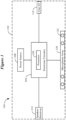
- FIG. 1 illustrates an ear-worn electronic device configured to implement a microphone fault reduction methodology in accordance with any of the embodiments disclosed herein.
- the ear-worn electronic device 100 (also referred to herein as a "hearing device”) includes a housing 102 (e.g., a shell) within which internal components are disposed.
- Electronic circuitry 104 is disposed in the housing 102 and comprises a processor 106.
- the electronic circuitry 104 includes other components, such as memory and power management circuitry, for example.
- the electronic circuitry 104 is coupled to a power source 108, which provides power for the various electronic and electrical components of the hearing device 100.
- a speaker or receiver 110 is operatively coupled to the electronic circuitry 104.
- a user interface 112 is operatively coupled to the electronic circuitry 104.
- the user interface 112 may include one or more user actuated buttons or controls, voice recognition circuitry, gesture detection circuitry (e.g., for detecting finger and/or hand gestures), or any combination of these user interface apparatuses and techniques.
- a microphone array 120 is disposed in or on the housing 102, and is coupled to the electronic circuitry 104.
- the microphone array 120 includes two or more microphones 122. Although shown positioned along one side of the housing 102 in Figure 1 , it is understood that the microphone array 120 can include microphones 122 disposed at different locations of the housing 102. For example, the microphone array 120 can include a multiplicity of microphones 122 positioned at disparate locations of the housing 102.
- the processor 106 and the microphone array 120 are configured to implement a microphone fault reduction methodology in accordance with any of the embodiments disclosed herein.
- the processor 106 can be implemented as one or more of a multi-core processor, a digital signal processor (DSP), a microprocessor, a programmable controller, a general-purpose computer, a special-purpose computer, a hardware controller, a software controller, a combined hardware and software device, such as a programmable logic controller, and a programmable logic device (e.g., FPGA, ASIC).
- the processor 106 can include or be coupled to memory, such as RAM, SRAM, ROM, or flash memory.
- the power source 108 can include a rechargeable battery (e.g., lithium-ion battery), a conventional battery, and/or a supercapacitor arrangement.
- the microphone array 120 includes at least two microphones 122.
- the microphone array 120 can include at least a front microphone 122 and a rear microphone 122 of a behind-the-ear device.
- the microphone array 120 can include more than two microphones 122, such as any number of microphones between 3 and 6, for example.
- microphone array 120 can include any number of microphones between 2 and 12 or more (e.g., between 2 and 50).
- the microphones 122 of the microphone array 120 can be any microphone type.
- the microphones 122 are directional microphones.
- the microphones 122 are a combination of one or more omnidirectional microphones and one or more directional microphones.
- One, some, or all of the microphones 122 can be microphones having a cardioid, hypercardioid, supercardioid or lobar pattern, for example.
- One, some, or all of the microphones 122 can be multi-directional microphones, such as bidirectional microphones.
- One, some, or all of the microphones 122 can have variable directionality, allowing for real-time selection between omnidirectional and directional patterns (e.g., selecting between omni, cardioid, and shotgun patterns).
- an electronic device can incorporate any of the following microphone technology types (or combination of types): MEMS (micro-electromechanical system) microphones (e.g., capacitive, piezoelectric MEMS microphones), moving coil/dynamic microphones, condenser microphones, electret microphones, ribbon microphones, crystal/ceramic microphones (e.g., piezoelectric microphones), boundary microphones, PZM (pressure zone microphone) microphones, and carbon microphones.
- MEMS micro-electromechanical system microphones
- the microphone array 120 can be implemented to provide a directional response, also known as beamforming, that filters out unwanted noise and processes sound from a more desired direction or directions.
- the ratio of the desired sound (signal) to the undesired sounds (noise) is termed the signal-to-noise ratio (SNR).
- SNR signal-to-noise ratio
- the microphone array 120 can be configured to enhance the desired sound and to reduce the undesired sounds and thus improve the SNR of the hearing device (or other body-worn or off-body electronic device).
- Various microphone array configurations are contemplated including, but not limited to, endfire microphone arrays and broadside microphone arrays, for example.
- Two or more microphones 122 of the microphone array 120 are used to collect audio sounds and the electrical signals from each microphone are combined to produce a resultant electrical signal.
- the processor 106 or separate electronic circuitry coupled to the processor 106, can be configured to process the electrical signals from each microphone (e.g., amplify, delay, filter, etc.) before the electrical signals are combined.
- microphone array-based processing techniques implemented by the processor 106 can facilitate an improvement in signal-to-noise ratio, a reduction of the effects of reverberation, and a reduction of feedback.
- the microphones 122 employed in the microphone array 120 preferably have tightly matched performance specifications and/or are individually characterized for specification performance.
- the sensitivity of the microphones 122 is generally considered the primary parameter that needs to be well matched in the microphone array 120.
- the processor 106 can be configured to cooperate with the microphone array 120 to provide automatic noise suppression (ANS) and/or automatic gain control (ACG).
- the processor 106 can be configured to cooperate with the microphone array 120 to provide echo cancellation and/or dynamic microphone steering.
- hearing device of the present disclosure refers to a wide variety of ear-level electronic devices that can aid a person with impaired hearing.
- hearing device also refers to a wide variety of devices that can produce processed sound for persons with normal hearing.
- Hearing devices of the present disclosure include hearables (e.g., wearable earphones, headphones, earbuds, virtual reality headsets), hearing aids (e.g., hearing instruments), cochlear implants, and bone-conduction devices, for example.
- Hearing devices include, but are not limited to, behind-the-ear (BTE), in-the-ear (ITE), in-the-canal (ITC), invisible-in-canal (IIC), receiver-in-canal (RIC), receiver-in-the-ear (RITE) or completely-in-the-canal (CIC) type hearing devices or some combination of the above.
- BTE behind-the-ear
- ITE in-the-ear
- ITC in-the-canal
- IIC invisible-in-canal
- RIC receiver-in-canal
- RITE receiver-in-the-ear
- CIC completely-in-the-canal
- FIG. 2 illustrates an ear-worn electronic device configured to implement a microphone fault reduction methodology in accordance with any of the embodiments disclosed herein.
- the hearing device 200 shown in Figure 2 includes a housing 202 (e.g., a shell) within which internal components are disposed.
- Electronic circuitry 204 is disposed in the housing 202 and comprises a processor 206 of a type described herein.
- the electronic circuitry 204 includes other components, such as memory and power management circuitry, for example.
- the electronic circuitry 204 is coupled to a power source 208, which provides power for the various electronic and electrical components of the hearing device 200.
- the power source 208 can be of a type described herein.
- a speaker or receiver 210 is operatively coupled to the electronic circuitry 204.
- a user interface 212 is operatively coupled to the electronic circuitry 204 and may be of a type described herein.
- a microphone array 220 is disposed in or on the housing 202, and is coupled to the electronic circuitry 204.
- the microphone array 220 can be of a type and functionality described herein.
- the processor 206 and the microphone array 220 are configured to implement a microphone fault reduction methodology in accordance with any of the embodiments disclosed herein.
- the hearing device 202 shown in Figure 2 incorporates a communication device in the form of a radiofrequency (RF) transceiver 207, such as a Bluetooth ® transceiver or other type of RF transceiver.
- the hearing device 202 incorporates an antenna 232 coupled to the RF transceiver 207, which can be implemented as a 2.4 GHz radio.
- the RF transceiver 207 can conform to an IEEE 802.11 (e.g., WiFi ® ) or Bluetooth ® (e.g., BLE, Bluetooth ® 4. 2 or 5.0) specification, for example. It is understood that hearing devices of the present disclosure can employ other transceivers or radios, such as a 900 MHz radio.
- the RF transceiver 207 and antenna 232 are configured to wirelessly communicate with an external electronic device or system.
- the RF transceiver 207 and antenna 232 can be configured to facilitate communication between a left hearing device and a right hearing device, so as to implement ear-to-ear communication between the left and right hearing devices.
- the hearing device 202 can also include a near-field magnetic induction (NFMI) device to effect communication between left and right hearing devices.
- NFMI near-field magnetic induction
- the antenna 232 can be any type of antenna suitable for use with a particular hearing device 202.
- a representative list of antennas 232 include, but are not limited to, patch antennas, planar inverted-F antennas (PIFAs), inverted-F antennas (IFAs), chip antennas, dipoles, monopoles, dipoles with capacitive-hats, monopoles with capacitive-hats, folded dipoles or monopoles, meandered dipoles or monopoles, loop antennas, Yagi-Udi antennas, log-periodic antennas, and spiral antennas. Many of these types of antenna can be implemented in the form of a flexible circuit antenna. In such embodiments, the antenna 232 is directly integrated into a circuit flex, such that the antenna 232 does not need to be soldered to a circuit that includes the RF transceiver 207 and remaining RF components.
- Hearing devices of the present disclosure can be configured to receive streaming audio (e.g., digital audio data or files) from an electronic or digital source.
- Representative electronic/digital sources e.g., accessory devices
- Hearing devices of the present disclosure can be configured to effect bidirectional communication (e.g., wireless communication) of data with an external source, such as a remote server via the Internet or other communication infrastructure.
- bidirectional communication e.g., wireless communication
- Figure 3 illustrates a microphone fault reduction method implemented by an ear-worn electronic device in accordance with any of the embodiments disclosed herein.
- the method shown in Figure 3 can be implemented by a hearing device (or other electronic device disclosed herein) which includes a microphone array comprising two or more microphones (e.g., any number of microphones between 2 and 6).
- the method shown in Figure 3 involves operating 302 a set of two or more microphones of the ear-worn electronic device in a directional mode.
- the method involves detecting 304, by a processor of the ear-worn electronic device, degradation in performance of any microphone of the microphone set.
- the method further involves switching 306 microphone operation from the directional mode to a safe mode using at least one non-degraded microphone of the microphone set in response to detecting the microphone performance degradation.
- the method can also involve generating 308 an audible alert or an alert signal in response to detecting degradation in microphone performance.
- the method can further involve communicating 310 the audible alert to the wearer's ear or the alert signal to an external electronic device, such as a device configured to communicatively couple to the ear-worn electronic device (e.g., a smartphone).
- Figure 4 illustrates a microphone fault reduction method implemented by an ear-worn electronic device and which is not covered by the claimed subject-matter.
- the method shown in Figure 4 can be implemented by a hearing device (or other electronic device disclosed herein) which includes a dual-omnidirectional microphone system comprising a front microphone (forward facing when positioned on or in a wearer's ear) and a rear microphone (rearward facing when positioned on or in the wearer's ear).
- the method shown in Figure 4 involves operating 402 the front and rear microphones of the ear-worn electronic device in a directional mode.
- the method involves detecting 404, by a processor of the ear-worn electronic device, degradation in performance of either of the front and rear microphones.
- the method further involves switching 406 microphone operation from the directional mode to an omnidirectional mode using the non-degraded front or rear microphone.
- the method can also involve generating 408 an audible alert or an alert signal in response to detecting degradation in microphone performance.
- the method can further involve communicating 410 the audible alert to the wearer's ear or the alert signal to an external electronic device, such as a device configured to communicatively couple to the ear-worn electronic device.
- Figure 5 illustrates an electronic device configured to implement a microphone fault reduction methodology in accordance with any of the embodiments disclosed herein.
- the electronic device 500 shown in Figure 5 is representative of any device configured to communicatively couple to one or more hearing devices 501, referred to herein as an accessory device (e.g., any of the electronic devices disclosed herein, such as those described below with reference to Figure 6 ).
- an accessory device e.g., any of the electronic devices disclosed herein, such as those described below with reference to Figure 6 .
- only one hearing device 501 is shown in Figure 5 .
- the accessory device 500 includes a housing 502 configured to house or support various components of the device 500.
- Electronic circuitry 504 is disposed in the housing 502 and comprises a processor 506.
- the electronic circuitry 504 can include other components, such as memory and power management circuitry, for example.
- the electronic circuitry 504 is coupled to a power source 508, which provides power for the various electronic and electrical components of the accessory device 500.
- a speaker and/or a user interface can be operatively coupled to the electronic circuitry 504.
- the accessory device 500 includes a microphone array 520 disposed in or on the housing 502, and is coupled to the electronic circuitry 504.
- the components of the accessory device 500 can be arranged and have functionality the same as or similar to the components described with reference to other figures.
- the accessory device 500 can be implemented as an inductive necklace or neck loop.
- the communication interface 514 includes a conducting neck loop configured to be worn around the wearer's neck.
- the microphone array 520 is worn on the chest as part of the accessory device 500.
- a processed signal from the microphone array 520 drives current through the conducting neck loop 514 thus creating a time-variable magnetic field that is representative of sound received by the microphone array 520.
- the magnetic field provides a wireless means for carrying the sound signal from the accessory device 500 to the hearing device 501.
- the hearing device 501 includes a small induction coil (e.g., a telecoil).
- the hearing device 501 can be switched to a telecoil mode, such that the wearer hears the sound received by the microphone array 520 rather than the microphone arrangement of the hearing device 501.
- the microphone array 520 can include any number of microphones, such as any number of microphones between two and twenty.
- a processor 503 of the hearing device 501 is configured to implement a microphone fault reduction method such as that illustrated in Figures 3 and 4 .
- the processor 506 of the electronic device 500 can perform at least some operations of a microphone fault reduction method in corporation with the processor 503 of the hearing device 501.
- the processor 506 of the electronic device 500 can be configured to detect degradation in performance of any microphone of the hearing device 501.
- the processor 506 of the electronic device 500 can inform the processor 503 of the hearing device 501 that a particular microphone(s) of the hearing device 501 has degraded in terms of performance.
- the processor 503 of the hearing device 501 can implement a corrective action.
- the processor 506 of the electronic device 500 can control the processor 503 of the hearing device 501 to take a specific corrective action to address the microphone degradation problem.
- the processor 506 of the electronic device 500 can recommend that the processor 503 of the hearing device 501 switch microphone operation from a directional mode to a safe mode using at least one non-degraded microphone of the hearing device 501.
- the processor 506 of the electronic device 500 can cause the processor 503 of the hearing device 501 (e.g., via a command signal) to take a specified corrective action, such as switching microphone operation from a directional mode to a safe mode using at least one non-degraded microphone of the hearing device 501.
- FIG. 6 illustrates an electronic device configured to implement a microphone fault reduction methodology in accordance with any of the embodiments disclosed herein.
- the electronic device 600 shown in Figure 6 is representative of any of a wide variety of electronic devices including, but not limited to, a body-worn electronic device, a consumer electronic device, a professional or commercial electronic device, and a special-purpose electronic device (referred to herein collectively as "electronic devices").
- the user interface 612 can include manually actuated switches, a touch screen, a display (e.g., LED, OLED, e-ink), or a combination of these components.
- the electronic device 600 includes a microphone array 620 disposed in or on the housing 602, and is coupled to the electronic circuitry 604.
- the components of the electronic device 600 can be arranged and have functionality the same as or similar to the components described with reference to other figures.
- the electronic device 600 also includes a communication interface 614, which is operatively coupled to the electronic circuitry 604.
- the communication interface 614 is configured to provide unidirectional or bidirectional wireless or wired communication with one or more external devices and/or systems.
- the communication interface 614 can be configured as a Bluetooth ® , ZigBee ® , IEEE 802.11, ISO/IEEE 11073, USB, FireWire ® , or Lightning ® compliant communication interface or any combination of these communication interfaces.
- the communication interface 614 can be configured to provide wireless communication via a GSM (Global System for Mobile Communications), CDMA (Code Division Multiple Access), GPRS (General Packet Radio Service) and/or HSDPA (High-Speed Downlink Packet Access) protocol.
- GSM Global System for Mobile Communications
- CDMA Code Division Multiple Access
- GPRS General Packet Radio Service
- HSDPA High-Speed Downlink Packet Access
- the electronic device 600 can be representative of any type of body-worn or hand-held electronic device including, but not limited to, fitness and/or health monitoring watches or other wrist worn or hand-held objects, e.g., Apple Watch ® , Fitbit ® , cell phones, smartphones, personal digital assistants, handheld and body-worn radios, body-worn remote microphones, body-worn remote speaker microphones, hearing aid accessories, wireless capable helmets (e.g., used in professional football), and wireless headsets/headphones (e.g., virtual reality headsets).
- fitness and/or health monitoring watches or other wrist worn or hand-held objects e.g., Apple Watch ® , Fitbit ® , cell phones, smartphones, personal digital assistants, handheld and body-worn radios, body-worn remote microphones, body-worn remote speaker microphones, hearing aid accessories, wireless capable helmets (e.g., used in professional football), and wireless headsets/headphones (e.g., virtual reality headsets).
- Apple Watch ® e.g., Apple Watch
- the electronic device 600 can be representative of any type of consumer electronic device, such a security cameras, video cameras and camcorders, fixed or portable microphones, fixed or portable remote speaker microphones, digital recording devices, smartphones, tablets, phablets, laptops, teleconference phones, smart speakers, and voice-controlled intelligent personal assistants.
- consumer electronic device such as a security cameras, video cameras and camcorders, fixed or portable microphones, fixed or portable remote speaker microphones, digital recording devices, smartphones, tablets, phablets, laptops, teleconference phones, smart speakers, and voice-controlled intelligent personal assistants.
- Figure 7 illustrates a microphone fault reduction method implemented by an electronic device not in accordance with the claimed subject-matter.
- the method shown in Figure 7 can be implemented by any type of electronic device which includes a microphone array comprising more than two microphones (e.g., any number of microphones between 2 and 50).
- the method shown in Figure 7 involves operating 702 a set of two or more microphones of the electronic device in a directional mode (e.g., a first directional mode).
- the method involves detecting 704, by a processor of the electronic device, degradation in performance of any microphone of the microphone set.
- the method further involves switching 706 microphone operation from the directional mode to a safe mode using at least one non-degraded microphone of the microphone set in response to detecting the microphone performance degradation.
- a check 708 is made to determine if at least two microphones of the microphone array are operating properly. If so, the method involves switching 710 to a safe mode using the properly operating microphones.
- the safe mode can be a second directional mode that uses fewer properly operating microphones than the first directional mode.
- the safe mode can be a "double omni" mode that uses at least two properly operating microphones in an omnidirectional mode. If at least two microphones are not properly operating, a check 712 is made to determine if at least one microphone of the microphone array is operating properly. If so, the method involves switching 714 to a safe mode (e.g., an omnidirectional mode) using the single properly operating microphone.
- a safe mode e.g., an omnidirectional mode
- the method shown in Figure 7 can also involve generating 717 an audible alert or an alert signal in response to detecting degradation in microphone performance.
- the method can further involve communicating 718 the audible alert to the wearer's ear or the alert signal to an external electronic device, such as a device configured to communicatively couple to the ear-worn electronic device.
- Figures 8A and 8B illustrate various components of a representative hearing device arrangement in accordance with various embodiments.
- Figures 8A and 8B illustrate first and second hearing devices 800A and 800B configured to be supported at, by, in or on left and right ears of a wearer.
- a single hearing device 800A or 800B can be supported at, by, in or on the left or right ear of a wearer.
- the first and second hearing devices 800A and 800B include the same functional components. It is understood that the first and second hearing devices 800A and 800B can include different functional components.
- the first and second hearing devices 800A and 800B can be representative of any of the hearing devices disclosed herein.
- the processor 802a, 802b is coupled to a wireless transceiver 804a, 804b (also referred to herein as a radio), such as a BLE transceiver or other IEEE 802.11 compliant transceiver.
- the wireless transceiver 804a, 804b is operably coupled to an antenna 806a, 806b configured for transmitting and receiving radio signals.
- Impedance matching circuitry 805a, 805b can be operably coupled to the wireless transceiver 804a, 804b and the antenna 806a, 806b.
- the antenna 806a, 806b is disposed in, on, or extends from the enclosure 801a, 801b.
- the wireless transceiver 804a, 804b and the antenna 806a, 806b can be configured to operate in the 2.4 GHz ISM frequency band or other applicable communication band.
- the wireless transceiver 804a, 804b and antenna 806a, 806b can be configured to enable ear-to-ear communication between the two hearing devices 800A and 800B, as well as communications with an external device (e.g., a smartphone or a digital music player).
- the wireless transceiver 804a, 804b, matching circuitry 805a, 805b, and antenna 806a, 806b are excluded from the first and second hearing devices 800A and 800B.
- a battery 810a, 810b or other power source (rechargeable or conventional) is provided within the enclosure 801a, 801b and is configured to provide power to the various components of the hearing devices 800A and 800B.
- the battery 810a, 810b can be coupled to power management circuitry (not shown), such as a power management integrated circuit (PMIC), to facilitate charging and power management functions.
- PMIC power management integrated circuit
- a speaker or receiver 808a, 808b is coupled to an amplifier (not shown) and the processor 802a, 802b.
- the speaker or receiver 808a, 808b is configured to generate sound which is communicated to the wearer's ear.
- the hearing devices 800A and 800B include a microphone array 812a, 812b which includes two or more microphones 813a, 813b.
- the microphones 813a, 813b of the microphone array 812a, 812b can be distributed on the same or different surfaces or sides of the hearing devices 800A and 800B.
- the microphone array 812a shown in Figure 8A includes an array of microphones 813a disposed on two surfaces or sides of the hearing device 800A.
- one or more microphones 813a can be disposed on respective front and rear surfaces of the hearing device 800A configured as a BTE device.
- the microphone array 812b shown in Figure 8B includes single microphones 813b disposed on different surfaces or sides of the hearing device 800B or at different locations on the same surface or side of the hearing device 800B.
- the microphones 813a, 813b can be coupled to a preamplifier (not shown), the output of which is coupled to the processor 802a, 802b.
- the microphones 813a, 813b receive sound waves from the environment and convert the sound into an electrical signal.
- the electrical signal is amplified by a preamplifier and sampled and digitized by an analog-to-digital converter of the processor 802a, 802b, resulting in a digitized input signal.
- the processor 802a, 802b can be configured to process electrical signals from each microphone 813a, 813b (e.g., amplify, delay, filter, etc.) before the electrical signals are combined to provide a directional response (e.g., beamforming) that filters out unwanted noise and processes sound from a more desired direction or directions.
- a directional response e.g., beamforming
- the processor 802a, 802b e.g., DSP circuitry
- the processor 802a, 802b is configured to process the digitized input signal into an output signal in a manner that compensates for the wearer's hearing loss.
- the wireless transceiver 804a, 804b may produce a second input signal for the DSP circuitry of the processor 802a, 802b that may be combined with the input signal produced by the microphones 813a, 813b or used in place thereof.
- the processor 802a, 802b can be configured to process the digitized input signal into an output signal in a manner that is tailored or optimized for the wearer (e.g., based on wearer preferences).
- the output signal is then passed to an audio output stage that drives the speaker or receiver 808a, 808b, which converts the output signal into an audio output.
- Coupled refers to elements being attached to each other either directly (in direct contact with each other) or indirectly (having one or more elements between and attaching the two elements). Either term may be modified by "operatively” and “operably,” which may be used interchangeably, to describe that the coupling or connection is configured to allow the components to interact to carry out at least some functionality (for example, a radio chip may be operably coupled to an antenna element to provide a radio frequency electromagnetic signal for wireless communication).
- orientation such as “top,” “bottom,” “side,” and “end,” are used to describe relative positions of components and are not meant to limit the orientation of the embodiments contemplated.
- an embodiment described as having a “top” and “bottom” also encompasses embodiments thereof rotated in various directions unless the content clearly dictates otherwise.
- references to "one embodiment,” “an embodiment,” “certain embodiments,” or “some embodiments,” etc. means that a particular feature, configuration, composition, or characteristic described in connection with the embodiment is included in at least one embodiment of the disclosure. Thus, the appearances of such phrases in various places throughout are not necessarily referring to the same embodiment of the disclosure. Furthermore, the particular features, configurations, compositions, or characteristics may be combined in any suitable manner in one or more embodiments.
- phrases "at least one of,” “comprises at least one of,” and “one or more of” followed by a list refers to any one of the items in the list and any combination of two or more items in the list.
Landscapes
- Health & Medical Sciences (AREA)
- General Health & Medical Sciences (AREA)
- Otolaryngology (AREA)
- Physics & Mathematics (AREA)
- Engineering & Computer Science (AREA)
- Acoustics & Sound (AREA)
- Signal Processing (AREA)
- Neurosurgery (AREA)
- Circuit For Audible Band Transducer (AREA)
Claims (12)
- Dispositif électronique porté sur l'oreille (100, 200) configuré pour être porté par un utilisateur, comprenant :un boîtier (102, 202) configuré pour être placé dans, sur ou autour d'une oreille de l'utilisateur ;des circuits électroniques (104, 204) disposés dans le boîtier (102, 202) et comprenant un processeur (106, 206) ;une source d'alimentation (108, 208) et un récepteur ou un haut-parleur (110, 210) respectivement disposés dans ou sur le boîtier (102, 202) ; etun réseau de microphones (120, 220) disposé dans ou sur le boîtier (102, 202) et couplé fonctionnellement aux circuits électroniques (104, 204), le réseau de microphones (120, 220) comprenant une pluralité de microphones (122, 222) ;dans lequel le processeur (106, 206) est configuré pour :faire fonctionner (302) un ensemble de deux microphones (122, 222) ou plus dans un mode directionnel ;détecter (304) une dégradation des performances de n'importe quel microphone de l'ensemble de microphones (122, 222) ; etcommuter (306) le fonctionnement de microphone du mode directionnel à un mode sécurisé en réponse à la détection de la dégradation de performances de microphone, dans lequel le mode sécurisé est un second mode directionnel qui utilise au moins deux microphones non dégradés de l'ensemble de microphones (122, 222).
- Dispositif (100, 200) selon la revendication 1, dans lequel le mode sécurisé est un mode qui fournit une qualité sonore supérieure à celle fournie par le mode directionnel qui utilise un ou plusieurs microphones dégradés de l'ensemble de microphones (122, 222).
- Dispositif (100, 200) selon l'une quelconque des revendications précédentes, dans lequel :les deux microphones ou plus de l'ensemble de microphones (122, 222) sont des microphones étalonnés au moment de la fabrication pour présenter des sensibilités sensiblement égales ; etle processeur (106, 206) est configuré pour :détecter une dégradation des performances de microphone sous la forme d'une inadéquation des sensibilités de l'un quelconque des deux microphones ou plus de l'ensemble de microphones (122, 222) ; etcomparer un changement détecté des sensibilités de l'un quelconque des deux microphones ou plus de l'ensemble de microphones (122, 222) à un seuil de sensibilité prédéterminé.
- Dispositif (100, 200) selon l'une quelconque des revendications précédentes, dans lequel le processeur (106, 206) est configuré pour :compenser automatiquement la dérive de sensibilité de microphone des deux microphones ou plus de l'ensemble de microphones (122, 222) lors du fonctionnement en mode directionnel ; etdétecter une dégradation des performances de n'importe quel microphone de l'ensemble de microphones (122, 222) en réponse à une incapacité à compenser automatiquement la dérive de sensibilité de microphone.
- Dispositif (100, 200) selon l'une quelconque des revendications précédentes, dans lequel le processeur (106, 206) est configuré pour l'une et/ou l'autre de :la génération (308) d'une alerte sonore en réponse à la détection d'une dégradation des performances de n'importe quel microphone de l'ensemble de microphones (122, 222) ; etla génération d'un signal d'alerte en réponse à la détection d'une dégradation des performances de n'importe quel microphone de l'ensemble de microphones (122, 222) et la communication (310) du signal d'alerte à un dispositif électronique externe configuré pour se coupler de manière à communiquer avec le dispositif électronique porté sur l'oreille (100, 200).
- Système électronique, comprenant :le dispositif électronique porté sur l'oreille (100, 200) selon l'une quelconque des revendications précédentes ; etun dispositif accessoire électronique comprenant un second processeur et configuré pour se coupler de manière à communiquer avec le dispositif électronique porté sur l'oreille (100, 200) ;dans lequel le processeur (106, 206) du dispositif porté sur l'oreille (100, 200) ou à la fois le processeur (106, 206) du dispositif porté sur l'oreille (100, 200) et le second processeur sont configurés pour :faire fonctionner l'ensemble de deux microphones (122, 222) ou plus en mode directionnel ;détecter la dégradation des performances de n'importe quel microphone de l'ensemble de microphones (122, 222) ; etcommuter le fonctionnement de microphone du mode directionnel au mode sécurisé.
- Système selon la revendication 6, dans lequel :le processeur (106, 206) du dispositif porté sur l'oreille (100, 200) est configuré pour faire fonctionner l'ensemble des deux microphones (122, 222) ou plus en mode directionnel ;le second processeur est configuré pour détecter une dégradation des performances de n'importe quel microphone de l'ensemble de microphones (122, 222) ; etle processeur (106, 206) du dispositif porté sur l'oreille (100, 200) est configuré pour commuter fonctionnement du microphone du mode directionnel au mode sécurisé en réponse à la détection par le second processeur de la dégradation de performances de microphone.
- Procédé mis en oeuvre par un dispositif électronique porté sur l'oreille (100, 200) porté par un utilisateur, comprenant :le fonctionnement (302) d'un ensemble de deux microphones (122, 222) ou plus du dispositif électronique porté sur l'oreille (100, 200) dans un mode directionnel ;la détection (304) d'une dégradation des performances de n'importe quel microphone de l'ensemble de microphones (122, 222) ; etla commutation (306) du fonctionnement de microphone du mode directionnel à un mode sécurisé en réponse à la détection de la dégradation de performances de microphone, dans lequel le mode sécurisé est un second mode directionnel qui utilise au moins deux microphones non dégradés de l'ensemble de microphones (122, 222).
- Procédé selon la revendication 8, dans lequel le mode sécurisé est :
un mode qui fournit une qualité sonore supérieure à celle fournie par le mode directionnel qui utilise un ou plusieurs microphones dégradés de l'ensemble de microphones (122, 222). - Procédé selon la revendication 8 ou 9, dans lequel :les deux microphones ou plus de l'ensemble de microphones (122, 222) sont des microphones étalonnés au moment de la fabrication pour présenter des sensibilités sensiblement égales ; etle procédé comprend :la détection d'une dégradation des performances de microphone sous la forme d'une inadéquation des sensibilités de l'un quelconque des deux microphones ou plus de l'ensemble de microphones (122, 222) ; etla comparaison d'un changement détecté des sensibilités de l'un quelconque des deux microphones ou plus de l'ensemble de microphones (122, 222) à un seuil de sensibilité prédéterminé.
- Procédé selon l'une quelconque des revendications 8 à la revendication 10, comprenant :la compensation automatique de la dérive de sensibilité de microphone des deux microphones ou plus de l'ensemble de microphones (122, 222) lors du fonctionnement en mode directionnel ; etla détection d'une dégradation des performances de n'importe quel microphone de l'ensemble de microphones (122, 222) en réponse à une incapacité à compenser automatiquement la dérive de sensibilité de microphone.
- Procédé selon l'une quelconque des revendications 8 à 11, comprenant la génération (308) d'une alerte sonore ou d'un signal d'alerte en réponse à la détection d'une dégradation des performances des premier et second microphones.
Applications Claiming Priority (2)
| Application Number | Priority Date | Filing Date | Title |
|---|---|---|---|
| US201962880941P | 2019-07-31 | 2019-07-31 | |
| PCT/US2020/041947 WO2021021429A1 (fr) | 2019-07-31 | 2020-07-14 | Dispositif électronique porté sur l'oreille incorporant un système et procédé de réduction de défaut de microphone |
Publications (2)
| Publication Number | Publication Date |
|---|---|
| EP4005241A1 EP4005241A1 (fr) | 2022-06-01 |
| EP4005241B1 true EP4005241B1 (fr) | 2024-08-21 |
Family
ID=71944370
Family Applications (1)
| Application Number | Title | Priority Date | Filing Date |
|---|---|---|---|
| EP20750975.3A Active EP4005241B1 (fr) | 2019-07-31 | 2020-07-14 | Dispositif électronique porté sur l'oreille incorporant un système et procédé de réduction de défaut de microphone |
Country Status (3)
| Country | Link |
|---|---|
| US (2) | US11895465B2 (fr) |
| EP (1) | EP4005241B1 (fr) |
| WO (1) | WO2021021429A1 (fr) |
Families Citing this family (2)
| Publication number | Priority date | Publication date | Assignee | Title |
|---|---|---|---|---|
| EP4005241B1 (fr) * | 2019-07-31 | 2024-08-21 | Starkey Laboratories, Inc. | Dispositif électronique porté sur l'oreille incorporant un système et procédé de réduction de défaut de microphone |
| US20240187804A1 (en) * | 2021-03-17 | 2024-06-06 | 3M Innovative Properties Company | Field check for hearing protection devices |
Family Cites Families (22)
| Publication number | Priority date | Publication date | Assignee | Title |
|---|---|---|---|---|
| US4049930A (en) | 1976-11-08 | 1977-09-20 | Nasa | Hearing aid malfunction detection system |
| US6654468B1 (en) * | 1998-08-25 | 2003-11-25 | Knowles Electronics, Llc | Apparatus and method for matching the response of microphones in magnitude and phase |
| WO2000065873A1 (fr) * | 1999-04-28 | 2000-11-02 | Gennum Corporation | Système programmable multimode à plusieurs microphones |
| US6879692B2 (en) * | 2001-07-09 | 2005-04-12 | Widex A/S | Hearing aid with a self-test capability |
| EP1453348A1 (fr) | 2003-02-25 | 2004-09-01 | AKG Acoustics GmbH | Auto-étalonnage d'un réseau de microphones |
| US7242778B2 (en) * | 2003-04-08 | 2007-07-10 | Gennum Corporation | Hearing instrument with self-diagnostics |
| DE10331956C5 (de) * | 2003-07-16 | 2010-11-18 | Siemens Audiologische Technik Gmbh | Hörhilfegerät sowie Verfahren zum Betrieb eines Hörhilfegerätes mit einem Mikrofonsystem, bei dem unterschiedliche Richtcharakteistiken einstellbar sind |
| DE10339973A1 (de) | 2003-08-29 | 2005-03-17 | Daimlerchrysler Ag | Intelligentes akustisches Mikrofon-Frontend mit Spracherkenner-Feedback |
| US8379876B2 (en) | 2008-05-27 | 2013-02-19 | Fortemedia, Inc | Audio device utilizing a defect detection method on a microphone array |
| DE102008064430B4 (de) * | 2008-12-22 | 2012-06-21 | Siemens Medical Instruments Pte. Ltd. | Hörvorrichtung mit automatischer Algorithmenumschaltung |
| DE102009033614B4 (de) | 2009-07-17 | 2020-01-23 | Wolfgang Klippel | Anordnung und Verfahren zur Erkennung, Ortung und Klassifikation von Defekten |
| US20110058683A1 (en) | 2009-09-04 | 2011-03-10 | Glenn Kosteva | Method & apparatus for selecting a microphone in a microphone array |
| US20120045068A1 (en) | 2010-08-20 | 2012-02-23 | Korea Institute Of Science And Technology | Self-fault detection system and method for microphone array and audio-based device |
| US8824692B2 (en) | 2011-04-20 | 2014-09-02 | Vocollect, Inc. | Self calibrating multi-element dipole microphone |
| US9380374B2 (en) * | 2014-01-17 | 2016-06-28 | Okappi, Inc. | Hearing assistance systems configured to detect and provide protection to the user from harmful conditions |
| US9301057B2 (en) * | 2014-01-17 | 2016-03-29 | Okappi, Inc. | Hearing assistance system |
| US10181328B2 (en) * | 2014-10-21 | 2019-01-15 | Oticon A/S | Hearing system |
| EP3373602A1 (fr) * | 2017-03-09 | 2018-09-12 | Oticon A/s | Procédé permettant de localiser une source sonore, dispositif auditif et système auditif |
| EP3376778B8 (fr) | 2017-03-13 | 2020-08-12 | ams International AG | Microphone et procédé de test d'un microphone |
| EP4005241B1 (fr) * | 2019-07-31 | 2024-08-21 | Starkey Laboratories, Inc. | Dispositif électronique porté sur l'oreille incorporant un système et procédé de réduction de défaut de microphone |
| US11632639B2 (en) | 2021-01-26 | 2023-04-18 | Invensense, Inc. | Microphone MEMS diaphragm and self-test thereof |
| US11290810B1 (en) | 2021-01-26 | 2022-03-29 | Invensense, Inc. | Microphone MEMS diaphragm and self-test thereof |
-
2020
- 2020-07-14 EP EP20750975.3A patent/EP4005241B1/fr active Active
- 2020-07-14 WO PCT/US2020/041947 patent/WO2021021429A1/fr not_active Ceased
-
2021
- 2021-12-16 US US17/553,720 patent/US11895465B2/en active Active
-
2023
- 2023-12-06 US US18/530,503 patent/US12294833B2/en active Active
Also Published As
| Publication number | Publication date |
|---|---|
| US20240107240A1 (en) | 2024-03-28 |
| EP4005241A1 (fr) | 2022-06-01 |
| US12294833B2 (en) | 2025-05-06 |
| US11895465B2 (en) | 2024-02-06 |
| US20220109938A1 (en) | 2022-04-07 |
| WO2021021429A1 (fr) | 2021-02-04 |
Similar Documents
| Publication | Publication Date | Title |
|---|---|---|
| US20100160714A1 (en) | Hearing Aid | |
| US12464297B2 (en) | Hearing device with own-voice detection | |
| US12294833B2 (en) | Ear-worn electronic device incorporating microphone fault reduction system and method | |
| US12108215B2 (en) | Hearing aid configured to select a reference microphone | |
| US12101588B2 (en) | System for charging an ear-worn electronic device | |
| US11729563B2 (en) | Binaural hearing device with noise reduction in voice during a call | |
| WO2024000174A1 (fr) | Un dispositif auditif configuré pour diffuser et mettre en pause un son à un utilisateur | |
| US12262181B2 (en) | Apparatus and method for reverberation mitigation in a hearing device | |
| US12177630B2 (en) | Ear-worn electronic device configured to compensate for hunched or stooped posture | |
| US20070183609A1 (en) | Hearing aid system without mechanical and acoustic feedback | |
| US20230276180A1 (en) | Hearing device | |
| EP4040804B1 (fr) | Dispositif auditif binaural avec réduction du bruit dans la voix pendant un appel | |
| US11818548B2 (en) | Method of operating a binaural ear level audio system and a binaural ear level audio system | |
| WO2022146627A1 (fr) | Dispositif auditif électronique pouvant être porté sur l'oreille comprenant un réseau de microphones avec une suppression améliorée du bruit du vent | |
| US12225355B2 (en) | Own voice detection on a hearing device and a binaural hearing device system and methods thereof | |
| CN116801166B (zh) | 传声器装置 | |
| US20230197094A1 (en) | Electronic device and method for obtaining a user's speech in a first sound signal | |
| WO2010074652A1 (fr) | Prothèse auditive |
Legal Events
| Date | Code | Title | Description |
|---|---|---|---|
| STAA | Information on the status of an ep patent application or granted ep patent |
Free format text: STATUS: UNKNOWN |
|
| STAA | Information on the status of an ep patent application or granted ep patent |
Free format text: STATUS: THE INTERNATIONAL PUBLICATION HAS BEEN MADE |
|
| PUAI | Public reference made under article 153(3) epc to a published international application that has entered the european phase |
Free format text: ORIGINAL CODE: 0009012 |
|
| STAA | Information on the status of an ep patent application or granted ep patent |
Free format text: STATUS: REQUEST FOR EXAMINATION WAS MADE |
|
| 17P | Request for examination filed |
Effective date: 20220228 |
|
| AK | Designated contracting states |
Kind code of ref document: A1 Designated state(s): AL AT BE BG CH CY CZ DE DK EE ES FI FR GB GR HR HU IE IS IT LI LT LU LV MC MK MT NL NO PL PT RO RS SE SI SK SM TR |
|
| DAV | Request for validation of the european patent (deleted) | ||
| DAX | Request for extension of the european patent (deleted) | ||
| GRAP | Despatch of communication of intention to grant a patent |
Free format text: ORIGINAL CODE: EPIDOSNIGR1 |
|
| STAA | Information on the status of an ep patent application or granted ep patent |
Free format text: STATUS: GRANT OF PATENT IS INTENDED |
|
| INTG | Intention to grant announced |
Effective date: 20240424 |
|
| GRAS | Grant fee paid |
Free format text: ORIGINAL CODE: EPIDOSNIGR3 |
|
| GRAA | (expected) grant |
Free format text: ORIGINAL CODE: 0009210 |
|
| STAA | Information on the status of an ep patent application or granted ep patent |
Free format text: STATUS: THE PATENT HAS BEEN GRANTED |
|
| AK | Designated contracting states |
Kind code of ref document: B1 Designated state(s): AL AT BE BG CH CY CZ DE DK EE ES FI FR GB GR HR HU IE IS IT LI LT LU LV MC MK MT NL NO PL PT RO RS SE SI SK SM TR |
|
| REG | Reference to a national code |
Ref country code: GB Ref legal event code: FG4D |
|
| REG | Reference to a national code |
Ref country code: CH Ref legal event code: EP |
|
| REG | Reference to a national code |
Ref country code: DE Ref legal event code: R096 Ref document number: 602020036240 Country of ref document: DE |
|
| REG | Reference to a national code |
Ref country code: IE Ref legal event code: FG4D |
|
| REG | Reference to a national code |
Ref country code: LT Ref legal event code: MG9D |
|
| REG | Reference to a national code |
Ref country code: NL Ref legal event code: MP Effective date: 20240821 |
|
| PG25 | Lapsed in a contracting state [announced via postgrant information from national office to epo] |
Ref country code: NO Free format text: LAPSE BECAUSE OF FAILURE TO SUBMIT A TRANSLATION OF THE DESCRIPTION OR TO PAY THE FEE WITHIN THE PRESCRIBED TIME-LIMIT Effective date: 20241121 |
|
| REG | Reference to a national code |
Ref country code: AT Ref legal event code: MK05 Ref document number: 1716757 Country of ref document: AT Kind code of ref document: T Effective date: 20240821 |
|
| PG25 | Lapsed in a contracting state [announced via postgrant information from national office to epo] |
Ref country code: FI Free format text: LAPSE BECAUSE OF FAILURE TO SUBMIT A TRANSLATION OF THE DESCRIPTION OR TO PAY THE FEE WITHIN THE PRESCRIBED TIME-LIMIT Effective date: 20240821 Ref country code: NL Free format text: LAPSE BECAUSE OF FAILURE TO SUBMIT A TRANSLATION OF THE DESCRIPTION OR TO PAY THE FEE WITHIN THE PRESCRIBED TIME-LIMIT Effective date: 20240821 Ref country code: PL Free format text: LAPSE BECAUSE OF FAILURE TO SUBMIT A TRANSLATION OF THE DESCRIPTION OR TO PAY THE FEE WITHIN THE PRESCRIBED TIME-LIMIT Effective date: 20240821 Ref country code: PT Free format text: LAPSE BECAUSE OF FAILURE TO SUBMIT A TRANSLATION OF THE DESCRIPTION OR TO PAY THE FEE WITHIN THE PRESCRIBED TIME-LIMIT Effective date: 20241223 Ref country code: GR Free format text: LAPSE BECAUSE OF FAILURE TO SUBMIT A TRANSLATION OF THE DESCRIPTION OR TO PAY THE FEE WITHIN THE PRESCRIBED TIME-LIMIT Effective date: 20241122 |
|
| PG25 | Lapsed in a contracting state [announced via postgrant information from national office to epo] |
Ref country code: BG Free format text: LAPSE BECAUSE OF FAILURE TO SUBMIT A TRANSLATION OF THE DESCRIPTION OR TO PAY THE FEE WITHIN THE PRESCRIBED TIME-LIMIT Effective date: 20240821 |
|
| PG25 | Lapsed in a contracting state [announced via postgrant information from national office to epo] |
Ref country code: LV Free format text: LAPSE BECAUSE OF FAILURE TO SUBMIT A TRANSLATION OF THE DESCRIPTION OR TO PAY THE FEE WITHIN THE PRESCRIBED TIME-LIMIT Effective date: 20240821 |
|
| PG25 | Lapsed in a contracting state [announced via postgrant information from national office to epo] |
Ref country code: IS Free format text: LAPSE BECAUSE OF FAILURE TO SUBMIT A TRANSLATION OF THE DESCRIPTION OR TO PAY THE FEE WITHIN THE PRESCRIBED TIME-LIMIT Effective date: 20241221 Ref country code: AT Free format text: LAPSE BECAUSE OF FAILURE TO SUBMIT A TRANSLATION OF THE DESCRIPTION OR TO PAY THE FEE WITHIN THE PRESCRIBED TIME-LIMIT Effective date: 20240821 |
|
| PG25 | Lapsed in a contracting state [announced via postgrant information from national office to epo] |
Ref country code: HR Free format text: LAPSE BECAUSE OF FAILURE TO SUBMIT A TRANSLATION OF THE DESCRIPTION OR TO PAY THE FEE WITHIN THE PRESCRIBED TIME-LIMIT Effective date: 20240821 |
|
| PG25 | Lapsed in a contracting state [announced via postgrant information from national office to epo] |
Ref country code: ES Free format text: LAPSE BECAUSE OF FAILURE TO SUBMIT A TRANSLATION OF THE DESCRIPTION OR TO PAY THE FEE WITHIN THE PRESCRIBED TIME-LIMIT Effective date: 20240821 Ref country code: RS Free format text: LAPSE BECAUSE OF FAILURE TO SUBMIT A TRANSLATION OF THE DESCRIPTION OR TO PAY THE FEE WITHIN THE PRESCRIBED TIME-LIMIT Effective date: 20241121 |
|
| PG25 | Lapsed in a contracting state [announced via postgrant information from national office to epo] |
Ref country code: RS Free format text: LAPSE BECAUSE OF FAILURE TO SUBMIT A TRANSLATION OF THE DESCRIPTION OR TO PAY THE FEE WITHIN THE PRESCRIBED TIME-LIMIT Effective date: 20241121 Ref country code: PT Free format text: LAPSE BECAUSE OF FAILURE TO SUBMIT A TRANSLATION OF THE DESCRIPTION OR TO PAY THE FEE WITHIN THE PRESCRIBED TIME-LIMIT Effective date: 20241223 Ref country code: PL Free format text: LAPSE BECAUSE OF FAILURE TO SUBMIT A TRANSLATION OF THE DESCRIPTION OR TO PAY THE FEE WITHIN THE PRESCRIBED TIME-LIMIT Effective date: 20240821 Ref country code: NO Free format text: LAPSE BECAUSE OF FAILURE TO SUBMIT A TRANSLATION OF THE DESCRIPTION OR TO PAY THE FEE WITHIN THE PRESCRIBED TIME-LIMIT Effective date: 20241121 Ref country code: NL Free format text: LAPSE BECAUSE OF FAILURE TO SUBMIT A TRANSLATION OF THE DESCRIPTION OR TO PAY THE FEE WITHIN THE PRESCRIBED TIME-LIMIT Effective date: 20240821 Ref country code: LV Free format text: LAPSE BECAUSE OF FAILURE TO SUBMIT A TRANSLATION OF THE DESCRIPTION OR TO PAY THE FEE WITHIN THE PRESCRIBED TIME-LIMIT Effective date: 20240821 Ref country code: IS Free format text: LAPSE BECAUSE OF FAILURE TO SUBMIT A TRANSLATION OF THE DESCRIPTION OR TO PAY THE FEE WITHIN THE PRESCRIBED TIME-LIMIT Effective date: 20241221 Ref country code: HR Free format text: LAPSE BECAUSE OF FAILURE TO SUBMIT A TRANSLATION OF THE DESCRIPTION OR TO PAY THE FEE WITHIN THE PRESCRIBED TIME-LIMIT Effective date: 20240821 Ref country code: GR Free format text: LAPSE BECAUSE OF FAILURE TO SUBMIT A TRANSLATION OF THE DESCRIPTION OR TO PAY THE FEE WITHIN THE PRESCRIBED TIME-LIMIT Effective date: 20241122 Ref country code: FI Free format text: LAPSE BECAUSE OF FAILURE TO SUBMIT A TRANSLATION OF THE DESCRIPTION OR TO PAY THE FEE WITHIN THE PRESCRIBED TIME-LIMIT Effective date: 20240821 Ref country code: ES Free format text: LAPSE BECAUSE OF FAILURE TO SUBMIT A TRANSLATION OF THE DESCRIPTION OR TO PAY THE FEE WITHIN THE PRESCRIBED TIME-LIMIT Effective date: 20240821 Ref country code: BG Free format text: LAPSE BECAUSE OF FAILURE TO SUBMIT A TRANSLATION OF THE DESCRIPTION OR TO PAY THE FEE WITHIN THE PRESCRIBED TIME-LIMIT Effective date: 20240821 Ref country code: AT Free format text: LAPSE BECAUSE OF FAILURE TO SUBMIT A TRANSLATION OF THE DESCRIPTION OR TO PAY THE FEE WITHIN THE PRESCRIBED TIME-LIMIT Effective date: 20240821 |
|
| PG25 | Lapsed in a contracting state [announced via postgrant information from national office to epo] |
Ref country code: RO Free format text: LAPSE BECAUSE OF FAILURE TO SUBMIT A TRANSLATION OF THE DESCRIPTION OR TO PAY THE FEE WITHIN THE PRESCRIBED TIME-LIMIT Effective date: 20240821 Ref country code: DK Free format text: LAPSE BECAUSE OF FAILURE TO SUBMIT A TRANSLATION OF THE DESCRIPTION OR TO PAY THE FEE WITHIN THE PRESCRIBED TIME-LIMIT Effective date: 20240821 Ref country code: SM Free format text: LAPSE BECAUSE OF FAILURE TO SUBMIT A TRANSLATION OF THE DESCRIPTION OR TO PAY THE FEE WITHIN THE PRESCRIBED TIME-LIMIT Effective date: 20240821 |
|
| PG25 | Lapsed in a contracting state [announced via postgrant information from national office to epo] |
Ref country code: EE Free format text: LAPSE BECAUSE OF FAILURE TO SUBMIT A TRANSLATION OF THE DESCRIPTION OR TO PAY THE FEE WITHIN THE PRESCRIBED TIME-LIMIT Effective date: 20240821 |
|
| PG25 | Lapsed in a contracting state [announced via postgrant information from national office to epo] |
Ref country code: CZ Free format text: LAPSE BECAUSE OF FAILURE TO SUBMIT A TRANSLATION OF THE DESCRIPTION OR TO PAY THE FEE WITHIN THE PRESCRIBED TIME-LIMIT Effective date: 20240821 |
|
| PG25 | Lapsed in a contracting state [announced via postgrant information from national office to epo] |
Ref country code: IT Free format text: LAPSE BECAUSE OF FAILURE TO SUBMIT A TRANSLATION OF THE DESCRIPTION OR TO PAY THE FEE WITHIN THE PRESCRIBED TIME-LIMIT Effective date: 20240821 Ref country code: SK Free format text: LAPSE BECAUSE OF FAILURE TO SUBMIT A TRANSLATION OF THE DESCRIPTION OR TO PAY THE FEE WITHIN THE PRESCRIBED TIME-LIMIT Effective date: 20240821 |
|
| REG | Reference to a national code |
Ref country code: DE Ref legal event code: R097 Ref document number: 602020036240 Country of ref document: DE |
|
| PLBE | No opposition filed within time limit |
Free format text: ORIGINAL CODE: 0009261 |
|
| STAA | Information on the status of an ep patent application or granted ep patent |
Free format text: STATUS: NO OPPOSITION FILED WITHIN TIME LIMIT |
|
| 26N | No opposition filed |
Effective date: 20250522 |
|
| PG25 | Lapsed in a contracting state [announced via postgrant information from national office to epo] |
Ref country code: SE Free format text: LAPSE BECAUSE OF FAILURE TO SUBMIT A TRANSLATION OF THE DESCRIPTION OR TO PAY THE FEE WITHIN THE PRESCRIBED TIME-LIMIT Effective date: 20240821 |
|
| PGFP | Annual fee paid to national office [announced via postgrant information from national office to epo] |
Ref country code: DE Payment date: 20250611 Year of fee payment: 6 |
|
| PGFP | Annual fee paid to national office [announced via postgrant information from national office to epo] |
Ref country code: FR Payment date: 20250703 Year of fee payment: 6 |
|
| P01 | Opt-out of the competence of the unified patent court (upc) registered |
Free format text: CASE NUMBER: UPC_APP_7153_4005241/2025 Effective date: 20250915 |
|
| REG | Reference to a national code |
Ref country code: CH Ref legal event code: H13 Free format text: ST27 STATUS EVENT CODE: U-0-0-H10-H13 (AS PROVIDED BY THE NATIONAL OFFICE) Effective date: 20260224 |
|
| PG25 | Lapsed in a contracting state [announced via postgrant information from national office to epo] |
Ref country code: LU Free format text: LAPSE BECAUSE OF NON-PAYMENT OF DUE FEES Effective date: 20250714 |
|
| GBPC | Gb: european patent ceased through non-payment of renewal fee |
Effective date: 20250714 |
|
| REG | Reference to a national code |
Ref country code: BE Ref legal event code: MM Effective date: 20250731 |
|
| PG25 | Lapsed in a contracting state [announced via postgrant information from national office to epo] |
Ref country code: GB Free format text: LAPSE BECAUSE OF NON-PAYMENT OF DUE FEES Effective date: 20250714 |
|
| PG25 | Lapsed in a contracting state [announced via postgrant information from national office to epo] |
Ref country code: BE Free format text: LAPSE BECAUSE OF NON-PAYMENT OF DUE FEES Effective date: 20250731 |
|
| PG25 | Lapsed in a contracting state [announced via postgrant information from national office to epo] |
Ref country code: CH Free format text: LAPSE BECAUSE OF NON-PAYMENT OF DUE FEES Effective date: 20250731 |