EP4005325B1 - Architektur für nachrichtenübertragung mit wahlfreiem zugriff - Google Patents
Architektur für nachrichtenübertragung mit wahlfreiem zugriff Download PDFInfo
- Publication number
- EP4005325B1 EP4005325B1 EP19939629.2A EP19939629A EP4005325B1 EP 4005325 B1 EP4005325 B1 EP 4005325B1 EP 19939629 A EP19939629 A EP 19939629A EP 4005325 B1 EP4005325 B1 EP 4005325B1
- Authority
- EP
- European Patent Office
- Prior art keywords
- field
- random access
- mac
- srb
- type
- Prior art date
- Legal status (The legal status is an assumption and is not a legal conclusion. Google has not performed a legal analysis and makes no representation as to the accuracy of the status listed.)
- Active
Links
Images









Classifications
-
- H—ELECTRICITY
- H04—ELECTRIC COMMUNICATION TECHNIQUE
- H04W—WIRELESS COMMUNICATION NETWORKS
- H04W74/00—Wireless channel access
- H04W74/08—Non-scheduled access, e.g. ALOHA
- H04W74/0833—Random access procedures, e.g. with 4-step access
- H04W74/0841—Random access procedures, e.g. with 4-step access with collision treatment
- H04W74/085—Random access procedures, e.g. with 4-step access with collision treatment collision avoidance
-
- H—ELECTRICITY
- H04—ELECTRIC COMMUNICATION TECHNIQUE
- H04L—TRANSMISSION OF DIGITAL INFORMATION, e.g. TELEGRAPHIC COMMUNICATION
- H04L1/00—Arrangements for detecting or preventing errors in the information received
- H04L1/0001—Systems modifying transmission characteristics according to link quality, e.g. power backoff
- H04L1/0006—Systems modifying transmission characteristics according to link quality, e.g. power backoff by adapting the transmission format
- H04L1/0007—Systems modifying transmission characteristics according to link quality, e.g. power backoff by adapting the transmission format by modifying the frame length
- H04L1/0008—Systems modifying transmission characteristics according to link quality, e.g. power backoff by adapting the transmission format by modifying the frame length by supplementing frame payload, e.g. with padding bits
-
- H—ELECTRICITY
- H04—ELECTRIC COMMUNICATION TECHNIQUE
- H04L—TRANSMISSION OF DIGITAL INFORMATION, e.g. TELEGRAPHIC COMMUNICATION
- H04L69/00—Network arrangements, protocols or services independent of the application payload and not provided for in the other groups of this subclass
- H04L69/16—Implementation or adaptation of Internet protocol [IP], of transmission control protocol [TCP] or of user datagram protocol [UDP]
- H04L69/161—Implementation details of TCP/IP or UDP/IP stack architecture; Specification of modified or new header fields
-
- H—ELECTRICITY
- H04—ELECTRIC COMMUNICATION TECHNIQUE
- H04W—WIRELESS COMMUNICATION NETWORKS
- H04W72/00—Local resource management
- H04W72/12—Wireless traffic scheduling
- H04W72/1263—Mapping of traffic onto schedule, e.g. scheduled allocation or multiplexing of flows
- H04W72/1268—Mapping of traffic onto schedule, e.g. scheduled allocation or multiplexing of flows of uplink data flows
-
- H—ELECTRICITY
- H04—ELECTRIC COMMUNICATION TECHNIQUE
- H04W—WIRELESS COMMUNICATION NETWORKS
- H04W74/00—Wireless channel access
- H04W74/002—Transmission of channel access control information
- H04W74/004—Transmission of channel access control information in the uplink, i.e. towards network
-
- H—ELECTRICITY
- H04—ELECTRIC COMMUNICATION TECHNIQUE
- H04W—WIRELESS COMMUNICATION NETWORKS
- H04W74/00—Wireless channel access
- H04W74/002—Transmission of channel access control information
- H04W74/006—Transmission of channel access control information in the downlink, i.e. towards the terminal
-
- H—ELECTRICITY
- H04—ELECTRIC COMMUNICATION TECHNIQUE
- H04W—WIRELESS COMMUNICATION NETWORKS
- H04W74/00—Wireless channel access
- H04W74/08—Non-scheduled access, e.g. ALOHA
- H04W74/0833—Random access procedures, e.g. with 4-step access
-
- H—ELECTRICITY
- H04—ELECTRIC COMMUNICATION TECHNIQUE
- H04W—WIRELESS COMMUNICATION NETWORKS
- H04W74/00—Wireless channel access
- H04W74/08—Non-scheduled access, e.g. ALOHA
- H04W74/0833—Random access procedures, e.g. with 4-step access
- H04W74/0841—Random access procedures, e.g. with 4-step access with collision treatment
-
- H—ELECTRICITY
- H04—ELECTRIC COMMUNICATION TECHNIQUE
- H04W—WIRELESS COMMUNICATION NETWORKS
- H04W74/00—Wireless channel access
- H04W74/08—Non-scheduled access, e.g. ALOHA
- H04W74/0833—Random access procedures, e.g. with 4-step access
- H04W74/0836—Random access procedures, e.g. with 4-step access with 2-step access
Definitions
- This disclosure relates to an architecture for random access messaging.
- Wireless communication technologies are moving the world towards a rapidly increasing network connectivity.
- High-speed and low-latency wireless communications rely on efficient network resource management and allocation between user mobile stations and wireless access network nodes (including but not limited to wireless base stations).
- efficient wireless access networks may not rely on dedicated user channels. Instead, wireless network resources (such as carrier frequencies and transmission time slots) for transmitting voice or other types of data from mobile stations to wireless access network nodes may be allocated on a contention-based random access basis rather than a grant-based fixed access basis.
- 3GPP Draft R2-1707683, 3GPP Draft R2-1906306 and 3GPP Draft R2-1906746 are related prior art documents.
- Figure 1 shows an example basestation 102.
- the example basestation may include radio Tx/Rx circuitry 113 to receive and transmit with UEs 104.
- the basestation may also include network interface circuitry 116 to couple the basestation to the core network 110, e.g., optical or wireline interconnects, Ethernet, and/or other data transmission mediums/protocols.
- the basestation may also include system circuitry 122.
- System circuitry 122 may include processor(s) 124 and/or memory 126.
- Memory 126 may include operations 128 and control parameters 130.
- Operations 128 may include instructions for execution on one or more of the processors 124 to support the functioning the basestation. For example, the operations may handle random access transmission requests from multiple UEs.
- the control parameters 130 may include parameters or support execution of the operations 128.
- control parameters may include network protocol settings, random access messaging format rules, bandwidth parameters, radio frequency mapping assignments, and/or other parameters.
- FIG. 2 shows an example random access messaging environment 200.
- a UE 104 may communicate with a basestation 102 over a random access channel 252.
- the UE 104 supports one or more Subscriber Identity Modules (SIMs), such as the SIM1 202.
- SIMs Subscriber Identity Modules
- Electrical and physical interface 206 connects SIM1 202 to the rest of the user equipment hardware, for example, through the system bus 210.
- the mobile device 200 includes communication interfaces 212, system logic 214, and a user interface 218.
- the system logic 214 may include any combination of hardware, software, firmware, or other logic.
- the system logic 214 may be implemented, for example, with one or more systems on a chip (SoC), application specific integrated circuits (ASIC), discrete analog and digital circuits, and other circuitry.
- SoC systems on a chip
- ASIC application specific integrated circuits
- the system logic 214 is part of the implementation of any desired functionality in the UE 104.
- the system logic 214 may include logic that facilitates, as examples, decoding and playing music and video, e.g., MP3, MP4, MPEG, AVI, FLAC, AC3, or WAV decoding and playback; running applications; accepting user inputs; saving and retrieving application data; establishing, maintaining, and terminating cellular phone calls or data connections for, as one example, Internet connectivity; establishing, maintaining, and terminating wireless network connections, Bluetooth connections, or other connections; and displaying relevant information on the user interface 218.
- the user interface 218 and the inputs 228 may include a graphical user interface, touch sensitive display, haptic feedback or other haptic output, voice or facial recognition inputs, buttons, switches, speakers and other user interface elements.
- inputs 228 include microphones, video and still image cameras, temperature sensors, vibration sensors, rotation and orientation sensors, headset and microphone input / output jacks, Universal Serial Bus (USB) connectors, memory card slots, radiation sensors (e.g., IR sensors), and other types of inputs.
- USB Universal Serial Bus
- the system power may be supplied by a power storage device, such as a battery 282
- Radio Frequency (RF) transmit (Tx) and receive (Rx) circuitry 230 handles transmission and reception of signals through one or more antennas 232.
- the communication interface 212 may include one or more transceivers.
- the transceivers may be wireless transceivers that include modulation / demodulation circuitry, digital to analog converters (DACs), shaping tables, analog to digital converters (ADCs), filters, waveform shapers, filters, pre-amplifiers, power amplifiers and/or other logic for transmitting and receiving through one or more antennas, or (for some devices) through a physical (e.g., wireline) medium.
- the example message includes preamble index 462, timing advance command fields 466, uplink grants 472, UE contention resolution identifiers 464, backoff indicators 482, signal radio bearer (SRB) fields 492 and signal radio bearer parameters 494 (which may include any or all of: parameters to indicate the length of the SRB Service Data Unit (SDU), the SRB type, the logical channel (LCH) that carries the SRB SDU) and/or combinations thereof. Other fields may be present.
- SDU SRB Service Data Unit
- LCH logical channel
- a success RAR message may be combined with a signal radio bearer message.
- the body of success RAR messages may including F flags to indicate whether the success RAR message includes a signal radio bearer message.
- the F flag may be included in the header.
- the basestation may broadcast or dedicated signal an indicator to UEs indicating whether or not success RAR messages may include signal radio bearer messages.
- the T field may distinguish among fewer options due to the combination of message types.
- the F flag may be omitted and its function may be performed by the T field.
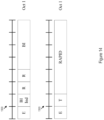
- the MAC PDU 500 includes other sub-PDUs 502 and optional padding 504.
- the example is illustrative of content options for MAC PDUs.
- the content of MAC PDUs and the location of MAC subPDUs in the MAC PDUs may change situationally responsive to UE requests.
- some or all of the backoff indicator 510, success RAR 520, SRB 530, and fallback RAR 540 may be omitted from any given MAC PDU sent by a basestation if no requests relevant to a particular message type are made by UEs.
- T1 The Type 1 field is a flag indicating whether the MAC subheader contains a Random Access Preamble ID (RAPID, e.g., a preamble index), or a Type 2 field.
- RAPID Random Access Preamble ID
- Type 2 field The Type 2 field is a flag to indicate the content of MAC subheader and the content of MAC subPDU after the MAC subheader. The size of T2 is 2 bits.
- L The length of SRB SDU.
- the size of the L field is 8 bits - LCH Ind (Logical Channel Indicator):
- the LCH indicator is to indicate the logical channel ID of the SRB SDU.
- the size of LCH indicator can be of one or two bits. If the size of LCH indicator is of two bits, then: --"0": The logical channel ID is 0. --"1": The logical channel ID is 1. If the size of LCH indicator is of two bits, then: --"00": The logical channel ID is 0.
- BI The Backoff Indicator (BI) field identifies the overload condition in the cell.
- the size of the BI field is 4 bits.
- RAPID The RAPID filed identifies the transmitted Random Access preamble.
- the size of the RAPID filed is 6 bits.
- R Reserved bit, set to "0".
- SRB which includes eight header fields: E/T1/T2/LCH Ind/R/R/R/L.
- Alternative SRB which includes seven header fields: E/T1/T2/LCH Ind/R/R/L.
- LCH Ind has a size of two bits.
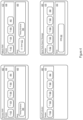
- Figure 6 shows an example one octet (e.g., 8-bits) BI subheader 610, an example one octet fallback RAR subheader 620, an example two-octet success RAR subheader 630 using a RAPID, an example multi-octet success RAR subheader 640 using UE CRID, and an example two-octet SRB subheader 650.
- octet e.g. 8-bits
- Contention Resolution ID This field contains the UL CCCH SDU. If the UL CCCH SDU is longer than 48 bits, this field contains the first 48 bits of the UL CCCH SDU. The size of the Contention Resolution ID is 48 bits.
- Timing Advance Command The same as the TAC field used in various four-step RACH implementations. The size of the Timing Advance Command field is 12 bits.
- C-RNTI Cell Radio Network Temporary Identifier
- the size of the C-RNTI field is 16 bits.
- R Reserved bit, set to "0";
- Table 4 Success RAR Body Format Field Options (when UE CRID is used in the subheader)
- Timing Advance Command The size of the Timing Advance Command field is 12 bits.
- C-RNTI The C-RNTI allocated for the UE within the cell.
- the size of the C-RNTI field is 16 bits.
- R Reserved bit, set to "0";
- Figure 7 shows an example multiple-octet success RAR body when RAPID is included in the subheader 700 and an example multiple-octet success RAR body when UE CRID is included in the subheader 750.
- the SRB message body may include a SRB field with a length in accord with that indicated in the length field of the SRB message header.
- Table 5 Fallback RAR Body Format Field Options Timing Advance Command: The size of the Timing Advance Command field is 12 bits.
- UL (Uplink) Grant The same as the UL Grant field used in various four-step RACH implementations. The size of the UL Grant field is 27 bits;
- Temporary C-RNTI The Temporary C-RNTI field indicates the temporary identity that is used by the MAC entity during Random Access.
- the size of the Temporary C-RNTI field is 16 bits.
- R Reserved bit, set to "0";
- Figure 8 shows an example multiple-octet SRB message body 800 and an example multiple-octet fallback RAR body 850.
- the Msg2 MAC PDU consists of one or more MAC subPDUs and optionally padding.
- Each MAC subPDU consists one of the following:
- the Msg2 MAC PDU consists of one or more MAC subPDUs and optionally padding.
- Each MAC subPDU consists one of the following:
- the corresponding MAC subPDU with SRB SDU shall be located after the corresponding success RAR for the same UE.
- the Extension field is a flag indicating if the MAC subPDU including this MAC subheader is the last MAC subPDU or not in the MAC PDU;
- the size of the E field is 1 bits. For example, if the E field is set to "1" to indicate at least another MAC subPDU follows, while is set to "0" to indicate that the MAC subPDU including this MAC subheader is the last MAC subPDU in the MAC PDU.
- T1 The Type 1 field is a flag indicating whether the MAC subheader contains a Random Access Preamble ID (RAPID, e.g., a preamble index), or a Type 2 field.
- RAPID Random Access Preamble ID
- Type 2 field The Type 2 field is a flag to indicate the content of MAC subheader and the content of MAC subPDU after the MAC subheader. The size of T is 2 bits.
- Type 2 field can be given as follows: --"00": Backoff Indicator is present in the MAC subheader, and the MAC subPDU include MAC subheader only. --"01": RAPID field (Or in another alternative Contention Resolution ID) is present in the MAC subheader, and a success RAR without SRB SDU is included in the MAC subPDU. --"10”: RAPID field (Or in another alternative Contention Resolution ID), LCH ID indication and L field are present in the MAC subheader, and a success RAR with SRB SDU is included in the MAC subPDU after the MAC subheader. -- "11”: Reserved. L: The length of SRB SDU.
- the size of the L field is 8 bits
- LCH Ind Logical Channel Indicator
- the LCH indicator is to indicate the logical channel ID of the SRB SDU.
- the size of LCH indicator can be of one or two bits. If the size of LCH indicator is of two bits, then: --"0": The logical channel ID is 0. --"1": The logical channel ID is 1. If the size of LCH indicator is of two bits, then: --"00": The logical channel ID is 0. --"01": The logical channel ID is 1. --"10": The logical channel ID is 2. --"11": The logical channel ID is 3. Or in another alternatives for the LCH indicator that the LCH indicator can be used to indicate the SRB ID of the SRB SDU.
- the SRB SDU is for SRB0 --"1
- the SRB SDU is for SRB1.
- the size of LCH indicator is of two bits, then: --"00": The SRB SDU is for SRB0. --"01": The SRB SDU is for SRB1.
- BI The Backoff Indicator (BI) field identifies the overload condition in the cell. The size of the BI field is 4 bits.
- RAPID The RAPID filed identifies the transmitted Random Access preamble .
- the size of the RAPID filed is 6 bits.
- R Reserved bit, set to "0".
- bit values (and respective logical meanings) shown in table are examples. However, logical meanings may be assigned to other bit values.
- Table 7 MAC Subheader Type Options Backoff Indicator only, which includes four header fields: E/T1/T2/BI Fallback RAR, which includes three header fields: E/T1/RAPID Success RAR with RAPID and SRB, which includes ten header fields: E/T1/T2/LCH Ind/R/R/R/R/RAPID/L. Success RAR with RAPID and without SRB, which includes ten header fields: E/T1/T2/R/R/R/R/R/R/RAPID.
- the RAPID in Success RAR with and without SRB can be replaced by UE Contention Resolution ID.
- the subheader for Success RAR with SRB includes E/T1/T2/LCH Ind/R/R/UE CRID/L.
- the subheader for Success RAR without SRB includes E/T1/T2/R/R/R/UE CRID.
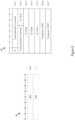
- Figure 9 shows an example two-octet success RAR subheader 910 using a RAPID and without SRB, an example multi-octet success RAR subheader 920 using UE CRIDs and without SRB, an example two-octet success RAR subheader 930 using a RAPID and with SRB, an example multi-octet success RAR subheader 940 using UE CRIDs and with SRB.
- Table 8 Success RAR Body Format Field Options with SRB (when RAPID is used in the subheader)
- Contention Resolution ID The size of the Contention Resolution ID is 48 bits.
- Timing Advance Command The size of the Timing Advance Command field is 12 bits.
- C-RNTI The C-RNTI allocated for the UE within the cell.
- the size of the C-RNTI field is 16 bits.
- SRB The size of the SRB field is indicated in the L filed in the corresponding subheader.
- R Reserved bit, set to "0";
- Table 9 Success RAR Body Format Field Options with SRB (when UE CRID is used in the subheader)
- Timing Advance Command The size of the Timing Advance Command field is 12 bits.
- C-RNTI The C-RNTI allocated for the UE within the cell.
- the size of the C-RNTI field is 16 bits.
- SRB The size of the SRB field is indicated in the L filed in the corresponding subheader.
- R Reserved bit, set to "0";
- Figure 10 shows an example multiple-octet success RAR body when RAPID is included in the subheader with SRB 1000 and an multiple-octet success RAR body when UE CRID is included in the subheader with SRB 1050.
- the subheader and body for the BI indictor, the subheader and body for the fallback RAR, the body for the success RAR using RAPID in subheader without SRB, and the body for the success RAR using UE CRID in subheader without SRB have the same formats as their analogs in Example Implementation 1.
- the Msg2 MAC PDU consists of one or more MAC subPDUs and optional padding.
- the MAC subPDUs may include one of the following:
- the Msg2 MAC PDU consists of one or more MAC subPDUs and optionally padding.
- Each MAC subPDU consists one of the following:
- a combined success RAR / SRB message is used.
- a type field is included in the header and a second RAR type field is included in the message body for RAR messages (both fallback and success RARs).
- RAPID is used for success RARs to allow for consistent subheaders with fallback RARs.
- the F flag, L field, and LCH Ind field are moved to the message body for success RARs.
- Table 10 MAC Subheader Field Options E: The Extension field is a flag indicating if the MAC subPDU including this MAC subheader is the last MAC subPDU or not in the MAC PDU; The size of the E field is 1 bits.
- the Type field is a flag indicating whether the MAC subheader contains a Random Access Preamble ID or a Backoff indicator.
- the T field is set to "0" to indicate the presence of backoff indicator in the subheader.
- the T field is set to "1" to indicate the presence of a Random Access Preamble ID field in the subheader (RAPID).
- a MAC RAR is included in the MAC subPDU, and the MAC RAR can be either the success RAR or fallback RAR.
- BI The Backoff Indicator (BI) field identifies the overload condition in the cell. The size of the BI field is 4 bits.
- RAPID The RAPID filed identifies the transmitted Random Access preamble ID. The size of the RAPID filed is 6 bits.
- R Reserved bit, set to "0".
- L The length of SRB SDU.
- the size of the L field is 8 bits
- LCH Ind (Logical Channel Indicator): The LCH indicator is to indicate the logical channel ID of the SRB SDU.
- the size of LCH indicator can be of one or two bits. If the size of LCH indicator is of two bits, then: --"0": The logical channel ID is 0. --"1": The logical channel ID is 1. If the size of LCH indicator is of two bits, then: --"00": The logical channel ID is 0. --"01": The logical channel ID is 1. --"10": The logical channel ID is 2. --"11": The logical channel ID is 3.
- the LCH indicator can be used to indicate the SRB ID of the SRB SDU. If the size of LCH indicator is of 1bits, then: --"0": The SRB SDU is for SRB0 --"1": The SRB SDU is for SRB1. If the size of LCH indicator is of two bits, then: --"00": The SRB SDU is for SRB0. --"01": The SRB SDU is for SRB1. --"10": The SRB SDU is for SRB2. --"11": The SRB SDU is for SRB3. Contention Resolution ID: The size of the Contention Resolution ID is 48 bits. Timing Advance Command: The size of the Timing Advance Command field is 12 bits.
- C-RNTI The C-RNTI allocated for the UE within the cell.
- the size of the C-RNTI field is 16 bits.
- SRB The size of the SRB field is indicated in the L filed in the corresponding subheader.
- R Reserved bit, set to "0";
- bit values (and respective logical meanings) shown in table are examples. However, logical meanings may be assigned to other bit values.
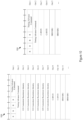
- Figure 12 shows an example multiple-octet success RAR body with SRB 1200 and an example multiple-octet success RAR body without SRB 1250.
- the L field can be move to the front of the message body.
- the UE can identify the next MAC subPDU with the initial bits of the subPDU.
- Figure 13 shows an example message body 1270 for a success RAR with SRB including an L field in the first and second octets and an example message body 1290 without SRB.
- Timing Advance Command The size of the Timing Advance Command field is 12 bits.
- UL (Uplink) Grant The same as the UL Grant field used in various four-step RACH implementations.
- the size of the UL Grant field is 27 bits;
- Temporary C-RNTI The Temporary C-RNTI field indicates the temporary identity that is used by the MAC entity during Random Access.
- the size of the Temporary C-RNTI field is 16 bits.
- the Msg2 MAC PDU includes of one or more MAC subPDUs and optional padding.
- the MAC subPDU may include any or all of the following:
- bit values (and respective logical meanings) shown in table are examples. However, logical meanings may be assigned to other bit values.
- MAC suhbeaders may include two octets.
- bit values (and respective logical meanings) shown in table are examples. However, logical meanings may be assigned to other bit values.
- the MAC suhbeader with BI indicator has a fixed size of 1 byte, while other of MAC subheaders include two octets.
- the BI subheader serves as the first subPDU of each MAC PDU.
- T The Type field is a flag indicating the type of MAC RAR in the MAC subPDU: --"0": Fallback RAR --"1": Success RAR. If T indicates presence of success RAR, the F field is present.
- F The F field is a flag to indicate whether there is a SRB SDU in the success RAR: --"0": There is no SRB SDU in the success RAR --"1": There is SRB SDU in the success RAR. If the F indicates presence of SRB SDU, the LCH Ind field is present in the header.
- L The length of SRB SDU.
- the size of the L field is 8 bits
- LCH Ind (Logical Channel Indicator): The LCH indicator is to indicate the logical channel ID of the SRB SDU.
- the size of LCH indicator can be of one or two bits. If the size of LCH indicator is of two bits, then: --"0": The logical channel ID is 0. --"1": The logical channel ID is 1. If the size of LCH indicator is of two bits, then: --"00": The logical channel ID is 0. --"01": The logical channel ID is 1. --"10": The logical channel ID is 2. --"11": The logical channel ID is 3.
- the LCH indicator can be used to indicate the SRB ID of the SRB SDU. If the size of LCH indicator is of 1bits, then: --"0": The SRB SDU is for SRB0 --"1": The SRB SDU is for SRB1. If the size of LCH indicator is of two bits, then: --"00": The SRB SDU is for SRB0. --"01": The SRB SDU is for SRB1. --"10": The SRB SDU is for SRB2. --"11”: The SRB SDU is for SRB3.
- BI The Backoff Indicator (BI) field identifies the overload condition in the cell. The size of the BI field is 4 bits.
- RAPID The RAPID filed identifies the transmitted Random Access preamble . The size of the RAPID filed is 6 bits.
- R Reserved bit, set to "0".
- bit values (and respective logical meanings) shown in table are examples. However, logical meanings may be assigned to other bit values.
- Figure 19 shows an example two-octet fallback RAR subheader 1910, an example two-octet success RAR without SRB SDU subheader 1920, and an example two-octet success RAR with SRB SDU subheader 1930.
- An example of a subeader with BI indicator is given in item 1300 of Figure 14 .
- Figure 20 shows an example success RAR message body 2000 with SRB.
- bit values (and respective logical meanings) shown in table are examples. However, logical meanings may be assigned to other bit values.
- a DL assignment may be included in a success RAR without an SRB for subsequent downlink transmissions, e.g. an RRCSetup transmission.
- the LCH Indicator can be alternatively used to indicate the SRB ID of the SRB SDU.
- the positions of fields within subheaders and message bodies may be moved within and among octets. For example, a field at the beginning of an octet may be moved to the end of the octet. For example, a field in show in the example messages in a given octet may be split among multiple octets or moved to another octet.
- fields in subheaders may be ordered such that when given fields indicate the presence (or absence) of other fields, the given fields are decoded (e.g., by the UE) first.
Landscapes
- Engineering & Computer Science (AREA)
- Computer Networks & Wireless Communication (AREA)
- Signal Processing (AREA)
- Quality & Reliability (AREA)
- Computer Security & Cryptography (AREA)
- Mobile Radio Communication Systems (AREA)
- Small-Scale Networks (AREA)
Claims (11)
- Verfahren zum Durchführen eines Direktzugriffs durch eine Basisstation, das aufweist:Empfangen (352) einer ersten Nachricht von einem Benutzergerät, UE, in einer Direktzugriffsprozedur;Erzeugen einer zweiten Nachricht, die eine Direktzugriffsnachricht enthält, wobei die zweite Nachricht auf die erste Nachricht reagiert und die Direktzugriffsnachricht eine erste Medienzugriffssteuerungs-, MAC-, Sub-Protokolldateneinheit, Sub-PDU, mit einem ersten Sub-Header aufweist, wobei der erste Sub-Header ein Typ-1-Feld aufweist, das konfiguriert ist, anzuzeigen, ob ein Typ-2-Feld in der Direktzugriffsnachricht vorhanden ist, wobei eine Größe des Typ-2-Felds 1 Bit beträgt und wobei das Typ-2-Feld entweder auf "1" gesetzt ist, um anzuzeigen, dass die Erfolgs-Direktzugriffsantwort, RAR, in der ersten MAC-Sub-PDU zusätzlich zu dem ersten Sub-Header enthalten ist, oder auf "0" gesetzt ist, um anzuzeigen, dass ein Backoff-Indikator vorhanden ist; undÜbertragen (354) der zweiten Nachricht an das UE.
- Verfahren nach Anspruch 1, wobei eine Größe des Typ-1-Felds 1 Bit beträgt.
- Verfahren nach Anspruch 2, wobei das Typ-1-Feld entweder auf "1" gesetzt wird, um das Vorhandensein einer Direktzugriffspräambel ID, RAPID, anzuzeigen, oder auf "0" gesetzt wird, um das Vorhandensein des Typ-2-Felds anzuzeigen.
- Verfahren nach Anspruch 1, wobei die Direktzugriffsnachricht ferner aufweist:eine Formatflag, die anzeigt, ob die Direktzugriffsnachricht einen Signalfunkträgerparameter aufweist, odereine zweite MAC-Sub-PDU, die sich nach der Erfolgs-RAR befindet, wobei die zweite MAC-Sub-PDU einen zweiten Sub-Header und eine MAC-Dienstdateneinheit, SDU, aufweist.
- Verfahren zum Durchführen eines Direktzugriffs durch ein Benutzergerät, UE, das aufweist:Senden (352) einer ersten Nachricht an eine Basisstation in einer Direktzugriffsprozedur;
undEmpfangen (354) einer zweiten Nachricht, die eine Direktzugriffsnachricht von der Basisstation aufweist, wobei die zweite Nachricht auf die erste Nachricht reagiert und die Direktzugriffsnachricht aufweist:
eine erste Medienzugriffssteuerungs-, MAC-, Sub-Protokolldateneinheit, Sub-PDU, mit einem ersten Sub-Header, wobei der erste Sub-Header ein Typ-1-Feld aufweist, das konfiguriert ist, anzuzeigen, ob ein Typ-2-Feld in der Direktzugriffsnachricht vorhanden ist, wobei eine Größe des Typ-2-Felds 1 Bit beträgt und wobei das Typ-2-Feld entweder auf "1" gesetzt ist, um anzuzeigen, dass die Erfolgs-Direktzugriffsantwort, RAR, in der ersten MAC-Sub-PDU zusätzlich zu dem ersten Sub-Header enthalten ist, oder auf "0" gesetzt ist, um anzuzeigen, dass ein Backoff-Indikator vorhanden ist. - Verfahren nach Anspruch 5, wobei eine Größe des Typ-1-Felds 1 Bit beträgt.
- Verfahren nach Anspruch 5, wobei das Typ-1-Feld entweder auf "1" gesetzt wird, um das Vorhandensein einer Direktzugriffspräambel ID, RAPID, anzuzeigen, oder auf "0" gesetzt wird, um das Vorhandensein des Typ-2-Felds anzuzeigen.
- Verfahren nach Anspruch 5, wobei die Direktzugriffsnachricht ferner aufweist:eine Formatflag, die anzeigt, ob die Direktzugriffsnachricht einen Signalfunkträgerparameter aufweist, odereine zweite MAC-Sub-PDU, die sich nach der Erfolgs-RAR befindet, wobei die zweite MAC-Sub-PDU einen zweiten Sub-Header und eine MAC-Dienstdateneinheit, SDU, aufweist.
- Das Verfahren nach Anspruch 5, das ferner aufweist:Dekodieren des Typ-2-Felds, wenn das Typ-1-Feld anzeigt, dass das Typ-2-Feld vorhanden ist; undDekodieren eines Präambelindexes, der einer in der ersten Nachricht enthaltenen Direktzugriffspräambel entspricht, wenn das Typ-1-Feld anzeigt, dass das Typ-2-Feld nicht vorhanden ist.
- Drahtlose Kommunikationsvorrichtung (102) für eine Basisstation, BS, die aufweist:einen Speicher, der einen oder mehrere Befehle speichert; undeinen Prozessor, der konfiguriert ist, den einen oder die mehreren Befehle auszuführen, um das Verfahren nach einem der Ansprüche 1 bis 4 durchzuführen.
- Drahtlose Kommunikationsvorrichtung (104) für ein Benutzergerät, UE, die aufweist:einen Speicher, der einen oder mehrere Befehle speichert; undeinen Prozessor, der konfiguriert ist, den einen oder die mehreren Befehle auszuführen, um das Verfahren nach einem der Ansprüche 5 bis 9 auszuführen.
Applications Claiming Priority (1)
| Application Number | Priority Date | Filing Date | Title |
|---|---|---|---|
| PCT/CN2019/098448 WO2021016890A1 (en) | 2019-07-30 | 2019-07-30 | Architecture for random access messaging |
Publications (3)
| Publication Number | Publication Date |
|---|---|
| EP4005325A1 EP4005325A1 (de) | 2022-06-01 |
| EP4005325A4 EP4005325A4 (de) | 2023-04-26 |
| EP4005325B1 true EP4005325B1 (de) | 2025-07-02 |
Family
ID=74228403
Family Applications (1)
| Application Number | Title | Priority Date | Filing Date |
|---|---|---|---|
| EP19939629.2A Active EP4005325B1 (de) | 2019-07-30 | 2019-07-30 | Architektur für nachrichtenübertragung mit wahlfreiem zugriff |
Country Status (7)
| Country | Link |
|---|---|
| US (3) | US11871458B2 (de) |
| EP (1) | EP4005325B1 (de) |
| KR (1) | KR102889233B1 (de) |
| CN (2) | CN114928895B (de) |
| ES (1) | ES3037743T3 (de) |
| PL (1) | PL4005325T3 (de) |
| WO (1) | WO2021016890A1 (de) |
Families Citing this family (4)
| Publication number | Priority date | Publication date | Assignee | Title |
|---|---|---|---|---|
| US11602991B2 (en) * | 2017-08-07 | 2023-03-14 | Arb Corporation Ltd. | System and method for controlling operation of one or more accessories for a vehicle |
| EP3864925B1 (de) * | 2019-02-05 | 2026-05-06 | Google LLC | Effiziente nachrichtenübermittlung in einem verfahren zum zugriff auf einen kommunikationskanal |
| US20200329504A1 (en) * | 2019-04-11 | 2020-10-15 | Mediatek Singapore Pte. Ltd. | MsgB Format In Two-Step Random Access In Mobile Communications |
| EP4005325B1 (de) | 2019-07-30 | 2025-07-02 | ZTE Corporation | Architektur für nachrichtenübertragung mit wahlfreiem zugriff |
Family Cites Families (26)
| Publication number | Priority date | Publication date | Assignee | Title |
|---|---|---|---|---|
| US9215731B2 (en) | 2007-12-19 | 2015-12-15 | Qualcomm Incorporated | Method and apparatus for transfer of a message on a common control channel for random access in a wireless communication network |
| WO2009096731A2 (en) * | 2008-01-31 | 2009-08-06 | Lg Electronics Inc. | Method for signaling back-off information in random access |
| CN102883441B (zh) | 2011-07-15 | 2015-04-22 | 华为技术有限公司 | 一种无线宽带通信方法和装置 |
| CN108282901B (zh) | 2017-01-06 | 2019-08-09 | 电信科学技术研究院 | 一种随机接入响应方法和装置 |
| US20200037394A1 (en) | 2017-01-17 | 2020-01-30 | Nec Corporation | Base station, terminal apparatus, method, program, and recording medium |
| US11057935B2 (en) | 2017-03-22 | 2021-07-06 | Comcast Cable Communications, Llc | Random access process in new radio |
| CN108811166B (zh) * | 2017-05-05 | 2020-04-21 | 维沃移动通信有限公司 | 随机接入响应消息的发送、接收方法及发送、接收装置 |
| EP3596993B1 (de) | 2017-06-07 | 2021-08-25 | Samsung Electronics Co., Ltd. | System und verfahren zur identifizierung einer direktzugriffsantwort |
| CN109392017B (zh) * | 2017-08-11 | 2021-07-09 | 大唐移动通信设备有限公司 | 一种随机接入响应的方法、装置、基站及终端 |
| EP3466036B1 (de) * | 2017-08-11 | 2021-08-04 | Telefonaktiebolaget LM Ericsson (publ) | Netzwerkvorrichtung, endgerätevorrichtung und zugehörige verfahren |
| WO2019064088A1 (en) | 2017-09-28 | 2019-04-04 | Nokia Technologies Oy | METHOD AND APPARATUS FOR TRANSFERRING COMPACT MAC PROTOCOL DATA UNITS |
| US10840992B2 (en) | 2018-01-10 | 2020-11-17 | Telefonaktiebolaget Lm Ericsson (Publ) | User equipment, radio network node and methods performed therein for handling communication in a wireless communication network |
| US11528767B2 (en) | 2018-01-11 | 2022-12-13 | Telefonaktiebolaget Lm Ericsson (Publ) | User equipment, radio network node and methods performed therein for handling communication in a wireless communication network |
| US20190215706A1 (en) | 2018-01-11 | 2019-07-11 | Asustek Computer Inc. | Method and apparatus of beam failure recovery via random access procedure in a wireless communication system |
| JP2022501939A (ja) | 2018-09-27 | 2022-01-06 | 鴻穎創新有限公司Fg Innovation Company Limited | ランダムアクセスのための方法及び装置 |
| CN113170503B (zh) | 2018-09-28 | 2024-08-30 | 三星电子株式会社 | 无线通信系统中的随机接入方法和装置 |
| EP3941147A4 (de) | 2019-03-14 | 2022-11-02 | Electronics and Telecommunications Research Institute | Verfahren zur steuerung des zugangs eines endgerätes in einem kommunikationssystem |
| KR20200110201A (ko) * | 2019-03-14 | 2020-09-23 | 한국전자통신연구원 | 통신 시스템에서 단말의 접속 제어 방법 |
| CN111787634B (zh) | 2019-04-04 | 2022-05-24 | 中国信息通信研究院 | 一种随机接入的方法、基站及用户设备 |
| US20200329504A1 (en) | 2019-04-11 | 2020-10-15 | Mediatek Singapore Pte. Ltd. | MsgB Format In Two-Step Random Access In Mobile Communications |
| CN111867130B (zh) * | 2019-04-30 | 2023-07-18 | 华为技术有限公司 | 一种随机接入方法、装置及存储介质 |
| US11924891B2 (en) | 2019-05-23 | 2024-03-05 | Lg Electronics Inc. | Method of performing random access (RA) procedure, and transmitting device, apparatus and storage medium therefor, and method and apparatus for transmitting MAC PDU of RA procedure |
| US12101826B2 (en) * | 2019-05-23 | 2024-09-24 | Lg Electronics Inc. | Method of performing random access (RA) procedure, and transmitting device, apparatus and storage medium therefor, and method and apparatus for transmitting MAC PDU of RA procedure |
| EP4005325B1 (de) | 2019-07-30 | 2025-07-02 | ZTE Corporation | Architektur für nachrichtenübertragung mit wahlfreiem zugriff |
| FI3780870T3 (fi) | 2019-08-13 | 2025-05-06 | Apple Inc | Downlink-yhteyden radioresurssien kontrolliviestin lähetys 2-vaiheisessa hajasaannissa |
| CN112399626B (zh) | 2019-08-13 | 2025-11-07 | 苹果公司 | 2步随机接入中的下行链路无线电资源控制消息传输 |
-
2019
- 2019-07-30 EP EP19939629.2A patent/EP4005325B1/de active Active
- 2019-07-30 KR KR1020227002794A patent/KR102889233B1/ko active Active
- 2019-07-30 ES ES19939629T patent/ES3037743T3/es active Active
- 2019-07-30 PL PL19939629.2T patent/PL4005325T3/pl unknown
- 2019-07-30 WO PCT/CN2019/098448 patent/WO2021016890A1/en not_active Ceased
- 2019-07-30 CN CN202210304184.5A patent/CN114928895B/zh active Active
- 2019-07-30 CN CN201980098863.8A patent/CN114208370A/zh active Pending
-
2022
- 2022-01-25 US US17/583,569 patent/US11871458B2/en active Active
- 2022-02-24 US US17/680,047 patent/US11576217B2/en active Active
-
2023
- 2023-11-28 US US18/521,773 patent/US12238787B2/en active Active
Also Published As
| Publication number | Publication date |
|---|---|
| US12238787B2 (en) | 2025-02-25 |
| EP4005325A4 (de) | 2023-04-26 |
| WO2021016890A1 (en) | 2021-02-04 |
| US20220295547A1 (en) | 2022-09-15 |
| US20240098804A1 (en) | 2024-03-21 |
| CN114928895A (zh) | 2022-08-19 |
| US11576217B2 (en) | 2023-02-07 |
| CN114928895B (zh) | 2024-06-07 |
| US11871458B2 (en) | 2024-01-09 |
| ES3037743T3 (en) | 2025-10-06 |
| KR20220041835A (ko) | 2022-04-01 |
| CN114208370A (zh) | 2022-03-18 |
| US20220183058A1 (en) | 2022-06-09 |
| BR112022000728A2 (pt) | 2022-03-22 |
| EP4005325A1 (de) | 2022-06-01 |
| PL4005325T3 (pl) | 2025-09-22 |
| KR102889233B1 (ko) | 2025-11-20 |
Similar Documents
| Publication | Publication Date | Title |
|---|---|---|
| US12238787B2 (en) | Architecture for random access messaging | |
| US11464040B2 (en) | Data transmission method and apparatus | |
| JP7345499B2 (ja) | Message3プロトコルデータユニットを送受信する装置及び方法 | |
| EP3466036B1 (de) | Netzwerkvorrichtung, endgerätevorrichtung und zugehörige verfahren | |
| CN115989650B (zh) | 用于延迟施加的harq-ack/nack报告的技术 | |
| WO2020191781A1 (zh) | 一种数据传输方法及装置 | |
| KR102879373B1 (ko) | 시간 도메인 자원 할당을 구성하기 위한 방법 및 장치 | |
| US20240089973A1 (en) | Methods, devices, and systems for uci multiplexing with pusch | |
| KR20240050381A (ko) | 시간 도메인에서 다중 전송 블록을 매핑하기 위한 방법, 디바이스, 및 시스템 | |
| US20250365772A1 (en) | Method for LTM Mechanism Design | |
| US12207316B2 (en) | Channel access method and apparatus | |
| US20240422784A1 (en) | Methods and devices for repetition transmission | |
| BR112022000728B1 (pt) | Método para realizar acesso aleatório por uma estação base, método para realizar acesso aleatório por um equipamento de usuário e aparelho de comunicação sem fio | |
| WO2025147828A1 (en) | Methods, devices, and systems for supporting pdu set based handling in dual connectivity | |
| WO2026091073A1 (en) | A method for random access channel transmission and reception | |
| US20240080895A1 (en) | Apparatus, system, and method of triggered contention-based period | |
| US20250063595A1 (en) | Apparatus, system, and method of multi-link wireless communication | |
| WO2024065556A1 (en) | Methods, devices, and systems for scheduling gap coordination | |
| WO2024036514A1 (en) | Methods, devices, and systems for coordinating ue capability for dual-active state | |
| US20230413322A1 (en) | Apparatus, system, and method of contending a wireless medium | |
| WO2026081063A1 (en) | Methods, devices, and systems for unmanned aerial vehicle information reporting and authorization | |
| WO2026040734A1 (zh) | 一种信道标识的复用方法及装置 | |
| CN117121587A (zh) | 用于配置基于组的部分带宽切换的方法、设备和系统 |
Legal Events
| Date | Code | Title | Description |
|---|---|---|---|
| STAA | Information on the status of an ep patent application or granted ep patent |
Free format text: STATUS: THE INTERNATIONAL PUBLICATION HAS BEEN MADE |
|
| PUAI | Public reference made under article 153(3) epc to a published international application that has entered the european phase |
Free format text: ORIGINAL CODE: 0009012 |
|
| STAA | Information on the status of an ep patent application or granted ep patent |
Free format text: STATUS: REQUEST FOR EXAMINATION WAS MADE |
|
| 17P | Request for examination filed |
Effective date: 20220228 |
|
| AK | Designated contracting states |
Kind code of ref document: A1 Designated state(s): AL AT BE BG CH CY CZ DE DK EE ES FI FR GB GR HR HU IE IS IT LI LT LU LV MC MK MT NL NO PL PT RO RS SE SI SK SM TR |
|
| DAV | Request for validation of the european patent (deleted) | ||
| DAX | Request for extension of the european patent (deleted) | ||
| REG | Reference to a national code |
Ref country code: DE Ref legal event code: R079 Free format text: PREVIOUS MAIN CLASS: H04W0074000000 Ipc: H04W0074080000 Ref document number: 602019072154 Country of ref document: DE |
|
| A4 | Supplementary search report drawn up and despatched |
Effective date: 20230327 |
|
| RIC1 | Information provided on ipc code assigned before grant |
Ipc: H04W 74/08 20090101AFI20230321BHEP |
|
| STAA | Information on the status of an ep patent application or granted ep patent |
Free format text: STATUS: EXAMINATION IS IN PROGRESS |
|
| 17Q | First examination report despatched |
Effective date: 20241031 |
|
| REG | Reference to a national code |
Ref country code: DE Ref legal event code: R079 Free format text: PREVIOUS MAIN CLASS: H04W0074080000 Ipc: H04W0074083300 Ref document number: 602019072154 Country of ref document: DE |
|
| GRAP | Despatch of communication of intention to grant a patent |
Free format text: ORIGINAL CODE: EPIDOSNIGR1 |
|
| STAA | Information on the status of an ep patent application or granted ep patent |
Free format text: STATUS: GRANT OF PATENT IS INTENDED |
|
| RIC1 | Information provided on ipc code assigned before grant |
Ipc: H04W 74/0836 20240101ALN20250326BHEP Ipc: H04W 74/0833 20240101AFI20250326BHEP |
|
| INTG | Intention to grant announced |
Effective date: 20250410 |
|
| GRAS | Grant fee paid |
Free format text: ORIGINAL CODE: EPIDOSNIGR3 |
|
| GRAA | (expected) grant |
Free format text: ORIGINAL CODE: 0009210 |
|
| STAA | Information on the status of an ep patent application or granted ep patent |
Free format text: STATUS: THE PATENT HAS BEEN GRANTED |
|
| AK | Designated contracting states |
Kind code of ref document: B1 Designated state(s): AL AT BE BG CH CY CZ DE DK EE ES FI FR GB GR HR HU IE IS IT LI LT LU LV MC MK MT NL NO PL PT RO RS SE SI SK SM TR |
|
| REG | Reference to a national code |
Ref country code: GB Ref legal event code: FG4D |
|
| REG | Reference to a national code |
Ref country code: CH Ref legal event code: EP |
|
| REG | Reference to a national code |
Ref country code: DE Ref legal event code: R096 Ref document number: 602019072154 Country of ref document: DE |
|
| REG | Reference to a national code |
Ref country code: IE Ref legal event code: FG4D |
|
| REG | Reference to a national code |
Ref country code: ES Ref legal event code: FG2A Ref document number: 3037743 Country of ref document: ES Kind code of ref document: T3 Effective date: 20251006 |
|
| PGFP | Annual fee paid to national office [announced via postgrant information from national office to epo] |
Ref country code: ES Payment date: 20250807 Year of fee payment: 7 |
|
| PGFP | Annual fee paid to national office [announced via postgrant information from national office to epo] |
Ref country code: DE Payment date: 20250708 Year of fee payment: 7 |
|
| PGFP | Annual fee paid to national office [announced via postgrant information from national office to epo] |
Ref country code: GB Payment date: 20250707 Year of fee payment: 7 |
|
| PGFP | Annual fee paid to national office [announced via postgrant information from national office to epo] |
Ref country code: FR Payment date: 20250708 Year of fee payment: 7 |
|
| REG | Reference to a national code |
Ref country code: NL Ref legal event code: MP Effective date: 20250702 |
|
| PG25 | Lapsed in a contracting state [announced via postgrant information from national office to epo] |
Ref country code: PT Free format text: LAPSE BECAUSE OF FAILURE TO SUBMIT A TRANSLATION OF THE DESCRIPTION OR TO PAY THE FEE WITHIN THE PRESCRIBED TIME-LIMIT Effective date: 20251103 |
|
| PG25 | Lapsed in a contracting state [announced via postgrant information from national office to epo] |
Ref country code: NL Free format text: LAPSE BECAUSE OF FAILURE TO SUBMIT A TRANSLATION OF THE DESCRIPTION OR TO PAY THE FEE WITHIN THE PRESCRIBED TIME-LIMIT Effective date: 20250702 |
|
| REG | Reference to a national code |
Ref country code: AT Ref legal event code: MK05 Ref document number: 1810789 Country of ref document: AT Kind code of ref document: T Effective date: 20250702 |
|
| PG25 | Lapsed in a contracting state [announced via postgrant information from national office to epo] |
Ref country code: IS Free format text: LAPSE BECAUSE OF FAILURE TO SUBMIT A TRANSLATION OF THE DESCRIPTION OR TO PAY THE FEE WITHIN THE PRESCRIBED TIME-LIMIT Effective date: 20251102 |
|
| PG25 | Lapsed in a contracting state [announced via postgrant information from national office to epo] |
Ref country code: NO Free format text: LAPSE BECAUSE OF FAILURE TO SUBMIT A TRANSLATION OF THE DESCRIPTION OR TO PAY THE FEE WITHIN THE PRESCRIBED TIME-LIMIT Effective date: 20251002 |
|
| REG | Reference to a national code |
Ref country code: LT Ref legal event code: MG9D |
|
| PG25 | Lapsed in a contracting state [announced via postgrant information from national office to epo] |
Ref country code: AT Free format text: LAPSE BECAUSE OF FAILURE TO SUBMIT A TRANSLATION OF THE DESCRIPTION OR TO PAY THE FEE WITHIN THE PRESCRIBED TIME-LIMIT Effective date: 20250702 |
|
| PG25 | Lapsed in a contracting state [announced via postgrant information from national office to epo] |
Ref country code: FI Free format text: LAPSE BECAUSE OF FAILURE TO SUBMIT A TRANSLATION OF THE DESCRIPTION OR TO PAY THE FEE WITHIN THE PRESCRIBED TIME-LIMIT Effective date: 20250702 |
|
| PG25 | Lapsed in a contracting state [announced via postgrant information from national office to epo] |
Ref country code: HR Free format text: LAPSE BECAUSE OF FAILURE TO SUBMIT A TRANSLATION OF THE DESCRIPTION OR TO PAY THE FEE WITHIN THE PRESCRIBED TIME-LIMIT Effective date: 20250702 |
|
| PG25 | Lapsed in a contracting state [announced via postgrant information from national office to epo] |
Ref country code: GR Free format text: LAPSE BECAUSE OF FAILURE TO SUBMIT A TRANSLATION OF THE DESCRIPTION OR TO PAY THE FEE WITHIN THE PRESCRIBED TIME-LIMIT Effective date: 20251003 |
|
| PG25 | Lapsed in a contracting state [announced via postgrant information from national office to epo] |
Ref country code: CZ Free format text: LAPSE BECAUSE OF FAILURE TO SUBMIT A TRANSLATION OF THE DESCRIPTION OR TO PAY THE FEE WITHIN THE PRESCRIBED TIME-LIMIT Effective date: 20250702 Ref country code: SE Free format text: LAPSE BECAUSE OF FAILURE TO SUBMIT A TRANSLATION OF THE DESCRIPTION OR TO PAY THE FEE WITHIN THE PRESCRIBED TIME-LIMIT Effective date: 20250702 |
|
| PG25 | Lapsed in a contracting state [announced via postgrant information from national office to epo] |
Ref country code: LV Free format text: LAPSE BECAUSE OF FAILURE TO SUBMIT A TRANSLATION OF THE DESCRIPTION OR TO PAY THE FEE WITHIN THE PRESCRIBED TIME-LIMIT Effective date: 20250702 |
|
| PG25 | Lapsed in a contracting state [announced via postgrant information from national office to epo] |
Ref country code: BG Free format text: LAPSE BECAUSE OF FAILURE TO SUBMIT A TRANSLATION OF THE DESCRIPTION OR TO PAY THE FEE WITHIN THE PRESCRIBED TIME-LIMIT Effective date: 20250702 |
|
| PGFP | Annual fee paid to national office [announced via postgrant information from national office to epo] |
Ref country code: PL Payment date: 20250714 Year of fee payment: 7 |
|
| PG25 | Lapsed in a contracting state [announced via postgrant information from national office to epo] |
Ref country code: RS Free format text: LAPSE BECAUSE OF FAILURE TO SUBMIT A TRANSLATION OF THE DESCRIPTION OR TO PAY THE FEE WITHIN THE PRESCRIBED TIME-LIMIT Effective date: 20251002 |
|
| REG | Reference to a national code |
Ref country code: CH Ref legal event code: H13 Free format text: ST27 STATUS EVENT CODE: U-0-0-H10-H13 (AS PROVIDED BY THE NATIONAL OFFICE) Effective date: 20260224 |
|
| PG25 | Lapsed in a contracting state [announced via postgrant information from national office to epo] |
Ref country code: RO Free format text: LAPSE BECAUSE OF FAILURE TO SUBMIT A TRANSLATION OF THE DESCRIPTION OR TO PAY THE FEE WITHIN THE PRESCRIBED TIME-LIMIT Effective date: 20250702 Ref country code: LU Free format text: LAPSE BECAUSE OF NON-PAYMENT OF DUE FEES Effective date: 20250730 |
|
| REG | Reference to a national code |
Ref country code: BE Ref legal event code: MM Effective date: 20250731 |
|
| PG25 | Lapsed in a contracting state [announced via postgrant information from national office to epo] |
Ref country code: SM Free format text: LAPSE BECAUSE OF FAILURE TO SUBMIT A TRANSLATION OF THE DESCRIPTION OR TO PAY THE FEE WITHIN THE PRESCRIBED TIME-LIMIT Effective date: 20250702 |
|
| PG25 | Lapsed in a contracting state [announced via postgrant information from national office to epo] |
Ref country code: DK Free format text: LAPSE BECAUSE OF FAILURE TO SUBMIT A TRANSLATION OF THE DESCRIPTION OR TO PAY THE FEE WITHIN THE PRESCRIBED TIME-LIMIT Effective date: 20250702 |
|
| PG25 | Lapsed in a contracting state [announced via postgrant information from national office to epo] |
Ref country code: BE Free format text: LAPSE BECAUSE OF NON-PAYMENT OF DUE FEES Effective date: 20250731 |
|
| PG25 | Lapsed in a contracting state [announced via postgrant information from national office to epo] |
Ref country code: CH Free format text: LAPSE BECAUSE OF NON-PAYMENT OF DUE FEES Effective date: 20250731 |
|
| PG25 | Lapsed in a contracting state [announced via postgrant information from national office to epo] |
Ref country code: EE Free format text: LAPSE BECAUSE OF FAILURE TO SUBMIT A TRANSLATION OF THE DESCRIPTION OR TO PAY THE FEE WITHIN THE PRESCRIBED TIME-LIMIT Effective date: 20250702 Ref country code: SK Free format text: LAPSE BECAUSE OF FAILURE TO SUBMIT A TRANSLATION OF THE DESCRIPTION OR TO PAY THE FEE WITHIN THE PRESCRIBED TIME-LIMIT Effective date: 20250702 |