EP4005372A2 - Verfahren zur herstellung eines sojabohnenblattes mit hohem gehalt an isoflavonderivat im dunkelzustand und sojabohnenblatt mit einem hohen gehalt an so hergestelltem isoflavonderivat - Google Patents
Verfahren zur herstellung eines sojabohnenblattes mit hohem gehalt an isoflavonderivat im dunkelzustand und sojabohnenblatt mit einem hohen gehalt an so hergestelltem isoflavonderivat Download PDFInfo
- Publication number
- EP4005372A2 EP4005372A2 EP20843249.2A EP20843249A EP4005372A2 EP 4005372 A2 EP4005372 A2 EP 4005372A2 EP 20843249 A EP20843249 A EP 20843249A EP 4005372 A2 EP4005372 A2 EP 4005372A2
- Authority
- EP
- European Patent Office
- Prior art keywords
- soybean leaves
- extract
- high content
- isoflavone
- soybean
- Prior art date
- Legal status (The legal status is an assumption and is not a legal conclusion. Google has not performed a legal analysis and makes no representation as to the accuracy of the status listed.)
- Granted
Links
Images




Classifications
-
- A—HUMAN NECESSITIES
- A01—AGRICULTURE; FORESTRY; ANIMAL HUSBANDRY; HUNTING; TRAPPING; FISHING
- A01H—NEW PLANTS OR NON-TRANSGENIC PROCESSES FOR OBTAINING THEM; PLANT REPRODUCTION BY TISSUE CULTURE TECHNIQUES
- A01H5/00—Angiosperms, i.e. flowering plants, characterised by their plant parts; Angiosperms characterised otherwise than by their botanic taxonomy
- A01H5/12—Leaves
-
- A—HUMAN NECESSITIES
- A01—AGRICULTURE; FORESTRY; ANIMAL HUSBANDRY; HUNTING; TRAPPING; FISHING
- A01H—NEW PLANTS OR NON-TRANSGENIC PROCESSES FOR OBTAINING THEM; PLANT REPRODUCTION BY TISSUE CULTURE TECHNIQUES
- A01H3/00—Processes for modifying phenotypes, e.g. symbiosis with bacteria
- A01H3/02—Processes for modifying phenotypes, e.g. symbiosis with bacteria by controlling duration, wavelength, intensity, or periodicity of illumination
-
- A—HUMAN NECESSITIES
- A01—AGRICULTURE; FORESTRY; ANIMAL HUSBANDRY; HUNTING; TRAPPING; FISHING
- A01H—NEW PLANTS OR NON-TRANSGENIC PROCESSES FOR OBTAINING THEM; PLANT REPRODUCTION BY TISSUE CULTURE TECHNIQUES
- A01H3/00—Processes for modifying phenotypes, e.g. symbiosis with bacteria
- A01H3/04—Processes for modifying phenotypes, e.g. symbiosis with bacteria by treatment with chemicals
-
- A—HUMAN NECESSITIES
- A01—AGRICULTURE; FORESTRY; ANIMAL HUSBANDRY; HUNTING; TRAPPING; FISHING
- A01H—NEW PLANTS OR NON-TRANSGENIC PROCESSES FOR OBTAINING THEM; PLANT REPRODUCTION BY TISSUE CULTURE TECHNIQUES
- A01H6/00—Angiosperms, i.e. flowering plants, characterised by their botanic taxonomy
- A01H6/54—Leguminosae or Fabaceae, e.g. soybean, alfalfa or peanut
-
- A—HUMAN NECESSITIES
- A01—AGRICULTURE; FORESTRY; ANIMAL HUSBANDRY; HUNTING; TRAPPING; FISHING
- A01H—NEW PLANTS OR NON-TRANSGENIC PROCESSES FOR OBTAINING THEM; PLANT REPRODUCTION BY TISSUE CULTURE TECHNIQUES
- A01H6/00—Angiosperms, i.e. flowering plants, characterised by their botanic taxonomy
- A01H6/54—Leguminosae or Fabaceae, e.g. soybean, alfalfa or peanut
- A01H6/542—Glycine max [soybean]
-
- A—HUMAN NECESSITIES
- A21—BAKING; EDIBLE DOUGHS
- A21D—TREATMENT OF FLOUR OR DOUGH FOR BAKING, e.g. BY ADDITION OF MATERIALS; BAKING; BAKERY PRODUCTS
- A21D2/00—Treatment of flour or dough by adding materials thereto before or during baking
- A21D2/08—Treatment of flour or dough by adding materials thereto before or during baking by adding organic substances
- A21D2/36—Vegetable material
- A21D2/362—Leguminous plants
-
- A—HUMAN NECESSITIES
- A23—FOODS OR FOODSTUFFS; TREATMENT THEREOF, NOT COVERED BY OTHER CLASSES
- A23C—DAIRY PRODUCTS, e.g. MILK, BUTTER OR CHEESE; MILK OR CHEESE SUBSTITUTES; PREPARATION THEREOF
- A23C15/00—Butter; Butter preparations; Making thereof
- A23C15/12—Butter preparations
-
- A—HUMAN NECESSITIES
- A23—FOODS OR FOODSTUFFS; TREATMENT THEREOF, NOT COVERED BY OTHER CLASSES
- A23F—COFFEE; TEA; THEIR SUBSTITUTES; MANUFACTURE, PREPARATION, OR INFUSION THEREOF
- A23F3/00—Tea; Tea substitutes; Preparations thereof
- A23F3/06—Treating tea before extraction; Preparations produced thereby
- A23F3/14—Tea preparations, e.g. using additives
-
- A—HUMAN NECESSITIES
- A23—FOODS OR FOODSTUFFS; TREATMENT THEREOF, NOT COVERED BY OTHER CLASSES
- A23L—FOODS, FOODSTUFFS OR NON-ALCOHOLIC BEVERAGES, NOT OTHERWISE PROVIDED FOR; PREPARATION OR TREATMENT THEREOF
- A23L13/00—Meat products; Meat meal; Preparation or treatment thereof
- A23L13/40—Meat products; Meat meal; Preparation or treatment thereof containing additives
- A23L13/42—Additives other than enzymes or microorganisms in meat products or meat meals
- A23L13/428—Addition of flavours, spices, colours, amino acids or their salts, peptides, vitamins, yeast extract or autolysate, nucleic acid or derivatives, organic acidifying agents or their salts or acidogens, sweeteners, e.g. sugars or sugar alcohols; Addition of alcohol-containing products
-
- A—HUMAN NECESSITIES
- A23—FOODS OR FOODSTUFFS; TREATMENT THEREOF, NOT COVERED BY OTHER CLASSES
- A23L—FOODS, FOODSTUFFS OR NON-ALCOHOLIC BEVERAGES, NOT OTHERWISE PROVIDED FOR; PREPARATION OR TREATMENT THEREOF
- A23L23/00—Soups; Sauces; Preparation or treatment thereof
- A23L23/10—Soup concentrates, e.g. powders or cakes
-
- A—HUMAN NECESSITIES
- A23—FOODS OR FOODSTUFFS; TREATMENT THEREOF, NOT COVERED BY OTHER CLASSES
- A23L—FOODS, FOODSTUFFS OR NON-ALCOHOLIC BEVERAGES, NOT OTHERWISE PROVIDED FOR; PREPARATION OR TREATMENT THEREOF
- A23L33/00—Modifying nutritive qualities of foods; Dietetic products; Preparation or treatment thereof
- A23L33/10—Modifying nutritive qualities of foods; Dietetic products; Preparation or treatment thereof using additives
- A23L33/105—Plant extracts, their artificial duplicates or their derivatives
-
- A—HUMAN NECESSITIES
- A23—FOODS OR FOODSTUFFS; TREATMENT THEREOF, NOT COVERED BY OTHER CLASSES
- A23L—FOODS, FOODSTUFFS OR NON-ALCOHOLIC BEVERAGES, NOT OTHERWISE PROVIDED FOR; PREPARATION OR TREATMENT THEREOF
- A23L7/00—Cereal-derived products; Malt products; Preparation or treatment thereof
- A23L7/10—Cereal-derived products
- A23L7/101—Addition of antibiotics, vitamins, amino-acids, or minerals
-
- A—HUMAN NECESSITIES
- A61—MEDICAL OR VETERINARY SCIENCE; HYGIENE
- A61K—PREPARATIONS FOR MEDICAL, DENTAL OR TOILETRY PURPOSES
- A61K36/00—Medicinal preparations of undetermined constitution containing material from algae, lichens, fungi or plants, or derivatives thereof, e.g. traditional herbal medicines
- A61K36/18—Magnoliophyta (angiosperms)
- A61K36/185—Magnoliopsida (dicotyledons)
- A61K36/48—Fabaceae or Leguminosae (Pea or Legume family); Caesalpiniaceae; Mimosaceae; Papilionaceae
-
- A—HUMAN NECESSITIES
- A61—MEDICAL OR VETERINARY SCIENCE; HYGIENE
- A61K—PREPARATIONS FOR MEDICAL, DENTAL OR TOILETRY PURPOSES
- A61K8/00—Cosmetics or similar toiletry preparations
- A61K8/18—Cosmetics or similar toiletry preparations characterised by the composition
- A61K8/30—Cosmetics or similar toiletry preparations characterised by the composition containing organic compounds
- A61K8/49—Cosmetics or similar toiletry preparations characterised by the composition containing organic compounds containing heterocyclic compounds
- A61K8/4973—Cosmetics or similar toiletry preparations characterised by the composition containing organic compounds containing heterocyclic compounds with oxygen as the only hetero atom
- A61K8/498—Cosmetics or similar toiletry preparations characterised by the composition containing organic compounds containing heterocyclic compounds with oxygen as the only hetero atom having 6-membered rings or their condensed derivatives, e.g. coumarin
-
- A—HUMAN NECESSITIES
- A61—MEDICAL OR VETERINARY SCIENCE; HYGIENE
- A61K—PREPARATIONS FOR MEDICAL, DENTAL OR TOILETRY PURPOSES
- A61K8/00—Cosmetics or similar toiletry preparations
- A61K8/18—Cosmetics or similar toiletry preparations characterised by the composition
- A61K8/30—Cosmetics or similar toiletry preparations characterised by the composition containing organic compounds
- A61K8/60—Sugars; Derivatives thereof
- A61K8/602—Glycosides, e.g. rutin
-
- A—HUMAN NECESSITIES
- A61—MEDICAL OR VETERINARY SCIENCE; HYGIENE
- A61K—PREPARATIONS FOR MEDICAL, DENTAL OR TOILETRY PURPOSES
- A61K8/00—Cosmetics or similar toiletry preparations
- A61K8/18—Cosmetics or similar toiletry preparations characterised by the composition
- A61K8/96—Cosmetics or similar toiletry preparations characterised by the composition containing materials, or derivatives thereof of undetermined constitution
- A61K8/97—Cosmetics or similar toiletry preparations characterised by the composition containing materials, or derivatives thereof of undetermined constitution from algae, fungi, lichens or plants; from derivatives thereof
- A61K8/9783—Angiosperms [Magnoliophyta]
- A61K8/9789—Magnoliopsida [dicotyledons]
-
- A—HUMAN NECESSITIES
- A61—MEDICAL OR VETERINARY SCIENCE; HYGIENE
- A61P—SPECIFIC THERAPEUTIC ACTIVITY OF CHEMICAL COMPOUNDS OR MEDICINAL PREPARATIONS
- A61P19/00—Drugs for skeletal disorders
- A61P19/08—Drugs for skeletal disorders for bone diseases, e.g. rachitism, Paget's disease
- A61P19/10—Drugs for skeletal disorders for bone diseases, e.g. rachitism, Paget's disease for osteoporosis
-
- A—HUMAN NECESSITIES
- A61—MEDICAL OR VETERINARY SCIENCE; HYGIENE
- A61P—SPECIFIC THERAPEUTIC ACTIVITY OF CHEMICAL COMPOUNDS OR MEDICINAL PREPARATIONS
- A61P9/00—Drugs for disorders of the cardiovascular system
-
- A—HUMAN NECESSITIES
- A61—MEDICAL OR VETERINARY SCIENCE; HYGIENE
- A61Q—SPECIFIC USE OF COSMETICS OR SIMILAR TOILETRY PREPARATIONS
- A61Q19/00—Preparations for care of the skin
-
- A—HUMAN NECESSITIES
- A61—MEDICAL OR VETERINARY SCIENCE; HYGIENE
- A61Q—SPECIFIC USE OF COSMETICS OR SIMILAR TOILETRY PREPARATIONS
- A61Q19/00—Preparations for care of the skin
- A61Q19/08—Anti-ageing preparations
-
- C—CHEMISTRY; METALLURGY
- C07—ORGANIC CHEMISTRY
- C07D—HETEROCYCLIC COMPOUNDS
- C07D311/00—Heterocyclic compounds containing six-membered rings having one oxygen atom as the only hetero atom, condensed with other rings
- C07D311/02—Heterocyclic compounds containing six-membered rings having one oxygen atom as the only hetero atom, condensed with other rings ortho- or peri-condensed with carbocyclic rings or ring systems
- C07D311/04—Benzo[b]pyrans, not hydrogenated in the carbocyclic ring
- C07D311/22—Benzo[b]pyrans, not hydrogenated in the carbocyclic ring with oxygen or sulfur atoms directly attached in position 4
- C07D311/26—Benzo[b]pyrans, not hydrogenated in the carbocyclic ring with oxygen or sulfur atoms directly attached in position 4 with aromatic rings attached in position 2 or 3
- C07D311/34—Benzo[b]pyrans, not hydrogenated in the carbocyclic ring with oxygen or sulfur atoms directly attached in position 4 with aromatic rings attached in position 2 or 3 with aromatic rings attached in position 3 only
- C07D311/36—Benzo[b]pyrans, not hydrogenated in the carbocyclic ring with oxygen or sulfur atoms directly attached in position 4 with aromatic rings attached in position 2 or 3 with aromatic rings attached in position 3 only not hydrogenated in the hetero ring, e.g. isoflavones
-
- C—CHEMISTRY; METALLURGY
- C07—ORGANIC CHEMISTRY
- C07H—SUGARS; DERIVATIVES THEREOF; NUCLEOSIDES; NUCLEOTIDES; NUCLEIC ACIDS
- C07H1/00—Processes for the preparation of sugar derivatives
- C07H1/06—Separation; Purification
- C07H1/08—Separation; Purification from natural products
-
- C—CHEMISTRY; METALLURGY
- C07—ORGANIC CHEMISTRY
- C07H—SUGARS; DERIVATIVES THEREOF; NUCLEOSIDES; NUCLEOTIDES; NUCLEIC ACIDS
- C07H17/00—Compounds containing heterocyclic radicals directly attached to hetero atoms of saccharide radicals
- C07H17/04—Heterocyclic radicals containing only oxygen as ring hetero atoms
- C07H17/06—Benzopyran radicals
- C07H17/065—Benzo[b]pyrans
- C07H17/07—Benzo[b]pyran-4-ones
-
- A—HUMAN NECESSITIES
- A61—MEDICAL OR VETERINARY SCIENCE; HYGIENE
- A61K—PREPARATIONS FOR MEDICAL, DENTAL OR TOILETRY PURPOSES
- A61K2236/00—Isolation or extraction methods of medicinal preparations of undetermined constitution containing material from algae, lichens, fungi or plants, or derivatives thereof, e.g. traditional herbal medicine
Definitions
- the present invention relates to a method for preparation of soybean leaves having a high content of an isoflavone derivative in a dark condition, the soybean leaves having a high content of an isoflavone derivative prepared thereby, a use of the soybean leaves soybean leaves having a high content of an isoflavone derivative, and a method for mass production of isoflavone derivatives from the soybean leaves.
- Estrogen a female hormone, starts to decrease after the age of 40, eventually causing menopause.
- estrogen decreases aging begins in the bones, heart, skin, and brain, which are the points of action of this hormone.
- an estrogen substitute is urgent required, and an isoflavone derivative having structural similarity has been reported as an effective estrogen substitute.
- Isoflavone is nonsteroidal estrogen and is called phytoestrogen because its chemical and physiological properties are similar to those of estrogen. It is a substance that has estrogenic or anti-estrogenic action by competitively binding to the estrogen receptor (Hudson, 2001). Isoflavone is similar in structure to estrogen, a female hormone, and thus shows useful physiological activities of estrogen. Ingestion of isoflavone is known to regulate endocrine status in women and affect ovarian periodicity (Kenneth, Setchell, & Cassidy, 1999).
- isoflavone has been reported to reduce the risk of osteoporosis, one of the menopausal symptoms that may appear due to a lack of female hormones, and to lower the level of plasma cholesterol (Obstetrics & Gynecology 2001. 389). Isoflavone is also known to reduce the risk of coronary arterial heart disease (CAHD) and has excellent antioxidant activity.
- CAHD coronary arterial heart disease
- Isoflavone derivatives exist in the form of glycosides in which sugars are linked by beta-glycosidic bonds or in the form of non-glycosides in which sugars are separated.
- non-glycoside include genistein, daidzein, and glycitein
- glycoside include genistin, daidzin, and glycitin.
- Soybean-derived non-fermented foods contain many glycosides, whereas non-glycosides are mainly present in fermented foods such as soybean paste because sugars are decomposed from glycosides by fermentation-related bacteria.
- Non-glycosides such as genistein and daidzein in soybeans have a high affinity for ER-beta (estrogen receptor beta), an estrogen receptor (ER), and thus they are the most effective estrogen substitutes (Endocrinology 1997, 863).
- soybean isoflavone is a useful biological material as a substitute for estrogen, but there are difficulties in processing such as extraction, purification and commercialization of isoflavone derivatives due to the high content of proteins, fats and carbohydrates contained in soybeans.
- the photosynthetic process of plants is divided into a light reaction and a dark reaction.
- metabolites are synthesized by Calvin Benison cycle ( J. Biol. Chem. 1950, 781 ).
- the present inventors have been studying a technique for cultivating soybean leaves having a high content of an isoflavone derivative in a dark condition that does not require energy.
- the present inventors found that it is possible to synthesize secondary metabolites including carbohydrates, which are primary metabolites, by using ATP and NADPH obtained in a light reaction in a dark condition.
- soybean leaves containing a high content of isoflavones can be produced with higher efficiency by treating soybean leaves with a high concentration of ethylene in a closed space even in a dark condition.
- the present invention provides a method for preparation of soybean leaves having a high content of an isoflavone derivative represented by [Formula 1] below, comprising a step of treating soybean leaves with ethylene in a dark condition; (In formula 1, R 1 is independently H or OH, and R 2 is independently glucose or glucose malonate.)
- the present invention also provides the soybean leaves having a high content of an isoflavone derivative prepared by the above method.
- the present invention also provides a composition comprising the soybean leaves having a high content of an isoflavone derivative according to the present invention, an extract of the soybean leaves, or a fraction of the extract.
- the present invention also provides a pharmaceutical composition
- a pharmaceutical composition comprising the soybean leaves having a high content of an isoflavone derivative according to the present invention, an extract of the soybean leaves, or a fraction of the extract as an active ingredient for the prevention and treatment of a disease caused by estrogen deficiency.
- the present invention also provides a health functional food comprising the soybean leaves having a high content of an isoflavone derivative according to the present invention, an extract of the soybean leaves, or a fraction of the extract as an active ingredient for the prevention and amelioration of a disease caused by estrogen deficiency.
- the present invention also provides a pharmaceutical composition for antioxidant, comprising the soybean leaves having a high content of an isoflavone derivative according to the present invention, an extract of the soybean leaves, or a fraction of the extract as an active ingredient.
- the present invention also provides a health functional food for antioxidant, comprising the soybean leaves having a high content of an isoflavone derivative according to the present invention, an extract of the soybean leaves, or a fraction of the extract as an active ingredient.
- the present invention also provides a pharmaceutical composition for skin care, comprising the soybean leaves having a high content of an isoflavone derivative according to the present invention, an extract of the soybean leaves, or a fraction of the extract as an active ingredient.
- the present invention also provides a cosmetic composition for skin care, comprising the soybean leaves having a high content of an isoflavone derivative according to the present invention, an extract of the soybean leaves, or a fraction of the extract as an active ingredient.
- the present invention also provides a health functional food for skin care, comprising the soybean leaves having a high content of an isoflavone derivative according to the present invention, an extract of the soybean leaves, or a fraction of the extract as an active ingredient.
- the present invention also provides a tea using the soybean leaves having a high content of an isoflavone derivative according to the present invention.
- the present invention also provides a method for producing a tea using the soybean leaves having a high content of an isoflavone derivative according to the present invention.
- the present invention also provides a method for mass production of isoflavone derivatives from soybean leaves using ethylene.
- the present invention provides a method for mass production of isoflavone derivatives comprising the following steps:
- the method of the present invention can economically and quickly prepare soybean leaves having a very high content of isoflavones, and the soybean leaves having a high content of isoflavone derivatives, an extract of the soybean leaves, and a fraction of the extract can be advantageously used as a food and medicine material against diseases caused by estrogen unbalance and deficient antioxidant activity.
- the present invention provides a method for preparation of soybean leaves having a high content of an isoflavone derivative, comprising a step of treating soybean leaves with ethylene in a dark condition.
- the ethylene treatment in a dark condition may be carried out in a closed space completely blocked from light.
- the temperature of the closed space is preferably 20°C to 40°C, and more preferably 25°C to 35°C, but not always limited thereto.
- the humidity of the closed space is preferably 50% to 80%, and more preferably 60% to 70%, but not always limited thereto.
- the soybean leaves are preferably soybean leaves 20 days or more after seeding, and more preferably soybean leaves 50 days after seeding, but not always limited thereto.
- the ethylene is the simplest olefinic hydrocarbon (chemical formula: C 2 H 4 ) and is a colorless, sweet gas.
- C 2 H 4 olefinic hydrocarbon
- the ethylene is preferably treated at a concentration of 500 to 4000 ppm, and more preferably at a concentration of 2500 to 3500 ppm, but not always limited thereto.
- the ethylene is preferably treated for 6 hours to 72 hours, and more preferably for 6 hours to 48 hours, but not always limited thereto.
- the ethylene can be treated before or after harvesting soybean leaves, and preferably, it is possible to treat before harvesting soybean leaves, but not always limited thereto.
- the isoflavone derivative is preferably a compound represented by the following [Formula 1], and more preferably any one of the compounds represented by the following [Formula 2] to [Formula 5], but not always limited thereto.
- R 1 is independently H or OH
- R 2 is independently glucose or glucose malonate.
- the present invention also provides the soybean leaves having a high content of an isoflavone derivative prepared by the above method.
- the isoflavone derivative is preferably a compound represented by [Formula 1], and more preferably any one of the compounds represented by [Formula 2] to [Formula 5], but not always limited thereto.
- the present inventors treated a soybean plant 20 days to 60 days after seeding with ethylene in a dark condition.
- the isoflavone derivative significantly increased in soybean leaves after the treatment than before the treatment (see Figures 1 to 3 ).
- isoflavone derivatives were not detected in soybean leaves that were not treated with ethylene.
- soybean leaves treated with ethylene in a dark condition it was confirmed that four isoflavone derivatives, daidzin, genistin, malonyl daidzin, and malonyl genistin were rapidly accumulated in the soybean leaves (see Tables 5 and 6).
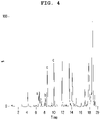
- soybean leaves treated with ethylene in a dark condition were extracted with ethanol to obtain an extract, which was separated and purified to obtain four isoflavone derivatives, daidzin, genistin, malonyl daidzin and malonyl genistin (see Figures 4 to 8 ).
- the present inventors performed quantitative analysis on four isoflavone derivatives, daidzin, genistin, malonyl daidzin and malonyl genistin, isolated from soybean leaves harvested after ethylene treatment in a dark condition. As a result, As a result, it was confirmed that the content of isoflavone derivatives was significantly increased in soybean leaves harvested after ethylene treatment in a dark condition compared to soybean leaves treated with ethephon. Therefore, it was confirmed that the method of harvesting soybean leaves after ethylene treatment in a dark condition is possible as a method for preparation of soybean leaves having a high content of an isoflavone derivative (see Table 7 and Figure 9 ).
- the present invention also provides a method for mass production of isoflavone derivatives from soybean leaves using ethylene in a dark condition.
- the method is preferably performed by a method comprising the following steps:
- the soybean leaves of step 1) are preferably soybean leaves 20 days or more after seeding, more preferably soybean leaves 50 days after seeding, and most preferably soybean leaves 20 to 60 days after seeding.
- the ethylene of step 1) can be treated before or after harvesting soybean leaves.
- the ethylene of step 1) is preferably treated at a concentration of 500 to 4000 ppm, and more preferably at a concentration of 2500 to 3500 ppm.
- the isoflavone derivative is preferably a compound represented by [Formula 1], and more preferably any one of the compounds represented by [Formula 2] to [Formula 5].
- soybean leaves having a high content of an isoflavone derivative are prepared by treating soybean leaves with ethylene in a dark condition, and the preparation method can be effectively used as a method for mass production of isoflavone derivatives.
- the present invention also provides a composition
- a composition comprising the soybean leaves having a high content of an isoflavone derivative prepared by treating with ethylene in a dark condition, an extract of the soybean leaves, or a fraction of the extract.
- the extract of soybean leaves or the fraction thereof is preferably prepared by a preparation method comprising the following steps, but not always limited thereto:
- the soybean leaves of step 1) are collected from soybean plants in which isoflavones are highly accumulated after treating with ethylene in a dark condition.
- the ethylene treatment is possible even after harvesting the plant, but it is more preferable to treat it before harvesting.
- Both the leaves or roots of the soybean plant treated with ethylene are available, and according to a preferred embodiment of the present invention, it is preferable to use soybean leaves, but not always limited thereto.
- the extraction solvent of step 1 it is preferable to use water, alcohol, or a mixture thereof as the extraction solvent of step 1). It is preferable to use a C1 to C2 lower alcohol as the alcohol, and it is preferable to use ethanol or methanol as the lower alcohol.
- the extraction method it is preferable to use shaking extraction, Soxhlet extraction or reflux extraction, but not always limited thereto. It is preferable to extract by adding the extraction solvent in an amount of 1 to 10 times the amount of dried soybean leaves, and it is more preferable to extract by adding in an amount of 4 to 6 times.
- the extraction temperature is preferably 20 °C to 100 °C, and more preferably 20 °C to 40 °C, but not always limited thereto.
- the extraction time is preferably 10 to 48 hours, more preferably 15 to 30 hours, and most preferably 24 hours, but not always limited thereto.
- the number of extractions is preferably 1 to 5 times, more preferably 3 to 4 times, and most preferably 3 times, but not always limited thereto.
- the concentration under reduced pressure in step 3) is preferably performed by using a vacuum concentrator or a vacuum rotary evaporator, but not always limited thereto. Drying is preferably performed by reduced-pressurized drying, vacuum drying, boiling drying, spray drying, or freeze drying, but not always limited thereto.
- the organic solvent is preferably n-hexane, chloroform, ethyl acetate or butanol, and more preferably chloroform according to a preferred embodiment of the present invention, but not always limited thereto.
- the fraction is preferably an n-hexane fraction, a chloroform fraction, an ethyl acetate fraction, a butanol fraction or a water fraction obtained by suspending the extract of soybean leaves in water and then sequentially fractionating thereof with n-hexane, chloroform, ethyl acetate, butanol and water, but not always limited thereto.
- the fraction can be obtained by repeating the fractionation process 1 to 5 times, preferably 3 times from the extract of soybean leaves, and it is preferable to concentrate under reduced pressure after the fractionation, but not always limited thereto.
- the present invention also provides a pharmaceutical composition
- a pharmaceutical composition comprising the soybean leaves having a high content of an isoflavone derivative prepared by treating with ethylene in a dark condition, an extract of the soybean leaves, or a fraction of the extract as an active ingredient for the prevention and treatment of a disease caused by estrogen deficiency.
- the disease caused by estrogen deficiency is preferably any one disease selected from the group consisting of osteoporosis, heart disease, breast cancer, vulvar disease, hyperlipidemia, skin aging, and hot flushes, but not always limited thereto.
- the physiological activity of the isoflavone derivatives isolated from the soybean leaves having a high content of isoflavones of the present invention has been well established. Therefore, the extract of soybean leaves and its fractions containing the above compounds can be effectively used as a pharmaceutical composition for the prevention and treatment of a disease caused by estrogen deficiency.
- composition of the present invention can further include suitable carriers, excipients and diluents generally used in the preparation of pharmaceutical compositions.
- composition of the present invention can be administered by orally or parenterally and the parenteral administration includes intraperitoneal injection, intrarectal injection, subcutaneous injection, intravenous injection, intramuscular injection or intrathoracic injection, but not always limited thereto.
- composition of the present invention can be formulated and used in the form of oral formulations such as powders, granules, tablets, capsules, suspensions, emulsions, syrups and aerosols; external preparations; suppositories and sterile injection solutions, suppositories, and sterile injection solutions according to the conventional method, respectively.
- the carriers, excipients and diluents that can be included in the composition of the present invention are exemplified by lactose, dextrose, sucrose, sorbitol, mannitol, xylitol, erythritol, maltitol, starch, acacia rubber, alginate, gelatin, calcium phosphate, calcium silicate, cellulose, methyl cellulose, microcrystalline cellulose, polyvinyl pyrrolidone, water, methylhydroxybenzoate, propylhydroxybenzoate, talc, magnesium stearate and mineral oil.
- composition of the present invention can be prepared by mixing with generally used diluents or excipients such as fillers, extenders, binders, wetting agents, disintegrating agents and surfactants.
- Solid formulations for oral administration are tablets, pills, powders, granules and capsules. These solid formulations are prepared by mixing the s mixed herbal medicine with one or more suitable excipients such as starch, calcium carbonate, sucrose or lactose, gelatin, etc. Except for the simple excipients, lubricants, for example magnesium stearate, talc, etc, can be used.
- Liquid formulations for oral administrations are suspensions, solutions, emulsions and syrups, and the above-mentioned formulations can contain various excipients such as wetting agents, sweeteners, aromatics and preservatives in addition to generally used simple diluents such as water and liquid paraffin.
- Formulations for parenteral administration are sterilized aqueous solutions, water-insoluble excipients, suspensions, emulsions, lyophilized preparations and suppositories.
- Water insoluble excipients and suspensions can contain, in addition to the active compound or compounds, propylene glycol, polyethylene glycol, vegetable oil like olive oil, injectable ester like ethylolate, etc.
- Suppositories can contain, in addition to the active compound or compounds, witepsol, macrogol, tween 61, cacao butter, laurin butter, glycerogelatin, etc.
- the preferred dosage of the composition of the present invention varies depending on the condition and weight of a patient, the severity of a disease, the drug form, the route of administration, and the duration, but can be appropriately determined by those skilled in the art.
- the composition can be preferably administered at 0.0001 to 1 g/kg per day, and more preferably at 0.001 to 200 mg/kg, but not always limited thereto.
- the administration frequency can be once a day or a few times a day. The above dosage cannot limit the scope of the invention in any way.
- the present invention also provides a health functional food comprising the soybean leaves having a high content of an isoflavone derivative prepared by treating with ethylene, an extract of the soybean leaves, or a fraction of the extract as an active ingredient for the prevention and amelioration of a disease caused by estrogen deficiency.
- the disease caused by estrogen deficiency is preferably any one disease selected from the group consisting of osteoporosis, heart disease, breast cancer, vulvar disease, hyperlipidemia, skin aging, and hot flushes, but not always limited thereto.
- the physiological activity of the isoflavone derivatives isolated from the soybean leaves having a high content of isoflavones of the present invention has been well established. Therefore, the extract of soybean leaves and its fractions containing the above compounds can be effectively used as a health functional food for the prevention and amelioration of a disease caused by estrogen deficiency.
- the health functional food of the present invention can be used by adding the soybean leaves having a high content of an isoflavone derivative, an extract of the soybean leaves, or a fraction of the extract as it is, or can be used together with other foods or food ingredients, and can be appropriately used according to the conventional method.
- health functional food indicates the food produced with the supplement of such nutrients that are often lack in daily diet or raw materials or components having a useful function for human body.
- the health functional food refers to food that helps maintain human health, but not always limited thereto, and is used in the sense of including any general health food.
- the form and type of the health functional food are not particularly limited.
- the health functional food can be in the form of tablets, capsules, powders, granules, liquids and pills.
- the health functional food can additionally include various flavors, sweetening agents or natural carbohydrates.
- the sweetening agents can be natural sweetening agents such as thaumatin and stevia extract, or synthetic sweetening agents such as saccharin and aspartame.
- the natural carbohydrates above can be monosaccharides, disaccharides, polysaccharides, oligosaccharides and glucose alcohols.
- the health functional food of the present invention can include in variety of nutrients, vitamins, minerals, flavors, coloring agents, pectic acid and its salts, alginic acid and its salts, organic acid, protective colloidal viscosifiers, pH regulators, stabilizers, antiseptics, glycerin, alcohols, etc. All the mentioned ingredients can be added singly or together. The mixing ratio of those ingredients does not matter in fact, but in general, each can be added by 001-0.1 weight part per 100 weight part of the composition of the present invention.
- the soybean leaves having a high content of an isoflavone derivative of the present invention, the extract of the soybean leaves, or the fraction of the extract can be added to food as it is or used together with other foods or food ingredients.
- the content of the added active ingredient can be determined according to the purpose of use.
- the active ingredient is preferably added to the health functional food by 0.01-90 weight part for the total weight of the food.
- the content can be lower than the above but higher content can be accepted as well since the active ingredient has been proved to be very safe.
- the present invention also provides a pharmaceutical composition for antioxidant, comprising the soybean leaves having a high content of an isoflavone derivative prepared by treating with ethylene in a dark condition, an extract of the soybean leaves, or a fraction of the extract as an active ingredient.
- the present invention also provides a health functional food for antioxidant, comprising the soybean leaves having a high content of an isoflavone derivative prepared by treating with ethylene in a dark condition, an extract of the soybean leaves, or a fraction of the extract as an active ingredient.
- the physiological activity of the isoflavone derivatives isolated from the soybean leaves having a high content of isoflavones of the present invention has been well established. Therefore, the extract of soybean leaves and its fractions containing the above compounds can be effectively used as an antioxidant composition.
- the present invention also provides a pharmaceutical composition for skin care, comprising the soybean leaves having a high content of an isoflavone derivative prepared by treating with ethylene in a dark condition, an extract of the soybean leaves, or a fraction of the extract as an active ingredient.
- the present invention also provides a cosmetic composition for skin care, comprising the soybean leaves having a high content of an isoflavone derivative prepared by treating with ethylene in a dark condition, an extract of the soybean leaves, or a fraction of the extract as an active ingredient.
- the present invention also provides a health functional food for skin care, comprising the soybean leaves having a high content of an isoflavone derivative prepared by treating with ethylene in a dark condition, an extract of the soybean leaves, or a fraction of the extract as an active ingredient.
- the physiological activity of the isoflavone derivatives isolated from the soybean leaves having a high content of isoflavones of the present invention has been well established. Therefore, the extract of soybean leaves and its fractions containing the above compounds can be effectively used as a composition for skin care.
- the cosmetic composition can be in the form of lotion, ointment, gel, cream, patch or spray, but not always limited thereto.
- a cosmetic composition comprising the soybean leaves having a high content of an isoflavone derivative of the present invention, an extract of the soybean leaves, or a fraction of the extract, the soybean leaves having a high content of an isoflavone derivative, the extract of the soybean leaves, or the fraction of the extract can be added to the usually contained composition for external application for skin at 3 to 30 weight part, preferably 5 or 20 weight part.
- the cosmetic composition of the present invention can include, in addition to the soybean leaves having a high content of an isoflavone derivative of the present invention, the extract of the soybean leaves, or the fraction of the extract, a supplement generally used in the field of skin science such as fatty substance, organic solvent, resolvent, concentrate, gelling agent, softener, antioxidant, suspending agent, stabilizer, foaming agent, odorant, surfactant, water, ionic or non-ionic emulsifying agent, filler, sequestering agent, chelating agent, preserving agent, vitamin, blocker, moisturing agent, essential oil, dye, pigment, hydrophilic or hydrophobic activator, lipid vesicle or other components generally used in cosmetics.
- a supplement generally used in the field of skin science such as fatty substance, organic solvent, resolvent, concentrate, gelling agent, softener, antioxidant, suspending agent, stabilizer, foaming agent, odorant, surfactant, water, ionic or non-ionic emulsifying agent
- the amount of the above supplement can be determined as generally accepted in the field of skin science.
- the present invention also provides a tea using the soybean leaves having a high content of an isoflavone derivative according to the present invention.
- the present invention also provides a mixed tea in which the soybean leaves having a high content of an isoflavone derivative according to the present invention and herbal plants having a flavor are mixed.
- the tea using the soybean leaves can be manufactured by a preparation method comprising the following steps:
- the pulverizing in step 1) is preferably conducted to a size of 1 to 5 mm using a crusher, but the size is not limited thereto.
- the roasting in step 2) is preferably conducted at a temperature of 250 °C to 300 °C for 30 to 60 minutes without burning, but the temperature and time are not limited thereto.
- the drying in step 3) is preferably conducted by natural drying or using a dryer at 30 °C to 50°C for 24 to 36 hours, but the temperature and time are not limited thereto.
- the herbal plant is preferably at least one selected from the group consisting of chamomile, lemongrass, rosehip, lavender, peppermint, fennel, rosemary, jasmine, hibiscus, rose flower, apple fruit, strawberry fruit, lemon fruit and orange flower. And any herb used for tea can be used as the herbal plant.
- the tea or mixed tea may be processed into a form selected from the group consisting of flavored tea, tea bag, instant tea and can.
- Soybean plants 10 to 15 days after seeding were transplanted into experimental pots, and cultivated for 50 to 60 days until the growth period R1.
- the cultivated soybean plant pots were placed in a closed space in a dark condition completely blocked from light and stabilized for 24 hours at a temperature of 30 °C and a humidity of 70%.
- 3000 ppm of ethylene was treated for 6 to 48 hours depending on the growth state of the soybean leaves (the degree of development of the cutin layer). Then, the soybean leaves were obtained immediately after the ethylene treatment and dried at 40 °C.
- the soybean leaves obtained by the method of ⁇ Example 1> were dried, and 50 ml of 90% ethanol was added to 1 g of the dried soybean leaves, followed by extraction at 40 °C while sonication. The extracted solvent was concentrated under reduced pressure to obtain an ethanol extract of soybean leaves in a yield of 15-20%.
- the soybean leaves obtained by the method of ⁇ Example 1> were dried, and 50 ml of 90% ethanol was added to 1 g of the dried soybean leaves, followed by extraction at 25°C for 5 days. The extracted solvent was concentrated under reduced pressure to obtain an ethanol extract of soybean leaves in a yield of 18-22%.
- the soybean leaves obtained by the method of ⁇ Example 1> were dried, and 50 ml of water was added to 1 g of the dried soybean leaves, followed by extraction with hot water at 100 °C for 24 hours. The extracted solvent was concentrated under reduced pressure to obtain a hot water extract of soybean leaves in a yield of 20-25%.
- HPLC analysis was performed with the extracts prepared in ⁇ Example 2-1> and ⁇ Example 3> to confirm the accumulation of isoflavone derivatives in the soybean leaves treated with ethylene in a dark condition.
- kaempferol glycoside was mainly identified as a metabolite in the soybean leaves not treated with ethylene ( Figure 1 ), and isoflavone derivatives were rapidly accumulated as shown in Figures 2 and 3 when ethylene was treated.
- daidzin (peak a), genistin (peak b), malonyl daidzin (peak c) and malonyl genistin (peak d) were detected at high concentrations in the ethanol extract of soybean leaves treated with ethylene in a dark condition.
- [M+H] + was found to be 417.1184 (theoretical value, 417.1186) in the high resolution mass spectrometry (HRESIMS) spectrum of the peak a in Figure 4 . From this, it was confirmed that the elemental composition was C 21 H 21 O 9 , which was consistent with that of daidzin.
- the fragment ion 255.0652 [M+H-248] was generated by the detachment of a glucosyl group from daidzin, and the peak a was identified as daidzin since it was consistent with daidzin shown in a reference ( J. Agric. Food Chem. 2016, 64, 7315-7324 ) ( Figure 5 ).
- [M+H] + was found to be 433.1133 (theoretical value, 433.1135) in the high resolution mass spectrometry (HRESIMS) spectrum of the peak b in Figure 4 . From this, it was confirmed that the elemental composition was C 21 H 21 O 10 , which was consistent with that of genistin.
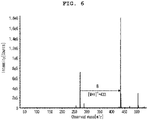
- the fragment ion 271.0602 [M+H-248] was generated by the detachment of a glucosyl group from genistin, and the peak b was identified as genistin since it was consistent with genistin shown in a reference ( J. Agric. Food Chem. 2016, 64, 7315-7324 ) ( Figure 6 ).
- [M+H] + was found to be 503.1195 (theoretical value, 503.1190) in the high resolution mass spectrometry (HRESIMS) spectrum of the peak c in Figure 4 . From this, it was confirmed that the elemental composition was C 24 H 23 O 12 , which was consistent with that of malonyl daidzin.
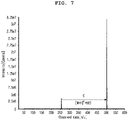
- the fragment ion 255.0653 [M+H-248] was generated by the detachment of a malonyl glucosyl group from malonyl daidzin, and the peak c was identified as malonyl daidzin since it was consistent with malonyl daidzin shown in a reference ( J. Agric. Food Chem. 2016, 64, 7315-7324 ) ( Figure 7 ).
- [M+H] + was found to be 519.1141 (theoretical value, 519.1139) in the high resolution mass spectrometry (HRESIMS) spectrum of the peak d in Figure 4 . From this, it was confirmed that the elemental composition was C 24 H 23 O 13 , which was consistent with that of malonyl genistin.
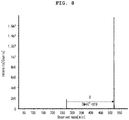
- the fragment ion 271.0604 [M+H-248] was generated by the detachment of a malonyl glucosyl group from malonyl genistin, and the peak d was identified as malonyl genistin since it was consistent with malonyl genistin shown in a reference ( J. Agric. Food Chem. 2016, 64, 7315-7324 ) ( Figure 8 ).
- the ethanol extract of Example 2-1 was filtered using a membrane filtration filter having a pore size of 0.2 ⁇ m, and then the total isoflavone amount according to the presence or absence of ethylene treatment, treatment concentration and time was measured.
- soybean plant pots for each experiment group were prepared in the same manner and conditions as in Example 1. Soybean leaves were obtained immediately after treating 800 ppm of ethephon to the soybean plant pots cultivated in a light condition at a temperature of 28 ⁇ 10 °C for 96 hours, and then dried thereof at 40 °C. The cultivated soybean plant pots were placed in a closed space in a dark condition completely blocked from light and stabilized for 24 hours at a temperature of 30 °C and a humidity of 60%, and then 3000 ppm of ethylene was treated for 24 hours. Immediately after the treatment, soybean leaves were obtained and dried at 40 °C. The obtained dried soybean leaves were treated under the same conditions and methods as in Experimental Example 3 to prepare an ethanol extract of soybean leaves, and quantitative analysis was performed on the content of isoflavone derivatives.
- the soybean leaves treated with 800 ppm of ethephon in a light condition contained 13500 ⁇ g/g of isoflavone derivatives
- the soybean leaves treated with 3000 ppm of ethylene in a dark condition contained 26500 ⁇ g/g of total isoflavone derivatives. Therefore, it was confirmed that the content of isoflavone derivatives was increased by about two times when ethylene was treated in a dark condition. In addition, it was confirmed that the standard deviation of the average value of the isoflavone derivative content was reduced to 1/4 when ethylene was treated in a dark condition, so that the homogeneity of the standard deviation was improved.
- soybean leaves having a high content of an isoflavone derivative of the present invention an extract of the soybean leaves or a fraction of the extract 0.1 g Lactose 1.5 g Talc 0.5 g
- Powders were prepared by mixing all the above components, which were filled in airtight packs according to the conventional method for preparing powders.
- soybean leaves having a high content of an isoflavone derivative of the present invention an extract of the soybean leaves or a fraction of the extract 0.1 g Lactose 7.9 g Crystalline cellulose 1.5 g Magnesium stearate 0.5 g
- tablets were prepared by direct tableting method.
- soybean leaves having a high content of an isoflavone derivative of the present invention an extract of the soybean leaves or a fraction of the extract 0.1 g Corn starch 5 g Carboxy cellulose 4.9 g
- Powders were prepared by mixing all the above components, and the powders were filled in hard capsules to prepare capsules according to the conventional method for preparing capsules.
- Injectable solutions were prepared by mixing all the above components, putting the mixture into 2 ml ampoules by the conventional method for preparing injectable solutions.
- soybean leaves having a high content of an isoflavone derivative of the present invention an extract of the soybean leaves or a fraction of the extract 0.1 g Isomerized sugar 10 g Mannitol 5 g Purified water proper amount
- a mixed tea was prepared by mixing the soybean leaves having a high content of an isoflavone derivative of the present invention, an extract of the soybean leaves or a fraction of the extract and an herbal plant having flavor.
- an extract of the soybean leaves or a fraction of the extract was added to wheat flour, and the mixture was used to prepare breads, cakes, cookies, crackers and noodles.
- an extract of the soybean leaves or a fraction of the extract was added to soups and gravies. Health enhancing meat products, soups and gravies were prepared with this mixture by the conventional method.
- Health enhancing ground beef was prepared by mixing 10 weight part of the soybean leaves having a high content of an isoflavone derivative of the present invention, an extract of the soybean leaves or a fraction of the extract with ground beef according to the conventional method.
- an extract of the soybean leaves or a fraction of the extract was added to milk.
- Health enhancing dairy products such as butter and ice cream were prepared with the milk mixture according to the conventional method.
- Brown rice, barley, glutinous rice and Yulmu (Job's tears) were gelatinized according to the conventional method, dried and pulverized to obtain 60-mesh powders.
- Black soybean, black sesame and wild sesame were steamed and dried according to the conventional method and pulverized to obtain 60-mesh powders.
- soybean leaves having a high content of an isoflavone derivative of the present invention an extract of the soybean leaves or a fraction of the extract was concentrated under reduced pressure, spraydried and pulverized to obtain 60-mesh dry powders.
- Sun-Sik was prepared by mixing the dry powders of the grains, seeds and the soybean leaves having a high content of an isoflavone derivative of the present invention, an extract of the soybean leaves or a fraction of the extract according to the below ratio.
- soybean leaves having a high content of an isoflavone derivative of the present invention an extract of the soybean leaves or a fraction of the extract 100 mg Citric acid 100 mg Oligosaccharide 100 mg Maesil (Prunus mume) extract 2 mg Taurine 100 mg Purified water up to 500 ml
- the above constituents were mixed according to the conventional method for preparing health beverages.
- the mixture was heated at 85 °C for 1 hour with stirring and then filtered.
- the filtrate was loaded in 1 l sterilized containers, which were sealed and sterilized again, stored in a refrigerator until they would be used for the preparation of a composition for health beverages.
- composition ratio can be adjusted regional and ethnic preferences such as the demanding class, the demanding country, and the purpose of use.
- soybean leaves having a high content of an isoflavone derivative of the present invention an extract of the soybean leaves or a fraction of the extract 4.6 weight part Cetostearyl alcohol 2.8 weight part Beeswax 2.6 weight part Stearic acid 1.4 weight part Glyceryl monostearate, lipophilic 2 weight part PEG-100 stearate 1 weight part Sorbitan sesquioleate 1.4 weight part Jojoba oil 4 weight part Squalene 3.8 weight part Polysorbate 1.1 weight part Macadamia oil 2 weight part Tocopherol acetate 0.2 weight part Methylpolysiloxane 0.4 weight part Ethyl paraben 0.1 weight part Propyl paraben 0.1 weight part Euxyl K-400 0.1 weight part 1,3-Butyleneglycol 7 weight part Methyl paraben 0.05 weight part Glycerine 6 weight part D-panthenol 0.2 weight part Triethanolamine 0.2 weight part pt 41891 0.2 weight part p-H
- the soybean leaves having a high content of an isoflavone derivative of the present invention, an extract of the soybean leaves or a fraction of the extract 3.5 weight part Cetostearyl alcohol 1.6 weight part Stearic acid 1.4 weight part Glyceryl monostearate, lipophilic 1.8 weight part PEG-100 stearate 2.6 weight part Sorbitan sesquioleate 0.6 weight part Squalene 4.8 weight part Macadamia oil 2 weight part Jojoba oil 2 weight part Tocopherol acetate 0.4 weight part Methylpolysiloxane 0.2 weight part Ethyl paraben 0.1 weight part Propyl paraben 0.1 weight part 1,3-Butyleneglycol 4 weight part Methyl paraben 0.1 weight part Xanthan gum 0.1 weight part Glycerine 4 weight part D-panthenol 0.15 weight part Allantoin 0.1 weight part Carbomer (2% aq. Sol) 4 weight part Triethanolamine 0.15 weight part Ethanol 3 weight
Landscapes
- Health & Medical Sciences (AREA)
- Life Sciences & Earth Sciences (AREA)
- Chemical & Material Sciences (AREA)
- Engineering & Computer Science (AREA)
- Botany (AREA)
- General Health & Medical Sciences (AREA)
- Veterinary Medicine (AREA)
- Public Health (AREA)
- Animal Behavior & Ethology (AREA)
- Food Science & Technology (AREA)
- Organic Chemistry (AREA)
- Polymers & Plastics (AREA)
- Natural Medicines & Medicinal Plants (AREA)
- Environmental Sciences (AREA)
- Mycology (AREA)
- Developmental Biology & Embryology (AREA)
- Physical Education & Sports Medicine (AREA)
- Medicinal Chemistry (AREA)
- Pharmacology & Pharmacy (AREA)
- Epidemiology (AREA)
- Chemical Kinetics & Catalysis (AREA)
- General Chemical & Material Sciences (AREA)
- Nutrition Science (AREA)
- Biotechnology (AREA)
- Physiology (AREA)
- Nuclear Medicine, Radiotherapy & Molecular Imaging (AREA)
- Bioinformatics & Cheminformatics (AREA)
- Rheumatology (AREA)
- Orthopedic Medicine & Surgery (AREA)
- Birds (AREA)
- Microbiology (AREA)
- Molecular Biology (AREA)
- Biochemistry (AREA)
- Cardiology (AREA)
- Heart & Thoracic Surgery (AREA)
- Alternative & Traditional Medicine (AREA)
- Medical Informatics (AREA)
- Proteomics, Peptides & Aminoacids (AREA)
- Genetics & Genomics (AREA)
- Dermatology (AREA)
Applications Claiming Priority (2)
| Application Number | Priority Date | Filing Date | Title |
|---|---|---|---|
| KR1020190090238A KR102282625B1 (ko) | 2019-07-25 | 2019-07-25 | 암조건(dark condition)에서 이소플라본 유도체 고함량 콩잎의 제조방법 및 상기 방법으로 제조된 이소플라본 유도체 고함량 콩잎 |
| PCT/KR2020/009766 WO2021015583A2 (ko) | 2019-07-25 | 2020-07-24 | 암조건에서 이소플라본 유도체 고함량 콩잎의 제조방법 및 상기 방법으로 제조된 이소플라본 유도체 고함량 콩잎 |
Publications (4)
| Publication Number | Publication Date |
|---|---|
| EP4005372A2 true EP4005372A2 (de) | 2022-06-01 |
| EP4005372A4 EP4005372A4 (de) | 2022-12-07 |
| EP4005372B1 EP4005372B1 (de) | 2026-04-08 |
| EP4005372C0 EP4005372C0 (de) | 2026-04-08 |
Family
ID=74192899
Family Applications (1)
| Application Number | Title | Priority Date | Filing Date |
|---|---|---|---|
| EP20843249.2A Active EP4005372B1 (de) | 2019-07-25 | 2020-07-24 | Verfahren zur herstellung eines sojabohnenblattes mit hohem gehalt an isoflavonderivat im dunkelzustand und sojabohnenblatt mit einem hohen gehalt an so hergestelltem isoflavonderivat |
Country Status (4)
| Country | Link |
|---|---|
| US (1) | US11647710B2 (de) |
| EP (1) | EP4005372B1 (de) |
| KR (1) | KR102282625B1 (de) |
| WO (1) | WO2021015583A2 (de) |
Families Citing this family (3)
| Publication number | Priority date | Publication date | Assignee | Title |
|---|---|---|---|---|
| KR102894138B1 (ko) * | 2021-11-15 | 2025-12-02 | 경상국립대학교산학협력단 | 스마트-대사체 챔버를 이용한 이소플라본 유도체가 증진된 콩 식물체 재배방법 |
| KR102879558B1 (ko) * | 2022-12-30 | 2025-10-31 | 경상국립대학교산학협력단 | 이소플라본 유도체가 증진된 녹두 잎의 재배방법 및 그 이용 |
| KR102810188B1 (ko) | 2024-07-08 | 2025-05-22 | 주식회사 에이치이엠파마 | Pmas 기술을 이용한 이퀄 생성자 여부 스크리닝 방법 |
Family Cites Families (4)
| Publication number | Priority date | Publication date | Assignee | Title |
|---|---|---|---|---|
| JP2007520230A (ja) * | 2004-02-06 | 2007-07-26 | コンク ユニヴァーシティ インダストリアル コーペレーション コープ | 高濃度イソフラボンを含む発芽豆及びその製造方法 |
| KR100549494B1 (ko) | 2004-04-28 | 2006-02-08 | 학교법인 건국대학교 | 이소플라본 강화 발아 콩 및 그 제조방법 |
| KR101451298B1 (ko) * | 2013-12-13 | 2014-10-16 | 경상대학교산학협력단 | 이소플라본 유도체 고함량 콩잎 및 그 제조방법 |
| CN106047889B (zh) | 2016-06-03 | 2019-09-24 | 吉林大学 | 大豆myb转录因子基因提高大豆异黄酮生物合成的应用 |
-
2019
- 2019-07-25 KR KR1020190090238A patent/KR102282625B1/ko active Active
-
2020
- 2020-07-24 WO PCT/KR2020/009766 patent/WO2021015583A2/ko not_active Ceased
- 2020-07-24 EP EP20843249.2A patent/EP4005372B1/de active Active
- 2020-07-24 US US17/630,007 patent/US11647710B2/en active Active
Also Published As
| Publication number | Publication date |
|---|---|
| US20220256796A1 (en) | 2022-08-18 |
| KR20210013672A (ko) | 2021-02-05 |
| EP4005372B1 (de) | 2026-04-08 |
| EP4005372C0 (de) | 2026-04-08 |
| EP4005372A4 (de) | 2022-12-07 |
| KR102282625B1 (ko) | 2021-07-29 |
| US11647710B2 (en) | 2023-05-16 |
| WO2021015583A2 (ko) | 2021-01-28 |
| WO2021015583A3 (ko) | 2021-03-18 |
Similar Documents
| Publication | Publication Date | Title |
|---|---|---|
| KR101651833B1 (ko) | 감귤류 과피 추출물을 포함하는 탈모 방지 또는 발모 촉진용 조성물 | |
| KR101174497B1 (ko) | 새싹보리 유래 폴리페놀계 화합물을 함유하는 추출물 및 이의 제조방법 | |
| KR101451298B1 (ko) | 이소플라본 유도체 고함량 콩잎 및 그 제조방법 | |
| EP4005372B1 (de) | Verfahren zur herstellung eines sojabohnenblattes mit hohem gehalt an isoflavonderivat im dunkelzustand und sojabohnenblatt mit einem hohen gehalt an so hergestelltem isoflavonderivat | |
| WO2008147141A1 (en) | A method for preparing novel black-red ginseng and the extract therefrom and the composition comprising the extract isolated therefrom | |
| KR102239784B1 (ko) | 엉겅퀴 및 모링가의 온천수 발효 추출물의 혼합물을 포함하는 화장료 조성물 | |
| KR101734896B1 (ko) | 감나무 추출물을 유효성분으로 포함하는 각막 손상의 예방, 개선 또는 치료용 조성물 | |
| KR101125224B1 (ko) | 센티페드그라스 추출물 또는 이의 분획물을 유효성분으로 함유하는 피부 노화방지용 조성물 | |
| KR101415170B1 (ko) | 자외선에 의한 피부손상의 예방 및 치료용 조성물 | |
| KR100921971B1 (ko) | 블루밍샐리 추출물을 유효성분으로 함유하는 조성물 | |
| JP6364085B2 (ja) | イソフラボン誘導体含量の高い豆葉部又は豆茎部及びそれを作製する方法 | |
| KR101607188B1 (ko) | 이소플라본 유도체 고함량 콩줄기 및 그 제조 방법 | |
| KR20140002577A (ko) | 황기 추출물을 포함하는 피부 자극 또는 피부 염증 완화용 조성물 | |
| KR101925420B1 (ko) | 요산 배출용 디노익산 화합물 및 이의 유도체, 및 이를 포함하는 조성물 | |
| KR102849419B1 (ko) | 감귤 신품종 옐로우볼의 과피로부터 분리된 신규 화합물을 유효성분으로 함유하는 항산화 및 항염증용 조성물 | |
| KR102894138B1 (ko) | 스마트-대사체 챔버를 이용한 이소플라본 유도체가 증진된 콩 식물체 재배방법 | |
| KR102810611B1 (ko) | 유방암 세포 생육 억제 효과를 갖는 신규 하이드록실화 이소플라본 유도체 및 이를 생산하는 곰팡이 | |
| KR102879558B1 (ko) | 이소플라본 유도체가 증진된 녹두 잎의 재배방법 및 그 이용 | |
| KR20180120120A (ko) | 마리안 플럼 추출물을 유효성분으로 함유하는 피부 항노화 및 보습용 조성물 | |
| KR20130039470A (ko) | 백미증법을 이용한 인삼 추출물의 추출방법 | |
| JP2019014753A (ja) | 抗糖化用組成物 | |
| KR20040048225A (ko) | 콩의 부산물로부터의 이소플라본 함유 추출물의 제조방법및 그에 의해 수득되는 추출물을 함유하는 약학 제제 및건강보조식품 | |
| KR101487598B1 (ko) | 미숙 떫은 감의 분획물을 이용한 탈모 방지 및 양모용 조성물 | |
| KR101535638B1 (ko) | 타이로시네이즈 저해 활성을 가지는 신규화합물 | |
| KR20130002943A (ko) | 알디시아 팅크토리아 추출물 또는 이의 분획물을 유효성분으로 함유하는 노화방지용 조성물 |
Legal Events
| Date | Code | Title | Description |
|---|---|---|---|
| STAA | Information on the status of an ep patent application or granted ep patent |
Free format text: STATUS: THE INTERNATIONAL PUBLICATION HAS BEEN MADE |
|
| PUAI | Public reference made under article 153(3) epc to a published international application that has entered the european phase |
Free format text: ORIGINAL CODE: 0009012 |
|
| STAA | Information on the status of an ep patent application or granted ep patent |
Free format text: STATUS: REQUEST FOR EXAMINATION WAS MADE |
|
| 17P | Request for examination filed |
Effective date: 20220224 |
|
| AK | Designated contracting states |
Kind code of ref document: A2 Designated state(s): AL AT BE BG CH CY CZ DE DK EE ES FI FR GB GR HR HU IE IS IT LI LT LU LV MC MK MT NL NO PL PT RO RS SE SI SK SM TR |
|
| DAV | Request for validation of the european patent (deleted) | ||
| DAX | Request for extension of the european patent (deleted) | ||
| A4 | Supplementary search report drawn up and despatched |
Effective date: 20221109 |
|
| RIC1 | Information provided on ipc code assigned before grant |
Ipc: A61K 8/9789 20170101ALI20221103BHEP Ipc: A61K 31/352 20060101ALI20221103BHEP Ipc: A61K 36/48 20060101ALI20221103BHEP Ipc: A23L 33/105 20160101ALI20221103BHEP Ipc: A23F 3/14 20060101ALI20221103BHEP Ipc: C07D 311/36 20060101ALI20221103BHEP Ipc: A01H 6/54 20180101ALI20221103BHEP Ipc: A01H 5/12 20180101ALI20221103BHEP Ipc: A01H 3/04 20060101ALI20221103BHEP Ipc: A01H 3/02 20060101AFI20221103BHEP |
|
| STAA | Information on the status of an ep patent application or granted ep patent |
Free format text: STATUS: EXAMINATION IS IN PROGRESS |
|
| 17Q | First examination report despatched |
Effective date: 20240523 |
|
| GRAP | Despatch of communication of intention to grant a patent |
Free format text: ORIGINAL CODE: EPIDOSNIGR1 |
|
| STAA | Information on the status of an ep patent application or granted ep patent |
Free format text: STATUS: GRANT OF PATENT IS INTENDED |
|
| INTG | Intention to grant announced |
Effective date: 20260126 |
|
| GRAS | Grant fee paid |
Free format text: ORIGINAL CODE: EPIDOSNIGR3 |
|
| GRAA | (expected) grant |
Free format text: ORIGINAL CODE: 0009210 |
|
| STAA | Information on the status of an ep patent application or granted ep patent |
Free format text: STATUS: THE PATENT HAS BEEN GRANTED |
|
| AK | Designated contracting states |
Kind code of ref document: B1 Designated state(s): AL AT BE BG CH CY CZ DE DK EE ES FI FR GB GR HR HU IE IS IT LI LT LU LV MC MK MT NL NO PL PT RO RS SE SI SK SM TR |
|
| RAP3 | Party data changed (applicant data changed or rights of an application transferred) |
Owner name: INDUSTRY-ACADEMIC COOPERATION FOUNDATIONGYEONGSANG NATIONAL UNIVERSITY |
|
| REG | Reference to a national code |
Ref country code: CH Ref legal event code: F10 Free format text: ST27 STATUS EVENT CODE: U-0-0-F10-F00 (AS PROVIDED BY THE NATIONAL OFFICE) Effective date: 20260408 Ref country code: GB Ref legal event code: FG4D |
|
| REG | Reference to a national code |
Ref country code: DE Ref legal event code: R096 Ref document number: 602020070157 Country of ref document: DE |
|
| U01 | Request for unitary effect filed |
Effective date: 20260409 |