EP4006222A1 - Procédé de fabrication d'une étoffe double couche empêchant la pénétration d'eau et étoffe double couche - Google Patents
Procédé de fabrication d'une étoffe double couche empêchant la pénétration d'eau et étoffe double couche Download PDFInfo
- Publication number
- EP4006222A1 EP4006222A1 EP21171874.7A EP21171874A EP4006222A1 EP 4006222 A1 EP4006222 A1 EP 4006222A1 EP 21171874 A EP21171874 A EP 21171874A EP 4006222 A1 EP4006222 A1 EP 4006222A1
- Authority
- EP
- European Patent Office
- Prior art keywords
- yarn
- surface layer
- textures
- fusible
- penetration
- Prior art date
- Legal status (The legal status is an assumption and is not a legal conclusion. Google has not performed a legal analysis and makes no representation as to the accuracy of the status listed.)
- Withdrawn
Links
Images





Classifications
-
- D—TEXTILES; PAPER
- D04—BRAIDING; LACE-MAKING; KNITTING; TRIMMINGS; NON-WOVEN FABRICS
- D04B—KNITTING
- D04B1/00—Weft knitting processes for the production of fabrics or articles not dependent on the use of particular machines; Fabrics or articles defined by such processes
- D04B1/14—Other fabrics or articles characterised primarily by the use of particular thread materials
- D04B1/16—Other fabrics or articles characterised primarily by the use of particular thread materials synthetic threads
-
- D—TEXTILES; PAPER
- D04—BRAIDING; LACE-MAKING; KNITTING; TRIMMINGS; NON-WOVEN FABRICS
- D04B—KNITTING
- D04B1/00—Weft knitting processes for the production of fabrics or articles not dependent on the use of particular machines; Fabrics or articles defined by such processes
- D04B1/22—Weft knitting processes for the production of fabrics or articles not dependent on the use of particular machines; Fabrics or articles defined by such processes specially adapted for knitting goods of particular configuration
- D04B1/24—Weft knitting processes for the production of fabrics or articles not dependent on the use of particular machines; Fabrics or articles defined by such processes specially adapted for knitting goods of particular configuration wearing apparel
-
- D—TEXTILES; PAPER
- D10—INDEXING SCHEME ASSOCIATED WITH SUBLASSES OF SECTION D, RELATING TO TEXTILES
- D10B—INDEXING SCHEME ASSOCIATED WITH SUBLASSES OF SECTION D, RELATING TO TEXTILES
- D10B2331/00—Fibres made from polymers obtained otherwise than by reactions only involving carbon-to-carbon unsaturated bonds, e.g. polycondensation products
- D10B2331/04—Fibres made from polymers obtained otherwise than by reactions only involving carbon-to-carbon unsaturated bonds, e.g. polycondensation products polyesters, e.g. polyethylene terephthalate [PET]
-
- D—TEXTILES; PAPER
- D10—INDEXING SCHEME ASSOCIATED WITH SUBLASSES OF SECTION D, RELATING TO TEXTILES
- D10B—INDEXING SCHEME ASSOCIATED WITH SUBLASSES OF SECTION D, RELATING TO TEXTILES
- D10B2331/00—Fibres made from polymers obtained otherwise than by reactions only involving carbon-to-carbon unsaturated bonds, e.g. polycondensation products
- D10B2331/10—Fibres made from polymers obtained otherwise than by reactions only involving carbon-to-carbon unsaturated bonds, e.g. polycondensation products polyurethanes
-
- D—TEXTILES; PAPER
- D10—INDEXING SCHEME ASSOCIATED WITH SUBLASSES OF SECTION D, RELATING TO TEXTILES
- D10B—INDEXING SCHEME ASSOCIATED WITH SUBLASSES OF SECTION D, RELATING TO TEXTILES
- D10B2401/00—Physical properties
- D10B2401/02—Moisture-responsive characteristics
- D10B2401/021—Moisture-responsive characteristics hydrophobic
-
- D—TEXTILES; PAPER
- D10—INDEXING SCHEME ASSOCIATED WITH SUBLASSES OF SECTION D, RELATING TO TEXTILES
- D10B—INDEXING SCHEME ASSOCIATED WITH SUBLASSES OF SECTION D, RELATING TO TEXTILES
- D10B2401/00—Physical properties
- D10B2401/04—Heat-responsive characteristics
- D10B2401/041—Heat-responsive characteristics thermoplastic; thermosetting
-
- D—TEXTILES; PAPER
- D10—INDEXING SCHEME ASSOCIATED WITH SUBLASSES OF SECTION D, RELATING TO TEXTILES
- D10B—INDEXING SCHEME ASSOCIATED WITH SUBLASSES OF SECTION D, RELATING TO TEXTILES
- D10B2403/00—Details of fabric structure established in the fabric forming process
- D10B2403/01—Surface features
- D10B2403/011—Dissimilar front and back faces
- D10B2403/0112—One smooth surface, e.g. laminated or coated
-
- D—TEXTILES; PAPER
- D10—INDEXING SCHEME ASSOCIATED WITH SUBLASSES OF SECTION D, RELATING TO TEXTILES
- D10B—INDEXING SCHEME ASSOCIATED WITH SUBLASSES OF SECTION D, RELATING TO TEXTILES
- D10B2403/00—Details of fabric structure established in the fabric forming process
- D10B2403/01—Surface features
- D10B2403/011—Dissimilar front and back faces
- D10B2403/0114—Dissimilar front and back faces with one or more yarns appearing predominantly on one face, e.g. plated or paralleled yarns
-
- D—TEXTILES; PAPER
- D10—INDEXING SCHEME ASSOCIATED WITH SUBLASSES OF SECTION D, RELATING TO TEXTILES
- D10B—INDEXING SCHEME ASSOCIATED WITH SUBLASSES OF SECTION D, RELATING TO TEXTILES
- D10B2403/00—Details of fabric structure established in the fabric forming process
- D10B2403/02—Cross-sectional features
- D10B2403/021—Lofty fabric with equidistantly spaced front and back plies, e.g. spacer fabrics
-
- D—TEXTILES; PAPER
- D10—INDEXING SCHEME ASSOCIATED WITH SUBLASSES OF SECTION D, RELATING TO TEXTILES
- D10B—INDEXING SCHEME ASSOCIATED WITH SUBLASSES OF SECTION D, RELATING TO TEXTILES
- D10B2501/00—Wearing apparel
- D10B2501/04—Outerwear; Protective garments
Definitions
- the present invention relates to a method for manufacturing a water-penetration-preventing double-layer fabric and a double-layer fabric, and more particularly to a method for heating and melting one of surface layer textures to form a barrier layer for manufacturing a double-layer fabric capable of preventing water penetration and a double-layer fabric.
- GORE-TEX film As a type of product is coated with GORE-TEX film on a surface of the fabric to achieve water blocking effect.
- GORE-TEX film tends to lose its waterproof effect after a long time usage, and the materials used in GORE-TEX film are special, which make the costs of waterproof fabrics made of GORE-TEX film expensive.
- waterproof glue or waterproof film made of plastic materials. Although the cost of this type of waterproof glue or waterproof film is lower than that of GORE-TEX film and can be commonly found in the market, however, after this type of fabric is coated with waterproof glue or waterproof film, the fabric will harden as the waterproof glue or waterproof film cures, causing the consumers to be unable to have a good, comfortable and soft feeling with this type of waterproof fabric worn on the body.
- a main object of the present invention is to solve the problems of aging or limited effectiveness over a period of time, and high cost of the conventional GORE-TEX film.
- Another object of the present invention is to solve the problem that the waterproof mechanism adopted by a waterproof fabric being incapable of providing a feeling of softness and comfort.
- the present invention provides a method for manufacturing a water-penetration-preventing double-layer fabric, comprising steps of:
- step two the cross-linked texture is formed with the current yarns used for knitting the two surface layer textures or formed with an another yarn additionally fed.
- the another yarn additionally fed is selected from a group consisting of a first yarn type, a second yarn type and a third yarn type, wherein:
- a material of the fusible yarn is selected from polypropylene (PP) or thermoplastic polyurethane (TPU).
- a temperature for heating and pressing one side of the intermediate product is between 110°C and 190°C.
- step four when in step four, applying negative pressure to one of the two surface layer textures that has not been heated and pressed.
- step four locally heating and pressing one of the two surface layer textures which is heated and pressed with high frequency.
- the present invention further provides a water-penetration-preventing double-layer fabric, comprising:
- the cross-linked texture is formed with the yarns used for knitting the two surface layer textures or formed with an another yarn additionally fed.
- the another yarn additionally fed is selected from a group consisting a first yarn type, a second yarn type and a third yarn type, wherein in the first yarn type, the another yarn additionally fed is the base yarn; in the second yarn type, the another yarn additionally fed is the fusible yarn; and in the third yarn type, the another yarn additionally fed is composed of the base yarn and the fusible yarn.
- a material of the fusible yarn is selected from polypropylene (PP) or thermoplastic polyurethane (TPU).
- the present invention has the following features: one of the two surface layer textures is heated and pressed to make the fusible yarn to which the surface layer texture belongs to be melted to form the barrier layer capable of blocking water penetration, and a thickness of the cross-linked texture causes an increased temperature of one of the two surface layer textures that has not been heated and pressed not higher than a melting point of the fusible yarn during the heating and pressing process, thereby making the double-layer fabric capable of maintaining a softness of the fabric while providing a waterproof effect.
- the present invention provides a method 10 for manufacturing a water-penetration-preventing double-layer fabric, the method 10 comprising the following steps.
- Step one 11 knitting two surface layer textures 21 with current yarns, wherein the current yarns are selected from a group consisting of a base yarn 211, a fusible yarn 212 and a combination thereof, a melting point of the base yarn 211 is higher than a melting point of the fusible yarn 212, and the two surface layer textures 21 are selected from a first implementation type and a second implementation type.
- the first implementation type each of the two surface layer textures 21 comprising the base yarn 211 and the fusible yarn 212.
- the second implementation type one of the two surface layer textures 21 being formed with the base yarn 211, and the other of the two surface layer textures 21 being formed with the fusible yarn 212.
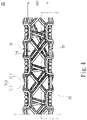
- Step two 12 forming a cross-linked texture 24 by continuously cross-linking the two surface layer textures 21 through a tuck knitting or a transfer knitting, and generating a yarn-stacked thickness 241 during knitting at a reserved space between the two surface layer textures 21 to extend a heat conduction path of the cross-linked texture 24.
- Step three 13 completing an intermediate product, wherein the intermediate product is a double-layer fabric 20.
- Step four 14 heating and pressing one side of the intermediate product to melt the fusible yarn 212 in one of the two surface layer textures 21 which is heated and pressed and to form a barrier layer 25 which prevents water penetration, wherein during heating and pressing the cross-linked texture 24, an increased temperature of one of the two surface layer textures 21 that has not been heated and pressed is not higher than the melting point of the fusible yarn 212 due to the yarn-stacked thickness 241.
- the knitting related steps in the method 10 of the present invention are all completed by knitting using a flat knitting machine, and are realized by a front bed (FB) and a back bed (BB) comprised by the flat knitting machine.
- FB front bed
- BB back bed
- Specific structures of the front bed and the back bed are conventional techniques in the art, and will not be described here.
- the present invention will describe the two surface layer textures 21 in detail hereinafter, so the first implementation type and the second implementation type of the two surface layer textures 21 will be described hereinafter.
- the two surface layer textures 21 which are the first implementation type are described.
- the two surface layer textures 21 are knitted by the current yarn through the flat knitting machine.
- the current yarn includes a base yarn 211 and a fusible yarn 212.
- the base yarn 211 can actually be an ordinary cotton yarn.
- a melting point of the fusible yarn 212 is lower than that of the base yarn 211, and the fusible yarn 212 can be made of a thermally fusible material, so that the fusible yarn 212 is melted by heat when being heated.
- a material of the fusible yarn 212 is selected from polypropylene (PP) or thermoplastic polyurethane (TPU).
- step two 12 the flat knitting machine continuously cross-links the two surface layer textures 21 by the tuck knitting or the transfer knitting to form the cross-linked texture 24.
- the cross-linked texture 24 described herein actually only cross-links the two surface layer textures 21, and does not have a function of supporting the two surface layer textures 21, that is, the cross-linked texture 24 is different from the support yarn texture described by those with ordinary skill in the art.
- the cross-linked texture 24 depicted in FIG. 4 herein is only for illustration, and the cross-linked texture 24 can actually be formed by stacking and interlacing multiple yarns, thereby enabling the two surface layer textures 21 to be tightly cross-linked.
- the flat knitting machine makes a reserved space between the two surface layer textures 21 generate the yarn-stacked thickness 241 to enable the cross-linked texture 24 capable of extending a path of heat conduction.
- the intermediate product is a semi-finished product of the present invention, that is, the double-layer fabric 20 that has not been heated and pressed.
- the intermediate product is a semi-finished product of the present invention, that is, the double-layer fabric 20 that has not been heated and pressed.
- step four 14 using a heating and pressing equipment capable of providing a heat source to heat and press one side of the double-layer fabric 20, wherein the heating and pressing equipment can heat and press one side of the double-layer fabric 20 at the same time, or heating and pressing are performed separately on the double-layer fabric 20, and a heating temperature can be set in a range between 110°C and 190°C.
- the fusible yarn 212 to which the surface layer structure 21 belongs is melted by heat to form the barrier layer 25, and the barrier layer 25 is capable of preventing water from penetrating from one of the surface layer textures 21 to the other of the surface layer textures 21.
- the surface layer texture 21 after being heated and pressed further transfers heat energy toward the cross-linked texture 24, so that a part of the cross-linked texture 24 adjacent to one of the surface layer textures 21 being heated and pressed is also melted by heat.
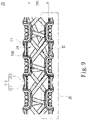
- step one 51 the flat knitting machine knits the two surface layer textures 21 with the base yarn 211 and the fusible yarn 212 respectively. That is, after knitting of the two surface layer textures 21 is completed, one of the two surface layer textures 21 is the base yarn 211 (as indicated by reference number 214), and the other of the two surface layer textures 21 is the fusible yarn 212 (as indicated by reference number 215).
- the base yarn 211 can actually be an ordinary cotton yarn, a melting point of the fusible yarn 212 is lower than that of the base yarn 211, and the fusible yarn 212 can be made of a thermally fusible material, so that the fusible yarn 212 is melted by heat when being heated.
- a material of the fusible yarn 212 is selected from polypropylene (PP) or thermoplastic polyurethane (TPU).
- the intermediate product is a semi-finished product of the present invention, that is, the double-layer fabric 20 that has not been heated and pressed.
- the heating and pressing equipment capable of providing a heat source to heat and press the one formed by the fusible yarn 212 of the two surface layer texture 21 (as indicated by reference number 215), wherein the heating and pressing equipment can heat and press the one formed by the fusible yarn 212 of the two surface layer texture 21 (as indicated by reference number 215) at the same time, or heat and press the one formed by the fusible yarn 212 of the two surface layer texture 21 (as indicated by reference number 215) separately.
- a heating temperature applied by the heating and pressing equipment is in a range between 110°C and 190°C.
- the one formed by the fusible yarn 212 of the two surface layer texture 21 (as indicated by reference number 215) further transfers heat energy toward the cross-linked texture 24, so that a part of the cross-linked texture 24 adjacent to the one formed by the fusible yarn 212 of the two surface layer texture 21 (as indicated by reference number 215) is also melted by heat, and the one formed by the base yarn 211 of the two surface layer texture 21 (as indicated by reference number 214), due to the yarn-stacked thickness 241 providing a sufficient length of heat conduction path, has a raised temperature which is not higher than a melting point of the fusible yarn 212, thus it is not melted by heat, and a softness of the fabric is maintained.
- the present invention does not make the double-layer fabric 20 to achieve waterproof effect by using the conventional mechanism, but makes one of the two surface layer textures 21 of the double-layer fabric 20 to be melted by heat to produce the barrier layer 25, and at the same time, the cross-linked texture 24 is allowed to block the heat energy of one of the two surface layer textures 21 being hot-pressed from being transferred to the other one of the two surface layer textures 21, thereby directly forming the barrier layer 25 on the double-layer fabric 20 to achieve an object of preventing water penetration, and another side of the double-layer fabric 20 is not heated so as to maintain a softness of the fabric.
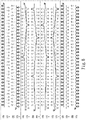
- FIG. 5 and FIG. 6 are used as examples to illustrate the programming of the tuck knitting.
- the flat knitting machine performs tuck knitting on the front bed at positions apart from each other by one stitch, so that a portion of the yarn located on the front bed can be tucked on the back bed.
- FIG. 6 after the flat knitting machine knits the two surface layer textures 21, and the yarn feeding mechanism feeds the yarn, the flat knitting machine makes the yarn on the front bed tuck on the back bed at a position separated by several stitches, and then tuck the yarn located on the bed on the front bed at positions separated by several stitches.
- the tuck knittings depicted in FIG. 5 and FIG. 6 are merely examples, and are not intended to limit the programming of the tuck knitting.
- the cross-linked texture 24 is formed with the yarn used for knitting the two surface layer textures 21 or formed with an another yarn 240 additionally fed.
- the cross-linked texture 24 can be knitted with the base yarn 211 and the fusible yarn 212 contained in each of the two surface layer textures 21.
- the cross-linked texture 24 can be knitted with the base yarn 211 or the fusible yarn 212 when the flat knitting machine knits the two surface layer textures 21.
- the cross-linked texture 24 can also be knitted by the flat knitting machine by means of additional yarn feeding, and the another yarn 240 used by the flat knitting machine for additional yarn feeding can be formed with the base yarn 211, or the fusible yarn 212, or a mixture of the base yarn 211 and the fusible yarn 212.
- step four 14 further includes a sub-step 141 of applying negative pressure on the one that is not heated or pressed of the two surface layer texture 21.
- the hot-pressing equipment can provide negative pressure on the other one of the two surface layer textures 21 simultaneously to form a temperature difference between the two surface layer textures 21, thereby inhibiting the transfer of heat energy through the cross-linked texture 24 to one of the surface layer textures 21 that has not been heated and pressed, and avoiding the one that has not been heated and pressed of the two surface layer textures 21 to be melted by heat, and at the same time, hot-melting of the cross-linked texture 24 can be reduced.
- the heating and pressing equipment can provide high-frequency heat treatment with induced current to locally heat and press one of the two surface layer textures 21 which is heated and pressed.
- the high-frequency heat treatment in this embodiment, only a partial structure of the two surface layer textures 21 is heated and pressed, and a condition in which the two surface layer textures 21 being hot-pressed can be controlled more specifically.
- the present invention also provides the double-layer fabric 20 for preventing water penetration, and the double-layer fabric 20 can be manufactured by the method 10 or the method 50, respectively.
- the double-layer fabric 20 made by the method 10 will be described.
- the double-layer fabric 20 includes the two surface layer textures 21 and the cross-linked texture 24.
- each of the two surface layer textures 21 includes a plurality of yarn loops 213, each of the yarn loops 213 is formed with the base yarn 211 and the fusible yarn 212, one of the two surface layer textures 21 is heated and pressed, so that the fusible yarn 212 of the one being heated and pressed of the two surface layer textures 21 forms the barrier layer 25 capable of preventing water penetration.
- the cross-linked texture 24 cross-links the two surface layer textures 21, the cross-linked texture 24 is formed by the tuck knitting or the transfer knitting at a space between the two surface layer textures 21, and therefore, the cross-linked texture 24 is provided with the yarn-stacked thickness 241.
- the yarn-stacked thickness 241 causes an increased temperature of the one not being heated and pressed of the two surface layer textures 21 not higher than the melting point of the fusible yarn 212, so that the double-layer fabric 20 forms the barrier layer 25 only on one of the two surface layer textures 21, and the other of the two surface layer textures 21 is not melted by heat, thereby maintaining a feature of softness of the double-layer fabric 20.
- the double-layer fabric 20 when the double-layer fabric 20 is knitted by the method 50, the double-layer fabric 20 also includes the two surface layer textures 21 and the cross-linked texture 24.
- the two surface layer textures 21 are respectively formed with the base yarn 211 and the fusible yarn 212, wherein a melting point of the base yarn 211 is higher than a melting point of the fusible yarn 212, and the surface layer texture 21 formed with the fusible yarn 212 (as indicated by reference number 215) is heated and pressed to cause the fusible yarn 212 form the barrier layer 25 capable of preventing water penetration.
- the cross-linked texture 24 cross-links the two surface layer textures 21, and the cross-linked texture 24 is formed by the tuck knitting or the transfer knitting at a space between the two surface layer textures 21, and therefore, the cross-linked texture 24 is provided with the yarn-stacked thickness 241.
- the yarn-stacked thickness 241 causes an increased temperature of the one formed with the base yarn 211 of the two surface layer texture 21 (as indicated by reference number 214) after a heating and pressing time not higher than the melting point of the fusible yarn 212, so that the double-layer fabric 20 forms the barrier layer 25 only on one of the two surface layer textures 21, and the other of the two surface layer textures 21 is not melted by heat, thereby maintaining a feature of softness of the double-layer fabric 20.
- the double-layer fabric 20 of the present invention does not achieve waterproof effect by using the conventional mechanism, and is capable of providing a comfortable feeling for wearers.
- the cross-linked texture 24 can be formed with the yarn used for knitting the two surface layer textures 21 or formed with the another yarn 240 additionally fed. Further, when the cross-linked texture 24 is knitted with the yarn used in the two surface layer textures 21, it means that the cross-linked texture 24 can be knitted with the yarn formed by mixing the base yarn 211 with the fusible yarn 212, the cross-linked texture 24 can also be knitted with the fusible yarn 212 of the one formed with the fusible yarn 212 of the two surface layer textures 21 (as indicated by reference number 215), or knitted with the base yarn 211 of the one formed with the base yarn 211 of the two surface layer texture 21 (as indicated by reference number 214).
- the another yarn 240 used in the cross-linked texture 24 can be formed with the base yarn 211, or the fusible yarn 212, or be composed of the base yarn 211 and the fusible yarn 212.
Landscapes
- Engineering & Computer Science (AREA)
- Textile Engineering (AREA)
- Knitting Of Fabric (AREA)
- Woven Fabrics (AREA)
Applications Claiming Priority (1)
| Application Number | Priority Date | Filing Date | Title |
|---|---|---|---|
| TW109141676A TWI771813B (zh) | 2020-11-27 | 2020-11-27 | 製造防止水份滲透的雙層織物的方法及雙層織物 |
Publications (1)
| Publication Number | Publication Date |
|---|---|
| EP4006222A1 true EP4006222A1 (fr) | 2022-06-01 |
Family
ID=75787009
Family Applications (1)
| Application Number | Title | Priority Date | Filing Date |
|---|---|---|---|
| EP21171874.7A Withdrawn EP4006222A1 (fr) | 2020-11-27 | 2021-05-03 | Procédé de fabrication d'une étoffe double couche empêchant la pénétration d'eau et étoffe double couche |
Country Status (3)
| Country | Link |
|---|---|
| US (1) | US20220170190A1 (fr) |
| EP (1) | EP4006222A1 (fr) |
| TW (1) | TWI771813B (fr) |
Families Citing this family (2)
| Publication number | Priority date | Publication date | Assignee | Title |
|---|---|---|---|---|
| TWI872710B (zh) * | 2023-09-19 | 2025-02-11 | 英屬維京群島商恒聖智能系統整合股份有限公司 | 具有凹凸圖紋的針織物 |
| WO2026082788A1 (fr) * | 2024-10-16 | 2026-04-23 | Onemore Innovation Sl | Étoffe de protection |
Citations (3)
| Publication number | Priority date | Publication date | Assignee | Title |
|---|---|---|---|---|
| WO2012151408A2 (fr) * | 2011-05-04 | 2012-11-08 | Nike International Ltd. | Collage de composant de tricot |
| WO2015100369A1 (fr) * | 2013-12-23 | 2015-07-02 | The North Face Apparel Corp. | Constructions textiles formées avec des filaments fusibles |
| US20190203389A1 (en) * | 2017-12-29 | 2019-07-04 | Yao I Fabric Co., Ltd. | Fabric |
Family Cites Families (7)
| Publication number | Priority date | Publication date | Assignee | Title |
|---|---|---|---|---|
| US5965223A (en) * | 1996-10-11 | 1999-10-12 | World Fibers, Inc. | Layered composite high performance fabric |
| US6762339B1 (en) * | 1999-05-21 | 2004-07-13 | 3M Innovative Properties Company | Hydrophilic polypropylene fibers having antimicrobial activity |
| WO2004108410A2 (fr) * | 2003-06-02 | 2004-12-16 | Kappler, Inc. | Tissu pour l'exterieur |
| WO2018005277A1 (fr) * | 2016-06-27 | 2018-01-04 | Nike Innovate C.V. | Textile comprenant un fil gonflant |
| US11365494B2 (en) * | 2018-08-09 | 2022-06-21 | Nike, Inc. | Knitted component with a fused surface region located on a tubular knit structure |
| CN210501693U (zh) * | 2019-08-07 | 2020-05-12 | 惠安县大林鞋服有限公司 | 一种立体式防水透气型网布 |
| TWM608698U (zh) * | 2020-11-27 | 2021-03-01 | 薩摩亞商織創流行科技控股有限公司 | 製造防止水份滲透的雙層織物 |
-
2020
- 2020-11-27 TW TW109141676A patent/TWI771813B/zh active
-
2021
- 2021-02-03 US US17/166,429 patent/US20220170190A1/en not_active Abandoned
- 2021-05-03 EP EP21171874.7A patent/EP4006222A1/fr not_active Withdrawn
Patent Citations (3)
| Publication number | Priority date | Publication date | Assignee | Title |
|---|---|---|---|---|
| WO2012151408A2 (fr) * | 2011-05-04 | 2012-11-08 | Nike International Ltd. | Collage de composant de tricot |
| WO2015100369A1 (fr) * | 2013-12-23 | 2015-07-02 | The North Face Apparel Corp. | Constructions textiles formées avec des filaments fusibles |
| US20190203389A1 (en) * | 2017-12-29 | 2019-07-04 | Yao I Fabric Co., Ltd. | Fabric |
Also Published As
| Publication number | Publication date |
|---|---|
| TWI771813B (zh) | 2022-07-21 |
| US20220170190A1 (en) | 2022-06-02 |
| TW202221185A (zh) | 2022-06-01 |
Similar Documents
| Publication | Publication Date | Title |
|---|---|---|
| EP3260005B1 (fr) | Articles chaussants et d'habillement possédant une partie de tissu partiellement fusionnée et leur procédé de fabrication | |
| US10151054B2 (en) | Spacer knit fabric and method for producing a spacer knit fabric section | |
| EP4006222A1 (fr) | Procédé de fabrication d'une étoffe double couche empêchant la pénétration d'eau et étoffe double couche | |
| CN101827969A (zh) | 含热塑易熔纱线的织物、制作含热塑易熔纱线的织物的方法、以及由含热塑易熔纱线的织物形成的纺织品 | |
| CN101586313B (zh) | 一种制造一复合体的方法 | |
| US11708651B2 (en) | Method for knitting and forming weft-knitted fabric with varying thickness by flat knitting machine and weft-knitted fabric thereof | |
| EP4183910A1 (fr) | Textile tricoté et procédé de formation d'un chaussure | |
| JP7127982B2 (ja) | 刺繍付人工皮革を用いた加飾成形体及びその製造方法 | |
| KR101585496B1 (ko) | 레이스 원단과 접착심지가 합포된 복합소재 및 그 제조 방법 | |
| TWM608698U (zh) | 製造防止水份滲透的雙層織物 | |
| US4168197A (en) | Method of manufacturing padding cloth for belts having a latent differential shrinkability property | |
| CN114561738B (zh) | 制造防止水份渗透的双层织物的方法及双层织物 | |
| US12195894B2 (en) | Knitted fabric with leather fibers and manufacturing method thereof | |
| JPH11172505A (ja) | 二層構造を有するモールド加工衣料品及びその製造方法 | |
| CN107205512B (zh) | 用于制造组合的纺织产品的方法 | |
| CN120813479A (zh) | 面料及面料的制造方法 | |
| CN112877870B (zh) | 包含皮革纤维的针织面料及其制造方法 | |
| KR101934920B1 (ko) | 실 제조방법 및 이 제조방법으로 제조된 실 | |
| US11725321B2 (en) | Stabilization of slit absorbent fabric edges | |
| US20230349080A1 (en) | Sticky spacer fabrics, its fabrication method and garment made of the same | |
| TWI725409B (zh) | 針織結構及其製法 | |
| KR102180950B1 (ko) | 고주파 퀼팅원단 및 이의 제조방법 | |
| JPS59156374A (ja) | 車両用座席等の表皮 | |
| JP2004129865A (ja) | カーペット類の製造方法 | |
| KR20180028744A (ko) | 횡편 자카드 방식으로 직조된 접착성 원단 및 이를 이용한 표면 몰딩 방법 |
Legal Events
| Date | Code | Title | Description |
|---|---|---|---|
| PUAI | Public reference made under article 153(3) epc to a published international application that has entered the european phase |
Free format text: ORIGINAL CODE: 0009012 |
|
| STAA | Information on the status of an ep patent application or granted ep patent |
Free format text: STATUS: THE APPLICATION HAS BEEN PUBLISHED |
|
| AK | Designated contracting states |
Kind code of ref document: A1 Designated state(s): AL AT BE BG CH CY CZ DE DK EE ES FI FR GB GR HR HU IE IS IT LI LT LU LV MC MK MT NL NO PL PT RO RS SE SI SK SM TR |
|
| STAA | Information on the status of an ep patent application or granted ep patent |
Free format text: STATUS: REQUEST FOR EXAMINATION WAS MADE |
|
| 17P | Request for examination filed |
Effective date: 20221201 |
|
| RBV | Designated contracting states (corrected) |
Designated state(s): AL AT BE BG CH CY CZ DE DK EE ES FI FR GB GR HR HU IE IS IT LI LT LU LV MC MK MT NL NO PL PT RO RS SE SI SK SM TR |
|
| STAA | Information on the status of an ep patent application or granted ep patent |
Free format text: STATUS: EXAMINATION IS IN PROGRESS |
|
| 17Q | First examination report despatched |
Effective date: 20231215 |
|
| GRAP | Despatch of communication of intention to grant a patent |
Free format text: ORIGINAL CODE: EPIDOSNIGR1 |
|
| STAA | Information on the status of an ep patent application or granted ep patent |
Free format text: STATUS: GRANT OF PATENT IS INTENDED |
|
| INTG | Intention to grant announced |
Effective date: 20241031 |
|
| STAA | Information on the status of an ep patent application or granted ep patent |
Free format text: STATUS: THE APPLICATION IS DEEMED TO BE WITHDRAWN |
|
| 18D | Application deemed to be withdrawn |
Effective date: 20250301 |