EP4006537B1 - Probenanalysevorrichtung - Google Patents
Probenanalysevorrichtung Download PDFInfo
- Publication number
- EP4006537B1 EP4006537B1 EP20844761.5A EP20844761A EP4006537B1 EP 4006537 B1 EP4006537 B1 EP 4006537B1 EP 20844761 A EP20844761 A EP 20844761A EP 4006537 B1 EP4006537 B1 EP 4006537B1
- Authority
- EP
- European Patent Office
- Prior art keywords
- specimen
- sample
- measurement
- measured
- internal reference
- Prior art date
- Legal status (The legal status is an assumption and is not a legal conclusion. Google has not performed a legal analysis and makes no representation as to the accuracy of the status listed.)
- Active
Links
Images



Classifications
-
- G—PHYSICS
- G01—MEASURING; TESTING
- G01N—INVESTIGATING OR ANALYSING MATERIALS BY DETERMINING THEIR CHEMICAL OR PHYSICAL PROPERTIES
- G01N35/00—Automatic analysis not limited to methods or materials provided for in any single one of groups G01N1/00 - G01N33/00; Handling materials therefor
- G01N35/00584—Control arrangements for automatic analysers
- G01N35/00594—Quality control, including calibration or testing of components of the analyser
- G01N35/00613—Quality control
-
- G—PHYSICS
- G01—MEASURING; TESTING
- G01N—INVESTIGATING OR ANALYSING MATERIALS BY DETERMINING THEIR CHEMICAL OR PHYSICAL PROPERTIES
- G01N30/00—Investigating or analysing materials by separation into components using adsorption, absorption or similar phenomena or using ion-exchange, e.g. chromatography or field flow fractionation
- G01N30/02—Column chromatography
-
- G—PHYSICS
- G01—MEASURING; TESTING
- G01N—INVESTIGATING OR ANALYSING MATERIALS BY DETERMINING THEIR CHEMICAL OR PHYSICAL PROPERTIES
- G01N30/00—Investigating or analysing materials by separation into components using adsorption, absorption or similar phenomena or using ion-exchange, e.g. chromatography or field flow fractionation
- G01N30/02—Column chromatography
- G01N30/62—Detectors specially adapted therefor
- G01N30/72—Mass spectrometers
-
- G—PHYSICS
- G01—MEASURING; TESTING
- G01N—INVESTIGATING OR ANALYSING MATERIALS BY DETERMINING THEIR CHEMICAL OR PHYSICAL PROPERTIES
- G01N30/00—Investigating or analysing materials by separation into components using adsorption, absorption or similar phenomena or using ion-exchange, e.g. chromatography or field flow fractionation
- G01N30/02—Column chromatography
- G01N30/62—Detectors specially adapted therefor
- G01N30/74—Optical detectors
-
- G—PHYSICS
- G01—MEASURING; TESTING
- G01N—INVESTIGATING OR ANALYSING MATERIALS BY DETERMINING THEIR CHEMICAL OR PHYSICAL PROPERTIES
- G01N30/00—Investigating or analysing materials by separation into components using adsorption, absorption or similar phenomena or using ion-exchange, e.g. chromatography or field flow fractionation
- G01N30/02—Column chromatography
- G01N30/86—Signal analysis
-
- G—PHYSICS
- G01—MEASURING; TESTING
- G01N—INVESTIGATING OR ANALYSING MATERIALS BY DETERMINING THEIR CHEMICAL OR PHYSICAL PROPERTIES
- G01N30/00—Investigating or analysing materials by separation into components using adsorption, absorption or similar phenomena or using ion-exchange, e.g. chromatography or field flow fractionation
- G01N30/02—Column chromatography
- G01N30/88—Integrated analysis systems specially adapted therefor, not covered by a single one of the groups G01N30/04 - G01N30/86
-
- G—PHYSICS
- G01—MEASURING; TESTING
- G01N—INVESTIGATING OR ANALYSING MATERIALS BY DETERMINING THEIR CHEMICAL OR PHYSICAL PROPERTIES
- G01N35/00—Automatic analysis not limited to methods or materials provided for in any single one of groups G01N1/00 - G01N33/00; Handling materials therefor
- G01N35/00584—Control arrangements for automatic analysers
- G01N35/0092—Scheduling
-
- G—PHYSICS
- G01—MEASURING; TESTING
- G01N—INVESTIGATING OR ANALYSING MATERIALS BY DETERMINING THEIR CHEMICAL OR PHYSICAL PROPERTIES
- G01N30/00—Investigating or analysing materials by separation into components using adsorption, absorption or similar phenomena or using ion-exchange, e.g. chromatography or field flow fractionation
- G01N30/02—Column chromatography
- G01N30/04—Preparation or injection of sample to be analysed
- G01N2030/042—Standards
- G01N2030/045—Standards internal
-
- G—PHYSICS
- G01—MEASURING; TESTING
- G01N—INVESTIGATING OR ANALYSING MATERIALS BY DETERMINING THEIR CHEMICAL OR PHYSICAL PROPERTIES
- G01N30/00—Investigating or analysing materials by separation into components using adsorption, absorption or similar phenomena or using ion-exchange, e.g. chromatography or field flow fractionation
- G01N30/02—Column chromatography
- G01N30/88—Integrated analysis systems specially adapted therefor, not covered by a single one of the groups G01N30/04 - G01N30/86
- G01N2030/8804—Integrated analysis systems specially adapted therefor, not covered by a single one of the groups G01N30/04 - G01N30/86 automated systems
Definitions
- the present invention relates to a specimen analyzer that measures an amount of a specimen included in a sample.
- a specimen analyzer is a device that measures an amount of a specimen included in a sample.
- contaminants of a specimen attached to the side surface of a needle that aspirates a sample, contaminants attached to a passage, contaminants that enter or covers a gap produced between connectors connecting a passage, and the like are sometimes detected when the specimen is analyzed later. This phenomenon is referred to as a carry-over. As a result, it is known that a measured value exceeds an original value to degrade measured accuracy.
- Patent Literature 1 describes a technique that cleans a needle and a passage after a specimen is measured, then blank measurement is performed, and the presence or absence of a carry-over is measured in order to avoid a carry-over.
- Patent Literature 2 discloses a method that detects a high-value abnormality of the measured value of a measurement item to detect a carry-over.
- Patent Literature 3 discloses a method for comparing and analyzing the results of a chemical analysis of two samples, wherein a he Rank formula is used that provides a method of selecting variables that have the most significant difference between two data sets.
- Patent Literature 4 discloses an analysis method using an isotope labeled biological molecule, wherein the method is comprising the step of adding to the sample an internal standard substance that is a metabolically isotope labeled biological molecule, or a cell containing an internal standard substance that is a metabolically isotope labeled biological molecule. Furthermore, Non-Patent Literature " A new approach for evaluating carryover and its influence on quantitation in high-performance liquid chromatography and tandem mass spectrometry assay" by Zeng et al discloses a method for calculating an influence of carryover on the quantitation of an unknown sample using an HPLC assay.
- Non-Patent Literature “Beyond pass/fail: A procedure for evaluating the effect of carryover in bioanalytical LC/MS/MS methods" by Clouser-Roche et al discloses ways for investigating the effect of carryover within an analytical run in order to establish a risk threshold level for readily evaluating whether there is a risk that the result is affected by carryover.
- Patent Literature 1 In order to measure the presence or absence of a carry-over with the method described in Patent Literature 1, there is a necessity that blank measurement is inserted between specimen measurements and a measurement sequence similar to specimen measurement is separately performed. There is a problem that the insertion of blank measurement between specimen measurements prolongs standby time between specimen measurements resulting in degradation in specimen processing performances per hour.
- the present invention is made in view of the problems described above, and it is an object to provide a specimen analyzer that is capable of measuring a carry-over with no degradation in specimen processing performances.
- FIG. 1 is a block diagram showing the overall structure of a specimen analyzer 100 according to a first embodiment of the present invention.
- the specimen analyzer 100 includes a specimen transport unit 110, a measurement unit 120, a hub 130, and a control unit 140.
- the specimen transport unit 110 transports a specimen to the measurement unit 120.
- the measurement unit 120 is a functional unit that measures an amount of a specimen.
- the control unit 140 controls the operation of the specimen analyzer 100. With procedures described later, a carry-over is measured.
- the measurement unit 120 includes an injection unit 121, a separation unit 122, and an ion detecting unit 123.
- the injection unit 121 quantitatively aspirates the specimen transported by the specimen transport unit 110.
- the separation unit 122 separates materials according to the polarity of the material.
- the ion detecting unit 123 ionizes the separated material, and performs mass spectrometry.
- the ion detecting unit 123 includes a photodetector 123a, an analog signal processing circuit 123b, an A/D converter 123c, and a digital signal processing circuit 123d.
- the photodetector 123a outputs an electrical signal corresponding to the concentration of particles to the analog signal processing circuit 123b.
- the analog signal processing circuit 123b amplifies the signal from the photodetector 123a, and performs filtering and the like.
- the A/D converter 123c converts the output from the analog signal processing circuit 123b into a digital signal.
- the digital signal processing circuit 123d applies a predetermined waveform process to the digital signal.
- the output of the digital signal processing circuit 123d is inputted to the control unit 140 through the hub 130.
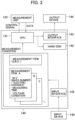
- FIG. 2 is a functional block diagram of the control unit 140.
- a measurement condition is inputted as a control signal.
- the measurement condition includes the list of measurement items and the control values of the analyzer corresponding to various measurement items.
- the control values the voltage values of electrodes and measuring time are named.
- m/z is also inputted as a control value.
- m/z corresponds to the measurement item by one to one.
- the mass spectrometer switches the voltage at high speed to change m/z to be measured, and thus can switch measurement items in units of milliseconds. This switching is repeated during measurement at one time, and thus a plurality of different measurement items can be measured simultaneously.
- These measurement conditions can be freely changed by a user from the input device 146 through the input interface 145.
- the detection signal of the photodetector 123a which is processed by the digital signal processing circuit 123d, and a CPU 141 (Central Processing Unit) processes the detection signal.
- the control unit 140 records the signal amounts of various measurement items in a hard disk 142 together with measured time.
- the processed result is outputted on an output device 144 through an output interface 143.
- FIG. 3 is an example of a chromatogram outputted from the control unit 140.
- the control unit 140 creates a chromatogram in which the measured time is taken on the X-axis and the signal amount is taken on the Y-axis, and displays the chromatogram on the output device 144 through the output interface 143.
- the control unit 140 may further integrate the peak area of the chromatogram to calculate the total signal amount for obtaining the elution time of the peak and the like. For example, when the quantitative analysis of a measurement item A is performed, the peak area of the measurement item 301 is compared with the peak area of an internal reference material 302 having a known concentration, and thus quantitative analysis of high accuracy can be performed. The detailed procedures will be described later.
- FIG. 4 is flowchart illustrating a specimen measurement sequence at one time using the specimen analyzer 100.
- a specimen transported by the specimen transport unit 110 is aspirated by the injection unit 121 (S401), and the aspirated specimen is quantitated (S402).
- the internal reference material is similarly aspirated and quantitated, and added to the specimen (S403). The use of the internal reference material will be described later.
- the specimen to which the internal reference material is added is injected into the separation unit 122 for delivery. After the termination of injection, the injection unit 121 is cleaned until the subsequent specimen measurement sequence is started (S404w).
- the specimen delivered to the separation unit 122 is separated according to the polarity of a component, and is delivered to the ion detecting unit 123 (S404).
- the ion detecting unit 123 measures the delivered specimen (S405).
- the ion detecting unit 123 and the control unit 140 analyze the measured result, and display the result on the output device 144 (S406).
- the passage through which the specimen is carried is cleaned in any time from eh end of measurement to the start of measurement (S406w).
- FIG. 5 is a table showing the process of measurement of a carry-over using a conventional blank sample.
- the internal reference material to be added is written in IS.
- the term "measurement order" indicates a time sequence, in which measurement is performed from a small number to a large number. In the measurement order, the specimen measurement sequence shown in FIG. 4 is performed, and the total signal amount of the specified measurement item (the integral value of the peak of the signal amount exemplified in FIG. 3 ) can be obtained as measurement data.
- the total signal amount of the measurement item A in order i is set as Int(i, A).
- the signal increase amount is set as a carry-over signal amount ⁇ (1, A).
- the ratio of the signal amount of the measurement order of a carry-over destination to the signal amount of the measurement order of a carry-over source is set as a carry-over ratio CO(1, A).
- FIG. 6 is a table showing the process of carry-over measurement in the first embodiment. Similarly to FIG. 5 , the case is shown in which one measurement item A is continuously measured. Two types of internal reference materials to be added are written in IS1 and IS2.
- the carry-over amount of the measurement item A is measured using the total signal amount of the internal reference material.
- J A,IS1 expresses the correlation coefficient between the carry-over value of the measurement item A and the carry-over ratio of the internal reference material IS1. It is considered that the carry-over amount of the measurement item and the carry-over amount of the internal reference material have the correlation relationship. Therefore, it is assumed that the carry-over ratio of the measurement item and the carry-over ratio of the internal reference material also similarly have the correlation relationship. In the first embodiment, this relationship is to be expressed as a correlation coefficient.
- the correlation coefficient is expressed as the ratio of the carry-over ratio of the measurement item to the carry-over ratio of the internal reference material
- the blank sample has to be measured while the specimen is measured.
- the carry-over amount of the internal reference material is measured to calculate the carry-over amount of the measurement item A via the correlation coefficient described above.
- the measurement item of the internal reference material IS1 added in previous order 1 is added to order 2, and thus the blank measurement of the internal reference material IS1 is substantially similarly performed in order 2.
- FIG. 7 is a table describing the procedures of obtaining the correlation coefficient.
- a correlation coefficient J A,X IS1, IS2
- the correlation coefficient J A,X can be obtained by measuring the carry-over amount of the measurement item A and the carry-over amounts of the internal reference materials through the conventional carry-over measurement procedures as in FIG. 7 . Since the correlation coefficient J A,X is defined as the ratio between two carry-over ratios as shown in Expression 5, the dependence on the measurement order is removed. That is, the correlation coefficient is a constant that does not depend on the measurement order. Therefore, it is enough to measure the correlation coefficient J A,X once.
- the correlation coefficient does not depend on the measurement order. It is considered that the carry-over amount of the internal reference material IS1 in measurement order 1 to measurement order 3 is smaller than the carry-over amount in measurement order 1 to measurement order 2. This is because the carry-over amount typically decreases with time. On the other hand, at this time, it is considered that the carry-over amount of the measurement item A in measurement order 1 to measurement order 3 also similarly decreases with time. Therefore, in the present invention, it was assumed that the carry-over ratio CO(i, IS1) of the internal reference material IS and the carry-over ratio of the measurement item A CO(i, A) are always aged at the same ratio. Under this assumption, it is considered that the ratio between both always becomes the same numeric value regardless of the measurement order. Therefore, it is possible to use the same correlation coefficient with the use of Expression 5, regardless of the measurement order. In other words, it is possible to remove the dependence on the measurement order.
- the numeric value of the correlation coefficient is supplementarily described. As the numeric value of the correlation coefficient J A,X is greater, the carry-over can be measured highly accurately. In the case in which the numeric value of J A,X is small, the carry-over amount has no correlation between the internal reference material and the measurement item, and the carry-over amount is hardly measured with the method according to the first embodiment. Therefore, it is necessary to an appropriate material having a large correlation coefficient as the internal reference material.
- the signal increase amount ⁇ (i, A) and CO_NEW (i, A) that is a ratio from the previous measured amount can be obtained.
- the threshold is compared with the measured value as in the conventional method. When the measured value exceeds the threshold, it can be regarded that the carry-over amount exceeds the tolerance. In this case, any of ⁇ (i, A) and CO_NEW (i, A) may be compared with the threshold. In the case in which it is regarded that the carry-over amount exceeds the tolerance in comparison of these measured values are compared with the threshold, the control unit 140 can output an alert and the like expressing this excess.
- the control unit 140 can determine whether the carry-over of the measurement item B is within the tolerance in which the carry-over ratio of the measurement item B is calculated according to Expression 7 and Expression 8 and is compared with the threshold. When the carry-over of B is within the tolerance, the measured result of B (the signal amount) in measurement order 2 only has to be adopted as it is. Alternatively, when the carry-over of B exceeds the tolerance, for example, the control unit 140 outputs an alert expressing the excess to prompt cleaning, re-measurement, or the like.
- the carry-over ratio of the measurement item B (Expression 7) is calculated according to the correlation relationship (Expression 8) between the carry-over ratio CO(1, IS(A)) of the internal reference material IS(A) in measurement 1 to 2 and the carry-over ratio of the measurement item B CO(1, B) in measurement 1 to 2.
- the correlation coefficient is large enough to the measurement items A to C and has a small difference between the measurement items.
- a third embodiment of the present invention an example taking into consideration of this point will be described.
- the configuration of a specimen analyzer 100 is similar to the first to the second embodiments.
- FIG. 9 is a conceptual diagram showing an example of a correspondence relationship between measurement items and internal reference materials when a carry-over is measured to a large number of measurement items.
- the same types of measurement items were sorted as a measurement item group.
- corresponding internal reference materials were allocated for two each.
- the internal reference material allocated to the measurement item group is added to a sample.
- two internal reference samples corresponding to the measurement item group are alternately added.
- the internal reference material IS(A1 or A2) and the internal reference material IS(B1 or B2) are sequentially added.
- the measurement item groups and the corresponding internal reference materials are sorted, the measurement item groups and the internal reference materials are sorted such that the correlation coefficient for each measurement item group is large enough and has a close value. With the sorting in this manner, it is possible to measure a carry-over efficiently as well as it is possible to decrease the number of types of internal reference materials for use.
- the description is made in which a carry-over is measured using the internal reference material.
- the internal reference material can be used for another application together with the carry-over measurement.
- the measured signal amounts of the measurement item 301 and the internal reference material 302 are obtained, and then the signal amount of the measurement item 301 can be corrected using the signal amount of the internal reference material 302.
- the signal amount of the measurement item 301 can be corrected using he signal amount of the internal reference material 302.
- Step S403 may be performed after quantitative aspiration in Step S402, or the internal reference material may be mixed in advance to the specimen as the front end in this case, Step S403 is unnecessary.
- the measurement item and the internal reference material are optional, as long as the measurement item and the internal reference material are measurable by the ion detecting unit 123.
- Testosterone, Estradiol, and Cortisol which are hormones, are usable.
Landscapes
- Physics & Mathematics (AREA)
- General Physics & Mathematics (AREA)
- Pathology (AREA)
- Life Sciences & Earth Sciences (AREA)
- Chemical & Material Sciences (AREA)
- Analytical Chemistry (AREA)
- Biochemistry (AREA)
- Health & Medical Sciences (AREA)
- Immunology (AREA)
- General Health & Medical Sciences (AREA)
- Engineering & Computer Science (AREA)
- Quality & Reliability (AREA)
- Spectroscopy & Molecular Physics (AREA)
- Investigating Or Analysing Materials By Optical Means (AREA)
- Other Investigation Or Analysis Of Materials By Electrical Means (AREA)
- Automatic Analysis And Handling Materials Therefor (AREA)
Claims (7)
- Prüfmaterialanalyseeinrichtung (100), die eine Menge eines Prüfmaterials misst, das in einer Probe enthalten ist, wobei die Prüfmaterialanalyseeinrichtung (100) Folgendes umfasst:eine Messeinheit (120), die konfiguriert ist, die Probe zu messen und ein Messsignal auszugeben, das eine Menge des Prüfmaterial angibt; undeine Steuereinheit (140), die konfiguriert ist, eine Menge des Prüfmaterials unter Verwendung des Messsignals zu berechnen,wobei:dann, wenn ein erstes Prüfmaterial gemessen wird, die Messeinheit (120) konfiguriert ist, eine erste Probe zu messen, die das erste Prüfmaterial und ein erstes internes Referenzmaterial enthält;dann, wenn ein zweites Prüfmaterial gemessen wird, die Messeinheit (120) konfiguriert ist, eine zweite Probe zu messen, die das zweite Prüfmaterial und ein zweites internes Referenzmaterial enthält; unddie Steuereinheit (140) konfiguriert ist, eine Menge des zweiten Prüfmaterials, das in der zweiten Probe enthalten ist, unter Verwendung einer Menge des ersten internen Referenzmaterials, die gemessen worden ist, als die erste Probe gemessen worden ist, und einer Menge des zweiten internen Referenzmaterials, die gemessen worden ist, als die zweite Probe anschließend an die erste Probe gemessen worden ist, zu berechnen,dadurch gekennzeichnet, dass:die Steuereinheit (140) konfiguriert ist, eine erste Übertragungsmenge des ersten Prüfmaterials, das von der ersten Probe auf die zweite Probe übertragen worden ist, unter Verwendung der Menge des ersten internen Referenzmaterials, die gemessen worden ist, als die erste Probe gemessen worden ist, und der Menge des zweiten internen Referenzmaterials, die gemessen worden ist, als die zweite Probe anschließend an die erste Probe gemessen worden ist, zu berechnen; unddie Steuereinheit (140) konfiguriert ist, eine Menge des zweiten Prüfmaterials, das in der zweiten Probe enthalten ist, unter Verwendung der ersten Übertragungsmenge zu berechnen.
- Prüfmaterialanalyseeinrichtung (100) nach Anspruch 1,
wobei die Steuereinheit (140) konfiguriert ist, eine Menge des zweiten Prüfmaterials, das in der zweiten Probe enthalten ist, durch Berechnen der ersten Übertragungsmenge gemäß einer ersten Korrelation zwischen einem Anteil des ersten Prüfmaterials, das von der ersten Probe auf die zweite Probe übertragen wird, und des ersten internen Referenzmaterials, das von der ersten Probe auf die zweite Probe übertragen wird, zu berechnen. - Prüfmaterialanalyseeinrichtung (100) nach Anspruch 2,
wobei die Steuereinheit (140) konfiguriert ist, die erste Übertragungsmenge unter Verwendung einer Funktion zu berechnen, die nicht auf einer Messreihenfolge der Probe beruht wie die erste Korrelation, derart, dass die erste Übertragungsmenge ungeachtet der Messreihenfolge der Probe gemäß derselben ersten Korrelation berechnet wird. - Prüfmaterialanalyseeinrichtung (100) nach Anspruch 3,
wobei die Steuereinheit (140) konfiguriert ist, als die erste Korrelation die Funktion, die den Anteil des ersten Prüfmaterials, das von der ersten Probe auf die zweite Probe übertragen wird, als eine erste Variable verwendet, zu verwenden und einen Anteil des ersten internen Referenzmaterials, das von der ersten Probe auf die zweite Probe übertragen wird, als eine zweite Variable zu verwenden. - Prüfmaterialanalyseeinrichtung (100) nach Anspruch 2,
wobei:die Messeinheit (120) konfiguriert ist, ein erstes Messsignal auszugeben, das ein Ergebnis des Messens einer Menge des ersten Prüfmaterials, das in der ersten Probe enthalten ist, angibt, und die Messeinheit (120) konfiguriert ist, ein zweites Messsignal auszugeben, das ein Ergebnis des Messens einer Menge des zweiten Prüfmaterials, das in der zweiten Probe enthalten ist, angibt;die Steuereinheit (140) konfiguriert ist, einen Anteil des ersten Prüfmaterials, das von der ersten Probe auf die zweite Probe übertragen wird, als ein erstes Übertragungsmaß zu berechnen;die Steuereinheit (140) konfiguriert ist, einen Anteil des ersten internen Referenzmaterials, das von der ersten Probe auf die zweite Probe übertragen wird, als ein zweites Übertragungsmaß zu berechnen;die Steuereinheit (140) konfiguriert ist, ein Verhältnis des ersten Übertragungsmaßes zum zweiten Übertragungsmaß als einen ersten Korrelationskoeffizienten zu berechnen; unddie Steuereinheit (140) konfiguriert ist, eine Menge des zweiten Prüfmaterials, das in der zweiten Probe enthalten ist, unter Verwendung des ersten Korrelationskoeffizienten, des ersten Messsignals und des zweiten Messsignals zu berechnen. - Prüfmaterialanalyseeinrichtung (100) nach Anspruch 5,
wobei:die Messeinheit (120) konfiguriert ist, eine spezifizierte Probe zu messen, die das erste Prüfmaterial in einer spezifizierten Menge, das erste interne Referenzmaterial und das zweite interne Referenzmaterial enthält;die Messeinheit (120) konfiguriert ist, eine leere Probe zu messen, die nichts vom ersten Prüfmaterial, vom ersten internen Referenzmaterial und vom zweiten internen Referenzmaterial enthält; unddie Steuereinheit (140) konfiguriert ist, den ersten Korrelationskoeffizienten unter Verwendung eines Messergebnisses der spezifizierten Probe und eines Messergebnisses der leeren Probe zu berechnen. - Prüfmaterialanalyseeinrichtung (100) nach Anspruch 1,
wobei:die Prüfmaterialanalyseeinrichtung (100) konfiguriert ist, eine erste Prüfmaterialgruppe zu messen, zu der das erste Prüfmaterial und das zweite Prüfmaterial gehören, und konfiguriert ist, eine zweite Prüfmaterialgruppe zu messen, zu der ein drittes Prüfmaterial und einer viertes Prüfmaterial gehören;dann, wenn das dritte Prüfmaterial gemessen wird, die Messeinheit (120) konfiguriert ist, eine dritte Probe zu messen, die das dritte Prüfmaterial und ein drittes internes Referenzmaterial enthält;dann, wenn das vierte Prüfmaterial gemessen wird, die Messeinheit (120) konfiguriert ist, eine vierte Probe zu messen, die das vierte Prüfmaterial und ein viertes internes Referenzmaterial enthält;die Steuereinheit (140) konfiguriert ist, eine Menge des vierten Prüfmaterials, das in der vierten Probe enthalten ist, unter Verwendung einer Menge des dritten internen Referenzmaterials, die gemessen worden ist, als die dritte Probe gemessen worden ist, und einer Menge des vierten internen Referenzmaterials, die gemessen worden ist, als die vierte Probe gemessen worden ist, zu berechnen;dann, wenn eine Probe der ersten Prüfmaterialgruppe, die zur ersten Prüfmaterialgruppe gehört, gemessen wird, die Messeinheit (120) konfiguriert ist, eine Messung durchzuführen, derart, dass jedes Mal, wenn eine Messung durchgeführt wird, abwechselnd irgendeines des ersten internen Referenzmaterials oder des zweiten internen Referenzmaterials in der Probe der ersten Prüfmaterialgruppe enthalten ist; unddann, wenn eine Probe der zweiten Prüfmaterialgruppe, die zur zweiten Prüfmaterialgruppe gehört, gemessen wird, die Messeinheit (120) konfiguriert ist, eine Messung durchzuführen, derart, dass jedes Mal, wenn eine Messung durchgeführt wird, abwechselnd irgendeines des dritten internen Referenzmaterials oder des vierten internen Referenzmaterials in der Probe der zweiten Prüfmaterialgruppe enthalten ist.
Applications Claiming Priority (2)
| Application Number | Priority Date | Filing Date | Title |
|---|---|---|---|
| JP2019136790 | 2019-07-25 | ||
| PCT/JP2020/027967 WO2021015148A1 (ja) | 2019-07-25 | 2020-07-17 | 検体分析装置 |
Publications (3)
| Publication Number | Publication Date |
|---|---|
| EP4006537A1 EP4006537A1 (de) | 2022-06-01 |
| EP4006537A4 EP4006537A4 (de) | 2023-08-09 |
| EP4006537B1 true EP4006537B1 (de) | 2025-05-21 |
Family
ID=74193079
Family Applications (1)
| Application Number | Title | Priority Date | Filing Date |
|---|---|---|---|
| EP20844761.5A Active EP4006537B1 (de) | 2019-07-25 | 2020-07-17 | Probenanalysevorrichtung |
Country Status (5)
| Country | Link |
|---|---|
| US (1) | US12025626B2 (de) |
| EP (1) | EP4006537B1 (de) |
| JP (1) | JP7395591B2 (de) |
| CN (1) | CN114174820B (de) |
| WO (1) | WO2021015148A1 (de) |
Families Citing this family (3)
| Publication number | Priority date | Publication date | Assignee | Title |
|---|---|---|---|---|
| CN115990591A (zh) * | 2021-10-20 | 2023-04-21 | 贝克曼库尔特生物科技(苏州)有限公司 | 运行和监测样本处理仪的清洗的方法和系统及样本处理仪 |
| JP2023067745A (ja) * | 2021-10-29 | 2023-05-16 | 株式会社島津製作所 | 液体クロマトグラフシステムの洗浄方法および液体クロマトグラフシステム |
| JP7889157B2 (ja) * | 2021-10-29 | 2026-07-14 | 株式会社島津製作所 | 液体クロマトグラフシステムおよびその洗浄方法、ならびにプログラム |
Family Cites Families (18)
| Publication number | Priority date | Publication date | Assignee | Title |
|---|---|---|---|---|
| JPH05256852A (ja) * | 1991-09-30 | 1993-10-08 | Shimadzu Corp | 自動分析方法 |
| JP3456162B2 (ja) * | 1999-03-24 | 2003-10-14 | 株式会社日立製作所 | 自動分析装置 |
| JP4256208B2 (ja) * | 2003-06-09 | 2009-04-22 | 株式会社日立ハイテクノロジーズ | プラズマイオン源質量分析装置を用いた同位体比分析 |
| US7759130B2 (en) * | 2003-11-21 | 2010-07-20 | Eisai R & D Management Co., Ltd. | Mass spectrometric quantitation method for biomolecules based on metabolically labeled internal standards |
| JP5103089B2 (ja) * | 2006-10-13 | 2012-12-19 | 株式会社日立ハイテクノロジーズ | 質量分析装置を用いた定量分析方法 |
| JP5433139B2 (ja) * | 2007-06-29 | 2014-03-05 | 株式会社東芝 | マイクロ化学分析装置、その測定方法、及びマイクロカセット |
| WO2009123297A1 (ja) * | 2008-04-03 | 2009-10-08 | 株式会社日立ハイテクノロジーズ | 質量分析装置を用いた定量分析方法 |
| JP5325973B2 (ja) * | 2009-03-05 | 2013-10-23 | 株式会社日立ハイテクノロジーズ | 分析装置 |
| JP5191954B2 (ja) | 2009-06-01 | 2013-05-08 | 日本電子株式会社 | 臨床検査用自動分析装置 |
| US20140202233A1 (en) * | 2011-09-08 | 2014-07-24 | Horiba, Ltd. | Gas analysis device and contamination detection method used in same |
| WO2013098169A1 (en) | 2011-12-30 | 2013-07-04 | Philip Morris Products S.A | A method of analysing data from chemical analysis |
| JP6085419B2 (ja) | 2012-03-30 | 2017-02-22 | シスメックス株式会社 | 検体分析装置 |
| JP6368067B2 (ja) * | 2012-04-23 | 2018-08-01 | 株式会社日立ハイテクノロジーズ | 質量分析装置及び質量分析方法 |
| JP5948630B2 (ja) | 2012-06-07 | 2016-07-06 | 株式会社日立ハイテクノロジーズ | 質量分析を用いた定量分析方法と定量分析装置 |
| JP6152301B2 (ja) * | 2013-06-03 | 2017-06-21 | 国立医薬品食品衛生研究所長 | 定量方法およびプログラム |
| EP3063540A4 (de) * | 2013-10-30 | 2017-04-26 | DH Technologies Development PTE. Ltd. | Massenspektrometrische identifizierung und/oder zur quantifizierung von katecholaminen mit aminopyrazolen |
| JP6380555B2 (ja) * | 2014-12-25 | 2018-08-29 | 株式会社島津製作所 | 分析装置 |
| DE112017007538B4 (de) * | 2017-06-12 | 2024-01-11 | Hitachi High-Technologies Corporation | Chromatographie-Massenspektrometrie-Verfahren und Chromatograph-Massenspektrometer |
-
2020
- 2020-07-17 EP EP20844761.5A patent/EP4006537B1/de active Active
- 2020-07-17 CN CN202080053516.6A patent/CN114174820B/zh active Active
- 2020-07-17 US US17/628,367 patent/US12025626B2/en active Active
- 2020-07-17 JP JP2021534012A patent/JP7395591B2/ja active Active
- 2020-07-17 WO PCT/JP2020/027967 patent/WO2021015148A1/ja not_active Ceased
Also Published As
| Publication number | Publication date |
|---|---|
| EP4006537A4 (de) | 2023-08-09 |
| US20220283193A1 (en) | 2022-09-08 |
| JP7395591B2 (ja) | 2023-12-11 |
| WO2021015148A1 (ja) | 2021-01-28 |
| US12025626B2 (en) | 2024-07-02 |
| EP4006537A1 (de) | 2022-06-01 |
| CN114174820A (zh) | 2022-03-11 |
| JPWO2021015148A1 (de) | 2021-01-28 |
| CN114174820B (zh) | 2023-06-20 |
Similar Documents
| Publication | Publication Date | Title |
|---|---|---|
| US7457708B2 (en) | Methods and devices for identifying related ions from chromatographic mass spectral datasets containing overlapping components | |
| US10121643B2 (en) | Chromatography/mass spectrometry data processing device | |
| CN110741254B (zh) | 色谱质谱分析方法及色谱质谱分析装置 | |
| US12025626B2 (en) | Specimen analyzer | |
| CN104246488B (zh) | 质量分析装置 | |
| CN104820009B (zh) | 用于利用离子淌度谱测量离子的碰撞截面的快速方法 | |
| CN112444586B (zh) | 用于检查分析仪的状态的技术 | |
| JP4719694B2 (ja) | 化学物質を追跡し、定量化するためのシステムおよび方法 | |
| GB2586710A (en) | Chromatography mass spectrometry method, and chromatograph mass spectrometry device | |
| JP2005331421A (ja) | 質量分析装置および異性体分析方法 | |
| WO2022162999A1 (ja) | クロマトグラフ装置 | |
| JP2001028252A (ja) | 質量分析方法 | |
| CN111257401B (zh) | 用于测定离子种类的质量的系统和方法 | |
| EP1757929B1 (de) | Ausrichtung von Retentionszeiten in der Chromatographie | |
| WO2025062288A1 (en) | Methods and systems for performing data independent acquistion mass spectrometry | |
| CN117849159A (zh) | M蛋白的检测方法、电子设备及存储介质 | |
| EP3002696B1 (de) | Verfahren zum erzeugen, durchsuchen und statistischen validieren einer peptidfragment-ionen-bibliothek | |
| US20240201149A1 (en) | Method to reduce measurement bias | |
| WO2023057881A1 (en) | Methods and systems for processing in real-time and using gaussian | |
| WO2026041554A1 (en) | Longitudinal quality control monitoring | |
| Kuikka | Detection and integration of chromatographic peaks using theoretical peak fitting | |
| CN108475614B (zh) | 质量分析装置及其离子检测方法 | |
| JP2025167143A (ja) | 波形解析方法及び波形解析装置 | |
| Scoble | Quantitative Analysis in Liquid Chromatography | |
| CN110794070A (zh) | 泰勒扩散分析装置和测定溶液中物质尺寸方法 |
Legal Events
| Date | Code | Title | Description |
|---|---|---|---|
| STAA | Information on the status of an ep patent application or granted ep patent |
Free format text: STATUS: THE INTERNATIONAL PUBLICATION HAS BEEN MADE |
|
| PUAI | Public reference made under article 153(3) epc to a published international application that has entered the european phase |
Free format text: ORIGINAL CODE: 0009012 |
|
| STAA | Information on the status of an ep patent application or granted ep patent |
Free format text: STATUS: REQUEST FOR EXAMINATION WAS MADE |
|
| 17P | Request for examination filed |
Effective date: 20220225 |
|
| AK | Designated contracting states |
Kind code of ref document: A1 Designated state(s): AL AT BE BG CH CY CZ DE DK EE ES FI FR GB GR HR HU IE IS IT LI LT LU LV MC MK MT NL NO PL PT RO RS SE SI SK SM TR |
|
| DAV | Request for validation of the european patent (deleted) | ||
| DAX | Request for extension of the european patent (deleted) | ||
| A4 | Supplementary search report drawn up and despatched |
Effective date: 20230712 |
|
| RIC1 | Information provided on ipc code assigned before grant |
Ipc: G01N 30/86 20060101ALI20230706BHEP Ipc: G01N 30/72 20060101ALI20230706BHEP Ipc: G01N 30/04 20060101ALI20230706BHEP Ipc: G01N 27/62 20210101AFI20230706BHEP |
|
| GRAJ | Information related to disapproval of communication of intention to grant by the applicant or resumption of examination proceedings by the epo deleted |
Free format text: ORIGINAL CODE: EPIDOSDIGR1 |
|
| GRAP | Despatch of communication of intention to grant a patent |
Free format text: ORIGINAL CODE: EPIDOSNIGR1 |
|
| GRAP | Despatch of communication of intention to grant a patent |
Free format text: ORIGINAL CODE: EPIDOSNIGR1 |
|
| STAA | Information on the status of an ep patent application or granted ep patent |
Free format text: STATUS: GRANT OF PATENT IS INTENDED |
|
| INTG | Intention to grant announced |
Effective date: 20250220 |
|
| GRAS | Grant fee paid |
Free format text: ORIGINAL CODE: EPIDOSNIGR3 |
|
| GRAA | (expected) grant |
Free format text: ORIGINAL CODE: 0009210 |
|
| STAA | Information on the status of an ep patent application or granted ep patent |
Free format text: STATUS: THE PATENT HAS BEEN GRANTED |
|
| AK | Designated contracting states |
Kind code of ref document: B1 Designated state(s): AL AT BE BG CH CY CZ DE DK EE ES FI FR GB GR HR HU IE IS IT LI LT LU LV MC MK MT NL NO PL PT RO RS SE SI SK SM TR |
|
| REG | Reference to a national code |
Ref country code: GB Ref legal event code: FG4D |
|
| REG | Reference to a national code |
Ref country code: CH Ref legal event code: EP |
|
| REG | Reference to a national code |
Ref country code: DE Ref legal event code: R096 Ref document number: 602020051768 Country of ref document: DE |
|
| REG | Reference to a national code |
Ref country code: IE Ref legal event code: FG4D |
|
| REG | Reference to a national code |
Ref country code: NL Ref legal event code: MP Effective date: 20250521 |
|
| PG25 | Lapsed in a contracting state [announced via postgrant information from national office to epo] |
Ref country code: FI Free format text: LAPSE BECAUSE OF FAILURE TO SUBMIT A TRANSLATION OF THE DESCRIPTION OR TO PAY THE FEE WITHIN THE PRESCRIBED TIME-LIMIT Effective date: 20250521 Ref country code: ES Free format text: LAPSE BECAUSE OF FAILURE TO SUBMIT A TRANSLATION OF THE DESCRIPTION OR TO PAY THE FEE WITHIN THE PRESCRIBED TIME-LIMIT Effective date: 20250521 Ref country code: PT Free format text: LAPSE BECAUSE OF FAILURE TO SUBMIT A TRANSLATION OF THE DESCRIPTION OR TO PAY THE FEE WITHIN THE PRESCRIBED TIME-LIMIT Effective date: 20250922 |
|
| PGFP | Annual fee paid to national office [announced via postgrant information from national office to epo] |
Ref country code: DE Payment date: 20250731 Year of fee payment: 6 |
|
| REG | Reference to a national code |
Ref country code: LT Ref legal event code: MG9D |
|
| PG25 | Lapsed in a contracting state [announced via postgrant information from national office to epo] |
Ref country code: NO Free format text: LAPSE BECAUSE OF FAILURE TO SUBMIT A TRANSLATION OF THE DESCRIPTION OR TO PAY THE FEE WITHIN THE PRESCRIBED TIME-LIMIT Effective date: 20250821 Ref country code: GR Free format text: LAPSE BECAUSE OF FAILURE TO SUBMIT A TRANSLATION OF THE DESCRIPTION OR TO PAY THE FEE WITHIN THE PRESCRIBED TIME-LIMIT Effective date: 20250822 |
|
| PG25 | Lapsed in a contracting state [announced via postgrant information from national office to epo] |
Ref country code: NL Free format text: LAPSE BECAUSE OF FAILURE TO SUBMIT A TRANSLATION OF THE DESCRIPTION OR TO PAY THE FEE WITHIN THE PRESCRIBED TIME-LIMIT Effective date: 20250521 Ref country code: PL Free format text: LAPSE BECAUSE OF FAILURE TO SUBMIT A TRANSLATION OF THE DESCRIPTION OR TO PAY THE FEE WITHIN THE PRESCRIBED TIME-LIMIT Effective date: 20250521 |
|
| PG25 | Lapsed in a contracting state [announced via postgrant information from national office to epo] |
Ref country code: BG Free format text: LAPSE BECAUSE OF FAILURE TO SUBMIT A TRANSLATION OF THE DESCRIPTION OR TO PAY THE FEE WITHIN THE PRESCRIBED TIME-LIMIT Effective date: 20250521 |
|
| PGFP | Annual fee paid to national office [announced via postgrant information from national office to epo] |
Ref country code: GB Payment date: 20250724 Year of fee payment: 6 |
|
| PG25 | Lapsed in a contracting state [announced via postgrant information from national office to epo] |
Ref country code: HR Free format text: LAPSE BECAUSE OF FAILURE TO SUBMIT A TRANSLATION OF THE DESCRIPTION OR TO PAY THE FEE WITHIN THE PRESCRIBED TIME-LIMIT Effective date: 20250521 |
|
| PG25 | Lapsed in a contracting state [announced via postgrant information from national office to epo] |
Ref country code: RS Free format text: LAPSE BECAUSE OF FAILURE TO SUBMIT A TRANSLATION OF THE DESCRIPTION OR TO PAY THE FEE WITHIN THE PRESCRIBED TIME-LIMIT Effective date: 20250821 |
|
| PG25 | Lapsed in a contracting state [announced via postgrant information from national office to epo] |
Ref country code: IS Free format text: LAPSE BECAUSE OF FAILURE TO SUBMIT A TRANSLATION OF THE DESCRIPTION OR TO PAY THE FEE WITHIN THE PRESCRIBED TIME-LIMIT Effective date: 20250921 |
|
| PG25 | Lapsed in a contracting state [announced via postgrant information from national office to epo] |
Ref country code: LV Free format text: LAPSE BECAUSE OF FAILURE TO SUBMIT A TRANSLATION OF THE DESCRIPTION OR TO PAY THE FEE WITHIN THE PRESCRIBED TIME-LIMIT Effective date: 20250521 |
|
| REG | Reference to a national code |
Ref country code: AT Ref legal event code: MK05 Ref document number: 1797136 Country of ref document: AT Kind code of ref document: T Effective date: 20250521 |
|
| PG25 | Lapsed in a contracting state [announced via postgrant information from national office to epo] |
Ref country code: DK Free format text: LAPSE BECAUSE OF FAILURE TO SUBMIT A TRANSLATION OF THE DESCRIPTION OR TO PAY THE FEE WITHIN THE PRESCRIBED TIME-LIMIT Effective date: 20250521 Ref country code: SM Free format text: LAPSE BECAUSE OF FAILURE TO SUBMIT A TRANSLATION OF THE DESCRIPTION OR TO PAY THE FEE WITHIN THE PRESCRIBED TIME-LIMIT Effective date: 20250521 Ref country code: AT Free format text: LAPSE BECAUSE OF FAILURE TO SUBMIT A TRANSLATION OF THE DESCRIPTION OR TO PAY THE FEE WITHIN THE PRESCRIBED TIME-LIMIT Effective date: 20250521 |
|
| PG25 | Lapsed in a contracting state [announced via postgrant information from national office to epo] |
Ref country code: CZ Free format text: LAPSE BECAUSE OF FAILURE TO SUBMIT A TRANSLATION OF THE DESCRIPTION OR TO PAY THE FEE WITHIN THE PRESCRIBED TIME-LIMIT Effective date: 20250521 |
|
| PG25 | Lapsed in a contracting state [announced via postgrant information from national office to epo] |
Ref country code: EE Free format text: LAPSE BECAUSE OF FAILURE TO SUBMIT A TRANSLATION OF THE DESCRIPTION OR TO PAY THE FEE WITHIN THE PRESCRIBED TIME-LIMIT Effective date: 20250521 |
|
| PG25 | Lapsed in a contracting state [announced via postgrant information from national office to epo] |
Ref country code: RO Free format text: LAPSE BECAUSE OF FAILURE TO SUBMIT A TRANSLATION OF THE DESCRIPTION OR TO PAY THE FEE WITHIN THE PRESCRIBED TIME-LIMIT Effective date: 20250521 Ref country code: SK Free format text: LAPSE BECAUSE OF FAILURE TO SUBMIT A TRANSLATION OF THE DESCRIPTION OR TO PAY THE FEE WITHIN THE PRESCRIBED TIME-LIMIT Effective date: 20250521 |
|
| PG25 | Lapsed in a contracting state [announced via postgrant information from national office to epo] |
Ref country code: IT Free format text: LAPSE BECAUSE OF FAILURE TO SUBMIT A TRANSLATION OF THE DESCRIPTION OR TO PAY THE FEE WITHIN THE PRESCRIBED TIME-LIMIT Effective date: 20250521 |
|
| REG | Reference to a national code |
Ref country code: CH Ref legal event code: H13 Free format text: ST27 STATUS EVENT CODE: U-0-0-H10-H13 (AS PROVIDED BY THE NATIONAL OFFICE) Effective date: 20260224 Ref country code: DE Ref legal event code: R097 Ref document number: 602020051768 Country of ref document: DE |
|
| PG25 | Lapsed in a contracting state [announced via postgrant information from national office to epo] |
Ref country code: LU Free format text: LAPSE BECAUSE OF NON-PAYMENT OF DUE FEES Effective date: 20250717 |
|
| REG | Reference to a national code |
Ref country code: BE Ref legal event code: MM Effective date: 20250731 |
|
| PLBE | No opposition filed within time limit |
Free format text: ORIGINAL CODE: 0009261 |
|
| STAA | Information on the status of an ep patent application or granted ep patent |
Free format text: STATUS: NO OPPOSITION FILED WITHIN TIME LIMIT |
|
| REG | Reference to a national code |
Ref country code: CH Ref legal event code: L10 Free format text: ST27 STATUS EVENT CODE: U-0-0-L10-L00 (AS PROVIDED BY THE NATIONAL OFFICE) Effective date: 20260402 |
|
| PG25 | Lapsed in a contracting state [announced via postgrant information from national office to epo] |
Ref country code: BE Free format text: LAPSE BECAUSE OF NON-PAYMENT OF DUE FEES Effective date: 20250731 |
|
| PG25 | Lapsed in a contracting state [announced via postgrant information from national office to epo] |
Ref country code: FR Free format text: LAPSE BECAUSE OF NON-PAYMENT OF DUE FEES Effective date: 20250721 |
|
| PG25 | Lapsed in a contracting state [announced via postgrant information from national office to epo] |
Ref country code: CH Free format text: LAPSE BECAUSE OF NON-PAYMENT OF DUE FEES Effective date: 20250731 |
|
| 26N | No opposition filed |
Effective date: 20260224 |
|
| PG25 | Lapsed in a contracting state [announced via postgrant information from national office to epo] |
Ref country code: LT Free format text: LAPSE BECAUSE OF FAILURE TO SUBMIT A TRANSLATION OF THE DESCRIPTION OR TO PAY THE FEE WITHIN THE PRESCRIBED TIME-LIMIT Effective date: 20250521 |
|
| PG25 | Lapsed in a contracting state [announced via postgrant information from national office to epo] |
Ref country code: IE Free format text: LAPSE BECAUSE OF NON-PAYMENT OF DUE FEES Effective date: 20250717 |
|
| PG25 | Lapsed in a contracting state [announced via postgrant information from national office to epo] |
Ref country code: MC Free format text: LAPSE BECAUSE OF FAILURE TO SUBMIT A TRANSLATION OF THE DESCRIPTION OR TO PAY THE FEE WITHIN THE PRESCRIBED TIME-LIMIT Effective date: 20250521 |
|
| PG25 | Lapsed in a contracting state [announced via postgrant information from national office to epo] |
Ref country code: SE Free format text: LAPSE BECAUSE OF FAILURE TO SUBMIT A TRANSLATION OF THE DESCRIPTION OR TO PAY THE FEE WITHIN THE PRESCRIBED TIME-LIMIT Effective date: 20250521 Ref country code: CY Free format text: LAPSE BECAUSE OF FAILURE TO SUBMIT A TRANSLATION OF THE DESCRIPTION OR TO PAY THE FEE WITHIN THE PRESCRIBED TIME-LIMIT Effective date: 20250521 |