EP4006563B1 - Méthode de prédiction de la durée d'utilisation d'un ensemble de batteries - Google Patents
Méthode de prédiction de la durée d'utilisation d'un ensemble de batteries Download PDFInfo
- Publication number
- EP4006563B1 EP4006563B1 EP20210233.1A EP20210233A EP4006563B1 EP 4006563 B1 EP4006563 B1 EP 4006563B1 EP 20210233 A EP20210233 A EP 20210233A EP 4006563 B1 EP4006563 B1 EP 4006563B1
- Authority
- EP
- European Patent Office
- Prior art keywords
- battery
- battery unit
- service life
- usage
- application
- Prior art date
- Legal status (The legal status is an assumption and is not a legal conclusion. Google has not performed a legal analysis and makes no representation as to the accuracy of the status listed.)
- Active
Links
Images


Classifications
-
- G—PHYSICS
- G01—MEASURING; TESTING
- G01R—MEASURING ELECTRIC VARIABLES; MEASURING MAGNETIC VARIABLES
- G01R31/00—Arrangements for testing electric properties; Arrangements for locating electric faults; Arrangements for electrical testing characterised by what is being tested not provided for elsewhere
- G01R31/36—Arrangements for testing, measuring or monitoring the electrical condition of accumulators or electric batteries, e.g. capacity or state of charge [SoC]
- G01R31/367—Software therefor, e.g. for battery testing using modelling or look-up tables
-
- G—PHYSICS
- G01—MEASURING; TESTING
- G01R—MEASURING ELECTRIC VARIABLES; MEASURING MAGNETIC VARIABLES
- G01R31/00—Arrangements for testing electric properties; Arrangements for locating electric faults; Arrangements for electrical testing characterised by what is being tested not provided for elsewhere
- G01R31/36—Arrangements for testing, measuring or monitoring the electrical condition of accumulators or electric batteries, e.g. capacity or state of charge [SoC]
-
- G—PHYSICS
- G06—COMPUTING OR CALCULATING; COUNTING
- G06F—ELECTRIC DIGITAL DATA PROCESSING
- G06F1/00—Details not covered by groups G06F3/00 - G06F13/00 and G06F21/00
- G06F1/26—Power supply means, e.g. regulation thereof
- G06F1/32—Means for saving power
- G06F1/3203—Power management, i.e. event-based initiation of a power-saving mode
- G06F1/3206—Monitoring of events, devices or parameters that trigger a change in power modality
- G06F1/3212—Monitoring battery levels, e.g. power saving mode being initiated when battery voltage goes below a certain level
-
- G—PHYSICS
- G01—MEASURING; TESTING
- G01R—MEASURING ELECTRIC VARIABLES; MEASURING MAGNETIC VARIABLES
- G01R31/00—Arrangements for testing electric properties; Arrangements for locating electric faults; Arrangements for electrical testing characterised by what is being tested not provided for elsewhere
- G01R31/36—Arrangements for testing, measuring or monitoring the electrical condition of accumulators or electric batteries, e.g. capacity or state of charge [SoC]
- G01R31/392—Determining battery ageing or deterioration, e.g. state of health
-
- G—PHYSICS
- G06—COMPUTING OR CALCULATING; COUNTING
- G06F—ELECTRIC DIGITAL DATA PROCESSING
- G06F1/00—Details not covered by groups G06F3/00 - G06F13/00 and G06F21/00
- G06F1/26—Power supply means, e.g. regulation thereof
- G06F1/28—Supervision thereof, e.g. detecting power-supply failure by out of limits supervision
Definitions
- the invention relates to a method for predicting service life of a battery unit.
- the invention further relates to a computer program, a computer readable medium, and a control unit.
- Batteries are becoming a more common source of power for providing propulsion for vehicles, also for heavy duty vehicles such as buses and trucks.
- Such batteries are often rechargeable batteries and typically include a number of battery cells that may be connected in series or in parallel forming a complete battery pack for the vehicle.
- the vehicle may be provided with several such battery packs, depending on the requirements of a user of the vehicle.
- a battery has however a limited service life during which it is able to meet demands on e.g. available energy and power in the vehicle application. When the battery is no longer able to meet the demands, it may be used in other, less demanding, second applications.
- SoH state of health
- the actual usage of the vehicle may differ from the planned usage. Because of this, the first service life of the battery packs may be affected. For example, if the usage is harsher than planned, the first service life decreases and the performance of the battery packs will over time deteriorate more than the user expects. This may likewise be the situation in the second application of the battery unit. It is therefore desirable to be able to make a prediction of the service life of the battery unit when used in a second application.
- Marco Rehme et al "CoFAT 2016-Second-Life Battery Applications-Market potentials and contribution to the cost effectiveness of electric . . . ", May 1, 2016 (May 1, 2016), pp. 1-8 , Retrieved from the Internet ; relates to monitoring state of health of a battery used in a electric vehicle to identify potential -less demanding- second life applications and prognostic of the expected end of second life.
- each battery usage classification may be associated with a single expected ageing curve, or with a set of ageing curves represented by a single expected ageing curve.
- the battery usage classifications may be set so that differences in expected second service life between the classifications are significant.
- a corresponding usage classification may be used within the first application of the battery unit.
- the ageing data indicative of battery ageing in the first application may thus contain information relating to a usage classification within the first application, such as mild, medium or harsh usage.
- each battery usage classification is associated with at least one set of predefined operating parameter ranges
- determining the at least one expected ageing curve comprises simulating ageing of the battery unit for operating parameter values within the at least one set of predefined operating parameter ranges. Ageing is thus simulated based on information relating to the planned usage in the second application, wherein the planned usage implies operating parameter values of the battery unit within certain operating parameter ranges.
- the simulation of ageing is performed based on battery cell operational data obtained in battery cell tests performed after an end of the first service life, wherein the battery cell tests are carried out for at least one type of battery cell comprised in the battery unit.
- the battery cell tests may be laboratory battery cell tests.
- the battery unit may comprise different types of battery cells, in which case battery cell tests for at least some of the different types of cells may be carried out.
- the battery cell tests may be carried out at least for the battery cell type(s) expected to have a major influence on the ageing behaviour of the battery unit.
- the battery unit comprises battery cells of a single chemistry type, although the proposed method would be possible to use also for battery units comprising battery cells of different chemistry types.
- the method further comprises:
- the generated notification generated if the notification criterion is fulfilled, may be sent to the user such that the user may decide on a suitable action in view of the notification.
- notification criteria may be defined, leading to generation of notifications with different information contents.
- a notification criterion may for example be defined such that it is considered fulfilled when the comparison result reveals that the predicted actual second service life does not meet the expected second service life, wherein the generated notification contains information relating to this.
- Another notification criterion may be defined so that it is considered fulfilled when the comparison result reveals that the predicted second service life meets the expected second service life. This may be important information to the user, in particular if earlier comparisons have indicated a deviation.
- the operational data relating to the actual usage of the battery unit may be data obtained from various sensors and measurement devices of an electric energy storage system (ESS) in which the battery unit is arranged, or it may be operational data calculated based on such data.
- the operational data may for example include data relating to battery temperature, depth of discharge (DoD), state of charge (SoC), charging rate, and charging pattern.
- the method may further comprise:
- predicting the actual second service life of the battery unit comprises classifying the actual usage of the battery unit in accordance with the set of battery usage classifications.
- the set of battery usage classifications may for example comprise at least three different classifications. These may for example include light, medium and harsh usages.
- the classification of the actual usage may be continuously updated during the second service life of the battery unit.
- the classification of the actual usage facilitates communication regarding the predicted second service life with the user of the battery unit, since it illustrates why, for example, the actual second service life deviates from the predicted second service life in a particular case.
- the classification of the actual usage may be carried out by comparing the operational data relating to the actual usage of the battery unit with the at least one set of predefined operating parameter ranges associated with the battery usage classifications.
- the predicted actual second service life of the battery unit is determined based on the at least one expected ageing curve of the battery usage classification associated with the classified actual usage. This is a computationally efficient and straightforward way of determining the predicted actual second service life.
- the predetermined notification criterion is considered fulfilled if the battery usage classification associated with the classified actual usage differs from the battery usage classification associated with the classified planned usage.
- a notification may thereby be generated and sent to the user if the actual usage falls into a different usage classification than what was originally planned for, enabling the user to take a decision on how to proceed.
- the predetermined notification criterion is considered fulfilled if the predicted actual second service life deviates from the predicted expected second service life by at least a predetermined amount.
- a notification criterion may be set up and used independently of battery usage classifications, but it may also be used in combination with such classifications.
- the method may further comprise:
- Such information relating to the reason for the deviation may be important for the user to take an informed decision on a suitable course of action.
- a computer program comprising program code means for performing the method of any one of the embodiments of the first aspect when said computer program is run on a computer. Effects and features of the second aspect of the invention are largely analogous to those described above in connection with the first aspect.
- a computer-readable medium carrying a computer program comprising program means for performing the method of any of the embodiments of the first aspect when said program means is run on a computer. Effects and features of the third aspect of the invention are largely analogous to those described above in connection with the first aspect.
- a control unit configured to perform the method according to any one of the embodiments of the first aspect. Effects and features of the fourth aspect of the invention are largely analogous to those described above in connection with the first aspect.
- the battery unit may be a battery pack or a battery module which has, in its first application, been used in an electric energy storage system, ESS, of a vehicle.
- ESS electric energy storage system
- Such a battery unit comprises a plurality of battery cells connected in series and/or in parallel to provide an output direct current (DC) at a desired voltage level.
- the battery cells may be of lithium-ion type, but other types may also be used.
- the number of battery cells per battery pack may typically be in the range of 50 to 500 cells.
- the method is computer-implemented and may e.g. be performed in a control unit (now shown).
- a battery capacity of the battery unit is assessed at an end of a first service life of the battery unit within the first application, such as in a vehicle application.
- the battery state of health, SoH may be determined in terms of a percentage of the original capacity, or SoH, of the battery unit prior to being used in the first application.
- a suitable second application for the battery unit is identified by comparing the assessed battery capacity of the battery unit to given power requirements of at least one suggested second application.
- the suitable second application should be an application in which the assessed battery capacity of the battery unit is such that the given power requirements can be fulfilled.
- a suitable second application may be within a stationary electric energy storage system, for example of a residential area or similar, wherein the electric energy storage system is connected to a power grid.
- ageing data indicative of battery ageing of the battery unit in its at least one first application are obtained.
- This ageing data may e.g. comprise an ageing curve of the battery unit within the first application, describing the battery SoH as a function of time, as will be further described below.
- an expected second service life of the battery unit in the identified second application is predicted, based on at least information relating to a planned usage of the battery unit in the second application and on the obtained ageing data from the at least one first application.
- the information relating to the planned usage may be provided by a user of the battery unit.
- the user may provide information that makes it possible to predict expected temperature ranges and charging and discharging cycles of the battery unit.
- the expected second service life may be predicted based on simulations as will be further described below.
- the fourth step S4 of predicting the expected second service life of the battery unit may comprise a series of substeps, as illustrated in fig. 2 :
- the expected second life ageing curves may be determined by simulating ageing of the battery unit for operating parameter values within the predefined operating parameter ranges corresponding to the different classifications.
- the simulation of ageing may advantageously be performed based on battery cell operational data obtained in laboratory battery cell tests after the end of the first service life EOL1, wherein the battery cell tests are carried out for at least one type of battery cell comprised in the battery unit.
- the battery cell tests may be carried out on the same battery cell or battery cells tested in corresponding battery cell tests carried out at a beginning of the first service life BOL of the battery unit.
Landscapes
- Physics & Mathematics (AREA)
- General Physics & Mathematics (AREA)
- Engineering & Computer Science (AREA)
- Theoretical Computer Science (AREA)
- General Engineering & Computer Science (AREA)
- Charge And Discharge Circuits For Batteries Or The Like (AREA)
- Secondary Cells (AREA)
Claims (11)
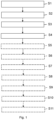
- Procédé de prédiction de la durée d'utilisation d'une unité de batterie utilisée précédemment dans au moins une première application, le procédé comprenant :- l'évaluation (S1) d'une capacité de batterie d'une unité de batterie à la fin d'une première durée d'utilisation (EOL1) de l'unité de batterie dans l'au moins une première application,- l'identification (S2) d'une deuxième application appropriée pour l'unité de batterie par comparaison de la capacité de batterie évaluée avec des exigences de puissance données d'au moins une deuxième application suggérée,- l'obtention (S3) de données de vieillissement indiquant le vieillissement de l'unité de batterie dans son au moins une première application,- la prédiction (S4) d'une deuxième durée d'utilisation attendue de l'unité de batterie dans la deuxième application identifiée, sur la base au moins d'informations concernant une utilisation prévue de l'unité de batterie dans la deuxième application et des données de vieillissement obtenues à partir de l'au moins une première application, dans lequel la prédiction de la deuxième durée d'utilisation attendue de l'unité de batterie comprend :le procédé comprenant en outre :o la création (S4-1) d'un ensemble de classifications d'utilisation de batterie,o pour chaque classification d'utilisation de batterie, la détermination (S4-2) d'au moins une courbe de vieillissement attendue (1a, 1b, 1c ; 2a, 2b, 2c) associée à la classification d'utilisation de batterie,o la classification (S4-3) de l'utilisation prévue de l'unité de batterie en fonction de l'ensemble de classifications d'utilisation de batterie,dans lequel la prédiction de la deuxième durée d'utilisation attendue est déterminée sur la base de l'au moins une courbe de vieillissement attendue (1a, 1b, 1c ; 2a, 2b, 2c) de la classification d'utilisation de batterie associée à l'utilisation prévue classifiée,- pendant l'utilisation de l'unité de batterie dans la deuxième application identifiée, l'obtention (S5) de données de fonctionnement relatives à une utilisation réelle de l'unité de batterie,- la prédiction (S6) d'une deuxième durée d'utilisation réelle de l'unité de batterie dans la deuxième application sur la base au moins des données de fonctionnement obtenues, par classification de l'utilisation réelle de l'unité de batterie en fonction de l'ensemble de classifications d'utilisation de batterie,- la comparaison (S7) de la deuxième durée d'utilisation réelle prédite avec la deuxième durée d'utilisation attendue prédite, fournissant ainsi un résultat de comparaison,- la détermination (S8) si un premier critère de notification est rempli sur la base du résultat de comparaison,- la génération (S9) d'une notification destinée à un utilisateur de l'unité de batterie si le critère de notification prédéterminé est rempli.
- Procédé selon la revendication 1, dans lequel chaque classification d'utilisation de batterie est associée à au moins un ensemble de plages de paramètres de fonctionnement prédéfinies, et dans lequel la détermination de l'au moins une courbe de vieillissement attendue (1a, 1b, 1c ; 2a, 2b, 2c) comprend la simulation du vieillissement de l'unité de batterie pour des valeurs de paramètres de fonctionnement dans l'au moins un ensemble de plages de paramètres de fonctionnement prédéfinies.
- Procédé selon la revendication 2, dans lequel la simulation du vieillissement est effectuée sur la base de données de fonctionnement de cellule de batterie dans des tests de cellule de batterie effectués après la fin de la première durée d'utilisation (EOL1), dans lequel les tests de cellule de batterie sont exécutés pour au moins un type de cellule de batterie compris dans l'unité de batterie.
- Procédé selon la revendication 3, dans lequel les tests de cellule de batterie sont exécutés sur la même cellule de batterie ou les mêmes cellules de batterie testées dans des tests de cellule de batterie correspondants exécutés au début de la première durée d'utilisation de l'unité de batterie.
- Procédé selon l'une quelconque des revendications précédentes, dans lequel la deuxième durée d'utilisation réelle prédite de l'unité de batterie est déterminée sur la base de l'au moins une courbe de vieillissement attendue (1a, 1b, 1c ; 2a, 2b, 2c) de la classification d'utilisation de batterie associée à l'utilisation réelle classifiée.
- Procédé selon l'une quelconque des revendications précédentes, dans lequel le critère de notification prédéterminé est considéré comme rempli si la classification d'utilisation de batterie associée à l'utilisation réelle classifiée diffère de la classification d'utilisation de batterie associée à l'utilisation prévue classifiée.
- Procédé selon l'une quelconque des revendications précédentes, dans lequel le critère de notification prédéterminé est considéré comme rempli si la deuxième durée d'utilisation réelle prédite s'écarte de la deuxième durée d'utilisation attendue prédite au moins selon une quantité prédéterminée.
- Procédé selon l'une quelconque des revendications précédentes, dans lequel l'au moins une première application de l'unité de batterie se trouve dans un système de stockage d'énergie électrique d'un véhicule.
- Programme informatique comprenant un moyen de code de programme pour la mise en œuvre du procédé selon l'une quelconque des revendications précédentes lorsque ledit programme informatique est exécuté sur un ordinateur.
- Support lisible par ordinateur, contenant un programme informatique comprenant un moyen de code de programme pour la mise en œuvre du procédé selon l'une quelconque des revendications 1 à 8 lorsque ledit programme informatique est exécuté sur un ordinateur.
- Unité de commande configurée pour la mise en œuvre du procédé selon l'une quelconque des revendications 1 à 8.
Priority Applications (3)
| Application Number | Priority Date | Filing Date | Title |
|---|---|---|---|
| EP20210233.1A EP4006563B1 (fr) | 2020-11-27 | 2020-11-27 | Méthode de prédiction de la durée d'utilisation d'un ensemble de batteries |
| CN202111376409.XA CN114563707A (zh) | 2020-11-27 | 2021-11-19 | 用于预测电池单元的使用寿命的方法 |
| US17/456,272 US11809255B2 (en) | 2020-11-27 | 2021-11-23 | Method for predicting service life of a battery unit |
Applications Claiming Priority (1)
| Application Number | Priority Date | Filing Date | Title |
|---|---|---|---|
| EP20210233.1A EP4006563B1 (fr) | 2020-11-27 | 2020-11-27 | Méthode de prédiction de la durée d'utilisation d'un ensemble de batteries |
Publications (2)
| Publication Number | Publication Date |
|---|---|
| EP4006563A1 EP4006563A1 (fr) | 2022-06-01 |
| EP4006563B1 true EP4006563B1 (fr) | 2025-07-09 |
Family
ID=73654617
Family Applications (1)
| Application Number | Title | Priority Date | Filing Date |
|---|---|---|---|
| EP20210233.1A Active EP4006563B1 (fr) | 2020-11-27 | 2020-11-27 | Méthode de prédiction de la durée d'utilisation d'un ensemble de batteries |
Country Status (3)
| Country | Link |
|---|---|
| US (1) | US11809255B2 (fr) |
| EP (1) | EP4006563B1 (fr) |
| CN (1) | CN114563707A (fr) |
Families Citing this family (3)
| Publication number | Priority date | Publication date | Assignee | Title |
|---|---|---|---|---|
| EP4139162B1 (fr) * | 2020-04-23 | 2024-07-17 | Volvo Truck Corporation | Procédé permettant de surveiller le vieillissement d'une unité de batterie |
| CN118974578A (zh) * | 2022-06-13 | 2024-11-15 | 沃尔沃卡车集团 | 用于控制至少两个燃料电池系统的操作的计算机实现的方法 |
| DE102023210096A1 (de) | 2023-10-16 | 2025-04-17 | Robert Bosch Gesellschaft mit beschränkter Haftung | Verfahren zur Zuordnung und Auswahl von genutzten Gerätebatterien für eine Weiterverwendung |
Citations (1)
| Publication number | Priority date | Publication date | Assignee | Title |
|---|---|---|---|---|
| US20060250137A1 (en) * | 2003-06-25 | 2006-11-09 | Bernd Frey | Method for predicting the residual service life of an electric energy accumulator |
Family Cites Families (7)
| Publication number | Priority date | Publication date | Assignee | Title |
|---|---|---|---|---|
| US7199557B2 (en) * | 2003-07-01 | 2007-04-03 | Eaton Power Quality Company | Apparatus, methods and computer program products for estimation of battery reserve life using adaptively modified state of health indicator-based reserve life models |
| CN107219461B (zh) * | 2016-03-22 | 2020-09-15 | 珠海冠宇电池股份有限公司 | 二次电池的寿命预测方法及电源管理方法 |
| DE102016220860A1 (de) * | 2016-10-24 | 2018-04-26 | Robert Bosch Gmbh | Verfahren, Vorrichtung und System zur Bewertung einer Traktionsbatterie |
| CN107703452B (zh) * | 2016-12-01 | 2020-08-25 | 国网辽宁省电力有限公司电力科学研究院 | 铅酸电池应用寿命预测系统 |
| CN111426952A (zh) * | 2019-01-10 | 2020-07-17 | 郑州宇通客车股份有限公司 | 一种锂离子电池的寿命预测方法 |
| CN109932656A (zh) * | 2019-04-17 | 2019-06-25 | 合肥工业大学 | 一种基于imm-upf的锂电池寿命估计方法 |
| CN110554322B (zh) * | 2019-09-29 | 2022-04-15 | 东软睿驰汽车技术(沈阳)有限公司 | 一种二手电池使用寿命的预测方法以及装置 |
-
2020
- 2020-11-27 EP EP20210233.1A patent/EP4006563B1/fr active Active
-
2021
- 2021-11-19 CN CN202111376409.XA patent/CN114563707A/zh active Pending
- 2021-11-23 US US17/456,272 patent/US11809255B2/en active Active
Patent Citations (1)
| Publication number | Priority date | Publication date | Assignee | Title |
|---|---|---|---|---|
| US20060250137A1 (en) * | 2003-06-25 | 2006-11-09 | Bernd Frey | Method for predicting the residual service life of an electric energy accumulator |
Also Published As
| Publication number | Publication date |
|---|---|
| US11809255B2 (en) | 2023-11-07 |
| EP4006563A1 (fr) | 2022-06-01 |
| CN114563707A (zh) | 2022-05-31 |
| US20220171450A1 (en) | 2022-06-02 |
Similar Documents
| Publication | Publication Date | Title |
|---|---|---|
| KR102902076B1 (ko) | 배터리 성능 예측 | |
| CN112666464B (zh) | 电池健康状态预测方法、装置、电子设备和可读存储介质 | |
| EP4139162B1 (fr) | Procédé permettant de surveiller le vieillissement d'une unité de batterie | |
| US11809255B2 (en) | Method for predicting service life of a battery unit | |
| US12222400B2 (en) | State value for rechargeable batteries | |
| EP4019321A1 (fr) | Dispositif et procédé de gestion de batterie et véhicule | |
| Sarasketa-Zabala et al. | Cycle ageing analysis of a LiFePO4/graphite cell with dynamic model validations: Towards realistic lifetime predictions | |
| CN115702533B (zh) | 用于预测多电池电能存储系统的功率状态的方法 | |
| US12504481B2 (en) | Method and system for determining a remaining useful lifetime of a battery | |
| CN112215434A (zh) | 一种lstm模型的生成方法、充电时长预测方法及介质 | |
| EP3680675A1 (fr) | Procédé de diagnostic d'état de réutilisation de batterie | |
| Eider et al. | Dynamic EV battery health recommendations | |
| D’Arpino et al. | Lifetime optimization for a grid-friendly dc fast charge station with second life batteries | |
| CN113139583A (zh) | 电池分选参数的选取方法、装置、计算机设备和存储介质 | |
| CN115544903B (zh) | 基于大数据的电池数据处理方法、装置、设备及存储介质 | |
| JP6607168B2 (ja) | 電動車両 | |
| WO2023218038A1 (fr) | Traitement d'éléments de batterie | |
| CN118176429A (zh) | 基于lca的电池管理方法、服务器及其计算机程序 | |
| Jithin Mohan et al. | Battery Management System-Based Fuzzy Logic | |
| CN117951524B (zh) | 一种电量均衡策略模型训练方法、装置、设备及介质 | |
| CN118376921A (zh) | 预测电池容量变化的方法 | |
| Gross et al. | Measurement of a health index for Li-Ion batteries | |
| Martel et al. | Preemptive degradation-induced battery replacement for hybrid electric vehicles in sustained optimal extended-range driving conditions | |
| KR102769365B1 (ko) | Ai 모델을 이용한 배터리 진단 장치 및 이를 이용한 배터리 진단 방법 | |
| KR102468726B1 (ko) | 여러 주체가 사용하는 이차전지의 정보를 통합 저장 관리함으로써, 별도의 검사 없이 중고 이차전지를 동일한 열화원인으로 분류하여 재활용할 수 있는 이차전지 재활용 플랫폼 장치 |
Legal Events
| Date | Code | Title | Description |
|---|---|---|---|
| PUAI | Public reference made under article 153(3) epc to a published international application that has entered the european phase |
Free format text: ORIGINAL CODE: 0009012 |
|
| STAA | Information on the status of an ep patent application or granted ep patent |
Free format text: STATUS: THE APPLICATION HAS BEEN PUBLISHED |
|
| AK | Designated contracting states |
Kind code of ref document: A1 Designated state(s): AL AT BE BG CH CY CZ DE DK EE ES FI FR GB GR HR HU IE IS IT LI LT LU LV MC MK MT NL NO PL PT RO RS SE SI SK SM TR |
|
| STAA | Information on the status of an ep patent application or granted ep patent |
Free format text: STATUS: REQUEST FOR EXAMINATION WAS MADE |
|
| 17P | Request for examination filed |
Effective date: 20221130 |
|
| RBV | Designated contracting states (corrected) |
Designated state(s): AL AT BE BG CH CY CZ DE DK EE ES FI FR GB GR HR HU IE IS IT LI LT LU LV MC MK MT NL NO PL PT RO RS SE SI SK SM TR |
|
| STAA | Information on the status of an ep patent application or granted ep patent |
Free format text: STATUS: EXAMINATION IS IN PROGRESS |
|
| 17Q | First examination report despatched |
Effective date: 20231205 |
|
| GRAP | Despatch of communication of intention to grant a patent |
Free format text: ORIGINAL CODE: EPIDOSNIGR1 |
|
| STAA | Information on the status of an ep patent application or granted ep patent |
Free format text: STATUS: GRANT OF PATENT IS INTENDED |
|
| INTG | Intention to grant announced |
Effective date: 20250210 |
|
| GRAS | Grant fee paid |
Free format text: ORIGINAL CODE: EPIDOSNIGR3 |
|
| GRAA | (expected) grant |
Free format text: ORIGINAL CODE: 0009210 |
|
| STAA | Information on the status of an ep patent application or granted ep patent |
Free format text: STATUS: THE PATENT HAS BEEN GRANTED |
|
| AK | Designated contracting states |
Kind code of ref document: B1 Designated state(s): AL AT BE BG CH CY CZ DE DK EE ES FI FR GB GR HR HU IE IS IT LI LT LU LV MC MK MT NL NO PL PT RO RS SE SI SK SM TR |
|
| REG | Reference to a national code |
Ref country code: GB Ref legal event code: FG4D |
|
| REG | Reference to a national code |
Ref country code: CH Ref legal event code: EP |
|
| REG | Reference to a national code |
Ref country code: IE Ref legal event code: FG4D |
|
| REG | Reference to a national code |
Ref country code: DE Ref legal event code: R096 Ref document number: 602020054134 Country of ref document: DE |
|
| REG | Reference to a national code |
Ref country code: NL Ref legal event code: MP Effective date: 20250709 |
|
| PG25 | Lapsed in a contracting state [announced via postgrant information from national office to epo] |
Ref country code: PT Free format text: LAPSE BECAUSE OF FAILURE TO SUBMIT A TRANSLATION OF THE DESCRIPTION OR TO PAY THE FEE WITHIN THE PRESCRIBED TIME-LIMIT Effective date: 20251110 |
|
| PG25 | Lapsed in a contracting state [announced via postgrant information from national office to epo] |
Ref country code: NL Free format text: LAPSE BECAUSE OF FAILURE TO SUBMIT A TRANSLATION OF THE DESCRIPTION OR TO PAY THE FEE WITHIN THE PRESCRIBED TIME-LIMIT Effective date: 20250709 |
|
| REG | Reference to a national code |
Ref country code: AT Ref legal event code: MK05 Ref document number: 1812278 Country of ref document: AT Kind code of ref document: T Effective date: 20250709 |
|
| PG25 | Lapsed in a contracting state [announced via postgrant information from national office to epo] |
Ref country code: IS Free format text: LAPSE BECAUSE OF FAILURE TO SUBMIT A TRANSLATION OF THE DESCRIPTION OR TO PAY THE FEE WITHIN THE PRESCRIBED TIME-LIMIT Effective date: 20251109 |
|
| PGFP | Annual fee paid to national office [announced via postgrant information from national office to epo] |
Ref country code: DE Payment date: 20251126 Year of fee payment: 6 |
|
| PG25 | Lapsed in a contracting state [announced via postgrant information from national office to epo] |
Ref country code: NO Free format text: LAPSE BECAUSE OF FAILURE TO SUBMIT A TRANSLATION OF THE DESCRIPTION OR TO PAY THE FEE WITHIN THE PRESCRIBED TIME-LIMIT Effective date: 20251009 |
|
| REG | Reference to a national code |
Ref country code: LT Ref legal event code: MG9D |
|
| PG25 | Lapsed in a contracting state [announced via postgrant information from national office to epo] |
Ref country code: AT Free format text: LAPSE BECAUSE OF FAILURE TO SUBMIT A TRANSLATION OF THE DESCRIPTION OR TO PAY THE FEE WITHIN THE PRESCRIBED TIME-LIMIT Effective date: 20250709 |
|
| PG25 | Lapsed in a contracting state [announced via postgrant information from national office to epo] |
Ref country code: FI Free format text: LAPSE BECAUSE OF FAILURE TO SUBMIT A TRANSLATION OF THE DESCRIPTION OR TO PAY THE FEE WITHIN THE PRESCRIBED TIME-LIMIT Effective date: 20250709 |
|
| PG25 | Lapsed in a contracting state [announced via postgrant information from national office to epo] |
Ref country code: HR Free format text: LAPSE BECAUSE OF FAILURE TO SUBMIT A TRANSLATION OF THE DESCRIPTION OR TO PAY THE FEE WITHIN THE PRESCRIBED TIME-LIMIT Effective date: 20250709 |
|
| PG25 | Lapsed in a contracting state [announced via postgrant information from national office to epo] |
Ref country code: GR Free format text: LAPSE BECAUSE OF FAILURE TO SUBMIT A TRANSLATION OF THE DESCRIPTION OR TO PAY THE FEE WITHIN THE PRESCRIBED TIME-LIMIT Effective date: 20251010 |
|
| PG25 | Lapsed in a contracting state [announced via postgrant information from national office to epo] |
Ref country code: SE Free format text: LAPSE BECAUSE OF FAILURE TO SUBMIT A TRANSLATION OF THE DESCRIPTION OR TO PAY THE FEE WITHIN THE PRESCRIBED TIME-LIMIT Effective date: 20250709 |
|
| PG25 | Lapsed in a contracting state [announced via postgrant information from national office to epo] |
Ref country code: LV Free format text: LAPSE BECAUSE OF FAILURE TO SUBMIT A TRANSLATION OF THE DESCRIPTION OR TO PAY THE FEE WITHIN THE PRESCRIBED TIME-LIMIT Effective date: 20250709 |
|
| PG25 | Lapsed in a contracting state [announced via postgrant information from national office to epo] |
Ref country code: BG Free format text: LAPSE BECAUSE OF FAILURE TO SUBMIT A TRANSLATION OF THE DESCRIPTION OR TO PAY THE FEE WITHIN THE PRESCRIBED TIME-LIMIT Effective date: 20250709 Ref country code: PL Free format text: LAPSE BECAUSE OF FAILURE TO SUBMIT A TRANSLATION OF THE DESCRIPTION OR TO PAY THE FEE WITHIN THE PRESCRIBED TIME-LIMIT Effective date: 20250709 |
|
| PG25 | Lapsed in a contracting state [announced via postgrant information from national office to epo] |
Ref country code: RS Free format text: LAPSE BECAUSE OF FAILURE TO SUBMIT A TRANSLATION OF THE DESCRIPTION OR TO PAY THE FEE WITHIN THE PRESCRIBED TIME-LIMIT Effective date: 20251009 |
|
| PG25 | Lapsed in a contracting state [announced via postgrant information from national office to epo] |
Ref country code: ES Free format text: LAPSE BECAUSE OF FAILURE TO SUBMIT A TRANSLATION OF THE DESCRIPTION OR TO PAY THE FEE WITHIN THE PRESCRIBED TIME-LIMIT Effective date: 20250709 |
|
| PG25 | Lapsed in a contracting state [announced via postgrant information from national office to epo] |
Ref country code: RO Free format text: LAPSE BECAUSE OF FAILURE TO SUBMIT A TRANSLATION OF THE DESCRIPTION OR TO PAY THE FEE WITHIN THE PRESCRIBED TIME-LIMIT Effective date: 20250709 |
|
| PG25 | Lapsed in a contracting state [announced via postgrant information from national office to epo] |
Ref country code: SM Free format text: LAPSE BECAUSE OF FAILURE TO SUBMIT A TRANSLATION OF THE DESCRIPTION OR TO PAY THE FEE WITHIN THE PRESCRIBED TIME-LIMIT Effective date: 20250709 |
|
| PG25 | Lapsed in a contracting state [announced via postgrant information from national office to epo] |
Ref country code: DK Free format text: LAPSE BECAUSE OF FAILURE TO SUBMIT A TRANSLATION OF THE DESCRIPTION OR TO PAY THE FEE WITHIN THE PRESCRIBED TIME-LIMIT Effective date: 20250709 |
|
| PG25 | Lapsed in a contracting state [announced via postgrant information from national office to epo] |
Ref country code: IT Free format text: LAPSE BECAUSE OF FAILURE TO SUBMIT A TRANSLATION OF THE DESCRIPTION OR TO PAY THE FEE WITHIN THE PRESCRIBED TIME-LIMIT Effective date: 20250709 |
|
| PG25 | Lapsed in a contracting state [announced via postgrant information from national office to epo] |
Ref country code: CZ Free format text: LAPSE BECAUSE OF FAILURE TO SUBMIT A TRANSLATION OF THE DESCRIPTION OR TO PAY THE FEE WITHIN THE PRESCRIBED TIME-LIMIT Effective date: 20250709 |
|
| PG25 | Lapsed in a contracting state [announced via postgrant information from national office to epo] |
Ref country code: EE Free format text: LAPSE BECAUSE OF FAILURE TO SUBMIT A TRANSLATION OF THE DESCRIPTION OR TO PAY THE FEE WITHIN THE PRESCRIBED TIME-LIMIT Effective date: 20250709 Ref country code: SK Free format text: LAPSE BECAUSE OF FAILURE TO SUBMIT A TRANSLATION OF THE DESCRIPTION OR TO PAY THE FEE WITHIN THE PRESCRIBED TIME-LIMIT Effective date: 20250709 |