EP4006655B1 - Verfahren und vorrichtung zum auffinden günstiger parametereinstellungen eines reglers zur steuerung eines aktuators in einem heiz- oder kühlsystem - Google Patents
Verfahren und vorrichtung zum auffinden günstiger parametereinstellungen eines reglers zur steuerung eines aktuators in einem heiz- oder kühlsystem Download PDFInfo
- Publication number
- EP4006655B1 EP4006655B1 EP20209910.7A EP20209910A EP4006655B1 EP 4006655 B1 EP4006655 B1 EP 4006655B1 EP 20209910 A EP20209910 A EP 20209910A EP 4006655 B1 EP4006655 B1 EP 4006655B1
- Authority
- EP
- European Patent Office
- Prior art keywords
- activity
- parameter
- valve
- actuator
- level
- Prior art date
- Legal status (The legal status is an assumption and is not a legal conclusion. Google has not performed a legal analysis and makes no representation as to the accuracy of the status listed.)
- Active
Links
Images

Classifications
-
- F—MECHANICAL ENGINEERING; LIGHTING; HEATING; WEAPONS; BLASTING
- F16—ENGINEERING ELEMENTS AND UNITS; GENERAL MEASURES FOR PRODUCING AND MAINTAINING EFFECTIVE FUNCTIONING OF MACHINES OR INSTALLATIONS; THERMAL INSULATION IN GENERAL
- F16K—VALVES; TAPS; COCKS; ACTUATING-FLOATS; DEVICES FOR VENTING OR AERATING
- F16K37/00—Special means in or on valves or other cut-off apparatus for indicating or recording operation thereof, or for enabling an alarm to be given
- F16K37/0075—For recording or indicating the functioning of a valve in combination with test equipment
- F16K37/0091—For recording or indicating the functioning of a valve in combination with test equipment by measuring fluid parameters
-
- G—PHYSICS
- G05—CONTROLLING; REGULATING
- G05B—CONTROL OR REGULATING SYSTEMS IN GENERAL; FUNCTIONAL ELEMENTS OF SUCH SYSTEMS; MONITORING OR TESTING ARRANGEMENTS FOR SUCH SYSTEMS OR ELEMENTS
- G05B13/00—Adaptive control systems, i.e. systems automatically adjusting themselves to have a performance which is optimum according to some preassigned criterion
- G05B13/02—Adaptive control systems, i.e. systems automatically adjusting themselves to have a performance which is optimum according to some preassigned criterion electric
- G05B13/0205—Adaptive control systems, i.e. systems automatically adjusting themselves to have a performance which is optimum according to some preassigned criterion electric not using a model or a simulator of the controlled system
- G05B13/024—Adaptive control systems, i.e. systems automatically adjusting themselves to have a performance which is optimum according to some preassigned criterion electric not using a model or a simulator of the controlled system in which a parameter or coefficient is automatically adjusted to optimise the performance
-
- F—MECHANICAL ENGINEERING; LIGHTING; HEATING; WEAPONS; BLASTING
- F16—ENGINEERING ELEMENTS AND UNITS; GENERAL MEASURES FOR PRODUCING AND MAINTAINING EFFECTIVE FUNCTIONING OF MACHINES OR INSTALLATIONS; THERMAL INSULATION IN GENERAL
- F16K—VALVES; TAPS; COCKS; ACTUATING-FLOATS; DEVICES FOR VENTING OR AERATING
- F16K31/00—Actuating devices; Operating means; Releasing devices
- F16K31/02—Actuating devices; Operating means; Releasing devices electric; magnetic
Definitions
- the present disclosure belongs to methods and devices for finding beneficial parameter settings of a controller for controlling an actuator in a heating or cooling system.
- a controller for controlling valve actuators in heating or cooling systems is to ensure that a desired temperature or a fluid flow of a fluid flowing in the heating or cooling system is maintained.
- the performance of such a controller depends on its parameter settings, thereby requiring adequate parameter settings concerning the temperature or a fluid flow.
- Such parameter settings generally include predefined factory parameter settings.
- factory parameter settings for such a controller oftentimes differ from the beneficial parameter settings of a controller in an actual heating or cooling system.
- a large difference between the factory parameter settings and the beneficial parameter settings may depend on sensor positioning, valve dimensions, system delay times, valve characteristics, or the like. Unfavorable factory parameter settings may thus result in an inadequate performance of the heating or cooling system.
- large differences between factory parameter settings and beneficial parameter settings of an actual heating or cooling system may cause self-oscillation of the controller resulting in an extensive wear and reduced system efficiency.
- US6937909 B2 discloses a method for adjusting the gain and integral time parameters of a proportional-integral controller.
- a method according to claim 1 for finding beneficial parameter settings of a controller for controlling an actuator connected to a valve in a heating or cooling system is provided.
- the method includes automatically estimating and implementing beneficial parameter settings of the controller.
- the activity parameter associated with the control activity level is updated and possibly updated based on a detection of the control activity level.
- the second type of activity-parameter adjustment includes an adjustment of the activity parameter being opposed to the first type of activity-parameter adjustment. That is, provided the first type of activity-parameter adjustment being an increase of the activity parameter, the second type of activity-parameter adjustment is a decrease of the activity parameter, and vice versa.
- Such activity parameter adjustments may enable an improved adaptation of the activity parameter in the actual heating or cooling system, hence improving possibly poorly predefined factory parameter settings. Thus, this may prevent unfavorable factory settings and may provide a trade-off between the speed and the stability of the valve. An improved adaptation for, e.g., seasons, may thereby be achieved.
- the energy efficiency and the provided comfort level of the heating or cooling system may further be increased.
- the method may enable the controller to achieve a desirable level of activity for reducing the wear of components associated with the level of activity. For instance, the wear of the valve and the actuator may be reduced.
- the method may adapt the controller being independent of the system architecture of a heating or cooling system. The controller may also reduce a risk of extensive power peaks and comfort issues, which may occur if the level of activity of the controller is high.
- the activity parameter is a scaling factor for scaling a predefined gain factor, the product of the activity parameter and the predefined gain factor being configured to be proportional to a level of change of an opening degree of the valve.
- a response of the heating or cooling system may be to execute a stroke change of the actuator.
- the magnitude of such a stroke change may be proportional to the received control error and a gain factor.
- the magnitude of the gain factor hence determines the magnitude of the response, given the detected control error, which may further relate to the stability of the heating or cooling system.
- the stability of the heating or cooling system may benefit from scaling the gain factor.
- Such a scaling is within this specification handled by the activity parameter.
- the magnitude of the activity parameter may be viewed as a temporary updating of the predefined gain factor, which may allow an adequate level of change of a stroke of the valve in prevailing circumstances.
- the magnitude of the activity parameter is preferably linearly proportional to how much a valve shall open up, upon receiving instructions for open up the valve, given a detected control error.
- Open up the valve generally, and also herein, refers to allowing an increased fluid flow through a certain inlet of the valve.
- the gain factor is 1 may imply that the change of the opening degree of a valve is to be changed by 1 % given a control error of 1°C.
- the activity parameter is thus used to control the control activity level. Provided the control activity level is to be decreased, a command is executed to decrease the activity parameter.
- a change of the activity parameter may for instance account for season variations, system architecture or changed system conditions e.g. change of a prevailing temperature level. This may further allow the controller of the heating or cooling system to acquire suitable parameter settings, to improve possibly poorly predefined factory parameter settings or parameters settings that were beneficial during other circumstances.
- the first type of activity-parameter adjustment is a decrease of the activity parameter
- the second type of activity-parameter adjustment is an increase of the activity parameter
- a decrease of the activity parameter is executed if the control activity level is above a threshold control activity level.
- the activity parameter is to be decreased, resulting in that, upon receiving instructions to change the opening degree of the valve given a certain control error, the change of opening degree is decreased.
- Such a decrease may decrease the activity of the actuator and the valve, and may thereby reduce the wear of the actuator, the valve, or other moving parts associated with the control activity level.
- an increase of the activity parameter is executed.
- the detecting of the control activity level may comprise detecting a number of directional changes of the actuator per unit of time.
- the activity parameter may be updated accordingly.
- the wear of the actuator and the valve may be reduced. This may further increase the energy efficiency and the provided comfort level of the heating or cooling system.
- the method may further comprise placing an inquiry to decrease the activity parameter, provided the number of directional changes of the actuator per unit of time is above a first threshold value.
- the number of directional changes of the actuator is detected during a period of time. Such a period of time may be of the order of ten minutes.
- the activity parameter may be adjusted accordingly, provided a set of criteria are fulfilled. For instance, the activity parameter may be decreased if the number of directional changes is above the first threshold value and the valve is not in an end position. The latter will be further described below. This may provide an improvement of a trade-off between speed and stability of the actuator, thereby increasing the energy efficiency and the provided comfort level of the heating or cooling system.
- the detecting of the control activity level may comprise detecting a number of actuator movements per unit of time.
- the number of actuator movements may correspond to the number of directional changes provided both are detected during the same period of time and the stroke direction of the actuator flips back and forth for each subsequent stroke change. In general, however, the number of actuator movements and the number of directional changes numbers differ. This provides information of how often the actuator changes position, regardless of possible directional changes of the actuator.
- the activity parameter may be updated accordingly. Thus, the wear of the actuator and the valve may be reduced while still maintaining a suitable gain. This may further increase the energy efficiency and the provided comfort level of the heating or cooling system.
- the method may further comprise placing an inquiry to decrease the activity parameter, provided that the number of actuator movements is above a second threshold value.
- the number of actuator movements is detected during a period of time.
- the activity parameter may be adjusted accordingly, provided a set of criteria are fulfilled. For instance, the activity parameter may be decreased if the number of actuator movements is above the second threshold value and the valve is not in an end position. The latter will be further described below. This may provide an improvement of a trade-off between speed and stability of the actuator, thereby increasing the energy efficiency and the provided comfort level of the heating or cooling system.
- the method may further comprise decrease the activity parameter, provided the inquiry to decrease the activity parameter, based on either or both of the number of directional changes and the number of actuator movements, has been placed, and provided absence of a decrease of the activity parameter during the second period of time.
- the second period of time is preferably of the order of 12 hours. This prevents an unnecessarily high control activity level, thereby reducing the wear of the actuator and the valve, as well as increasing the energy efficiency and the provided comfort level of the heating or cooling system.
- the number of actuator movements and/or the number of directional changes of the actuator may be evaluated periodically, wherein one period may be shorter that the second period of time. This may allow a smooth and controlled adjustment of an activity parameter associated with the level of activity of the controller, thereby enhancing stability and performance in the heating or cooling system.
- the first period of time may be of the order of 24 hours.
- Such a period of time may serve as a sufficient trade-off between the stability and the speed of the valve, providing to relatively fast achieve a sufficient activity parameter for the actual heating or cooling system over possibly unfavorable factory settings or parameters settings that were beneficial during other circumstances.
- Such a period of time is also short enough to account for possible changes of the activity parameter due to the different seasons changes over a year or other changes in system conditions.
- the method may further comprise:
- the desired attribute and the actual attribute of the fluid may be any suitable attribute for a fluid in heating or cooling system. This enhances flexibility of the method.
- the desired attribute may be a desired temperature
- the actual attribute may be an actual temperature
- Reading a desired temperature and comparing the desired temperature to an actual temperature may efficiently enable an adequate degree of opening of the valve to achieve a substantial equilibrium between the desired and actual temperature, provided a beneficial gain factor is found.
- the desired attribute may be a desired fluid flow
- the actual attribute may be an actual flow
- This enables a response of the system based on a volumetric flow of the fluid flowing in the piping system of the heating or cooling system which may increase the energy efficiency and the provided comfort level of the heating or cooling system based on the type of heating or cooling space to be heated or cooled.
- the valve may be configured to be set in any one of the settings:
- the execution of the activity-parameter adjustment may be prevented provided the valve is in the fully open position or in the fully closed position.
- a temperature control of the heating or cooling system is thereby inactive while the valve is in an end position.
- the execution of the activity-parameter adjustment may be prevented when the valve is in the fully open position.
- the method may restart.
- the valve may be in a completely closed position during summer if heating is considered unnecessary. If the activity parameter is adjusted in such a situation, the activity parameter would increase to its maximal value, since the control activity level in such a situation is zero, which would indicate a need for increase the activity parameter. This would cause future instability in the heating or cooling system. By preventing adjusting the activity parameter in such a situation may thereby enhance the stability of the heating or cooling system.
- an electronic device comprising:
- the method may further comprise setting a stroke of the actuator for approaching or maintaining the desired attribute of the fluid relative to the actual attribute of the fluid.
- the fluid may be water.
- the desired temperature may be a desired supply temperature.
- the actual temperature may be an actual supply temperature.
- Reading the desired supply temperature and compare the desired supply temperature to the measured actual supply temperature efficiently enables an extent of opening of the valve, to quickly achieve a substantial equilibrium between the desired and actual temperature, provided a beneficial gain factor.
- Such a reading and measuring may further enhance determining the gain factor to improve a response from the controller.
- Fig. 1 shows a flow chart 100 of the method
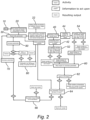
- Fig. 2 discloses a flow chart of the method including further details and example embodiments.
- Slightly differing wording may occasionally be used in Fig. 1 and Fig. 2 .
- the "activity parameter" discussed in the present specification may simply be denoted “parameter” in the drawings to save space.
- the method 100 repeatedly refers to a valve 300.
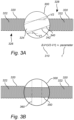
- Such a valve 300 and different positions 340;350;360 of the valve are shown, highly schematically, in Fig. 3 .
- the heating or cooling system under consideration may be a P-, PI- or PID-regulated system comprising at least a proportional control part, i.e., a received control error may have a certain linear relationship to the level of change of a stroke of the actuator.
- a response of the actuator may depend on the magnitude of the control error and a so-called gain factor.
- a thermostat detects a control error of +1°C, e.g., if an actual temperature is 1°C above a desired temperature
- the actuator may receive instructions from the controller to execute a level of change of the stroke of the actuator.
- the gain factor determines such a level of change, such that the response may be a stroke change to decrease an opening degree of a valve connected to the actuator.
- a larger gain factor hence implies a more extensive change of the stroke of the actuator, and thereby a more extensive change of the opening degree of the valve.
- Fig. 1 schematically shows a flow chart of a method 100 for finding beneficial parameter settings of a controller for controlling an actuator connected to a valve 300 in a heating or cooling system.
- the flow chart 100 comprises a method cycle comprising a number of controlled criteria, either or both shown in Figs 1-2 and described in the text below.
- a method cycle time may be one second. Such a short method cycle time may be sufficient for detecting every single actuator movement.
- the method cycle time may depend on the space to be heated or cooled by the heating or cooling system. If a restart is required by means of, e.g., a criterium not being fulfilled, the method cycle may restart at step 10 in the flow chart.
- the method 100 comprises a starting position 10.
- the starting position 10 indicates a start of the method 100.
- the method 100 may restart at the starting position 10 every second, such that a method cycle time is one second. Other method cycle times are equally possible. For instance, the method may restart at the starting position 10 every minute. Should a criterium of the method not being fulfilled, the method 100 may restart at the starting position 10. Examples of two such criteria 50;90 are shown in Fig. 1 and will be further described below.
- the method 100 may comprise reading 20 a desired attribute of a fluid 322 flowing in a piping system 320 of the heating or cooling system, and measuring an actual attribute of the fluid 322, wherein the actual attribute corresponds to the desired attribute.
- the desired attribute is a similar physical quantity as the actual attribute.
- the measuring of the actual attribute and the reading of the desired attribute may be done substantially simultaneously.
- the desired attribute may be provided by a user.
- the desired attribute may be a desired temperature.
- the actual attribute may be an actual temperature.
- a desired/actual temperature may refer to a temperature of a space to be heated or cooled by the heating or cooling system.
- the space may be a room, an office, a space in a warehouse, or the like.
- the desired attribute may be a desired supply temperature of the fluid 322 flowing in the piping system 320 of the heating or cooling system. Accordingly, the actual attribute may be an actual supply temperature of the fluid flowing in the piping system of the heating or cooling system. Other actual attributes and desired attributes are possible.
- the magnitude of the adjustment 310 of the valve 300 may be controlled by an activity parameter 1 associated with the control activity level of the valve, upon execution of such an adjustment.
- the "activity parameter” 1 may occasionally be denoted “control activity level parameter”, or, as shown in some of the appended drawings, simply "parameter”.
- the method 100 may comprise reading and writing 30 an activity parameter 1 associated with a control activity level.
- the activity parameter 1 is proportional to a level of change 410 of an opening degree of the valve; see Fig. 3 .
- the activity parameter determines a change of a degree of opening of the valve upon receiving instructions to adjust the stroke of the valve. That is, the activity parameter may be linearly proportional to an increase or decrease of degree of opening of the valve, given a certain control error.
- the gain factor may, e.g., assume values between 0 and 10.
- the activity parameter may assume values between 0 and 1.
- Other ranges are equally possible.
- the activity parameter once multiplied by the gain factor, hence is proportional to the control activity level.
- the gain factor may be discretely split up in equal intervals, each interval being 0.1 units. That is, upon adjusting the activity parameter "one step" in such a situation means adjusting the updated gain factor by 0.1.
- a one-step decrease of the activity parameter means that the gain factor is updated to an updated gain factor being 9.9.
- the activity parameter may in a non-limiting way be configured to be inversely proportional to an increasing of the opening degree of the valve, upon receiving instructions for opening up the valve.
- Other inverse relationships between the activity parameter and the change of the opening degree upon execution are equally possible. For example, a quadratic, cubic, quartic, inversely quadratic, inversely cubic or inversely quartic relationships are possible.
- the method 100 may comprise detecting 40 a number of directional changes of the actuator 42 per unit of time and/or detecting a number of actuator movements 44 per unit of time.
- the detection 40 may proceed ongoingly and may perform an evaluation of the control activity level periodically. The evaluation may be done after an evaluation-period of time.
- One such evaluation-period of time may be of the order of ten minutes. Other adequate evaluation-periods of time are equally possible.
- the method 100 may comprise rising an issue by a criterium 50 regarding the control activity level.
- the control activity level may comprise either or both of the number of directional changes of the actuator per unit of time and the number of actuator movements per unit of time.
- the criterium 50 may be a criterium for determining whether either or both of the number of directional changes 52 and the number of actuator movements 54 per unit of time is above a respective threshold value.
- the number of directional changes is associated with a first threshold value, wherein the first threshold value is a maximal value of the number of directional changes that are allowed during a unit of time.
- the number of actuator movements is associated with a second threshold value, wherein the second threshold value is a maximal value of the number of actuator movements that are allowed during a unit of time.
- the unit of time may be 10 minutes. However, the unit of time may be any suitable period of time.
- the first threshold value and the second threshold value may be similar.
- the first threshold value and the second threshold value may be different.
- the method cycle may restart at 10 after resetting the number of directional changes. If the number of actuator movements is below the second threshold value after the unit of time, step 54, the method cycle may restart at 10 after resetting the number of actuator movements.
- the first threshold value may be between 20-100 directional changes per hour.
- the second threshold value may be between 20-100 movements per hour.
- the method 100 may comprise placing an inquiry 60 to decrease the activity parameter. Such an inquiry may be placed if the number of directional changes of the actuator per unit of time is above the first threshold value. That is, if the answer to criterium 50;52 is yes. Such an inquiry 60 may be placed if the number of actuator movements per unit of time is above the second threshold value. That is, if the answer to criterium 50;54 is yes.
- the unit of time may, again, be 10 minutes.
- the inquiry 60 may be placed to decrease the activity parameter 1. If the number of directional changes of the actuator is above the first threshold value, the inquiry 60 may be placed to decrease the activity parameter 1. If the number of actuator movements is above the first threshold value, the inquiry 60 may be placed to decrease the activity parameter 1. Both the number of directional changes of the actuator and the number of movements may, per unit of time, simultaneously exceed respective threshold value. In such a situation, the inquiry 60 may be placed to decrease the activity parameter 1.
- a decrease of the activity parameter 1 may be prevented by a valve position criterium between process step 60 and 70 of Fig. 1 , i.e., step 62 in Fig.2 .
- the method 100 may start over at process step 10.
- An end position 350;360 of the valve 300 is either a fully open position 350 or a fully closed position 360; see Fig. 3B .
- the valve 300 may be configured to be set in any one of the settings, a fully open position 350, a fully closed position 360, and any position 340 between the fully open position and the fully closed position.
- the above-mentioned valve positions are schematically shown in Fig. 3A and Fig. 3B .
- a temperature control of the heating or cooling system may thereby be inactive while the valve is in an end position 350;360.
- the execution of the adjustment of the activity parameter 1 may be prevented if the valve is in the fully open position 350.
- the method may restart at 10 after resetting the number of directional changes and the number of actuator movements.
- the valve 300 may be in a fully closed position 360 during summer if heating of a space to be heated may be considered unnecessary. If the activity parameter 1 is adjusted in such a situation, the activity parameter 1 would increase to its maximal allowed value, since the control activity level in such a situation is zero, which would indicate a need for increase the activity parameter 1.
- a second subsequent criterium 64 may regard whether the activity parameter has been increased or not during the second period of time.
- the second period of time may be 12 hours. Other suitable values of the second period of time are equally plausible.
- the second period of time is shorter than the first period of time. If the activity parameter has been increased during the second period of time, the method 100 may restart at process step 10 after resetting the number of directional changes and the number of actuator movements.
- Proceeding to process step 70 may further be prevented by a third subsequent criterium 66 between process step 60 and 70.
- a third subsequent criterium 66 may regard whether the activity parameter is larger than an activity parameter threshold value or not.
- Such an activity parameter threshold value may be close to zero.
- the activity parameter threshold value may be zero.
- a decrease of the activity parameter 1 may in such a situation be impossible.
- the method 100 may restart at process step 10 after resetting the number of directional changes and the number of actuator movements.
- the method 100 may restart at process step 10 after resetting the number of directional changes and the number of actuator movements.
- the method 100 may proceed to process step 70.
- the inquiry 60 of decrease the activity parameter may be approved.
- the activity parameter may be decreased at process step 70.
- the activity parameter 1 may be decreased one step.
- one step corresponds to a change of the gain factor by 0.1.
- the range of the values of the gain factor may be between 0 and 10, wherein a scaling of the gain factor, by the activity parameter, may be such that the gain factor is scaled in steps of 0.1.
- One such interval is herein referred to as one step.
- the method 100 may not reach processing step 60 in the flow chart 100 during the second period of time. In such a situation there may be a redundancy in decreasing the activity parameter.
- a reviewing issue 80 may be raised regarding whether or not the activity parameter has been decreased during the first period of time. That is, the reviewing issue 80 may concern whether process step 70 has been executed during the first period of time. If the activity parameter 1 has not been decreased during the first period of time, the activity parameter may be increased, provided, yet again, the valve is not in an end position. That is, an adjustment of the activity parameter 1 may be prevented provided the valve 300 is in the fully open position 350 or in the fully closed position 360.
- the increase of the activity parameter 1 may be one step.
- One step may be defined as described above.
- One step may be defined differently than described above, depending on the architecture of the heating or cooling system.
- the method 100 may proceed to process step 20 with the updated activity parameter. Alternatively, the method may proceed to step 10 or 30.
- the method 100 may further comprise, after the reading 20 of the desired attribute of the fluid 322 and measuring the actual attribute of the fluid, setting a stroke of the actuator for approaching or maintaining the desired attribute of the fluid relative to the actual attribute of the fluid 22.
- a setting of the stroke of the actuator 22 may be directly or indirectly associated with a moving of the valve 300.
- a moving of the valve 300 may be directly or indirectly associated with a fluid flow of the fluid 322 flowing in the piping system 320 of the heating or cooling system.
- a fully open position 350 of the valve 300 may allow a maximal volumetric velocity of the fluid 322 flowing through the valve 300.
- a fully closed position 360 of the valve 300 allows for a minimal volumetric velocity of the fluid 322 flowing through the valve 300.
- Such a minimal volumetric velocity may be essentially zero liters per minute of the fluid 322 flowing through a geometrical cross-sectional area of a pipe 320 associated with the valve 300.
- a fully open position 350 of the valve 300 may include a substantially fully open position. That is, for instance, if the valve 300 is open to such an extent that a volumetric velocity of the fluid 322 flowing through the valve 300 is equal to, or above 95% of the maximal volumetric velocity of the fluid 322, the valve 300 may be considered fully open.
- a similar reasoning may be applied for the fully closed position 360. That is, for instance, if the valve 300 is closed to such an extent that a volumetric velocity of the fluid flowing through the valve is equal to, or below 5% of the maximal volumetric velocity of the fluid flowing through the valve 300, the valve may be considered fully closed.
- the fluid 322 flowing through the piping system 320 of the heating or cooling system may be water.
- any suitable fluid 322 medium may be possible to use in the piping system 320 of the heating or cooling system.
- Fig. 3A and Fig. 3B highly schematically, shows a valve 300 installed in a piping system 322.
- the valve 300 is here displayed being a 2-way rotary valve 300.
- the method 100 may be applied to any adequate valve type, e.g., a 3-way valve, or the like.
- Fluid 322 flowing in the piping system 320 may flow from a first side 326 of the valve 300 to a second side 328 of the valve 300.
- the valve 300 is in an open position 340, such as shown in Fig. 3A , the fluid 322 passes the valve in a flow channel 324 of the valve 300.
- fluid 322 is absent in the flow channel 324.
- the valve 300 being in a first position 340 has a first opening degree V1.
- the valve 300 being in a second position 342, i.e., the dashed lines in Fig. 3A has a second opening degree V2.
- a stroke difference 310 of the valve 300 between the first opening degree V1 and the second opening degree V2 may be proportional to the activity parameter 1, provided a linear dependency between the stroke difference 310 of the valve 300 and the activity parameter 1.
- the stroke difference 310 is occasionally denoted a change of degree of opening of the valve above.
- there may be other relationships between the activity parameter 1 and the stroke difference 310 of the valve 300 such as a quadratic relationship, an inverse relationship, or the like.
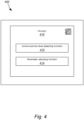
- Fig. 4 there is shown a highly schematic drawing of an electronic device on which the method 100 may be implemented.
- the disclosed method may be implemented on a non-transitory computer-readable storage medium having stored thereon program code portions and executed on a device having processing capabilities.
- a device may be a controller 400 with a certain control activity level. Any suitable electronic device 400 is possible.
- the controller 400 may be retrofitted in a conventional heating or cooling system.
- the controller 400 may comprise circuitry 410 configured to execute a control-activity-level detecting function 412 configured to detecting a control activity level of a valve 400 in a heating or cooling system, and an activity parameter adjusting function 414 configured to execute an activity parameter adjustment of the activity parameter 1 associated with the control activity level of the valve 400, wherein a first type of activity parameter adjustment is executed if the control activity level is above a threshold control activity level, and wherein a second type of activity parameter adjustment is executed, provided absence of the first type of activity parameter adjustment during a first period of time.
- a schematic drawing of the electronic device 400 is displayed in.
- the heating or cooling system may be installed in a domestic home, a room in a home, a factory, an office, a grocery store, or the like.
- the heating or cooling may comprise actuator connected to the controller, and a valve connected to the actuator.
- the valve 300 may control a flow of a fluid 322 flowing in a piping system 320 of the heating or cooling system.
- the valve 300 may adopt any one of the settings: a fully open position 350, a fully closed position 360; and any position 340 between the fully open position 350 and the fully closed position 360.
- the heating or cooling system may further comprise a clock for determining elapsed time between different steps or criteria of the method.
- the heating or cooling system may further comprise a temperature sensor.
- the temperature sensor may measure an actual supply temperature of the fluid flowing in the piping system.
- the temperature sensor may measure other actual temperatures associated with the piping system 320 of the heating or cooling system, such as the actual temperature of a space to be heated or cooled.
- the space may be a domestic home, a room in a home, a factory, an office, a grocery store, etc.
- teachings of the present disclosure may equally well be applied to a 3-way valve for mixing a warm and a cold fluid flow to achieve a given temperature of a mixed fluid flow leaving such a valve.
Landscapes
- Engineering & Computer Science (AREA)
- General Engineering & Computer Science (AREA)
- Mechanical Engineering (AREA)
- Health & Medical Sciences (AREA)
- Artificial Intelligence (AREA)
- Computer Vision & Pattern Recognition (AREA)
- Evolutionary Computation (AREA)
- Medical Informatics (AREA)
- Software Systems (AREA)
- Physics & Mathematics (AREA)
- General Physics & Mathematics (AREA)
- Automation & Control Theory (AREA)
- Control Of Temperature (AREA)
- Feedback Control In General (AREA)
Claims (13)
- Verfahren zum Auffinden von vorteilhaften Parametereinstellungen eines Steuergeräts zum Steuern eines mit einem Ventil (300) in einem Heiz- oder Kühlsystem verbundenen Aktuators, wobei das Verfahren Folgendes umfasst:- Erfassen (40) eines Steueraktivitätsniveaus des Aktuators des Heiz- oder Kühlsystems, und- Durchführen einer Aktivitätsparameter-Einstellung eines dem Steueraktivitätsniveau des Aktuators zugeordneten Aktivitätsparameters (1), wobei ein erster Typ von Aktivitätsparameter-Einstellung ausgeführt wird, wenn das Steueraktivitätsniveau über einer Schwelle für das Steueraktivitätsniveau liegt, und wobei ein zweiter Typ von Aktivitätsparameter-Einstellung ausgeführt wird, wenn kein erster Typ von Aktivitätsparameter-Einstellung während einer ersten Zeitperiode vorliegt,wobei der Aktivitätsparameter (1) ein Skalierfaktor zum Skalieren eines vorbestimmten Verstärkungsfaktors ist, wobei das Produkt des Aktivitätsparameters (1) und des vorbestimmten Verstärkungsfaktors proportional einem Änderungsbetrag eines Öffnungsgrads (V1; V2) des Ventils (300) ist, undwobei der erste Typ von Aktivitätsparameter-Einstellung einer Verkleinerung (70) des Aktivitätsparameters (1) entspricht, und der zweite Typ von Aktivitätsparameter- Einstellung einer Vergrößerung (90) des Aktivitätsparameters (1) entspricht.
- Verfahren nach Anspruch 1, wobei das Erfassen (40) des Steueraktivitätsniveaus Folgendes umfasst:- Erfassen einer Zahl von Richtungsänderungen (42) des Aktuators pro Zeiteinheit.
- Verfahren nach Anspruch 1 oder 2, das ferner Folgendes umfasst:- Stellen einer Anforderung (60) auf eine Verkleinerung des Aktivitätsparameters, wenn die Zahl von Richtungsänderungen (42) des Aktuators pro Zeiteinheit über einem ersten Schwellenwert liegt.
- Verfahren nach einem der Ansprüche 1 bis 3, wobei das Erfassen (40) des Steueraktivitätsniveaus Folgendes umfasst:- Erfassen einer Zahl von Aktuatorbewegungen (44) pro Zeiteinheit.
- Verfahren nach einem der Ansprüche 2 bis 4, das ferner Folgendes umfasst:- Stellen einer Anforderung auf eine Verkleinerung des Aktivitätsparameters (60), wenn die Zahl von Aktuatorbewegungen (44) über einem zweiten Schwellenwert liegt.
- Verfahren nach Anspruch 3 oder 5, das ferner Folgendes umfasst:- Verkleinern (70) des Aktivitätsparameters (1), wenn die Anforderung auf eine Verkleinerung des Aktivitätsparameters (60) auf Basis von einer oder beiden der Zahl von Richtungsänderungen (42) und der Zahl von Aktuatorbewegungen (44) gestellt worden ist, und wenn keine Verkleinerung (90) des Aktivitätsparameters (1) während einer zweiten Zeitperiode vorliegt.
- Verfahren nach Anspruch 1, wobei die erste Zeitperiode 24 Stunden beträgt.
- Verfahren nach Anspruch 1, das Folgendes umfasst:- Einlesen (20) eines Soll-Attributs eines in einem Rohrsystem (320) des Heiz- oder Kühlsystems strömenden Fluids (322), und- Messen (20) eines Ist-Attributs des Fluids (322), wobei das Ist-Attribut dem Soll-Attribut entspricht.
- Verfahren nach Anspruch 8, wobei das Soll-Attribut eine Soll-Temperatur ist, und das Ist-Attribut eine Soll-Temperatur ist.
- Verfahren nach Anspruch 8, wobei das Soll-Attribut eine Soll-Fluidströmung ist, und das Ist-Attribut eine Ist-Fluidströmung ist.
- Verfahren nach einem der Ansprüche 1 bis 10, wobei das Ventil konfiguriert ist, auf die folgenden Einstellungen eingestellt zu werden:- eine vollständig offene Position (350),- eine vollständig geschlossene Position (360) und- jegliche Position (340) zwischen der vollständig offenen Position und der vollständig geschlossenen Position.
- Verfahren nach einem der Ansprüche 1 bis 11, wobei das Durchführen der Einstellung des Aktivitätsparameters (1) verhindert wird, falls das Ventil (300) sich in der vollständig offenen Position (350) oder in der vollständig geschlossenen Position (360) befindet.
- Elektronische Vorrichtung (400), die Folgendes umfasst:- einen Schaltkreis (410), der konfiguriert ist, Folgendes durchzuführen :- eine Funktion (412) zum Erfassen des Steueraktivitätsniveaus, die konfiguriert ist, ein Steueraktivitätsniveau eines Ventils in einem Heiz- oder Kühlsystem zu erfassen, und- eine Funktion (414) zum Einstellen eines Aktivitätsparameters, die konfiguriert ist, eine Aktivitätsparameter-Einstellung eines dem Steueraktivitätsniveau des Aktuators zugeordneten Aktivitätsparameters (1) durchzuführen, wobei ein erster Typ von Aktivitätsparameter-Einstellung ausgeführt wird, wenn das Steueraktivitätsniveau über einer Schwelle für das Steueraktivitätsniveau liegt, und wobei ein zweiter Typ von Aktivitätsparameter-Einstellung ausgeführt wird, wenn kein erster Typ von Aktivitätsparameter-Einstellung während einer ersten Zeitperiode vorliegt,wobei der Aktivitätsparameter (1) ein Skalierfaktor zum Skalieren eines vorbestimmten Verstärkungsfaktors ist, wobei das Produkt des Aktivitätsparameters (1) und des vorbestimmten Verstärkungsfaktors proportional einem Änderungsbetrag eines Öffnungsgrads (V1; V2) des Ventils (300) ist, undwobei der erste Typ von Aktivitätsparameter-Einstellung einer Verkleinerung (70) des Aktivitätsparameters (1) entspricht, und der zweite Typ von Aktivitätsparameter-Einstellung einer Vergrößerung (90) des Aktivitätsparameters (1) entspricht.
Priority Applications (2)
| Application Number | Priority Date | Filing Date | Title |
|---|---|---|---|
| EP20209910.7A EP4006655B1 (de) | 2020-11-25 | 2020-11-25 | Verfahren und vorrichtung zum auffinden günstiger parametereinstellungen eines reglers zur steuerung eines aktuators in einem heiz- oder kühlsystem |
| CN202111307779.8A CN114542790B (zh) | 2020-11-25 | 2021-11-05 | 找到加热或冷却系统致动器的控制器的参数设定的方法 |
Applications Claiming Priority (1)
| Application Number | Priority Date | Filing Date | Title |
|---|---|---|---|
| EP20209910.7A EP4006655B1 (de) | 2020-11-25 | 2020-11-25 | Verfahren und vorrichtung zum auffinden günstiger parametereinstellungen eines reglers zur steuerung eines aktuators in einem heiz- oder kühlsystem |
Publications (3)
| Publication Number | Publication Date |
|---|---|
| EP4006655A1 EP4006655A1 (de) | 2022-06-01 |
| EP4006655B1 true EP4006655B1 (de) | 2024-08-07 |
| EP4006655C0 EP4006655C0 (de) | 2024-08-07 |
Family
ID=73598011
Family Applications (1)
| Application Number | Title | Priority Date | Filing Date |
|---|---|---|---|
| EP20209910.7A Active EP4006655B1 (de) | 2020-11-25 | 2020-11-25 | Verfahren und vorrichtung zum auffinden günstiger parametereinstellungen eines reglers zur steuerung eines aktuators in einem heiz- oder kühlsystem |
Country Status (2)
| Country | Link |
|---|---|
| EP (1) | EP4006655B1 (de) |
| CN (1) | CN114542790B (de) |
Family Cites Families (8)
| Publication number | Priority date | Publication date | Assignee | Title |
|---|---|---|---|---|
| US4459819A (en) * | 1982-03-05 | 1984-07-17 | Emerson Electric Co. | Pulse controlled expansion valve and method |
| US5355305A (en) * | 1992-10-29 | 1994-10-11 | Johnson Service Company | Pattern recognition adaptive controller |
| US6937909B2 (en) * | 2003-07-02 | 2005-08-30 | Johnson Controls Technology Company | Pattern recognition adaptive controller |
| US8109289B2 (en) * | 2008-12-16 | 2012-02-07 | Honeywell International Inc. | System and method for decentralized balancing of hydronic networks |
| US8996141B1 (en) * | 2010-08-26 | 2015-03-31 | Dunan Microstaq, Inc. | Adaptive predictive functional controller |
| DK180259B1 (en) * | 2015-03-26 | 2020-09-17 | Danfoss As | A method of operating a valve actuator for a balancing valve |
| DK3428767T3 (da) * | 2017-07-11 | 2020-03-02 | Siemens Schweiz Ag | Automatisering af styreforstærkning |
| US10976757B2 (en) * | 2019-04-18 | 2021-04-13 | Flowserve Management Company | Control systems for valve actuators, valve actuators and related systems and methods |
-
2020
- 2020-11-25 EP EP20209910.7A patent/EP4006655B1/de active Active
-
2021
- 2021-11-05 CN CN202111307779.8A patent/CN114542790B/zh active Active
Also Published As
| Publication number | Publication date |
|---|---|
| CN114542790B (zh) | 2024-07-09 |
| CN114542790A (zh) | 2022-05-27 |
| EP4006655A1 (de) | 2022-06-01 |
| EP4006655C0 (de) | 2024-08-07 |
Similar Documents
| Publication | Publication Date | Title |
|---|---|---|
| US12392502B2 (en) | Controlled hydronic distribution system | |
| RU2735734C1 (ru) | Самонастраивающееся регулировочное устройство для клапана регулирования расхода, система термостатирования и распределительное устройство с ними, а также соответствующие способы | |
| US8204628B2 (en) | Setpoint recovery with utility time of day pricing | |
| CN103776131B (zh) | 一种空调制冷时电子膨胀阀的控制方法 | |
| RU2553630C2 (ru) | Способ для оптимизированной по мощности эксплуатации насоса, приводимого в действие электродвигателем, при малых объемных расходах | |
| CN102654130B (zh) | 一种对计算机进行温度控制的方法和计算机 | |
| EP3115703B1 (de) | Steuerung von heizung, lüftung, klimatisierung | |
| CN104913449A (zh) | 控制方法、控制系统及移动空调器 | |
| US10746415B2 (en) | Method for adjusting the setpoint temperature of a heat transfer medium | |
| EP4086725B1 (de) | Klimatisierungs- und/oder heizungsanlage und verfahren zur steuerung dieser anlage | |
| CN110337568A (zh) | 用于调节转速可变的循环泵的方法以及循环泵 | |
| CN101563568B (zh) | 用于控制转速可调的供暖循环泵的方法 | |
| CN101922779A (zh) | 一种风机盘管系统及其控制方法和装置 | |
| EP4006655B1 (de) | Verfahren und vorrichtung zum auffinden günstiger parametereinstellungen eines reglers zur steuerung eines aktuators in einem heiz- oder kühlsystem | |
| WO2017123939A1 (en) | Variable speed pumping system with pressure independent control valves | |
| CN113383196A (zh) | 用于调节循环泵的方法 | |
| EP3588235B1 (de) | Elektronischer heizkörperthermostat | |
| JP4582396B2 (ja) | 送水ポンプ制御システム | |
| EP4055328B1 (de) | Verfahren und steuereinheit zur steuerung eines steuerventils zur steuerung eines durchflusses einer wärmeübertragungsflüssigkeit in eine wärmeenergieextraktionseinheit | |
| RU2699836C1 (ru) | Способ управления системой обогрева или охлаждения | |
| EP4012271B1 (de) | Einstellung eines vorspanndrucks in einem fernwärmenetz | |
| CN116608503B (zh) | 暖通系统及其控制方法、控制装置以及存储介质 | |
| CN121206596A (zh) | 一种动态调节启动回差的控制方法及包含该控制的热泵空调系统 | |
| CN118076836A (zh) | 带有自动压力差设定的供暖系统 | |
| UA57871C2 (uk) | Опалювальна установка і спосіб її екслуатації |
Legal Events
| Date | Code | Title | Description |
|---|---|---|---|
| PUAI | Public reference made under article 153(3) epc to a published international application that has entered the european phase |
Free format text: ORIGINAL CODE: 0009012 |
|
| STAA | Information on the status of an ep patent application or granted ep patent |
Free format text: STATUS: THE APPLICATION HAS BEEN PUBLISHED |
|
| AK | Designated contracting states |
Kind code of ref document: A1 Designated state(s): AL AT BE BG CH CY CZ DE DK EE ES FI FR GB GR HR HU IE IS IT LI LT LU LV MC MK MT NL NO PL PT RO RS SE SI SK SM TR |
|
| STAA | Information on the status of an ep patent application or granted ep patent |
Free format text: STATUS: REQUEST FOR EXAMINATION WAS MADE |
|
| 17P | Request for examination filed |
Effective date: 20221122 |
|
| RBV | Designated contracting states (corrected) |
Designated state(s): AL AT BE BG CH CY CZ DE DK EE ES FI FR GB GR HR HU IE IS IT LI LT LU LV MC MK MT NL NO PL PT RO RS SE SI SK SM TR |
|
| GRAP | Despatch of communication of intention to grant a patent |
Free format text: ORIGINAL CODE: EPIDOSNIGR1 |
|
| STAA | Information on the status of an ep patent application or granted ep patent |
Free format text: STATUS: GRANT OF PATENT IS INTENDED |
|
| INTG | Intention to grant announced |
Effective date: 20240326 |
|
| GRAS | Grant fee paid |
Free format text: ORIGINAL CODE: EPIDOSNIGR3 |
|
| GRAA | (expected) grant |
Free format text: ORIGINAL CODE: 0009210 |
|
| STAA | Information on the status of an ep patent application or granted ep patent |
Free format text: STATUS: THE PATENT HAS BEEN GRANTED |
|
| AK | Designated contracting states |
Kind code of ref document: B1 Designated state(s): AL AT BE BG CH CY CZ DE DK EE ES FI FR GB GR HR HU IE IS IT LI LT LU LV MC MK MT NL NO PL PT RO RS SE SI SK SM TR |
|
| REG | Reference to a national code |
Ref country code: GB Ref legal event code: FG4D |
|
| REG | Reference to a national code |
Ref country code: CH Ref legal event code: EP |
|
| REG | Reference to a national code |
Ref country code: IE Ref legal event code: FG4D |
|
| REG | Reference to a national code |
Ref country code: DE Ref legal event code: R096 Ref document number: 602020035228 Country of ref document: DE |
|
| U01 | Request for unitary effect filed |
Effective date: 20240903 |
|
| U07 | Unitary effect registered |
Designated state(s): AT BE BG DE DK EE FI FR IT LT LU LV MT NL PT RO SE SI Effective date: 20240917 |
|
| U20 | Renewal fee for the european patent with unitary effect paid |
Year of fee payment: 5 Effective date: 20241016 |
|
| PG25 | Lapsed in a contracting state [announced via postgrant information from national office to epo] |
Ref country code: NO Free format text: LAPSE BECAUSE OF FAILURE TO SUBMIT A TRANSLATION OF THE DESCRIPTION OR TO PAY THE FEE WITHIN THE PRESCRIBED TIME-LIMIT Effective date: 20241107 |
|
| PG25 | Lapsed in a contracting state [announced via postgrant information from national office to epo] |
Ref country code: GR Free format text: LAPSE BECAUSE OF FAILURE TO SUBMIT A TRANSLATION OF THE DESCRIPTION OR TO PAY THE FEE WITHIN THE PRESCRIBED TIME-LIMIT Effective date: 20241108 Ref country code: PL Free format text: LAPSE BECAUSE OF FAILURE TO SUBMIT A TRANSLATION OF THE DESCRIPTION OR TO PAY THE FEE WITHIN THE PRESCRIBED TIME-LIMIT Effective date: 20240807 |
|
| PG25 | Lapsed in a contracting state [announced via postgrant information from national office to epo] |
Ref country code: IS Free format text: LAPSE BECAUSE OF FAILURE TO SUBMIT A TRANSLATION OF THE DESCRIPTION OR TO PAY THE FEE WITHIN THE PRESCRIBED TIME-LIMIT Effective date: 20241207 |
|
| PG25 | Lapsed in a contracting state [announced via postgrant information from national office to epo] |
Ref country code: HR Free format text: LAPSE BECAUSE OF FAILURE TO SUBMIT A TRANSLATION OF THE DESCRIPTION OR TO PAY THE FEE WITHIN THE PRESCRIBED TIME-LIMIT Effective date: 20240807 |
|
| PG25 | Lapsed in a contracting state [announced via postgrant information from national office to epo] |
Ref country code: ES Free format text: LAPSE BECAUSE OF FAILURE TO SUBMIT A TRANSLATION OF THE DESCRIPTION OR TO PAY THE FEE WITHIN THE PRESCRIBED TIME-LIMIT Effective date: 20240807 Ref country code: RS Free format text: LAPSE BECAUSE OF FAILURE TO SUBMIT A TRANSLATION OF THE DESCRIPTION OR TO PAY THE FEE WITHIN THE PRESCRIBED TIME-LIMIT Effective date: 20241107 |
|
| PG25 | Lapsed in a contracting state [announced via postgrant information from national office to epo] |
Ref country code: RS Free format text: LAPSE BECAUSE OF FAILURE TO SUBMIT A TRANSLATION OF THE DESCRIPTION OR TO PAY THE FEE WITHIN THE PRESCRIBED TIME-LIMIT Effective date: 20241107 Ref country code: PL Free format text: LAPSE BECAUSE OF FAILURE TO SUBMIT A TRANSLATION OF THE DESCRIPTION OR TO PAY THE FEE WITHIN THE PRESCRIBED TIME-LIMIT Effective date: 20240807 Ref country code: NO Free format text: LAPSE BECAUSE OF FAILURE TO SUBMIT A TRANSLATION OF THE DESCRIPTION OR TO PAY THE FEE WITHIN THE PRESCRIBED TIME-LIMIT Effective date: 20241107 Ref country code: IS Free format text: LAPSE BECAUSE OF FAILURE TO SUBMIT A TRANSLATION OF THE DESCRIPTION OR TO PAY THE FEE WITHIN THE PRESCRIBED TIME-LIMIT Effective date: 20241207 Ref country code: HR Free format text: LAPSE BECAUSE OF FAILURE TO SUBMIT A TRANSLATION OF THE DESCRIPTION OR TO PAY THE FEE WITHIN THE PRESCRIBED TIME-LIMIT Effective date: 20240807 Ref country code: GR Free format text: LAPSE BECAUSE OF FAILURE TO SUBMIT A TRANSLATION OF THE DESCRIPTION OR TO PAY THE FEE WITHIN THE PRESCRIBED TIME-LIMIT Effective date: 20241108 Ref country code: ES Free format text: LAPSE BECAUSE OF FAILURE TO SUBMIT A TRANSLATION OF THE DESCRIPTION OR TO PAY THE FEE WITHIN THE PRESCRIBED TIME-LIMIT Effective date: 20240807 |
|
| PG25 | Lapsed in a contracting state [announced via postgrant information from national office to epo] |
Ref country code: SM Free format text: LAPSE BECAUSE OF FAILURE TO SUBMIT A TRANSLATION OF THE DESCRIPTION OR TO PAY THE FEE WITHIN THE PRESCRIBED TIME-LIMIT Effective date: 20240807 |
|
| PG25 | Lapsed in a contracting state [announced via postgrant information from national office to epo] |
Ref country code: CZ Free format text: LAPSE BECAUSE OF FAILURE TO SUBMIT A TRANSLATION OF THE DESCRIPTION OR TO PAY THE FEE WITHIN THE PRESCRIBED TIME-LIMIT Effective date: 20240807 |
|
| PG25 | Lapsed in a contracting state [announced via postgrant information from national office to epo] |
Ref country code: SK Free format text: LAPSE BECAUSE OF FAILURE TO SUBMIT A TRANSLATION OF THE DESCRIPTION OR TO PAY THE FEE WITHIN THE PRESCRIBED TIME-LIMIT Effective date: 20240807 |
|
| PLBE | No opposition filed within time limit |
Free format text: ORIGINAL CODE: 0009261 |
|
| STAA | Information on the status of an ep patent application or granted ep patent |
Free format text: STATUS: NO OPPOSITION FILED WITHIN TIME LIMIT |
|
| REG | Reference to a national code |
Ref country code: CH Ref legal event code: PL |
|
| PG25 | Lapsed in a contracting state [announced via postgrant information from national office to epo] |
Ref country code: MC Free format text: LAPSE BECAUSE OF FAILURE TO SUBMIT A TRANSLATION OF THE DESCRIPTION OR TO PAY THE FEE WITHIN THE PRESCRIBED TIME-LIMIT Effective date: 20240807 |
|
| REG | Reference to a national code |
Ref country code: CH Ref legal event code: PL |
|
| 26N | No opposition filed |
Effective date: 20250508 |
|
| GBPC | Gb: european patent ceased through non-payment of renewal fee |
Effective date: 20241125 |
|
| PG25 | Lapsed in a contracting state [announced via postgrant information from national office to epo] |
Ref country code: CH Free format text: LAPSE BECAUSE OF NON-PAYMENT OF DUE FEES Effective date: 20241130 |
|
| PG25 | Lapsed in a contracting state [announced via postgrant information from national office to epo] |
Ref country code: GB Free format text: LAPSE BECAUSE OF NON-PAYMENT OF DUE FEES Effective date: 20241125 |
|
| PG25 | Lapsed in a contracting state [announced via postgrant information from national office to epo] |
Ref country code: IE Free format text: LAPSE BECAUSE OF NON-PAYMENT OF DUE FEES Effective date: 20241125 |
|
| U20 | Renewal fee for the european patent with unitary effect paid |
Year of fee payment: 6 Effective date: 20251016 |
|
| PG25 | Lapsed in a contracting state [announced via postgrant information from national office to epo] |
Ref country code: HU Free format text: LAPSE BECAUSE OF FAILURE TO SUBMIT A TRANSLATION OF THE DESCRIPTION OR TO PAY THE FEE WITHIN THE PRESCRIBED TIME-LIMIT; INVALID AB INITIO Effective date: 20201125 |
|
| PG25 | Lapsed in a contracting state [announced via postgrant information from national office to epo] |
Ref country code: CY Free format text: LAPSE BECAUSE OF FAILURE TO SUBMIT A TRANSLATION OF THE DESCRIPTION OR TO PAY THE FEE WITHIN THE PRESCRIBED TIME-LIMIT; INVALID AB INITIO Effective date: 20201125 |