EP4006669A1 - Automatisiertes system zur steuerung der qualitätskontrolle in einer behälterbearbeitungsanlage - Google Patents
Automatisiertes system zur steuerung der qualitätskontrolle in einer behälterbearbeitungsanlage Download PDFInfo
- Publication number
- EP4006669A1 EP4006669A1 EP20210780.1A EP20210780A EP4006669A1 EP 4006669 A1 EP4006669 A1 EP 4006669A1 EP 20210780 A EP20210780 A EP 20210780A EP 4006669 A1 EP4006669 A1 EP 4006669A1
- Authority
- EP
- European Patent Office
- Prior art keywords
- containers
- quality level
- quality
- sampling
- production
- Prior art date
- Legal status (The legal status is an assumption and is not a legal conclusion. Google has not performed a legal analysis and makes no representation as to the accuracy of the status listed.)
- Granted
Links
Images



Classifications
-
- G—PHYSICS
- G05—CONTROLLING; REGULATING
- G05B—CONTROL OR REGULATING SYSTEMS IN GENERAL; FUNCTIONAL ELEMENTS OF SUCH SYSTEMS; MONITORING OR TESTING ARRANGEMENTS FOR SUCH SYSTEMS OR ELEMENTS
- G05B19/00—Program-control systems
- G05B19/02—Program-control systems electric
- G05B19/418—Total factory control, i.e. centrally controlling a plurality of machines, e.g. direct or distributed numerical control [DNC], flexible manufacturing systems [FMS], integrated manufacturing systems [IMS] or computer integrated manufacturing [CIM]
- G05B19/41875—Total factory control, i.e. centrally controlling a plurality of machines, e.g. direct or distributed numerical control [DNC], flexible manufacturing systems [FMS], integrated manufacturing systems [IMS] or computer integrated manufacturing [CIM] characterised by quality surveillance of production
-
- Y—GENERAL TAGGING OF NEW TECHNOLOGICAL DEVELOPMENTS; GENERAL TAGGING OF CROSS-SECTIONAL TECHNOLOGIES SPANNING OVER SEVERAL SECTIONS OF THE IPC; TECHNICAL SUBJECTS COVERED BY FORMER USPC CROSS-REFERENCE ART COLLECTIONS [XRACs] AND DIGESTS
- Y02—TECHNOLOGIES OR APPLICATIONS FOR MITIGATION OR ADAPTATION AGAINST CLIMATE CHANGE
- Y02P—CLIMATE CHANGE MITIGATION TECHNOLOGIES IN THE PRODUCTION OR PROCESSING OF GOODS
- Y02P90/00—Enabling technologies with a potential contribution to greenhouse gas [GHG] emissions mitigation
- Y02P90/02—Total factory control, e.g. smart factories, flexible manufacturing systems [FMS] or integrated manufacturing systems [IMS]
Definitions
- the present invention relates to an automated system for quality control management in a container processing plant.
- the present solution may be implemented in plants for processing any type of containers, such as bottles (or other kinds of containers) made of glass, plastic (PET), aluminium, steel and composite materials, that are to be filled with any type of pourable product, including sparkling liquids, such as sparkling water, non-alcoholic beverages and beer; non-effervescent liquids, such as natural water, juices, tea, integrators for sport activities and wine; and liquid detergents, emulsions, suspensions, or high-viscosity liquids.
- containers such as bottles (or other kinds of containers) made of glass, plastic (PET), aluminium, steel and composite materials
- sparkling liquids such as sparkling water, non-alcoholic beverages and beer
- non-effervescent liquids such as natural water, juices, tea, integrators for sport activities and wine
- liquid detergents emulsions, suspensions, or high-viscosity liquids.
- a plant for filling containers comprises a number of processing machines arranged so as to form a container processing line, among which a forming machine, for example a blower, a filling machine, a capping machine, a labelling machine, a packaging machine, a sterilising machine, a palletizer, etc.
- a forming machine for example a blower, a filling machine, a capping machine, a labelling machine, a packaging machine, a sterilising machine, a palletizer, etc.
- HACCP Hazard Analysis and Critical Control Points
- the number of samples that are acquired and analysed is determined by a production manager of the container processing line, based on the characteristics of the production.
- the container to be analysed are moreover sampled at regular, spatial and time, intervals along the container processing line.
- the aim of the present disclosure is to provide a solution allowing to overcome the problems highlighted previously.
- the general goal of any production is to have as few defective items as possible; on the other hand, defective items may occur, hence it is required to select randomly some items to estimate the proportion of defective items produced and check the quality of the production.
- an aspect of the present solution provides an automated system for quality control management in a container processing plant, whose aim is to determine an acceptance sampling plan to meet a desired quality level.
- the automated system is configured, based on input data relating to features of the container processing line and a quality objective for the same container processing line, to automatically determine, using a statistical logic, a sampling plan of the containers aimed to achieve the desired quality objective.
- the automated system is configured to determine and to provide at its output a sample size, i.e. a number of containers to be sampled and analysed, and moreover to provide an estimate of the microbiological quality of the production.
- the automated system is configured to determine the acceptance sampling plan based on a threshold of unacceptable quality level (RQL - Rejectable Quality Level) and to provide an indication of an acceptable quality level (AQL), i.e. of an acceptable proportion of defective items.
- RQL - Rejectable Quality Level a threshold of unacceptable quality level
- AQL an acceptable quality level
- a container processing plant in the example a filling plant, designated as a whole by 1, includes a number of container processing machines 3 arranged along a container processing line 2.
- the container processing machines 3 comprise, from the inlet to the outlet of the container processing line:
- a microbiological laboratory is operatively coupled to one or more, preferably all, of the aforesaid container processing machines 3 of the container processing plant 1 and is configured to carry out microbiological analyses for evaluating the quality of the product, on the basis of sampling of containers being filled (or that are still to be filled or have already been filled), at sampling points along the container processing line.
- the aforesaid microbiological analyses may regard: the microbiological quality of the product or container; the microbiological defectiveness; organoleptic and nutritional information regarding the product; leakage or other defects of the containers; residual content of oxygen or other gases; etc.
- the container processing plant 1 further comprises an automated system 10 for quality control management of the containers and the corresponding product, having a processing unit 12.
- the processing unit 12 may comprise any suitable computing unit, e.g. a processor, a microcontroller, or a similar digital-processing module, executing a set of software instructions stored in a nonvolatile memory; in a possible embodiment, the processing unit 12 may be implemented as a cloud processing platform, remotely accessible with any suitable hardware and software equipment.
- the processing unit 12 may be operatively coupled (e.g. via any suitable wireless communication link) to an automation controller 6 of the container processing line 2, which is coupled to respective control units (here not shown) of the container processing machines 3; in a known manner, the automation controller 6 is configured to supervise general operation of the container processing machines 3 and to receive information about the operative status of the same container processing machines 3.
- the same processing unit 12 may be included in the automation controller 6 of the container processing line 2, being a portion of the same automation controller 6.
- the processing unit 12 of the automated system 10 is configured to determine an acceptance sampling plan for sampling along the line of the containers being filled (or that are still to be filled or have already been filled), in particular to determine a sample size, i.e. a number of items to be sampled, and provide a resulting quality level.
- the processing unit 12 based on input data relating to features of the container processing line (such as a recipe pH, either low or high acid, a speed and length of production) and a first quality level indication (in particular, an indication of a threshold of unacceptable quality level or, in other terms, of expected "power" of the quality control), is configured to determine and to provide at the output a sample size, related to the number of items to be sampled, based on criteria of statistical analysis.
- the processing unit 12 is also configured to provide at its output a second quality level indication, i.e. an indication of acceptable quality level to be expected from the container processing line.
- Lot is defined as a definite part of a population/production constituted under essentially the same conditions.
- Sublot is defined as a subset of a lot (it can also be the lot itself) that is statistically analysed to be considered acceptable or rejectable.
- “Inspection by Attributes” is an inspection based on verifying the presence or absence of one or more particular characteristics in each item under consideration and counting how many items do, or do not, possess the characteristics.
- Sample Unit is an item being analysed.
- Sample is a subset of a population made up of one or more sample units.
- Sample Size is the number of sample units in a sample.
- "Acceptance Sampling Plan” is a plan stating the sample size (e.g. the number of items to be selected randomly per hour) and the associated criteria for acceptance of each sublot.
- a sample of N items is selected randomly to be tested to make an inference on the proportion p of defective items in the sublot.
- an integer K is fixed: if the defective items in the sample are no more than K, the above H 0 hypothesis is accepted, otherwise the above H 1 hypothesis is accepted. As will be discussed below, K may be equal to zero.
- TYPE 1 error (False Positive) is defined as the error that occurs when a good sublot is rejected; the probability to have a type 1 error is generally referred to as "Producer's risk”, and it is denoted by ⁇ .
- TYPE 2 error (False Negative) is defined as the error that occurs when a bad sublot is accepted; the probability to have a type 2 error is generally referred to as "Consumer's risk” and it is denoted by ⁇ .
- Two quality levels may be defined, providing an indication of the quality of the acceptance sampling plan (and consequently of the container production).
- AQL "Acceptable Quality Level" is defined as the worst quality level that is still considered satisfactory; it is the worst proportion p 0 of defective items in H 0 , or, in other words, it is the maximum percentage of defective items that can still be considered completely satisfactory.
- the probability of accepting a sublot with AQL defectives is at least 1- ⁇ (it is therefore noted that the AQL level is associated with the type-1, or false positive, error probability ⁇ ). This means that if the sublot was actually rejected, there would be a probability ⁇ that the sublot should have been accepted, because there is a probability ⁇ that the actual defectiveness proportion of the sublot is actually less than AQL.
- RQL Rejectable Quality Level
- the "Power" of the sampling plan is given by 100%- ⁇ , where ⁇ is expressed as a percentage (or, in other words, as the value 1- ⁇ expressed as a percentage).
- the probability of accepting H 0 with sample size equal to N, given that the proportion of defective items is p, can be expressed by: P (number of defective items ⁇ K).
- Figure 2 is a plot in logarithmic scale of the above relation between the proportion of defective items in the sublot under analysis and the associated acceptance probability (for a given sample size N), which is denoted as "Operating characteristic curve", i.e. the curve that displays the probability of acceptance of H 0 versus the proportion of defective items (no defective items meaning a 100% acceptance).
- Any point (x, y) on the operating characteristic curve means that there is probability y of accepting a sublot with proportion of defective equal to x.
- Figure 3B shows the same curves, not using the logarithmic scale.
- N, AQL, ⁇ , RQL and Power are interconnected variables; in particular, it is possible to fix three of these variables to determine the values of the other two variables.
- the processing unit 12 of the automated system 10 comprises a sampling-control module 14, configured to manage the acceptance sampling plan for sampling of the containers along the processing line, determining the sample size N that allows to achieve the desired quality level.
- sampling-control module 14 is configured to consider, as input data, the following parameters: type-I error probability ⁇ ; Power (associated with the type-II error probability ⁇ , as discussed above); and RQL.
- the sampling-control module 14 is configured to accept and consider a pre-set and fixed set of values (and combination thereof) for the above input data ⁇ , Power, RQL, namely:
- the sampling-control module 14 is thus configured to calculate the sample size N and the AQL values for any combination of input data (among the above set of values), to test the quality of a sublot.
- a sublot may be advantageously defined as a fixed number of hours of production, for example 10 hours of production; the sampling-control module 14 may therefore be configured to provide at the output the number of samples per hour.
- the sampling control module 14 is configured to receive, from an operator (e.g. a production manager of the container processing plant 2) or directly from the automation controller 6 of the container processing line 2, an information about a recipe pH (high or low acid) and an information about a desired setting for the sampling plan between a first (basic), second (advanced) or third (pro-advanced) setting (these settings representing a macro-assessment of the quality of the resulting production or power of the statistical analysis).
- an operator e.g. a production manager of the container processing plant 2
- the automation controller 6 of the container processing line 2 directly from the automation controller 6 of the container processing line 2
- an information about a recipe pH (high or low acid) an information about a desired setting for the sampling plan between a first (basic), second (advanced) or third (pro-advanced) setting (these settings representing a macro-assessment of the quality of the resulting production or power of the statistical analysis).
- the recipe pH determines the sample size, a low acid product requiring a higher number of samples; and the setting for the sampling plan determines a power of the statistical test (the power increasing from the first, basic, to the third, pro-advanced, settings).
- the sampling control module 14, is configured in this case to automatically determine a corresponding set of the input data ⁇ , Power, RQL (chosen among the pre-set values), on which the subsequent calculation for the acceptance sampling plan is based; in other words, the operator (or automation controller 6) does not provide actual values for the input data, instead providing high-level information from which the same input data are determined (a knowledge of the statistical criteria based on which the sampling plan is determined is thus not required).
- the sampling control module 14 is then configured to calculate the output data (sample size N and AQL values) based on the automatically determined set of the input data ⁇ , Power, RQL, providing the same output data to the operator, or directly to the automation controller 6 in case of an automated implementation of the sampling plan.
- the sampling control module 14 may also provide, as output data, the number of samples per hour (considering that a sublot is made of a certain number of hours, e.g. 10 hours).
- the determination of the acceptance sampling plan is "transparent" to the operator (or automation controller), who is not required to have any specific statistical knowledge.
- the sampling control module 14 may also receive as input data, further information about the container processing line 2, such as a length of production and a production speed. In this case, the same sampling control module 14 is configured to calculate and provide as output data, the total number of samples that are to be analysed, based on the number of sublots in the planned production.
- Figure 5 shows schematically an exemplary operation of the sampling control module 14, with possible input data and the resulting output data, in the case of input selection of an advanced sampling and a low acid product for filing of the containers (in the example, bottles).
- the sampling control module 14 receives at the input also the speed of production (in terms of bottles per hour, bph) and the length of the production (in terms of hours)
- the sampling control module 14 is configured to receive at the input directly the values for the input data ⁇ , Power and RQL, in addition to the information about the recipe pH, high or low acid. As discussed above, further information about the container processing line 2, such as a length of production (in hours) and a production speed, may also be received as part of the input data, e.g. again from the operator or directly from the automation controller 6 of the container processing line 2.
- the sampling control module 14 may be configured to restrict the possible choice of values for the input data only between the pre-set and fixed set of values, namely:
- sampling control module 14 may be imposed by the sampling control module 14, depending on the values of one or more of the input data; for example, at least one of the RQL values may not be allowed depending on the recipe pH (as an example, the RQL value 0,05 may not be allowed for low acid products) .
- the sampling control module 14 is configured to apply certain filters and limitations to the values of the input data, again based on the need of assuring a proper statistical test for quality control and the need of preserving the efficiency and responsiveness of the microbiological laboratory.
- the sampling control module 14 based on the input data, is configured to calculate and provide at the output the following output data (it may be considered again a sublot of 10 hours):
- Figure 6 schematically shows an exemplary operation of the sampling control module 14, with possible input data and the output data, in case of the above implementation. It is noted in particular that the set of input data ⁇ , Power, RQL (denoted as “Input 2") are in this case directly provided by the operator (or by the automation controller 6) and not automatically determined by the sampling control module 14.
- the sampling control module 14 is configured to specifically manage a last part of the production in case it does not correspond to an entire sublot.
- the last part of production is included in the last sublot (which therefore has an increased length); otherwise, in a second case, if the last part of production is more than half sublot, it is considered as a new sublot representing the last sublot of the production (which therefore has a decreased length).
- the sampling control module 14 is configured to select randomly a same number (N/10) of bottles per hour, without any modification, for every one of the sublots, independently from their actual length.
- the AQL calculated by the sampling control module 14 for the last sublot will be lower (in case the sample size is higher, first case above) or higher (in case the sample size is lower, second case above) than the AQL calculated for the previous sublots having a standard length.
- the whole duration of the production may be considered as a sublot.
- the same number of bottles per hour (N/10) is selected randomly; and the AQL has to be recalculated by the sampling control module 14, having a higher value, due to the resulting sample size being lower than expected.
- the sampling control module 14 is further configured to manage a stop of production before the scheduled time (in general, as previously discussed, the sampling plan is based on sublots, hence producing a different number of complete sublots does not change the quality of the statistical sampling).
- the part of the same sublot can be included in the previous sublot; if the production stops before the end of the first sublot, the part of the first sublot can be considered as a sublot.
- the sampling control module 14 therefore is able to manage quality control of the production, also if it is shorter than the scheduled production, or if it is not possible to know the length of the production in advance (case in which the operator has to estimate the length of the production, which may later not correspond to the actual production).
- the sampling control module 14 is configured to determine the random selection of the same number of samples per hour and to suitably recalculate the AQL value (having a higher value due to the sample size being lower, or a lower value due to the sample size being higher).
- the sampling control module 14 of the processing unit 12 is further configured to address unexpected events that may increase the risk of contamination and may occur during the production.
- the sampling control module 14 is configured to increase the power of the statistical test, thus determining a larger sample to be analysed, whenever an event occurs that may negatively impact on the microbiological quality of the products.
- the "Power" value in the input data is therefore suitably increased, either just for the sublot immediately after the event or for all the sublots till the end of the production, depending on the nature of the event and the way the event can impact on the quality. Consequently, the sample size N is recalculated by the sampling control module 14, with an additional group of samples, given by the difference between the new sample size (not rounded) and the old one, being required to be randomly selected.
- the increased value is a function of a risk of contamination associated to the event that has occurred, according to a logic that associates each event to a corresponding risk of contamination.
- each event is classified by a "severity" of contamination it may cause (e.g. low, medium or high) and its “probability” (e.g. again low, medium or high).
- the sampling control module 14 may add 2% for low risk events and 3% for high risk events to the value of the "Power" initially received or set as the input of the calculation, and then proceed to recalculation of the sample size N and of the AQL value.
- the processing unit 12 may further include a risk detection and assessment module, configured to detect (e.g. via suitable sensors coupled to the container processing line 2) the events that may negatively impact on the microbiological quality of the products; and to assess the risk associated to the same events, as discussed above.
- a risk detection and assessment module configured to detect (e.g. via suitable sensors coupled to the container processing line 2) the events that may negatively impact on the microbiological quality of the products; and to assess the risk associated to the same events, as discussed above.
- the risk detection and assessment module may be operatively coupled to the sampling control module 14, to communicate the event detection and the associated risk, in response to the communication the same sampling control module 14 increasing the power of the statistical test and recalculating the sample size N and AQL values.
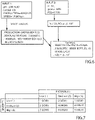
- Figure 8 shows schematically an exemplary operation of the sampling control module 14, with possible input data and the output data, in the case of assessment of a risk event. It is noted in particular the increase of the Power value (in the example from 95% to 97%) and the recalculation of the sample size N (in the example giving an additional group of 50 samples to be analysed, immediately after the event or until the end of the production).
- the sampling control module 14 of the processing unit 12 is further configured to properly manage a sublot, if a defective container is found in the same sublot.
- the sampling control module 14 is configured to determine an additional test in the same sublot, wherein the additional test has the same hypothesis as the first one and a bigger sample size (e.g. a double sample size).
- a bigger sample size e.g. a double sample size.
- sampling resulting from the additional test can be made near the defective container found in the first test, both in terms of physical and temporal proximity.
- Figure 9 shows schematically an exemplary operation of the sampling control module 14, with possible input data and output data, in the case of a sublot at risk. It is noted in particular the additional test and corresponding additional sampling (in the example with a sample size N of 60 samples, double than the initial sample size of the sublot), that is executed between hours 4 and 6 of production, in the hypothesis that the defective container has been detected at hour 5 of the production.
- the described system enables automated control management of the microbiological quality of the production in the container processing plant.
- the system provides in an automated manner the sample size, i.e. the number of samples to be analysed in order to achieve a desired quality level (expressed by the quality levels AQL and/or RQL), determining appropriate variations of sampling of the containers along the production line, so as to monitor in a more or less frequent manner the quality of the containers.
- the present solution allows to obtain a statistical acceptance sampling plan starting from short-term and long-term quality objectives.
- the sampling control module 14 of the processing unit 12 may be configured to receive at the input the AQL value (as a first quality level) and to calculate and provide at the output the RQL value (as the second quality level).
- processing unit 12 of the automated system 10 could also directly control sampling of the containers along the container processing line 2, e.g. via AGVs or similar automated means, in order to achieve a fully automated control of the sampling process.
- the same processing unit 12 could also be integrated into the general control logic of the container processing plant 1, e.g. being integrated within the automation controller 6 of the same container processing plant 1.
Landscapes
- Engineering & Computer Science (AREA)
- General Engineering & Computer Science (AREA)
- Manufacturing & Machinery (AREA)
- Quality & Reliability (AREA)
- Physics & Mathematics (AREA)
- General Physics & Mathematics (AREA)
- Automation & Control Theory (AREA)
- General Factory Administration (AREA)
Priority Applications (1)
| Application Number | Priority Date | Filing Date | Title |
|---|---|---|---|
| EP20210780.1A EP4006669B1 (de) | 2020-11-30 | 2020-11-30 | Automatisiertes system zur steuerung der qualitätskontrolle in einer behälterbearbeitungsanlage |
Applications Claiming Priority (1)
| Application Number | Priority Date | Filing Date | Title |
|---|---|---|---|
| EP20210780.1A EP4006669B1 (de) | 2020-11-30 | 2020-11-30 | Automatisiertes system zur steuerung der qualitätskontrolle in einer behälterbearbeitungsanlage |
Publications (2)
| Publication Number | Publication Date |
|---|---|
| EP4006669A1 true EP4006669A1 (de) | 2022-06-01 |
| EP4006669B1 EP4006669B1 (de) | 2023-08-02 |
Family
ID=73646271
Family Applications (1)
| Application Number | Title | Priority Date | Filing Date |
|---|---|---|---|
| EP20210780.1A Active EP4006669B1 (de) | 2020-11-30 | 2020-11-30 | Automatisiertes system zur steuerung der qualitätskontrolle in einer behälterbearbeitungsanlage |
Country Status (1)
| Country | Link |
|---|---|
| EP (1) | EP4006669B1 (de) |
Cited By (2)
| Publication number | Priority date | Publication date | Assignee | Title |
|---|---|---|---|---|
| CN118569741A (zh) * | 2024-08-01 | 2024-08-30 | 巨野锦晨精细化工有限公司 | 一种化工自动化产品质量评估系统 |
| CN121787985A (zh) * | 2026-03-06 | 2026-04-03 | 漳州雅宝电子股份有限公司 | 一种温度保险丝的生产质量管理方法及系统 |
Citations (3)
| Publication number | Priority date | Publication date | Assignee | Title |
|---|---|---|---|---|
| GB2179648A (en) * | 1985-08-26 | 1987-03-11 | Owens Illinois Inc | Inspection and sorting of molded containers as a function of mold of origin |
| US20190318027A1 (en) * | 2018-04-13 | 2019-10-17 | Johnson & Johnson Vision Care, Inc. | Sample size determination in sampling systems |
| WO2020126441A1 (en) * | 2018-12-21 | 2020-06-25 | Sidel Participations | Computer-implemented automated system for aseptic quality control in a container processing plant and corresponding method |
-
2020
- 2020-11-30 EP EP20210780.1A patent/EP4006669B1/de active Active
Patent Citations (3)
| Publication number | Priority date | Publication date | Assignee | Title |
|---|---|---|---|---|
| GB2179648A (en) * | 1985-08-26 | 1987-03-11 | Owens Illinois Inc | Inspection and sorting of molded containers as a function of mold of origin |
| US20190318027A1 (en) * | 2018-04-13 | 2019-10-17 | Johnson & Johnson Vision Care, Inc. | Sample size determination in sampling systems |
| WO2020126441A1 (en) * | 2018-12-21 | 2020-06-25 | Sidel Participations | Computer-implemented automated system for aseptic quality control in a container processing plant and corresponding method |
Non-Patent Citations (2)
| Title |
|---|
| ARTURO J FERNÃ NDEZ ET AL: "Optimal acceptance sampling plans for log-location scale lifetime models using average risks", COMPUTATIONAL STATISTICS AND DATA ANALYSIS, NORTH-HOLLAND, AMSTERDAM, NL, vol. 56, no. 3, 15 September 2011 (2011-09-15), pages 719 - 731, XP028334707, ISSN: 0167-9473, [retrieved on 20110922], DOI: 10.1016/J.CSDA.2011.09.020 * |
| VELLAISAMY P ET AL: "A Unified Approach for Modeling and Designing Attribute Sampling Plans for Monitoring Dependent Production Processes", METHODOLOGY AND COMPUTING IN APPLIED PROBABILITY, KLUWER ACADEMIC PUBLISHERS, BO, vol. 7, no. 3, 1 September 2005 (2005-09-01), pages 307 - 323, XP019213638, ISSN: 1573-7713, DOI: 10.1007/S11009-005-4519-7 * |
Cited By (2)
| Publication number | Priority date | Publication date | Assignee | Title |
|---|---|---|---|---|
| CN118569741A (zh) * | 2024-08-01 | 2024-08-30 | 巨野锦晨精细化工有限公司 | 一种化工自动化产品质量评估系统 |
| CN121787985A (zh) * | 2026-03-06 | 2026-04-03 | 漳州雅宝电子股份有限公司 | 一种温度保险丝的生产质量管理方法及系统 |
Also Published As
| Publication number | Publication date |
|---|---|
| EP4006669B1 (de) | 2023-08-02 |
Similar Documents
| Publication | Publication Date | Title |
|---|---|---|
| Kliment et al. | Production efficiency evaluation and products’ quality improvement using simulation | |
| EP4006669B1 (de) | Automatisiertes system zur steuerung der qualitätskontrolle in einer behälterbearbeitungsanlage | |
| EP2620761A1 (de) | Gruppe zur Inline-Messung der Qualität von Kohlenstoffdioxid, das in einer Flüssigkeit gelöst ist, die in einem geschlossenen Behälter enthalten ist | |
| US20040254666A1 (en) | Packaging systems, apparatus and method therefor | |
| US7349760B2 (en) | System and method for sensing and controlling the concentration of a chemical agent in a solution | |
| US11074534B2 (en) | Method of determining a microbiological risk level in a food batch | |
| EP3460483B1 (de) | Kalibrierverfahren | |
| CN102422162A (zh) | 自动分析装置及分析方法 | |
| Taifa et al. | Production quality improvement for the soft drinks bottling industry through six sigma methodology | |
| CN113518955A (zh) | 用于灌装系统中的产品引导的方法和用于玻璃瓶的灌装系统 | |
| US10036760B2 (en) | Sample analyzer and sample analysis method | |
| EP4137445A1 (de) | Prüfsystem zur prüfung von behältern und abfüllanlage mit einem derartigen prüfsystem | |
| JP2011220857A (ja) | 核酸分析装置及び方法 | |
| EP1781542A1 (de) | Verfahren zur identifizierung des anormalen betriebs einer maschine und vorrichtung dafür | |
| US20240280505A1 (en) | Apparatus and method for inspecting filled containers and their filling product | |
| Djekic et al. | Types of food control and application of seven basic quality tools in certified food companies in Serbia | |
| WO2020126441A1 (en) | Computer-implemented automated system for aseptic quality control in a container processing plant and corresponding method | |
| DE102015119608A1 (de) | Automatisches Analysegerät und Verfahren | |
| Chikumbirike et al. | Design of an automated monitoring and control system for the soft drink capping machine and process mixer | |
| Berliana et al. | Implementation of a traceability system for canned fish products using the FMECA approach. | |
| Ismail et al. | Quality control of plastic sack products using the DMAIC method at PT. XYZ | |
| Prastyo et al. | Reduction bottle cost of Milkuat LAB 70 ml using optimal parameter setting with Taguchi method | |
| Borda et al. | 4.2 Application of Process Control Charts | |
| Harianto et al. | Quality Improvement by Reducing Cones defect on Spinning Production PT Excellent Quality Yarn using Six Sigma DMAIC and FMEA | |
| Away¹ et al. | The Integration of Six Sigma and FMEA Methods in Determining Crude Palm Oil (CPO) Quality Improvement Factors at the Cot Girek |
Legal Events
| Date | Code | Title | Description |
|---|---|---|---|
| PUAI | Public reference made under article 153(3) epc to a published international application that has entered the european phase |
Free format text: ORIGINAL CODE: 0009012 |
|
| STAA | Information on the status of an ep patent application or granted ep patent |
Free format text: STATUS: THE APPLICATION HAS BEEN PUBLISHED |
|
| AK | Designated contracting states |
Kind code of ref document: A1 Designated state(s): AL AT BE BG CH CY CZ DE DK EE ES FI FR GB GR HR HU IE IS IT LI LT LU LV MC MK MT NL NO PL PT RO RS SE SI SK SM TR |
|
| STAA | Information on the status of an ep patent application or granted ep patent |
Free format text: STATUS: REQUEST FOR EXAMINATION WAS MADE |
|
| 17P | Request for examination filed |
Effective date: 20220620 |
|
| RBV | Designated contracting states (corrected) |
Designated state(s): AL AT BE BG CH CY CZ DE DK EE ES FI FR GB GR HR HU IE IS IT LI LT LU LV MC MK MT NL NO PL PT RO RS SE SI SK SM TR |
|
| RIC1 | Information provided on ipc code assigned before grant |
Ipc: G05B 19/418 20060101AFI20230426BHEP |
|
| GRAP | Despatch of communication of intention to grant a patent |
Free format text: ORIGINAL CODE: EPIDOSNIGR1 |
|
| STAA | Information on the status of an ep patent application or granted ep patent |
Free format text: STATUS: GRANT OF PATENT IS INTENDED |
|
| GRAS | Grant fee paid |
Free format text: ORIGINAL CODE: EPIDOSNIGR3 |
|
| INTG | Intention to grant announced |
Effective date: 20230602 |
|
| GRAA | (expected) grant |
Free format text: ORIGINAL CODE: 0009210 |
|
| STAA | Information on the status of an ep patent application or granted ep patent |
Free format text: STATUS: THE PATENT HAS BEEN GRANTED |
|
| AK | Designated contracting states |
Kind code of ref document: B1 Designated state(s): AL AT BE BG CH CY CZ DE DK EE ES FI FR GB GR HR HU IE IS IT LI LT LU LV MC MK MT NL NO PL PT RO RS SE SI SK SM TR |
|
| REG | Reference to a national code |
Ref country code: GB Ref legal event code: FG4D |
|
| REG | Reference to a national code |
Ref country code: CH Ref legal event code: EP |
|
| P01 | Opt-out of the competence of the unified patent court (upc) registered |
Effective date: 20230706 |
|
| REG | Reference to a national code |
Ref country code: DE Ref legal event code: R096 Ref document number: 602020014865 Country of ref document: DE |
|
| REG | Reference to a national code |
Ref country code: IE Ref legal event code: FG4D |
|
| REG | Reference to a national code |
Ref country code: LT Ref legal event code: MG9D |
|
| REG | Reference to a national code |
Ref country code: NL Ref legal event code: MP Effective date: 20230802 |
|
| REG | Reference to a national code |
Ref country code: AT Ref legal event code: MK05 Ref document number: 1595500 Country of ref document: AT Kind code of ref document: T Effective date: 20230802 |
|
| PG25 | Lapsed in a contracting state [announced via postgrant information from national office to epo] |
Ref country code: GR Free format text: LAPSE BECAUSE OF FAILURE TO SUBMIT A TRANSLATION OF THE DESCRIPTION OR TO PAY THE FEE WITHIN THE PRESCRIBED TIME-LIMIT Effective date: 20231103 |
|
| PG25 | Lapsed in a contracting state [announced via postgrant information from national office to epo] |
Ref country code: IS Free format text: LAPSE BECAUSE OF FAILURE TO SUBMIT A TRANSLATION OF THE DESCRIPTION OR TO PAY THE FEE WITHIN THE PRESCRIBED TIME-LIMIT Effective date: 20231202 |
|
| PG25 | Lapsed in a contracting state [announced via postgrant information from national office to epo] |
Ref country code: SE Free format text: LAPSE BECAUSE OF FAILURE TO SUBMIT A TRANSLATION OF THE DESCRIPTION OR TO PAY THE FEE WITHIN THE PRESCRIBED TIME-LIMIT Effective date: 20230802 Ref country code: RS Free format text: LAPSE BECAUSE OF FAILURE TO SUBMIT A TRANSLATION OF THE DESCRIPTION OR TO PAY THE FEE WITHIN THE PRESCRIBED TIME-LIMIT Effective date: 20230802 Ref country code: PT Free format text: LAPSE BECAUSE OF FAILURE TO SUBMIT A TRANSLATION OF THE DESCRIPTION OR TO PAY THE FEE WITHIN THE PRESCRIBED TIME-LIMIT Effective date: 20231204 Ref country code: NO Free format text: LAPSE BECAUSE OF FAILURE TO SUBMIT A TRANSLATION OF THE DESCRIPTION OR TO PAY THE FEE WITHIN THE PRESCRIBED TIME-LIMIT Effective date: 20231102 Ref country code: NL Free format text: LAPSE BECAUSE OF FAILURE TO SUBMIT A TRANSLATION OF THE DESCRIPTION OR TO PAY THE FEE WITHIN THE PRESCRIBED TIME-LIMIT Effective date: 20230802 Ref country code: LV Free format text: LAPSE BECAUSE OF FAILURE TO SUBMIT A TRANSLATION OF THE DESCRIPTION OR TO PAY THE FEE WITHIN THE PRESCRIBED TIME-LIMIT Effective date: 20230802 Ref country code: LT Free format text: LAPSE BECAUSE OF FAILURE TO SUBMIT A TRANSLATION OF THE DESCRIPTION OR TO PAY THE FEE WITHIN THE PRESCRIBED TIME-LIMIT Effective date: 20230802 Ref country code: IS Free format text: LAPSE BECAUSE OF FAILURE TO SUBMIT A TRANSLATION OF THE DESCRIPTION OR TO PAY THE FEE WITHIN THE PRESCRIBED TIME-LIMIT Effective date: 20231202 Ref country code: HR Free format text: LAPSE BECAUSE OF FAILURE TO SUBMIT A TRANSLATION OF THE DESCRIPTION OR TO PAY THE FEE WITHIN THE PRESCRIBED TIME-LIMIT Effective date: 20230802 Ref country code: GR Free format text: LAPSE BECAUSE OF FAILURE TO SUBMIT A TRANSLATION OF THE DESCRIPTION OR TO PAY THE FEE WITHIN THE PRESCRIBED TIME-LIMIT Effective date: 20231103 Ref country code: FI Free format text: LAPSE BECAUSE OF FAILURE TO SUBMIT A TRANSLATION OF THE DESCRIPTION OR TO PAY THE FEE WITHIN THE PRESCRIBED TIME-LIMIT Effective date: 20230802 Ref country code: AT Free format text: LAPSE BECAUSE OF FAILURE TO SUBMIT A TRANSLATION OF THE DESCRIPTION OR TO PAY THE FEE WITHIN THE PRESCRIBED TIME-LIMIT Effective date: 20230802 |
|
| PG25 | Lapsed in a contracting state [announced via postgrant information from national office to epo] |
Ref country code: PL Free format text: LAPSE BECAUSE OF FAILURE TO SUBMIT A TRANSLATION OF THE DESCRIPTION OR TO PAY THE FEE WITHIN THE PRESCRIBED TIME-LIMIT Effective date: 20230802 |
|
| PG25 | Lapsed in a contracting state [announced via postgrant information from national office to epo] |
Ref country code: ES Free format text: LAPSE BECAUSE OF FAILURE TO SUBMIT A TRANSLATION OF THE DESCRIPTION OR TO PAY THE FEE WITHIN THE PRESCRIBED TIME-LIMIT Effective date: 20230802 |
|
| PG25 | Lapsed in a contracting state [announced via postgrant information from national office to epo] |
Ref country code: SM Free format text: LAPSE BECAUSE OF FAILURE TO SUBMIT A TRANSLATION OF THE DESCRIPTION OR TO PAY THE FEE WITHIN THE PRESCRIBED TIME-LIMIT Effective date: 20230802 Ref country code: RO Free format text: LAPSE BECAUSE OF FAILURE TO SUBMIT A TRANSLATION OF THE DESCRIPTION OR TO PAY THE FEE WITHIN THE PRESCRIBED TIME-LIMIT Effective date: 20230802 Ref country code: ES Free format text: LAPSE BECAUSE OF FAILURE TO SUBMIT A TRANSLATION OF THE DESCRIPTION OR TO PAY THE FEE WITHIN THE PRESCRIBED TIME-LIMIT Effective date: 20230802 Ref country code: EE Free format text: LAPSE BECAUSE OF FAILURE TO SUBMIT A TRANSLATION OF THE DESCRIPTION OR TO PAY THE FEE WITHIN THE PRESCRIBED TIME-LIMIT Effective date: 20230802 Ref country code: DK Free format text: LAPSE BECAUSE OF FAILURE TO SUBMIT A TRANSLATION OF THE DESCRIPTION OR TO PAY THE FEE WITHIN THE PRESCRIBED TIME-LIMIT Effective date: 20230802 Ref country code: CZ Free format text: LAPSE BECAUSE OF FAILURE TO SUBMIT A TRANSLATION OF THE DESCRIPTION OR TO PAY THE FEE WITHIN THE PRESCRIBED TIME-LIMIT Effective date: 20230802 Ref country code: SK Free format text: LAPSE BECAUSE OF FAILURE TO SUBMIT A TRANSLATION OF THE DESCRIPTION OR TO PAY THE FEE WITHIN THE PRESCRIBED TIME-LIMIT Effective date: 20230802 |
|
| REG | Reference to a national code |
Ref country code: DE Ref legal event code: R097 Ref document number: 602020014865 Country of ref document: DE |
|
| PLBE | No opposition filed within time limit |
Free format text: ORIGINAL CODE: 0009261 |
|
| STAA | Information on the status of an ep patent application or granted ep patent |
Free format text: STATUS: NO OPPOSITION FILED WITHIN TIME LIMIT |
|
| REG | Reference to a national code |
Ref country code: CH Ref legal event code: PL |
|
| PG25 | Lapsed in a contracting state [announced via postgrant information from national office to epo] |
Ref country code: MC Free format text: LAPSE BECAUSE OF FAILURE TO SUBMIT A TRANSLATION OF THE DESCRIPTION OR TO PAY THE FEE WITHIN THE PRESCRIBED TIME-LIMIT Effective date: 20230802 |
|
| 26N | No opposition filed |
Effective date: 20240503 |
|
| PG25 | Lapsed in a contracting state [announced via postgrant information from national office to epo] |
Ref country code: LU Free format text: LAPSE BECAUSE OF NON-PAYMENT OF DUE FEES Effective date: 20231130 |
|
| PG25 | Lapsed in a contracting state [announced via postgrant information from national office to epo] |
Ref country code: CH Free format text: LAPSE BECAUSE OF NON-PAYMENT OF DUE FEES Effective date: 20231130 |
|
| PG25 | Lapsed in a contracting state [announced via postgrant information from national office to epo] |
Ref country code: MC Free format text: LAPSE BECAUSE OF FAILURE TO SUBMIT A TRANSLATION OF THE DESCRIPTION OR TO PAY THE FEE WITHIN THE PRESCRIBED TIME-LIMIT Effective date: 20230802 Ref country code: LU Free format text: LAPSE BECAUSE OF NON-PAYMENT OF DUE FEES Effective date: 20231130 Ref country code: CH Free format text: LAPSE BECAUSE OF NON-PAYMENT OF DUE FEES Effective date: 20231130 Ref country code: SI Free format text: LAPSE BECAUSE OF FAILURE TO SUBMIT A TRANSLATION OF THE DESCRIPTION OR TO PAY THE FEE WITHIN THE PRESCRIBED TIME-LIMIT Effective date: 20230802 |
|
| REG | Reference to a national code |
Ref country code: BE Ref legal event code: MM Effective date: 20231130 |
|
| REG | Reference to a national code |
Ref country code: IE Ref legal event code: MM4A |
|
| PG25 | Lapsed in a contracting state [announced via postgrant information from national office to epo] |
Ref country code: IE Free format text: LAPSE BECAUSE OF NON-PAYMENT OF DUE FEES Effective date: 20231130 |
|
| PG25 | Lapsed in a contracting state [announced via postgrant information from national office to epo] |
Ref country code: BE Free format text: LAPSE BECAUSE OF NON-PAYMENT OF DUE FEES Effective date: 20231130 |
|
| PG25 | Lapsed in a contracting state [announced via postgrant information from national office to epo] |
Ref country code: FR Free format text: LAPSE BECAUSE OF NON-PAYMENT OF DUE FEES Effective date: 20231130 |
|
| PG25 | Lapsed in a contracting state [announced via postgrant information from national office to epo] |
Ref country code: IE Free format text: LAPSE BECAUSE OF NON-PAYMENT OF DUE FEES Effective date: 20231130 Ref country code: FR Free format text: LAPSE BECAUSE OF NON-PAYMENT OF DUE FEES Effective date: 20231130 Ref country code: BE Free format text: LAPSE BECAUSE OF NON-PAYMENT OF DUE FEES Effective date: 20231130 |
|
| PG25 | Lapsed in a contracting state [announced via postgrant information from national office to epo] |
Ref country code: BG Free format text: LAPSE BECAUSE OF FAILURE TO SUBMIT A TRANSLATION OF THE DESCRIPTION OR TO PAY THE FEE WITHIN THE PRESCRIBED TIME-LIMIT Effective date: 20230802 |
|
| PG25 | Lapsed in a contracting state [announced via postgrant information from national office to epo] |
Ref country code: BG Free format text: LAPSE BECAUSE OF FAILURE TO SUBMIT A TRANSLATION OF THE DESCRIPTION OR TO PAY THE FEE WITHIN THE PRESCRIBED TIME-LIMIT Effective date: 20230802 |
|
| GBPC | Gb: european patent ceased through non-payment of renewal fee |
Effective date: 20241130 |
|
| PG25 | Lapsed in a contracting state [announced via postgrant information from national office to epo] |
Ref country code: CY Free format text: LAPSE BECAUSE OF FAILURE TO SUBMIT A TRANSLATION OF THE DESCRIPTION OR TO PAY THE FEE WITHIN THE PRESCRIBED TIME-LIMIT; INVALID AB INITIO Effective date: 20201130 |
|
| PG25 | Lapsed in a contracting state [announced via postgrant information from national office to epo] |
Ref country code: HU Free format text: LAPSE BECAUSE OF FAILURE TO SUBMIT A TRANSLATION OF THE DESCRIPTION OR TO PAY THE FEE WITHIN THE PRESCRIBED TIME-LIMIT; INVALID AB INITIO Effective date: 20201130 |
|
| PG25 | Lapsed in a contracting state [announced via postgrant information from national office to epo] |
Ref country code: GB Free format text: LAPSE BECAUSE OF NON-PAYMENT OF DUE FEES Effective date: 20241130 |
|
| PG25 | Lapsed in a contracting state [announced via postgrant information from national office to epo] |
Ref country code: TR Free format text: LAPSE BECAUSE OF FAILURE TO SUBMIT A TRANSLATION OF THE DESCRIPTION OR TO PAY THE FEE WITHIN THE PRESCRIBED TIME-LIMIT Effective date: 20230802 |
|
| PGFP | Annual fee paid to national office [announced via postgrant information from national office to epo] |
Ref country code: DE Payment date: 20251022 Year of fee payment: 6 |
|
| PGFP | Annual fee paid to national office [announced via postgrant information from national office to epo] |
Ref country code: IT Payment date: 20251022 Year of fee payment: 6 |