EP4006710A1 - Lese-schreib-verfahren und speichervorrichtung - Google Patents
Lese-schreib-verfahren und speichervorrichtung Download PDFInfo
- Publication number
- EP4006710A1 EP4006710A1 EP20929597.1A EP20929597A EP4006710A1 EP 4006710 A1 EP4006710 A1 EP 4006710A1 EP 20929597 A EP20929597 A EP 20929597A EP 4006710 A1 EP4006710 A1 EP 4006710A1
- Authority
- EP
- European Patent Office
- Prior art keywords
- address information
- memory cell
- data
- read
- code
- Prior art date
- Legal status (The legal status is an assumption and is not a legal conclusion. Google has not performed a legal analysis and makes no representation as to the accuracy of the status listed.)
- Granted
Links
Images




Classifications
-
- G—PHYSICS
- G11—INFORMATION STORAGE
- G11C—STATIC STORES
- G11C29/00—Checking stores for correct operation ; Subsequent repair; Testing stores during standby or offline operation
- G11C29/04—Detection or location of defective memory elements, e.g. cell constructio details, timing of test signals
- G11C29/08—Functional testing, e.g. testing during refresh, power-on self testing [POST] or distributed testing
- G11C29/12—Built-in arrangements for testing, e.g. built-in self testing [BIST] or interconnection details
- G11C29/44—Indication or identification of errors, e.g. for repair
- G11C29/4401—Indication or identification of errors, e.g. for repair for self repair
-
- G—PHYSICS
- G06—COMPUTING OR CALCULATING; COUNTING
- G06F—ELECTRIC DIGITAL DATA PROCESSING
- G06F3/00—Input arrangements for transferring data to be processed into a form capable of being handled by the computer; Output arrangements for transferring data from processing unit to output unit, e.g. interface arrangements
- G06F3/06—Digital input from, or digital output to, record carriers, e.g. RAID, emulated record carriers or networked record carriers
- G06F3/0601—Interfaces specially adapted for storage systems
- G06F3/0602—Interfaces specially adapted for storage systems specifically adapted to achieve a particular effect
- G06F3/0614—Improving the reliability of storage systems
- G06F3/0616—Improving the reliability of storage systems in relation to life time, e.g. increasing Mean Time Between Failures [MTBF]
-
- G—PHYSICS
- G06—COMPUTING OR CALCULATING; COUNTING
- G06F—ELECTRIC DIGITAL DATA PROCESSING
- G06F11/00—Error detection; Error correction; Monitoring
- G06F11/07—Responding to the occurrence of a fault, e.g. fault tolerance
- G06F11/08—Error detection or correction by redundancy in data representation, e.g. by using checking codes
- G06F11/10—Adding special bits or symbols to the coded information, e.g. parity check, casting out 9's or 11's
- G06F11/1004—Adding special bits or symbols to the coded information, e.g. parity check, casting out 9's or 11's to protect a block of data words, e.g. CRC or checksum
-
- G—PHYSICS
- G06—COMPUTING OR CALCULATING; COUNTING
- G06F—ELECTRIC DIGITAL DATA PROCESSING
- G06F11/00—Error detection; Error correction; Monitoring
- G06F11/07—Responding to the occurrence of a fault, e.g. fault tolerance
- G06F11/08—Error detection or correction by redundancy in data representation, e.g. by using checking codes
- G06F11/10—Adding special bits or symbols to the coded information, e.g. parity check, casting out 9's or 11's
- G06F11/1008—Adding special bits or symbols to the coded information, e.g. parity check, casting out 9's or 11's in individual solid state devices
- G06F11/1044—Adding special bits or symbols to the coded information, e.g. parity check, casting out 9's or 11's in individual solid state devices with specific ECC/EDC distribution
-
- G—PHYSICS
- G06—COMPUTING OR CALCULATING; COUNTING
- G06F—ELECTRIC DIGITAL DATA PROCESSING
- G06F11/00—Error detection; Error correction; Monitoring
- G06F11/07—Responding to the occurrence of a fault, e.g. fault tolerance
- G06F11/14—Error detection or correction of the data by redundancy in operations
- G06F11/1446—Point-in-time backing up or restoration of persistent data
- G06F11/1448—Management of the data involved in backup or backup restore
-
- G—PHYSICS
- G06—COMPUTING OR CALCULATING; COUNTING
- G06F—ELECTRIC DIGITAL DATA PROCESSING
- G06F12/00—Accessing, addressing or allocating within memory systems or architectures
- G06F12/02—Addressing or allocation; Relocation
- G06F12/08—Addressing or allocation; Relocation in hierarchically structured memory systems, e.g. virtual memory systems
- G06F12/0802—Addressing of a memory level in which the access to the desired data or data block requires associative addressing means, e.g. caches
-
- G—PHYSICS
- G06—COMPUTING OR CALCULATING; COUNTING
- G06F—ELECTRIC DIGITAL DATA PROCESSING
- G06F12/00—Accessing, addressing or allocating within memory systems or architectures
- G06F12/02—Addressing or allocation; Relocation
- G06F12/08—Addressing or allocation; Relocation in hierarchically structured memory systems, e.g. virtual memory systems
- G06F12/0802—Addressing of a memory level in which the access to the desired data or data block requires associative addressing means, e.g. caches
- G06F12/0877—Cache access modes
- G06F12/0882—Page mode
-
- G—PHYSICS
- G06—COMPUTING OR CALCULATING; COUNTING
- G06F—ELECTRIC DIGITAL DATA PROCESSING
- G06F3/00—Input arrangements for transferring data to be processed into a form capable of being handled by the computer; Output arrangements for transferring data from processing unit to output unit, e.g. interface arrangements
- G06F3/06—Digital input from, or digital output to, record carriers, e.g. RAID, emulated record carriers or networked record carriers
- G06F3/0601—Interfaces specially adapted for storage systems
- G06F3/0602—Interfaces specially adapted for storage systems specifically adapted to achieve a particular effect
- G06F3/0614—Improving the reliability of storage systems
- G06F3/0619—Improving the reliability of storage systems in relation to data integrity, e.g. data losses, bit errors
-
- G—PHYSICS
- G06—COMPUTING OR CALCULATING; COUNTING
- G06F—ELECTRIC DIGITAL DATA PROCESSING
- G06F3/00—Input arrangements for transferring data to be processed into a form capable of being handled by the computer; Output arrangements for transferring data from processing unit to output unit, e.g. interface arrangements
- G06F3/06—Digital input from, or digital output to, record carriers, e.g. RAID, emulated record carriers or networked record carriers
- G06F3/0601—Interfaces specially adapted for storage systems
- G06F3/0628—Interfaces specially adapted for storage systems making use of a particular technique
- G06F3/0638—Organizing or formatting or addressing of data
- G06F3/064—Management of blocks
-
- G—PHYSICS
- G06—COMPUTING OR CALCULATING; COUNTING
- G06F—ELECTRIC DIGITAL DATA PROCESSING
- G06F3/00—Input arrangements for transferring data to be processed into a form capable of being handled by the computer; Output arrangements for transferring data from processing unit to output unit, e.g. interface arrangements
- G06F3/06—Digital input from, or digital output to, record carriers, e.g. RAID, emulated record carriers or networked record carriers
- G06F3/0601—Interfaces specially adapted for storage systems
- G06F3/0668—Interfaces specially adapted for storage systems adopting a particular infrastructure
- G06F3/0671—In-line storage system
- G06F3/0673—Single storage device
- G06F3/0679—Non-volatile semiconductor memory device, e.g. flash memory, one time programmable memory [OTP]
-
- G—PHYSICS
- G11—INFORMATION STORAGE
- G11C—STATIC STORES
- G11C29/00—Checking stores for correct operation ; Subsequent repair; Testing stores during standby or offline operation
- G11C29/52—Protection of memory contents; Detection of errors in memory contents
-
- G—PHYSICS
- G11—INFORMATION STORAGE
- G11C—STATIC STORES
- G11C29/00—Checking stores for correct operation ; Subsequent repair; Testing stores during standby or offline operation
- G11C29/70—Masking faults in memories by using spares or by reconfiguring
- G11C29/702—Masking faults in memories by using spares or by reconfiguring by replacing auxiliary circuits, e.g. spare voltage generators, decoders or sense amplifiers, to be used instead of defective ones
-
- G—PHYSICS
- G11—INFORMATION STORAGE
- G11C—STATIC STORES
- G11C29/00—Checking stores for correct operation ; Subsequent repair; Testing stores during standby or offline operation
- G11C29/70—Masking faults in memories by using spares or by reconfiguring
- G11C29/76—Masking faults in memories by using spares or by reconfiguring using address translation or modifications
-
- G—PHYSICS
- G11—INFORMATION STORAGE
- G11C—STATIC STORES
- G11C29/00—Checking stores for correct operation ; Subsequent repair; Testing stores during standby or offline operation
- G11C29/70—Masking faults in memories by using spares or by reconfiguring
- G11C29/78—Masking faults in memories by using spares or by reconfiguring using programmable devices
- G11C29/835—Masking faults in memories by using spares or by reconfiguring using programmable devices with roll call arrangements for redundant substitutions
-
- G—PHYSICS
- G11—INFORMATION STORAGE
- G11C—STATIC STORES
- G11C29/00—Checking stores for correct operation ; Subsequent repair; Testing stores during standby or offline operation
- G11C29/04—Detection or location of defective memory elements, e.g. cell constructio details, timing of test signals
- G11C2029/0409—Online test
-
- G—PHYSICS
- G11—INFORMATION STORAGE
- G11C—STATIC STORES
- G11C29/00—Checking stores for correct operation ; Subsequent repair; Testing stores during standby or offline operation
- G11C29/04—Detection or location of defective memory elements, e.g. cell constructio details, timing of test signals
- G11C2029/0411—Online error correction
-
- G—PHYSICS
- G11—INFORMATION STORAGE
- G11C—STATIC STORES
- G11C29/00—Checking stores for correct operation ; Subsequent repair; Testing stores during standby or offline operation
- G11C29/04—Detection or location of defective memory elements, e.g. cell constructio details, timing of test signals
- G11C29/08—Functional testing, e.g. testing during refresh, power-on self testing [POST] or distributed testing
- G11C29/12—Built-in arrangements for testing, e.g. built-in self testing [BIST] or interconnection details
- G11C29/18—Address generation devices; Devices for accessing memories, e.g. details of addressing circuits
-
- G—PHYSICS
- G11—INFORMATION STORAGE
- G11C—STATIC STORES
- G11C29/00—Checking stores for correct operation ; Subsequent repair; Testing stores during standby or offline operation
- G11C29/04—Detection or location of defective memory elements, e.g. cell constructio details, timing of test signals
- G11C29/08—Functional testing, e.g. testing during refresh, power-on self testing [POST] or distributed testing
- G11C29/12—Built-in arrangements for testing, e.g. built-in self testing [BIST] or interconnection details
- G11C29/38—Response verification devices
- G11C29/42—Response verification devices using error correcting codes [ECC] or parity check
-
- Y—GENERAL TAGGING OF NEW TECHNOLOGICAL DEVELOPMENTS; GENERAL TAGGING OF CROSS-SECTIONAL TECHNOLOGIES SPANNING OVER SEVERAL SECTIONS OF THE IPC; TECHNICAL SUBJECTS COVERED BY FORMER USPC CROSS-REFERENCE ART COLLECTIONS [XRACs] AND DIGESTS
- Y02—TECHNOLOGIES OR APPLICATIONS FOR MITIGATION OR ADAPTATION AGAINST CLIMATE CHANGE
- Y02D—CLIMATE CHANGE MITIGATION TECHNOLOGIES IN INFORMATION AND COMMUNICATION TECHNOLOGIES [ICT], I.E. INFORMATION AND COMMUNICATION TECHNOLOGIES AIMING AT THE REDUCTION OF THEIR OWN ENERGY USE
- Y02D10/00—Energy efficient computing, e.g. low power processors, power management or thermal management
Definitions
- the present disclosure relates to the field of semiconductor memory technologies, and more particularly, to a method for reading and writing and a memory device.
- Semiconductor memories are memory components for storing various data and information. With the increase in circuit complexity, various forms of memory devices are inevitably prone to produce defective or damaged memory cells during manufacturing or during use, resulting in reduced reliability and lifespan of the semiconductor memory devices.
- a technical problem to be solved by the present disclosure is to provide a method for reading and writing and a memory device to greatly improve the reliability of the memory device and prolong the lifespan of the memory device.
- the present disclosure provides a method for reading and writing, which includes following steps.
- a read command is applied to the memory device, wherein the read command points to address information.
- Data to be read out is read from a memory cell corresponding to the address information pointed to by the read command.
- the address information pointed to by the read command is associated with a spare memory cell if an error occurs in the data to be read out, and data obtained by correcting the data to be read out is stored into the spare memory cell.
- the method for reading and writing also includes: generating an identification code configured for identifying the spare memory cell, wherein the address information pointed to by the read command is associated with the spare memory cell through the identification code.
- the method for reading and writing also includes: marking the address information pointed to by the read command as invalid if the error occurs in the data to be read out.
- the address information pointed to by the read command is marked as valid.
- address information not marked as invalid is initially set as valid.
- the step of reading data to be read out from a memory cell corresponding to the address information pointed to by the read command also includes: reading, from the memory cell corresponding to the address information pointed to by the read command, a first error correction code (ECC) corresponding to the data to be read out.
- ECC error correction code
- a method for determining whether an error occurs in the data to be read out includes: decoding the first ECC to determine whether the error occurs in the data to be read out.
- a lookup table wherein address information of the memory cell and a numerical code corresponding to the address information are recorded in the lookup table.
- the numerical code is composed of a first type code and a second type code, wherein the first type code is configured for marking whether the address information is valid, and the second type code is configured for recording the identification code of the spare memory cell. If an error occurs in the data to be read out, the first type code of the numerical code corresponding to the address information pointed to by the read command is revised, in the lookup table, as an invalid marked value, and the second type code is revised as the identification code configured for identifying the spare memory cell.
- the method for reading and writing also includes: recording number of revising times of the second type code, and generating the corresponding identification code according to the number of revising times.
- the numerical code has an initial value, wherein in the initial value, the first type code is a valid marked value, and the second type code is a meaningless code.
- a write command is applied to the memory device.
- a write operation is performed on a memory cell corresponding to address information pointed to by the write command if a mark of the address information pointed to by the write command is valid. If the mark of the address information pointed to by the write command is invalid, it is stopped performing the write operation on the memory cell corresponding to the address information pointed to by the write command, and the write operation is performed on the spare memory cell identified by the identification code corresponding to the address information pointed to by the write command.
- the numerical code is looked up from the lookup table by taking the address information pointed to by the write command as an index.
- the step of performing a write operation on the memory cell corresponding to the address information pointed to by the write command also includes: forming a second ECC corresponding to data to be written in the write operation, and writing the second ECC together with the data to be written into the memory cell corresponding to the address information pointed to by the write command.
- the method also includes following steps. It is determined whether the address information pointed to by the read command is valid. A read operation is performed on the memory cell corresponding to the address information pointed to by the read command if the address information pointed to by the read command is valid. However, if the mark of the address information pointed to by the read command is invalid, it is stopped performing the read operation on the memory cell corresponding to the address information pointed to by the read command, and the read operation is performed on the spare memory cell identified by the identification code corresponding to the address information pointed to by the read command.
- the method for reading and writing also includes following steps. When the error occurs in the data to be read out, corrected data is stored into the spare memory cell if the data to be read out is corrected; and the data to be read out is stored into the spare memory cell if the data to be read out is not corrected.
- the present disclosure also provides a memory device, which includes: a command receiving unit, configured to receive a read command or a write command; a memory cell, configured to correspond to address information pointed to by the read command or write command; a spare memory cell; an associating unit, configured to associate the address information with the spare memory cell; and an execution unit, configured to perform a read operation or a write operation on the memory cell or the spare memory cell.
- the memory device also includes an identification code generating unit connected to the associating unit.
- the identification code generating unit is configured to generate an identification code configured for identifying the spare memory cell, and the associating unit associates the address information with the spare memory cell through the identification code.
- the associating unit is also configured to store mark information, wherein the mark information is configured for recording whether the address information is valid or invalid.
- the associating unit is a lookup table, wherein address information of the memory cell and a numerical code corresponding to the address information are recorded in the lookup table.
- the numerical code is composed of a first type code and a second type code, wherein the first type code is configured for marking whether the address information is valid, and the second type code is configured for recording the identification code of the spare memory cell. If an error occurs in the data to be read out, the first type code of the numerical code corresponding to the address information pointed to by the read command is revised, in the lookup table, as an invalid marked value, and the second type code is revised as the identification code configured for identifying the spare memory cell.
- the memory device also includes an ECC decoding unit, configured to decode a first ECC corresponding to data to be read out in the read operation and to form a second ECC corresponding to data to be written in the write operation.
- the execution unit is also connected to the associating unit, and the execution unit is configured to perform a read operation or a write operation on the memory cell or the spare memory cell corresponding to the address information, or to stop performing the read operation or the write operation on the memory cell corresponding to the address information, based on a record of the associating unit.
- the memory device includes a logic layer and at least one memory layer.
- the command receiving unit, the associating unit and the execution unit are arranged in the logic layer, and the memory cell is arranged in the memory layer.
- a memory cell with data error may be replaced by the spare memory cell in real time. That is, every time when the read operation is performed, the memory cell with data error may be replaced by the spare memory cell, such that when the user performs the read operation or the write operation on the memory device, the read/write operation may be performed on the spare memory cell instead of the memory cell with data error, thereby avoiding data error or data loss. Therefore, the reliability of the memory device is greatly improved, and the lifespan of the memory device is prolonged.
- a common method for improving reliability of a memory device includes: encoding data as an error correction code (ECC) before the data is written into the memory device, and simultaneously storing the data and the ECC into the memory device.
- ECC error correction code
- the ECC can only correct data when the data is read out, and in a memory there still exists a memory cell with data error.
- a memory cell with data error In a subsequent data storage process, if at least one memory cell with data error reoccurs in a memory segment corresponding to the above memory cell with data error, in this memory segment there may exist at least two memory cells with data error.
- the ECC will be unable to correct the error, causing this memory segment to be unserviceable, or even causing the memory device to be unserviceable, thereby having a negative effect on the reliability and lifespan of the memory device.
- the present disclosure provides a method for reading and writing, which can differentiate a memory cell with data error in real time, and replace the memory cell with data error by a spare memory cell.
- FIG. 1 a schematic flow diagram of the method for reading and writing according to the first embodiment of the present disclosure is illustrated, and the method for reading and writing includes following steps.
- Step S10 a read command is applied to the memory device, wherein the read command points to address information.
- the address information pointed to by the read command is denoted by A0.
- Step S11 data to be read out is read from a memory cell corresponding to the address information pointed to by the read command. For example, data to be read out is read from a memory cell corresponding to the address information A0.
- Step S12 it is determined whether an error occurs in the data to be read out.
- the address information pointed to by the read command is associated with the spare memory cell, and the data to be read out is stored into the spare memory cell. That is, an invalid memory cell is replace by the spare memory cell to improve the reliability of the memory device.
- the corrected data instead of the data to be read out is stored into the spare memory cell.
- the method for reading and writing also includes Step S13.
- Step S13 an identification code configured for identifying the spare memory cell is generated, the identification code is stored into the lookup table 10, and the address information pointed to by the read command is associated with the spare memory cell through the identification code. It is to be understood that different spare memory cells correspond to different identification codes to ensure that the spare memory cells associated with the address information pointed to by the read command are not repetitive, thereby avoiding data storage error.
- a lookup table 10 is provided, wherein the lookup table 10 is provided with an address information bar ADD and a numerical bar DATA.
- All address information of the memory device is prestored in the address information bar ADD, such as A0, A1, A2, A3, A4, A5, A6...An.
- the amount of the address information may be set based on actual situations of the memory device.
- the numerical bar DATA is configured for storing a numerical code corresponding to the address information. Each of the address information corresponds to one numerical code.
- the numerical code at least includes an identification code configured for identifying the spare memory cell or a meaningless code.
- the numerical code is composed of a first type code and a second type code.
- the first type code is configured for marking whether the address information is valid.
- the first type code is 0 or 1, wherein 0 represents a valid marked value indicating that the address information is valid, and 1 represents an invalid marked value indicating that the address information is invalid.
- the address information pointed to by the read command is marked as invalid.
- the first type code of the numerical code corresponding to the address information A0 pointed to by the read command is marked as the invalid marked value 1 in the lookup table 10. If the error occurs in the data to be read out read from the memory cell corresponding to the address information A4 pointed to by the read command, the first type code of the numerical code corresponding to the address information A4 pointed to by the read command is marked as the invalid marked value 1 in the lookup table 10.
- the second type code is configured for recording the identification code or the meaningless code.
- the second type code may be a multi-bit code, which may be determined according to number of the spare memory cells.
- the second type code is a three-bit code, which may be 000, 001, 010, 100, 101,011, 110, 111, and so on.
- the second type code is the identification code
- the address information pointed to by the read command is associated with the spare memory cell through the identification code, and data obtained by correcting the data to be read out is stored into the spare memory cell.
- the first type code of the numerical code corresponding to the address information A0 is the invalid marked value 1
- the second type code 001 of the numerical code corresponding to the address information A0 is an identification code that can identify a spare memory cell
- the address information pointed to by the read command is associated with the spare memory cell through the identification code 001
- data obtained by correcting the data to be read out is stored into the spare memory cell identified by the identification code 001.
- the second type code 010 of the numerical code corresponding to the address information A4 is an identification code that can identify a spare memory cell
- the address information pointed to by the read command is associated with the spare memory cell through the identification code 010
- data obtained by correcting the data to be read out is stored into the spare memory cell identified by the identification code 010.
- the memory cell is valid.
- the first type code of the numerical code corresponding to the address information pointed to by the read command is the valid marked value
- the second type code is a meaningless code.
- the meaningless code is configured for filling numerical digits, and is not configured for identifying any one spare memory cell.
- the meaningless code is denoted by a numerical value 000. In other embodiments of the present disclosure, the meaningless code may also be denoted by other numerical values.
- the first processing modes for setting the first type code of the numerical code corresponding to the address information pointed to by the read command as the valid marked value is as below.
- the numerical codes corresponding to all the address information are initially set as a combination of the valid marked value and the meaningless code in the lookup table. If no error occurs in the data to be read out, the numerical code in the lookup table is not revised, i.e., initial settings of the numerical code are retained. For example, if no error occurs in the data to be read out read from the memory cell corresponding to the address information A1 pointed to by the read command, the initial settings of the numerical code corresponding to the address information A1 pointed to by the read command are retained in the lookup table 10. That is, the initial settings of the numerical code are not revised. In this embodiment, the first processing mode is adopted.
- the first type code of the numerical code corresponding to the address information pointed to by the read command is revised from the valid marked value to the invalid marked value in the lookup table 10
- the second type code of the numerical code is revised from the meaningless code to the identification code.
- the first type code of the numerical code corresponding to the address information A0 pointed to by the read command is revised from the valid marked value to the invalid marked value in the lookup table 10
- the second type code of the numerical code is revised from the meaningless code to the identification code.
- the numerical codes corresponding to all the address information are initially set as a combination of the valid marked value and the meaningless code. It is to be understood that in the use of the memory device, after performing the read operation or the write operation on the memory device for many times, in the lookup table, the numerical code corresponding to the address information likely is a combination of the invalid marked value and the identification code, or likely is a combination of the valid marked value and the meaningless code.
- the lookup table obtained after a previous read/write operation is performed is an initial lookup table of the current read operation, and the numerical code corresponding to the address information of the memory cell after the previous read/write operation is recorded in the initial lookup table, wherein the numerical code is an initial numerical code of the current read operation, and the numerical code likely is a combination of the invalid marked value and the identification code, or likely is a combination of the valid marked value and the meaningless code. If an error occurs in the data to be read out, the numerical code corresponding to the address information pointed to by the read command is revised as a combination of the invalid marked value and the meaningless code in the lookup table 10.
- Step S14 number of revising times of the second type code is recorded, and the corresponding identification code is generated according to the number of revising times. Specifically, if a data error occurs in the address information pointed to by the read command, the second type code needs to be revised as the identification code to associate the address information with a spare memory cell through the identification code. To avoid the spare memory cells associated with different address information to be repetitive, different identification codes may be generated according to the number of revising times of the second type code, i.e., different address information corresponds to different identification codes. In this way, different address information is associated with different spare memory cells. For example, when the number of revising times of the second type code is 0, the identification code is 001. When the number of revising times of the second type code is 1, the identification code is 010. When the number of revising times of the second type code is 2, the identification code is 100..., and so on. The corresponding identification code is generated according to the number of revising times.
- the second processing modes for setting the first type code of the numerical code corresponding to the address information pointed to by the read command as the valid marked value is as below. If no error occurs in the data to be read out, the first type code of the numerical code corresponding to the address information pointed to by the read command is marked as the valid marked value in the lookup table 10, and a position of the second type code is filled with the meaningless code. For example, if no error occurs in the data to be read out read from the memory cell corresponding to the address information A1 pointed to by the read command, the first type code of the numerical code corresponding to the address information A1 pointed to by the read command is marked as the valid marked value 0 in the lookup table 10, and the position of the second type code is filled with the meaningless code.
- the numerical code may be only composed of the second type code. That is, the numerical code only includes the identification code configured for identifying the spare memory cell or the meaningless code. If an error occurs in the data to be read out, this means that the memory cell is invalid. In this case, the numerical code corresponding to the address information corresponding to the memory cell is the identification code. If no error occurs in the data to be read out, this means that the memory cell is valid. In this case, the numerical code corresponding to the address information corresponding to the memory cell is the meaningless code. Further, the present disclosure also provides a method for determining whether an error occurs in the data to be read out.
- the step of reading data to be read out from a memory cell corresponding to the address information pointed to by the read command further includes: reading, from the memory cell corresponding to the address information pointed to by the read command, a first error correction code (ECC) corresponding to the data to be read out.
- ECC error correction code
- number of bits of data read from the memory cell corresponding to the address information pointed to by the read command is 64b+8b, wherein 64b represents the number of bits of the data to be read out, and 8b represents the number of bits of the first ECC.
- the first ECC is decoded to restore data where an error likely occurs.
- the algorithm belongs to the existing technologies, and thus is not to be described in detail. Therefore, it may be determined whether an error occurs in the data to be read out by decoding the first ECC.
- the present disclosure enumerates a method for determining whether an error occurs in the data to be read out by decoding the first ECC.
- This method includes following steps.
- the data to be read out is re-encoded to form a new ECC, and an XOR comparison is made between the new ECC and the first ECC. If the new ECC is consistent with the first ECC in each bit, this means that no error occurs in the data to be read out, and the memory cell is valid.
- the lookup table 10 is not revised, and the first type code of the numerical code corresponding to the address information corresponding to the memory cell is the valid marked value. If the new ECC is inconsistent with the first ECC, this means that an error occurs in the data to be read out, and the memory cell is invalid. In this case, the first type code of the numerical code corresponding to the address information pointed to by the read command is revised the invalid marked value in the lookup table 10.
- the data to be read out is used as output data of the memory device. If an error occurs in the data to be read out, the first ECC may be employed to correct the data to be read out, the corrected data is used as the output data of the memory device, and the corrected data is stored into the corresponding spare memory cell.
- a memory cell with data error is differentiated in real time and is replaced by the spare memory cell in real time. That is, every time when the read operation is performed, the memory cell with data error may be replaced by the spare memory cell, such that when the user performs the read/write operation on the memory device subsequently, the read/write operation may be performed on the spare memory cell instead of the memory cell with data error. Therefore, the reliability of the memory device can be greatly improved, and the lifespan of the memory device can be prolonged.
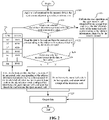
- the method for reading and writing provided by the present disclosure also provides a second embodiment. After applying a read command to the memory device, and before reading data to be read out from a memory cell corresponding to the address information pointed to by the read command, the method also includes a step of determining whether the address information pointed to by the read command is valid. Specifically, with reference to FIG. 2 , a schematic flow diagram of the method for reading and writing according to the second embodiment of the present disclosure is illustrated.
- Step S20 a read command is applied to the memory device, wherein the read command points to address information.
- Step S21 it is determined whether the address information pointed to by the read command is valid.
- the mark is looked up from the lookup table 20 by taking the address information pointed to by the read command as an index.
- the lookup table 20 if the first type code of the numerical code corresponding to the address information pointed to by the read command is the valid marked value, this means that the address information pointed to by the read command is valid. However, if the first type code of the numerical code corresponding to the address information pointed to by the read command is the invalid marked value, this means that the address information pointed to by the read command is invalid.
- the mark is looked up from the lookup table 20 by taking the address information A1 pointed to by the read command as an index.
- the lookup table 20 if the first type code of the numerical code corresponding to the address information A1 pointed to by the read command is the valid marked value 0, this means that the address information A1 pointed to by the read command is valid.
- the address information pointed to by the read command is the address information A4.
- the mark is looked up from the lookup table 20 by taking the address information A4 pointed to by the read command as the index.
- the lookup table 20 if the first type code of the numerical code corresponding to the address information A4 pointed to by the read command is the invalid marked value 1, this means that the address information A4 pointed to by the read command is invalid.
- Step S22 the read operation is performed on the memory cell corresponding to the address information pointed to by the read command, i.e., Step S22 is performed.
- the read operation is performed on the memory cell corresponding to the address information A1 pointed to by the read command, i.e., Step S22 is performed.
- the address information pointed to by the read command is the address information A1.
- the second type code of the numerical code is not identified.
- Step S23 is performed.
- the address information pointed to by the read command is invalid, i.e., in the lookup table 20
- the first type code of the numerical code corresponding to the address information pointed to by the read command is the invalid marked value
- Step S23 is performed.
- the numerical code also may be only composed of the second type code. That is, the numerical code only includes the identification code configured for identifying the spare memory cell or the meaningless code.
- the numerical code is looked up from the lookup table 20 by taking the address information pointed to by the read command as an index. In the lookup table 20, if the numerical code corresponding to the address information pointed to by the read command is the meaningless code, this means that the memory cell corresponding to the address information pointed to by the read command is valid. In this case, the read operation is performed on the memory cell. If the numerical code corresponding to the address information pointed to by the read command is the identification code, this means that the memory cell corresponding to the address information pointed to by the read command is invalid. In this case, the read operation is performed on the spare memory cell corresponding to the identification code.
- Step S22 the data to be read out is read from the memory cell corresponding to the address information pointed to by the read command.
- the data to be read out is read from the memory cell corresponding to the address information A1 pointed to by the read command.
- This step is the same as Step S11 in the first embodiment.
- Step S23 the read operation is performed on the spare memory cell identified by the second type code (i.e., the identification code) of the numerical code corresponding to the address information pointed to by the read command.
- the second type code i.e., the identification code
- the read operation is performed on the spare memory cell identified by the second type code 101 of the numerical code corresponding to the address information A4 pointed to by the read command.
- Step S24 it is determined whether an error occurs in the data to be read out. This step is the same as Step S12 in the first embodiment. If an error occurs in the data to be read out, in the lookup table 20, the first type code of the numerical code corresponding to the address information pointed to by the read command is marked as the invalid marked value, the second type code is revised as the identification code configured for identifying the spare memory cell, and the data to be read out is stored into the spare memory cell.
- the lookup table 20 If no error occurs in the data to be read out, in the lookup table 20, the first type code of the numerical code corresponding to the address information pointed to by the read command is revised the valid marked value, the second type code is filled with the meaningless code, or the lookup table is not revised when all the numerical codes in the lookup table 20 are initially set as a combination of the valid marked value and the meaningless code. In this embodiment, the mode of not revising the lookup table is adopted. Further, in another embodiment of the present disclosure, when the error occurs in the data to be read out, if the data to be read out is corrected, the corrected data instead of the data to be read out is stored into the spare memory cell. In Step S25, data is outputted. In this step, the outputted data may be the data stored in the spare memory cell, or may be corrected or uncorrected data to be read out in the memory cell.
- Step S23 it may be continued to determine whether an error occurs in data read out from a corresponding spare memory cell.
- the data is outputted if no error occurs in the data read out. If an error occurs in the data read out, a numerical value of the second type code corresponding to the address information pointed to by the read command is changed, the address information pointed to by the read command is associated with another spare memory cell, and the data to be read out or the corrected data to be read out may be stored into the new spare memory cell.
- the reliability of the memory device can be improved.
- the data to be read out is read out, it may be selected whether to mark the address information of the memory cell according to a fact whether an error occurs in the data to be read out.
- the memory cell is replaced by the spare memory cell if an error occurs in the data to be read out.
- the corrected data is stored into the spare memory cell to provide a basis for a subsequent read/write operation. In this way, the reliability and the lifespan of the memory device is greatly improved.
- the method for reading and writing provided by the present disclosure also provides a third embodiment.
- a write operation is performed on the memory device.
- FIG. 3 a schematic flow diagram of the method for reading and writing according to the third embodiment of the present disclosure is illustrated.
- Step S30 a write command is applied to the memory device, wherein the write command points to address information.
- a write command is applied to the memory device, wherein the write command points to address information A0.
- Step S31 it is determined whether the address information pointed to by the write command is valid.
- a mark corresponding to the address information is looked up from the lookup table by taking the address information pointed to by the write command as an index, to determine whether the address information pointed to by the write command is valid based on the mark.
- the first type code of the numerical code corresponding to the address information A0 is looked up from the lookup table 30 by taking the address information A0 pointed to by the write command as an index, to determine whether the address information A0 pointed to by the write command is valid based on the first type code. If the write command points to the address information A1, the first type code of the numerical code corresponding to the address information A1 is looked up from the lookup table 30 by taking the address information A1 pointed to by the write command as an index, to determine whether the address information A1 pointed to by the write command is valid based on the first type code.
- a write operation is performed on a memory cell corresponding to the address information pointed to by the write command if the mark of the address information pointed to by the write command is valid. It is stopped performing the write operation on the memory cell corresponding to the address information pointed to by the write command if the first type code of the numerical code corresponding to the address information pointed to by the write command is the invalid marked value. In this case, the second type code of the numerical code is identified, and the write operation is performed on the spare memory cell identified by the second type code.
- the lookup table 30 if the first type code of the numerical code corresponding to the address information A0 pointed to by the write command is the invalid marked value 1, it is stopped performing the write operation on the memory cell corresponding to the address information A0 pointed to by the write command, the second type code 001 of the numerical code is identified, and the write operation is performed on the spare memory cell identified by the second type code 001.
- the first type code of the numerical code corresponding to the address information A1 pointed to by the write command is the valid marked value 0, the write operation is performed on the memory cell corresponding to the address information A1 pointed to by the write command.
- the numerical code also may be only composed of the second type code. That is, the numerical code only includes the identification code configured for identifying the spare memory cell or the meaningless code.
- the numerical code is looked up from the lookup table 30 by taking the address information pointed to by the write command as an index. In the lookup table 30, if the numerical code corresponding to the address information pointed to by the write command is the meaningless code, this means that the memory cell corresponding to the address information pointed to by the write command is valid. In this case, the write operation is performed on the memory cell. If the numerical code corresponding to the address information pointed to by the write command is the identification code, this means that the memory cell corresponding to the address information pointed to by the write command is invalid. In this case, the write operation is performed on the spare memory cell corresponding to the identification code.
- the method for reading and writing also includes: forming a second ECC corresponding to data to be written in the write operation, and writing the second ECC together with the data to be written into the memory cell corresponding to the address information pointed to by the write command.
- both the data and the second ECC are read simultaneously, and the second ECC is decoded to restore data where an error likely occurs.
- the write operation is performed on the spare memory cell corresponding to the address information instead of the invalid memory cell. In this way, the reliability of the memory device is improved, and the lifespan of the memory device is prolonged.
- the present disclosure also provides a memory device that can implement the above method for reading and writing.
- the memory device includes, but is not limited to, a volatile memory such as a dynamic random access memory (DRAM) and a static random access memory (SRAM), and a non-volatile memory such as an NAND flash memory, an NOR flash memory, a ferroelectric random access memory (FeRAM), a resistance random access memory (RRAM), a magnetic random access memory (MRAM), and a phase change random access memory (PCRAM), etc.
- a volatile memory such as a dynamic random access memory (DRAM) and a static random access memory (SRAM)
- a non-volatile memory such as an NAND flash memory, an NOR flash memory, a ferroelectric random access memory (FeRAM), a resistance random access memory (RRAM), a magnetic random access memory (MRAM), and a phase change random access memory (PCRAM), etc.
- DRAM dynamic random access memory
- SRAM static random access memory
- PCRAM phase change random access
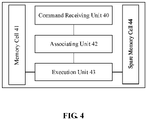
- the memory device includes: a command receiving unit 40, a memory cell 41, an associating unit 42, an execution unit 43, and a spare memory cell 44.
- the command receiving unit 40 is configured to receive a read command or a write command applied to the memory device, or address information pointed to by the read/write command.
- the memory cell 41 corresponds to the address information pointed to by the read command or the write command, and is configured to store data.
- the memory cell 41 may be a memory unit well known to those skilled in the art, such as a basic memory cell, a memory segment, memory pages, and memory blocks, which are not limited by the present disclosure.
- the associating unit 42 is configured to associate the address information with the spare memory cell 44.
- the associating unit 42 is also configured to store mark information configured for recording whether the address information is valid or invalid.
- the associating unit 42 is a lookup table. Address information of the memory cell 41 and a numerical code corresponding to the address information are recorded in the lookup table.
- the numerical code is composed of a first type code and a second type code, wherein the first type code is configured for marking whether the address information is valid, and the second type code is configured for recording an identification code of the spare memory cell 44.
- the first type code of the numerical code corresponding to the address information pointed to by the read command is revised as the invalid marked value, and the second type code is revised as the identification code configured for identifying the spare memory cell 44.
- the execution unit 43 is configured to perform a read operation or a write operation on the memory cell 31.
- the execution unit is also connected to the associating unit 42, and the execution unit is configured to perform a read operation or a write operation on the memory cell 41 corresponding to the address information, or to stop performing the read operation or the write operation on the memory cell 41 corresponding to the address information according to mark information of the associating unit 42. Specifically, if the first type code of the numerical code corresponding to the address information pointed to by the read command or the write command is the valid marked value, the execution unit 43 performs the read operation or the write operation on the memory cell corresponding to the address information.
- the execution unit 43 stops performing the read operation or the write operation on the memory cell corresponding to the address information, and performs the read operation or the write operation on the spare memory cell identified by the second type code according to the second type code of the numerical code.
- the spare memory cell 44 corresponds to the address information pointed to by the read command or the write command through the second type code, and is configured to store data.
- the spare memory cell 44 may be a memory unit well known to those skilled in the art, such as a basic memory cell, a memory segment, memory pages, and memory blocks, which are not limited by the present disclosure.
- the associating unit 42 may be merely connected to the execution unit 43, and the command receiving unit 40 may be directly connected to the execution unit 43.
- the present disclosure does not limit this connection mode, and those of ordinary skill in the art may set to implement the above functions as required.
- the memory device of the present disclosure also provides a second embodiment.
- FIG. 5 a schematic structural diagram of the memory device according to the second embodiment of the present disclosure is illustrated.
- the second embodiment differs from the first embodiment in that the memory device also includes an identification code generating unit 45.
- the identification code generating unit 45 is configured to generate an identification code configured for identifying the spare memory cell.
- the identification code generating unit 45 is connected to the associating unit 42, and the associating unit 42 can revise the second type code of the numerical code as the identification code generated by the identification code generating unit 45. Further, the identification code generating unit 45 can record the number of revising times of the second type code of the numerical code in the associating unit 42, to generate the identification code according to the number of revising times.
- the associating unit 42 associates the address information with the spare memory cell 44 through the identification code, such that the execution unit 43 can perform the read operation or the write operation on the spare memory cell 44.
- the memory device of the present disclosure also provides a third embodiment.
- FIG. 6 a schematic structural diagram of the memory device according to a third embodiment of the present disclosure is illustrated.
- the third embodiment differs from the first embodiment in that the memory device also includes an ECC decoding unit 46.
- the ECC decoding unit 46 is connected to the execution unit 43, the memory cell 41, and the associating unit 42.
- the ECC decoding unit 46 is configured to decode the first ECC corresponding to the data to be read out in the read operation to restore data where an error likely occurs. Furthermore, the numerical code of the associating unit 42 may be revised based on a fact whether the ECC decoding unit 46 restores the data. The ECC decoding unit 46 is also configured to form a second ECC corresponding to data to be written in the write operation.
- the command receiving unit receives a write command.
- the ECC decoding unit 46 forms an ECC corresponding to data to be written in the write operation, and stores the ECC into the memory cell 41 corresponding to the address information pointed to by the write command.
- the ECC decoding unit 46 decodes the ECC. It may be determined whether an error occurs in the data to be read out read by the read operation according to decoding of the ECC decoding unit 46, and then the numerical code of the associating unit 42 is revised.
- the ECC decoding unit 46 decodes the ECC. Although the ECC decoding unit 46 does not restore the data, it may be still determined that an error occurs in the data to be read out read by the read operation according to decoding of the ECC decoding unit 46. In this case, the numerical code corresponding to the address information of the memory cell is revised as a combination of the invalid marked value and the identification code in the associating unit 42.
- the execution unit 43 not only is connected to the ECC decoding unit 46, but also is connected to the memory cell 41.
- the execution unit 43 is connected to the ECC decoding unit 46, and the ECC decoding unit 46 is further connected to the memory cell 41. It is to be understood that different connection relationships may be selected according to different needs.
- the memory device of the present disclosure also provides a fifth embodiment.
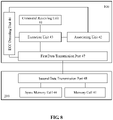
- FIG. 8 a schematic structural diagram of the memory device according to a fifth embodiment of the present disclosure is illustrated.
- the fifth embodiment differs from the third embodiment in that the memory device also includes a logic layer 100 and a plurality of memory layers 200 (only one memory layer is shown in FIG. 8 ).
- the memory layers 200 may be DRAM chips, and the logic layer 100 may be a layer provided with a logic circuit, such as a control chip or an interposer.
- the plurality of memory layers 200 may be vertically stacked above or below the logic layer 100, but the present disclosure is not limited thereto. Furthermore, the plurality of memory layers 200 may be integrated together using other packaging methods.
- the command receiving unit 40, the associating unit 42, the execution unit 43 and the ECC decoding unit 46 may be arranged in the logic layer 100.
- the memory cell 41 and the spare memory cell 44 are arranged in the memory layer 200.
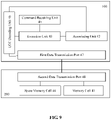
- the associating unit 42 and the ECC decoding unit 46 may also be arranged in the memory layer 200.
- the logic layer 100 has at least one first data transmission port 47
- the memory layer 200 has at least one second data transmission port 48. Instructions and data are transmitted between the logic layer 100 and the plurality of memory layers 200 through the first data transmission port 47 and the second data transmission port 48.
- the execution unit 43 not only is connected to the ECC decoding unit 46, but also is connected to the memory cell 41 through the first data transmission port 47 and the second data transmission port 48.
- the execution unit 43 is connected to the ECC decoding unit 46, and the ECC decoding unit 46 is connected to the memory cell 41 through the first data transmission port 47 and the second data transmission port 48. It is to be understood that different connection relationships may be selected according to different needs.
Landscapes
- Engineering & Computer Science (AREA)
- Theoretical Computer Science (AREA)
- General Engineering & Computer Science (AREA)
- Physics & Mathematics (AREA)
- General Physics & Mathematics (AREA)
- Human Computer Interaction (AREA)
- Quality & Reliability (AREA)
- Computer Security & Cryptography (AREA)
- Techniques For Improving Reliability Of Storages (AREA)
- For Increasing The Reliability Of Semiconductor Memories (AREA)
Applications Claiming Priority (2)
| Application Number | Priority Date | Filing Date | Title |
|---|---|---|---|
| CN202010249989.5A CN113495672B (zh) | 2020-04-01 | 2020-04-01 | 读写方法及存储器装置 |
| PCT/CN2020/130389 WO2021196661A1 (zh) | 2020-04-01 | 2020-11-20 | 读写方法及存储器装置 |
Publications (3)
| Publication Number | Publication Date |
|---|---|
| EP4006710A1 true EP4006710A1 (de) | 2022-06-01 |
| EP4006710A4 EP4006710A4 (de) | 2022-11-09 |
| EP4006710B1 EP4006710B1 (de) | 2025-06-25 |
Family
ID=77927534
Family Applications (1)
| Application Number | Title | Priority Date | Filing Date |
|---|---|---|---|
| EP20929597.1A Active EP4006710B1 (de) | 2020-04-01 | 2020-11-20 | Lese-schreib-verfahren und speichervorrichtung |
Country Status (4)
| Country | Link |
|---|---|
| US (1) | US11869615B2 (de) |
| EP (1) | EP4006710B1 (de) |
| CN (1) | CN113495672B (de) |
| WO (1) | WO2021196661A1 (de) |
Family Cites Families (76)
| Publication number | Priority date | Publication date | Assignee | Title |
|---|---|---|---|---|
| JPH1074396A (ja) | 1996-08-30 | 1998-03-17 | Nec Corp | 半導体記憶装置 |
| US5996096A (en) | 1996-11-15 | 1999-11-30 | International Business Machines Corporation | Dynamic redundancy for random access memory assemblies |
| US6418068B1 (en) | 2001-01-19 | 2002-07-09 | Hewlett-Packard Co. | Self-healing memory |
| US6854071B2 (en) | 2001-05-14 | 2005-02-08 | International Business Machines Corporation | Method and apparatus for providing write recovery of faulty data in a non-redundant raid system |
| US6836438B2 (en) | 2002-01-11 | 2004-12-28 | Macronix International Co., Ltd. | Method and apparatus for dynamically hiding a defect in an embedded memory |
| US6801471B2 (en) | 2002-02-19 | 2004-10-05 | Infineon Technologies Ag | Fuse concept and method of operation |
| US7159141B2 (en) | 2002-07-01 | 2007-01-02 | Micron Technology, Inc. | Repairable block redundancy scheme |
| JP2006185535A (ja) | 2004-12-28 | 2006-07-13 | Nec Electronics Corp | 半導体記憶装置 |
| US20060156191A1 (en) | 2005-01-07 | 2006-07-13 | Steve Driediger | Memory addressing error protection systems and methods |
| JP2007133986A (ja) * | 2005-11-11 | 2007-05-31 | Nec Electronics Corp | 半導体記憶装置 |
| US7721146B2 (en) | 2006-05-04 | 2010-05-18 | Dell Products L.P. | Method and system for bad block management in RAID arrays |
| US8015433B2 (en) | 2006-09-13 | 2011-09-06 | Hitachi Global Storage Technologies Netherlands B.V. | Disk drive with nonvolatile memory for storage of failure-related data |
| US20080181035A1 (en) * | 2007-01-26 | 2008-07-31 | Atsushi Kawasumi | Method and system for a dynamically repairable memory |
| CN101593157B (zh) | 2008-05-27 | 2011-03-16 | 中兴通讯股份有限公司 | 非线性闪存的坏块管理方法及装置 |
| CN101777013A (zh) * | 2009-01-12 | 2010-07-14 | 成都市华为赛门铁克科技有限公司 | 一种固态硬盘及数据读写方法 |
| JP4719802B2 (ja) | 2009-03-09 | 2011-07-06 | 富士通株式会社 | ストレージ管理装置、ストレージ管理方法およびストレージシステム |
| KR20100115970A (ko) * | 2009-04-21 | 2010-10-29 | 삼성전자주식회사 | 배드 셀 관리 방법과 그 장치 |
| US8412987B2 (en) * | 2009-06-30 | 2013-04-02 | Micron Technology, Inc. | Non-volatile memory to store memory remap information |
| US20100332950A1 (en) | 2009-06-30 | 2010-12-30 | Gurkirat Billing | Bit error threshold and content addressable memory to address a remapped memory device |
| JP2011108306A (ja) * | 2009-11-16 | 2011-06-02 | Sony Corp | 不揮発性メモリおよびメモリシステム |
| US9037928B2 (en) | 2012-01-01 | 2015-05-19 | Mosys, Inc. | Memory device with background built-in self-testing and background built-in self-repair |
| CN101908023A (zh) | 2010-08-06 | 2010-12-08 | 四川长虹电器股份有限公司 | NandFlash存储器中数据存储方法 |
| CN101916227B (zh) | 2010-08-13 | 2015-04-01 | 中兴通讯股份有限公司 | 一种rldram sio存储器访问控制方法和装置 |
| CN102004698B (zh) | 2010-11-23 | 2012-07-04 | 深圳市江波龙电子有限公司 | 一种闪存管理方法及系统 |
| TWI420298B (zh) | 2010-12-22 | 2013-12-21 | Silicon Motion Inc | 快閃記憶裝置及其資料存取方法 |
| CN102592680B (zh) | 2011-01-12 | 2015-04-08 | 北京兆易创新科技股份有限公司 | 一种存储芯片的修复装置和方法 |
| TWI444825B (zh) | 2011-03-29 | 2014-07-11 | Phison Electronics Corp | 記憶體儲存裝置、記憶體控制器與資料寫入方法 |
| CN102203740B (zh) * | 2011-05-27 | 2013-06-05 | 华为技术有限公司 | 数据处理方法、装置及系统 |
| US8887013B2 (en) * | 2011-07-01 | 2014-11-11 | Avalanche Technology, Inc. | Mapping of random defects in a memory device |
| US9063902B2 (en) | 2012-01-05 | 2015-06-23 | International Business Machines Corporation | Implementing enhanced hardware assisted DRAM repair using a data register for DRAM repair selectively provided in a DRAM module |
| CN103247345A (zh) | 2012-02-03 | 2013-08-14 | 北京兆易创新科技股份有限公司 | 快闪存储器及快闪存储器失效存储单元检测方法 |
| CN102789368B (zh) | 2012-06-21 | 2015-10-21 | 记忆科技(深圳)有限公司 | 一种固态硬盘及其数据管理方法、系统 |
| US9009566B2 (en) | 2012-09-12 | 2015-04-14 | Macronix International Co., Ltd. | Outputting information of ECC corrected bits |
| CN103778065B (zh) | 2012-10-25 | 2016-12-21 | 北京兆易创新科技股份有限公司 | 一种闪速存储器及其进行坏块管理的方法 |
| CN103019873B (zh) | 2012-12-03 | 2016-08-10 | 华为技术有限公司 | 一种存储器故障单元的替换方法及装置、数据存储系统 |
| CN103269230B (zh) | 2013-05-28 | 2017-02-22 | 中国科学院自动化研究所 | 一种自适应调整纠错码的容错系统及方法 |
| US9406403B2 (en) * | 2013-06-25 | 2016-08-02 | Advanced Micro Devices, Inc. | Spare memory external to protected memory |
| CN103309775B (zh) | 2013-07-03 | 2015-08-12 | 苏州科达科技股份有限公司 | 一种高可靠磁盘阵列的容错方法 |
| US10643668B1 (en) | 2013-08-27 | 2020-05-05 | Seagate Technology Llc | Power loss data block marking |
| US9372750B2 (en) | 2013-11-01 | 2016-06-21 | Qualcomm Incorporated | Method and apparatus for non-volatile RAM error re-mapping |
| US9274888B2 (en) | 2013-11-15 | 2016-03-01 | Qualcomm Incorporated | Method and apparatus for multiple-bit DRAM error recovery |
| US9378081B2 (en) | 2014-01-02 | 2016-06-28 | Qualcomm Incorporated | Bit remapping system |
| CN103839591A (zh) * | 2014-03-05 | 2014-06-04 | 福州瑞芯微电子有限公司 | 存储器自动检错和容错电路及控制方法 |
| CN103955430A (zh) | 2014-03-31 | 2014-07-30 | 深圳市江波龙电子有限公司 | 一种闪存存储设备中数据管理的方法及装置 |
| TWI527037B (zh) * | 2014-04-10 | 2016-03-21 | 群聯電子股份有限公司 | 資料儲存方法、記憶體控制電路單元與記憶體儲存裝置 |
| CN103955431B (zh) | 2014-04-11 | 2017-02-08 | 深圳市江波龙电子有限公司 | 一种闪存存储设备中数据管理的方法及装置 |
| US9880901B2 (en) | 2014-05-15 | 2018-01-30 | Integrated Silicon Solution, Inc. | Serial bus DRAM error correction event notification |
| US9904596B2 (en) | 2014-05-15 | 2018-02-27 | Integrated Silicon Solution, Inc. | Serial bus event notification in a memory device |
| US9389973B2 (en) | 2014-05-30 | 2016-07-12 | Oracle International Corporation | Memory error propagation for faster error recovery |
| CN104063186B (zh) | 2014-06-30 | 2016-04-06 | 成都万维图新信息技术有限公司 | 一种电子设备的数据访问方法 |
| KR20160062809A (ko) | 2014-11-25 | 2016-06-03 | 삼성전자주식회사 | 재쓰기를 이용하여 로우 비트 에러 레이트를 개선하는 메모리 시스템 및 그에 따른 재쓰기 방법 |
| CN105788648B (zh) * | 2014-12-25 | 2020-09-18 | 研祥智能科技股份有限公司 | 基于异构混合内存的nvm坏块识别处理及纠错方法和系统 |
| US11232848B2 (en) | 2015-04-30 | 2022-01-25 | Hewlett Packard Enterprise Development Lp | Memory module error tracking |
| US20160357462A1 (en) | 2015-06-08 | 2016-12-08 | Samsung Electronics Co., Ltd. | Nonvolatile Memory Modules and Data Management Methods Thereof |
| KR102461453B1 (ko) | 2015-06-10 | 2022-11-02 | 삼성전자주식회사 | 스토리지 장치 |
| US10235233B2 (en) | 2015-11-03 | 2019-03-19 | Hewlett Packard Enterprise Development Lp | Storage error type determination |
| TWI604308B (zh) | 2015-11-18 | 2017-11-01 | 慧榮科技股份有限公司 | 資料儲存裝置及其資料維護方法 |
| CN106776362B (zh) | 2015-11-24 | 2019-12-03 | 中芯国际集成电路制造(上海)有限公司 | 存储器的控制方法及装置 |
| CN105740163A (zh) | 2016-01-29 | 2016-07-06 | 山东鲁能智能技术有限公司 | 一种Nand Flash坏块管理方法 |
| US10101939B2 (en) | 2016-03-09 | 2018-10-16 | Toshiba Memory Corporation | Storage system having a host that manages physical data locations of a storage device |
| CN105868122A (zh) | 2016-03-28 | 2016-08-17 | 深圳市硅格半导体股份有限公司 | 快闪存储设备的数据处理方法及装置 |
| CN105893178A (zh) | 2016-03-30 | 2016-08-24 | 苏州美天网络科技有限公司 | 移动硬盘的数据备份方法 |
| JP6258399B2 (ja) * | 2016-05-16 | 2018-01-10 | ウィンボンド エレクトロニクス コーポレーション | 半導体装置 |
| KR102471608B1 (ko) | 2016-06-03 | 2022-11-29 | 에스케이하이닉스 주식회사 | 반도체 메모리 장치 및 그의 구동 방법 |
| KR20180019791A (ko) | 2016-08-16 | 2018-02-27 | 에스케이하이닉스 주식회사 | 반도체장치 및 반도체시스템 |
| CN106569742B (zh) | 2016-10-20 | 2019-07-23 | 华为技术有限公司 | 存储管理方法及存储设备 |
| KR102487553B1 (ko) | 2016-12-07 | 2023-01-11 | 삼성전자주식회사 | 리페어 가능한 휘발성 메모리를 포함하는 스토리지 장치 및 상기 스토리지 장치의 동작 방법 |
| CN107247563A (zh) | 2017-07-06 | 2017-10-13 | 济南浪潮高新科技投资发展有限公司 | 一种nand flash芯片的块信息标识实现方法 |
| TWI625735B (zh) | 2017-11-01 | 2018-06-01 | 大心電子股份有限公司 | 記憶體管理方法以及儲存控制器 |
| KR102511903B1 (ko) | 2018-02-26 | 2023-03-21 | 에스케이하이닉스 주식회사 | 고정된 에러정정능력의 에러정정코드 엔진을 이용하여 재구성할 수 있는 에러정정동작을 수행하는 메모리 시스템 |
| KR102658230B1 (ko) * | 2018-06-01 | 2024-04-17 | 삼성전자주식회사 | 반도체 메모리 장치, 이를 포함하는 메모리 시스템 및 반도체 메모리 장치의 동작 방법 |
| JP6612392B1 (ja) | 2018-06-08 | 2019-11-27 | ウィンボンド エレクトロニクス コーポレーション | 半導体記憶装置 |
| US11151006B2 (en) * | 2018-07-02 | 2021-10-19 | Samsung Electronics Co., Ltd. | HBM RAS cache architecture |
| US11645134B2 (en) * | 2019-08-20 | 2023-05-09 | Micron Technology, Inc. | Apparatuses and methods for fuse error detection |
| EP3964941B1 (de) | 2020-04-01 | 2024-02-28 | Changxin Memory Technologies, Inc. | Lese-schreib-verfahren und speichervorrichtung |
| EP3936996A4 (de) | 2020-04-01 | 2022-07-06 | Changxin Memory Technologies, Inc. | Lese-schreib-verfahren und speichervorrichtung |
-
2020
- 2020-04-01 CN CN202010249989.5A patent/CN113495672B/zh active Active
- 2020-11-20 EP EP20929597.1A patent/EP4006710B1/de active Active
- 2020-11-20 WO PCT/CN2020/130389 patent/WO2021196661A1/zh not_active Ceased
-
2021
- 2021-06-30 US US17/363,013 patent/US11869615B2/en active Active
Also Published As
| Publication number | Publication date |
|---|---|
| CN113495672A (zh) | 2021-10-12 |
| WO2021196661A1 (zh) | 2021-10-07 |
| US11869615B2 (en) | 2024-01-09 |
| US20210327531A1 (en) | 2021-10-21 |
| EP4006710B1 (de) | 2025-06-25 |
| EP4006710A4 (de) | 2022-11-09 |
| CN113495672B (zh) | 2023-08-11 |
Similar Documents
| Publication | Publication Date | Title |
|---|---|---|
| US11527301B2 (en) | Method for reading and writing and memory device | |
| US11914479B2 (en) | Method for reading and writing and memory device | |
| US11899971B2 (en) | Method for reading and writing and memory device | |
| US11869615B2 (en) | Method for reading and writing and memory device | |
| EP3933567B1 (de) | Lese-schreib-verfahren und speichervorrichtung | |
| US11886287B2 (en) | Read and write methods and memory devices | |
| CN113495673B (zh) | 读写方法及存储器装置 | |
| EP3985494B1 (de) | Lese-schreib-verfahren und speichervorrichtung | |
| CN113495677B (zh) | 读写方法及存储器装置 | |
| WO2021196623A1 (zh) | 读写方法及存储器装置 | |
| US11922023B2 (en) | Read/write method and memory device | |
| WO2021196662A1 (zh) | 读写方法及存储器装置 |
Legal Events
| Date | Code | Title | Description |
|---|---|---|---|
| STAA | Information on the status of an ep patent application or granted ep patent |
Free format text: STATUS: THE INTERNATIONAL PUBLICATION HAS BEEN MADE |
|
| PUAI | Public reference made under article 153(3) epc to a published international application that has entered the european phase |
Free format text: ORIGINAL CODE: 0009012 |
|
| STAA | Information on the status of an ep patent application or granted ep patent |
Free format text: STATUS: REQUEST FOR EXAMINATION WAS MADE |
|
| 17P | Request for examination filed |
Effective date: 20220224 |
|
| AK | Designated contracting states |
Kind code of ref document: A1 Designated state(s): AL AT BE BG CH CY CZ DE DK EE ES FI FR GB GR HR HU IE IS IT LI LT LU LV MC MK MT NL NO PL PT RO RS SE SI SK SM TR |
|
| REG | Reference to a national code |
Ref country code: DE Ref country code: DE Ref legal event code: R079 Ref document number: 602020053568 Country of ref document: DE Free format text: PREVIOUS MAIN CLASS: G06F0003060000 Ipc: G11C0029000000 |
|
| A4 | Supplementary search report drawn up and despatched |
Effective date: 20221011 |
|
| RIC1 | Information provided on ipc code assigned before grant |
Ipc: G11C 29/18 20060101ALN20221005BHEP Ipc: G11C 29/04 20060101ALN20221005BHEP Ipc: G11C 29/52 20060101ALI20221005BHEP Ipc: G11C 29/44 20060101ALI20221005BHEP Ipc: G11C 29/42 20060101ALI20221005BHEP Ipc: G11C 29/00 20060101AFI20221005BHEP |
|
| DAV | Request for validation of the european patent (deleted) | ||
| DAX | Request for extension of the european patent (deleted) | ||
| GRAP | Despatch of communication of intention to grant a patent |
Free format text: ORIGINAL CODE: EPIDOSNIGR1 |
|
| STAA | Information on the status of an ep patent application or granted ep patent |
Free format text: STATUS: GRANT OF PATENT IS INTENDED |
|
| RIC1 | Information provided on ipc code assigned before grant |
Ipc: G11C 29/42 20060101ALN20250123BHEP Ipc: G11C 29/18 20060101ALN20250123BHEP Ipc: G11C 29/04 20060101ALN20250123BHEP Ipc: G11C 29/52 20060101ALI20250123BHEP Ipc: G11C 29/44 20060101ALI20250123BHEP Ipc: G11C 29/00 20060101AFI20250123BHEP |
|
| INTG | Intention to grant announced |
Effective date: 20250217 |
|
| P01 | Opt-out of the competence of the unified patent court (upc) registered |
Free format text: CASE NUMBER: APP_11419/2025 Effective date: 20250308 |
|
| GRAS | Grant fee paid |
Free format text: ORIGINAL CODE: EPIDOSNIGR3 |
|
| GRAA | (expected) grant |
Free format text: ORIGINAL CODE: 0009210 |
|
| STAA | Information on the status of an ep patent application or granted ep patent |
Free format text: STATUS: THE PATENT HAS BEEN GRANTED |
|
| AK | Designated contracting states |
Kind code of ref document: B1 Designated state(s): AL AT BE BG CH CY CZ DE DK EE ES FI FR GB GR HR HU IE IS IT LI LT LU LV MC MK MT NL NO PL PT RO RS SE SI SK SM TR |
|
| REG | Reference to a national code |
Ref country code: GB Ref legal event code: FG4D |
|
| REG | Reference to a national code |
Ref country code: CH Ref legal event code: EP |
|
| REG | Reference to a national code |
Ref country code: CH Ref legal event code: EP |
|
| REG | Reference to a national code |
Ref country code: IE Ref legal event code: FG4D |
|
| REG | Reference to a national code |
Ref country code: DE Ref legal event code: R096 Ref document number: 602020053568 Country of ref document: DE |
|
| PG25 | Lapsed in a contracting state [announced via postgrant information from national office to epo] |
Ref country code: FI Free format text: LAPSE BECAUSE OF FAILURE TO SUBMIT A TRANSLATION OF THE DESCRIPTION OR TO PAY THE FEE WITHIN THE PRESCRIBED TIME-LIMIT Effective date: 20250625 |
|
| REG | Reference to a national code |
Ref country code: LT Ref legal event code: MG9D |
|
| PG25 | Lapsed in a contracting state [announced via postgrant information from national office to epo] |
Ref country code: NO Free format text: LAPSE BECAUSE OF FAILURE TO SUBMIT A TRANSLATION OF THE DESCRIPTION OR TO PAY THE FEE WITHIN THE PRESCRIBED TIME-LIMIT Effective date: 20250925 Ref country code: GR Free format text: LAPSE BECAUSE OF FAILURE TO SUBMIT A TRANSLATION OF THE DESCRIPTION OR TO PAY THE FEE WITHIN THE PRESCRIBED TIME-LIMIT Effective date: 20250926 |
|
| PG25 | Lapsed in a contracting state [announced via postgrant information from national office to epo] |
Ref country code: BG Free format text: LAPSE BECAUSE OF FAILURE TO SUBMIT A TRANSLATION OF THE DESCRIPTION OR TO PAY THE FEE WITHIN THE PRESCRIBED TIME-LIMIT Effective date: 20250625 |
|
| PG25 | Lapsed in a contracting state [announced via postgrant information from national office to epo] |
Ref country code: HR Free format text: LAPSE BECAUSE OF FAILURE TO SUBMIT A TRANSLATION OF THE DESCRIPTION OR TO PAY THE FEE WITHIN THE PRESCRIBED TIME-LIMIT Effective date: 20250625 |
|
| PG25 | Lapsed in a contracting state [announced via postgrant information from national office to epo] |
Ref country code: RS Free format text: LAPSE BECAUSE OF FAILURE TO SUBMIT A TRANSLATION OF THE DESCRIPTION OR TO PAY THE FEE WITHIN THE PRESCRIBED TIME-LIMIT Effective date: 20250925 |
|
| PG25 | Lapsed in a contracting state [announced via postgrant information from national office to epo] |
Ref country code: LV Free format text: LAPSE BECAUSE OF FAILURE TO SUBMIT A TRANSLATION OF THE DESCRIPTION OR TO PAY THE FEE WITHIN THE PRESCRIBED TIME-LIMIT Effective date: 20250625 |
|
| REG | Reference to a national code |
Ref country code: NL Ref legal event code: MP Effective date: 20250625 |
|
| PG25 | Lapsed in a contracting state [announced via postgrant information from national office to epo] |
Ref country code: NL Free format text: LAPSE BECAUSE OF FAILURE TO SUBMIT A TRANSLATION OF THE DESCRIPTION OR TO PAY THE FEE WITHIN THE PRESCRIBED TIME-LIMIT Effective date: 20250625 |
|
| PG25 | Lapsed in a contracting state [announced via postgrant information from national office to epo] |
Ref country code: PT Free format text: LAPSE BECAUSE OF FAILURE TO SUBMIT A TRANSLATION OF THE DESCRIPTION OR TO PAY THE FEE WITHIN THE PRESCRIBED TIME-LIMIT Effective date: 20251027 |
|
| REG | Reference to a national code |
Ref country code: AT Ref legal event code: MK05 Ref document number: 1807439 Country of ref document: AT Kind code of ref document: T Effective date: 20250625 |
|
| PG25 | Lapsed in a contracting state [announced via postgrant information from national office to epo] |
Ref country code: IS Free format text: LAPSE BECAUSE OF FAILURE TO SUBMIT A TRANSLATION OF THE DESCRIPTION OR TO PAY THE FEE WITHIN THE PRESCRIBED TIME-LIMIT Effective date: 20251025 |
|
| PGFP | Annual fee paid to national office [announced via postgrant information from national office to epo] |
Ref country code: DE Payment date: 20251119 Year of fee payment: 6 |
|
| PGFP | Annual fee paid to national office [announced via postgrant information from national office to epo] |
Ref country code: GB Payment date: 20251121 Year of fee payment: 6 |
|
| PG25 | Lapsed in a contracting state [announced via postgrant information from national office to epo] |
Ref country code: AT Free format text: LAPSE BECAUSE OF FAILURE TO SUBMIT A TRANSLATION OF THE DESCRIPTION OR TO PAY THE FEE WITHIN THE PRESCRIBED TIME-LIMIT Effective date: 20250625 Ref country code: SM Free format text: LAPSE BECAUSE OF FAILURE TO SUBMIT A TRANSLATION OF THE DESCRIPTION OR TO PAY THE FEE WITHIN THE PRESCRIBED TIME-LIMIT Effective date: 20250625 |
|
| PG25 | Lapsed in a contracting state [announced via postgrant information from national office to epo] |
Ref country code: CZ Free format text: LAPSE BECAUSE OF FAILURE TO SUBMIT A TRANSLATION OF THE DESCRIPTION OR TO PAY THE FEE WITHIN THE PRESCRIBED TIME-LIMIT Effective date: 20250625 |
|
| PG25 | Lapsed in a contracting state [announced via postgrant information from national office to epo] |
Ref country code: PL Free format text: LAPSE BECAUSE OF FAILURE TO SUBMIT A TRANSLATION OF THE DESCRIPTION OR TO PAY THE FEE WITHIN THE PRESCRIBED TIME-LIMIT Effective date: 20250625 |
|
| PG25 | Lapsed in a contracting state [announced via postgrant information from national office to epo] |
Ref country code: EE Free format text: LAPSE BECAUSE OF FAILURE TO SUBMIT A TRANSLATION OF THE DESCRIPTION OR TO PAY THE FEE WITHIN THE PRESCRIBED TIME-LIMIT Effective date: 20250625 |
|
| PG25 | Lapsed in a contracting state [announced via postgrant information from national office to epo] |
Ref country code: SK Free format text: LAPSE BECAUSE OF FAILURE TO SUBMIT A TRANSLATION OF THE DESCRIPTION OR TO PAY THE FEE WITHIN THE PRESCRIBED TIME-LIMIT Effective date: 20250625 |
|
| PG25 | Lapsed in a contracting state [announced via postgrant information from national office to epo] |
Ref country code: ES Free format text: LAPSE BECAUSE OF FAILURE TO SUBMIT A TRANSLATION OF THE DESCRIPTION OR TO PAY THE FEE WITHIN THE PRESCRIBED TIME-LIMIT Effective date: 20250625 |
|
| PG25 | Lapsed in a contracting state [announced via postgrant information from national office to epo] |
Ref country code: RO Free format text: LAPSE BECAUSE OF FAILURE TO SUBMIT A TRANSLATION OF THE DESCRIPTION OR TO PAY THE FEE WITHIN THE PRESCRIBED TIME-LIMIT Effective date: 20250625 |
|
| PG25 | Lapsed in a contracting state [announced via postgrant information from national office to epo] |
Ref country code: DK Free format text: LAPSE BECAUSE OF FAILURE TO SUBMIT A TRANSLATION OF THE DESCRIPTION OR TO PAY THE FEE WITHIN THE PRESCRIBED TIME-LIMIT Effective date: 20250625 |
|
| PG25 | Lapsed in a contracting state [announced via postgrant information from national office to epo] |
Ref country code: IT Free format text: LAPSE BECAUSE OF FAILURE TO SUBMIT A TRANSLATION OF THE DESCRIPTION OR TO PAY THE FEE WITHIN THE PRESCRIBED TIME-LIMIT Effective date: 20250625 |
|
| PLBE | No opposition filed within time limit |
Free format text: ORIGINAL CODE: 0009261 |
|
| STAA | Information on the status of an ep patent application or granted ep patent |
Free format text: STATUS: NO OPPOSITION FILED WITHIN TIME LIMIT |