EP4006788B1 - Verfahren und gerät zur quantenschaltungsbestimmung, vorrichtung und speichermedium - Google Patents
Verfahren und gerät zur quantenschaltungsbestimmung, vorrichtung und speichermedium Download PDFInfo
- Publication number
- EP4006788B1 EP4006788B1 EP21772939.1A EP21772939A EP4006788B1 EP 4006788 B1 EP4006788 B1 EP 4006788B1 EP 21772939 A EP21772939 A EP 21772939A EP 4006788 B1 EP4006788 B1 EP 4006788B1
- Authority
- EP
- European Patent Office
- Prior art keywords
- circuit
- quantum
- circuit unit
- parameter
- candidate
- Prior art date
- Legal status (The legal status is an assumption and is not a legal conclusion. Google has not performed a legal analysis and makes no representation as to the accuracy of the status listed.)
- Active
Links
Images



Classifications
-
- G—PHYSICS
- G06—COMPUTING OR CALCULATING; COUNTING
- G06N—COMPUTING ARRANGEMENTS BASED ON SPECIFIC COMPUTATIONAL MODELS
- G06N10/00—Quantum computing, i.e. information processing based on quantum-mechanical phenomena
- G06N10/20—Models of quantum computing, e.g. quantum circuits or universal quantum computers
-
- G—PHYSICS
- G06—COMPUTING OR CALCULATING; COUNTING
- G06F—ELECTRIC DIGITAL DATA PROCESSING
- G06F30/00—Computer-aided design [CAD]
- G06F30/30—Circuit design
- G06F30/32—Circuit design at the digital level
- G06F30/337—Design optimisation
-
- G—PHYSICS
- G06—COMPUTING OR CALCULATING; COUNTING
- G06F—ELECTRIC DIGITAL DATA PROCESSING
- G06F30/00—Computer-aided design [CAD]
- G06F30/30—Circuit design
-
- G—PHYSICS
- G06—COMPUTING OR CALCULATING; COUNTING
- G06N—COMPUTING ARRANGEMENTS BASED ON SPECIFIC COMPUTATIONAL MODELS
- G06N10/00—Quantum computing, i.e. information processing based on quantum-mechanical phenomena
-
- G—PHYSICS
- G06—COMPUTING OR CALCULATING; COUNTING
- G06N—COMPUTING ARRANGEMENTS BASED ON SPECIFIC COMPUTATIONAL MODELS
- G06N10/00—Quantum computing, i.e. information processing based on quantum-mechanical phenomena
- G06N10/60—Quantum algorithms, e.g. based on quantum optimisation, quantum Fourier or Hadamard transforms
-
- G—PHYSICS
- G06—COMPUTING OR CALCULATING; COUNTING
- G06N—COMPUTING ARRANGEMENTS BASED ON SPECIFIC COMPUTATIONAL MODELS
- G06N10/00—Quantum computing, i.e. information processing based on quantum-mechanical phenomena
- G06N10/80—Quantum programming, e.g. interfaces, languages or software-development kits for creating or handling programs capable of running on quantum computers; Platforms for simulating or accessing quantum computers, e.g. cloud-based quantum computing
-
- G—PHYSICS
- G06—COMPUTING OR CALCULATING; COUNTING
- G06N—COMPUTING ARRANGEMENTS BASED ON SPECIFIC COMPUTATIONAL MODELS
- G06N20/00—Machine learning
-
- G—PHYSICS
- G06—COMPUTING OR CALCULATING; COUNTING
- G06N—COMPUTING ARRANGEMENTS BASED ON SPECIFIC COMPUTATIONAL MODELS
- G06N7/00—Computing arrangements based on specific mathematical models
- G06N7/01—Probabilistic graphical models, e.g. probabilistic networks
-
- B—PERFORMING OPERATIONS; TRANSPORTING
- B82—NANOTECHNOLOGY
- B82Y—SPECIFIC USES OR APPLICATIONS OF NANOSTRUCTURES; MEASUREMENT OR ANALYSIS OF NANOSTRUCTURES; MANUFACTURE OR TREATMENT OF NANOSTRUCTURES
- B82Y10/00—Nanotechnology for information processing, storage or transmission, e.g. quantum computing or single electron logic
-
- G—PHYSICS
- G06—COMPUTING OR CALCULATING; COUNTING
- G06N—COMPUTING ARRANGEMENTS BASED ON SPECIFIC COMPUTATIONAL MODELS
- G06N10/00—Quantum computing, i.e. information processing based on quantum-mechanical phenomena
- G06N10/70—Quantum error correction, detection or prevention, e.g. surface codes or magic state distillation
Definitions
- Embodiments of this disclosure relate to the field of quantum technologies, and in particular, to a quantum circuit determining method and apparatus, a device, and a storage medium.
- Quantum circuit is a representation of a quantum general-purpose computer, which represents hardware implementation of a corresponding quantum algorithm/program under a quantum gate model. For different quantum computing tasks, different quantum circuits need to be constructed to complete the corresponding tasks.
- An existing solution for constructing a quantum circuit has problems of high complexity, low efficiency, and poor versatility.
- Cloud technology is a hosting technology that unifies a series of resources such as hardware, software, and networks in a wide area network or a local area network to implement computing, storage, processing, and sharing of data.
- the cloud technology is a generic term for a network technology, an information technology, an integration technology, a management platform technology, an application technology, and the like based on an application of a cloud computing business mode.
- a resource pool may be formed, and resources are used based on a requirement, which is flexible and convenient.
- a cloud computing technology becomes an important support.
- a backend service of a technical network system requires a large amount of computing and storage resources, such as a video website, an image website, and more portal websites.
- each article may have its own identifier in the future, which needs to be transmitted to a backend system for logic processing. Data at different levels is separately processed, and data in various industries requires strong system support, which can be implemented through cloud computing.
- the cloud technology involves basic technologies such as cloud computing, cloud storage, databases, and big data.
- Cloud applications provided based on the cloud technology include medical cloud, cloud Internet of things ( IoT), cloud security, cloud calling, private cloud, public cloud, hybrid cloud, cloud gaming, cloud education, cloud conference, cloud social, artificial intelligence cloud services, and the like.
- a system based on a cloud technology includes a server and a terminal.
- the server may be an independent physical server, or may be a server cluster or a distributed system including a plurality of physical servers, or may be a cloud server that provides a basic cloud computing service such as a cloud service, a cloud database, cloud computing, a cloud function, cloud storage, a network service, cloud communication, a middleware service, a domain name service, a security service, a content delivery network (CDN), big data, and an artificial intelligence platform.
- the terminal may be a smartphone, a tablet computer, a notebook computer, a desktop computer, a smart speaker, a smartwatch, or the like, but is not limited thereto.
- the terminal and the server may be directly or indirectly connected in a wired or wireless communication manner. This is not limited in this embodiment of this disclosure.
- a quantum computer is a machine that uses the principles of quantum mechanics to perform computations. Based on a superposition principle and quantum entanglement of the quantum mechanics, the quantum computer has a strong parallel processing capability and can resolve some problems that are difficult for a classical computer to compute. Because of a zero-resistance characteristic of a superconducting quantum bit (qubit) and a manufacturing process close to that of an integrated circuit, a quantum computing system constructed using the superconducting qubit is one of the most promising systems for implementing practical quantum computing.
- qubit superconducting quantum bit
- a quantum processor refers to a quantum-level computer processor, that is, a processor of a quantum computer.
- the quantum processor may include one or more quantum chips.
- the quantum chip (or a superconducting quantum chip) is a central processing unit of the quantum computer and is a core part of the quantum computer.
- the quantum chip integrates quantum circuits on a substrate, to carry a function of quantum information processing. Drawing lessons from the development of a conventional computer, after overcoming the bottleneck technology in quantum computer research, it is necessary to move onto integration to achieve commercialization and industrial upgrading.
- a superconducting system, a semiconductor quantum dot system, a micro-nano photonics system, and even an atomic and ion system are all expected to move onto chips.
- an superconducting quantum chip system is technically ahead of other physical systems, and the conventional semiconductor quantum dot system is also an objective that people try to explore, because the development of the conventional semiconductor industry is already mature, for example, once a semiconductor quantum chip breaks a threshold of fault-tolerance quantum computing (FTQC) in terms of decoherence time and manipulation accuracy, it is expected to integrate existing achievements of the conventional semiconductor industry to reduce development costs.
- FTQC fault-tolerance quantum computing
- a system constructed based on a cloud technology in the future can use the quantum computer to perform some processing and computations to provide better services.
- a relatively conventional solution for constructing a quantum circuit is to use a genetic algorithm.
- a basic method is to fix a part of a circuit structure of the quantum circuit and then use the genetic algorithm to find an optimal circuit structure for a next part, and repeat the process a plurality of times to construct a complete quantum circuit finally.
- construction of the quantum circuit is extremely complex and inefficient.
- the solution is poor in versatility. For example, different types of genetic algorithms need to be selected for different quantum computing tasks.
- This disclosure provides a technical solution for constructing a quantum circuit.
- the technical solution may be referred to as a DQAS solution (or a DQAS framework).
- DQAS framework provided in this disclosure, different types of quantum circuit design problems can be highly abstracted and unified, making the framework universal, which can resolve important problems in a plurality of sub-fields without modification.
- a quantum circuit constructed using this framework may be used in a plurality of sub-fields of quantum computing and quantum information processing, including but not limited to quantum state preparation, quantum circuit design, quantum compilation, optimal variational structure search, and quantum error suppression.
- U represents a quantum circuit
- U i represents an equivalent quantum circuit corresponding to an i th unitary matrix forming the quantum circuit U
- ⁇ i represents a circuit parameter of the equivalent quantum circuit corresponding to the i th unitary matrix
- ⁇ i may include zero to a plurality of circuit parameters, i ⁇ [0, p ]
- i is an integer.
- the circuit parameter of the quantum circuit is a variational parameter.
- the variational parameter means that the circuit parameter of the quantum circuit is updatable (that is, adjustable and modifiable), so that the circuit parameter of the quantum circuit may be updated by using an optimizer to optimize an objective function.
- Any quantum circuit is regarded as being formed by stacking a series of unitary matrices, so that a search solution is not limited to hypothetical circuit search of a quantum classical hybrid computing paradigm, but is applicable to a wider range of problems with or without circuit parameters. That is, this solution may also be used for finding optimal quantum circuit design of a completely discrete quantum gate arrangement. This solution is compatible regardless of a variational parameter of a circuit.
- a circuit unit pool is constructed.
- the circuit unit pool includes a plurality of selectable circuit units.
- Each circuit unit may be regarded as a unitary matrix circuit, that is, an equivalent quantum circuit of a unitary matrix.
- a corresponding circuit unit is designed for each basic operation.
- a circuit unit may be a single-bit quantum gate, a one-layer quantum gate, or a time-dependent evolution of a Hamiltonian, which is not limited in the embodiments of this disclosure.
- Each placeholder U i is filled by selecting a circuit unit from the circuit unit pool. The selection is performed in a replacement manner to ensure that each circuit unit may be reused in a final constructed quantum circuit.
- an optimized objective function For each specific quantum circuit design task, a suitable objective function needs to be specified.
- the observations also referred to as observed quantities
- an optimized objective function may be some function expected by an observation H i , so that expectation and specific distribution of an output quantum state may be considered in the optimized objective function.
- f i , g i are arbitrary differentiable functions suitable for a specific task
- ⁇ j ⁇ is a data set inputted by a corresponding quantum wave function
- y j is a classical label corresponding to a corresponding quantum state of the data set and is usually 0 or 1.
- ⁇ i ⁇
- the objective function in this case represents fidelity of an output quantum state determined after an action of a circuit U is performed on an input simple direct product state
- a circuit to prepare a corresponding quantum state may be found by optimizing the objective function.
- a process of selecting circuit units to form a quantum circuit is considered as being controlled by a probability model.
- the probability model P may be a sufficiently universal energy model or an autoregressive network.
- simplest layer-by-layer discrete distribution may be selected to perform a process of selecting circuit units from the circuit unit pool to construct a quantum circuit.
- the probability model has a continuous parameter ⁇ , so that a structural parameter k of discrete integers is sampled from a probability model P(k, ⁇ ), which determines a structure of a corresponding quantum circuit.
- L ⁇ k ⁇ P k ⁇ L U k ⁇
- P(k, ⁇ ) represents the initial probability model
- U(k, ⁇ ) represents a candidate quantum circuit constructed and generated based on the structural parameter k
- the structural parameter k may include a plurality of discrete values used to represent circuit units determined by sampling this time
- L(U(k, ⁇ )) represents an objective function corresponding to the candidate quantum circuit U(k, ⁇ ).
- the quantum circuit determining method is implemented by a classical computer (for example, a personal computer (PC)).
- the classical computer is used to execute a corresponding computer program to implement the method.
- the method is performed in a hybrid device environment of a classical computer and a quantum computer.
- the classical computer performs circuit sampling, parameter updating, and circuit selection, and the quantum computer determines a performance evaluation index (for example, an objective function) corresponding to a candidate quantum circuit. This is because a corresponding performance evaluation result of directly deploying a quantum circuit on the quantum computer for execution is theoretically supposed to be better than simulating the quantum circuit on the classical computer.
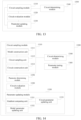
- FIG. 1 is a flowchart of a quantum circuit determining method according to an embodiment of this disclosure.
- An execution entity of steps of this method may be a computer device.
- the method may include the following steps (101 to 105): Step 101. Sample an initial circuit unit pool according to an initial sampling manner to determine K groups of circuit units, and construct and generate K candidate quantum circuits based on the K groups of circuit units, K being a positive integer.
- the circuit unit pool includes a plurality of selectable circuit units.
- the circuit unit is a basic unit that forms a quantum circuit, and one quantum circuit may include one or more circuit units.
- a connection relationship between the circuit units may be pre-defined or designed.
- a quantum circuit has a multi-layer structure, each layer includes a circuit unit, and layers are connected in sequence. For example, an output result of a circuit unit of a layer may be used as input data of a circuit unit of a next layer, and the data is further computed or processed through the circuit unit of the next layer.
- a quantum circuit has a multi-layer structure, and each layer includes one or more filling positions for filling a circuit unit. In response to a plurality of filling positions in the same layer, the filling positions may be connected in advance in a preset manner.
- a corresponding circuit unit is designed for each basic operation.
- a circuit unit may be a single-bit quantum gate, a one-layer quantum gate, or a time-dependent evolution of a Hamiltonian, which is not limited in this embodiment of this disclosure.
- the sampling manner refers to a manner of selecting a circuit unit from the circuit unit pool.
- One or more circuit units are selected from the circuit unit pool during each time of sampling, and the one or more circuit units selected in one time of sampling form one group of circuit units, that is, each group of circuit units includes at least one circuit unit.
- each group of circuit units is used for constructing and generating a candidate quantum circuit.
- a circuit unit is repeatable in the each group of circuit units. That is, the foregoing sampling process is performed in a replacement manner to ensure that each circuit unit may be reused in a final constructed quantum circuit.
- the initial circuit unit pool includes five circuit units respectively numbered 0, 1, 2, 3, and 4. It is assumed that three-time sampling is performed from the initial circuit unit pool according to the initial sampling manner, to determine three groups of circuit units. It is assumed that a group of circuit units determined in first-time sampling includes three circuit units numbered 2, 1, 3 respectively, a group of circuit units determined in second-time sampling includes three circuit units numbered 2, 1, 1 respectively, and a group of circuit units determined in third-time sampling includes three circuit units numbered 2, 1, 4 respectively. Subsequently, according to the sampling results, three candidate quantum circuits are constructed and generated.
- Step 102 Determine a performance evaluation index corresponding to the K candidate quantum circuits.
- the performance evaluation index is a parameter for quantizing and evaluating performance of a candidate quantum circuit.
- the performance evaluation index corresponding to the K candidate quantum circuits is a parameter for evaluating comprehensive performance or average performance of the K candidate quantum circuits, reflecting an overall situation or average situation of respective performance of the K candidate quantum circuits.
- the performance evaluation index is represented by using an objective function.
- the objective function is a mathematical function for computing whether a quantum circuit constructed and generated reaches a task optimization objective. For example, as described above, for different quantum circuit design tasks, different objective functions may be set correspondingly.
- Step 103 Update the sampling manner and a circuit unit in the initial circuit unit pool based on the performance evaluation index, to determine an updated sampling manner and an updated circuit unit pool.
- the performance evaluation index is used for guiding adjustment of the sampling manner and a circuit parameter of a circuit unit, to determine a candidate quantum circuit with better performance by sampling.
- the sampling manner is updated based on the performance evaluation index to optimize the sampling manner and select better circuit units from the circuit unit pool for combination;
- a circuit unit in the circuit unit pool is updated based on the performance evaluation index, for example, a circuit parameter of the circuit unit is updated, to optimize performance of a single circuit unit, to help improve overall performance of a constructed quantum circuit.
- Step 104 Sample the updated circuit unit pool according to the updated sampling manner to determine updated K groups of circuit units, and construct and generate updated K candidate quantum circuits based on the updated K groups of circuit units.
- a sampling process in step 104 is the same as or similar to the sampling process described in step 101. A difference is that the sampling manner and the circuit parameter of the circuit unit in the circuit unit pool are updated.
- the updated circuit unit pool is sampled according to the updated sampling manner to determine updated K groups of circuit units.
- the number of sampling times in step 104 may be the same as or different from the number of sampling times in step 101.
- K in step 104 in response to the number of sampling times in step 104 being the same as the number of sampling times in step 101, for example, if K in step 101 is equal to 10, K in step 104 is also equal to 10.
- K in step 104 in response to the number of sampling times in step 104 being different from the number of sampling times in step 101, for example, if K in step 101 is equal to 10 , K in step 104 is equal to 8.
- steps 102 to 104 may be performed cyclically, to continuously update and optimize the sampling manner and the circuit parameter, to construct a better candidate quantum circuit. This cyclic process is stopped until a cycle termination condition is satisfied.
- the cycle termination condition refers to a preset condition for triggering the cyclic process to be stopped.
- the cycle termination condition includes, but is not limited to, at least one of the following: K candidate quantum circuits generated the last time are the same, the number of identical quantum circuits in the K candidate quantum circuits generated the last time is greater than a threshold, a performance evaluation index corresponding to the K candidate quantum circuits generated the last time meets a set index requirement, and the number of execution times in the cyclic process reaches a specified number, and the like, which is not limited in this embodiment of this disclosure.
- Step 105 In response to a cycle termination condition being satisfied, determine a target quantum circuit from the updated K candidate quantum circuits.
- the target quantum circuit is a quantum circuit determined from the K candidate quantum circuits generated the last time.
- the target quantum circuit may be a quantum circuit selected from the K candidate quantum circuits generated the last time.
- the target quantum circuit is a final constructed and generated quantum circuit for completing a predetermined quantum circuit design task.
- a candidate quantum circuit with the largest generation probability is determined from the K candidate quantum circuits generated the last time.
- the candidate quantum circuit with the largest generation probability is determined as a target quantum circuit.
- the technical solutions of this disclosure can be used to construct a target quantum circuit for resolving a corresponding problem, so that different types of quantum circuit design problems are highly abstracted and unified.
- the solutions have extremely strong universality and versatility.
- the technical solutions of this disclosure require only to determine a performance evaluation index corresponding to a candidate quantum circuit determined by sampling, and update a sampling manner and a circuit unit in a circuit unit pool based on the performance evaluation index, thereby quickly constructing a candidate quantum circuit with better performance, which not only reduces computational workload, but also improves efficiency of determining a final target quantum circuit.
- FIG. 2 is a flowchart of a quantum circuit determining method according to another embodiment of this disclosure.
- An execution entity of steps of this method may be a computer device.
- the method may include the following steps (201 to 211):
- Step 201 Construct an initial probability model, the initial probability model including p ⁇ c parameters, p representing a maximum number of circuit units, and c representing a total number of circuit units in the initial circuit unit pool.
- the initial probability model may be used as a sampling manner to sample a plurality of circuit units from the circuit unit pool.
- the initial probability model is a parameterized probability model, including p ⁇ c parameters, p representing a maximum number of circuit units, and c representing a total number of circuit units in the initial circuit unit pool.
- the maximum number of circuit units refers to a maximum number of circuit units that may be included in a final constructed and generated target quantum circuit for completing a predetermined quantum circuit design task. For example, if the maximum number of circuit units is 6, an actual number of circuit units included in the final constructed and generated target quantum circuit needs to be less than or equal to 6. In this case, a group of circuit units determined during each time of sampling may include six or less circuit units. In an example, the number of circuit units included in the target quantum circuit is a predetermined number. For example, if the number of circuit units included in the target quantum circuit is pre-defined to be 6, a group of circuit units determined during each time of sampling includes six circuit units. In this case, the maximum number of circuit units is the predetermined number. The predetermined number may be determined according to the number of design layers of the target quantum circuit or the number of filling positions.
- the circuit unit pool includes a plurality of circuit units. As described above, any quantum circuit may be regarded as being formed by stacking a series of unitary matrices. Therefore, the circuit unit pool may include equivalent circuits respectively corresponding to a plurality of unitary matrices.
- the circuit unit pool may also be referred to as an operator pool or another name, which is not limited in this embodiment of this disclosure.
- a model parameter of the initial probability model is ⁇ , and ⁇ includes p ⁇ c parameters.
- ⁇ may be regarded as a matrix of p rows ⁇ c columns.
- An element in an i th row and a j th column in the matrix represents a probability of filling a j th circuit unit in the circuit unit pool at an i th filling position of the target quantum circuit, i being a positive integer less than or equal to p, and j being a positive integer greater than or equal to c .
- Step 202 Sample an initial circuit unit pool K times based on the initial probability model, to determine K groups of circuit units, each time of sampling being performed to determine one group of circuit units.
- a structural parameter k is generated based on the model parameter ⁇ of the initial probability model P(k, ⁇ ).
- the structural parameter k may include a plurality of discrete values to represent the circuit unit determined in this sampling.
- the circuit unit pool includes five circuit units respectively numbered 0, 1, 2, 3, and 4, the structural parameter k includes (2, 1, 3), which means that a group of circuit units sampled from the circuit unit pool includes three circuit units numbered 2, 1, and 3 respectively.
- structural parameters k generated in any two times of sampling may be the same or different.
- structural parameters k generated in two consecutive times of sampling are the same, both are (2, 1, 3).
- structural parameters k generated in two consecutive times of sampling are different, which are (2, 1, 3) and (2, 1, 4) respectively.
- the circuit parameter pool includes a circuit parameter of each circuit unit in the circuit unit pool at each filling position, that is, the circuit parameter pool includes p ⁇ c ⁇ l parameters.
- Step 203 Construct and generate K candidate quantum circuits based on the K groups of circuit units.
- a connection relationship between the circuit units may be pre-defined or designed, which is not limited in this embodiment of this disclosure.
- Step 204 Determine a performance evaluation index corresponding to the K candidate quantum circuits, the performance evaluation index being an operation result of an objective function.
- the objective function is a mathematical function for computing whether a quantum circuit constructed and generated reaches a task optimization objective. For example, as described above, for different quantum circuit design tasks, different objective functions may be set correspondingly.
- an objective function corresponding to the candidate quantum circuit U(k, ⁇ ) is denoted by LeU(k, ⁇ )
- operation results respectively corresponding to the K candidate quantum circuits with respect to the objective function are first computed, to determine K operation results, and the performance evaluation index (that is, an operation result of the objective function ) is then determined based on the K operation results.
- the operation result of the objective function reflects an overall situation or average situation of respective performance of the K candidate quantum circuits.
- Step 205 Compute first gradient information and second gradient information based on the performance evaluation index, the first gradient information being gradient information of the model parameter of the initial probability model, and the second gradient information being gradient information of a circuit parameter of a circuit unit in the initial circuit unit pool.
- gradient information of the objective function relative to the model parameter of the initial probability model is computed, to determine first gradient information, the first gradient information being used for guiding update of the model parameter of the initial probability model; on the other hand, gradient information of the objective function relative to a circuit parameter of a circuit unit in the circuit unit pool is computed, to determine second gradient information, the second gradient information being used for guiding update of the circuit parameter of the circuit unit.
- a derivative of the objective function relative to the model parameter of the initial probability model is computed, to determine the first gradient information.
- a derivative of the objective function relative to the circuit parameter of the circuit unit in the circuit unit pool is computed, to determine the second gradient information.
- a derivative of a quantum circuit may be computed through parameter shift or direct measurement of the gradient quantum circuit.
- Step 206 Update the model parameter of the initial probability model based on the first gradient information, to determine an updated probability model.
- the model parameter ⁇ of the initial probability model is updated by using a gradient descent algorithm, to continuously optimize the model parameter ⁇ of the initial probability model, so as to determine better circuit units by sampling for combination.
- Step 207 Update the circuit parameter of the circuit unit in the circuit unit pool based on the second gradient information, to determine the updated circuit unit pool.
- a circuit parameter ⁇ of each circuit unit in the circuit unit pool is updated by using the gradient descent algorithm, to continuously optimize the circuit parameter ⁇ of the each circuit unit, so as to optimize performance of a single circuit unit, to help improve overall performance of a constructed quantum circuit.
- Step 208 Sample the updated circuit unit pool according to the updated probability model to determine updated K groups of circuit units, and construct and generate updated K candidate quantum circuits based on the updated K groups of circuit units.
- Step 209 In response to a cycle termination condition being satisfied, determine a target quantum circuit from the updated K candidate quantum circuits.
- Step 208 and step 209 are the same as or similar to step 104 and step 105 in the embodiment of FIG. 1 .
- the method provided in this embodiment of this disclosure further includes step 210 and step 211, to implement further tuning of a circuit parameter of a target quantum circuit.
- Step 210 Fix a structure of the target quantum circuit, and adjust a circuit parameter of each circuit unit included in the target quantum circuit.
- a circuit structure that is, circuit units included in the circuit and a connection relationship between the circuit units
- a circuit parameter of each circuit unit included in the target quantum circuit may be further tuned, to further improve performance of the target quantum circuit.
- gradient information of the objective function relative to the circuit parameter of the target quantum circuit is computed, and the gradient descent algorithm is also used to update the circuit parameter of the target quantum circuit, to continuously optimize the circuit parameter of the target quantum circuit to improve performance of the target quantum circuit.
- Step 211 In response to an adjustment termination condition being satisfied, determine the target quantum circuit post parameter tuning.
- the adjustment termination condition refers to a preset condition for triggering adjustment of the circuit parameter of the target quantum circuit to be stopped.
- the adjustment termination condition includes, but is not limited to, at least one of the following: a performance evaluation index of the target quantum circuit reaches a preset index, the number of adjustment times of the circuit parameter of the target quantum circuit reaches a specified number, and the like, which is not limited in this embodiment of this disclosure.
- the target quantum circuit post parameter tuning is a final constructed and generated quantum circuit for completing a predetermined quantum circuit design task.
- the method further includes the following step: determining, for a j th circuit unit in an i th candidate quantum circuit, a circuit parameter of the j th circuit unit from a circuit parameter pool according to a position of the j th circuit unit in the circuit unit pool and a position of the j th circuit unit in the i th candidate quantum circuit, the circuit parameter pool including a circuit parameter of each circuit unit in the circuit unit pool at each filling position, i being a positive integer less than or equal to K, and j being a positive integer.
- the circuit parameter pool may include p ⁇ c groups of circuit parameters, an ( i, j ) th group of circuit parameters are circuit parameters in response to a j th circuit unit in the circuit unit pool being filled at an i th filling position, i being a positive integer less than or equal to p, and j being a positive integer greater than or equal to c.
- a parameter binding mechanism is used to bind a circuit parameter of a circuit unit to a filling position of the circuit unit, so that after a new candidate quantum circuit is constructed and generated, a circuit parameter of each circuit unit may be simply and efficiently determined from the circuit parameter pool.
- the circuit parameter stored in the circuit parameter pool needs to be synchronously updated, to ensure accuracy of the circuit parameter determined from the circuit parameter pool.
- training techniques that have emerged in research of NAS and the broader field of machine learning may be introduced and developed, including but not limited to early stop, multi-start, circuit variational parameter warm-up training, separating a training verification data set to optimize two groups of parameters, post-processing of better training results and grid search, progressive layer-by-layer training, adding a moving average of an objective function as a baseline during Monte Carlo gradient estimation to reduce an estimation variance, adding random noise to circuit parameters to smooth energy loss, adding a regular term and a penalty term that support a plurality of objectives to the objective function, a smaller-scale agent task, transfer learning, and the like.
- a corresponding regular item based on the model parameter may be defined, to encourage some types of circuit units (for example, a single-bit quantum gate), that is, to increase the sampling times and probabilities of the types of circuit units, or suppress some types of circuit units (for example, a two-bit quantum gate), that is, to reduce the sampling times and probabilities of the types of circuit units.
- a single-bit quantum gate for example, a single-bit quantum gate
- some types of circuit units for example, a two-bit quantum gate
- c represents the number of circuit units in the circuit unit pool
- p is the number of filling positions
- ⁇ is a weight of the regular item
- q represents the number of two-bit quantum gates in the circuit units.
- Such a manner of introducing a custom regular term improves flexibility and controllability of circuit unit sampling, thereby helping improve performance of the final constructed and generated quantum circuit and reduce a quantum noise level of the quantum circuit.
- a search domain of a quantum circuit is expanded to a continuous space, thereby making automatic differentiation and stochastic gradient descent possible, which greatly reduces consumption of computing resources, while ensuring better convergence.
- the first gradient information and the second gradient information are computed, and the model parameter and the circuit parameter can be optimized based on the two types of gradient information, so that a multi-objective parameter optimization solution is realized, thereby helping improve efficiency of quantum circuit construction.
- a circuit unit pool 31 includes a plurality of selectable circuit units, such as circuit units 1, 2, and 3 shown in the figure.
- the circuit unit pool 31 is sampled based on a probability model P(k, ⁇ ) in batches to determine K groups of circuit units, and K candidate quantum circuits are constructed and generated.
- a parameter pool 32 is configured to store a circuit parameter of a quantum circuit. A circuit parameter of each circuit unit in each candidate quantum circuit constructed and generated may be determined from the parameter pool 32.
- performance of the candidate quantum circuits is evaluated by using an objective function L, and overall performance of the K candidate quantum circuits may be evaluated by using the objective function .
- Gradient information ⁇ ⁇ of the objective function relative to a model parameter ⁇ of the initial probability model and gradient information ⁇ ⁇ of the objective function relative to a circuit parameter ⁇ of a circuit unit in the circuit unit pool 31 are computed, and the model parameter ⁇ and the circuit parameter ⁇ are updated based on the two pieces of gradient information.
- the updated circuit unit pool is sampled according to the updated probability model to determine updated K groups of circuit units, and K candidate quantum circuits are constructed and generated. The foregoing process is cyclically performed.
- a candidate quantum circuit with the largest generation probability is selected, from K candidate quantum circuits generated the last time, as a final target quantum circuit.
- FIG. 4 is a flowchart of a quantum circuit determining method according to another embodiment of this disclosure.
- An execution entity of steps of this method may be a computer device.
- the method may include the following steps (401 to 403): Step 401. Select N circuit units from a circuit unit pool, the circuit unit pool including a plurality of circuit units, each circuit unit being an equivalent quantum circuit corresponding to a unitary matrix, and N being an integer greater than 1.
- the circuit unit pool includes a plurality of selectable circuit units.
- the circuit unit is a basic unit that forms a quantum circuit, and one quantum circuit may include one or more circuit units.
- a connection relationship between the circuit units may be pre-defined or designed.
- a quantum circuit has a multi-layer structure, each layer includes a circuit unit, and layers are connected in sequence. For example, an output result of a circuit unit of a layer may be used as input data of a circuit unit of a next layer, and the data is further computed or processed through the circuit unit of the next layer.
- a quantum circuit has a multi-layer structure, and each layer includes one or more filling positions for filling a circuit unit. In response to a plurality of filling positions in the same layer, the filling positions may be connected in advance in a preset manner.
- a corresponding circuit unit is designed for each basic operation.
- a circuit unit may be a single-bit quantum gate, a one-layer quantum gate, or a time-dependent evolution of a Hamiltonian, which is not limited in this embodiment of this disclosure.
- the quantum circuit is divided with a circuit unit as granularity, and one quantum circuit may be formed by a plurality of circuit units connected in a specific connection manner. Therefore, to construct a quantum circuit for completing a specific quantum computing task, a plurality of circuit units may be selected from the circuit unit pool.
- N circuit units are selected from the circuit unit pool.
- the sampling manner refers to a manner of selecting a circuit unit from the circuit unit pool.
- N circuit units are selected from the circuit unit pool during each time of sampling, and the N circuit units selected in one time of sampling form a group of circuit units, that is, each group of circuit units includes N circuit units.
- a circuit unit is repeatable in the N circuit units. That is, the foregoing sampling process is performed in a replacement manner to ensure that each circuit unit may be reused in a final constructed quantum circuit.
- the sampling manner may be a probability model.
- the probability model For a manner of determining the circuit unit through sampling by using the probability model, reference may be made to the descriptions in the foregoing embodiment.
- Step 402. Determine circuit parameters respectively corresponding to the N circuit units, the circuit parameter being used for defining an operation performed by the circuit unit, and the circuit parameter being updatable.
- a circuit unit has a corresponding circuit parameter, and the circuit parameter is used for defining an operation performed by the circuit unit. That is, an operation performed by a circuit unit is not only related to a structure of the circuit unit, but also related to a circuit parameter of the circuit unit.
- the circuit parameter of the circuit unit is a variational parameter, that is, the circuit parameter of the circuit unit is updatable (that is, adjustable and modifiable), so that if necessary, the circuit parameter of the circuit unit may be updated to improve performance of the circuit unit.
- a circuit parameter pool may be maintained.
- the circuit parameter pool includes a circuit parameter of each circuit unit in the circuit unit pool at each filling position.
- a circuit parameter of the i th circuit unit is determined from the circuit parameter pool according to a filling position of the i th circuit unit.
- a parameter binding mechanism is used to bind a circuit parameter of a circuit unit to a filling position of the circuit unit, so that in response to a quantum circuit being constructed and generated, a circuit parameter of each circuit unit may be simply and efficiently determined from the circuit parameter pool.
- Step 403. Construct and generate a quantum circuit based on the N circuit units and the circuit parameters respectively corresponding to the N circuit units.
- the quantum circuit is constructed and generated.
- the quantum circuit includes the N circuit units, and a circuit parameter of the quantum circuit includes the circuit parameters respectively corresponding to the N circuit units.
- a connection relationship between the circuit units may be pre-defined or designed, which is not limited in this embodiment of this disclosure.
- the method further includes the following steps after step 403: Step 404. Determine a performance evaluation index corresponding to the quantum circuit.
- the performance evaluation index is a parameter for quantizing and evaluating performance of a quantum circuit.
- the performance evaluation index is represented by using an objective function.
- the objective function is a mathematical function for computing whether a quantum circuit constructed and generated reaches a task optimization objective. For example, as described above, for different quantum circuit design tasks, different objective functions may be set correspondingly.
- Step 405. Compute target gradient information based on the performance evaluation index, the target gradient information being gradient information of the circuit parameter of the quantum circuit.
- the target gradient information is determined by computing gradient information of the objective function relative to the circuit parameter of the quantum circuit.
- the target gradient information is used for guiding update of the circuit parameter of the quantum circuit.
- a derivative of the objective function relative to the circuit parameter of the quantum circuit is computed, to determine the target gradient information.
- Step 406 Update the circuit parameter of the quantum circuit based on the target gradient information, to determine an updated quantum circuit.
- the circuit parameter of the quantum circuit is updated by using a gradient descent algorithm, to continuously optimize the circuit parameters of the circuit units, so as to improve overall performance of the quantum circuit.
- corresponding gradient information may be computed through derivation, so that the circuit parameter can be updated and optimized by using the gradient descent algorithm, to continuously improve the performance of the quantum circuit.
- a quantum circuit is regarded as being formed by stacking equivalent quantum circuits corresponding to a series of unitary matrices, so that the quantum circuit is divided into circuit units.
- a circuit unit pool is constructed to provide selectable circuit units, and circuit units are selected from the circuit unit pool to construct a quantum circuit, thereby implementing DQAS, and providing a universal quantum circuit construction solution.
- a circuit parameter of each circuit unit included in the quantum circuit is updatable, performance of the quantum circuit can be improved by updating (that is, adjusting) the circuit parameter.
- an objective function corresponding to the quantum circuit is a differentiable function, corresponding gradient information may be computed through derivation, so that the circuit parameter can be updated and optimized by using the gradient descent algorithm, to continuously improve the performance of the quantum circuit.
- single-bit and two-bit quantum gates are adopted in an operator pool and a coding solution.
- Types of quantum gates and the number of qubit rows at which the quantum gates are located determine a constituent of the operator pool.
- Such a state is known as the Schrödinger's cat state, which is widely used in theory and quantum information practice.
- the DQAS framework provided in this disclosure can automatically design a corresponding quantum state preparation circuit.
- An objective function of the quantum state preparation circuit is an inner product of an output state of the quantum circuit and a theoretical GHZ state. Searching is performed by gradually reducing the number p of gates while ensuring performance, and it can be ensured that a preparation circuit that satisfies a condition and requires the least quantum gates is found.
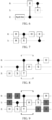
- a specific circuit is shown in FIG. 6 .
- a parameter ⁇ /2 is completely learned by the framework itself.
- Bell state refers to four orthogonal entangled states formed by two bits, which play important roles in quantum teleportation and compression coding.
- a corresponding quantum circuit needs to respectively map four different measurement ground states to corresponding coded Bell state entangled states. Therefore, this matter is a complete circuit learning matter, rather than single quantum state preparation.
- An inner product of a target state and expectations of observations XX and ZZ may all be used as objective functions, and four different input state evaluations are required as a total objective function.
- a specific circuit determined by automatic search is shown in FIG. 7 .
- the framework uses only a discrete parameter-less operator pool, that is, a non-variable circuit parameter.
- a circuit component of quantum Fourier transform and a hypothetical quantum noise model that often appear in quantum computing are used, to show a potential application of the DQAS solution in the field of quantum error correction.
- a quantum Fourier transform circuit is filled on 3-bit and 4-bit systems to improve fidelity of an output state.
- a quantum error mitigation policy adopted herein is that a gap in a quantum circuit is filled with single-bit quantum gates, so that a set of the quantum gates provides an identity matrix. In this way, without changing a corresponding matrix of the quantum circuit, attenuation noise of a waiting bit may be effectively reduced, and coherent noise, which is more difficult to suppress, can be transformed into simple Pauli noise.
- a comparison baseline of such an error correction effect is to try to fill quantum gates equivalent to 1 in corresponding consecutive gaps. It is found that this framework can find a circuit with higher fidelity than this knowledge-based common-sense solution. Actually, the DQAS can effectively perceive a specific long-range correlation in the quantum circuit, so that a single gap can also be filled non-identically to achieve a further improvement in fidelity.
- fidelity corresponding to the original circuit, an expert circuit, and a circuit automatically designed by the framework is 0.33, 0.55, and 0.6, respectively.
- fidelity corresponding to the original circuit, the expert circuit, and the circuit automatically designed by the framework is 0.13, 0.41, and 0.45, respectively.
- the error correction circuit designed automatically by this framework can suppress quantum noise better than a circuit designed by human experts.
- Such automatic circuit design does not depend on any prior knowledge at all, but is generated from scratch.
- a corresponding quantum error correction design and a specific fidelity value depend on the hypothetical quantum noise model.
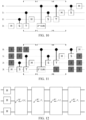
- error correction circuits found in this framework are respectively shown in FIG. 8 to FIG. 11 .
- a gray quantum gate in the error correction circuit is a result of intelligent filling after the DQAS framework is trained.
- the QAOA is a very important quantum classical hybrid computing paradigm, and has a strong physical meaning and a strong connection with quantum annealing. Therefore, with the same depth and the same number of circuit parameters, finding a quantum circuit arrangement with stronger approximation capabilities has important application value (for showing quantum advantages) and theoretical significance (for cross-comparing and understanding with important concepts in quantum annealing).
- an end-to-end environment adopts a typical Max-Cut combinatorial optimization problem, and the operator pool adopts a policy of combining a Hamiltonian time-dependent evolution layer and an ordinary single-bit quantum gate layer.
- the basic components are respectively referred to as an H-layer, an rx-layer, an ry-layer, an rz-layer, and a zz-layer.
- the xx-layer and the yy-layer may be constructed and generated by using the basic components, and therefore are redundant items.
- the setting of an end-to-end objective function is the same as that of a conventional QAOA, which is, an expectation, on an output state of a quantum circuit, of Max-Cut corresponding to a Hamiltonian.
- a configuration and corresponding parameters may be found, so that a corresponding quantum circuit structure may be simultaneously applied to a batch of graph instances generated from a specific distribution, for example, a regular graph.
- the quantum circuit structure found in this way is an optimal possible solution of approximating different graphs with the same solution.
- the same layout as the QAOA can be automatically found by search, that is, as shown in FIG. 12 , an H-layer, a zz-layer, an rx-layer, a zz-layer, and an rx-layer.
- the framework shows that an alternate arrangement of the QAOA is indeed the best choice for approximation, which also shows that the framework has a specific theoretical exploration function in addition to strong applicability.
- the DQAS framework provided in this disclosure can be widely used in various quantum computing and quantum information problems, especially automated design of quantum circuits in various situations.
- Such end-to-end differentiable design does not depend on any hypothesis about a circuit structure, which brings many possibilities for quantum circuit design.
- this method combines new programming paradigms such as quantum programming, differential programming, and probabilistic programming, and can be used to explore and find a potentially efficient quantum structure beyond accumulation of existing knowledge.
- this framework has good performance and excellent results in quantum state preparation, quantum circuit decomposition and compilation, quantum error correction, and variable quantum structure search.
- the differentiable methodology and high versatility of the framework ensure that the solution is simple and efficient, while allowing for account native quantum gates of real quantum hardware, connection topologies, noise features, and the like.
- the technical solutions of this disclosure are helpful to speed up design of a more adaptable quantum circuit at present.
- Typical shortcomings of quantum hardware in the NISQ era are short coherence time and large quantum noise.
- a depth of the quantum circuit and the number of two-bit quantum gates need to be reduced to the greatest extent.
- the two-bit quantum gate usually has greater noise than a single-bit quantum gate, reducing the number of two-bit quantum gates while ensuring performance can effectively alleviate impact of quantum noise.
- the DQAS framework provided in this disclosure can well resolve this multi-objective circuit design problem, thereby determining advantages in commercial application of quantum computing.
- quantum hardware evaluation may be applied in a short to medium time.
- Applications in actual production include a VQE or QAOA hypothesis optimization assisted by DQAS, which helps to use fewer quantum resources to determine better results, and corresponding products can be used to resolve a combinatorial optimization problem or a ground state energy simulation in quantum chemistry.
- the DQAS can also effectively exert design potential in a quantum compilation technology stack and quantum error mitigation, making a corresponding circuit more stable to quantum noise.
- FIG. 13 is a block diagram of a quantum circuit determining apparatus according to an embodiment of this disclosure.
- the apparatus has functions of implementing the foregoing method embodiments. The functions may be implemented by hardware, or may be implemented by hardware executing corresponding software.
- the apparatus may be the computer device described above, or may be disposed in the computer device. As shown in FIG. 13 , the apparatus 1300 may include: a circuit sampling module 1310, a circuit evaluation module 1320, a parameter updating module 1330, and a circuit determining module 1340.
- the circuit sampling module 1310 is configured to sample an initial circuit unit pool according to an initial sampling manner to determine K groups of circuit units, and construct and generate K candidate quantum circuits based on the K groups of circuit units, each group of circuit units including at least one circuit unit for constructing and generating a candidate quantum circuit, and K being a positive integer.
- the circuit evaluation module 1320 is configured to determine a performance evaluation index corresponding to the K candidate quantum circuits.
- the parameter updating module 1330 is configured to update the sampling manner and a circuit unit in the initial circuit unit pool based on the performance evaluation index, to determine an updated sampling manner and an updated circuit unit pool.
- the circuit sampling module 1310 is further configured to sample the updated circuit unit pool according to the updated sampling manner to determine updated K groups of circuit units, and construct and generate updated K candidate quantum circuits based on the updated K groups of circuit units.
- the circuit determining module 1340 is configured to in response to a cycle termination condition being satisfied, determine a target quantum circuit from the updated K candidate quantum circuits.
- the circuit sampling module 1310 includes: a model construction unit 1311, a circuit sampling unit 1312, and a circuit construction unit 1313.
- the model construction unit 1311 is configured to construct an initial probability model, the initial probability model including p ⁇ c parameters, p representing a maximum number of circuit units, and c representing a total number of circuit units in the initial circuit unit pool.
- the circuit sampling unit 1312 is configured to sample the initial circuit unit pool K times based on the initial probability model, to determine the K groups of circuit units, each time of sampling being performed to determine one group of circuit units.
- the circuit construction unit 1313 is configured to construct and generate the K candidate quantum circuits based on the K groups of circuit units.
- the parameter updating module 1330 includes: a gradient computing unit 1331, a model parameter updating unit 1332, and a circuit parameter updating unit 1333.
- the gradient computing unit 1331 is configured to compute first gradient information and second gradient information based on the performance evaluation index, the first gradient information being gradient information of a model parameter of the initial probability model, and the second gradient information being gradient information of a circuit parameter of the circuit unit in the circuit unit pool.
- the model parameter updating unit 1332 is configured to update the model parameter of the initial probability model based on the first gradient information, to determine an updated probability model.
- the circuit parameter updating unit 1333 is configured to update the circuit parameter of the circuit unit in the circuit unit pool based on the second gradient information, to determine the updated circuit unit pool.
- the performance evaluation index is an operation result of an objective function.
- the gradient computing unit 1331 is configured to compute a derivative of the objective function relative to the model parameter of the initial probability model, to determine the first gradient information; and compute a derivative of the objective function relative to the circuit parameter of the circuit unit in the circuit unit pool, to determine the second gradient information.
- the performance evaluation index is an operation result of an objective function.
- the circuit evaluation module 1320 is configured to compute K operation results of the objective function respectively corresponding to the K candidate quantum circuits; and determine the performance evaluation index based on the K operation results.
- the circuit determining module 1340 is configured to determine a candidate quantum circuit with a largest generation probability from the K candidate quantum circuits generated the last time; and determine the candidate quantum circuit with the largest generation probability as the target quantum circuit.
- the apparatus 1300 further includes: a parameter determining module 1350, configured to determine, for a j th circuit unit in an i th candidate quantum circuit, a circuit parameter of the j th circuit unit from a circuit parameter pool according to a position of the j th circuit unit in the circuit unit pool and a position of the j th circuit unit in the i th candidate quantum circuit.
- the circuit parameter pool includes a circuit parameter of each circuit unit in the circuit unit pool at each filling position, i is a positive integer less than or equal to K, and j is a positive integer.
- the apparatus 1300 further includes: a parameter tuning module 1360, configured to fix a structure of the target quantum circuit, and adjust a circuit parameter of each circuit unit included in the target quantum circuit; and in response to an adjustment termination condition being satisfied, determine the target quantum circuit post parameter tuning.
- a parameter tuning module 1360 configured to fix a structure of the target quantum circuit, and adjust a circuit parameter of each circuit unit included in the target quantum circuit; and in response to an adjustment termination condition being satisfied, determine the target quantum circuit post parameter tuning.
- a circuit unit is repeatable in each group of circuit units.
- the technical solutions of this disclosure can be used to construct a target quantum circuit for resolving a corresponding problem, so that different types of quantum circuit design problems are highly abstracted and unified.
- the solutions have extremely strong universality and versatility.
- the technical solutions of this disclosure require only to determine a performance evaluation index corresponding to a candidate quantum circuit determined by sampling, and update a sampling manner and a circuit unit in a circuit unit pool based on the performance evaluation index, thereby quickly constructing a candidate quantum circuit with better performance, which not only reduces computational workload, but also improves efficiency of determining a final target quantum circuit.
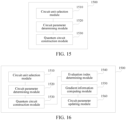
- FIG. 15 is a block diagram of a quantum circuit determining apparatus according to another embodiment of this disclosure.
- the apparatus has functions of implementing the foregoing method embodiments. The functions may be implemented by hardware, or may be implemented by hardware executing corresponding software.
- the apparatus may be the computer device described above, or may be disposed in the computer device. As shown in FIG. 15 , the apparatus 1500 may include: a circuit unit selection module 1510, a circuit parameter determining module 1520, and a quantum circuit construction module 1530.
- the circuit unit selection module 1510 is configured to select N circuit units from a circuit unit pool, the circuit unit pool including a plurality of circuit units, each circuit unit being an equivalent quantum circuit corresponding to a unitary matrix, and N being an integer greater than 1.
- the circuit parameter determining module 1520 is configured to determine circuit parameters respectively corresponding to the N circuit units, the circuit parameter being used for defining an operation performed by the circuit unit, and the circuit parameter being updatable.
- the quantum circuit construction module 1530 is configured to construct and generate a quantum circuit based on the N circuit units and the circuit parameters respectively corresponding to the N circuit units.
- the circuit parameter determining module 1520 is configured to determine, for an i th circuit unit in the N circuit units, a circuit parameter of the i th circuit unit from a circuit parameter pool according to a filling position of the i th circuit unit,
- the circuit parameter pool including a circuit parameter of each circuit unit in the circuit unit pool at each filling position, i being a positive integer less than or equal to N.
- the apparatus 1500 further includes an evaluation index determining module 1540, a gradient information computing module 1550, and a circuit parameter updating module 1560.
- the evaluation index determining module 1540 is configured to determine a performance evaluation index corresponding to the quantum circuit.
- the gradient information computing module 1550 is configured to compute target gradient information based on the performance evaluation index, the target gradient information being gradient information of a circuit parameter of the quantum circuit.
- the circuit parameter updating module 1560 is configured to update the circuit parameter of the quantum circuit based on the target gradient information, to determine an updated quantum circuit.
- the performance evaluation index is an operation result of an objective function.
- the gradient information computing module 1550 is configured to compute a derivative of the objective function relative to the circuit parameter of the quantum circuit, to determine the target gradient information.
- a circuit unit is repeatable in the N circuit units.
- a quantum circuit is regarded as being formed by stacking equivalent quantum circuits corresponding to a series of unitary matrices, so that the quantum circuit is divided into circuit units.
- a circuit unit pool is constructed to provide selectable circuit units, and circuit units are selected from the circuit unit pool to construct a quantum circuit, thereby implementing DQAS, and providing a universal quantum circuit construction solution.
- the apparatus provided in the foregoing embodiments implements its functions
- a description is given only by using the foregoing division of functional modules as an example.
- the functions may be allocated to and implemented by different functional modules according to the requirements, that is, the internal structure of the device may be divided into different functional modules, to implement all or some of the functions described above.
- the apparatus provided in the foregoing embodiment belongs to the same conception as the embodiment of the method. For a specific implementation process thereof, reference may be made to the method embodiment.
- FIG. 17 is a structural block diagram of a computer device according to an embodiment of this disclosure.
- the computer device may be configured to implement the quantum circuit determining method provided in the foregoing embodiments.
- the computer device is a classical computer.
- the computer device 1700 includes a processing unit (for example, a central processing unit (CPU), a graphics processing unit (GPU), and a field-programmable gate array (FPGA) 1701, a system memory 1704 including a random access memory (RAM) 1702 and a read-only memory (ROM) 1703, and a system bus 1705 connecting the system memory 1704 and the CPU 1701.
- the computer device 1700 further includes a basic input/output system (I/O system) 1706 for information transmission between components in the computer device, and a large-capacity storage device 1707 for storing an operating system 1713, an application program 1714, and another program module 1715.
- I/O system basic input/output system
- the basic I/O system 1706 includes a display 1708 configured to display information and an input device 1709, such as a mouse or a keyboard, for a user to input information.
- the display 1708 and the input device 1709 are both connected to the CPU 1701 by using an input/output controller 1710 connected to the system bus 1705.
- the basic I/O system 1706 may further include the I/O controller 1710 configured to receive and process inputs from a plurality of other devices such as a keyboard, a mouse, or an electronic stylus.
- the input/output controller 1710 further provides an output to a display screen, a printer, or other type of output device.
- the large-capacity storage device 1707 is connected to the CPU 1701 by using a mass storage controller (not shown) connected to the system bus 1705.
- the large-capacity storage device 1707 and an associated computer-readable medium thereof provide non-volatile storage for the computer device 1700. That is, the large-capacity storage device 1707 may include a computer-readable medium (not shown) such as a hard disk or a compact disc ROM (CD-ROM) drive.
- the computer-readable medium may include a computer storage medium and a communication medium.
- the computer storage medium includes volatile and non-volatile, removable and non-removable media implemented by using any method or technology for storing information such as computer-readable instructions, data structures, program modules, or other data.
- the computer storage medium includes a RAM, a ROM, an erasable programmable ROM (EPROM), an electrically erasable programmable ROM (EEPROM), a flash memory or another solid-state memory technology, a CD-ROM, a digital versatile disc (DVD) or another optical memory, a tape cartridge, a magnetic cassette, a magnetic disk memory, or another magnetic storage device.
- a person skilled in the art can know that the computer storage medium is not limited to the foregoing types.
- the system memory 1704 and the large-capacity storage device 1707 may be generally referred to as a memory.
- the computer device 1700 may be further connected, through a network such as the Internet, to a remote computer on the network and run. That is, the computer device 1700 may be connected to a network 1712 by using a network interface unit 1711 connected to the system bus 1705, or may be connected to another type of network or a remote computer system (not shown) by using a network interface unit 1711.
- the memory further includes at least one instruction, at least one program, a code set, or an instruction set, the at least one instruction, the at least one program, the code set, or the instruction set being stored in the memory and configured to be executed by one or more processors to implement the foregoing quantum circuit determining method.
- a computer-readable storage medium is further provided, the storage medium storing at least one instruction, at least one program, a code set, or an instruction set, the at least one instruction, the at least one program, the code set, or the instruction set, when executed by the processor, implementing the foregoing quantum circuit determining method.
- the computer-readable storage medium may be a ROM, a RAM, a compact disc ROM (CD-ROM), a magnetic tape, a solid state drive (SSD), an optical disc, or the like.
- the RAM may include a resistance random access memory (ReRAM) and a dynamic random access memory (DRAM).
- a computer program product or a computer program includes computer instructions, and the computer instructions are stored in a computer-readable storage medium.
- a processor of a computer device reads the computer instructions from the computer-readable storage medium and executes the computer instructions to cause the computer device to perform the foregoing quantum circuit determining method.
- A/the plurality of means two or more.
- the terms "and/or” describes an association relationship between associated objects and represents that three relationships may exist.
- a and/or B may represent the following three cases: only A exists, both A and B exist, and only B exists.
- the character "/" generally indicates an "or" relationship between the associated objects.
Landscapes
- Engineering & Computer Science (AREA)
- Theoretical Computer Science (AREA)
- Physics & Mathematics (AREA)
- General Physics & Mathematics (AREA)
- Software Systems (AREA)
- Evolutionary Computation (AREA)
- General Engineering & Computer Science (AREA)
- Computing Systems (AREA)
- Artificial Intelligence (AREA)
- Mathematical Physics (AREA)
- Data Mining & Analysis (AREA)
- Mathematical Analysis (AREA)
- Mathematical Optimization (AREA)
- Pure & Applied Mathematics (AREA)
- Computational Mathematics (AREA)
- Condensed Matter Physics & Semiconductors (AREA)
- Computer Hardware Design (AREA)
- Geometry (AREA)
- Probability & Statistics with Applications (AREA)
- Algebra (AREA)
- Computer Vision & Pattern Recognition (AREA)
- Medical Informatics (AREA)
- Superconductor Devices And Manufacturing Methods Thereof (AREA)
- Optical Modulation, Optical Deflection, Nonlinear Optics, Optical Demodulation, Optical Logic Elements (AREA)
- Logic Circuits (AREA)
Claims (13)
- Quantenkreisbestimmungsverfahren zum Bestimmen eines Quantenkreises gemäß einer Quantenkreisentwurfsaufgabe, durchgeführt von einem Computergerät, das eine Hybridgeräteeinrichtung bildet, die einen klassischen Computer und einen Quantencomputer umfasst, das Verfahren umfassend:Abtasten (101) durch den klassischen Computer eines anfänglichen Schaltkreiseinheitspools gemäß einer anfänglichen Abtastweise, um K Gruppen von Schaltkreiseinheiten zu bestimmen, wobei K eine positive ganze Zahl ist, und Konstruieren und Erzeugen von K Kandidatenquantenkreisen basierend auf den K Gruppen von Schaltkreiseinheiten, wobei jede Gruppe von Schaltkreiseinheiten eine Vielzahl von Schaltkreiseinheiten zum Konstruieren und Erzeugen eines Kandidatenquantenkreises umfasst, ein Kandidatenquantenkreis eine Mehrschichtstruktur aufweist, jede Schicht eine Vielzahl von Füllpositionen zum Füllen einer Schaltkreiseinheit umfasst, die Vielzahl von Füllpositionen in derselben Schicht in einer voreingestellten Weise miteinander verbunden sind, und eine Lücke in einem Kandidatenquantenkreis mit Schaltkreiseinheiten gefüllt wird, die Ein-Bit-Quantengatter sind, sodass eine Menge der Ein-Bit-Quantengatter, die die Lücke füllen, eine Einheitsmatrix ergibt,Bestimmen (102) durch den Quantencomputer eines Leistungsauswertungsindex, der den K Kandidatenquantenkreisen entspricht, wobei der Leistungsauswertungsindex ein Betriebsergebnis einer Zielfunktion (204) ist, wobei die Zielfunktion gemäß der Quantenkreisentwurfsaufgabe spezifiziert ist;Aktualisieren (103) durch den klassischen Computer der Abtastweise und einer Schaltkreiseinheit im anfänglichen Schaltkreiseinheitspool basierend auf dem Leistungsauswertungsindex, um eine aktualisierte Abtastweise und einen aktualisierten Schaltkreiseinheitspool zu bestimmen;Abtasten (104, 208) durch den klassischen Computer des aktualisierten Schaltkreiseinheitspools gemäß der aktualisierten Abtastweise, um aktualisierte K Gruppen von Schaltkreiseinheiten zu bestimmen, und Konstruieren und Erzeugen von aktualisierten K Kandidatenquantenkreisen basierend auf den aktualisierten K Gruppen von Schaltkreiseinheiten; undals Reaktion auf eine erfüllte Zyklusbeendigungsbedingung Bestimmen (105) durch den klassischen Computer eines Zielquantenkreises aus den aktualisierten K Kandidatenquantenkreisen.
- Verfahren nach Anspruch 1, wobei das Abtasten eines anfänglichen Schaltkreiseinheitspools gemäß einer anfänglichen Abtastweise, um K Gruppen von Schaltkreiseinheiten zu bestimmen, und das Konstruieren und Erzeugen von K Kandidatenquantenkreisen basierend auf den K Gruppen von Schaltkreiseinheiten umfasst:Konstruieren (201) eines anfänglichen Wahrscheinlichkeitsmodells, wobei das anfängliche Wahrscheinlichkeitsmodell p×c Parameter umfasst, p eine maximale Anzahl von Schaltkreiseinheiten darstellt und c eine Gesamtanzahl von Schaltkreiseinheiten im anfänglichen Schaltkreiseinheitspool darstellt;Abtasten (202) des anfänglichen Schaltkreiseinheitspools K Mal basierend auf dem anfänglichen Wahrscheinlichkeitsmodell, um die K Gruppen von Schaltkreiseinheiten zu bestimmen, wobei jedes Mal des Abtastens durchgeführt wird, um eine Gruppe von Schaltkreiseinheiten zu bestimmen; undKonstruieren und Erzeugen (203) der K Kandidatenquantenkreise basierend auf den K Gruppen von Schaltkreiseinheiten.
- Verfahren nach Anspruch 2, wobei das Aktualisieren der Abtastweise und einer Schaltkreiseinheit im anfänglichen Schaltkreiseinheitspool basierend auf dem Leistungsauswertungsindex, um eine aktualisierte Abtastweise und einen aktualisierten Schaltkreiseinheitspool zu bestimmen, umfasst:Berechnen (205) der ersten Gradienteninformation und der zweiten Gradienteninformation basierend auf dem Leistungsauswertungsindex, wobei die erste Gradienteninformation Gradienteninformation eines Modellparameters des anfänglichen Wahrscheinlichkeitsmodells ist und die zweite Gradienteninformation Gradienteninformation eines Schaltkreisparameters der Schaltkreiseinheit im anfänglichen Schaltkreiseinheitspool ist;Aktualisieren (206) des Modellparameters des anfänglichen Wahrscheinlichkeitsmodells basierend auf der ersten Gradienteninformation, um ein aktualisiertes Wahrscheinlichkeitsmodell zu bestimmen; undAktualisieren (207) des Schaltkreisparameters der Schaltkreiseinheit im anfänglichen Schaltkreiseinheitspool basierend auf der zweiten Gradienteninformation, um den aktualisierten Schaltkreiseinheitspool zu bestimmen.
- Verfahren nach Anspruch 3, wobei das Berechnen der ersten Gradienteninformation und der zweiten Gradienteninformation basierend auf dem Leistungsauswertungsindex umfasst:Berechnen einer Ableitung der Zielfunktion relativ zu dem Modellparameter des anfänglichen Wahrscheinlichkeitsmodells, um die erste Gradienteninformation zu bestimmen; undBerechnen einer Ableitung der Zielfunktion relativ zu dem Schaltkreisparameter der Schaltkreiseinheit im anfänglichen Schaltkreiseinheitspool, um die zweite Gradienteninformation zu bestimmen.
- Verfahren nach Anspruch 1, wobei das Bestimmen eines Leistungsauswertungsindex, der den K Kandidatenquantenkreisen entspricht, umfasst:Berechnen von K Betriebsergebnissen der Zielfunktion, die jeweils den K Kandidatenquantenkreisen entsprechen; undBestimmen des Leistungsauswertungsindex basierend auf den K Betriebsergebnissen.
- Verfahren nach Anspruch 1, wobei als Reaktion auf eine erfüllte Zyklusbeendigungsbedingung das Bestimmen eines Zielquantenkreises aus den aktualisierten K Kandidatenquantenkreisen umfasst:Bestimmen eines Kandidatenquantenkreises mit der größten Erzeugungswahrscheinlichkeit aus den aktualisierten K Kandidatenquantenkreisen, wobei die Erzeugungswahrscheinlichkeit des Kandidatenquantenkreises ein Anteil der Anzahl desselben Kandidatenquantenkreises unter der Anzahl der aktualisierten K Kandidatenquantenkreise ist; undBestimmen des Kandidatenquantenkreises mit der größten Erzeugungswahrscheinlichkeit als Zielquantenkreis.
- Verfahren nach Anspruch 1, wobei nach dem Konstruieren und Erzeugen von K Kandidatenquantenkreisen basierend auf den K Gruppen von Schaltkreiseinheiten das Verfahren weiter umfasst:Bestimmen, für eine jte Schaltkreiseinheit in einem iten Kandidatenquantenkreis, eines Schaltkreisparameters der jten Schaltkreiseinheit aus einem Schaltkreisparameterpool gemäß einer Position der ften Schaltkreiseinheit im anfänglichen Schaltkreiseinheitspool und einer Position der ften Schaltkreiseinheit im iten Kandidatenquantenkreis,wobei der Schaltkreisparameterpool einen Schaltkreisparameter jeder Schaltkreiseinheit im anfänglichen Schaltkreiseinheitspool an jeder Füllposition umfasst, i eine positive ganze Zahl kleiner oder gleich K ist und j eine positive ganze Zahl ist.
- Verfahren nach einem der Ansprüche 1 bis 7, wobei nach dem als Reaktion auf eine erfüllte Zyklusbeendigungsbedingung Bestimmen eines Zielquantenkreises aus den aktualisierten K Kandidatenquantenkreisen das Verfahren weiter umfasst:Fixieren einer Struktur des Zielquantenkreises, Berechnen von Gradienteninformationen der Zielfunktion relativ zu Schaltkreisparametern des Zielquantenkreises und Verwenden eines Gradientenabstiegsalgorithmus, um einen Schaltkreisparameter jeder Schaltkreiseinheit, die im Zielquantenkreis enthalten ist, anzupassen; undals Reaktion auf eine erfüllte Anpassungsbeendigungsbedingung Bestimmen (211) des Zielquantenkreises nach Parameterabstimmung.
- Verfahren nach einem der Ansprüche 1 bis 7, wobei eine Schaltkreiseinheit in jeder Gruppe von Schaltkreiseinheiten wiederholbar ist.
- Verfahren nach Anspruch 1, wobei, wenn jede Gruppe von Schaltkreiseinheiten N Schaltkreiseinheiten umfasst, jede Schaltkreiseinheit ein äquivalenter Quantenkreis ist, der einer unitären Matrix entspricht, und N eine ganze Zahl größer als 1 (401) ist, das Konstruieren und Erzeugen von K Kandidatenquantenkreisen basierend auf den K Gruppen von Schaltkreiseinheiten umfasst:Bestimmen (402) von Schaltkreisparametern, die jeweils den N Schaltkreiseinheiten entsprechen, wobei der Schaltkreisparameter zur Definition eines von der Schaltkreiseinheit durchgeführten Betriebs verwendet wird und der Schaltkreisparameter aktualisierbar ist; undKonstruieren und Erzeugen (403) eines Kandidatenquantenkreises basierend auf den N Schaltkreiseinheiten und den Schaltkreisparametern, die jeweils den N Schaltkreiseinheiten entsprechen.
- Verfahren nach Anspruch 10, wobei das Bestimmen von Schaltkreisparametern, die jeweils den N Schaltkreiseinheiten entsprechen, umfasst:Bestimmen, für eine ite Schaltkreiseinheit in den N Schaltkreiseinheiten, eines Schaltkreisparameters der iten Schaltkreiseinheit aus einem Schaltkreisparameterpool gemäß einer Füllposition der iten Schaltkreiseinheit,wobei der Schaltkreisparameterpool einen Schaltkreisparameter jeder Schaltkreiseinheit im Schaltkreiseinheitspool an jeder Füllposition umfasst, i eine positive ganze Zahl kleiner oder gleich N ist.
- Ein Computergerät (1700), umfassend einen klassischen Computer, einen Quantencomputer und einen Speicher (1704), zur Durchführung des Verfahrens nach einem der Ansprüche 1 bis 11.
- Ein computerlesbares Speichermedium, das Anweisungen speichert, die, wenn sie von einem Computergerät ausgeführt werden, das eine Hybridgeräteeinrichtung bildet, die einen klassischen Computer und einen Quantencomputer umfasst, das Computergerät veranlassen, das Verfahren nach einem der Ansprüche 1 bis 11 durchzuführen.
Applications Claiming Priority (2)
| Application Number | Priority Date | Filing Date | Title |
|---|---|---|---|
| CN202011096965.7A CN112651509B (zh) | 2020-10-14 | 2020-10-14 | 量子线路的确定方法及装置 |
| PCT/CN2021/073639 WO2022077797A1 (zh) | 2020-10-14 | 2021-01-25 | 量子线路的确定方法、装置、设备及存储介质 |
Publications (3)
| Publication Number | Publication Date |
|---|---|
| EP4006788A1 EP4006788A1 (de) | 2022-06-01 |
| EP4006788A4 EP4006788A4 (de) | 2022-06-01 |
| EP4006788B1 true EP4006788B1 (de) | 2025-03-05 |
Family
ID=81079285
Family Applications (1)
| Application Number | Title | Priority Date | Filing Date |
|---|---|---|---|
| EP21772939.1A Active EP4006788B1 (de) | 2020-10-14 | 2021-01-25 | Verfahren und gerät zur quantenschaltungsbestimmung, vorrichtung und speichermedium |
Country Status (4)
| Country | Link |
|---|---|
| US (1) | US12265770B2 (de) |
| EP (1) | EP4006788B1 (de) |
| JP (1) | JP7451008B2 (de) |
| KR (1) | KR102854188B1 (de) |
Families Citing this family (15)
| Publication number | Priority date | Publication date | Assignee | Title |
|---|---|---|---|---|
| US11983600B2 (en) * | 2020-12-14 | 2024-05-14 | International Business Machines Corporation | Compilation of a quantum program |
| US20230306433A1 (en) * | 2022-03-24 | 2023-09-28 | Bank Of America Corporation | Cognitive Identification of Credit Reporting Disputes and Dispute Resolution Using Quantum Computing |
| US11416762B1 (en) * | 2022-04-14 | 2022-08-16 | Classiq Technologies LTD. | Selecting physical qubits for quantum error correction schemes |
| JP7735217B2 (ja) * | 2022-05-17 | 2025-09-08 | 株式会社日立製作所 | 量子コンピュータ活用支援システム及び量子コンピュータ活用支援方法 |
| US12436742B2 (en) * | 2022-09-04 | 2025-10-07 | Classiq Technologies LTD. | Performance analysis of quantum programs |
| US12118435B2 (en) * | 2022-10-26 | 2024-10-15 | International Business Machines Corporation | Pauli-Lindbladian based noise modeling and mitigation |
| CN115952868B (zh) * | 2022-12-29 | 2024-01-12 | 北京百度网讯科技有限公司 | 量子电路任务处理方法、装置、电子设备及可读存储介质 |
| US12572836B2 (en) | 2023-02-20 | 2026-03-10 | Bank Of America Corporation | Intelligent provisioning of quantum programs to quantum hardware |
| EP4652478A4 (de) * | 2023-02-21 | 2026-03-18 | Services Petroliers Schlumberger | Optimierungsrahmen |
| CN116579437B (zh) * | 2023-04-27 | 2024-07-16 | 本源量子计算科技(合肥)股份有限公司 | 一种量子线路训练方法、装置、存储介质及电子装置 |
| CN116521918B (zh) * | 2023-05-08 | 2024-07-09 | 西南交通大学 | 一种快速搜索相似图的方法 |
| CN117313880B (zh) * | 2023-09-27 | 2025-03-04 | 北京百度网讯科技有限公司 | 量子电路处理方法、装置及电子设备 |
| KR102696749B1 (ko) * | 2024-02-21 | 2024-08-20 | (주)노르마 | 양자 라이브러리를 활용해서 소프트웨어 개발 키트를 제공하는 양자 컴퓨팅 시뮬레이션 방법 및 이를 수행하는 서버 |
| JP2025143822A (ja) * | 2024-03-19 | 2025-10-02 | 富士通株式会社 | 量子計算支援プログラム、量子計算支援方法、および情報処理装置 |
| CN119918685B (zh) * | 2025-04-03 | 2025-07-15 | 山东云海国创云计算装备产业创新中心有限公司 | 量子比特映射方法、装置、芯片、电子设备、存储介质及计算机程序产品 |
Family Cites Families (19)
| Publication number | Priority date | Publication date | Assignee | Title |
|---|---|---|---|---|
| CN104091214A (zh) | 2014-07-21 | 2014-10-08 | 国家电网公司 | 一种基于量子遗传算法的10kV配网无功优化方法 |
| CN107077642B (zh) * | 2014-08-22 | 2021-04-06 | D-波系统公司 | 可用于量子计算的用于求解问题的系统和方法 |
| CA2983880A1 (en) * | 2015-05-05 | 2016-11-10 | Kyndi, Inc. | Quanton representation for emulating quantum-like computation on classical processors |
| US10068183B1 (en) * | 2017-02-23 | 2018-09-04 | Edico Genome, Corp. | Bioinformatics systems, apparatuses, and methods executed on a quantum processing platform |
| US10812258B1 (en) | 2018-03-09 | 2020-10-20 | Wells Fargo Bank, N.A. | Systems and methods for quantum session authentication |
| CN108710951A (zh) | 2018-05-17 | 2018-10-26 | 合肥本源量子计算科技有限责任公司 | 一种构建量子线路的方法及系统 |
| US11755682B2 (en) | 2018-05-25 | 2023-09-12 | Microsoft Technology Licensing, Llc | Evaluating quantum computing circuits in view of the resource costs of a quantum algorithm |
| CN119940566A (zh) | 2018-09-25 | 2025-05-06 | 谷歌有限责任公司 | 用于近似目标量子状态的方法和装置 |
| CN109800883B (zh) | 2019-01-25 | 2020-12-04 | 合肥本源量子计算科技有限责任公司 | 量子机器学习框架构建方法、装置及量子计算机 |
| US11023638B2 (en) * | 2019-04-05 | 2021-06-01 | QC Ware Corp. | Method for reducing cost and increasing accuracy of variational quantum circuit optimization |
| CN110674921A (zh) | 2019-07-11 | 2020-01-10 | 中国科学技术大学 | 构建基于经典训练的量子前馈神经网络的方法 |
| CN110490327B (zh) | 2019-07-23 | 2023-07-18 | 湖北工业大学 | 量子计算机量子处理单元、量子电路以及量子电路量子算法 |
| CN111242306B (zh) | 2020-01-22 | 2021-07-20 | 北京百度网讯科技有限公司 | 量子主成分分析的方法、装置、电子设备以及计算机可读存储介质 |
| CN111461334B (zh) | 2020-03-30 | 2021-10-15 | 北京百度网讯科技有限公司 | 量子电路的处理方法、装置及设备 |
| CN111598247B (zh) | 2020-04-22 | 2022-02-01 | 北京百度网讯科技有限公司 | 量子吉布斯态生成方法、装置及电子设备 |
| CN111241356B (zh) | 2020-04-26 | 2020-08-11 | 腾讯科技(深圳)有限公司 | 基于模拟量子算法的数据搜索方法、装置及设备 |
| CN111563599B (zh) | 2020-04-30 | 2023-12-12 | 本源量子计算科技(合肥)股份有限公司 | 一种量子线路的分解方法、装置、存储介质及电子装置 |
| CN111598249B (zh) | 2020-05-19 | 2021-09-07 | 北京百度网讯科技有限公司 | 确定近似量子门的方法、装置、经典计算机和存储介质 |
| CN111738448B (zh) | 2020-06-23 | 2021-09-28 | 北京百度网讯科技有限公司 | 量子线路模拟方法、装置、设备及存储介质 |
-
2021
- 2021-01-25 JP JP2021546756A patent/JP7451008B2/ja active Active
- 2021-01-25 KR KR1020217033817A patent/KR102854188B1/ko active Active
- 2021-01-25 EP EP21772939.1A patent/EP4006788B1/de active Active
- 2021-11-11 US US17/524,194 patent/US12265770B2/en active Active
Also Published As
| Publication number | Publication date |
|---|---|
| KR102854188B1 (ko) | 2025-09-04 |
| EP4006788A1 (de) | 2022-06-01 |
| US12265770B2 (en) | 2025-04-01 |
| JP2023502187A (ja) | 2023-01-23 |
| JP7451008B2 (ja) | 2024-03-18 |
| KR20220051132A (ko) | 2022-04-26 |
| US20220114313A1 (en) | 2022-04-14 |
| EP4006788A4 (de) | 2022-06-01 |
Similar Documents
| Publication | Publication Date | Title |
|---|---|---|
| US12265770B2 (en) | Method and apparatus for determining quantum circuit, and storage medium | |
| CN112651509B (zh) | 量子线路的确定方法及装置 | |
| EP3805999B1 (de) | Ressourcenbewusstes automatisches maschinenlernsystem | |
| CN113379057B (zh) | 量子体系基态能量估计方法及系统 | |
| WO2019118299A1 (en) | Evolving recurrent networks using genetic programming | |
| Liu et al. | Rsc: accelerate graph neural networks training via randomized sparse computations | |
| TWI851438B (zh) | 最佳化用於硬體裝置之演算法 | |
| US20240202511A1 (en) | Gated linear networks | |
| Wang et al. | Simulations of Shor’s algorithm using matrix product states | |
| Jin et al. | QPlayer: Lightweight, scalable, and fast quantum simulator | |
| Gadiyar et al. | Artificial intelligence software and hardware platforms | |
| Li et al. | Quantum circuit compilation for nearest-neighbor architecture based on reinforcement learning: Y. Li et al. | |
| Ayodele | Comparing the digital annealer with classical evolutionary algorithm | |
| Perri et al. | Towards a learning-based performance modeling for accelerating deep neural networks | |
| Mahmoudi et al. | A brief review on mathematical tools applicable to quantum computing for modelling and optimization problems in engineering | |
| Zhang et al. | Brain-inspired experience reinforcement model for bin packing in varying environments | |
| KR102673097B1 (ko) | 신호 분해 및 관계 추론을 활용한 시계열 예측 방법 및 장치 | |
| Thorsell | Vehicle speed-profile prediction without spatial information | |
| HK40042598A (en) | Method and device for determining quantum circuit | |
| Fiosina et al. | Distributed nonparametric and semiparametric regression on spark for big data forecasting | |
| HK40042598B (zh) | 量子线路的确定方法及装置 | |
| US20260093769A1 (en) | Distributed constrained combinatorial optimization leveraging hypergraph neural networks | |
| US20250124347A1 (en) | Training model allocation method, apparatus, computer device, and storage medium | |
| US20260065523A1 (en) | Sampler for a masked diffusion model | |
| Czajkowski et al. | Hybrid parallelization of evolutionary model tree induction |
Legal Events
| Date | Code | Title | Description |
|---|---|---|---|
| STAA | Information on the status of an ep patent application or granted ep patent |
Free format text: STATUS: UNKNOWN |
|
| STAA | Information on the status of an ep patent application or granted ep patent |
Free format text: STATUS: THE INTERNATIONAL PUBLICATION HAS BEEN MADE |
|
| PUAI | Public reference made under article 153(3) epc to a published international application that has entered the european phase |
Free format text: ORIGINAL CODE: 0009012 |
|
| STAA | Information on the status of an ep patent application or granted ep patent |
Free format text: STATUS: REQUEST FOR EXAMINATION WAS MADE |
|
| 17P | Request for examination filed |
Effective date: 20210928 |
|
| A4 | Supplementary search report drawn up and despatched |
Effective date: 20220503 |
|
| AK | Designated contracting states |
Kind code of ref document: A1 Designated state(s): AL AT BE BG CH CY CZ DE DK EE ES FI FR GB GR HR HU IE IS IT LI LT LU LV MC MK MT NL NO PL PT RO RS SE SI SK SM TR |
|
| RAP3 | Party data changed (applicant data changed or rights of an application transferred) |
Owner name: TENCENT TECHNOLOGY (SHENZHEN) COMPANY LIMITED |
|
| STAA | Information on the status of an ep patent application or granted ep patent |
Free format text: STATUS: EXAMINATION IS IN PROGRESS |
|
| 17Q | First examination report despatched |
Effective date: 20231016 |
|
| DAV | Request for validation of the european patent (deleted) | ||
| DAX | Request for extension of the european patent (deleted) | ||
| GRAP | Despatch of communication of intention to grant a patent |
Free format text: ORIGINAL CODE: EPIDOSNIGR1 |
|
| STAA | Information on the status of an ep patent application or granted ep patent |
Free format text: STATUS: GRANT OF PATENT IS INTENDED |
|
| RIC1 | Information provided on ipc code assigned before grant |
Ipc: G06F 30/30 20200101ALI20241011BHEP Ipc: G06N 20/00 20190101ALI20241011BHEP Ipc: G06N 7/01 20230101ALI20241011BHEP Ipc: G06N 10/80 20220101ALI20241011BHEP Ipc: G06N 10/70 20220101ALI20241011BHEP Ipc: G06N 10/60 20220101ALI20241011BHEP Ipc: G06N 10/20 20220101AFI20241011BHEP |
|
| INTG | Intention to grant announced |
Effective date: 20241024 |
|
| GRAS | Grant fee paid |
Free format text: ORIGINAL CODE: EPIDOSNIGR3 |
|
| GRAA | (expected) grant |
Free format text: ORIGINAL CODE: 0009210 |
|
| STAA | Information on the status of an ep patent application or granted ep patent |
Free format text: STATUS: THE PATENT HAS BEEN GRANTED |
|
| AK | Designated contracting states |
Kind code of ref document: B1 Designated state(s): AL AT BE BG CH CY CZ DE DK EE ES FI FR GB GR HR HU IE IS IT LI LT LU LV MC MK MT NL NO PL PT RO RS SE SI SK SM TR |
|
| REG | Reference to a national code |
Ref country code: GB Ref legal event code: FG4D |
|
| REG | Reference to a national code |
Ref country code: CH Ref legal event code: EP |
|
| REG | Reference to a national code |
Ref country code: DE Ref legal event code: R096 Ref document number: 602021027217 Country of ref document: DE |
|
| REG | Reference to a national code |
Ref country code: IE Ref legal event code: FG4D |
|
| PG25 | Lapsed in a contracting state [announced via postgrant information from national office to epo] |
Ref country code: RS Free format text: LAPSE BECAUSE OF FAILURE TO SUBMIT A TRANSLATION OF THE DESCRIPTION OR TO PAY THE FEE WITHIN THE PRESCRIBED TIME-LIMIT Effective date: 20250605 |
|
| PG25 | Lapsed in a contracting state [announced via postgrant information from national office to epo] |
Ref country code: FI Free format text: LAPSE BECAUSE OF FAILURE TO SUBMIT A TRANSLATION OF THE DESCRIPTION OR TO PAY THE FEE WITHIN THE PRESCRIBED TIME-LIMIT Effective date: 20250305 |
|
| REG | Reference to a national code |
Ref country code: NL Ref legal event code: MP Effective date: 20250305 |
|
| PG25 | Lapsed in a contracting state [announced via postgrant information from national office to epo] |
Ref country code: ES Free format text: LAPSE BECAUSE OF FAILURE TO SUBMIT A TRANSLATION OF THE DESCRIPTION OR TO PAY THE FEE WITHIN THE PRESCRIBED TIME-LIMIT Effective date: 20250305 |
|
| REG | Reference to a national code |
Ref country code: LT Ref legal event code: MG9D |
|
| PG25 | Lapsed in a contracting state [announced via postgrant information from national office to epo] |
Ref country code: NO Free format text: LAPSE BECAUSE OF FAILURE TO SUBMIT A TRANSLATION OF THE DESCRIPTION OR TO PAY THE FEE WITHIN THE PRESCRIBED TIME-LIMIT Effective date: 20250605 |
|
| PG25 | Lapsed in a contracting state [announced via postgrant information from national office to epo] |
Ref country code: HR Free format text: LAPSE BECAUSE OF FAILURE TO SUBMIT A TRANSLATION OF THE DESCRIPTION OR TO PAY THE FEE WITHIN THE PRESCRIBED TIME-LIMIT Effective date: 20250305 |
|
| PG25 | Lapsed in a contracting state [announced via postgrant information from national office to epo] |
Ref country code: LV Free format text: LAPSE BECAUSE OF FAILURE TO SUBMIT A TRANSLATION OF THE DESCRIPTION OR TO PAY THE FEE WITHIN THE PRESCRIBED TIME-LIMIT Effective date: 20250305 |
|
| PG25 | Lapsed in a contracting state [announced via postgrant information from national office to epo] |
Ref country code: GR Free format text: LAPSE BECAUSE OF FAILURE TO SUBMIT A TRANSLATION OF THE DESCRIPTION OR TO PAY THE FEE WITHIN THE PRESCRIBED TIME-LIMIT Effective date: 20250606 Ref country code: BG Free format text: LAPSE BECAUSE OF FAILURE TO SUBMIT A TRANSLATION OF THE DESCRIPTION OR TO PAY THE FEE WITHIN THE PRESCRIBED TIME-LIMIT Effective date: 20250305 |
|
| REG | Reference to a national code |
Ref country code: AT Ref legal event code: MK05 Ref document number: 1773602 Country of ref document: AT Kind code of ref document: T Effective date: 20250305 |
|
| PG25 | Lapsed in a contracting state [announced via postgrant information from national office to epo] |
Ref country code: NL Free format text: LAPSE BECAUSE OF FAILURE TO SUBMIT A TRANSLATION OF THE DESCRIPTION OR TO PAY THE FEE WITHIN THE PRESCRIBED TIME-LIMIT Effective date: 20250305 |
|
| PG25 | Lapsed in a contracting state [announced via postgrant information from national office to epo] |
Ref country code: SE Free format text: LAPSE BECAUSE OF FAILURE TO SUBMIT A TRANSLATION OF THE DESCRIPTION OR TO PAY THE FEE WITHIN THE PRESCRIBED TIME-LIMIT Effective date: 20250305 |
|
| PG25 | Lapsed in a contracting state [announced via postgrant information from national office to epo] |
Ref country code: SM Free format text: LAPSE BECAUSE OF FAILURE TO SUBMIT A TRANSLATION OF THE DESCRIPTION OR TO PAY THE FEE WITHIN THE PRESCRIBED TIME-LIMIT Effective date: 20250305 |
|
| PG25 | Lapsed in a contracting state [announced via postgrant information from national office to epo] |
Ref country code: PT Free format text: LAPSE BECAUSE OF FAILURE TO SUBMIT A TRANSLATION OF THE DESCRIPTION OR TO PAY THE FEE WITHIN THE PRESCRIBED TIME-LIMIT Effective date: 20250707 |
|
| PG25 | Lapsed in a contracting state [announced via postgrant information from national office to epo] |
Ref country code: IT Free format text: LAPSE BECAUSE OF FAILURE TO SUBMIT A TRANSLATION OF THE DESCRIPTION OR TO PAY THE FEE WITHIN THE PRESCRIBED TIME-LIMIT Effective date: 20250305 Ref country code: PL Free format text: LAPSE BECAUSE OF FAILURE TO SUBMIT A TRANSLATION OF THE DESCRIPTION OR TO PAY THE FEE WITHIN THE PRESCRIBED TIME-LIMIT Effective date: 20250305 |
|
| PG25 | Lapsed in a contracting state [announced via postgrant information from national office to epo] |
Ref country code: AT Free format text: LAPSE BECAUSE OF FAILURE TO SUBMIT A TRANSLATION OF THE DESCRIPTION OR TO PAY THE FEE WITHIN THE PRESCRIBED TIME-LIMIT Effective date: 20250305 |
|
| PG25 | Lapsed in a contracting state [announced via postgrant information from national office to epo] |
Ref country code: CZ Free format text: LAPSE BECAUSE OF FAILURE TO SUBMIT A TRANSLATION OF THE DESCRIPTION OR TO PAY THE FEE WITHIN THE PRESCRIBED TIME-LIMIT Effective date: 20250305 Ref country code: EE Free format text: LAPSE BECAUSE OF FAILURE TO SUBMIT A TRANSLATION OF THE DESCRIPTION OR TO PAY THE FEE WITHIN THE PRESCRIBED TIME-LIMIT Effective date: 20250305 |
|
| PG25 | Lapsed in a contracting state [announced via postgrant information from national office to epo] |
Ref country code: RO Free format text: LAPSE BECAUSE OF FAILURE TO SUBMIT A TRANSLATION OF THE DESCRIPTION OR TO PAY THE FEE WITHIN THE PRESCRIBED TIME-LIMIT Effective date: 20250305 |
|
| PG25 | Lapsed in a contracting state [announced via postgrant information from national office to epo] |
Ref country code: SK Free format text: LAPSE BECAUSE OF FAILURE TO SUBMIT A TRANSLATION OF THE DESCRIPTION OR TO PAY THE FEE WITHIN THE PRESCRIBED TIME-LIMIT Effective date: 20250305 |
|
| PG25 | Lapsed in a contracting state [announced via postgrant information from national office to epo] |
Ref country code: IS Free format text: LAPSE BECAUSE OF FAILURE TO SUBMIT A TRANSLATION OF THE DESCRIPTION OR TO PAY THE FEE WITHIN THE PRESCRIBED TIME-LIMIT Effective date: 20250705 |
|
| REG | Reference to a national code |
Ref country code: DE Ref legal event code: R097 Ref document number: 602021027217 Country of ref document: DE |
|
| PLBE | No opposition filed within time limit |
Free format text: ORIGINAL CODE: 0009261 |
|
| STAA | Information on the status of an ep patent application or granted ep patent |
Free format text: STATUS: NO OPPOSITION FILED WITHIN TIME LIMIT |
|
| PG25 | Lapsed in a contracting state [announced via postgrant information from national office to epo] |
Ref country code: DK Free format text: LAPSE BECAUSE OF FAILURE TO SUBMIT A TRANSLATION OF THE DESCRIPTION OR TO PAY THE FEE WITHIN THE PRESCRIBED TIME-LIMIT Effective date: 20250305 |
|
| REG | Reference to a national code |
Ref country code: CH Ref legal event code: L10 Free format text: ST27 STATUS EVENT CODE: U-0-0-L10-L00 (AS PROVIDED BY THE NATIONAL OFFICE) Effective date: 20260114 |
|
| 26N | No opposition filed |
Effective date: 20251208 |
|
| PGFP | Annual fee paid to national office [announced via postgrant information from national office to epo] |
Ref country code: GB Payment date: 20260122 Year of fee payment: 6 |
|
| PGFP | Annual fee paid to national office [announced via postgrant information from national office to epo] |
Ref country code: DE Payment date: 20260120 Year of fee payment: 6 |
|
| PGFP | Annual fee paid to national office [announced via postgrant information from national office to epo] |
Ref country code: FR Payment date: 20260123 Year of fee payment: 6 |