EP4006789A1 - Umwandlungsvorrichtung, umwandlungsverfahren, programm und informationsaufzeichnungsmedium - Google Patents
Umwandlungsvorrichtung, umwandlungsverfahren, programm und informationsaufzeichnungsmedium Download PDFInfo
- Publication number
- EP4006789A1 EP4006789A1 EP20844326.7A EP20844326A EP4006789A1 EP 4006789 A1 EP4006789 A1 EP 4006789A1 EP 20844326 A EP20844326 A EP 20844326A EP 4006789 A1 EP4006789 A1 EP 4006789A1
- Authority
- EP
- European Patent Office
- Prior art keywords
- conversion
- conversion device
- model
- vector
- groups
- Prior art date
- Legal status (The legal status is an assumption and is not a legal conclusion. Google has not performed a legal analysis and makes no representation as to the accuracy of the status listed.)
- Pending
Links
Images

Classifications
-
- G—PHYSICS
- G06—COMPUTING OR CALCULATING; COUNTING
- G06N—COMPUTING ARRANGEMENTS BASED ON SPECIFIC COMPUTATIONAL MODELS
- G06N3/00—Computing arrangements based on biological models
- G06N3/02—Neural networks
- G06N3/08—Learning methods
-
- G—PHYSICS
- G06—COMPUTING OR CALCULATING; COUNTING
- G06N—COMPUTING ARRANGEMENTS BASED ON SPECIFIC COMPUTATIONAL MODELS
- G06N3/00—Computing arrangements based on biological models
- G06N3/02—Neural networks
- G06N3/08—Learning methods
- G06N3/084—Backpropagation, e.g. using gradient descent
-
- G—PHYSICS
- G06—COMPUTING OR CALCULATING; COUNTING
- G06F—ELECTRIC DIGITAL DATA PROCESSING
- G06F18/00—Pattern recognition
- G06F18/20—Analysing
- G06F18/21—Design or setup of recognition systems or techniques; Extraction of features in feature space; Blind source separation
- G06F18/2163—Partitioning the feature space
-
- G—PHYSICS
- G06—COMPUTING OR CALCULATING; COUNTING
- G06F—ELECTRIC DIGITAL DATA PROCESSING
- G06F18/00—Pattern recognition
- G06F18/20—Analysing
- G06F18/24—Classification techniques
-
- G—PHYSICS
- G06—COMPUTING OR CALCULATING; COUNTING
- G06F—ELECTRIC DIGITAL DATA PROCESSING
- G06F18/00—Pattern recognition
- G06F18/20—Analysing
- G06F18/24—Classification techniques
- G06F18/243—Classification techniques relating to the number of classes
- G06F18/2431—Multiple classes
-
- G—PHYSICS
- G06—COMPUTING OR CALCULATING; COUNTING
- G06N—COMPUTING ARRANGEMENTS BASED ON SPECIFIC COMPUTATIONAL MODELS
- G06N3/00—Computing arrangements based on biological models
- G06N3/02—Neural networks
- G06N3/04—Architecture, e.g. interconnection topology
- G06N3/045—Combinations of networks
-
- G—PHYSICS
- G06—COMPUTING OR CALCULATING; COUNTING
- G06N—COMPUTING ARRANGEMENTS BASED ON SPECIFIC COMPUTATIONAL MODELS
- G06N3/00—Computing arrangements based on biological models
- G06N3/02—Neural networks
- G06N3/04—Architecture, e.g. interconnection topology
- G06N3/045—Combinations of networks
- G06N3/0455—Auto-encoder networks; Encoder-decoder networks
-
- G—PHYSICS
- G06—COMPUTING OR CALCULATING; COUNTING
- G06N—COMPUTING ARRANGEMENTS BASED ON SPECIFIC COMPUTATIONAL MODELS
- G06N3/00—Computing arrangements based on biological models
- G06N3/02—Neural networks
- G06N3/04—Architecture, e.g. interconnection topology
- G06N3/0464—Convolutional networks [CNN, ConvNet]
-
- G—PHYSICS
- G06—COMPUTING OR CALCULATING; COUNTING
- G06N—COMPUTING ARRANGEMENTS BASED ON SPECIFIC COMPUTATIONAL MODELS
- G06N3/00—Computing arrangements based on biological models
- G06N3/02—Neural networks
- G06N3/04—Architecture, e.g. interconnection topology
- G06N3/0495—Quantised networks; Sparse networks; Compressed networks
-
- G—PHYSICS
- G06—COMPUTING OR CALCULATING; COUNTING
- G06N—COMPUTING ARRANGEMENTS BASED ON SPECIFIC COMPUTATIONAL MODELS
- G06N3/00—Computing arrangements based on biological models
- G06N3/02—Neural networks
- G06N3/08—Learning methods
- G06N3/0895—Weakly supervised learning, e.g. semi-supervised or self-supervised learning
-
- G—PHYSICS
- G06—COMPUTING OR CALCULATING; COUNTING
- G06N—COMPUTING ARRANGEMENTS BASED ON SPECIFIC COMPUTATIONAL MODELS
- G06N3/00—Computing arrangements based on biological models
- G06N3/02—Neural networks
- G06N3/08—Learning methods
- G06N3/09—Supervised learning
-
- G—PHYSICS
- G06—COMPUTING OR CALCULATING; COUNTING
- G06N—COMPUTING ARRANGEMENTS BASED ON SPECIFIC COMPUTATIONAL MODELS
- G06N20/00—Machine learning
- G06N20/10—Machine learning using kernel methods, e.g. support vector machines [SVM]
-
- G—PHYSICS
- G06—COMPUTING OR CALCULATING; COUNTING
- G06N—COMPUTING ARRANGEMENTS BASED ON SPECIFIC COMPUTATIONAL MODELS
- G06N20/00—Machine learning
- G06N20/20—Ensemble learning
-
- G—PHYSICS
- G06—COMPUTING OR CALCULATING; COUNTING
- G06N—COMPUTING ARRANGEMENTS BASED ON SPECIFIC COMPUTATIONAL MODELS
- G06N3/00—Computing arrangements based on biological models
- G06N3/02—Neural networks
- G06N3/04—Architecture, e.g. interconnection topology
- G06N3/048—Activation functions
-
- G—PHYSICS
- G06—COMPUTING OR CALCULATING; COUNTING
- G06N—COMPUTING ARRANGEMENTS BASED ON SPECIFIC COMPUTATIONAL MODELS
- G06N5/00—Computing arrangements using knowledge-based models
- G06N5/01—Dynamic search techniques; Heuristics; Dynamic trees; Branch-and-bound
Definitions
- the present disclosure relates to a conversion device, a conversion method, a program, and an information recording medium that are suitable for learning a conversion model that converts a given vector to a feature vector.
- a network learning device disclosed in Patent Literature 1 learns a first network for converting an input signal to a first signal, learns a second network for converting the first signal to a second signal, learns a third network for converting the second signal to an output signal, learns the first network as an encode part of a first autoencoder for encoding a training input signal to a first training signal and decoding the signal to the training input signal, and learns the second network by back propagation with a second training signal corresponding to the first training signal as teacher data, and the second training signal is generated by an encode part of a second autoencoder for encoding a third training signal to the second training signal and decoding the signal to the third training signal.
- the first network converts an input vector including the input signal to a feature vector including the first signal.
- Patent Literature 1 Unexamined Japanese Patent Application Publication No. 2018-156451
- the teacher data is used for learning the network. That is, training vectors of the teacher data belong to any one of classes prepared in advance, and each training vector is given a label indicating a correct answer to each training vector. That is, the label is conceivable as an identification name given to a class to which the training vector belongs.
- the feature vector obtained herein is used as input in post-stage processing such as classification and analysis, but in order to proceed the calculation of the post-stage processing at high speed with high accuracy, it is desired that a feature amount has high sparsity, that is, the ratio of the feature vector including elements having a value of 0 is high.
- the present disclosure has been made to solve the above problems, and an objective of the present disclosure is to provide a conversion device, a conversion method, a program, and an information recording medium that are suitable for learning a conversion model that converts a given input vector to a feature vector.
- a conversion device is a conversion device that converts a given input vector to a feature vector by means of a conversion model, and randomly partitions training vectors into groups; classifies feature vectors that are obtained by converting the training vectors with the conversion model, into any one of the groups by means of a first classification model, and learns the conversion model and the first classification model by means of first teacher data including the training vectors and the groups into which the training vectors are respectively partitioned.
- a conversion device a conversion method, a program, and an information recording medium that are suitable for learning a conversion model that converts a given input vector to a feature vector.
- a conversion device is typically implemented by a computer that executes a program.
- the computer is connected to various output devices and input devices, and transmits/receives data to/from these devices.
- the program executed by the computer can be distributed and sold by a server to which the computer is communicably connected, or is recorded on a non-transitory information recording medium such as a compact disk read only memory (CD-ROM), a flash memory, and an electrically erasable programmable ROM (EEPROM) and then the information recording medium can also be distributed, sold, and the like.
- a non-transitory information recording medium such as a compact disk read only memory (CD-ROM), a flash memory, and an electrically erasable programmable ROM (EEPROM)
- the program is installed on a non-transitory information recording medium such as a hard disk, a solid state drive, a flash memory, and an EEPROM of the computer.
- a non-transitory information recording medium such as a hard disk, a solid state drive, a flash memory, and an EEPROM of the computer.
- an information processing device in the present embodiment is implemented by the computer.
- a central processing unit (CPU) of the computer reads the program from the information recording medium to a random access memory (RAM) under the control of an operating system (OS) of the computer, and then interprets and executes codes included in the program.
- OS operating system
- the computer includes a graphics processing unit (GPU) and desirably includes a GPU for performing various image processing calculations at high speed.
- GPU graphics processing unit
- the computer includes a graphics processing unit (GPU) and desirably includes a GPU for performing various image processing calculations at high speed.
- libraries such as GPU and TensorFlow, it becomes possible to use a learning function and a classification function in various artificial intelligence processes under the control of the CPU.
- the information processing device of the present embodiment is not implemented by a general-purpose computer and can also be configured using a dedicated electronic circuit.
- the program can also be used as a material for generating a wiring diagram, a timing chart, and the like of the electronic circuit.
- an electronic circuit that satisfies specifications specified in the program is configured by a field programmable gate array (FPGA) and an application specific integrated circuit (ASIC), and serves as a dedicated device that performs functions specified in the program, thereby implementing the information processing device of the present embodiment.
- FPGA field programmable gate array
- ASIC application specific integrated circuit
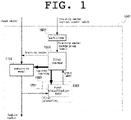
- FIG. 1 is an explanatory diagram illustrating a basic configuration of a conversion device according an embodiment of the present disclosure.
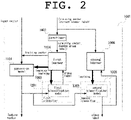
- FIG. 2 is an explanatory diagram illustrating a configuration in which additional elements are added to the conversion device according the embodiment of the present disclosure.
- FIG. 1 and FIG. 2 an overview will be described with reference to FIG. 1 and FIG. 2 .
- a conversion device 1001 includes a partitioner 1002, a first classifier 1003, and a first learner 1004.
- the conversion device 1001 may include a second classifier 1005 and a second learner 1006 as components that can be omitted.
- the conversion device 1001 converts a given input vector to a feature vector by means of a conversion model 1101.
- FIG. 3 is a flowchart illustrating a process performed by the basic configuration of the conversion device according the embodiment of the present disclosure.
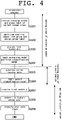
- FIG. 4 is a flowchart illustrating a process performed by a configuration for performing the classification of the conversion device according the embodiment of the present disclosure.
- description will be made with reference to FIG. 3 and FIG. 4 .
- a process in the conversion device 1001 can be divided into three stages, that is, a learning stage (steps S2001 to S2004) of the conversion model 1101, a learning stage (steps S2005 and S2006) of classification (second classification model 1202), and a use stage (steps S2007 to S2009) of classification, and the three stages can be performed independently.
- the learning stage of the conversion model 1101 are performed in both FIG. 1 and FIG. 2 , but the learning stage of classification (the second classification model 1202) and the use stage (step S2009) of classification are omitted in FIG. 1 .
- the conversion device 1001 receives training vectors vi, v 2 , ..., v N as typical examples of input vectors (step S2001).
- class labels c(1), c(2), ..., c(N) of correct answer classes C c(1) , C c(2) , ..., C c(N) , to which the training vectors vi, v 2 , ..., v N are to belong, respectively can also be received from classes C 1 , C 2 , ..., C L .
- the partitioner 1002 of the conversion device 1001 randomly partitions the training vectors v 1 , v 2 , ..., v N into groups G 1 , G2, ..., G M (step S2002).
- This partitioning can be implemented by assigning random labels (group labels) g(1), g(2), ..., g(N) that correspond to subscripts of groups to be partitioned, to the training vectors v 1 , v 2 , ..., v N , respectively.
- the number M of groups is arbitrary of 2 or more.
- the training vector vi belongs to a class C c(i) (the training vector vi is given a correct answer label c (i) ). That is, the following relationship is established. v 1 ⁇ C c(1) , v 2 ⁇ C c (2), ..., v N ⁇ C c(N)
- the conversion device 1001 converts a given input vector x to a feature vector p(x) by means of the conversion model 1101.
- the conversion model 1101 various models such as an arbitrary neural network using no convolution can be adopted, in addition to a convolutional neural network (CNN).
- CNN convolutional neural network
- the first classifier 1003 classifies the feature vector p(x) that is obtained by converting the input vector x given to the conversion device 1001, into any one of the groups G 1 , G2, ..., G M by means of a first classification model 1201. Substantially, the first classifier 1003 outputs a subscript (label) of a group, into which the given feature vector p(x) is to be classified, to the feature vector p(x).
- the first classification model ridge regression, lasso regression, support vector machine (SVM), random forest, neural network, and the like can be adopted, in addition to general logistic regression.
- the first learner 1004 in the conversion device 1001 generates first teacher data (vi, g(1)), (v 2 , g(2)), ..., (v N , g(N)) including the training vectors and the groups into which the training vectors are respectively partitioned (step S2003).
- the first teacher data is data that associates each training vector to the random label (group label).
- the first learner 1004 in the conversion device 1001 learns the conversion model 1101 in the conversion device 1001 and the first classification model 1201 in the first classifier 1003 by means of the first teacher data (step S2004).
- the conversion model 1101 in the conversion device 1001 is learned. Thereafter, when the input vector x is given to the conversion device 1001, the conversion device 1001 outputs the feature vector p(x).
- the training vectors v 1 , v 2 , ..., v N belong to the classes C 1 , C 2 , ..., C L , respectively.
- the second classifier 1005 classifies the feature vector p(x) that is obtained by converting the input vector x given to the conversion device 1001, into any one of the classes C 1 , C 2 , ..., C L by means of a second classification model 1202. Substantially, the second classifier 1005 outputs a subscript (class label) of a class, into which the given feature vector p(x) is to be classified, to the feature vector p(x).
- the second classification model 1202 as in the first classification model 1201, ridge regression, lasso regression, support vector machine (SVM), random forest, neural network, and the like can be adopted, in addition to general logistic regression.
- a neural network having the same structure can also be adopted in the first classification model 1201 and the second classification model 1202.
- the second learner 1006 of the conversion device 1001 generates second teacher data (p(vi), c(1)), (p(v2), c(2)), ..., (p(v N ), c(N)) including the feature vectors that are obtained by converting the training vectors by the conversion device 1001, and the classes to which the training vectors respectively belong, by means of the conversion model 1101 learned by the first learner 1004 (step S2005).
- the calculated feature vector p(vi) and the correct answer class c(i) given to the original training vector vi are used as the second teacher data.
- the second learner 1006 learns the second classification model 1202 in the second classifier 1005 (step S2006).
- the conversion device 1001 has a characteristic that the second classification model 1202 is updated, but the conversion model 1101 is not updated in the learning of the second learner 1006.
- the process can be shifted to the use stage of classification. That is, the stage includes step S2007 in which a new input vector y is given to the conversion device 1001, step S2008 in which the conversion device 1001 converts the new input vector y to a new feature vector p(y) by means of the learned conversion model 1101, and step S2009 in which the second classifier 1005 classifies the new feature vector p(y) into any one of the classes C 1 , C 2 , ..., C L by obtaining a label for the new feature vector p(y), by means of the learned second classification model 1202. That is, the input vector y is classified into the class in which the feature vector p(y) is classified.
- step S2007 to S2009 the use stage (steps S2007 to S2009) of classification is performed only once, but may be performed any number of times each time an input vector is given.
- the classification by the conversion device 1001 of the present embodiment improves the accuracy and sparsity of an obtained feature vector, as compared to a case where (v 1 , c(1)), (v 2 , c(2)), ..., (v N , c(N)) are used as teacher data in classification using the related autoencoder.
- over-learning for teacher data may occur, whereas in the conversion device 1001 of the present embodiment, since teacher data is not referred to when the conversion model 1101 is learned, it is conceivable that over-learning is suppressed.
- the conversion model 1101 converts an input vector to a feature vector and encodes information. Therefore, it is general that the dimension of the input vector is lower than that of the feature vector.
- the conversion model 1101 that converts an input vector to a feature vector by reducing the dimension of the input vector. It is desirable that the dimension of the feature vector is equal to or greater than the number of types of random labels, that is, is equal to or greater than the number M of groups.
- the dimension of the feature vector is equal to or greater than the number of types of correct answer labels, that is, is equal to or greater than the number L of classes.
- the probabilities that the partitioner 1002 randomly partitions the training vectors into the groups may be equal to each other or may not match each other. That is, the number of training vectors included in the respective groups may be equal to each other or different from each other. Also for these, it is possible to obtain suitable probability allocations wo by prior experiments.
- the input vector may also be converted to the feature vector by increasing the dimension of the input vector. That is, the number of dimensions of the feature vector is greater than the number of dimensions of the input vector.
- the conversion device 1001 according to the present embodiment can be widely used as a substation for the related autoencoder used for obtaining a feature vector.
- the autoencoder obtains a feature vector by reducing the dimension of an input vector with an encode part located in the first half of the autoencoder, obtains an output vector by increasing the dimension of the feature vector with a decode part located in the second half thereof, and then performs learning so that a difference between the input vector and the output vector is small. Therefore, when the conversion device 1001 according to the present embodiment is applied to an example in which dimensional encoding is performed by the encode part of the autoencoder, a filter configuration of the encode part can also be used as is for the conversion model 1101 of the conversion device 1001.
- an input vector is a 3072 dimensional vector.
- a filter configuration of the conversion device 1001 is as follows.
- the conversion device 1001 in the present experiment an input vector is encoded to 2048 dimension by means of the simplest CNN with eight output layers, kernel size and stride of 2x2, activation function relu, no pooling, and no dropout, so that a feature vector is obtained. That is, of the above, the process until the encoded is obtained corresponds to the conversion model.
- the obtained feature vector is made two-dimensional (x2), is processed by the simplest CNN with eight output layers, kernel size and stride of 2x2, activation function relu, no pooling, and no dropout (x3), is fully connected, and then is partitioned into L types of groups by adopting activation function softmax (last). That is, from the encoded to the last via x3 and x4 corresponds to the first classification model 1201.
- the 2048th dimensional feature vector is classified into 10 types of classes by using general logistic regression as the second classification model 1202.
- the filter configuration of the encode part of the autoencoder of the related example is the same as the conversion model in the conversion device 1001, and the filter configuration of the decode part is the reverse of the filter configuration of the encode part. Furthermore, after learning the autoencoder, logistic regression was learned in order to classify the feature vector.
- the number of teacher data is set to 50,000
- the number of input data given after the learning is set to 10,000
- the determination accuracy and sparsity of the feature vector and time (average of 100 trials) required for learning the logistic regression to classify the feature vector were investigated.
- the conversion device 1001 according to the present embodiment is superior in the sparsity of the feature vector and the determination accuracy based on the obtained feature vector. Furthermore, in the conversion device 1001 according to the present embodiment, since the obtained feature vector is sparse, the time required for learning the logistic regression is very short.
- the conversion device is a conversion device that converts a given input vector to a feature vector by means of a conversion model, and includes a partitioner that randomly partitions training vectors into groups, a first classifier that classifies feature vectors that are obtained by converting the training vectors with the conversion model, into any one of the groups by means of a first classification model, and a first learner that learns the conversion model and the first classification model by means of first teacher data including the training vectors and the groups into which the training vectors are respectively partitioned.
- the training vectors belong to the classes, respectively
- the conversion device includes a second classifier that classifies a given vector into any one of the classes by means of a second classification model, and a second learner that learns the second classification model by means of second teacher data including feature vectors that are obtained by converting the training vectors, and the classes to which the training vectors respectively belongs, by means of the learned conversion model.
- the conversion device includes that converts the new input vector to a new feature vector by means of the learned conversion model, and the second classifier includes that classifies the new feature vector into any one of the classes by means of the learned second classification model, thereby classifying the new input vector into a class into the new feature vector is classified.
- the conversion device that converts the given input vector to the feature vector by reducing a dimension of the given input vector, and a dimension of the feature vector that is greater than the number of the classes.
- the conversion device that converts the given input vector to the feature vector by reducing a dimension of the given input vector.
- a dimension of the feature vector that is greater than the number of the groups.
- the conversion device that converts the given input vector to the feature vector by increasing a dimension of the given input vector.
- a conversion method is a conversion method performed by a conversion device that converts a given input vector to a feature vector by means of a conversion model, and includes randomly partitioning training vectors into groups, classifying feature vectors that are obtained by converting the training vectors with the conversion model, into any one of the groups by means of a first classification model, and learning the conversion model and the first classification model by means of first teacher data including the training vectors and the groups into which the training vectors are respectively partitioned.
- a program causes a computer that converts a given input vector to a feature vector by means of a conversion model, to serve as a partitioner that randomly partitions training vectors into groups, a first classifier that classifies feature vectors that are obtained by converting the training vectors with the conversion model, into any one of the groups by means of a first classification model, and a first learner that learns the conversion model and the first classification model by means of first teacher data including the training vectors and the groups into which the training vectors are respectively partitioned.
- the program can be recorded on a non-transitory computer readable information recording medium, and then distributed and sold. Furthermore, the program can be distributed and sold via a temporary transmission medium such as a computer communication network.
- a conversion device a conversion method, a program, and an information recording medium that are suitable for training a conversion model that converts a given input vector to a feature vector.
Landscapes
- Engineering & Computer Science (AREA)
- Theoretical Computer Science (AREA)
- Physics & Mathematics (AREA)
- Data Mining & Analysis (AREA)
- Evolutionary Computation (AREA)
- Life Sciences & Earth Sciences (AREA)
- Artificial Intelligence (AREA)
- General Physics & Mathematics (AREA)
- General Engineering & Computer Science (AREA)
- Computing Systems (AREA)
- Software Systems (AREA)
- Molecular Biology (AREA)
- Computational Linguistics (AREA)
- Biophysics (AREA)
- Biomedical Technology (AREA)
- Mathematical Physics (AREA)
- General Health & Medical Sciences (AREA)
- Health & Medical Sciences (AREA)
- Bioinformatics & Cheminformatics (AREA)
- Bioinformatics & Computational Biology (AREA)
- Computer Vision & Pattern Recognition (AREA)
- Evolutionary Biology (AREA)
- Information Retrieval, Db Structures And Fs Structures Therefor (AREA)
- Image Analysis (AREA)
Applications Claiming Priority (2)
| Application Number | Priority Date | Filing Date | Title |
|---|---|---|---|
| JP2019136728A JP6856950B2 (ja) | 2019-07-25 | 2019-07-25 | 変換装置、変換方法、プログラム、ならびに、情報記録媒体 |
| PCT/JP2020/027103 WO2021015016A1 (ja) | 2019-07-25 | 2020-07-10 | 変換装置、変換方法、プログラム、ならびに、情報記録媒体 |
Publications (2)
| Publication Number | Publication Date |
|---|---|
| EP4006789A1 true EP4006789A1 (de) | 2022-06-01 |
| EP4006789A4 EP4006789A4 (de) | 2023-06-28 |
Family
ID=74193223
Family Applications (1)
| Application Number | Title | Priority Date | Filing Date |
|---|---|---|---|
| EP20844326.7A Pending EP4006789A4 (de) | 2019-07-25 | 2020-07-10 | Umwandlungsvorrichtung, umwandlungsverfahren, programm und informationsaufzeichnungsmedium |
Country Status (5)
| Country | Link |
|---|---|
| US (1) | US20220261641A1 (de) |
| EP (1) | EP4006789A4 (de) |
| JP (1) | JP6856950B2 (de) |
| CN (1) | CN114175053A (de) |
| WO (1) | WO2021015016A1 (de) |
Families Citing this family (3)
| Publication number | Priority date | Publication date | Assignee | Title |
|---|---|---|---|---|
| WO2020066257A1 (ja) * | 2018-09-26 | 2020-04-02 | 国立研究開発法人理化学研究所 | 分類装置、分類方法、プログラム、ならびに、情報記録媒体 |
| US12061692B2 (en) * | 2021-12-15 | 2024-08-13 | Cylance Inc. | Methods and systems for fingerprinting malicious behavior |
| US20250118291A1 (en) * | 2022-01-28 | 2025-04-10 | Google Llc | Self-supervised learning for audio processing |
Family Cites Families (9)
| Publication number | Priority date | Publication date | Assignee | Title |
|---|---|---|---|---|
| CN104640211B (zh) * | 2013-11-08 | 2019-06-25 | 电信科学技术研究院 | 一种发送和接收数据的方法、系统及设备 |
| EP3371749B1 (de) * | 2015-11-06 | 2024-10-30 | Google LLC | Regulierung von modellen des maschinellen lernens |
| JP2018156451A (ja) * | 2017-03-17 | 2018-10-04 | 株式会社東芝 | ネットワーク学習装置、ネットワーク学習システム、ネットワーク学習方法およびプログラム |
| WO2018192672A1 (en) * | 2017-04-19 | 2018-10-25 | Siemens Healthcare Gmbh | Target detection in latent space |
| JP6928371B2 (ja) * | 2017-08-01 | 2021-09-01 | 国立研究開発法人情報通信研究機構 | 分類器、分類器の学習方法、分類器における分類方法 |
| JP6923159B2 (ja) * | 2017-09-26 | 2021-08-18 | 株式会社エクォス・リサーチ | 情報処理装置 |
| JP6577074B2 (ja) | 2018-02-08 | 2019-09-18 | 杉山電機システム株式会社 | ミスフィード検出装置 |
| KR102756358B1 (ko) * | 2018-12-18 | 2025-01-17 | 삼성전자주식회사 | 검출기, 객체 검출 방법, 학습기 및 도메인 변환을 위한 학습 방법 |
| CN109711461B (zh) * | 2018-12-25 | 2020-04-10 | 中国人民解放军战略支援部队航天工程大学 | 基于主成分分析的迁移学习图片分类方法及其装置 |
-
2019
- 2019-07-25 JP JP2019136728A patent/JP6856950B2/ja active Active
-
2020
- 2020-07-10 WO PCT/JP2020/027103 patent/WO2021015016A1/ja not_active Ceased
- 2020-07-10 CN CN202080053229.5A patent/CN114175053A/zh active Pending
- 2020-07-10 EP EP20844326.7A patent/EP4006789A4/de active Pending
- 2020-10-07 US US17/627,847 patent/US20220261641A1/en active Pending
Also Published As
| Publication number | Publication date |
|---|---|
| CN114175053A (zh) | 2022-03-11 |
| WO2021015016A1 (ja) | 2021-01-28 |
| EP4006789A4 (de) | 2023-06-28 |
| JP2021022031A (ja) | 2021-02-18 |
| US20220261641A1 (en) | 2022-08-18 |
| JP6856950B2 (ja) | 2021-04-14 |
Similar Documents
| Publication | Publication Date | Title |
|---|---|---|
| CN112561027B (zh) | 神经网络架构搜索方法、图像处理方法、装置和存储介质 | |
| CN112016543B (zh) | 一种文本识别网络、神经网络训练的方法以及相关设备 | |
| CN110537184B (zh) | 利用生成式对抗网络的半监督回归 | |
| US11741356B2 (en) | Data processing apparatus by learning of neural network, data processing method by learning of neural network, and recording medium recording the data processing method | |
| CN109840531B (zh) | 训练多标签分类模型的方法和装置 | |
| US11797845B2 (en) | Model learning device, model learning method, and program | |
| CN113785305A (zh) | 一种检测倾斜文字的方法、装置及设备 | |
| JP7757468B2 (ja) | 少数ショット類似性決定および分類のためのクロストランスフォーマニューラルネットワークシステム | |
| WO2019018022A2 (en) | MACHINE VISION SYSTEM WITHOUT REFERENCE DATA THROUGH COMMON DISTRIBUTED REPRESENTATIONS | |
| US12013700B2 (en) | Unsupervised contrastive learning of visual representations using negative mixing | |
| CN116097277A (zh) | 使用渐进式知识蒸馏训练神经网络模型的方法和系统 | |
| EP4006789A1 (de) | Umwandlungsvorrichtung, umwandlungsverfahren, programm und informationsaufzeichnungsmedium | |
| EP4517682B1 (de) | Erkennung von auffälligen echtzeitobjekten in bildern und videos | |
| CN111914949B (zh) | 基于强化学习的零样本学习模型的训练方法及装置 | |
| CN111738069A (zh) | 人脸检测方法、装置、电子设备及存储介质 | |
| US20250278926A1 (en) | Method and apparatus related to data generation framework | |
| WO2024103997A1 (zh) | 手写体识别方法、手写体识别模型的训练方法及装置 | |
| US20230101250A1 (en) | Method for generating a graph structure for training a graph neural network | |
| CN116229477A (zh) | 基于多模态的端到端收据信息提取方法、装置及其应用 | |
| KR102305981B1 (ko) | 신경망 압축 훈련 방법 및 압축된 신경망을 이용하는 방법 | |
| CN120086314A (zh) | 用于多模态数据处理的方法、装置、设备和介质 | |
| KR20190048597A (ko) | 딥 러닝을 이용한 이종 센서 정보 융합 장치 및 방법 | |
| HK40065569A (en) | Conversion device, conversion method, program, and information recording medium | |
| Zerrouk et al. | Evolutionary algorithm for optimized CNN architecture search applied to real-time boat detection in aerial images | |
| Deepak et al. | Multi-class weather classification using single image via feature fusion and selection |
Legal Events
| Date | Code | Title | Description |
|---|---|---|---|
| STAA | Information on the status of an ep patent application or granted ep patent |
Free format text: STATUS: THE INTERNATIONAL PUBLICATION HAS BEEN MADE |
|
| PUAI | Public reference made under article 153(3) epc to a published international application that has entered the european phase |
Free format text: ORIGINAL CODE: 0009012 |
|
| STAA | Information on the status of an ep patent application or granted ep patent |
Free format text: STATUS: REQUEST FOR EXAMINATION WAS MADE |
|
| 17P | Request for examination filed |
Effective date: 20220118 |
|
| AK | Designated contracting states |
Kind code of ref document: A1 Designated state(s): AL AT BE BG CH CY CZ DE DK EE ES FI FR GB GR HR HU IE IS IT LI LT LU LV MC MK MT NL NO PL PT RO RS SE SI SK SM TR |
|
| REG | Reference to a national code |
Ref country code: HK Ref legal event code: DE Ref document number: 40065569 Country of ref document: HK |
|
| DAV | Request for validation of the european patent (deleted) | ||
| DAX | Request for extension of the european patent (deleted) | ||
| REG | Reference to a national code |
Ref country code: DE Ref legal event code: R079 Free format text: PREVIOUS MAIN CLASS: G06N0020000000 Ipc: G06N0003084000 |
|
| A4 | Supplementary search report drawn up and despatched |
Effective date: 20230530 |
|
| RIC1 | Information provided on ipc code assigned before grant |
Ipc: G06N 20/20 20190101ALN20230523BHEP Ipc: G06N 5/01 20230101ALN20230523BHEP Ipc: G06N 20/10 20190101ALN20230523BHEP Ipc: G06N 3/048 20230101ALN20230523BHEP Ipc: G06N 3/0464 20230101ALI20230523BHEP Ipc: G06N 3/0455 20230101ALI20230523BHEP Ipc: G06N 3/084 20230101AFI20230523BHEP |