EP4006824B1 - Procédé de traitement d'images, procédé de traitement de vidéos, dispositif informatique et support - Google Patents
Procédé de traitement d'images, procédé de traitement de vidéos, dispositif informatique et support Download PDFInfo
- Publication number
- EP4006824B1 EP4006824B1 EP20844069.3A EP20844069A EP4006824B1 EP 4006824 B1 EP4006824 B1 EP 4006824B1 EP 20844069 A EP20844069 A EP 20844069A EP 4006824 B1 EP4006824 B1 EP 4006824B1
- Authority
- EP
- European Patent Office
- Prior art keywords
- image
- blocks
- processed
- filter model
- value
- Prior art date
- Legal status (The legal status is an assumption and is not a legal conclusion. Google has not performed a legal analysis and makes no representation as to the accuracy of the status listed.)
- Active
Links
Images


Classifications
-
- H—ELECTRICITY
- H04—ELECTRIC COMMUNICATION TECHNIQUE
- H04N—PICTORIAL COMMUNICATION, e.g. TELEVISION
- H04N19/00—Methods or arrangements for coding, decoding, compressing or decompressing digital video signals
- H04N19/10—Methods or arrangements for coding, decoding, compressing or decompressing digital video signals using adaptive coding
- H04N19/102—Methods or arrangements for coding, decoding, compressing or decompressing digital video signals using adaptive coding characterised by the element, parameter or selection affected or controlled by the adaptive coding
- H04N19/117—Filters, e.g. for pre-processing or post-processing
-
- G—PHYSICS
- G06—COMPUTING OR CALCULATING; COUNTING
- G06T—IMAGE DATA PROCESSING OR GENERATION, IN GENERAL
- G06T5/00—Image enhancement or restoration
- G06T5/20—Image enhancement or restoration using local operators
- G06T5/30—Erosion or dilatation, e.g. thinning
-
- G—PHYSICS
- G06—COMPUTING OR CALCULATING; COUNTING
- G06T—IMAGE DATA PROCESSING OR GENERATION, IN GENERAL
- G06T5/00—Image enhancement or restoration
- G06T5/70—Denoising; Smoothing
-
- G—PHYSICS
- G06—COMPUTING OR CALCULATING; COUNTING
- G06V—IMAGE OR VIDEO RECOGNITION OR UNDERSTANDING
- G06V10/00—Arrangements for image or video recognition or understanding
- G06V10/20—Image preprocessing
- G06V10/26—Segmentation of patterns in the image field; Cutting or merging of image elements to establish the pattern region, e.g. clustering-based techniques; Detection of occlusion
-
- G—PHYSICS
- G06—COMPUTING OR CALCULATING; COUNTING
- G06V—IMAGE OR VIDEO RECOGNITION OR UNDERSTANDING
- G06V10/00—Arrangements for image or video recognition or understanding
- G06V10/20—Image preprocessing
- G06V10/30—Noise filtering
-
- G—PHYSICS
- G06—COMPUTING OR CALCULATING; COUNTING
- G06V—IMAGE OR VIDEO RECOGNITION OR UNDERSTANDING
- G06V10/00—Arrangements for image or video recognition or understanding
- G06V10/40—Extraction of image or video features
- G06V10/46—Descriptors for shape, contour or point-related descriptors, e.g. scale invariant feature transform [SIFT] or bags of words [BoW]; Salient regional features
- G06V10/467—Encoded features or binary features, e.g. local binary patterns [LBP]
-
- H—ELECTRICITY
- H04—ELECTRIC COMMUNICATION TECHNIQUE
- H04N—PICTORIAL COMMUNICATION, e.g. TELEVISION
- H04N19/00—Methods or arrangements for coding, decoding, compressing or decompressing digital video signals
- H04N19/10—Methods or arrangements for coding, decoding, compressing or decompressing digital video signals using adaptive coding
- H04N19/134—Methods or arrangements for coding, decoding, compressing or decompressing digital video signals using adaptive coding characterised by the element, parameter or criterion affecting or controlling the adaptive coding
- H04N19/136—Incoming video signal characteristics or properties
- H04N19/14—Coding unit complexity, e.g. amount of activity or edge presence estimation
-
- H—ELECTRICITY
- H04—ELECTRIC COMMUNICATION TECHNIQUE
- H04N—PICTORIAL COMMUNICATION, e.g. TELEVISION
- H04N19/00—Methods or arrangements for coding, decoding, compressing or decompressing digital video signals
- H04N19/10—Methods or arrangements for coding, decoding, compressing or decompressing digital video signals using adaptive coding
- H04N19/169—Methods or arrangements for coding, decoding, compressing or decompressing digital video signals using adaptive coding characterised by the coding unit, i.e. the structural portion or semantic portion of the video signal being the object or the subject of the adaptive coding
- H04N19/17—Methods or arrangements for coding, decoding, compressing or decompressing digital video signals using adaptive coding characterised by the coding unit, i.e. the structural portion or semantic portion of the video signal being the object or the subject of the adaptive coding the unit being an image region, e.g. an object
- H04N19/176—Methods or arrangements for coding, decoding, compressing or decompressing digital video signals using adaptive coding characterised by the coding unit, i.e. the structural portion or semantic portion of the video signal being the object or the subject of the adaptive coding the unit being an image region, e.g. an object the region being a block, e.g. a macroblock
-
- H—ELECTRICITY
- H04—ELECTRIC COMMUNICATION TECHNIQUE
- H04N—PICTORIAL COMMUNICATION, e.g. TELEVISION
- H04N19/00—Methods or arrangements for coding, decoding, compressing or decompressing digital video signals
- H04N19/85—Methods or arrangements for coding, decoding, compressing or decompressing digital video signals using pre-processing or post-processing specially adapted for video compression
- H04N19/86—Methods or arrangements for coding, decoding, compressing or decompressing digital video signals using pre-processing or post-processing specially adapted for video compression involving reduction of coding artifacts, e.g. of blockiness
-
- G—PHYSICS
- G06—COMPUTING OR CALCULATING; COUNTING
- G06T—IMAGE DATA PROCESSING OR GENERATION, IN GENERAL
- G06T2207/00—Indexing scheme for image analysis or image enhancement
- G06T2207/10—Image acquisition modality
- G06T2207/10016—Video; Image sequence
-
- G—PHYSICS
- G06—COMPUTING OR CALCULATING; COUNTING
- G06T—IMAGE DATA PROCESSING OR GENERATION, IN GENERAL
- G06T2207/00—Indexing scheme for image analysis or image enhancement
- G06T2207/20—Special algorithmic details
- G06T2207/20004—Adaptive image processing
- G06T2207/20012—Locally adaptive
-
- G—PHYSICS
- G06—COMPUTING OR CALCULATING; COUNTING
- G06T—IMAGE DATA PROCESSING OR GENERATION, IN GENERAL
- G06T2207/00—Indexing scheme for image analysis or image enhancement
- G06T2207/20—Special algorithmic details
- G06T2207/20021—Dividing image into blocks, subimages or windows
-
- G—PHYSICS
- G06—COMPUTING OR CALCULATING; COUNTING
- G06T—IMAGE DATA PROCESSING OR GENERATION, IN GENERAL
- G06T2207/00—Indexing scheme for image analysis or image enhancement
- G06T2207/20—Special algorithmic details
- G06T2207/20081—Training; Learning
-
- H—ELECTRICITY
- H04—ELECTRIC COMMUNICATION TECHNIQUE
- H04N—PICTORIAL COMMUNICATION, e.g. TELEVISION
- H04N5/00—Details of television systems
- H04N5/14—Picture signal circuitry for video frequency region
- H04N5/21—Circuitry for suppressing or minimising disturbance, e.g. moiré or halo
Definitions
- the present disclosure relates to the field of image processing, and in particular relates to a method for processing images, a method for processing videos, and a computer device and a medium thereof.
- a video is typically encoded by means of lossy compression for storage and transmission, and this produces encoding noise when the video is decoded.
- the types of encoding noise include blocking, ringing, and aliasing effects.
- a video application on a mobile terminal pulls a video stream from a server, and decodes and plays the video stream locally. Due to restrictions of network conditions, the video stream pulled to the mobile terminal is generally highly compressed, and visible encoding noise generally appears when the user watches the video, especially in a poor network condition.
- CN108765343A discloses an image processing method.
- the method comprises: upsampling an image to be processed to obtain a first high-resolution image; dividing the first high-resolution image into a plurality of first image blocks; acquiring the feature value of each of the first image blocks; determining a trained filter corresponding to each of the first image blocks according to the feature value; filtering the corresponding first image block in the first high-resolution image by using each trained filter to obtain a second high-resolution image; and fusing the second high-resolution image and the first high-resolution image to obtain a super-resolution image.
- US7949200B2 discloses an image processing apparatus which includes an obtaining module, a coefficient filter, a large area filter, and a determination module.
- the obtaining module obtains a feature value indicating an image structure of a pixel block comprising a target pixel to be processed and a surrounding pixel neighboring the target pixel in an input image.
- the coefficient filter performs filtering on the pixel block using a filter coefficient corresponding to the feature value.
- the large area filter performs smoothing on a pixel block that are larger than blocks used with coefficient filter.
- the determination module determines to cause the large area filter to perform the smoothing when the image structure indicated by the feature value is smooth.
- the computer device includes:
- a non-volatile computer-readable storage medium storing a computer program thereon, wherein the computer program, when run by a processor, causes the processor to perform the method for processing images as defined in any one of the embodiments of the present disclosure, or perform the method for processing videos on the mobile terminal as defined in any one of the embodiments of the present disclosure.
- Embodiments of the present disclosure may be applicable to eliminating visible encoding noise that typically occurs in the case that a user is watching a video due to the network conditions.
- Embodiments of the present disclosure provide a method for processing images, which enables real-time filtering of an image, and filters each image block adaptively by a corresponding filter model, so as to improve the definition of a video.
- the filter model is trained prior to performing the method for processing images, such that a corresponding filter model can be determined based on an encoding noise intensity of a to-be-processed image and an image attribute of an image block in the to-be-processed image, and the image block is filtered.
- the process of training the filter model includes: acquiring a high-definition image of a first preset size and a low-definition image carrying the encoding noise, wherein the high-definition image and the low-definition image have the same resolution, extracting a plurality of image blocks of a second preset size from the high-definition image and the low-definition image to compose a first matrix and a second matrix respectively, wherein the second preset size is less than the first preset size, and acquiring the filter model based on the first matrix and the second matrix based on a normal equation of Least Square method.
- a filter model h in a size of d ⁇ d is trained to adjust a pixel value in the low-definition image y i to a corresponding pixel value in the high-definition image x i , where d ⁇ d represents the size of the filter model.
- a filter model h in a size of d ⁇ d indicates that the size of an input original image in the filtering operation is d ⁇ d .
- Equation (1) h ⁇ R d 2 is a vectorized representation of h ⁇ R d ⁇ d , R d2 represents a set of real vectors of dimension d 2 , and h represents one real vector element in the set of real vectors.
- a i e R MN ⁇ d 2 represents a matrix composed of the image blocks in a size of d ⁇ d extracted from the low-definition image y i , and the extraction includes, for each pixel, extracting one d ⁇ d image block centered on the pixel, and stretching the d ⁇ d image block into a row as a row of the matrix A i ;
- R MN ⁇ d 2 represents a set of real matrices of MN rows and d 2 columns, A i being one of the set of real matrices.
- R MN is composed of an expansion of pixels of x i , wherein each element in b i corresponds to a pixel in a central position of a plurality of d ⁇ d image blocks in the low-definition image y i , R MN represents a set of real vectors of dimension MN , and b i represents one real vector element in the set of real vectors R MN .
- the method of training the optimal filter model can be easily extended from one figure to a plurality of figures, for the convenience of illustration, herein, the method of training the optimal filter model can be limited to one figure, and a superscript i is omitted. It can be interpreted that the filter model and the image block have the same size, that is, in the case that the size of the filter model is d ⁇ d, and the size of the image block is also d ⁇ d .
- a j represents the j-th row of A , where A j e R 1 ⁇ d 2 , then both Q and V can be formed by accumulating small matrices/vectors.
- R 1 ⁇ d 2 represents a set of real matrices of 1 row and d 2 columns, and A j is a real matrix in the set of real matrices R 1 ⁇ d 2 .
- Equation (2) based on the accumulation fashion in Equation (3) and Equation (4), is O ( d 4 ), and to facilitate the statistics of the pixel value of each image block in the image, optionally, the value of d is set between 5 to 13. Therefore, the spatial complexity of Equation (2) is not large.
- the solution h to the equation is a filter model in the sense of Least Squares. Filtering the low-definition image with the filter model h can generate the high-definition image with encoding noise removed as much as possible, but it is difficult for the filter model to adjust adaptively for the content of the image. Therefore, a hashing classification is performed for each image block in the low-definition image, and a filter model is trained for each bucket of the hashing classification individually.
- a first hash value and a second hash value corresponding to the image block of the low-definition image (i.e., a to-be-processed image) to be filtered currently are calculated, a corresponding bucket sequence number is determined based on the first hash value and the second hash value, and filtering is performed by the filter model corresponding to the bucket sequence number.
- the calculation of the first hash value and the second hash value for the image block is described for a d * d image block.
- the first hash value may be represented as ⁇
- the second hash value may be represented as ⁇ .
- ⁇ can be calculated by Equation (5)
- ⁇ can be calculated by Equation (6).
- LGx and LGy represent image gradients in directions x and y of the image block respectively
- the value of i is any one number of 1 to d
- the value of j is any one number of 1 to d
- LGx 2 represents a square value of the image gradient corresponding to each image block in direction x
- LGy 2 represents a square value of the image gradient corresponding to each image block in direction y
- LGxLGy represents a product value of the image gradients corresponding to each image block in directions x and y.
- Both ⁇ and ⁇ are in the range of [0, 1].
- the interval [0, 1] is divided into q ⁇ subintervals and q ⁇ subintervals on average, where q ⁇ represents the number of subintervals corresponding to the first hash value, q ⁇ represents the number of subintervals corresponding to the second hash value, and the values of q ⁇ and q ⁇ can be customized. Then, the combination of a subinterval taken arbitrarily from the q ⁇ subintervals and a subinterval taken arbitrarily from the q ⁇ subinterval is called a bucket, and each image block falls within a specific bucket.
- the filter model for all the image blocks in each bucket needs to be trained in the case that the filter model is trained, and finally q ⁇ * q ⁇ filter models can be acquired. Accordingly, in a solving process, q ⁇ * q ⁇ matrices Q and vectors V need to be constructed, and corresponding q ⁇ * q ⁇ Least Squares equations need to be solved.
- the process of training the filter model includes the following steps.
- a corresponding bucket sequence number is acquired by calculating the first hash value ⁇ and the second hash value ⁇ of each image block in the low-definition image.
- the subintervals corresponding to the first hash value are [0, 0.5) and [0.5, 1] and the subintervals corresponding to the second hash value are [0, 0.25), [0.25, 5), [0.5, 0.75), and [0.75, 1].
- One subinterval is selected from the subintervals corresponding to the first hash value and the subintervals corresponding to the second hash value respectively, and a combination of the two selected subintervals constitutes a bucket, hence 8 buckets are provided, for example, for [0, 0.5) and [0, 0.25), the corresponding bucket sequence number is 1; for [0, 0.5) and [0.25, 5), the corresponding bucket sequence number is 2; [0, 0.5), for [0.5, 0.75), the corresponding bucket sequence number is 3; for [0, 0.5) and [0.75, 1], the corresponding bucket sequence number is 4; for [0.5, 1] and [0, 0.25), the corresponding bucket sequence number is 5; for [0.5, 1] and [0.25, 5), the corresponding bucket sequence number is 6; for [0.5, 1] and [0.5, 0.75), the corresponding bucket sequence number is 7; for [0.5, 1] and [0.75, 1], the corresponding bucket sequence number is 8. Therefore, in response to the first hash value ⁇ of an image block
- the pixel value of the current image block is expanded into a row, i.e., A j , and A j T A j is accumulated to the matrix Q corresponding to the bucket sequence number, according to the position of the image block, a pixel value b j of a corresponding position of a corresponding high-definition image is searched, and A j T b j is accumulated to the matrix V corresponding to the bucket sequence number.
- the time complexity is O ( MNd 2 ).
- the operation performed on each element of the image block is undifferentiated sum, in this case, the time complexity can be simplified to O ( MN ) using an integral image algorithm.
- the first hash value and the second hash value are calculated as follows.
- the image gradients of each to-be-processed image in directions x and y are acquired, that is, gradient graphs Gx and Gy, based on the gradient graphs Gx and Gy, a square value G x 2 ( G x 2 represents the square of Gx, i.e., an simplified form of ( Gx ) 2 ) of the image gradient corresponding to each to-be-processed image in direction x, a square value Gy 2 ( Gy 2 represents the square of Gy, i.e., an simplified form of ( Gy ) 2 ) of the image gradient corresponding to each image in direction y, and a product value Gxy (Gxy represents s product value of Gx and Gy, i.e., an simplified form of Gx ⁇ Gy ) of the image gradient corresponding to each image in directions x and y are acquired, then, the integral images of the to-be-processed image are acquired using the integral image algorithm of G
- the process of training the filter model is to train model offline for image quality enhancement, that is, to upgrade low-definition images to high-definition images.
- the model is a model file.
- An online video can then be filtered by the model file in real time to acquire a picture-quality-enhanced video.
- the method for processing images in the present embodiment is just the process of filtering each video frame in the online video in real time by the model file.
- FIG. 1 is a flowchart of a method for processing images according to an embodiment of the present disclosure, and the method is applicable to any service terminal with image processing capabilities.
- the solution according to the embodiment of the present disclosure is applicable to the problem of how to denoise a current video frame to improve video definition under poor network conditions.
- the method for processing images may be performed by an apparatus for processing images according to an embodiment of the present disclosure, and the apparatus can be implemented by software and/or hardware, and integrated in an apparatus for performing the method, and the apparatus can be any server with image processing capabilities.
- the method includes the following steps.
- an image attribute of each image block of a plurality of image blocks in the to-be-processed image is determined.
- the image attribute includes a first hash value and a second hash value, the first hash value is configured to indicate a direction of an image gradient corresponding to each of the image blocks weighs more, and the second hash value is configured to indicate a proximity between the image gradient corresponding to each of the image blocks in a first direction and the image gradient corresponding to each of the image blocks in a second direction.
- each of the image blocks in the to-be-processed image may correspond to image gradients in two directions.
- the image blocks are illustrated with the image gradients having x and y directions.
- the first hash value is configured to indicate whether the image gradient corresponding to each of the image blocks weighs more on direction x or direction y
- the second hash value is configured to indicate the proximity between the image gradient corresponding to each of the image blocks in direction x and the image gradient corresponding to each of the image blocks in direction y.
- Equation (5) it can be learned that a greater ⁇ indicates that the image gradient of the image block focuses more on direction x, and a smaller ⁇ indicates that the image gradient of the image block focuses more on direction y.
- Equation (6) it can be learned that in the case that ⁇ is closer to 1, the proximity of the image block in directions z and y is greater, that is, the image gradients in directions z and y are closer.
- determining the image attribute of each image block of the plurality of image blocks in the to-be-processed image includes: calculating, based on the image gradient of each of the image blocks in the first direction and the image gradient of each of the image blocks in the second direction, a square value of the image gradient corresponding to each of the image blocks in the first direction, a square value of the image gradient corresponding to each of the image blocks in the second direction, and a product value of the image gradient corresponding to each of the image blocks in the first direction and the image gradient corresponding to each of the image blocks in the second direction, acquiring the first hash value and the second hash value corresponding to each of the image blocks by calculating the square value of the image gradient corresponding to the first direction, the square value of the image gradient corresponding to the second direction, and the product value of the image gradient corresponding to the first direction and the image gradient corresponding to the second direction based on an integral image algorithm.
- FIG. 2 is a schematic diagram for displaying a division of a to-be-processed image into image blocks according to an embodiment of the present disclosure. As shown in FIG.
- the size of the to-be-processed image is 7*7, that is, the to-be-processed image has 49 pixel values, and a filter model in a size of 5*5 is taken as an example.
- the size of each of the image blocks in the to-be-processed image is 5*5, and the to-be-processed image can be divided into 9 image blocks each having a size 5*5.
- the number of image blocks is counted, a pattern filling region A can be recorded as the first image block of the to-be-processed image, a new image block can be acquired by moving one pixel value to rightward or downward in sequence, and so on, the to-be-processed image can be divided into 9 image blocks each having the size of 5*5.
- a filter model corresponding to each of the image blocks is determined based on the image attribute corresponding to each of the image blocks.
- the filter model corresponding to each of the image blocks can be determined based on the first hash value and the second hash value of each of the image blocks.
- a mapping relationship is established between the image attribute and the filter model in advance, and in the case that the image attribute of each of the image blocks is determined, the filter model corresponding to each of the image blocks can be identified based on the mapping relationship between the image attribute and the filter model.
- a filtered image of the to-be-processed image is acquired by filtering each image block by the filter model corresponding to each of the image blocks.
- each image block is filtered by the filter model to acquire the filtered image of each of the image block, thereby realizing adaptive filtering for each of the image blocks in each frame of the to-be-processed image, and thus improving the definition of the to-be-processed image.
- filtering the image block corresponding to a central point position ( i, j ) in the to-be-processed image is taken as an example to illustrate the process of filtering the image block.
- the filtered image of the to-be-processed image is acquired by determining the image attribute of each image block of a plurality of image blocks in the to-be-processed image, the filter model corresponding to each of the image blocks is determined based on the image attribute of each of the image blocks, and the filtered image of the to-be-processed image is acquired by filtering each of the image blocks by the filter model corresponding to each of the image blocks.
- a rapid calculation is performed based on the image attribute of each image block in the to-be-processed image, the filtering of the image block is speeded up, thereby achieving real-time filtering of the image and improving the definition of the video by filtering each image block by a corresponding filter model adaptively.
- the encoding noise intensity is configured to indicate the strength of the encoding noise contained in the to-be-processed image.
- the encoding noise intensity of the video to which the to-be-processed image belongs can be taken as the encoding noise intensity of the to-be-processed image.
- the encoding noise intensities of different videos may be different, the encoding noise intensities of different images to be processed may also be different.
- the determined filter model can be more accurate and more suitable to the characteristics of each of the image blocks, such that the filtering of each image is better implemented.
- the method further includes: determining a plurality of filter models corresponding to the to-be-processed image according to the encoding noise intensity of the to-be-processed image, and determining the filter model corresponding to each of the image blocks based on the image attribute corresponding to each of the image blocks includes determining the filter model corresponding to each of the image blocks from the plurality of filter models corresponding to the to-be-processed image based on the image attribute of each of the image blocks in the to-be-processed image.
- the method prior to determining the plurality of filter models corresponding to the to-be-processed image according to the encoding noise intensity of the to-be-processed image, the method further includes: determining the encoding noise intensity of the to-be-processed image.
- determining the encoding noise intensity of the to-be-processed image includes: determining an encoding noise intensity of a video to which the to-be-processed image belongs, and determining the encoding noise intensity of the video to which the to-be-processed image belongs as the encoding noise intensity of the to-be-processed image.
- the correspondence between the level of the encoding noise intensity and the filter model may be established by a following process of training a filter model, and then a plurality of filter models corresponding to the level of the encoding noise intensity of the to-be-processed image may be determined according to the level of the encoding noise intensity of the to-be-processed image.
- the process of training the filter model includes the following steps.
- the low-definition images in a training set are divided into a corresponding number of training subsets based on the level of the encoding noise intensity.
- the training set may include a plurality of low-definition videos, and in response to the training set being dividing into the training subsets, the plurality of low-definition videos may be divided into a corresponding number of training subsets based on the levels of encoding noise intensities of the plurality of low-definition videos.
- a corresponding bucket sequence number is acquired by calculating the first hash value ⁇ and the second hash value ⁇ of each of the image blocks in each of the training subsets.
- all the training subsets are processed by the steps S60 to S80 to acquire an optimal filter model corresponding to each bucket in each training subset.
- the number of subintervals for the first hash values corresponding to different training subsets may be the same or different.
- the number of subintervals for the second hash values corresponding to different training subsets may be the same or different.
- the low-definition images in the training set are classified according to the level of the encoding noise intensity, for example, the encoding noise intensity may be classified into three levels: strong, medium and weak, and according to the encoding noise intensity of the low-definition images in the training set, the low-definition images in the training set are correspondingly divided into three training subsets, and then the low-definition images in each training subset are trained to acquire the plurality of filter models corresponding to the plurality of buckets in each training subset, thereby the encoding noise intensity is also taken into account in the case that the filter model is trained, and the mapping relationship between the filter model and the encoding noise intensity is established, such that multiple filter models acquired by training the same training subset correspond to the same level of the encoding noise intensity.
- the encoding noise intensity may be classified into three levels: strong, medium and weak, and according to the encoding noise intensity of the low-definition images in the training set, the low-definition images in the training set are
- a group(s) of filter models may be determined according to the level of the encoding noise intensity of the to-be-processed image, and then the final filter model is determined from the group(s) of filter models based on the image attribute of each of the image blocks.
- the determined filter model of each of the image blocks can filter each of the image blocks better.
- a bucket sequence number corresponding to the image block can be determined based on the first hash value and the second hash value of each of the image blocks in the to-be-processed image, and then a filter model corresponding to the bucket sequence number is taken from the plurality of filter models as the filter model corresponding to the image block.
- FIG. 3 is a flowchart of another method for processing images according to an embodiment of the present disclosure, which is described on the basis of the technical solution according to the above embodiment.
- the embodiment mainly explains a process of determining the filter model.
- the embodiment may include the following steps.
- an image attribute of each image block of a plurality of image blocks in a to-be-processed image is determined.
- a bucket sequence number is determined based on a first hash value and a second hash value.
- each of the image blocks may have a corresponding bucket sequence number based on the ⁇ and ⁇ of the image block.
- a filter model is determined corresponding to each of the image blocks based on the bucket sequence number.
- a one-to-one mapping relationship is established between the bucket sequence number and the filter model.
- One bucket sequence number corresponds to one filter model.
- the corresponding filter model can be searched based on the mapping relationship between the bucket sequence number and the filter model.
- a filtered image of the to-be-processed image is acquired by filtering each of the image blocks by the filter model corresponding to the image block.
- the filter model is correspondingly provided for each of the image blocks, such that each of the image blocks- is filtered adaptively, thereby improving the definition of the image.
- FIG. 4 is a flowchart of yet another method for processing images according to an embodiment of the present disclosure.
- the embodiment describes a process of determining the filter model based on the above embodiment.
- the method includes the following steps.
- an image attribute of each image block of a plurality of image blocks in a to-be-processed image is determined.
- a filter model corresponding to each of the image blocks is determined based on the image attribute of each of the image blocks.
- the filter model for each of the image blocks is determined according to an encoding noise intensity of the to-be-processed image.
- the encoding noise intensity is configured to indicate the strength of the encoding noise contained in the to-be-processed image.
- the encoding noise is not uniformly distributed in the whole to-be-processed image.
- the encoding noise intensities contained in each of the image blocks are not the same.
- one encoding noise intensity that is greater than others of the encoding noise intensities of a plurality of image blocks of a whole to-be-processed image may be taken as the encoding noise intensity of the to-be-processed image.
- the encoding noise intensity of the to-be-processed image may be an average of the encoding noise intensities of all the image blocks in the whole to-be-processed image.
- the encoding noise intensity of the whole to-be-processed image may also be determined in other ways based on the encoding noise intensity of each of the image blocks, which is not limited herein.
- the method for determining the encoding noise intensity of the to-be-processed image includes: acquiring quality parameters of video encoding corresponding to the to-be-processed image, and determining the encoding noise intensity corresponding to the to-be-processed image based on the quality parameters.
- the quality parameters include at least one of a quantization parameter (QP) and a constant ratio factor (CRF).
- QP is one of the video encoding parameters for describing the degree of loss of detail in the video encoding process. Moreover, a higher QP indicates more detail loss, and accordingly, the distortion of the to-be-processed image in the video is enhanced and the quality is degraded.
- the CRF is also a video encoding parameter that is similar to QP, but QP is a technical index in the encoding process, and CRF is a constant quality encoding mode, that is, described in terms of video quality, a determined CRF corresponds to a constant video quality.
- the value of CRF ranges generally from 18 to 28, and in an x264 encoder, a default value of CRF is 23. In an x265 encoder, the default value of CRF is 28.
- the encoding noise intensity is in a weak stage; assuming 18 ⁇ CRF ⁇ 23, then the encoding noise intensity is in a medium stage; and assuming CRF>23, then the encoding noise intensity is in a strong stage.
- Different encoding noise intensities correspond to different filter models. It is also possible to establish a mapping relationship between QP and the encoding noise intensity, or establish a mapping relationship between a combination of QP and CRF and the encoding noise intensity.
- the encoding noise intensity corresponding to the video encoding corresponding to the to-be-processed image is determined, that is, the encoding noise intensity of the to-be-processed image is determined.
- the filter model of the image block is determined according to an overall encoding noise intensity of the to-be-processed image.
- the filter models for each of the image blocks determined on the encoding noise intensity are the same.
- the filtered image of the to-be-processed image is acquired by filtering each of the image blocks by the filter model corresponding to the image block.
- the filter model of each image block determined according to the encoding noise intensity of the to-be-processed image the whole to-be-processed image is adaptively filtered by the filter model.
- a corresponding filter model is determined based on the image attribute of each of the image blocks, and each of the image blocks in the to-be-processed image is adaptively filtered by the filter model, and filtered images of each of the image blocks are combined to acquire the filtered image of the to-be-processed image.
- the whole to-be-processed image may be adaptively filtered by the filter model determined based on the encoding noise intensity of each frame of the to-be-processed image, and then each of the image blocks is adaptively filtered by the filter model determined based on the image attribute of each of the image blocks in the to-be-processed image.
- Each of the image blocks may also be adaptively filtered by the filter model determined based on the image attribute of each of the image blocks in the to-be-processed image, and then the whole to-be-processed image may be filtered adaptively by the filter model determined based on the encoding noise intensity of each frame of the to-be-processed image.
- the sequence of the two steps is not limited.
- Step S330 may be performed prior to step S310 or S320 as long as step S330 is performed prior to step S340.
- the filter model is determined according to the encoding noise intensity of the to-be-processed image so as to filter each frame of the to-be-processed image adaptively, thereby improving the definition of the video.
- the process of filtering the to-be-processed image adaptively is equivalent to a process of performing weighted averaging on pixel values of an image block. Therefore, in the case that a white text region such as a subtitle is included in the to-be-processed image, the white text region becomes lighter. For reduction of the influence of encoding denoising on the white text region as much as possible, the white text region can be binarized to acquire a binarized image. Based on the above embodiment, the method further includes acquiring a binarized image of the to-be-processed image by binarizing the to-be-processed image.
- Acquiring the binarized image of the to-be-processed image by binarizing the to-be-processed image includes steps S100 to S300.
- a text boundary image is acquired by performing Laplace filtering on the to-be-processed image.
- the to-be-processed image is the original low-definition image, recorded as y .
- Laplacian filtering is performed on the original low-definition image so as to acquire the text boundary image, recorded as T 1.
- An RGB value of 0 in the text boundary image indicates that the region is a flat region and is almost impossible to be text.
- a greater RGB value indicates a greater likelihood that the location is a text boundary.
- the text boundary of the filtered image is not clear, and gaps and slits exist, and some other non-text boundary regions exist in the text boundary image.
- a first image is acquired by performing threshold segmentation on the text boundary image based on a preset pixel threshold.
- the first image is an image with non-text boundary regions removed from the text boundary image. It should be understood here that the boundary within the text region is sharper, and the pixel values of the text region upon the Laplace filtering are relatively greater, and the pixel values of the non-text region are smaller. Therefore, in this case, a pixel threshold, recorded as th, may be set, and then the threshold segmentation is performed on the text boundary image so as to remove the non-text boundary region from the text boundary image and acquire the image with non-text boundary regions removed from the text boundary image, recorded as a first image T 2.
- Step S200 may include steps S2002 to S2008.
- a pixel value corresponding to each pixel point in the text boundary image is compared with the preset pixel threshold.
- the pixel value corresponding to the pixel point greater than the pixel threshold is adjusted to a first pixel value.
- the pixel value corresponding to the pixel point less than or equal to the pixel threshold is adjusted to a second pixel value.
- the text boundary image with the pixel values adjusted is determined as the first image.
- the text boundary image with the pixel values adjusted is determined as the first image, that is, the pixel value corresponding to the pixel point greater than the pixel threshold is adjusted to a first pixel value, and the pixel value corresponding to the pixel point less than or equal to the pixel threshold is adjusted to a second pixel value, so as to acquire the first image.
- T 1( i, j) represents a pixel value of a text boundary image corresponding to an image block at a position ( i, j) in the to-be-processed image
- T 2( i, j ) represents a pixel value of the text boundary image upon the threshold segmentation corresponding to the image block at the position ( i, j ) in the to-be-processed image.
- the first pixel value is 255
- the second pixel value is 0.
- the pixel values of all the pixel points in the text boundary image are adjusted to 0 or 255, so as to remove non-text boundary regions and acquire the first image.
- the first image is also a binarized image, but is not sharp and contains a discontinuous text boundary.
- the binarized image is acquired by performing a morphological close operation on the first image.
- the morphological close operation may eliminate narrow gaps and small holes.
- the morphological close operation may fill the small holes among objects, connect adjacent objects, and smooth a boundary.
- a process of performing the morphological close operation on the first image includes: acquiring a dilated image by dilating the first image, and acquiring the binarized image by eroding the dilated image.
- the morphological close operation is performed on a first image T 2 to acquire a binarized image recorded as T 3, such that unclear and discontinuous text region boundaries can be connected to be complete.
- the method further includes performing mean filtering on the binarized image.
- Performing mean filtering on the binarized image upon the binarized image can smooth the sharp boundary of the text region to render a smooth transition.
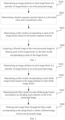
- FIG. 5 is a flowchart of still another method for processing images according to an embodiment of the present disclosure.
- the method includes the following steps.
- an image attribute of each image block of a plurality of image blocks in a to-be-processed image is determined.
- a filter model corresponding to each of the image blocks is determined based on the image attribute of each of the image blocks.
- the filter model of each of the image blocks is determined according to an encoding noise intensity of the to-be-processed image.
- a filtered image of the to-be-processed image is acquired by filtering each image block by the filter model corresponding to each of the image blocks.
- a text boundary image is acquired by performing Laplace filtering on the to-be-processed image.
- step S460 whether a pixel value of each pixel point in the text boundary image is greater than a preset pixel threshold is identified, performing step S470 in response to an identification result that the pixel value of each pixel point in the text boundary image is greater than the preset pixel threshold, and performing step S480 in response to the identification result that the pixel value of each pixel point in the text boundary image is less than or equal to the preset pixel threshold.
- the pixel value corresponding to a pixel point greater than the pixel threshold is adjusted to a first pixel value.
- the pixel value corresponding to a pixel point less than or equal to the pixel threshold is adjusted to a second pixel value.
- the text boundary image with the pixel values adjusted is determined as the first image.
- a binarized image is acquired by performing a morphological close operation on the first image.
- a ratio of a difference between the first pixel value and the pixel value of the binarized image to the first pixel value is determined as a first weight.
- a ratio of the pixel value of the binarized image to the first pixel value is determined as a second weight.
- a denoised image of the to-be-processed image is acquired by adding a product value of the pixel value of the filtered image and the first weight to a product value of the pixel value of the to-be-processed image and the second weight.
- the pixel value of the binarized image is 255
- the denoised image of the to-be-processed image is an original low-definition image.
- the denoised image of the to-be-processed image is a filtered image by adaptive filtering.
- the step of acquiring the binarized image by performing Laplace filtering on the to-be-processed image to, i.e., steps S450 to S4100, may be performed simultaneously with the step of acquiring the filtered image of the to-be-processed image, i.e., steps S410 to S440. It is interpreted that the sequence of preforming steps S410 to S440 and S450 to S4100 is not limited herein as long as steps S410 to S440 and S450 to S4100 are performed prior to step S4110.
- FIG. 6 is a flowchart of a step of filtering the image block in the method for processing images according to an embodiment of the present disclosure. Based on the above embodiment, the process of filtering each image block in the method for processing images is explained herein. In the embodiment, an example is described in which the method for processing images is applied to a mobile terminal, and the mobile terminal may be a smartphone, an iPad, a laptop, etc.
- the method includes the following steps.
- a picture containing an encoding noise is acquired and determined as a to-be-processed image.
- a first hash value and a second hash value of each of the image blocks is acquired according to an Equation for calculating an image attribute of the image block.
- a filter model corresponding to a bucket sequence number is identified based on the first hash value and the second hash value of each of the image blocks.
- target images are acquired by filtering the image blocks by the filter model.
- a filtered image of the to-be-processed image is acquired by combining the target images of all the image blocks to obtain.
- the technical solution according to the embodiment improves the efficiency of calculating the first hash value and the second hash value of the image block by defining new image local features and applying a fast calculation method, such that in the case that a mobile terminal pulls a video carrying a strong encoding noise, upon decoding of the video and prior to playing of the video, the encoding noise of a current video frame in the video and any type of encoding noise in the video can be eliminated in real time.
- the encoding noise intensity varies with the network conditions.
- the encoding noise with different intensities can be processed.
- training sets with different encoding noise intensities can be constructed and trained separately to acquired multiple filter models. Therefore, in an actual operation of the image processing, different filter models can be applied for filtering depending on the quality parameters of the video encoding, such as QP and/or CRF.
- An embodiment of the present disclosure provides a method for processing videos on a mobile terminal, and the method is applicable to any mobile terminal with a video processing function.
- the method for processing videos on the mobile terminal may be performed by an apparatus for processing videos on a mobile terminal according to an embodiment of the present disclosure, and the apparatus can be implemented by software and/or hardware, and integrated in a device for performing the present method, and the device can be any mobile terminal with video processing capabilities.
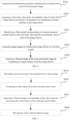
- FIG. 7 is a flowchart of a method for processing videos on a mobile terminal according to an embodiment of the present disclosure, and as shown in FIG. 7 , the method includes the following steps:
- a video frame is extracted from the to-be-processed video.
- a filtered image corresponding to the video frame is acquired by processing the video frame as the to-be-processed image.
- an application (App) on a mobile terminal needs to pull a video stream from a server, acquire and decode a to-be-processed video in the video stream, identify and extract a current video frame in the to-be-processed video, and determine the current video frame as a to-be-processed image, and perform the method for processing images described in any one of the above embodiments to acquire a filtered image of the current video frame by filtering and denoising the current video frame. Then, the corresponding current video frame in the to-be-processed video is updated by the denoised image, and the video is played, which improves the definition of video is improved. Because the method for processing images of the above embodiment is fast in calculation and efficient in denoising, the application of the method on a mobile terminal can meet the real-time processing requirements for video frame processing and video playing, thereby improving the functionality of the mobile terminal and the experience of the user.
- the technical solution according to the embodiment by filtering a video frame in a video stream adaptively, not only better eliminates the encoding noise, but also enables adaptation to current network conditions and binarizes subtitles on the video frame so as to keep the subtitles clean and distinct, thereby improving the user experience, even in a restricted network environment.
- the embodiment of the present disclosure improves the efficiency of denoising a video to denoise a video in real time, and renders a higher definition of the video watched by the user.
- FIG. 8 is a schematic structural diagram of an apparatus for processing images according to an embodiment of the present disclosure, and as shown in FIG. 8 , the apparatus may include a first determining module 710, a second determining module 720, and a first filtering module 730.
- the first determining module 710 is configured to determine an image attribute of each image block of a plurality of image blocks in a to-be-processed image
- the second determining module 720 is configured to determine a filter model corresponding to each of the image blocks based on the image attribute of each of the image blocks
- the first filtering module 730 is configured to acquire a filtered image of the to-be-processed image by filtering each of the image blocks by the filter model corresponding to each of the image blocks.
- the filtered image of the to-be-processed image is acquired by determining the image attribute of each image block of the plurality of image blocks in the to-be-processed image, the filter model corresponding to each of the image blocks is determined based on the image attribute of each of the image blocks, and each of the image blocks is filtered by the filter model corresponding to each of the image block.
- the filtering of the image block is speeded up by rapid calculation based on the image attribute of each of the image blocks in the to-be-processed image, thereby realizing real-time filtering of the image and improving the definition of the video by filtering each of the image blocks by a corresponding filter model adaptively.
- the image attribute includes a first hash value and a second hash value.
- the first hash value is configured to indicate a direction on which an image gradient corresponding to each of the image blocks weighs more
- the second hash value is configured to indicate a proximity between the image gradient corresponding to each of the image blocks in a first direction and the image gradient corresponding to each of the image blocks in a second direction.
- the first determining module 710 is configured to determine an image attribute of each of the image blocks of a plurality of image blocks in a to-be-processed image by the following method.
- the method includes: calculating, based on the image gradient of each of the image blocks in the first direction and the image gradient of each of the image blocks in the second direction, a square value of the image gradient corresponding to each of the image blocks in the first direction, a square value of the image gradient corresponding to each of the image blocks in the second direction, and a product value of the image gradient corresponding to each of the image blocks in the first direction and the image gradient corresponding to each of the image blocks in the second direction; and acquiring the first hash value and the second hash value corresponding to each of the image blocks by calculatingthe square value of the image gradient corresponding to the first direction, the square value of the image gradient corresponding to the second direction, and the product value of the image gradient corresponding to the first direction and the image gradient corresponding to the second direction based on an integral image algorithm.
- the second determining module 720 includes: a first determination unit, configured to determine a bucket sequence number based on the first hash value and the second hash value corresponding to each of the image blocks, and a second determination unit, configured to determine a filter model corresponding to each of the image blocks based on the bucket sequence number.
- the apparatus for processing images further includes a third determining module, configured to determine a filter model of each of the image blocks according to an encoding noise intensity of the to-be-processed image.
- the first filtering module 730 is configured to acquire a filtered image of the to-be-processed image by filtering each of the image blocks by a target model corresponding to each of the image block, wherein the target model corresponding to each of the image blocks includes the filter model of each of the image blocks determined according to the encoding noise intensity of the to-be-processed image and the filter model corresponding to each of the image blocks determined based on the image attribute of each of the image blocks.
- the method for determining encoding noise intensity of the to-be-processed image includes acquiring quality parameters of video encoding corresponding to the to-be-processed image, and determining the encoding noise intensity of the to-be-processed image based on the quality parameters.
- the apparatus for processing images further includes: a processing module, configured to acquire a binarized image of the to-be-processed image by binarizing the to-be-processed image.
- the processing module includes: a filtering unit, configured to acquire a text boundary image by performing Laplace filtering on the to-be-processed image, a segmenting unit, configured to acquire a first image by performing threshold segmentation on the text boundary image based on a preset pixel threshold, wherein the first image is an image in which a non-text boundary region is removed from the text boundary image, and a close operation, unit configured to acquire a binarized image by performing a morphological close operation on the first image.
- a filtering unit configured to acquire a text boundary image by performing Laplace filtering on the to-be-processed image
- a segmenting unit configured to acquire a first image by performing threshold segmentation on the text boundary image based on a preset pixel threshold, wherein the first image is an image in which a non-text boundary region is removed from the text boundary image
- a close operation unit configured to acquire a binarized image by performing a morphological close operation on the first image.
- the apparatus for processing images further includes: a second filtering module, configured to, upon acquiring the binarized image, perform mean filtering on the binarized image.
- the closed operating unit includes: a first operation subunit, configured to acquire a dilated image by dilating the first image, and a second operation subunit, configured to acquire the binarized image by eroding the dilated image.
- the segmenting unit includes: a comparing subunit, configured to compare a pixel value corresponding to each pixel point in the text boundary image with a preset pixel threshold, a first adjusting subunit, configured to adjust the pixel value corresponding to a pixel point greater than the pixel threshold to a first pixel value, a second adjusting subunit, configured to adjust the pixel value corresponding to a pixel point less than or equal to the pixel threshold to a second pixel value, and a combining subunit, configured to determine the text boundary image with the pixel values adjusted as the first image.
- the apparatus for processing images further includes: a first weight determining module, configured to determine a ratio of a difference between the first pixel value and a pixel value of the binarized image to the first pixel value as a first weight, a second weight determining module, configured to determine a ratio of the pixel value of the binarized image to the first pixel value as a second weight, and a denoising module, configured to acquire a denoised image by adding a product value of the pixel value of the filtered image and the first weight to a product value of the pixel value of the to-be-processed image and the second weight.
- a first weight determining module configured to determine a ratio of a difference between the first pixel value and a pixel value of the binarized image to the first pixel value as a first weight
- a second weight determining module configured to determine a ratio of the pixel value of the binarized image to the first pixel value as a second weight
- a denoising module configured to acquire a den
- the process of training the filter model includes: acquiring a high-definition image of a first preset size and a low-definition image carrying an encoding noise, wherein the high-definition image and the low-definition image have a same resolution, extracting a plurality of image blocks of a second preset size from the high-definition image and the low-definition image to compose a first matrix and a second matrix respectively, wherein the second preset size is less than the first preset size, and acquiring the filter model based on the first matrix and the second matrix based on a normal equation of Least Square method.
- the filter model and the image block have the same size.
- the apparatus for processing images further includes: a fourth determining module, configured to determine the filter models corresponding to a to-be-processed image according to an encoding noise intensity of the to-be-processed image, and the second determining module 720, configured to determine the filter model corresponding to each image block from the plurality of filter models corresponding to the to-be-processed image based on the image attribute of each of the image blocks in the to-be-processed image.
- the apparatus for processing images is applicable to the method for processing images according to any embodiment of the present disclosure.
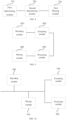
- FIG. 9 is a schematic structural diagram of an apparatus for processing videos on a mobile terminal according to an embodiment of the present disclosure. As shown in FIG. 9 , the apparatus includes a decoding module 810, an extracting module 820, a processing module 830, and a playing module 840.
- the decoding module 810 is configured to decode a to-be-processed video pulled from a video stream
- the extracting module 820 is configuredto extract a video frame from the to-be-processed video
- the processing module 830 is configured to acquire a filtered image corresponding to the video frame by processing the video frame as a to-be-processed image by the method described in any one of the above embodiments
- the playing module 840 is configured to play the video with the filtered image.
- the technical solution according to the embodiment improves the efficiency of denoising a video by denoising the current video frame in the video, realizing the real-time denoising of the video, and renders a higher definition of the video watched by the user, thereby improving the user experience.
- the apparatus for processing videos on the mobile terminal is applicable to the method for processing videos on the mobile terminal according to any embodiment of the present disclosure.
- FIG. 10 is a schematic structural diagram of a computer device according to an embodiment of the present disclosure.
- the computer device includes a processor 910, a memory 920, an input device 930, and an output device 940.
- the processor 910 in the computer device may be one or more.
- One processor 910 is exemplified in FIG. 10
- the processor 910, the memory 920, the input device 930, and the output device 940 in the computer device may be connected via a bus or otherwise, and the connection via is exemplified a bus in FIG. 10 .
- the memory 920 in the computer device can be configured to store one or more programs, wherein the programs can be software programs, computer-executable programs and modules, such as the program instructions/modules corresponding to the method for processing images according to an embodiment of the present disclosure (for example, the modules in the apparatus for processing images shown in FIG. 8 including the first determining module 710, the second determining module 720 and the first filtering module 730).
- the processor 910 executes various functional applications of the computer device and data processing by running software programs, instructions and modules stored in the memory 920, that is, to implement the method for processing images in the above method embodiment.
- the memory 920 may include a program storage partition and a data storage partition, wherein the program storage partition may store an operating system and an application program required for at least one function, and the data storage partition may store data created according to the use of the computer device or the like.
- the memory 920 may include a high-speed random-access memory and a non-volatile memory, such as at least one magnetic disk storage device, flash memory device, or other non-volatile solid state storage device.
- the memory 920 may further include a memory arranged remotely relative to the processor 910, which may be connected to the computer device via a network. Examples of such networks include, but are not limited to, the Internet, intranets, local area networks, mobile communication networks, and combinations thereof.
- the input device 930 may be configured to receive numeric or character information input by a user to generate key signal inputs related to user settings and function controls of the terminal device.
- the output device 940 may include a display device such as a monitor.
- the programs perform the following operation, including determining the image attribute of each image block of a plurality of image blocks in the to-be-processed image, determining the filter model corresponding to each of the image blocks based on the image attribute of each of the image blocks, and acquiring the filtered image of the to-be-processed image by filtering each of the image blocks by the filter model corresponding to each image block.
- the computer device may be configured to perform the method for processing images according to any one of the embodiments of the present disclosure.
- the computer device may be configured to perform the method for processing videos on the mobile terminal according to any embodiment of the present disclosure.
- An embodiment of the present disclosure further provides a non-volatile computer-readable storage medium storing a computer program therein.
- the computer program when run by a processor, causes the processor to perform the method for processing images or the method for processing videos on the mobile terminal according to any one of the embodiments of the present disclosure.
- the method for processing images may include: determining the image attribute of each image block of a plurality of image blocks in the to-be-processed image, determining the filter model corresponding to each of the image blocks based on the image attribute of each of the image blocks, and acquiring the filtered image of the to-be-processed image by filtering each of the image block by the filter model corresponding to each of the image blocks.
- the method for processing videos on the mobile terminal includes: decoding a to-be-processed video pulled from a video stream, extracting a video frame from the to-be-processed video, acquiring a filtered image corresponding to the video frame by processing the video frame as the to-be-processed image by the method described in any one of the above embodiments, and playing the video with the filtered image.
- An embodiment of the present disclosure further provides a storage medium storing one or more computer-executable instructions therein. Not limited to the operations of the methods as described above, the one or more computer-executable instructions may also be executed to perform relevant operations in the method for processing images or the method for processing videos on the mobile terminal according to any embodiment of the present disclosure.
- the present disclosure can be implemented by software and necessary general-purpose hardware, and can also be implemented by hardware, the former in many cases being a better embodiment.
- the technical solution according to the present disclosure can be embodied in the form of a software product, and the computer software product can be stored in a computer-readable storage medium, such as a floppy disk, a read-only memory (ROM), a random-access memory (RAM), a flash memory (FLASH), a hard disk or an optical disk of a computer and includes one or more instructions, which, when executed by a computer device, cause the computer device, for example, a personal computer, a server, or a network device, or the like, to perform the method for processing images or the method for processing videos on the mobile terminal according to various embodiments of the present disclosure.
- a computer-readable storage medium such as a floppy disk, a read-only memory (ROM), a random-access memory (RAM), a flash memory (FLASH), a hard disk or an optical disk of a computer and includes one or more
Landscapes
- Engineering & Computer Science (AREA)
- Multimedia (AREA)
- Signal Processing (AREA)
- Physics & Mathematics (AREA)
- General Physics & Mathematics (AREA)
- Theoretical Computer Science (AREA)
- Computer Vision & Pattern Recognition (AREA)
- Image Processing (AREA)
- Compression Or Coding Systems Of Tv Signals (AREA)
Claims (14)
- Procédé de traitement d'images, comportant les étapes consistant à :déterminer (S110) un attribut d'image de chaque bloc d'image d'une pluralité de blocs d'image dans une image à traiter ;déterminer (S120) un modèle de filtre correspondant à chacun des blocs d'image d'après l'attribut d'image de chacun des blocs d'image ; etacquérir (S130) une image filtrée de l'image à traiter en faisant filtrer chacun des blocs d'image par le modèle de filtre correspondant à chacun des blocs d'image,l'attribut d'image comportant une première valeur de hachage et une seconde valeur de hachage, et chacun des blocs d'image correspondant à des gradients d'image dans deux directions, les deux directions comprenant une première direction et une seconde direction, la première valeur de hachage étant configurée pour indiquer qu'un gradient d'image correspondant à chacun des blocs d'image pèse davantage sur la première direction ou la seconde direction ; et la seconde valeur de hachage étant configurée pour indiquer une proximité entre le gradient d'image correspondant à chacun des blocs d'image dans la première direction et le gradient d'image correspondant à chacun des blocs d'image dans la seconde direction,la détermination de l'attribut d'image de chaque bloc d'image de la pluralité de blocs d'image dans l'image à traiter comportant :le calcul, d'après le gradient d'image de chacun des blocs d'image dans la première direction et le gradient d'image de chacun des blocs d'image dans la seconde direction, d'une valeur de carré du gradient d'image correspondant à chacun des blocs d'image dans la première direction, d'une valeur de carré du gradient d'image correspondant à chacun des blocs d'image dans la seconde direction, et d'une valeur de produit du gradient d'image correspondant à chacun des blocs d'image dans la première direction et du gradient d'image correspondant à chacun des blocs d'image dans la seconde direction, la valeur de produit étant la valeur de produit de gradients d'image correspondant à un même bloc d'image dans la première direction et la seconde direction ; etle calcul, d'après la valeur de carré du gradient d'image correspondant à la première direction, la valeur de carré du gradient d'image correspondant à la seconde direction, et la valeur de produit du gradient d'image correspondant à la première direction et du gradient d'image correspondant à la seconde direction respectivement, des images intégrales sur la base d'un algorithme d'image intégrale ;le calcul, d'après les images intégrales, de la première valeur de hachage et de la seconde valeur de hachage correspondant à chacun des blocs d'image.
- Procédé selon la revendication 1, la détermination du modèle de filtre correspondant à chacun des blocs d'image d'après l'attribut d'image de chacun des blocs d'image comportant :
la détermination d'un numéro d'ordre de case d'après la première valeur de hachage et la seconde valeur de hachage correspondant à chacun des blocs d'image, la séquence de cases étant une séquence de cases, et une case étant déterminée :en divisant la plage de valeurs de la première valeur de hachage en un premier nombre de sous-intervalles ; en divisant la plage de valeurs de la seconde valeur de hachage en un second nombre de sous-intervalles ; et en prenant une combinaison d'un sous-intervalle pris arbitrairement parmi le premier nombre de sous-intervalles et d'un sous-intervalle pris arbitrairement parmi le second nombre de sous-intervalles en tant que case, ladite séquence de cases contenant toutes les combinaisons possibles de sous-intervalles issues du premier et du second nombre de sous-intervalles, et chaque case de la séquence de cases se voyant affecter un numéro d'ordre de case correspondant, etla détermination du modèle de filtre correspondant à chacun des blocs d'image sur la base du numéro d'ordre de case. - Procédé selon la revendication 1 ou 2, comportant en outre les étapes consistant à :déterminer le modèle de filtre de chaque bloc d'image selon une intensité de bruit de codage de l'image à traiter ; etl'acquisition de l'image filtrée de l'image à traiter en faisant filtrer chacun des blocs d'image par le modèle de filtre correspondant à chacun des blocs d'image comportant :le filtrage de chacun des blocs d'image par le modèle de filtre correspondant à chacun des blocs d'image déterminé selon l'intensité de bruit de codage de l'image à traiter ;le filtrage de chacun des blocs d'image par le modèle de filtre de chacun des blocs d'image déterminé d'après l'attribut d'image de chacun des blocs d'image ; etl'acquisition de l'image filtrée de l'image à traiter en combinant des images filtrées des blocs d'image ; la détermination de l'intensité de bruit de codage de l'image à traiter comportant :l'acquisition d'un paramètre de qualité de codage vidéo correspondant à l'image à traiter ; etla détermination de l'intensité de bruit de codage de l'image à traiter d'après le paramètre de qualité.
- Procédé selon la revendication 1 ou 2, le procédé comportant en outre, avant de déterminer l'attribut d'image de chaque bloc d'image de la pluralité de blocs d'image dans l'image à traiter :
l'acquisition d'une image binarisée de l'image à traiter en binarisant l'image à traiter. - Procédé selon la revendication 4, l'acquisition de l'image binarisée de l'image à traiter en binarisant l'image à traiter comportant :l'acquisition d'une image de limite de texte en effectuant un filtrage de Laplace sur l'image à traiter ;l'acquisition d'une première image en effectuant une segmentation à seuil sur l'image de limite de texte sur la base d'un seuil de pixel préétabli, la première image étant une image où une région hors limite de texte a été retirée de l'image de limite de texte ; etl'acquisition de l'image binarisée en effectuant une opération de fermeture morphologique sur la première image.
- Procédé selon la revendication 5, le procédé comportant en outre, suite à l'acquisition de l'image binarisée : la réalisation d'un filtrage par moyenne sur l'image binarisée.
- Procédé selon la revendication 5, l'acquisition de l'image binarisée en effectuant l'opération de fermeture morphologique sur la première image comportant :l'acquisition d'une image dilatée en dilatant la première image ; etl'acquisition de l'image binarisée en érodant l'image dilatée.
- Procédé selon la revendication 5, l'acquisition de la première image en effectuant une segmentation à seuil sur l'image de limite de texte sur la base du seuil de pixel préétabli comportant :la comparaison d'une valeur de pixel correspondant à chaque point de pixel dans l'image de limite de texte avec le seuil de pixel préétabli ;le réglage de la valeur de pixel correspondant au point de pixel supérieur au seuil de pixel à une première valeur de pixel ;le réglage de la valeur de pixel correspondant au point de pixel inférieur ou égal au seuil de pixel à une seconde valeur de pixel ; etla détermination de l'image de limite de texte dont les valeurs de pixel sont réglées en tant que première image,le procédé comportant en outre optionnellement :la détermination d'un rapport d'une valeur de différence entre la première valeur de pixel et la valeur de pixel de l'image binarisée à la première valeur de pixel en tant que premier poids ;la détermination d'un rapport de la valeur de pixel de l'image binarisée à la première valeur de pixel en tant que second poids ; etl'acquisition d'une image débruitée de l'image à traiter en ajoutant une valeur de produit de la valeur de pixel de l'image filtrée et du premier poids à une valeur de produit de la valeur de pixel de l'image à traiter et du second poids.
- Procédé selon la revendication 1 ou 2, le modèle de filtre étant un modèle de filtre entraîné, l'entraînement du modèle de filtre comportant :l'acquisition d'une image à haute définition d'une première taille prédéfinie et d'une image à basse définition portant un bruit de codage, l'image à haute définition et l'image à basse définition présentant une même résolution ;l'extraction d'une pluralité de blocs d'image d'une seconde taille prédéfinie à partir de l'image à haute définition et de l'image à basse définition pour composer respectivement une première matrice et une seconde matrice, la seconde taille prédéfinie étant inférieure à la première taille prédéfinie ; etl'acquisition du modèle de filtre d'après la première matrice et la seconde matrice selon une équation normale d'une méthode de moindres carrés.
- Procédé selon la revendication 1 ou 2, le modèle de filtre et le bloc d'image présentant une même taille.
- Procédé selon la revendication 3, le procédé comportant en outre, avant de déterminer le modèle de filtre correspondant à chacun des blocs d'image d'après l'attribut d'image de chacun des blocs d'image :la détermination d'une pluralité de modèles de filtres correspondant à l'image à traiter selon l'intensité de bruit de codage de l'image à traiter ; etla détermination du modèle de filtre correspondant à chacun des blocs d'image d'après l'attribut d'image de chacun des blocs d'image comportant :
la détermination du modèle de filtre correspondant à chacun des blocs d'image parmi la pluralité de modèles de filtres correspondant à l'image à traiter d'après l'attribut d'image de chacun des blocs d'image dans l'image à traiter. - Procédé de traitement de vidéos sur un terminal mobile, comportant :le décodage (S610) d'une vidéo à traiter tirée d'un flux vidéo ;l'extraction (S620) d'une trame vidéo de la vidéo à traiter ;l'acquisition (S630) d'une image filtrée correspondant à la trame vidéo en traitant la trame vidéo comme une image à traiter par le procédé tel que défini dans l'une quelconque des revendications 1 à 11 ; etla lecture (S640) de la vidéo comprenant l'image filtrée.
- Dispositif informatique, comportant :au moins un processeur ; etune mémoire, configurée pour stocker au moins un programme ;le ou les processeurs, lors de l'exécution du ou des programmes, étant amenés à réaliser le procédé de traitement d'images tel que défini dans l'une quelconque des revendications 1 à 11, ou à réaliser le procédé de traitement de vidéos sur le terminal mobile tel que défini dans la revendication 12.
- Support de stockage non volatil lisible par ordinateur conservant un programme informatique, le programme informatique, lorsqu'il est exécuté par un processeur, amenant le processeur à réaliser le procédé de traitement d'images tel que défini dans l'une quelconque des revendications 1 à 11, ou à réaliser le procédé de traitement de vidéos sur le terminal mobile tel que défini dans la revendication 12.
Applications Claiming Priority (3)
| Application Number | Priority Date | Filing Date | Title |
|---|---|---|---|
| CN201910667696 | 2019-07-23 | ||
| CN202010348909.1A CN111445424B (zh) | 2019-07-23 | 2020-04-28 | 图像处理和移动终端视频处理方法、装置、设备和介质 |
| PCT/CN2020/101243 WO2021012965A1 (fr) | 2019-07-23 | 2020-07-10 | Procédé et appareil de traitement d'image, procédé et appareil de traitement vidéo de terminal mobile, dispositif et support |
Publications (3)
| Publication Number | Publication Date |
|---|---|
| EP4006824A1 EP4006824A1 (fr) | 2022-06-01 |
| EP4006824A4 EP4006824A4 (fr) | 2022-11-30 |
| EP4006824B1 true EP4006824B1 (fr) | 2025-02-19 |
Family
ID=71653546
Family Applications (1)
| Application Number | Title | Priority Date | Filing Date |
|---|---|---|---|
| EP20844069.3A Active EP4006824B1 (fr) | 2019-07-23 | 2020-07-10 | Procédé de traitement d'images, procédé de traitement de vidéos, dispositif informatique et support |
Country Status (4)
| Country | Link |
|---|---|
| US (1) | US12177425B2 (fr) |
| EP (1) | EP4006824B1 (fr) |
| CN (1) | CN111445424B (fr) |
| WO (1) | WO2021012965A1 (fr) |
Families Citing this family (9)
| Publication number | Priority date | Publication date | Assignee | Title |
|---|---|---|---|---|
| WO2021181681A1 (fr) * | 2020-03-13 | 2021-09-16 | 日本電信電話株式会社 | Dispositif de dérivation de modèle mathématique, procédé de dérivation de modèle mathématique et programme |
| CN112184580B (zh) * | 2020-09-27 | 2025-01-10 | 北京金山云网络技术有限公司 | 一种人脸图像增强方法、装置、设备及存储介质 |
| CN112233049B (zh) * | 2020-12-14 | 2021-03-02 | 成都中轨轨道设备有限公司 | 一种用于提升图像清晰度的图像融合方法 |
| CN113038135B (zh) * | 2021-05-19 | 2022-02-18 | 杭州微帧信息科技有限公司 | 基于块效应检测的crf自适应方法 |
| CN113808020A (zh) * | 2021-09-18 | 2021-12-17 | 北京字节跳动网络技术有限公司 | 图像处理方法及设备 |
| CN118103864A (zh) * | 2021-10-29 | 2024-05-28 | 华为技术有限公司 | 一种用于噪声自适应高动态范围图像处理的设备和方法 |
| US20240022718A1 (en) * | 2022-07-15 | 2024-01-18 | Alibaba (China) Co., Ltd. | Content aware dataset generation and model selection for learned image compression |
| CN115862044A (zh) * | 2022-11-18 | 2023-03-28 | 中国建设银行股份有限公司上海市分行 | 用于从图像中提取目标文档部分的方法、设备和介质 |
| CN120751273A (zh) * | 2024-08-16 | 2025-10-03 | 荣耀终端股份有限公司 | 一种视频去噪方法及装置 |
Family Cites Families (12)
| Publication number | Priority date | Publication date | Assignee | Title |
|---|---|---|---|---|
| CN100505832C (zh) * | 2006-03-21 | 2009-06-24 | 中国科学院计算技术研究所 | 一种多模板混合滤波的图像去噪方法 |
| JP4599457B1 (ja) * | 2009-09-18 | 2010-12-15 | 株式会社東芝 | 画像処理装置、表示装置及び画像処理方法 |
| CN104103064A (zh) * | 2013-04-10 | 2014-10-15 | 无锡金帆钻凿设备股份有限公司 | 基于梯度相似度的无参考噪声图像质量评价方法 |
| US20150039637A1 (en) * | 2013-07-31 | 2015-02-05 | The Nielsen Company (Us), Llc | Systems Apparatus and Methods for Determining Computer Apparatus Usage Via Processed Visual Indicia |
| US9628730B2 (en) | 2015-01-27 | 2017-04-18 | Semiconductor Components Industries, Llc | Dark current gradient estimation using optically black pixels |
| US10335026B2 (en) * | 2017-01-11 | 2019-07-02 | Canon Kabushiki Kaisha | Image processing apparatus that generates a tomographic image using an estimation value of pixel values, and related optical coherence tomography apparatus, image processing method, and computer-readable storage medium |
| CN107527321B (zh) * | 2017-08-22 | 2020-04-17 | 维沃移动通信有限公司 | 一种图像重建方法、终端及计算机可读存储介质 |
| US10521878B1 (en) * | 2017-09-27 | 2019-12-31 | United Services Automobile Association (Usaa) | Machine-learning for enhanced machine reading of non-ideal capture conditions |
| NL2019905B1 (en) * | 2017-11-14 | 2019-05-20 | Mat | Systems and methods for segmenting images |
| CN108550119B (zh) * | 2018-03-27 | 2021-11-02 | 福州大学 | 一种结合边缘信息的图像去噪方法 |
| CN108765322B (zh) | 2018-05-16 | 2021-04-27 | 上饶师范学院 | 图像去噪方法及装置 |
| CN108765343B (zh) * | 2018-05-29 | 2021-07-20 | Oppo(重庆)智能科技有限公司 | 图像处理的方法、装置、终端及计算机可读存储介质 |
-
2020
- 2020-04-28 CN CN202010348909.1A patent/CN111445424B/zh active Active
- 2020-07-10 WO PCT/CN2020/101243 patent/WO2021012965A1/fr not_active Ceased
- 2020-07-10 EP EP20844069.3A patent/EP4006824B1/fr active Active
- 2020-07-10 US US17/629,132 patent/US12177425B2/en active Active
Also Published As
| Publication number | Publication date |
|---|---|
| US12177425B2 (en) | 2024-12-24 |
| US20220239908A1 (en) | 2022-07-28 |
| WO2021012965A1 (fr) | 2021-01-28 |
| EP4006824A1 (fr) | 2022-06-01 |
| CN111445424B (zh) | 2023-07-18 |
| EP4006824A4 (fr) | 2022-11-30 |
| CN111445424A (zh) | 2020-07-24 |
Similar Documents
| Publication | Publication Date | Title |
|---|---|---|
| EP4006824B1 (fr) | Procédé de traitement d'images, procédé de traitement de vidéos, dispositif informatique et support | |
| Kim et al. | Deep CNN-based blind image quality predictor | |
| CN110796615B (zh) | 一种图像去噪方法、装置以及存储介质 | |
| CN110136055B (zh) | 图像的超分辨率方法和装置、存储介质、电子装置 | |
| JP2016505186A (ja) | エッジ保存・ノイズ抑制機能を有するイメージプロセッサ | |
| Su et al. | Image inpainting for random areas using dense context features | |
| CN104683783B (zh) | 一种自适应深度图滤波方法 | |
| JP2009524861A (ja) | デジタル画像の解像度向上方法及び装置 | |
| CN115131229A (zh) | 图像降噪、滤波数据处理方法、装置和计算机设备 | |
| CN109587491A (zh) | 一种帧内预测方法、装置及存储介质 | |
| Beron et al. | Blind image quality assessment for super resolution via optimal feature selection | |
| Lee et al. | Two-stage false contour detection using directional contrast and its application to adaptive false contour reduction | |
| CN117135349A (zh) | 图像编码方法、图像解码方法、装置以及存储介质 | |
| CN111079864A (zh) | 一种基于优化视频关键帧提取的短视频分类方法及系统 | |
| CN103700062B (zh) | 图像处理方法和装置 | |
| CN114022497A (zh) | 一种图像处理方法及装置 | |
| CN105931189B (zh) | 一种基于改进超分辨率参数化模型的视频超分辨率方法及装置 | |
| CN102222321A (zh) | 一种视频序列盲重建方法 | |
| EP3101592A1 (fr) | Procédé et appareil pour noter l'esthétique d'une image | |
| Jin et al. | A foveated video quality assessment model using space-variant natural scene statistics | |
| CN105893999B (zh) | 一种感兴趣区域提取方法及装置 | |
| CN115243073A (zh) | 一种视频处理方法、装置、设备及存储介质 | |
| WO2015128302A1 (fr) | Procédé et appareil destinés à filtrer et à analyser un bruit dans une image | |
| Fang et al. | No-reference image quality assessment based on BNB measurement | |
| CN118898764B (zh) | 一种目标识别方法、装置、设备、介质及计算机程序产品 |
Legal Events
| Date | Code | Title | Description |
|---|---|---|---|
| STAA | Information on the status of an ep patent application or granted ep patent |
Free format text: STATUS: THE INTERNATIONAL PUBLICATION HAS BEEN MADE |
|
| PUAI | Public reference made under article 153(3) epc to a published international application that has entered the european phase |
Free format text: ORIGINAL CODE: 0009012 |
|
| STAA | Information on the status of an ep patent application or granted ep patent |
Free format text: STATUS: REQUEST FOR EXAMINATION WAS MADE |
|
| 17P | Request for examination filed |
Effective date: 20220125 |
|
| AK | Designated contracting states |
Kind code of ref document: A1 Designated state(s): AL AT BE BG CH CY CZ DE DK EE ES FI FR GB GR HR HU IE IS IT LI LT LU LV MC MK MT NL NO PL PT RO RS SE SI SK SM TR |
|
| DAV | Request for validation of the european patent (deleted) | ||
| DAX | Request for extension of the european patent (deleted) | ||
| A4 | Supplementary search report drawn up and despatched |
Effective date: 20221027 |
|
| RIC1 | Information provided on ipc code assigned before grant |
Ipc: H04N 19/86 20140101ALI20221021BHEP Ipc: H04N 19/176 20140101ALI20221021BHEP Ipc: H04N 19/14 20140101ALI20221021BHEP Ipc: H04N 19/117 20140101ALI20221021BHEP Ipc: H04N 5/21 20060101ALI20221021BHEP Ipc: G06T 5/30 20060101ALI20221021BHEP Ipc: G06T 5/00 20060101AFI20221021BHEP |
|
| REG | Reference to a national code |
Ref country code: DE Ref legal event code: R079 Ref document number: 602020046485 Country of ref document: DE Free format text: PREVIOUS MAIN CLASS: G06T0005000000 Ipc: G06T0005700000 |
|
| GRAP | Despatch of communication of intention to grant a patent |
Free format text: ORIGINAL CODE: EPIDOSNIGR1 |
|
| STAA | Information on the status of an ep patent application or granted ep patent |
Free format text: STATUS: GRANT OF PATENT IS INTENDED |
|
| RIC1 | Information provided on ipc code assigned before grant |
Ipc: H04N 19/86 20140101ALI20240925BHEP Ipc: H04N 19/176 20140101ALI20240925BHEP Ipc: H04N 19/14 20140101ALI20240925BHEP Ipc: H04N 19/117 20140101ALI20240925BHEP Ipc: G06T 5/30 20060101ALI20240925BHEP Ipc: H04N 5/21 20060101ALI20240925BHEP Ipc: G06T 5/70 20240101AFI20240925BHEP |
|
| INTG | Intention to grant announced |
Effective date: 20241010 |
|
| GRAS | Grant fee paid |
Free format text: ORIGINAL CODE: EPIDOSNIGR3 |
|
| GRAA | (expected) grant |
Free format text: ORIGINAL CODE: 0009210 |
|
| STAA | Information on the status of an ep patent application or granted ep patent |
Free format text: STATUS: THE PATENT HAS BEEN GRANTED |
|
| AK | Designated contracting states |
Kind code of ref document: B1 Designated state(s): AL AT BE BG CH CY CZ DE DK EE ES FI FR GB GR HR HU IE IS IT LI LT LU LV MC MK MT NL NO PL PT RO RS SE SI SK SM TR |
|
| REG | Reference to a national code |
Ref country code: GB Ref legal event code: FG4D |
|
| REG | Reference to a national code |
Ref country code: CH Ref legal event code: EP |
|
| REG | Reference to a national code |
Ref country code: IE Ref legal event code: FG4D |
|
| REG | Reference to a national code |
Ref country code: DE Ref legal event code: R096 Ref document number: 602020046485 Country of ref document: DE |
|
| REG | Reference to a national code |
Ref country code: NL Ref legal event code: MP Effective date: 20250219 |
|
| PG25 | Lapsed in a contracting state [announced via postgrant information from national office to epo] |
Ref country code: RS Free format text: LAPSE BECAUSE OF FAILURE TO SUBMIT A TRANSLATION OF THE DESCRIPTION OR TO PAY THE FEE WITHIN THE PRESCRIBED TIME-LIMIT Effective date: 20250519 |
|
| PG25 | Lapsed in a contracting state [announced via postgrant information from national office to epo] |
Ref country code: FI Free format text: LAPSE BECAUSE OF FAILURE TO SUBMIT A TRANSLATION OF THE DESCRIPTION OR TO PAY THE FEE WITHIN THE PRESCRIBED TIME-LIMIT Effective date: 20250219 |
|
| PG25 | Lapsed in a contracting state [announced via postgrant information from national office to epo] |
Ref country code: PL Free format text: LAPSE BECAUSE OF FAILURE TO SUBMIT A TRANSLATION OF THE DESCRIPTION OR TO PAY THE FEE WITHIN THE PRESCRIBED TIME-LIMIT Effective date: 20250219 |
|
| PG25 | Lapsed in a contracting state [announced via postgrant information from national office to epo] |
Ref country code: ES Free format text: LAPSE BECAUSE OF FAILURE TO SUBMIT A TRANSLATION OF THE DESCRIPTION OR TO PAY THE FEE WITHIN THE PRESCRIBED TIME-LIMIT Effective date: 20250219 |
|
| PGFP | Annual fee paid to national office [announced via postgrant information from national office to epo] |
Ref country code: GB Payment date: 20250617 Year of fee payment: 6 |
|
| REG | Reference to a national code |
Ref country code: LT Ref legal event code: MG9D |
|
| PG25 | Lapsed in a contracting state [announced via postgrant information from national office to epo] |
Ref country code: NO Free format text: LAPSE BECAUSE OF FAILURE TO SUBMIT A TRANSLATION OF THE DESCRIPTION OR TO PAY THE FEE WITHIN THE PRESCRIBED TIME-LIMIT Effective date: 20250519 Ref country code: IS Free format text: LAPSE BECAUSE OF FAILURE TO SUBMIT A TRANSLATION OF THE DESCRIPTION OR TO PAY THE FEE WITHIN THE PRESCRIBED TIME-LIMIT Effective date: 20250619 |
|
| PG25 | Lapsed in a contracting state [announced via postgrant information from national office to epo] |
Ref country code: NL Free format text: LAPSE BECAUSE OF FAILURE TO SUBMIT A TRANSLATION OF THE DESCRIPTION OR TO PAY THE FEE WITHIN THE PRESCRIBED TIME-LIMIT Effective date: 20250219 |
|
| PG25 | Lapsed in a contracting state [announced via postgrant information from national office to epo] |
Ref country code: HR Free format text: LAPSE BECAUSE OF FAILURE TO SUBMIT A TRANSLATION OF THE DESCRIPTION OR TO PAY THE FEE WITHIN THE PRESCRIBED TIME-LIMIT Effective date: 20250219 |
|
| PG25 | Lapsed in a contracting state [announced via postgrant information from national office to epo] |
Ref country code: PT Free format text: LAPSE BECAUSE OF FAILURE TO SUBMIT A TRANSLATION OF THE DESCRIPTION OR TO PAY THE FEE WITHIN THE PRESCRIBED TIME-LIMIT Effective date: 20250620 Ref country code: LV Free format text: LAPSE BECAUSE OF FAILURE TO SUBMIT A TRANSLATION OF THE DESCRIPTION OR TO PAY THE FEE WITHIN THE PRESCRIBED TIME-LIMIT Effective date: 20250219 |
|
| PGFP | Annual fee paid to national office [announced via postgrant information from national office to epo] |
Ref country code: FR Payment date: 20250612 Year of fee payment: 6 |
|
| PG25 | Lapsed in a contracting state [announced via postgrant information from national office to epo] |
Ref country code: GR Free format text: LAPSE BECAUSE OF FAILURE TO SUBMIT A TRANSLATION OF THE DESCRIPTION OR TO PAY THE FEE WITHIN THE PRESCRIBED TIME-LIMIT Effective date: 20250520 Ref country code: BG Free format text: LAPSE BECAUSE OF FAILURE TO SUBMIT A TRANSLATION OF THE DESCRIPTION OR TO PAY THE FEE WITHIN THE PRESCRIBED TIME-LIMIT Effective date: 20250219 |
|
| PGFP | Annual fee paid to national office [announced via postgrant information from national office to epo] |
Ref country code: TR Payment date: 20250610 Year of fee payment: 6 |
|
| REG | Reference to a national code |
Ref country code: AT Ref legal event code: MK05 Ref document number: 1769043 Country of ref document: AT Kind code of ref document: T Effective date: 20250219 |
|
| PG25 | Lapsed in a contracting state [announced via postgrant information from national office to epo] |
Ref country code: SE Free format text: LAPSE BECAUSE OF FAILURE TO SUBMIT A TRANSLATION OF THE DESCRIPTION OR TO PAY THE FEE WITHIN THE PRESCRIBED TIME-LIMIT Effective date: 20250219 |
|
| PG25 | Lapsed in a contracting state [announced via postgrant information from national office to epo] |
Ref country code: SM Free format text: LAPSE BECAUSE OF FAILURE TO SUBMIT A TRANSLATION OF THE DESCRIPTION OR TO PAY THE FEE WITHIN THE PRESCRIBED TIME-LIMIT Effective date: 20250219 |
|
| PG25 | Lapsed in a contracting state [announced via postgrant information from national office to epo] |
Ref country code: DK Free format text: LAPSE BECAUSE OF FAILURE TO SUBMIT A TRANSLATION OF THE DESCRIPTION OR TO PAY THE FEE WITHIN THE PRESCRIBED TIME-LIMIT Effective date: 20250219 |
|
| PGFP | Annual fee paid to national office [announced via postgrant information from national office to epo] |
Ref country code: DE Payment date: 20250722 Year of fee payment: 6 |
|
| PG25 | Lapsed in a contracting state [announced via postgrant information from national office to epo] |
Ref country code: IT Free format text: LAPSE BECAUSE OF FAILURE TO SUBMIT A TRANSLATION OF THE DESCRIPTION OR TO PAY THE FEE WITHIN THE PRESCRIBED TIME-LIMIT Effective date: 20250219 |
|
| PG25 | Lapsed in a contracting state [announced via postgrant information from national office to epo] |
Ref country code: AT Free format text: LAPSE BECAUSE OF FAILURE TO SUBMIT A TRANSLATION OF THE DESCRIPTION OR TO PAY THE FEE WITHIN THE PRESCRIBED TIME-LIMIT Effective date: 20250219 |
|
| PG25 | Lapsed in a contracting state [announced via postgrant information from national office to epo] |
Ref country code: CZ Free format text: LAPSE BECAUSE OF FAILURE TO SUBMIT A TRANSLATION OF THE DESCRIPTION OR TO PAY THE FEE WITHIN THE PRESCRIBED TIME-LIMIT Effective date: 20250219 Ref country code: EE Free format text: LAPSE BECAUSE OF FAILURE TO SUBMIT A TRANSLATION OF THE DESCRIPTION OR TO PAY THE FEE WITHIN THE PRESCRIBED TIME-LIMIT Effective date: 20250219 |
|
| PG25 | Lapsed in a contracting state [announced via postgrant information from national office to epo] |
Ref country code: RO Free format text: LAPSE BECAUSE OF FAILURE TO SUBMIT A TRANSLATION OF THE DESCRIPTION OR TO PAY THE FEE WITHIN THE PRESCRIBED TIME-LIMIT Effective date: 20250219 |
|
| PG25 | Lapsed in a contracting state [announced via postgrant information from national office to epo] |
Ref country code: SK Free format text: LAPSE BECAUSE OF FAILURE TO SUBMIT A TRANSLATION OF THE DESCRIPTION OR TO PAY THE FEE WITHIN THE PRESCRIBED TIME-LIMIT Effective date: 20250219 |
|
| REG | Reference to a national code |
Ref country code: DE Ref legal event code: R097 Ref document number: 602020046485 Country of ref document: DE |
|
| PLBE | No opposition filed within time limit |
Free format text: ORIGINAL CODE: 0009261 |
|
| STAA | Information on the status of an ep patent application or granted ep patent |
Free format text: STATUS: NO OPPOSITION FILED WITHIN TIME LIMIT |
|
| REG | Reference to a national code |
Ref country code: CH Ref legal event code: L10 Free format text: ST27 STATUS EVENT CODE: U-0-0-L10-L00 (AS PROVIDED BY THE NATIONAL OFFICE) Effective date: 20251231 |
|
| 26N | No opposition filed |
Effective date: 20251120 |
|
| REG | Reference to a national code |
Ref country code: CH Ref legal event code: H13 Free format text: ST27 STATUS EVENT CODE: U-0-0-H10-H13 (AS PROVIDED BY THE NATIONAL OFFICE) Effective date: 20260224 |
|
| PG25 | Lapsed in a contracting state [announced via postgrant information from national office to epo] |
Ref country code: LU Free format text: LAPSE BECAUSE OF NON-PAYMENT OF DUE FEES Effective date: 20250710 |
|
| REG | Reference to a national code |
Ref country code: BE Ref legal event code: MM Effective date: 20250731 |
|
| PG25 | Lapsed in a contracting state [announced via postgrant information from national office to epo] |
Ref country code: BE Free format text: LAPSE BECAUSE OF NON-PAYMENT OF DUE FEES Effective date: 20250731 |
|
| PG25 | Lapsed in a contracting state [announced via postgrant information from national office to epo] |
Ref country code: CH Free format text: LAPSE BECAUSE OF NON-PAYMENT OF DUE FEES Effective date: 20250731 |