EP4006851B1 - Systeme und methoden zur warnung vor einem niedrigen batterieladezustand für autonome paketverriegelungen - Google Patents
Systeme und methoden zur warnung vor einem niedrigen batterieladezustand für autonome paketverriegelungen Download PDFInfo
- Publication number
- EP4006851B1 EP4006851B1 EP20210547.4A EP20210547A EP4006851B1 EP 4006851 B1 EP4006851 B1 EP 4006851B1 EP 20210547 A EP20210547 A EP 20210547A EP 4006851 B1 EP4006851 B1 EP 4006851B1
- Authority
- EP
- European Patent Office
- Prior art keywords
- voltage
- cluster
- door
- battery status
- battery
- Prior art date
- Legal status (The legal status is an assumption and is not a legal conclusion. Google has not performed a legal analysis and makes no representation as to the accuracy of the status listed.)
- Active
Links
Images


Classifications
-
- G—PHYSICS
- G01—MEASURING; TESTING
- G01R—MEASURING ELECTRIC VARIABLES; MEASURING MAGNETIC VARIABLES
- G01R31/00—Arrangements for testing electric properties; Arrangements for locating electric faults; Arrangements for electrical testing characterised by what is being tested not provided for elsewhere
- G01R31/36—Arrangements for testing, measuring or monitoring the electrical condition of accumulators or electric batteries, e.g. capacity or state of charge [SoC]
- G01R31/371—Arrangements for testing, measuring or monitoring the electrical condition of accumulators or electric batteries, e.g. capacity or state of charge [SoC] with remote indication, e.g. on external chargers
-
- G—PHYSICS
- G07—CHECKING-DEVICES
- G07C—TIME OR ATTENDANCE REGISTERS; REGISTERING OR INDICATING THE WORKING OF MACHINES; GENERATING RANDOM NUMBERS; VOTING OR LOTTERY APPARATUS; ARRANGEMENTS, SYSTEMS OR APPARATUS FOR CHECKING NOT PROVIDED FOR ELSEWHERE
- G07C9/00—Individual registration on entry or exit
- G07C9/00174—Electronically operated locks; Circuits therefor; Nonmechanical keys therefor, e.g. passive or active electrical keys or other data carriers without mechanical keys
- G07C9/00896—Electronically operated locks; Circuits therefor; Nonmechanical keys therefor, e.g. passive or active electrical keys or other data carriers without mechanical keys specially adapted for particular uses
- G07C9/00912—Electronically operated locks; Circuits therefor; Nonmechanical keys therefor, e.g. passive or active electrical keys or other data carriers without mechanical keys specially adapted for particular uses for safes, strong-rooms, vaults or the like
-
- E—FIXED CONSTRUCTIONS
- E05—LOCKS; KEYS; WINDOW OR DOOR FITTINGS; SAFES
- E05B—LOCKS; ACCESSORIES THEREFOR; HANDCUFFS
- E05B47/00—Operating or controlling locks or other fastening devices by electric or magnetic means
- E05B47/0001—Operating or controlling locks or other fastening devices by electric or magnetic means with electric actuators; Constructional features thereof
- E05B47/0012—Operating or controlling locks or other fastening devices by electric or magnetic means with electric actuators; Constructional features thereof with rotary electromotors
-
- G—PHYSICS
- G07—CHECKING-DEVICES
- G07C—TIME OR ATTENDANCE REGISTERS; REGISTERING OR INDICATING THE WORKING OF MACHINES; GENERATING RANDOM NUMBERS; VOTING OR LOTTERY APPARATUS; ARRANGEMENTS, SYSTEMS OR APPARATUS FOR CHECKING NOT PROVIDED FOR ELSEWHERE
- G07C9/00—Individual registration on entry or exit
- G07C9/00174—Electronically operated locks; Circuits therefor; Nonmechanical keys therefor, e.g. passive or active electrical keys or other data carriers without mechanical keys
- G07C9/00309—Electronically operated locks; Circuits therefor; Nonmechanical keys therefor, e.g. passive or active electrical keys or other data carriers without mechanical keys operated with bidirectional data transmission between data carrier and locks
-
- G—PHYSICS
- G07—CHECKING-DEVICES
- G07F—COIN-FREED OR LIKE APPARATUS
- G07F17/00—Coin-freed apparatus for hiring articles; Coin-freed facilities or services
- G07F17/10—Coin-freed apparatus for hiring articles; Coin-freed facilities or services for means for safe-keeping of property, left temporarily, e.g. by fastening the property
- G07F17/12—Coin-freed apparatus for hiring articles; Coin-freed facilities or services for means for safe-keeping of property, left temporarily, e.g. by fastening the property comprising lockable containers, e.g. for accepting clothes to be cleaned
- G07F17/13—Coin-freed apparatus for hiring articles; Coin-freed facilities or services for means for safe-keeping of property, left temporarily, e.g. by fastening the property comprising lockable containers, e.g. for accepting clothes to be cleaned the containers being a postal pick-up locker
-
- G—PHYSICS
- G07—CHECKING-DEVICES
- G07F—COIN-FREED OR LIKE APPARATUS
- G07F9/00—Details other than those peculiar to special kinds or types of apparatus
- G07F9/001—Interfacing with vending machines using mobile or wearable devices
-
- G—PHYSICS
- G07—CHECKING-DEVICES
- G07F—COIN-FREED OR LIKE APPARATUS
- G07F9/00—Details other than those peculiar to special kinds or types of apparatus
- G07F9/02—Devices for alarm or indication, e.g. when empty; Advertising arrangements in coin-freed apparatus
- G07F9/026—Devices for alarm or indication, e.g. when empty; Advertising arrangements in coin-freed apparatus for alarm, monitoring and auditing in vending machines or means for indication, e.g. when empty
-
- H—ELECTRICITY
- H01—ELECTRIC ELEMENTS
- H01M—PROCESSES OR MEANS, e.g. BATTERIES, FOR THE DIRECT CONVERSION OF CHEMICAL ENERGY INTO ELECTRICAL ENERGY
- H01M10/00—Secondary cells; Manufacture thereof
- H01M10/42—Methods or arrangements for servicing or maintenance of secondary cells or secondary half-cells
- H01M10/44—Methods for charging or discharging
-
- H—ELECTRICITY
- H01—ELECTRIC ELEMENTS
- H01M—PROCESSES OR MEANS, e.g. BATTERIES, FOR THE DIRECT CONVERSION OF CHEMICAL ENERGY INTO ELECTRICAL ENERGY
- H01M10/00—Secondary cells; Manufacture thereof
- H01M10/42—Methods or arrangements for servicing or maintenance of secondary cells or secondary half-cells
- H01M10/48—Accumulators combined with arrangements for measuring, testing or indicating the condition of cells, e.g. the level or density of the electrolyte
- H01M10/482—Accumulators combined with arrangements for measuring, testing or indicating the condition of cells, e.g. the level or density of the electrolyte for several batteries or cells simultaneously or sequentially
-
- H—ELECTRICITY
- H01—ELECTRIC ELEMENTS
- H01M—PROCESSES OR MEANS, e.g. BATTERIES, FOR THE DIRECT CONVERSION OF CHEMICAL ENERGY INTO ELECTRICAL ENERGY
- H01M10/00—Secondary cells; Manufacture thereof
- H01M10/42—Methods or arrangements for servicing or maintenance of secondary cells or secondary half-cells
- H01M10/48—Accumulators combined with arrangements for measuring, testing or indicating the condition of cells, e.g. the level or density of the electrolyte
- H01M10/488—Cells or batteries combined with indicating means for external visualization of the condition, e.g. by change of colour or of light density
-
- H—ELECTRICITY
- H01—ELECTRIC ELEMENTS
- H01M—PROCESSES OR MEANS, e.g. BATTERIES, FOR THE DIRECT CONVERSION OF CHEMICAL ENERGY INTO ELECTRICAL ENERGY
- H01M50/00—Constructional details or processes of manufacture of the non-active parts of electrochemical cells other than fuel cells, e.g. hybrid cells
- H01M50/20—Mountings; Secondary casings or frames; Racks, modules or packs; Suspension devices; Shock absorbers; Transport or carrying devices; Holders
- H01M50/204—Racks, modules or packs for multiple batteries or multiple cells
-
- H—ELECTRICITY
- H02—GENERATION; CONVERSION OR DISTRIBUTION OF ELECTRIC POWER
- H02J—ELECTRIC POWER NETWORKS; CIRCUIT ARRANGEMENTS OR SYSTEMS FOR SUPPLYING OR DISTRIBUTING ELECTRIC POWER; SYSTEMS FOR STORING ELECTRIC ENERGY
- H02J7/00—Circuit arrangements for charging or discharging batteries or for supplying loads from batteries
- H02J7/80—Circuit arrangements for charging or discharging batteries or for supplying loads from batteries including monitoring or indicating arrangements
- H02J7/82—Control of state of charge [SOC]
-
- A—HUMAN NECESSITIES
- A47—FURNITURE; DOMESTIC ARTICLES OR APPLIANCES; COFFEE MILLS; SPICE MILLS; SUCTION CLEANERS IN GENERAL
- A47G—HOUSEHOLD OR TABLE EQUIPMENT
- A47G29/00—Supports, holders, or containers for household use, not provided for in groups A47G1/00-A47G27/00 or A47G33/00
- A47G29/14—Deposit receptacles for food, e.g. breakfast, milk, or large parcels; Similar receptacles for food or large parcels with appliances for preventing unauthorised removal of the deposited articles, i.e. food or large parcels
- A47G29/141—Deposit receptacles for food, e.g. breakfast, milk, or large parcels; Similar receptacles for food or large parcels with appliances for preventing unauthorised removal of the deposited articles, i.e. food or large parcels comprising electronically controlled locking means
-
- E—FIXED CONSTRUCTIONS
- E05—LOCKS; KEYS; WINDOW OR DOOR FITTINGS; SAFES
- E05B—LOCKS; ACCESSORIES THEREFOR; HANDCUFFS
- E05B47/00—Operating or controlling locks or other fastening devices by electric or magnetic means
- E05B2047/0048—Circuits, feeding, monitoring
- E05B2047/0065—Saving energy
-
- E—FIXED CONSTRUCTIONS
- E05—LOCKS; KEYS; WINDOW OR DOOR FITTINGS; SAFES
- E05B—LOCKS; ACCESSORIES THEREFOR; HANDCUFFS
- E05B47/00—Operating or controlling locks or other fastening devices by electric or magnetic means
- E05B2047/0048—Circuits, feeding, monitoring
- E05B2047/0067—Monitoring
-
- G—PHYSICS
- G07—CHECKING-DEVICES
- G07C—TIME OR ATTENDANCE REGISTERS; REGISTERING OR INDICATING THE WORKING OF MACHINES; GENERATING RANDOM NUMBERS; VOTING OR LOTTERY APPARATUS; ARRANGEMENTS, SYSTEMS OR APPARATUS FOR CHECKING NOT PROVIDED FOR ELSEWHERE
- G07C9/00—Individual registration on entry or exit
- G07C9/00174—Electronically operated locks; Circuits therefor; Nonmechanical keys therefor, e.g. passive or active electrical keys or other data carriers without mechanical keys
- G07C2009/00634—Power supply for the lock
- G07C2009/00642—Power supply for the lock by battery
-
- H—ELECTRICITY
- H01—ELECTRIC ELEMENTS
- H01M—PROCESSES OR MEANS, e.g. BATTERIES, FOR THE DIRECT CONVERSION OF CHEMICAL ENERGY INTO ELECTRICAL ENERGY
- H01M2220/00—Batteries for particular applications
- H01M2220/10—Batteries in stationary systems, e.g. emergency power source in plant
-
- Y—GENERAL TAGGING OF NEW TECHNOLOGICAL DEVELOPMENTS; GENERAL TAGGING OF CROSS-SECTIONAL TECHNOLOGIES SPANNING OVER SEVERAL SECTIONS OF THE IPC; TECHNICAL SUBJECTS COVERED BY FORMER USPC CROSS-REFERENCE ART COLLECTIONS [XRACs] AND DIGESTS
- Y02—TECHNOLOGIES OR APPLICATIONS FOR MITIGATION OR ADAPTATION AGAINST CLIMATE CHANGE
- Y02E—REDUCTION OF GREENHOUSE GAS [GHG] EMISSIONS, RELATED TO ENERGY GENERATION, TRANSMISSION OR DISTRIBUTION
- Y02E60/00—Enabling technologies; Technologies with a potential or indirect contribution to GHG emissions mitigation
- Y02E60/10—Energy storage using batteries
Definitions
- the present invention relates to a system and methods for depositing shipments by a delivery agent, into electronic parcel lockers constituted of autonomous lockable compartments, and for picking-up these shipments thereafter.
- Electronic parcel locker systems are used for dropping-off, storing and picking up various kinds of shipments such as parcels or packages. These parcel locker systems are used by carrier agents for depositing shipments, which are then picked-up from the parcel lockers by recipients, or may eventually be collected by a carrier agent for freeing the parcel lockers for other shipments, if the shipments are not picked up in due time by the recipients.
- a typical architecture for electronic parcel locker systems generally comprises a network of parcel lockers, all communicating directly with a remote shipping system in charge of managing the network of parcel lockers, and of also managing data exchanges with the carrier information systems. Communication between each parcel locker and the remote shipping system is performed by long distance communication technologies such as 3G-4G or GSM. Such electronic parcel locker systems have several issues, including the necessity for an electrical power connection and the need for costly long distance communication, which does not operate everywhere.
- These smart autonomous compartments can communicate with and be operated by mobiles devices such as smartphones.
- Such smart autonomous compartments operate without any electrical power connection and rely only on replaceable electrical batteries. Whenever the replaceable battery charge for the operation of a compartment is too low, the opening of the compartment is impossible, either for depositing a parcel by a delivery agent into the compartment or for picking-up by a recipient a parcel from the compartment.
- Each smart autonomous compartments cluster is controlled by a locker module, which is powered by batteries.
- the locker module may be dedicated to a single compartment.
- the electrical charge of a locker module batteries is consumed by the continuous powering of the locker module, the communication exchanges between the locker module and mobile devices, and by the unlocking of compartments.
- the battery energy is primarily required for the communication of a locker module and for the brief peaks of power associated with compartment door unlockings, most of the time, the battery is simply powering the control electronics of the locker module.
- a reference battery minimum voltage measured during the simple electronics powering may result in alerting too late after the battery is discharged.
- Some batteries, which still have a voltage above the reference battery minimum voltage, are not able to provide enough power for opening a compartment door.
- the reference battery minimum voltage is set too high, numerous batteries may be replaced while there are still usable. So, there is a need for a method and a system for alerting when the battery of a locker module of a smart autonomous compartments cluster is discharged and cannot perform the unlocking of a door.
- An object of the present invention to overcome or ameliorate at least one or more of the above issues. This object is achieved by providing a system for alerting for a low battery state of charge for an autonomous compartments cluster.
- An autonomous compartments cluster is defined in claim 1.
- the reference minimal voltage corresponds to a minimum transitory voltage for the actuator to unlock the door.
- the reference minimal voltage corresponds to a minimum input voltage for the first step-up converter to operate.
- the locker module comprises a second step-up converter delivering a constant voltage for energizing the voltage comparator, the controller and the memory.
- the memory in which the battery status is stored, is a volatile memory so that a low battery status is automatically reset to a usable battery status when the locker module is powered up with a new battery pack after a battery pack replacement, therefore having the battery status automatically reinitialized at the usable battery status after a replacement of the battery pack.
- the actuator is constituted of an electrical motor and a gear box actioned by the motor and a mechanical pushing element translated by the electrical motor and the gear box so as to release a mechanical latch for unlocking the door.
- the voltage comparator is constituted of an operational amplifier having positive and negative inputs, wherein the negative input is fed by an output voltage from a positive terminal of the battery pack and is protected by a 470 picoFarad capacitor connected to the ground, and wherein the positive input is fed with the reference minimal voltage.
- the battery pack is be constituted of two type C 1.5V alkaline batteries.
- the invention also concerns a method for alerting for a low battery state of charge for an autonomous compartments cluster that is defined in claim 6.
- the reference minimal voltage corresponds to a minimum input voltage for the first step-up converter to operate.
- a second step-up converter comprised in the locker module maintains a constant voltage for energizing the voltage comparator, the controller and the memory.
- the battery status is set to the usable battery status during an initialization phase of the autonomous compartments cluster.
- the method also comprises communicating the low battery status by the autonomous compartments cluster to the mobile device using the local short distance wireless communication system.
- the method further comprises communicating the low battery status by the mobile device to a remote shipping system using a long distance communication network, and storing the low battery status in the remote shipping system and associating the low battery status with an identification of the autonomous compartments cluster in the remote shipping system. Therefore, based on this low battery status and its association with the autonomous compartments cluster, notifications to appropriate actors and processes for replacing the battery pack of the autonomous compartments cluster can then be initiated.
- the method further comprises excluding depositing a parcel by a carrier agent or by a shipper in the autonomous compartments cluster with the low battery status.
- the method further comprises communicating the low battery status by the autonomous compartments cluster to the mobile device within a broadcasted short message while the autonomous compartments cluster is in sleep mode, which does not require establishing a two-way communication, and therefore minimizing power consumption for the autonomous compartments cluster.
- the method further comprises setting the battery status to the usable battery status following on a replacement of the battery pack.
- Another object of the invention is to continue operating the autonomous compartments cluster without changing the battery status from the usable battery status to the low battery status if the output voltage is determined as higher than the reference minimal voltage.
- One particular advantage of the invention is that the battery status is set to the usable battery status when the locker module is initially powered, and in that the battery status is changed from the usable battery status to the low battery status when the voltage comparator triggers an alert signal that is a first alert signal since a latest replacement of the battery pack.
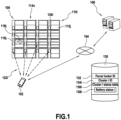
- Figure 1 illustrates an embodiment of a parcel locker 100 constituted of autonomous compartments clusters interacting locally with a mobile device 102 via short distance wireless communication.
- the mobile device communicates via a long distance communication network 104 based on a technologies such as 3G-4G or GSM with a remote shipping system 106, which manages information regarding the parcel locker 100 including authorization access to the parcel locker and data regarding the shipments handled by the parcel locker.
- the parcel locker can be controlled by a mobile device 102, which can be used as a user interface for operating the compartments of the parcel locker.
- the parcel locker 100 is constituted of autonomous compartments clusters 110i, which may comprise several compartments 112j.
- compartment clusters So as to be easily handled during installation on site or for swapping deficient components, such compartment clusters typically comprise two or three compartments, or eventually only one large compartment.
- the compartment clusters can be piled up and mechanically fastened together to form a column 114.
- An autonomous compartments cluster is characterized by a design without any power connection or long distance communication, allowing for simple installation and configuration upgrade and servicing.
- the columns 114 can be mechanically fastened together to form a larger parcel locker unit.
- Each compartment 112j is equipped on the front with a hinged door 116j, which when opened allows for depositing in the compartment or retrieving from the compartment a parcel 118j.
- Each autonomous compartments cluster 110i comprises a locker module 120i, which electronically controls the locking and unlocking of each door of the compartments of the cluster.
- Each locker module 120i can establish a local communication with a nearby mobile device 102 via a short distance communication 122i, such as WIFI, IR or Bluetooth, using a radio transceiver module and an antenna.
- the mobile device can be a smartphone or personal digital assistant (PDA) or any computerized mobile device having some short distance communication capabilities compatible with the short distance communication capabilities of the locker modules and having some long distance communication capabilities compatible with the long distance communication capabilities of the remote shipping system 106.
- the remote shipping system comprises a database system 130, which may include several databases eventually installed on several server systems operated by shipping carriers or by a service company owning or managing a parcel locker park.
- the database system 130 stores configurations of all the parcel lockers 100 to be controlled by the remote shipping system.
- Each parcel locker configuration includes a unique parcel locker identification 132, and for each compartments cluster 110i of the parcel locker, a unique cluster identification 134i.
- the PL configuration also includes for each compartments cluster a cluster status table 136i including a battery status for the locker module of the compartments cluster.
- the cluster status table also includes for each compartment of the compartments cluster: a compartment identification, a status of the lock (locked/unlocked), a status of the door (opened/closed), whether the compartment is damaged or operational, or whether the compartment is clean or dirtied.
- the locker module 120i controlling the autonomous compartments cluster 110i is powered by a battery pack.
- low energy modes or sleep modes can be implemented.
- the locker module can be in a deep sleep mode, i.e. in a very low energy mode so as to minimize the power consumption of the compartments cluster.
- the energy level of the compartments cluster is below 10% of the average energy consumption when the compartments cluster is awake and fully operational. Only very limited functions are available, and in particular the radio transceiver module is asleep and the locker module cannot communicate with and cannot be wakened up by a mobile device proximate to the autonomous compartments cluster.
- the locker module In order to allow for initiating a communication session with a mobile device, when in deep sleep mode, the locker module temporarily partially wakes-up for broadcasting short messages. This partial wake-up, corresponding to a low energy sleep mode, activates the radio transceiver module and can be controlled by an energy management module. In sleep mode, additional functionalities, compared to the deep sleep mode, is limited to sending broadcasted short messages and waiting for a response, and the power consumption is limited. For operating the autonomous compartments cluster and establishing a communication with a mobile device, a full wake-up of the locker module is required, and the power consumption is increased.
- the unlocking requires a temporary power surplus demand from the battery for a fraction of a second.
- the initiation of the unlocking results in a transitory current surge and a transitory voltage drop at the terminals of the battery at the beginning of the temporary power surplus demand corresponding to a minimum transitory voltage. It has been determined that, if the minimum transitory voltage is too low, the unlocking cannot be performed.
- the minimum transitory voltage is identified as an appropriate measurement for characterizing the battery state of charge of a smart autonomous compartments cluster.
- the definition of a reference minimal voltage for unlocking a door and the comparison of the measured minimum transitory voltage each time the door is unlocked with this reference minimal voltage can be used for alerting for battery replacement.
- the overall operation of the autonomous compartments cluster may still continue, including the communication between the smart autonomous compartments cluster and any mobile device, at least until the next request for a door unlocking of a compartment of the autonomous compartments cluster.
- FIG. 2 illustrates a system for alerting when the battery charge of an autonomous compartments cluster becomes too low for opening a compartment door according to an embodiment of the invention.
- a locker module 200 controls one compartment j 202j or several compartments 202j, which can constitute an autonomous compartments cluster.
- the locker module is powered by a replaceable battery pack 204 included in the smart compartments cluster, and preferably included in the locker module.
- the replaceable battery pack can be constituted of alkaline batteries, which are readily available at low cost and are appropriate for indoor usage.
- the replaceable battery pack is constituted of two type C 1.5V alkaline batteries, typically providing about 3.2V zero-load voltage output early in its lifecycle before it starts being discharged.
- the battery pack powers the electronics components of the locker module, including a locker module controller 206, which typically can be a microprocessor, and a locker module memory 207 and a communication module 208.
- the communication module allows the locker module for communicating with mobile devices and may be included in the processor 206 or may be a component separate from the controller.
- a step-up converter 209 can be used for maintaining a constant voltage for powering the locker module electronics components. In a preferred embodiment, the step-up converter provides a 3.3V output.
- the compartment j is equipped with a lock 210 for locking a door 212 of the compartment j.
- the unlocking of the door is performed be by an electrical actuator 214.
- the lock is constituted of a mechanical latch 216 and the electrical actuator is constituted of an electrical motor 218, which when energized, actions a gear box 220, which then translates a mechanical pushing element 222, which can release the mechanical latch and unlock the door.
- a spring mechanism can then push the door opened. For closing the door, a user would have to push back the door against the spring mechanism until it is mechanically locked by mechanical latch.
- the electrical motor can be controlled by a motor driver 224, which is preferably located in the locker module and can be used for the control of all the compartments of the autonomous compartments cluster.
- a motor step-up converter 226 can be used for maintaining a constant voltage for energizing the electrical motor and the motor driver.
- the electrical motor requires a 5V power input and the motor step-up converter 226 provides a 5V output.
- the motor step-up converter is a MAXIM MAX8815A model with an input voltage 1.2V to 5.5V with a 2MHz oscillator.
- the user request is received by the locker module of that particular autonomous compartments cluster via its communication module.
- the user request is provided by the communication module to the controller of the locker module, which sends an unlock order to a lock corresponding to the particular compartment door.
- the unlock order can be provided by a controller output port 228j dedicated for unlocking the particular compartment j.
- the unlock order can consist in switching the voltage of the output port 228j from 0V to 3.3V for a limited duration during which the compartment actuator 214 is energized for unlocking the door.
- the unlock order is provided to the motor drive or directly to the electrical motor of the actuator.
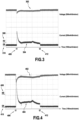
- Figure 3 represents the measurements of the voltage 302 and of the current 304 provided by the battery pack during the unlocking of a door as a function of time for a preferred embodiment of the invention with a 5VDC electrical motor (for example a motor-actuator Southco J-AC-EM-99-125) and a battery pack with two type C 1.5V alkaline batteries.
- the battery pack Before the actuator is energized at the time t1 306, the battery pack provides a voltage around 3.2V (compared to the voltage reference level 0V 308) and a current around a few mA (compared to the current reference level 0A 310).
- This situation corresponds to a battery pack early in its lifecycle before it starts being discharged, and a locker module, which is awaken, but requiring limited power as it is not in the process of exchanging messages with a mobile device.
- the actuator is energized for unlocking the door, and the battery pack provides a 120mA current surplus and a slightly lower voltage around 3.1V.
- the unlocking of a door requires around 360mW during 0.45 seconds, which is a significantly higher power requirement than the average power consumption of the locker module, in sleep mode, which is about 1,5mW, or when the locker module is awake and performs communication exchanges with mobile devices, which is about 25mW.
- the initiation of the unlocking at the beginning of the temporary power surplus demand for unlocking results in a transitory current surge of 560mA and a transitory voltage drop at the terminals of the battery to 2,8V, corresponding to a power peak of about 1.5W.
- Figure 4 represents, for a battery pack advanced in its lifecycle and already partially discharged, the measurements of the voltage 402 and of the current 404 provided by the battery pack during the unlocking of a door as a function of time for a preferred embodiment of the invention with a 5VDC electrical motor (for example a motor-actuator Southco J-AC-EM-99-125) and a battery pack with two type C 1.5V alkaline batteries.
- a 5VDC electrical motor for example a motor-actuator Southco J-AC-EM-99-125
- the already partially discharged battery pack provides a voltage around 2V (compared to the voltage reference level 0V 408) and a current around a few mA (compared to the current reference level 0A 410).
- This situation corresponds to a locker module, which is awaken, but requiring limited power as it is not in the process of exchanging messages with a mobile device.
- the actuator is energized for unlocking the door, and the battery pack provides a 200mA current surplus and a slightly lower voltage around 1.8V.
- the unlocking of a door therefore requires around 360mW during 0.45 seconds, which is a significantly higher power requirement than the average power consumption of the locker module, in sleep mode, which is about 1,5mW, or when the locker module is awake and performs communication exchanges with mobile devices, which is about 25mW.
- the initiation of the unlocking at the beginning of the temporary power surplus demand for unlocking results in a transitory current surge of 1160mA and a transitory voltage drop at the terminals of the battery to 1.2V, corresponding to a power peak of about 1.4W.
- Figure 5 corresponds to a battery pack too much discharged for unlocking a compartment door.
- Figure 5 represents, the measurements of the voltage 502 and of the current 504 provided by the battery pack during the unlocking of a door as a function of time for a preferred embodiment of the invention with a 5VDC electrical motor (for example a motor-actuator Southco J-AC-EM-99-125) and a battery pack with two type C 1.5V alkaline batteries.
- a 5VDC electrical motor for example a motor-actuator Southco J-AC-EM-99-125
- a battery pack with two type C 1.5V alkaline batteries for example a motor-actuator Southco J-AC-EM-99-125
- the discharged battery pack Before the actuator is energized at the time t1 506, the discharged battery pack provides a voltage around 2.3V (compared to the voltage reference level 0V 508) and a current around a few mA (compared to the current reference level 0A 510) when the locker module is awaken and operational, but requiring limited power as it is not in the process of exchanging messages with a mobile device.
- the actuator is energized for unlocking the door, and the battery pack provides a transitory current surge of 600mA and a transitory voltage drop at the terminals of the battery to 0,85V.
- the battery pack cannot provide enough power (0,5W in this case) for unlocking the door.
- the actuator cannot operate and the electrical motor does not start.
- the current provided by the battery pack After the transitory current surge, the current provided by the battery pack returns to around a few mA (typically around 40mA), and the voltage provided by the battery pack returns to 2.3V. It can be pointed out that the autonomous compartments cluster for figure 5 is different from the autonomous compartments cluster for figure 4 , and the voltage provided by the battery pack for figure 5 is higher than the voltage provided by the battery pack for figure 4 when the corresponding locker modules are awaken.
- a voltage comparator 230 compares the voltage provided by the battery pack with a reference minimal voltage 232 for an actuator to unlock a door. As long as the battery pack voltage is above the reference minimal voltage, the voltage comparator does not provide any alert signal. When the battery pack voltage becomes lower than the reference minimal voltage, the voltage comparator triggers an alert signal 233 to an input I/O 234 of the locker module controller. The comparator detects a low battery pack voltage during the initiation of a door unlocking resulting in a transitory voltage drop at the terminals of the battery pack, and if the battery pack has reached a critical discharge level.
- the door unlocking can be carried out as well as the on-going powering of the locker module including communication with mobile devices. Eventually, even a few more door unlockings may be performed. However, when the comparator triggers an alert signal, an alert message must be provided by the locker module for replacing the battery pack. As soon as the voltage comparator triggers a first alert signal, the locker module controller detects a status change on its input I/O 234 and changes a locker module battery status 236 stored in a memory allocation 238 of the locker module memory, for example via an interrupt operation.
- the battery pack voltage After the triggering of a first alert signal and after the transitory voltage drop during the initiation of a door unlocking, the battery pack voltage returns to a higher level during the phase of energizing the actuator for unlocking the door, and the comparator output returns to a no alert signal.
- the battery status is stored in a volatile memory.
- the battery status is set to "usable battery” and can be a Boolean set to 1.
- the battery status is set to "low battery", which in the case of a Boolean can be set to 0.
- the battery pack is replaced, the locker module is temporarily not powered anymore. After the battery pack replacement, the locker module is powered again and the volatile memory is reinitialized.
- the battery status in the memory allocation of the volatile memory is set to "usable battery".
- the locker module can transfer via the communication module an alert message 240 to the mobile devices so that the battery pack can be replaced.
- the alert signal triggered by the comparator in only transitory, the battery status stored in the locker module memory remains permanent status until the battery pack replacement.
- Figure 6 illustrates a comparator used by a system for alerting when a battery pack charge level of an autonomous compartments cluster is too low for unlocking a compartment door according to a particular embodiment of the invention.
- the output voltage from the positive terminal of the battery pack VBAT is fed into the negative input of an operational amplifier 602.
- the operational amplifier 602 is a LMV7275 model.
- a 470 picoFarad capacitor C25 connected to the ground protects the negative input of the operational amplifier from high frequency voltage perturbations as it shortcuts to the ground any potential high frequency noise.
- the positive input of the operational amplifier 602 is fed with a reference minimal voltage 604.
- the reference minimal voltage is set to 1.2V corresponding to the minimum input voltage for the motor step-up converter to operate.
- the 1.2V reference minimal voltage can be obtained from the 3.3V step-up converter 209 reduced by the resistors R22 and R42 mounted in series, where R22 can be a 402K ohm resistor and R42 can be a 232K ohm resistor connected to the ground.
- a 10 nanofarad capacitor C24 connected in parallel with resistor R42 protects the positive input of the operational amplifier from high frequency noise as it shortcuts the positive input of the operational amplifier to the ground.
- the battery pack output voltage VBAT remains above the reference minimal voltage, the output voltage 606 of the operational amplifier remains at 0V, and the locker module controller does not detect any battery alert signal.
- the output voltage 606 of the operational amplifier switches to 3.3V, resulting in the locker module controller detecting an alert signal 608.
- the battery pack output voltage VBAT becoming lower than the reference minimal voltage occurs first due to a transitory voltage drop at the terminals of the battery during the initiation of a door unlocking, and when the battery pack has reached a critical discharge level.
- the battery pack voltage After the transitory voltage drop during the initiation of a door unlocking, the battery pack voltage returns to a higher level during the phase of energizing the actuator for unlocking the door, and the output voltage 606 of the operational amplifier generally returns back to 0V.
- the locker module battery status 236 remains stored in a memory allocation 238 of the locker module memory, until the replacement of the battery pack takes place.
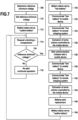
- a method for alerting for a low battery state of charge is now described in reference with figure 7 .
- the method applies to autonomous clusters of compartments interacting locally with mobile devices via short distance wireless communication.
- Each autonomous compartments cluster controls the locking and unlocking of each door of the compartments of the cluster and is powered by a replaceable battery pack, whose state of charge and voltage decrease with the usage of the autonomous compartments cluster.
- alerting for the necessary replacement of the battery pack of an autonomous compartments cluster is an absolute requirement.
- a maximum power required from the battery pack occurs for unlocking a door, and the minimum transitory voltage at the terminals of the battery pack occurring during the initiation of a door unlocking is identified as an appropriate measurement for characterizing the battery pack state of charge.
- the method begins in step 708 by determining a reference minimal voltage defining a voltage level below which a battery alert signal is triggered.
- the reference minimal voltage corresponds to a minimum transitory voltage provided to the unlocking mechanism by the battery pack for unlocking a door.
- a motor step-up converter is used for maintaining a constant voltage for energizing the unlocking mechanism of the compartments.
- the reference minimal voltage is determined as the minimum input voltage of the motor step-up converter to operate.
- the reference minimal voltage value is set within the autonomous compartments cluster and can be stored in a memory of the autonomous compartments cluster or can correspond to a voltage level resulting from an electronic sub-circuit such as illustrated on figure 6 .
- a battery status for the autonomous compartments cluster is set to "usable battery". The setting of the battery status as "usable battery” can occur during the initialization phase of the autonomous compartments cluster, which can take place during the manufacturing phase or during the installation phase of the autonomous compartments cluster. Preferably, the battery status is automatically set to "usable battery” by default, for example during the first powering up of the autonomous compartments cluster during the manufacturing phase or during the installation phase.
- a user requests via his user mobile device for the unlocking of a compartment of the autonomous compartments cluster for accessing the compartment.
- the unlocking request can be part of the delivery process performed by a carrier delivery agent for depositing parcels in the autonomous compartments cluster or can part of the pickup process performed by a recipient for retrieving a parcel from the autonomous compartments cluster or can be part of the collection process performed by a carrier delivery agent for retrieving parcels, which are overdue, from the autonomous compartments cluster.
- the battery pack output voltage measured at the terminals of the battery pack is compared with the reference minimal voltage.
- step 718 operation of the autonomous compartments cluster continues without any alert regarding the battery status, nor any change regarding the battery status for the autonomous compartments cluster as illustrated in step 718, and the compartment can be unlocked as requested by the user. Then, the actions concerning the compartment may be completed.
- a new request for the unlocking of a compartment of the autonomous compartments cluster can later be performed via the same user mobile device or another user mobile device returning to step 714.
- the battery status for the autonomous compartments cluster is set in step 730 to "low battery".
- a low battery detection always occurs for the first time due to a transitory voltage drop at the terminals of the battery during the initiation of a door unlocking, and when the battery pack has reached a critical discharge level.
- the battery pack output voltage can be measured at other times than after an unlocking request or even continuously.
- a low battery detection will always occur for the first time after an unlocking request.
- the door unlocking is completed as requested by the user, for this first time of low battery detection at least.
- step 732 the "low battery” status is communicated by the autonomous compartments cluster to the user mobile device using a local short distance wireless communication system.
- step 734 the "low battery” status of the autonomous compartments cluster is communicated by the user mobile device to a remote shipping system using a long distance communication network and can be stored and associated with an identification of the autonomous compartments cluster in the remote shipping system. Based on this "low battery” status and its association with the autonomous compartments cluster, notifications to appropriate actors and processes for replacing the battery pack of the autonomous compartments cluster can then be initiated.
- a user can perform various actions as he operates the autonomous compartments clusters of a parcel locker via his mobile device.
- some actions related to the autonomous compartments cluster with the "low battery” status may be excluded in step 736.
- the parcel deposit in compartments of the autonomous compartments cluster with the "low battery” status is excluded or when the user is a shipper wishing to send a parcel using a parcel locker, the parcel deposit in compartments of the autonomous compartments cluster with the "low battery” status is excluded.
- the parcel collection from these compartments may remain possible so that compartments of the autonomous compartments cluster with overdue parcels can be freed.
- the step 734 may also be performed after step 736 or eventually may be performed in parallel. Then, the actions concerning the compartment may be completed and the communication between the autonomous compartments cluster and the mobile device may be terminated.
- the low battery information can be communicated by the autonomous compartments cluster.
- the "low battery” status is communicated by the autonomous compartments cluster to the user mobile device using a local short distance wireless communication system as illustrated in step 740.
- the "low battery” status may be communicated by the autonomous compartments cluster to the user mobile device within a broadcasted short message, while the autonomous compartments cluster remains in sleep mode.
- Broadcasting short messages does not require establishing a two-way communication, therefore minimizing power consumption for the autonomous compartments cluster as described in the patent applications EP3671670 and EP3671671 .
- the use of broadcasted short messages allows for the autonomous compartments cluster to be maintained in sleep mode, therefore minimizing the electrical consumption of the battery pack, and regularly broadcasting for short time windows some broadcasted short messages.
- the "low battery" status of the autonomous compartments cluster may then be communicated by the newly connected user mobile device to a remote shipping system using a long distance communication network. Such redundant communication may alleviate potential previous communication issues.
- some actions controlled by the mobile device regarding the autonomous compartments cluster with the "low battery” status may be excluded as illustrated in step 744.
- the parcel deposit in compartments of the autonomous compartments cluster with the "low battery” status is excluded or when the user is a shipper wishing to send a parcel using a parcel locker, the parcel deposit in compartments of the autonomous compartments cluster with the "low battery” status is excluded.
- the parcel pickup from these compartments may remain possible, or when the user is a carrier agent, the parcel collection from these compartments may also remain possible, so that the service provided by autonomous compartments cluster can be maintained and the parcels are not blocked into compartments of the autonomous compartments cluster.
- the battery pack can be replaced in step 746.
- a mobile device user can be informed of the "low battery” status of the autonomous compartments cluster and guided for the battery pack replacement a parcel locker via a diagnostics application or a parcel locker maintenance application running on his mobile device.
- the user replacing the battery pack can be the site manager or some authorized maintenance personnel.
- the battery status for the autonomous compartments cluster is set to "usable battery” in step 748, and standard operation of the autonomous compartments cluster can resume in step 714.
Landscapes
- General Physics & Mathematics (AREA)
- Physics & Mathematics (AREA)
- Engineering & Computer Science (AREA)
- Chemical Kinetics & Catalysis (AREA)
- Chemical & Material Sciences (AREA)
- Electrochemistry (AREA)
- General Chemical & Material Sciences (AREA)
- Manufacturing & Machinery (AREA)
- Power Engineering (AREA)
- Computer Networks & Wireless Communication (AREA)
- Business, Economics & Management (AREA)
- Accounting & Taxation (AREA)
- Lock And Its Accessories (AREA)
Claims (13)
- Verbund autonomer Fächer, die über eine drahtlose Kurzstrecken-Kommunikation (122i) lokal mit einer mobilen Vorrichtung (102) interagieren, umfassend: mindestens ein Fach (112j, 202j), das mit einer Tür (116j, 212) und einem Aktuator (214) zum Entriegeln der Tür ausgestattet ist, ein Schließermodul (120i, 200), das den Aktuator steuert, und ein Batteriepaket, das das Schließermodul (120i, 200) und das mindestens eine Fach (112j, 202j) mit Strom versorgt, wobei das Schließermodul ein Kommunikationsmodul (208), einen ersten Aufwärtswandler (226) zum Erregen des Aktuators (214), einen Spannungskomparator (230), der konfiguriert ist, um als Reaktion auf ein Empfangen einer Benutzeranforderung zum Entriegeln (714) der Tür über die mobile Vorrichtung eine Ausgangsspannung (VBAT), die an dem Anschluss des Batteriepakets bereitgestellt ist, mit einer minimalen Referenzspannung zu vergleichen und ein Warnsignal (233, 608) zum Ersetzen des Batteriepakets auszulösen, wenn die am Anschluss des Batteriepakets bereitgestellte Ausgangsspannung (VBAT) niedriger ist als die minimale Referenzspannung, und eine Steuerung (206), die konfiguriert ist, um einen in einem Speicher (207) des Schließermoduls gespeicherten Batteriestatus (136i, 236) von einem nutzbaren Batteriestatus in einen niedrigen Batteriestatus zu ändern, wobei die minimale Referenzspannung eine minimale Übergangsspannung an den Anschlüssen des Batteriepakets ist, die aus der Ansteuerung des Aktuators durch den ersten Aufwärtswandler während einer Einleitung eines Entriegelns der Tür vor Empfangen der Benutzeranforderung zum Entriegeln (714) der Tür resultiert, wobei der niedrige Batteriestatus ein Ladezustand ist, bei dem eine Batterieladung des Verbunds autonomer Fächer so niedrig geworden ist, dass kein weiteres Entriegeln der Tür (116j, 212) oder nur ein Entriegeln einer beliebigen Tür (116j, 212) des Verbunds autonomer Fächer außer der Tür ermöglicht ist, und wobei die Benutzeranforderung zum Entriegeln (714) der Tür durch das Kommunikationsmodul an die Steuerung des Schließermoduls bereitgestellt wird.
- Verbund autonomer Fächer, nach Anspruch 1, wobei die minimale Übergangsspannung einer minimalen Eingangsspannung für einen Betrieb des ersten Aufwärtswandlers entspricht.
- Verbund autonomer Fächer, nach Anspruch 1 oder 2, wobei das Schließermodul einen zweiten Aufwärtswandler (209) umfasst, der eine konstante Spannung zum Ansteuern des Spannungskomparators, der Steuerung und des Speichers bereitstellt, und dass der Speicher, in dem der Batteriestatus gespeichert ist, ein flüchtiger Speicher ist, sodass ein niedriger Batteriestatus automatisch auf einen nutzbaren Batteriestatus zurückgesetzt wird, wenn das Schließermodul nach einem Batteriepaketersatz mit einem neuen Batteriepaket eingeschaltet wird.
- Autonomer Fächerverbund nach einem der Ansprüche 1 bis 3, dadurch gekennzeichnet, dass der Aktuator aus einem Elektromotor (218) und einem Getriebe (220) besteht, das durch den Motor und ein mechanisches Schubelement (222) angetrieben wird, das durch den Elektromotor und das Getriebe bewegt wird, um eine mechanische Verriegelung (216) zum Entriegeln der Tür zu lösen, besteht.
- Verbund autonomer Fächer nach einem der Ansprüche 1 bis 4, wobei der Spannungskomparator aus einem Betriebsverstärker (602), besteht, der positive und negative Eingänge aufweist, wobei der negative Eingang durch eine Ausgangsspannung von einem positiven Anschluss des Batteriepakets gespeist wird und durch einen 470 Pikofarad-Kondensator (C25) geschützt ist, der mit der Erde verbunden ist, und wobei der positive Eingang mit der minimalen Referenzspannung gespeist wird, und dass das Batteriepaket aus zwei Alkalibatterien vom Typ C 1.5V gebildet ist.
- Verfahren zum Warnen bei niedrigem Batterieladungsstatus für einen Verbund autonomer Fächer (110i), die über eine drahtlose Kurzstrecken-Kommunikation (122i) lokal mit einer mobilen Vorrichtung (102) interagieren, der Verbund autonomer Fächer umfassend mindestens ein Fach (112j, 202j), das mit einer Tür (116j, 212) und einem Aktuator (214) zum Entriegeln der Tür (116j, 212) ausgestattet ist, ein Schließermodul (120i, 200), das den Aktuator (214) steuert, und ein Batteriepaket, das das Schließermodul (120i, 200) und das mindestens eine Fach (112j, 202j) mit Strom versorgt, wobei das Schließermodul (120i, 200) einen ersten Aufwärtswandler (226), einen Spannungskomparator (230) und eine Steuerung (206) umfasst, das Verfahren umfassend:- Auslösen, durch den ersten Aufwärtswandler (226), eines Ansteuerns des Aktuators (214) zum Entriegeln der Tür, was in einer minimalen Übergangsspannung an den Anschlüssen des Batteriepakets resultiert,- Anfordern, über die mobile Vorrichtung, eines Entriegelns (714) der Tür (116j, 212),- Vergleichen (716), durch den Spannungskomparator (230), einer Ausgangsspannung (VBAT) an den Anschlüssen des Batteriepakets mit einer minimalen Referenzspannung (232, 604), die einer minimalen Übergangsspannung an den Anschlüssen des Batteriepakets während des Beginns eines Entriegelns der Tür entspricht, und- wobei, wenn die Ausgangsspannung als niedriger als die minimale Referenzspannung bestimmt wird, ein Warnsignal (233, 608) durch den Spannungskomparator (230) ausgelöst wird, um das Batteriepaket zu ersetzen, und ein Batteriestatus (136i, 236), der in einem Speicher (207) des Schließermoduls gespeichert ist, durch die Steuerung (206) von einem nutzbaren Batteriestatus in einen niedrigen Batteriestatus (730) geändert wird, wobei der niedrige Batteriestatus ein Ladezustand ist, bei dem eine Batterieladung des Verbunds autonomer Fächer so niedrig geworden ist, dass kein weiteres Entriegeln der Tür oder nur ein Entriegeln einer beliebigen Tür des Verbunds autonomer Fächer außer der Tür ermöglicht ist.
- Verfahren nach Anspruch 6, wobei die minimale Übergangsspannung einer minimalen Eingangsspannung für einen Betrieb des ersten Aufwärtswandlers entspricht.
- Verfahren nach Anspruch 7, wobei ein zweiter Aufwärtswandler (209), der in dem Schließermodul enthalten ist, eine konstante Spannung zum Ansteuern des Spannungskomparators (230), der Steuerung (206) und des Speichers (207) aufrechterhält.
- Verfahren nach einem der Ansprüche 6 bis 8, wobei der Batteriestatus während einer Initialisierungsphase des Verbunds autonomer Fächer (712) auf den nutzbaren Batteriestatus gesetzt wird.
- Verfahren nach einem der Ansprüche 6 bis 9, ferner umfassend:- Übermitteln des niedrigen Batteriestatus durch den Verbund autonomer Fächer an die mobile Vorrichtung unter Verwendung des lokalen drahtlosen Kurzstrecken-Kommunikationssystems (732, 740),- Übermitteln des niedrigen Batteriestatus durch die mobile Vorrichtung an ein entferntes Versandsystem (106) unter Verwendung eines Fernkommunikationsnetzes (104), und- Speichern des niedrigen Batteriestatus in dem entfernten Versandsystem und Assoziieren des niedrigen Batteriestatus mit einer Identifikation (134i) des Verbunds autonomer Fächer in dem entfernten Versandsystem (734, 742).
- Verfahren nach einem der Ansprüche 6 bis 10, das ferner umfassend: Ausschließen eines Ablegens eines Pakets durch einen Spediteur oder einen Versender (736, 744) in dem Verbund autonomer Fächer mit dem niedrigen Batteriestatus, und Übermitteln des niedrigen Batteriestatus durch den Verbund autonomer Fächer an die mobile Vorrichtung in einer gesendeten Kurznachricht, während der Verbund der autonomen Fächer in Sleep-Modus (738, 740) ist.
- Verfahren nach einem der Ansprüche 6 bis 11, ferner umfassend: Setzen des Batteriestatus auf den nutzbaren Batteriestatus nach einem Ersatz des Batteriepakets (748) und Fortsetzen eines Betriebs des Verbunds autonomer Fächer ohne Änderung des Batteriestatus von dem nutzbaren Batteriestatus in den niedrigen Batteriestatus, wenn die Ausgangsspannung als höher als die minimale Referenzspannung (718) bestimmt wird.
- Verfahren nach einem der Ansprüche 6 bis 12, wobei der Batteriestatus auf den nutzbaren Batteriestatus gesetzt wird, wenn das Schließermodul anfänglich mit Strom versorgt wird, und dass der Batteriestatus von dem nutzbaren Batteriestatus in den niedrigen Batteriestatus geändert wird, wenn der Spannungskomparator ein Warnsignal (233, 608) auslöst, das ein erstes Warnsignal seit einem letzten Ersatz des Batteriepakets ist.
Priority Applications (2)
| Application Number | Priority Date | Filing Date | Title |
|---|---|---|---|
| EP20210547.4A EP4006851B1 (de) | 2020-11-30 | 2020-11-30 | Systeme und methoden zur warnung vor einem niedrigen batterieladezustand für autonome paketverriegelungen |
| US17/534,862 US12339323B2 (en) | 2020-11-30 | 2021-11-24 | Systems and methods for alerting for a low battery state of charge for autonomous parcel lockers |
Applications Claiming Priority (1)
| Application Number | Priority Date | Filing Date | Title |
|---|---|---|---|
| EP20210547.4A EP4006851B1 (de) | 2020-11-30 | 2020-11-30 | Systeme und methoden zur warnung vor einem niedrigen batterieladezustand für autonome paketverriegelungen |
Publications (2)
| Publication Number | Publication Date |
|---|---|
| EP4006851A1 EP4006851A1 (de) | 2022-06-01 |
| EP4006851B1 true EP4006851B1 (de) | 2025-02-12 |
Family
ID=73646126
Family Applications (1)
| Application Number | Title | Priority Date | Filing Date |
|---|---|---|---|
| EP20210547.4A Active EP4006851B1 (de) | 2020-11-30 | 2020-11-30 | Systeme und methoden zur warnung vor einem niedrigen batterieladezustand für autonome paketverriegelungen |
Country Status (2)
| Country | Link |
|---|---|
| US (1) | US12339323B2 (de) |
| EP (1) | EP4006851B1 (de) |
Families Citing this family (9)
| Publication number | Priority date | Publication date | Assignee | Title |
|---|---|---|---|---|
| US11749040B2 (en) * | 2019-04-30 | 2023-09-05 | Digilock Asia Ltd | Locker system for storage and delivery of packages |
| US11615667B2 (en) | 2019-04-30 | 2023-03-28 | Digilock Asia Ltd. | Locker system for storage and delivery of packages |
| US11690924B1 (en) | 2019-04-30 | 2023-07-04 | Digilock Asia Ltd. | Locker system for storage and delivery of packages |
| US12442220B1 (en) * | 2020-04-21 | 2025-10-14 | Security People, Inc. | Electronically operated latch |
| US12543879B2 (en) * | 2021-06-11 | 2026-02-10 | Quality Time Savers, Inc. | Container for unsupervised deliveries |
| EP4361976A1 (de) * | 2022-10-25 | 2024-05-01 | Quadient Technologies France | Paketschliessfachsystem mit verbesserten autonomen clustern von fächern |
| ES3058354T3 (es) * | 2023-01-18 | 2026-03-10 | Swipbox Dev Aps | Una taquilla de paquetería alimentada por baterías con un conmutador de celdas y un método para conmutar celdas |
| US12274388B2 (en) * | 2023-04-19 | 2025-04-15 | Khalif Issack | Package storage assembly |
| WO2025094730A1 (ja) * | 2023-10-31 | 2025-05-08 | ミネベアミツミ株式会社 | アクチュエータモジュール、錠システム、ドア、及び電池残量判定方法 |
Family Cites Families (12)
| Publication number | Priority date | Publication date | Assignee | Title |
|---|---|---|---|---|
| US20060244415A1 (en) * | 2003-11-18 | 2006-11-02 | Denison William D | Battery back-up for vending machine lock |
| US7667340B2 (en) * | 2005-12-13 | 2010-02-23 | Whlk, Llc | Power from a non-animal organism |
| TW200912108A (en) * | 2007-03-15 | 2009-03-16 | Ansuta Pty Ltd | A door operating device and method of use |
| US9019067B2 (en) * | 2010-12-30 | 2015-04-28 | Sargent Manufacturing Company | Electronic lock with power failure control circuit |
| US9574375B2 (en) * | 2014-11-07 | 2017-02-21 | Kevin Henderson | Electronic lock |
| ES1147183Y (es) * | 2015-10-22 | 2016-03-01 | Ojmar Sa | Cerradura electronica y sistema de cierre electronico para muebles, armarios o taquillas |
| GB201604868D0 (en) * | 2016-03-22 | 2016-05-04 | Bybox Holdings Ltd | Automated locker system and method for delivery and collection of packages |
| EP3671667A1 (de) | 2018-12-18 | 2020-06-24 | Neopost Technologies | Gesichertes paketschliessfachsystem mit token-sicherheit |
| EP3671665A1 (de) | 2018-12-18 | 2020-06-24 | Neopost Technologies | Paketschliessfachsystem mit autonomen fächern |
| EP3671666A1 (de) | 2018-12-18 | 2020-06-24 | Neopost Technologies | Paketschliessfachsystem mit autonomen clustern von fächern |
| FR3112900B1 (fr) * | 2020-07-27 | 2022-07-29 | Limatech | Bloc modulaire série (B l M o S e ) |
| WO2022040501A1 (en) * | 2020-08-21 | 2022-02-24 | Roche Diabetes Care, Inc. | Method and apparatus for temperature compensation of low battery voltage thresholds and voltage droop detection in a medical device |
-
2020
- 2020-11-30 EP EP20210547.4A patent/EP4006851B1/de active Active
-
2021
- 2021-11-24 US US17/534,862 patent/US12339323B2/en active Active
Also Published As
| Publication number | Publication date |
|---|---|
| US20220170989A1 (en) | 2022-06-02 |
| EP4006851A1 (de) | 2022-06-01 |
| US12339323B2 (en) | 2025-06-24 |
Similar Documents
| Publication | Publication Date | Title |
|---|---|---|
| EP4006851B1 (de) | Systeme und methoden zur warnung vor einem niedrigen batterieladezustand für autonome paketverriegelungen | |
| US9352905B2 (en) | Battery monitoring in a networked inventory control system | |
| US8222990B2 (en) | Hybrid access control system and method for controlling the same | |
| US7908054B2 (en) | Device for managing power supply of a motor vehicle multimedia system | |
| US20120004885A1 (en) | Sensor for the detection of the position of a mechanical force-transmitting device | |
| US11475725B2 (en) | Device and method for access control | |
| EP3671665A1 (de) | Paketschliessfachsystem mit autonomen fächern | |
| US12424081B2 (en) | Smart lock | |
| US20230182617A1 (en) | Retrofitting an electric vehicle with a intelligent supercapacitor battery unit | |
| US8866909B2 (en) | Device and method for the surveillance of an aircraft | |
| CN109660019B (zh) | 用于在电力设备处的备用电力管理的方法和系统 | |
| CN212027435U (zh) | 包裹箱的锁定装置 | |
| CN216733959U (zh) | 一种射频识别换电柜 | |
| EP3729114B1 (de) | Integrierte batterieüberwachungsschaltung | |
| JP5027707B2 (ja) | 電気錠システム | |
| EP4361976A1 (de) | Paketschliessfachsystem mit verbesserten autonomen clustern von fächern | |
| JP7833370B2 (ja) | 保管装置および充電制御方法 | |
| JP2004133795A (ja) | データ発信装置 | |
| CN207530860U (zh) | 5t探测站状态监控预警及检修辅助系统 | |
| CN216161168U (zh) | 移动电源租赁设备的防盗控制系统 | |
| KR101864021B1 (ko) | Dsrc용 etc obu 시스템 | |
| CN119811037B (zh) | 无线报警装置 | |
| EP4404157B1 (de) | Batteriebetriebenes paketschliessfach mit einem zellenschalter und verfahren zum schalten von zellen | |
| JP2010165315A (ja) | 入退場管理システム | |
| WO2025147214A1 (en) | An electronic lock with interchangeable charging modules |
Legal Events
| Date | Code | Title | Description |
|---|---|---|---|
| PUAI | Public reference made under article 153(3) epc to a published international application that has entered the european phase |
Free format text: ORIGINAL CODE: 0009012 |
|
| STAA | Information on the status of an ep patent application or granted ep patent |
Free format text: STATUS: THE APPLICATION HAS BEEN PUBLISHED |
|
| AK | Designated contracting states |
Kind code of ref document: A1 Designated state(s): AL AT BE BG CH CY CZ DE DK EE ES FI FR GB GR HR HU IE IS IT LI LT LU LV MC MK MT NL NO PL PT RO RS SE SI SK SM TR |
|
| STAA | Information on the status of an ep patent application or granted ep patent |
Free format text: STATUS: REQUEST FOR EXAMINATION WAS MADE |
|
| 17P | Request for examination filed |
Effective date: 20221130 |
|
| RBV | Designated contracting states (corrected) |
Designated state(s): AL AT BE BG CH CY CZ DE DK EE ES FI FR GB GR HR HU IE IS IT LI LT LU LV MC MK MT NL NO PL PT RO RS SE SI SK SM TR |
|
| GRAP | Despatch of communication of intention to grant a patent |
Free format text: ORIGINAL CODE: EPIDOSNIGR1 |
|
| STAA | Information on the status of an ep patent application or granted ep patent |
Free format text: STATUS: GRANT OF PATENT IS INTENDED |
|
| INTG | Intention to grant announced |
Effective date: 20240827 |
|
| GRAS | Grant fee paid |
Free format text: ORIGINAL CODE: EPIDOSNIGR3 |
|
| GRAA | (expected) grant |
Free format text: ORIGINAL CODE: 0009210 |
|
| STAA | Information on the status of an ep patent application or granted ep patent |
Free format text: STATUS: THE PATENT HAS BEEN GRANTED |
|
| AK | Designated contracting states |
Kind code of ref document: B1 Designated state(s): AL AT BE BG CH CY CZ DE DK EE ES FI FR GB GR HR HU IE IS IT LI LT LU LV MC MK MT NL NO PL PT RO RS SE SI SK SM TR |
|
| REG | Reference to a national code |
Ref country code: GB Ref legal event code: FG4D |
|
| REG | Reference to a national code |
Ref country code: CH Ref legal event code: EP |
|
| REG | Reference to a national code |
Ref country code: DE Ref legal event code: R096 Ref document number: 602020045852 Country of ref document: DE |
|
| REG | Reference to a national code |
Ref country code: IE Ref legal event code: FG4D |
|
| REG | Reference to a national code |
Ref country code: NL Ref legal event code: MP Effective date: 20250212 |
|
| PG25 | Lapsed in a contracting state [announced via postgrant information from national office to epo] |
Ref country code: RS Free format text: LAPSE BECAUSE OF FAILURE TO SUBMIT A TRANSLATION OF THE DESCRIPTION OR TO PAY THE FEE WITHIN THE PRESCRIBED TIME-LIMIT Effective date: 20250512 |
|
| PG25 | Lapsed in a contracting state [announced via postgrant information from national office to epo] |
Ref country code: FI Free format text: LAPSE BECAUSE OF FAILURE TO SUBMIT A TRANSLATION OF THE DESCRIPTION OR TO PAY THE FEE WITHIN THE PRESCRIBED TIME-LIMIT Effective date: 20250212 |
|
| PG25 | Lapsed in a contracting state [announced via postgrant information from national office to epo] |
Ref country code: PL Free format text: LAPSE BECAUSE OF FAILURE TO SUBMIT A TRANSLATION OF THE DESCRIPTION OR TO PAY THE FEE WITHIN THE PRESCRIBED TIME-LIMIT Effective date: 20250212 |
|
| PG25 | Lapsed in a contracting state [announced via postgrant information from national office to epo] |
Ref country code: ES Free format text: LAPSE BECAUSE OF FAILURE TO SUBMIT A TRANSLATION OF THE DESCRIPTION OR TO PAY THE FEE WITHIN THE PRESCRIBED TIME-LIMIT Effective date: 20250212 |
|
| REG | Reference to a national code |
Ref country code: LT Ref legal event code: MG9D |
|
| PG25 | Lapsed in a contracting state [announced via postgrant information from national office to epo] |
Ref country code: IS Free format text: LAPSE BECAUSE OF FAILURE TO SUBMIT A TRANSLATION OF THE DESCRIPTION OR TO PAY THE FEE WITHIN THE PRESCRIBED TIME-LIMIT Effective date: 20250612 Ref country code: NO Free format text: LAPSE BECAUSE OF FAILURE TO SUBMIT A TRANSLATION OF THE DESCRIPTION OR TO PAY THE FEE WITHIN THE PRESCRIBED TIME-LIMIT Effective date: 20250512 |
|
| PG25 | Lapsed in a contracting state [announced via postgrant information from national office to epo] |
Ref country code: NL Free format text: LAPSE BECAUSE OF FAILURE TO SUBMIT A TRANSLATION OF THE DESCRIPTION OR TO PAY THE FEE WITHIN THE PRESCRIBED TIME-LIMIT Effective date: 20250212 |
|
| PG25 | Lapsed in a contracting state [announced via postgrant information from national office to epo] |
Ref country code: HR Free format text: LAPSE BECAUSE OF FAILURE TO SUBMIT A TRANSLATION OF THE DESCRIPTION OR TO PAY THE FEE WITHIN THE PRESCRIBED TIME-LIMIT Effective date: 20250212 |
|
| PG25 | Lapsed in a contracting state [announced via postgrant information from national office to epo] |
Ref country code: LV Free format text: LAPSE BECAUSE OF FAILURE TO SUBMIT A TRANSLATION OF THE DESCRIPTION OR TO PAY THE FEE WITHIN THE PRESCRIBED TIME-LIMIT Effective date: 20250212 Ref country code: PT Free format text: LAPSE BECAUSE OF FAILURE TO SUBMIT A TRANSLATION OF THE DESCRIPTION OR TO PAY THE FEE WITHIN THE PRESCRIBED TIME-LIMIT Effective date: 20250612 |
|
| PG25 | Lapsed in a contracting state [announced via postgrant information from national office to epo] |
Ref country code: GR Free format text: LAPSE BECAUSE OF FAILURE TO SUBMIT A TRANSLATION OF THE DESCRIPTION OR TO PAY THE FEE WITHIN THE PRESCRIBED TIME-LIMIT Effective date: 20250513 Ref country code: BG Free format text: LAPSE BECAUSE OF FAILURE TO SUBMIT A TRANSLATION OF THE DESCRIPTION OR TO PAY THE FEE WITHIN THE PRESCRIBED TIME-LIMIT Effective date: 20250212 |
|
| REG | Reference to a national code |
Ref country code: AT Ref legal event code: MK05 Ref document number: 1766839 Country of ref document: AT Kind code of ref document: T Effective date: 20250212 |
|
| PG25 | Lapsed in a contracting state [announced via postgrant information from national office to epo] |
Ref country code: SE Free format text: LAPSE BECAUSE OF FAILURE TO SUBMIT A TRANSLATION OF THE DESCRIPTION OR TO PAY THE FEE WITHIN THE PRESCRIBED TIME-LIMIT Effective date: 20250212 |
|
| PG25 | Lapsed in a contracting state [announced via postgrant information from national office to epo] |
Ref country code: SM Free format text: LAPSE BECAUSE OF FAILURE TO SUBMIT A TRANSLATION OF THE DESCRIPTION OR TO PAY THE FEE WITHIN THE PRESCRIBED TIME-LIMIT Effective date: 20250212 |
|
| PG25 | Lapsed in a contracting state [announced via postgrant information from national office to epo] |
Ref country code: DK Free format text: LAPSE BECAUSE OF FAILURE TO SUBMIT A TRANSLATION OF THE DESCRIPTION OR TO PAY THE FEE WITHIN THE PRESCRIBED TIME-LIMIT Effective date: 20250212 |
|
| PG25 | Lapsed in a contracting state [announced via postgrant information from national office to epo] |
Ref country code: IT Free format text: LAPSE BECAUSE OF FAILURE TO SUBMIT A TRANSLATION OF THE DESCRIPTION OR TO PAY THE FEE WITHIN THE PRESCRIBED TIME-LIMIT Effective date: 20250212 |
|
| PG25 | Lapsed in a contracting state [announced via postgrant information from national office to epo] |
Ref country code: AT Free format text: LAPSE BECAUSE OF FAILURE TO SUBMIT A TRANSLATION OF THE DESCRIPTION OR TO PAY THE FEE WITHIN THE PRESCRIBED TIME-LIMIT Effective date: 20250212 |
|
| PG25 | Lapsed in a contracting state [announced via postgrant information from national office to epo] |
Ref country code: CZ Free format text: LAPSE BECAUSE OF FAILURE TO SUBMIT A TRANSLATION OF THE DESCRIPTION OR TO PAY THE FEE WITHIN THE PRESCRIBED TIME-LIMIT Effective date: 20250212 Ref country code: EE Free format text: LAPSE BECAUSE OF FAILURE TO SUBMIT A TRANSLATION OF THE DESCRIPTION OR TO PAY THE FEE WITHIN THE PRESCRIBED TIME-LIMIT Effective date: 20250212 |
|
| PG25 | Lapsed in a contracting state [announced via postgrant information from national office to epo] |
Ref country code: RO Free format text: LAPSE BECAUSE OF FAILURE TO SUBMIT A TRANSLATION OF THE DESCRIPTION OR TO PAY THE FEE WITHIN THE PRESCRIBED TIME-LIMIT Effective date: 20250212 |
|
| PG25 | Lapsed in a contracting state [announced via postgrant information from national office to epo] |
Ref country code: SK Free format text: LAPSE BECAUSE OF FAILURE TO SUBMIT A TRANSLATION OF THE DESCRIPTION OR TO PAY THE FEE WITHIN THE PRESCRIBED TIME-LIMIT Effective date: 20250212 |
|
| REG | Reference to a national code |
Ref country code: DE Ref legal event code: R097 Ref document number: 602020045852 Country of ref document: DE |
|
| PLBE | No opposition filed within time limit |
Free format text: ORIGINAL CODE: 0009261 |
|
| STAA | Information on the status of an ep patent application or granted ep patent |
Free format text: STATUS: NO OPPOSITION FILED WITHIN TIME LIMIT |
|
| PGFP | Annual fee paid to national office [announced via postgrant information from national office to epo] |
Ref country code: DE Payment date: 20251119 Year of fee payment: 6 |
|
| PGFP | Annual fee paid to national office [announced via postgrant information from national office to epo] |
Ref country code: GB Payment date: 20251121 Year of fee payment: 6 |
|
| PGFP | Annual fee paid to national office [announced via postgrant information from national office to epo] |
Ref country code: FR Payment date: 20251126 Year of fee payment: 6 |
|
| 26N | No opposition filed |
Effective date: 20251113 |