EP4007191A1 - Procédé de transmission de données, équipement utilisateur, et noeud de commande - Google Patents
Procédé de transmission de données, équipement utilisateur, et noeud de commande Download PDFInfo
- Publication number
- EP4007191A1 EP4007191A1 EP20846534.4A EP20846534A EP4007191A1 EP 4007191 A1 EP4007191 A1 EP 4007191A1 EP 20846534 A EP20846534 A EP 20846534A EP 4007191 A1 EP4007191 A1 EP 4007191A1
- Authority
- EP
- European Patent Office
- Prior art keywords
- carrier
- data
- feedback
- information
- scheduling
- Prior art date
- Legal status (The legal status is an assumption and is not a legal conclusion. Google has not performed a legal analysis and makes no representation as to the accuracy of the status listed.)
- Pending
Links
Images

Classifications
-
- H—ELECTRICITY
- H04—ELECTRIC COMMUNICATION TECHNIQUE
- H04L—TRANSMISSION OF DIGITAL INFORMATION, e.g. TELEGRAPHIC COMMUNICATION
- H04L1/00—Arrangements for detecting or preventing errors in the information received
- H04L1/0001—Systems modifying transmission characteristics according to link quality, e.g. power backoff
- H04L1/0006—Systems modifying transmission characteristics according to link quality, e.g. power backoff by adapting the transmission format
-
- H—ELECTRICITY
- H04—ELECTRIC COMMUNICATION TECHNIQUE
- H04W—WIRELESS COMMUNICATION NETWORKS
- H04W72/00—Local resource management
- H04W72/12—Wireless traffic scheduling
- H04W72/1263—Mapping of traffic onto schedule, e.g. scheduled allocation or multiplexing of flows
-
- H—ELECTRICITY
- H04—ELECTRIC COMMUNICATION TECHNIQUE
- H04L—TRANSMISSION OF DIGITAL INFORMATION, e.g. TELEGRAPHIC COMMUNICATION
- H04L1/00—Arrangements for detecting or preventing errors in the information received
- H04L1/12—Arrangements for detecting or preventing errors in the information received by using return channel
- H04L1/16—Arrangements for detecting or preventing errors in the information received by using return channel in which the return channel carries supervisory signals, e.g. repetition request signals
- H04L1/1607—Details of the supervisory signal
-
- H—ELECTRICITY
- H04—ELECTRIC COMMUNICATION TECHNIQUE
- H04L—TRANSMISSION OF DIGITAL INFORMATION, e.g. TELEGRAPHIC COMMUNICATION
- H04L1/00—Arrangements for detecting or preventing errors in the information received
- H04L1/12—Arrangements for detecting or preventing errors in the information received by using return channel
- H04L1/16—Arrangements for detecting or preventing errors in the information received by using return channel in which the return channel carries supervisory signals, e.g. repetition request signals
- H04L1/18—Automatic repetition systems, e.g. Van Duuren systems
- H04L1/1829—Arrangements specially adapted for the receiver end
- H04L1/1861—Physical mapping arrangements
-
- H—ELECTRICITY
- H04—ELECTRIC COMMUNICATION TECHNIQUE
- H04L—TRANSMISSION OF DIGITAL INFORMATION, e.g. TELEGRAPHIC COMMUNICATION
- H04L1/00—Arrangements for detecting or preventing errors in the information received
- H04L1/12—Arrangements for detecting or preventing errors in the information received by using return channel
- H04L1/16—Arrangements for detecting or preventing errors in the information received by using return channel in which the return channel carries supervisory signals, e.g. repetition request signals
- H04L1/18—Automatic repetition systems, e.g. Van Duuren systems
- H04L1/1829—Arrangements specially adapted for the receiver end
- H04L1/1864—ARQ related signaling
-
- H—ELECTRICITY
- H04—ELECTRIC COMMUNICATION TECHNIQUE
- H04L—TRANSMISSION OF DIGITAL INFORMATION, e.g. TELEGRAPHIC COMMUNICATION
- H04L5/00—Arrangements affording multiple use of the transmission path
- H04L5/003—Arrangements for allocating sub-channels of the transmission path
- H04L5/0053—Allocation of signalling, i.e. of overhead other than pilot signals
- H04L5/0055—Physical resource allocation for ACK/NACK
-
- H—ELECTRICITY
- H04—ELECTRIC COMMUNICATION TECHNIQUE
- H04W—WIRELESS COMMUNICATION NETWORKS
- H04W72/00—Local resource management
- H04W72/12—Wireless traffic scheduling
-
- H—ELECTRICITY
- H04—ELECTRIC COMMUNICATION TECHNIQUE
- H04L—TRANSMISSION OF DIGITAL INFORMATION, e.g. TELEGRAPHIC COMMUNICATION
- H04L1/00—Arrangements for detecting or preventing errors in the information received
- H04L2001/0092—Error control systems characterised by the topology of the transmission link
- H04L2001/0093—Point-to-multipoint
-
- H—ELECTRICITY
- H04—ELECTRIC COMMUNICATION TECHNIQUE
- H04L—TRANSMISSION OF DIGITAL INFORMATION, e.g. TELEGRAPHIC COMMUNICATION
- H04L5/00—Arrangements affording multiple use of the transmission path
- H04L5/0001—Arrangements for dividing the transmission path
- H04L5/0003—Two-dimensional division
- H04L5/0005—Time-frequency
- H04L5/0007—Time-frequency the frequencies being orthogonal, e.g. OFDM(A) or DMT
- H04L5/001—Time-frequency the frequencies being orthogonal, e.g. OFDM(A) or DMT the frequencies being arranged in component carriers
-
- H—ELECTRICITY
- H04—ELECTRIC COMMUNICATION TECHNIQUE
- H04L—TRANSMISSION OF DIGITAL INFORMATION, e.g. TELEGRAPHIC COMMUNICATION
- H04L5/00—Arrangements affording multiple use of the transmission path
- H04L5/003—Arrangements for allocating sub-channels of the transmission path
- H04L5/0044—Allocation of payload; Allocation of data channels, e.g. PDSCH or PUSCH
-
- H—ELECTRICITY
- H04—ELECTRIC COMMUNICATION TECHNIQUE
- H04L—TRANSMISSION OF DIGITAL INFORMATION, e.g. TELEGRAPHIC COMMUNICATION
- H04L5/00—Arrangements affording multiple use of the transmission path
- H04L5/003—Arrangements for allocating sub-channels of the transmission path
- H04L5/0053—Allocation of signalling, i.e. of overhead other than pilot signals
- H04L5/0057—Physical resource allocation for CQI
-
- H—ELECTRICITY
- H04—ELECTRIC COMMUNICATION TECHNIQUE
- H04W—WIRELESS COMMUNICATION NETWORKS
- H04W92/00—Interfaces specially adapted for wireless communication networks
- H04W92/16—Interfaces between hierarchically similar devices
- H04W92/18—Interfaces between hierarchically similar devices between terminal devices
Definitions
- Embodiments of the present disclosure relate to the field of communications technologies, and in particular, to a data transmission method, a user equipment, and a control node.
- a 5G NR (New Radio, NR) system of Release-16 supports configuration for only single-carrier sidelink (sidelink) transmission, but does not support configuration for multi-carrier sidelink transmission.
- some sidelink transmission services may need carrier aggregation-based (carrier aggregation, CA) sidelink transmission, namely, sidelink transmission on a plurality of carriers.
- CA carrier aggregation-based
- a design of a single-carrier sidelink is simply reused for each carrier, that is, each carrier independently performs sensing and resource allocation. As a result, multi-carrier transmission fails.
- transmit-end user equipment For example, transmit-end user equipment (User Equipment, UE) respectively allocates resources on two carriers (CC1 and CC2) for CA-based multicast sidelink transmission.
- UE User Equipment
- CC1 and CC2 two carriers
- receive-end UE monitors only CC1, but does not monitor CC2
- whether multicast sidelink transmission is performed on CC2 cannot be learned.
- sidelink transmission on CC2 cannot be received.
- negative acknowledgement (Negative Acknowledgement, NACK) feedback cannot be sent on CC2. Because the transmit-end UE does not receive NACK feedback on CC2, the transmit-end UE mistakenly considers that all receive-end UE successfully receives multicast sidelink transmission. As a result, multicast sidelink transmission fails.
- NACK Negative Acknowledgement
- Embodiments of the present disclosure provide a data transmission method, a user equipment, and a control node, to resolve a problem that sidelink feedback transmission in a carrier aggregation scenario cannot be implemented in a sidelink transmission process.
- an embodiment of the present disclosure provides a data transmission method, applied to UE and including: transmitting, in a carrier aggregation scenario based on scheduling information, sidelink data on a data carrier and feedback data on a feedback carrier, where the scheduling information is used to schedule the data carrier and/or the feedback carrier, and the feedback data is used to indicate a transmission result of the sidelink data.
- an embodiment of the present disclosure provides a data transmission method, applied to a control node and including: sending scheduling information to user equipment UE, where the scheduling information is used to schedule a data carrier in a carrier aggregation scenario to transmit sidelink data, and/or the scheduling information is further used to schedule a feedback carrier to transmit feedback data; and the feedback data is used to indicate a transmission result of the sidelink data.
- an embodiment of the present disclosure provides a UE, including a transmitting module, where the transmitting module is configured to: transmit, in a carrier aggregation scenario based on scheduling information, sidelink data on a data carrier and feedback data on a feedback carrier, where the scheduling information is used to schedule the data carrier and/or the feedback carrier, and the feedback data is used to indicate a transmission result of the sidelink data.
- an embodiment of the present disclosure provides a network node, including a sending module, where the sending module is configured to send scheduling information to user equipment UE, where the scheduling information is used to schedule a data carrier in a carrier aggregation scenario to transmit sidelink data, and/or the scheduling information is further used to schedule a feedback carrier to transmit feedback data; and the feedback data is used to indicate a transmission result of the sidelink data.
- an embodiment of the present disclosure provides UE, including a processor, a memory, and a computer program stored in the memory and executable on the processor.
- the computer program is executed by the processor, the steps of the data transmission method according to the first aspect is implemented.
- an embodiment of the present disclosure provides a network node, including a processor, a memory, and a computer program stored in the memory and executable on the processor, When the computer program is executed by the processor, the steps of the data transmission method according to the second aspect is implemented.
- an embodiment of the present disclosure provides a computer-readable storage medium.
- the computer-readable storage medium stores a computer program, and when the computer program is executed by a processor, the steps of the foregoing data transmission method is implemented.
- the transmit-end UE and the receive-end UE can learn a specific carrier on which sidelink data is transmitted and a specific carrier on which feedback data is transmitted. Therefore, the transmit-end UE and the receive-end UE can have consistent understandings of sidelink transmission, which can resolve a problem that NACK-only broadcast fails because a carrier monitored by the transmit-end UE does not match a carrier monitored by the receive-end UE.
- unicast, multicast, or broadcast CA transmission on a sidelink can be implemented to meet corresponding service requirements.
- a plurality of carriers can be scheduled by using one carrier to transmit sidelink data, and feedback data of sidelink data on all carriers can be transmitted by using one carrier, overheads on a control channel (for example, a PSCCH or a PSFCH) can be reduced, thereby improving spectrum efficiency and data throughput, and resolving a problem of half-duplex caused when a plurality of carriers receive and send different physical channels at the same time.
- a control channel for example, a PSCCH or a PSFCH
- A/B may indicate A or B; and "and/or" in this specification merely describes an association relationship between associated objects, and indicates that there may be three relationships.
- a and/or B may indicate three cases: only A exists, both A and B exist, and only B exists.
- first and second are used to distinguish same or similar items with a basically same function or effect.
- first and second do not limit a quantity and an execution order.
- first carrier indication information and second carrier indication information are intended to distinguish between different carrier indication information, and are not used to describe a particular order of the carrier indication information.
- the data transmission method provided in this embodiment of the present disclosure may be applied to a sidelink transmission scenario, and specifically to a sidelink data transmission scenario or a sidelink data feedback scenario.
- LTE Long Term Evolution
- UE User Equipment
- Sidelink Sidelink
- An LTE sidelink performs communication based on a broadcast mode.
- V2X vehicle to everything
- a 5G NR (New Radio, NR) system supports a more advanced sidelink transmission design, such as, a unicast design, a multicast design, or a broadcast design, thereby supporting services of more comprehensive types.
- the LTE system starts to support sidelink from the Release 12, for performing data transmission between UE directly instead of through a network device.
- the UE sends sidelink control information (Sidelink Control Information, SCI) through a physical sidelink control channel (Physical Sidelink Control Channel, PSCCH), and sends sidelink data by scheduling transmission of a physical sidelink shared channel (Physical Sidelink Shared Channel, PSSCH).
- SCI Sidelink Control Information
- PSCCH Physical Sidelink Control Channel
- PSSCH Physical Sidelink shared channel
- the data transmission is in the form of broadcast, and a receive end does not respond to a transmit end whether reception is successful.
- a sidelink design in an LTE system supports two resource allocation modes: a scheduled resource allocation (Scheduled resource allocation) mode and an autonomous resource selection (autonomous resource selection) mode.
- the scheduled resource allocation mode is controlled by the network device and allocates resources for each UE.
- the autonomous resource selection mode the resource is selected by the UE autonomously.
- LTE supports sidelink carrier aggregation (Carrier Aggregation, CA).
- CA Carrier Aggregation
- a CA interface and a Uu interface (a downlink and an uplink) of the LTE sidelink are different, and the LTE sidelink has no distinction between a primary component carrier (Primary component carrier, PCC) and a secondary component carrier (Secondary component carrier, SCC).
- PCC Primary component carrier
- SCC Secondary component carrier
- the UE in the autonomous resource selection mode independently performs resource sensing (sensing), resource reservation, and resource allocation on each component carrier (Component Carrier, CC).
- the design of the LTE sidelink is suitable for specific public safety affairs (such as emergency communication in a fire disaster place or an earthquake disaster place), or vehicle to everything (vehicle to everything, V2X) communication.
- Vehicle to everything communication includes various services, for example, basic safety-related communication, advanced driving (autonomous driving), formation, and sensor extension. Because the LTE sidelink supports only broadcast communication, the LTE sidelink is mainly used for basic safety-related communication, and another advanced V2X service is supported by using an NR sidelink.
- a 5G NR system starts to support sidelink from the Release 16, and can be used in an operating frequency band above 6 GHz that the LTE system does not support, thereby supporting higher operating bandwidth.
- the NR sidelink supports multiple transmission modes such as unicast, multicast, and broadcast, and supports hybrid automatic repeat request (Hybrid Automatic Repeat Request, HARQ) in the unicast and multicast modes.
- a response to the HARQ is sent by using a physical sidelink feedback channel (Physical Sidelink Feedback Channel, PSFCH).
- PSFCH Physical Sidelink Feedback Channel
- the NR sidelink also supports a plurality of resource allocation modes, for example, a base station scheduling mode, an autonomous resource selection mode of UE, or a mode in which UE transfers a configuration to other UE.
- a current NR sidelink multicast supports two use cases: connection-based multicast and connectionless multicast.
- Connection-based multicast means that a connection is established between UE in multicast.
- Connectionless multicast means that multicast UE does not know other UE in multicast and no connection is established.
- an NR sidelink supports two modes: an ACK/NACK feedback mode and a NACK-only feedback mode.
- the ACK/NACK feedback mode means that each receive-end UE in multicast independently sends an ACK or a NACK to feed back whether reception succeeds or fails. This mode is suitable for connection-based multicast scenarios.
- NACK-only feedback means that each receive-end UE in multicast sends a NACK feedback only when reception fails (no feedback is sent when the reception succeeds). NACK feedbacks are sent on the same resource (thus, transmit-end UE considers, when receiving only one NACK feedback, that there is UE failing the reception, and considers, when receiving none NACK feedback, that there is UE succeeding the reception), which is suitable for connectionless multicast scenarios.
- a 5G NR sidelink system currently supports configuration for only single-carrier sidelink transmission, but does support configuration for multi-carrier sidelink transmission.
- an LTE sidelink that supports multi-carrier transmission does not support unicast, multicast, HARQ feedback, and the like.
- a design of a current sidelink is simply reused for each carrier, that is, each carrier independently performs sensing and resource allocation. As a result, multi-carrier transmission fails.
- an embodiment of the present disclosure provides a data transmission method, which can instruct UE based on scheduling information to transmit sidelink data on a plurality of carriers, thereby implementing unicast, multicast, or broadcast CA transmission on a sidelink.
- the method can instruct UE based on scheduling information to transmit, on one or more feedback carriers, feedback data that is transmitted in sidelink data, thereby enabling a sidelink to support HARQ feedback, such as an ACK-only feedback mode.
- the technical solutions provided in this embodiment of the present disclosure may be applied to various communications systems, for example, a 5G communications system, a future evolved system, an LTE communications system, a VOLTE communications system, or a plurality of communications fusion systems.
- a plurality of application scenarios may be included, for example, machine-to-machine (Machine to Machine, M2M), D2M, macro-micro communication, enhanced mobile broadband (enhanced Mobile Broadband, eMBB), ultra-reliable and low latency communications (ultra Reliable and Low Latency Communication, uRLLC), and massive machine type communication (Massive Machine Type Communication, mMTC).
- M2M Machine to Machine
- D2M macro-micro communication
- enhanced mobile broadband enhanced Mobile Broadband
- eMBB enhanced Mobile Broadband
- uRLLC ultra-reliable and low latency communications
- mMTC massive machine type communication
- These scenarios include but are not limited to scenarios such as communication between terminal devices, communication between network devices, or communication between a network device and a
- FIG. 1 is a possible schematic structural diagram of a communications system according to an embodiment of the present disclosure.
- the communications system includes at least one network device 100 (only one network device is shown in FIG. 1 ) and one or more terminal devices 200 connected to each network device 100.
- the network device 100 may be a base station, a core network device, a transmission and reception point (Transmission and Reception Point, TRP), a relay station, an access point, or the like.
- the network device 100 may be a base transceiver station (Base Transceiver Station, BTS) in a global system for mobile communication (Global System for Mobile communication, GSM) or a code division multiple access (Code Division Multiple Access, CDMA) network, may be an NB (NodeB) in wideband code division multiple access (Wideband Code Division Multiple Access, WCDMA), or may be an eNB or an eNodeB (evolutional NodeB) in LTE.
- BTS Base Transceiver Station
- GSM Global System for Mobile communication
- CDMA Code Division Multiple Access
- NB NodeB
- WCDMA Wideband Code Division Multiple Access
- eNodeB evolutional NodeB
- the network device 100 may be alternatively a wireless controller in a cloud radio access network (Cloud Radio Access Network, CRAN) scenario.
- the network device 100 may also be a network device in the 5G communications system or a network device in a future evolved network, for example, a base station, a road side unit (Road Side Unit, RSU), or a relay node (Relay Node, namely relay).
- RSU road side unit
- Relay Node namely relay
- the terminal device 200 may be a wireless terminal device or a wired terminal device.
- the wireless terminal device may be a device that provides voice and/or other service data connectivity for a user, a handheld device with a wireless communication function, a computing device, another processing device connected to a wireless modem, an in-vehicle device, a wearable device, a terminal device in a future 5G network, a terminal device in a future evolved PLMN network, or the like.
- the wireless terminal device may communicate with one or more core networks by using a radio access network (Radio Access Network, RAN).
- the wireless terminal device may be a mobile terminal device, such as a mobile phone (or referred to as a "cellular" phone) and a computer with a mobile terminal device.
- the wireless terminal device may be a portable, pocket-sized, handheld, computer built-in, or in-vehicle mobile apparatus that exchanges voice and/or data with a radio access network, and/or a device such as a personal communication service (Personal Communication Service, PCS) phone, a cordless phone, a session initiation protocol (Session Initiation Protocol, SIP) phone, a wireless local loop (Wireless Local Loop, WLL) station, or a personal digital assistant (Personal Digital Assistant, PDA).
- PCS Personal Communication Service
- SIP Session Initiation Protocol
- WLL Wireless Local Loop
- PDA Personal Digital Assistant
- the wireless terminal device may be alternatively a mobile device, user equipment (User Equipment, UE), a UE terminal device, an access terminal device, a wireless communications device, a terminal device unit, a terminal device station, a mobile station (Mobile Station), a mobile console (Mobile), a remote station (Remote Station), a remote terminal (Remote Terminal), a subscriber unit (Subscriber Unit), a subscriber station (Subscriber Station), a user agent (User Agent), a terminal device apparatus, or the like.
- UE user equipment
- UE terminal device an access terminal device
- a wireless communications device a terminal device unit, a terminal device station, a mobile station (Mobile Station), a mobile console (Mobile), a remote station (Remote Station), a remote terminal (Remote Terminal), a subscriber unit (Subscriber Unit), a subscriber station (Subscriber Station), a user agent (User Agent), a terminal device apparatus, or the like.
- UE user equipment
- the data transmission method provided in this embodiment of the present disclosure may be applied to a 5G NR system.
- a control node may interact with UE, to support sidelink data transmission between UE.
- the control node may be a network device or UE that controls other UE on a sidelink.
- the terminal device is UE, for example, a mobile phone is shown in FIG. 1 .
- An embodiment of the present disclosure provides a data transmission method.
- the data transmission method may include step 10.
- Step 10 UE transmits, in a carrier aggregation scenario based on scheduling information, sidelink data on a data carrier and feedback data on a feedback carrier, where the scheduling information is used to schedule the data carrier and/or the feedback carrier, and the feedback data is used to indicate a transmission result of the sidelink data.
- FIG. 2 is a schematic flowchart of a data transmission method according to an embodiment of the present disclosure.
- the data transmission method may include step 201 and step 202.
- Step 201 UE transmits, in a carrier aggregation scenario based on scheduling information, sidelink data on a data carrier.
- Step 202 The UE transmits, based on the scheduling information, feedback data on a feedback carrier.
- the foregoing data carrier may be a plurality of carriers, namely, a carrier using CA, for example, 2CC or 3CC.
- the data carrier used for transmitting the sidelink data between UE may be a plurality of carriers.
- a scheduling carrier carrying the scheduling information is different from a part of or all of data carriers, or the scheduling carrier is the same as the data carrier.
- the UE may schedule, on the data carrier, transmission of the sidelink data via intra-carrier scheduling or inter-carrier scheduling.
- the foregoing scheduling information includes at least one of the following: first scheduling information and second scheduling information.
- the first scheduling information is used to schedule the data carrier, and the second scheduling information is used to schedule the feedback carrier.
- the scheduling carrier that carries the scheduling information (for example, the second scheduling information) is the same as the data carrier.
- the UE may independently perform operations such as resource sensing, reservation, and allocation on each carrier. For example, the UE may allocate resources on each data carrier for carrying a PSCCH, and then transmit, through the PSCCH, scheduling information, for example, SCI in the scheduling information.
- a data carrier may be a scheduling carrier.
- the UE schedules transmission of the sidelink data on the data carrier via inter-carrier scheduling, the scheduling carrier that carries the scheduling information (for example, the second scheduling information) is different from a part of or all of the data carriers.
- the UE senses, reserves, and allocates, on one or more scheduling carriers, all resources on the data carrier.
- One scheduling carrier may schedule one or more data carriers to transmit the sidelink data.
- the UE may schedule a plurality of carriers on one carrier to transmit the sidelink data, that is, a quantity of the scheduling carrier is one, and a quantity of the data carrier is more than one.
- a scheduling carrier carrying the scheduling information is different from a part of or all of the data carriers, that is, in a case that transmission of the sidelink data is scheduled in an inter-carrier scheduling manner, the data transmission method provided in this embodiment of the present disclosure may include only step 201 but not include step 202. In other words, the UE may schedule transmission of the sidelink data in an inter-carrier scheduling manner without transmitting feedback data.
- a carrier carrying the first scheduling information is the same as or different from a carrier carrying the second scheduling information.
- the following embodiments of the present disclosure are described by using an example in which the carrier carrying the first scheduling information is the same as the carrier carrying the second scheduling information.
- the first scheduling information may be pre-configured, specified in a protocol, received from a control node, or configured based on a negotiation between UEs.
- the second scheduling information may be received from a control node, or configured based on a negotiation between UEs.
- the data transmission method provided in this embodiment of the present disclosure may further include step 203.
- Step 203 The UE receives the scheduling information from a control node.
- control node may send the scheduling information to the UE, where the scheduling information is used to schedule a data carrier in a carrier aggregation scenario to transmit sidelink data, and/or the scheduling information is further used to schedule a feedback carrier to transmit feedback data.
- the foregoing scheduling information includes at least one of the following: first scheduling information and second scheduling information.
- the first scheduling information is used to schedule the data carrier, and the second scheduling information is used to schedule the feedback carrier.
- the second scheduling information includes at least one of the following: a) the first carrier indication information, b) sidelink assignment index information, c) carrier total quantity information, d) carrier occupation information, e) indication information used to indicate a feedback channel carrying feedback data, and f) information about offset between the feedback channel and a reference channel.
- One scheduling parameter may be sidelink control information (Sidelink Control Information, SCI).
- SCI Sidelink Control Information
- the foregoing SAI information is used to indicate an order of SCI scheduling, that is, an index of each SCI.
- CA scheduling that is, a plurality of carriers schedule the SCI
- all SCI scheduling indexes are indicated in the SCI in order.
- indexes of SCI of three carriers (CC3, CC2, and CC1) that are scheduled by the UE during CA may be 0, 1, and 2 respectively.
- a pre-defined index or a first index (for example, 0) during CA is used.
- the UE may learn, based on a received SCI index, whether transmit-end UE enables CA for sending, a quantity of carriers that are used for sending, and/or a specific feedback channel used for sending information such as feedback data (for example, a HARQ feedback) of sidelink data scheduled by the SCI.
- feedback data for example, a HARQ feedback
- the feedback channel may be a physical sidelink feedback channel (Physical Sidelink Feedback Channel, PSFCH) or a physical sidelink shared channel (Physical Sidelink Shared Channel, PSSCH).
- PSFCH Physical Sidelink Feedback Channel
- PSSCH Physical Sidelink Shared Channel
- feedback information may be carried in a feedback channel in the feedback carrier.
- feedback data may be carried in a feedback channel in the feedback carrier.
- the carrier total quantity information is used to indicate a carrier quantity of the data carrier.
- the carrier occupation information is used to indicate whether data is transmitted on each data carrier.
- the carrier occupation information is used to indicate data carriers that are actually used by the UE to transmit the sidelink data.
- a 4-bit bitmap (bitmap) is used to indicate the carrier occupation information. Each bit (bit) of the bitmap indicates whether data is actually transmitted on a corresponding data carrier.
- information in a) to d) in the second scheduling information may be used to schedule, on the data carrier, transmission of the sidelink data.
- the indication information used to indicate a feedback channel carrying feedback data is specifically used to indicate resource information of the feedback channel (for example, a PSFCH).
- the indication information may be a carrier or bandwidth part BWP (bandwidth part), a resource identifier, a quantity of bits for carrying resources, a PSFCH format, a PSFCH frequency hopping pattern (pattern), a time-frequency location, a sequence of quantities of resources occupied by a time domain and a frequency domain, a spreading code, or a cyclic shift.
- the foregoing offset information is used to indicate information about offset of a PSFCH used by SCI scheduled data relative to a reference PSFCH, and is used to determine, based on resource configuration of the reference PSFCH and the offset information, a PSFCH resource used in feedback.
- information in e) and f) in the second scheduling information may be used to schedule, on the feedback carrier, transmission of the feedback data.
- the feedback carrier for example, CC1
- the feedback carrier has one PSFCH used for transmitting a HARQ feedback.
- a PSFCH channel associated with sidelink data transmission on CC1 is PI
- a PSFCH channel associated with data transmission on CCX is PX.
- the PSFCH channel P1 is used to transmit feedback data transmitted in sidelink data on CC1
- the PSFCH channel PX is used to transmit feedback data transmitted in sidelink data on CCX.
- PX may be obtained via calculation based on P1.
- a frequency domain location of P1 is PRB1
- a frequency domain location of PX is PRB1+offset_x, where offset_x is a constant, or is obtained based on a carrier number of CCX or one or more pieces of information (for example, sidelink assignment index information, or offset information of a PSFCH) in the scheduling information.
- PX may be directly obtained based on one or more pieces of information (for example, indication information of a feedback channel, or offset information of a PSFCH) in the scheduling information.
- transmit-end UE may indicate, in the second scheduling information, that sidelink data transmission is CA transmission.
- the sidelink transmission may be determined as CA transmission based on carrier total quantity information, carrier occupation information, assignment index information, or the like.
- receive-end UE may learn, based on the second scheduling information, whether the sidelink data transmission uses CA, and determine whether packet loss occurs, that is, determine whether the sidelink data transmission succeeds.
- the scheduling carrier may include at least one of the following: a primary component carrier of the UE, a carrier used to perform radio link monitoring (radio link monitoring, RLM), a carrier used to transmit sidelink radio resource control (Radio Resource Control, RRC) signaling, a carrier associated with a preset quality of service (Quality of Service, QoS), a carrier used to transmit a synchronizing signal, a carrier used to transmit a discovery signal or channel, and a carrier used for radio resource management (radio resource management, RRM).
- RLM radio link monitoring
- RRC Radio Resource Control
- QoS Quality of Service
- RRM radio resource management
- the feedback carrier may include at least one of the following: a primary component carrier of the UE, a carrier used to perform RLM, a carrier used to transmit sidelink RRC signaling, a carrier associated with a preset QoS, a carrier used to transmit a synchronizing signal, a carrier used to transmit a discovery signal or channel, and a carrier used for RRM.
- both the scheduling carrier and the feedback carrier may be various different carriers, convenience is brought for UE to select different scheduling carriers and feedback carriers for different services during sidelink transmission, which improves flexibility of the sidelink transmission.
- a scheduling carrier carrying the scheduling information is the same as the feedback carrier, or the scheduling carrier is different from a part of or all of the feedback carriers.
- transmit-end UE sends scheduling information on the feedback carrier, and receives/demodulates feedback data (a HARQ feedback) sent by receive-end UE.
- the receive-end UE monitors and demodulates the scheduling information on the feedback carrier, and sends the feedback data.
- one feedback carrier is used to bear at least one feedback channel; one feedback channel is used to carry at least one piece of feedback data; and one piece of feedback data is used to indicate a transmission result of sidelink data on one data carrier.
- a feedback transmitted on the feedback carrier may correspond to feedback data (for example, a HARQ feedback) transmitted in sidelink data on all data carriers, that is, feedback data on the feedback carrier may correspond to feedback data transmitted in sidelink data on all data carriers.
- feedback data for example, a HARQ feedback
- the feedback carrier is CC1.
- Sidelink data is transmitted on CC1 and CC2.
- Two HARQ feedbacks on the feedback carrier CC1 respectively indicate whether sidelink data on CC1 is received successfully and whether sidelink data on CC2 is received successfully.
- UE may indicate feedback data of sidelink data on a data carrier by using one feedback bit (namely, one bit).
- each feedback bit may carry one or more feedback channels (for example, PSFCHs).
- feedback data on the feedback carrier may be transmitted in the following manners:
- a HARQ feedback is transmitted on all feedback carriers, that is, each HARQ feedback transmitted in sidelink data on each data carrier is transmitted on all feedback carriers.
- receive-end UE may send a HARQ feedback on all feedback carriers or some of the feedback carriers.
- transmit-end UE needs to detect feedback channels on all feedback carriers. When detecting that a PSFCH on any feedback carrier receives NACK, the transmit-end UE considers that transmission of sidelink data on a data carrier corresponding to the PSFCH fails. Correspondingly, when detecting that a PSFCH on any feedback carrier receives ACK, the transmit-end UE considers that transmission of sidelink data on a data carrier corresponding to the PSFCH succeeds.
- the data transmission method provided in this embodiment of the present disclosure may further include step 204.
- Step 204 The UE obtains configuration information, the configuration information is used to configure at least one of the following: the feedback carrier, the data carrier, or a scheduling carrier carrying scheduling information.
- the configuration information is used to configure a plurality of data carriers for the UE.
- data carriers for transmitting sidelink data are a part of or all of the plurality of carriers.
- the configuration information may be used to instruct the UE to perform CA sidelink data transmission.
- step 204 may be implemented by using step 204a.
- Step 204a The UE receives the configuration information from the control node.
- the configuration information may be pre-configured, specified in a protocol, received from a control node, or configured based on a negotiation between UEs.
- control node may send the configuration information to the UE.
- control node-side configuration information may be specified in a protocol or pre-configured.
- the first scheduling information is used to indicate at least one of the following: second scheduling information, a resource location of the second scheduling information, a resource location of the sidelink data, first carrier indication information, second carrier indication information, third carrier indication information, a subcarrier spacing (subcarrier spacing, SCS) of the data carrier, an SCS of the feedback carrier, an SCS of a scheduling carrier, an extensible parameter set (such as numerology) of the data carrier, an extensible parameter set of the feedback carrier, and an extensible parameter set of the scheduling carrier.
- the second scheduling information is used to schedule the data carrier.
- the first carrier indication information is used to indicate the data carrier.
- the second carrier indication information is used to indicate the feedback carrier.
- the third carrier indication information is used to indicate the scheduling carrier.
- the first scheduling information may be specifically used to indicate one or more pieces of information in the second scheduling information.
- the first scheduling information may be used to indicate sidelink assignment index information in the second scheduling information.
- a resource location of the second scheduling information may include time-domain, frequency-domain, or spatial-domain information, or the like, such as slot index, sub-slot index, symbol index, PRB (Physical RB) index, or sub-channel index.
- a resource location of sidelink data may include time-domain, frequency-domain, or spatial-domain information, or other information of the sidelink data, such as slot index, sub-slot index, symbol index, PRB index, or sub-channel index.
- the first carrier indication information of the data carrier may include a frequency number, a carrier indicator, a carrier ID, or the like of the data carrier.
- the second carrier indication information of the feedback carrier may include a frequency number, a carrier indicator, a carrier ID, or the like of the feedback carrier.
- the third carrier indication information of the scheduling carrier may include a frequency number, a carrier indicator, a carrier ID, or the like of the scheduling carrier.
- the UE may transmit sidelink data on the data carrier in a preset communications manner, and transmit feedback data on the feedback carrier.
- the foregoing preset communications manner includes at least one of the following: unicast, multicast, and broadcast.
- the preset communications manner may be configured by the control node for UE, controlled by UE based on service requirements, or directly configured based on a negotiation between UEs.
- receive-end UE of sidelink data sends feedback data to the UE via multicast.
- the data transmission method provided in this embodiment of the present disclosure may be applied to a plurality of scenarios, for example, scenario 1 and scenario 2.
- scenario 1 CA sidelink data may be transmitted between UE.
- scenario 2 feedback data of the sidelink data may be transmitted between the UE.
- step 201 may be implemented by using step 301.
- Step 301 UE1 sends, in a carrier aggregation scenario based on the second scheduling information, sidelink data on a data carrier to UE2.
- UE2 may receive, in the carrier aggregation scenario based on the second scheduling information, sidelink data on the data carrier from UE1.
- UE2 may monitor on the data carrier and receive the sidelink data from UE1 based on indication of the second scheduling information.
- UE1 may further send the second scheduling information to UE2.
- step 202 may be implemented by using step 302.
- Step 302 UE2 sends, based on the first scheduling information, feedback data on the feedback carrier to UE1.
- UE1 may receive, based on the first scheduling information, feedback data on the feedback carrier from UE2.
- a feedback mode of the feedback data may be an ACK/NACK mode.
- UE2 when receiving sidelink data from UE1 on a data carrier successfully, UE2 sends ACK corresponding to the sidelink data on the data carrier to UE1.
- UE2 When failing to receive the sidelink data from UE1 on the data carrier, UE2 sends NACK corresponding to the sidelink data on the data carrier to UE1.
- UE uses multicast.
- the multicast may be connection-based multicast or connectionless multicast. It is assumed that in a multicast scenario in scenario 1, UE1 is transmit-end UE, while UE2, UE3 and UE4 are receive-end UE, that is, UE1, UE2, UE3, and UE4 are member UE of the same multicast.
- step 201 may be implemented by using step 401.
- Step 401 UE1 sends, in a carrier aggregation scenario based on the second scheduling information, sidelink data on a data carrier to member UE.
- UE2, UE3, and UE4 may receive the sidelink data from UE1 on the data carrier based on the second scheduling information.
- UE2, UE3, and UE4 may monitor on the data carrier and receive the sidelink data from UE1 on the data carrier based on indication of the second scheduling information.
- UE1 may further send the foregoing scheduling information to UE2, UE3, and UE4 via multicast.
- step 202 may be implemented by using step 402.
- Step 402 UE2 sends, based on the second scheduling information for element UE, the feedback data on the feedback carrier to UE1.
- UE1 may receive, based on the second scheduling information, feedback data on the feedback carrier from UE2.
- a feedback mode of the feedback data may be an ACK/NACK mode.
- UE2 when receiving sidelink data from UE1 on a data carrier successfully, UE2 sends ACK corresponding to the sidelink data on the data carrier to UE1.
- UE2 When failing to receive the sidelink data from UE1 on the data carrier, UE2 sends NACK corresponding to the sidelink data on the data carrier to UE1.
- a feedback mode of the feedback data may be a NACK-only mode.
- UE2 when receiving sidelink data from UE1 on a data carrier successfully, UE2 sends no data to UE1.
- UE2 When failing to receive the sidelink data from UE1 on the data carrier, UE2 sends NACK corresponding to the sidelink data on the data carrier to UE1.
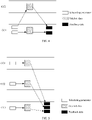
- UE1, UE2, and UE3 configure a plurality of carriers (for example, CC1 and CC2) to perform sidelink communication
- UE4 configures only a single carrier (for example, CC1) to perform sidelink communication
- CC1 is used as a feedback carrier and a scheduling carrier.
- PSFCH1 on CC1 is used for HARQ feedback of CC1.
- PSFCH2 is used for HARQ feedback of CC2.
- UE1 configures CA for NACK-only multicast transmission, and sends a scheduling parameter (for example, SCI) on CC1 to respectively schedule sidelink data to be sent on CC1 and CC2.
- a scheduling parameter for example, SCI
- the second scheduling information may include a plurality of pieces of SCI, so that UE may use the plurality of pieces of SCI to respectively schedule the sidelink data to be sent on a plurality of CCs.
- UE may use two pieces of SCI to respectively schedule sidelink data to be sent on CC1 and CC2.
- the second scheduling information includes a plurality of pieces of SCI.
- the pieces of SCI respectively use different carrier indication information which respectively indicate different CCs.
- SCI1 and SCI1 are respectively used to schedule CC1 and CC2.
- the second scheduling information includes one piece of SCI.
- the SCI indicates a plurality of different CCs.
- the SCI is used to schedule sidelink data to be sent on a plurality of CCs (for example, CC1 and CC2).
- UE may indicate, via carrier occupation information of SCI, a quantity of CCs to which data transmission (namely, sidelink data transmission) is allocated.
- UE may join up frequency-domain resources of all CCs for numbering, to simulate one CC or BWP for resource allocation and the like.
- UE2 and UE3 may monitor CC1, obtain and demodulate SCI in scheduling information, and receive, on CC1 and CC2 based on indication information in SCI, sidelink data transmitted in a multicast manner.
- UE2 and UE3 successfully receive the sidelink data on CC1 and CC2, because a HARQ feedback is a multicast NACK-only feedback, UE2 and UE3 send no feedback.
- UE4 configures only a single-carrier sidelink
- UE4 performs monitoring on only CC1. Specifically, when obtaining SCI in scheduling information sent by UE1, and learning that CC2 still has multicast data to be sent, UE4 learns that UE4 loses data transmitted on CC2. In this case, UE4 may send a NACK feedback on PSFCH2 of CC1. In this way, when receiving the NACK feedback on PSFCH2, UE1 can learn that at least one piece of member UE fails to receive sidelink data.
- transmit-end UE and receive-end UE can exchange scheduling information, so that the transmit-end UE and the receive-end UE both can learn a specific carrier on which sidelink data is transmitted and a specific carrier on which feedback data is transmitted. Therefore, the transmit-end UE and the receive-end UE can have consistent understandings of sidelink transmission, which can resolve a problem that NACK-only broadcast fails because a carrier monitored by the transmit-end UE does not match a carrier monitored by the receive-end UE. In addition, because UE needs to perform only resource sensing, reservation, and allocation on a scheduling carrier, UE does not need to allocate PSCCH channels on other carriers.
- UE needs to transmit a HARQ feedback on only the feedback carrier, UE does not need to allocate PSFCH channels on other carriers. This can reduce system overheads, and improve spectrum efficiency and data throughput.
- a PSFCH exists on only a feedback carrier, a problem that UE needs to not only transmit a PSSCH (a PSSCH carrying scheduling information) on a CC, but also receive a feedback of a PSFCH (a PSFCH carrying feedback data) on another CC can be resolved, that is, a problem of half-duplex caused by a sending and receiving conflict can be resolved.
- sidelink assignment index information may specifically indicate indexes of N pieces of SCI (scheduling parameter).
- N is a positive integer.
- the indexes of the N pieces of SCI are ranked in a first order, and are in a one-to-one correspondence with N data carriers that correspond to the N pieces of SCI and that are ranked in a second order.
- the first order and the second order are reverse to each other.
- the second scheduling information includes sidelink assignment index information
- the sidelink assignment index information is used to indicate the indexes of the N pieces of SCI
- a channel quantity of the feedback channel is N
- the indexes that are of the N pieces of SCI and that are ranked in the first order are in a one-to-one correspondence with feedback channels that correspond to the N pieces of SCI and that are ranked in a third order.
- the first order and the third order are the same as each other.
- UE configures a plurality of data carriers to transmit sidelink data, and transmits a scheduling parameter (for example, SCI) on each data carrier, thereby scheduling sidelink data transmission on each data carrier.
- a scheduling parameter for example, SCI
- the UE transmits, on one feedback carrier, feedback data of sidelink data on all data carriers.
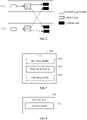
- UE configures a plurality of carriers (CC1, CC2, and CC3) to perform sidelink communication.
- CC1 is used as a feedback carrier; and PSFCH1, PSFCH2, and PSFCH3 on CC1 are respectively configured to transmit HARQ feedbacks of CC1, CC2, and CC3.
- a specific feedback carrier that is used to transmit feedback data and a specific CC whose of sidelink data corresponds to the feedback data depend on sidelink assignment index information (for example, an index of SCI) in scheduling information.
- the data carrier includes CC1, CC2, and CC3.
- UE1 configures CA for NACK-only multicast transmission, and sends SCI1, SCI2, and SCI3 on CC1, CC2, and CC3 respectively, to schedule sidelink data blocks to be sent on CC1, CC2, and CC3.
- the scheduling information includes the sidelink assignment index information, namely, the indexes of SCI.
- an index of SCI1 that schedules CC1 is 3, an index of SCI2 that schedules CC2 is 2, and an index of SCI3 that schedules CC3 is 1.
- feedback data of sidelink data scheduled on CC1 is transmitted by using PSFCH3; feedback data of sidelink data scheduled on CC2 is transmitted by using PSFCH2; and feedback data of sidelink data scheduled on CC3 is transmitted by using PSFCH1.
- an order of CC1, CC2, and CC3 is reverse to an order of the indexes of SCI1, SCI2, and SCI3.
- the order of the indexes of SCI1, SCI2, and SCI3 is the same as an order of PSFCH3, PSFCH2, and PSFCH1.
- UE2 may monitor CC1, CC2, and CC3, to obtain and demodulate SCI in scheduling information, and receive, on CC1, CC2, and CC3 based on indication of SCI, sidelink data transmitted in a multicast manner.
- UE2 successfully receives the sidelink data on CC1, CC2, and CC3, because a HARQ feedback is a multicast NACK-only feedback, UE2 sends no feedback.
- UE3 may obtain and demodulate SCI1 in the scheduling information, and find that an index of SCI1 is 3, thereby learning that two pieces of data are lost, that is, sidelink data transmitted on CC2 and sidelink data transmitted on CC3 are lost. In this case, UE3 sends NACK feedbacks on PSFCH2 and PSFCH3 of CC1 respectively.
- UE3 may obtain and demodulate SCI1 and SCI3, and find that indexes of SCI1 and SCI3 are 3 and 1 respectively, thereby learning that one piece of data is lost, that is, sidelink data transmitted on CC2 is lost. In this case, UE4 sends a NACK feedback on PSFCH2 of CC1.
- UE1 can learn, by monitoring PSFCHs on CC1, that there is a group element failing to receive sidelink data on CC2 and CC3.
- UE needs to monitor at least the feedback carrier to receive and send a HARQ feedback (namely, feedback data), so that an index of SCI on the feedback carrier may be the last index of a plurality of pieces of SCI, thereby ensuring that the UE monitoring the feedback carrier can find all lost packets.
- a HARQ feedback namely, feedback data
- UE because UE needs to transmit a HARQ feedback on only the feedback carrier, UE does not need to allocate PSFCH channels on other carriers. This can reduce system overheads, such as overheads of a PSCCH or a PSFCH and corresponding AGC and GP symbols.
- UE can independently perform resource sensing, resource reservation, and other operations on each carrier, can perform or optimize resource allocation with reference to channel measurement results of all carriers, and can prevent SCI of all carriers from concentrating on one carrier. Therefore, overload (overload) of a control channel (for example, a PSCCH) can be avoided.
- a control channel for example, a PSCCH
- each data carrier is used to carry feedback data.
- UE configures a plurality of data carriers to transmit sidelink data, and transmits a scheduling parameter (for example, SCI) on each data carrier, thereby scheduling sidelink data transmission on each data carrier.
- a scheduling parameter for example, SCI
- the UE transmits, on each data carrier, feedback data of sidelink data on all data carriers, that is, each data carrier may be a scheduling carrier and a feedback carrier.
- UE1, UE2, and UE3 configure a plurality of carriers (for example, CC1 and CC2) to perform sidelink communication.
- Each carrier performs self-scheduling independently.
- Each carrier is used as a feedback carrier.
- PSFCH1 and PSFCH2 on CC1 are used to respectively transmit HARQ feedbacks of CC1 and CC2.
- PSFCH3 and PSFCH4 on CC2 are used to transmit HARQ feedbacks of CC1 and CC2.
- UE1 configures CA for NACK-only multicast transmission, and sends SCI1 and SCI2 on CC1 and CC2 respectively, to respectively schedule sidelink data blocks to be sent on CC1 and CC2.
- UE2 can obtain and demodulate SCI in the scheduling information, and successfully receive, on CC1 and CC2 based on indication of the SCI, sidelink data transmitted in a multicast communication manner.
- UE2 successfully receives the sidelink data on CC1 and CC2 because a HARQ feedback is a multicast NACK-only feedback, UE2 sends no feedback.
- UE2 may send an ACK feedback on all PSFCHs (namely, PSFCH1, PSFCH2, PSFCH3, and PSFCH4) on CC1 and CC2 to, or send feedback data on a PSFCH of either of CC1 and CC2.
- PSFCH1, PSFCH2, PSFCH3, and PSFCH4 on all PSFCHs (namely, PSFCH1, PSFCH2, PSFCH3, and PSFCH4) on CC1 and CC2 to, or send feedback data on a PSFCH of either of CC1 and CC2.
- UE3 may obtain and demodulate SCI1 in the scheduling information, and find that sidelink data transmitted on CC2 is lost.
- UE3 obtains, based on one or more of indication information of SCI1, carrier indication information, and time-frequency resource information of data, a PSFCH resource (namely, PSFCH2) that is on CC1 and that is associated with CC2, and sends a NACK feedback on PSFCH2 of CC1.
- PSFCH resource namely, PSFCH2
- UE4 may obtain and demodulate SCI2 in the scheduling information, and find that sidelink data transmitted on CC1 is lost.
- UE4 obtains, based on one or more of indication information of SCI2, carrier indication information, and time-frequency resource information of data, a PSFCH resource (namely, PSFCH3) that is on CC2 and that is associated with CC1, and sends a NACK feedback on PSFCH3 of CC2.
- PSFCH resource namely, PSFCH3
- UE1 can monitor PSFCHs on CC1 and CC2, and learn, based on whether the NACK feedback is received, whether there is a group member failing to receive sidelink data.
- scheduling information can be obtained according to the data transmission method provided in this embodiment of the present disclosure.
- the scheduling information is used to instruct UE to perform sidelink data transmission in a carrier aggregation scenario, and instruct the UE to perform feedback data transmission in the carrier aggregation scenario.
- the transmit-end UE and the receive-end UE can learn a specific carrier on which sidelink data is transmitted and a specific carrier on which feedback data is transmitted.
- the transmit-end UE and the receive-end UE can have consistent understandings of sidelink transmission, which can resolve a problem that NACK-only broadcast fails because a carrier monitored by the transmit-end UE does not match a carrier monitored by the receive-end UE.
- unicast, multicast, or broadcast CA transmission on a sidelink can be implemented to meet corresponding service requirements.
- a plurality of carriers can be scheduled by using one carrier to transmit sidelink data, and feedback data of sidelink data on all carriers can be transmitted by using one carrier, overheads on a control channel (for example, a PSCCH or a PSFCH) can be reduced, thereby improving spectrum efficiency and data throughput, and resolving a problem of half-duplex caused when a plurality of carriers receive and send different physical channels at the same time.
- a control channel for example, a PSCCH or a PSFCH
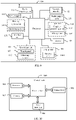
- FIG. 7 is a possible schematic structural diagram of UE according to an embodiment of the present disclosure.
- the UE 600 includes a transmitting module 601.
- the transmitting module 601 is configured to: transmit, in a carrier aggregation scenario based on scheduling information, sidelink data on a data carrier and feedback data on a feedback carrier, where the scheduling information is used to schedule the data carrier and/or the feedback carrier, and the feedback data is used to indicate a transmission result of the sidelink data.
- a scheduling carrier carrying the scheduling information is different from a part of or all of the data carriers, or the scheduling carrier is the same as the data carrier.
- a scheduling carrier carrying the scheduling information is the same as the feedback carrier, or the scheduling carrier is different from a part of or all of the feedback carriers.
- one feedback carrier is used to bear at least one feedback channel; one feedback channel is used to carry at least one piece of feedback data; and one piece of feedback data is used to indicate a transmission result of sidelink data on one data carrier.
- the UE further includes a receiving module 602.
- the receiving module 602 is configured to: receive the scheduling information from a control node before the transmitting module 601 transmits, based on the scheduling information, the sidelink data on the data carrier and the feedback data on the feedback carrier; or receive the scheduling information from a control node before the transmitting module 601 transmits the feedback data on the feedback carrier based on the scheduling information.
- the UE further includes an obtaining module 603.
- the obtaining module 603 is configured to: obtain configuration information before the transmitting module 601 transmits, based on the scheduling information, the sidelink data on the data carrier and the feedback data on the feedback carrier, where the configuration information is used to configure at least one of the following: the feedback carrier, the data carrier, or a scheduling carrier carrying scheduling information.
- the configuration information is pre-configured, specified in a protocol, received from a control node, or configured based on a negotiation between UEs.
- the scheduling information includes first scheduling information.
- the scheduling information is used to schedule the feedback carrier.
- the first scheduling information is used to indicate at least one of the following: second scheduling information, a resource location of the second scheduling information, a resource location of the sidelink data, first carrier indication information, second carrier indication information, third carrier indication information, a subcarrier spacing SCS of a sidelink data carrier, an SCS of the feedback carrier, an SCS of a scheduling carrier carrying the first scheduling information, an extensible parameter set of the data carrier, an extensible parameter set of the feedback carrier, and an extensible parameter set of the scheduling carrier.
- the second scheduling information is used to schedule the data carrier.
- the first carrier indication information is used to indicate the data carrier.
- the second carrier indication information is used to indicate the feedback carrier.
- the third carrier indication information is used to indicate the scheduling carrier.
- the second scheduling information is used to schedule the data carrier.
- the scheduling information includes the second scheduling information.
- the second scheduling information is used to schedule the data carrier.
- the second scheduling information includes at least one of the following: the first carrier indication information, sidelink assignment index information, carrier total quantity information, carrier occupation information, indication information used to indicate a feedback channel carrying the feedback data, and information about offset between the feedback channel and a reference channel.
- the first carrier indication information is used to indicate the data carrier.
- the sidelink assignment index information is used to indicate an index of each of at least one scheduling parameter.
- One scheduling parameter is used to schedule sidelink data on a part of or all of the data carriers.
- the carrier total quantity information is used to indicate a carrier quantity of the data carrier.
- the carrier occupation information is used to indicate whether data is transmitted on each data carrier.
- the scheduling carrier includes at least one of the following: a primary component carrier of the UE, a carrier used to perform radio link monitoring RLM, a carrier used to transmit sidelink radio resource control RRC signaling, a carrier associated with a preset quality of service QoS, a carrier used to transmit a synchronizing signal, a carrier used to transmit a discovery signal or channel, and a carrier used for radio resource management RRM.
- a primary component carrier of the UE includes at least one of the following: a primary component carrier of the UE, a carrier used to perform radio link monitoring RLM, a carrier used to transmit sidelink radio resource control RRC signaling, a carrier associated with a preset quality of service QoS, a carrier used to transmit a synchronizing signal, a carrier used to transmit a discovery signal or channel, and a carrier used for radio resource management RRM.
- the feedback carrier includes at least one of the following: a primary component carrier of the UE, a carrier used to perform radio link monitoring RLM, a carrier used to transmit sidelink radio resource control RRC signaling, a carrier associated with a preset quality of service QoS, a carrier used to transmit a synchronizing signal, a carrier used to transmit a discovery signal or channel, and a carrier used for radio resource management RRM.
- a primary component carrier of the UE includes at least one of the following: a primary component carrier of the UE, a carrier used to perform radio link monitoring RLM, a carrier used to transmit sidelink radio resource control RRC signaling, a carrier associated with a preset quality of service QoS, a carrier used to transmit a synchronizing signal, a carrier used to transmit a discovery signal or channel, and a carrier used for radio resource management RRM.
- the UE provided in this embodiment of the present disclosure can implement related steps in the foregoing method embodiments. To avoid repetition, details are not described herein again.
- the UE provided in this embodiment of the present disclosure can obtain scheduling information.
- the scheduling information is used to instruct the UE to perform sidelink data transmission in a carrier aggregation scenario, and instruct the UE to perform feedback data transmission in the carrier aggregation scenario.
- the transmit-end UE and the receive-end UE can learn a specific carrier on which sidelink data is transmitted and a specific carrier on which feedback data is transmitted. Therefore, the transmit-end UE and the receive-end UE can have consistent understandings of sidelink transmission, which can resolve a problem that NACK-only broadcast fails because carriers monitored by the transmit-end UE do not match carriers monitored by the receive-end UE.
- unicast, multicast, or broadcast CA transmission on a sidelink can be implemented to meet corresponding service requirements.
- a plurality of carriers can be scheduled by using one carrier to transmit sidelink data, and feedback data of sidelink data on all carriers can be transmitted by using one carrier, overheads on a control channel (for example, a PSCCH or a PSFCH) can be reduced, thereby improving spectrum efficiency and data throughput, and resolving a problem of half-duplex caused when a plurality of carriers receive and send different physical channels at the same time.
- a control channel for example, a PSCCH or a PSFCH
- FIG. 8 is a possible schematic structural diagram of control node according to an embodiment of the present disclosure. As shown in FIG. 8 , the control node 700 includes a sending module 701.
- the sending module 701 is configured to send scheduling information to user equipment UE.
- the scheduling information is used to schedule a data carrier in a carrier aggregation scenario to transmit sidelink data, and/or the scheduling information is used to schedule a feedback carrier to transmit feedback data.
- the feedback data is used to indicate a transmission result of the sidelink data.
- the sending module 701 is further configured to send configuration information to the UE before sending the scheduling information to the UE.
- the configuration information is used to indicate at least one of the following: the feedback carrier, the data carrier, or a scheduling carrier carrying scheduling information.
- a scheduling carrier carrying the scheduling information is different from a part of or all of the data carriers, or the scheduling carrier is the same as the data carrier.
- a scheduling carrier carrying the scheduling information is the same as the feedback carrier, or the scheduling carrier is different from a part of or all of the feedback carriers.
- the scheduling information includes first scheduling information.
- the first scheduling information is used to schedule the feedback carrier.
- the first scheduling information is used to indicate at least one of the following: second scheduling information, a resource location of the second scheduling information, a resource location of the sidelink data, first carrier indication information, second carrier indication information, third carrier indication information, a subcarrier spacing SCS of the data carrier, an SCS of the feedback carrier, an SCS of a scheduling carrier carrying the second scheduling information, an extensible parameter set of the data carrier, an extensible parameter set of the feedback carrier, and an extensible parameter set of the scheduling carrier.
- the second scheduling information is used to schedule the data carrier.
- the first carrier indication information is used to indicate the data carrier.
- the second carrier indication information is used to indicate the feedback carrier.
- the third carrier indication information is used to indicate the scheduling carrier.
- the second scheduling information is used to schedule the data carrier.
- the scheduling information includes the second scheduling information.
- the second scheduling information is used to schedule the data carrier.
- the second scheduling information includes at least one of the following: the first carrier indication information, sidelink assignment index information, carrier total quantity information, carrier occupation information, indication information used to indicate a feedback channel carrying the feedback data, and information about offset between the feedback channel and a reference channel.
- the first carrier indication information is used to indicate the data carrier.
- the sidelink assignment index information is used to indicate an index of each of at least one scheduling parameter.
- One scheduling parameter is used to schedule sidelink data on a part of or all of the data carriers.
- the carrier total quantity information is used to indicate a carrier quantity of the data carrier.
- the carrier occupation information is used to indicate whether data is transmitted on each data carrier.
- the scheduling carrier includes at least one of the following: a primary component carrier of the UE, a carrier used to perform radio link monitoring RLM, a carrier used to transmit sidelink radio resource control RRC signaling, a carrier associated with a preset quality of service QoS, a carrier used to transmit a synchronizing signal, a carrier used to transmit a discovery signal or channel, and a carrier used for radio resource management RRM.
- a primary component carrier of the UE includes at least one of the following: a primary component carrier of the UE, a carrier used to perform radio link monitoring RLM, a carrier used to transmit sidelink radio resource control RRC signaling, a carrier associated with a preset quality of service QoS, a carrier used to transmit a synchronizing signal, a carrier used to transmit a discovery signal or channel, and a carrier used for radio resource management RRM.
- the feedback carrier includes at least one of the following: a primary component carrier of the UE, a carrier used to perform radio link monitoring RLM, a carrier used to transmit sidelink radio resource control RRC signaling, a carrier associated with a preset quality of service QoS, a carrier used to transmit a synchronizing signal, a carrier used to transmit a discovery signal or channel, and a carrier used for radio resource management RRM.
- a primary component carrier of the UE includes at least one of the following: a primary component carrier of the UE, a carrier used to perform radio link monitoring RLM, a carrier used to transmit sidelink radio resource control RRC signaling, a carrier associated with a preset quality of service QoS, a carrier used to transmit a synchronizing signal, a carrier used to transmit a discovery signal or channel, and a carrier used for radio resource management RRM.
- control node provided in this embodiment of the present disclosure can implement related steps in the foregoing method embodiments. To avoid repetition, details are not described herein again.
- the control node provided in this embodiment of the present disclosure can send scheduling information to UE.
- the scheduling information is used to instruct the UE to perform sidelink data transmission in a carrier aggregation scenario, and instruct the UE to perform feedback data transmission in the carrier aggregation scenario.
- the transmit-end UE and the receive-end UE can learn a specific carrier on which sidelink data is transmitted and a specific carrier on which feedback data is transmitted. Therefore, the transmit-end UE and the receive-end UE can have consistent understandings of sidelink transmission, which can resolve a problem that NACK-only broadcast fails because carriers monitored by the transmit-end UE do not match carriers monitored by the receive-end UE.
- control node can configure, for UE, unicast, multicast, or broadcast CA transmission on a sidelink, to meet corresponding service requirements.
- a plurality of carriers can be scheduled to transmit sidelink data by using one carrier, and feedback data of sidelink data on all carriers can be transmitted by using one carrier, overheads on a control channel (for example, a PSCCH or a PSFCH) can be reduced, thereby improving spectrum efficiency and data throughput, and resolving a problem of half-duplex caused when a plurality of carriers receive and send different physical channels at the same time.
- a control channel for example, a PSCCH or a PSFCH
- FIG. 9 is a schematic structural diagram of hardware of UE according to an embodiment of the present disclosure.
- the UE 100 includes but is not limited to: a radio frequency unit 101, a network module 102, an audio output unit 103, an input unit 104, a sensor 105, a display unit 106, a user input unit 107, an interface unit 108, a memory 109, a processor 110, a power supply 111, and the like.
- a structure of the UE 100 shown in FIG. 9 does not constitute a limitation on the UE, and the UE 100 may include more or fewer components than those shown in the figure, or some components may be combined, or there may be a different component arrangement.
- the UE 100 includes but is not limited to: a mobile phone, a tablet computer, a notebook computer, a palmtop computer, a vehicle-mounted terminal device, a wearable device, a pedometer, or the like.
- the radio frequency unit 101 is configured to: transmit, in a carrier aggregation scenario based on scheduling information, sidelink data on a data carrier, and transmit feedback data on a feedback carrier based on the scheduling information.
- the scheduling information is used to schedule the data carrier and the feedback carrier.
- the feedback data is used to indicate a transmission result of the sidelink data.
- the UE provided in this embodiment of the present disclosure can obtain scheduling information.
- the scheduling information is used to instruct the UE to perform sidelink data transmission in a carrier aggregation scenario, and instruct the UE to perform feedback data transmission in the carrier aggregation scenario.
- the transmit-end UE and the receive-end UE can learn a specific carrier on which sidelink data is transmitted and a specific carrier on which feedback data is transmitted. Therefore, the transmit-end UE and the receive-end UE can have consistent understandings of sidelink transmission, which can resolve a problem that NACK-only broadcast fails because carriers monitored by the transmit-end UE do not match carriers monitored by the receive-end UE.
- unicast, multicast, or broadcast CA transmission on a sidelink can be implemented to meet corresponding service requirements.
- a plurality of carriers can be scheduled by using one carrier to transmit sidelink data, and feedback data of sidelink data on all carriers can be transmitted by using one carrier, overheads on a control channel (for example, a PSCCH or a PSFCH) can be reduced, thereby improving spectrum efficiency and data throughput, and resolving a problem of half-duplex caused when a plurality of carriers receive and send different physical channels at the same time.
- a control channel for example, a PSCCH or a PSFCH
- the radio frequency unit 101 may be configured to receive and send information, or receive and send signals during a call. Specifically, after receiving downlink data from a base station, the radio frequency unit sends the downlink data to the processor 110 for processing. In addition, the radio frequency unit sends uplink data to the base station.
- the radio frequency unit 101 includes but is not limited to: an antenna, at least one amplifier, a transceiver, a coupler, a low noise amplifier, and a duplexer, and the like.
- the radio frequency unit 101 may further communicate with another communications device through a wireless communication system and network.
- the UE 100 provides the user with wireless broadband Internet access by using the network module 102, for example, helps the user send or receive an email, browse a web page, access streaming media, and the like.
- the audio output unit 103 may convert audio data received by the radio frequency unit 101 or the network module 102 or stored in the memory 109 into an audio signal, and output the audio signal as sound.
- the audio output unit 103 may also provide audio output related to a specific function performed by the UE 100 (for example, call signal receiving sound or message receiving sound).
- the audio output unit 103 includes a speaker, a buzzer, a receiver, and the like.
- the input unit 104 is configured to receive audio or video signals.
- the input unit 104 may include a graphics processing unit (Graphics Processing Unit, GPU) 1041 and a microphone 1042.
- the graphics processing unit 1041 is configured to process image data of a static picture or a video obtained by an image capture apparatus (for example, a camera) in video capture mode or image capture mode.
- a processed image frame may be displayed on the display unit 106.
- the image frame processed by the graphics processing unit 1041 may be stored in the memory 109 (or another storage medium) or sent via the radio frequency unit 101 or the network module 102.
- the microphone 1042 may receive sound and can process such sound into audio data.
- the processed audio data may be output by being converted into a format that may be sent to a mobile communications base station by using the radio frequency unit 101 in a telephone call mode.
- the UE 100 further includes at least one sensor 105, for example, a light sensor, a motion sensor, and other sensors.
- the light sensor includes an ambient light sensor and a proximity sensor, where the ambient light sensor may adjust brightness of a display panel 1061 based on brightness of ambient light, and the proximity sensor may turn off the display panel 1061 and/or backlight when the UE 100 is moved towards the ear.
- an accelerometer sensor may detect magnitude of acceleration in various directions (usually three axes), may detect magnitude and the direction of gravity when stationary, may be configured to identify UE postures (such as horizontal and vertical screen switch, related games, and magnetometer posture calibration), may perform functions related to vibration identification (such as a pedometer and a knock), and the like.
- the sensor 105 may further include a fingerprint sensor, a pressure sensor, an iris sensor, a molecular sensor, a gyroscope, a barometer, a hygrometer, a thermometer, an infrared sensor, or the like. Details are not described herein.
- the display unit 106 is configured to display information inputted by a user or information provided to a user.
- the display unit 106 may include the display panel 1061, and the display panel 1061 may be configured in a form of a liquid crystal display (Liquid Crystal Display, LCD), an organic light-emitting diode (Organic Light-Emitting Diode, OLED), or the like.
- LCD Liquid Crystal Display
- OLED Organic Light-Emitting Diode
- the user input unit 107 may be configured to receive input digit or character information and generate key signal input related to user setting and function control of the UE 100.
- the user input unit 107 includes a touch panel 1071 and another input device 1072.
- the touch panel 1071 also referred to as a touchscreen, can collect a touch operation performed by a user on or near the touch panel 1071 (such as an operation on or near the touch panel 1071 performed by a user by using any suitable object or accessory such as a finger or a stylus).
- the touch panel 1071 may include two parts: a touch detection apparatus and a touch controller.
- the touch detection apparatus detects a touch direction of the user, detects a signal carried by a touch operation, and transmits the signal to the touch controller.
- the touch controller receives touch information from the touch detection apparatus, converts the touch information to point coordinates, sends the point coordinates to the processor 110, and receives and executes a command sent by the processor 110.
- the touch panel 1071 may be of a resistive type, a capacitive type, an infrared type, a surface acoustic wave type, or the like.
- the user input unit 107 may further include another input device 1072.
- the another input device 1072 may include but is not limited to a physical keyboard, a function key (such as a volume control key or an on/off key), a trackball, a mouse, and a joystick. Details are not described herein again.
- the touch panel 1071 may cover the display panel 1061.
- the touch panel 1071 transmits the touch operation to the processor 110 to determine a type of a touch event.
- the processor 110 provides corresponding visual output on the display panel 1061 based on the type of the touch event.
- the touch panel 1071 and the display panel 1061 act as two separate parts to implement input and output functions of the UE 100, in some embodiments, the touch panel 1071 and the display panel 1061 may be integrated to implement the input and output functions of the UE 100. This is not specifically limited herein.
- the interface unit 108 is an interface for connecting an external apparatus to the UE 100.
- the external apparatus may include a wired or wireless headset port, an external power supply (or a battery charger) port, a wired or wireless data port, a memory card port, a port for connecting an apparatus having an identification module, an audio input/output (I/O) port, a video I/O port, an earphone port, and the like.
- the interface unit 108 may be configured to receive input (for example, data information and power) from the external apparatus, and transmit the received input to one or more elements of the UE 100, or may be configured to transmit data between the UE 100 and the external apparatus.
- the memory 109 may be configured to store software programs and various data.
- the memory 109 may mainly include a program storage area and a data storage area.
- the program storage area may store an operating system, an application (for example, a sound play function or an image play function) required for at least one function, and the like.
- the data storage area may store data created based on use of the mobile phone (for example, audio data and a phone book), and the like.
- the memory 109 may include a high-speed random access memory, and may further include a nonvolatile memory, for example, at least one disk storage device, a flash memory, or another volatile solid-state storage device.
- the processor 110 is a control center of the UE 100, and is connected to all components of the UE 100 by using various interfaces and lines. By running or executing a software program and/or module that is stored in the memory 109 and calling data stored in the memory 109, the processor 110 executes various functions of the UE 100 and processes data, so as to perform overall monitoring on the UE 100.
- the processor 110 may include one or more processing units.
- the processor 110 may be integrated with an application processor and a modem processor.
- the application processor mainly processes an operating system, a user interface, an application, and the like, and the modem processor mainly processes wireless communication. It can be understood that the above-mentioned modem processor may not be integrated in the processor 110.
- the UE 100 may further include the power supply 111 (for example, a battery) supplying power to each component.
- the power supply 111 may be logically connected to the processor 110 by using a power management system, so that functions such as charge and discharge management and power consumption management are implemented by using the power management system.
- the terminal device 100 includes some function modules not shown, and details are not described herein.
- FIG. 10 is a schematic structural diagram of hardware of a control node according to an embodiment of the present disclosure.
- the control node 900 includes a processor 901, a transceiver 902, a memory 903, a user interface 904, and a bus interface.
- the transceiver 902 is configured to send scheduling information to user equipment UE.
- the scheduling information is used to schedule a data carrier in a carrier aggregation scenario to transmit sidelink data, and/or the scheduling information is used to schedule a feedback carrier to transmit feedback data.
- the feedback data is used to indicate a transmission result of the sidelink data.
- the control node provided in this embodiment of the present disclosure can send scheduling information to UE.
- the scheduling information is used to instruct the UE to perform sidelink data transmission in a carrier aggregation scenario, and instruct the UE to perform feedback data transmission in the carrier aggregation scenario.
- the transmit-end UE and the receive-end UE can learn a specific carrier on which sidelink data is transmitted and a specific carrier on which feedback data is transmitted. Therefore, the transmit-end UE and the receive-end UE can have consistent understandings of sidelink transmission, which can resolve a problem that NACK-only broadcast fails because a carrier monitored by the transmit-end UE do not match a carrier monitored by the receive-end UE.
- control node can configure, for UE, unicast, multicast, or broadcast CA transmission on a sidelink, to meet corresponding service requirements.
- a plurality of carriers can be scheduled by using one carrier to transmit sidelink data, and feedback data of sidelink data on all carriers can be transmitted by using one carrier, overheads on a control channel (for example, a PSCCH or a PSFCH) can be reduced, thereby improving spectrum efficiency and data throughput, and resolving a problem of half-duplex caused when a plurality of carriers receive and send different physical channels at the same time.
- a control channel for example, a PSCCH or a PSFCH
- a bus architecture may include any quantity of interconnected buses and bridges, and is specifically linked by various circuits of one or more processors represented by the processor 901 and a memory represented by the memory 903.
- the bus architecture may further link various other circuits such as those of a peripheral device, a voltage regulator, and a power management circuit. These are well known in the art, and therefore are not further described in this specification.
- the bus interface provides an interface.
- the transceiver 902 may be a plurality of components. To be specific, the transceiver 902 includes a transmitter and a receiver, and provides a unit configured to communicate with various other apparatuses on a transmission medium.
- the user interface 904 may alternatively be an interface for externally and internally connecting a required device.
- the connected device includes but is not limited to: a keypad, a display, a loudspeaker, a microphone, a joystick, and the like.
- the processor 901 is responsible for managing the bus architecture and common processing, and the memory 903 may store data used when the processor 901 performs an operation.
- control node 900 may further include some functional modules not shown. Details are not described herein again.
- an embodiment of the present disclosure further provides a terminal device, including a processor, a memory, and a computer program that is stored in the memory and executable on the processor.
- a terminal device including a processor, a memory, and a computer program that is stored in the memory and executable on the processor.
- the computer program is executed by the processor, the process of the data transmission method shown in the foregoing embodiments is implemented, and a same technical effect can be achieved. To avoid repetition, details are not described herein.
- an embodiment of the present disclosure further provides a network device, including a processor, a memory, and a computer program stored in the memory and executable on the processor.
- a network device including a processor, a memory, and a computer program stored in the memory and executable on the processor.
- the computer program is executed by the processor, the processes of the data transmission method in the foregoing embodiments is implemented, and same technical effects can be achieved. To avoid repetition, details are not described herein.
- An embodiment of the present disclosure further provides a computer-readable storage medium, where the computer-readable storage medium stores a computer program.
- the computer program is executed by a processor, a plurality of processes of the data transmission method in the foregoing embodiments is implemented, and the same technical effects can be achieved. To avoid repetition, details are not described herein again.
- the computer-readable storage medium is, for example, a read-only memory (Read-only Memory, ROM for short), a random access memory (Random Access Memory, RAM for short), a magnetic disk, or an optical disc.
- the computer software product is stored in a storage medium (for example, a ROM/RAM, a magnetic disk, or an optical disc) and includes several instructions for instructing a terminal device (which may be a mobile phone, a computer, a server, an air conditioner, or a network device) to execute the methods described in a plurality of embodiments of the present disclosure.
- a storage medium for example, a ROM/RAM, a magnetic disk, or an optical disc
Landscapes
- Engineering & Computer Science (AREA)
- Signal Processing (AREA)
- Computer Networks & Wireless Communication (AREA)
- Quality & Reliability (AREA)
- Mobile Radio Communication Systems (AREA)
Applications Claiming Priority (2)
| Application Number | Priority Date | Filing Date | Title |
|---|---|---|---|
| CN201910690842.7A CN111800219B (zh) | 2019-07-29 | 2019-07-29 | 数据传输方法、用户设备及控制节点 |
| PCT/CN2020/104920 WO2021018096A1 (fr) | 2019-07-29 | 2020-07-27 | Procédé de transmission de données, équipement utilisateur, et nœud de commande |
Publications (2)
| Publication Number | Publication Date |
|---|---|
| EP4007191A1 true EP4007191A1 (fr) | 2022-06-01 |
| EP4007191A4 EP4007191A4 (fr) | 2022-08-31 |
Family
ID=72804929
Family Applications (1)
| Application Number | Title | Priority Date | Filing Date |
|---|---|---|---|
| EP20846534.4A Pending EP4007191A4 (fr) | 2019-07-29 | 2020-07-27 | Procédé de transmission de données, équipement utilisateur, et noeud de commande |
Country Status (4)
| Country | Link |
|---|---|
| US (1) | US12245215B2 (fr) |
| EP (1) | EP4007191A4 (fr) |
| CN (1) | CN111800219B (fr) |
| WO (1) | WO2021018096A1 (fr) |
Cited By (2)
| Publication number | Priority date | Publication date | Assignee | Title |
|---|---|---|---|---|
| WO2022256190A1 (fr) * | 2021-06-04 | 2022-12-08 | Qualcomm Incorporated | Agrégation de porteuses de liaison latérale avec rétroaction harq interporteuse |
| EP4329400A4 (fr) * | 2021-04-22 | 2024-06-26 | Guangdong Oppo Mobile Telecommunications Corp., Ltd. | Procédé de transmission de canal physique de rétroaction de liaison latérale (psfch) et dispositif terminal |
Families Citing this family (25)
| Publication number | Priority date | Publication date | Assignee | Title |
|---|---|---|---|---|
| CN110710289A (zh) * | 2017-11-02 | 2020-01-17 | Oppo广东移动通信有限公司 | 车联网中的数据发送方法及终端 |
| US11582715B2 (en) * | 2020-02-12 | 2023-02-14 | Qualcomm Incorporated | Radio (NR) multicast feedback switching |
| US11889518B2 (en) * | 2020-08-14 | 2024-01-30 | Qualcomm Incorporated | Techniques for sidelink carrier aggregation (CA) and cross-carrier scheduling indication in sidelink control information (SCI) |
| CN114640971A (zh) * | 2020-12-15 | 2022-06-17 | 维沃移动通信有限公司 | 旁链路传输的处理方法、装置、终端及网络设备 |
| US11658790B2 (en) * | 2020-12-16 | 2023-05-23 | Qualcomm Incorporated | Sidelink component carrier selection for feedback during sidelink carrier aggregation |
| US11689325B2 (en) * | 2020-12-16 | 2023-06-27 | Qualcomm Incorporated | Feedback transmission via a sidelink feedback channel resource of a sidelink resource pool |
| US11632744B2 (en) * | 2020-12-17 | 2023-04-18 | Qualcomm Incorporated | Hybrid automatic repeat request feedback for a sidelink |
| US11818715B2 (en) * | 2020-12-17 | 2023-11-14 | Qualcomm Incorporated | Hybrid automatic repeat request codebook design for a sidelink |
| US12021634B2 (en) * | 2020-12-17 | 2024-06-25 | Qualcomm Incorporated | Resource determination for sidelink hybrid automatic repeat request feedback |
| CN118826970A (zh) | 2021-03-17 | 2024-10-22 | 上海推络通信科技合伙企业(有限合伙) | 一种用于无线通信的节点中的方法和装置 |
| CN115225218B (zh) * | 2021-04-15 | 2024-08-23 | 维沃移动通信有限公司 | 旁链路反馈资源的确定方法、终端及网络侧设备 |
| CN117121420A (zh) * | 2021-04-22 | 2023-11-24 | Oppo广东移动通信有限公司 | 无线通信方法及设备 |
| US12402148B2 (en) | 2021-06-02 | 2025-08-26 | Apple Inc. | Feedback for multi-carrier sidelink communication |
| US12200669B2 (en) * | 2021-09-02 | 2025-01-14 | Qualcomm Incorporated | Cross-carrier feedback with sidelink carrier aggregation |
| CN117898009A (zh) * | 2021-09-06 | 2024-04-16 | 联想(北京)有限公司 | 选择用于侧行链路多载波操作的载波的方法及设备 |
| CN115866530B (zh) * | 2021-09-22 | 2024-10-25 | 中信科智联科技有限公司 | 一种信息传输方法和装置 |
| WO2023092418A1 (fr) * | 2021-11-25 | 2023-06-01 | Oppo广东移动通信有限公司 | Procédé et appareil de retour d'informations, dispositif et support d'enregistrement |
| WO2023126367A1 (fr) * | 2021-12-29 | 2023-07-06 | Fraunhofer-Gesellschaft zur Förderung der angewandten Forschung e.V. | Équipement utilisateur et procédé de positionnement de liaison latérale de haute précision |
| CN116436571A (zh) * | 2021-12-31 | 2023-07-14 | 西安紫光展锐科技有限公司 | 反馈资源确定方法及装置、计算机可读存储介质 |
| US20230309098A1 (en) * | 2022-03-23 | 2023-09-28 | Qualcomm Incorporated | Techniques for scheduling multi-user sidelink communications in multiple time periods |
| CN116939799A (zh) * | 2022-04-02 | 2023-10-24 | 维沃移动通信有限公司 | 载波确定方法、装置、终端及可读存储介质 |
| CN118661459A (zh) * | 2022-04-24 | 2024-09-17 | Oppo广东移动通信有限公司 | 载波确定方法、装置、设备和介质 |
| US20230397170A1 (en) * | 2022-06-03 | 2023-12-07 | Qualcomm Incorporated | Duplicating sidelink transmissions for sidelink carrier aggregation |
| CN118158642A (zh) * | 2022-12-05 | 2024-06-07 | 维沃移动通信有限公司 | 消息传输方法、装置、ue及存储介质 |
| CN119485742A (zh) * | 2023-08-08 | 2025-02-18 | 维沃移动通信有限公司 | 旁链路传输方法、装置、终端及可读存储介质 |
Family Cites Families (12)
| Publication number | Priority date | Publication date | Assignee | Title |
|---|---|---|---|---|
| US10841911B2 (en) * | 2015-10-02 | 2020-11-17 | Lg Electronics Inc. | Method for transmitting downlink control information in wireless communication system |
| KR102166508B1 (ko) | 2016-03-30 | 2020-10-19 | 아이디에이씨 홀딩스, 인크. | 무선 시스템에서의 사용자 평면의 처리 |
| CA3019901C (fr) | 2016-04-07 | 2021-03-23 | Telefonaktiebolaget L M Ericsson (Publ) | Nud de reseau radio, dispositif sans fil et procedes realises dans ceux-ci |
| WO2018084524A1 (fr) * | 2016-11-02 | 2018-05-11 | 엘지전자(주) | Procédé de mise en œuvre d'une transmission par liaison latérale dans un système de communication sans fil et appareil à cet effet |
| WO2018174661A1 (fr) * | 2017-03-24 | 2018-09-27 | Samsung Electronics Co., Ltd. | Procédé de sélection de ressource dans une communication de véhicule à tout et appareil associé |
| CN108668371B (zh) * | 2017-03-28 | 2023-07-18 | 中兴通讯股份有限公司 | 数据传输方法及装置,终端 |
| CN109246659B (zh) * | 2017-06-15 | 2026-04-14 | 中兴通讯股份有限公司 | 一种通信控制方法、装置及计算机可读存储介质 |
| EP3652875B1 (fr) * | 2017-07-13 | 2023-11-01 | Koninklijke Philips N.V. | Dispositif de communication, système et procédé de communication faisant intervenir un retour d'information |
| WO2019023857A1 (fr) * | 2017-07-31 | 2019-02-07 | Zte Corporation | Procédés et dispositif informatique pour l'exécution d'une communication sans fil de dispositif à dispositif à l'aide d'une agrégation de porteuses de liaison latérale |
| US11272573B2 (en) | 2017-09-27 | 2022-03-08 | Sony Corporation | Communication systems for allocating resources for feedback between devices |
| US10931406B2 (en) * | 2019-06-10 | 2021-02-23 | Asustek Computer Inc. | Method and apparatus for handling feedback resource for groupcast in sidelink in a wireless communication system |
| KR102808908B1 (ko) * | 2019-06-21 | 2025-05-19 | 삼성전자 주식회사 | 통신 시스템에서 사이드링크 피드백 송수신 방법 및 장치 |
-
2019
- 2019-07-29 CN CN201910690842.7A patent/CN111800219B/zh active Active
-
2020
- 2020-07-27 EP EP20846534.4A patent/EP4007191A4/fr active Pending
- 2020-07-27 WO PCT/CN2020/104920 patent/WO2021018096A1/fr not_active Ceased
-
2022
- 2022-01-26 US US17/585,291 patent/US12245215B2/en active Active
Cited By (2)
| Publication number | Priority date | Publication date | Assignee | Title |
|---|---|---|---|---|
| EP4329400A4 (fr) * | 2021-04-22 | 2024-06-26 | Guangdong Oppo Mobile Telecommunications Corp., Ltd. | Procédé de transmission de canal physique de rétroaction de liaison latérale (psfch) et dispositif terminal |
| WO2022256190A1 (fr) * | 2021-06-04 | 2022-12-08 | Qualcomm Incorporated | Agrégation de porteuses de liaison latérale avec rétroaction harq interporteuse |
Also Published As
| Publication number | Publication date |
|---|---|
| US20220150908A1 (en) | 2022-05-12 |
| CN111800219A (zh) | 2020-10-20 |
| WO2021018096A1 (fr) | 2021-02-04 |
| CN111800219B (zh) | 2022-05-24 |
| EP4007191A4 (fr) | 2022-08-31 |
| US12245215B2 (en) | 2025-03-04 |
Similar Documents
| Publication | Publication Date | Title |
|---|---|---|
| US12245215B2 (en) | Method for data transmission through scheduling a carrier, user equipment, and control node | |
| US12022486B2 (en) | Feedback information transmission method and a terminal device | |
| US12177828B2 (en) | Method for resource allocation, method for resource release, terminal, and network device | |
| CN111130735B (zh) | 一种反馈控制方法、ue及网络设备 | |
| JP7332715B2 (ja) | フィードバックメッセージの送信方法及び端末機器 | |
| JP7454037B2 (ja) | サイドリンク情報の送信方法、受信方法、端末及び制御ノード | |
| US20220014343A1 (en) | Indication method, terminal device, and network-side device | |
| CN111262668B (zh) | 物理上行控制信道传输方法、网络侧设备和终端 | |
| CN111262670B (zh) | 一种混合自动重传确认反馈信息传输方法和终端设备 | |
| KR20220038133A (ko) | 레인징 방법 및 장비 | |
| WO2019196826A1 (fr) | Procédé et dispositif de transmission d'informations de liaison latérale | |
| US12192884B2 (en) | Information transmission method and terminal device | |
| CN109803437B (zh) | 一种随机接入方法、终端及网络设备 | |
| US20220159500A1 (en) | Sidelink measurement result obtaining method, sidelink measurement result sending method, and terminal | |
| JP2025134975A (ja) | 情報伝送方法、情報伝送装置、電子機器と可読記憶媒体 | |
| CN113541894B (zh) | 一种资源确定方法及设备 | |
| CN113473610A (zh) | 一种反馈方法及设备 | |
| CN113473605A (zh) | 一种冲突资源确定方法和终端 | |
| US20230031787A1 (en) | Method for determining overhead reference value for dmrs and terminal | |
| CN113225839B (zh) | 一种无线链路恢复方法及设备 | |
| EP4057540A1 (fr) | Procédé et dispositif de transmission de données et support | |
| HK40061128A (en) | Indication method, terminal device and network side device |
Legal Events
| Date | Code | Title | Description |
|---|---|---|---|
| STAA | Information on the status of an ep patent application or granted ep patent |
Free format text: STATUS: THE INTERNATIONAL PUBLICATION HAS BEEN MADE |
|
| PUAI | Public reference made under article 153(3) epc to a published international application that has entered the european phase |
Free format text: ORIGINAL CODE: 0009012 |
|
| STAA | Information on the status of an ep patent application or granted ep patent |
Free format text: STATUS: REQUEST FOR EXAMINATION WAS MADE |
|
| 17P | Request for examination filed |
Effective date: 20220124 |
|
| AK | Designated contracting states |
Kind code of ref document: A1 Designated state(s): AL AT BE BG CH CY CZ DE DK EE ES FI FR GB GR HR HU IE IS IT LI LT LU LV MC MK MT NL NO PL PT RO RS SE SI SK SM TR |
|
| A4 | Supplementary search report drawn up and despatched |
Effective date: 20220801 |
|
| RIC1 | Information provided on ipc code assigned before grant |
Ipc: H04L 5/00 20060101ALI20220726BHEP Ipc: H04L 1/00 20060101AFI20220726BHEP |
|
| DAV | Request for validation of the european patent (deleted) | ||
| DAX | Request for extension of the european patent (deleted) | ||
| STAA | Information on the status of an ep patent application or granted ep patent |
Free format text: STATUS: EXAMINATION IS IN PROGRESS |
|
| 17Q | First examination report despatched |
Effective date: 20250214 |