EP4007206A1 - Verfahren, vorrichtung und system zur quantenschlüsselverteilung - Google Patents
Verfahren, vorrichtung und system zur quantenschlüsselverteilung Download PDFInfo
- Publication number
- EP4007206A1 EP4007206A1 EP20864751.1A EP20864751A EP4007206A1 EP 4007206 A1 EP4007206 A1 EP 4007206A1 EP 20864751 A EP20864751 A EP 20864751A EP 4007206 A1 EP4007206 A1 EP 4007206A1
- Authority
- EP
- European Patent Office
- Prior art keywords
- quantum
- key
- cryptographic key
- key distribution
- distribution device
- Prior art date
- Legal status (The legal status is an assumption and is not a legal conclusion. Google has not performed a legal analysis and makes no representation as to the accuracy of the status listed.)
- Granted
Links
Images



Classifications
-
- H—ELECTRICITY
- H04—ELECTRIC COMMUNICATION TECHNIQUE
- H04L—TRANSMISSION OF DIGITAL INFORMATION, e.g. TELEGRAPHIC COMMUNICATION
- H04L9/00—Cryptographic mechanisms or cryptographic arrangements for secret or secure communications; Network security protocols
- H04L9/08—Key distribution or management, e.g. generation, sharing or updating, of cryptographic keys or passwords
- H04L9/0816—Key establishment, i.e. cryptographic processes or cryptographic protocols whereby a shared secret becomes available to two or more parties, for subsequent use
- H04L9/0852—Quantum cryptography
- H04L9/0855—Quantum cryptography involving additional nodes, e.g. quantum relays, repeaters, intermediate nodes or remote nodes
-
- H—ELECTRICITY
- H04—ELECTRIC COMMUNICATION TECHNIQUE
- H04L—TRANSMISSION OF DIGITAL INFORMATION, e.g. TELEGRAPHIC COMMUNICATION
- H04L9/00—Cryptographic mechanisms or cryptographic arrangements for secret or secure communications; Network security protocols
- H04L9/08—Key distribution or management, e.g. generation, sharing or updating, of cryptographic keys or passwords
- H04L9/0816—Key establishment, i.e. cryptographic processes or cryptographic protocols whereby a shared secret becomes available to two or more parties, for subsequent use
- H04L9/0852—Quantum cryptography
-
- H—ELECTRICITY
- H04—ELECTRIC COMMUNICATION TECHNIQUE
- H04L—TRANSMISSION OF DIGITAL INFORMATION, e.g. TELEGRAPHIC COMMUNICATION
- H04L9/00—Cryptographic mechanisms or cryptographic arrangements for secret or secure communications; Network security protocols
- H04L9/08—Key distribution or management, e.g. generation, sharing or updating, of cryptographic keys or passwords
- H04L9/0816—Key establishment, i.e. cryptographic processes or cryptographic protocols whereby a shared secret becomes available to two or more parties, for subsequent use
- H04L9/0819—Key transport or distribution, i.e. key establishment techniques where one party creates or otherwise obtains a secret value, and securely transfers it to the other(s)
-
- H—ELECTRICITY
- H04—ELECTRIC COMMUNICATION TECHNIQUE
- H04L—TRANSMISSION OF DIGITAL INFORMATION, e.g. TELEGRAPHIC COMMUNICATION
- H04L9/00—Cryptographic mechanisms or cryptographic arrangements for secret or secure communications; Network security protocols
- H04L9/08—Key distribution or management, e.g. generation, sharing or updating, of cryptographic keys or passwords
- H04L9/0816—Key establishment, i.e. cryptographic processes or cryptographic protocols whereby a shared secret becomes available to two or more parties, for subsequent use
- H04L9/0819—Key transport or distribution, i.e. key establishment techniques where one party creates or otherwise obtains a secret value, and securely transfers it to the other(s)
- H04L9/0822—Key transport or distribution, i.e. key establishment techniques where one party creates or otherwise obtains a secret value, and securely transfers it to the other(s) using key encryption key
-
- H—ELECTRICITY
- H04—ELECTRIC COMMUNICATION TECHNIQUE
- H04L—TRANSMISSION OF DIGITAL INFORMATION, e.g. TELEGRAPHIC COMMUNICATION
- H04L9/00—Cryptographic mechanisms or cryptographic arrangements for secret or secure communications; Network security protocols
- H04L9/08—Key distribution or management, e.g. generation, sharing or updating, of cryptographic keys or passwords
- H04L9/0816—Key establishment, i.e. cryptographic processes or cryptographic protocols whereby a shared secret becomes available to two or more parties, for subsequent use
- H04L9/0852—Quantum cryptography
- H04L9/0858—Details about key distillation or coding, e.g. reconciliation, error correction, privacy amplification, polarisation coding or phase coding
Definitions
- the present disclosure relates to a quantum key distribution method, a quantum key distribution device, and a quantum key distribution system and, more particularly, to a quantum key distribution method, a quantum key distribution device, and a quantum key distribution system for properly providing a quantum cryptographic key even when failure occurs in a first quantum channel CH1 connecting a first quantum key distribution device QKD1 and a second quantum key distribution device QKD2 of a quantum key distribution system.
- quantum cryptography communication technology is introduced.
- the quantum cryptography communication technology theoretically guarantees very high security and has been spotlighted as a next-generation security technology.
- QKD quantum key distribution
- an application requests and obtains a quantum cryptographic key according to a required standard (e.g., the length of a quantum cryptographic key, the update period of a quantum cryptographic key, or the like) from a quantum key distribution (QKD) device.
- the QKD device generates a quantum cryptographic key and encrypts data using the obtained quantum cryptographic key to perform communication.
- the quantum cryptographic key it is necessary to provide the quantum cryptographic key according to the required standard requested by the application without interruption. For example, if a service needs to be provided with a 256-bit quantum cryptographic key every 10 seconds and if the service fails to be provided with the quantum cryptographic key at a proper time, the service may use the existing quantum cryptographic key continuously. In this case, the security may not be secured at a desired level.
- a security-sensitive service may require a new quantum cryptographic key on a rapid cycle.
- security quality may deteriorate, and the quality of the service may be not secured.
- a quantum key distribution (QKD) device requires a method for properly providing a quantum cryptographic key without interruption even when a quantum cryptographic key cannot be properly generated due to a noise in a quantum channel, hacking of the quantum channel, or the like.
- QKD quantum key distribution
- the present disclosure has been made in view of the above-mentioned problems, and an aspect of the present disclosure is to provide a quantum key distribution method, a quantum key distribution device, and a quantum key distribution system for properly providing a quantum cryptographic key without interruption even when a failure occurs in a first quantum channel CH1 connecting a first quantum key distribution device QKD1 and a second quantum key distribution device QKD2 of a quantum key distribution system.
- a quantum key distribution method, a quantum key distribution device, and a quantum key distribution system may be provided for properly distributing a quantum cryptographic key via a plurality of paths even in a long-distance section where a quantum key distribution system cannot distribute a quantum cryptographic key via a single path.
- a quantum key distribution system may include: a 1-1 quantum key distribution device QKD1-1; a 2-1 quantum key distribution device QKD2-1 configured to be connected with the 1-1 quantum key distribution device QKD1-1 through a first quantum channel CH1; a 3-1 quantum key distribution device QKD3-1 configured to be connected with a 1-2 quantum key distribution device QKD1-2 through a second quantum channel CH2; a first quantum node controller QNC1 configured to control an operation of the 1-1 quantum key distribution device QKD1-1 and an operation of the 1-2 quantum key distribution device QKD1-2; a second quantum node controller QNC2 configured to control an operation of the 2-1 quantum key distribution device QKD2-1; and a third quantum node controller QNC3 configured to control an operation of the 3-1 quantum key distribution device QKD3-1, wherein the first quantum node controller QNC1 transmits a first quantum cryptographic key to the second quantum node controller QNC2 via a plurality of paths including a first path P1 connecting the
- the quantum cryptographic key may be distributed via the plurality of paths including the first path P1 by bypassing the first quantum channel CH1.
- the quantum cryptographic key may be distributed via the plurality of paths in a long-distance section where it is impossible to distribute the quantum cryptographic key via a single path.
- the quantum cryptographic key to be distributed may be distributed to a plurality of nodes via the plurality of paths.
- the first quantum node controller QNC1 may receive a second quantum cryptographic key generated by the 2-1 quantum key distribution device QKD2-1 from the 1-1 quantum key distribution device QKD1-1 and the third quantum cryptographic key generated by the 3-1 quantum key distribution device QKD3-1 from the 1-2 quantum key distribution device QKD1-2.
- the first quantum node controller QNC1 may calculate a quantum cryptographic key generation rate using the quantum cryptographic key transmitted from the 1-1 quantum key distribution device QKD1-1.
- the quantum key distribution system may further include a 3-2 quantum key distribution device QKD3-2 configured to be connected with a 2-2 quantum key distribution device QKD2-2, an operation of which is controlled by the second quantum node controller QNC2, via a third quantum channel CH3, wherein the third quantum node controller QNC3 may control an operation of the 3-2 quantum key distribution device QKD3-2, and the second quantum node controller QNC2 may receive the first quantum cryptographic key, which is transmitted from the first quantum node controller QNC1, through a second path P2 connecting the third quantum node controller QNC3 and the second quantum node controller QNC2 and may then decode the first quantum cryptographic key with a fourth quantum cryptographic key shared between the 3-2 quantum key distribution device QKD3-2 and the 2-2 quantum key distribution device QKD2-2.
- a 3-2 quantum key distribution device QKD3-2 configured to be connected with a 2-2 quantum key distribution device QKD2-2, an operation of which is controlled by the second quantum node controller QNC2, via a third quantum channel CH3, wherein the third
- the quantum key distribution system may further include a quantum network management server QMS configured to detect occurrence of a failure in the first quantum channel CH1 and to perform control to configure the plurality of paths including the first path P1 so that the first quantum node controller QNC1 transmits the first quantum cryptographic key to the second quantum node controller QNC2 by bypassing the first quantum channel CH1.
- a quantum network management server QMS configured to detect occurrence of a failure in the first quantum channel CH1 and to perform control to configure the plurality of paths including the first path P1 so that the first quantum node controller QNC1 transmits the first quantum cryptographic key to the second quantum node controller QNC2 by bypassing the first quantum channel CH1.
- the quantum network management server QMS may detect whether the failure occurs in the first quantum channel CH1 in view of a quantum cryptographic key generation rate of a quantum cryptographic key received from the first quantum node controller QNC1.
- a quantum key distribution method may include: a quantum cryptographic key bypassing distribution determination operation in which a first quantum node controller QNC1 determines to distribute a quantum cryptographic key by bypassing a first quantum channel CH1 connecting a 1-1 quantum key distribution device QKD1-1 and a 2-1 quantum key distribution device QKD2-1; a quantum cryptographic key encryption operation of encrypting a first quantum cryptographic key with a third quantum cryptographic key shared between a 1-2 quantum key distribution device QKD1-2 and a 3-1 quantum key distribution device QKD3-1; and a quantum cryptographic key bypassing transmission operation of transmitting the encrypted first quantum cryptographic key to a second quantum node controller QNC2 through the plurality of paths including a first path P1 connecting the first quantum node controller QNC1 and a third quantum node controller QNC3 by bypassing the first quantum channel CH1.
- a quantum key distribution system may include: a 1-1 quantum key distribution device QKD1-1; a 2-1 quantum key distribution device QKD2-1 configured to be connected with the 1-1 quantum key distribution device QKD1-1 via a first quantum channel CH1; a first quantum node controller QNC1 configured to receive a first quantum cryptographic key generated by the 1-1 quantum key distribution device QKD1-1; a second quantum node controller QNC2 to receive a second quantum cryptographic key generated by the 2-1 quantum key distribution device QKD2-1; and a quantum network management server QMS configured to detect occurrence of a failure in the first quantum channel CH1 and to control the first quantum node controller QNC1 and the second quantum node controller QNC2 corresponding to the first quantum channel CH1 to generate a reuse quantum cryptographic key using the first quantum cryptographic key and the second quantum cryptographic key according to a quantum cryptographic key reuse policy.
- the first quantum node controller QNC1 and the second quantum node controller QNC2 generate and share the reuse quantum cryptographic key by combining parts of the first quantum cryptographic key and the second quantum cryptographic key according to the quantum cryptographic key reuse policy.
- the first quantum node controller QNC1 and the second quantum node controller QNC2 generate and share the reuse quantum cryptographic key by combining a used quantum cryptographic key and an unused quantum cryptographic key stream according to the quantum cryptographic key reuse policy.
- a quantum key distribution method, a quantum key distribution device, and a quantum key distribution system may properly provide a quantum cryptographic key without interruption by sharing the quantum cryptographic key via a plurality of paths bypassing the first quantum channel CH1 or generating a reuse quantum cryptographic key from a previously generated quantum cryptographic key.
- quantum key distribution system will be briefly described first, and then a quantum key distribution method, a quantum key distribution device, and a quantum key distribution system according to an embodiment of the present disclosure will be described in detail.
- FIG. 1 illustrates a quantum cryptographic key request and response process performed between a quantum key distribution QKD device and an application according to the European Telecommunications Standards Institute.
- the quantum cryptographic key can be shared between the first application App A and the second application App B using a 3-1 quantum key distribution device QKD C-1 of a third site Site 3 connected to the 1-2 quantum key distribution device QKD A-2 of the first site Site 1, a 3-2 quantum key distribution device QKD C-2 of the third site Site 3 connected to a 2-2 quantum key distribution device QKD B-2 of the second site Site 2, or the like by bypassing the quantum channel where a failure occurs.
- a 3-1 quantum key distribution device QKD C-1 of a third site Site 3 connected to the 1-2 quantum key distribution device QKD A-2 of the first site Site 1, a 3-2 quantum key distribution device QKD C-2 of the third site Site 3 connected to a 2-2 quantum key distribution device QKD B-2 of the second site Site 2, or the like by bypassing the quantum channel where a failure occurs.
- a quantum cryptographic key Key_AC shared between the 1-2 quantum key distribution device QKD A-2 and the 3-1 quantum key distribution device QKD C-1 is different from a quantum cryptographic key Key CB shared between the 2-2 quantum key distribution device QKD B-2 and the 3-2 quantum key distribution device QKD C-2. Accordingly, it is difficult to share the quantum cryptographic key between the first application App A and the second application App B, and the first application App A and the second application App B cannot properly perform quantum cryptography communication.
- the quantum key distribution device In the quantum key distribution method, the quantum key distribution device, and the quantum key distribution system according to the embodiment of the present disclosure, even when a failure occurs in the quantum channel connecting the 1-1 quantum key distribution device QKD A-1 of the first site Site 1 and the 2-1 quantum key distribution device QKD B-1 of the second site Site 2, it is possible to properly share a quantum cryptographic key between the first application App A and the second application App B safely and without interruption i) by using a multilink that bypasses the quantum channel ii) by regenerating a quantum cryptographic key using a defined reuse policy,.
- FIG. 2 illustrates a quantum key distribution system 10 according to an embodiment of the present disclosure.
- the quantum key distribution system 10 may include a transmitter 11, a receiver 12, and a quantum channel 13.
- the transmitter 11 and the receiver 12 generate and share a quantum cryptographic key by exchanging optical signals through the quantum channel 13.
- the transmitter 11 and the receiver 12 may be servers, clients or terminal devices connected to a server, communication devices, such as gateways or routers, or portable devices having mobility or may be configured using various devices capable of communication by generating and sharing a quantum key.
- the quantum channel 13 is provided between the transmitter 11 and the receiver 12 to transmit an optical signal.
- the quantum channel 13 may be configured using an optical fiber.
- the present disclosure is not limited thereto.
- any medium capable of transmitting an optical signal may be used to configure the quantum channel 13.
- the transmitter 11 and the receiver 12 may exchange information necessary to generate the quantum cryptographic key using the phase, polarization, and the like of the optical signal according to various protocols, such as the BB84 protocol.
- the transmitter 11 and the receiver 12 may generate and share the quantum cryptographic key in order to effectively prevent an attacker 14 from stealing the quantum cryptographic key and attempting to hack the quantum cryptographic key.
- a quantum cryptography communication system may perform communication while performing encryption and decryption using the quantum cryptographic key generated in the quantum key distribution system 10. Therefore, the security of the communication system is enhanced according to the embodiment of the present disclosure.
- FIG. 3 is a block diagram illustrating a quantum key distribution system 100 according to an embodiment of the present disclosure.
- the quantum key distribution system 100 may include a 1-1 quantum key distribution device QKD1-1, a 2-1 quantum key distribution device QKD2-1 121 connected with the 1-1 quantum key distribution device QKD1-1 111 through a first quantum channel CH1, a 3-1 quantum key distribution device QKD3-1 131 connected with a 1-2 quantum key distribution device QKD1-2 112 through a second quantum channel CH2, a first quantum node controller QNC1 115 to control the operation of the 1-1 quantum key distribution device QKD1-1 111 and the 1-2 quantum key distribution device QKD1-2 112, a second quantum node controller QNC2 125 to control the operation of the 2-1 quantum key distribution device QKD2-1 121, and a third quantum node controller QNC3 135 to control the operation of the 3-1 quantum key distribution device QKD3-1 131.
- the first quantum node controller QNC1 115 transmits a first quantum cryptographic key to the second quantum node controller QNC2 125 via a plurality of paths including a first path P1 connecting the first quantum node controller QNC1 115 and the third quantum node controller QNC3 135 by bypassing the first quantum channel CH1.
- the first quantum cryptographic key is encrypted with a third quantum cryptographic key shared between the 1-2 quantum key distribution device QKD1-2 112 and the 3-1 quantum key distribution device QKD3-1 131 and is transmitted.
- the quantum key distribution system 100 may distribute the quantum cryptographic key via the plurality of paths including the first path P1 by bypassing the first quantum channel CH1, in order to effectively distribute the quantum cryptographic key via the plurality of paths by bypassing the first quantum channel CH1 even when the failure occurs in the first quantum channel CH1.
- the quantum key distribution system 100 may properly distribute the quantum cryptographic key via a plurality of paths.
- the quantum key distribution system 100 may easily distribute the quantum cryptographic key to be distributed to the plurality of nodes via a plurality of paths.
- the first quantum node controller QNC1 115, the 1-1 quantum key distribution device QKD1-1 111, and the 1-2 quantum key distribution device QKD1-2 112 are disposed in the same first site Site 1.
- the present disclosure is not limited thereto.
- the 1-1 quantum key distribution device QKD1-1 111 and the 1-2 quantum key distribution device QKD1-2 112 may be configured as a single device in FIG. 3 .
- the present disclosure is not limited thereto.
- the 1-1 quantum key distribution device QKD1-1 111 and the 1-2 quantum key distribution device QKD1-2 112 may be configured as separate devices in accordance with another embodiment.
- the quantum key distribution system 100 may further include a 3-2 quantum key distribution device QKD3-2 132 connected with a 2-2 quantum key distribution device QKD2-2 122, the operation of which is controlled by the second quantum node controller QNC2, via a third quantum channel CH3.
- the third quantum node controller QNC3 controls the operation of the 3-2 quantum key distribution device QKD3-2.
- the second quantum node controller QNC2 125 receives the first quantum cryptographic key, transmitted from the first quantum node controller QNC1 115, through a second path P2 connecting the third quantum node controller QNC3 135 and the second quantum node controller QNC2 125 and then decodes the first quantum cryptographic key with a fourth quantum cryptographic key shared between the 3-2 quantum key distribution device QKD3-2 132 and the 2-2 quantum key distribution device QKD2-2 122.
- FIG. 3 shows the second quantum node controller QNC2 125, the 2-1 quantum key distribution device QKD2-1 121, and the 2-2 quantum key distribution device QKD2-2 122 may be disposed in the same second site Site 2.
- the present disclosure is not limited thereto.
- the 2-1 quantum key distribution device QKD2-1 121 and the 2-2 quantum key distribution device QKD2-2 122 may be configured as a single device as shown in FIG. 3 .
- the present disclosure is not limited thereto.
- the 2-1 quantum key distribution device QKD2-1 121 and the 2-2 quantum key distribution device QKD2-2 122 may be configured as separate devices.
- FIG. 3 shows that the third quantum node controller QNC3 135, the 3-1 quantum key distribution device QKD3-1 131, and the 3-2 quantum key distribution device QKD3-2 132 may be disposed in the same second site Site 3.
- the present disclosure is not limited thereto.
- FIG. 3 shows the 3-1 quantum key distribution device QKD3-1 131 and the 3-2 quantum key distribution device QKD3-2 132 may be configured as a single device.
- the present disclosure is not limited thereto.
- the 3-1 quantum key distribution device QKD3-1 131 and the 3-2 quantum key distribution device QKD3-2 132 may be configured as separate devices in accordance with another embodiment.
- the quantum key distribution system 100 may further include a quantum network management server QMS 160 that detects the occurrence of a failure in the first quantum channel CH1 and performs control to configure a plurality of paths including the first path P1 so that the first quantum node controller QNC1 115 transmits the first quantum cryptographic key to the second quantum node controller QNC2 125 by bypassing the first quantum channel CH1.
- a quantum network management server QMS 160 that detects the occurrence of a failure in the first quantum channel CH1 and performs control to configure a plurality of paths including the first path P1 so that the first quantum node controller QNC1 115 transmits the first quantum cryptographic key to the second quantum node controller QNC2 125 by bypassing the first quantum channel CH1.
- the quantum network management server QMS 160 may detect whether a failure occurs in the first quantum channel CH1 in view of the quantum cryptographic key generation rate of the quantum cryptographic key received from the first quantum node controller QNC1 115 and may configure the plurality of paths including the first path P1 to transmit the first quantum key from the first quantum node controller QNC1 115 to the second quantum node controller QNC2 125 by bypassing the first quantum channel CH1.
- FIG. 3 shows that the first quantum node controller QNC1 115 is connected to the third quantum node controller QNC3 135 via the first path P1 and is then connected to the second quantum node controller QNC2 125 via the second path P2, the present disclosure is not limited thereto.
- the first quantum key may be transmitted from the first quantum node controller QNC1 115 to the second quantum node controller QNC2 125 through a multilink passing through a plurality of paths connecting to an additional quantum node controller QNC.
- FIG. 4 is a flowchart illustrating a quantum key distribution method according to an embodiment of the present disclosure.
- the quantum key distribution method according to the embodiment of the present disclosure may include i) a quantum cryptographic key bypassing distribution determination operation (S110) in which the first quantum node controller QNC 1 115 determines to distribute a quantum cryptographic key by bypassing the first quantum channel CH1 connecting the 1-1 quantum key distribution device QKD1-1 111 and the 2-1 quantum key distribution device QKD2-1 121, ii) a quantum cryptographic key encryption operation (S120) of encrypting the first quantum cryptographic key with the third quantum cryptographic key shared between the 1-2 quantum key distribution device QKD1-2 112 and the 3-1 quantum key distribution device QKD3-1 131, and iii) a quantum cryptographic key bypassing transmission operation (S130) of transmitting the encrypted first quantum cryptographic key to the second quantum node controller QNC2 125 through the plurality of paths including the first path P1 connecting the first quantum node controller
- the quantum key distribution system 100 and the quantum key distribution method according to the embodiment of the present disclosure may share a quantum cryptographic key through a plurality of paths bypassing the first quantum channel CH1. Therefore, the quantum cryptographic key may be properly provided without interruption in accordance with the embodiments.
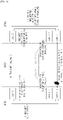
- FIG. 5 illustrates operation of a quantum key distribution system 100 according to an embodiment of the present disclosure.
- each quantum key distribution device QKD generates and shares a quantum cryptographic key by exchanging optical signals through each quantum channel and transmits the generated quantum cryptographic key to a corresponding quantum node controller QNC ((0) of FIG. 5 ).
- the quantum node controller QNC may function to receive, store, and manage the quantum cryptographic key generated by the quantum key distribution device QKD and to control and manage the state of the quantum key distribution device QKD.
- the quantum node controller QNC may be configured as an independent device separate from the quantum key distribution device QKD or may be integrated with the quantum key distribution device QKD as a single device. Further, the quantum node controller QNC may be configured in various forms, such as a processor driven in a server or a communication device, in addition to a physical device.
- the 1-1 quantum key distribution device QKD1-1 111 generates a quantum cryptographic key by exchanging optical signals with the 2-1 quantum key distribution device QKD2-1 121 through the first quantum channel CH1 and transmits the generated quantum cryptographic key to the first quantum node controller QNC1 115 ((0) of FIG. 5 ).
- the 1-1 quantum key distribution device QKD1-1 111 transmits the quantum cryptographic key to the first quantum node controller QNC1, the present disclosure is not limited thereto. Instead, it is possible to transmit a quantum key stream other than the quantum cryptographic key.
- the 1-1 quantum key distribution device QKD1-1 111 may calculate a quantum cryptographic key generation rate from the quantum cryptographic key generated in the first quantum channel CH1.
- the quantum network management server 160 may monitor the quantum cryptographic key generation rate in the first quantum channel CH1 calculated by the 1-1 quantum key distribution device QKD1-1 111 and may determine that a failure occurs in the first quantum channel CH1 due to a noise, hacking, or the like when the quantum cryptographic key generation rate in the first quantum channel CH1 is reduced to a predetermined threshold value or less.
- the quantum network management server 160 determines whether a failure occurs in the first quantum channel CH1 on the basis of the generation rate of the quantum cryptographic key generated by the 1-1 quantum key distribution device QKD1-1 111, the present disclosure is not necessarily limited thereto. Instead, the 1-1 quantum key distribution device QKD1-1 111 may directly determine whether a failure occurs in the first quantum channel CH1.
- the quantum network management server 160 calculates an alternative path bypassing the first quantum channel CH1.
- a path search algorithm such as Dijkstra's algorithm or constraint-based shortest path search algorithm, may be used when calculating the alternative path. Accordingly, an optimal alternative path excluding the first quantum channel CH1 in which the failure has occurred may be calculated.
- the quantum network management server 160 may transmit information about the path replacing the first quantum channel CH1 to the quantum node controllers QNC to share the quantum cryptographic key using the alternate path.
- the first quantum node controller QNC1 115 receives, from an application A App A driven in a first service device 170 corresponding to the 1-1 quantum key distribution device QKD1-1 111, a quantum cryptographic key request for performing communication with an application B App B driven in a second service device 180 corresponding to the 2-1 quantum key distribution device QKD2-1 121 connected through the first quantum channel CH1 ((1) of FIG. 5 ).
- the first quantum node controller QNC1 115 prepares a first quantum cryptographic key (Key_AB in FIG. 5 ) to be used for quantum cryptography communication between the application A App A and the application B App B.
- the first quantum cryptographic key may be a randomly generated cryptographic key or may be obtained by various methods, for example, selecting one of quantum cryptographic keys generated by the 1-1 quantum key distribution device QKD1-1 111 or the 1-2 quantum key distribution device QKD1-2 112.
- the first quantum node controller QNC1 115 transmits the first quantum cryptographic key to the third quantum node controller QNC3 135 through the first path P1, which is a first section of the alternative path.
- the first quantum node controller QNC1 115 encrypts the first quantum cryptographic key with a third quantum cryptographic key generated between the 1-2 quantum key distribution device QKD1-2 112 and the 3-1 quantum key distribution device QKD3-1 131 and transmits the encrypted first quantum cryptographic key.
- the third quantum node controller QNC3 135 receives the encrypted first quantum cryptographic key and decrypts the encrypted first quantum cryptographic key with the third quantum cryptographic key ((2-1) of FIG. 5 ).
- the alternative path may include a large number of unit paths.
- the first quantum cryptographic key may be encrypted with a quantum cryptographic key corresponding to each unit path, be transmitted, and then be decrypted. Therefore, the first quantum cryptographic key may be safely transmitted according to the embodiment of the present disclosure.
- the first quantum cryptographic key is transmitted to the second quantum node controller QNC2 125 through a second path P2, which is the last section of the alternative path.
- the second quantum node controller QNC2 125 receives the first quantum cryptographic key encrypted with a fourth quantum cryptographic key and decrypts the encrypted first quantum cryptographic key with the fourth quantum cryptographic key ((2-2) in FIG. 5 ).
- the application A is provided with the first quantum cryptographic key and transmits the identification information about the first quantum cryptographic key to the application B App B driven in the second user device 180 ((4) of FIG. 5 ).
- the quantum key distribution system 100 and the quantum key distribution method according to the embodiment of the present disclosure may properly provide the quantum cryptographic key required for the quantum cryptography communication between the application A App A driven in the first service device 170 and the application B App B driven in the second service device 180 without interruption by bypassing the first quantum channel CH1.
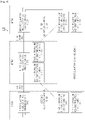
- FIG. 6 is a flowchart illustrating operation of the quantum key distribution system 100 according to an embodiment of the present disclosure.
- each quantum node controller QNC calculates a quantum cryptographic key generation rate from a generated quantum cryptographic key and transmits the quantum cryptographic key generation rate to the quantum network management server 160 ((a) of FIG. 6 ).
- the quantum network management server 160 may identify a failure section in which quantum cryptographic key generation is reduced using the quantum cryptographic key generation rate ((b) of FIG. 6 ) and recalculates an alternative path for quantum cryptographic key generation for the failure section (A-B of FIG. 6 ) in which quantum cryptographic key generation is reduced ((c) of FIG. 6 ).
- the quantum network management server 160 transmits the calculated alternative path for quantum cryptographic key generation to each quantum node controller to configure the same ((d) of FIG. 6 ).
- the first quantum node controller QNC1 115 receives a quantum cryptographic key request from an application ((e) of FIG. 6 )
- the first quantum node controller QNC1 115 randomly generates a first quantum cryptographic key ((g) of FIG. 6 ) and transmits the first quantum cryptographic key to the third quantum node controller QNC3 135 through a first path QNC 1-QNC3 of the alternative path, in which case the first quantum cryptographic key is encrypted with a third quantum cryptographic key (Key_AC of FIG. 6 ) corresponding to the first path and is transmitted ((g) of FIG. 6 ).
- the third quantum node controller QNC3 135 receives the encrypted first quantum cryptographic key and decrypts the encrypted first quantum cryptographic key with the third quantum cryptographic key (Key AC of FIG. 6 ), thereby extracting the first quantum cryptographic key ((h) of FIG. 6 ).
- the third quantum node controller QNC3 135 encrypts the first quantum cryptographic key with a fourth quantum cryptographic key (Key_BD of FIG. 6 ) corresponding to a second path QNC3-QNC2 and transmits the encrypted first quantum cryptographic key to the second quantum node controller QNC2 125 ((i) of FIG. 6 ).
- the second quantum node controller QNC2 125 receives the encrypted first quantum cryptographic key and decrypts the encrypted first quantum cryptographic key with the fourth quantum cryptographic key (Key_BD of FIG. 6 ), thereby extracting the first quantum cryptographic key ((j) of FIG. 6 ).
- the second quantum node controller QNC2 125 notifies the first quantum node controller QNC1 115 that the first quantum cryptographic key is shared ((k) of FIG. 6 ).
- the first quantum node controller QNC1 115 and the second quantum node controller QNC2 125 provide the first quantum cryptographic key to an application A App A and an application B App B, respectively ((1) of FIG. 6 ), and the application A App A and the application B App B may be properly provided with the quantum cryptographic key necessary for quantum cryptography communication without interruption despite the occurrence of the failure in the first quantum channel CH1, thereby performing the quantum cryptography communication.
- a quantum key distribution system 100 may be configured to include i) a 1-1 quantum key distribution device QKD1-1 111, ii) a 2-1 quantum key distribution device QKD2-1 121 connected with the 1-1 quantum key distribution device QKD1-1 111 via a first quantum channel CH1, iii) a first quantum node controller QNC1 115 to receive a first quantum cryptographic key generated by the 1-1 quantum key distribution device QKD1-1 111, iv) a second quantum node controller QNC2 125 to receive a second quantum cryptographic key generated by the 2-1 quantum key distribution device QKD2-1 121, and v) a quantum network management server QMS 160 to detect occurrence of a failure in the first quantum channel CH1 and to control the first quantum node controller QNC1 115 and the second quantum node controller QNC2 125 corresponding to the first quantum channel CH1 to generate a reuse quantum cryptographic key using the first quantum cryptographic key and the second quantum cryptographic key according to a quantum
- the first quantum node controller QNC1 115 and the second quantum node controller QNC2 125 may generate and share the reuse quantum cryptographic key by combining parts of the first quantum cryptographic key and the second quantum cryptographic key according to the quantum cryptographic key reuse policy.
- the quantum key distribution system 100 may generate a reuse quantum cryptographic key from an existing quantum cryptographic key by applying the quantum cryptographic key reused policy, thereby properly providing a quantum cryptographic key required for quantum cryptography communication without interruption.
- each quantum node controller QNC calculates a quantum cryptographic key generation rate from a generated quantum cryptographic key and transmits the quantum cryptographic key generation rate to the quantum network management server 160 ((a) of FIG. 7 ).
- the quantum network management server 160 may identify a failure section in which quantum cryptographic key generation is reduced using the quantum cryptographic key generation rate ((b) of FIG. 7 ) and determines whether to apply the quantum cryptographic key reuse policy to the failure section in which quantum cryptographic key generation is reduced and the content of the quantum cryptographic key reuse policy ((c) of FIG. 7 ).
- a relay method and the reuse policy may be selectively used.
- only a reuse method may be used, in which case the quantum network management server 160 performs the reuse policy.
- the quantum network management server 160 transmits the determined quantum cryptographic key reuse policy to the first quantum node controller QNC1 115 and the second quantum node controller QNC2 125 corresponding to the quantum channel in which the failure has occurred ((d) of FIG. 7 ).
- the first quantum node controller QNC1 115 and the second quantum node controller QNC2 125 may generate a reuse quantum cryptographic key using an existing quantum cryptographic key according to the quantum cryptographic key reuse policy received from the quantum network management server 160 ((e) of FIG. 7 ).
- the quantum cryptographic key reuse policy it is possible to determine whether to use specific quantum cryptographic key identification information (Key ID) or which part of the quantum cryptographic key is used when generating the reuse quantum cryptographic key.
- Key ID specific quantum cryptographic key identification information
- FIG. 8 illustrates a quantum node controller QNC 200 according to an embodiment of the present disclosure.
- the quantum node controller QNC 200 may include a processor or a set of processors. Further, the quantum node controller QNC 200 may include a plurality of circuitry units each performing a dedicated function. Each circuitry unit may be referred to as a unit.
- the quantum node controller QNC 200 may include at least one component of a quantum cryptographic key reuse policy configuration unit 210, a quantum cryptographic key generation rate management/transmission unit 220, a quantum cryptographic key relay processing unit 230, a quantum cryptographic key distribution unit 240, a random quantum cryptographic key generation/selection unit 250, and a quantum key distribution device management unit 260.
- the quantum cryptographic key reuse policy configuration unit 210 configures a quantum cryptographic key reuse policy transmitted from the quantum network management server 160 to generate a reuse quantum cryptographic key. Further, in an embodiment of the present disclosure, as described in detail in FIG. 9 , the quantum cryptographic key reuse policy configuration unit 210 may manage a used key pool and an unused key pool and may generate a reuse quantum cryptographic key using the used key pool and the unused key pool according to the reuse policy.
- the quantum cryptographic key generation rate management/transmission unit 220 receives a quantum cryptographic key generated by a quantum key distribution device QKD, calculates and manages a quantum cryptographic key generation rate, and transmits the quantum cryptographic key generation rate to the quantum network management server 160.
- the quantum cryptographic key relay processing unit 230 transmits a first quantum cryptographic key transmitted from a neighboring quantum node controller QNC 200 to another quantum node controller QNC 200.
- the quantum cryptographic key distribution unit 240 performs a function of distributing the quantum cryptographic key generated by the quantum key distribution device QKD to a service device or the like.
- the random quantum cryptographic key generation/selection unit 250 generates a random quantum cryptographic key or selects one of the quantum cryptographic keys generated by the quantum key distribution device QKD, thereby selecting the first quantum cryptographic key.
- the quantum key distribution device management unit 260 functions to control and manage the quantum key distribution device QKD.
- the quantum key distribution method, the quantum key distribution device, and the quantum key distribution system may properly provide a quantum cryptographic key without interruption by sharing the quantum cryptographic key via a plurality of paths bypassing the first quantum channel CH1 or generating a reuse quantum cryptographic key from a previously generated quantum cryptographic key.
- the quantum key distribution method, the quantum key distribution device, and the quantum key distribution system relates to an end-to-end (E2E) quantum cryptographic key transmission technology and may extend a quantum key distribution (QKD) network for exchanging a quantum cryptographic key only within a short distance to be applied to exchange of a quantum cryptographic key even in a long distance and may also apply the network when a plurality of nodes needs to share the same quantum cryptographic key as in multicasting.
- the quantum cryptographic key may be encrypted using a quantum key generated for each section and may then be transmitted, thereby being safely shared.
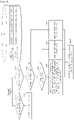
- FIG. 9 is a flowchart illustrating operation of a quantum node controller QNC 200 according to a reuse policy in accordance with an embodiment of the present disclosure.
- the quantum cryptographic keys are continuously stored until reaching the number of key bits, which is previously set to be used when quantum cryptographic keys become short.
- the used key pool is updated with the most recently obtained key stream by discarding the oldest quantum cryptographic key and storing the recently used quantum cryptographic key.
- the quantum node controller QNC 200 may then be provided with keys to be used, half of which are from the used key pool and the other half of which are from the unused key pool upon receiving a key request (S260). Even in this case, a used quantum cryptographic key is stored again in the used key pool (S290), and only when there is no key in the unused key pool, a key to be provided to the client may be provided 100% from the used key pool (S270).
- this method makes it possible to prevent disconnection of a service by reusing quantum cryptographic keys even in a section where there are insufficient quantum cryptographic keys and to provide a quantum cryptographic key that ensures security since a reuse quantum cryptographic key generates a new key by combining a used key and an unused key even in a situation where the reuse quantum cryptographic key is used.
- the foregoing description is only an example, and the present disclosure is not necessarily limited thereto.
- the present disclosure may also provide a method in which the quantum network management server 160 processes the reuse policy by more various methods.
Landscapes
- Engineering & Computer Science (AREA)
- Computer Security & Cryptography (AREA)
- Computer Networks & Wireless Communication (AREA)
- Signal Processing (AREA)
- Physics & Mathematics (AREA)
- Electromagnetism (AREA)
- Theoretical Computer Science (AREA)
- Optical Communication System (AREA)
Applications Claiming Priority (2)
| Application Number | Priority Date | Filing Date | Title |
|---|---|---|---|
| KR1020190113371A KR102595369B1 (ko) | 2019-09-16 | 2019-09-16 | 양자 암호키 분배 방법, 장치 및 시스템 |
| PCT/KR2020/012418 WO2021054693A1 (ko) | 2019-09-16 | 2020-09-15 | 양자 암호키 분배 방법, 장치 및 시스템 |
Publications (3)
| Publication Number | Publication Date |
|---|---|
| EP4007206A1 true EP4007206A1 (de) | 2022-06-01 |
| EP4007206A4 EP4007206A4 (de) | 2023-08-09 |
| EP4007206B1 EP4007206B1 (de) | 2025-12-03 |
Family
ID=74883579
Family Applications (1)
| Application Number | Title | Priority Date | Filing Date |
|---|---|---|---|
| EP20864751.1A Active EP4007206B1 (de) | 2019-09-16 | 2020-09-15 | Verfahren, vorrichtung und system zur quantenschlüsselverteilung |
Country Status (6)
| Country | Link |
|---|---|
| US (1) | US11689360B2 (de) |
| EP (1) | EP4007206B1 (de) |
| JP (1) | JP2022549047A (de) |
| KR (1) | KR102595369B1 (de) |
| CN (1) | CN114375560A (de) |
| WO (1) | WO2021054693A1 (de) |
Cited By (1)
| Publication number | Priority date | Publication date | Assignee | Title |
|---|---|---|---|---|
| EP4542923A4 (de) * | 2022-06-14 | 2026-04-22 | Ntt Inc | Kommunikationssystem, kommunikationsvorrichtung, verfahren und programm |
Families Citing this family (15)
| Publication number | Priority date | Publication date | Assignee | Title |
|---|---|---|---|---|
| KR102595369B1 (ko) * | 2019-09-16 | 2023-10-30 | 주식회사 케이티 | 양자 암호키 분배 방법, 장치 및 시스템 |
| KR102713841B1 (ko) | 2021-08-05 | 2024-10-07 | 코위버(주) | 양자 암호키 분배 시스템에서 동기화 신호 검출을 제공하는 동기화 장치 |
| KR102778317B1 (ko) * | 2021-11-08 | 2025-03-10 | 한국과학기술정보연구원 | 양자키 관리장치 및 그 동작 방법 |
| US12088704B1 (en) * | 2022-03-30 | 2024-09-10 | Wells Fargo Bank, N.A. | Systems and methods for quantum entangled random key exchange |
| US12335136B2 (en) * | 2022-04-11 | 2025-06-17 | At&T Intellectual Property I, L.P. | Managing distribution access among and across multiple communication networks |
| KR102814559B1 (ko) * | 2022-05-30 | 2025-05-29 | 한국과학기술정보연구원 | 양자키분배 네트워크장치 및 양자키분배 네트워크 운용 방법 |
| CN114844639B (zh) * | 2022-07-04 | 2022-09-06 | 中国长江三峡集团有限公司 | 基于量子密钥的数据传输方法、系统及存储介质 |
| CN115426104B (zh) * | 2022-07-08 | 2025-09-02 | 北京邮电大学 | 量子密钥供应的专有、共享保护方法及相关设备 |
| WO2024075244A1 (ja) * | 2022-10-06 | 2024-04-11 | 日本電気株式会社 | 通信システム、制御装置、通信方法、制御方法、及び非一時的なコンピュータ可読媒体 |
| WO2024242748A2 (en) * | 2023-03-21 | 2024-11-28 | QSecGrid, Inc. | Quantum secure servers |
| US20240396719A1 (en) * | 2023-05-24 | 2024-11-28 | Richard D'Souza | Quantum key distribution (qkd) based secure communication system using artificial intelligence |
| CN116506121B (zh) * | 2023-06-26 | 2023-10-31 | 广东广宇科技发展有限公司 | 一种量子密钥分发方法 |
| WO2025094297A1 (ja) * | 2023-10-31 | 2025-05-08 | 株式会社Fiytty | 秘密分散装置、支援装置、及びユーザ装置と秘密分散プログラム、支援プログラム、及びユーザ装置プログラム |
| CN117938378A (zh) * | 2024-01-25 | 2024-04-26 | 西安交通大学 | 基于多资源混合量子密钥分发的电网安全通信方法 |
| US20260113183A1 (en) * | 2024-10-23 | 2026-04-23 | Bank Of America Corporation | System and method for encoding and encrypting sensitive data based on quantum entanglement |
Family Cites Families (40)
| Publication number | Priority date | Publication date | Assignee | Title |
|---|---|---|---|---|
| JPH0455151Y2 (de) | 1987-08-07 | 1992-12-24 | ||
| US7512242B2 (en) * | 2003-03-21 | 2009-03-31 | Bbn Technologies Corp. | Systems and methods for quantum cryptographic key transport |
| US20050286723A1 (en) * | 2004-06-28 | 2005-12-29 | Magiq Technologies, Inc. | QKD system network |
| WO2007092220A2 (en) * | 2006-02-03 | 2007-08-16 | Magiq Technologies, Inc. | Entanglement-based qkd system with active phase tracking |
| GB0801395D0 (en) * | 2008-01-25 | 2008-03-05 | Qinetiq Ltd | Network having quantum key distribution |
| GB0917060D0 (en) * | 2009-09-29 | 2009-11-11 | Qinetiq Ltd | Methods and apparatus for use in quantum key distribution |
| EP2611062B1 (de) * | 2010-08-24 | 2018-07-18 | Mitsubishi Electric Corporation | Verschlüsselungsvorrichtung, verschlüsselungssystem, verschlüsselungsverfahren und verschlüsselungsprogramm |
| KR20120071883A (ko) | 2010-12-23 | 2012-07-03 | 한국전자통신연구원 | 양자 비밀 공유 프로토콜을 위한 양자 인증 방법 및 장치 |
| ES2420054B1 (es) | 2010-12-29 | 2014-03-20 | Telefónica, S.A. | Método para una monitorización fina de líneas ópticas en líneas de comunicación a través de sistemas qkd. |
| US9698979B2 (en) * | 2011-04-15 | 2017-07-04 | Quintessencelabs Pty Ltd. | QKD key management system |
| JP5624526B2 (ja) * | 2011-08-26 | 2014-11-12 | 株式会社東芝 | 鍵共有装置、鍵共有方法および鍵共有プログラム |
| JP5694247B2 (ja) * | 2012-07-17 | 2015-04-01 | 株式会社東芝 | 鍵生成装置、通信方法および通信システム |
| JP2014068313A (ja) * | 2012-09-27 | 2014-04-17 | Toshiba Corp | 通信方法、アプリケーション装置、プログラム及び通信システム |
| JP6054224B2 (ja) * | 2013-03-25 | 2016-12-27 | 株式会社東芝 | 通信装置、通信システム、通信方法およびプログラム |
| GB2514134B (en) * | 2013-05-14 | 2016-05-25 | Toshiba Res Europe Ltd | A signal manipulator for a quantum communication system |
| US9774401B1 (en) * | 2013-07-15 | 2017-09-26 | Paul Borrill | Entangled links, transactions and trees for distributed computing systems |
| JP6359285B2 (ja) * | 2014-02-17 | 2018-07-18 | 株式会社東芝 | 量子鍵配送装置、量子鍵配送システムおよび量子鍵配送方法 |
| JP6223884B2 (ja) * | 2014-03-19 | 2017-11-01 | 株式会社東芝 | 通信装置、通信方法およびプログラム |
| US10193578B2 (en) * | 2014-07-10 | 2019-01-29 | The Royal Institution For The Advancement Of Learning / Mcgill University | Flexible polar encoders and decoders |
| KR102047541B1 (ko) | 2014-10-31 | 2019-11-21 | 아이디 퀀티크 에스.에이. | 링과 스타 구조가 결합된 네트워크에서 양자 암호통신 방법 |
| JP6426477B2 (ja) | 2015-01-06 | 2018-11-21 | 株式会社東芝 | 通信装置、通信システムおよびプログラム |
| CN105827397B (zh) * | 2015-01-08 | 2019-10-18 | 阿里巴巴集团控股有限公司 | 基于可信中继的量子密钥分发系统、方法及装置 |
| JP6544519B2 (ja) * | 2015-09-11 | 2019-07-17 | 国立研究開発法人情報通信研究機構 | 移動体制御システム |
| EP3185463B1 (de) * | 2015-12-21 | 2019-08-14 | ID Quantique S.A. | Vorrichtung und verfahren zur quantenschlüsselverteilung mit erhöhter sicherheit und reduzierten vertrauensanforderungen |
| KR101836947B1 (ko) * | 2016-05-04 | 2018-03-09 | 경희대학교 산학협력단 | 양자 통신에서의 다자간 키 분배 방법, 이를 이용하는 양자 통신 방법 및 이를 수행하는 양자 통신 시스템 |
| JP6692259B2 (ja) * | 2016-08-31 | 2020-05-13 | 株式会社東芝 | 通信装置、通信方法および通信システム |
| KR101979328B1 (ko) * | 2016-11-18 | 2019-05-16 | 한국과학기술연구원 | 무선 양자 암호 키 분배를 위한 통신 장치 |
| WO2018166920A1 (en) * | 2017-03-16 | 2018-09-20 | British Telecommunications Public Limited Company | Quantum key distribution in optical communications network |
| JP2018207348A (ja) * | 2017-06-06 | 2018-12-27 | 株式会社東芝 | 通信装置、通信システム、鍵共有方法及びプログラム |
| CN107302429A (zh) * | 2017-06-27 | 2017-10-27 | 浙江科易理想量子信息技术有限公司 | 一种提高密钥生成速率的组网方法 |
| JP2019050453A (ja) * | 2017-09-07 | 2019-03-28 | 株式会社東芝 | 通信装置、通信方法、プログラムおよび通信システム |
| CN109787751A (zh) * | 2017-11-14 | 2019-05-21 | 阿里巴巴集团控股有限公司 | 量子密钥的分发系统及其分发方法和数据处理方法 |
| GB2574597B (en) * | 2018-06-08 | 2021-10-20 | Toshiba Kk | A Quantum communication network |
| CN109167637B (zh) * | 2018-08-13 | 2021-06-01 | 国科量子通信网络有限公司 | 密钥池填充资源确定方法、装置、设备与可读存储介质 |
| CN113544983B (zh) * | 2019-03-22 | 2025-05-02 | 英国电讯有限公司 | 用于进行量子密钥分发的系统和方法 |
| US11424918B2 (en) * | 2019-05-03 | 2022-08-23 | Quantumxchange, Inc. | Method of operation of a trusted node software in a quantum key distribution system |
| US11411722B2 (en) * | 2019-05-03 | 2022-08-09 | Quantumxchange, Inc. | Method of operation of a quantum key controller |
| US11469888B2 (en) * | 2019-05-03 | 2022-10-11 | Quantumxchange, Inc. | Tamper detection in a quantum communications system |
| US11681200B2 (en) * | 2019-05-10 | 2023-06-20 | Purdue Research Foundation | Optical quantum logic for use in large operational spaces |
| KR102595369B1 (ko) * | 2019-09-16 | 2023-10-30 | 주식회사 케이티 | 양자 암호키 분배 방법, 장치 및 시스템 |
-
2019
- 2019-09-16 KR KR1020190113371A patent/KR102595369B1/ko active Active
-
2020
- 2020-09-15 EP EP20864751.1A patent/EP4007206B1/de active Active
- 2020-09-15 WO PCT/KR2020/012418 patent/WO2021054693A1/ko not_active Ceased
- 2020-09-15 JP JP2021574244A patent/JP2022549047A/ja active Pending
- 2020-09-15 US US17/625,923 patent/US11689360B2/en active Active
- 2020-09-15 CN CN202080064306.7A patent/CN114375560A/zh active Pending
Cited By (1)
| Publication number | Priority date | Publication date | Assignee | Title |
|---|---|---|---|---|
| EP4542923A4 (de) * | 2022-06-14 | 2026-04-22 | Ntt Inc | Kommunikationssystem, kommunikationsvorrichtung, verfahren und programm |
Also Published As
| Publication number | Publication date |
|---|---|
| JP2022549047A (ja) | 2022-11-24 |
| CN114375560A (zh) | 2022-04-19 |
| US11689360B2 (en) | 2023-06-27 |
| WO2021054693A1 (ko) | 2021-03-25 |
| US20220255736A1 (en) | 2022-08-11 |
| EP4007206B1 (de) | 2025-12-03 |
| KR20210032094A (ko) | 2021-03-24 |
| EP4007206A4 (de) | 2023-08-09 |
| KR102595369B1 (ko) | 2023-10-30 |
Similar Documents
| Publication | Publication Date | Title |
|---|---|---|
| US11689360B2 (en) | Quantum key distribution method, device, and system | |
| US11316677B2 (en) | Quantum key distribution node apparatus and method for quantum key distribution thereof | |
| EP2003812B1 (de) | Verfahren und Vorrichtung zur Verwaltung kryptographischer Codes in geheimen Kommunikationsnetzwerken | |
| US10348493B2 (en) | Quantum key distribution system, method and apparatus based on trusted relay | |
| US8600063B2 (en) | Key distribution system | |
| US8295489B2 (en) | Method for sharing a link key in a ZigBee network and a communication system therefor | |
| WO2022153051A1 (en) | System and method for key establishment | |
| KR20190005878A (ko) | 보안 데이터 송신을 위한 방법 및 시스템 | |
| US11424836B2 (en) | Path computation engine and method of configuring an optical path for quantum key distribution | |
| KR101608815B1 (ko) | 폐쇄형 네트워크에서 암복호화 서비스 제공 시스템 및 방법 | |
| CN110855438B (zh) | 一种基于环形qkd网络的量子密钥分发方法及系统 | |
| CN102546184B (zh) | 传感网内消息安全传输或密钥分发的方法和系统 | |
| JP2019041321A (ja) | データ受信装置、データ伝送システム、及び鍵生成装置 | |
| CN118984224A (zh) | 一种端到端加密数据传输与隐私安全保护方法 | |
| US20160366191A1 (en) | Single Proxies in Secure Communication Using Service Function Chaining | |
| CN103888940B (zh) | 多级加密与认证的wia‑pa网络手持设备的通讯方法 | |
| JP6179815B2 (ja) | 暗号化データ通信装置、暗号化データ通信方法、プログラム、及び、記録媒体 | |
| KR101290177B1 (ko) | 스펙트럼 인가 및 관련된 통신 방법들 및 장치들 | |
| KR20130034770A (ko) | Scada 통신 네트워크의 보안 시스템 및 방법 | |
| Wang et al. | Key Management in CPSs | |
| CN115002755B (zh) | 一种自组网系统的安全认证方法 | |
| CN120602091B (zh) | 量子密钥分发方法、装置、电子设备和计算机存储介质 | |
| Kurera et al. | Node-to-node secure data transmission protocol for low-power iot devices | |
| KR20260027940A (ko) | 양자 키 분배에서 신뢰할 수 있는 노드를 사용한 통신 방법 및 설정 | |
| CN119766436A (zh) | 量子会话密钥协商方法与量子密钥分发系统 |
Legal Events
| Date | Code | Title | Description |
|---|---|---|---|
| STAA | Information on the status of an ep patent application or granted ep patent |
Free format text: STATUS: THE INTERNATIONAL PUBLICATION HAS BEEN MADE |
|
| PUAI | Public reference made under article 153(3) epc to a published international application that has entered the european phase |
Free format text: ORIGINAL CODE: 0009012 |
|
| STAA | Information on the status of an ep patent application or granted ep patent |
Free format text: STATUS: REQUEST FOR EXAMINATION WAS MADE |
|
| 17P | Request for examination filed |
Effective date: 20220223 |
|
| AK | Designated contracting states |
Kind code of ref document: A1 Designated state(s): AL AT BE BG CH CY CZ DE DK EE ES FI FR GB GR HR HU IE IS IT LI LT LU LV MC MK MT NL NO PL PT RO RS SE SI SK SM TR |
|
| DAV | Request for validation of the european patent (deleted) | ||
| DAX | Request for extension of the european patent (deleted) | ||
| A4 | Supplementary search report drawn up and despatched |
Effective date: 20230707 |
|
| RIC1 | Information provided on ipc code assigned before grant |
Ipc: H04L 9/08 20060101AFI20230703BHEP |
|
| GRAP | Despatch of communication of intention to grant a patent |
Free format text: ORIGINAL CODE: EPIDOSNIGR1 |
|
| STAA | Information on the status of an ep patent application or granted ep patent |
Free format text: STATUS: GRANT OF PATENT IS INTENDED |
|
| INTG | Intention to grant announced |
Effective date: 20250722 |
|
| GRAS | Grant fee paid |
Free format text: ORIGINAL CODE: EPIDOSNIGR3 |
|
| GRAA | (expected) grant |
Free format text: ORIGINAL CODE: 0009210 |
|
| STAA | Information on the status of an ep patent application or granted ep patent |
Free format text: STATUS: THE PATENT HAS BEEN GRANTED |
|
| AK | Designated contracting states |
Kind code of ref document: B1 Designated state(s): AL AT BE BG CH CY CZ DE DK EE ES FI FR GB GR HR HU IE IS IT LI LT LU LV MC MK MT NL NO PL PT RO RS SE SI SK SM TR |
|
| REG | Reference to a national code |
Ref country code: CH Ref legal event code: F10 Free format text: ST27 STATUS EVENT CODE: U-0-0-F10-F00 (AS PROVIDED BY THE NATIONAL OFFICE) Effective date: 20251203 Ref country code: GB Ref legal event code: FG4D |
|
| REG | Reference to a national code |
Ref country code: DE Ref legal event code: R096 Ref document number: 602020063385 Country of ref document: DE |
|
| REG | Reference to a national code |
Ref country code: IE Ref legal event code: FG4D |
|
| REG | Reference to a national code |
Ref country code: NL Ref legal event code: MP Effective date: 20251203 |
|
| PG25 | Lapsed in a contracting state [announced via postgrant information from national office to epo] |
Ref country code: ES Free format text: LAPSE BECAUSE OF FAILURE TO SUBMIT A TRANSLATION OF THE DESCRIPTION OR TO PAY THE FEE WITHIN THE PRESCRIBED TIME-LIMIT Effective date: 20251203 |
|
| REG | Reference to a national code |
Ref country code: LT Ref legal event code: MG9D |
|
| PG25 | Lapsed in a contracting state [announced via postgrant information from national office to epo] |
Ref country code: NO Free format text: LAPSE BECAUSE OF FAILURE TO SUBMIT A TRANSLATION OF THE DESCRIPTION OR TO PAY THE FEE WITHIN THE PRESCRIBED TIME-LIMIT Effective date: 20260303 |
|
| PG25 | Lapsed in a contracting state [announced via postgrant information from national office to epo] |
Ref country code: FI Free format text: LAPSE BECAUSE OF FAILURE TO SUBMIT A TRANSLATION OF THE DESCRIPTION OR TO PAY THE FEE WITHIN THE PRESCRIBED TIME-LIMIT Effective date: 20251203 Ref country code: HR Free format text: LAPSE BECAUSE OF FAILURE TO SUBMIT A TRANSLATION OF THE DESCRIPTION OR TO PAY THE FEE WITHIN THE PRESCRIBED TIME-LIMIT Effective date: 20251203 |
|
| PG25 | Lapsed in a contracting state [announced via postgrant information from national office to epo] |
Ref country code: RS Free format text: LAPSE BECAUSE OF FAILURE TO SUBMIT A TRANSLATION OF THE DESCRIPTION OR TO PAY THE FEE WITHIN THE PRESCRIBED TIME-LIMIT Effective date: 20260303 |
|
| PG25 | Lapsed in a contracting state [announced via postgrant information from national office to epo] |
Ref country code: PL Free format text: LAPSE BECAUSE OF FAILURE TO SUBMIT A TRANSLATION OF THE DESCRIPTION OR TO PAY THE FEE WITHIN THE PRESCRIBED TIME-LIMIT Effective date: 20251203 |
|
| PG25 | Lapsed in a contracting state [announced via postgrant information from national office to epo] |
Ref country code: LV Free format text: LAPSE BECAUSE OF FAILURE TO SUBMIT A TRANSLATION OF THE DESCRIPTION OR TO PAY THE FEE WITHIN THE PRESCRIBED TIME-LIMIT Effective date: 20251203 |