EP4007225A1 - Verfahren und vorrichtung zur verwaltung von netzwerküberlastung - Google Patents
Verfahren und vorrichtung zur verwaltung von netzwerküberlastung Download PDFInfo
- Publication number
- EP4007225A1 EP4007225A1 EP20209979.2A EP20209979A EP4007225A1 EP 4007225 A1 EP4007225 A1 EP 4007225A1 EP 20209979 A EP20209979 A EP 20209979A EP 4007225 A1 EP4007225 A1 EP 4007225A1
- Authority
- EP
- European Patent Office
- Prior art keywords
- queue
- values
- parameter
- aqm
- weighted
- Prior art date
- Legal status (The legal status is an assumption and is not a legal conclusion. Google has not performed a legal analysis and makes no representation as to the accuracy of the status listed.)
- Pending
Links
- 238000000034 method Methods 0.000 title claims description 23
- 238000004891 communication Methods 0.000 claims abstract description 66
- 239000000872 buffer Substances 0.000 claims abstract description 44
- 238000004590 computer program Methods 0.000 claims description 6
- 238000005303 weighing Methods 0.000 claims description 2
- 230000005540 biological transmission Effects 0.000 description 18
- 230000006870 function Effects 0.000 description 12
- 238000010586 diagram Methods 0.000 description 7
- 238000013459 approach Methods 0.000 description 5
- 238000005259 measurement Methods 0.000 description 5
- 230000007246 mechanism Effects 0.000 description 5
- 230000009471 action Effects 0.000 description 3
- 230000001413 cellular effect Effects 0.000 description 3
- 238000009432 framing Methods 0.000 description 3
- 230000003287 optical effect Effects 0.000 description 3
- 238000004364 calculation method Methods 0.000 description 2
- 230000008859 change Effects 0.000 description 2
- 230000001934 delay Effects 0.000 description 2
- 230000000694 effects Effects 0.000 description 2
- 230000003068 static effect Effects 0.000 description 2
- RYGMFSIKBFXOCR-UHFFFAOYSA-N Copper Chemical compound [Cu] RYGMFSIKBFXOCR-UHFFFAOYSA-N 0.000 description 1
- 230000002411 adverse Effects 0.000 description 1
- 230000006399 behavior Effects 0.000 description 1
- 230000003139 buffering effect Effects 0.000 description 1
- 230000015556 catabolic process Effects 0.000 description 1
- 239000004020 conductor Substances 0.000 description 1
- 230000007423 decrease Effects 0.000 description 1
- 230000003247 decreasing effect Effects 0.000 description 1
- 238000006731 degradation reaction Methods 0.000 description 1
- 238000005516 engineering process Methods 0.000 description 1
- 230000000670 limiting effect Effects 0.000 description 1
- 230000000116 mitigating effect Effects 0.000 description 1
- 238000012986 modification Methods 0.000 description 1
- 230000004048 modification Effects 0.000 description 1
- 239000013307 optical fiber Substances 0.000 description 1
- 238000007781 pre-processing Methods 0.000 description 1
- 230000009467 reduction Effects 0.000 description 1
- 230000002829 reductive effect Effects 0.000 description 1
- 230000004044 response Effects 0.000 description 1
- 229940036051 sojourn Drugs 0.000 description 1
Images


Classifications
-
- H—ELECTRICITY
- H04—ELECTRIC COMMUNICATION TECHNIQUE
- H04W—WIRELESS COMMUNICATION NETWORKS
- H04W28/00—Network traffic management; Network resource management
- H04W28/02—Traffic management, e.g. flow control or congestion control
- H04W28/0278—Traffic management, e.g. flow control or congestion control using buffer status reports
-
- H—ELECTRICITY
- H04—ELECTRIC COMMUNICATION TECHNIQUE
- H04L—TRANSMISSION OF DIGITAL INFORMATION, e.g. TELEGRAPHIC COMMUNICATION
- H04L47/00—Traffic control in data switching networks
- H04L47/10—Flow control; Congestion control
- H04L47/12—Avoiding congestion; Recovering from congestion
-
- H—ELECTRICITY
- H04—ELECTRIC COMMUNICATION TECHNIQUE
- H04L—TRANSMISSION OF DIGITAL INFORMATION, e.g. TELEGRAPHIC COMMUNICATION
- H04L47/00—Traffic control in data switching networks
- H04L47/10—Flow control; Congestion control
- H04L47/31—Flow control; Congestion control by tagging of packets, e.g. using discard eligibility [DE] bits
-
- H—ELECTRICITY
- H04—ELECTRIC COMMUNICATION TECHNIQUE
- H04L—TRANSMISSION OF DIGITAL INFORMATION, e.g. TELEGRAPHIC COMMUNICATION
- H04L47/00—Traffic control in data switching networks
- H04L47/10—Flow control; Congestion control
- H04L47/32—Flow control; Congestion control by discarding or delaying data units, e.g. packets or frames
-
- H—ELECTRICITY
- H04—ELECTRIC COMMUNICATION TECHNIQUE
- H04L—TRANSMISSION OF DIGITAL INFORMATION, e.g. TELEGRAPHIC COMMUNICATION
- H04L47/00—Traffic control in data switching networks
- H04L47/50—Queue scheduling
- H04L47/56—Queue scheduling implementing delay-aware scheduling
-
- H—ELECTRICITY
- H04—ELECTRIC COMMUNICATION TECHNIQUE
- H04L—TRANSMISSION OF DIGITAL INFORMATION, e.g. TELEGRAPHIC COMMUNICATION
- H04L47/00—Traffic control in data switching networks
- H04L47/50—Queue scheduling
- H04L47/62—Queue scheduling characterised by scheduling criteria
- H04L47/625—Queue scheduling characterised by scheduling criteria for service slots or service orders
- H04L47/6255—Queue scheduling characterised by scheduling criteria for service slots or service orders queue load conditions, e.g. longest queue first
-
- H—ELECTRICITY
- H04—ELECTRIC COMMUNICATION TECHNIQUE
- H04L—TRANSMISSION OF DIGITAL INFORMATION, e.g. TELEGRAPHIC COMMUNICATION
- H04L47/00—Traffic control in data switching networks
- H04L47/50—Queue scheduling
- H04L47/62—Queue scheduling characterised by scheduling criteria
- H04L47/629—Ensuring fair share of resources, e.g. weighted fair queuing [WFQ]
Definitions
- the present disclosure generally relates to the field of communication networks, and, more particularly, to a method and an apparatus for managing congestion in communication networks.
- Communication networks are used to transport data from one device to another over short or long distances.
- the data may represent information such as emails, voice calls, or streaming video.
- information to be conveyed from one device to another is transmitted to the network along with an indication of its intended destination.
- the data will often travel through many intermittent network nodes such as routers and switches which receive the transmitted information and forward it on the next leg of its journey.
- Communication networks may experience traffic congestion when packets sent from a source (e.g. a server or router device) exceed what the intermediate or destination devices can handle (e.g. a user device). This leads to packets build-up at the intermittent network nodes as packets wait to be forwarded to the next destination. This can cause packet loss, retransmissions, reduced data throughput, performance degradation, and even network collapse in extreme cases.
- a source e.g. a server or router device
- the intermediate or destination devices e.g. a user device
- AQM Active Queue Management
- AQMs are not capable of mitigating network congestion in the cases when high variations in the transmission frequency are observed as may be the case in the presence of physical resource contention, e.g in Wireless Local Area Networks, WLANs (IEEE 802.11), cellular networks and others.
- a method for managing data traffic congestion in a network communication node comprising a queue buffer configured to respectively enqueue packets at an input and dequeue packets at an output, and an Active Queue Management, AQM, module configured to determine a drop or a mark decision for a packet based on control parameters, the method comprising:
- an AQM module is provided with control parameter values being the reference queue parameter value, whether measured or derived otherwise, and the target value for the reference queue parameter.
- control values for these control parameters are selected based on the measure or derived values of a plurality of queue parameters and their respective target values. In other words, values of not one but several queue parameters indicative of the status of the queue buffer are taken into account.
- These values together with their respective target values are pre-processed to derive the AQM control parameter values.
- the pre-processing includes weighting the queue parameter values and/or weighting of the queue parameter target values with respective weight factors to obtain weighted queue parameter values and/or weighted queue target values.
- the weight factors for the queue parameter values are obtained based on the target value for the respective queue parameter and the target value for the reference queue parameter of the AQM.
- the weight factors for the target values are obtained based on the values of the queue parameters and the value of the reference queue parameter of the AQM.
- the queue parameter target values are scaled with respect to the target value for the AQM's reference queue parameter.
- the determined queue parameter values are scaled with respect to the value of the AQM's reference queue parameter.
- values for the control parameters are selected. The selected values are then provided to the AQM module which then decides based on these values whether it needs to take action to manage the data traffic congestion, i.e. whether to take a drop or a mark decision for a respective packet.
- Weighting thus allows expressing the different queue parameter values and their respective target values in the same unit. This allows comparing the different values to each other. This comparison allows selecting values for the AQM's control parameters which facilitates assessing the data traffic congestion accurately. As a result, efficient and accurate management of the data traffic congestion is enabled. This ultimately limits the underutilization of the communication link especially in communication networks with variations in the transmission frequency.
- dynamic AQMs are enabled where the AQM can switch between different types of reference queue parameter, for example, from a delay-based to size-based AQM and vice versa. This dynamic switching is advantageous when managing the data traffic congestion in communication networks exposed to highly varying conditions such as significant contention on the Medium Access Control, MAC, layer like in WLANs with numerous stations trying to send simultaneously.
- MAC Medium Access Control
- the queue parameters are indicative of at least a queueing delay and an amount of buffered data in the queue buffer.
- the queueing delay may be indicative of an instantaneous or smoothed queueing delay and wherein the amount of buffered data may be indicative of an instantaneous or smoothed queue size.
- the smoothed value of the queueing delay may be obtained by employing, for example, the moving average concept where an average value of the queueing delay is calculated by calculating the average of the latest instantaneous values within a selected period of time.
- the instantaneous values may be used by instantaneous AQMs, while instantaneous or smoothed values may be used by schedule-based or probabilistic AQMs.
- the use of the smoothed values may be advantageous when it is required to slow down the response of the AQM.
- the use of smoothed values may be advantageous when the variations in the instantaneous values cause the AQM module to change its decision on a packet per packet basis.
- a weight factor for a respective queue parameter value is derived based on the target value for the respective queue parameter and a target value for the reference queue parameter of the AQM module.
- One possible way to derive the weight factor for a respective queue parameter value may be derived by dividing the target value for the reference queue parameter by the target value for the respective queue parameter.
- the value of the derived queuing delay is weighted with a weight factor of 1, while the value of the amount of buffered data is weighted with a weight factor being the ratio of the queuing delay target value and amount of buffered data target value.
- Two weighted queue parameter values are thus obtained, i.e. a weighted queuing delay value and a weighted amount of buffered data.
- the selecting comprises selecting the minimum of the weighted queue parameter values as the value of the reference queue parameter.
- the minimum of the weighted queue parameter values is selected as the value of the reference queue parameter.
- This minimum value together with the obtained target value for the reference queue parameter are both provided to the AQM module.
- a weight factor for a target value for the respective queue parameter is derived based on the value of the respective queue parameter and the value of the reference queue parameter of the AQM module.
- the weight factor for a respective queue parameter value may be derived by dividing the value of the reference queue parameter by the value of the respective queue parameter.
- the target value for the queuing delay is weighted with a weight factor of 1, while the target value for the amount of buffered data is weighted with a weight factor being the ratio of the derived values of the queuing delay and the amount of buffered data.
- Two weighted queue target values are thus obtained, i.e. a weighted queuing delay target value and a weighted amount of buffered data target value.
- the selecting comprises selecting the maximum of the weighted queue target values as the target value for the reference queue parameter.
- the maximum of the weighted queue target values is selected as the target value for the reference queue parameter.
- This maximum value together with the derived value of the reference queue parameter are both provided to the AQM module.
- the target values for the queue parameters are derived based on information obtained from at least a Medium Access Control, MAC, circuitry and a physical layer, PHY, circuitry.
- information such as the duration and periodicity of transmit operations, TXOPs, the maximum transmission unit value or maximum frame size, distributed interframe space, DIFS, the modulation and coding scheme, MCS, and the framing overhead from the MAC circuitry as well as the PHY circuitry may be used to derive the target values for the queue parameters. This allows to take into account the physical channel capabilities and MAC properties.
- the reference queue parameter of the AQM module is a queueing delay or amount of buffered data.
- the reference queue parameter is defined by the AQM type.
- the reference queue parameter is the queuing delay.
- the reference queue parameter is the size of the queue.
- the AQM module may be a probabilistic, schedule-based, or instantaneous AQM module.
- the AQM module may employ various decision functions to manage the data traffic congestion in the network communication node. If the node employs a probabilistic AQM module, the AQM module calculates a decision function that calculates a drop or a mark probability for a respective packet. If the value of the drop or mark probability for the respective packet exceeds a predetermined threshold value, then the packet is dropped or marked.
- the obtained target value for the queue size parameter corresponds to a value of a transmit operation size.
- the transmit operation size is defined by the MAC circuitry and reflects the transmit operation as defined by its scheduling policy. Utilizing the transmit operation size as the target value, allows the AQM module to efficiently and accurately manage the data traffic congestion irrespective of the fairness policy adopted by the network communication node.
- a network communication node comprising at least one queue buffer configured to respectively enqueue packets at an input and dequeue packets at an output, at least one Active Queue Management, AQM, module configured to determine a drop or a mark decision for a packet based on control parameters, and a controller comprising at least one processor and at least one memory including computer program code, the at least one memory and the computer program code configured to, with the at least one processor, cause the controller to perform:
- the network communication node may act as a network node in the communication network that receives data traffic from one or more source devices, e.g. a server device, and forwards the data traffic to one or more destination devices, e.g. a user device.
- the network communication node may thus comprise one or more queue buffers for buffering the data traffic, i.e. the packets, from various source devices, and one or more AQM modules for managing the congestion in the respective queue buffers.
- the AQM modules may be different.
- one AQM module may employ a probabilistic decision function that takes into account the queueing delay of the respective packets to take a decision
- another AQM module may employ a schedule-based AQM which takes into account the amount of the data buffered in the queue buffer.
- the control parameter values provided to the respective AQM modules may be different and therefore the management of the data traffic congestion may be different.
- the network communication node may be a wireless communication node.
- the wireless communication node may operate according to various communication standards such as IEEE 802.11, IEEE802.15.1, IEEE802.15.4, 3GPP generations of cellular standards like LTE, 5G NR, and so on.
- the network communication node may be an access point, AP, which may act as a bridge for example between a WLAN and other networks or as a gateway connecting the WLAN to the Internet.
- the network communication node may be an optical network unit, ONU, which acts as an intermittent network node that transmits data traffic between an optical line terminal, OLT, and the user devices.
- the network communication node may operate according to ITU-T G.983, ITU-T G.984, ITU-T G987, and so on.
- the network communication node may be a node in a cable network according to e.g. the Cable Service Interface Specification, DOCSIS, ITU-T J.112, and so on.
- a computer program product comprising computer-executable instructions for performing the following steps when the program is run on a computer:
- a computer readable storage medium comprising computer-executable instructions for performing the following steps when the program is run on a computer:
- the various example embodiments of the first example aspect may be applied as example embodiments to the second, third, and fourth example aspects.
- the present disclosure relates to controlling or managing network congestion, sometimes referred to as active queue management, AQM.
- An AQM controls the number of received or incoming packets that will be dropped or marked rather than forwarded toward their intended destination. Selectively dropping or marking packets is done under certain conditions to reduce or eliminate issues such as packet loss, retransmission, high latency, jitter, and so on, that often occur when too many packets have been buffered at intermittent network nodes.
- Active Queue Management may be employed by network communication devices or nodes that are capable of transmitting and receiving packets of a packet communication network, such as the Internet.
- network devices include routers, switches, and servers that have input/output ports coupled to a physical transmission medium, such as optical fiber, coax cable, copper wire, or air interface.
- Queue buffers for enqueuing packets are established at the ports to control the transmission and reception of packets on the communication links established between the ports.
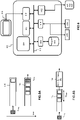
- FIG.1 shows an example of such a network communication node 100 employing a conventional AQM module 120 for controlling Transmission Control Protocol, TCP, traffic.
- the AQM module 120 includes a decision module (not shown in the figure) which determines a drop or mark decision d based on the status of the queue buffer 105. Depending on the decision d, incoming packets 101 are either enqueue or dropped.
- the dropping functionality is realized by the drop/mark module 130 which controls which incoming packets are to be dropped based on the decision d.
- the incoming packets that are not dropped are enqueued in the queue buffer 105 and subsequently dequeued from the buffer in the outgoing traffic flow 102.
- the network communication node 100 further includes a measurement module 110 that determines the status of the queue buffer 105.
- the measurement module 110 measures or derives a value of a queue parameter 112 indicative of the status of the queue buffer.
- the queue parameter in question may be the queueing delay or the size of the queue in buffer 105.
- the queuing delay is indicative of the time needed for the packet to travel through the queue buffer, i.e. the time from enqueuing a packet to the time of dequeuing a packet, while the queue size is indicative of the amount of buffered data in the queue buffer.
- the AQM module is provided with a measured or otherwise derived value of the queue parameter which may be representative of the instantaneous, averaged, or smoothed over a period of time value status of the queue buffer.
- the AQM's decision module uses this value 112 to derive the decision d.
- the queue parameter value 112 thus acts as a control parameter for the AQM module 120.
- AQMs are generally classified into delay-based or size-based AQMs. Delay-based AQMs use the queueing delay as a control parameter, while size-based AQMs use the size of the queue.
- AQMs may be further classified into a probabilistic, schedule-based, or instantaneous.
- Probabilistic AQMs typically use the measured queuing delay of a received packet to compute the drop probability which depends on how much the queuing delay of the received packet differs from a pre-configured target value for the queueing delay. Depending on the value of the calculated drop probability, the received packet is dropped or enqueued. Scheduled-based AQMs also measure the queuing delay but build a drop schedule to control the queuing delay. Similarly to the probabilistic AQMs, the drop schedule is determined based on how much the queuing delay defers from the pre-configured queueing delay target value.
- instantaneous AQMs drop or mark received packets whose instantaneous queuing delay exceeds a pre-configured queueing delay target value or by determining the probability of how close the instantaneous queuing delay is to the queueing delay target value.
- the various AQM types may also use queue size as a control parameter.
- the node may be classified into airtime-based or rate-based. Airtime fairness nodes give an equal amount of air time, or of time slot duration in wired networks, respectively, to each linked device regardless of the data rate the device may achieve.
- rate fairness nodes assign airtime or time slots to the respective devices according to their achievable data rate and with time slot shares inversely proportional to the achievable data rates.
- the node will assign longer airtime to devices with a lower received signal strength, RSS, and shorter airtime to devices with a higher RSS.
- the control parameter is typically the measured or derived sojourn time or queuing delay, which indicates the time a packet spends in the queue buffer.
- Different mechanisms to derive the value of the queuing delay may be employed.
- FIG.5A and FIG.5B show two common methods to derive the instantaneous queuing delay.
- the queuing delay of a packet may be precisely measured by calculating the difference between the time of enqueue, t enq , and the time of dequeue, t dec , of a packet.
- the queuing delay may be measured by calculating the difference between the enqueue time t enq of a packet and the enqueue time t enq of the packet at the head of the queue buffer 105.
- the queuing delay may be estimated as a ratio of the instantaneous size of the queue, Qsize, and the instantaneous drain rate of the queue, Rq, which is well-suited for network communication nodes that are unable to maintain per-packet state, i.e. per-packet timestamps, or have a coarse-grained clock resolution.
- the AQM operation may result in marking the packets.
- the drop/mark module 130 marks the packets according to the AQM decision d and enqueues the marked packets in the queue buffer 105. All packets are thus forwarded to their destination.
- the recipient device notes the number of marked packets and notifies the sender device to adjust its transmission rate as may be necessary.
- the conventional AQMs are underutilizing the communication link.
- the transmission from the user devices, commonly referred to as stations, STAs, towards the access points, APs, which act as a bridge between the WLAN and other networks or as a gateway connecting the WLAN to the Internet is done periodically with a frequency of transmission that depends on the number of transmitting STAs.
- the frequency of transmission decreases.
- the transmitting STAs wait longer until they can transmit again and receive data less often as the AP transmits to more STAs.
- the average delay a packet spends inside in a queue buffer increases with the number of the transmitting STAs.
- the decreased frequency of transmission translates to a drop in the throughput achievable by an STA.
- Such variations in the frequency of transmission are particularly averse for conventional AQMs.
- Some AQMs will continuously change their drop decision in the effort to match the varying transmission delays which is impractical as it highly depends on the behavior of the STAs. Other AQMs will be misled that the queue is building up and will thus increase the probability of dropping packets to reduce the queue build up.
- airtime-fair and rate-fair Two types of air share policies, i.e. airtime-fair and rate-fair, may be used. If the transmission policy is rate-fair where all STAs are entitled to the same bitrate and thus requiring an airtime share inversely proportional to their RSS, while in the case of airtime-fair all STAs are entitled to the same amount of airtime and thus have bitrates proportional to their RSS.
- FIG.2 shows an example embodiment of a network communication node 100 employing an AQM module 120 according to the present disclosure.
- the network node 100 includes in addition to the modules shown in FIG.1 , a module 140 that derives the control parameters for the AQM module 120 based on the values of the queue parameters 112 and the queue parameters target values 142.
- measurement module 110 measures or derives values of not one but of a plurality of parameters indicative of the status of the queue buffer. For example, the measurement module may derive the values of the queueing delay and the queue size.
- the derived values may be instantaneous, averaged, or smoothed value of a respective parameter.
- the measured or otherwise derived values 112 are then fed to module 140 together with their respective target values 142.
- module 140 is provided with the values of the measured or otherwise derived queue parameters 112 and their respective target values 142.
- the queue parameters include at least the queueing delay, Qdelay, and the queue size, Qsize.
- the target value may be obtained from properties of the MAC circuitry, the physical, PHY, circuitry of the network node 100 (not shown in the figure), its hardware, HW, properties, or from general deployment expectations like typical round trip times in the networks involved. Alternatively, the target values may be obtained based on a combination of those. Possible parameters to take into account include distributed interframe space, DIFS, modulation and coding schemes, MCS, framing overhead, and so on.
- FIG.3 shows a functional block diagram illustrating selected components of the network communication node 300 according to another embodiment of the present disclosure.
- the network communication node includes a processor 305 which is in communication with a memory device 310, i.e. a physical storage device.
- the memory may be used to store data such as a table of managed devices and program instructions for execution by the processor.
- the processor 305 may thus control the operation of some of or all of the other components in the network node 300 in accordance with the program instructions.
- the processor and the memory device thus form a controller which controls the operation of some or all components in the network node, and more specifically, the operation of the AQM 330.
- the network node 300 further includes a network interface 315 for receiving and sending packets over a communication network (not shown in the figure).
- the network interface communicates with an Explicit Congestion Notification, ECN, classifier 320 so that received packets may be classified according to whether they are ECN capable, for example by examining the header of a received packet.
- the resulting classification may be supplied to a drop/mark module 325 which takes appropriate action with respect to each packet, according to a drop/mark decision provided by the AQM 330.
- the AQM 330 provides these decisions based on information as described above with reference to FIG.2 .
- the queue buffer 335 stores the received packets that are not discarded by the drop/mark module 325 until they are sent from the network node 300 via the network interface 315.
- the measurement module 340 monitors the status of the queue buffer 335 and provides this information to the processor which then derives the control parameter for the AQM 330.
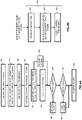
- FIG.4A shows a flow diagram illustrating a method for controlling or managing data traffic congestion in a network communication node according to an embodiment of the present disclosure.
- the received packets or at least a portion of them, are placed in the queue buffer 105, where they remain until they are forwarded or in some cases, discarded.
- the status of the queue buffer is determined 410 by extracting values of respective queue parameters 112 indicative of the queue buffer status. As mentioned above, these parameters may include instantaneous or smoothed queueing delay and instantaneous or smoothed queue size.
- target values of the respective queue parameters 142 are obtained.
- Control parameters 144, 146 are then derived 420 based on the determined queue parameter values 112 and the obtained parameter target values 142 as shown in more detail in FIG.4B .
- the reference queue parameter associated with the AQM module is pre-set in advance or is identified 422.
- the reference queue parameter associated with the AQM module is the queueing delay
- the reference queue parameter is the amount of buffered data in the queue buffer, i.e. the size of the queue.
- weight factors for the target values or, in case of another embodiment, for queue parameters are derived.
- the weight factors are, in one embodiment, derived by dividing the target value for the reference queue parameter by the target value for the respective queue parameter. For example, in the case of a delay-based AQM, the weight factors for the derived queue parameters, i.e.
- the weight factors are in fact the ratios of the target value for the reference queue parameter and the respective target values for the derived or measured queue parameter.
- the determined queue parameter values 112 are then weighted 424 with the derived respective weight factors to obtain weighted queue parameter values.
- values for the control parameters 144, 146 are selected 426 based on the weighted queue parameter values.
- the selection as detailed below may for one embodiment be done by taking the minimum of the weighted queue parameter values as one of the control parameter values 144 and the obtained target value for the reference queue parameter as the other control parameter 146. min Qdelay . w Qdelay , Qsize . w Qsize
- the thus derived control parameters i.e. the selected weighted queue parameter value 144 and the target value for the reference queue parameter value 146
- the AQM module 120 compares 430 the value of the selected weighted queue parameter 144 with the target value 146.
- the target value is provided in units analogous to the queue control parameter, the target value can be compared to the value of the queue parameter.
- a drop probability value is calculated 435 based on the values of the control parameters 144 and 146 fed to the AQM module.
- the drop probability value may be calculated for example as a function of the difference between the selected queue parameter value and the reference queue parameter target value.
- a packet congestion control is then to classify 440 the packet as part of a specific flow, e.g. a classic or a scalable flow.
- the classification may be performed on a packet-per-packet or per a group of packets.
- the classification may be performed by an ECN classifier or a similar module.
- a decision 445 whether to drop the packet in questions is then made.
- the decision is made based on a drop decision function. Again, the drop decision function depends on the AQM implementation. If a drop decision is made, then the drop function discards 450 the packet. Next, a decision 455 whether to mark the packet in question may be made. If, however, a drop decision was made in the previous step 445, then the mark decision will be, in effect, to not mark the packet in question and hence to not enqueue the packet. If the packet in question was not dropped, the packet may be marked 460 according to a mark decision function. Again, the mark decision function depends on the AQM implementation.
- the drop and mark decisions 445 and 455 occur prior to enqueuing the packet, the drop and mark steps may occur after the packet has been enqueued.
- the packet is allowed to be enqueued 465 into the queue buffer for forwarding as appropriate.
- the measured or derived queue parameters values are then weighted with respective weight factors to obtain weighted values to select a minimum value therefrom as follows: min Qdelay . w Qdelay , Qsize .1
- the selected value together with the reference queue parameter target value i.e. Qsize target , are provided to the AQM module as values for the control parameters (144,146).
- the value of the airtime fairness slot size, ATFSLOT may be used as the target value for the queue size parameter Qsize target .
- the value of the ATFSLOT depends on the transmit operation size, TXOP, which is dynamically adapted based on, for example, the modulation and coding schemes, MCS, and/or other parameters.
- TXOP transmit operation size
- MCS modulation and coding schemes
- the value of the airtime fairness slot size may be calculated by multiplying the airtime fairness slot duration, e.g. 4 ms, by the achievable bitrate towards the station or access point linked to the AQM.
- the achievable bitrate may be taking into account the values of the distributed interframe space, DIFS, the modulation and coding schemes, MCS, or the framing overhead. It may also accurately follow the variation of the physical channel capabilities.
- the thus calculated airtime fairness slot size forms the base queue size needed to fully utilize the link.
- the value of the transmit operation size, TXOP_size may be used as the target value for the Qsize target parameter.
- the transmit operation size defines the size of one transmit operation according to the air sharing policy and may vary between the maximum frame size and a smaller value like the airtime fairness slot size of the previous example or a configuration-driven value for rate-fair policies.
- the queue parameter target values are weighted rather than the queue parameters.
- weight factors for the queue parameter target values are derived by dividing the value of the reference queue parameter by the value of the respective queue parameter.
- the queue parameter target values are then weighted with the thus determined weight factors to obtain weighted queue parameters target values, and then the control module 140 selects the maximum of the weighted queue parameter target values as the selected weighted target value, i.e. max Qdelay target .1 , Qsize target . w Qsize target
- the control module 140 thus provides the AQM module with the measured or otherwise derived value of the reference queue parameter, i.e. Qdelay , and the selected weighted target value, i.e. max ( Qdelay target .1, Qsize target . w Qsize target ).
- the AQM is delay-based, the measured or derived queueing delay and the selected target values are provided to the AQM module 120.
- the conventional AQM will increase the drop probability to force a reduction of the size of the queue in the queue buffer as the measured queuing delay value is above its target value.
- the AQM will lower the drop probability instead of increasing it as in the conventional AQM implementation.
- the AQM will allow the queue to grow rather than forcing it to reduce its size as in the conventional AQM implementation.
- the maximum of the weighted queue parameter target values which is 75 ms is then selected and provided to the AQM together with the measured queueing delay value, i.e. 20ms. As the measured value, i.e. 20 ms, is lower than the selected target value, i.e. 75 ms, the AQM will lower the drop probability to allow the queue to grow rather than forcing it to reduce its size as in the conventional AQM implementation.
- FIG.6 shows a suitable computing system 600 enabling to implement embodiments of the method for managing the data traffic congestion in a network communication node according to the invention.
- Computing system 600 may, in general, be formed as a suitable general-purpose computer and comprise a bus 610, a processor 602, a local memory 604, one or more optional input interfaces 614, one or more optional output interfaces 616, a communication interface 612, a storage element interface 606, and one or more storage elements 608.
- Bus 610 may comprise one or more conductors that permit communication among the components of the computing system 600.
- Processor 602 may include any type of conventional processor or microprocessor that interprets and executes programming instructions.
- Local memory 604 may include a random-access memory, RAM, or another type of dynamic storage device that stores information and instructions for execution by processor 602 and/or read-only memory, ROM, or another type of static storage device that stores static information and instructions for use by processor 602.
- Input interface 614 may comprise one or more conventional mechanisms that permit an operator or user to input information to the computing device 600, such as a keyboard 620, a mouse 630, a pen, voice recognition and/or biometric mechanisms, a camera, etc.
- Output interface 616 may comprise one or more conventional mechanisms that output information to the operator or user, such as a display 640, etc.
- Communication interface 612 may comprise any transceiver-like mechanism such as for example one or more Ethernet interfaces that enables computing system 600 to communicate with other devices and/or systems, for example with other computing devices 651, 652, 653 such as other network communication nodes in a wireless network.
- the communication interface 612 of computing system 600 may be connected to such another computing system by means of a local area network, LAN, or a wide area network, WAN, such as for example the internet.
- Storage element interface 606 may comprise a storage interface such as for example a Serial Advanced Technology Attachment, SATA, interface or a Small Computer System Interface, SCSI, for connecting bus 610 to one or more storage elements 608, such as one or more local disks, for example, SATA disk drives, and control the reading and writing of data to and/or from these storage elements 608.
- SATA Serial Advanced Technology Attachment
- SCSI Small Computer System Interface
- the storage element(s) 608 above is/are described as a local disk, in general, any other suitable computer-readable media such as a removable magnetic disk, optical storage media such as a CD or DVD, -ROM disk, solid-state drives, flash memory cards, ... could be used.
- the computing system 600 could thus correspond to network communication node 100 and 300 in the embodiments illustrated by FIG.2 or FIG.3 .
- circuitry may refer to one or more or all of the following:
- circuitry also covers an implementation of merely a hardware circuit or processor (or multiple processors) or portion of a hardware circuit or processor and its (or their) accompanying software and/or firmware.
- circuitry also covers, for example, and if applicable to the particular claim element, a baseband integrated circuit or processor integrated circuit for a mobile device or a similar integrated circuit in a server, a cellular network device, or other computing or network device.
- top, bottom, over, under, and the like are introduced for descriptive purposes and not necessarily to denote relative positions. It is to be understood that the terms so used are interchangeable under appropriate circumstances and embodiments of the invention are capable of operating according to the present invention in other sequences, or in orientations different from the one(s) described or illustrated above.
Landscapes
- Engineering & Computer Science (AREA)
- Computer Networks & Wireless Communication (AREA)
- Signal Processing (AREA)
- Data Exchanges In Wide-Area Networks (AREA)
Priority Applications (2)
| Application Number | Priority Date | Filing Date | Title |
|---|---|---|---|
| EP20209979.2A EP4007225A1 (de) | 2020-11-26 | 2020-11-26 | Verfahren und vorrichtung zur verwaltung von netzwerküberlastung |
| US17/533,312 US11751094B2 (en) | 2020-11-26 | 2021-11-23 | Method and apparatus for managing network congestion |
Applications Claiming Priority (1)
| Application Number | Priority Date | Filing Date | Title |
|---|---|---|---|
| EP20209979.2A EP4007225A1 (de) | 2020-11-26 | 2020-11-26 | Verfahren und vorrichtung zur verwaltung von netzwerküberlastung |
Publications (1)
| Publication Number | Publication Date |
|---|---|
| EP4007225A1 true EP4007225A1 (de) | 2022-06-01 |
Family
ID=73598716
Family Applications (1)
| Application Number | Title | Priority Date | Filing Date |
|---|---|---|---|
| EP20209979.2A Pending EP4007225A1 (de) | 2020-11-26 | 2020-11-26 | Verfahren und vorrichtung zur verwaltung von netzwerküberlastung |
Country Status (2)
| Country | Link |
|---|---|
| US (1) | US11751094B2 (de) |
| EP (1) | EP4007225A1 (de) |
Cited By (2)
| Publication number | Priority date | Publication date | Assignee | Title |
|---|---|---|---|---|
| CN115396384A (zh) * | 2022-07-28 | 2022-11-25 | 广东技术师范大学 | 一种数据包调度方法、系统及存储介质 |
| US12206591B2 (en) | 2022-05-09 | 2025-01-21 | Nokia Solutions And Networks Oy | Managing data traffic congestion in network nodes |
Families Citing this family (4)
| Publication number | Priority date | Publication date | Assignee | Title |
|---|---|---|---|---|
| CN115037399A (zh) * | 2021-03-03 | 2022-09-09 | 中兴通讯股份有限公司 | 报文转发方法、电子设备和存储介质 |
| CN115550263B (zh) * | 2021-06-28 | 2025-09-05 | 华为技术有限公司 | 一种网络设备的主动队列管理方法及网络设备 |
| CN117348500B (zh) * | 2023-12-04 | 2024-02-02 | 济南华科电气设备有限公司 | 一种煤矿综采工作面自动化控制方法及系统 |
| CN118381769B (zh) * | 2024-05-30 | 2024-09-27 | 鹏城实验室 | 队列管理方法、装置、设备及存储介质 |
Citations (1)
| Publication number | Priority date | Publication date | Assignee | Title |
|---|---|---|---|---|
| US6690645B1 (en) * | 1999-12-06 | 2004-02-10 | Nortel Networks Limited | Method and apparatus for active queue management based on desired queue occupancy |
Family Cites Families (1)
| Publication number | Priority date | Publication date | Assignee | Title |
|---|---|---|---|---|
| US11784932B2 (en) * | 2020-11-06 | 2023-10-10 | Innovium, Inc. | Delay-based automatic queue management and tail drop |
-
2020
- 2020-11-26 EP EP20209979.2A patent/EP4007225A1/de active Pending
-
2021
- 2021-11-23 US US17/533,312 patent/US11751094B2/en active Active
Patent Citations (1)
| Publication number | Priority date | Publication date | Assignee | Title |
|---|---|---|---|---|
| US6690645B1 (en) * | 1999-12-06 | 2004-02-10 | Nortel Networks Limited | Method and apparatus for active queue management based on desired queue occupancy |
Non-Patent Citations (3)
| Title |
|---|
| DE SCHEPPER NOKIA BELL LABS B BRISCOE K ET AL: "DualQ Coupled AQMs for Low Latency, Low Loss and Scalable Throughput (L4S); draft-ietf-tsvwg-aqm-dualq-coupled-13.txt", no. 13, 16 November 2020 (2020-11-16), pages 1 - 54, XP015142943, Retrieved from the Internet <URL:https://tools.ietf.org/html/draft-ietf-tsvwg-aqm-dualq-coupled-13> [retrieved on 20201116] * |
| PAN P NATARAJAN CISCO SYSTEMS F BAKER UNAFFILIATED G WHITE CABLELABS R: "Proportional Integral Controller Enhanced (PIE): A Lightweight Control Scheme to Address the Bufferbloat Problem; rfc8033.txt", PROPORTIONAL INTEGRAL CONTROLLER ENHANCED (PIE): A LIGHTWEIGHT CONTROL SCHEME TO ADDRESS THE BUFFERBLOAT PROBLEM; RFC8033.TXT, INTERNET ENGINEERING TASK FORCE, IETF; STANDARD, INTERNET SOCIETY (ISOC) 4, RUE DES FALAISES CH- 1205 GENEVA, SWITZERLAND, 1 March 2017 (2017-03-01), pages 1 - 30, XP015117657 * |
| PATEL SANJEEV ET AL: "Performance Analysis of AQM Scheme Using Factorial Design Framework", IEEE SYSTEMS JOURNAL, IEEE, US, vol. 12, no. 2, 1 June 2018 (2018-06-01), pages 1211 - 1218, XP011682746, ISSN: 1932-8184, [retrieved on 20180502], DOI: 10.1109/JSYST.2017.2652120 * |
Cited By (3)
| Publication number | Priority date | Publication date | Assignee | Title |
|---|---|---|---|---|
| US12206591B2 (en) | 2022-05-09 | 2025-01-21 | Nokia Solutions And Networks Oy | Managing data traffic congestion in network nodes |
| CN115396384A (zh) * | 2022-07-28 | 2022-11-25 | 广东技术师范大学 | 一种数据包调度方法、系统及存储介质 |
| CN115396384B (zh) * | 2022-07-28 | 2023-11-28 | 广东技术师范大学 | 一种数据包调度方法、系统及存储介质 |
Also Published As
| Publication number | Publication date |
|---|---|
| US20220167206A1 (en) | 2022-05-26 |
| US11751094B2 (en) | 2023-09-05 |
Similar Documents
| Publication | Publication Date | Title |
|---|---|---|
| US11751094B2 (en) | Method and apparatus for managing network congestion | |
| US8351331B2 (en) | Resource allocation framework for wireless/wired networks | |
| CN102223675B (zh) | 拥塞告警及处理方法、系统和设备 | |
| CN104272680B (zh) | 用信号通知拥塞 | |
| EP1985092B1 (de) | Verfahren und vorrichtung zum auflösen von datenpaket-verkehrsstau | |
| US20100189063A1 (en) | Methods and systems for rate matching and rate shaping in a wireless network | |
| KR20040090440A (ko) | 통신 시스템들에서의 전송 스케쥴링 방법 | |
| EP3395023B1 (de) | Dynamisch optimierte warteschlange beim datenrouting | |
| EP3076618A1 (de) | Computerimplementiertes verfahren, system und computerprogramme zur überlastregelung in einem transportknoten eines kommunikationsnetzes | |
| US6920120B2 (en) | System and method of scheduling radio resources in a wireless communications network | |
| WO2014189422A1 (en) | Transmitting node, receiving node and methods therein | |
| EP1323326B1 (de) | Mobilfunkzugriffsnetzwerke | |
| CN114629847A (zh) | 基于可用带宽分配的耦合多流tcp拥塞控制方法 | |
| US8542608B2 (en) | Method for achieving an optimal shaping rate for a new packet flow | |
| CN102843775B (zh) | 调度方法、装置及网络设备 | |
| EP2553971B1 (de) | Verfahren zur überlastungserkennung in einem mobilfunknetz | |
| JP2006115156A (ja) | アクセスポイント、アクセスポイント制御装置および無線lanシステム | |
| US11503506B2 (en) | Base station device, wireless communication control method, and recording medium having base station control program stored therein | |
| Gawas et al. | Cross layer adaptive congestion control for best-effort traffic of IEEE 802.11 e in mobile ad hoc networks | |
| Yang et al. | Cross-layer assisted early congestion control for cloud vr applications in 5g edge networks | |
| Yin et al. | Admission control with multi-constrained QoS providing in wireless sensor networks | |
| Li et al. | Buffer sizing for TCP flows in 802.11 e WLANs | |
| KR100572053B1 (ko) | 순방향링크/역방향 링크 트래픽의 통계적 특성분석을 통한화상전화 트래픽 구분방법과 그를 이용한 화상전화 QoS보장방법 | |
| KR101715352B1 (ko) | 무선랜 단말과 이를 이용한 실시간 복합서비스의 대역폭 할당 방법 | |
| Liu et al. | Dynamic admission and congestion control for real-time traffic in IEEE 802.11 e wireless LANs |
Legal Events
| Date | Code | Title | Description |
|---|---|---|---|
| PUAI | Public reference made under article 153(3) epc to a published international application that has entered the european phase |
Free format text: ORIGINAL CODE: 0009012 |
|
| STAA | Information on the status of an ep patent application or granted ep patent |
Free format text: STATUS: THE APPLICATION HAS BEEN PUBLISHED |
|
| AK | Designated contracting states |
Kind code of ref document: A1 Designated state(s): AL AT BE BG CH CY CZ DE DK EE ES FI FR GB GR HR HU IE IS IT LI LT LU LV MC MK MT NL NO PL PT RO RS SE SI SK SM TR |
|
| STAA | Information on the status of an ep patent application or granted ep patent |
Free format text: STATUS: REQUEST FOR EXAMINATION WAS MADE |
|
| 17P | Request for examination filed |
Effective date: 20221201 |
|
| RBV | Designated contracting states (corrected) |
Designated state(s): AL AT BE BG CH CY CZ DE DK EE ES FI FR GB GR HR HU IE IS IT LI LT LU LV MC MK MT NL NO PL PT RO RS SE SI SK SM TR |
|
| STAA | Information on the status of an ep patent application or granted ep patent |
Free format text: STATUS: EXAMINATION IS IN PROGRESS |
|
| 17Q | First examination report despatched |
Effective date: 20240820 |