EP4007277A1 - Procédé et appareil de transformée multiple améliorée et transformée secondaire non séparable pour codage vidéo - Google Patents
Procédé et appareil de transformée multiple améliorée et transformée secondaire non séparable pour codage vidéo Download PDFInfo
- Publication number
- EP4007277A1 EP4007277A1 EP22150204.0A EP22150204A EP4007277A1 EP 4007277 A1 EP4007277 A1 EP 4007277A1 EP 22150204 A EP22150204 A EP 22150204A EP 4007277 A1 EP4007277 A1 EP 4007277A1
- Authority
- EP
- European Patent Office
- Prior art keywords
- block
- coefficient
- transform
- coefficient block
- zero
- Prior art date
- Legal status (The legal status is an assumption and is not a legal conclusion. Google has not performed a legal analysis and makes no representation as to the accuracy of the status listed.)
- Pending
Links
- 238000000034 method Methods 0.000 title claims abstract description 78
- 241000023320 Luma <angiosperm> Species 0.000 claims description 16
- OSWPMRLSEDHDFF-UHFFFAOYSA-N methyl salicylate Chemical compound COC(=O)C1=CC=CC=C1O OSWPMRLSEDHDFF-UHFFFAOYSA-N 0.000 claims description 16
- 230000008569 process Effects 0.000 abstract description 15
- 238000000638 solvent extraction Methods 0.000 description 18
- 238000005192 partition Methods 0.000 description 14
- 238000013139 quantization Methods 0.000 description 4
- 101150114515 CTBS gene Proteins 0.000 description 3
- 239000004381 Choline salt Substances 0.000 description 3
- 230000006835 compression Effects 0.000 description 3
- 238000012545 processing Methods 0.000 description 3
- 230000011664 signaling Effects 0.000 description 3
- 230000003044 adaptive effect Effects 0.000 description 2
- 238000007906 compression Methods 0.000 description 2
- 238000012360 testing method Methods 0.000 description 2
- VBRBNWWNRIMAII-WYMLVPIESA-N 3-[(e)-5-(4-ethylphenoxy)-3-methylpent-3-enyl]-2,2-dimethyloxirane Chemical compound C1=CC(CC)=CC=C1OC\C=C(/C)CCC1C(C)(C)O1 VBRBNWWNRIMAII-WYMLVPIESA-N 0.000 description 1
- 208000037170 Delayed Emergence from Anesthesia Diseases 0.000 description 1
- 239000004236 Ponceau SX Substances 0.000 description 1
- 230000009471 action Effects 0.000 description 1
- 238000005056 compaction Methods 0.000 description 1
- 238000013144 data compression Methods 0.000 description 1
- 230000001419 dependent effect Effects 0.000 description 1
- 230000006872 improvement Effects 0.000 description 1
- 238000013507 mapping Methods 0.000 description 1
- 238000012986 modification Methods 0.000 description 1
- 230000004048 modification Effects 0.000 description 1
- 238000005457 optimization Methods 0.000 description 1
- 238000010187 selection method Methods 0.000 description 1
- 230000002123 temporal effect Effects 0.000 description 1
Images


Classifications
-
- H—ELECTRICITY
- H04—ELECTRIC COMMUNICATION TECHNIQUE
- H04N—PICTORIAL COMMUNICATION, e.g. TELEVISION
- H04N19/00—Methods or arrangements for coding, decoding, compressing or decompressing digital video signals
- H04N19/60—Methods or arrangements for coding, decoding, compressing or decompressing digital video signals using transform coding
-
- H—ELECTRICITY
- H04—ELECTRIC COMMUNICATION TECHNIQUE
- H04N—PICTORIAL COMMUNICATION, e.g. TELEVISION
- H04N19/00—Methods or arrangements for coding, decoding, compressing or decompressing digital video signals
- H04N19/10—Methods or arrangements for coding, decoding, compressing or decompressing digital video signals using adaptive coding
- H04N19/102—Methods or arrangements for coding, decoding, compressing or decompressing digital video signals using adaptive coding characterised by the element, parameter or selection affected or controlled by the adaptive coding
- H04N19/12—Selection from among a plurality of transforms or standards, e.g. selection between discrete cosine transform [DCT] and sub-band transform or selection between H.263 and H.264
-
- H—ELECTRICITY
- H04—ELECTRIC COMMUNICATION TECHNIQUE
- H04N—PICTORIAL COMMUNICATION, e.g. TELEVISION
- H04N19/00—Methods or arrangements for coding, decoding, compressing or decompressing digital video signals
- H04N19/10—Methods or arrangements for coding, decoding, compressing or decompressing digital video signals using adaptive coding
- H04N19/102—Methods or arrangements for coding, decoding, compressing or decompressing digital video signals using adaptive coding characterised by the element, parameter or selection affected or controlled by the adaptive coding
- H04N19/119—Adaptive subdivision aspects, e.g. subdivision of a picture into rectangular or non-rectangular coding blocks
-
- H—ELECTRICITY
- H04—ELECTRIC COMMUNICATION TECHNIQUE
- H04N—PICTORIAL COMMUNICATION, e.g. TELEVISION
- H04N19/00—Methods or arrangements for coding, decoding, compressing or decompressing digital video signals
- H04N19/10—Methods or arrangements for coding, decoding, compressing or decompressing digital video signals using adaptive coding
- H04N19/102—Methods or arrangements for coding, decoding, compressing or decompressing digital video signals using adaptive coding characterised by the element, parameter or selection affected or controlled by the adaptive coding
- H04N19/12—Selection from among a plurality of transforms or standards, e.g. selection between discrete cosine transform [DCT] and sub-band transform or selection between H.263 and H.264
- H04N19/122—Selection of transform size, e.g. 8x8 or 2x4x8 DCT; Selection of sub-band transforms of varying structure or type
-
- H—ELECTRICITY
- H04—ELECTRIC COMMUNICATION TECHNIQUE
- H04N—PICTORIAL COMMUNICATION, e.g. TELEVISION
- H04N19/00—Methods or arrangements for coding, decoding, compressing or decompressing digital video signals
- H04N19/10—Methods or arrangements for coding, decoding, compressing or decompressing digital video signals using adaptive coding
- H04N19/134—Methods or arrangements for coding, decoding, compressing or decompressing digital video signals using adaptive coding characterised by the element, parameter or criterion affecting or controlling the adaptive coding
- H04N19/136—Incoming video signal characteristics or properties
- H04N19/14—Coding unit complexity, e.g. amount of activity or edge presence estimation
-
- H—ELECTRICITY
- H04—ELECTRIC COMMUNICATION TECHNIQUE
- H04N—PICTORIAL COMMUNICATION, e.g. TELEVISION
- H04N19/00—Methods or arrangements for coding, decoding, compressing or decompressing digital video signals
- H04N19/10—Methods or arrangements for coding, decoding, compressing or decompressing digital video signals using adaptive coding
- H04N19/134—Methods or arrangements for coding, decoding, compressing or decompressing digital video signals using adaptive coding characterised by the element, parameter or criterion affecting or controlling the adaptive coding
- H04N19/157—Assigned coding mode, i.e. the coding mode being predefined or preselected to be further used for selection of another element or parameter
- H04N19/159—Prediction type, e.g. intra-frame, inter-frame or bidirectional frame prediction
-
- H—ELECTRICITY
- H04—ELECTRIC COMMUNICATION TECHNIQUE
- H04N—PICTORIAL COMMUNICATION, e.g. TELEVISION
- H04N19/00—Methods or arrangements for coding, decoding, compressing or decompressing digital video signals
- H04N19/10—Methods or arrangements for coding, decoding, compressing or decompressing digital video signals using adaptive coding
- H04N19/169—Methods or arrangements for coding, decoding, compressing or decompressing digital video signals using adaptive coding characterised by the coding unit, i.e. the structural portion or semantic portion of the video signal being the object or the subject of the adaptive coding
- H04N19/17—Methods or arrangements for coding, decoding, compressing or decompressing digital video signals using adaptive coding characterised by the coding unit, i.e. the structural portion or semantic portion of the video signal being the object or the subject of the adaptive coding the unit being an image region, e.g. an object
- H04N19/176—Methods or arrangements for coding, decoding, compressing or decompressing digital video signals using adaptive coding characterised by the coding unit, i.e. the structural portion or semantic portion of the video signal being the object or the subject of the adaptive coding the unit being an image region, e.g. an object the region being a block, e.g. a macroblock
-
- H—ELECTRICITY
- H04—ELECTRIC COMMUNICATION TECHNIQUE
- H04N—PICTORIAL COMMUNICATION, e.g. TELEVISION
- H04N19/00—Methods or arrangements for coding, decoding, compressing or decompressing digital video signals
- H04N19/10—Methods or arrangements for coding, decoding, compressing or decompressing digital video signals using adaptive coding
- H04N19/169—Methods or arrangements for coding, decoding, compressing or decompressing digital video signals using adaptive coding characterised by the coding unit, i.e. the structural portion or semantic portion of the video signal being the object or the subject of the adaptive coding
- H04N19/18—Methods or arrangements for coding, decoding, compressing or decompressing digital video signals using adaptive coding characterised by the coding unit, i.e. the structural portion or semantic portion of the video signal being the object or the subject of the adaptive coding the unit being a set of transform coefficients
-
- H—ELECTRICITY
- H04—ELECTRIC COMMUNICATION TECHNIQUE
- H04N—PICTORIAL COMMUNICATION, e.g. TELEVISION
- H04N19/00—Methods or arrangements for coding, decoding, compressing or decompressing digital video signals
- H04N19/46—Embedding additional information in the video signal during the compression process
-
- H—ELECTRICITY
- H04—ELECTRIC COMMUNICATION TECHNIQUE
- H04N—PICTORIAL COMMUNICATION, e.g. TELEVISION
- H04N19/00—Methods or arrangements for coding, decoding, compressing or decompressing digital video signals
- H04N19/70—Methods or arrangements for coding, decoding, compressing or decompressing digital video signals characterised by syntax aspects related to video coding, e.g. related to compression standards
-
- H—ELECTRICITY
- H04—ELECTRIC COMMUNICATION TECHNIQUE
- H04N—PICTORIAL COMMUNICATION, e.g. TELEVISION
- H04N19/00—Methods or arrangements for coding, decoding, compressing or decompressing digital video signals
- H04N19/60—Methods or arrangements for coding, decoding, compressing or decompressing digital video signals using transform coding
- H04N19/61—Methods or arrangements for coding, decoding, compressing or decompressing digital video signals using transform coding in combination with predictive coding
-
- H—ELECTRICITY
- H04—ELECTRIC COMMUNICATION TECHNIQUE
- H04N—PICTORIAL COMMUNICATION, e.g. TELEVISION
- H04N19/00—Methods or arrangements for coding, decoding, compressing or decompressing digital video signals
- H04N19/90—Methods or arrangements for coding, decoding, compressing or decompressing digital video signals using coding techniques not provided for in groups H04N19/10-H04N19/85, e.g. fractals
- H04N19/96—Tree coding, e.g. quad-tree coding
Definitions
- the invention relates generally to video processing.
- the present invention relates to techniques to improve coding efficiency or reduce complexity for video coding systems using Enhanced Multiple Transforms (EMT) or Non-Separable Secondary Transform (NSST).
- EMT Enhanced Multiple Transforms
- NST Non-Separable Secondary Transform
- the High Efficiency Video Coding (HEVC) standard is developed under the joint video project of the ITU-T Video Coding Experts Group (VCEG) and the ISO/IEC Moving Picture Experts Group (MPEG) standardization organizations, and is especially with partnership known as the Joint Collaborative Team on Video Coding (JCT-VC).
- VCEG Video Coding Experts Group
- MPEG Moving Picture Experts Group
- one slice is partitioned into multiple coding tree units (CTU).
- CTU coding tree units
- SPS sequence parameter set
- the allowed CTU size can be 8x8, 16x16, 32x32, or 64x64.
- the CTUs within the slice are processed according to a raster scan order.
- the CTU is further partitioned into multiple coding units (CU) to adapt to various local characteristics.
- a quadtree denoted as the coding tree, is used to partition the CTU into multiple CUs.
- CTU size be MxM, where M is one of the values of 64, 32, or 16.
- the CTU can be a single CU or can be split into four smaller units of equal sizes (i.e., M/2xM/2), which are nodes of coding tree. If units are leaf nodes of coding tree, the units become CUs. Otherwise, the quadtree splitting process can be iterated until the size for a node reaches a minimum allowed CU size as specified in the SPS.
- This representation results in a recursive structure as specified by a coding tree (also referred to as a partition tree structure) 120 in Fig. 1 .
- the CTU partition 110 is shown in Fig. 1 , where the solid lines indicate CU boundaries.
- the decision whether to code a picture area using Inter-picture (temporal) or Intra-picture (spatial) prediction is made at the CU level. Since the minimum CU size can be 8x8, the minimum granularity for switching between different basic prediction types is 8x8.
- One or more prediction units are specified for each CU. Coupled with the CU, the PU works as a basic representative block for sharing the prediction information. Inside each PU, the same prediction process is applied and the relevant information is transmitted to the decoder on a PU basis.
- a CU can be split into one, two or four PUs according to the PU splitting type.
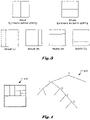
- HEVC defines eight shapes for splitting a CU into PU as shown in Fig. 2 . Unlike the CU, the PU may only be split once.
- the partitions shown in the second row correspond to asymmetric partitions, where the two partitioned parts have different sizes.
- a CU After obtaining the residual block by applying the prediction process based on the PU splitting type, a CU can be partitioned into transform units (TUs) according to another quadtree structure, which is analogous to the coding tree for the CU.
- the solid lines in block 110 indicate CU boundaries
- dotted lines in block 110 indicate TU boundaries.
- the solid lines for the partition tree structure 120 corresponds to the CU partition tree structure
- the dashed lines for the partition tree structure 120 corresponds to the TU partition tree structure.
- the TU is a basic representative block of residual or transform coefficients for applying the integer transform and quantization. For each TU, one integer transform with the same size is applied to the TU to obtain residual coefficients. These coefficients are transmitted to the decoder after quantization on a TU basis.
- coding tree block CB
- CB coding block
- PB prediction block
- TB transform block
- a binary tree block partitioning structure can be used as disclosed in ITU-T SG 16 (Study Period 2013), Contribution 966 ( J. An, et al, "Block partitioning structure for next generation video coding", ITU-T T13 SG16 COM 16 - C 966 R3 - E, Geneva, September 2015 ).
- a block can be recursively split into two smaller blocks. There are several splitting types as shown in Fig. 3 . The most efficient and simplest ones are the symmetric horizontal and vertical splits as shown in the top two splitting types in Fig. 3 . Therefore, a system may choose to only use these two splitting types.
- a flag can be signalled to indicate whether to split a block into two smaller blocks. If the flag indicates "yes", another syntax element is signalled to indicate which splitting type is used (i.e., horizontal or vertical). If the horizontal splitting is used then it is split into two blocks of size MxN/2, otherwise if the vertical splitting is used then it is split into two blocks of size M/2xN.
- the binary tree splitting process can be iterated until the size (width or height) for a splitting block reaches a minimum allowed block size (width or height) that can be defined in high level syntax such as SPS (sequence parameter set).
- Non-horizontal splitting is implicit when the splitting would result in a block height smaller than the indicated minimum.
- Non-vertical splitting is implicit when splitting would result in a block width smaller than the indicated minimum.
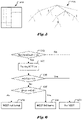
- Fig. 4 illustrates an example of block partitioning 410 and its corresponding binary tree structure 420.In each splitting (i.e., non-leaf) node of the binary tree, one flag indicates which splitting type (horizontal or vertical) is used, 0 indicates horizontal splitting and 1 indicates vertical splitting.
- the proposed binary tree structure can be used for partitioning a block into multiple smaller blocks such as partitioning a slice into CTUs, a CTU into CUs, a CU into PUs, or a CU into TUs, and so on.
- the binary tree is used for partitioning a CTU into CUs.
- the root node of the binary tree is a CTU and the leaf nodes of the binary tree are CUs.
- the leaf nodes are further processed by prediction and transform coding.
- JVET-E1001 Chen et al., "Algorithm Description of Joint Exploration Test Model 5 (JEM 5)", Joint Collaborative Team on Video Coding of ITU-T SG16 WP3 and ISO/IEC JTC1/SC29/WG11, 5th Meeting: Geneva, CH, 12-20 January, 2017 , Document: JVET-E1001), which is called quadtree plus binary tree (QTBT) structure.
- a block is firstly partitioned by a quadtree structure, the quadtree splitting can be iterated until the size for a splitting block reaches the minimum allowed quadtree leaf node size. If the leaf quadtree block is not larger than the maximum allowed binary tree root node size, it can be further partitioned by a binary tree structure, the binary tree splitting can be iterated until the size (width or height) for a splitting block reaches the minimum allowed binary tree leaf node size (width or height) or the binary tree depth reaches the maximum allowed binary tree depth.
- Fig. 5 illustrates an example of block partitioning 510 and its corresponding QTBT structure 520.
- the solid lines indicate quadtree splitting and dotted lines indicate binary tree splitting.
- each splitting (i.e., non-leaf) node of the binary tree one flag indicates which splitting type (horizontal or vertical) is used, 0 indicates horizontal splitting and 1 indicates vertical splitting.
- the disclosed QTBT structure can be used for partitioning a block into multiple smaller blocks such as partitioning a slice into CTUs, a CTU into CUs, a CU into PUs, or a CU into TUs, and so on.
- the QTBT can be used for partitioning a CTU into CUs, i.e., the root node of the QTBT is a CTU, which is partitioned into multiple CUs by a QTBT structure.
- the CUs are further processed by prediction and transform coding.
- Simplification of the QTBT structure has been also disclosed in PCT/CN2015/096761, filed on Dec 09, 2015 , where no further partitioning is applied from CU to PU or from CU to TU.
- a CU is equal to a PU and is also equal to a TU. Therefore, the leaf node of the QTBT structure is the basic unit for prediction as well as for transform.
- the QTBT structure may be applied to a CTU with size 128x128, the minimum allowed quadtree leaf node size is equal to 16x16, the maximum allowed binary tree root node size is equal to 64x64, the minimum allowed binary tree leaf node width and height both are equal to 4, and the maximum allowed binary tree depth is equal to 4.
- the CTU is partitioned by a quadtree structure and the leaf quadtree unit may have a size from 16x16 (minimum allowed quadtree leaf node size) to 128x128 (equal to CTU size, i.e., no split).
- leaf quadtree unit If the leaf quadtree unit is 128x128, it cannot be further split by the binary tree since the size exceeds the maximum allowed binary tree root node size 64x64. Otherwise the leaf quadtree unit can be further split by binary tree.
- the leaf quadtree unit is used as the root binary tree unit that has binary tree depth of 0. When the binary tree depth reaches 4 (i.e., the indicated maximum binary tree depth), non-splitting is implicit. When the binary tree node has width equal to 4, non-horizontal splitting is implicit. When the binary tree node has height equal to 4, non-vertical splitting is implicit.
- the leaf nodes of the QTBT are further processed by prediction (e.g., Intra picture or Inter picture) and transform coding.
- the disclosed tree structure can be applied separately to luma and chroma for the I-slice (i.e., Intra coded slice) and applied simultaneously to both luma and chroma (except when certain minimum sizes are reached for chroma) for the P- and B-slice.
- the luma CTB has its QTBT-structured block partitioning
- the two chroma CTBs have another QTBT-structured block partitioning.
- the two chroma CTBs may also have their own QTBT-structured block partitioning.
- HEVC Discrete Cosine Transform type II
- DCT-II Discrete Cosine Transform type II
- KLT Karhunen-Loeve Transform
- DCT-II For Intra-predicted residue, other transforms may be more efficient than DCT-II.
- JCTVC-B024, JCTVC-C108 and JCTVC-E125 made to various JCT-VC meetings (Joint Collaborative Team on Video Coding of ITU-T SG16 WP3 and ISO/IEC JTC1/SC29/WG11)
- DST Discrete Sine Transform
- DCT-II is the only transform used in current HEVC. However, the DCT-II may not the optimal transform for all cases.
- JCTVC-G281 Joint Collaborative Team on Video Coding of ITU-T SG16 WP3 and ISO/IEC JTC1/SC29/WG11, 7th Meeting: Geneva, CH., 21-30, Nov., 2011, Document: JCTVC-G281 ), the Discrete Sine Transform type VII (DST-VII) and Discrete Cosine Transform type IV (DCT-IV) are proposed to replace DCT-II in some cases.
- DST-VII Discrete Sine Transform type VII
- DCT-IV Discrete Cosine Transform type IV
- JVET-E1001 an Enhanced Multiple Transform (EMT) scheme is used for residual coding for both Intra and Inter-coded blocks.
- EMT Enhanced Multiple Transform
- the EMT may also be referred as Adaptive Multiple Transform (AMT).
- multiple transforms can be selected for one TU.
- one EMT flag can be coded to indicate that the HEVC transform is used (i.e., EMT flag equal to zero) or one of the new multiple transforms is used (i.e., EMT flag equal to one).
- EMT flag is equal to one
- An EMT index may be used to indicate the transform selected for each of the horizontal and vertical directions.
- the signalling for multiple transforms becomes more complicated.
- the bit rate for signalling also becomes higher.
- the overall coding performance may still be improved by the multiple transform schemes.
- JEM-4.0 i.e., the reference software for JVET, Joint Video Exploration Team of ITU-T SG 16 WP 3 and ISO/IEC JTC 1/SC 29/WG 11
- NSST non-separable secondary transforms
- the size of secondary transform is selected depending on the transform size. For example, if both width (W) and height (H) of the block are larger than 4, the 8x8 NSST is applied. Otherwise, the 4x4 NSST is applied.
- the secondary transform is applied only when the number of non-zero coefficients is greater than the threshold.
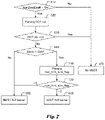
- An exemplary flowchart for selecting the size of secondary transform at a decoder side is shown in Fig. 6 . In Fig. 6 , the where the number of non-zero coefficients (i.e., nonZeroCoef) of the current TU is greater than a threshold (i.e., Thr) is checked in step 610.
- step 670 If the result is not true (i.e., the "no" path), no NSST is applied as shown in step 670. If the result is true (i.e., the "yes” path), the ROT index (i.e., ROT idx) is parsed from the bitstream in step 620. In step 630, whether the rotational transform index (i.e., ROT idx) is equal to 0 is checked. If ROT idx is equal to 0 (i.e., the "yes” path), no NSST is applied as shown in step 670. Otherwise (i.e., the "no" path from step 630), whether the block size is larger than or equal to 8 ⁇ 8 is checked in step 640.
- the ROT index i.e., ROT idx
- NSST using 8 ⁇ 8 kernel is applied as shown in step 660. Otherwise (i.e., the "no" path from step 640), NSST using 4 ⁇ 4 kernel is applied as shown in step 650.
- the non-separable transform is performed on the top-left R ⁇ S region of a transform coefficient block, where R corresponds to min (8, W) (i.e., minimum of 8 and W) and S corresponds to min (8, H) (i.e., minimum of 8 and H).
- R corresponds to min (8, W) (i.e., minimum of 8 and W)
- S corresponds to min (8, H) (i.e., minimum of 8 and H).
- the above transform selection rule is applied to both luma and chroma components.
- the kernel size of secondary transform depends on the current coding block size. For blocks larger than 8x8, the 8x8 NSST is always applied. As disclosed in JVET-E0047 ( H. Jang, et al., "Adaptive NSST Kernel Size Selection," Joint Collaborative Team on Video Coding of ITU-T SG16 WP3 and ISO/IEC JTC1/SC29/WG11, 5th Meeting: Geneva, CH, 12-20 January, 2017, Document: JVET-E0047 ), larger blocks may have non-zero coefficients existing in the low-frequency area such as the 4x4 sub-block region. Therefore, the best secondary transform is not always 8x8 NSST.
- a more generalized NSST selection method can further improve the coding performance.
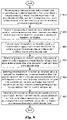
- An exemplary flowchart of selecting a secondary transform kernel size for blocks larger than 8x8 at a decoder side is shown in Fig. 7 .
- the flowchart corresponds to a modified flowchart based on the flowchart in Fig. 6 .
- the NSST kernel size flag i.e., nsst_krnl_size_flag
- the value of nsst_krnl_size_flag is checked in step 720.
- nsst_krnl_size_flag NSST using 8 ⁇ 8 kernel is applied as shown in step 660. If nsst_krnl_size_flag is equal to 1, NSST using 4 ⁇ 4 kernel is applied as shown in step 650.
- a primary transform is applied to an input block to form a primary transform block.
- the NSST with 4 ⁇ 4 kernel is selected for the primary transform block (4 ⁇ 8 or smaller) as shown in step 650
- the top-left 4 ⁇ 4 sub-block of the primary transform block is converted into a 16 ⁇ 1 one-dimensional (1D) coefficient vector.
- a secondary transform is then selected and applied to the 1D coefficient vector.
- the secondary transformed coefficient vector is then converted back to a two dimensional (2D) secondary transformed 4 ⁇ 4 block according to a scanning order.
- This secondary transformed 4 ⁇ 4 block is then used to replace the top-left 4 ⁇ 4 sub-block of the primary transform block to form an NSST modified transform block and subsequent coding process (e.g., quantization and entropy coding) is applied to the NSST modified transform block.
- subsequent coding process e.g., quantization and entropy coding
- the top-left 8 ⁇ 8 sub-block of the primary transform block is converted into a 64 ⁇ 1 one-dimensional (1D) coefficient vector.
- a secondary transform is then selected and applied to the 1D coefficient vector.
- the secondary transformed coefficient vector is then converted back to a two dimensional (2D) secondary transformed 8 ⁇ 8 block according to a scanning order.
- This secondary transformed 8 ⁇ 8 block is then used to replace the top-left 8 ⁇ 8 sub-block of the primary transform block to form an NSST modified transform block.
- JVET-E0047 selecting NSST kernel size for blocks larger than 8x8 can improve coding gain to a certain degree, but incur dramatic encoding time increases.
- a flag is always used to explicitly signal the NSST kernel size for blocks larger than 8x8, which limits the BD-rate enhancement and requires additional RDO (Rate-Distortion Optimization) checks.
- Implicit methods to derive the optimal NSST kernel size are also suggested in JVET-E0047 to reduce the bitrate associated with the additional flag and to reduce the required computations.
- the NSST syntax is signalled when the current TU has two or more non-zero coefficients. The NSST is only performed on the top-left R ⁇ S region of a transform coefficient block, where R corresponds to min (8, W) and S corresponds to min (8, H).
- a method and apparatus for video encoding or decoding performed by a video encoder or a video decoder incorporating enhanced multiple transform (EMT) are disclosed.
- input data associated with a current block in a current picture are received, where the input data corresponds to the current block to be processed by a forward transform process at an encoder side and the input data corresponds to a current coefficient block to be processed by an inverse transform process at a decoder side.
- a plurality of transform sets are determined, where each transform set comprises one or more transform candidates, and at least one transform set comprises a plurality of transform candidates.
- a first transform set is determined from the plurality of transform sets to apply in a horizontal direction to the current block at the encoder side or to the current coefficient block at the decoder side.
- a second transform set is determined from the plurality of transform sets to apply in a vertical direction to the current block at the encoder side, or to the current coefficient block at the decoder side. At least a first transform is selected from the first transform set or a reduced first transform set, or a second transform is selected from the second transform set or a reduced second transform set. The reduced first transform set has less candidates than the first transform set and the reduced second transform set has less candidates than the second transform set.
- the current coefficient block is generated according to the current block, the first transform and the second transform at the encoder side, or the current block is recovered according to the current coefficient block, the first transform and the second transform at the decoder side.
- the first transform is selected from the reduced first transform set if a horizontal size of the current block is small than or equal to a first threshold or the second transform is selected from the reduced second transform set if a vertical size of the current block is small than or equal to the first threshold.
- the reduced first transform set consists of one candidate if the horizontal size of the current block is small than or equal to 4, or the reduced second transform set consists of one candidate if the vertical size of the current block is small than or equal to 4.
- the first transform is selected from the reduced first transform set if a horizontal size of the current block is greater than or equal to a second threshold or the second transform is selected from the reduced second transform set if a vertical size of the current block is greater than or equal to the second threshold.
- the reduced first transform set consists of one candidate if the horizontal size of the current block is greater than or equal to 64, or the reduced second transform set consists of one candidate if the vertical size of the current block is greater than or equal to 64.
- the first transform is selected from the reduced first transform set and the second transform is selected from the reduced second transform set if a total number of pixels in the current block is small than or equal to a first threshold.
- the reduced first transform set consists of one candidate and the reduced second transform set consists of one candidate if the total number of pixels in the current block is small than or equal to 16.
- the first transform is selected from the reduced first transform set and the second transform is selected from the reduced second transform set if a total number of pixels in the current block is greater than or equal to a second threshold.
- the reduced first transform set consists of one candidate and the reduced second transform set consists of one candidate if the total number of pixels in the current block is greater than or equal to 4096.
- a method and apparatus of video encoding incorporating Non-Separable Secondary Transform are disclosed. According to this method, a block of prediction residuals corresponding to differences between a block of video data being coded and a predictor is received. A first transform is applied to the block of prediction residuals to generate a first 2D (two-dimensional) coefficient block. A total number of non-zero first coefficients in a partial block of the first 2D coefficient block is determined, where the partial block of the first 2D coefficient block is smaller than the first 2D coefficient block.
- the first 2D coefficient block is converted to a first 1D (one-dimensional) coefficient vector; a second transform is applied to at least part of the first 1D coefficient vector to generate a second 1D coefficient vector, where the second transform corresponds to a non-separable transform; the second 1D coefficient vector is converted to a second 2D coefficient block according to a coefficient scanning order; and the second 2D coefficient block is provided as a final 2D coefficient block. If the total number of non-zero first coefficients in the partial block of the first 2D coefficient block does not satisfy the target condition: the first 2D coefficient block is provided as the final 2D coefficient block.
- the target condition may correspond to the total number of non-zero first coefficients in the partial block of the first 2D coefficient block being greater than a threshold.
- the partial block of the first 2D coefficient block may correspond to a top-left MxN block of the first 2D coefficient block, and wherein M is one positive integer smaller than a width of the first 2D coefficient block and N is one positive integer smaller than a height of the first 2D coefficient block.
- M and N are selected from a group comprising 4, 8 and 16.
- the partial block of the first 2D coefficient block excludes DC coefficient located at a top-left corner of the first 2D coefficient block.
- the block of prediction residuals comprises one luma block and one or more chroma blocks, and one first 2D luma coefficient block and one or more 2D chroma coefficient blocks are generated, and where said determining the total number of non-zero first coefficients counts only non-zero AC coefficients associated with said one or more 2D chroma coefficient blocks. For example, said determining the total number of non-zero first coefficients counts only non-zero AC coefficients for each of said one or more 2D chroma coefficient blocks and selects a maximum number of non-zero AC coefficients as the total number of non-zero first coefficients.
- a method and apparatus of video decoding incorporating Non-Separable Secondary Transform (NSST) are disclosed. According to this method, a final 2D (two-dimensional) coefficient block corresponding to differences between a block of video data being coded and a predictor is received. A total number of non-zero first coefficients in a partial block of the final 2D coefficient block is determined, wherein the partial block of the final 2D coefficient block is smaller than the final 2D coefficient block.
- NST Non-Separable Secondary Transform
- the final 2D coefficient block is converted to a first 1D (one-dimensional) coefficient vector, a first transform is applied to at least part of the first 1D coefficient vector to generate a second 1D coefficient vector, in which the first transform corresponds to a non-separable transform, the second 1D coefficient vector is converted to a first 2D coefficient block according to a coefficient scanning order, a second transform is applied to the first 2D coefficient block to generate a second 2D coefficient block, and the block of video data is recovered according to the second 2D coefficient block.
- a first transform is applied to at least part of the first 1D coefficient vector to generate a second 1D coefficient vector, in which the first transform corresponds to a non-separable transform
- the second 1D coefficient vector is converted to a first 2D coefficient block according to a coefficient scanning order
- a second transform is applied to the first 2D coefficient block to generate a second 2D coefficient block
- the block of video data is recovered according to the second 2D coefficient block.
- the second transform is applied to the final 2D coefficient block to generate a third 2D coefficient block, and the block of video data is recovered according to the third 2D coefficient block.
- the target condition corresponds to the total number of non-zero first coefficients in the partial block of the final 2D coefficient block being greater than a threshold.
- the partial block of the final 2D coefficient block corresponds to a top-left MxN block of the final 2D coefficient block, and wherein M is one positive integer smaller than a width of the final 2D coefficient block and N is one positive integer smaller than a height of the final 2D coefficient block.
- M and N are selected from a group comprising 4, 8 and 16.
- the partial block of the final 2D coefficient block excludes DC coefficient located at a top-left corner of the final 2D coefficient block.
- the final 2D coefficient block corresponds to one 2D luma coefficient block and one or more 2D chroma coefficient blocks, and wherein said determining the total number of non-zero first coefficients counts only non-zero AC coefficients associated with said one or more 2D chroma coefficient blocks. For example, said determining the total number of non-zero first coefficients counts only non-zero AC coefficients for each of said one or more 2D chroma coefficient blocks and selects a maximum number of non-zero AC coefficients as the total number of non-zero first coefficients.
- Another method and apparatus for video encoding or decoding performed by a video encoder or a video decoder incorporating enhanced multiple transform (EMT) are disclosed.
- input data associated with a current block is received, in which the input data corresponds to a 2D (two-dimensional) coefficient block corresponding to differences between the current block and a predictor.
- a total number of non-zero first coefficients in at least a part of the 2D coefficient block is determined.
- An enhanced multiple transform (EMT) flag one or more EMT indices or both are signalled at an encoder side or parsed from the bitstream at a decoder side only if the total number of non-zero first coefficients in said at least a part of the 2D coefficient block is greater than a threshold, where the threshold is equal to 1 or larger. If the EMT flag is signalled, the EMT flag having a first flag value indicates that no EMT is applied to the current block; and the EMT flag having a second flag value indicates that the EMT is applied to the current block. If said one or more EMT indices are signalled, the EMT associated with a horizontal transform and a vertical transform indicated by said one or more EMT indices is applied to the current block.
- the EMT flag is inferred to have the first flag value and no EMT is applied to the current block. In another embodiment, if said one or more EMT indices are not signalled, said one or more EMT indices are inferred to be 0.
- different thresholds are selected for to-be-processed blocks corresponding to different coding modes, different colour components, different block sizes, different block widths or different block heights.
- the total number of non-zero first coefficients is counted based on a top-left MxN block of the 2D coefficient block, and where M is one positive integer smaller than a width of the 2D coefficient block and N is one positive integer smaller than a height of the 2D coefficient block.
- An aspect of the invention relates to a method for decoding video data incorporating non-separable secondary transform, NSST, the method comprising: receiving a final 2D, two-dimensional, coefficient block corresponding to differences between a block of video data being decoded and a predictor; determining a total number of non-zero first coefficients in a partial block of the final 2D coefficient block, wherein the partial block of the final 2D coefficient block is smaller than the final 2D coefficient block; if the total number of non-zero first coefficients in the partial block of the final 2D coefficient block satisfies a target condition: converting the final 2D coefficient block to a first ID, one-dimensional, coefficient vector; applying a first transform to at least part of the first 1D coefficient vector to generate a second 1D coefficient vector, wherein the first transform corresponds to a non-separable transform; converting the second 1D coefficient vector to a first 2D coefficient block according to a coefficient scanning order; applying a second transform to the first 2D coefficient block
- the method comprising: if the total number of non-zero first coefficients in the partial block of the final 2D coefficient block satisfies a target condition: parsing an index that indicates whether the NSST is applied to the block of video data or to the final 2D coefficient block, the index with a value greater than zero indicating that the NSST is applied; if the value of the index is greater than zero: converting the final 2D coefficient block to the first ID, one-dimensional, coefficient vector.
- the target condition corresponds to the total number of non-zero first coefficients in the partial block of the final 2D coefficient block being greater than a threshold.
- the partial block of the final 2D coefficient block corresponds to a top-left MxN block of the final 2D coefficient block, and wherein M is one positive integer smaller than a width of the final 2D coefficient block and N is one positive integer smaller than a height of the final 2D coefficient block.
- M and N are selected from a group comprising 4, 8 and 16.
- the partial block of the final 2D coefficient block excludes DC coefficient located at a top-left corner of the final 2D coefficient block.
- the final 2D coefficient block corresponds to one 2D luma coefficient block and one or more 2D chroma coefficient blocks, and wherein said determining the total number of non-zero first coefficients counts only non-zero AC coefficients associated with said one or more 2D chroma coefficient blocks.
- said determining the total number of non-zero first coefficients counts only non-zero AC coefficients for each of said one or more 2D chroma coefficient blocks and selects a maximum number of non-zero AC coefficients as the total number of non-zero first coefficients.
- the value of the index is inferred to be equal to zero if the index is not signalled, and/or the index further indicates which transform kernel in a transform set in the NSST is used.
- Another aspect of the invention relates to an apparatus for decoding video data, the apparatus comprising one or more electronic circuits or processors arranged to: receive a final 2D, two-dimensional, coefficient block corresponding to differences between a block of video data being decoded and a predictor; determine a total number of non-zero first coefficients in a partial block of the final 2D coefficient block, wherein the partial block of the final 2D coefficient block is smaller than the final 2D coefficient block; if the total number of non-zero first coefficients in the partial block of the final 2D coefficient block satisfies a target condition: convert the final 2D coefficient block to a first ID, one-dimensional, coefficient vector; apply a first transform to at least part of the first 1D coefficient vector to generate a second 1D coefficient vector, wherein the first transform corresponds to a non-separable transform; convert the second 1D coefficient vector to a first 2D coefficient block according to a coefficient scanning order; apply a second transform to the first 2D coefficient block to generate a second 2
- the apparatus is arranged for decoding video data incorporating non-separable secondary transform, NSST, and the apparatus is arranged to: if the total number of non-zero first coefficients in the partial block of the final 2D coefficient block satisfies a target condition: parse an index that indicates whether the NSST is applied to the final 2D coefficient block or to the block of video data, the index with a value greater than zero indicating that the NSST is applied; if the value of the index is greater than zero: convert the final 2D coefficient block to the first ID, one-dimensional, coefficient vector.
- the value of the index is inferred to be equal to zero if the index is not signalled, and/or the index further indicates which transform kernel in a transform set in the NSST is used.
- the present invention is intended to improve the coding efficiency or reduce complexity associated with enhanced multiple transform (EMT) and non-separable secondary transforms (NSST).
- EMT enhanced multiple transform
- NST non-separable secondary transforms
- EMT For EMT, currently, there are two kinds of different transforms selected for the horizontal and vertical directions, respectively. Therefore, besides the EMT flag, an additional flag or index for each direction is needed to indicate which transform is used.
- the side information required becomes expensive.
- the characteristic of prediction errors may not be complicated as that in small CUs.
- size-dependent EMT is disclosed in the present invention. For example, for small CUs, only one or two transforms can be selected to reduce the required side information. For large CU, the number of candidates in EMT can be reduced to remove useless candidates in EMT.
- the number of candidates in EMT is reduced in one direction if the CU size in this direction is smaller than or equal to a first specific threshold. For example, the number of candidates in EMT is reduced from 2 to 1 in horizontal direction if the horizontal size of the current CU is small than or equal to 4, and/or the number of candidates in EMT is reduced from 2 to 1 in vertical direction if the vertical size of the current CU is small than or equal to 4. In another embodiment, the number of candidates in EMT is reduced in one direction if the CU size in this direction is greater than or equal to a second specific threshold.
- the number of candidates in EMT is reduced from 2 to 1 in horizontal direction if the horizontal size of the current CU is greater than or equal to 64, and/or the number of candidates in EMT is reduced from 2 to 1 in vertical direction if the vertical size of the current CU is greater than or equal to 64.
- the number of candidates in EMT is reduced if the number of pixels in the CU is smaller than or equal to a third specific threshold.
- the number of candidates in EMT is reduced from 4 to 1 in horizontal direction and the number of candidates in EMT is reduced from 4 to 1 in vertical direction if the number of pixels in the current CU is small than or equal to 16.
- the number of candidates in EMT is reduced if the number of pixels in the CU is greater than or equal to a fourth specific threshold. For example, the number of candidates in EMT is reduced from 4 to 1 in horizontal direction and the number of candidates in EMT is reduced from 4 to 1 in vertical direction if the number of pixels in the current CU is greater than or equal to 4096.
- whether the number of candidates in EMT is reduced or not is depending on a side length (width or height) or an area of a current CU, however, these two constrains can be combined together.
- an EMT flag is signalled to indicate whether the EMT is applied when the non-zero coefficients exist. If the flag is true, an EMT index is signalled.
- the EMT flag and EMT index according to a method of the present invention are conditionally signalled depending on the TU coefficients. In an embodiment, the number of non-zero coefficients is used as a condition for EMT index signalling. For example, if the EMT flag is true, for an Inter or Intra block, the EMT index is signalled only when the number of non-zero coefficients is larger than a threshold. If the EMT index is not signalled, the EMT index is inferred as 0.
- the threshold can be 1, 2, or 3.
- the threshold can be different for different block modes (e.g. Inter mode or Intra mode), different components, or different block sizes (the block size can be indicated by the block width, the block height, or the number of pixels in the block).
- the threshold for smaller TUs can be larger than larger TUs.
- the threshold for smaller TUs can be smaller than larger TUs.
- Multiple EMT indices can be used for row (horizontal) transform and column (vertical) transform. Different thresholds can be applied for the row/column transform.
- the thresholds can depend on the TU width or height. For example, for a TU, th1 is the row transform threshold while another threshold, th2 is the column transform threshold. If the number of non-zero coefficients is larger than th1 but smaller than th2, the row transforms EMT index is signalled and the column transform EMT index is inferred.
- the EMT flag is signalled according to the number of non-zero coefficients.
- the EMT flag is signalled only when the number of non-zero coefficients is larger than a threshold. If the EMT flag is not signalled, the EMT flag is inferred as false. This method can be applied for Intra TU only, Inter-TU only, or all kinds of TU.
- the non-zero coefficients can be the non-zero coefficients of the whole TU or just the non-zero coefficients of top-left MxN block.
- the M and N can be 4, 8, or 16.
- the DC coefficient i.e., the top-left coefficient
- the DC coefficient can be excluded from counting the number of non-zero coefficients. For example, only the non-zero AC coefficients are counted for the number of non-zero coefficients.
- an NSST index is signalled when the number of non-zero coefficients is larger than a threshold for the Intra TU.
- the non-zero coefficients of the whole TU are calculated.
- the M and N can be 4, 8, or 16.
- the DC coefficient (the upper-left coefficient) can be excluded from counting the number of non-zero coefficients. For example, only the non-zero AC coefficients of the whole TU or only count the non-zero AC coefficients of the upper-left 8x8 block are counted.
- the NSST index is separately signalled for luma component and chroma component.
- the threshold for luma and chroma block can be different. Since the chroma texture is smoother than the luma texture, it usually has smaller AC coefficients. Accordingly, in one embodiment of the present invention, only the chroma AC coefficients are counted and signalled in order to reduce the NSST index.
- the numbers of non-zero coefficients of different colour components are counted together for determining the NSST index of the colour components.
- the maximum number of non-zero coefficients of two colour components is used for NSST index coding.
- Fig. 8 illustrates a flowchart for an exemplary coding system incorporating enhanced multiple transform (EMT) according to a method of the present invention.
- the steps shown in the flowchart may be implemented as program codes executable on one or more processors (e.g., one or more CPUs) at the encoder side or the decoder side.
- the steps shown in the flowchart may also be implemented based on hardware such as one or more electronic devices or processors arranged to perform the steps in the flowchart.
- input data associated with a current image are received in step 810, wherein the input data corresponds to the current block to be processed by a forward transform process at an encoder side and the input data corresponds to a current coefficient block to be processed by an inverse transform process at a decoder side.
- the input data may correspond to a block of prediction residues to be processed by forward transform to obtain a transform block at the encoder side, or the input data may correspond to a transform block associated with prediction residues and the transform block to be inverse transform to recover the block of prediction residue.
- a plurality of transform sets are determined in step 820, wherein each transform set comprises one or more transform candidates, and at least one transform set comprises a plurality of transform candidates.
- a first transform set is determined from the plurality of transform sets to apply in a horizontal direction to the current block at the encoder side, or to the current coefficient block at the decoder side in step 830.
- a second transform set is determined from the plurality of transform sets to apply in a vertical direction to the current block at the encoder side, or to the current coefficient block at the decoder side in step 840.
- At least first transform is selected from the first transform set or a reduced first transform set or a second transform is selected from the second transform set or a reduced second transform set depending on current block size in step 850, wherein the reduced first transform set has less candidates than the first transform set and the reduced second transform set has less candidates than the second transform set.
- the current coefficient block is generated according to the current block, the first transform and the second transform at the encoder side or the current block is recovered according to the current coefficient block, the first transform and the second transform at the decoder side in step 860.
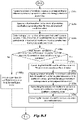
- Fig. 9A illustrates a flowchart for an exemplary encoding system incorporating non-separable secondary transforms (NSST) according to a method of the present invention.
- a block of prediction residuals corresponding to differences between a block of video data being coded and a predictor is received in step 910a.
- a first transform is applied to the block of prediction residuals to generate a first 2D (two-dimensional) coefficient block in step 920a.
- a total number of non-zero first coefficients in a partial block of the first 2D coefficient block is determined in step 930a, wherein the partial block of the first 2D coefficient block is smaller than the first 2D coefficient block.
- step 940a Whether the total number of non-zero first coefficients in the partial block of the first 2D coefficient block satisfies a target condition is checked in step 940a. If the target condition is satisfied (i.e., the "yes" path from step 940a), steps 950a through 980a are performed. Otherwise (i.e., the "no" path from step 940a) step 990a is performed.
- step 950a the first 2D coefficient block is converted to a first 1D (one-dimensional) coefficient vector.
- step 960a a second transform is applied to at least part of the first 1D coefficient vector to generate a second 1D coefficient vector, wherein the second transform corresponds to a non-separable transform.
- step 970a the second 1D coefficient vector is converted to a second 2D coefficient block according to a coefficient scanning order.
- step 980a the second 2D coefficient block is provided as a final 2D coefficient block.
- step 990a the first 2D coefficient block is provided as the final 2D coefficient block.
- Fig. 9B illustrates a flowchart for an exemplary decoding system incorporating non-separable secondary transforms (NSST) according to a method of the present invention.
- a final 2D (two-dimensional) coefficient block corresponding to differences between a block of video data being coded and a predictor is received in step 910b.
- a total number of non-zero first coefficients in a partial block of the final 2D coefficient block is determined in step 920b, wherein the partial block of the final 2D coefficient block is smaller than the final 2D coefficient block.
- a decoder can derive quantized transform coefficients from received bitstream. Therefore, the decoder is able to know the number of non-zero coefficients.
- step 930b Whether the total number of non-zero first coefficients in the partial block of the final 2D coefficient block satisfies a target condition is checked in step 930b. If the target condition is satisfied (i.e., the "yes" path from step 930b), steps 940b through 980b are performed. Otherwise (i.e., the "no" path from step 930b) steps 990b through 995b are performed.
- step 940b the final 2D coefficient block is converted to a first 1D (one-dimensional) coefficient vector.
- step 950b a first transform is applied to at least part of the first 1D coefficient vector to generate a second 1D coefficient vector, in which the first transform corresponds to a non-separable transform.
- step 960b the second 1D coefficient vector is converted to a first 2D coefficient block according to a coefficient scanning order.
- a second transform is applied to the first 2D coefficient block to generate a second 2D coefficient block.
- the block of video data is recovered according to the second 2D coefficient block.
- the second transform is applied to the final 2D coefficient block to generate a third 2D coefficient block.
- the block of video data is recovered according to the third 2D coefficient block.
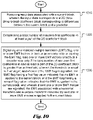
- Fig. 10 illustrates a flowchart for an exemplary coding system incorporating enhanced multiple transform (EMT) according to another method of the present invention.
- input data associated with a current block are received in step 1010, in which the input data corresponds to a 2D (two-dimensional) coefficient block corresponding to differences between the current block and a predictor.
- a total number of non-zero first coefficients in at least a part of the 2D coefficient block is determined in step 1020.
- the non-zero first coefficients can be the non-zero coefficients of the whole TU or just the non-zero coefficients of upper-left MxN block of the TU.
- An enhanced multiple transform (EMT) flag one or more EMT indices corresponding to the selected transform, or both are signalled at an encoder side or parsed from the bitstream at a decoder side only if the total number of non-zero first coefficients in said at least a part of the 2D coefficient block is greater than a threshold, wherein the threshold is equal to 1 or larger in step 1030, wherein if the EMT flag is signalled, the EMT flag having a first flag value indicates that no EMT is applied to the current block; and the EMT flag having a second flag value indicates that the EMT is applied to the current block and wherein if said one or more EMT indices corresponding to the selected transform are signalled, the EMT associated with a horizontal transform and a vertical transform indicated by said one or more EMT indices is applied to the current block.
- EMT enhanced multiple transform
- Embodiment of the present invention as described above may be implemented in various hardware, software codes, or a combination of both.
- an embodiment of the present invention can be one or more circuit circuits integrated into a video compression chip or program code integrated into video compression software to perform the processing described herein.
- An embodiment of the present invention may also be program code to be executed on a Digital Signal Processor (DSP) to perform the processing described herein.
- DSP Digital Signal Processor
- the invention may also involve a number of functions to be performed by a computer processor, a digital signal processor, a microprocessor, or field programmable gate array (FPGA). These processors can be configured to perform particular tasks according to the invention, by executing machine-readable software code or firmware code that defines the particular methods embodied by the invention.
- the software code or firmware code may be developed in different programming languages and different formats or styles.
- the software code may also be compiled for different target platforms.
- different code formats, styles and languages of software codes and other means of configuring code to perform the tasks in accordance with the invention will not depart from the spirit and scope of the invention.
Landscapes
- Engineering & Computer Science (AREA)
- Multimedia (AREA)
- Signal Processing (AREA)
- Physics & Mathematics (AREA)
- Discrete Mathematics (AREA)
- General Physics & Mathematics (AREA)
- Compression Or Coding Systems Of Tv Signals (AREA)
Applications Claiming Priority (4)
| Application Number | Priority Date | Filing Date | Title |
|---|---|---|---|
| US201762472001P | 2017-03-16 | 2017-03-16 | |
| US201762511369P | 2017-05-26 | 2017-05-26 | |
| PCT/CN2018/078782 WO2018166429A1 (fr) | 2017-03-16 | 2018-03-13 | Procédé et appareil de transformée multiple améliorée et transformée secondaire non séparable pour codage vidéo |
| EP18768344.6A EP3586511B1 (fr) | 2017-03-16 | 2018-03-13 | Procédé et appareil de transformée multiple améliorée et transformée secondaire non séparable pour codage vidéo |
Related Parent Applications (1)
| Application Number | Title | Priority Date | Filing Date |
|---|---|---|---|
| EP18768344.6A Division EP3586511B1 (fr) | 2017-03-16 | 2018-03-13 | Procédé et appareil de transformée multiple améliorée et transformée secondaire non séparable pour codage vidéo |
Publications (1)
| Publication Number | Publication Date |
|---|---|
| EP4007277A1 true EP4007277A1 (fr) | 2022-06-01 |
Family
ID=63523878
Family Applications (2)
| Application Number | Title | Priority Date | Filing Date |
|---|---|---|---|
| EP22150204.0A Pending EP4007277A1 (fr) | 2017-03-16 | 2018-03-13 | Procédé et appareil de transformée multiple améliorée et transformée secondaire non séparable pour codage vidéo |
| EP18768344.6A Active EP3586511B1 (fr) | 2017-03-16 | 2018-03-13 | Procédé et appareil de transformée multiple améliorée et transformée secondaire non séparable pour codage vidéo |
Family Applications After (1)
| Application Number | Title | Priority Date | Filing Date |
|---|---|---|---|
| EP18768344.6A Active EP3586511B1 (fr) | 2017-03-16 | 2018-03-13 | Procédé et appareil de transformée multiple améliorée et transformée secondaire non séparable pour codage vidéo |
Country Status (6)
| Country | Link |
|---|---|
| US (1) | US11509934B2 (fr) |
| EP (2) | EP4007277A1 (fr) |
| CN (1) | CN110419218B (fr) |
| PH (1) | PH12019502040A1 (fr) |
| TW (1) | TWI681668B (fr) |
| WO (1) | WO2018166429A1 (fr) |
Cited By (4)
| Publication number | Priority date | Publication date | Assignee | Title |
|---|---|---|---|---|
| US20220191546A1 (en) * | 2018-12-06 | 2022-06-16 | Lg Electronics Inc. | Image coding method based on secondary transform, and device therefor |
| US20230012486A1 (en) * | 2019-06-19 | 2023-01-19 | Lg Electronics Inc. | Transform-based image coding method and device therefor |
| US11968359B2 (en) * | 2018-10-05 | 2024-04-23 | Lg Electronics Inc. | Intra prediction-based image coding method and apparatus using MPM list |
| US11973963B2 (en) * | 2018-07-06 | 2024-04-30 | Lg Electronics Inc. | Transform-based image coding method and device |
Families Citing this family (51)
| Publication number | Priority date | Publication date | Assignee | Title |
|---|---|---|---|---|
| JP2019017066A (ja) * | 2017-07-03 | 2019-01-31 | パナソニック インテレクチュアル プロパティ コーポレーション オブ アメリカPanasonic Intellectual Property Corporation of America | 符号化装置、復号装置、符号化方法及び復号方法 |
| BR112020002317A8 (pt) | 2017-08-04 | 2023-01-24 | Lg Electronics Inc | Método e aparelho para configurar uma transformada para compressão de vídeo |
| WO2019185883A1 (fr) * | 2018-03-29 | 2019-10-03 | Fraunhofer-Gesellschaft zur Förderung der angewandten Forschung e.V. | Détermination d'un ensemble de transformations candidates pour codage vidéo |
| JP7334730B2 (ja) * | 2018-03-30 | 2023-08-29 | ソニーグループ株式会社 | 画像処理装置および方法 |
| CN111937386B (zh) * | 2018-04-01 | 2023-09-01 | Lg电子株式会社 | 通过向分区块应用二次变换来处理视频信号的方法及设备 |
| KR102030384B1 (ko) * | 2018-06-19 | 2019-11-08 | 광운대학교 산학협력단 | 잔차 계수 부호화/복호화 방법 및 장치 |
| EP3837845B1 (fr) | 2018-09-03 | 2025-05-07 | Huawei Technologies Co., Ltd. | Codeur vidéo, décodeur vidéo et procédés correspondants |
| CN110944177B (zh) * | 2018-09-21 | 2024-03-01 | 华为技术有限公司 | 视频解码方法及视频解码器,视频编码方法及视频编码器 |
| WO2020073882A1 (fr) * | 2018-10-08 | 2020-04-16 | Huawei Technologies Co., Ltd. | Décodeur vidéo et procédés correspondants |
| CN119520830A (zh) * | 2018-12-21 | 2025-02-25 | 三星电子株式会社 | 视频编码方法和装置以及视频解码方法和装置 |
| KR20250024125A (ko) * | 2019-01-07 | 2025-02-18 | 엘지전자 주식회사 | 이차 변환에 기반한 영상 코딩 방법 및 그 장치 |
| CN116781895A (zh) | 2019-01-12 | 2023-09-19 | Lg电子株式会社 | 解码设备、编码设备和图像数据发送设备 |
| CN119363971A (zh) * | 2019-01-12 | 2025-01-24 | 数码士有限公司 | 使用多变换核处理视频信号的方法和设备 |
| CN113316937B (zh) * | 2019-01-13 | 2024-01-02 | Lg 电子株式会社 | 处理视频信号的方法和设备 |
| KR102780740B1 (ko) | 2019-02-24 | 2025-03-12 | 엘지전자 주식회사 | 이차 변환에 기반한 영상 코딩 방법 및 그 장치 |
| CN113727120B (zh) * | 2019-03-03 | 2022-09-23 | 华为技术有限公司 | 译码方法、装置、编码器和解码器 |
| WO2020189980A1 (fr) * | 2019-03-15 | 2020-09-24 | 삼성전자주식회사 | Procédé et dispositif de codage d'image et procédé et dispositif de décodage d'image |
| US11172211B2 (en) * | 2019-04-04 | 2021-11-09 | Tencent America LLC | Method and apparatus for video coding |
| JP7214894B2 (ja) * | 2019-04-16 | 2023-01-30 | エルジー エレクトロニクス インコーポレイティド | イントラ予測ベースの映像コーディングにおける変換 |
| CN113853797B (zh) * | 2019-04-16 | 2024-03-22 | Lg电子株式会社 | 使用变换索引的图像编码 |
| CN114223207B (zh) | 2019-04-16 | 2023-09-22 | 寰发股份有限公司 | 用次要变换编解码视讯数据的方法以及装置 |
| WO2020213944A1 (fr) | 2019-04-16 | 2020-10-22 | 엘지전자 주식회사 | Transformation pour une intra-prédiction basée sur une matrice dans un codage d'image |
| EP3949414A4 (fr) * | 2019-04-16 | 2023-04-12 | HFI Innovation Inc. | Procédés et appareils de codage de données vidéo avec une signalisation de transformation secondaire adaptative |
| WO2020216303A1 (fr) | 2019-04-23 | 2020-10-29 | Beijing Bytedance Network Technology Co., Ltd. | Utilisation sélective de transformée secondaire dans une vidéo codée |
| JP7267461B2 (ja) | 2019-05-10 | 2023-05-01 | 北京字節跳動網絡技術有限公司 | ビデオ・データ処理方法、装置、記憶媒体及び記憶方法 |
| EP3967032A4 (fr) | 2019-06-07 | 2022-07-27 | Beijing Bytedance Network Technology Co., Ltd. | Signalisation conditionnelle d'une transformée secondaire réduite pour flux bianires de vidéo |
| EP3962082A4 (fr) * | 2019-06-12 | 2022-10-05 | Sony Group Corporation | Dispositif et procédé de traitement d'image |
| CN113994696B (zh) * | 2019-06-15 | 2025-07-08 | 北京字节跳动网络技术有限公司 | 编解码视频中的块尺寸相关的二次变换的使用 |
| CN118694953A (zh) | 2019-06-17 | 2024-09-24 | Lg 电子株式会社 | 基于亮度映射的视频或图像编译 |
| EP3985969A4 (fr) | 2019-06-17 | 2023-05-03 | LG Electronics Inc. | Codage vidéo ou d'image basé sur un mappage de luminance et une mise à l'échelle chromatique |
| CN112135148B (zh) * | 2019-06-25 | 2022-05-10 | 华为技术有限公司 | 非可分离变换方法以及设备 |
| GB2585030A (en) * | 2019-06-25 | 2020-12-30 | British Broadcasting Corp | Method of signalling in a video codec |
| CN117376555A (zh) | 2019-08-03 | 2024-01-09 | 北京字节跳动网络技术有限公司 | 视频编解码中缩减二次变换的矩阵的选择 |
| CN114223208B (zh) | 2019-08-17 | 2023-12-29 | 北京字节跳动网络技术有限公司 | 为视频中的缩减二次变换的边信息的上下文建模 |
| WO2021054797A1 (fr) * | 2019-09-19 | 2021-03-25 | 주식회사 윌러스표준기술연구소 | Procédé et dispositif de traitement de signaux vidéo utilisant un processus de mise à l'échelle |
| BR112022004724A2 (pt) * | 2019-09-20 | 2022-06-14 | Lg Electronics Inc | Método de codificação de imagem com base na transformada e dispositivo para o mesmo |
| CN114651445B (zh) | 2019-09-21 | 2024-01-26 | Lg电子株式会社 | 基于变换的视频编码方法及其装置 |
| KR20220050202A (ko) * | 2019-10-04 | 2022-04-22 | 엘지전자 주식회사 | 변환에 기반한 영상 코딩 방법 및 그 장치 |
| CN114946189B (zh) | 2019-11-13 | 2025-01-14 | Lg电子株式会社 | 基于变换的图像编码方法及其装置 |
| US11228787B2 (en) * | 2019-11-27 | 2022-01-18 | Mediatek Inc. | Signaling multiple transmission selection |
| CN112911312B (zh) * | 2019-12-03 | 2023-03-28 | 杭州海康威视数字技术股份有限公司 | 一种编码、解码方法、装置及其设备 |
| CN114830655B (zh) * | 2019-12-12 | 2023-08-18 | 寰发股份有限公司 | 视频编解码的方法与装置 |
| WO2021128284A1 (fr) * | 2019-12-27 | 2021-07-01 | 富士通株式会社 | Procédé de contraintes destiné à une transformée secondaire et dispositif associé |
| US11706425B2 (en) * | 2020-01-08 | 2023-07-18 | Qualcomm Incorporated | Multiple transform set signaling for video coding |
| WO2021190593A1 (fr) | 2020-03-25 | 2021-09-30 | Beijing Bytedance Network Technology Co., Ltd. | Traitement de vidéo codée utilisant une transformée secondaire améliorée |
| JP7360984B2 (ja) * | 2020-03-31 | 2023-10-13 | Kddi株式会社 | 画像復号装置、画像復号方法及びプログラム |
| US12335478B2 (en) * | 2021-08-30 | 2025-06-17 | Tencent America LLC | Scan order of secondary transform coefficients |
| EP4175296A1 (fr) * | 2021-10-29 | 2023-05-03 | Ateme | Procédé de traitement d'images et appareil de mise en uvre associé |
| US12413734B2 (en) * | 2022-01-13 | 2025-09-09 | Tencent America LLC | Cross-channel prediction based on multiple prediction modes |
| JP2025522787A (ja) * | 2022-07-01 | 2025-07-17 | エルジー エレクトロニクス インコーポレイティド | 画像エンコーディング/デコーディング方法及び装置、並びにビットストリームを保存した記録媒体 |
| US20240348828A1 (en) * | 2023-04-13 | 2024-10-17 | Qualcomm Incorporated | Multiple transform selection for intra block copy and intra template matching in video coding |
Citations (2)
| Publication number | Priority date | Publication date | Assignee | Title |
|---|---|---|---|---|
| US20160219290A1 (en) * | 2015-01-26 | 2016-07-28 | Qualcomm Incorporated | Enhanced multiple transforms for prediction residual |
| WO2019008366A1 (fr) * | 2017-07-05 | 2019-01-10 | Sony Corporation | Codage et décodage de données d'image |
Family Cites Families (8)
| Publication number | Priority date | Publication date | Assignee | Title |
|---|---|---|---|---|
| KR20120046724A (ko) * | 2009-08-06 | 2012-05-10 | 파나소닉 주식회사 | 부호화 방법, 복호 방법, 부호화 장치 및 복호 장치 |
| CN102045560B (zh) | 2009-10-23 | 2013-08-07 | 华为技术有限公司 | 一种视频编解码方法及设备 |
| US20110310976A1 (en) * | 2010-06-17 | 2011-12-22 | Qualcomm Incorporated | Joint Coding of Partition Information in Video Coding |
| PL231162B1 (pl) * | 2011-10-19 | 2019-01-31 | Kt Corp | Sposób dekodowania sygnału wideo |
| CN104025600B (zh) | 2012-01-03 | 2018-05-11 | 寰发股份有限公司 | 基于块的重要性图及重要性图群组旗标上下文选择的方法及装置 |
| EP3111641A4 (fr) | 2014-04-01 | 2017-11-08 | MediaTek Inc. | Procédé de codage d'informations de mouvement |
| CN107079165B (zh) | 2014-11-05 | 2020-06-19 | 联发科技(新加坡)私人有限公司 | 使用预测残差的视频编码方法及装置 |
| EP3729807A1 (fr) * | 2017-12-22 | 2020-10-28 | InterDigital VC Holdings, Inc. | Procédé et appareil de compression vidéo mettant en oeuvre des transformées multiples |
-
2018
- 2018-03-13 EP EP22150204.0A patent/EP4007277A1/fr active Pending
- 2018-03-13 CN CN201880015759.3A patent/CN110419218B/zh active Active
- 2018-03-13 WO PCT/CN2018/078782 patent/WO2018166429A1/fr not_active Ceased
- 2018-03-13 US US16/494,586 patent/US11509934B2/en active Active
- 2018-03-13 EP EP18768344.6A patent/EP3586511B1/fr active Active
- 2018-03-14 TW TW107108640A patent/TWI681668B/zh active
-
2019
- 2019-09-09 PH PH12019502040A patent/PH12019502040A1/en unknown
Patent Citations (2)
| Publication number | Priority date | Publication date | Assignee | Title |
|---|---|---|---|---|
| US20160219290A1 (en) * | 2015-01-26 | 2016-07-28 | Qualcomm Incorporated | Enhanced multiple transforms for prediction residual |
| WO2019008366A1 (fr) * | 2017-07-05 | 2019-01-10 | Sony Corporation | Codage et décodage de données d'image |
Non-Patent Citations (4)
| Title |
|---|
| CHEN ET AL.: "Algorithm Description of Joint Exploration Test Model 5 (JEM 5)", JOINT COLLABORATIVE TEAM ON VIDEO CODING OF ITU-T SG16 WP3 AND ISO/IEC JTC1/SC29/WG11, 12 January 2017 (2017-01-12) |
| H. JANG ET AL.: "Adaptive NSST Kernel Size Selection", JOINT COLLABORATIVE TEAM ON VIDEO CODING OF ITU-T SG16 WP3 AND ISO/IEC JTC1/SC29/WG11, 5TH MEETING, 12 January 2017 (2017-01-12) |
| J. AN ET AL.: "Block partitioning structure for next generation video coding", ITU-T T13 SG16 COM 16 - C 966 R3 - E, 2015 |
| JANG H ET AL: "Adaptive NSST Kernel Size Selection", 5. JVET MEETING; 12-1-2017 - 20-1-2017; GENEVA; (THE JOINT VIDEO EXPLORATION TEAM OF ISO/IEC JTC1/SC29/WG11 AND ITU-T SG.16 ); URL: HTTP://PHENIX.INT-EVRY.FR/JVET/,, no. JVET-E0047-v3, 13 January 2017 (2017-01-13), XP030150519 * |
Cited By (11)
| Publication number | Priority date | Publication date | Assignee | Title |
|---|---|---|---|---|
| US11973963B2 (en) * | 2018-07-06 | 2024-04-30 | Lg Electronics Inc. | Transform-based image coding method and device |
| US12323603B2 (en) * | 2018-07-06 | 2025-06-03 | Beijing Xiaomi Mobile Software Co., Ltd. | Transform-based image coding method and device |
| US11968359B2 (en) * | 2018-10-05 | 2024-04-23 | Lg Electronics Inc. | Intra prediction-based image coding method and apparatus using MPM list |
| US20220191546A1 (en) * | 2018-12-06 | 2022-06-16 | Lg Electronics Inc. | Image coding method based on secondary transform, and device therefor |
| AU2022204531B2 (en) * | 2018-12-06 | 2024-02-15 | Lg Electronics Inc. | Image coding method based on secondary transform, and device therefor |
| US11936911B2 (en) * | 2018-12-06 | 2024-03-19 | Lg Electronics Inc. | Image coding method based on secondary transform, and device therefor |
| US20240171776A1 (en) * | 2018-12-06 | 2024-05-23 | Lg Electronics Inc. | Image coding method based on secondary transform, and device therefor |
| US12273563B2 (en) * | 2018-12-06 | 2025-04-08 | Lg Electronics Inc. | Image coding method based on secondary transform, and device therefor |
| US20250203112A1 (en) * | 2018-12-06 | 2025-06-19 | Lg Electronics Inc. | Image coding method based on secondary transform, and device therefor |
| US20230012486A1 (en) * | 2019-06-19 | 2023-01-19 | Lg Electronics Inc. | Transform-based image coding method and device therefor |
| US11882289B2 (en) * | 2019-06-19 | 2024-01-23 | Lg Electronics Inc. | Transform-based image coding method and device therefor |
Also Published As
| Publication number | Publication date |
|---|---|
| CN110419218B (zh) | 2021-02-26 |
| TW201902219A (zh) | 2019-01-01 |
| EP3586511B1 (fr) | 2022-01-05 |
| WO2018166429A1 (fr) | 2018-09-20 |
| TWI681668B (zh) | 2020-01-01 |
| CN110419218A (zh) | 2019-11-05 |
| EP3586511A4 (fr) | 2020-08-12 |
| US20210120269A1 (en) | 2021-04-22 |
| EP3586511A1 (fr) | 2020-01-01 |
| US11509934B2 (en) | 2022-11-22 |
| PH12019502040A1 (en) | 2020-06-15 |
Similar Documents
| Publication | Publication Date | Title |
|---|---|---|
| EP3586511B1 (fr) | Procédé et appareil de transformée multiple améliorée et transformée secondaire non séparable pour codage vidéo | |
| US11259025B2 (en) | Method and apparatus of adaptive multiple transforms for video coding | |
| EP3363199B1 (fr) | Procédé et appareil de codage entropique et de modélisation de contexte pour un codage de vidéo et d'image | |
| KR102799108B1 (ko) | 제약이 있는 루마-크로마 분리 코딩 트리 코딩의 방법 및 장치 | |
| US11438590B2 (en) | Methods and apparatuses of chroma quantization parameter derivation in video processing system | |
| EP3298777B1 (fr) | Procédé d'une structure de partitionnement de bloc d'arbre binaire conditionnel pour un codage vidéo et d'image | |
| WO2017206805A1 (fr) | Procédé et appareil de codage de mode à palettes pour données vidéo en couleurs | |
| US11272220B2 (en) | Boundary forced partition | |
| US11039147B2 (en) | Method and apparatus of palette mode coding for colour video data | |
| EP4096220A1 (fr) | Procédé de codage vidéo utilisant un partitionnement de blocs en arbre binaire | |
| CN113906737B (zh) | 具有分割限制条件的小尺寸编码单元分割方法和装置 | |
| EP3881534B1 (fr) | Procédé et appareil de codage d'arbre de codage séparé de luminance-chrominance à contraintes | |
| US11785258B2 (en) | Methods and apparatus for signaling coding unit partitioning of video data |
Legal Events
| Date | Code | Title | Description |
|---|---|---|---|
| PUAI | Public reference made under article 153(3) epc to a published international application that has entered the european phase |
Free format text: ORIGINAL CODE: 0009012 |
|
| STAA | Information on the status of an ep patent application or granted ep patent |
Free format text: STATUS: THE APPLICATION HAS BEEN PUBLISHED |
|
| AC | Divisional application: reference to earlier application |
Ref document number: 3586511 Country of ref document: EP Kind code of ref document: P |
|
| AK | Designated contracting states |
Kind code of ref document: A1 Designated state(s): AL AT BE BG CH CY CZ DE DK EE ES FI FR GB GR HR HU IE IS IT LI LT LU LV MC MK MT NL NO PL PT RO RS SE SI SK SM TR |
|
| STAA | Information on the status of an ep patent application or granted ep patent |
Free format text: STATUS: REQUEST FOR EXAMINATION WAS MADE |
|
| 17P | Request for examination filed |
Effective date: 20221130 |
|
| RBV | Designated contracting states (corrected) |
Designated state(s): AL AT BE BG CH CY CZ DE DK EE ES FI FR GB GR HR HU IE IS IT LI LT LU LV MC MK MT NL NO PL PT RO RS SE SI SK SM TR |
|
| P01 | Opt-out of the competence of the unified patent court (upc) registered |
Effective date: 20230627 |
|
| STAA | Information on the status of an ep patent application or granted ep patent |
Free format text: STATUS: EXAMINATION IS IN PROGRESS |
|
| 17Q | First examination report despatched |
Effective date: 20241105 |