EP4007311B1 - Computerimplementiertes verfahren zur verarbeitung eines notfalls und notkommunikationsnetzwerk - Google Patents
Computerimplementiertes verfahren zur verarbeitung eines notfalls und notkommunikationsnetzwerk Download PDFInfo
- Publication number
- EP4007311B1 EP4007311B1 EP20210709.0A EP20210709A EP4007311B1 EP 4007311 B1 EP4007311 B1 EP 4007311B1 EP 20210709 A EP20210709 A EP 20210709A EP 4007311 B1 EP4007311 B1 EP 4007311B1
- Authority
- EP
- European Patent Office
- Prior art keywords
- emergency
- objects
- mobile communication
- response messages
- communication devices
- Prior art date
- Legal status (The legal status is an assumption and is not a legal conclusion. Google has not performed a legal analysis and makes no representation as to the accuracy of the status listed.)
- Active
Links
Images

Classifications
-
- H—ELECTRICITY
- H04—ELECTRIC COMMUNICATION TECHNIQUE
- H04W—WIRELESS COMMUNICATION NETWORKS
- H04W4/00—Services specially adapted for wireless communication networks; Facilities therefor
- H04W4/90—Services for handling of emergency or hazardous situations, e.g. earthquake and tsunami warning systems [ETWS]
-
- H—ELECTRICITY
- H04—ELECTRIC COMMUNICATION TECHNIQUE
- H04W—WIRELESS COMMUNICATION NETWORKS
- H04W4/00—Services specially adapted for wireless communication networks; Facilities therefor
- H04W4/02—Services making use of location information
- H04W4/023—Services making use of location information using mutual or relative location information between multiple location based services [LBS] targets or of distance thresholds
-
- H—ELECTRICITY
- H04—ELECTRIC COMMUNICATION TECHNIQUE
- H04W—WIRELESS COMMUNICATION NETWORKS
- H04W4/00—Services specially adapted for wireless communication networks; Facilities therefor
- H04W4/12—Messaging; Mailboxes; Announcements
- H04W4/14—Short messaging services, e.g. short message services [SMS] or unstructured supplementary service data [USSD]
Definitions
- the present invention relates to a computer-implemented method of processing an emergency incident and a corresponding emergency communication network.
- SMS-CB Short Message Service-Cell Broadcast
- SMS-CB is a widely-known feature in the telecommunication standards. SMS-CB is a method of sending messages to a plurality of mobile phone users in a defined area at the same time so as to enable a specific message being broadcasted in a region, for example, a region that is covered by the antenna of the core network. It can be used to send emergency alerts to the mobile phone users, as for example, a warning that the corona virus is being spread in this region.
- the same functionality can be used directly at the operation center of an emergency service, for example, at a Public Safety Answering Point, PSAP.
- PSAP Public Safety Answering Point
- the CB-SMS could also be used to convey the required media.
- the CB-SMS response could initiate a new path of communication between the call taker at the PSAP, for example a first responder or the like, and people who may be present in the region of interest.
- US 2007(013918 A1 discloses systems and methods for two-way, interactive communication regarding emergency notifications and responses for mobile environments.
- a specific geographic area is designated for selective emergency communications, which may comprise audio, text, video and other types of data.
- the emergency notification is sent to user's devices that are currently located in the designated area.
- the user's device may send photographs or video streams of nearby individuals or objects.
- US 2008/0037762 A1 discloses an apparatus and methods for utilizing the camera or video capability of particular communication devices, such as cell phones, to enhance handling of call, such as emergency calls.
- an emergency call When an emergency call is received at an emergency response center, it may be queued until an agent is available for handling the call.
- the images collected from a plurality of different callers may be sorted into different event groups, which can then be prioritized for handling by an available agent. Additionally, tha individual callers for each group of events may also be prioritized based on the collected images/video, so that the caller who is closest to the incident may be called first.
- US 2019/0132903 A1 is directed to generating and sending an emergency notification short message service (SMS) message to one or more registered contacts of a user when the user's equipment is used to make an emergency call.
- SMS short message service
- a gateway mobile location center system may cooperate with one or more other components of a mobile communications neetwork to route the 911 call to a nearby PSAP based at least in part on location information of the user's equipment from which the emergency call was placed. This same location information may be provided in the emergency notification SMS message.
- the present invention is based on the object to provide a computer-implemented method of processing an emergency incident and a corresponding emergency communication network for overcoming the above mentioned problem of not being able to process the information received in a very short time reliably.
- a computer-implemented method of processing an emergency incident reported to a Public Safety Answering Point PSAP by a user of a mobile communication device comprising the steps of:
- the present invention allows for presenting only the valuable data to the call taker at the PSAP so that he or she is able to handle the data faster and more efficiently.
- the inventive projection-friendly solution further ensures that the CB-SMS responses are malevolent-free so that the useless and irrelevant responses for handling the emergency incident are eliminated before being able to be forwarded to the call taker.
- the step of determining the geolocation of the mobile communication device that has initiated the emergency call comprises determining the radio cell in which the mobile communication device is located.
- the method further comprises a step of determining the geolocation of the mobile communication devices (5) that have sent CB-SMS response messages.
- the method further comprises a step of creating a list comprising the objects and the geolocations of the respective mobile communication devices (5), wherein the objects in the list are ordered according to their similarity.
- a machine learning algorithm is applied.
- the method may further comprise a step of determining a convergence in the distribution of the response messages with respect to the objects and respective geolocations.
- the method further comprises a step of filtering out the response messages that do not meet the convergence criteria for eliminating response messages from malevolent communication devices.
- the method further comprises a step of forwarding the response messages that have not been filtered out to the PSAP for being handled by the call taker.
- the predetermined area around the emergency incident is an area having a predetermined radius around an antenna at which the mobile communication devices that are sending the response messages are registered.
- the mobile communication device of the emergency caller is registered at the same antenna as the mobile communication devices that are sending the response messages.
- an emergency communication network comprising an ESRP connected to a PSAP, wherein the ESRP is adapted for carrying out the method for processing an emergency incident as outlined above.
- Fig. 1 shows a schematic overview for an architecture of an emergency communication network 1 for carrying out the method of processing an emergency incident according to an embodiment of the invention which comprises an Emergency Service Routing Proxy, ESRP, and PSAP 3.
- an antenna 4 is shown exemplarily at which a plurality of mobile phone users 5 that are present nearby within a certain radius have registered.
- a call taker 6 as for example, a first responder is present for handling and organizing emergency events that are reported via the emergency communication network 1.
- a mobile phone user of the plurality of users 5 registered at the antenna 4 makes an emergency call for reporting an emergency incident by dialing 911 - or any other appropriate telephone number for emergency services.
- the call is transmitted from a corresponding carrier that forwards it via the ESRP 2 to the next or most appropriate PSAP 3, where a call taker 6 receives the emergency call.
- the call taker 6 may then trigger an SMS-CB procedure which is initiated by the ESRP 2 and according to which messages are sent to the users 5 that are co-located with the mobile phone user who initiated the emergency call.
- the mobile phone users 5 that are registered at the antenna 4 will respectively receive an SMS about the emergency event and will be asked to provide information on the emergency event, as for example, send photos or videos of the incident or the surrounding area.
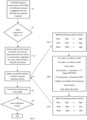
- Fig. 2 shows a flow chart for the method of processing an emergency incident according to an embodiment of the invention.
- the method starts as, in a first step S 1, a new CB-SMS response is received at the ESRP 2 (see Fig. 1 ) and/or a verification request, i.e., an on demand request is performed by the emergency call taker 6 at the PSAP 3 (see Fig. 1 ).
- a check is performed in order to identify if other responses in a predetermined radius ⁇ x have been received from the same antenna (for example, the antenna 4 shown in Fig. 1 ). It is noted that the radius value x is fully configurable in order to deploy the proposed functionality in different systems and or scenarios. If in step S2 it has been verified that other responses have been received within the predefined radius x, then in the subsequent step S3 Machine Learning, ML, techniques are applied to the responses that meet the requirement for the radius " ⁇ x" specified in step S2. By applying a simple ML algorithm, there will be a convergence in the distribution of responses in terms of content and location. But this could be considered as an ideal scenario in the real world. There are many reasons for not converging in any sense.
- step S4 the puzzle-driven proposed solution will be applied over the objects and devices that have been identified in the previous steps and that have been ordered or sorted in the objects and devices list. That is, the aim of this step is to "examine" the different devices in order to identify if their responses are accurate and guileless. The importance of this step is crucial because the different devices may create specific responses that aim at the confusion of the emergency caller and the paralysis of the emergency service.
- the core of this step is devoted to exposing potential malevolent behaviors, by verifying the responses between adjacent devices, i.e.
- an intelligent botnet would be in position to create similar-like, fake photos, for spatial irrelevant devices, in order to confuse the call taker 6 at the PSAP. Therefore, at the PSAP side, the most efficient means to rule out such irrelevant information and devices is to verify the different objects that are included in the emergency scene and that are present on the media (photos, videos, text) captured by the different devices, as the mobile phones registered at the antenna 4 shown in Fig. 1 .
- the verification of the objects between adjacent or nearby located devices or mobile phones seems to be a suitable and easy approach to solve this problem. The verification will be done based on the number of similar responses from the different devices or mobile phones at a specific geolocation. That is, for example, four devices or mobile phones are located in the same area with a distance less than x meters between them. If three devices report the same objects and only device reports a different object, then it is rather likely that the one differing object is not relevant or false.
- step S4A a list is received as an input, the list comprising the different objects from the different devices or mobile phones along with their respective position.
- step S4B for each binary device combination that meets specific location requirements, any potential object deviation triggers the verification mechanism. Therefore, if two devices or mobile phones are found to be inaccurate or deviating as to what they have reported, but they do meet the location difference requirement, then a new verification is triggered based on random objects.
- the random objects belong to a list of objects retrieved from the examined binary device combination, or retrieved from a separate list.
- the random objects will be selected using a RAND function from a list of objects that will be created upon receiving the first responses from the various devices or mobile phones. To exemplify this, it may be assumed that four devices or mobile phones return images and videos that contain ten different objects.
- a list comprising these objects will be created, and if there is a need to verify if the devices report the truth, then a number of these objects will be selected and will be presented to the device or mobile phone that needs to be verified.
- a default list with regular extracted objects for all emergency incidents there may be stored a default list with regular extracted objects for all emergency incidents.
- This separate list may be "refreshed" automatically with a predetermined configurable number of more common and/or more frequently extracted objects.
- the option for using a) a list of objects retrieved from the examined binary device combination or b) the default list may be configurable at the ESRP 2.
- the algorithm may consult the value of this configuration. This is because it is not meaningful to only verify the true captured objects between two devices or mobile phones. Moreover, it is noted that a malicious bot would be able to easily respond positively to everything it was presented as a possible emergency incident scene object.
- step S4C a far more reduced map is ready to be presented to the call taker at the PSAP.
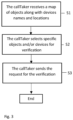
- Fig. 3 shows a sequence of verification steps according to an embodiment of the invention.
- the call taker will receive a data structure which contains the different objects of the scene or the emergency incident - prioritized based on the severity level after applying the verification mechanism explained above with respect to Fig. 2 - along with a list of the devices or mobile phones and their respective location. That is, in this case the call taker will be able to know, for example, that a first device D1 and a second device D2 have a distance of four meters between them. Additionally, the call taker has the overview of the emergency incident, and also of the different objects that have been extracted from the images and videos.
- the call taker Using these pieces of data, the call taker will be advised about the accuracy of the provided data, ruling out useless responses on the one hand, and exponentially increasing the dispatching time of the incident reliably on the other hand. Moreover, the call taker will be able to trigger an "on demand" verification. This may be done either by manually selecting a set of scene objects that will need to be verified by the devices, or by using random objects selected from the emergency scene or from a pre-defined list.
Landscapes
- Engineering & Computer Science (AREA)
- Computer Networks & Wireless Communication (AREA)
- Signal Processing (AREA)
- Business, Economics & Management (AREA)
- Health & Medical Sciences (AREA)
- Emergency Management (AREA)
- Environmental & Geological Engineering (AREA)
- Public Health (AREA)
- Mobile Radio Communication Systems (AREA)
- Telephonic Communication Services (AREA)
- Alarm Systems (AREA)
Claims (11)
- Computerimplementiertes Verfahren zum Verarbeiten eines Notfalls, der an einen Public Safety Answering Point PSAP (3) durch einen Benutzer einer mobilen Kommunikationsvorrichtung gemeldet wird, das Verfahren umfassend die Schritte:- Empfangen, durch einen Anrufannehmer (6) an dem PSAP (3), eines von einer mobilen Telekommunikationsvorrichtung initiierten Notrufs, der einen Notfall meldet;- Bestimmen der Geolokalisierung der mobilen Kommunikationsvorrichtung;- Auslösen eines Short Message Service-Cell Broadcast, SMS-CB, wobei SMS-Nachrichten an mobile Kommunikationsvorrichtungen (5), die sich innerhalb eines vorgegebenen Bereichs um die bestimmte Geolokalisierung herum befinden, gesendet werden,- Empfangen einer Vielzahl von CB-SMS-Antwortnachrichten von den mobilen Kommunikationsvorrichtungen (5) kommend, wobei die Antwortnachrichten Objekte umfassen, die mit dem Notfall in Zusammenhang stehen;- Extrahieren der Objekte aus den jeweiligen Antwortnachrichten;- Durchführen eines Objektvergleichs an den extrahierten Objekten zum Bestimmen einer Ähnlichkeit der Objekte in Bezug zueinander; und- Überprüfen, ob ähnliche Objekte von benachbarten mobilen Kommunikationsvorrichtungen (5) kommend empfangen wurden, um irrelevante Informationen auszuschließen.
- Verfahren nach Anspruch 1, wobei der Schritt des Bestimmens der Geolokalisierung der mobilen Kommunikationsvorrichtung, die den Notruf initiiert hat, ein Bestimmen der Funkzelle umfasst, in der sich die mobile Kommunikationsvorrichtung befindet.
- Verfahren nach Anspruch 1 oder Anspruch 2, wobei das Verfahren ferner einen Schritt zum Bestimmen der Geolokalisierung der mobilen Kommunikationsvorrichtungen (5) umfasst, die die CB-SMS-Antwortnachrichten gesendet haben.
- Verfahren nach einem der vorstehenden Ansprüche, wobei das Verfahren ferner einen Schritt eines Erstellens einer Liste umfasst, die die Objekte und die Geolokalisierung der jeweiligen mobilen Kommunikationsvorrichtungen (5) umfasst, wobei die Objekte in der Liste entsprechend ihrer Ähnlichkeit geordnet sind.
- Verfahren nach einem der vorstehenden Ansprüche, wobei zum Bestimmen der Ähnlichkeit der Objekte ein maschineller Lernalgorithmus angewendet wird.
- Verfahren nach einem der vorstehenden Ansprüche, wobei das Verfahren ferner einen Schritt eines Bestimmens einer Konvergenz in der Verteilung der Antwortnachrichten in Bezug auf die Objekte und jeweiligen Geolokalisierungen umfasst.
- Verfahren nach Anspruch 6, wobei das Verfahren ferner einen Schritt eines Herausfilterns der Antwortnachrichten umfasst, die die Konvergenzkriterien zum Eliminieren von Antwortnachrichten von böswilligen Kommunikationsvorrichtungen nicht erfüllen.
- Verfahren nach Anspruch 7, wobei das Verfahren ferner einen Schritt eines Weiterleitens der nicht herausgefilterten Antwortnachrichten an den PSAP (3) zum Behandeln durch den Anrufannehmer (6) umfasst.
- Verfahren nach einem der vorstehenden Ansprüche, wobei der vorgegebene Bereich um den Notfall ein Bereich ist, der einen vorgegebenen Radius um eine Antenne aufweist, an der die mobilen Kommunikationsvorrichtungen (5) angemeldet sind, die die Antwortnachrichten senden.
- Verfahren nach Anspruch 9, wobei die mobile Kommunikationsvorrichtung des Notrufers an der gleichen Antenne angemeldet ist wie die mobilen Kommunikationsvorrichtungen (5), die die Antwortnachrichten senden.
- Notfallkommunikationsnetz, umfassend einen ESRP (2), der mit einem PSAP (3) verbunden ist, wobei der ESRP (2) zum Ausführen des Verfahrens nach einem der vorstehenden Ansprüche angepasst ist.
Priority Applications (2)
| Application Number | Priority Date | Filing Date | Title |
|---|---|---|---|
| EP20210709.0A EP4007311B1 (de) | 2020-11-30 | 2020-11-30 | Computerimplementiertes verfahren zur verarbeitung eines notfalls und notkommunikationsnetzwerk |
| US17/536,247 US11800344B2 (en) | 2020-11-30 | 2021-11-29 | Computer-implemented method of processing an emergency incident and emergency communication network |
Applications Claiming Priority (1)
| Application Number | Priority Date | Filing Date | Title |
|---|---|---|---|
| EP20210709.0A EP4007311B1 (de) | 2020-11-30 | 2020-11-30 | Computerimplementiertes verfahren zur verarbeitung eines notfalls und notkommunikationsnetzwerk |
Publications (2)
| Publication Number | Publication Date |
|---|---|
| EP4007311A1 EP4007311A1 (de) | 2022-06-01 |
| EP4007311B1 true EP4007311B1 (de) | 2024-09-04 |
Family
ID=73646229
Family Applications (1)
| Application Number | Title | Priority Date | Filing Date |
|---|---|---|---|
| EP20210709.0A Active EP4007311B1 (de) | 2020-11-30 | 2020-11-30 | Computerimplementiertes verfahren zur verarbeitung eines notfalls und notkommunikationsnetzwerk |
Country Status (2)
| Country | Link |
|---|---|
| US (1) | US11800344B2 (de) |
| EP (1) | EP4007311B1 (de) |
Family Cites Families (7)
| Publication number | Priority date | Publication date | Assignee | Title |
|---|---|---|---|---|
| US20070139182A1 (en) * | 2005-12-19 | 2007-06-21 | O'connor Jay D | Emergency communications for the mobile environment |
| US7792277B2 (en) * | 2006-07-11 | 2010-09-07 | Cisco Technology, Inc. | Call centers with image or video based priority |
| US9247434B2 (en) * | 2010-07-30 | 2016-01-26 | General Motors Llc | Mobile-originated SMS local broadcast |
| US9814081B2 (en) * | 2013-08-02 | 2017-11-07 | Mediatek Inc. | Methods for processing emergency call and communications apparatuses utilizing the same |
| US20150356853A1 (en) * | 2014-06-04 | 2015-12-10 | Grandios Technologies, Llc | Analyzing accelerometer data to identify emergency events |
| US10499454B2 (en) * | 2017-11-02 | 2019-12-03 | T-Mobile Usa, Inc. | Emergency notification SMS messaging during E911 call |
| US20210067972A1 (en) * | 2019-08-30 | 2021-03-04 | Qualcomm Incorporated | Detecting and Responding to Unauthorized Emergency Messages and Presidential Alerts |
-
2020
- 2020-11-30 EP EP20210709.0A patent/EP4007311B1/de active Active
-
2021
- 2021-11-29 US US17/536,247 patent/US11800344B2/en active Active
Also Published As
| Publication number | Publication date |
|---|---|
| US11800344B2 (en) | 2023-10-24 |
| EP4007311A1 (de) | 2022-06-01 |
| US20220174466A1 (en) | 2022-06-02 |
Similar Documents
| Publication | Publication Date | Title |
|---|---|---|
| US12452359B2 (en) | Community safety, security, health communication and emergency notification system providing emergency source tracking | |
| US8090322B2 (en) | Emergency call forking and notification | |
| US10448212B2 (en) | Community safety, security, health communication and emergency notification system with common short code SMS communication capabilities | |
| CN105190721A (zh) | 人员危机通信管理系统 | |
| EP2785081A1 (de) | Aufforderungssystem und verfahren für versäumte anrufe | |
| US11720375B2 (en) | System and method for intelligently identifying and dynamically presenting incident and unit information to a public safety user based on historical user interface interactions | |
| US20060120516A1 (en) | Method and apparatus for providing push-to-talk based execution of an emergency plan | |
| US8750821B2 (en) | Method and apparatus for reporting emergency in call state in portable wireless terminal | |
| CN111480352B (zh) | 用于lte网络基于边缘的特定于位置的警报系统 | |
| US10896593B1 (en) | System and method for brokering mission critical communication between parties having non-uniform communication resources | |
| US20230188503A1 (en) | Data analytics collection using vpn gateway | |
| EP4007311B1 (de) | Computerimplementiertes verfahren zur verarbeitung eines notfalls und notkommunikationsnetzwerk | |
| US11800012B2 (en) | Method and apparatus for providing information on an emergency call | |
| KR20230092663A (ko) | 재난정보 메시지를 전송하는 방법 및 장치 | |
| WO2008021838A2 (en) | Integrated call handler and email systems and methods | |
| EP4418643A1 (de) | Erkennung der identitätsverfälschung einer rufleitung in anwesenheit von wiederholungsanrufen | |
| CN114205466B (zh) | 一种大规模用户报警电话响应的方法及系统 | |
| EP3832571B1 (de) | System und verfahren für einen steuerraum-nachrichtenbroker zur missionskritischen kommunikation | |
| US20260122174A1 (en) | Calling line identity spoof detection in the presence of repeat calls | |
| EP4007248A1 (de) | Computer-implementiertes verfahren zur verarbeitung eines notfallereignisses und notfallkommunikationsnetz | |
| KR101315317B1 (ko) | 긴급상황에서의 연락우선순위 설정방법, 연락우선순위 처리장치, 및 기록매체 | |
| GB2627218A (en) | Calling line identity spoof detection in the presence of repeat calls | |
| EP1965575A1 (de) | Sichere Geräte und Verfahren zum Verarbeiten eines Notrufs in einem Telekommunikationsnetz | |
| CN109391542A (zh) | 一种即时通讯方法及通信终端 |
Legal Events
| Date | Code | Title | Description |
|---|---|---|---|
| PUAI | Public reference made under article 153(3) epc to a published international application that has entered the european phase |
Free format text: ORIGINAL CODE: 0009012 |
|
| STAA | Information on the status of an ep patent application or granted ep patent |
Free format text: STATUS: THE APPLICATION HAS BEEN PUBLISHED |
|
| AK | Designated contracting states |
Kind code of ref document: A1 Designated state(s): AL AT BE BG CH CY CZ DE DK EE ES FI FR GB GR HR HU IE IS IT LI LT LU LV MC MK MT NL NO PL PT RO RS SE SI SK SM TR |
|
| STAA | Information on the status of an ep patent application or granted ep patent |
Free format text: STATUS: REQUEST FOR EXAMINATION WAS MADE |
|
| 17P | Request for examination filed |
Effective date: 20221103 |
|
| RBV | Designated contracting states (corrected) |
Designated state(s): AL AT BE BG CH CY CZ DE DK EE ES FI FR GB GR HR HU IE IS IT LI LT LU LV MC MK MT NL NO PL PT RO RS SE SI SK SM TR |
|
| RAP1 | Party data changed (applicant data changed or rights of an application transferred) |
Owner name: ATOS PUBLIC SAFETY LLC |
|
| P01 | Opt-out of the competence of the unified patent court (upc) registered |
Effective date: 20240301 |
|
| GRAP | Despatch of communication of intention to grant a patent |
Free format text: ORIGINAL CODE: EPIDOSNIGR1 |
|
| STAA | Information on the status of an ep patent application or granted ep patent |
Free format text: STATUS: GRANT OF PATENT IS INTENDED |
|
| RIC1 | Information provided on ipc code assigned before grant |
Ipc: H04W 4/14 20090101ALN20240326BHEP Ipc: H04W 4/90 20180101ALI20240326BHEP Ipc: H04W 4/02 20180101AFI20240326BHEP |
|
| INTG | Intention to grant announced |
Effective date: 20240412 |
|
| RIC1 | Information provided on ipc code assigned before grant |
Ipc: H04W 4/14 20090101ALN20240402BHEP Ipc: H04W 4/90 20180101ALI20240402BHEP Ipc: H04W 4/02 20180101AFI20240402BHEP |
|
| GRAS | Grant fee paid |
Free format text: ORIGINAL CODE: EPIDOSNIGR3 |
|
| GRAA | (expected) grant |
Free format text: ORIGINAL CODE: 0009210 |
|
| STAA | Information on the status of an ep patent application or granted ep patent |
Free format text: STATUS: THE PATENT HAS BEEN GRANTED |
|
| AK | Designated contracting states |
Kind code of ref document: B1 Designated state(s): AL AT BE BG CH CY CZ DE DK EE ES FI FR GB GR HR HU IE IS IT LI LT LU LV MC MK MT NL NO PL PT RO RS SE SI SK SM TR |
|
| REG | Reference to a national code |
Ref country code: GB Ref legal event code: FG4D |
|
| REG | Reference to a national code |
Ref country code: CH Ref legal event code: EP |
|
| REG | Reference to a national code |
Ref country code: IE Ref legal event code: FG4D |
|
| REG | Reference to a national code |
Ref country code: DE Ref legal event code: R096 Ref document number: 602020036995 Country of ref document: DE |
|
| REG | Reference to a national code |
Ref country code: LT Ref legal event code: MG9D |
|
| REG | Reference to a national code |
Ref country code: NL Ref legal event code: MP Effective date: 20240904 |
|
| PG25 | Lapsed in a contracting state [announced via postgrant information from national office to epo] |
Ref country code: NO Free format text: LAPSE BECAUSE OF FAILURE TO SUBMIT A TRANSLATION OF THE DESCRIPTION OR TO PAY THE FEE WITHIN THE PRESCRIBED TIME-LIMIT Effective date: 20241204 |
|
| PG25 | Lapsed in a contracting state [announced via postgrant information from national office to epo] |
Ref country code: PL Free format text: LAPSE BECAUSE OF FAILURE TO SUBMIT A TRANSLATION OF THE DESCRIPTION OR TO PAY THE FEE WITHIN THE PRESCRIBED TIME-LIMIT Effective date: 20240904 Ref country code: GR Free format text: LAPSE BECAUSE OF FAILURE TO SUBMIT A TRANSLATION OF THE DESCRIPTION OR TO PAY THE FEE WITHIN THE PRESCRIBED TIME-LIMIT Effective date: 20241205 Ref country code: FI Free format text: LAPSE BECAUSE OF FAILURE TO SUBMIT A TRANSLATION OF THE DESCRIPTION OR TO PAY THE FEE WITHIN THE PRESCRIBED TIME-LIMIT Effective date: 20240904 |
|
| PG25 | Lapsed in a contracting state [announced via postgrant information from national office to epo] |
Ref country code: BG Free format text: LAPSE BECAUSE OF FAILURE TO SUBMIT A TRANSLATION OF THE DESCRIPTION OR TO PAY THE FEE WITHIN THE PRESCRIBED TIME-LIMIT Effective date: 20240904 |
|
| PG25 | Lapsed in a contracting state [announced via postgrant information from national office to epo] |
Ref country code: LV Free format text: LAPSE BECAUSE OF FAILURE TO SUBMIT A TRANSLATION OF THE DESCRIPTION OR TO PAY THE FEE WITHIN THE PRESCRIBED TIME-LIMIT Effective date: 20240904 |
|
| PG25 | Lapsed in a contracting state [announced via postgrant information from national office to epo] |
Ref country code: HR Free format text: LAPSE BECAUSE OF FAILURE TO SUBMIT A TRANSLATION OF THE DESCRIPTION OR TO PAY THE FEE WITHIN THE PRESCRIBED TIME-LIMIT Effective date: 20240904 |
|
| PG25 | Lapsed in a contracting state [announced via postgrant information from national office to epo] |
Ref country code: RS Free format text: LAPSE BECAUSE OF FAILURE TO SUBMIT A TRANSLATION OF THE DESCRIPTION OR TO PAY THE FEE WITHIN THE PRESCRIBED TIME-LIMIT Effective date: 20241204 Ref country code: ES Free format text: LAPSE BECAUSE OF FAILURE TO SUBMIT A TRANSLATION OF THE DESCRIPTION OR TO PAY THE FEE WITHIN THE PRESCRIBED TIME-LIMIT Effective date: 20240904 |
|
| PG25 | Lapsed in a contracting state [announced via postgrant information from national office to epo] |
Ref country code: RS Free format text: LAPSE BECAUSE OF FAILURE TO SUBMIT A TRANSLATION OF THE DESCRIPTION OR TO PAY THE FEE WITHIN THE PRESCRIBED TIME-LIMIT Effective date: 20241204 Ref country code: PL Free format text: LAPSE BECAUSE OF FAILURE TO SUBMIT A TRANSLATION OF THE DESCRIPTION OR TO PAY THE FEE WITHIN THE PRESCRIBED TIME-LIMIT Effective date: 20240904 Ref country code: NO Free format text: LAPSE BECAUSE OF FAILURE TO SUBMIT A TRANSLATION OF THE DESCRIPTION OR TO PAY THE FEE WITHIN THE PRESCRIBED TIME-LIMIT Effective date: 20241204 Ref country code: LV Free format text: LAPSE BECAUSE OF FAILURE TO SUBMIT A TRANSLATION OF THE DESCRIPTION OR TO PAY THE FEE WITHIN THE PRESCRIBED TIME-LIMIT Effective date: 20240904 Ref country code: HR Free format text: LAPSE BECAUSE OF FAILURE TO SUBMIT A TRANSLATION OF THE DESCRIPTION OR TO PAY THE FEE WITHIN THE PRESCRIBED TIME-LIMIT Effective date: 20240904 Ref country code: GR Free format text: LAPSE BECAUSE OF FAILURE TO SUBMIT A TRANSLATION OF THE DESCRIPTION OR TO PAY THE FEE WITHIN THE PRESCRIBED TIME-LIMIT Effective date: 20241205 Ref country code: FI Free format text: LAPSE BECAUSE OF FAILURE TO SUBMIT A TRANSLATION OF THE DESCRIPTION OR TO PAY THE FEE WITHIN THE PRESCRIBED TIME-LIMIT Effective date: 20240904 Ref country code: ES Free format text: LAPSE BECAUSE OF FAILURE TO SUBMIT A TRANSLATION OF THE DESCRIPTION OR TO PAY THE FEE WITHIN THE PRESCRIBED TIME-LIMIT Effective date: 20240904 Ref country code: BG Free format text: LAPSE BECAUSE OF FAILURE TO SUBMIT A TRANSLATION OF THE DESCRIPTION OR TO PAY THE FEE WITHIN THE PRESCRIBED TIME-LIMIT Effective date: 20240904 |
|
| REG | Reference to a national code |
Ref country code: AT Ref legal event code: MK05 Ref document number: 1721656 Country of ref document: AT Kind code of ref document: T Effective date: 20240904 |
|
| PG25 | Lapsed in a contracting state [announced via postgrant information from national office to epo] |
Ref country code: NL Free format text: LAPSE BECAUSE OF FAILURE TO SUBMIT A TRANSLATION OF THE DESCRIPTION OR TO PAY THE FEE WITHIN THE PRESCRIBED TIME-LIMIT Effective date: 20240904 |
|
| PG25 | Lapsed in a contracting state [announced via postgrant information from national office to epo] |
Ref country code: PT Free format text: LAPSE BECAUSE OF FAILURE TO SUBMIT A TRANSLATION OF THE DESCRIPTION OR TO PAY THE FEE WITHIN THE PRESCRIBED TIME-LIMIT Effective date: 20250106 Ref country code: IS Free format text: LAPSE BECAUSE OF FAILURE TO SUBMIT A TRANSLATION OF THE DESCRIPTION OR TO PAY THE FEE WITHIN THE PRESCRIBED TIME-LIMIT Effective date: 20250104 |
|
| PG25 | Lapsed in a contracting state [announced via postgrant information from national office to epo] |
Ref country code: SM Free format text: LAPSE BECAUSE OF FAILURE TO SUBMIT A TRANSLATION OF THE DESCRIPTION OR TO PAY THE FEE WITHIN THE PRESCRIBED TIME-LIMIT Effective date: 20240904 Ref country code: RO Free format text: LAPSE BECAUSE OF FAILURE TO SUBMIT A TRANSLATION OF THE DESCRIPTION OR TO PAY THE FEE WITHIN THE PRESCRIBED TIME-LIMIT Effective date: 20240904 |
|
| PG25 | Lapsed in a contracting state [announced via postgrant information from national office to epo] |
Ref country code: EE Free format text: LAPSE BECAUSE OF FAILURE TO SUBMIT A TRANSLATION OF THE DESCRIPTION OR TO PAY THE FEE WITHIN THE PRESCRIBED TIME-LIMIT Effective date: 20240904 Ref country code: AT Free format text: LAPSE BECAUSE OF FAILURE TO SUBMIT A TRANSLATION OF THE DESCRIPTION OR TO PAY THE FEE WITHIN THE PRESCRIBED TIME-LIMIT Effective date: 20240904 |
|
| PG25 | Lapsed in a contracting state [announced via postgrant information from national office to epo] |
Ref country code: CZ Free format text: LAPSE BECAUSE OF FAILURE TO SUBMIT A TRANSLATION OF THE DESCRIPTION OR TO PAY THE FEE WITHIN THE PRESCRIBED TIME-LIMIT Effective date: 20240904 |
|
| PG25 | Lapsed in a contracting state [announced via postgrant information from national office to epo] |
Ref country code: SK Free format text: LAPSE BECAUSE OF FAILURE TO SUBMIT A TRANSLATION OF THE DESCRIPTION OR TO PAY THE FEE WITHIN THE PRESCRIBED TIME-LIMIT Effective date: 20240904 Ref country code: IT Free format text: LAPSE BECAUSE OF FAILURE TO SUBMIT A TRANSLATION OF THE DESCRIPTION OR TO PAY THE FEE WITHIN THE PRESCRIBED TIME-LIMIT Effective date: 20240904 |
|
| REG | Reference to a national code |
Ref country code: DE Ref legal event code: R097 Ref document number: 602020036995 Country of ref document: DE |
|
| REG | Reference to a national code |
Ref country code: CH Ref legal event code: PL |
|
| PG25 | Lapsed in a contracting state [announced via postgrant information from national office to epo] |
Ref country code: MC Free format text: LAPSE BECAUSE OF FAILURE TO SUBMIT A TRANSLATION OF THE DESCRIPTION OR TO PAY THE FEE WITHIN THE PRESCRIBED TIME-LIMIT Effective date: 20240904 |
|
| PG25 | Lapsed in a contracting state [announced via postgrant information from national office to epo] |
Ref country code: DK Free format text: LAPSE BECAUSE OF FAILURE TO SUBMIT A TRANSLATION OF THE DESCRIPTION OR TO PAY THE FEE WITHIN THE PRESCRIBED TIME-LIMIT Effective date: 20240904 |
|
| PLBE | No opposition filed within time limit |
Free format text: ORIGINAL CODE: 0009261 |
|
| STAA | Information on the status of an ep patent application or granted ep patent |
Free format text: STATUS: NO OPPOSITION FILED WITHIN TIME LIMIT |
|
| PG25 | Lapsed in a contracting state [announced via postgrant information from national office to epo] |
Ref country code: LU Free format text: LAPSE BECAUSE OF NON-PAYMENT OF DUE FEES Effective date: 20241130 |
|
| REG | Reference to a national code |
Ref country code: CH Ref legal event code: PL |
|
| PG25 | Lapsed in a contracting state [announced via postgrant information from national office to epo] |
Ref country code: CH Free format text: LAPSE BECAUSE OF NON-PAYMENT OF DUE FEES Effective date: 20241130 |
|
| 26N | No opposition filed |
Effective date: 20250605 |
|
| REG | Reference to a national code |
Ref country code: BE Ref legal event code: MM Effective date: 20241130 |
|
| PG25 | Lapsed in a contracting state [announced via postgrant information from national office to epo] |
Ref country code: SE Free format text: LAPSE BECAUSE OF FAILURE TO SUBMIT A TRANSLATION OF THE DESCRIPTION OR TO PAY THE FEE WITHIN THE PRESCRIBED TIME-LIMIT Effective date: 20240904 |
|
| PG25 | Lapsed in a contracting state [announced via postgrant information from national office to epo] |
Ref country code: BE Free format text: LAPSE BECAUSE OF NON-PAYMENT OF DUE FEES Effective date: 20241130 |
|
| PG25 | Lapsed in a contracting state [announced via postgrant information from national office to epo] |
Ref country code: IE Free format text: LAPSE BECAUSE OF NON-PAYMENT OF DUE FEES Effective date: 20241130 |
|
| PGFP | Annual fee paid to national office [announced via postgrant information from national office to epo] |
Ref country code: DE Payment date: 20251118 Year of fee payment: 6 |
|
| PGFP | Annual fee paid to national office [announced via postgrant information from national office to epo] |
Ref country code: GB Payment date: 20251120 Year of fee payment: 6 |
|
| PGFP | Annual fee paid to national office [announced via postgrant information from national office to epo] |
Ref country code: FR Payment date: 20251125 Year of fee payment: 6 |
|
| PG25 | Lapsed in a contracting state [announced via postgrant information from national office to epo] |
Ref country code: CY Free format text: LAPSE BECAUSE OF FAILURE TO SUBMIT A TRANSLATION OF THE DESCRIPTION OR TO PAY THE FEE WITHIN THE PRESCRIBED TIME-LIMIT; INVALID AB INITIO Effective date: 20201130 |