EP4007325A1 - Verfahren, vorrichtung und system zur auswahl von netzwerkelementen mit richtliniensteuerungsfunktion sowie speichermedium - Google Patents
Verfahren, vorrichtung und system zur auswahl von netzwerkelementen mit richtliniensteuerungsfunktion sowie speichermedium Download PDFInfo
- Publication number
- EP4007325A1 EP4007325A1 EP20846524.5A EP20846524A EP4007325A1 EP 4007325 A1 EP4007325 A1 EP 4007325A1 EP 20846524 A EP20846524 A EP 20846524A EP 4007325 A1 EP4007325 A1 EP 4007325A1
- Authority
- EP
- European Patent Office
- Prior art keywords
- network element
- function network
- access
- identifier
- terminal device
- Prior art date
- Legal status (The legal status is an assumption and is not a legal conclusion. Google has not performed a legal analysis and makes no representation as to the accuracy of the status listed.)
- Granted
Links
Images









Classifications
-
- H—ELECTRICITY
- H04—ELECTRIC COMMUNICATION TECHNIQUE
- H04W—WIRELESS COMMUNICATION NETWORKS
- H04W8/00—Network data management
- H04W8/02—Processing of mobility data, e.g. registration information at HLR [Home Location Register] or VLR [Visitor Location Register]; Transfer of mobility data, e.g. between HLR, VLR or external networks
- H04W8/06—Registration at serving network Location Register, VLR or user mobility server
- H04W8/065—Registration at serving network Location Register, VLR or user mobility server involving selection of the user mobility server
-
- H—ELECTRICITY
- H04—ELECTRIC COMMUNICATION TECHNIQUE
- H04L—TRANSMISSION OF DIGITAL INFORMATION, e.g. TELEGRAPHIC COMMUNICATION
- H04L5/00—Arrangements affording multiple use of the transmission path
- H04L5/003—Arrangements for allocating sub-channels of the transmission path
- H04L5/0053—Allocation of signalling, i.e. of overhead other than pilot signals
-
- H—ELECTRICITY
- H04—ELECTRIC COMMUNICATION TECHNIQUE
- H04W—WIRELESS COMMUNICATION NETWORKS
- H04W76/00—Connection management
- H04W76/10—Connection setup
- H04W76/11—Allocation or use of connection identifiers
-
- H—ELECTRICITY
- H04—ELECTRIC COMMUNICATION TECHNIQUE
- H04W—WIRELESS COMMUNICATION NETWORKS
- H04W8/00—Network data management
- H04W8/02—Processing of mobility data, e.g. registration information at HLR [Home Location Register] or VLR [Visitor Location Register]; Transfer of mobility data, e.g. between HLR, VLR or external networks
- H04W8/08—Mobility data transfer
-
- H—ELECTRICITY
- H04—ELECTRIC COMMUNICATION TECHNIQUE
- H04W—WIRELESS COMMUNICATION NETWORKS
- H04W60/00—Affiliation to network, e.g. registration; Terminating affiliation with the network, e.g. de-registration
-
- H—ELECTRICITY
- H04—ELECTRIC COMMUNICATION TECHNIQUE
- H04W—WIRELESS COMMUNICATION NETWORKS
- H04W8/00—Network data management
- H04W8/02—Processing of mobility data, e.g. registration information at HLR [Home Location Register] or VLR [Visitor Location Register]; Transfer of mobility data, e.g. between HLR, VLR or external networks
- H04W8/08—Mobility data transfer
- H04W8/12—Mobility data transfer between location registers or mobility servers
Definitions
- This application relates to the field of communication technologies, and in particular, to a policy control function network element selection method, an apparatus, a system, and a storage medium.
- a dynamic policy is generally deployed in the communication network.
- an access and mobility management function access and mobility management function, AMF
- policy control function policy control function
- a procedure in which the AMF selects the PCF is as follows:
- the AMF interacts with a network repository function (network function repository function, NRF) to obtain PCF information in the communication network, and then selects the serving PCF based on the obtained PCF information.
- the PCF is used to obtain policy information such as a policy section identifier (policy section identifier, PSI) of the terminal device and policy content corresponding to the policy section identifier from a unified data repository (unified data repository, UDR), to implement policy control and management on the terminal device.
- policy section identifier policy section identifier
- UDR unified data repository
- the policy information of the terminal device that is stored in the UDR does not change due to deregistration of the terminal device, but in an existing PCF selection method, the AMF selects a PCF each time the terminal device initiates a registration procedure, and then the selected PCF is used to obtain the policy information of the terminal device from the UDR. As a result, the policy information of the terminal device is repeatedly accessed, and a signaling waste problem exists.
- Embodiments of this application provide a policy control function network element selection method, an apparatus, a system, and a storage medium, to resolve a signaling waste problem that occurs each time a terminal device initiates a registration procedure in an existing PCF selection method.
- a first aspect of this application provides a policy control function network element selection method.
- the method includes: A first access and mobility management function network element receives a registration request message of a terminal device, where the registration request message includes an identifier of the terminal device, and the first access and mobility management function network element is an access and mobility management function network element that is determined by an access network and that is configured to serve the terminal device.
- the first access and mobility management function network element obtains, based on the identifier of the terminal device, an identifier of a policy control function network element currently serving the terminal device and a network identifier of the policy control function network element.
- the first access and mobility management function network element determines that the policy control function network element is a target policy control function network element.
- the first access and mobility management function network element may determine the policy control function network element used by the terminal device, and reuse the policy control function network element. This avoids an interaction procedure in which the policy control function network element is reselected through a network repository function network element, and the policy control function network element re-obtains, from a unified database, information such as a policy section identifier of the terminal device and policy content corresponding to the policy section identifier. In this way, signaling overheads are reduced.
- the registration request message further includes the identifier of the policy control function network element and the network identifier of the policy control function network element; and that the first access and mobility management function network element obtains, based on the identifier of the terminal device, an identifier of a policy control function network element currently serving the terminal device and a network identifier of the policy control function network element includes:
- the first access and mobility management function network element obtains the identifier of the policy control function network element and the network identifier of the policy control function network element from the registration request message of the terminal device based on the identifier of the terminal device.
- the terminal device may carry the identifier of the policy control function network element and the network identifier of the policy control function network element during initial registration, so that the first access and mobility management function network element may reuse, based on the identifier of the policy control function network element and the network identifier of the policy control function network element that are carried during the initial registration of the terminal device, the policy control function network element used by the terminal device before deregistration.
- the first access and mobility management function network element on a network side does not need to reselect a policy control function network element for the terminal device performing initial registration, and does not need to re-obtain policy information from the unified database, either. This reduces signaling exchange and reduces resource consumption.
- the first access and mobility management function network element obtains, based on the identifier of the terminal device, an identifier of a policy control function network element currently serving the terminal device and a network identifier of the policy control function network element includes:
- the first access and mobility management function network element obtains the identifier of the policy control function network element and the network identifier of the policy control function network element from a unified data management network element based on the identifier of the terminal device.
- the identifier of the PCF corresponding to the terminal device and the network identifier of the PCF are stored in the unified data management network element.
- the first access and mobility management function network element may reuse, based on the identifier of the policy control function network element and the network identifier of the policy control function network element that are obtained from the unified data management network element, the policy control function network element used for the terminal device before deregistration. In this way, a network side does not need to reselect a policy control function network element for the terminal device performing initial registration, and does not need to re-obtain policy information from the unified database, either. This reduces signaling exchange.
- the first access and mobility management function network element obtains, based on the identifier of the terminal device, an identifier of a policy control function network element currently serving the terminal device and a network identifier of the policy control function network element includes: The first access and mobility management function network element obtains the identifier of the policy control function network element and the network identifier of the policy control function network element from a second access and mobility management function network element based on the identifier of the terminal device, where the second access and mobility management function network element is an access and mobility management function network element that is configured to serve the terminal device before the terminal device requests to access the access network.
- the identifier of the policy control function network element corresponding to the terminal device and the network identifier of the policy control function network element are stored in the second access and mobility management function network element (an old access and mobility management function network element).
- the first access and mobility management function network element may reuse, based on the identifier of the policy control function network element and the network identifier of the policy control function network element that are obtained from the second access and mobility management function network element, the policy control function network element used by the terminal device before deregistration. In this way, a network side does not need to reselect a policy control function network element for the terminal device performing initial registration, and does not need to re-obtain policy information from the unified database, either. This reduces signaling overheads.
- a second aspect of this application provides a policy control function network element selection method.
- the method includes: A second access and mobility management function network element performs a deregistration procedure with a terminal device, where the second access and mobility management function network element is an access and mobility management function network element that is configured to serve the terminal device before the terminal device requests to access an access network.
- the second access and mobility management function network element removes an association relationship with a policy control function network element, where the policy control function network element is a policy control function network element currently serving the terminal device, and the policy control function network element retains policy information of the terminal device.
- the second access and mobility management function network element performs the deregistration procedure with the terminal device, and removes the association relationship with the policy control function network element. This provides an implementation possibility for subsequent re-registration of the terminal device.
- the method further includes: The second access and mobility management function network element sends an identifier of the policy control function network element and a network identifier of the policy control function network element to the terminal device.
- the second access and mobility management function network element when the second access and mobility management function network element deregisters with the terminal device, the second access and mobility management function network element directly sends the identifier of the policy control function network element and the network identifier of the policy control function network element to the terminal device.
- the terminal device may send a registration request message including the identifier of the policy control function network element and the network identifier of the policy control function network element to a first access and mobility management function network element. This avoids a process of determining the policy control function network element through signaling exchange, reduces signaling overheads, and avoids a waste of resources.
- the method before that the second access and mobility management function network element removes an association relationship with a policy control function network element, the method further includes: The second access and mobility management function network element sends an identifier of the policy control function network element and a network identifier of the policy control function network element to a unified data management network element.
- the method further includes: When the second access and mobility management function network element determines that the policy control function network element serving the terminal device changes, the second access and mobility management function network element updates the identifier of the policy control function network element and the network identifier of the policy control function network element that are stored in the unified data management network element.
- the second access and mobility management function network element timely updates the identifier of the policy control function network element and the network identifier of the policy control function network element that are stored in the unified data management network element, so that correctness of the identifier of the policy control function network element and the network identifier of the policy control function network element that are stored in the unified data management network element can be ensured. This avoids incorrect storage of information, and improves system stability.
- the method before that the second access and mobility management function network element removes an association relationship with a policy control function network element, the method further includes: The second access and mobility management function network element retains an identifier of the policy control function network element and a network identifier of the policy control function network element.
- the identifier of the policy control function network element and the network identifier of the policy control function network element are retained.
- a first access and mobility management function network element may directly obtain the identifier of the policy control function network element and the network identifier of the policy control function network element from the second access and mobility management function network element. This avoids a redetermination process, reduces implementation complexity, and improves performance.
- a third aspect of this application provides a policy control function network element selection method.
- the method includes: A terminal device receives an identifier of a policy control function network element and a network identifier of the policy control function network element that are sent by a second access and mobility management function network element, where the policy control function network element is a policy control function network element currently serving the terminal device, and the second access and mobility management function network element is an access and mobility management function network element that is configured to serve the terminal device before the terminal device requests to access an access network.
- the terminal device sends a registration request message to a first access and mobility management function network element through the access network, where the registration request message includes the identifier of the policy control function network element and the network identifier of the policy control function network element, and the first access and mobility management function network element is an access and mobility management function network element that is determined by the access network and that is configured to serve the terminal device.
- the registration request message is used to indicate that the first access and mobility management function network element determines a target policy control function network element based on a network identifier of the first access and mobility management function network element and the network identifier of the policy control function network element.
- the terminal device when receiving the identifier of the policy control function network element and the network identifier of the policy control function network element that are sent by the second access and mobility management function network element, the terminal device sends the registration request message including the identifier of the policy control function network element and the network identifier of the policy control function network element to the first access and mobility management function network element.
- the first access and mobility management function network element can obtain the identifier of the policy control function network element and the network identifier of the policy control function network element by parsing the registration request message. This reduces signaling overheads and avoids a waste of resources.
- a fourth aspect of this application provides a policy control function network element selection apparatus.
- the apparatus includes a receiving module, an obtaining module, and a processing module, where
- the registration request message further includes the identifier of the policy control function network element and the network identifier of the policy control function network element; and the obtaining module is specifically configured to obtain the identifier of the policy control function network element and the network identifier of the policy control function network element from the registration request message of the terminal device based on the identifier of the terminal device.
- the obtaining module is specifically configured to obtain the identifier of the policy control function network element and the network identifier of the policy control function network element from a unified data management network element based on the identifier of the terminal device.
- the obtaining module is specifically configured to obtain the identifier of the policy control function network element and the network identifier of the policy control function network element from a second access and mobility management function network element based on the identifier of the terminal device, where the second access and mobility management function network element is an access and mobility management function network element that is configured to serve the terminal device before the terminal device requests to access the access network.
- the receiving module is configured to receive the registration request message sent by the terminal device through the access network.
- a fifth aspect of this application provides a policy control function network element selection apparatus.
- the apparatus includes a processing module, where the processing module is configured to: perform a deregistration procedure between a second access and mobility management function network element and a terminal device, where the second access and mobility management function network element is an access and mobility management function network element that is configured to serve the terminal device before the terminal device requests to access an access network; and remove an association relationship with a policy control function network element, where the policy control function network element is a policy control function network element currently serving the terminal device, and the policy control function network element retains policy information of the terminal device.
- the apparatus further includes a sending module, where the sending module is configured to: before the processing module removes the association relationship with the policy control function network element, send an identifier of the policy control function network element and a network identifier of the policy control function network element to the terminal device.
- the apparatus further includes a sending module, where the sending module is configured to: before the processing module removes the association relationship with the policy control function network element, send an identifier of the policy control function network element and a network identifier of the policy control function network element to a unified data management network element.
- the processing module is further configured to: when the second access and mobility management function network element determines that the policy control function network element serving the terminal device changes, update the identifier of the policy control function network element and the network identifier of the policy control function network element that are stored in the unified data management network element.
- the apparatus further includes a storage module, where the storage module is further configured to retain an identifier of the policy control function network element and a network identifier of the policy control function network element.
- a sixth aspect of this application provides a communication apparatus.
- the apparatus includes a receiving module, a processing module, and a sending module, where
- the registration request message is used to indicate that the first access and mobility management function network element determines a target policy control function network element based on a network identifier of the first access and mobility management function network element and the network identifier of the policy control function network element.
- a seventh aspect of this application provides a policy control function network element selection apparatus.
- the apparatus includes a processor, a memory, and a computer program that is stored in the memory and that can be run on the processor.
- the processor executes the program, implements the method according to any one of the first aspect and the possible implementations of the first aspect.
- An eighth aspect of this application provides a policy control function network element selection apparatus.
- the apparatus includes a processor, a memory, and a computer program that is stored in the memory and that can be run on the processor.
- the processor executes the program, implements the method according to any one of the second aspect and the possible implementations of the second aspect.
- a ninth aspect of this application provides a communication apparatus.
- the apparatus includes a processor, a memory, and a computer program that is stored in the memory and that can be run on the processor.
- the processor executes the program, implements the method according to the third aspect.
- a tenth aspect of this application provides a communication system.
- the communication system includes a first access and mobility management function network element and a second access and mobility management function network element, and optionally may further include a unified data management network element or a terminal device.
- the first access and mobility management function network element is an access and mobility management function network element that is determined by an access network and that is configured to serve the terminal device.
- the second access and mobility management function network element is an access and mobility management function network element that is configured to serve the terminal device before the terminal device requests to access the access network.
- the unified data management network element is configured to store an identifier of a policy control function network element serving the terminal device and a network identifier of the policy control function network element.
- the first access and mobility management function network element is the apparatus according to any one of the fourth aspect and the possible implementations of the fourth aspect.
- the second access and mobility management function network element is the apparatus according to any one of the fifth aspect and the possible implementations of the fifth aspect.
- the terminal device is the apparatus according to the sixth aspect.
- An eleventh aspect of this application provides a storage medium.
- the storage medium stores instructions; and when the instructions are run on a computer, the computer is enabled to perform the method according to any one of the first aspect and the possible implementations of the first aspect.
- a twelfth aspect of this application provides a storage medium.
- the storage medium stores instructions; and when the instructions are run on a computer, the computer is enabled to perform the method according to any one of the second aspect and the possible implementations of the second aspect.
- a thirteenth aspect of this application provides a storage medium.
- the storage medium stores instructions; and when the instructions are run on a computer, the computer is enabled to perform the method according to the third aspect.
- a fourteenth aspect of this application provides a program product including instructions.
- the program product runs on a computer, the computer is enabled to perform the method according to any one of the first aspect and the possible implementations of the first aspect.
- a fifteenth aspect of this application provides a program product including instructions.
- the program product runs on a computer, the computer is enabled to perform the method according to any one of the second aspect and the possible implementations of the second aspect.
- a sixteenth aspect of this application provides a program product including instructions.
- the program product runs on a computer, the computer is enabled to perform the method according to the third aspect.
- a seventeenth aspect of this application provides a chip for running instructions.
- the chip is configured to perform the method according to any one of the first aspect and the possible implementations of the first aspect.
- An eighteenth aspect of this application provides a chip for running instructions.
- the chip is configured to perform the method according to any one of the second aspect and the possible implementations of the second aspect.
- a nineteenth aspect of this application provides a chip for running instructions.
- the chip is configured to perform the method according to the third aspect.
- the first AMF receives the registration request message of the terminal device, and the registration request message includes the identifier of the terminal device.
- the first AMF is the AMF that is determined by the access network and that is configured to serve the terminal device; obtains, based on the identifier of the terminal device, the identifier of the PCF currently serving the terminal device and the network identifier of the PCF; and when the network identifier of the first AMF is consistent with the network identifier of the PCF, determines that the PCF is the target PCF.
- the terminal device reuses the PCF and the policy information of the terminal device that are previously used during initial registration. This avoids repeated access of the policy information of the terminal device, and resolves a signaling waste problem.
- the user equipment (user equipment, UE) is also referred to as a terminal device in the embodiments of this application, and may include various handheld devices, vehicle-mounted devices, wearable devices, or computing devices that have a wireless communication function, or other processing devices connected to a wireless modem, such as a smartphone, an IoT chip, and a vehicle in a V2X network.
- a wireless modem such as a smartphone, an IoT chip, and a vehicle in a V2X network.
- the (radio) access network ((radio) access network, (R)AN) is mainly used to control UE to access a mobile communication network through wireless access.
- UPF Main functions of the user plane function network element (user plane function, UPF) include user user-plane related functions, for example, packet routing and transmission, packet detection, service usage reporting, quality of service (quality of service, QoS) processing, lawful interception, uplink packet detection, and downlink packet storage.
- AMF Main functions of the access and mobility management function network element (access and mobility management function, AMF) include access and mobility-related functions, for example, connection management, mobility management, registration management, access authentication and authorization, reachability management, and security context management.
- SMF Main functions of the session management function network element (session management function, SMF) include session-related functions, for example, session management (for example, session establishment, modification, and release, including tunnel maintenance between the UPF network element and an AN), UPF network element selection and control, service and session continuity (service and session continuity, SSC) mode selection, and roaming.
- session management for example, session establishment, modification, and release, including tunnel maintenance between the UPF network element and an AN
- UPF network element selection and control including tunnel maintenance between the UPF network element and an AN
- service and session continuity service and session continuity, SSC) mode selection, and roaming.
- PCF Main functions of the policy control function network element (policy control function, PCF) include policy-related functions, for example, formulating a unified policy, providing policy control, and obtaining, from a unified data repository (unified data repository, UDR), subscription information related to a policy decision.
- the PCFs (which may include an H-PCF and a V-PCF), where H and V, that is, Home and Visited, represent a home domain and a roaming domain.
- NSSF Main functions of the network slice selection function network element (network slice selection function, NSSF) include functions, for example, selecting a group of network slice instances for the UE, determining allowed NSSAI, and determining an AMF set that can serve the UE.
- NRF Main functions of the network repository function network element (network function repository function, NRF) include a service discovery function, and maintaining NF (network Function, NF) texts of available network function network element (network function, NF) instances and services supported by the NF instances.
- network function repository function NRF
- NF network Function
- AF Application Function
- NEF Main functions of the network exposure function network element (network exposure function, NEF) include securely exposing a service and a capability that are provided by a 3GPP network function, including internally exposing the service and the capability, exposing the service and the capability to a third party, or the like, and converting or translating information exchanged with the AF and information exchanged with an internal network function, such as an AF service identifier and internal 5G core network information such as a DNN and S-NSSAI.
- NEF network exposure function
- UDM The unified data management network element (unified data management, UDM) supports processing of a credential for authentication, user identity processing, access authorization, registration and mobility management, subscription management, short message management, or the like in a 3GPP authentication and key agreement mechanism.
- AUSF The authentication server function network element (authentication server function, AUSF) interacts with the UDM to obtain user information, and performs authentication-related functions, for example, generating an intermediate key.
- authentication server function authentication server function
- DN Data network (data network).
- FIG. 1 is a schematic diagram of an application scenario of a PCF selection method according to an embodiment of this application.
- the application scenario is applicable to a service-based architecture (service-based architecture, SBA), which is an important feature of a 5th generation mobile communication system (5G).
- SBA service-based architecture
- the application scenario may include network elements such as UE, a (R)AN, a UPF, a DN, an AMF, an SMF, an AUSF, an NSSF, an NEF, an NRF, a PCF, a UDM, and an AF.
- the service-based architecture is described by using a 5G non-roaming service-based architecture.
- the AMF only needs to select one PCF.
- the UE may directly access the AMF, or may access the AMF through the (R)AN, to select an appropriate PCF by communicating with another network element.
- a connection relationship between the (R)AN and the UPF there is a connection relationship between the (R)AN and the UPF, the UPF and the SMF may communicate with each other, and the UPF may access the DN.
- the AMF, the SMF, the AUSF, the NSSF, the NEF, the NRF, the PCF, the UDM, and the AF may all communicate with each other through a system bus. That is, in this embodiment of this application, based on a service-based architecture, slicing, CU separation, and the like, a 5G core network can implement, by using a cloud-based technology, customized, open, and service-based networks and satisfy internet of everything requirements for supporting heavy traffic, massive connections, and a low latency.
- FIG. 2 is a schematic diagram of another application scenario of a PCF selection method according to an embodiment of this application.
- FIG. 3 is a schematic diagram of still another application scenario of a PCF selection method according to an embodiment of this application.
- a difference between the application scenario shown in FIG. 2 and the application scenario shown in FIG. 1 lies in that the application scenario shown in FIG. 2 is applicable to a 5G local offloading roaming service-based architecture.
- a difference between the application scenario shown in FIG. 3 and the application scenario shown in FIG. 1 lies in that the application scenario shown in FIG. 3 is applicable to a 5G home routing roaming service-based architecture.
- both public land mobile networks (public land mobile networks, PLMNs) of service-based architectures in FIG. 2 and FIG. 3 include VPLMNs (roaming or visited PLMN networks) and HPLMNs (home or home (home) PLMN networks).
- VPLMNs radio access or mobile networks
- HPLMNs home or home (home) PLMN networks
- FIG. 2 and FIG. 3 A difference between FIG. 2 and FIG. 3 lies in that, when the UE is located in the VPLMN (visited or visited PLMN network), in the service-based architecture shown in FIG. 2 , the UPF and the DN are located in the VPLMN; however, in the service-based architecture shown in FIG. 3 , both the VPLMN and the HPLMN have UPFs, the UPFs in the VPLMN and the HPLMN can communicate with each other, and the DN is located in the HPLMN
- the AMF needs to select two PCFs: a V-PCF (namely, a PCF located in the VPLMN), and an H-PCF (namely, a PCF located in the HPLMN).
- a V-PCF namely, a PCF located in the VPLMN
- H-PCF namely, a PCF located in the HPLMN
- the network elements included in the application scenarios shown in FIG. 1 and FIG. 2 are merely schematic diagrams. Actually, the foregoing application scenarios may further include another device, for example, a wireless relay device and a wireless backhaul device, or another network entity such as a network controller. This is not limited in the embodiments of this application.
- a plurality of' refers to two or more than two.
- the term "and/or” describes an association relationship for describing associated objects and represents that three relationships may exist.
- a and/or B may represent the following three cases: Only A exists, both A and B exist, and only B exists.
- the character "/" generally indicates an "or" relationship between the associated objects.
- the AMF serving as a server of the UE needs to be updated. Therefore, the UE needs to clear subscription information and a mobility management (mobile management, MM) context from an old AMF. Therefore, the AMF triggers a procedure of clearing subscription information from the AMF, namely, a "purge of subscriber data in AMF" procedure.
- the AMF first sends a subscription information cancellation request (for example, an Nudm_SDM_Unsubscribe request) to the UDM, and after processing the subscription information cancellation request, the UDM sends a subscription information cancellation response (namely, an Nudm_SDM_Unsubscribe response); similarly, the AMF first sends a deregistration request (for example, an Nudm_UECM_Deregistration request) to the UDM, and after processing the deregistration request, the UDM sends a deregistration response (for example, an Nudm_UECM_Deregistration response), so that the AMF cancels a subscription event in the UDM and cancels registration with the UDM.
- a subscription information cancellation request for example, an Nudm_SDM_Unsubscribe request
- the UDM sends a subscription information cancellation response (namely, an Nudm_SDM_Unsubscribe response)
- the AMF first sends a deregistration request (for example, an Nudm_UECM_Deregistration request) to the UDM
- the following describes a registration procedure initiated by UE to an AMF when the UE accesses a 5G network.
- the UE when accessing the 5G network (where for the network architecture, refer to FIG. 1 ), the UE initiates the registration procedure to the AMF.
- a dynamic policy policy
- the AMF performs a PCF selection procedure, obtains a serving PCF, and initiates a policy obtaining procedure to the serving PCF.
- the procedure in which the AMF selects the PCF includes: First, the AMF interacts with an NRF to obtain a PCF instance (for details about the interaction procedure between the AMF and the NRF, refer to the following PCF selection solutions), and selects the PCF to be used from the PCF instance; second, the AMF selects the PCF according to a local configuration policy.
- the AMF only needs to select one PCF.
- the AMF needs to select two PCFs: a V-PCF (namely, a PCF located in the VPLMN) and an H-PCF (namely, a PCF located in the HPLMN).
- V-PCF namely, a PCF located in the VPLMN
- H-PCF namely, a PCF located in the HPLMN
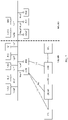
- FIG. 4A to FIG. 4C are an interaction flowchart of replacing an AMF by UE.
- network elements participating in processing include UE, a (R)AN, a new AMF, an old AMF, a PCF, an SMF, an AUSF, UDM, an equipment identity register (equipment identity register, EIR), a non-3GPP interworking function (non-3GPP interworking function, N3IWF), and the like.
- steps of replacing the AMF by the UE are as follows:
- the AMF when the UE is located in the HPLMN, the AMF is located in the HPLMN, the AMF sends an NF discovery request to the NRF in the HPLMN, to obtain the PCF information (for example, an IP address of the PCF (which may be an IPv4 address or an IPv6 prefix) or a fully qualified domain name (fully qualified domain name, FQDN)) in the HPLMN, and the AMF selects the PCF based on the obtained PCF information.
- the PCF information for example, an IP address of the PCF (which may be an IPv4 address or an IPv6 prefix) or a fully qualified domain name (fully qualified domain name, FQDN)
- the AMF when the UE is located in the VPLMN, the AMF is also located in the VPLMN In this scenario, the AMF needs to select two PCFs, namely, the V-PCF and the H-PCF.
- the AMF sends an NF discovery request to a V-NRF, obtains V-PCF information in the VPLMN, and selects the V-PCF based on the V-PCF information. Further, the AMF sends an NF discovery request to an H-NRF through the V-NRF, obtains H-PCF information in the HPLMN, and selects the H-PCF based on the PCF information.
- an association establishment process of an access and mobility management (access and mobility management, AM) policy For example, when the UE initiates initial registration or the AMF changes, an AM policy association procedure between the AMF and the PCF is triggered.
- AM access and mobility management
- a UE policy association may further be performed between the AMF and the PCF.
- a related procedure of the UE policy association is similar to a related procedure of the AM policy association.
- the AMF in the AM policy association is directly replaced with the UE.
- the UE policy association is associated with the V-PCF and H-PCF, and the AM policy association is associated with the V-PCF.
- the PCF selected by the AMF may be a PCF determined by using the UE policy association, or may be a PCF determined by using the AM policy association. This is not limited in this embodiment of this application.
- a process in which the AMF selects a new PCF and establishes an association relationship is as follows:
- the new AMF reselects a PCF and establishes an association relationship.
- a specific procedure is as follows:
- the following describes an association termination process of the AM policy.
- the UE deregisters, to be specific, when the AMF changes (and the old AMF does not send the PCF ID), the old AMF initiates association termination.
- the PCF initiates association termination.
- a process in which the AMF initiates association termination is as follows:
- the AMF when the UE deregisters, the AMF triggers AM policy association termination. In this case, the AMF deletes the stored PCF ID, and the PCF deletes information such as a policy section identifier (policy section identifier, PSI) maintained internally.
- policy section identifier policy section identifier, PSI
- a UE-initiated deregistration procedure is as follows:
- a network-initiated deregistration procedure is as follows:
- the AMF needs to reselect the PCF through the NRF, and the PCF needs to obtain the information such as the PSI of the UE and policy content corresponding to the PSI from the UDR.
- the policy content of the UE that is stored in the UDR does not change due to deregistration of the UE. Consequently, repeated access causes a waste of signaling.
- a first AMF receives a registration request message of a terminal device, and the registration request message includes an identifier of the terminal device.
- the first AMF is an AMF that is determined by an access network and that is configured to serve the terminal device; obtains, based on the identifier of the terminal device, an identifier of a PCF currently serving the terminal device and a network identifier of the PCF; and when a network identifier of the first AMF is consistent with the network identifier of the PCF, determines that the PCF is a target PCF.
- the terminal device reuses the PCF and policy information of the terminal device that are previously used during initial registration. This avoids repeated access of the policy information of the terminal device, and resolves a signaling waste problem.
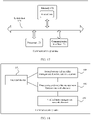
- FIG. 5 is a schematic flowchart of Embodiment 1 of a PCF selection method according to an embodiment of this application. As shown in FIG. 5 , in this embodiment, the method may include the following steps:
- Step 501 A first AMF receives a registration request message of a terminal device, where the registration request message includes an identifier of the terminal device, and the first AMF is an AMF that is determined by an access network and that is configured to serve the terminal device.
- the terminal device when the terminal device determines, due to a reason such as movement or initial registration, that the AMF configured to serve the terminal device needs to change, the terminal device re-initiates a registration request message to the access network, to request to access the access network.
- the registration request message may include the identifier of the terminal device. Therefore, the access network may determine, based on the received registration request message, the first AMF configured to serve the terminal device, and send the received registration request message to the first AMF, so that the first AMF determines, based on the identifier of the terminal device in the received registration request message, a PCF corresponding to the terminal device.
- step 501 is actually:
- the first AMF receives the registration request message sent by the terminal device through the access network.
- Step 502 The first AMF obtains, based on the identifier of the terminal device, an identifier of a PCF currently serving the terminal device and a network identifier of the PCF.
- the first AMF when the first AMF receives the registration request message of the terminal device that is forwarded by the access network, the first AMF may first determine the corresponding terminal device based on the identifier of the terminal device, and then determine, based on a deregistration procedure initiated by the terminal device or a network device, the identifier of the PCF currently serving the terminal device and a location of the network identifier of the PCF, to determine how to obtain the identifier of the PCF and the network identifier of the PCF.
- quantities of identifiers of PCFs currently serving the terminal device and network identifiers of the PCFs that are obtained by the first AMF are both two.
- One is an identifier of a V-PCF, and a network identifier of the V-PCF is a VPLMN; the other is an identifier of an H-PCF, and the network identifier of the H-PCF is an HPLMN That is, the V-PCF is located in the VPLMN, and the H-PCF is located in the HPLMN
- the registration request message further includes the identifier of the PCF currently serving the terminal device and the network identifier of the PCF.
- the terminal device when the terminal device stores the identifier of the PCF serving the terminal device and the network identifier of the PCF, the terminal device sends the registration request message including the identifier of the PCF, the network identifier of the PCF, and the identifier of the terminal device to the access network when initiating a registration procedure.
- the access network then sends the registration request message to the determined first AMF.
- the first AMF may obtain, from the received registration request message, the identifier of the PCF currently serving the terminal device and the network identifier of the PCF.
- the first AMF may obtain the identifier of the PCF currently serving the terminal device and the network identifier of the PCF from the UDM.
- the terminal device deregisters with a second AMF configured to serve the terminal device before the terminal device accesses the access network
- the second AMF does not delete the identifier of the PCF and the network identifier of the PCF that are stored
- the first AMF may obtain the identifier of the PCF currently serving the terminal device and the network identifier of the PCF from the second AMF
- Step 503 When a network identifier of the first AMF is consistent with the network identifier of the PCF, the first AMF determines that the PCF is a target PCF.
- the first AMF may compare the network identifier of the first AMF with the obtained network identifier of the PCF. If the two identifiers are consistent, the first AMF may directly determine the PCF as the target PCF. In other words, during initial registration of UE, the first AMF may directly reuse a previous PCF, and does not need to reselect a PCF through an NRF.
- the network identifier of the first AMF is also an identifier of a network currently accessed by the UE. Therefore, when the identifier of the network currently accessed by the UE is consistent with the network identifier of the PCF, the first AMF may also determine that the PCF is the target PCF. That is, in this embodiment, the registration request message is used to indicate that the first AMF determines the target PCF based on the network identifier of the first AMF and the network identifier of the PCF.
- the first AMF receives the registration request message of the terminal device, and the registration request message includes the identifier of the terminal device.
- the first AMF is the AMF that is determined by the access network and that is configured to serve the terminal device; obtains, based on the identifier of the terminal device, the identifier of the PCF currently serving the terminal device and the network identifier of the PCF; and when the network identifier of the first AMF is consistent with the network identifier of the PCF, determines that the PCF is the target PCF.
- the terminal device directly reuses the previous PCF when initiating registration.
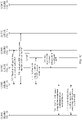
- FIG. 6 is a schematic interaction diagram of Embodiment 2 of the PCF selection method according to an embodiment of this application.
- information exchange between the terminal device, the second AMF configured to serve the terminal device before the terminal device accesses the access network, and the first AMF that is determined by the access network and that is configured to serve the terminal device is used for description.
- the method may further include the following steps:
- Step 601 The second AMF performs a deregistration procedure with the terminal device.
- the second AMF is an AMF configured to serve the terminal device before the change. Therefore, the deregistration procedure needs to be performed between the terminal device and the second AMF, so that an association relationship between the second AMF and the PCF is removed.
- Step 602 The second AMF sends the identifier of the PCF and the network identifier of the PCF to the terminal device.
- the second AMF when the deregistration procedure is performed between the terminal device and the second AMF, the second AMF initiates an AM policy connection termination procedure, and the PCF may only disconnect from the second AMF, but retains policy information such as a PSI of the terminal device.
- the second AMF may deliver the PCF ID and the PLMN ID corresponding to the PCF that are stored to the terminal device.
- step 602 may be implemented by using the following procedure:
- the second AMF sends the identifier of the PCF and the network identifier of the PCF to the terminal device by using a deregistration acceptance message.
- the second AMF initiates a PDU session release request to an SMF
- the SMF releases a PDU session and responds to the second AMF
- the SMF initiates session management policy association termination, cancels event subscription in the UDM, and cancels registration with the UDM.
- the second AMF may initiate the AM policy association termination procedure, and send the deregistration acceptance message to the terminal device.
- the second AMF initiates release of a signaling connection between the second AMF and the terminal device.
- the deregistration message includes the ID of the PCF currently serving the terminal device and the network identifiers of the PCF, for example, the PLMN ID.
- the deregistration message may include identifiers of two PCFs.
- One (V-PCF) is located in a VPLMN and the other (H-PCF) is located in an HPLMN
- the second AMF may include the identifier of the PCF and the network identifier of the PCF in the deregistration acceptance message sent to the terminal device.
- the terminal device may include the PCF ID and the PLMN ID of the PCF in the registration request message, and transfer the registration request message to the first AMF through the access network.
- the first AMF may determine whether a PLMN ID of a network in which the first AMF is located is consistent with the obtained PLMN ID of the PCF.
- the first AMF may preferentially reuse the PCF transferred by the terminal device, to avoid re-obtaining.
- step 602 may be implemented by using the following procedure:
- the second AMF sends, to the terminal device by using a deregistration request message, the identifier of the PCF and the network identifier of the PCF that are obtained from the unified data management network element UDM.
- the identifier of the PCF and the network identifier of the PCF may be carried in the deregistration request message.
- the second AMF may receive a deregistration notification sent by the UDM, and the deregistration notification may include the PCF ID of the PCF currently serving the terminal device and the PLMN ID corresponding to the PCF.
- the deregistration notification includes identifiers of two PCFs. One (V-PCF) is located in a VPLMN and the other (H-PCF) is located in an HPLMN
- the second AMF sends the deregistration request message to the terminal device based on the deregistration notification received from the UDM.
- the second AMF sends a deregistration notification response to the UDM, and sends event subscription cancellation information to the UDM.
- the second AMF initiates a PDU session release request to an SMF, the SMF releases a PDU session and responds to the second AMF, and the SMF initiates session management policy association termination, cancels the event subscription in the UDM, and cancels registration with the UDM.
- the second AMF may initiate the AM policy association termination procedure, send a deregistration acceptance message to the terminal device, and initiate release of a signaling connection.
- Step 603 The second AMF removes an association relationship with the PCF, where the PCF is a PCF currently serving the terminal device, and the PCF retains policy information of the terminal device.
- the association relationship between the second AMF and the PCF is removed, but the PCF retains the policy information of the terminal device.
- the second AMF may control the PCF serving the terminal device not to delete the internally stored policy information of the terminal device, so that when re-initiating registration subsequently, the second AMF may directly use the policy information of the terminal device that is stored by the PCF. This avoids a step in which the policy information of the terminal device needs to be re-obtained, and reduces signaling overheads.
- the registration request message further includes the identifier of the PCF and the network identifier of the PCF.
- step 502 may be implemented by using the following step:
- Step 604 The first AMF obtains the identifier of the PCF and the network identifier of the PCF from the registration request message of the terminal device based on the identifier of the terminal device.
- the registration request message when the terminal device initiates the registration request message to the access network, the registration request message includes the identifier of the PCF currently serving the terminal device and the network identifier of the PCF, for example, an identifier of a PLMN.
- the access network may send, to the first AMF, the registration request message that includes the identifier of the PCF and the network identifier of the PCF. Therefore, in this embodiment, the first AMF may directly obtain the identifier of the PCF and the network identifier of the PCF from the received registration request message based on the identifier of the terminal device.
- identifiers of PCFs currently serving the terminal device in the registration request message may include an identifier of a V-PCF and an identifier of an H-PCF.
- the V-PCF is located in a VPLMN
- the H-PCF is located in an HPLMN.
- the first AMF may directly obtain the identifier of the V-PCF and the VPLMN of the V-PCF, and the identifier of the H-PCF and the HPLMN of the H-PCF from the registration request message.
- the second AMF performs the deregistration procedure with the terminal device.
- the second AMF removes the association relationship with the PCF, and the PCF is the PCF currently serving the terminal device.
- the PCF stores the policy information of the terminal device, and stores, in the terminal device, the ID of the PCF serving the terminal device (identified by an SUPI) before the terminal device deregisters and the PLMN ID of the network to which the PCF belongs, so that the PCF ID and the PLMN ID may be carried by the terminal device again during initial registration, and the first AMF may reuse, based on the PCF ID and the corresponding PLMN ID that are carried by the terminal device during initial registration, the PCF used by the terminal device before deregistration.
- the first AMF on the network side does not need to reselect a PCF for the terminal device performing initial registration, and does not need to re-obtain the policy information from the UDR, either. This reduces signaling exchange and resource consumption.
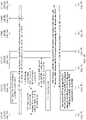
- FIG. 7A to FIG. 7C are a schematic interaction diagram of Embodiment 3 of the PCF selection method according to an embodiment of this application.
- the method may be implemented by using the following steps: 701:
- the terminal device sends a registration request message to a RAN, where the registration request message includes a PCF ID of the PCF currently serving the terminal device and a corresponding PLMN ID.
- the RAN determines the first AMF configured to serve the terminal device.
- the RAN sends the registration request message to the first AMF, where the registration request message includes the PCF ID of the PCF currently serving the terminal device and the corresponding PLMN ID.
- the first AMF requests an MM context of the terminal device from the second AMF.
- the second AMF sends the MM context to the first AMF, where the MM context includes the PCF ID.
- the first AMF sends an encryption identifier obtaining request to the terminal device.
- the terminal device sends an encryption identifier to the first AMF
- the first AMF selects an AUSF configured to perform authentication.
- the first AMF implements authentication on the encryption identifier by interacting with the terminal device, the AUSF, and the UDM.
- the first AMF notifies the second AMF that transfer of the MM context is completed.
- the first AMF interacts with the terminal device, to obtain a device identifier of the terminal device.
- the first AMF interacts with an EIR, to verify the obtained device identifier.
- the first AMF selects the UDM.
- the first AMF registers with the selected UDM and obtains subscription information.
- the UDM notifies the second AMF to delete the MM context.
- the first AMF selects a PCF, to be specific, if a PLMN ID of the first AMF is consistent with a PLMN ID of a (V-)PCF, the first AMF preferentially reuses the PCF transferred by the terminal device.
- the first AMF establishes a connection to the PCF.
- the PCF deletes a connection to the second AMF (that is, the PCF initiates the deletion procedure), but retains the context of the terminal device.
- the first AMF interacts with an N3IWF on a non-3GPP side.
- perform 720 The second AMF deletes a connection to an original PCF (that is, the second AMF initiates the deletion procedure).
- the first AMF sends a registration acceptance notification to the terminal device.
- the terminal device sends a registration completion notification to the first AMF
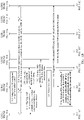
- FIG. 8 is a schematic interaction diagram of Embodiment 4 of the PCF selection method according to an embodiment of this application.
- a difference between the embodiment shown in FIG. 8 and the embodiment shown in FIG. 6 lies in that the identifier of the PCF currently serving the terminal device and the network identifier of the PCF are stored in the UDM.
- information exchange between the terminal device, the first AMF, the second AMF, and the UDM is used for description.
- the method may further include the following steps:
- Step 801 The second AMF performs a deregistration procedure with the terminal device.
- Step 802 The second AMF sends the identifier of the PCF and the network identifier of the PCF to the UDM.
- the second AMF when the deregistration procedure is performed between the terminal device and the second AMF, the second AMF initiates an AM policy connection termination procedure, and the PCF may only disconnect from the second AMF, but retains policy information such as a PSI of the terminal device.
- the second AMF may send the PCF ID and the PLMN ID corresponding to the PCF that are stored to the UDM.
- the second AMF may send the identifier of the PCF and the network identifier of the PCF when initiating an unsubscription request to the UDM.
- the second AMF may write the PCF ID of the PCF serving the terminal device and the PLMN ID corresponding to the PCF into the UDM. It should be noted that, in this implementation, if the PCF serving the terminal device is to be replaced, the PCF ID associated with the terminal device and the PLMN ID corresponding to the PCF that are stored in the UDM both need to be updated. That is, when determining that the PCF serving the terminal device changes, the second AMF updates the identifier of the PCF and the network identifier of the PCF that are stored in the UDM.
- step 802 may be implemented by using the following procedure:
- the second AMF sends the identifier of the PCF and the network identifier of the PCF to the UDM by using the unsubscription request.
- the terminal device if the deregistration procedure is initiated by the terminal device, the terminal device initiates a deregistration request to the second AMF.
- the second AMF initiates a PDU session release request to an SMF, the SMF releases the PDU session and responds to the second AMF, and the SMF initiates session management policy association termination, cancels event subscription in the UDM, and cancels registration with the UDM.
- the second AMF may initiate the AM policy association termination procedure.
- the second AMF may send the identifier of the PCF and the network identifier of the PCF that are stored to the UDM by using the unsubscription request.
- the second AMF sends a deregistration acceptance message to the terminal device, and the second AMF initiates release of a signaling connection between the second AMF and the terminal device.
- the first AMF when receiving the registration request message sent by the terminal device, the first AMF may obtain the PCF ID and the PLMN ID of the PCF from the UDM. In this way, the first AMF may determine whether a PLMN ID of a network in which the first AMF is located is consistent with the obtained PLMN ID of the PCF. When the PLMN IDs are consistent, the first AMF may preferentially reuse the PCF transferred by the terminal device, to avoid re-obtaining.
- step 802 may be implemented by using the following procedure:
- the second AMF After determining the PCF serving the terminal device, the second AMF sends the identifier of the PCF and the network identifier of the PCF to the UDM.
- the identifier of the PCF and the network identifier of the PCF that are stored in the UDM are updated when the second AMF determines that the PCF of the terminal device changes.
- the second AMF may send a deregistration request message to the terminal device, and simultaneously send a deregistration notification response to the UDM, and the second AMF cancels event subscription in the UDM, and sends the PCF ID and the corresponding PLMN ID that are stored by the AMF to the UDM.
- the second AMF initiates a PDU session release request to an SMF, the SMF releases a PDU session and responds to the second AMF, and the SMF initiates session management policy association termination, cancels the event subscription in the UDM, and cancels registration with the UDM.
- the second AMF may initiate the AM policy association termination procedure, send a deregistration acceptance message to the terminal device, and initiate release of a signaling connection between the second AMF and the terminal device.
- Step 803 The second AMF removes an association relationship with the PCF, where the PCF is a PCF currently serving the terminal device, and the PCF retains policy information of the terminal device.
- step 502 may be implemented by using the following step:
- Step 804 The first AMF obtains the identifier of the PCF and the network identifier of the PCF from the UDM based on the identifier of the terminal device.
- the second AMF may store, in the UDM, the identifier of the PCF currently serving the terminal device and the network identifier of the PCF.
- the first AMF may directly obtain the identifier of the PCF and the network identifier of the PCF from the UDM based on the identifier of the terminal device, and does not need to reselect a PCF through an NRF, and does not need to re-obtain, through the reselected PCF from a UDR, information such as a PSI of the terminal device and policy content corresponding to the PSI, either.
- step 801 and step 803 in this embodiment refer to records in step 601 and step 603 in the embodiment shown in FIG. 6 . Details are not described herein again.
- the second AMF performs the deregistration procedure with the terminal device.
- the second AMF removes the association relationship with the PCF, and the PCF is the PCF currently serving the terminal device.
- the PCF retains the policy information of the terminal device, and stores, in the UDM, the identifier of the PCF corresponding to the terminal device and the network identifier of the PCF before the terminal device deregisters.
- the first AMF may reuse, based on the PCF ID and the corresponding PLMN ID that are obtained from the UDM, the PCF before the terminal device deregisters. In this way, the network side does not need to reselect a PCF for the terminal device performing initial registration, and does not need to re-obtain the policy information from the UDR, either. Therefore, signaling exchange is reduced.
- FIG. 9A to FIG. 9C are a schematic interaction diagram of Embodiment 5 of the PCF selection method according to an embodiment of this application.
- the method may be implemented by using the following steps: 901: The terminal device sends a registration request message to a RAN.
- the RAN determines the first AMF configured to serve the terminal device.
- the RAN sends the registration request message to the first AMF
- the first AMF requests an MM context of the terminal device from the second AMF.
- the second AMF sends the MM context to the first AMF, where the MM context includes the PCF ID.
- the first AMF sends an encryption identifier obtaining request to the terminal device.
- the terminal device sends an encryption identifier to the first AMF
- the first AMF selects an AUSF configured to perform authentication.
- the first AMF implements authentication on the encryption identifier by interacting with the terminal device, the AUSF, and the UDM.
- the first AMF notifies the second AMF that transfer of the MM context is completed.
- the first AMF interacts with the terminal device, to obtain a device identifier of the terminal device.
- the first AMF interacts with an EIR, to verify the obtained device identifier.
- the first AMF selects the UDM.
- the first AMF registers with the selected UDM and obtains subscription information, and the first AMF obtains the PCF ID and the corresponding PLMN ID from the UDM.
- the UDM notifies the second AMF to delete the MM context.
- the first AMF selects a PCF, to be specific, if a PLMN ID of the first AMF is consistent with a PLMN ID of a (V-)PCF, the first AMF preferentially reuses the PCF transferred by the UDM.
- the first AMF establishes a connection to the PCF. If a (V-)PCF ID received by the PCF is consistent with the PCF ID of the PCF, the PCF deletes a connection to the second AMF (that is, the PCF initiates the deletion procedure), but retains the context of the terminal device.
- the first AMF interacts with an N3IWF on a non-3GPP side.
- perform 920 The second AMF deletes a connection to an original PCF (that is, the second AMF initiates the deletion procedure).
- the first AMF sends a registration acceptance notification to the terminal device.
- the terminal device sends a registration completion notification to the first AMF
- FIG. 10 is a schematic interaction diagram of Embodiment 6 of a PCF selection method according to an embodiment of this application.
- a difference between the embodiment shown in FIG. 10 and the embodiments shown in FIG. 6 and FIG. 8 lies in that the identifier of the PCF currently serving the terminal device and the network identifier of the PCF are stored in the second AMF before the AMF of the terminal device is replaced.
- information exchange between the terminal device, the second AMF configured to serve the terminal device before the terminal device accesses the access network, and the first AMF that is determined by the access network and that is configured to serve the terminal device is used for description.
- the method may further include the following steps: Step 1001: The second AMF performs a deregistration procedure with the terminal device.
- Step 1002 The second AMF retains the identifier of the PCF and the network identifier of the PCF.
- the second AMF when the deregistration procedure is performed between the terminal device and the second AMF, the second AMF initiates an AM policy connection termination procedure, and the PCF may only disconnect from the second AMF, but retains policy information such as a PSI of the terminal device.
- the second AMF may retain the PCF ID and the network identifier of the PCF that are stored. In this way, during initial registration of the terminal device, the first AMF may directly obtain the PCF ID and the corresponding PLMN ID from the second AMF.
- the terminal device if the deregistration procedure is initiated by the terminal device, the terminal device initiates a deregistration request to the second AMF.
- the second AMF initiates a PDU session release request to an SMF, the SMF releases the PDU session and responds to the second AMF, and the SMF initiates session management policy association termination, cancels event subscription in the UDM, and cancels registration with the UDM.
- the second AMF may initiate the AM policy association termination procedure.
- the second AMF does not retain the identifier of the PCF and the network identifier of the PCF that are stored.
- the second AMF sends a deregistration acceptance message to the terminal device, and the second AMF initiates release of a signaling connection between the second AMF and the terminal device.
- the first AMF when terminal device performs initial registration with the network, when receiving the registration request message sent by the terminal device, the first AMF may obtain the PCF ID and the PLMN ID of the PCF from the second AMF. In this way, the first AMF may determine whether a PLMN ID of a network in which the first AMF is located is consistent with the obtained PLMN ID of the PCF. When the PLMN IDs are consistent, the first AMF may preferentially reuse the PCF obtained by the terminal device, to avoid re-obtaining.
- the second AMF receives a deregistration notification sent by the UDM, sends a deregistration request message to the terminal device, simultaneously sends a deregistration notification response to the UDM, and cancels event subscription in the UDM.
- the second AMF initiates a PDU session release request to an SMF, the SMF releases a PDU session and responds to the second AMF, and the SMF initiates session management policy association termination, cancels event subscription in the UDM, and cancels registration with the UDM.
- the second AMF may initiate the AM policy association termination procedure, but does not delete the PCF ID and the corresponding PLMN ID that are stored.
- Step 1003 The second AMF removes an association relationship with the PCF, where the PCF is a PCF currently serving the terminal device, and the PCF retains policy information of the terminal device.
- step 502 may be implemented by using the following step:
- Step 1004 The first AMF obtains the identifier of the PCF and the network identifier of the PCF from the second AMF based on the identifier of the terminal device.
- the second AMF does not delete the PCF ID and the corresponding PLMN ID that are stored.
- the first AMF may directly obtain the PCF ID and the corresponding PLMN ID from the second AMF based on the identifier of the terminal device in the registration request message.
- step 1001 and step 1003 in this embodiment refer to records in step 601 and step 603 in the embodiment shown in FIG. 6 . Details are not described herein again.
- the second AMF performs the deregistration procedure with the terminal device.
- the second AMF removes the association relationship with the PCF, and the PCF is the PCF currently serving the terminal device.
- the PCF retains the policy information of the terminal device, and stores, in the second AMF (the old AMF), the identifier of the PCF corresponding to the terminal device and the network identifier of the PCF before the terminal device deregisters.
- the first AMF may reuse, based on the PCF ID and the corresponding PLMN ID that are obtained from the second AMF (the old AMF), the PCF before the terminal device deregisters. In this way, the network side does not need to reselect a PCF for the terminal device performing initial registration, and does not need to re-obtain the policy information from the UDR, either. Therefore, signaling overheads are reduced.
- FIG. 11A to FIG. 11C are a schematic interaction diagram of Embodiment 7 of the PCF selection method according to an embodiment of this application.
- the method may be implemented by using the following steps:
- the terminal device sends an initial registration request message to a RAN.
- the RAN determines the first AMF configured to serve the terminal device.
- the RAN sends the registration request message to the first AMF
- the first AMF requests an MM context of the terminal device from the second AMF.
- the second AMF sends the MM context to the first AMF, where the MM context includes the PCF ID.
- the first AMF sends an encryption identifier obtaining request to the terminal device.
- the terminal device sends an encryption identifier to the first AMF
- the first AMF selects an AUSF configured to perform authentication.
- the first AMF implements authentication on the encryption identifier by interacting with the terminal device, the AUSF, and the UDM.
- the first AMF notifies the second AMF that transfer of the MM context is completed.
- the first AMF interacts with the terminal device, to obtain a device identifier of the terminal device.
- the first AMF interacts with an EIR, to verify the obtained device identifier.
- the first AMF selects the UDM.
- the first AMF registers with the selected UDM and obtains subscription information.
- the UDM notifies the second AMF to delete the MM context.
- the first AMF selects a PCF, to be specific, if a PLMN ID of the first AMF is consistent with a PLMN ID of a (V-)PCF, the first AMF preferentially reuses the PCF transferred by the second AMF.
- the first AMF establishes a connection to the PCF. If a (V-)PCF ID received by the PCF is consistent with the PCF ID of the PCF, the PCF deletes a connection to the second AMF (that is, the PCF initiates the deletion procedure), but retains the MM context of the terminal device.
- 1118 Activate a PDU session between the first AMF and the SMF.
- the first AMF interacts with an N3IWF on a non-3GPP side.
- the first AMF sends a registration acceptance notification to the terminal device.
- the terminal device sends a registration completion notification to the first AMF
- the PCF when deregistration is performed between the terminal device and the second AMF, the PCF does not delete stored policy information such as a PSI of the UE. It should be noted that, in this embodiment, the policy information stored by the PCF may be deleted when the second AMF initiates a clear request to the UDM and simultaneously initiates a clear request to the PCF.
- the terminal device may store the PCF ID and the corresponding PLMN ID.
- the terminal device may carry the PCF ID and the corresponding PLMN ID that are stored during initial registration, so that the first AMF (the new AMF) reselects the PCF based on the PCF ID and the corresponding PLMN ID.
- the second AMF (the old AMF) may store the PCF ID and the corresponding PLMN ID in the UDM.
- the first AMF the new AMF
- the first AMF may obtain the stored PCF ID from the UDM for reuse.
- the second AMF (the old AMF) may retain the PCF ID and the PLMN ID that are stored during deregistration, so that when the terminal device performs initial registration, the first AMF (the new AMF) may obtain the stored PCF ID from the second AMF (the old AMF) for reuse.
- the first AMF (the new AMF) does not need to reselect a PCF through an NRF, and may directly reuse a previous PCF.
- the PCF does not need to re-obtain the information such as the PSI of the UE and the policy content corresponding to the PSI from the UDR. This reduces signaling.
- SMSF short message service function
- Apparatus embodiments of this application are described below, and may be used to perform the method embodiments of this application. For details not disclosed in the apparatus embodiments of this application, refer to the method embodiments of this application.
- FIG. 12 is a schematic diagram of Embodiment 1 of a structure of a policy control function network element selection apparatus according to an embodiment of this application.
- the apparatus may be integrated into a first access and mobility management function network element, or may be implemented through a first access and mobility management function network element.
- the apparatus may include a receiving module 121, an obtaining module 122, and a processing module 123.
- the registration request message further includes the identifier of the policy control function network element and the network identifier of the policy control function network element.
- the obtaining module 122 is specifically configured to obtain the identifier of the policy control function network element and the network identifier of the policy control function network element from the registration request message of the terminal device based on the identifier of the terminal device.
- the obtaining module 122 is specifically configured to obtain the identifier of the policy control function network element and the network identifier of the policy control function network element from a unified data management network element based on the identifier of the terminal device.
- the obtaining module 122 is specifically configured to obtain the identifier of the policy control function network element and the network identifier of the policy control function network element from a second access and mobility management function network element based on the identifier of the terminal device, where the second access and mobility management function network element is an access and mobility management function network element that is configured to serve the terminal device before the terminal device requests to access the access network.
- the receiving module 121 is configured to receive the registration request message sent by the terminal device through the access network.
- the apparatus in this embodiment may be configured to execute implementation solutions of the first access and mobility management function network element in the method embodiments shown in FIG. 5 to FIG. 11A to FIG. 11C . Specific implementations and technical effects are similar, and details are not described herein again.
- FIG. 13 is a schematic diagram of Embodiment 2 of a structure of a policy control function network element selection apparatus according to an embodiment of this application.
- the apparatus may be integrated into a second access and mobility management function network element, or may be implemented through a second access and mobility management function network element.
- the apparatus may include a processing module 131.
- the processing module 131 is configured to: perform a deregistration procedure between the second access and mobility management function network element and a terminal device, where the second access and mobility management function network element is an access and mobility management function network element that is configured to serve the terminal device before the terminal device requests to access an access network; and remove an association relationship with a policy control function network element, where the policy control function network element is a policy control function network element currently serving the terminal device, and the policy control function network element retains policy information of the terminal device.
- the apparatus may further include a sending module 132.
- the sending module 132 is configured to: before the processing module 131 removes the association relationship with the policy control function network element, send an identifier of the policy control function network element and a network identifier of the policy control function network element to the terminal device.
- the sending module 132 is configured to: before the processing module 131 removes the association relationship with the policy control function network element, send an identifier of the policy control function network element and a network identifier of the policy control function network element to a unified data management network element.
- the processing module 131 is further configured to: when the second access and mobility management function network element determines that the policy control function network element serving the terminal device changes, update the identifier of the policy control function network element and the network identifier of the policy control function network element that are stored in the unified data management network element.
- the apparatus may further include a storage module 133.
- the storage module 133 is further configured to retain the identifier of the policy control function network element and the network identifier of the policy control function network element.
- the apparatus in this embodiment may be configured to execute implementation solutions of the second access and mobility management function network element in the method embodiments shown in FIG. 5 to FIG. 11A to FIG. 11C . Specific implementations and technical effects are similar, and details are not described herein again.
- FIG. 14 is a schematic diagram of Embodiment 1 of a structure of a communication apparatus according to an embodiment of this application.
- the apparatus may be integrated in a terminal device, or may be implemented through a terminal device.
- the communication apparatus may alternatively be a chip.
- the communication apparatus may include a receiving module 141, a processing module 142, and a sending module 143.
- the receiving module 141 is configured to receive an identifier of a policy control function network element and a network identifier of the policy control function network element that are sent by a second access and mobility management function network element, where the policy control function network element is a policy control function network element currently serving the terminal device, and the second access and mobility management function network element is an access and mobility management function network element that is configured to serve the terminal device before the terminal device requests to access an access network.
- the processing module 142 is configured to send a registration request message to a first access and mobility management function network element by using the sending module through the access network, where the registration request message includes the identifier of the policy control function network element and the network identifier of the policy control function network element, and the first access and mobility management function network element is an access and mobility management function network element that is determined by the access network and that is configured to serve the terminal device.
- the registration request message is used to indicate that the first access and mobility management function network element determines a target policy control function network element based on a network identifier of the first access and mobility management function network element and the network identifier of the policy control function network element.
- the apparatus in this embodiment may be configured to execute the implementation solutions of the terminal device in the method embodiments shown in FIG. 5 to FIG. 11A to FIG. 11C . Specific implementations and technical effects are similar, and details are not described herein again.
- modules of the foregoing apparatus are merely logic function division.
- some or all modules may be integrated into one physical entity, or the modules may be physically separated.
- these modules may be all implemented in a form of software invoked by a processing element, or may be all implemented in a form of hardware.
- some modules may be implemented in a form of software invoked by a processing element, and some modules are implemented in a form of hardware.
- the processing module may be a separately disposed processing element, or may be integrated into a chip of the foregoing apparatus for implementation.
- the processing module may be stored in a memory of the foregoing apparatus in a form of program code, and is invoked by a processing element of the foregoing apparatus to perform a function of the processing module. Implementations of other modules are similar. In addition, all or some of these modules may be integrated together, or may be implemented independently.
- the processing element herein may be an integrated circuit and has a signal processing capability. In an implementation process, steps in the foregoing methods or the foregoing modules may be completed by using a hardware integrated logical circuit in the processing element, or by using instructions in a form of software.
- the foregoing modules may be configured as one or more integrated circuits for implementing the foregoing method, such as one or more application-specific integrated circuits (application specific integrated circuit, ASIC), one or more microprocessors (digital signal processor, DSP), or one or more field programmable gate arrays (field programmable gate array, FPGA).
- ASIC application specific integrated circuit
- DSP digital signal processor
- FPGA field programmable gate array
- the processing element may be a general-purpose processor, for example, a central processing unit (central processing unit, CPU) or another processor that can invoke the program code.
- these modules may be integrated together and implemented in a form of a system-on-a-chip (system-on-a-chip, SOC).
- All or some of the foregoing embodiments may be implemented by using software, hardware, firmware, or any combination thereof.
- software is used to implement the embodiments, all or some of the embodiments may be implemented in a form of a computer program product.
- the computer program product includes one or more computer instructions.
- the computer may be a general-purpose computer, a special-purpose computer, a computer network, or another programmable apparatus.
- the computer instructions may be stored in a readable storage medium or may be transmitted from a readable storage medium to another readable storage medium.
- the computer instructions may be transmitted from a website, computer, server, or data center to another website, computer, server, or data center in a wired (for example, a coaxial cable, an optical fiber, or a digital subscriber line (DSL)) or wireless (for example, infrared, radio, or microwave) manner.
- the readable storage medium may be any usable medium accessible by the computer, or a data storage device, such as a server or a data center, integrating one or more usable media.
- the usable medium may be a magnetic medium (for example, a floppy disk, a hard disk, or a magnetic tape), an optical medium (for example, a DVD), a semiconductor medium (for example, a solid state disk (SSD)), or the like.
- FIG. 15 is a schematic diagram of Embodiment 3 of a structure of a policy control function network element selection apparatus according to an embodiment of this application.
- the apparatus may be integrated into a second access and mobility management function network element, or may be implemented through a second access and mobility management function network element.
- the apparatus may include a processor 151, a memory 152, a communication interface 153, and a system bus 154.
- the memory 152 and the communication interface 153 are connected to the processor 151 and communicate with each other through the system bus 154.
- the memory 152 is configured to store computer-executable instructions.
- the communication interface 153 is configured to communicate with another device.
- the processor 151 implements implementation solutions of the first access and mobility management function network element in the method embodiments shown in FIG. 5 to FIG. 11A to FIG. 11C .
- FIG. 16 is a schematic diagram of Embodiment 4 of a structure of a policy control function network element selection apparatus according to an embodiment of this application.
- the apparatus may be integrated into a second access and mobility management function network element, or may be implemented through a second access and mobility management function network element.
- the apparatus may include a processor 161, a memory 162, a communication interface 163, and a system bus 164.
- the memory 162 and the communication interface 163 are connected to the processor 161 and communicate with each other through the system bus 164.
- the memory 162 is configured to store computer-executable instructions.
- the communication interface 163 is configured to communicate with another device.
- the processor 161 implements implementation solutions of the second access and mobility management function network element in the method embodiments shown in FIG. 5 to FIG. 11A to FIG. 11C .
- FIG. 17 is a schematic diagram of Embodiment 2 of a structure of a communication apparatus according to an embodiment of this application.
- the apparatus may be integrated into a terminal device, or may be implemented through a terminal device.
- the apparatus may include a processor 171, a memory 172, a communication interface 173, and a system bus 174.
- the memory 172 and the communication interface 173 are connected to the processor 171 and communicate with each other through the system bus 174.
- the memory 172 is configured to store computer-executable instructions.
- the communication interface 173 is configured to communicate with another device.
- the processor 171 implements implementation solutions of the terminal device in the method embodiments shown in FIG. 5 to FIG. 11A to FIG. 11C .
- the system bus mentioned in FIG. 15, FIG. 16 , and FIG. 17 may be a peripheral component interconnect (peripheral component interconnect, PCI) bus, an extended industry standard architecture (extended industry standard architecture, EISA) bus, or the like.
- PCI peripheral component interconnect
- EISA extended industry standard architecture
- the system bus may be classified into an address bus, a data bus, a control bus, and the like. For ease of representation, only one thick line is used to represent the bus in the figure, but this does not mean that there is only one bus or only one type of bus.
- the communication interface is configured to implement communication between a database access apparatus and another device (such as a client, a read/write database, or a read-only database).
- the memory may include a random access memory (random access memory, RAM), or may further include a non-volatile memory (non-volatile memory), for example, at least one magnetic disk memory.
- the processor may be a general-purpose processor including a central processing unit CPU, a network processor (network processor, NP), or the like; or may be a digital signal processor DSP, an application-specific integrated circuit ASIC, a field programmable gate array FPGA or another programmable logic device, a discrete gate or a transistor logic device, or a discrete hardware component.
- CPU central processing unit
- NP network processor
- DSP digital signal processor
- ASIC application-specific integrated circuit
- FPGA field programmable gate array
- another programmable logic device a discrete gate or a transistor logic device, or a discrete hardware component.
- an embodiment of this application provides a storage medium.
- the storage medium stores instructions.
- the computer is enabled to perform the implementation solutions of the first access and mobility management function network element in the method embodiments shown in FIG. 5 to FIG. 11A to FIG. 11C .
- an embodiment of this application further provides a storage medium.
- the storage medium stores instructions.
- the computer is enabled to perform the implementation solutions of the second access and mobility management function network element in the method embodiments shown in FIG. 5 to FIG. 11A to FIG. 11C .
- an embodiment of this application further provides a storage medium.
- the storage medium stores instructions.
- the computer is enabled to perform the implementation solutions of the terminal device in the method embodiments shown in FIG. 5 to FIG. 11A to FIG. 11C .
- an embodiment of this application further provides a chip for running instructions.
- the chip is configured to perform the implementation solutions of the first access and mobility management function network element in the method embodiments shown in FIG. 5 to FIG. 11A to FIG. 11C .
- an embodiment of this application further provides a chip for running instructions.
- the chip is configured to perform the implementation solutions of the second access and mobility management function network element in the method embodiments shown in FIG. 5 to FIG. 11A to FIG. 11C .
- an embodiment of this application further provides a chip for running instructions.
- the chip is configured to perform the implementation solutions of the terminal device in the method embodiments shown in FIG. 5 to FIG. 11A to FIG. 11C .
- An embodiment of this application further provides a program product.
- the program product includes a computer program, the computer program is stored in a storage medium, and at least one processor may read the computer program from the storage medium.
- the at least one processor may implement the implementation solutions of the first access and mobility management function network element in the method embodiments shown in FIG. 5 to FIG. 11A to FIG. 11C .
- An embodiment of this application further provides a program product.
- the program product includes a computer program, the computer program is stored in a storage medium, and at least one processor may read the computer program from the storage medium.
- the at least one processor may implement the implementation solutions of the second access and mobility management function network element in the method embodiments shown in FIG. 5 to FIG. 11A to FIG. 11C .
- An embodiment of this application further provides a program product.
- the program product includes a computer program, the computer program is stored in a storage medium, and at least one processor may read the computer program from the storage medium.
- the at least one processor may implement the implementation solutions of the terminal device in the method embodiments shown in FIG. 5 to FIG. 11A to FIG. 11C .
- FIG. 18 is a schematic diagram of an embodiment of a structure of a communication system according to an embodiment of this application.
- the communication system may include a first access and mobility management function network element 182 and a second access and mobility management function network element 183, and optionally may further include a unified data management network element 184, or may further include a terminal device 181.
- the first access and mobility management function network element 182 is an access and mobility management function network element that is determined by an access network and that is configured to serve the terminal device 181.
- the second access and mobility management function network element 183 is an access and mobility management function network element that is configured to serve the terminal device 181 before the terminal device 181 requests to access the access network.
- the unified data management network element 184 is configured to store an identifier of a policy control function network element serving the terminal device 181 and a network identifier of the policy control function network element.
- the first access and mobility management function network element 182 is the policy control function network element selection apparatus in the embodiment shown in FIG. 12 or FIG. 15
- the second access and mobility management function network element 183 is the policy control function network element selection apparatus in the embodiment shown in FIG. 13 or FIG. 16
- the terminal device 181 is the communication apparatus in the embodiment shown in FIG. 14 or FIG. 17 .
- a deregistration procedure is performed between the second access and mobility management function network element 183 and the terminal device 181, and the first access and mobility management function network element 182 interacts with the terminal device 181, and determines, based on a network identifier of the first access and mobility management function network element and the obtained network identifier of the policy control function network element, a target policy control function network element serving the terminal device.
- the terminal device 181 for specific implementations of the terminal device 181, the first access and mobility management function network element 182, and the second access and mobility management function network element 183, refer to records in the foregoing method embodiments. Details are not described herein again.
- At least one refers to one or more, and "a plurality of' refers to two or more.
- the term “and/or” describes an association relationship for describing associated objects and represents that three relationships may exist.
- a and/or B may indicate the following cases: A exists alone, both A and B exist, and B exists alone, where A and B may be singular or plural.
- the character “/” generally indicates an “or” relationship between the associated objects. In a formula, the character “/” indicates a “division” relationship between the associated objects.
- At least one of the following items (pieces) or a similar expression thereof means any combination of these items, including any combination of singular items (pieces) or plural items (pieces).
- At least one of a, b, or c may represent a, b, c, a and b, a and c, b and c, or a, b, and c, where a, b, and c may be singular or plural.
- sequence numbers of the processes do not mean execution sequences.
- the execution sequences of the processes should be determined based on functions and internal logic of the processes, and should not constitute any limitation on the implementation processes in the embodiments of this application.
Landscapes
- Engineering & Computer Science (AREA)
- Signal Processing (AREA)
- Computer Networks & Wireless Communication (AREA)
- Databases & Information Systems (AREA)
- Mobile Radio Communication Systems (AREA)
Applications Claiming Priority (2)
| Application Number | Priority Date | Filing Date | Title |
|---|---|---|---|
| CN201910694362.8A CN112312539B (zh) | 2019-07-30 | 2019-07-30 | 策略控制功能网元的选择方法、装置、系统及存储介质 |
| PCT/CN2020/103808 WO2021017999A1 (zh) | 2019-07-30 | 2020-07-23 | 策略控制功能网元的选择方法、装置、系统及存储介质 |
Publications (3)
| Publication Number | Publication Date |
|---|---|
| EP4007325A1 true EP4007325A1 (de) | 2022-06-01 |
| EP4007325A4 EP4007325A4 (de) | 2022-10-19 |
| EP4007325B1 EP4007325B1 (de) | 2025-03-26 |
Family
ID=74229140
Family Applications (1)
| Application Number | Title | Priority Date | Filing Date |
|---|---|---|---|
| EP20846524.5A Active EP4007325B1 (de) | 2019-07-30 | 2020-07-23 | Verfahren, vorrichtung und system zur auswahl von netzwerkelementen mit richtliniensteuerungsfunktion sowie speichermedium |
Country Status (4)
| Country | Link |
|---|---|
| US (1) | US12232069B2 (de) |
| EP (1) | EP4007325B1 (de) |
| CN (1) | CN112312539B (de) |
| WO (1) | WO2021017999A1 (de) |
Families Citing this family (19)
| Publication number | Priority date | Publication date | Assignee | Title |
|---|---|---|---|---|
| WO2020000370A1 (en) * | 2018-06-29 | 2020-01-02 | Lenovo (Beijing) Limited | Method and apparatus for ran event report transmission and network optimization based on analytics of ran event reports |
| CN114979936A (zh) * | 2021-02-18 | 2022-08-30 | 大唐移动通信设备有限公司 | Plmn选择方法、装置、终端及amf |
| WO2022205007A1 (zh) * | 2021-03-30 | 2022-10-06 | 北京小米移动软件有限公司 | 一种用于用户设备组的策略协调方法及装置 |
| CN113163472B (zh) * | 2021-05-11 | 2022-04-26 | 中国联合网络通信集团有限公司 | Amf选择方法及装置 |
| CN113259875B (zh) * | 2021-05-11 | 2022-05-17 | 中国联合网络通信集团有限公司 | Cpnf与amf通信的方法及网络功能储存库功能实体 |
| WO2022251993A1 (zh) * | 2021-05-31 | 2022-12-08 | 华为技术有限公司 | 一种标签的管理方法以及相关装置 |
| CN115515218B (zh) * | 2021-06-23 | 2024-10-15 | 中国电信股份有限公司 | 会话管理方法、系统和存储介质 |
| CN113709719B (zh) * | 2021-08-25 | 2023-06-27 | 中国联合网络通信集团有限公司 | 接入方法、基站及接入功能实体 |
| CN114189908B (zh) * | 2021-12-17 | 2024-06-04 | 中国联合网络通信集团有限公司 | 通信方法、装置、设备及存储介质 |
| CN116506826A (zh) * | 2022-01-19 | 2023-07-28 | 华为技术有限公司 | 通信方法、装置及系统 |
| CN116567656A (zh) * | 2022-01-27 | 2023-08-08 | 维沃移动通信有限公司 | 信息获取与存储、上报方法、装置、终端及网络功能 |
| CN116634417A (zh) * | 2022-02-11 | 2023-08-22 | 中国电信股份有限公司 | Am策略的处理方法、装置、系统、设备及介质 |
| CN117062112A (zh) * | 2022-05-05 | 2023-11-14 | 维沃移动通信有限公司 | 策略配置方法及装置 |
| US12562931B2 (en) * | 2023-02-28 | 2026-02-24 | Verizon Patent And Licensing Inc. | Systems and methods for optimized network device communications |
| CN116830611A (zh) * | 2023-04-19 | 2023-09-29 | 北京小米移动软件有限公司 | 策略控制方法、计费方法、装置及存储介质 |
| CN121312173A (zh) * | 2023-06-12 | 2026-01-09 | 华为技术有限公司 | 提供网络服务的方法和通信装置 |
| CN118804373A (zh) * | 2024-03-18 | 2024-10-18 | 中国移动通信有限公司研究院 | 一种无源业务管理方法、装置、系统、存储介质及计算机程序产品 |
| US20250310750A1 (en) * | 2024-03-27 | 2025-10-02 | Verizon Patent And Licensing Inc. | Systems and methods for deriving access and mobility policy in visited networks |
| CN120786297A (zh) * | 2024-04-02 | 2025-10-14 | 中国电信股份有限公司技术创新中心 | 策略优化方法、装置、网络设备、介质和程序产品 |
Family Cites Families (26)
| Publication number | Priority date | Publication date | Assignee | Title |
|---|---|---|---|---|
| KR20050012073A (ko) | 2003-07-24 | 2005-01-31 | 유티스타콤코리아 유한회사 | 피시에프 블럭에서의 패킷 제어 방법 |
| KR100785292B1 (ko) | 2004-08-25 | 2007-12-12 | 삼성전자주식회사 | 이동 통신 시스템 및 그 패킷 처리 방법 |
| CN101547462B (zh) * | 2008-03-25 | 2011-04-20 | 中兴通讯股份有限公司 | 一种基站控制器获知分组控制功能pcf实体状态的方法 |
| US20160065456A1 (en) * | 2014-09-03 | 2016-03-03 | Alcatel Lucent | System and method providing service chaining in a mobile network |
| WO2016148224A1 (ja) * | 2015-03-19 | 2016-09-22 | 日本電気株式会社 | 制御装置、通信システム、ネットワーク機能提供装置、通信装置、通信方法及びプログラム |
| EP3544337B1 (de) | 2016-11-18 | 2022-01-05 | LG Electronics Inc. | Auswahl eines amf, das eine netwerk-scheibe unterstützt, auf der basis der aktualisierten priorität der nssai |
| US10531420B2 (en) | 2017-01-05 | 2020-01-07 | Huawei Technologies Co., Ltd. | Systems and methods for application-friendly protocol data unit (PDU) session management |
| WO2018174021A1 (en) * | 2017-03-20 | 2018-09-27 | Nec Corporation | Mobility and service restrictions over roaming |
| CN108632887B (zh) | 2017-03-23 | 2021-01-01 | 华为技术有限公司 | 一种控制传输速率的方法和系统 |
| CN107018542A (zh) * | 2017-03-27 | 2017-08-04 | 中兴通讯股份有限公司 | 网络系统中状态信息的处理方法、装置及存储介质 |
| US10820185B2 (en) * | 2017-05-08 | 2020-10-27 | Qualcomm Incorporated | Mobility between areas with heterogeneous network slices |
| EP3639545B1 (de) * | 2017-06-16 | 2022-06-22 | Motorola Mobility LLC | Meldung von informationen überwachter parameter |
| CN109429362B (zh) * | 2017-06-20 | 2022-02-11 | 华为技术有限公司 | 会话处理方法及装置 |
| CN109041149B (zh) * | 2017-07-14 | 2020-01-03 | 华为技术有限公司 | 网络切换方法及装置 |
| US11128985B2 (en) | 2017-08-14 | 2021-09-21 | Qualcomm Incorporated | Systems and methods for 5G location support using service based interfaces |
| US10785787B2 (en) * | 2017-09-29 | 2020-09-22 | Lenovo (Singapore) Pte. Ltd. | Communicating UCI in autonomous uplink transmissions |
| CN113613233B (zh) * | 2017-10-17 | 2022-11-18 | 华为技术有限公司 | 一种确定pcf的方法、装置及系统 |
| CN109922472B (zh) | 2017-12-13 | 2021-10-26 | 华为技术有限公司 | 用户策略的获取 |
| CN110048867A (zh) * | 2018-01-15 | 2019-07-23 | 中兴通讯股份有限公司 | 一种策略控制功能管理方法和装置 |
| CN114827982A (zh) | 2018-01-15 | 2022-07-29 | 华为技术有限公司 | 一种配置ue的策略的方法、装置和系统 |
| EP3639571B1 (de) * | 2018-01-15 | 2022-10-26 | Telefonaktiebolaget LM Ericsson (publ) | Auswahl einer netzwerkfunktionsinstanz |
| US10963553B2 (en) * | 2018-02-15 | 2021-03-30 | Nokia Technologies Oy | Security management for service authorization in communication systems with service-based architecture |
| WO2020260921A2 (en) * | 2018-07-30 | 2020-12-30 | Lenovo (Singapore) Pte. Ltd. | Security protection of user plane traffic |
| WO2020077607A1 (en) * | 2018-10-19 | 2020-04-23 | Nokia Solutions And Networks Oy | Configuring quality of service |
| US10609530B1 (en) * | 2019-03-27 | 2020-03-31 | Verizon Patent And Licensing Inc. | Rolling out updated network functions and services to a subset of network users |
| US10856217B1 (en) * | 2019-05-28 | 2020-12-01 | Verizon Patent And Licensing Inc. | Methods and systems for intelligent AMF assignment to minimize re-direction |
-
2019
- 2019-07-30 CN CN201910694362.8A patent/CN112312539B/zh active Active
-
2020
- 2020-07-23 WO PCT/CN2020/103808 patent/WO2021017999A1/zh not_active Ceased
- 2020-07-23 EP EP20846524.5A patent/EP4007325B1/de active Active
-
2022
- 2022-01-31 US US17/588,745 patent/US12232069B2/en active Active
Also Published As
| Publication number | Publication date |
|---|---|
| CN112312539A (zh) | 2021-02-02 |
| US12232069B2 (en) | 2025-02-18 |
| EP4007325B1 (de) | 2025-03-26 |
| CN112312539B (zh) | 2022-01-14 |
| WO2021017999A1 (zh) | 2021-02-04 |
| US20220159606A1 (en) | 2022-05-19 |
| EP4007325A4 (de) | 2022-10-19 |
Similar Documents
| Publication | Publication Date | Title |
|---|---|---|
| US12232069B2 (en) | Policy control function network element selection method, apparatus, system, and storage medium | |
| US11026080B2 (en) | Policy control function determining method, apparatus, and system | |
| US12041135B2 (en) | Session establishment method and apparatus | |
| US12375889B2 (en) | Communication method, device, and system for obtaining data corresponding to a group to which a terminal device belongs | |
| CN108574969B (zh) | 多接入场景中的连接处理方法和装置 | |
| CN108323245B (zh) | 一种注册及会话建立的方法、终端和amf实体 | |
| US12150205B2 (en) | Method, apparatus, and system for selecting session management network element | |
| CN111918271B (zh) | 一种信息配置方法及装置 | |
| US20210168151A1 (en) | Method for implementing user plane security policy, apparatus, and system | |
| EP4191949A1 (de) | Kommunikationsverfahren und kommunikationsvorrichtung | |
| CN113676904B (zh) | 切片认证方法及装置 | |
| WO2021197185A1 (zh) | 一种通信方法和通信装置 | |
| CN115004635A (zh) | 签约信息获取方法及装置 | |
| US11991781B2 (en) | Subscriber data management method and apparatus | |
| WO2023055342A1 (en) | Enabling distributed non-access stratum terminations | |
| CN112449377B (zh) | 一种网络数据的上报方法及装置 | |
| TW202516957A (zh) | 於接收5g移動性管理原因值訊息後停用n1模式的技術 | |
| CN116546578A (zh) | 通信方法及通信装置 | |
| US20250088952A1 (en) | Method and system for capability awareness in steering of roaming | |
| WO2025242805A1 (en) | Subscription of an upf event via an i-smf/v-smf | |
| TW202516958A (zh) | 於接收5g移動性管理原因值訊息後停用n1模式的技術 | |
| CN121866798A (zh) | 用于通过双无线电网络的注册的方法 | |
| CN118803802A (zh) | 通信方法和通信装置 | |
| CN119383597A (zh) | 装置、方法和计算机程序 |
Legal Events
| Date | Code | Title | Description |
|---|---|---|---|
| STAA | Information on the status of an ep patent application or granted ep patent |
Free format text: STATUS: THE INTERNATIONAL PUBLICATION HAS BEEN MADE |
|
| PUAI | Public reference made under article 153(3) epc to a published international application that has entered the european phase |
Free format text: ORIGINAL CODE: 0009012 |
|
| STAA | Information on the status of an ep patent application or granted ep patent |
Free format text: STATUS: REQUEST FOR EXAMINATION WAS MADE |
|
| 17P | Request for examination filed |
Effective date: 20220228 |
|
| AK | Designated contracting states |
Kind code of ref document: A1 Designated state(s): AL AT BE BG CH CY CZ DE DK EE ES FI FR GB GR HR HU IE IS IT LI LT LU LV MC MK MT NL NO PL PT RO RS SE SI SK SM TR |
|
| A4 | Supplementary search report drawn up and despatched |
Effective date: 20220915 |
|
| RIC1 | Information provided on ipc code assigned before grant |
Ipc: H04W 60/00 20090101ALN20220909BHEP Ipc: H04W 8/12 20090101ALN20220909BHEP Ipc: H04W 76/11 20180101ALI20220909BHEP Ipc: H04W 8/06 20090101AFI20220909BHEP |
|
| DAV | Request for validation of the european patent (deleted) | ||
| DAX | Request for extension of the european patent (deleted) | ||
| REG | Reference to a national code |
Ref country code: DE Ref legal event code: R079 Free format text: PREVIOUS MAIN CLASS: H04W0008140000 Ipc: H04W0008060000 Ref country code: DE Ref legal event code: R079 Ref document number: 602020048461 Country of ref document: DE Free format text: PREVIOUS MAIN CLASS: H04W0008140000 Ipc: H04W0008060000 |
|
| GRAP | Despatch of communication of intention to grant a patent |
Free format text: ORIGINAL CODE: EPIDOSNIGR1 |
|
| STAA | Information on the status of an ep patent application or granted ep patent |
Free format text: STATUS: GRANT OF PATENT IS INTENDED |
|
| RIC1 | Information provided on ipc code assigned before grant |
Ipc: H04W 60/00 20090101ALN20241031BHEP Ipc: H04W 8/12 20090101ALN20241031BHEP Ipc: H04W 76/11 20180101ALI20241031BHEP Ipc: H04W 8/06 20090101AFI20241031BHEP |
|
| INTG | Intention to grant announced |
Effective date: 20241114 |
|
| GRAS | Grant fee paid |
Free format text: ORIGINAL CODE: EPIDOSNIGR3 |
|
| GRAA | (expected) grant |
Free format text: ORIGINAL CODE: 0009210 |
|
| STAA | Information on the status of an ep patent application or granted ep patent |
Free format text: STATUS: THE PATENT HAS BEEN GRANTED |
|
| P01 | Opt-out of the competence of the unified patent court (upc) registered |
Free format text: CASE NUMBER: APP_4474/2025 Effective date: 20250127 |
|
| AK | Designated contracting states |
Kind code of ref document: B1 Designated state(s): AL AT BE BG CH CY CZ DE DK EE ES FI FR GB GR HR HU IE IS IT LI LT LU LV MC MK MT NL NO PL PT RO RS SE SI SK SM TR |
|
| REG | Reference to a national code |
Ref country code: GB Ref legal event code: FG4D |
|
| REG | Reference to a national code |
Ref country code: CH Ref legal event code: EP |
|
| REG | Reference to a national code |
Ref country code: DE Ref legal event code: R096 Ref document number: 602020048461 Country of ref document: DE |
|
| REG | Reference to a national code |
Ref country code: IE Ref legal event code: FG4D |
|
| PG25 | Lapsed in a contracting state [announced via postgrant information from national office to epo] |
Ref country code: RS Free format text: LAPSE BECAUSE OF FAILURE TO SUBMIT A TRANSLATION OF THE DESCRIPTION OR TO PAY THE FEE WITHIN THE PRESCRIBED TIME-LIMIT Effective date: 20250626 |
|
| PG25 | Lapsed in a contracting state [announced via postgrant information from national office to epo] |
Ref country code: FI Free format text: LAPSE BECAUSE OF FAILURE TO SUBMIT A TRANSLATION OF THE DESCRIPTION OR TO PAY THE FEE WITHIN THE PRESCRIBED TIME-LIMIT Effective date: 20250326 |
|
| PGFP | Annual fee paid to national office [announced via postgrant information from national office to epo] |
Ref country code: GB Payment date: 20250529 Year of fee payment: 6 |
|
| REG | Reference to a national code |
Ref country code: LT Ref legal event code: MG9D |
|
| PG25 | Lapsed in a contracting state [announced via postgrant information from national office to epo] |
Ref country code: NO Free format text: LAPSE BECAUSE OF FAILURE TO SUBMIT A TRANSLATION OF THE DESCRIPTION OR TO PAY THE FEE WITHIN THE PRESCRIBED TIME-LIMIT Effective date: 20250626 |
|
| PG25 | Lapsed in a contracting state [announced via postgrant information from national office to epo] |
Ref country code: HR Free format text: LAPSE BECAUSE OF FAILURE TO SUBMIT A TRANSLATION OF THE DESCRIPTION OR TO PAY THE FEE WITHIN THE PRESCRIBED TIME-LIMIT Effective date: 20250326 |
|
| PG25 | Lapsed in a contracting state [announced via postgrant information from national office to epo] |
Ref country code: LV Free format text: LAPSE BECAUSE OF FAILURE TO SUBMIT A TRANSLATION OF THE DESCRIPTION OR TO PAY THE FEE WITHIN THE PRESCRIBED TIME-LIMIT Effective date: 20250326 |
|
| PGFP | Annual fee paid to national office [announced via postgrant information from national office to epo] |
Ref country code: FR Payment date: 20250610 Year of fee payment: 6 |
|
| PG25 | Lapsed in a contracting state [announced via postgrant information from national office to epo] |
Ref country code: GR Free format text: LAPSE BECAUSE OF FAILURE TO SUBMIT A TRANSLATION OF THE DESCRIPTION OR TO PAY THE FEE WITHIN THE PRESCRIBED TIME-LIMIT Effective date: 20250627 Ref country code: BG Free format text: LAPSE BECAUSE OF FAILURE TO SUBMIT A TRANSLATION OF THE DESCRIPTION OR TO PAY THE FEE WITHIN THE PRESCRIBED TIME-LIMIT Effective date: 20250326 |
|
| REG | Reference to a national code |
Ref country code: NL Ref legal event code: MP Effective date: 20250326 |
|
| PG25 | Lapsed in a contracting state [announced via postgrant information from national office to epo] |
Ref country code: NL Free format text: LAPSE BECAUSE OF FAILURE TO SUBMIT A TRANSLATION OF THE DESCRIPTION OR TO PAY THE FEE WITHIN THE PRESCRIBED TIME-LIMIT Effective date: 20250326 |
|
| PG25 | Lapsed in a contracting state [announced via postgrant information from national office to epo] |
Ref country code: SE Free format text: LAPSE BECAUSE OF FAILURE TO SUBMIT A TRANSLATION OF THE DESCRIPTION OR TO PAY THE FEE WITHIN THE PRESCRIBED TIME-LIMIT Effective date: 20250326 |
|
| REG | Reference to a national code |
Ref country code: AT Ref legal event code: MK05 Ref document number: 1780207 Country of ref document: AT Kind code of ref document: T Effective date: 20250326 |
|
| PG25 | Lapsed in a contracting state [announced via postgrant information from national office to epo] |
Ref country code: SM Free format text: LAPSE BECAUSE OF FAILURE TO SUBMIT A TRANSLATION OF THE DESCRIPTION OR TO PAY THE FEE WITHIN THE PRESCRIBED TIME-LIMIT Effective date: 20250326 |
|
| PG25 | Lapsed in a contracting state [announced via postgrant information from national office to epo] |
Ref country code: PT Free format text: LAPSE BECAUSE OF FAILURE TO SUBMIT A TRANSLATION OF THE DESCRIPTION OR TO PAY THE FEE WITHIN THE PRESCRIBED TIME-LIMIT Effective date: 20250728 Ref country code: ES Free format text: LAPSE BECAUSE OF FAILURE TO SUBMIT A TRANSLATION OF THE DESCRIPTION OR TO PAY THE FEE WITHIN THE PRESCRIBED TIME-LIMIT Effective date: 20250326 |
|
| PGFP | Annual fee paid to national office [announced via postgrant information from national office to epo] |
Ref country code: DE Payment date: 20250604 Year of fee payment: 6 |
|
| PG25 | Lapsed in a contracting state [announced via postgrant information from national office to epo] |
Ref country code: PL Free format text: LAPSE BECAUSE OF FAILURE TO SUBMIT A TRANSLATION OF THE DESCRIPTION OR TO PAY THE FEE WITHIN THE PRESCRIBED TIME-LIMIT Effective date: 20250326 Ref country code: IT Free format text: LAPSE BECAUSE OF FAILURE TO SUBMIT A TRANSLATION OF THE DESCRIPTION OR TO PAY THE FEE WITHIN THE PRESCRIBED TIME-LIMIT Effective date: 20250326 |
|
| PG25 | Lapsed in a contracting state [announced via postgrant information from national office to epo] |
Ref country code: AT Free format text: LAPSE BECAUSE OF FAILURE TO SUBMIT A TRANSLATION OF THE DESCRIPTION OR TO PAY THE FEE WITHIN THE PRESCRIBED TIME-LIMIT Effective date: 20250326 |
|
| PG25 | Lapsed in a contracting state [announced via postgrant information from national office to epo] |
Ref country code: EE Free format text: LAPSE BECAUSE OF FAILURE TO SUBMIT A TRANSLATION OF THE DESCRIPTION OR TO PAY THE FEE WITHIN THE PRESCRIBED TIME-LIMIT Effective date: 20250326 |
|
| PG25 | Lapsed in a contracting state [announced via postgrant information from national office to epo] |
Ref country code: RO Free format text: LAPSE BECAUSE OF FAILURE TO SUBMIT A TRANSLATION OF THE DESCRIPTION OR TO PAY THE FEE WITHIN THE PRESCRIBED TIME-LIMIT Effective date: 20250326 |
|
| PG25 | Lapsed in a contracting state [announced via postgrant information from national office to epo] |
Ref country code: SK Free format text: LAPSE BECAUSE OF FAILURE TO SUBMIT A TRANSLATION OF THE DESCRIPTION OR TO PAY THE FEE WITHIN THE PRESCRIBED TIME-LIMIT Effective date: 20250326 |
|
| PG25 | Lapsed in a contracting state [announced via postgrant information from national office to epo] |
Ref country code: IS Free format text: LAPSE BECAUSE OF FAILURE TO SUBMIT A TRANSLATION OF THE DESCRIPTION OR TO PAY THE FEE WITHIN THE PRESCRIBED TIME-LIMIT Effective date: 20250726 |
|
| REG | Reference to a national code |
Ref country code: DE Ref legal event code: R097 Ref document number: 602020048461 Country of ref document: DE |
|
| PG25 | Lapsed in a contracting state [announced via postgrant information from national office to epo] |
Ref country code: DK Free format text: LAPSE BECAUSE OF FAILURE TO SUBMIT A TRANSLATION OF THE DESCRIPTION OR TO PAY THE FEE WITHIN THE PRESCRIBED TIME-LIMIT Effective date: 20250326 |
|
| PG25 | Lapsed in a contracting state [announced via postgrant information from national office to epo] |
Ref country code: CZ Free format text: LAPSE BECAUSE OF FAILURE TO SUBMIT A TRANSLATION OF THE DESCRIPTION OR TO PAY THE FEE WITHIN THE PRESCRIBED TIME-LIMIT Effective date: 20250326 |
|
| PLBE | No opposition filed within time limit |
Free format text: ORIGINAL CODE: 0009261 |
|
| STAA | Information on the status of an ep patent application or granted ep patent |
Free format text: STATUS: NO OPPOSITION FILED WITHIN TIME LIMIT |
|
| REG | Reference to a national code |
Ref country code: CH Ref legal event code: L10 Free format text: ST27 STATUS EVENT CODE: U-0-0-L10-L00 (AS PROVIDED BY THE NATIONAL OFFICE) Effective date: 20260211 |
|
| REG | Reference to a national code |
Ref country code: CH Ref legal event code: H13 Free format text: ST27 STATUS EVENT CODE: U-0-0-H10-H13 (AS PROVIDED BY THE NATIONAL OFFICE) Effective date: 20260224 |
|
| 26N | No opposition filed |
Effective date: 20260105 |
|
| PG25 | Lapsed in a contracting state [announced via postgrant information from national office to epo] |
Ref country code: LU Free format text: LAPSE BECAUSE OF NON-PAYMENT OF DUE FEES Effective date: 20250723 |
|
| REG | Reference to a national code |
Ref country code: BE Ref legal event code: MM Effective date: 20250731 |
|
| PG25 | Lapsed in a contracting state [announced via postgrant information from national office to epo] |
Ref country code: BE Free format text: LAPSE BECAUSE OF NON-PAYMENT OF DUE FEES Effective date: 20250731 |
|
| PG25 | Lapsed in a contracting state [announced via postgrant information from national office to epo] |
Ref country code: CH Free format text: LAPSE BECAUSE OF NON-PAYMENT OF DUE FEES Effective date: 20250731 |