EP4007372B1 - Procédés de transfert intercellulaire de réseau - Google Patents
Procédés de transfert intercellulaire de réseau Download PDFInfo
- Publication number
- EP4007372B1 EP4007372B1 EP20845991.7A EP20845991A EP4007372B1 EP 4007372 B1 EP4007372 B1 EP 4007372B1 EP 20845991 A EP20845991 A EP 20845991A EP 4007372 B1 EP4007372 B1 EP 4007372B1
- Authority
- EP
- European Patent Office
- Prior art keywords
- terminal
- network
- network device
- network connection
- switching
- Prior art date
- Legal status (The legal status is an assumption and is not a legal conclusion. Google has not performed a legal analysis and makes no representation as to the accuracy of the status listed.)
- Active
Links
Images

Classifications
-
- H—ELECTRICITY
- H04—ELECTRIC COMMUNICATION TECHNIQUE
- H04W—WIRELESS COMMUNICATION NETWORKS
- H04W36/00—Hand-off or reselection arrangements
- H04W36/0005—Control or signalling for completing the hand-off
- H04W36/0011—Control or signalling for completing the hand-off for data sessions of end-to-end connection
- H04W36/0016—Hand-off preparation specially adapted for end-to-end data sessions
-
- H—ELECTRICITY
- H04—ELECTRIC COMMUNICATION TECHNIQUE
- H04W—WIRELESS COMMUNICATION NETWORKS
- H04W72/00—Local resource management
- H04W72/20—Control channels or signalling for resource management
- H04W72/25—Control channels or signalling for resource management between terminals via a wireless link, e.g. sidelink
-
- H—ELECTRICITY
- H04—ELECTRIC COMMUNICATION TECHNIQUE
- H04W—WIRELESS COMMUNICATION NETWORKS
- H04W36/00—Hand-off or reselection arrangements
- H04W36/0005—Control or signalling for completing the hand-off
- H04W36/0055—Transmission or use of information for re-establishing the radio link
- H04W36/0064—Transmission or use of information for re-establishing the radio link of control information between different access points
-
- H—ELECTRICITY
- H04—ELECTRIC COMMUNICATION TECHNIQUE
- H04W—WIRELESS COMMUNICATION NETWORKS
- H04W36/00—Hand-off or reselection arrangements
- H04W36/03—Reselecting a link using a direct mode connection
- H04W36/033—Reselecting a link using a direct mode connection in pre-organised networks
-
- H—ELECTRICITY
- H04—ELECTRIC COMMUNICATION TECHNIQUE
- H04W—WIRELESS COMMUNICATION NETWORKS
- H04W36/00—Hand-off or reselection arrangements
- H04W36/34—Reselection control
-
- H—ELECTRICITY
- H04—ELECTRIC COMMUNICATION TECHNIQUE
- H04W—WIRELESS COMMUNICATION NETWORKS
- H04W88/00—Devices specially adapted for wireless communication networks, e.g. terminals, base stations or access point devices
- H04W88/02—Terminal devices
- H04W88/04—Terminal devices adapted for relaying to or from another terminal or user
-
- H—ELECTRICITY
- H04—ELECTRIC COMMUNICATION TECHNIQUE
- H04W—WIRELESS COMMUNICATION NETWORKS
- H04W36/00—Hand-off or reselection arrangements
- H04W36/0005—Control or signalling for completing the hand-off
- H04W36/0055—Transmission or use of information for re-establishing the radio link
- H04W36/0077—Transmission or use of information for re-establishing the radio link of access information of target access point
-
- H—ELECTRICITY
- H04—ELECTRIC COMMUNICATION TECHNIQUE
- H04W—WIRELESS COMMUNICATION NETWORKS
- H04W36/00—Hand-off or reselection arrangements
- H04W36/08—Reselecting an access point
-
- H—ELECTRICITY
- H04—ELECTRIC COMMUNICATION TECHNIQUE
- H04W—WIRELESS COMMUNICATION NETWORKS
- H04W36/00—Hand-off or reselection arrangements
- H04W36/14—Reselecting a network or an air interface
- H04W36/144—Reselecting a network or an air interface over a different radio air interface technology
- H04W36/1443—Reselecting a network or an air interface over a different radio air interface technology between licensed networks
-
- H—ELECTRICITY
- H04—ELECTRIC COMMUNICATION TECHNIQUE
- H04W—WIRELESS COMMUNICATION NETWORKS
- H04W76/00—Connection management
- H04W76/10—Connection setup
-
- H—ELECTRICITY
- H04—ELECTRIC COMMUNICATION TECHNIQUE
- H04W—WIRELESS COMMUNICATION NETWORKS
- H04W76/00—Connection management
- H04W76/10—Connection setup
- H04W76/14—Direct-mode setup
-
- H—ELECTRICITY
- H04—ELECTRIC COMMUNICATION TECHNIQUE
- H04W—WIRELESS COMMUNICATION NETWORKS
- H04W76/00—Connection management
- H04W76/30—Connection release
Definitions
- the present disclosure relates to the field of communication technologies, and in particular to a network switching method, a network device and a terminal.
- a current network connection method for a wearable device includes: the wearable device is connected to a terminal of the cellular network connection type through a non-cellular network, and the terminal of the cellular network connection type communicates with a network device through a cellular network, so as to achieve communication between the wearable device and the network device through the terminal of the cellular network connection type; or the wearable device is directly connected to the network device through the cellular network and communicates through the network device.
- a terminal in a scenario of switching from a cellular network connection to a non-cellular network connection with the network device when a wearable device is in the connected state, a terminal first disconnects the original cellular network connection, and then connects, through a non-cellular network, to another terminal device which connects to a cellular network to indirectly achieve communication. Due to the conversion of network connections, the service may be interrupted.
- the 3GPP document R2-1704537 discloses that the serving eNB configures the measurement configuration for sidelink. Additionally, the remote UE can use the (pre-) configured information needed for candidate relay UE discovery, e.g., (pre-) configuration of relay UE discovery information. If the remote UE detects that the criteria are met, it triggers notification to the serving eNB. The notification can be, for example, the measurement report for the relay UEs available for relaying operation. Similar to the current measurement reporting, sidelink measurement reporting can be performed. Based on the remote UE' s report on the sidelink quality for each relay UE, the serving eNB determines the target relay UE and decides whether to allow the path switch toward the relay UE or not.
- the serving eNB determines the target relay UE and decides whether to allow the path switch toward the relay UE or not.
- the eNB decides whether the remote UE should switch its connection for data transmission/reception to the relay UE or not.
- the serving eNB sends path switch command to the remote UE and the command should at least contain the information about the target relay UE. This indicates to the remote UE that the remote UE should establish sidelink connection with the relay UE indicated by the serving eNB.
- the remote UE Based on the request from serving eNB, the remote UE establishes PCS sidelink connection toward the relay UE decided by the eNB. If there is no available RRC connection between the relay UE and the serving eNB, the relay UE should establish RRC connection to the eNB.
- the serving eNB reconfigures the remote UE, e.g., the L2 configuration, via relay UE.
- the 3GPP document R2-1704715 discloses that regarding who makes the decision for path switch, we support it is the eNB considering that the interruption time of NW controlled path switch is shorter than the UE autonomous path switch as illustrated in the Figure 1 and Figure 2 for intra-eNB case and inter-eNB case respectively. So, based on the above analysis, it is proposed that: Proposal 1: Adopt option 2 as the general path switch procedure from Uu to PCS. More details are left for the WI phase. As we discussed in [2], we think that for the path switch from Uu to PCS, both of the intra-eNB case and inter-eNB cases should be supported.
- Proposal 2 For the path switch from Uu to PCS, both of the intra-eNB and inter-eNB cases should be supported, where the mtra-eNB case means that the eRemote UE and the eRelay UE are served by the same eNB while the inter-eNB case means that the eRemote UE and the eRelay UE are served by different eNBs before the path switch.
- the present disclosure provides network switching methods to resolve the problem of service interruption caused when the terminal switches from a cellular network connection to a non-cellular network connection with a network device.
- the present disclosure is implemented as follows.
- a first aspect of the invention comprises a network switching method as set forth in claim 1.
- a second aspect of the invention comprises a network switching method as set forth in claim 10.
- a third aspect of the invention comprises a network switching method as set forth in claim 11.
- the present disclosure provides a network switching method, a network device and a terminal with respect to the problem of service interruption when a cellular network connection between a terminal and a network device is switched to a non-cellular network connection in the related art
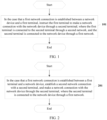
- some embodiments of the present disclosure provide a network switching method applied to a network device and including:
- the first terminal making a network connection with the network device through a second terminal means that the first terminal and the second terminal are connected through a second network, and the second terminal and the network device are connected through a first network, so that the first terminal is indirectly connected to the network device through the second terminal.
- the first network connection means that the first terminal or the second terminal is connected to or camps on or non-activated with a cellular network for the network device;
- the second network connection means a non-cellular network connection between the first terminal and the second terminal.
- the first terminal or the second terminal is connected to a network via a cellular network, where the cellular network includes a 2nd generation mobile communication network (2G), a 3rd generation mobile communication network (3G), and a 4th generation mobile communication network (4G), a 5th generation mobile communication network (5G), and an evolved cellular communication system in the future.
- the cellular network includes a 2nd generation mobile communication network (2G), a 3rd generation mobile communication network (3G), and a 4th generation mobile communication network (4G), a 5th generation mobile communication network (5G), and an evolved cellular communication system in the future.
- the first terminal may be a wearable device (such as a watch, a headset, glasses, a bracelet, or the like), and the second terminal may be another terminal device (such as a mobile phone, a personal computer, a notebook computer, a handheld computer, or the like); or the second terminal may be a wearable device (such as a watch, a headset, glasses, a bracelet, or the like), and the first terminal may be another terminal device (such as a mobile phone, a personal computer, a notebook computer, a handheld computer, or the like).
- a relationship between the wearable device and the another terminal device may be: different subscriber identification modules using a same number; different terminals using a same number; a wearable device using a universal subscriber identity module, and another terminal device using an embedded subscriber identification module; using different numbers; using two numbers having a binding relationship.
- instructing the first terminal to make a network connection with the network device through a second terminal can reduce service interruptions during network switching, and ensure service continuity when a cellular network connection between a terminal and a network device is switched to a non-cellular network connection.
- the network device may be a same base station, or may include two different base stations, namely a first base station and a second base station, and the first base station and the second base station can communicate.
- the base station can establish the first network connection with the first terminal and the second terminal separately, and the base station can implement information interaction such as sending a request, receiving a response or receiving an instruction with the first terminal or the second terminal.
- the network device includes a first base station and a second base station
- the first terminal and the first base station are connected through a first network, and information interaction such as sending a request, receiving a response or receiving an instruction can be implemented between the first base station and the first terminal
- the second terminal and the second base station are connected through a first network, and information interaction such as sending a request, receiving a response or receiving an instruction can be implemented between the second base station and the second terminal.
- the method further includes: releasing the first network connection with the first terminal.
- the first terminal After the first terminal is connected to the network device through the second terminal, the first terminal can communicate with the network device through the second terminal. At this time, the network device may release the first network connection with the first terminal, and a cellular network connection between the first terminal and the network device is switched to indirect communication with the network device through the second terminal, thereby ensuring service continuity of a terminal during network connection.
- the method further includes:
- switching the network connections may be triggered by the first terminal or switching the network connections may be triggered by the second terminal.
- the receiving a first network switching request sent by the first terminal is the switching the network connections triggered by the first terminal
- the receiving a second network switching request sent by the second terminal is the switching the network connections triggered by the first terminal.
- Manner 1 the first terminal sends a first network switching request, and the network device receives the first network switching request sent by the first terminal.
- the first network switching request includes at least one of the following:
- A12 a request message for the first terminal to perform network connection switching, where the network connection switching includes that the first network connection between the first terminal and the network device is switched to a second network connection between the first terminal and the second terminal; specifically, the first terminal requests the network device to perform network connection switching, where the network connection switching means that: a cellular network connection between the first terminal and the network device is switched to a non-cellular connection between the first terminal and the second terminal.
- A13 a message that the first terminal and the second terminal are connected through a second network; specifically, after the first terminal has a non-cellular connection with the second terminal or when a non-cellular connection is to be made between the first terminal and the second terminal, the first switching request message carries a notification message to the network device.
- the first terminal sends a request message to the network device to request switching execution of the preset service by the first terminal directly with the network device to execution of the preset service by the first terminal with the network device through the second terminal.
- the preset service may be a voice service in a call.
- a service other than a voice service, such as a data service, may be switched or not switched, that is, remain in a suspended state.
- identification information of the second terminal specifically, the second terminal refers to a second terminal bound to the first terminal.
- the first network switching request sent by the first terminal to the network device carries the identification information of the second terminal, so that the first terminal and the second terminal establish a second network connection.
- auxiliary information sent by the second terminal to the first terminal specifically, after the first terminal and the second terminal are connected through the second network, the second terminal sends the auxiliary information to the first terminal in real time, where the auxiliary information may include: configuration information or measurement information required for the second terminal to access a network.
- the first terminal may establish a second network connection with the second terminal first, and then send the first network switching request to the network device, or it may send the first network switching request to the network device first, and then establish a second network connection with the second terminal.
- the identification information of the second terminal sent by the first terminal to the network device may be the identification information of the second terminal bound to the first terminal.
- the first terminal and the second terminal have a binding relationship.
- the binding relationship between terminals means that there is a binding relationship between terminal IDs, or there is a binding relationship between subscriber identification modules (Subscriber Identification Module, SIM) or embedded SIM cards (eSIM) or universal subscriber identity modules (Universal Subscriber Identity Module, USIM) or corresponding numbers of the terminals.
- SIM Subscriber Identification Module
- eSIM embedded SIM cards
- USIM Universal Subscriber Identity Module
- Manner 2 The second terminal sends a second network switching request, and the network device receives the second network switching request sent by the second terminal.
- the second network switching request includes at least one of the following:
- identification information of the first terminal specifically, the second terminal needs to send the identification information of the first terminal to the network device when initiating a network switching request to the network device, so that the network device instructs the first terminal to make a network connection with the network device through the second terminal; the identification information of the first terminal may also be used for the network device to release the first network connection with the first terminal.
- a request message for releasing the first network connection between the first terminal and the network device may be that the first terminal is connected to or camps on or non-activated with a cellular network for the network device, and the second terminal requests the network device to release a cellular network connection between the network device and the first terminal.
- a request message for the first terminal to perform network connection switching where the network connection switching includes switching the first network connection between the first terminal and the network device to a second network connection between the first terminal and the second terminal; specifically, when the second terminal sends a network switching request to the network device, a request message that the first terminal needs to perform network switching is carried.
- the second terminal may acquire a notification message requiring network switching from the first terminal.
- the second switching request message carries a notification message to the network device.
- identification information of the second terminal specifically, when the second terminal sends a network switching request to the network device, the identification information of the second terminal is carried, so that the network device establishes a network connection with the second terminal; the identification information of the second terminal may also be used for the network device to instruct the first terminal to establish a second network connection with the second terminal.
- auxiliary information sent by the second terminal to the first terminal specifically, after a second network connection is established between the first terminal and the second terminal, the second terminal sends auxiliary information to the first terminal in real time, and the auxiliary information is carried when the second terminal sends a network switching request to the network device.
- the auxiliary information may include: configuration information or measurement information required for the second terminal to access a network.
- the second terminal may establish a second network connection with the first terminal first, and then send the second network switching request to the network device, or it may send the second network switching request to the network device first, and then establish a second network connection with the first terminal.
- the base station receives a first network switching request sent by the first terminal; or receives a second network switching request sent by the second terminal.
- the network device includes a first base station and a second base station, the first base station receives a first network switching request sent by the first terminal; the second base station receives a second network switching request sent by the second terminal.
- the instructing the first terminal to make a network connection with the network device through a second terminal includes: sending first response information to the first terminal.
- the network device After receiving a first network switching request sent by the first terminal, or receiving a second network switching request sent by the second terminal, the network device sends a response message to the first terminal for instructing the first terminal to make a network connection with the network device through a second terminal.
- the network device includes a first base station and a second base station, first response information is sent by the first base station to the first terminal.
- the first response information is response information sent by the network device according to a first network switching request received from the first terminal, and/or according to a received second network switching request sent by the second terminal.
- the first response information includes at least one of the following:
- identification information of the second terminal specifically, the network device sends the first response information to the first terminal, and the first response information carries the identification information of the second terminal, so that the first terminal and the second terminal establish a second network connection.
- a radio resource control RRC connection release message specifically, when a cellular network connection between the first terminal and the network device is switched to a non-cellular connection between the first terminal and the second terminal, the network device may release the first network connection with the first terminal and send the RRC connection release message to the first terminal.
- instruction information for instructing the second terminal to initiate RRC connection establishment to the network device through the first terminal specifically, if the first terminal needs to perform network switching, and the second terminal is not connected with the network device when the first terminal receives the first response information, the first terminal may instruct the second terminal to initiate access to the network device according to the instruction information, so that the second terminal is connected with the network device through a first network.
- a paging message sent to the second terminal specifically, if the network device initiates a paging to the second terminal, the first response information may carry the paging message sent by the network device to the second terminal when the first response information is sent to the first terminal.
- the instructing the first terminal to make a network connection with the network device through a second terminal includes: sending first instruction information to the second terminal.
- the first instruction information is instruction information sent by the network device according to a first network switching request received from the first terminal and/or according to a received second network switching request sent by the second terminal.
- the first instruction information may be used to instruct that the first terminal needs to make a network connection with the network device through the second terminal.
- the network device includes a first base station and a second base station
- the first response information is sent by the second base station to the second terminal.
- the first instruction information includes at least one of the following:
- a paging message sent to the second terminal specifically, after receiving a first network switching request sent by the first terminal, or receiving a second network switching request sent by the second terminal, the network device initiates a paging to the second terminal to trigger the establishment of a network connection between the second terminal and the network device.
- identification information of the first terminal specifically, the network device sends the identification information of the first terminal to the second terminal, so that the second terminal and the first terminal establish a second network connection.
- instruction information for releasing the first network connection between the first terminal and the network device specifically, the network device sends the instruction information to the second terminal, and after establishing a second network connection with the first terminal, the second terminal instructs the first terminal to request the network device to release the first network connection.
- instruction information for the first terminal to perform network connection switching where the network connection switching includes switching the first network connection between the first terminal and the network device to a second network connection between the first terminal and the second terminal; specifically, after acquiring the instruction message and establishing a second network connection with the first terminal, the second terminal may instruct the first terminal to perform network connection switching.
- instruction information for the first terminal and the second terminal to connect through a second network specifically, the network device sends the instruction message to the second terminal, so that the second terminal and the first terminal establish a second network connection.
- a request message for switching a preset service from the first terminal to the second terminal is all or some of current services of the first terminal.
- the network device sends the first instruction information to the second terminal, a request message for switching the preset service from the first terminal to the second terminal is carried, so that the second terminal knows that the preset service needs to be switched from the first terminal to the second terminal.
- the preset service may be a voice service in a call.
- a service other than a voice service, such as a data service, may be switched or not switched, that is, remain in a suspended state.
- the instructing the first terminal to make a network connection with the network device through a second terminal includes: receiving second response information sent by the second terminal.
- the second response information may be response information fed back by the second terminal after receiving the first instruction information sent by the network device and performing a corresponding step according to the first instruction information.
- the network device includes a first base station and a second base station
- second response information is sent by the second base station to the second terminal.
- the second response information includes at least one of the following:
- the acknowledgment response message may be a response message fed back based on the first instruction information;
- the RRC connection establishment request message may be a request message before the second terminal initiates an RRC connection to the network device;
- the second terminal may also send the identification information of the first terminal to the network device, so that the network device releases the first network connection with the first terminal.
- the method further includes at least one of the following:
- the first terminal may send request information to the network device for releasing the first network connection, so that the network device releases the network connection with the first terminal.
- the network device includes a first base station and a second base station
- the first base station receives request information sent by the first terminal for releasing the first network connection.
- the method further includes: establishing a radio resource control RRC connection with the second terminal.
- the network device may establish a radio resource control RRC connection with the second terminal after receiving a network switching request from the first terminal or the second terminal; or establish a radio resource control RRC connection with the second terminal after receiving the second response information sent by the second terminal.
- a second terminal establishes a radio resource control RRC connection with the second base station.
- the method further includes:
- the base station acquires the first information from a core network after receiving a network switching request from the first terminal or the second terminal, or after acquiring identification information of the second terminal, or after sending the first response information to the first terminal, or after sending the first instruction information to the second terminal.
- the message transmission between the first terminal and the second terminal is achieved via the second network connection, or by using the network device to send a message from one of the terminals to the other terminal.
- identification information of a terminal may include: a UE_ID (user equipment identity), an IMSI (International Mobile Subscriber Identity, International Mobile Subscriber Identity), an IMEI (International Mobile Equipment Identity, International Mobile Equipment Identity), an SIM card identity, an S-TMSI (S-Temporary Mobile Subscription Identifier, S-Temporary Mobile Subscription Identifier), a 5G-S-TMSI, an RNIT (Radio Network Temporary Identifier, Radio Network Temporary Identifier), and the like.
- the first terminal in the case that the first network connection is established between a network device and a first terminal, the first terminal is instructed to make a network connection with the network device through a second terminal, thereby ensuring service continuity when a cellular network connection between a terminal and a network device is switched to a non-cellular network connection.
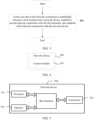
- some embodiments of the present disclosure provide a network switching method applied to a first terminal and including:
- the first network connection means that the first terminal or the second terminal is connected to or camps on or non-activated with a cellular network for the network device;
- the second network connection means a non-cellular network connection between the first terminal and the second terminal.
- establishing a second network connection with the second terminal and establishing a network connection with the network device through the second terminal can reduce service interruptions during network switching and ensure service continuity when a cellular network connection between a terminal and a network device is switched to a non-cellular network connection.
- the network device may be a same base station, or may include two different base stations, namely a first base station and a second base station, and the first base station and the second base station can communicate.
- the base station can establish the first network connection with the first terminal and the second terminal separately, and the base station can implement information interaction such as sending a request, receiving a response or receiving an instruction with the first terminal or the second terminal.
- the network device includes a first base station and a second base station
- the first terminal and the first base station are connected through a first network, and information interaction such as sending a request, receiving a response or receiving an instruction can be implemented between the first base station and the first terminal
- the second terminal and the second base station are connected through a first network, and information interaction such as sending a request, receiving a response or receiving an instruction can be implemented between the second base station and the second terminal.
- the method further includes: releasing, by a first terminal, the first network connection with the network device.
- the method further includes: sending a first network switching request to the network device.
- the first network switching request includes at least one of the following:
- the making a network connection with the network device through a second terminal includes: receiving first response information sent by the network device.
- the first response information includes at least one of the following:
- the first response information is sent after the network device receives a second network switching request from the second terminal.
- the second network switching request includes at least one of the following:
- the method further includes: receiving identification information of the second terminal sent by the second terminal.
- the second terminal may send identification information of the second terminal to the first terminal, and after receiving the identification information of the second terminal, the first terminal may use the identification information to send the first switching request to the network device, so that the network device establishes the first network connection with the second terminal.
- the method further includes:
- the first terminal may send the second information to the second terminal after a second network connection is established between the first terminal and the second terminal, and the second terminal may send the second information (such as identification information of the first terminal) to the network device, so that the network device releases a network connection with the first terminal.
- the second information such as identification information of the first terminal
- the method further includes:
- the first terminal sends the third information to the second terminal, and the second terminal may send a second network switching request to the network device according to the content of the third information, or the second terminal may send second response information to the network device according to the content of the third information.
- the method further includes at least one of the following:
- the second instruction information includes at least one of the following:
- the first network connection means that the first terminal or the second terminal is connected to or camps on or non-activated with a cellular network for the network device; and the second network connection means a non-cellular network connection between the first terminal and the second terminal.
- the first terminal in the case of establishing the first network connection with the network device, the first terminal establishes a second network connection with the second terminal, and makes a network connection with the network device through the second terminal, which can reduce service interruptions during network switching and ensure service continuity when a cellular network connection between a terminal and a network device is switched to a non-cellular network connection.
- some embodiments of the present disclosure provide a network switching method applied to a second terminal and including: step 301: in the case that the first network connection is established between a first terminal and a network device, establish a second network connection with the first terminal, and establish the first network connection with the network device.
- the second terminal establishes a second network connection with the first terminal and establishes the first network connection with the network device, which can reduce service interruptions during network switching and ensure service continuity when a cellular network connection between a terminal and a network device is switched to a non-cellular network connection.
- the network device may be a same base station, or may include two different base stations, namely a first base station and a second base station, and the first base station and the second base station can communicate.
- the base station can establish the first network connection with the first terminal and the second terminal separately, and the base station can implement information interaction such as sending a request, receiving a response or receiving an instruction with the first terminal or the second terminal.
- the network device includes a first base station and a second base station
- the first terminal and the first base station are connected through a first network, and information interaction such as sending a request, receiving a response or receiving an instruction can be implemented between the first base station and the first terminal
- the second terminal and the second base station are connected through a first network, and information interaction such as sending a request, receiving a response or receiving an instruction can be implemented between the second base station and the second terminal.
- the method further includes: sending a second network switching request to the network device.
- the second network switching request includes at least one of the following:
- the establishing the first network connection with the network device includes: receiving first instruction information sent by the network device.
- the first instruction information includes at least one of the following:
- the first instruction information is sent after the network device receives a first network switching request from the first terminal.
- the first network switching request includes at least one of the following:
- the establishing the first network connection with the network device includes: sending second response information to the network device.
- the second response information includes at least one of the following:
- the method further includes: sending identification information of the second terminal to the first terminal.
- the method further includes:
- the method further includes:
- the method further includes:
- the method further includes: initiating radio resource control RRC connection establishment to the network device.
- the first network connection means that the first terminal or the second terminal is connected to or camps on or non-activated with a cellular network for the network device; and the second network connection means a non-cellular network connection between the first terminal and the second terminal.
- establishing a second network connection with the first terminal and establishing the first network connection with the network device can reduce service interruptions during network switching and ensure service continuity when a cellular network connection between a terminal and a network device is switched to a non-cellular network connection.
- a network device 400 including:
- the network device 400 further includes: a first network release module, configured to release the first network connection with the first terminal.
- the network device 400 further includes:
- the first network switching request includes at least one of the following:
- the second network switching request includes at least one of the following:
- control module 401 is configured for: sending first response information to the first terminal.
- the first response information includes at least one of the following:
- control module 401 is configured for: sending first instruction information to the second terminal.
- the first instruction information includes at least one of the following:
- control module 401 is configured for: receiving second response information sent by the second terminal.
- the second response information includes at least one of the following:
- the network device 400 further includes at least one of the following:
- the network device 400 further includes: a first RRC connection module, configured to establish a radio resource control RRC connection with the second terminal.
- a first RRC connection module configured to establish a radio resource control RRC connection with the second terminal.
- the network device 400 further includes:
- the first network connection means that the first terminal or the second terminal is connected to or camps on or non-activated with a cellular network for the network device; and the second network connection means a non-cellular network connection between the first terminal and the second terminal.
- this network device embodiment provides a network device corresponding to the foregoing network switching method applied to the network device, all implementations in the foregoing embodiments are applicable to this network device embodiment, and the same technical effect thereof can be achieved.
- Some embodiments of the present disclosure further provide a network device, including a memory, a processor and a computer program that is stored in a memory and executable on a processor.
- the computer program When executed by the processor, the computer program implement each process of the foregoing network switching method embodiment applied to a network-side device, and the same technical effect can be achieved. To avoid repetition, details are not described herein.
- FIG. 5 is a structural diagram of a network device according to an embodiment of the present disclosure, which can implement details of the foregoing network switching method and achieve the same effect.
- a network device 500 includes: a processor 501, a transceiver 502, a memory 503, and a bus interface.
- the processor 501 is configured to read a program in the memory 503 and perform the following process:
- a bus architecture may include any quantity of interconnected buses and bridges, which are specifically connected together by various circuits of one or more processors represented by the processor 501 and a memory represented by the memory 503.
- the bus architecture may further connect together various other circuits of a peripheral device, a voltage stabilizer, a power management circuit, and the like, which are known in this art and will not be further described herein.
- the bus interface provides an interface.
- the transceiver 502 may include a plurality of elements, namely a transmitter and a receiver, and provides units for communication with various other apparatuses on a transmission medium.
- the processor 501 is configured to read a program in the memory 503 to perform the following processes: releasing the first network connection with the first terminal.
- the processor 501 is configured to read a program in the memory 503 to perform the following processes:
- the first network switching request includes at least one of the following:
- the second network switching request includes at least one of the following:
- the processor 501 is configured to read a program in the memory 503 to perform the following processes: sending first response information to the first terminal.
- the first response information includes at least one of the following:
- the processor 501 is configured to read a program in the memory 503 to perform the following processes: sending first instruction information to the second terminal.
- the first instruction information includes at least one of the following:
- the processor 501 is configured to read a program in the memory 503 to perform the following processes: receiving second response information sent by the second terminal.
- the second response information includes at least one of the following:
- the processor 501 is configured to read a program in the memory 503 to perform the following processes:
- the processor 501 is configured to read a program in the memory 503 to perform the following processes: establishing a radio resource control RRC connection with the second terminal.
- the processor 501 is configured to read a program in the memory 503 to perform the following processes:
- the first network connection means that the first terminal or the second terminal is connected to or camps on or is non-activated with a cellular network for the network device; and the second network connection means a non-cellular network connection between the first terminal and the second terminal.
- the network device may be a base transceiver station (Base Transceiver Station, BTS) in a global system for mobile communications (Global System of Mobile communication, GSM) or code division multiple access (Code Division Multiple Access, CDMA), or may be a NodeB (NodeB, NB) in wideband code division multiple access (Wideband Code Division Multiple Access, WCDMA), or may be an evolved Node B (Evolutional Node B, referred to as eNB or eNodeB for short), or a relay station or an access point in LTE, or a base station in a future 5G network, or the like, which is not limited herein.
- BTS Base Transceiver Station
- GSM Global System of Mobile communication
- CDMA Code Division Multiple Access
- NodeB NodeB
- WCDMA Wideband Code Division Multiple Access
- eNB evolved Node B
- eNodeB evolved Node B
- Some embodiments of the present disclosure further provide a computer-readable storage medium with a computer program stored thereon.
- the computer program When executed by the processor, the computer program implement each process of the embodiment of the network switching method applied to the network device and the same technical effect can be achieved. To avoid repetition, details are not described herein again.
- the computer-readable storage medium is, for example, a read-only memory (Read-Only Memory, ROM for short), a random access memory (Random Access Memory, RAM for short), a magnetic disk or an optical disk.
- some embodiments of the present disclosure provide a terminal, where the terminal is a first terminal 600 and includes:
- the terminal further includes: a third network release module, configured for a first terminal to release the first network connection with the network device.
- the terminal further includes: a second sending module, configured to send a first network switching request to the network device.
- a second sending module configured to send a first network switching request to the network device.
- the first network switching request includes at least one of the following:
- the first network connection module 601 is configured for: receiving first response information sent by the network device.
- the first response information includes at least one of the following:
- the first response information is sent after the network device receives a second network switching request from the second terminal.
- the second network switching request includes at least one of the following:
- the terminal further includes: a third receiving module, configured to receive identification information of the second terminal sent by the second terminal.
- the terminal further includes:
- the terminal further includes:
- the terminal further includes at least one of the following:
- the second instruction information includes at least one of the following:
- the first network connection means that the first terminal or the second terminal is connected to or camps on or is non-activated with a cellular network for the network device; and the second network connection means a non-cellular network connection between the first terminal and the second terminal.
- this terminal embodiment provides a terminal corresponding to the foregoing network switching method applied to a first terminal, all implementations in the foregoing embodiments are applicable to this terminal embodiment and the same technical effect thereof can be achieved.
- FIG. 7 is a schematic diagram of a hardware structure of a terminal implementing some embodiments of the present disclosure, where the terminal is a first terminal.
- the terminal 70 includes but is not limited to components such as a radio frequency unit 710, a network module 720, an audio output unit 730, an input unit 740, a sensor 750, a display unit 760, a user input unit 770, an interface unit 780, a memory 790, a processor 711, and a power supply 712.
- a radio frequency unit 710 such as a radio frequency unit 710, a network module 720, an audio output unit 730, an input unit 740, a sensor 750, a display unit 760, a user input unit 770, an interface unit 780, a memory 790, a processor 711, and a power supply 712.
- the terminal structure shown in FIG. 7 does not constitute a limitation on the terminal.
- the terminal may include more or fewer components than those shown in the figure, or some components may be combined, or there may be a different component arrangement.
- the terminal includes but is not limited to a mobile phone, a tablet computer, a notebook computer, a palm
- the processor 711 is configured to establish, in the case that the first network connection is established between the first terminal and a network device, a second network connection with a second terminal, and make a network connection with the network device through the second terminal; where the second terminal is connected to the network device through a first network.
- the radio frequency unit 710 may be configured to receive and send information or a signal in a call process. Specifically, the radio frequency unit 710 is configured to receive downlink data from a network-side device and give it to the processor 711 for processing; and additionally send uplink data to the network-side device. Generally, the radio frequency unit 710 includes, but is not limited to, an antenna, at least one amplifier, a transceiver, a coupler, a low noise amplifier, a duplexer, and the like. In addition, the radio frequency unit 710 may also communicate with another device through a wireless communications system and network.
- the terminal provides a user with wireless broadband Internet access by using the network module 720, for example, helping the user receive and send an email, browse a web page, and access streaming media.
- the audio output unit 730 may convert audio data received by the radio frequency unit 710 or the network module 720 or stored in the memory 790 into an audio signal and output the audio signal as a sound.
- the audio output unit 730 may further provide audio output (such as a call signal reception sound, a message reception sound) related to a specific function performed by the first terminal 70.
- the audio output unit 730 includes a speaker, a buzzer, a telephone receiver, and the like.
- the input unit 740 is configured to receive an audio signal or a video signal.
- the input unit 740 may include a graphics processing unit (Graphics Processing Unit, GPU) 741 and a microphone 742.
- the graphics processing unit 741 processes image data of a static image or a video obtained by an image capture apparatus (such as, a camera) in a video capture mode or an image capture mode.
- a processed image frame may be displayed on the display unit 760.
- the image frame processed by the graphics processing unit 741 may be stored in the memory 790 (or another storage medium) or sent by using the radio frequency unit 710 or the network module 720.
- the microphone 742 may receive sound and can process such sound into audio data.
- the processed audio data may be output by being converted into a format that may be sent to a mobile communications network-side device by using the radio frequency unit 710 in a telephone call mode.
- the first terminal 70 further includes at least one sensor 750, such as a light sensor, a motion sensor, and another sensor.
- the light sensor includes an ambient light sensor and a proximity sensor, where the ambient light sensor can adjust brightness of a display panel 761 based on brightness of ambient light, and the proximity sensor can turn off the display panel 761 and/or backlight when the first terminal 70 is moved towards the ear.
- an accelerometer sensor may detect an acceleration value in each direction (generally, three axes), and detect a value and a direction of gravity when the accelerometer sensor is static, and may be configured to recognize a terminal posture (for example, screen switching between landscape and portrait modes, a related game, or magnetometer posture calibration), and perform a function related to vibration recognition (for example, a pedometer or a knock), and the like.
- the sensor 750 may further include a fingerprint sensor, a pressure sensor, an iris sensor, a molecular sensor, a gyroscope, a barometer, a hygrometer, a thermometer, an infrared sensor, and the like. Details are not described herein again.
- the display unit 760 is configured to display information entered by a user or information provided for the user.
- the display unit 760 may include a display panel 761, and the display panel 761 may be configured in a form of a liquid crystal display (Liquid Crystal Display, LCD), an organic light-emitting diode (Organic Light-Emitting Diode, OLED), or the like.
- LCD Liquid Crystal Display
- OLED Organic Light-Emitting Diode
- the user input unit 770 can be configured to receive input numeric or character information, and generate key signal inputs related to user settings and function control of the terminal.
- the user input unit 770 includes a touch panel 771 and another input device 772.
- the touch panel 771 also called a touch screen, can collect a touch operation of the user on or near the touch panel 771 (For example, the user uses any suitable object or accessory such as a finger or a stylus to operate on or near the touch panel 771).
- the touch panel 771 may include two parts: a touch detection apparatus and a touch controller.
- the touch detection apparatus detects a touch position of the user, detects a signal brought by the touch operation, and sends the signal to the touch controller.
- the touch controller receives touch information from the touch detection apparatus, converts the touch information into touch point coordinates, sends the touch point coordinates to a processor 711, and receives and executes a command sent by the processor 711.
- the touch panel 771 may be implemented by using a plurality of types such as a resistive type, a capacitive type, an infrared ray, and a surface acoustic wave.
- the user input unit 770 may also include the another input device 772.
- the another input device 772 may include, but is not limited to, a physical keyboard, functional keys (for example, a volume control key and a switch key), a trackball, a mouse, and a joystick. Details are not described herein again.
- the touch panel 771 may cover the display panel 761.
- the touch panel 771 detects a touch operation on or near the touch panel 771, the touch operation is transmitted to the processor 711 to determine a type of a touch event, and then the processor 711 provides corresponding visual output on the display panel 761 according to the type of the touch event.
- the touch panel 771 and the display panel 761 are two independent components for implementing input and output functions of the terminal, in some embodiments, the touch panel 771 and the display panel 761 may be integrated to implement the input and output functions of the terminal. Details are not limited herein.
- the interface unit 780 is an interface for connecting an external device and the first terminal 70.
- the external apparatus may include a wired or wireless headphone port, an external power supply (or a battery charger) port, a wired or wireless data port, a storage card port, a port used to connect to an apparatus having an identity module, an audio input/output (I/O) port, a video I/O port, a headset jack, and the like.
- the interface unit 780 may be configured to receive input (for example, data information and power) from the external apparatus and transmit the received input to one or more elements in the first terminal 70, or may be configured to transmit data between the first terminal 70 and the external apparatus.
- the memory 790 may be configured to store a software program as well as various data.
- the memory 790 may mainly include a program storage area and a data storage area.
- the program storage area may store an operating system, an application program required by at least one function (such as a sound playback function and an image display function), and the like.
- the data storage area may store data (such as audio data and a phone book) created based on use of the mobile phone, and the like.
- the memory 740 may include a high-speed random access memory or a nonvolatile memory, for example, at least one disk storage device, a flash memory, or another volatile solid-state storage device.
- the processor 711 is a control center of the terminal.
- the processor 711 uses various interfaces and lines to connect the various parts of the entire terminal, and performs various functions of the terminal and processes data by running or executing software programs and/or modules stored in the memory 790 and invoking data stored in the memory 790, to monitor the terminal as a whole.
- the processor 711 may include one or more processing units.
- the processor 711 may be integrated with an application processor and a modem processor.
- the application processor mainly processes an operating system, a user interface, an application program, and the like.
- the modem processor mainly processes wireless communications. It may be understood that alternatively, the modem processor may not be integrated into the processor 711.
- the first terminal 70 may further include a power supply 712 (for example, a battery) that supplies power to various components.
- a power supply 712 for example, a battery
- the power supply 712 may be logically connected to the processor 711 through a power supply management system, to perform functions of managing charging, discharging, and power consumption through the power supply management system.
- the first terminal 70 includes some functional modules that are not shown. Details are not described herein.
- processor 711 is further configured to implement another process in the network switching method applied to a first terminal in the foregoing embodiment. Details are not described herein.
- some embodiments of the present disclosure further provide a terminal, where the terminal is a first terminal and includes a processor 711, a memory 790, and a computer program that is stored in the memory 790 and executable on the processor 711.
- the computer program When executed by the processor 711, the computer program implements each process of the network switching embodiment applied to a first terminal, and the same technical effect can be achieved. To avoid repetition, details are not described herein again.
- Some embodiments of the present disclosure further provide a computer-readable storage medium with a computer program stored thereon.
- the computer program When executed by the processor, the computer program implements each process of the embodiment of the network switching method applied to a first terminal, and the same technical effect can be achieved. To avoid repetition, details are not described herein again.
- the computer-readable storage medium is, for example, a read-only memory (Read-Only Memory, ROM for short), a random access memory (Random Access Memory, RAM for short), a magnetic disk or an optical disk.
- some embodiments of the present disclosure provide a terminal, where the terminal is a second terminal 800 and includes: a second network connection module 801, configured to establish, in the case that the first network connection is established between a first terminal and a network device, a second network connection with the first terminal and establish the first network connection with the network device.
- a second network connection module 801 configured to establish, in the case that the first network connection is established between a first terminal and a network device, a second network connection with the first terminal and establish the first network connection with the network device.
- the terminal further includes: a sixth sending module, configured to send a second network switching request to the network device.
- the second network switching request includes at least one of the following:
- the second network connection module 801 is configured for: receiving first instruction information sent by the network device.
- the first network switching request includes at least one of the following:
- the second network connection module 801 is configured for: sending second response information to the network device.
- the second response information includes at least one of the following:
- the terminal further includes: a sixth receiving module, configured to receive second information sent by the first terminal:
- the terminal further includes:
- the terminal further includes:
- the terminal further includes: a second RRC connection module, configured to initiate radio resource control RRC connection establishment to the network device.
- a second RRC connection module configured to initiate radio resource control RRC connection establishment to the network device.
- the first network connection means that the first terminal or the second terminal is connected to or camps on or is non-activated with a cellular network for the network device; and the second network connection means a non-cellular network connection between the first terminal and the second terminal.
- this terminal embodiment provides a terminal corresponding to the foregoing network switching method applied to a second terminal, all implementations in the foregoing embodiments are applicable to this terminal embodiment and the same technical effect thereof can be achieved.
- some embodiments of the present disclosure further provide a terminal, where the terminal is a second terminal, and a specific structure of the second terminal is the same as that of the first terminal shown in FIG. 7 .
- the processor of the second terminal is configured to establish, in the case that the first network connection is established between a first terminal and a network device, a second network connection with the first terminal and establish the first network connection with the network device.
- processor of the second terminal is further configured to implement another process in the network switching method applied to a second terminal in the foregoing embodiment. Details are not described herein.
- some embodiments of the present disclosure further provide a terminal, where the terminal is a second terminal and includes a processor, a memory, and a computer program that is stored in a memory and executable on a processor.
- the computer program When executed by the processor, the computer program implements each process of the embodiment of the network switching method applied to a second terminal, and the same technical effect can be achieved. To avoid repetition, details are not described herein.
- Some embodiments of the present disclosure further provide a computer-readable storage medium with a computer program stored thereon.
- the computer program When executed by the processor, the computer program implements each process of the embodiment of the network switching method applied to a second terminal, and the same technical effect can be achieved. To avoid repetition, details are not described herein again.
- the computer-readable storage medium is, for example, a read-only memory (Read-Only Memory, ROM for short), a random access memory (Random Access Memory, RAM for short), a magnetic disk or an optical disk.
- the computer software product is stored in a storage medium (such as a ROM/RAM, a magnetic disk, or an optical disc), and includes several instructions for instructing a terminal (which may be a mobile phone, a computer, a server, an air conditioner, a network side device, or the like) to perform the methods described in the embodiments of the present disclosure.
- a storage medium such as a ROM/RAM, a magnetic disk, or an optical disc
- a terminal which may be a mobile phone, a computer, a server, an air conditioner, a network side device, or the like
- a module, a unit, a submodule, a subunit, or the like may be implemented in one or more application specific integrated circuits (Application Specific Integrated Circuits, ASIC), a digital signal processor (Digital Signal Processing, DSP), a digital signal processing device (DSP Device, DSPD), a programmable logic device (Programmable Logic Device, PLD), a field-programmable gate array (Field-Programmable Gate Array, FPGA), a general purpose processor, a controller, a microcontroller, a microprocessor, another electronic unit configured to perform the functions described in this application, or a combination thereof.
- ASIC Application Specific Integrated Circuits
- DSP Digital Signal Processing
- DSP Device digital signal processing device
- PLD programmable logic device
- FPGA field-programmable gate array
- a general purpose processor a controller, a microcontroller, a microprocessor, another electronic unit configured to perform the functions described in this application, or a combination thereof.
- the technology described in some embodiments of the present disclosure may be implemented by executing functional modules (for example, a process and a function) described in some embodiments of the present disclosure.
- Software codes may be stored in the memory and executed by the processor.
- the memory may be implemented in the processor or outside the processor.
- the objective of the present disclosure may also be achieved by running a program or a set of programs on any computing apparatus.
- the computing apparatus may be a well-known general-purpose apparatus. Therefore, the objective of this disclosure may also be achieved only by providing a program product including program code for implementing the method or the apparatus.
- a program product also constitutes this disclosure
- a storage medium storing such a program product also constitutes this disclosure.
- the storage medium may be any well-known storage medium or any storage medium to be developed in the future.
- steps for performing the foregoing series of processing may be performed naturally in chronological order according to a described sequence, but do not necessarily need to be performed in chronological order, and some steps may be performed in parallel or independently.
Landscapes
- Engineering & Computer Science (AREA)
- Computer Networks & Wireless Communication (AREA)
- Signal Processing (AREA)
- Mobile Radio Communication Systems (AREA)
Claims (11)
- Un procédé de commutation de réseau, mis en oeuvre par un dispositif de réseau et comprenant :dans le cas où une première connexion de réseau est établie entre le dispositif de réseau et un premier terminal, le fait de donner instruction (101) au premier terminal d'effectuer une connexion de réseau avec le dispositif de réseau par le biais d'un deuxième terminal ; oùle premier terminal est connecté au deuxième terminal par le biais d'un deuxième réseau, et le deuxième terminal est connecté au dispositif de réseau par le biais du premier réseau ; caractérisé en ce queavant le fait de donner instruction (101) au premier terminal d'effectuer une connexion de réseau avec le dispositif de réseau par le biais d'un deuxième terminal, le procédé comprend en outre :le fait de recevoir une première requête de commutation de réseau envoyée par le premier terminal ; la première requête de commutation de réseau comprenant un message de requête pour commuter un service préréglé du premier terminal vers le deuxième terminal ; oule fait de recevoir une deuxième requête de commutation de réseau envoyée par le deuxième terminal ; la deuxième requête de commutation de réseau comprenant un message de requête pour commuter un service préréglé du premier terminal vers le deuxième terminal ;
etle fait de donner instruction (101) au premier terminal d'effectuer la connexion de réseau avec le dispositif de réseau par le biais du deuxième terminal comprend :
le fait d'envoyer des premières informations de réponse au premier terminal ; les premières informations de réponse comprenant au moins un élément parmi :des informations d'identification du deuxième terminal ;un message de libération de connexion de contrôle de ressources radio, RRC ;des informations d'instruction pour donner instruction au deuxième terminal d'amorcer un établissement de connexion RRC au dispositif de réseau par le biais du premier terminal ; etun message de recherche envoyé au deuxième terminal ;
oule fait de donner instruction (101) au premier terminal d'effectuer la connexion de réseau avec le dispositif de réseau par le biais du deuxième terminal comprend :le fait d'envoyer des premières informations d'instruction au deuxième terminal ; oùles premières informations d'instruction comprennent au moins un élément parmi :un message de recherche envoyé au deuxième terminal ;des informations d'instruction pour libérer la première connexion de réseau entre le premier terminal et le dispositif de réseau ; etun message de requête pour commuter un service préréglé du premier terminal vers le deuxième terminal ;
etaprès que le premier terminal a effectué une connexion de réseau avec le dispositif de réseau par le biais d'un deuxième terminal, le procédé comprend en outre au moins un élément parmi :le fait d'envoyer des deuxièmes informations d'instruction au premier terminal ; etle fait de recevoir des informations de requête envoyées par le premier terminal pour libérer la première connexion de réseau. - Le procédé de commutation de réseau selon la revendication 1, comprenant en outre :le fait de libérer la première connexion de réseau avec le premier terminal.
- Le procédé de commutation de réseau selon la revendication 1, où la première requête de commutation de réseau comprend en outre au moins un élément parmi :un message de requête pour libérer la première connexion de réseau entre le premier terminal et le dispositif de réseau ;un message de requête pour que le premier terminal mette en oeuvre une commutation de connexion de réseau, la commutation de connexion de réseau comprenant : le fait de commuter la première connexion de réseau entre le premier terminal et le dispositif de réseau vers une deuxième connexion de réseau entre le premier terminal et le deuxième terminal ;un message selon lequel le premier terminal et le deuxième terminal sont connectés par le biais du deuxième réseau ;des informations d'identification du deuxième terminal ; etdes informations auxiliaires envoyées par le deuxième terminal au premier terminal ; et/oula deuxième requête de commutation de réseau comprend en outre au moins un élément parmi :un message de requête d'établissement de connexion de contrôle de ressources radio, RRC ; etdes informations d'identification du premier terminal ;un message de requête pour libérer la première connexion de réseau entre le premier terminal et le dispositif de réseau ;un message de requête pour que le premier terminal mette en oeuvre une commutation de connexion de réseau, la commutation de connexion de réseau comprenant : le fait de commuter la première connexion de réseau entre le premier terminal et le dispositif de réseau vers une deuxième connexion de réseau entre le premier terminal et le deuxième terminal ;un message selon lequel le premier terminal et le deuxième terminal sont connectés par le biais d'un deuxième réseau ;des informations d'identification du deuxième terminal ; etdes informations auxiliaires envoyées par le deuxième terminal au premier terminal.
- Le procédé de commutation de réseau selon la revendication 1, où les premières informations de réponse comprennent en outre un message d'accusé de réception.
- Le procédé de commutation de réseau selon la revendication 1, où les premières informations d'instruction comprennent en outre au moins un élément parmi :un message d'accusé de réception ;des informations d'identification du premier terminal ;des informations d'instruction pour mettre en oeuvre une commutation de connexion de réseau pour le premier terminal, la commutation de connexion de réseau comprenant :le fait de commuter la première connexion de réseau entre le premier terminal et le dispositif de réseau vers une deuxième connexion de réseau entre le premier terminal et le deuxième terminal ; etdes informations d'instruction pour que le premier terminal et le deuxième terminal se connectent par le biais d'un deuxième réseau.
- Le procédé de commutation de réseau selon la revendication 1, où après le fait de donner instruction (101) au premier terminal d'effectuer la connexion de réseau avec le dispositif de réseau par le biais du deuxième terminal, le procédé comprend :
le fait de recevoir des deuxièmes informations de réponse envoyées par le deuxième terminal. - Le procédé de commutation de réseau selon la revendication 6, où les deuxièmes informations de réponse comprennent au moins un élément parmi :un message de réponse d'accusé de réception ;un message de requête d'établissement de connexion de contrôle de ressources radio, RRC ; etdes informations d'identification du premier terminal.
- Le procédé de commutation de réseau selon la revendication 1, où après que le premier terminal a effectué une connexion de réseau avec le dispositif de réseau par le biais d'un deuxième terminal, le procédé comprend en outre :
le fait de libérer la première connexion de réseau avec le premier terminal. - Le procédé de commutation de réseau selon la revendication 1, comprenant en outre :le fait d'établir une connexion de contrôle de ressources radio, RRC, avec le deuxième terminal ; et/oule fait d'acquérir des premières informations envoyées par un dispositif de coeur de réseau ; oùles premières informations comprennent au moins un élément parmi :une relation contractuelle entre le premier terminal et le deuxième terminal ;des informations d'identification du deuxième terminal ;des informations d'abonnement du premier terminal ;des informations d'abonnement du deuxième terminal ; etdes informations de configuration de couche application du premier terminal.
- Un procédé de commutation de réseau, mis en oeuvre par un premier terminal et comprenant :dans le cas où une première connexion de réseau est établie entre le premier terminal et un dispositif de réseau, le fait d'établir (201) une deuxième connexion de réseau avec un deuxième terminal, et d'effectuer (201) une connexion de réseau avec le dispositif de réseau par le biais du deuxième terminal ; oùle deuxième terminal est connecté au dispositif de réseau par le biais d'un premier réseau ; caractérisé en ce queaprès le fait d'établir (201) la deuxième connexion de réseau avec le deuxième terminal, et d'effectuer (201) la connexion de réseau avec le dispositif de réseau par le biais du deuxième terminal, le procédé comprend en outre au moins un élément parmi :le fait de recevoir des deuxièmes informations d'instruction envoyées par le dispositif de réseau ; etle fait d'envoyer des informations de requête au dispositif de réseau pour libérer la première connexion de réseau ;avant le fait d'effectuer (201) la connexion de réseau avec le dispositif de réseau par le biais du deuxième terminal, le procédé comprend en outre :le fait d'envoyer une première requête de commutation de réseau au dispositif de réseau ; la première requête de commutation de réseau comprenant un message de requête pour commuter un service préréglé du premier terminal vers le deuxième terminal ;le fait d'effectuer (201) la connexion de réseau avec le dispositif de réseau par le biais du deuxième terminal comprend :
le fait de recevoir des premières informations de réponse envoyées par le dispositif de réseau ; les premières informations de réponse comprenant au moins un élément parmi les suivants :des informations d'identification du deuxième terminal ;un message de libération de connexion de contrôle de ressources radio, RRC ;des informations d'instruction pour donner instruction au deuxième terminal d'amorcer un établissement de connexion RRC au dispositif de réseau par le biais du premier terminal ; etun message de recherche envoyé au deuxième terminal. - Un procédé de commutation de réseau, mis en oeuvre par un deuxième terminal et comprenant :dans le cas où une première connexion de réseau est établie entre un premier terminal et un dispositif de réseau, le fait d'établir (301) une deuxième connexion de réseau avec le premier terminal, et d'établir (301) une première connexion de réseau avec le dispositif de réseau ; caractérisé en ce queavant le fait d'établir (301) la première connexion de réseau avec le dispositif de réseau, le procédé comprend en outre :le fait d'envoyer une deuxième requête de commutation de réseau au dispositif de réseau ; la deuxième requête de commutation de réseau comprenant un message de requête pour commuter un service préréglé du premier terminal vers le deuxième terminal ;
etle fait d'établir (301) une première connexion de réseau avec le dispositif de réseau comprend :
le fait de recevoir des premières informations d'instruction envoyées par le dispositif de réseau ; les premières informations d'instruction comprenant au moins un élément parmi :un message de recherche envoyé au deuxième terminal ;des informations d'instruction pour libérer la première connexion de réseau entre le premier terminal et le dispositif de réseau ; etun message de requête pour commuter un service préréglé du premier terminal vers le deuxième terminal.
Applications Claiming Priority (2)
| Application Number | Priority Date | Filing Date | Title |
|---|---|---|---|
| CN201910704626.3A CN111818594A (zh) | 2019-07-31 | 2019-07-31 | 一种网络切换方法、网络设备及终端 |
| PCT/CN2020/106164 WO2021018284A1 (fr) | 2019-07-31 | 2020-07-31 | Procédé de transfert intercellulaire de réseau, dispositif de réseau et terminal |
Publications (3)
| Publication Number | Publication Date |
|---|---|
| EP4007372A1 EP4007372A1 (fr) | 2022-06-01 |
| EP4007372A4 EP4007372A4 (fr) | 2022-09-14 |
| EP4007372B1 true EP4007372B1 (fr) | 2024-09-18 |
Family
ID=72844061
Family Applications (1)
| Application Number | Title | Priority Date | Filing Date |
|---|---|---|---|
| EP20845991.7A Active EP4007372B1 (fr) | 2019-07-31 | 2020-07-31 | Procédés de transfert intercellulaire de réseau |
Country Status (5)
| Country | Link |
|---|---|
| US (1) | US12262394B2 (fr) |
| EP (1) | EP4007372B1 (fr) |
| CN (1) | CN111818594A (fr) |
| ES (1) | ES2991663T3 (fr) |
| WO (1) | WO2021018284A1 (fr) |
Families Citing this family (2)
| Publication number | Priority date | Publication date | Assignee | Title |
|---|---|---|---|---|
| CN113179554B (zh) * | 2021-04-22 | 2023-05-05 | 上海掌门科技有限公司 | 用于获取第二终端中信息的方法、设备、介质及程序产品 |
| EP4387324A4 (fr) * | 2021-08-11 | 2025-05-28 | Beijing Xiaomi Mobile Software Co., Ltd. | Procédé et appareil de radiorecherche, dispositif de communication et support de stockage |
Family Cites Families (37)
| Publication number | Priority date | Publication date | Assignee | Title |
|---|---|---|---|---|
| US8532056B2 (en) * | 2009-04-13 | 2013-09-10 | Qualcomm Incorporated | Device mobility for split-cell relay networks |
| JP4954238B2 (ja) * | 2009-04-27 | 2012-06-13 | 株式会社エヌ・ティ・ティ・ドコモ | 移動通信システム |
| JP4937296B2 (ja) * | 2009-04-27 | 2012-05-23 | 株式会社エヌ・ティ・ティ・ドコモ | 移動通信システム |
| JP5038350B2 (ja) * | 2009-04-27 | 2012-10-03 | 株式会社エヌ・ティ・ティ・ドコモ | 移動通信システム |
| JP5225191B2 (ja) * | 2009-04-28 | 2013-07-03 | 株式会社エヌ・ティ・ティ・ドコモ | 移動通信システム |
| KR101521892B1 (ko) * | 2009-05-13 | 2015-05-20 | 삼성전자주식회사 | 무선통신 시스템에서 핸드오버 장치 및 방법 |
| JP4660609B2 (ja) * | 2009-06-22 | 2011-03-30 | 株式会社エヌ・ティ・ティ・ドコモ | 移動通信方法、無線基地局及びリレーノード |
| US20130267224A1 (en) | 2012-04-10 | 2013-10-10 | Jyotsna KRISHNASWAMY | Apparatus and method for efficient location-based seamless modem and mobile application activation |
| KR102083322B1 (ko) * | 2013-08-22 | 2020-03-03 | 삼성전자주식회사 | 이동 통신 시스템에서 고립 사용자 단말기에 대한 디바이스-투-디바이스 통신 기반 서비스 제공 장치 및 방법 |
| WO2015062643A1 (fr) * | 2013-10-30 | 2015-05-07 | Nokia Solutions And Networks Oy | Maintenir un équipement d'utilisateur dans un état rattaché à un réseau de communication cellulaire durant le délestage de données cellulaires à un autre réseau de communication |
| CN106465225A (zh) * | 2015-04-03 | 2017-02-22 | 华为技术有限公司 | 数据传输的方法、用户设备和基站 |
| CN112867095B (zh) * | 2015-04-07 | 2024-06-18 | 玛利基创新有限公司 | 用于任务关键的语音呼叫的基于网络的操作与基于中继的操作之间的切换 |
| US10194383B2 (en) * | 2015-04-21 | 2019-01-29 | Apple Inc. | Apparatus, system, and method for radio interface selection for IMS connection based on power considerations |
| CN107637162B (zh) * | 2015-05-14 | 2022-05-10 | 苹果公司 | Ue到网络中继发起和配置 |
| CN107409292B (zh) * | 2015-05-14 | 2021-04-13 | 富士通株式会社 | 边链路信息传输方法、装置以及通信系统 |
| WO2017012071A1 (fr) * | 2015-07-21 | 2017-01-26 | 华为技术有限公司 | Procédé et appareil de commutation d'équipement utilisateur |
| JP6496079B2 (ja) | 2015-08-07 | 2019-04-03 | ホアウェイ・テクノロジーズ・カンパニー・リミテッド | 接続制御装置及び方法 |
| CN107852696A (zh) * | 2015-09-25 | 2018-03-27 | 富士通株式会社 | 边链路信息传输装置、方法以及通信系统 |
| WO2017069430A1 (fr) * | 2015-10-22 | 2017-04-27 | 엘지전자 주식회사 | Procédé pour une communication directe entre des terminaux dans un système de communication sans fil et appareil pour le procédé |
| CN105764105B (zh) * | 2016-01-29 | 2019-01-15 | 宇龙计算机通信科技(深圳)有限公司 | 一种数据处理方法及终端 |
| CN105530673B (zh) * | 2016-03-01 | 2019-05-17 | Oppo广东移动通信有限公司 | 一种网络连接方法及用户设备 |
| US10880304B2 (en) * | 2016-04-06 | 2020-12-29 | Qualcomm Incorporated | Network verification of wearable devices |
| CN108476444B (zh) * | 2016-06-17 | 2020-12-01 | 华为技术有限公司 | 获取终端无线能力信息的方法、核心网实体、基站和终端 |
| CN106131899A (zh) * | 2016-06-22 | 2016-11-16 | 广东欧珀移动通信有限公司 | 联网控制方法及终端设备 |
| WO2017219289A1 (fr) * | 2016-06-22 | 2017-12-28 | 华为技术有限公司 | Procédé et dispositif de commutation de trajet de communication |
| JP6809027B2 (ja) * | 2016-08-08 | 2021-01-06 | ソニー株式会社 | 通信装置及び通信方法 |
| US10512023B2 (en) * | 2016-08-11 | 2019-12-17 | Lg Electronics Inc. | Method for triggering connection establishment between remote UE and relay UE in a communication system and apparatus therefor |
| CN109691174B (zh) * | 2016-09-29 | 2022-01-11 | 杜塞尔多夫华为技术有限公司 | 蜂窝网络中的侧行链路辅助切换 |
| WO2018107403A1 (fr) * | 2016-12-14 | 2018-06-21 | 华为技术有限公司 | Procédé de commutation, dispositif terminal, et dispositif de réseau |
| CN109417695B (zh) * | 2017-01-10 | 2020-10-23 | 华为技术有限公司 | 一种通信路径转换方法及设备 |
| SG11201907480WA (en) * | 2017-02-15 | 2019-09-27 | Guangdong Oppo Mobile Telecommunications Corp Ltd | Network connection method and apparatus |
| AU2017405774A1 (en) * | 2017-03-23 | 2019-10-31 | Guangdong Oppo Mobile Telecommunications Corp., Ltd. | Switching method, network device and terminal device |
| US11477836B2 (en) * | 2017-03-30 | 2022-10-18 | Lg Electronics Inc. | Method for performing path reselection in wireless communication system and apparatus therefor |
| US11202239B2 (en) * | 2017-04-20 | 2021-12-14 | Hewlett-Packard Development Company, L.P. | Data connection switching |
| EP3706466B1 (fr) * | 2017-11-16 | 2022-08-17 | Guangdong Oppo Mobile Telecommunications Corp., Ltd. | Transfert intracellulaire avec relocalisation de réseau central |
| EP4124115A1 (fr) * | 2018-05-09 | 2023-01-25 | Kyocera Corporation | Système de communication mobile, noeud de relais et station de base |
| CN109005594B (zh) * | 2018-08-17 | 2022-08-12 | Oppo(重庆)智能科技有限公司 | 一种d2d通信连接方法及装置、设备、存储介质 |
-
2019
- 2019-07-31 CN CN201910704626.3A patent/CN111818594A/zh active Pending
-
2020
- 2020-07-31 WO PCT/CN2020/106164 patent/WO2021018284A1/fr not_active Ceased
- 2020-07-31 ES ES20845991T patent/ES2991663T3/es active Active
- 2020-07-31 EP EP20845991.7A patent/EP4007372B1/fr active Active
-
2022
- 2022-01-19 US US17/579,168 patent/US12262394B2/en active Active
Also Published As
| Publication number | Publication date |
|---|---|
| WO2021018284A1 (fr) | 2021-02-04 |
| CN111818594A (zh) | 2020-10-23 |
| EP4007372A4 (fr) | 2022-09-14 |
| US12262394B2 (en) | 2025-03-25 |
| ES2991663T3 (es) | 2024-12-04 |
| EP4007372A1 (fr) | 2022-06-01 |
| US20220141742A1 (en) | 2022-05-05 |
Similar Documents
| Publication | Publication Date | Title |
|---|---|---|
| JP7480267B2 (ja) | サービス処理方法、情報送信方法及び関連機器 | |
| US11570667B2 (en) | Method for implementing service, network unit and terminal | |
| WO2020147823A1 (fr) | Procédé de négociation de capacité de terminal, dispositif terminal et dispositif côté réseau | |
| CN108965306B (zh) | 一种通话处理方法及移动终端 | |
| US20230030905A1 (en) | Service registration method, terminal, and network side device | |
| EP4002936B1 (fr) | Procédé de traitement d'informations, terminal et dispositif côté réseau | |
| US20230031044A1 (en) | Service processing method, user device, and computer-readable storage medium | |
| US20230199602A1 (en) | Terminal network connection control method, and medium and chip therefor | |
| US12177653B2 (en) | Path switching method and device | |
| US11800431B2 (en) | Access control method, message broadcasting method, and related devices | |
| EP3930373B1 (fr) | Procédé d'établissement de rapport, procédé de configuration, terminal et dispositif de réseau | |
| CN113453318A (zh) | 一种寻呼方法、设备及系统 | |
| CN107124428B (zh) | 一种提高VoLTE呼叫成功率的方法、设备及存储介质 | |
| CN107172605B (zh) | 一种紧急呼叫方法、移动终端及计算机可读存储介质 | |
| CN111278002A (zh) | 连接管理方法、终端及网络侧设备 | |
| CN109618377B (zh) | 呼叫处理方法、终端、网络侧装置及计算机可读存储介质 | |
| EP4007372B1 (fr) | Procédés de transfert intercellulaire de réseau | |
| US20210176684A1 (en) | Terminal camping method, information transmission method, terminal, and network device | |
| US12513580B2 (en) | Network switching method | |
| WO2019205982A1 (fr) | Procédé de commutation d'itinérance, dispositif de commande central et client | |
| CN109818967B (zh) | 一种通知方法、服务器、移动终端及计算机可读存储介质 | |
| CN112887195A (zh) | 语音呼叫方法、语音呼叫设备及计算机可读存储介质 | |
| CN110351889B (zh) | 一种连接建立方法和设备 | |
| CN111601365B (zh) | 一种连接管理方法、终端及网络侧设备 | |
| CN110621022A (zh) | 一种资源指示方法、装置及系统 |
Legal Events
| Date | Code | Title | Description |
|---|---|---|---|
| STAA | Information on the status of an ep patent application or granted ep patent |
Free format text: STATUS: THE INTERNATIONAL PUBLICATION HAS BEEN MADE |
|
| PUAI | Public reference made under article 153(3) epc to a published international application that has entered the european phase |
Free format text: ORIGINAL CODE: 0009012 |
|
| STAA | Information on the status of an ep patent application or granted ep patent |
Free format text: STATUS: REQUEST FOR EXAMINATION WAS MADE |
|
| 17P | Request for examination filed |
Effective date: 20220120 |
|
| AK | Designated contracting states |
Kind code of ref document: A1 Designated state(s): AL AT BE BG CH CY CZ DE DK EE ES FI FR GB GR HR HU IE IS IT LI LT LU LV MC MK MT NL NO PL PT RO RS SE SI SK SM TR |
|
| A4 | Supplementary search report drawn up and despatched |
Effective date: 20220812 |
|
| RIC1 | Information provided on ipc code assigned before grant |
Ipc: H04W 76/14 20180101ALN20220808BHEP Ipc: H04W 88/04 20090101ALN20220808BHEP Ipc: H04W 76/30 20180101ALN20220808BHEP Ipc: H04W 76/10 20180101ALN20220808BHEP Ipc: H04W 36/08 20090101ALI20220808BHEP Ipc: H04W 36/00 20090101AFI20220808BHEP |
|
| DAV | Request for validation of the european patent (deleted) | ||
| DAX | Request for extension of the european patent (deleted) | ||
| REG | Reference to a national code |
Ref country code: DE Ref legal event code: R079 Free format text: PREVIOUS MAIN CLASS: H04W0048020000 Ipc: H04W0036000000 Ref country code: DE Ref legal event code: R079 Ref document number: 602020038093 Country of ref document: DE Free format text: PREVIOUS MAIN CLASS: H04W0048020000 Ipc: H04W0036000000 |
|
| RIC1 | Information provided on ipc code assigned before grant |
Ipc: H04W 76/14 20180101ALN20240327BHEP Ipc: H04W 88/04 20090101ALN20240327BHEP Ipc: H04W 76/30 20180101ALN20240327BHEP Ipc: H04W 76/10 20180101ALN20240327BHEP Ipc: H04W 36/00 20090101AFI20240327BHEP |
|
| GRAP | Despatch of communication of intention to grant a patent |
Free format text: ORIGINAL CODE: EPIDOSNIGR1 |
|
| STAA | Information on the status of an ep patent application or granted ep patent |
Free format text: STATUS: GRANT OF PATENT IS INTENDED |
|
| RIC1 | Information provided on ipc code assigned before grant |
Ipc: H04W 76/14 20180101ALN20240409BHEP Ipc: H04W 88/04 20090101ALN20240409BHEP Ipc: H04W 76/30 20180101ALN20240409BHEP Ipc: H04W 76/10 20180101ALN20240409BHEP Ipc: H04W 36/00 20090101AFI20240409BHEP |
|
| RIC1 | Information provided on ipc code assigned before grant |
Ipc: H04W 76/14 20180101ALN20240415BHEP Ipc: H04W 88/04 20090101ALN20240415BHEP Ipc: H04W 76/30 20180101ALN20240415BHEP Ipc: H04W 76/10 20180101ALN20240415BHEP Ipc: H04W 36/00 20090101AFI20240415BHEP |
|
| INTG | Intention to grant announced |
Effective date: 20240506 |
|
| GRAS | Grant fee paid |
Free format text: ORIGINAL CODE: EPIDOSNIGR3 |
|
| GRAA | (expected) grant |
Free format text: ORIGINAL CODE: 0009210 |
|
| STAA | Information on the status of an ep patent application or granted ep patent |
Free format text: STATUS: THE PATENT HAS BEEN GRANTED |
|
| AK | Designated contracting states |
Kind code of ref document: B1 Designated state(s): AL AT BE BG CH CY CZ DE DK EE ES FI FR GB GR HR HU IE IS IT LI LT LU LV MC MK MT NL NO PL PT RO RS SE SI SK SM TR |
|
| REG | Reference to a national code |
Ref country code: GB Ref legal event code: FG4D |
|
| REG | Reference to a national code |
Ref country code: CH Ref legal event code: EP |
|
| REG | Reference to a national code |
Ref country code: IE Ref legal event code: FG4D |
|
| REG | Reference to a national code |
Ref country code: DE Ref legal event code: R096 Ref document number: 602020038093 Country of ref document: DE |
|
| REG | Reference to a national code |
Ref country code: NL Ref legal event code: FP |
|
| REG | Reference to a national code |
Ref country code: ES Ref legal event code: FG2A Ref document number: 2991663 Country of ref document: ES Kind code of ref document: T3 Effective date: 20241204 |
|
| REG | Reference to a national code |
Ref country code: LT Ref legal event code: MG9D |
|
| PG25 | Lapsed in a contracting state [announced via postgrant information from national office to epo] |
Ref country code: NO Free format text: LAPSE BECAUSE OF FAILURE TO SUBMIT A TRANSLATION OF THE DESCRIPTION OR TO PAY THE FEE WITHIN THE PRESCRIBED TIME-LIMIT Effective date: 20241218 |
|
| PG25 | Lapsed in a contracting state [announced via postgrant information from national office to epo] |
Ref country code: GR Free format text: LAPSE BECAUSE OF FAILURE TO SUBMIT A TRANSLATION OF THE DESCRIPTION OR TO PAY THE FEE WITHIN THE PRESCRIBED TIME-LIMIT Effective date: 20241219 Ref country code: FI Free format text: LAPSE BECAUSE OF FAILURE TO SUBMIT A TRANSLATION OF THE DESCRIPTION OR TO PAY THE FEE WITHIN THE PRESCRIBED TIME-LIMIT Effective date: 20240918 |
|
| PG25 | Lapsed in a contracting state [announced via postgrant information from national office to epo] |
Ref country code: BG Free format text: LAPSE BECAUSE OF FAILURE TO SUBMIT A TRANSLATION OF THE DESCRIPTION OR TO PAY THE FEE WITHIN THE PRESCRIBED TIME-LIMIT Effective date: 20240918 |
|
| PG25 | Lapsed in a contracting state [announced via postgrant information from national office to epo] |
Ref country code: LV Free format text: LAPSE BECAUSE OF FAILURE TO SUBMIT A TRANSLATION OF THE DESCRIPTION OR TO PAY THE FEE WITHIN THE PRESCRIBED TIME-LIMIT Effective date: 20240918 |
|
| PG25 | Lapsed in a contracting state [announced via postgrant information from national office to epo] |
Ref country code: HR Free format text: LAPSE BECAUSE OF FAILURE TO SUBMIT A TRANSLATION OF THE DESCRIPTION OR TO PAY THE FEE WITHIN THE PRESCRIBED TIME-LIMIT Effective date: 20240918 |
|
| PG25 | Lapsed in a contracting state [announced via postgrant information from national office to epo] |
Ref country code: RS Free format text: LAPSE BECAUSE OF FAILURE TO SUBMIT A TRANSLATION OF THE DESCRIPTION OR TO PAY THE FEE WITHIN THE PRESCRIBED TIME-LIMIT Effective date: 20241218 |
|
| PG25 | Lapsed in a contracting state [announced via postgrant information from national office to epo] |
Ref country code: RS Free format text: LAPSE BECAUSE OF FAILURE TO SUBMIT A TRANSLATION OF THE DESCRIPTION OR TO PAY THE FEE WITHIN THE PRESCRIBED TIME-LIMIT Effective date: 20241218 Ref country code: NO Free format text: LAPSE BECAUSE OF FAILURE TO SUBMIT A TRANSLATION OF THE DESCRIPTION OR TO PAY THE FEE WITHIN THE PRESCRIBED TIME-LIMIT Effective date: 20241218 Ref country code: LV Free format text: LAPSE BECAUSE OF FAILURE TO SUBMIT A TRANSLATION OF THE DESCRIPTION OR TO PAY THE FEE WITHIN THE PRESCRIBED TIME-LIMIT Effective date: 20240918 Ref country code: HR Free format text: LAPSE BECAUSE OF FAILURE TO SUBMIT A TRANSLATION OF THE DESCRIPTION OR TO PAY THE FEE WITHIN THE PRESCRIBED TIME-LIMIT Effective date: 20240918 Ref country code: GR Free format text: LAPSE BECAUSE OF FAILURE TO SUBMIT A TRANSLATION OF THE DESCRIPTION OR TO PAY THE FEE WITHIN THE PRESCRIBED TIME-LIMIT Effective date: 20241219 Ref country code: FI Free format text: LAPSE BECAUSE OF FAILURE TO SUBMIT A TRANSLATION OF THE DESCRIPTION OR TO PAY THE FEE WITHIN THE PRESCRIBED TIME-LIMIT Effective date: 20240918 Ref country code: BG Free format text: LAPSE BECAUSE OF FAILURE TO SUBMIT A TRANSLATION OF THE DESCRIPTION OR TO PAY THE FEE WITHIN THE PRESCRIBED TIME-LIMIT Effective date: 20240918 |
|
| REG | Reference to a national code |
Ref country code: AT Ref legal event code: MK05 Ref document number: 1725751 Country of ref document: AT Kind code of ref document: T Effective date: 20240918 |
|
| PG25 | Lapsed in a contracting state [announced via postgrant information from national office to epo] |
Ref country code: PT Free format text: LAPSE BECAUSE OF FAILURE TO SUBMIT A TRANSLATION OF THE DESCRIPTION OR TO PAY THE FEE WITHIN THE PRESCRIBED TIME-LIMIT Effective date: 20250120 Ref country code: IS Free format text: LAPSE BECAUSE OF FAILURE TO SUBMIT A TRANSLATION OF THE DESCRIPTION OR TO PAY THE FEE WITHIN THE PRESCRIBED TIME-LIMIT Effective date: 20250118 |
|
| PG25 | Lapsed in a contracting state [announced via postgrant information from national office to epo] |
Ref country code: RO Free format text: LAPSE BECAUSE OF FAILURE TO SUBMIT A TRANSLATION OF THE DESCRIPTION OR TO PAY THE FEE WITHIN THE PRESCRIBED TIME-LIMIT Effective date: 20240918 Ref country code: SM Free format text: LAPSE BECAUSE OF FAILURE TO SUBMIT A TRANSLATION OF THE DESCRIPTION OR TO PAY THE FEE WITHIN THE PRESCRIBED TIME-LIMIT Effective date: 20240918 |
|
| PG25 | Lapsed in a contracting state [announced via postgrant information from national office to epo] |
Ref country code: EE Free format text: LAPSE BECAUSE OF FAILURE TO SUBMIT A TRANSLATION OF THE DESCRIPTION OR TO PAY THE FEE WITHIN THE PRESCRIBED TIME-LIMIT Effective date: 20240918 Ref country code: AT Free format text: LAPSE BECAUSE OF FAILURE TO SUBMIT A TRANSLATION OF THE DESCRIPTION OR TO PAY THE FEE WITHIN THE PRESCRIBED TIME-LIMIT Effective date: 20240918 |
|
| PG25 | Lapsed in a contracting state [announced via postgrant information from national office to epo] |
Ref country code: CZ Free format text: LAPSE BECAUSE OF FAILURE TO SUBMIT A TRANSLATION OF THE DESCRIPTION OR TO PAY THE FEE WITHIN THE PRESCRIBED TIME-LIMIT Effective date: 20240918 Ref country code: PL Free format text: LAPSE BECAUSE OF FAILURE TO SUBMIT A TRANSLATION OF THE DESCRIPTION OR TO PAY THE FEE WITHIN THE PRESCRIBED TIME-LIMIT Effective date: 20240918 |
|
| PG25 | Lapsed in a contracting state [announced via postgrant information from national office to epo] |
Ref country code: IT Free format text: LAPSE BECAUSE OF FAILURE TO SUBMIT A TRANSLATION OF THE DESCRIPTION OR TO PAY THE FEE WITHIN THE PRESCRIBED TIME-LIMIT Effective date: 20240918 Ref country code: SK Free format text: LAPSE BECAUSE OF FAILURE TO SUBMIT A TRANSLATION OF THE DESCRIPTION OR TO PAY THE FEE WITHIN THE PRESCRIBED TIME-LIMIT Effective date: 20240918 |
|
| REG | Reference to a national code |
Ref country code: DE Ref legal event code: R097 Ref document number: 602020038093 Country of ref document: DE |
|
| PG25 | Lapsed in a contracting state [announced via postgrant information from national office to epo] |
Ref country code: DK Free format text: LAPSE BECAUSE OF FAILURE TO SUBMIT A TRANSLATION OF THE DESCRIPTION OR TO PAY THE FEE WITHIN THE PRESCRIBED TIME-LIMIT Effective date: 20240918 |
|
| PGFP | Annual fee paid to national office [announced via postgrant information from national office to epo] |
Ref country code: GB Payment date: 20250612 Year of fee payment: 6 |
|
| PGFP | Annual fee paid to national office [announced via postgrant information from national office to epo] |
Ref country code: NL Payment date: 20250613 Year of fee payment: 6 |
|
| PGFP | Annual fee paid to national office [announced via postgrant information from national office to epo] |
Ref country code: FR Payment date: 20250610 Year of fee payment: 6 |
|
| PLBE | No opposition filed within time limit |
Free format text: ORIGINAL CODE: 0009261 |
|
| STAA | Information on the status of an ep patent application or granted ep patent |
Free format text: STATUS: NO OPPOSITION FILED WITHIN TIME LIMIT |
|
| 26N | No opposition filed |
Effective date: 20250619 |
|
| PG25 | Lapsed in a contracting state [announced via postgrant information from national office to epo] |
Ref country code: SE Free format text: LAPSE BECAUSE OF FAILURE TO SUBMIT A TRANSLATION OF THE DESCRIPTION OR TO PAY THE FEE WITHIN THE PRESCRIBED TIME-LIMIT Effective date: 20240918 |
|
| PGFP | Annual fee paid to national office [announced via postgrant information from national office to epo] |
Ref country code: ES Payment date: 20250807 Year of fee payment: 6 |
|
| PGFP | Annual fee paid to national office [announced via postgrant information from national office to epo] |
Ref country code: DE Payment date: 20250604 Year of fee payment: 6 |
|
| REG | Reference to a national code |
Ref country code: CH Ref legal event code: H13 Free format text: ST27 STATUS EVENT CODE: U-0-0-H10-H13 (AS PROVIDED BY THE NATIONAL OFFICE) Effective date: 20260224 |
|
| PG25 | Lapsed in a contracting state [announced via postgrant information from national office to epo] |
Ref country code: LU Free format text: LAPSE BECAUSE OF NON-PAYMENT OF DUE FEES Effective date: 20250731 |
|
| REG | Reference to a national code |
Ref country code: BE Ref legal event code: MM Effective date: 20250731 |
|
| PG25 | Lapsed in a contracting state [announced via postgrant information from national office to epo] |
Ref country code: BE Free format text: LAPSE BECAUSE OF NON-PAYMENT OF DUE FEES Effective date: 20250731 |
|
| PG25 | Lapsed in a contracting state [announced via postgrant information from national office to epo] |
Ref country code: CH Free format text: LAPSE BECAUSE OF NON-PAYMENT OF DUE FEES Effective date: 20250731 |