EP4007416A1 - Procédé et dispositif d'émission de signaux, appareil de réseau et support d'informations - Google Patents
Procédé et dispositif d'émission de signaux, appareil de réseau et support d'informations Download PDFInfo
- Publication number
- EP4007416A1 EP4007416A1 EP20846957.7A EP20846957A EP4007416A1 EP 4007416 A1 EP4007416 A1 EP 4007416A1 EP 20846957 A EP20846957 A EP 20846957A EP 4007416 A1 EP4007416 A1 EP 4007416A1
- Authority
- EP
- European Patent Office
- Prior art keywords
- harq
- signal
- pdcch
- resource
- ack
- Prior art date
- Legal status (The legal status is an assumption and is not a legal conclusion. Google has not performed a legal analysis and makes no representation as to the accuracy of the status listed.)
- Pending
Links
Images

Classifications
-
- H—ELECTRICITY
- H04—ELECTRIC COMMUNICATION TECHNIQUE
- H04L—TRANSMISSION OF DIGITAL INFORMATION, e.g. TELEGRAPHIC COMMUNICATION
- H04L1/00—Arrangements for detecting or preventing errors in the information received
- H04L1/12—Arrangements for detecting or preventing errors in the information received by using return channel
- H04L1/16—Arrangements for detecting or preventing errors in the information received by using return channel in which the return channel carries supervisory signals, e.g. repetition request signals
- H04L1/18—Automatic repetition systems, e.g. Van Duuren systems
- H04L1/1867—Arrangements specially adapted for the transmitter end
- H04L1/1893—Physical mapping arrangements
-
- H—ELECTRICITY
- H04—ELECTRIC COMMUNICATION TECHNIQUE
- H04L—TRANSMISSION OF DIGITAL INFORMATION, e.g. TELEGRAPHIC COMMUNICATION
- H04L1/00—Arrangements for detecting or preventing errors in the information received
- H04L1/0001—Systems modifying transmission characteristics according to link quality, e.g. power backoff
- H04L1/0023—Systems modifying transmission characteristics according to link quality, e.g. power backoff characterised by the signalling
- H04L1/0026—Transmission of channel quality indication
-
- H—ELECTRICITY
- H04—ELECTRIC COMMUNICATION TECHNIQUE
- H04L—TRANSMISSION OF DIGITAL INFORMATION, e.g. TELEGRAPHIC COMMUNICATION
- H04L1/00—Arrangements for detecting or preventing errors in the information received
- H04L1/12—Arrangements for detecting or preventing errors in the information received by using return channel
- H04L1/16—Arrangements for detecting or preventing errors in the information received by using return channel in which the return channel carries supervisory signals, e.g. repetition request signals
- H04L1/1607—Details of the supervisory signal
- H04L1/1614—Details of the supervisory signal using bitmaps
-
- H—ELECTRICITY
- H04—ELECTRIC COMMUNICATION TECHNIQUE
- H04L—TRANSMISSION OF DIGITAL INFORMATION, e.g. TELEGRAPHIC COMMUNICATION
- H04L1/00—Arrangements for detecting or preventing errors in the information received
- H04L1/12—Arrangements for detecting or preventing errors in the information received by using return channel
- H04L1/16—Arrangements for detecting or preventing errors in the information received by using return channel in which the return channel carries supervisory signals, e.g. repetition request signals
- H04L1/1607—Details of the supervisory signal
- H04L1/1664—Details of the supervisory signal the supervisory signal being transmitted together with payload signals; piggybacking
-
- H—ELECTRICITY
- H04—ELECTRIC COMMUNICATION TECHNIQUE
- H04L—TRANSMISSION OF DIGITAL INFORMATION, e.g. TELEGRAPHIC COMMUNICATION
- H04L1/00—Arrangements for detecting or preventing errors in the information received
- H04L1/12—Arrangements for detecting or preventing errors in the information received by using return channel
- H04L1/16—Arrangements for detecting or preventing errors in the information received by using return channel in which the return channel carries supervisory signals, e.g. repetition request signals
- H04L1/18—Automatic repetition systems, e.g. Van Duuren systems
- H04L1/1812—Hybrid protocols; Hybrid automatic repeat request [HARQ]
-
- H—ELECTRICITY
- H04—ELECTRIC COMMUNICATION TECHNIQUE
- H04L—TRANSMISSION OF DIGITAL INFORMATION, e.g. TELEGRAPHIC COMMUNICATION
- H04L1/00—Arrangements for detecting or preventing errors in the information received
- H04L1/12—Arrangements for detecting or preventing errors in the information received by using return channel
- H04L1/16—Arrangements for detecting or preventing errors in the information received by using return channel in which the return channel carries supervisory signals, e.g. repetition request signals
- H04L1/18—Automatic repetition systems, e.g. Van Duuren systems
- H04L1/1829—Arrangements specially adapted for the receiver end
- H04L1/1854—Scheduling and prioritising arrangements
-
- H—ELECTRICITY
- H04—ELECTRIC COMMUNICATION TECHNIQUE
- H04L—TRANSMISSION OF DIGITAL INFORMATION, e.g. TELEGRAPHIC COMMUNICATION
- H04L1/00—Arrangements for detecting or preventing errors in the information received
- H04L1/12—Arrangements for detecting or preventing errors in the information received by using return channel
- H04L1/16—Arrangements for detecting or preventing errors in the information received by using return channel in which the return channel carries supervisory signals, e.g. repetition request signals
- H04L1/18—Automatic repetition systems, e.g. Van Duuren systems
- H04L1/1829—Arrangements specially adapted for the receiver end
- H04L1/1861—Physical mapping arrangements
-
- H—ELECTRICITY
- H04—ELECTRIC COMMUNICATION TECHNIQUE
- H04L—TRANSMISSION OF DIGITAL INFORMATION, e.g. TELEGRAPHIC COMMUNICATION
- H04L5/00—Arrangements affording multiple use of the transmission path
- H04L5/003—Arrangements for allocating sub-channels of the transmission path
- H04L5/0053—Allocation of signalling, i.e. of overhead other than pilot signals
-
- H—ELECTRICITY
- H04—ELECTRIC COMMUNICATION TECHNIQUE
- H04L—TRANSMISSION OF DIGITAL INFORMATION, e.g. TELEGRAPHIC COMMUNICATION
- H04L5/00—Arrangements affording multiple use of the transmission path
- H04L5/003—Arrangements for allocating sub-channels of the transmission path
- H04L5/0053—Allocation of signalling, i.e. of overhead other than pilot signals
- H04L5/0055—Physical resource allocation for ACK/NACK
-
- H—ELECTRICITY
- H04—ELECTRIC COMMUNICATION TECHNIQUE
- H04W—WIRELESS COMMUNICATION NETWORKS
- H04W72/00—Local resource management
- H04W72/04—Wireless resource allocation
- H04W72/044—Wireless resource allocation based on the type of the allocated resource
- H04W72/0446—Resources in time domain, e.g. slots or frames
-
- H—ELECTRICITY
- H04—ELECTRIC COMMUNICATION TECHNIQUE
- H04W—WIRELESS COMMUNICATION NETWORKS
- H04W72/00—Local resource management
- H04W72/04—Wireless resource allocation
- H04W72/044—Wireless resource allocation based on the type of the allocated resource
- H04W72/0453—Resources in frequency domain, e.g. a carrier in FDMA
-
- H—ELECTRICITY
- H04—ELECTRIC COMMUNICATION TECHNIQUE
- H04W—WIRELESS COMMUNICATION NETWORKS
- H04W72/00—Local resource management
- H04W72/12—Wireless traffic scheduling
- H04W72/1263—Mapping of traffic onto schedule, e.g. scheduled allocation or multiplexing of flows
- H04W72/1268—Mapping of traffic onto schedule, e.g. scheduled allocation or multiplexing of flows of uplink data flows
-
- H—ELECTRICITY
- H04—ELECTRIC COMMUNICATION TECHNIQUE
- H04W—WIRELESS COMMUNICATION NETWORKS
- H04W72/00—Local resource management
- H04W72/12—Wireless traffic scheduling
- H04W72/1263—Mapping of traffic onto schedule, e.g. scheduled allocation or multiplexing of flows
- H04W72/1273—Mapping of traffic onto schedule, e.g. scheduled allocation or multiplexing of flows of downlink data flows
-
- H—ELECTRICITY
- H04—ELECTRIC COMMUNICATION TECHNIQUE
- H04W—WIRELESS COMMUNICATION NETWORKS
- H04W72/00—Local resource management
- H04W72/20—Control channels or signalling for resource management
- H04W72/21—Control channels or signalling for resource management in the uplink direction of a wireless link, i.e. towards the network
-
- H—ELECTRICITY
- H04—ELECTRIC COMMUNICATION TECHNIQUE
- H04W—WIRELESS COMMUNICATION NETWORKS
- H04W72/00—Local resource management
- H04W72/50—Allocation or scheduling criteria for wireless resources
- H04W72/54—Allocation or scheduling criteria for wireless resources based on quality criteria
- H04W72/542—Allocation or scheduling criteria for wireless resources based on quality criteria using measured or perceived quality
-
- H—ELECTRICITY
- H04—ELECTRIC COMMUNICATION TECHNIQUE
- H04L—TRANSMISSION OF DIGITAL INFORMATION, e.g. TELEGRAPHIC COMMUNICATION
- H04L5/00—Arrangements affording multiple use of the transmission path
- H04L5/0001—Arrangements for dividing the transmission path
- H04L5/0003—Two-dimensional division
- H04L5/0005—Time-frequency
- H04L5/0007—Time-frequency the frequencies being orthogonal, e.g. OFDM(A) or DMT
- H04L5/001—Time-frequency the frequencies being orthogonal, e.g. OFDM(A) or DMT the frequencies being arranged in component carriers
-
- H—ELECTRICITY
- H04—ELECTRIC COMMUNICATION TECHNIQUE
- H04W—WIRELESS COMMUNICATION NETWORKS
- H04W72/00—Local resource management
- H04W72/20—Control channels or signalling for resource management
- H04W72/23—Control channels or signalling for resource management in the downlink direction of a wireless link, i.e. towards a terminal
Definitions
- the present application relates to the field of communications, for example, a signal transmission method and device, a network apparatus, and a storage medium.
- 5G NR 5th-Generation New Radio
- OFDM orthogonal frequency division multiplexing
- URLLC Ultra-Reliable Low-Latency Communications
- eMBB Enhanced Mobile Broadband
- URLLC traffic requires lower transmission reliability and timeliness than URLLC traffic.
- the URLLC traffic is assigned to a higher priority for transmission, and similarly, a hybrid automatic repeat request acknowledgement (HARQ-ACK) codebook corresponding to the URLLC traffic also has a higher priority than a HARQ-ACK codebook corresponding to the eMBB traffic.
- HARQ-ACK hybrid automatic repeat request acknowledgement
- An embodiment of the present application provides a signal transmission method.
- the method includes the following.
- a UL grant is sent.
- the UL grant is used for indicating a change in a transmission mechanism of the signal and/or a change in a resource for the signal.
- An embodiment of the present application provides a signal transmission method.
- the method includes the following.
- a UL grant is received.
- a signal is transmitted according to the UL grant.
- the UL grant is used for indicating a change in a transmission mechanism of the signal and/or a change in a resource for the signal.
- An embodiment of the present application provides a signal transmission method.
- the method includes the following.
- a first PDCCH is sent.
- the first PDCCH is used for indicating a change in a resource for a signal.
- An embodiment of the present application provides a signal transmission method.
- the method includes the following.
- a first PDCCH is received.
- a resource is transmitted according to a signal transmission mode indication in the first PDCCH.
- the first PDCCH is used for indicating a change in a resource for a signal.
- An embodiment of the present application provides a signal transmission device.
- the device includes a first sending module.
- the first sending module is configured to send a UL grant.
- the UL grant is used for indicating a change in a transmission mechanism of the signal and/or a change in a resource for the signal.
- An embodiment of the present application provides a signal transmission device.
- the device includes a first receiving module and a first transmitting module.
- the first receiving module is configured to receive a UL grant.
- the first transmission module is configured to transmit a signal according to the UL grant.
- the UL grant is used for indicating a change in a transmission mechanism of the signal and/or a change in a resource for the signal.
- An embodiment of the present application provides a signal transmission device.
- the device includes a second sending module.
- the second sending module is configured to send a first PDCCH.
- the first PDCCH is used for indicating a change in a resource for a signal.
- An embodiment of the present application provides a signal transmission device.
- the device includes a second receiving module and a second transmission module.
- the second receiving module is configured to receive a first PDCCH.
- the second transmission module is configured to transmit a resource according to a signal transmission mode indication in the first PDCCH.
- the first PDCCH is used for indicating a change in a resource for the signal.
- An embodiment of the present application provides a signal transmission system that includes the signal transmission device provided by any one of the embodiments of the present application.
- An embodiment of the present application provides a communication system that includes a terminal provided by an embodiment of the present application and a base station provided by an embodiment of the present application.
- An embodiment of the present application provides a storage medium.
- the storage medium is configured to store a computer program that, when executed by a processor, implements the method provided by any one of the embodiments of the present application.
- the embodiments of the present application can change the sending mechanism or resource for the signal by using parameters, thereby improving the transmission reliability of a single signal.
- the embodiments of the present application can also avoid signal discarding caused by conflict avoidance.
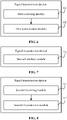
- FIG. 1 is a flowchart of a signal transmission method according to an embodiment of the present application. As shown in FIG. 1 , the method may include S11.
- the UL grant is used for indicating a change in a transmission mechanism of the signal and/or a change in a resource for the signal.
- the resource for the signal is a resource used for transmitting the signal, such as a time domain resource or a frequency domain resource.
- the UL grant may be a PDCCH or downlink control information (DCI) for scheduling a physical uplink shared channel (PUSCH).
- DCI downlink control information
- the UL grant is used for indicating a change in the transmission mechanism of the signal.
- the UL grant is used for indicating a change in the resource for transmitting the signal.
- the UL grant is used for indicating a change in the transmission mechanism of the signal and a change in the resource for transmitting the signal.
- the transmission channel of the signal overlaps or partially overlaps with the transmission channel of another signal in the time domain, and the priority of the signal is lower than the priority of the another signal.
- the transmission channel of the signal does not overlap or partially overlap with the transmission channel of any other signal in the time domain.
- the transmission mechanism of the signal and the resource for transmitting the signal are configured by a base station.
- the change in the transmission mechanism of the signal is indicated by setting one or more parameters in the UL grant to specific values.
- the change in the resource for transmitting the signal is indicated by setting one or more parameters in the UL grant to specific values.
- the change in the transmission mechanism of the signal and the change in the resource for transmitting the signal are indicated by setting one or more parameters in the UL grant to specific values.
- an uplink shared channel (UL-SCH) indicator in the UL grant is 0, and a channel state information (CSI) request in the UL grant is 0.
- UL-SCH uplink shared channel
- CSI channel state information
- the UL-SCH indicator in the UL grant is 0, the CSI request in the UL grant is 0, and the cyclic redundancy check (CRC) bit of the UL grant is scrambled by a semi-persistent channel state information radio network temporary identity (SP-CSI-RNTI).
- SP-CSI-RNTI semi-persistent channel state information radio network temporary identity
- the UL-SCH indicator in the UL grant is 0 and the CSI request is 0 (and the CRC bit of the UL grant is scrambled by the SP-CSI-RNTI), and this setting is forbidden.
- the values of the forbidden parameters in the UL grant are used for indicating a change in the transmission mechanism of the signal and/or a change in the resource for transmitting the signal, which does not affect the function of the original parameters in the UL grant, so that there is no impact on the related art because the above-mentioned parameters with above-mentioned values do not appear in the related art.
- the CSI request includes multiple bits, and the CSI request being 0 may mean that all bits of this parameter are set to 0.
- parameters in the UL grant are valid parameters.
- the combination of parameters in the UL grant may be redefined, and the combination of redefined parameters is used for indicating the change in the transmission mechanism of the signal and/or the change in the resource for transmitting the signal.
- the RV and the UL-SCH indicator in the UL grant may be redefined to indicate the change in the transmission mechanism of the signal and/or the change in the resource for transmitting the signal.
- the length of the RV is 2 bits
- one or more bits in the RV are agreed to be used
- one of the multiple value states of the one or more bits is agreed to be used for representing that the UL grant requires at least the change of the original transmission mechanism of the to-be-transmitted signal and/or the original resource for transmitting the signal.
- the length of the RV is 2 bits, and one of the four value states "00", "01", “10” and "11" of the RV is agreed to be used for representing that the UL grant indicates at least the change of the original transmission mechanism of the signal and/or the original resource for transmitting the signal.
- the UL-SCH indicator and the HARQ-ID in the UL grant may be redefined to indicate the change in the transmission mechanism of the signal and/or the change in the resource for transmitting the signal.
- the length of the HARQ-ID is 4 bits, one or more bits in the HARQ-ID are agreed to be used, and one of the multiple value states of the one or more bits is agreed to be used for representing that the UL grant requires at least the change of the original transmission mechanism of the to-be-transmitted signal and/or the original resource for transmitting the signal.
- the UL-SCH indicator, the RV and the HARQ-ID in the UL grant may be redefined to indicate the change in the transmission mechanism of the signal and/or the change in the resource for transmitting the signal.
- the total length of the RV and the HARQ-ID is 6 bits, one or more bits in the 6 bits are agreed to be used, and one of the multiple value states of the one or more bits is agreed to be used for representing that the UL grant indicates at least the change of the original transmission mechanism of the signal and/or the original resource for transmitting the signal.
- the parameters that may be redefined to represent that the UL grant indicates the change of the transmission mechanism of the signal and/or the change of the resource for transmitting the signal other parameters in the UL grant (for example, except for the above-mentioned reinterpreted parameters, parameters in the DCI for scheduling the PUSCH in TS38.212Vf50 version, in particular, a modulation and coding scheme, a beta_offset indicator, and a time domain resource assignment) may maintain their original meanings and are also valid and do not need to be reinterpreted.
- a user equipment transmits the signal in a mode indicated by other valid parameters in the UL grant, and at this point, the signal is transmitted through the PUSCH indicated by the UL grant (and there is no uplink data in the PUSCH).
- the original PUCCH transmission mechanism and the original PUCCH resource for the signal are discarded.
- the transmission mechanism includes at least one of: transmission of the signal through a PUCCH or transmission of the signal through a PUSCH.
- the resource includes at least one of: a time domain resource used by the signal, a frequency domain resource used by the signal, a codeword resource used by the signal or a beam resource used by the signal.
- the time domain resource includes at least one of: a slot location, a sub-slot location or a symbol location
- the frequency domain resource includes at least one of: a physical resource block (PRB) location, a bandwidth part (BWP) location or a carrier location.
- PRB physical resource block
- BWP bandwidth part
- the signal includes one of: a HARQ-ACK codebook, a scheduling request (SR), CSI or UE data.
- the signal transmission method provided by this embodiment of the present application is not only applicable to the scenario where two channels overlap in the time domain, but also applicable to the scenario where there is only a single channel.
- the essence of the method is to change the original transmission mechanism and/or transmission resource for a signal, regardless of the cause for change.
- the UL grant is used for indicating that the transmission of the HARQ-ACK codebook through a PUCCH is changed into the transmission of the HARQ-ACK codebook through a PUSCH scheduled by the UL grant.
- FIG. 2 is a flowchart of a signal transmission method according to another embodiment of the present application. As shown in FIG. 2 , the method includes S21 and S22.
- the UL grant is used for indicating a change in a transmission mechanism of the signal and/or a change in a resource for the signal.
- a UL-SCH indicator in the UL grant is 0, and a CSI request in the UL grant is 0.
- the UL-SCH indicator in the UL grant is 0, the CSI request in the UL grant is 0, and the CRC bit of the UL grant is scrambled by a SP-CSI-RNTI.
- parameters in the UL grant are valid parameters.
- the transmission mechanism includes at least one of: transmission of the signal through a PUCCH or transmission of the signal through a PUSCH.
- the resource includes at least one of: a time domain resource used by the signal, a frequency domain resource used by the signal, a codeword resource used by the signal or a beam resource used by the signal.
- the time domain resource includes at least one of: a slot location, a sub-slot location or a symbol location
- the frequency domain resource includes at least one of: a PRB location, a BWP location or a carrier location.
- the signal includes one of: a HARQ-ACK codebook, an SR, CSI or UE data.
- the UL grant is used for indicating that the transmission of the HARQ-ACK codebook through a PUCCH is changed into the transmission of the HARQ-ACK codebook through a PUSCH scheduled by the UL grant.
- FIG. 3 is a flowchart of a signal transmission method according to another embodiment of the present application. As shown in FIG. 3 , the method may include S31.
- a first PDCCH is sent.
- the first PDCCH is used for indicating a change in a resource for the signal.
- the resource for the signal may refer to a resource for transmitting the signal.
- the transmission channel of the signal overlaps or partially overlaps with the transmission channel of another signal.
- the resource includes at least one of: a time domain resource used by the signal, a frequency domain resource used by the signal, a codeword resource used by the signal or a beam resource used by the signal.
- the time domain resource includes at least one of: a slot location, a sub-slot location or a symbol location
- the frequency domain resource includes at least one of: a PRB location, a BWP location or a carrier location.
- the signal includes one of: a HARQ-ACK codebook, an SR, CSI or UE data.
- the value of a downlink assignment index (DAI) counter of the first PDCCH is set to the value of a DAI counter of a second PDCCH.
- DAI downlink assignment index
- the second PDCCH is the last PDCCH of PDCCHs corresponding to at least one PDSCH corresponding to the HARQ-ACK codebook.
- a new resource used for transmitting the signal is present in the first PDCCH.
- the location of a UL slot (or uplink sub-slot) in which the HARQ-ACK codebook is transmitted and/or a PUCCH resource by which the HARQ-ACK codebook is transmitted are indicated by the first PDCCH.
- the receiving end when a receiving end receives a PDCCH and the value of the DAI counter of the PDCCH is equal to the value of the DAI counter of the last PDCCH corresponding to the HARQ-ACK codebook (the last PDCCH corresponding to the HARQ-ACK codebook herein is the simple description of the last PDCCH of PDCCHs corresponding to at least one PDSCH corresponding to the HARQ-ACK codebook, the same below), the receiving end considers this PDCCH as the first PDCCH, which is used for changing the resource for the HARQ-ACK codebook.
- parameters in the UL grant are valid parameters.
- a transmission mode of HARQ-ACK information corresponding to a PDSCH scheduled by the first PDCCH is: concatenating the HARQ-ACK information corresponding to the PDSCH scheduled by the first PDCCH onto the end of the HARQ-ACK codebook.
- a transmission mode of HARQ-ACK information corresponding to the PDSCH scheduled by the first PDCCH is: concatenating the HARQ-ACK information corresponding to the PDSCH scheduled by the first PDCCH after a first type of HARQ-ACK information and before a second type of HARQ-ACK information; where the first type of HARQ-ACK information is HARQ-ACK information corresponding to a PDSCH scheduled by a PDCCH in the HARQ-ACK codebook, and the second type of HARQ-ACK information is HARQ-ACK information corresponding to an SPS PDSCH corresponding to the HARQ-ACK codebook.
- SPS PDSCH semi-persistent scheduling physical downlink shared channel
- FIG. 4 is a flowchart of a signal transmission method according to another embodiment of the present application. As shown in FIG. 4 , the method may include S41 and S42.
- a resource is transmitted according to a signal transmission mode indication in the first PDCCH.
- the first PDCCH is used for indicating a change in a resource for the signal.
- the resource includes at least one of: a time domain resource used by the signal, a frequency domain resource used by the signal, a codeword resource used by the signal or a beam resource used by the signal.
- the time domain resource includes at least one of: a slot location, a sub-slot location or a symbol location
- the frequency domain resource includes at least one of: a PRB location, a BWP location or a carrier location.
- the signal includes one of: a HARQ-ACK codebook, an SR, CSI or UE data.
- the value of a DAI counter of the first PDCCH is set to the value of a DAI counter of a second PDCCH.
- the second PDCCH is the last PDCCH of PDCCHs corresponding to at least one PDSCH corresponding to the HARQ-ACK codebook
- parameters in the first PDCCH are valid parameters (for example, except for the above-mentioned reinterpreted parameters, parameters in the DCI for scheduling the PUSCH in TS38.212Vf50 version, in particular, a PUCCH resource indicator and a PDSCH-to-HARQ_feedback timing indicator).
- the sending mode of the HARQ-ACK information corresponding to the PDSCH scheduled by the first PDCCH is as follows.
- the HARQ-ACK information corresponding to the PDSCH scheduled by the first PDCCH is concatenated onto the end of the HARQ-ACK codebook.
- the sending mode of the HARQ-ACK information corresponding to the PDSCH scheduled by the first PDCCH is as follows.
- the HARQ-ACK information corresponding to the PDSCH scheduled by the first PDCCH is concatenated after a first type of HARQ-ACK information and before a second type of HARQ-ACK information; where the first type of HARQ-ACK information is HARQ-ACK information corresponding to a PDSCH scheduled by a PDCCH in the HARQ-ACK codebook, and the second type of HARQ-ACK information is HARQ-ACK information corresponding to an SPS PDSCH corresponding to the HARQ-ACK codebook.
- HARQ-ACK codebook 0 is instructed by a base station to be transmitted in slot n via a PUCCH that is denoted as PUCCHO for ease of description.
- PUCCHO is instructed by the base station to be transmitted in slot n via a PUCCH (denoted as PUCCH1 for ease of description), where this HARQ-ACK codebook is denoted as HARQ-ACK codebook 1 for ease of description.
- PUCCHO and PUCCH1 overlap in the time domain, where the overlapping in the time domain herein includes partially overlapping in the time domain.
- HARQ-ACK codebook 0 corresponds to the PDSCH for the eMBB traffic transmission or is a HARQ-ACK codebook that is considered to have a low priority and requires the change of the transmission mechanism and/or the resource.
- HARQ-ACK codebook 1 corresponds to the PDSCH for the URLLC traffic transmission or is a HARQ-ACK codebook that is considered to have a high priority and does not require the change of the transmission mechanism and/or the resource. According to the assumption described above, if the transmission mechanism and/or the resource for the HARQ-ACK codebook 0 need to be changed, the operation is performed according to the method described in this embodiment.
- the base station may transmit a UL grant before the transmission of HARQ-ACK codebook 0, and instruct to change the original transmission mechanism and/or resource for HARQ-ACK codebook 0 by using the agreed values of parameters in the UL grant, so that HARQ-ACK codebook 0 is transmitted according to the indication of the UL grant.
- the UE After the UE side detects the UL grant, the UE considers that the HARQ-ACK codebook with a low priority between the two HARQ-ACK codebooks that overlap with each other in the time domain, that is, HARQ-ACK codebook 0, needs to be transmitted according to the transmission mechanism and/or the resource indicated by the UL grant, and the originally planned transmission mechanism and/or the resource are discarded.
- the UE side After the UE side receives the UL grant, the UE side considers that one HARQ-ACK codebook needs to be transmitted according to the transmission mechanism and/or the resource indicated by the UL grant, and the transmission mechanism and/or the resource originally planned for this HARQ-ACK codebook are discarded.
- the transmission mechanism of the HARQ-ACK codebook may include transmission of the HARQ-ACK codebook through a PUCCH or transmission of the HARQ-ACK codebook through a PUSCH.
- the resource for the HARQ-ACK codebook may include the location of a UL slot in which the HARQ-ACK codebook is transmitted and/or a PUCCH resource by which the HARQ-ACK codebook is transmitted.
- the UL slot of a low-priority HARQ-ACK codebook may be changed, for example, to another slot, or the UL slot of the low-priority HARQ-ACK codebook is possibly not changed and just the PUCCH resource is changed, so that the new PUCCH used for transmitting the low-priority codebook and the PUCCH used for transmitting the high-priority HARQ-ACK codebook are in one UL slot but do not overlap in the time domain.
- both the UL slot and PUCCH resource for the low-priority HARQ-ACK codebook may also be changed. The change may be performed according to the indication of the parameters in the UL grant.
- a UL grant which is used for indicating the change of the transmission mechanism and/or the resource for a HARQ-ACK codebook, may be identified in two modes.
- the base station and the UE agree to, through the values of parameters in the UL grant, for example, by reinterpreting the values of the combination of parameters UL-SCH indicator and CSI request in the UL grant, for example, the value of the UL-SCH indicator being 0 and the values of the CSI request being all 0 indicate that the UL grant has at least one purpose, that is, it requires changing the original transmission mechanism and/or resource for HARQ-ACK codebook 0.
- the UE may transmit HARQ-ACK codebook 0 in the configured PUSCH resource in the UL grant and in the UL slot where the PUSCH resource is located. That is, HARQ-ACK codebook 0 is transmitted in a PUSCH, and there is no UE data in the PUSCH at this point.
- the base station and the UE agree to identify the UL grant through the values of parameters in the UL grant.
- the related parameters in the UL grant are reinterpreted in the following four interpretation modes.
- the RV is 2 bits, and one of four value states "00", "01", “10” and " 11" of the RV is agreed to be used for representing that the UL grant requires at least the change of the original transmission mechanism and/or resource for HARQ-ACK codebook 0.
- the HARQ-ID is 4 bits, one or more bits in the HARQ-ID are agreed to be used, and one of the multiple value states of the one or more bits is agreed to be used for representing that the UL grant requires at least the change of the original transmission mechanism and/or resource for HARQ-ACK codebook 0.
- the total length of the RV and the HARQ-ID is 6 bits, one or more bits in the 6 bits are agreed to be used, and one of the multiple value states of the one or more bits is agreed to be used for representing that the UL grant requires at least the change of the original transmission mechanism and/or resource for HARQ-ACK codebook 0.
- the UE transmits HARQ-ACK codebook 0.
- HARQ-ACK codebook 0 is transmitted through the PUSCH indicated by the UL grant and there is no uplink data.
- the original PUCCHO transmission mechanism and resource for HARQ-ACK codebook 0 are discarded.
- Embodiment one is described by using the example where PUCCHs corresponding to two HARQ-ACK codebooks overlap in the time domain, and the transmission mechanism and/or resource that are planned to be discarded and correspond to the HARQ-ACK codebook are changed.
- the method is also applicable to the case where there is only one HARQ-ACK codebook, and the transmission mechanism and/or resource originally planned for this HARQ-ACK codebook may also be changed in the modes described in Embodiment one.
- This method is also applicable to the case where PUCCHs corresponding to more than two HARQ-ACK codebooks overlap in the time domain.
- the method is also applicable to the case where the PUCCH channel of the HARQ-ACK codebook of one UE overlaps with other channels of the UE or the case where the PUCCH cannot be sent due to the change of frame structure.
- the PUCCH channel of the HARQ-ACK codebook overlaps the PUSCH channel, or the PUCCH cannot to be sent due to the dynamical adjustment of the uplink or downlink attribute of the slot or symbol.
- the transmission mechanism and/or resource for transmitting the HARQ-ACK codebook may be changed in this method, so that the HARQ-ACK codebook is transmitted by adopting the changed transmission mechanism or resource.
- the signal transmission method provided in Embodiment one is also applicable to the change of the transmission mechanism and/or resource originally planned for transmitting other data or channels (for example, a PUSCH or a PDSCH.).
- the UE needs to transmit one HARQ-ACK codebook that is instructed by the base station to be transmitted in slot n via a PUCCH, where this HARQ-ACK codebook is denoted as HARQ-ACK codebook 0 and this PUCCH is denoted as PUCCHO for ease of description.
- Another HARQ-ACK codebook of the UE is also instructed by the base station to be transmitted in slot n via a PUCCH, where the another HARQ-ACK codebook is denoted as HARQ-ACK codebook 1 and the corresponding PUCCH is denoted as PUCCH1 for ease of description.
- PUCCHO and PUCCH1 overlap in the time domain.
- HARQ-ACK codebook 0 may correspond to the PDSCH for the eMBB traffic transmission or is a HARQ-ACK codebook that is considered to have a low priority and requires the change of the resource.
- HARQ-ACK codebook 1 may correspond to the PDSCH for the URLLC traffic transmission or is a HARQ-ACK codebook that is considered to have a high priority and does not require the change of the resource. According to the assumption described above, if the resource for HARQ-ACK codebook 0 needs to be changed, the change is performed according to the method described in this embodiment.
- the base station Since the resources for all HARQ-ACK codebooks are configured by the base station, when the base station transmits the resource for HARQ-ACK codebook 1, the base station has already known that HARQ-ACK codebook 1 will overlap with HARQ-ACK codebook 0 in the time domain, or the base station needs to change the resource for HARQ-ACK codebook 0 due to other reasons.
- the base station may transmit a first PDCCH before the transmission of HARQ-ACK codebook 0 and instruct to change the original resource used for transmitting HARQ-ACK codebook 0 by using an agreed value of a parameter in the first PDCCH, so that HARQ-ACK codebook 0 is transmitted according to the indication of the PDCCH, where the first PDCCH corresponds to a PDCCH for scheduling a PDSCH.
- the UE side detects the first PDCCH, the UE considers that between the two HARQ-ACK codebooks that overlap with each other in the time domain, HARQ-ACK codebook 0 needs to be transmitted according to the resource indicated by the first PDCCH, and the originally planned resource is discarded.
- the UE side After the UE side receives the first PDCCH, the UE side considers that one HARQ-ACK codebook needs to be transmitted according to the resource indicated by the first PDCCH, and the resource originally planned for this HARQ-ACK codebook is discarded.
- the resource for the HARQ-ACK codebook herein may include a UL slot location in which the HARQ-ACK codebook is transmitted and/or a PUCCH resource by which the HARQ-ACK codebook is transmitted.
- the UL slot for the low-priority HARQ-ACK codebook may also be changed into another UL slot.
- the UL slot for the low-priority HARQ-ACK codebook may not be changed and just the PUCCH resource for transmitting this codebook is changed, so that the new PUCCH used for transmitting the low-priority HARQ-ACK codebook and the PUCCH used for transmitting the high-priority HARQ-ACK codebook are in one UL slot but do not overlap in the time domain.
- both the UL slot and PUCCH resource for transmitting the HARQ-ACK codebook may be changed. The change may be performed according to the indication in the first PDCCH.
- the base station and the UE agree to, through the values of parameters in the first PDCCH, for example, 1, by setting the value of the DAI counter in the first PDCCH, indicate that at least one purpose of the first PDCCH is to require changing the original resource used for transmitting one HARQ-ACK codebook, and the new resource is also subject to the indication of the first PDCCH.
- the purpose is indicated by setting the value of the DAI counter in the first PDCCH to be equal to the value of the DAI counter in the second PDCCH, which is the last PDCCH, corresponding to the HARQ-ACK codebook for which the resource is to be changed.
- the first PDCCH herein is allowed to schedule one PDSCH that may be with or without data.
- the UE when a PDCCH is received by the UE side and the value of the DAI counter in the PDCCH is equal to the value of the DAI counter in the last PDCCH of the PDCCHs corresponding to a HARQ-ACK codebook, the UE considers the PDCCH as the first PDCCH, which is used for changing the resource for transmitting the HARQ-ACK codebook.
- the UE when the UE receives the first PDCCH and finds that the DAI counter value of the first PDCCH is equal to the DAI counter value of the second PDCCH, which is the last PDCCH, corresponding to HARQ-ACK codebook 0, the UE considers that the resource for transmitting HARQ-ACK codebook 0 has been changed, and the new resource for transmitting HARQ-ACK codebook 0 is subject to the indication of the received first PDCCH.
- the HARQ-ACK information corresponding to the PDSCH scheduled by the first PDCCH is combined with HARQ-ACK codebook 0 to form a new HARQ-ACK codebook and then the new HARQ-ACK codebook is transmitted in the PUCCH resource indicated by the first PDCCH. If the PDSCH scheduled in the first PDCCH has no data, then only HARQ-ACK codebook 0 is transmitted in the PUCCH resource indicated by the first PDCCH.
- the HARQ-ACK information corresponding to the PDSCH scheduled by the first PDCCH is combined with HARQ-ACK codebook 0 to form a new HARQ-ACK codebook and then the new HARQ-ACK codebook is transmitted in the PUCCH resource indicated by the first PDCCH.
- the specific operation may be as follows: the HARQ-ACK information corresponding to the PDSCH scheduled by the first PDCCH is concatenated onto the end of the HARQ-ACK codebook information corresponding to a PDSCH dynamically scheduled by a PDCCH in HARQ-ACK codebook 0, regardless of whether the HARQ-ACK information corresponding to an SPS PDSCH exists in HARQ-ACK codebook 0.
- the HARQ-ACK information corresponding to the PDSCH scheduled by the first PDCCH is combined with HARQ-ACK codebook 0 to form a new HARQ-ACK codebook and then the new HARQ-ACK codebook is transmitted in the PUCCH resource indicated by the first PDCCH.
- the specific operation may also be as follows: if the HARQ-ACK information corresponding to the SPS PDSCH exists in HARQ-ACK codebook 0, the HARQ-ACK information corresponding to the PDSCH scheduled by the first PDCCH is after the HARQ-ACK information corresponding to the PDSCH dynamically scheduled by the PDCCH in HARQ-ACK codebook 0 and before the HARQ-ACK information corresponding to the SPS PDSCH in HARQ-ACK codebook 0.
- the base station uses the agreed values of parameters in a downlink PDCCH to indicate to the UE the change in the resource for transmitting a HARQ-ACK codebook, and meanwhile, presents a new resource in the PDCCH.
- the other parameters in the first PDCCH still maintain their original meanings and are valid and do not need to be reinterpreted.
- the UE then transmits HARQ-ACK codebook 0 in the PUCCH resource indicated by the first PDCCH according to the indication in the first PDCCH.
- the original PUCCHO resource for HARQ-ACK codebook 0 is discarded.
- Embodiment two is described by using the example where the PUCCHs corresponding to two HARQ-ACK codebooks overlap in the time domain, and the transmission mechanism and/or resource that are planned to be discarded and correspond to the HARQ-ACK codebook are changed.
- the method is also applicable to the case where there is only one HARQ-ACK codebook, that is, the transmission of this HARQ-ACK codebook does not overlap with the transmission of other HARQ-ACK codebooks in the time domain, and the transmission mechanism and/or resource originally planned for this HARQ-ACK codebook may also be changed in the manners described above.
- This method is also applicable to the case where PUCCHs corresponding to more than two HARQ-ACK codebooks overlap in the time domain.
- the method is also applicable to the case where the PUCCH channel of the HARQ-ACK codebook of one UE overlaps with another channel of the UE or the case where the PUCCH cannot be sent due to the change of frame structure.
- the transmission mechanism and/or resource for transmitting the HARQ-ACK codebook may be changed in this method, so that the HARQ-ACK codebook is transmitted by adopting the changed transmission mechanism or resource.
- the signal transmission method provided in Embodiment one is also applicable to the change of the transmission mechanism and/or resource originally planned for transmitting other data or channels (for example, a PUSCH or a PDSCH).
- the beta_offsets specifically includes a dynamic parameter denoted as dynamic or a semi-static parameter denoted as semiStatic, and only one of them may be selected to configure.
- the betaoffsets When the betaoffsets is configured as the dynamic parameter, that is, dynamic, the betaoffsets will have four values.
- the beta_offsets When the beta_offsets is configured as the semi-static parameter, that is, semiStatic, the beta_offsets will have only one value. The specific one of the four values to be used is indicated by the beta_offset indicator field in the PDCCH.
- the definition of the PDCCH mainly involves two types of PDCCHs for scheduling the PUSCH, which are denoted as DCI0-0 and DCIO-1 respectively, where DCI0-0 corresponds to less total bits and generally corresponds to higher reliability and has lower actual bit rate during transmission, and the main use scenarios include cell edge. Therefore, the parameter beta_offset indicator field is not set in DCI0-0.
- DCIO-1 has more total bits and a higher dense code rate. The parameter beta_offset indicator field is set in DCIO-1.
- the beta_offsets configured by the high-layer signaling is semiStatic, the beta_offsets has only one value at this point, and the UE may use this value directly. If the beta_offsets configured by the high-layer signaling is dynamic, the beta_offsets has four values at this point, and the UE may determine the value by adopting one of the following schemes.
- the base station and the UE agree that for the PUSCH scheduled by DCI0-0, the UE adopts the default or predefined betaoffset value for the UCI transmitted in the PUSCH. For example, regardless of whether the betaoffsets configured by the radio resource control (RRC) signaling is dynamic or semi-static, if the UE wants to transmit the UCI in the PUSCH scheduled by DCI0-0, the UE uses the default or predefined betaoffset.
- RRC radio resource control
- the UE may also use a determined betaoffset value when the UE transmits the UCI in the PUSCH scheduled by DCI0-0.
- the beta_offset value does not change, and in different scenarios, for example, at the edge of the cell and the center of the cell, only the same betaoffset value can be used. Obviously, the flexibility of the value of the betaoffset is very poor, which leads to low UCI transmission efficiency.
- the base station and the UE agree that when the beta_offsets configured by the RRC signaling is dynamic and four values of the beta_offset are configured, if the UE transmits the UCI in the PUSCH scheduled by DCI0-0, one of the four values of the dynamic beta_offset is used as the value of the beta_offset for transmitting the UCI in the PUSCH. Specifically, the base station and the UE agree to use the first one of the four values of the dynamic beta_offset or use the largest one of the four values of the dynamic beta_offset or use the second-lowest one of the four values of the dynamic beta_offset. Mainly given that one of the usage scenarios of DCI0-0 is cell edge coverage, the largest value of the beta_offset is used.
- the use of the largest value can guarantee the signaling of the UCI, that is, the code rate is the lowest during UCI transmission, but the performance of the PUSCH is sacrificed, which makes the PUSCH performance the worst.
- the second-lowest beta_offset value is used.
- the performance of the UCI used is second best, so that the performance of the PUSCH is better than the worst performance, and when this scheme is used, the beta_offset is determined by adopting the following scheme, that is, when the RRC is ambiguous, the previous and most recently used beta_offset value is used.
- the UE needs to save the previously and recently used beta_offset values for use when the RRC is ambiguous.
- the base station and the UE agree that when the beta_offsets configured by the RRC signaling is dynamic and four values of the beta_offsets are configured, if the UE transmits the UCI in the PUSCH scheduled by DCI0-0, the UE adopts the default or predefined beta_offset value for transmitting the UCI in the PUSCH. For example, regardless of whether the beta_offsets configured by the RRC signaling is dynamic or semi-static, if the UE is required to transmit the UCI in the PUSCH scheduled by DCI0-0, the UE uses the default or predefined beta_offset. The base station side also considers that when the UCI is transmitted in the PUSCH scheduled by DCI0-0, the UE uses the default or predefined beta_offset.
- the UE may also use a determined beta_offset value when the UE transmits the UCI in the PUSCH scheduled by DCI0-0.
- this scheme means that if the betaoffsets configured by the RRC signaling is semi-static, the UE can use the RRC-configured semi-static betaoffset value when the UE transmits the UCI in the PUSCH scheduled by DCI0-0.
- the beta_offset value may be changed semi-statically, thereby achieving certain flexibility of the beta_offset value. Based on this scheme, the default or predefined beta_offset value is used directly if the RRC is ambiguous.
- FIG. 5 is a structural schematic diagram of a signal transmission device according to an embodiment of the present application.
- the signal transmission device includes a first sending module 51.
- the first sending module 51 is configured to send a UL grant.
- the UL grant is used for indicating a change in a transmission mechanism of the signal and/or a change in a resource for the signal.
- the UL-SCH indicator in the UL grant is 0, and the CSI request in the UL grant is 0.
- parameters in the UL grant are valid parameters.
- the transmission mechanism includes at least one of: transmission of the signal through a PUCCH or transmission of the signal through a PUSCH.
- the resource includes at least one of: a time domain resource used by the signal, a frequency domain resource used by the signal, a codeword resource used by the signal or a beam resource used by the signal.
- the time domain resource includes at least one of: a slot location, a sub-slot location or a symbol location
- the frequency domain resource includes at least one of: a PRB location, a BWP location or a carrier location.
- the signal includes one of: a HARQ-ACK codebook, an SR, CSI or UE data.
- the UL grant is used for indicating that the transmission of the HARQ-ACK codebook through a PUCCH is changed into the transmission of the HARQ-ACK codebook through a PUSCH scheduled by the UL grant.
- FIG. 6 is a structural schematic diagram of a signal transmission device according to an embodiment of the present application.
- the signal transmission device includes a first receiving module 61 and a first transmission module 62.
- the first receiving module 61 is configured to receive a UL grant.
- the first transmission module 62 is configured to transmit a signal according to the UL grant.
- the UL grant is used for indicating a change in a transmission mechanism of the signal and/or a change in a resource for the signal.
- the UL-SCH indicator in the UL grant is 0, and the CSI request in the UL grant is 0.
- parameters in the UL grant are valid parameters.
- the transmission mechanism includes at least one of: transmission of the signal through a PUCCH or transmission of the signal through a PUSCH.
- the resource includes at least one of: a time domain resource used by the signal, a frequency domain resource used by the signal, a codeword resource used by the signal or a beam resource used by the signal.
- the time domain resource includes at least one of: a slot location, a sub-slot location or a symbol location
- the frequency domain resource includes at least one of: a PRB location, a BWP location or a carrier location.
- the signal includes one of: a HARQ-ACK codebook, an SR, CSI or UE data.
- the UL grant is used for indicating that the transmission of the HARQ-ACK codebook through a PUCCH is changed into the transmission of the HARQ-ACK codebook through a PUSCH scheduled by the UL grant.
- FIG. 7 is a structural schematic diagram of a signal transmission device according to an embodiment of the present application.
- the signal transmission device includes a second sending module 71.
- the second sending module 71 is configured to send a first PDCCH.
- the first PDCCH is used for indicating a change in a resource for the signal.
- the resource includes at least one of: a time domain resource used by the signal, a frequency domain resource used by the signal, a codeword resource used by the signal or a beam resource used by the signal.
- the time domain resource includes at least one of: a slot location, a sub-slot location or a symbol location
- the frequency domain resource includes at least one of: a PRB location, a BWP location or a carrier location.
- the signal includes one of: a HARQ-ACK codebook, an SR, CSI or UE data.
- the value of a DAI counter of the first PDCCH is set to the value of a DAI counter of a second PDCCH.
- the second PDCCH is the last PDCCH of PDCCHs corresponding to at least one PDSCH corresponding to the HARQ-ACK codebook.
- parameters in the UL grant are valid parameters.
- a transmission mode of HARQ-ACK information corresponding to a PDSCH scheduled by the first PDCCH is: concatenating the HARQ-ACK information corresponding to the PDSCH scheduled by the first PDCCH onto the end of the HARQ-ACK codebook.
- a transmission mode of HARQ-ACK information corresponding to the PDSCH scheduled by the first PDCCH is: concatenating the HARQ-ACK information corresponding to the PDSCH scheduled by the first PDCCH after a first type of HARQ-ACK information and before a second type of HARQ-ACK information; where the first type of HARQ-ACK information is HARQ-ACK information corresponding to a PDSCH scheduled by a PDCCH in the HARQ-ACK codebook, and the second type of HARQ-ACK information is HARQ-ACK information corresponding to an SPS PDSCH corresponding to the HARQ-ACK codebook.
- FIG. 8 is a structural schematic diagram of a signal transmission device according to an embodiment of the present application.
- the signal transmission device includes a second receiving module 81 and a second transmission module 82.
- the second receiving module 81 is configured to receive a first PDCCH.
- the second transmission module 82 is configured to transmit a resource according to a signal transmission mode indication in the first PDCCH.
- the first PDCCH is used for indicating a change in a resource for the signal.
- the resource includes at least one of: a time domain resource used by the signal, a frequency domain resource used by the signal, a codeword resource used by the signal or a beam resource used by the signal.
- the time domain resource includes at least one of: a slot location, a sub-slot location or a symbol location
- the frequency domain resource includes at least one of: a PRB location, a BWP location or a carrier location.
- the signal includes one of: a HARQ-ACK codebook, an SR, CSI or UE data.
- the value of a DAI counter of the first PDCCH is set to the value of a DAI counter of a second PDCCH.
- the second PDCCH is the last PDCCH of PDCCHs corresponding to at least one PDSCH corresponding to the HARQ-ACK codebook.
- parameters in the UL grant are valid parameters.
- a sending mode of HARQ-ACK information corresponding to a PDSCH scheduled by the first PDCCH is: concatenating the HARQ-ACK information corresponding to the PDSCH scheduled by the first PDCCH onto the end of the HARQ-ACK codebook.
- the second sending module has been described in the above-mentioned embodiments.
- a sending mode of HARQ-ACK information corresponding to the PDSCH scheduled by the first PDCCH is: concatenating the HARQ-ACK information corresponding to the PDSCH scheduled by the first PDCCH after a first type of HARQ-ACK information and before a second type of HARQ-ACK information; where the first type of HARQ-ACK information is HARQ-ACK information corresponding to a PDSCH scheduled by a PDCCH in the HARQ-ACK codebook, and the second type of HARQ-ACK information is HARQ-ACK information corresponding to an SPS PDSCH corresponding to the HARQ-ACK codebook.
- the second sending module 71 has been described in the above-mentioned embodiments.
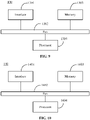
- FIG. 9 is a structural schematic diagram of a terminal according to an embodiment of the present application.
- the terminal 130 provided by this embodiment of the present application includes a memory 1303 and a processor 1304.
- the terminal 130 may further include an interface 1301 and a bus 1302.
- the interface 1301, the memory 1303 and the processor 1304 are connected via the bus 1302.
- the memory 1303 is configured to store instructions.
- the processor 1304 is configured to read the instructions to execute the technical solutions of the above method embodiments applied to the terminal.
- the implementation principles and technical effects of the processor are similar to those of the method embodiments, and details are not repeated here.
- FIG. 10 is a structural schematic diagram of a base station according to an embodiment of the present application.
- the base station 140 provided by this embodiment of the present application includes a memory 1403 and a processor 1404.
- the base station may further include an interface 1401 and a bus 1402.
- the interface 1401, the memory 1403 and the processor 1404 are connected via the bus 1402.
- the memory 1403 is configured to store instructions.
- the processor 1404 is configured to read the instructions to execute the technical solutions of the above method embodiments applied to the base station.
- the implementation principles and technical effects of the processor are similar to those of the method embodiments, and details are not repeated here.
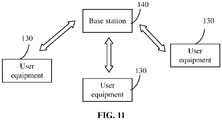
- FIG. 11 is a structural schematic diagram of a communication system according to an embodiment of the present application.
- the system includes the terminal 130 described in the above embodiments and the base station 140 described in the above embodiments.
- the communication system provided by this embodiment of the present application incudes, but is not limited to, a Long Term Evolution (LTE) system, an LTE frequency division duplex (FDD) system, an LTE time division duplex (TDD) system, a universal mobile telecommunication system (UMTS), a 5G system, etc.
- LTE Long Term Evolution
- FDD frequency division duplex
- TDD LTE time division duplex
- UMTS universal mobile telecommunication system
- 5G 5G system
- various embodiments of the present application may be implemented in hardware, a dedicated circuit, software, logic, or any combination thereof.
- some aspects may be implemented in hardware while other aspects may be implemented in firmware or software that may be executed by a controller, a microprocessor, or other computing apparatuses, which is not limited thereto.
- This embodiments of the present application may be implemented by a data processor of a mobile apparatus executing computer program instructions, such as in a processor entity, or by hardware, or by a combination of software and hardware.
- the computer program instructions may be assembly instructions, instruction set architecture (ISA) instructions, machine instructions, machine-related instructions, microcodes, firmware instructions, status setting data, or source or object codes written in any combination of one or more programming languages.
- ISA instruction set architecture
- a block diagram of any logic flow in drawings of the present application may represent program steps, or may represent interconnected logic circuits, modules, and functions, or may represent a combination of programs, logic circuits, modules, and functions.
- the computer programs may be stored in a memory.
- the memory may be of any type suitable for the local technical environment and may be implemented by using any suitable data storage technology.
- the memory 93 provided by this embodiment of the present application may be a volatile memory or a non-volatile memory, or may include both the volatile memory and the non-volatile memory.
- the non-volatile memory may be a read-only memory (ROM), a programmable ROM (PROM), an erasable PROM (EPROM), an electrically EPROM (EEPROM) or a flash memory.
- the volatile memory may be a random access memory (RAM), which serves as an external cache.
- the RAM may include various forms, such as a static RAM (SRAM), a dynamic RAM (DRAM), a synchronous DRAM (SDRAM), a double data rate SDRAM (DDR SDRAM), an enhanced SDRAM (ESDRAM), a synclink DRAM (SLDRAM), and a direct Rambus RAM (DR RAM).
- SRAM static RAM
- DRAM dynamic RAM
- SDRAM synchronous DRAM
- DDR SDRAM double data rate SDRAM
- ESDRAM enhanced SDRAM
- SLDRAM synclink DRAM
- DR RAM direct Rambus RAM
- the processor provided by the embodiments of the present application may be of any type suitable to the local technical environment, such as, but not limited to, a general-purpose computer, a special-purpose computer, a microprocessor, a digital signal processor (DSP), an application-specific integrated circuit (ASIC), a field programmable gate array (FPGA) or other programmable logic devices, a discrete gate or transistor logic, discrete hardware components, or a processor based on a multi-core processor architecture.
- the general-purpose processor may be a microprocessor or may be any conventional processor.
- the processor described above may implement or execute various methods disclosed by the embodiments of the present application.
- the software modules may be located at a RAM, a flash memory, a ROM, a PROM, an EPROM, a register or other storage media.
- the storage medium is located in the memory.
- the processor reads information in the memory and implements the methods described above in combination with hardware of the processor.
Landscapes
- Engineering & Computer Science (AREA)
- Signal Processing (AREA)
- Computer Networks & Wireless Communication (AREA)
- Quality & Reliability (AREA)
- Mobile Radio Communication Systems (AREA)
- Detection And Prevention Of Errors In Transmission (AREA)
Applications Claiming Priority (2)
| Application Number | Priority Date | Filing Date | Title |
|---|---|---|---|
| CN201910706591.7A CN111092704B (zh) | 2019-07-31 | 2019-07-31 | 信号传输方法、装置、网络设备及存储介质 |
| PCT/CN2020/103194 WO2021017942A1 (fr) | 2019-07-31 | 2020-07-21 | Procédé et dispositif d'émission de signaux, appareil de réseau et support d'informations |
Publications (2)
| Publication Number | Publication Date |
|---|---|
| EP4007416A1 true EP4007416A1 (fr) | 2022-06-01 |
| EP4007416A4 EP4007416A4 (fr) | 2023-09-06 |
Family
ID=70393415
Family Applications (1)
| Application Number | Title | Priority Date | Filing Date |
|---|---|---|---|
| EP20846957.7A Pending EP4007416A4 (fr) | 2019-07-31 | 2020-07-21 | Procédé et dispositif d'émission de signaux, appareil de réseau et support d'informations |
Country Status (6)
| Country | Link |
|---|---|
| US (2) | US12232130B2 (fr) |
| EP (1) | EP4007416A4 (fr) |
| JP (2) | JP7625577B2 (fr) |
| KR (2) | KR20250096875A (fr) |
| CN (2) | CN111092704B (fr) |
| WO (1) | WO2021017942A1 (fr) |
Cited By (1)
| Publication number | Priority date | Publication date | Assignee | Title |
|---|---|---|---|---|
| EP4195839A4 (fr) * | 2020-08-06 | 2024-03-06 | Ntt Docomo, Inc. | Terminal, procédé de communication sans fil, et station de base |
Families Citing this family (9)
| Publication number | Priority date | Publication date | Assignee | Title |
|---|---|---|---|---|
| CN111092704B (zh) * | 2019-07-31 | 2024-10-18 | 中兴通讯股份有限公司 | 信号传输方法、装置、网络设备及存储介质 |
| US12225521B2 (en) * | 2020-04-10 | 2025-02-11 | Apple Inc. | Codebook design for semi-persistent scheduling (SPS) transmissions |
| US12452863B2 (en) * | 2020-06-12 | 2025-10-21 | Lenovo (Beijing) Ltd. | Dynamic downlink assignment indicator (DAI) counting and hybrid automatic repeat request acknowledgement (HARQ-ACK) codebook generation for enhanced physical downlink control channel (PDCCH) transmission |
| CN114902602B (zh) | 2020-08-06 | 2024-06-21 | Lg电子株式会社 | 在无线通信系统中发送和接收信号的方法和设备 |
| CN116134768A (zh) * | 2020-08-07 | 2023-05-16 | 中兴通讯股份有限公司 | 无线通信系统中的混合自动重传请求码本生成 |
| US11902967B2 (en) | 2020-10-22 | 2024-02-13 | Acer Incorporated | Device of handling a HARQ retransmission |
| CN114499796B (zh) * | 2020-11-12 | 2024-10-15 | 大唐移动通信设备有限公司 | 一种数据传输方法、装置及设备 |
| US12581527B2 (en) * | 2021-01-18 | 2026-03-17 | Qualcomm Incorporated | Channel coding with unequal error protection for LP UCI and HP UCI multiplexing in NR |
| US20240195536A1 (en) * | 2021-04-05 | 2024-06-13 | Telefonaktiebolaget Lm Ericsson (Publ) | Type-1 harq-ack codebook for sps harq-ack deferral |
Family Cites Families (17)
| Publication number | Priority date | Publication date | Assignee | Title |
|---|---|---|---|---|
| JP5873708B2 (ja) * | 2011-12-19 | 2016-03-01 | シャープ株式会社 | 移動局装置、方法および集積回路 |
| CN107006003B (zh) | 2014-12-15 | 2020-07-14 | 瑞典爱立信有限公司 | 在多个时间实例中的上行链路资源调度 |
| WO2017027355A1 (fr) * | 2015-08-12 | 2017-02-16 | Interdigital Patent Holdings, Inc. | Procédés, appareils et systèmes permettant de réaliser des communications de véhicule à véhicule au moyen d'un réseau d'évolution à long terme de communication de dispositif à dispositif |
| WO2017218749A1 (fr) * | 2016-06-15 | 2017-12-21 | Intel IP Corporation | Rapport d'état de canal et d'informations relatives au faisceau |
| WO2018012910A1 (fr) * | 2016-07-13 | 2018-01-18 | 엘지전자 주식회사 | Procédé et dispositif d'émission-réception d'un signal sans fil dans un système de communication sans fil |
| US10541785B2 (en) * | 2016-07-18 | 2020-01-21 | Samsung Electronics Co., Ltd. | Carrier aggregation with variable transmission durations |
| WO2018143740A1 (fr) * | 2017-02-05 | 2018-08-09 | 엘지전자 주식회사 | Procédé pour transmettre des informations de commande de liaison montante dans un système de communication sans fil et appareil le permettant |
| WO2018146229A1 (fr) * | 2017-02-10 | 2018-08-16 | Sony Corporation | Station de base et équipement utilisateur |
| CN116032447A (zh) * | 2017-06-14 | 2023-04-28 | Idac控股公司 | 可靠控制信令 |
| CN111279774B (zh) * | 2017-08-10 | 2023-07-21 | 夏普株式会社 | 用于不具有授权的上行链路传输的过程、基站和用户设备 |
| WO2019066630A1 (fr) * | 2017-09-29 | 2019-04-04 | Samsung Electronics Co., Ltd. | Procédé de transmission en liaison montante et équipement correspondant |
| CN111512578B (zh) * | 2017-10-23 | 2023-08-08 | 株式会社Ntt都科摩 | 用户终端以及无线通信方法 |
| JP2019121977A (ja) * | 2018-01-10 | 2019-07-22 | シャープ株式会社 | 端末装置、基地局装置、および、通信方法 |
| US20200145143A1 (en) * | 2018-11-01 | 2020-05-07 | Mediatek Singapore Pte. Ltd. | Methods And Apparatus For HARQ Procedure And PUCCH Resource Selection In Mobile Communications |
| US11296849B2 (en) * | 2018-11-02 | 2022-04-05 | Lenovo (Singapore) Pte. Ltd. | Method and apparatus for transmitting HARQ-ACK information |
| EP4060927A1 (fr) * | 2019-03-26 | 2022-09-21 | Ofinno, LLC | Réception discontinue |
| CN111092704B (zh) | 2019-07-31 | 2024-10-18 | 中兴通讯股份有限公司 | 信号传输方法、装置、网络设备及存储介质 |
-
2019
- 2019-07-31 CN CN201910706591.7A patent/CN111092704B/zh active Active
- 2019-07-31 CN CN202310858674.4A patent/CN116667989A/zh active Pending
-
2020
- 2020-07-21 KR KR1020257020002A patent/KR20250096875A/ko active Pending
- 2020-07-21 WO PCT/CN2020/103194 patent/WO2021017942A1/fr not_active Ceased
- 2020-07-21 US US17/631,609 patent/US12232130B2/en active Active
- 2020-07-21 JP JP2022506549A patent/JP7625577B2/ja active Active
- 2020-07-21 EP EP20846957.7A patent/EP4007416A4/fr active Pending
- 2020-07-21 KR KR1020227004259A patent/KR20220031094A/ko not_active Ceased
-
2024
- 2024-10-16 JP JP2024181008A patent/JP2025003473A/ja active Pending
-
2025
- 2025-02-14 US US19/054,241 patent/US20250193896A1/en active Pending
Cited By (1)
| Publication number | Priority date | Publication date | Assignee | Title |
|---|---|---|---|---|
| EP4195839A4 (fr) * | 2020-08-06 | 2024-03-06 | Ntt Docomo, Inc. | Terminal, procédé de communication sans fil, et station de base |
Also Published As
| Publication number | Publication date |
|---|---|
| US20220279569A1 (en) | 2022-09-01 |
| CN116667989A (zh) | 2023-08-29 |
| CN111092704B (zh) | 2024-10-18 |
| JP2025003473A (ja) | 2025-01-09 |
| US20250193896A1 (en) | 2025-06-12 |
| US12232130B2 (en) | 2025-02-18 |
| KR20250096875A (ko) | 2025-06-27 |
| JP7625577B2 (ja) | 2025-02-03 |
| JP2022542465A (ja) | 2022-10-03 |
| WO2021017942A1 (fr) | 2021-02-04 |
| KR20220031094A (ko) | 2022-03-11 |
| EP4007416A4 (fr) | 2023-09-06 |
| CN111092704A (zh) | 2020-05-01 |
Similar Documents
| Publication | Publication Date | Title |
|---|---|---|
| US20250193896A1 (en) | Signal transmission method and device, network apparatus, and storage medium | |
| US12342344B2 (en) | Method for multiplexing uplink control information and apparatus | |
| US10334576B2 (en) | Systems and methods for uplink control information reporting with license-assisted access (LAA) uplink transmissions | |
| US10660073B2 (en) | Allocation scheme for a physical uplink control channel utilized by network node user devices capable of carrier aggregation | |
| US10873437B2 (en) | Systems and methods for frequency-division duplex transmission time interval operation | |
| US20180098345A1 (en) | Dynamic codebook adaptation for enhanced carrier aggregation | |
| US20150103703A1 (en) | Resource Allocation In Different TDD Configurations With Cross Carrier Scheduling | |
| US12349152B2 (en) | Sidelink feedback information transmission method and communications apparatus | |
| WO2018082506A1 (fr) | Procédé de génération de livre de codes de demande de répétition automatique hybride (harq) et dispositif associé | |
| KR20120133982A (ko) | 반송파 결합을 지원하는 tdd 통신 시스템에서 물리채널의 송수신 타이밍 및 자원 할당을 정의하는 방법 및 장치 | |
| US20250015958A1 (en) | Joint operation of deferred sps harq-ack and cell switching | |
| CA3207081A1 (fr) | Procede et dispositif de determination de pucch de livre de codes harq-ack retarde | |
| US20220407673A1 (en) | Aperiodic scheduling request | |
| EP3955498B1 (fr) | Procédé de transmission d'informations de commande, procédé et appareil de retransmission, terminal et support de stockage | |
| EP3902150A1 (fr) | Procédé et appareil de transmission d'informations | |
| US20240405951A1 (en) | Joint operation of deferred sps harq-ack and repetitions | |
| EP3955490A1 (fr) | Procédés et appareils de réémission et de rétroaction de transmission en liaison montante, terminal, et support de stockage |
Legal Events
| Date | Code | Title | Description |
|---|---|---|---|
| STAA | Information on the status of an ep patent application or granted ep patent |
Free format text: STATUS: THE INTERNATIONAL PUBLICATION HAS BEEN MADE |
|
| PUAI | Public reference made under article 153(3) epc to a published international application that has entered the european phase |
Free format text: ORIGINAL CODE: 0009012 |
|
| STAA | Information on the status of an ep patent application or granted ep patent |
Free format text: STATUS: REQUEST FOR EXAMINATION WAS MADE |
|
| 17P | Request for examination filed |
Effective date: 20220208 |
|
| AK | Designated contracting states |
Kind code of ref document: A1 Designated state(s): AL AT BE BG CH CY CZ DE DK EE ES FI FR GB GR HR HU IE IS IT LI LT LU LV MC MK MT NL NO PL PT RO RS SE SI SK SM TR |
|
| DAV | Request for validation of the european patent (deleted) | ||
| DAX | Request for extension of the european patent (deleted) | ||
| REG | Reference to a national code |
Ref country code: DE Ref legal event code: R079 Free format text: PREVIOUS MAIN CLASS: H04W0072100000 Ipc: H04W0072200000 |
|
| A4 | Supplementary search report drawn up and despatched |
Effective date: 20230804 |
|
| RIC1 | Information provided on ipc code assigned before grant |
Ipc: H04L 1/00 20060101ALI20230731BHEP Ipc: H04L 5/00 20060101ALI20230731BHEP Ipc: H04L 1/1867 20230101ALI20230731BHEP Ipc: H04L 1/1607 20230101ALI20230731BHEP Ipc: H04L 1/1829 20230101ALI20230731BHEP Ipc: H04W 72/20 20230101AFI20230731BHEP |
|
| STAA | Information on the status of an ep patent application or granted ep patent |
Free format text: STATUS: EXAMINATION IS IN PROGRESS |
|
| 17Q | First examination report despatched |
Effective date: 20241017 |