EP4008404A1 - Antigenrezeptor - Google Patents
Antigenrezeptor Download PDFInfo
- Publication number
- EP4008404A1 EP4008404A1 EP20845661.6A EP20845661A EP4008404A1 EP 4008404 A1 EP4008404 A1 EP 4008404A1 EP 20845661 A EP20845661 A EP 20845661A EP 4008404 A1 EP4008404 A1 EP 4008404A1
- Authority
- EP
- European Patent Office
- Prior art keywords
- cells
- cell
- car
- antigen receptor
- domain
- Prior art date
- Legal status (The legal status is an assumption and is not a legal conclusion. Google has not performed a legal analysis and makes no representation as to the accuracy of the status listed.)
- Pending
Links
Images










Classifications
-
- C—CHEMISTRY; METALLURGY
- C07—ORGANIC CHEMISTRY
- C07K—PEPTIDES
- C07K14/00—Peptides having more than 20 amino acids; Gastrins; Somatostatins; Melanotropins; Derivatives thereof
- C07K14/435—Peptides having more than 20 amino acids; Gastrins; Somatostatins; Melanotropins; Derivatives thereof from animals; from humans
- C07K14/705—Receptors; Cell surface antigens; Cell surface determinants
- C07K14/70503—Immunoglobulin superfamily
- C07K14/7051—T-cell receptor (TcR)-CD3 complex
-
- A—HUMAN NECESSITIES
- A61—MEDICAL OR VETERINARY SCIENCE; HYGIENE
- A61K—PREPARATIONS FOR MEDICAL, DENTAL OR TOILETRY PURPOSES
- A61K40/00—Cellular immunotherapy
- A61K40/10—Cellular immunotherapy characterised by the cell type used
- A61K40/11—T-cells, e.g. tumour infiltrating lymphocytes [TIL] or regulatory T [Treg] cells; Lymphokine-activated killer [LAK] cells
-
- A—HUMAN NECESSITIES
- A61—MEDICAL OR VETERINARY SCIENCE; HYGIENE
- A61K—PREPARATIONS FOR MEDICAL, DENTAL OR TOILETRY PURPOSES
- A61K40/00—Cellular immunotherapy
- A61K40/30—Cellular immunotherapy characterised by the recombinant expression of specific molecules in the cells of the immune system
- A61K40/31—Chimeric antigen receptors [CAR]
-
- A—HUMAN NECESSITIES
- A61—MEDICAL OR VETERINARY SCIENCE; HYGIENE
- A61K—PREPARATIONS FOR MEDICAL, DENTAL OR TOILETRY PURPOSES
- A61K40/00—Cellular immunotherapy
- A61K40/40—Cellular immunotherapy characterised by antigens that are targeted or presented by cells of the immune system
- A61K40/41—Vertebrate antigens
- A61K40/42—Cancer antigens
- A61K40/4202—Receptors, cell surface antigens or cell surface determinants
- A61K40/421—Immunoglobulin superfamily
- A61K40/4211—CD19 or B4
-
- A—HUMAN NECESSITIES
- A61—MEDICAL OR VETERINARY SCIENCE; HYGIENE
- A61K—PREPARATIONS FOR MEDICAL, DENTAL OR TOILETRY PURPOSES
- A61K40/00—Cellular immunotherapy
- A61K40/40—Cellular immunotherapy characterised by antigens that are targeted or presented by cells of the immune system
- A61K40/41—Vertebrate antigens
- A61K40/42—Cancer antigens
- A61K40/4202—Receptors, cell surface antigens or cell surface determinants
- A61K40/4214—Receptors for cytokines
- A61K40/4215—Receptors for tumor necrosis factors [TNF], e.g. lymphotoxin receptor [LTR], CD30
-
- A—HUMAN NECESSITIES
- A61—MEDICAL OR VETERINARY SCIENCE; HYGIENE
- A61K—PREPARATIONS FOR MEDICAL, DENTAL OR TOILETRY PURPOSES
- A61K40/00—Cellular immunotherapy
- A61K40/40—Cellular immunotherapy characterised by antigens that are targeted or presented by cells of the immune system
- A61K40/41—Vertebrate antigens
- A61K40/42—Cancer antigens
- A61K40/4264—Cancer antigens from embryonic or fetal origin
- A61K40/4266—Carcinoembryonic antigen [CEA]
-
- A—HUMAN NECESSITIES
- A61—MEDICAL OR VETERINARY SCIENCE; HYGIENE
- A61P—SPECIFIC THERAPEUTIC ACTIVITY OF CHEMICAL COMPOUNDS OR MEDICINAL PREPARATIONS
- A61P35/00—Antineoplastic agents
-
- A—HUMAN NECESSITIES
- A61—MEDICAL OR VETERINARY SCIENCE; HYGIENE
- A61P—SPECIFIC THERAPEUTIC ACTIVITY OF CHEMICAL COMPOUNDS OR MEDICINAL PREPARATIONS
- A61P43/00—Drugs for specific purposes, not provided for in groups A61P1/00-A61P41/00
-
- C—CHEMISTRY; METALLURGY
- C07—ORGANIC CHEMISTRY
- C07K—PEPTIDES
- C07K14/00—Peptides having more than 20 amino acids; Gastrins; Somatostatins; Melanotropins; Derivatives thereof
- C07K14/435—Peptides having more than 20 amino acids; Gastrins; Somatostatins; Melanotropins; Derivatives thereof from animals; from humans
- C07K14/705—Receptors; Cell surface antigens; Cell surface determinants
- C07K14/70503—Immunoglobulin superfamily
- C07K14/70521—CD28, CD152
-
- C—CHEMISTRY; METALLURGY
- C07—ORGANIC CHEMISTRY
- C07K—PEPTIDES
- C07K14/00—Peptides having more than 20 amino acids; Gastrins; Somatostatins; Melanotropins; Derivatives thereof
- C07K14/435—Peptides having more than 20 amino acids; Gastrins; Somatostatins; Melanotropins; Derivatives thereof from animals; from humans
- C07K14/705—Receptors; Cell surface antigens; Cell surface determinants
- C07K14/70575—NGF/TNF-superfamily, e.g. CD70, CD95L, CD153, CD154
-
- C—CHEMISTRY; METALLURGY
- C07—ORGANIC CHEMISTRY
- C07K—PEPTIDES
- C07K16/00—Immunoglobulins [IG], e.g. monoclonal or polyclonal antibodies
- C07K16/18—Immunoglobulins [IG], e.g. monoclonal or polyclonal antibodies against material from animals or humans
- C07K16/28—Immunoglobulins [IG], e.g. monoclonal or polyclonal antibodies against material from animals or humans against receptors, cell surface antigens or cell surface determinants
- C07K16/2803—Immunoglobulins [IG], e.g. monoclonal or polyclonal antibodies against material from animals or humans against receptors, cell surface antigens or cell surface determinants against the immunoglobulin superfamily
-
- A—HUMAN NECESSITIES
- A61—MEDICAL OR VETERINARY SCIENCE; HYGIENE
- A61K—PREPARATIONS FOR MEDICAL, DENTAL OR TOILETRY PURPOSES
- A61K39/00—Medicinal preparations containing antigens or antibodies
- A61K2039/80—Vaccine for a specifically defined cancer
- A61K2039/804—Blood cells [leukemia, lymphoma]
-
- A—HUMAN NECESSITIES
- A61—MEDICAL OR VETERINARY SCIENCE; HYGIENE
- A61K—PREPARATIONS FOR MEDICAL, DENTAL OR TOILETRY PURPOSES
- A61K2239/00—Indexing codes associated with cellular immunotherapy of group A61K40/00
- A61K2239/31—Indexing codes associated with cellular immunotherapy of group A61K40/00 characterized by the route of administration
-
- A—HUMAN NECESSITIES
- A61—MEDICAL OR VETERINARY SCIENCE; HYGIENE
- A61K—PREPARATIONS FOR MEDICAL, DENTAL OR TOILETRY PURPOSES
- A61K2239/00—Indexing codes associated with cellular immunotherapy of group A61K40/00
- A61K2239/38—Indexing codes associated with cellular immunotherapy of group A61K40/00 characterised by the dose, timing or administration schedule
-
- A—HUMAN NECESSITIES
- A61—MEDICAL OR VETERINARY SCIENCE; HYGIENE
- A61K—PREPARATIONS FOR MEDICAL, DENTAL OR TOILETRY PURPOSES
- A61K2239/00—Indexing codes associated with cellular immunotherapy of group A61K40/00
- A61K2239/46—Indexing codes associated with cellular immunotherapy of group A61K40/00 characterised by the cancer treated
- A61K2239/48—Blood cells, e.g. leukemia or lymphoma
-
- C—CHEMISTRY; METALLURGY
- C07—ORGANIC CHEMISTRY
- C07K—PEPTIDES
- C07K2317/00—Immunoglobulins specific features
- C07K2317/60—Immunoglobulins specific features characterized by non-natural combinations of immunoglobulin fragments
- C07K2317/62—Immunoglobulins specific features characterized by non-natural combinations of immunoglobulin fragments comprising only variable region components
- C07K2317/622—Single chain antibody (scFv)
-
- C—CHEMISTRY; METALLURGY
- C07—ORGANIC CHEMISTRY
- C07K—PEPTIDES
- C07K2319/00—Fusion polypeptide
- C07K2319/01—Fusion polypeptide containing a localisation/targetting motif
- C07K2319/03—Fusion polypeptide containing a localisation/targetting motif containing a transmembrane segment
-
- C—CHEMISTRY; METALLURGY
- C07—ORGANIC CHEMISTRY
- C07K—PEPTIDES
- C07K2319/00—Fusion polypeptide
- C07K2319/50—Fusion polypeptide containing protease site
-
- C—CHEMISTRY; METALLURGY
- C12—BIOCHEMISTRY; BEER; SPIRITS; WINE; VINEGAR; MICROBIOLOGY; ENZYMOLOGY; MUTATION OR GENETIC ENGINEERING
- C12N—MICROORGANISMS OR ENZYMES; COMPOSITIONS THEREOF; PROPAGATING, PRESERVING, OR MAINTAINING MICROORGANISMS; MUTATION OR GENETIC ENGINEERING; CULTURE MEDIA
- C12N2840/00—Vectors comprising a special translation-regulating system
- C12N2840/20—Vectors comprising a special translation-regulating system translation of more than one cistron
Definitions
- the present invention relates to an antigen receptor and the like.
- CAR-T-cell therapy targeting CD19 which is expected to be effective against intractable B-cell acute lymphoblastic leukemia (B-ALL) and diffuse large B-cell lymphoma (DLBCL), has been approved in the United States, Europe, and other countries since 2017 and was approved in March 2019 in Japan.
- CAR-T-cell therapy for solid tumors is also expected to be developed in the future.
- Non-patent Literature 1 In order to enhance the effect of CAR-T-cell therapy, studies are in progress on, for example, combined use with immune checkpoint inhibitors and improvement in metabolism in the tumor microenvironment.
- NPL 1 Zhao Z. et al. Cancer Cell 28(4): 415-428, 2015
- An object of the present invention is to provide a novel antigen receptor.
- an object of the present invention is to provide an antigen receptor with a high therapeutic or preventive effect on cancer.
- the present inventors conducted extensive research in view of the problem above and found that the problem can be solved by an antigen receptor that contains a GITRL domain at a position closer to the C-terminus via a self-cleaving peptide domain.
- the inventors conducted further research on the basis of this finding and completed the present invention.
- the present invention includes the following subject matter.
- An antigen receptor comprising a GITRL domain at a position closer to the C-terminus via a self-cleaving peptide domain.
- the antigen receptor according to Item 1 comprising a core domain containing a variable region of an antibody or T-cell receptor, a transmembrane domain, and an intracellular domain of TCR.
- the antigen receptor according to Item 2 comprising the GITRL domain at a position closer to the C-terminus of the core domain via a self-cleaving peptide domain.
- the antigen receptor according to any one of Items 1 to 5, which is a chimeric antigen receptor or a T-cell receptor.
- the antigen receptor according to any one of Items 2 to 6, wherein the variable region is capable of binding to CD19.
- Item 9 A cell comprising the polynucleotide of Item 9.
- the cell according to Item 9 which is a ⁇ T cell, a ⁇ T cell, or an NK cell.
- a pharmaceutical composition comprising the cell of Item 10.
- composition according to Item 11 which is for use in the treatment or prevention of cancer.
- the present invention provides a novel antigen receptor.
- the antigen receptor effectively treats or prevents cancer.
- the "identity" of amino acid sequences refers to the degree to which two or more contrastable amino acid sequences match each other. Thus, the higher the degree of match between two amino acid sequences, the higher the identity or similarity of those sequences.
- the level of amino acid sequence identity is determined, for example, by using FASTA, which is a tool for sequence analysis, with default parameters.
- FASTA is a tool for sequence analysis, with default parameters.
- the level of amino acid sequence identity can be determined by using the BLAST algorithm by Karlin and Altschul (Karlin S, Altschul SF. Methods for assessing the statistical significance of molecular sequence features by using general scorings schemes, Proc Natl Acad Sci USA. 87: 2264-2268(1990 ), Karlin S, Altschul SF.
- conservative substitution means the substitution of an amino acid residue with an amino acid residue having a similar side chain.
- substitution between amino acid residues having a basic side chain such as lysine, arginine, or histidine is considered to be a conservative substitution.
- substitutions between other amino acid residues are also considered to be a conservative substitution: the substitution between amino acid residues having an acidic side chain such as aspartic acid and glutamic acid; the substitution between amino acid residues having an uncharged polar side chain such as glycine, asparagine, glutamine, serine, threonine, tyrosine, or cysteine; the substitution between amino acid residues having a nonpolar side chain such as alanine, valine, leucine, isoleucine, proline, phenylalanine, methionine, or tryptophan; the substitution between amino acid residues having a ⁇ -branched side chain such as threonine, valine, or isoleucine; and the substitution between amino acid residues having an aromatic side chain such as tyrosine, phenylalanine, tryptophan, or histidine.
- an acidic side chain such as aspartic acid and glutamic acid
- CDR complementarity determining region
- CDR is a region in the variable regions of immunoglobulins or T-cell receptors and is deeply involved in the specific binding of an antibody or T-cell receptor to its antigen.
- the phrase "light-chain CDR” refers to a CDR present in the light-chain variable regions of immunoglobulins
- the phrase “heavy-chain CDR” refers to a CDR present in the heavy-chain variable regions of immunoglobulins.
- T-cell receptors there are also ⁇ chain, ⁇ chain, ⁇ chain, ⁇ chain, and like chains, and the same applies to the CDRs of these chains.
- variable region refers to a region containing CDR1 to CDR3 (simply “CDRs 1-3" below).
- CDRs 1-3 the order in which these CDRs 1-3 are arranged is not limited; however, the variable region preferably refers to a region in which CDR1, CDR2, and CDR3 are arranged in this order in the direction from the N-terminus toward the C-terminus or in the reverse order either consecutively or via other amino acid sequences referred to as “framework regions” (FRs), which are described later.
- FRs framework regions
- heavy-chain variable region refers to a region of immunoglobulins in which heavy-chain CDRs 1-3 are arranged
- light-chain variable region refers to a region of immunoglobulins in which light-chain CDRs 1-3 are arranged.
- T-cell receptors there are also ⁇ chain, ⁇ chain, ⁇ chain, ⁇ chain, and like chains, and the same applies to the CDRs of these chains.
- FRs framework regions
- the region between the N-terminus and CDR1 of a variable region is defined as FR1, the region between CDR1 and CDR2 as FR2, the region between CDR2 and CDR3 as FR3, and the region between CDR3 and the C-terminus of a variable region as FR4.
- the present invention relates to an antigen receptor containing a GITRL domain at a position closer to the C-terminus via a self-cleaving peptide domain (which may be referred to as "the antigen receptor of the present invention” in the present specification).
- the antigen receptor of the present invention is described below.
- the antigen receptor can be any antigen receptor, and is, for example, a chimeric antigen receptor (CAR).
- CAR chimeric antigen receptor
- the chimeric antigen receptor is typically a chimeric protein that has its single-chain antibody (scFv) composed of a light chain (VL) bound in tandem to a heavy chain (VH) of the variable region of a monoclonal antibody at a position closer to the N-terminus as a domain responsible for its capability of binding to an antigen and its T-cell receptor (TCR) ⁇ chain at a position closer to the C-terminus.
- scFv single-chain antibody
- VL light chain
- VH heavy chain
- TCR T-cell receptor
- the antigen receptor is not limited to a chimeric antigen receptor, and can be, for example, a T-cell receptor.
- the antigen receptor of the present invention can be any antigen receptor that contains a GITRL domain at a position closer to the C-terminus via a self-cleaving peptide domain. This can increase the expression efficiency of the antigen receptor or the cytotoxic activity of T cells containing the antigen receptor. Expressing the antigen receptor of the present invention leads to cleavage of the self-cleaving peptide domain, allowing for GITRL in its free form to be intracellularly expressed.
- self-cleaving peptide refers to a peptide sequence with cleavage activity occurring between two amino acid residues in the peptide sequence.
- self-cleaving peptides include 2A peptides and 2A-like peptides.
- cleavage occurs between the glycine residue and the proline residue of these peptides. This occurs because of the "ribosomal skipping mechanism," in which a normal peptide linkage between the glycine residue and the proline residue does not form during translation, and this does not affect the translation downstream.
- the ribosomal skipping mechanism is known in the art and is used in the expression of multiple proteins encoded by a single molecular messenger RNA (mRNA).
- mRNA molecular messenger RNA
- the self-cleaving peptide for use in the present invention can be obtained from 2A peptides of viruses or 2A-like peptides that have equivalent functionality.
- the self-cleaving peptide can be selected from the group consisting of 2A peptide derived from foot-and-mouth disease virus (FMDV) (F2A), 2A peptide derived from equine rhinitis A virus (ERAV) (E2A), 2A peptide derived from porcine teschovirus (PTV-1) (P2A), and 2A peptide derived from Thosea asigna virus (TaV) (T2A).
- the self-cleaving peptide domain may be mutated as long as the activity of the self-cleaving peptide domain is not greatly impaired.
- the GITRL domain can be any domain containing the amino acid sequence of GITRL.
- GITRL for use can be various types of GITRL derived from mammals, such as humans, monkeys, mice, rats, dogs, cats, and rabbits. Of these, GITRL derived from a target organism (e.g., humans) is preferable.
- GITRL The amino acid sequences of GITRL derived from various organisms are known. Specifically, examples include proteins having the amino acid sequence represented by SEQ ID NO: 4. GITRL may also be one with the N-terminal signal peptide deleted.
- GITRL may be mutated, for example, by the substitution, deletion, addition, or insertion of amino acids as long as GITRL maintains the capability of binding to its receptor, GITR.
- the mutation is preferably a substitution, and more preferably a conservative substitution from the standpoint of the lower likelihood of GITRL losing its capability of binding to GITR.
- a preferable specific example of the amino acid sequence of GITRL is at least one member selected from the group consisting of the amino acid sequence described in the following (a) and the amino acid sequence described in the following (b):
- the identity is preferably at least 90%, more preferably at least 95%, still more preferably at least 98%, and particularly preferably at least 99%.
- GITRL is callable of binding to GITR can be determined in accordance with a known method or an equivalent method.
- the phrase "capable of binding to GITR” means that GITRL is capable of binding to GITR, for example, to an extent of at least 50%, at least 70%, at least 80%, at least 90%, or at least 95% of the binding capability of GITRL before mutation.
- amino acid sequence described in item (b) above is (b') an amino acid sequence that has the substitution, deletion, addition, or insertion of one or multiple amino acids in a portion of the amino acid sequence represented by any portion of SEQ ID NO: 4, and that constitutes a protein capable of binding to GITR.
- multiple amino acids means, for example, 2 to 15 amino acids, preferably 2 to 10 amino acids, more preferably 2 to 5 amino acids, and more preferably 2 or 3 amino acids.
- the antigen receptor of the present invention typically contains a domain responsible for the binding capability to its antigen (antigen-binding domain).
- the antigen is not particularly limited, and examples include various proteins or complexes that are expressed on the surface of cancer cells or T cells. Specific examples of antigens include CD19, GD2, GD3, CD20, CEA, HER2, EGFR, type III mutant EGFR, CD38, BCMA, MUC-1, PSMA, WT1, cancer testis antigens (e.g., NY-ESO-1 and MAGE-A4), mutation peptides (e.g., k-ras, h-ras, and p53), hTERT, PRAM, TYRP1, mesothelin, PMEL, mucin, and complexes of fragments of these antigens with MHC (pMHC).
- the antigen is preferably CD19 or GD2, and more preferably CD19.
- the antigen-binding domain typically contains one or more, preferably two, three, four, or five or more CDRs, or more preferably all of the six CDRs of an antibody or T-cell receptor for an antigen (e.g., in the case of CDRs of antibodies, heavy chain CDR1, heavy chain CDR2, heavy chain CDR3, light chain CDR1, light chain CDR2, and light chain CDR3).
- the antigen-binding domain more preferably contains a variable region of an antibody or T-cell receptor for an antigen (in the case of antibodies, for example, the heavy-chain variable regions and/or light-chain variable regions).
- the antigen-binding domain preferably has the structure of scFv.
- the linker that links the heavy-chain variable region with the light-chain variable region can be any linker that maintains functionality of the antigen receptor.
- the linker is preferably a GS linker (typically, a linker having a repeated sequence containing GGGGS (SEQ ID NO: 5) as a structural unit).
- the number of amino acid residues of the linker is, for example, 5 to 30, preferably 10 to 20, and more preferably 15.
- Arrangement of the heavy-chain variable region and the light-chain variable region is not limited.
- the light-chain variable region may be at a position closer to the N-terminus, or the heavy-chain variable region may be at a position closer to the N-terminus.
- the arrangement is preferably the former.
- the antigen receptor of the present invention typically contains a core domain containing a variable region of an antibody or T-cell receptor (e.g., a scFv domain containing a heavy-chain variable region and a light-chain variable region), a transmembrane domain, and the intracellular domain of TCR.
- a core domain containing a variable region of an antibody or T-cell receptor (e.g., a scFv domain containing a heavy-chain variable region and a light-chain variable region), a transmembrane domain, and the intracellular domain of TCR.
- the variable region, the transmembrane domain, and the intracellular domain of TCR are arranged in this order from the N-terminus directly or via other domains.
- the antigen receptor of the present invention containing the core domain preferably contains the GITRL domain at a position closer to the C-terminus of the core domain via a self-cleaving peptide domain.
- the transmembrane domain can be of any type that does not interfere with the functionality of the antigen receptor.
- CD28, CD3 ⁇ , CD4, or CD8 ⁇ which are expressed in cells such as T cells, can be used.
- the transmembrane domain is preferably CD28.
- These transmembrane domains may be mutated as long as the functionality of the antigen receptor is not interfered with.
- the intracellular domain of TCR can be, for example, an intracellular domain derived from CD3, which is also called a "TCR ⁇ chain.”
- CD3 may be mutated as long as the functionality of the antigen receptor is not interfered with. Mutation of CD3 is preferably made such that CD3 contains ITAM (immunoreceptor tyrosine-based activation motif).
- the antigen receptor of the present invention preferably has a spacer sequence between the variable region and the transmembrane domain.
- the spacer sequence can be of any length and can be formed of any amino acid residues as long as the functionality of the antigen receptor is not interfered with.
- the spacer sequence can be designed so as to have about 10 to 200 amino acid residues.
- the spacer sequence for use is preferably the sequence of the constant region of the light chain.
- the core domain in the antigen receptor of the present invention preferably further contains the intracellular domain of a co-stimulator.
- the intracellular domain of a co-stimulator can be of any intracellular domain derived from a co-stimulator of cells such as T cells.
- a co-stimulator of cells such as T cells.
- at least one member selected from the group consisting of OX40, 4-1BB, GITR, CD27, CD278, CD28 and the like can be suitably selected and used.
- CD28 is preferable from the standpoint of the notably excellent effect due to its combination with the GITRL domain.
- the intracellular domain of these co-stimulators may be mutated as long as the functionality of the antigen receptor is not interfered with.
- the position of the intracellular domain of a co-stimulator is not particularly limited as long as the intracellular domain is at a position closer to the C-terminus of the transmembrane domain; the intracellular domain may be at a position closer to the N-terminus or the C-terminus of the intracellular domain of TCR.
- variable region, a spacer sequence, a transmembrane domain, the intracellular domain of a co-stimulator, the intracellular domain of TCR, a self-cleaving peptide domain, and the GITRL domain are arranged in this order from the N-terminus directly or via other domains.
- the antigen receptor of the present invention may contain a ligand domain such as the 4-1BBL domain or ICOSL domain at a position closer to the C-terminus of the core domain via a self-cleaving peptide domain.
- the antigen receptor of the present invention may be a molecule formed of a single type of polypeptide or a molecule formed of a complex of two or more types of polypeptides.
- the antigen receptor of the present invention may also be a molecule formed of a polypeptide or of a complex of polypeptides, or a molecule formed of a polypeptide or complex of polypeptides to which another substance (e.g., a fluorescent substance, a radioactive substance, or an inorganic particle) is linked.
- the antigen receptor of the present invention may be chemically modified.
- the polypeptide that constitutes the antigen receptor of the present invention may have a carboxyl group (-COOH), carboxylate (-COO - ), amide (-CONH 2 ), or ester (-COOR) at the C-terminus.
- R in the ester is, for example, a C 1-6 alkyl group such as methyl, ethyl, n-propyl, isopropyl, or n-butyl; a C 3-8 cycloalkyl group such as cyclopentyl or cyclohexyl; a C 6-12 aryl group such as phenyl or ⁇ -naphthyl; a phenyl-C 1-2 alkyl group such as benzyl or phenethyl; a C 7-14 aralkyl group such as an ⁇ -naphthyl-C 1-2 alkyl group such as ⁇ -naphthyl methyl; or a pivaloyloxymethyl group.
- a C 1-6 alkyl group such as methyl, ethyl, n-propyl, isopropyl, or n-butyl
- a C 3-8 cycloalkyl group such as cycl
- the polypeptide that constitutes the antigen receptor of the present invention may have an amidated or esterified carboxyl group (or carboxylate), which is not the carboxyl group at the C-terminus.
- the ester in this case may be, for example, the esters of the C-terminus described above.
- the polypeptide that constitutes the antigen receptor of the present invention further includes polypeptides having the amino group of the N-terminus amino acid residue protected by a protective group (e.g., a C 1-6 acyl group including a C 1-6 alkanoyl such as a formyl group and an acetyl group), polypeptides having the N-terminal glutamine residue pyroglutamated that can be formed due to cleavage in vivo; and polypeptides having a substituent (e.g., -OH, -SH, an amino group, an imidazole group, an indole group, and a guanidino group) on a side change of an amino acid in the molecule protected by an appropriate protective group (e.g., a C 1-6 acyl group including a C 1-6 alkanoyl group such as a formyl group and an acetyl group).
- a protective group e.g., a C 1-6 acyl group including
- the antigen receptor of the present invention may have a protein or peptide (e.g., a known protein tag or signal sequence) added.
- protein tags include biotin, a His tag, a FLAG tag, a Halo tag, a MBP tag, a HA tag, a Myc tag, a V5 tag, a PA tag, and a fluorescent protein tag.
- the antigen receptor of the present invention may be a pharmaceutically acceptable salt formed with an acid or base.
- the salt can be any pharmaceutically acceptable salt, and can be either an acid salt or a basic salt.
- acid salts include inorganic acid salts, such as hydrochloride, hydrobromide, sulfate, nitrate, and phosphate; organic acid salts, such as acetate, propionate, tartarate, fumarate, maleate, malate, citrate, methanesulfonate, and para-toluenesulfonate; and amino acid salts, such as aspartate, and glutamate.
- Examples of basic salts include alkali metal salts such as sodium salts and potassium salts; and alkaline-earth metal salts, such as calcium salts and magnesium salts.
- the antigen receptor of the present invention may be in the form of a solvate.
- the solvent can be any pharmaceutically acceptable solvent, and may be, for example, water, ethanol, glycerol, or acetic acid.
- Antigen receptors and CAR-T cells can be produced in accordance with a known method or an equivalent method.
- the present invention relates to a polynucleotide encoding the antigen receptor of the present invention (which may be referred to as "the polynucleotide of the present invention” in the present specification).
- the polynucleotide of the present invention is described below.
- the polynucleotide of the present invention may contain other sequences in addition to the coding sequence of the antigen receptor of the present invention.
- the polynucleotide of the present invention expressibly contains the sequence of the antigen receptor of the present invention.
- Other sequences include promoter sequences, enhancer sequences, repressor sequences, insulator sequences, origins of replication, reporter protein (e.g., fluorescent proteins) coding sequences, and drug-resistant-gene-coding sequences.
- the polynucleotide of the present invention may be a linear polynucleotide or a cyclic polynucleotide (e.g., a vector).
- the vector can be a plasmid vector or a virus vector (e.g., an adenovirus or retrovirus).
- the vector can also be, for example, a vector for cloning or for expression.
- the vector for expression includes vectors for prokaryotic cells, such as Escherichia coli, or actinomycetes, and vectors for eukaryotic cells, such as yeast cells, insect cells, or mammal cells.
- the polynucleotide of the present invention includes not only DNA and RNA but also known chemically modified DNA or RNA as described below.
- the phosphate residue (phosphate) of each nucleotide can be substituted with, for example, a chemically modified phosphate residue such as phosphorothioate (PS), methylphosphonate, or phosphorodithionate.
- PS phosphorothioate
- methylphosphonate methylphosphonate
- phosphorodithionate phosphorodithionate
- the hydroxyl group at position 2 of the ribose of each ribonucleotide may also be substituted with -OR (R represents, for example, CH3(2'-O-Me), CH 2 CH 2 OCH 3 (2'-O-MOE), CH 2 CH 2 NHC(NH)NH 2 , CH 2 CONHCH 3 , or CH 2 CH 2 CN).
- R represents, for example, CH3(2'-O-Me), CH 2 CH 2 OCH 3 (2'-O-MOE), CH 2 CH 2 NHC(NH)NH 2 , CH 2 CONHCH 3 , or CH 2 CH 2 CN).
- the base moiety pyrimidine, purine
- polynucleotide of the present invention also includes, but is not limited to, those formed by modifying the phosphate moiety or the hydroxyl portion, for example, by biotin, an amino group, a lower alkyl amine group, or an acetyl group.
- polynucleotide includes not only natural nucleic acids but also BNA (bridged nucleic acid), LNA (locked nucleic acid), and PNA (peptide nucleic acid).
- the present invention relates to a cell comprising the polynucleotide of the present invention (which may be referred to as "the cell of the present invention” in the present specification).
- the cell of the present invention is described below.
- the cells from which the cell of the present invention is derived are not particularly limited.
- cells that can be used for protein expression e.g., insect cells, eukaryotic cells, mammal cells
- origin cells e.g., insect cells, eukaryotic cells, mammal cells
- the cell of the present invention is preferably a T cell (e.g., an ⁇ T cell or a ⁇ T cell) or an NK cell. These cells are preferably cells expressing the antigen receptor of the present invention. In a more specific embodiment of these cells of the present invention, the antigen receptor of the present invention is expressed on the cell membrane, and preferably expressed in such a state that the antigen-binding domain is exposed outside the cell membrane.
- a T cell or the like expressing the antigen receptor recognizes the antigen in the antigen-binding domain, and then intracellularly transfers a recognition signal to activate a signal that induces cytotoxic activity.
- the cell mounts attacks against other cells or tissues expressing the antigen or exerts cytotoxic activity.
- CAR-T cell When a cell exhibiting such a function is a CTL, this cell is called a “chimeric antigen receptor T-cell" ("CAR-T cell”).
- CAR-T cell Cells that have potential to exhibit cytotoxic activity, such as NK cells, can also exert cytotoxic activity when the antigen-binding domain binds to the antigen, as with the chimeric antigen receptor T-cell.
- a host cell comprising the polynucleotide encoding the antigen receptor (in particular, a host cell having cytotoxic activity) is useful as an active ingredient of pharmaceutical compositions.
- T cells or the like are useful for treatment or prevention of cancer or the like because they specifically recognize cancer tissue (tumor tissue).
- the type of cancer is not particularly limited, and includes solid cancer and blood cancer.
- solid cancer include lung cancer, colorectal cancer, ovarian cancer, breast cancer, brain tumor, stomach cancer, liver cancer, tongue cancer, thyroid cancer, kidney cancer, prostate cancer, uterine cancer, osteosarcoma, chondrosarcoma, rhabdomyosarcoma, and the like.
- the cell of the present invention can be obtained by introducing the polynucleotide of the present invention into cells. If necessary, the cell containing the polynucleotide of the present invention may be concentrated, or may be concentrated using a specific marker (CD antigen, such as CD8) as an indicator.
- a specific marker CD antigen, such as CD8
- the present invention relates to a pharmaceutical composition
- a pharmaceutical composition comprising the T cell or NK cell of the present invention (which may be referred to as "the pharmaceutical composition of the present invention” in the present specification).
- the pharmaceutical composition of the present invention is described below.
- the content of the cell in the pharmaceutical composition can be appropriately set in consideration of the type of target disease (e.g., solid cancer), desired therapeutic effects, administration method, treatment period, patient's age, patient's body weight, etc.
- the content of the cell in the pharmaceutical composition may be, for example, about 1 cell/mL to 10 4 cells/mL.
- the administration form of the pharmaceutical composition is not particularly limited as long as the desired effects are obtained.
- the pharmaceutical composition can be administered to mammals, including humans, by any of the following administration routes: oral administration and parenteral administration (e.g., intravenous injection, intramuscular injection, subcutaneous administration, rectal administration, dermal administration, and local administration). Since the active ingredient is a cell, the administration form is preferably parenteral administration, and more preferably intravenous injection.
- the dosage forms for oral administration and parenteral administration, and their production methods are well known to a person skilled in the art.
- the pharmaceutical composition can be produced according to a usual method by, for example, mixing the cell of the present invention with a pharmaceutically acceptable carrier etc.
- dosage forms for parenteral administration include injection preparations (e.g., intravenous drip infusion, intravenous injection, intramuscular injection, subcutaneous injection, and endodermic injection), external preparations (e.g., ointments, cataplasms, and lotions), suppositories, inhalants, eye drops, ophthalmic ointments, nasal drops, ear drops, liposome agents, and the like.
- an injection preparation can be prepared by dissolving or suspending an antibody or cells in distilled water for injection, and optionally adding a solubilizer, a buffer, a pH adjuster, an isotonizing agent, a soothing agent, a preservative, a stabilizer, etc.
- the pharmaceutical composition can also be used as a freeze-dried preparation prepared before use.
- the pharmaceutical composition may further comprise other drugs effective for the treatment or prevention of diseases.
- the pharmaceutical composition can also contain components such as sterilants, antiphlogistics, cell activators, vitamins, and amino acids, if necessary.
- excipients As the carrier used for formulating the pharmaceutical composition, excipients, binders, disintegrators, lubricants, coloring agents, and flavoring agents that are generally used in this technical field can be used; and stabilizers, emulsifiers, absorption enhancers, surfactants, pH adjusters, antiseptics, antioxidants, extenders, moisturizers, surface activators, dispersants, buffers, preservatives, solubilizers, soothing agents, and the like can also optionally be used.
- stabilizers, emulsifiers, absorption enhancers, surfactants, pH adjusters, antiseptics, antioxidants, extenders, moisturizers, surface activators, dispersants, buffers, preservatives, solubilizers, soothing agents, and the like can also optionally be used.
- the type of disease treated or prevented using the pharmaceutical composition is not particularly limited as long as the treatment or prevention can be achieved.
- Examples of specific target diseases include tumors.
- the type of tumor is not particularly limited, and includes solid cancer and blood cancer.
- solid cancer include lung cancer, colorectal cancer, ovarian cancer, breast cancer, brain tumor, stomach cancer, liver cancer, tongue cancer, thyroid cancer, kidney cancer, prostate cancer, uterine cancer, osteosarcoma, chondrosarcoma, rhabdomyosarcoma, and the like.
- the administration target (test subject) of the pharmaceutical composition is, for example, an animal having a disease described above or an animal with a potential to develop such a disease.
- a "potential to develop such a disease” can be determined by a known diagnostic method.
- the animal is, for example, a mammal, and preferably a human.
- the dose of the pharmaceutical composition can be determined by a clinical physician, taking into consideration various factors, such as administration route, the type of disease, the degree of symptoms, patient's age, sex, and body weight, severity of disease, pharmacological findings such as pharmacokinetics and toxicological characteristics, use or nonuse of drug delivery system, and whether the composition is administered as part of a combinational drug with other medicinal agents.
- the dose of the pharmaceutical composition can be about 10 4 cells/kg (body weight) to 10 9 cells/kg (body weight).
- the administration schedule of the pharmaceutical composition can also be determined taking into consideration the same factors as those for the dose. For example, the composition can be administered once a day to once a month in the daily dose described above.
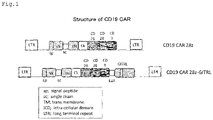
- FIG. 1 shows the structures of CD19 28z CAR and CD19 28z GITRL CAR.
- Fig. 2 shows the base sequence (SEQ ID NO: 1) of CD19 28z CAR, and
- Fig. 3 shows the base sequence (SEQ ID NO: 2) and amino acid sequence (SEQ ID NO: 3) of CD19 28z GITRL CAR.
- Retroviruses were also prepared using a CAR construct of Anti-CD19 (FMC-63)-zG or Anti-CD19 (FMC-63)-zG-GITRL. Specifically, retroviruses were prepared in the same manner, except that the region of the N-terminal side-CD28 intracellular domain-CD3 ⁇ domain of CD19 28z CAR and CD19 28z GITRL CAR was replaced with the region of the N-terminal side-CD3 ⁇ domain-GITR domain.
- ⁇ cells obtained by culturing peripheral blood mononuclear cells isolated with Ficoll-Paque in GT-T551 supplemented with 0.6% inactivated human plasma and IL-2 at a final concentration of 600 IU/ml on a 12-well plate having 2 ⁇ g of OKT3 and 10 ⁇ g of RetroNectin immobilized thereon, and collecting the cells on day 4) and ⁇ cells (obtained by culturing peripheral blood mononuclear cells in YM-AB containing a novel bisphosphonate preparation (PTA), adding 25 ng/ml of IL-7 and 25 ng/ml of IL-15, and collecting the cells on day 4) were infected with the above retroviruses immobilized.
- PTA novel bisphosphonate preparation
- CAR expression was measured with a flow cytometer. After reaction with an anti-human ⁇ antibody (rabbit IgG), the cells were reacted with Alexa 488-labeled anti-rabbit IgG (goat polyclonal) (Invitrogen). Further, for ⁇ cells, staining with APC/Cy7-labeled anti-human CD8 (BD) and an APC-labeled anti-human CD4 antibody (BioLegend) was added, and for ⁇ cells, staining with a PE-labeled anti-human V ⁇ 2 antibody was added, followed by measuring with a FACSCanto. The expression rates of CAR molecules (recognized by anti-human ⁇ antibody) in the CD4 and CD8 fractions of the ⁇ cells, and in the V ⁇ 2-positive fraction of the ⁇ cells were calculated.
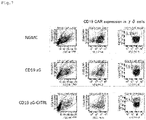
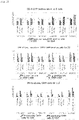
- CD19 28z and CD19 28z-GITRL used for gene transfer the expression of CD19 CAR was higher in cells in which CD19 28z-GITRL was introduced, in both the ⁇ cells (five gene transfer experiments) and the ⁇ cells (four gene transfer experiments) ( Figs. 4 and 5 , and the top row of each of Figs. 12 and 13 ).
- CD19 zG and CD19 zG-GITRL whose intracellular domain is zG
- one gene transfer experiment was performed using ⁇ cells
- one gene transfer experiment was performed using ⁇ cells.
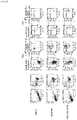
- the expression of CD19 CAR was higher when the GITRL-bound form was used ( Figs. 6 and 7 , and the rightmost column in the top row of each of Figs. 12 and 13 ).
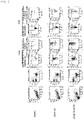
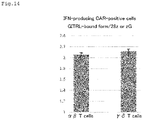
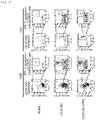
- the proportion of IFN- ⁇ -producing cells in the CD19CAR-positive cells after 4-hour co-culture with the target cell line (NALM6) tended to be higher in both the ⁇ cells (28z: Fig. 8 , zG: Fig. 10 ) and the ⁇ cells (28z: Fig. 9 , and zG: Fig. 11 ) when the GITRL-bound form was used, but there was no significant difference (middle row of each of Figs. 12 and 13 ). However, the number of IFN- ⁇ -producing CD19CAR-positive cells was larger in the GITRL-bound form-transduced cells (both the ⁇ cells and the ⁇ cells) (the bottom row of each of Figs. 12 and 13 ). On average, the value in the GITRL-bound form-transduced cells was about double ( Fig. 14 ).
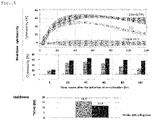
- Cytotoxic activity over time was measured by real-time CTL assay (xCELLigence) by co-culture with NALM6.
- an anti-CD9 antibody (ACEA Bioscience kit, catalog number: 8710247) adjusted to a final concentration of 4 ⁇ g/mL with tethering buffer (catalog number: 8718617) was immobilized on each well of an E-Plate 16.
- PBS washing with PBS was performed, and target cells NALM6 (6.0 ⁇ 10 4 ) suspended in 100 ⁇ l of a RPMI 1640 10% FCS-supplemented medium were added and allowed to stand at room temperature in a clean bench for 0.5 hours, followed by culture in an incubator under the conditions of 0.5% CO 2 and 37°C for 24 hours or more.
- effector cells (6 ⁇ 10 4 ) was added and allowed to stand at room temperature in a clean bench for 0.5 hours, followed by additional culture in an incubator under the conditions of CO 2 and 37°C for 5 to 7 days. Changes in electrical resistance over time were recorded in terms of cytotoxicity against NALM6 cells (xCELLigence method, ACEA Bioscience).
- As an effector CD19 28zCAR-transduced ⁇ -T cells or ⁇ -T cells, or GITRL-co-expressing CD19 28zCAR-transduced ⁇ -T cells or ⁇ -T cells were used.
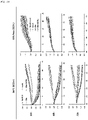
- both the CD19 28z-GITRL-transduced ⁇ cells and the CD19 28z-GITRL-transduced ⁇ cells showed more potent cytotoxic activity than the CD19 28z-transduce cells.
- CD19 28z-GITRL was superior in terms of magnitude of cytotoxic activity, durability/persistence of maximum cytotoxic activity, and quickness, which is indicated by the time required to reach one half of the maximum cytotoxic activity ( Figs. 15 and 16 ).
- NALM6 immunodeficient mice
- NALM6 (1 ⁇ 10 6 ) into which the luciferase gene was introduced was transplanted and engrafted, each kind of CD19 CAR-T cells (5 ⁇ 10 6 ) was infused. Images were taken by IVIS imaging over time to observe the kinetics of the NALM6 cells. Specifically, the experiment was performed as follows.
- mice Immediately after 6-week-old female immunodeficient mice (NOD/Shi-scid/IL-2Rgamma null ) were subjected to 2Gy total body irradiation (TBI), CD19-positive leukemia cells into which the luciferase gene was introduced (NALM6/Luc) were injected to each mouse through the tail vein in an amount of 1 ⁇ 10 6 cells/mouse (on day -7).
- TBI 2Gy total body irradiation
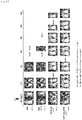
- mice were injected through the tail vein with 200 ⁇ L/mouse of PBS (untreated group; two mice), and mice were injected through the tail vein with T lymphocytes from the same donor without CD19 CAR gene transfer (NGM- ⁇ T lymphocyte-treated group; 5 ⁇ 10 6 cells/mouse; two mice) (both of these groups are negative controls); and a control group (three mice) was intravenously injected with conventional CD19-28z CAR-transduced ⁇ T lymphocytes, and a treatment group (three mice) was intravenously injected with the desired CD19 28z-GITRL CAR-transduced ⁇ T lymphocytes. The amount of remaining leukemia cells luminescent upon administration of luciferin was monitored over time using PerkinElmer's in vivo imaging system (IVIS).
- IVIS PerkinElmer's in vivo imaging system
- the untreated group (PBS-treated group) died from tumor within 3 weeks, and the administration group of T lymphocytes that was not genetically modified (NGM-T administration group) also died from tumor within 4 weeks.
- the administration group of T lymphocytes that was not genetically modified (NGM-T administration group) also died from tumor within 4 weeks.
- the 28z CAR-T administration group the administration group of T lymphocytes that was not genetically modified
- the 28z-CAR-T administration group the leukemia cells were eliminated 1 week after administration, and no relapse of leukemia was observed until 7 weeks after administration.
- the survival of the 28z-CAR-T-treated group tended to be shorter than that of the 28z-GITRL CAR-T-treated group.
- Fig. 18 shows the results.
- the GITRL-co-expressing CD19 CAR-T ( ⁇ ) cells showed increased IFN- ⁇ production after co-culture with the target leukemia cells (NALM6).
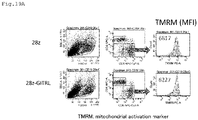
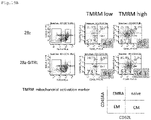
- TMRM tetramethylrhodamine methyl ester
- Fig. 19 shows the results.
- an increase in an immunological memory cell group (CD62L-CD45RA-, effector memory T cells (T EM ) and CD62L+CD45RA-, central memory T cells (T CM ) ) was observed in the 28z-GITRL CAR-transduced CD8-positive T cell group. This tendency was more pronounced in T CM .
- these immunological memory cells were confirmed to be immunological memory cells from their metabolic characteristics that were accompanied by an increase in mitochondrial membrane potential and depended on oxidative phosphorylation for their energy. These properties are considered to contribute to long-term engraftment of CAR-T cells infused into the patient's body, indicating the superiority of the GITRL-co-expressing CAR gene.
- CEA-positive BxPC-3 cells (7000 cells) and CEA-negative MIA Paca-2 cells (7000 cells) were cultured on an E-plate, and effector cells (21000 cells) made from ⁇ cells were added thereto. Co-culture was performed, and the cytotoxicity for 24 hours was recorded over time. After completion of co-culture, the effector cells were collected and co-cultured with new target cells for 24 hours, and changes over time were recorded. The third co-culture was performed in the same manner, and changes over time were recorded.
- Fig. 20 shows the results.
- the cytotoxic activity was higher when the GITRL-co-expressing CEA 28z CAR-T cells were used than when the CEA 28z CAR-T cells were used. It was observed that the difference in cytotoxic activity tended to increase as the number of cultures performed increased.
- CEA-positive BxPC-3 cells (5 ⁇ 10 6 ) were subcutaneously transplanted into NOG mice to cause the mice to bear tumors. Thereafter, GITRL-co-expressing CEA 28z CAR-T cells and CEA 28z CAR-T cells, both of which were made from ⁇ cells, and mock cells into which no gene was introduced (each in an amount of 1 ⁇ 10 7 ) were individually infused by intravenous injection. The abundance ratio of infused cells in peripheral blood after 2 weeks and 3 weeks was examined by anti-Vd2 antibody staining and biotinylated CEA staining. The number of mice used in the experiment was 2, 2, and 3.
- Fig. 21 shows the results. In the body of the NOG mice 3 weeks after infusion of the effector cells, the number of remaining cells was higher when the GITRL-co-expressing ⁇ CEA 28z CAR-T cells were infused than when the ⁇ CEA 28z CAR-T cells were infused.
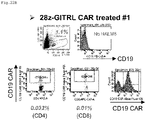
- the amount of the remaining CD8+CAR+ cells was 0.002%, and the amount of the remaining CD4+CAR+ cells was 0.017% in the peripheral blood of the 28z CAR-T cell-infused mice, whereas in the two 28z-GITRL-CAR-T cell-infused mice, the amounts of the remaining CD8+CAR+ cells were 0.01% and 0.024%, and the amounts of the remaining CD4+CAR+ cells were 0.033% and 0.032% in the peripheral blood. Both CD8+CAR+ cells and CD4+CAR+ cells remained more abundant in the 28z-GITRL CAR-T cell-infused mice ( Fig. 22 ).
- Peripheral blood was analyzed 55 days after cell therapy in mouse #2 treated with the 28z-GITLR CAR-T cells ( ⁇ ) in the NALM6 cell-bearing NOG mouse treatment model (mentioned above).
- 20.3% human lymphocytes were found (1 of Fig. 23 ).
- Human CD3-positive T lymphocytes were detected in 20.3% of the lymphocytes, and no CD19-positive human leukemia cells NALM6 were detected (2 of Fig. 23 ).
- CAR-T cells were found in 3.4% of the human T lymphocytes (3 of Fig. 23 ).
- CD19 28z-GITRL Compared with CD19 28z, CD19 28z-GITRL enables the CAR molecule to be expressed efficiently in both ⁇ and ⁇ T cells. Even when the intracellular domain is zG instead of 28z, the GITRL-bound form allows for high efficiency of CAR molecule expression. Moreover, although the superiority of the GITRL-bound form was not found in cytokine production by co-culture with target cells for a short period of time (4 hours), the GITRL-bound form showed potent, rapid, and long-lasting target-specific cytotoxic activity in both ⁇ and ⁇ T cells in the real-time CTL assay.
- the GITRL-bound CAR-T cells are considered to induce enhanced antitumor activity based on enhanced activation and prolonged duration in the T-cell activation process following antigen recognition, rather than the antigen recognition process.
- the GITRL-bound CAR-T cells are also expected to have a clinical effect on refractory and relapsed cases, which are problems in current CD19 CAR-T (28z) cell therapy.
Landscapes
- Health & Medical Sciences (AREA)
- Life Sciences & Earth Sciences (AREA)
- Chemical & Material Sciences (AREA)
- General Health & Medical Sciences (AREA)
- Organic Chemistry (AREA)
- Immunology (AREA)
- Public Health (AREA)
- Veterinary Medicine (AREA)
- Animal Behavior & Ethology (AREA)
- Epidemiology (AREA)
- Medicinal Chemistry (AREA)
- Biochemistry (AREA)
- Proteomics, Peptides & Aminoacids (AREA)
- Biophysics (AREA)
- Genetics & Genomics (AREA)
- Molecular Biology (AREA)
- Cell Biology (AREA)
- Zoology (AREA)
- Toxicology (AREA)
- Gastroenterology & Hepatology (AREA)
- Pharmacology & Pharmacy (AREA)
- Chemical Kinetics & Catalysis (AREA)
- General Chemical & Material Sciences (AREA)
- Nuclear Medicine, Radiotherapy & Molecular Imaging (AREA)
- Engineering & Computer Science (AREA)
- Bioinformatics & Cheminformatics (AREA)
- Peptides Or Proteins (AREA)
- Micro-Organisms Or Cultivation Processes Thereof (AREA)
- Medicines That Contain Protein Lipid Enzymes And Other Medicines (AREA)
- Medicines Containing Material From Animals Or Micro-Organisms (AREA)
- Medicinal Preparation (AREA)
- Medicines Containing Antibodies Or Antigens For Use As Internal Diagnostic Agents (AREA)
- Hematology (AREA)
- Biomedical Technology (AREA)
- Biotechnology (AREA)
- Developmental Biology & Embryology (AREA)
- Virology (AREA)
Applications Claiming Priority (2)
| Application Number | Priority Date | Filing Date | Title |
|---|---|---|---|
| JP2019142357 | 2019-08-01 | ||
| PCT/JP2020/029437 WO2021020559A1 (ja) | 2019-08-01 | 2020-07-31 | 抗原受容体 |
Publications (2)
| Publication Number | Publication Date |
|---|---|
| EP4008404A1 true EP4008404A1 (de) | 2022-06-08 |
| EP4008404A4 EP4008404A4 (de) | 2023-03-01 |
Family
ID=74230416
Family Applications (1)
| Application Number | Title | Priority Date | Filing Date |
|---|---|---|---|
| EP20845661.6A Pending EP4008404A4 (de) | 2019-08-01 | 2020-07-31 | Antigenrezeptor |
Country Status (5)
| Country | Link |
|---|---|
| US (1) | US20220265717A1 (de) |
| EP (1) | EP4008404A4 (de) |
| JP (1) | JP7521815B2 (de) |
| BR (1) | BR112022001848A2 (de) |
| WO (1) | WO2021020559A1 (de) |
Families Citing this family (2)
| Publication number | Priority date | Publication date | Assignee | Title |
|---|---|---|---|---|
| EP3773918A4 (de) | 2019-03-05 | 2022-01-05 | Nkarta, Inc. | Cd19-gerichtete chimäre antigenrezeptoren und deren verwendungen in der immuntherapie |
| WO2025047925A1 (ja) * | 2023-08-31 | 2025-03-06 | 国立大学法人三重大学 | ハイブリッドt細胞受容体 |
Family Cites Families (6)
| Publication number | Priority date | Publication date | Assignee | Title |
|---|---|---|---|---|
| CN102149820B (zh) * | 2008-09-12 | 2014-07-23 | 国立大学法人三重大学 | 能够表达外源gitr配体的细胞 |
| WO2015112626A1 (en) | 2014-01-21 | 2015-07-30 | June Carl H | Enhanced antigen presenting ability of car t cells by co-introduction of costimulatory molecules |
| CN106467906B (zh) * | 2015-08-20 | 2019-09-27 | 北京马力喏生物科技有限公司 | 构建体、转基因淋巴细胞及其制备方法和用途 |
| CA3287539A1 (en) | 2017-06-21 | 2026-03-02 | Icell Gene Therapeutics Llc | CHIMERIC ANTIGEN RECEPTORS (CARs), COMPOSITIONS AND METHODS THEREOF |
| EP4008347B1 (de) * | 2019-08-01 | 2025-04-30 | Mie University | Gd2 bindende moleküle |
| CN113087805A (zh) * | 2019-12-31 | 2021-07-09 | 华东师范大学 | 一种共表达免疫调节分子的嵌合抗原受体t细胞的制备及其应用 |
-
2020
- 2020-07-31 WO PCT/JP2020/029437 patent/WO2021020559A1/ja not_active Ceased
- 2020-07-31 JP JP2021535460A patent/JP7521815B2/ja active Active
- 2020-07-31 EP EP20845661.6A patent/EP4008404A4/de active Pending
- 2020-07-31 US US17/631,701 patent/US20220265717A1/en active Pending
- 2020-07-31 BR BR112022001848A patent/BR112022001848A2/pt unknown
Also Published As
| Publication number | Publication date |
|---|---|
| EP4008404A4 (de) | 2023-03-01 |
| BR112022001848A2 (pt) | 2022-06-21 |
| JPWO2021020559A1 (de) | 2021-02-04 |
| WO2021020559A1 (ja) | 2021-02-04 |
| JP7521815B2 (ja) | 2024-07-24 |
| US20220265717A1 (en) | 2022-08-25 |
Similar Documents
| Publication | Publication Date | Title |
|---|---|---|
| JP6970991B2 (ja) | トランスポザーゼポリペプチド及びその使用 | |
| BR112018001858B1 (pt) | Composições compreendendo células modificadas que compreendem um receptor de antígeno quimérico (car), seus usos terapêuticos e método para modificar uma célula | |
| US20260055159A1 (en) | Combination of ny-eso-1 specific t cell receptors and chimeric co-stimulatory receptors | |
| US20260116986A1 (en) | Epo receptor agonists and antagonists | |
| CN119998322A (zh) | 基因编辑靶基因以增强自然杀伤细胞功能 | |
| US20240024480A1 (en) | Prame binding molecule | |
| WO2021085497A1 (ja) | がんを治療するための医薬、組み合わせ医薬、医薬組成物、免疫応答性細胞、核酸送達媒体、及び製品 | |
| US20240016932A1 (en) | Chimeric antigen receptor | |
| EP4008404A1 (de) | Antigenrezeptor | |
| WO2023025779A1 (en) | Combination of antigen specific t cell receptors and chimeric co-stimulatory receptors | |
| EP4008347B1 (de) | Gd2 bindende moleküle | |
| KR20240021179A (ko) | 키메라 폴리펩티드 및 사용 방법 | |
| EP4279596A1 (de) | Chimärer zielfaktorrezeptor | |
| US20240424101A1 (en) | Antigen binding proteins and uses thereof | |
| RU2832189C2 (ru) | Антигенный рецептор | |
| WO2023175069A1 (en) | Tcr constant region pairing library for pramevld tcrs | |
| US20240415828A1 (en) | Tlr7 agonist and combinations for cancer treatment | |
| US20240352087A1 (en) | T Cell Receptors (TCR) to Human Papillomavirus Proteins, Compositions, and Uses Thereof | |
| WO2025047925A1 (ja) | ハイブリッドt細胞受容体 | |
| HK40100269A (en) | Chimeric antigen receptor | |
| EP4392058A1 (de) | Kombination von antigen-spezifischen t-zell-rezeptoren und chimären costimulatorischen rezeptoren | |
| HK40015270B (zh) | Hla限制性vgll1肽及其用途 | |
| HK40030417A (en) | T cell receptors for immunotherapy |
Legal Events
| Date | Code | Title | Description |
|---|---|---|---|
| STAA | Information on the status of an ep patent application or granted ep patent |
Free format text: STATUS: THE INTERNATIONAL PUBLICATION HAS BEEN MADE |
|
| PUAI | Public reference made under article 153(3) epc to a published international application that has entered the european phase |
Free format text: ORIGINAL CODE: 0009012 |
|
| STAA | Information on the status of an ep patent application or granted ep patent |
Free format text: STATUS: REQUEST FOR EXAMINATION WAS MADE |
|
| 17P | Request for examination filed |
Effective date: 20220210 |
|
| AK | Designated contracting states |
Kind code of ref document: A1 Designated state(s): AL AT BE BG CH CY CZ DE DK EE ES FI FR GB GR HR HU IE IS IT LI LT LU LV MC MK MT NL NO PL PT RO RS SE SI SK SM TR |
|
| DAV | Request for validation of the european patent (deleted) | ||
| DAX | Request for extension of the european patent (deleted) | ||
| A4 | Supplementary search report drawn up and despatched |
Effective date: 20230130 |
|
| RIC1 | Information provided on ipc code assigned before grant |
Ipc: A61K 39/00 20060101ALI20230124BHEP Ipc: C12N 15/62 20060101ALI20230124BHEP Ipc: C12N 15/13 20060101ALI20230124BHEP Ipc: C12N 5/0783 20100101ALI20230124BHEP Ipc: C07K 16/28 20060101ALI20230124BHEP Ipc: C07K 14/725 20060101ALI20230124BHEP Ipc: C07K 14/705 20060101ALI20230124BHEP Ipc: A61P 43/00 20060101ALI20230124BHEP Ipc: A61P 35/00 20060101AFI20230124BHEP |
|
| STAA | Information on the status of an ep patent application or granted ep patent |
Free format text: STATUS: EXAMINATION IS IN PROGRESS |
|
| 17Q | First examination report despatched |
Effective date: 20250703 |