EP4008653A1 - Procédé de manipulation de conteneur utilisant un stockage dense - Google Patents
Procédé de manipulation de conteneur utilisant un stockage dense Download PDFInfo
- Publication number
- EP4008653A1 EP4008653A1 EP20905037.6A EP20905037A EP4008653A1 EP 4008653 A1 EP4008653 A1 EP 4008653A1 EP 20905037 A EP20905037 A EP 20905037A EP 4008653 A1 EP4008653 A1 EP 4008653A1
- Authority
- EP
- European Patent Office
- Prior art keywords
- container
- robot
- blocking
- target
- storage
- Prior art date
- Legal status (The legal status is an assumption and is not a legal conclusion. Google has not performed a legal analysis and makes no representation as to the accuracy of the status listed.)
- Granted
Links
Images





Classifications
-
- B—PERFORMING OPERATIONS; TRANSPORTING
- B65—CONVEYING; PACKING; STORING; HANDLING THIN OR FILAMENTARY MATERIAL
- B65G—TRANSPORT OR STORAGE DEVICES, e.g. CONVEYORS FOR LOADING OR TIPPING, SHOP CONVEYOR SYSTEMS OR PNEUMATIC TUBE CONVEYORS
- B65G1/00—Storing articles, individually or in orderly arrangement, in warehouses or magazines
- B65G1/02—Storage devices
- B65G1/04—Storage devices mechanical
-
- B—PERFORMING OPERATIONS; TRANSPORTING
- B65—CONVEYING; PACKING; STORING; HANDLING THIN OR FILAMENTARY MATERIAL
- B65G—TRANSPORT OR STORAGE DEVICES, e.g. CONVEYORS FOR LOADING OR TIPPING, SHOP CONVEYOR SYSTEMS OR PNEUMATIC TUBE CONVEYORS
- B65G1/00—Storing articles, individually or in orderly arrangement, in warehouses or magazines
- B65G1/02—Storage devices
- B65G1/04—Storage devices mechanical
- B65G1/0492—Storage devices mechanical with cars adapted to travel in storage aisles
-
- G—PHYSICS
- G06—COMPUTING OR CALCULATING; COUNTING
- G06Q—INFORMATION AND COMMUNICATION TECHNOLOGY [ICT] SPECIALLY ADAPTED FOR ADMINISTRATIVE, COMMERCIAL, FINANCIAL, MANAGERIAL OR SUPERVISORY PURPOSES; SYSTEMS OR METHODS SPECIALLY ADAPTED FOR ADMINISTRATIVE, COMMERCIAL, FINANCIAL, MANAGERIAL OR SUPERVISORY PURPOSES, NOT OTHERWISE PROVIDED FOR
- G06Q10/00—Administration; Management
- G06Q10/08—Logistics, e.g. warehousing, loading or distribution; Inventory or stock management
- G06Q10/083—Shipping
- G06Q10/0832—Special goods or special handling procedures, e.g. handling of hazardous or fragile goods
-
- B—PERFORMING OPERATIONS; TRANSPORTING
- B25—HAND TOOLS; PORTABLE POWER-DRIVEN TOOLS; MANIPULATORS
- B25J—MANIPULATORS; CHAMBERS PROVIDED WITH MANIPULATION DEVICES
- B25J11/00—Manipulators not otherwise provided for
-
- B—PERFORMING OPERATIONS; TRANSPORTING
- B25—HAND TOOLS; PORTABLE POWER-DRIVEN TOOLS; MANIPULATORS
- B25J—MANIPULATORS; CHAMBERS PROVIDED WITH MANIPULATION DEVICES
- B25J9/00—Program-controlled manipulators
- B25J9/16—Program controls
- B25J9/1656—Program controls characterised by programming, planning systems for manipulators
- B25J9/1664—Program controls characterised by programming, planning systems for manipulators characterised by motion, path, trajectory planning
-
- B—PERFORMING OPERATIONS; TRANSPORTING
- B25—HAND TOOLS; PORTABLE POWER-DRIVEN TOOLS; MANIPULATORS
- B25J—MANIPULATORS; CHAMBERS PROVIDED WITH MANIPULATION DEVICES
- B25J9/00—Program-controlled manipulators
- B25J9/16—Program controls
- B25J9/1679—Program controls characterised by the tasks executed
-
- B—PERFORMING OPERATIONS; TRANSPORTING
- B25—HAND TOOLS; PORTABLE POWER-DRIVEN TOOLS; MANIPULATORS
- B25J—MANIPULATORS; CHAMBERS PROVIDED WITH MANIPULATION DEVICES
- B25J9/00—Program-controlled manipulators
- B25J9/16—Program controls
- B25J9/1679—Program controls characterised by the tasks executed
- B25J9/1682—Dual arm manipulator; Coordination of several manipulators
-
- B—PERFORMING OPERATIONS; TRANSPORTING
- B65—CONVEYING; PACKING; STORING; HANDLING THIN OR FILAMENTARY MATERIAL
- B65G—TRANSPORT OR STORAGE DEVICES, e.g. CONVEYORS FOR LOADING OR TIPPING, SHOP CONVEYOR SYSTEMS OR PNEUMATIC TUBE CONVEYORS
- B65G1/00—Storing articles, individually or in orderly arrangement, in warehouses or magazines
- B65G1/02—Storage devices
- B65G1/04—Storage devices mechanical
- B65G1/137—Storage devices mechanical with arrangements or automatic control means for selecting which articles are to be removed
- B65G1/1373—Storage devices mechanical with arrangements or automatic control means for selecting which articles are to be removed for fulfilling orders in warehouses
-
- G—PHYSICS
- G05—CONTROLLING; REGULATING
- G05B—CONTROL OR REGULATING SYSTEMS IN GENERAL; FUNCTIONAL ELEMENTS OF SUCH SYSTEMS; MONITORING OR TESTING ARRANGEMENTS FOR SUCH SYSTEMS OR ELEMENTS
- G05B19/00—Program-control systems
- G05B19/02—Program-control systems electric
- G05B19/418—Total factory control, i.e. centrally controlling a plurality of machines, e.g. direct or distributed numerical control [DNC], flexible manufacturing systems [FMS], integrated manufacturing systems [IMS] or computer integrated manufacturing [CIM]
- G05B19/4189—Total factory control, i.e. centrally controlling a plurality of machines, e.g. direct or distributed numerical control [DNC], flexible manufacturing systems [FMS], integrated manufacturing systems [IMS] or computer integrated manufacturing [CIM] characterised by the transport system
- G05B19/41895—Total factory control, i.e. centrally controlling a plurality of machines, e.g. direct or distributed numerical control [DNC], flexible manufacturing systems [FMS], integrated manufacturing systems [IMS] or computer integrated manufacturing [CIM] characterised by the transport system using automatic guided vehicles [AGV]
-
- G—PHYSICS
- G06—COMPUTING OR CALCULATING; COUNTING
- G06Q—INFORMATION AND COMMUNICATION TECHNOLOGY [ICT] SPECIALLY ADAPTED FOR ADMINISTRATIVE, COMMERCIAL, FINANCIAL, MANAGERIAL OR SUPERVISORY PURPOSES; SYSTEMS OR METHODS SPECIALLY ADAPTED FOR ADMINISTRATIVE, COMMERCIAL, FINANCIAL, MANAGERIAL OR SUPERVISORY PURPOSES, NOT OTHERWISE PROVIDED FOR
- G06Q10/00—Administration; Management
- G06Q10/08—Logistics, e.g. warehousing, loading or distribution; Inventory or stock management
-
- G—PHYSICS
- G06—COMPUTING OR CALCULATING; COUNTING
- G06Q—INFORMATION AND COMMUNICATION TECHNOLOGY [ICT] SPECIALLY ADAPTED FOR ADMINISTRATIVE, COMMERCIAL, FINANCIAL, MANAGERIAL OR SUPERVISORY PURPOSES; SYSTEMS OR METHODS SPECIALLY ADAPTED FOR ADMINISTRATIVE, COMMERCIAL, FINANCIAL, MANAGERIAL OR SUPERVISORY PURPOSES, NOT OTHERWISE PROVIDED FOR
- G06Q10/00—Administration; Management
- G06Q10/08—Logistics, e.g. warehousing, loading or distribution; Inventory or stock management
- G06Q10/087—Inventory or stock management, e.g. order filling, procurement or balancing against orders
-
- B—PERFORMING OPERATIONS; TRANSPORTING
- B65—CONVEYING; PACKING; STORING; HANDLING THIN OR FILAMENTARY MATERIAL
- B65G—TRANSPORT OR STORAGE DEVICES, e.g. CONVEYORS FOR LOADING OR TIPPING, SHOP CONVEYOR SYSTEMS OR PNEUMATIC TUBE CONVEYORS
- B65G1/00—Storing articles, individually or in orderly arrangement, in warehouses or magazines
- B65G1/02—Storage devices
- B65G1/04—Storage devices mechanical
- B65G1/137—Storage devices mechanical with arrangements or automatic control means for selecting which articles are to be removed
- B65G1/1373—Storage devices mechanical with arrangements or automatic control means for selecting which articles are to be removed for fulfilling orders in warehouses
- B65G1/1378—Storage devices mechanical with arrangements or automatic control means for selecting which articles are to be removed for fulfilling orders in warehouses the orders being assembled on fixed commissioning areas remote from the storage areas
-
- B—PERFORMING OPERATIONS; TRANSPORTING
- B65—CONVEYING; PACKING; STORING; HANDLING THIN OR FILAMENTARY MATERIAL
- B65G—TRANSPORT OR STORAGE DEVICES, e.g. CONVEYORS FOR LOADING OR TIPPING, SHOP CONVEYOR SYSTEMS OR PNEUMATIC TUBE CONVEYORS
- B65G2201/00—Indexing codes relating to handling devices, e.g. conveyors, characterised by the type of product or load being conveyed or handled
- B65G2201/02—Articles
- B65G2201/0235—Containers
-
- G—PHYSICS
- G05—CONTROLLING; REGULATING
- G05B—CONTROL OR REGULATING SYSTEMS IN GENERAL; FUNCTIONAL ELEMENTS OF SUCH SYSTEMS; MONITORING OR TESTING ARRANGEMENTS FOR SUCH SYSTEMS OR ELEMENTS
- G05B2219/00—Program-control systems
- G05B2219/30—Nc systems
- G05B2219/45—Nc applications
- G05B2219/45056—Handling cases, boxes
Definitions
- the present disclosure relates to the technical field of warehousing and logistics, and in particular to a container transporting method based on dense storage.
- a container transporting method based on dense storage is provided according to embodiments of the present disclosure, to solve the technical defects in the conventional art.
- a container transporting method based on dense storage which includes:
- the method further includes:
- the method further includes:
- a container transporting method based on dense storage which includes:
- the picking-up the at least one blocking container from the storage rack by a container pickup mechanism of at least one first robot includes:
- the picking-up, by a container pickup mechanism of a second robot, the target container from the storage rack includes:
- the method further includes:
- a container transporting method based on dense storage which includes:
- the number of the at least one blocking container is one, and the placing each of the at least one blocking container from an original storage position of the blocking container on the storage rack to a cache position by a container pickup mechanism of a robot includes:
- the number of the at least one blocking container is at least two, and the placing each of the at least one blocking container from an original storage position of the blocking container on the storage rack to a cache position by a container pickup mechanism of a robot includes:
- the placing each of the at least one blocking container from an original storage position of the blocking container on the storage rack to a cache position by a container pickup mechanism of a robot includes:
- the method further includes: picking-up, by the container pickup mechanism of the robot, each of the at least one blocking container from the cache mechanism of the robot and placing the blocking container at the original storage position of the blocking container on the storage rack.
- the method further includes:
- a container transporting method based on dense storage which includes:
- the number of the at least one blocking container is one, and the number of the at least one first robot is one, and the picking-up the at least one blocking container from the storage rack by a container pickup mechanism of at least one first robot and placing the at least one blocking container at a cache position includes:
- the number of the at least one blocking container is at least two, the number of the at least one first robot is one, and the picking-up the at least one blocking container from the storage rack by a container pickup mechanism of at least one first robot and placing the at least one blocking container at a cache position includes:
- the picking-up the at least one blocking container from the storage rack by a container pickup mechanism of at least one first robot and placing the at least one blocking container at a cache position includes:
- the method further includes:
- the method further includes:
- a container transporting method is further provided according to the present disclosure, which is applicable for transporting containers and removing obstacles under intense storage, multiple container pickup logics and container return logics are adopted, such that the reliability of the warehousing system based on intense storage can be ensured, thereby improving the efficiency of logistics transportation and reducing logistics costs.
- the terms “first”, “second”, and the like may be used to describe various kind of information in one or more embodiments of the present disclosure, the information should not be limited to these terms. These terms are only used to distinguish the same kind of information from each other.
- “the first” may also be referred to as “the second”
- “the second” may also be referred to as “the first”.
- the word “if” used herein may be interpreted as “when” or “in a case that” or “in response to a determination”.
- a mobile robot is an automated Guided Vehicle (AGV), which refers to a transportation vehicle equipped with electromagnetic or optical automatic guidance devices, and is capable of traveling in a prescribed guidance path under safety protection and various transfer functions.
- AGV automated Guided Vehicle
- a high rack refers to a rack with a height of more than 5 meters according to the customary definition of the storage equipment industry, including beam pallet racks, through-type racks, push-back racks, double-depth racks, narrow aisle racks or automated three-dimensional warehouses and the like.
- the high rack is the most commonly used in the warehouses, which has a good picking efficiency and can realize quick pickup and storage of goods.
- Picking means a process by which a worker of a warehouse distribution center picks up goods from a storage rack or a stack according to the name, specification, model, and quantity of the goods required in the order, and moves the goods to a tally area.
- a container transporting method and device based on dense storage, a computing device, and a computer-readable storage medium are provided, which are described in detail in the following embodiments.
- Figure 1 is a structural block diagram of a computing device 100 according to an embodiment of the present disclosure.
- the components of the computing device 100 include but are not limited to a memory 110 and a processor 120.
- the processor 120 and the memory 110 are connected to each other through a bus 130, and the database 150 is used to store data.
- the computing device 100 further includes an access device 140, which enables the computing device 100 to communicate via one or more networks 160.
- networks include a public switched telephone network (PSTN), a local area network (LAN), a wide area network (WAN), a personal area network (PAN), or a combination of communication networks such as the Internet.
- the access device 140 may include one or more of any type of wired or wireless network interfaces (for example, a network interface card (NIC)), such as an IEEE802.11 wireless local area network (WLAN) wireless interface, a Worldwide Interoperability for Microwave Access (Wi-MAX) interface, an Ethernet interface, a universal serial bus (USB) interface, a cellular network interface, a Bluetooth interface, and a near field communication (NFC) interface.
- NIC network interface card
- the above components of the computing device 100 may also be connected to other components not shown in Figure 1 , for example, via a bus. It is to be understood that the structural block diagram of the computing device shown in Figure 1 is only for the purpose of example, and is not intended to limit the scope of the present disclosure. Those skilled in the art may add or replace other components as needed.
- the computing device 100 may be any type of stationary or mobile computing device, including a mobile computer or a mobile computing device (for example, a tablet computer, a personal digital assistant, a laptop computer, a notebook computer, and a netbook), a mobile phone (for example, a smart phone), a wearable computing device (for example, a smart watch, smart glasses) or other types of mobile devices, or a stationary computing device such as a desktop computer or a PC.
- the computing device 100 may also be a mobile or stationary server.
- the robot in the embodiments of the present disclosure may be controlled by a server in a warehousing system or a server in the cloud, or the robot itself may be equipped with a control chip, which is not limited in the present disclosure.
- actions performed by the robot in the embodiments of the present disclosure may be performed partly based on the control of the server, and partly performed based on the control instructions of its own control chip, which is not limited in the present disclosure.
- the robot in the embodiment of the present disclosure is an autonomous mobile robot (AMR).
- AMR autonomous mobile robot
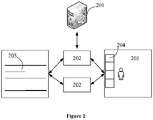
- FIG. 2 is a schematic structural diagram of a warehousing system according to an embodiment of the present disclosure.
- the system includes a control server 201, a robot 202, a workstation 203, and a storage rack 205.
- the storage rack 205 includes at least four columns of racks, each of which is preferably a high rack.
- the high rack may have a height of 5 meters, and includes 10 floors.
- the storage racks 205 includes internal racks and external racks that are arranged in a dense arrangement.
- a container stored on the internal rack is called an internal container and a container stored on the external rack is called an external container.
- the robot 202 performs storage and picking of a designated container to a designated position according to the scheduling of the control server 201.
- a container pickup mechanism of the robot 202 is capable of storing and picking-up a container on the internal rack, that is, the container pickup mechanism of the robot 202 meets the depth requirement of dense storage. After picking-up the target container from the storage rack 205, the robot 202 can transport the target container to the workstation 203. Multiple operating stations 204 are provided in the workstation 203, so that workers can perform operations such as picking, counting, tallying or putting on the goods in the target container.
- the control server 201 is used to store inventory information and a correspondence between a position of a container and an identity (number) of the container, and the control server 201 can generate a container transporting task according to a required work document, assign the container transporting task to the robot 202 to perform the container transporting task, and plan a path for the robot 202 to avoid collisions.
- the control server 201 communicates with the robot 202, so as to obtain information such as an operation state, a position, and an identity of the robot 202 in real time.
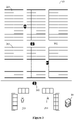
- Figure 3 is a schematic diagram of a layout of a storage area and transportation in the storage area according to an embodiment of the present disclosure.
- the storage area includes a rack area 301, a robot 202, a control server 201, and a workstation 203.
- Multiple storage racks 205 are provided in the storage area 301, and a robot passage 302 is provided between adjacent storage racks 205 for the movement of the robot 202, and the robot 202 may perform a logical operation of pickup and storage of containers under the control of the control server 201, and a transportation operation of moving containers back and forth between the rack area 301 and the workstation 203.
- the robot 202 may have a cache mechanism.
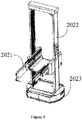
- the robot 202 includes: a container pickup mechanism 2021, a lifting mechanism 2022, a robot motion chassis 2023, and a cache mechanism 2024.
- the container pickup mechanism 2021 is configured to pick up one or more target containers in an embracing manner.
- the lifting mechanism 2022 is configured to adjust the container pickup mechanism 2021 up and down, so that the container pickup mechanism 2021 can pick up a target container from a storage rack of any height.
- the robot motion chassis 2023 is configured to control the robot to travel on the robot passage along a travel route planned by the control server.
- the cache mechanism 2024 is configured to temporarily store at least one container and arrange the containers sequentially.
- the robot 202 may have no cache mechanism.
- the robot 202 includes: a container pickup mechanism 2021, a lifting mechanism 2022, and a robot motion chassis 2023.
- the container pickup mechanism 2021 is configured to pick up one or more target containers.
- the lifting mechanism 2022 is configured to adjust the container pickup mechanism 2021 up and down, so that the container pickup mechanism 2021 can pick up a target container from a storage rack of any height.
- the robot motion chassis 2023 is configured to control the robot to travel on the robot passage along a travel route planned by the control server.
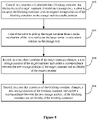
- the processor 120 may perform steps of a method shown in Figure 6.
- Figure 6 is a schematic flow chart showing a container transporting method based on dense storage according to an embodiment of the present disclosure, which may be applied by a robot to pick up a target container from a storage rack in a case that storage racks are densely arranged.
- the method includes the following step 602 to step 610.
- step 602 in a case that at least one blocking container that blocks pickup of the target container is stored on the storage rack, the container pickup mechanism of the robot picks up the at least one blocking container from the storage rack and temporarily stores the at least one blocking container on the cache mechanism of the robot, the target container is one of at least one container to be picked up.
- the robot drives to a storage rack where the target container is located according to a assigned container transporting task, and determines whether there is a blocking container that blocks the pickup of the target container based on a prestored correspondence between a position of the container and an identity of the container, or image data uploaded by the robot through a camera. If there is a blocking container that blocks the pickup of the target container, the robot picks up the blocking container from the storage rack and temporarily stores the blocking container on the cache mechanism of the robot.
- the target container is an internal container stored on an internal rack of the storage rack
- the target container will be blocked by an external container stored on an external rack of the storage rack
- the robot cannot pick up the target container
- the external container is a "blocking container”
- the robot picks up the blocking container on the external rack of the storage rack by its container pickup mechanism and temporarily stores the blocking container on the cache mechanism of the robot, so that the target container stored on the internal rack can be picked up.
- the robot when no blocking container that blocks the pickup of the target container is stored on the storage rack, the robot directly picks up the target container from the storage rack and stores the target container on the cache mechanism of the robot, for example, in a case that the target container is an external container stored on the external rack of the storage rack, or in a case that the target container is an internal container and the storage position of the external container is empty, the robot may directly pick up the target container.
- step 604 the robot picks up the target container from the storage rack and stores the target container on the cache mechanism of the robot, and transports the blocking container to the storage rack at an original storage position of the blocking container or an original storage position of the target container.
- the robot picks up the target container from the storage rack and keeps the target container on the container pickup mechanism of the robot.
- the robot picks up the target container stored on the internal rack of the storage rack from the storage rack and stores the target container on the cache mechanism of the robot, and then the robot places the previously picked up blocking container to the original storage position of the blocking container or the original storage position of the target container, thereby completing the pickup of the target container.
- the cache mechanism of the robot in a case that a container from another storage rack is prestored on the cache mechanism of the robot, there may be a case that the cache mechanism of the robot is entirely occupied by the blocking container and is no longer to store any container when the robot is to receive a blocking container in a current container transporting task.
- the robot picks up the target container from the storage rack and keeps the target container on the container pickup mechanism of the robot.
- the cache mechanism of the robot may accommodate 4 containers
- the cache mechanism of the robot being entirely occupied means that three containers picked up in other container transporting tasks and the blocking container picked up in the current container transporting task are stored, and the target container in this container transporting task is placed on the container pickup mechanism of the robot.
- step 606 the robot is controlled to transport the target container from a current position to a workstation through a robot passage.
- the robot of the present disclosure transports the target container from the current position to the workstation through the robot passage, so that an operator on the operation station in the workstation can obtain the target container.
- the cache mechanism is entirely occupied by the received blocking container
- the blocking container and the target container are both transported from the current position to the workstation through the robot passage, that is, the robot directly transports all of the picked-up containers to the operation station. Since the blocking container has not been ordered, the blocking container is skipped when picking goods.
- step 608 in a case that a position of the target container changes, a storage position of the target container is recorded and a correspondence between the storage position of the target container and an identity of the target container is updated.
- step 610 in a case that a position of the blocking container changes, a storage position of the blocking container is recorded, and a correspondence between the storage position of the blocking container and an identity of the blocking container is updated.
- key data such as operation data
- the new position of the container after being moved is calculated and a correspondence between the storage position of the container and the identity of the container is updated.
- a densely stored storage rack is adopted.
- a robot with a cache mechanism picks up the blocking container and places the blocking container on the cache mechanism, then places the target container on the cache mechanism, and finally returns the blocking container back to the original position or the position of the target container, thereby realizing the function of picking-up the target container of dense storage, thus achieving a stable and reliable application process.
- a container transporting method is further provided according to the present disclosure, which is applicable for transporting containers and removing obstacles under intense storage, multiple container pickup logics and container return logics are adopted, such that the reliability of the warehousing system based on intense storage can be ensured, thereby improving the efficiency of logistics transportation and reducing logistics costs.
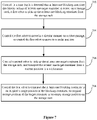
- FIG. 7 is a schematic flow chart showing a container transporting method based on dense storage according to an embodiment of the present disclosure, which may be applied by a robot to pick up a target container on a storage rack in a case that storage racks are densely arranged.
- the method includes the following step 702 to step 708.
- step 702 in a case that at least one blocking container that blocks pickup of at least one target container is stored on a storage rack, the first robot picks up the at least one blocking container from the storage rack.
- the first robot in the robots drives to a storage rack where the target container is located according to a container transporting task, and determines whether there is at least one blocking container that blocks the pickup of the at least one target container based on a prestored correspondence between a position of the container and an identity of the container, or image data uploaded by the first robot through a camera. If there is at least one blocking container that blocks the pickup of the at least one target container, the first robot picks up the at least one blocking container from the storage rack.
- the target container is an internal container stored on an internal rack of the storage rack
- the target container will be blocked by an external container stored on an external rack of the storage rack
- the robot cannot pick up the target container
- the external container is a "blocking container”
- the first robot picks up the at least one blocking container from the storage rack by its container pickup mechanism, so as to pick up the at least one target container stored on the internal rack of the storage rack.
- step 704 the first robot moves in the robot passage.
- the first robot after picking-up the at least one blocking container, the first robot may move in the robot passage of the storage area, for example, the first robot may move in a circle in the passage, or move to the cache position, the cache position is a position that does not prevent other robots from picking-up other containers, for example, positions on other passages than the two storage racks, or the cache position is a nearby area of the target container or a remote area of the target container, as long as the cache position does not block a movement route of another robot, so as to wait for a second robot of the at least one robot to pick up or return the at least one target container.
- step 706 the second robot picks up the at least one target container from the storage rack, and transports the at least one target container from a current position to a workstation.
- the second robot in the at least one robot of the present disclosure picks up the at least one target container from the storage rack, and transports the at least one target container from the current position to the workstation, so that an operator on the operation station in the workstation can obtain the target container.
- step 708 the first robot transports the at least one blocking container to the storage rack at the original storage position of the blocking container, the original storage position of the target container or another empty storage position.
- the first robot of the present disclosure transports the at least one blocking container to the storage rack at the original storage position of the blocking container, the original storage position of the target container or an empty storage position. That is, the first robot carrying the external container may return the external container to the original position, the storage position of the internal container that has been picked up or a nearby empty storage position.
- the first robot picking-up the at least one blocking container from the storage rack includes:
- the first robot may pick up multiple blocking containers, that is, multiple external containers, and stores the multiple blocking containers on the cache mechanism of the first robot until the cache mechanism of the first robot is entirely occupied.
- the first robot may only pick up one blocking container, that is, one external container, and place the one blocking container on the container pickup mechanism of the first robot.
- the second robot picking-up the at least one target container from the storage rack includes:
- the second robot may pick up multiple target containers, that is, multiple internal containers, and sequentially stores the multiple target containers on the cache mechanism of the second robot until the cache mechanism of the second robot is entirely occupied.
- the second robot may only pick up one target container, that is, one internal container, and place the one target container on the container pickup mechanism of the second robot.
- the method further includes:
- the method further includes: picking-up, in a case that at least one blocking container that blocks pickup of the at least one target container is not stored on the storage rack, the at least one target container from the storage rack by the first robot.
- the number of target containers that can be directly picked up is determined according to the cache capability of the first robot.
- a densely stored storage rack is adopted, and two robots cooperate with each other to pick up containers.
- the first robot picks up one or more blocking containers
- the second robot picks up one or more target containers
- the blocking container is returned back to the original position or the position of the target container, thereby realizing the function of picking-up a target container of dense storage and meeting a variety of application occasions with different hardware configurations, thus achieving a stable and reliable application process.
- FIG. 8 is a schematic flow chart showing a container transporting method based on dense storage according to an embodiment of the present disclosure, which may be applied by a robot to return a target container to a storage rack in a case that storage racks are densely arranged.
- the method includes the following step 802 to step 808.
- step 802 in a case that a blocking container that blocks return of the target container is stored on the storage rack, the robot transports the blocking container from the original storage position of the blocking container on the storage rack to a cache position.
- the robot drives to a storage rack where the target container is located according to a assigned container transporting task, and determines whether there is a blocking container that blocks the return of the target container based on a prestored correspondence between a position of the container and an identity of the container, or image data uploaded by the robot through a camera. If there is a blocking container that blocks the return of the target container, the robot transports the blocking container from an original position of the blocking container on the storage rack to a cache position.
- the target container is an internal container stored on an internal rack of the storage rack
- the target container will be blocked by an external container stored on an external rack of the storage rack
- the robot cannot return the target container
- the external container is a "blocking container”
- the robot transports the blocking container on the external rack of the storage rack by its container pickup mechanism from the storage position of the blocking container to the cache position, so that there is a return position on the storage rack without any blocking to which the target container can be directly returned.
- step 804 the robot picks up the target container from the cache mechanism of the robot and places the target container at the return position on the storage rack.
- the robot of the present disclosure picks up the target container carried by the robot from the cache mechanism of the robot, and places the target container at the return position on the storage rack by the container pickup mechanism, thereby achieving the return of the target container.
- step 806 in a case that a position of the target container changes, a storage position of the target container is recorded, and a correspondence between the storage position of the target container and an identity of the target container is updated.
- step 808 in a case that a position of the blocking container changes, a storage position of the blocking container is recorded, and a correspondence between the storage position of the blocking container and an identity of the blocking container is updated.
- key data such as operation data
- a new position of the container after being moved is calculated and a correspondence between the storage position of the container and the identity of the container is updated.
- step S12 in the case that a blocking container that blocks the return of the target container is stored on the storage rack, the robot places the blocking container from the original storage position of the blocking container on the storage rack to the original storage position of the target container.
- step S14 the robot picks up the target container from the cache mechanism of the robot and places the target container at the original storage position of the blocking container on the storage rack.
- the robot has a cache mechanism.
- the robot first pushes the external container to a position of an internal container through the container pickup mechanism, then picks up the internal container that needs to be returned from the cache mechanism and place the internal container at a position of the external container, so that the storage positions of the internal container and the external container are interchanged with each other, that is, the robot transports the blocking container from the original storage position of the blocking container on the storage rack to the original storage position of the target container, and then the robot picks up the target container from the cache mechanism of the robot and places the target container at the original storage position of the blocking container on the storage rack.
- the robot has a cache mechanism.
- the robot first pushes each of the at least two external containers to a position of an internal container by the container pickup mechanism, then picks up the internal container that needs to be returned from the cache mechanism and place the internal container at the empty position of the external container, so that the storage positions of the internal container and the external container are interchanged with each other, that is, the robot transports one of the at least two blocking containers from the original storage positions of the blocking containers on the storage rack to the original storage position of the target container, and then the robot picks up the target container from the cache mechanism of the robot and places the target container at the empty original storage position of the blocking container on the storage rack.
- step S22 in a case that a blocking container that blocks the return of the target container is stored on the storage rack, the robot transports the blocking container from the original storage position of the blocking container on the storage rack to the cache mechanism of the robot.
- step S24 the robot picks up the target container from the cache mechanism of the robot and places the target container at the original storage position of the target container on the storage rack.
- step S26 the robot transports the blocking container from the cache mechanism of the robot to the original storage position of the blocking container on the storage rack.
- the robot has a cache mechanism.
- the robot first picks up the blocking container as an external container from the storage rack by the container pickup mechanism, and temporarily places the blocking container in the cache mechanism of the robot, and then returns the target container as the internal container to the internal container position, that is, the original storage position of the target container, and finally returns the picked up blocking container to the position of the external container, that is, the original storage position of the blocking container.
- the robot of the present disclosure picks up the target container from the cache mechanism of the robot and places the target container at the return position on the storage rack.
- the return position is the original storage position of the blocking container or the original storage position of the target container.
- a densely stored storage rack is adopted.
- a robot with a cache mechanism picks up the blocking container and places the blocking container on the cache mechanism, then places the target container on the cache mechanism, and finally returns the blocking container back to the original position or the position of the target container, thereby realizing the function of returning the target container of dense storage, thus achieving a stable and reliable application process.
- FIG. 9 is a schematic flow chart showing a container transporting method based on dense storage according to an embodiment of the present disclosure, which may be applied by a robot to return a target container to a storage rack in a case that storage racks are densely arranged.
- the method includes the following step 902 to step 908.
- step 902 in a case that a blocking container that blocks return of a target container is stored on a storage rack, a first robot picks up the blocking container from the storage rack and places the blocking container at a cache position.
- the first robot of the robot drives to a storage rack where the target container is located according to a container transporting task, and determines whether there is a blocking container that blocks the return of the target container based on a prestored correspondence between a position of the container and an identity of the container, or image data uploaded by the first robot through a camera. If there is a blocking container that blocks the return of the target container, the first robot transports the blocking container from an original position of the blocking container on the storage rack to a cache position.
- the target container is an internal container stored on an internal rack of the storage rack
- the target container will be blocked by an external container stored on an external rack of the storage rack
- the first robot cannot return the target container
- the external container is a "blocking container”
- the first robot transports the blocking container on the external rack of the storage rack by its container pickup mechanism to the cache position, so that there is a return position on the storage rack without any blocking to which the target container can be directly returned.
- step 904 the second robot carrying the target container transports the target container to the return position on the storage rack.
- the second robot in the robots of the present disclosure places the carried target container at the return position on the storage rack by the container pickup mechanism of the second robot, thereby achieving the return of the target container.
- step 906 in a case that a position of the target container changes, a storage position of the target container is recorded, and a correspondence between the storage position of the target container and an identity of the target container is updated.
- step 908 in a case that a position of the blocking container changes, a storage position of the blocking container is recorded, and a correspondence between the storage position of the blocking container and an identity of the blocking container is updated.
- key data such as operation data
- a new position of the container after being moved is calculated and a correspondence between the storage position of the container and the identity of the container is updated.
- step S32 in a case that a blocking container that blocks the return of the target container is stored on the storage rack, the container pickup mechanism of the first robot transports the blocking container from the original storage position of the blocking container on the storage rack to the original storage position of the target container.
- a step S34 the container pickup mechanism of the second robot transports the target container to the original storage position of the blocking container on the storage rack.
- the robot does not have a cache mechanism.
- the first robot in the robots first pushes the blocking container as the external container by the container pickup mechanism from a position of an external container to a position of an internal container on the storage rack, that is, transports the blocking container from the original storage position of the blocking container on the storage rack to the original storage position of the target container, then the container pickup mechanism of the second robot returns the target container as the internal container to the position of the external container, that is, the original storage position of the blocking container, so that the storage position of the target container and the position of the blocking container are interchanged with each other.
- the robot does not have a cache mechanism.
- the first robot in the robots first pushes each of the at least two blocking containers as external containers by the container pickup mechanism from a position of the external container to a position of an internal container on the storage rack, that is, transports the blocking container from the original storage position of the blocking container on the storage rack to an original storage position of the target container, then the second robot returns the target container as the internal container by the container pickup mechanism to the position of the external container, that is, the original storage position of the blocking container, so that the storage position of the target container and the position of the blocking container are interchanged with each other.
- step S42 the container pickup mechanism of the first robot picks up the blocking container from the storage rack and places the blocking container on the container pickup mechanism of the first robot.
- step S44 the container pickup mechanism of the second robot transports the target container to the original storage position of the target container on the storage rack.
- step S46 the container pickup mechanism of the first robot transports the blocking container to the original storage position of the blocking container on the storage rack or an empty storage position.
- the robot does not have a cache mechanism.
- the first robot in the robots first picks up the blocking container as the external container by the container pickup mechanism from the storage rack, the container pickup mechanism of the second robot transports the target container to a position of an internal container on the storge rack, that is, the original storage position of the target container, finally the first robot returns the blocking container by the container pickup mechanism to the position of the external container or a nearby empty storage position.
- the second robot of the present disclosure directly transports the target container to the return position on the storage rack, the return position is the original storage position of the blocking container or the original storage position of the target container.
- a densely stored storage rack is adopted.
- the two robot cooperate with each other, where a first robot picks up or moves the blocking container, the second robot stores the target container, and finally the blocking container is returned to the original position or a position of the target container, thereby realizing the function of returning the target container of dense storage and meeting a variety of application occasions with different hardware configurations, thus achieving a stable and reliable application process.
- FIG. 10 is a schematic structural diagram of a container transporting device based on dense storage according to an embodiment of the present disclosure.
- the device includes a first transporting module 1001, and a second transporting module 1002.
- the first transporting module 1001 is configured to control, in a case that it is detected that a blocking container that blocks pickup of a target container is stored on a storage rack, a robot to pick up the blocking container from the storage rack and temporarily store the blocking container on a cache mechanism of the robot.
- the second transporting module 1002 is configured to control the robot to pick up the target container from the storage rack and store the target container on the cache mechanism of the robot, and transport the blocking container to an original storage position of the blocking container or an original storage position of the target container on the storage rack; or control, in a case that the cache mechanism of the robot is entirely occupied by the picked up blocking container, the robot to pick up the target container from the storage rack and keep on the target container on the container pickup mechanism of the robot.
- the device further includes a delivery module.
- the delivery module is configured to control the robot to transport the target container from a current position to a workstation through a robot passage. In the case that the cache mechanism is entirely occupied by the picked-up blocking container, the blocking container and the target container are both transported from the current position to the workstation through the robot passage.
- the device further includes a first position updating module and a second position updating module.
- the first position updating module is configured to record, in a case that a position of the target container changes, a storage position of the target container and update a correspondence between the storage position of the target container and an identity of the target container.
- the second position updating module is configured to record, in a case that a position of the blocking container changes, a storage position of the blocking container and update a correspondence between the storage position of the blocking container and an identity of the blocking container.
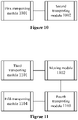
- FIG. 11 is a schematic structural diagram of a container transporting device based on dense storage according to an embodiment of the present disclosure.
- the device includes a third transporting module 1101, a moving module 1102, a fourth transporting module 1103, and fifth transporting module 1104.
- the third transporting module 1101 is configured to control, in a case that it is detected that at least one blocking container that blocks pickup of at least one target container is stored on a storage rack, a first robot to pick up the at least one blocking container from the storage rack.
- the moving module 1102 is configured to control the first robot to move in a circular way on the robot passage, or to control the first robot to move to a cache position.
- the cache position is at a nearby area that does not affect the pickup of the target container.
- the fourth transporting module 1103 is configured to control a second robot to pick up the at least one target container from the storage rack, and transport the at least one target container from a current position to a workstation.
- the fifth transporting module 1104 is configured to control the first robot to transport the at least one blocking container to an original storage position of the blocking container, an original storage position of the target container or an empty storage position on the storage rack.
- the third transporting module includes a third transporting subunit.
- the third transporting subunit is configured to control, in a case that the first robot has a cache mechanism, a container pickup mechanism of the first robot to pick the at least one blocking container from the storage rack, and sequentially store the at least one blocking container on the cache mechanism of the first robot until the cache mechanism of the first robot is entirely occupied.
- the third transporting subunit is further configured to control, in a case that the first robot does not have a cache mechanism, the container pickup mechanism of the first robot to pick up any one of the at least one container from the storage rack and place the blocking container on the container pickup mechanism of the first robot.
- the fourth transporting module includes a fourth transporting subunit.
- the fourth transporting subunit is configured to control, in a case that the second robot has a cache mechanism, the container pickup mechanism of the second robot to pick up the at least one target container from the storage rack, and store the at least one target container on the cache mechanism of the second robot until the cache mechanism of the second robot is entirely occupied.
- the fourth transporting subunit is further configured to control, in a case that the second robot does not have a cache mechanism, the container pickup mechanism of the second robot to pick up any one of the at least one target container from the storage rack and place the target container on the container pickup mechanism of the second robot.
- the device further includes a third position updating module, and a fourth position updating module.
- the third position updating module is configured to record, in a case that a position of the target container changes, a storage position of the target container and update a correspondence between the storage position of the target container and an identity of the target container.
- the fourth position updating module is configured to record, in a case that a position of the blocking container changes, a storage position of the blocking container and update a correspondence between the storage position of the blocking container and an identity of the blocking container.
- FIG. 12 shows a schematic structural diagram of a container transporting device based on dense storage according to an embodiment of the present disclosure.
- the device includes a sixth transporting module 1201 and a seventh transporting module 1202.
- the sixth transporting module 1201 is configured to control, in a case that it is detected that a blocking container that blocks return of a target container is stored on a storage rack, a robot to transport the blocking container from an original storage position of the blocking container on the storage rack to a cache position.
- the seventh transporting module 1202 is configured to control the robot to pick up the target container from a cache mechanism of the robot and place the target container at a return position on the storage rack.
- the sixth transporting module includes a sixth transporting subunit.
- the sixth transporting subunit is configured to control the robot to transport the blocking container from the original storage position of the blocking container on the storage rack to the original storage position of the target container.
- the seventh transporting module includes a seventh transporting subunit.
- the seventh transporting subunit is configured to control the robot to pick up the target container from the cache mechanism of the robot and place the target container at the original storage position of the blocking container on the storage rack.
- the sixth transporting module includes a sixth transporting subunit.
- the sixth transporting subunit is configured to control the robot to transport the blocking container from the original storage position of the blocking container on the storage rack to the cache mechanism of the robot.
- the seventh transporting module includes a seventh transporting subunit.
- the seventh transporting subunit is configured to control the robot to pick up the target container from the cache mechanism of the robot and place the target container at the original storage position of the target container on the storage rack.
- the device further includes an eighth transporting module.
- the eighth transporting module is configured to control the robot to transport the blocking container from the cache mechanism of the robot to the original storage position of the blocking container on the storage rack.
- the device further includes a fifth position updating module and a sixth position updating module.
- the fifth position updating module is configured to record, in a case that a position of the target container changes, a storage position of the target container and update a correspondence between the storage position of the target container and an identity of the target container.
- the sixth position updating module is configured to record, in a case that a position of the blocking container changes, a storage position of the blocking container and update a correspondence between the storage position of the blocking container and an identity of the blocking container.
- FIG. 13 is a schematic structural diagram of a container transporting device based on dense storage according to an embodiment of the present disclosure.
- the device includes a ninth transporting module 1301 and a tenth transporting module 1302.
- the ninth transporting module 1301 is configured to control, in a case that it is detected that a blocking container that blocks the return of the target container is stored on the storage rack, the first robot to pick up the blocking container from the storage rack and transport the blocking container to a cache position.
- the tenth transporting module 1302 is configured to control a second robot carrying the target container to transport the target container to a return position on the storage rack.
- the ninth transporting module includes a ninth transporting subunit.
- the ninth transporting subunit is configured to control the container pickup mechanism of the first robot to transport the blocking container from the original storage position of the blocking container on the storage rack to the original storage position of the target container.
- the tenth transporting module includes a tenth transporting subunit. The tenth transporting subunit is configured to control the container pickup mechanism of the second robot to transport the target container to the original storage position of the blocking container on the storage rack.
- the ninth transporting module includes a ninth transporting subunit.
- the ninth transporting subunit is configured to control the container pickup mechanism of the first robot to pick up the blocking container from the storage rack and place the blocking container on the container pickup mechanism of the first robot.
- the tenth transporting module includes a tenth transporting subunit. The tenth transporting subunit is configured to control the container pickup mechanism of the second robot to transport the target container to the original storage position of the target container on the storage rack.
- the device further includes an eleventh transporting module.
- the eleventh transporting module is configured to control the container pickup mechanism of the first robot to transport the blocking container to the original storage position of the blocking container or an empty storage position on the storage rack.
- the device further includes a seventh position updating module and an eighth position updating module.
- the seventh position updating module is configured to record, in a case that a position of the target container changes, a storage position of the target container and update a correspondence between the storage position of the target container and an identity of the target container.
- the eighth position updating module is configured to record, in a case that a position of the blocking container changes, a storage position of the blocking container and update a correspondence between the storage position of the blocking container and an identity of the blocking container.
- a container transporting method is further provided according to the present disclosure, which is applicable for transporting containers and removing obstacles under intense storage, multiple container pickup logics and container return logics are adopted, such that the reliability of the warehousing system based on intense storage can be ensured, thereby improving the efficiency of logistics transportation and reducing logistics costs.
- a computing device is further provided according to an embodiment of the present disclosure, which includes a memory, a processor, and computer instructions stored on the memory and can run on the processor, and the processor, when executing the instructions, performs the following steps:
- a computing device is further provided according to an embodiment of the present disclosure, which includes a memory, a processor, and computer instructions stored on the memory and can run on the processor, and the processor, when executing the instructions, performs the following steps:
- a computing device is further provided according to an embodiment of the present disclosure, which includes a memory, a processor, and computer instructions stored on the memory and can run on the processor, and the processor, when executing the instructions, performs the following steps:
- a computing device is further provided according to an embodiment of the present disclosure, which includes a memory, a processor, and computer instructions stored on the memory and can run on the processor, and the processor, when executing the instructions, performs the following steps:
- a computer-readable storage medium is further provided according to an embodiment of the present disclosure, which includes computer instructions that, when executed by a processor, implement the steps of the above container transporting method based on dense storage.
- the computer instructions include computer program codes, and the computer program codes may be in the form of source codes, object codes, executable files, or some intermediate forms.
- the computer-readable medium may include: any entity or device capable of carrying the computer program codes, recording medium, U disks, mobile hard disks, magnetic disks, optical disks, a computer memory, a read-only memory (ROM), a random access memory (RAM), electrical carrier signals, telecommunications signals, and software distribution medium. It should be noted that the content contained in the computer-readable medium may be appropriately added or deleted according to the requirements of the legislation and patent practice in jurisdiction. For example, in some jurisdictions, according to the legislation and patent practice, the computer-readable medium does not include electrical carrier signals and telecommunication signals.
Landscapes
- Engineering & Computer Science (AREA)
- Business, Economics & Management (AREA)
- Mechanical Engineering (AREA)
- Economics (AREA)
- Robotics (AREA)
- General Physics & Mathematics (AREA)
- Physics & Mathematics (AREA)
- Quality & Reliability (AREA)
- Marketing (AREA)
- Theoretical Computer Science (AREA)
- Entrepreneurship & Innovation (AREA)
- Operations Research (AREA)
- Development Economics (AREA)
- Strategic Management (AREA)
- Tourism & Hospitality (AREA)
- Human Resources & Organizations (AREA)
- General Business, Economics & Management (AREA)
- Accounting & Taxation (AREA)
- Finance (AREA)
- General Engineering & Computer Science (AREA)
- Manufacturing & Machinery (AREA)
- Automation & Control Theory (AREA)
- Warehouses Or Storage Devices (AREA)
Applications Claiming Priority (2)
| Application Number | Priority Date | Filing Date | Title |
|---|---|---|---|
| CN201911368462.8A CN111137610A (zh) | 2019-12-26 | 2019-12-26 | 一种基于密集存储的货箱搬运方法及装置 |
| PCT/CN2020/137952 WO2021129563A1 (fr) | 2019-12-26 | 2020-12-21 | Procédé de manipulation de conteneur utilisant un stockage dense |
Publications (3)
| Publication Number | Publication Date |
|---|---|
| EP4008653A1 true EP4008653A1 (fr) | 2022-06-08 |
| EP4008653A4 EP4008653A4 (fr) | 2023-04-12 |
| EP4008653B1 EP4008653B1 (fr) | 2026-04-29 |
Family
ID=70520521
Family Applications (1)
| Application Number | Title | Priority Date | Filing Date |
|---|---|---|---|
| EP20905037.6A Active EP4008653B1 (fr) | 2019-12-26 | 2020-12-21 | Procédé de manipulation de conteneur utilisant un stockage dense |
Country Status (7)
| Country | Link |
|---|---|
| US (1) | US20220332502A1 (fr) |
| EP (1) | EP4008653B1 (fr) |
| JP (1) | JP7544812B2 (fr) |
| KR (1) | KR102790618B1 (fr) |
| CN (1) | CN111137610A (fr) |
| AU (2) | AU2020104502A4 (fr) |
| WO (1) | WO2021129563A1 (fr) |
Families Citing this family (19)
| Publication number | Priority date | Publication date | Assignee | Title |
|---|---|---|---|---|
| EP4039618A4 (fr) | 2019-09-30 | 2022-11-23 | Hai Robotics Co., Ltd. | Procédé de commande de prise et de placement de cargaison, dispositif, dispositif de manipulation et robot de manipulation |
| CN111137610A (zh) * | 2019-12-26 | 2020-05-12 | 北京极智嘉科技有限公司 | 一种基于密集存储的货箱搬运方法及装置 |
| CN111620033A (zh) * | 2020-06-01 | 2020-09-04 | 北京极智嘉科技有限公司 | 一种库存管理系统及方法 |
| CN113264303A (zh) * | 2020-06-12 | 2021-08-17 | 深圳市海柔创新科技有限公司 | 取货控制的方法、系统、搬运机器人及存储介质 |
| CN112027472B (zh) * | 2020-09-08 | 2021-12-31 | 北京极智嘉科技股份有限公司 | 一种仓库搬运调度系统及控制方法 |
| CN113859839B (zh) * | 2020-09-30 | 2023-01-10 | 深圳市海柔创新科技有限公司 | 仓储管理的方法、装置、设备、介质及仓储系统 |
| CN114379969B (zh) * | 2020-10-16 | 2023-06-27 | 北京极智嘉科技股份有限公司 | 库存容器操作系统和方法 |
| CN114919910A (zh) * | 2020-11-20 | 2022-08-19 | 深圳市海柔创新科技有限公司 | 货物存放方法、装置、机器人、仓储系统及存储介质 |
| CN112407725B (zh) * | 2020-11-20 | 2022-11-22 | 深圳市海柔创新科技有限公司 | 货物取出方法、装置、机器人、仓储系统及存储介质 |
| DE202022002857U1 (de) * | 2021-01-21 | 2023-10-11 | Beijing Geekplus Technology Co., Ltd. | System zur Handhabung von Frachtkisten |
| CN113816049B (zh) * | 2021-02-20 | 2024-05-17 | 北京京东乾石科技有限公司 | 货箱调度方法、装置和系统 |
| CN113071840B (zh) * | 2021-03-31 | 2023-10-31 | 深圳市库宝软件有限公司 | 物料输送方法及设备 |
| CN114715591B (zh) * | 2022-04-19 | 2024-02-23 | 深圳市海柔创新科技有限公司 | 仓储管理方法、装置、系统、设备和机器人 |
| CN114933116B (zh) * | 2022-05-13 | 2023-07-04 | 深圳市库宝软件有限公司 | 挂单处理方法、装置、设备及存储介质 |
| CN115130961A (zh) * | 2022-06-29 | 2022-09-30 | 上海快仓智能科技有限公司 | 货架的存储方法、装置、电子设备及存储介质 |
| CN115384984B (zh) * | 2022-07-15 | 2026-02-24 | 北京京东振世信息技术有限公司 | 容器搬运方法、装置、电子设备、计算机介质和程序产品 |
| CN116573320B (zh) * | 2023-06-20 | 2026-01-20 | 北京京东乾石科技有限公司 | 机器人控制方法及装置、货物搬运系统 |
| CN116986236A (zh) * | 2023-09-12 | 2023-11-03 | 江苏智库智能科技有限公司 | 托盘高位存储方法及仓储系统 |
| CN117142156B (zh) * | 2023-10-30 | 2024-02-13 | 深圳市金环宇电线电缆有限公司 | 基于自动定位的线缆码垛控制方法、装置、设备及介质 |
Family Cites Families (15)
| Publication number | Priority date | Publication date | Assignee | Title |
|---|---|---|---|---|
| JPS5656402A (en) * | 1979-10-15 | 1981-05-18 | Hitachi Ltd | Loading method and apparatus for shelf |
| US4492504A (en) * | 1981-12-07 | 1985-01-08 | Bell & Howell Company | Materials handling system |
| ES2890505T5 (en) * | 2012-05-11 | 2025-03-11 | Ocado Innovation Ltd | Storage systems and methods for retrieving units from a storage system |
| US9415934B2 (en) * | 2014-05-14 | 2016-08-16 | Murata Machinery, Ltd. | Transport system and transport method |
| CN106429148A (zh) * | 2016-10-26 | 2017-02-22 | 长沙开元仪器股份有限公司 | 一种存储装置 |
| AU2017353094B2 (en) * | 2016-11-04 | 2023-11-30 | WITRON Logistik + Informatik GmbH & Co. KG | Flexible and compact order-picking system |
| KR102301520B1 (ko) * | 2017-06-01 | 2021-09-14 | 베이징 긱플러스 테크놀러지 씨오. 엘티디 | 물품 피킹 시스템 및 물품 피킹 방법 |
| CN107235276B (zh) * | 2017-06-05 | 2019-06-04 | 北京京东尚科信息技术有限公司 | 货物搬运方法和装置 |
| CN107226310A (zh) * | 2017-07-13 | 2017-10-03 | 武汉九州通物流有限公司 | 一种agv拆零拣选小车及方法 |
| CA3084526C (fr) * | 2017-11-14 | 2024-02-20 | Hai Robotics Co., Ltd. | Robot de transport et procede de ramassage base sur un robot de transport |
| CA3109329C (fr) * | 2018-08-10 | 2022-06-21 | Beijing Geekplus Technology Co., Ltd. | Procede et dispositif de deplacement d'article a base d'enregistrement dense, support de stockage et systeme d'enregistrement dense |
| CN109178743A (zh) * | 2018-08-10 | 2019-01-11 | 北京极智嘉科技有限公司 | 基于密集存储的物品搬移方法、装置、设备和存储介质 |
| CN110182529B (zh) * | 2019-04-11 | 2020-12-18 | 上海快仓智能科技有限公司 | 用于货架阵列的出入库控制方法和搬运系统 |
| CN111137610A (zh) * | 2019-12-26 | 2020-05-12 | 北京极智嘉科技有限公司 | 一种基于密集存储的货箱搬运方法及装置 |
| EP3975054A1 (fr) * | 2020-09-29 | 2022-03-30 | Robert Bosch GmbH | Dispositif et procédé de classification d'un signal d'entrée à l'aide d'un modèle de factorisation réversible |
-
2019
- 2019-12-26 CN CN201911368462.8A patent/CN111137610A/zh active Pending
-
2020
- 2020-12-21 US US17/639,788 patent/US20220332502A1/en active Pending
- 2020-12-21 AU AU2020104502A patent/AU2020104502A4/en active Active
- 2020-12-21 EP EP20905037.6A patent/EP4008653B1/fr active Active
- 2020-12-21 WO PCT/CN2020/137952 patent/WO2021129563A1/fr not_active Ceased
- 2020-12-21 KR KR1020227007448A patent/KR102790618B1/ko active Active
- 2020-12-21 JP JP2022514705A patent/JP7544812B2/ja active Active
- 2020-12-21 AU AU2020414892A patent/AU2020414892A1/en active Pending
Also Published As
| Publication number | Publication date |
|---|---|
| US20220332502A1 (en) | 2022-10-20 |
| AU2020104502A4 (en) | 2024-05-02 |
| KR102790618B1 (ko) | 2025-04-04 |
| AU2020414892A1 (en) | 2022-03-24 |
| EP4008653B1 (fr) | 2026-04-29 |
| JP7544812B2 (ja) | 2024-09-03 |
| CN111137610A (zh) | 2020-05-12 |
| WO2021129563A1 (fr) | 2021-07-01 |
| EP4008653A4 (fr) | 2023-04-12 |
| JP2022547669A (ja) | 2022-11-15 |
| KR20220065764A (ko) | 2022-05-20 |
Similar Documents
| Publication | Publication Date | Title |
|---|---|---|
| AU2020104502A4 (en) | Container handling method employing dense storage | |
| AU2021312093B2 (en) | Robot, cargo handling method, server and warehousing system | |
| JP7161586B2 (ja) | 貨物搬送方法、装置、サーバ及び搬送ロボット | |
| EP3851253B1 (fr) | Système et procédé de commande de robot, dispositif informatique et support de stockage | |
| EP4029810B1 (fr) | Système, procédé et dispositif de traitement de fusion | |
| WO2022095835A1 (fr) | Système et procédé de gestion d'entreposage | |
| JP6908683B2 (ja) | 倉庫管理システム、および移動体 | |
| EP3995416B1 (fr) | Système de stockage de conteneurs, système d'entreposage et robot | |
| JP2022530464A (ja) | インテリジェント倉庫保管システム、処理端末、倉庫保管ロボット及びインテリジェント倉庫保管方法 | |
| US20250263235A1 (en) | Three-dimensional warehouse handling and dispatching system and method for implementing item picking | |
| CA3109329C (fr) | Procede et dispositif de deplacement d'article a base d'enregistrement dense, support de stockage et systeme d'enregistrement dense | |
| EP4160347A1 (fr) | Procédé et système de gestion des stocks | |
| US20210149416A1 (en) | Method and system for facilitating operations in storage facilities | |
| CN113247508B (zh) | 机器人避让方法、控制终端及货物自动分拣系统 | |
| CN219448079U (zh) | 一种仓储系统 | |
| US12617611B2 (en) | Inventory management method and system | |
| CN114030800B (zh) | 货物搬运方法、装置、服务器以及搬运机器人 | |
| CN115818078A (zh) | 货物管理方法及系统、设备、存储介质 | |
| WO2025107515A1 (fr) | Procédé et système de commande de prélèvement dans un entrepôt | |
| CN120822907A (zh) | 库存信息更新方法和库存信息更新装置 |
Legal Events
| Date | Code | Title | Description |
|---|---|---|---|
| STAA | Information on the status of an ep patent application or granted ep patent |
Free format text: STATUS: THE INTERNATIONAL PUBLICATION HAS BEEN MADE |
|
| PUAI | Public reference made under article 153(3) epc to a published international application that has entered the european phase |
Free format text: ORIGINAL CODE: 0009012 |
|
| STAA | Information on the status of an ep patent application or granted ep patent |
Free format text: STATUS: REQUEST FOR EXAMINATION WAS MADE |
|
| 17P | Request for examination filed |
Effective date: 20220304 |
|
| AK | Designated contracting states |
Kind code of ref document: A1 Designated state(s): AL AT BE BG CH CY CZ DE DK EE ES FI FR GB GR HR HU IE IS IT LI LT LU LV MC MK MT NL NO PL PT RO RS SE SI SK SM TR |
|
| RIC1 | Information provided on ipc code assigned before grant |
Ipc: B65G 1/137 20060101ALN20221110BHEP Ipc: G06Q 50/28 20120101ALI20221110BHEP Ipc: G06Q 10/08 20120101ALI20221110BHEP Ipc: G05B 19/418 20060101ALI20221110BHEP Ipc: B65G 1/04 20060101AFI20221110BHEP |
|
| DAV | Request for validation of the european patent (deleted) | ||
| DAX | Request for extension of the european patent (deleted) | ||
| A4 | Supplementary search report drawn up and despatched |
Effective date: 20230313 |
|
| RIC1 | Information provided on ipc code assigned before grant |
Ipc: B65G 1/137 20060101ALN20230306BHEP Ipc: G06Q 50/28 20120101ALI20230306BHEP Ipc: G06Q 10/08 20120101ALI20230306BHEP Ipc: G05B 19/418 20060101ALI20230306BHEP Ipc: B65G 1/04 20060101AFI20230306BHEP |
|
| STAA | Information on the status of an ep patent application or granted ep patent |
Free format text: STATUS: EXAMINATION IS IN PROGRESS |
|
| 17Q | First examination report despatched |
Effective date: 20240311 |
|
| REG | Reference to a national code |
Ref country code: DE Free format text: PREVIOUS MAIN CLASS: B65G0001040000 Ref country code: DE Ref legal event code: R079 Ref document number: 602020071365 Country of ref document: DE Free format text: PREVIOUS MAIN CLASS: B65G0001040000 Ipc: G05B0019418000 |
|
| GRAP | Despatch of communication of intention to grant a patent |
Free format text: ORIGINAL CODE: EPIDOSNIGR1 |
|
| STAA | Information on the status of an ep patent application or granted ep patent |
Free format text: STATUS: GRANT OF PATENT IS INTENDED |
|
| RIC1 | Information provided on ipc code assigned before grant |
Ipc: G05B 19/418 20060101AFI20251106BHEP Ipc: B65G 1/04 20060101ALI20251106BHEP Ipc: G06Q 10/08 20120101ALI20251106BHEP Ipc: G06Q 10/0832 20230101ALI20251106BHEP Ipc: B65G 1/137 20060101ALN20251106BHEP |
|
| INTG | Intention to grant announced |
Effective date: 20251121 |
|
| GRAS | Grant fee paid |
Free format text: ORIGINAL CODE: EPIDOSNIGR3 |
|
| GRAA | (expected) grant |
Free format text: ORIGINAL CODE: 0009210 |
|
| STAA | Information on the status of an ep patent application or granted ep patent |
Free format text: STATUS: THE PATENT HAS BEEN GRANTED |
|
| AK | Designated contracting states |
Kind code of ref document: B1 Designated state(s): AL AT BE BG CH CY CZ DE DK EE ES FI FR GB GR HR HU IE IS IT LI LT LU LV MC MK MT NL NO PL PT RO RS SE SI SK SM TR |
|
| REG | Reference to a national code |
Ref country code: CH Ref legal event code: F10 Free format text: ST27 STATUS EVENT CODE: U-0-0-F10-F00 (AS PROVIDED BY THE NATIONAL OFFICE) Effective date: 20260429 |