EP4008830A1 - Procédé d'adaptation d'un niveau de séchage d'un programme de séchage pour un dispositif de traitement textile, procédé d'exécution d'un programme de séchage et dispositif de traitement textile - Google Patents
Procédé d'adaptation d'un niveau de séchage d'un programme de séchage pour un dispositif de traitement textile, procédé d'exécution d'un programme de séchage et dispositif de traitement textile Download PDFInfo
- Publication number
- EP4008830A1 EP4008830A1 EP21207892.7A EP21207892A EP4008830A1 EP 4008830 A1 EP4008830 A1 EP 4008830A1 EP 21207892 A EP21207892 A EP 21207892A EP 4008830 A1 EP4008830 A1 EP 4008830A1
- Authority
- EP
- European Patent Office
- Prior art keywords
- drying
- residual moisture
- textiles
- response signal
- operator
- Prior art date
- Legal status (The legal status is an assumption and is not a legal conclusion. Google has not performed a legal analysis and makes no representation as to the accuracy of the status listed.)
- Withdrawn
Links
Images
Classifications
-
- D—TEXTILES; PAPER
- D06—TREATMENT OF TEXTILES OR THE LIKE; LAUNDERING; FLEXIBLE MATERIALS NOT OTHERWISE PROVIDED FOR
- D06F—LAUNDERING, DRYING, IRONING, PRESSING OR FOLDING TEXTILE ARTICLES
- D06F58/00—Domestic laundry dryers
- D06F58/32—Control of operations performed in domestic laundry dryers
- D06F58/34—Control of operations performed in domestic laundry dryers characterised by the purpose or target of the control
- D06F58/36—Control of operational steps, e.g. for optimisation or improvement of operational steps depending on the condition of the laundry
- D06F58/38—Control of operational steps, e.g. for optimisation or improvement of operational steps depending on the condition of the laundry of drying, e.g. to achieve the target humidity
-
- D—TEXTILES; PAPER
- D06—TREATMENT OF TEXTILES OR THE LIKE; LAUNDERING; FLEXIBLE MATERIALS NOT OTHERWISE PROVIDED FOR
- D06F—LAUNDERING, DRYING, IRONING, PRESSING OR FOLDING TEXTILE ARTICLES
- D06F58/00—Domestic laundry dryers
- D06F58/32—Control of operations performed in domestic laundry dryers
- D06F58/34—Control of operations performed in domestic laundry dryers characterised by the purpose or target of the control
- D06F58/46—Control of the operating time
-
- D—TEXTILES; PAPER
- D06—TREATMENT OF TEXTILES OR THE LIKE; LAUNDERING; FLEXIBLE MATERIALS NOT OTHERWISE PROVIDED FOR
- D06F—LAUNDERING, DRYING, IRONING, PRESSING OR FOLDING TEXTILE ARTICLES
- D06F2101/00—User input for the control of domestic laundry washing machines, washer-dryers or laundry dryers
- D06F2101/02—Characteristics of laundry or load
-
- D—TEXTILES; PAPER
- D06—TREATMENT OF TEXTILES OR THE LIKE; LAUNDERING; FLEXIBLE MATERIALS NOT OTHERWISE PROVIDED FOR
- D06F—LAUNDERING, DRYING, IRONING, PRESSING OR FOLDING TEXTILE ARTICLES
- D06F2101/00—User input for the control of domestic laundry washing machines, washer-dryers or laundry dryers
- D06F2101/16—Target humidity for the drying process, e.g. very-dry cycles
-
- D—TEXTILES; PAPER
- D06—TREATMENT OF TEXTILES OR THE LIKE; LAUNDERING; FLEXIBLE MATERIALS NOT OTHERWISE PROVIDED FOR
- D06F—LAUNDERING, DRYING, IRONING, PRESSING OR FOLDING TEXTILE ARTICLES
- D06F2103/00—Parameters monitored or detected for the control of domestic laundry washing machines, washer-dryers or laundry dryers
- D06F2103/02—Characteristics of laundry or load
- D06F2103/08—Humidity
-
- D—TEXTILES; PAPER
- D06—TREATMENT OF TEXTILES OR THE LIKE; LAUNDERING; FLEXIBLE MATERIALS NOT OTHERWISE PROVIDED FOR
- D06F—LAUNDERING, DRYING, IRONING, PRESSING OR FOLDING TEXTILE ARTICLES
- D06F2105/00—Systems or parameters controlled or affected by the control systems of washing machines, washer-dryers or laundry dryers
- D06F2105/12—Humidity or dryness of laundry
-
- D—TEXTILES; PAPER
- D06—TREATMENT OF TEXTILES OR THE LIKE; LAUNDERING; FLEXIBLE MATERIALS NOT OTHERWISE PROVIDED FOR
- D06F—LAUNDERING, DRYING, IRONING, PRESSING OR FOLDING TEXTILE ARTICLES
- D06F2105/00—Systems or parameters controlled or affected by the control systems of washing machines, washer-dryers or laundry dryers
- D06F2105/44—Opening, closing or locking of doors
-
- D—TEXTILES; PAPER
- D06—TREATMENT OF TEXTILES OR THE LIKE; LAUNDERING; FLEXIBLE MATERIALS NOT OTHERWISE PROVIDED FOR
- D06F—LAUNDERING, DRYING, IRONING, PRESSING OR FOLDING TEXTILE ARTICLES
- D06F2105/00—Systems or parameters controlled or affected by the control systems of washing machines, washer-dryers or laundry dryers
- D06F2105/56—Remaining operation time; Remaining operational cycles
-
- D—TEXTILES; PAPER
- D06—TREATMENT OF TEXTILES OR THE LIKE; LAUNDERING; FLEXIBLE MATERIALS NOT OTHERWISE PROVIDED FOR
- D06F—LAUNDERING, DRYING, IRONING, PRESSING OR FOLDING TEXTILE ARTICLES
- D06F2105/00—Systems or parameters controlled or affected by the control systems of washing machines, washer-dryers or laundry dryers
- D06F2105/58—Indications or alarms to the control system or to the user
Definitions
- the invention relates to a method for adjusting a drying stage of a drying program for a textile treatment device, a method for carrying out a drying program and a textile treatment device.
- the US20020184789A1 discloses a dryer in which it is possible to adjust the drying result by correcting the time.
- the EP3342924A1 discloses a dryer that allows users to make changes through the display for any given residual moisture level. These changes are made before the start of the drying program.
- the object of the invention is to create an improved method for adjusting a drying stage of a drying program for a textile treatment device, an improved method for carrying out the drying program and an improved textile treatment device.
- this object is achieved by a method for adapting a drying stage of a drying program for a textile treatment device, a method for carrying out the drying program and a textile treatment device with the features of the main claims.
- the advantages that can be achieved with the invention are that the residual moisture levels in the textile treatment device or the drying result can be optimized with regard to the individually perceived residual moisture values at the end of the drying program and can be tailored to the operator. With feedback from the operator at the end of a drying program about the satisfaction with the residual moisture result, the residual moisture levels can be automatically adjusted after user input. Thus, the residual moisture levels can be corrected based on operator feedback. This makes it possible to adjust a drying level to the subjective perception of the operator.
- the textile treatment device can be designed as a washer-dryer or tumble dryer and is used to treat textiles, in particular to dry textiles.
- the textile treatment device is designed to be able to run at least one drying program that can be started by an operator to dry textiles placed in the textile treatment device.
- the drying level of the drying program can specify the level of residual moisture up to which the textiles should be dried.
- the drying stage can thus also be referred to as the residual moisture stage.
- a drying level can be specified for the drying program or the operator can be offered a selection option for selecting a drying level from a plurality of specified drying levels. Different drying levels can define different residual moisture levels at the end of the drying program. For example, the drying levels "cupboard dry" and "extra dry” can be selected.
- the residual moisture can represent the mass of liquid that is in the textiles, based on the dry weight.
- the residual moisture that can be achieved by executing the drying program can be controlled by the residual moisture parameter that is assigned to the drying stage. If the residual moisture parameter assigned to a drying level is changed, the residual moisture in the textiles will also change if the drying program is run with this drying level.
- the residual moisture parameter can represent the absolute value of the residual moisture to be achieved, a duration of the drying program or a parameter in an algorithm for controlling the drying program.
- the output device can include a display, for example.
- the question signal is suitable, for example, for controlling the output device in such a way that the output device issues the question as to whether the residual moisture content is satisfactory in a display suitable for the operator to perceive.
- the drying level can be adjusted by the operator, taking into account the evaluation of the residual moisture, so that the residual moisture corresponds to the operator's ideas when the drying program is run again, for example with the same drying level.
- the adjustment can be made by adjusting the residual moisture parameter assigned to the drying stage.
- the drying stage can define a changed residual moisture content in the textiles at the end of the drying program. If the operator has selected the same drying level when starting the drying program again, a different residual moisture can still be achieved by adjusting the residual moisture parameter.
- the residual moisture parameter of the drying stage can be changed by a first value if the response signal as the assessment represents textiles that are too damp.
- the change by the first value can cause the residual moisture to be lower when the drying program is run again with the drying stage than when the drying program was just run.
- the residual moisture parameters of the drying stage can be changed by a second value if the response signal as the assessment represents textiles that are too dry.
- the change by the second value can result in the residual moisture being greater when the drying program is run again with the drying stage than when the drying program was just run.
- the first value and the second value can have different signs. For example, the operator can choose between the answer options "too wet" or "too dry".
- the textile cleaning device can learn the right residual moisture for the operator and adjust the drying level accordingly.
- the residual moisture parameter can be changed by the first value in such a way that the residual moisture defined by the drying stage is reduced by a predetermined percentage, for example 1%.
- the residual moisture parameter can be changed by the second value in such a way that the residual moisture defined by the drying stage is increased by a predetermined percentage, for example 1%.
- the residual moisture parameter of the drying stage can be changed by a further first value in order to further reduce the residual moisture if the response signal as the evaluation represents textiles that are much too damp.
- the residual moisture parameters of the drying stage can be changed by a further second value in order to further increase the residual moisture if the response signal as the assessment represents textiles that are far too dry.
- the operator has several answer options here and can, for example, choose between "moist", “too moist", “dry” or "too dry”.
- the textile cleaning device can be the right one here Adapt residual moisture even better, since the operator has a larger selection of answer options when evaluating the residual moisture.
- the residual moisture parameter can be changed by the further first value in such a way that the residual moisture defined by the drying stage is reduced by a predetermined further percentage, for example 2%.
- the residual moisture parameter can be changed by the further second value in such a way that the residual moisture defined by the drying stage is increased by a predetermined further percentage, for example 2%.
- the residual moisture parameters of the drying stage cannot be adapted in the step of adapting if the response signal represents an expected residual moisture of the textiles as the evaluation.
- the operator selects this rating if he is satisfied with the residual moisture in the textiles.
- the textile cleaning appliance does not adjust the drying level or the residual moisture parameter assigned to the drying level.
- the residual moisture parameter of the drying stage can only be adjusted if the response signal and at least one preceding response signal as an evaluation consistently represent too low residual moisture or too high residual moisture. It can thus be avoided that the drying level is changed in the event of a one-time dissatisfaction of the operator. For example, the drying level can only be adjusted if the operator has selected the same rating, for example “too damp”, several times, for example five times.
- the method can also include a step of storing the evaluation of the response signal.
- a step of storing the ratings ratings given by the operator at the end of previous runs of the drying program can be taken into account when adjusting the residual moisture parameter.
- a counter can be used for storage, which counter can be set in response to a read-in response signal. For example, the adjustment step can only be carried out when the counter has reached a predetermined counter value. Otherwise, the adjustment step can be skipped.
- the query signal can be provided to the interface to the output device designed as a display device of the textile treatment device.
- the output device designed as a display device of the textile treatment device.
- the query signal can additionally or alternatively be provided to an interface of an external device.
- an external device can be a mobile device, for example a smartphone.
- the method may include a step of detecting an operator input indicative of the rating using a touch-sensitive sensor or a microphone.
- the response signal can be determined in response to the input. The operator can thus evaluate the residual moisture either manually or via voice control.
- the method can include a step of carrying out the drying program. At the end of the drying program, a door of the textile treatment device can be unlocked.
- the step of providing the query signal may be performed in response to the unlocking.
- the approach presented here also creates a control device which is designed to carry out, control or implement the steps of a variant of a method presented here in corresponding devices.
- the object on which the invention is based can also be achieved quickly and efficiently by this embodiment variant of the invention in the form of a device.
- the control device can be designed to read in input signals and to determine and provide output signals using the input signals.
- An input signal can represent, for example, a sensor signal that can be read in via an input interface of the device.
- An output signal may represent a control signal or a data signal that may be provided at an output interface of the device.
- the device can be designed to determine the output signals using a processing specification implemented in hardware or software.
- the device can include a logic circuit, an integrated circuit or a software module and can be implemented as a discrete component, for example, or can be comprised of a discrete component.
- a corresponding textile treatment device for carrying out a drying program for drying textiles can include a named control device.
- a drying level of the drying program can be adjusted using the control device. Even if the approach described is described using a household appliance, the textile treatment appliance described here or the method described here can be used accordingly in connection with a commercial or professional appliance.
- a computer program product or computer program with program code which can be stored on a machine-readable carrier or storage medium such as a semiconductor memory, a hard disk memory or an optical memory, is also advantageous. If the program product or program is executed on a computer or a device, then the program product or program can be used to carry out, implement and/or control the steps of the method according to one of the embodiments described above.
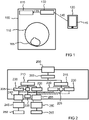
- FIG 1 shows a textile treatment device 100 according to an embodiment.
- the textile treatment device 100 is suitable for drying textiles 105 .
- the textile treatment device 100 is designed to carry out a drying program.
- a drying level is assigned to the drying program or different drying levels can be selected for the drying program by an operator.
- a residual moisture content in the textiles 105 at the end of the drying program is defined via the drying stage.
- the approach described allows adjustment of the residual moisture defined by the drying stage or stages in response to operator evaluation.
- at least one residual moisture parameter of the drying stage or stages is adjusted if the operator's evaluation indicates dissatisfaction on the part of the operator.
- the length of a drying time of the drying program can be controlled by the residual moisture parameter.
- the textile treatment device 100 can be referred to as a washer-dryer or tumble dryer.
- the operator would like to dry the textiles 105 in the textile treatment device 100, usually after they have been washed. To do this, the operator puts the textiles 105 into a textile treatment container 110 of the textile treatment device 100 and starts a drying program with a drying stage that defines the residual moisture content of the textiles 105 . If the drying stage has not yet been adjusted by the operator, the textile treatment appliance 100 dries the textiles 105 with the factory settings, ie a residual moisture content assigned to the drying stage at the factory is sought. After the end of the drying program, the operator has the opportunity to evaluate the residual moisture present in the textiles 105 .
- Such an evaluation is used to adjust at least that drying level that was set during the drying program that has just expired.
- the drying level By adjusting the drying level, the residual moisture associated with the drying level is adjusted according to the operator's assessment, for example increased or reduced. If the operator is satisfied with the residual moisture, no adjustment is made. According to one exemplary embodiment, the adjustment is only made when there are a number of evaluations from which a tendency can be identified as to whether the textiles appear too dry or too damp from the operator's point of view.
- a process for adjusting the drying level is started as soon as the actual drying program has ended and the door of the textile treatment container 110 is unlocked.
- the operator is then prompted to give an assessment of the residual moisture in the textiles 105 .
- the question as to whether the operator is satisfied with the residual moisture in the textiles 105 appears on an output device 115 embodied as a display, for example, of the textile treatment appliance 100 .
- the operator can now use a touch display, for example, to assess whether the textiles 105 are too damp or too dry.
- the operator can also respond via voice control.
- the external device 120 represents, for example, a mobile device that is coupled or can be coupled to the textile treatment device 100 via a communication interface.
- the evaluation is temporarily stored in a cloud, for example, and is transmitted to the textile treatment device 100 when the textile treatment device 100 is switched on again.
- the approach described thus includes various options for how the operator can evaluate the residual moisture, in which case the operator can be given one option or all options can be made available in parallel. This advantageously gives the operator the opportunity to evaluate the residual moisture result after the drying program.
- these evaluations are stored and after frequent bad evaluations, e.g.
- the textile treatment device 100 offers the operator the option of selecting different drying levels during drying.
- the "Cupboard dry” drying level is aimed at a residual laundry moisture content of 0%.
- the residual laundry moisture is a value standardized for a given room climate.
- the load is not dried 100% evenly, so that with a total residual moisture content of the load of 0%, there are items of laundry that are overdried and others that are still damp.
- the operator's perception of whether the laundry is "dry” with a final residual moisture content of 0% is very subjective. The operator often perceives the laundry with a residual moisture content of 0% as "too damp".
- he does not want to select the drying level "Cupboard Dry +" or “Extra Dry” because they suggest that the laundry is subject to heavy use.
- preset drying levels are optimized to the standardized residual moisture levels, with some drying levels deliberately making the residual moisture drier.
- the operator has the option of adjusting the drying levels in the drying program using a programming function.
- the residual moisture can be set up to 3% drier or wetter for each drying level. According to the approach presented here, a corresponding adjustment is also made automatically using the operator's evaluations.
- the approach described aims to ensure that the drying result is automatically adapted to the operator.
- the operator can subsequently adapt the drying level to his requirements without this being too complicated, since the evaluation is carried out, for example, via a simple touch display or simple voice control.
- the operator does not need to read a user manual to adjust the residual moisture associated with a dryness level.
- the residual moisture can be adjusted based on a satisfaction survey. This adjustment would then be possible in the case of a time drying by adjusting the time or in the case of table data by adjusting the values or in the case of a linear model by an offset.
- a residual moisture parameter assigned to the drying stage is adjusted for such an adjustment.
- the residual moisture parameter defines or influences, for example, the drying time, at least one value of the table data or the offset of the linear model.
- the residual moisture parameter flows into a control of the execution of the drying program. If the residual moisture appears too low to the operator, the residual moisture parameter is adjusted, for example, in such a way that the drying time is shortened or a desired residual moisture value is increased.
- the textile treatment device 100 has a control device 130 for adjusting the drying stage of the drying program.
- the control device 130 is implemented, for example, as part of a control device for controlling an operation of the textile treatment device 100 .
- the control device 130 is designed, for example, to use the output device 115 to cause a question regarding the operator's satisfaction with the residual moisture to be output and to read in an answer with a corresponding evaluation of the satisfaction.
- the control device 130 is designed to output a question signal 135 for activating the output device 115 and to read in the answer in the form of a response signal 140 .
- the question signal 135 is output to the display device 115 and the response signal 140 is read in via an interface to an input device 145 of the external device 120 embodied as a touch display. Accordingly, the question signal 135 can also be output to the external device 120 . Alternatively, the response signal 140 can also be read in via an input device of the textile treatment device 100 .
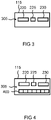
- FIG 2 shows a flowchart of a method for adjusting a drying stage of a drying program for a textile treatment device according to an embodiment.
- the textile treatment device can be the in figure 1 act described textile treatment device.
- Block 200 marks a state in which a remaining time of the drying program has ended and the door has been opened so that the operator can remove the textiles. Following this, in block 205, the operator's satisfaction with regard to the residual moisture is queried.
- a question signal is provided to an interface to an output device for outputting a corresponding question to the operator.
- the question is output using an output device in the form of a display 210 and additionally or alternatively via an app 215, which is executed on a mobile device, for example.
- an output device in the form of a display 210 and additionally or alternatively via an app 215, which is executed on a mobile device, for example.
- the rest of the process is identical.
- the operator has the opportunity to evaluate the existing residual moisture in the textiles.
- the answer options “too moist” 220, “ok” 225, and “too dry” 230 are offered using the display 210 and/or the app.
- block 240 is accessed.
- a first counter is incremented, for example by "1", and stored. If the first counter is less than a predetermined first counter value, the method ends without adjusting the drying level. If, on the other hand, the first counter has reached the predetermined first counter value, a residual moisture parameter of the drying stage is changed by a value in block 245 in order to reduce the residual moisture. For example, the residual moisture parameter is changed in such a way that the residual moisture caused by the drying stage is reduced by a predetermined percentage, for example by 1%. For this purpose, the residual moisture parameter is changed, for example, by a predetermined first value.
- the first counter is then set to zero in a block 250, ie reset.
- the first counter thus has the effect that in block 240 the residual moisture parameter is not changed until the assessment “too moist” 220 has been selected a predetermined number of times, for example five times.
- block 255 is accessed.
- a second counter is incremented by "1" and stored. If the second counter is less than a predetermined second counter value, the method terminates without adjusting the drying level. If, on the other hand, the second counter has reached the predetermined second counter value, a residual moisture parameter of the drying stage is changed by a value in block 260 in order to increase the residual moisture. For example, the residual moisture parameter is changed in such a way that the residual moisture caused by the drying stage is increased by a predetermined percentage, for example by 1%. For this purpose, the residual moisture parameter is changed, for example, by a predetermined second value.
- the second counter is then set to zero in a block 265, ie reset.
- the second counter causes the residual moisture parameter in block 240 to be changed only when the evaluation “too dry” 230 has been selected a predetermined number of times, for example five times.
- the counters can be decremented in a corresponding manner, or an alternative counting method for counting the corresponding ratings can be used.
- only one counter is used, which is either incremented or decremented in blocks 240,255.
- the first counter value and the second counter value can have the same amount but different signs.
- residual moisture values are determined from various measured variables with the aid of a mathematical model.
- a corresponding model equation is shifted by +1 or -1 accordingly. This can be done in blocks 245,260.
- the counter from blocks 240, 255 is set per drying stage per program and load quantity. Different counters can thus be provided for different drying stages and possibly for different loading quantities.
- the drying level is set 1% drier, for example, or 1% wetter in the case of "too dry”.
- the dryer or washer-dryer can use the feedback to learn the right residual moisture for the operator.
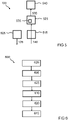
- FIG 3 shows an output device 115 for a textile treatment device according to an embodiment.
- the textile treatment device can be the in figure 1 act described textile treatment device.
- the output device 115 represents, for example, a display device in the form of a display of the textile treatment device or alternatively of an external device.
- a display 305 displayed by the output device 115 can thus be displayed via display or app.
- the display 305 appears controlled by a question signal after the drying program of the textile treatment device is completed and after the door of the textile goods container is unlocked. Using the display 305, the operator is asked whether he is satisfied with the drying result, three possible answers are suggested here by way of example. If output device 115 is designed as a touch display, the operator responds, for example, by touching touch fields on output device 115.
- the question as to whether the drying result is satisfactory is answered by voice control.
- FIG 4 shows an output device 115 for a textile treatment device according to an embodiment.
- the output device 115 corresponds to that shown in FIG figure 3 described display device, the display 305 in addition to the blocks 220, 225, 230 also has a level indicator 400.
- the level indicator 400 presents a scale or level that allows the operator to more accurately assess their assessment of residual moisture.
- the fields of the scale are characterized by the blocks 220, 225, 230. In this way, the operator is given three grades for his evaluation both with regard to textiles that are too moist and with regard to textiles that are too dry.
- figure 5 13 shows a control device 130 for a textile treatment device according to an exemplary embodiment.
- the control device 130 is designed to carry out the steps of FIG figure 2 carry out the procedure described.
- the control device 130 has a provision device 505 , a reading device 515 and an adaptation device 525 .
- the provision device 505 is designed to send a query signal 135 at the end of a drying program running with a selected drying stage to an interface to an output device, for example the one based on FIG figure 1 provide the display described.
- the output device is controlled so that the operator, for example, based on figure 3 shown display is displayed, by which the operator is prompted to indicate his satisfaction with the residual moisture content of the textiles.
- the reading device 515 is designed to read in a response signal 140 via an interface to an input device in response to the provision of the query signal 135, which enables the operator to enter an input regarding his satisfaction.
- the input is made by touching one of the in figure 3 displayed blocks of a touch-sensitive display.
- the response signal 140 thus represents an assessment by the operator of satisfaction with the residual moisture.
- the adjustment device 525 is designed to adjust a residual moisture parameter 530 of the drying stage using the response signal 140 . Adjusting the drying level means that a different residual moisture content is aimed for in a subsequent cycle of the drying program.
- the adjustment device 525 is designed to change the residual moisture parameter 530 of the drying stage by a first value if the response signal represents textiles that are too damp as a rating, and to change a second value if the response signal represents textiles that are too dry as a rating.
- the first and the second value can, for example, lead to a change in the residual moisture associated with the drying stage by a predetermined first positive or negative percentage.
- the residual moisture parameter 530 is changed in stages according to an exemplary embodiment.
- the residual moisture parameter 530 of the drying stage is changed by a further first value if the response signal as an assessment represents textiles that are much too damp, and changed by a further second value if the response signal as an assessment represents textiles that are much too dry.
- the further first and the further second value can lead, for example, to a change in the residual moisture associated with the drying stage by a predetermined second positive or negative percentage, which is greater than the first percentage in terms of absolute value.
- the adjustment device 525 is designed not to adjust the residual moisture parameter 530 in response to each response signal 140, but rather only if both the response signal 140 last read in and at least one previous response signal from a previous cycle of the drying program have a matching evaluation, for example "too wet " or "too dry”.
- the adaptation device 525 is designed to store the evaluation transmitted via the response signal 140 in a storage device 535 .
- the storage device 535 includes at least one counter with which a number of corresponding evaluations can be stored.
- the adjustment device 525 is designed not to change the residual moisture parameter 530 if the response signal 140 indicates a residual moisture of the textiles expected by the operator as the evaluation, ie the operator is satisfied with the drying result.
- the control device 130 includes a control device 540 which is designed to control execution of the drying program.
- the control device 540 is designed to control the drying program using the residual moisture parameter 530 in such a way that the residual moisture defined by the drying stage is reached.
- the control device 540 is designed to cause a door of the textile treatment appliance to be unlocked at the end of the drying program, and the providing device 505 is designed to provide the query signal 135 in response to the unlocking of the door.
- control device 130 represents a control unit of the textile treatment device, or the control device 130 is integrated into such a control unit.
- figure 6 shows a flowchart of a method 600 for adjusting a drying stage of a drying program for a textile treatment device, the drying stage defining a residual moisture content in textiles at the end of the drying program.
- the method can, for example, using the basis of figure 5 described control device are executed.
- the method 600 includes a step 605 in which, at the end of the drying program, a query signal is provided to an interface to an output device.
- the question signal causes a question to be output to the operator, by means of which the operator is asked whether he is satisfied with the residual moisture in the textiles.
- a response signal is read in via an interface to an input device.
- the response signal indicates an operator-entered rating of the operator's satisfaction with the residual moisture.
- a residual moisture parameter of the drying stage is adjusted for a subsequent cycle of the drying program using the response signal.
- the score indicated by the response signal is stored in a step 620, for example using a counter.
- step 615 of adapting is carried out or skipped depending on a value of the counter, for example.
- the method 600 optionally includes a step 625 in which an input from the operator is detected and the response signal corresponding to the input is determined.
- the method also includes a step 635, in which the drying program is carried out, with a door of the textile treatment device being unlocked at the end of the drying program. Step 605 of providing the query signal is carried out in response to the unlocking.
Landscapes
- Engineering & Computer Science (AREA)
- Textile Engineering (AREA)
- Drying Of Solid Materials (AREA)
- Control Of Washing Machine And Dryer (AREA)
Applications Claiming Priority (1)
| Application Number | Priority Date | Filing Date | Title |
|---|---|---|---|
| DE102020132406.5A DE102020132406A1 (de) | 2020-12-07 | 2020-12-07 | Verfahren zum Anpassen einer Trockenstufe eines Trockenprogrammes für ein Textilbehandlungsgerät, Verfahren zum Durchführen eines Trockenprogrammes und Textilbehandlungsgerät |
Publications (1)
| Publication Number | Publication Date |
|---|---|
| EP4008830A1 true EP4008830A1 (fr) | 2022-06-08 |
Family
ID=78617243
Family Applications (1)
| Application Number | Title | Priority Date | Filing Date |
|---|---|---|---|
| EP21207892.7A Withdrawn EP4008830A1 (fr) | 2020-12-07 | 2021-11-12 | Procédé d'adaptation d'un niveau de séchage d'un programme de séchage pour un dispositif de traitement textile, procédé d'exécution d'un programme de séchage et dispositif de traitement textile |
Country Status (3)
| Country | Link |
|---|---|
| US (1) | US20220178069A1 (fr) |
| EP (1) | EP4008830A1 (fr) |
| DE (1) | DE102020132406A1 (fr) |
Families Citing this family (1)
| Publication number | Priority date | Publication date | Assignee | Title |
|---|---|---|---|---|
| DE102023208300A1 (de) * | 2023-08-30 | 2025-03-06 | BSH Hausgeräte GmbH | Wäschepflegesystem mit einer Steuerung |
Citations (5)
| Publication number | Priority date | Publication date | Assignee | Title |
|---|---|---|---|---|
| US20020184789A1 (en) | 2001-05-25 | 2002-12-12 | Maytag Corporation | Self programming clothes dryter system |
| DE102008042290A1 (de) * | 2008-09-23 | 2010-03-25 | BSH Bosch und Siemens Hausgeräte GmbH | Verfahren zum Betreiben eines Hausgeräts und Hausgerät mit einer Eingabeeinheit |
| DE102016107078A1 (de) * | 2015-05-13 | 2016-11-17 | Miele & Cie. Kg | Haushaltsgerät mit einer Bedieneinheit zum Eingeben einer Bewertung eines Reinigungs- und/oder Trocknungsergebnisses und Verfahren zum Bedienen eines Haushaltsgeräts |
| EP3342924A1 (fr) | 2016-12-29 | 2018-07-04 | Whirlpool Corporation | Sélection par des clients de l'humidité restante souhaitée dans des vêtements par le biais de l'interface utilisateur au niveau d'une machine ou d'un dispositif électronique portable |
| KR20200105026A (ko) * | 2019-02-28 | 2020-09-07 | 삼성전자주식회사 | 건조기 및 그의 제어 방법 |
Family Cites Families (1)
| Publication number | Priority date | Publication date | Assignee | Title |
|---|---|---|---|---|
| JP3739377B2 (ja) * | 2003-12-10 | 2006-01-25 | シャープ株式会社 | 洗濯乾燥機 |
-
2020
- 2020-12-07 DE DE102020132406.5A patent/DE102020132406A1/de active Pending
-
2021
- 2021-11-12 EP EP21207892.7A patent/EP4008830A1/fr not_active Withdrawn
- 2021-12-07 US US17/543,857 patent/US20220178069A1/en not_active Abandoned
Patent Citations (6)
| Publication number | Priority date | Publication date | Assignee | Title |
|---|---|---|---|---|
| US20020184789A1 (en) | 2001-05-25 | 2002-12-12 | Maytag Corporation | Self programming clothes dryter system |
| US6519871B2 (en) * | 2001-05-25 | 2003-02-18 | Maytag Corporation | Self programming clothes dryer system |
| DE102008042290A1 (de) * | 2008-09-23 | 2010-03-25 | BSH Bosch und Siemens Hausgeräte GmbH | Verfahren zum Betreiben eines Hausgeräts und Hausgerät mit einer Eingabeeinheit |
| DE102016107078A1 (de) * | 2015-05-13 | 2016-11-17 | Miele & Cie. Kg | Haushaltsgerät mit einer Bedieneinheit zum Eingeben einer Bewertung eines Reinigungs- und/oder Trocknungsergebnisses und Verfahren zum Bedienen eines Haushaltsgeräts |
| EP3342924A1 (fr) | 2016-12-29 | 2018-07-04 | Whirlpool Corporation | Sélection par des clients de l'humidité restante souhaitée dans des vêtements par le biais de l'interface utilisateur au niveau d'une machine ou d'un dispositif électronique portable |
| KR20200105026A (ko) * | 2019-02-28 | 2020-09-07 | 삼성전자주식회사 | 건조기 및 그의 제어 방법 |
Also Published As
| Publication number | Publication date |
|---|---|
| US20220178069A1 (en) | 2022-06-09 |
| DE102020132406A1 (de) | 2022-06-09 |
Similar Documents
| Publication | Publication Date | Title |
|---|---|---|
| DE69124266T2 (de) | Verfahren zum einstellen von spritzgiessbedingungen | |
| EP3487376B1 (fr) | Commande d'un lave-vaisselle | |
| DE102011087274A1 (de) | Hausgerät mit direkter Erkennung des zu behandelnden Gutes in Bezug auf eine Ausführung von erforderlichen Behandlungschritten | |
| WO2006042708A1 (fr) | Procede de commande d'un processus de cuisson dans un appareil de cuisson | |
| WO2001067193A2 (fr) | Dispositif et procede pour introduire des parametres pour machines et pour effectuer des simulations et des observations | |
| EP3160321B1 (fr) | Appareil ménager utilisant de l'eau | |
| DE102008042290A1 (de) | Verfahren zum Betreiben eines Hausgeräts und Hausgerät mit einer Eingabeeinheit | |
| EP2379788B1 (fr) | Procédé pour prédire un défaut d'équilibrage, dispositif correspondant et appareil ménager équipé d'un tel dispositif | |
| DE102012223611A1 (de) | Verfahren zum aufeinander abgestimmten Betreiben einer Textilwaschmaschine und eines Wäschetrockners | |
| EP4008830A1 (fr) | Procédé d'adaptation d'un niveau de séchage d'un programme de séchage pour un dispositif de traitement textile, procédé d'exécution d'un programme de séchage et dispositif de traitement textile | |
| EP3376714A1 (fr) | Système de gestion de données et procédé de réglage ou de commande d'un appareil électroménager | |
| EP2741011B1 (fr) | Appareil de cuisson | |
| DE102015014325A1 (de) | Numerische Steuervorrichtung | |
| DE102017211716A1 (de) | Verfahren zur Behandlung von Wäsche in einem Waschtrockner oder einem System aus Waschmaschine und Trockner sowie hierzu geeignete Haushaltsgeräte | |
| WO2019072910A1 (fr) | Système de test multi-utilisateurs et procédé de configuration d'un système de test multi-utilisateurs | |
| DE102017222327A1 (de) | Verfahren zur automatisierten Prozesskontrolle einer Digitaldruckmaschine | |
| DE102010036988A1 (de) | Verfahren zum Bereitstellen von Garprogrammen | |
| DE102014203346A1 (de) | Messgerät und Messverfahren mit in Größe und Informationsgehalt anpassbaren Benutzerdialogen | |
| EP3879023B1 (fr) | Procédé de détection d'un chargement d'un tambour rotatif dans un lave-linge, et lave-linge correspondant | |
| DE102017200174A1 (de) | Wäschepflegegerät und Verfahren zum Betreiben eines solchen | |
| DE102021106808A1 (de) | Feldgerät und Verfahren für Netzwerke der industriellen Automation | |
| EP1494100A1 (fr) | Procédé et dispositif de commande paramétrable | |
| EP3771765A1 (fr) | Procédé et dispositif de fonctionnement d'un appareil électroménager et système électroménager | |
| EP4516981A1 (fr) | Système d'entretien du linge doté d'une commande | |
| DE19727795C1 (de) | Verfahren und Anordnung zur neuronalen Modellierung einer Prozeßgröße und Steuerung des Prozesses mit dieser Größe |
Legal Events
| Date | Code | Title | Description |
|---|---|---|---|
| PUAI | Public reference made under article 153(3) epc to a published international application that has entered the european phase |
Free format text: ORIGINAL CODE: 0009012 |
|
| STAA | Information on the status of an ep patent application or granted ep patent |
Free format text: STATUS: THE APPLICATION HAS BEEN PUBLISHED |
|
| AK | Designated contracting states |
Kind code of ref document: A1 Designated state(s): AL AT BE BG CH CY CZ DE DK EE ES FI FR GB GR HR HU IE IS IT LI LT LU LV MC MK MT NL NO PL PT RO RS SE SI SK SM TR |
|
| STAA | Information on the status of an ep patent application or granted ep patent |
Free format text: STATUS: THE APPLICATION IS DEEMED TO BE WITHDRAWN |
|
| 18D | Application deemed to be withdrawn |
Effective date: 20221209 |