EP4009045B1 - Transistor à effet de champ à grille élargie avec couche de fonctionnalisation aptamère pour la mesure de la concentration d'hormones dans les biofluides et procédé de fabrication correspondant - Google Patents
Transistor à effet de champ à grille élargie avec couche de fonctionnalisation aptamère pour la mesure de la concentration d'hormones dans les biofluides et procédé de fabrication correspondant Download PDFInfo
- Publication number
- EP4009045B1 EP4009045B1 EP20211196.9A EP20211196A EP4009045B1 EP 4009045 B1 EP4009045 B1 EP 4009045B1 EP 20211196 A EP20211196 A EP 20211196A EP 4009045 B1 EP4009045 B1 EP 4009045B1
- Authority
- EP
- European Patent Office
- Prior art keywords
- biosensor
- layer
- biofluid
- cortisol
- aptamers
- Prior art date
- Legal status (The legal status is an assumption and is not a legal conclusion. Google has not performed a legal analysis and makes no representation as to the accuracy of the status listed.)
- Active
Links
Images



Classifications
-
- G—PHYSICS
- G01—MEASURING; TESTING
- G01N—INVESTIGATING OR ANALYSING MATERIALS BY DETERMINING THEIR CHEMICAL OR PHYSICAL PROPERTIES
- G01N27/00—Investigating or analysing materials by the use of electric, electrochemical, or magnetic means
- G01N27/26—Investigating or analysing materials by the use of electric, electrochemical, or magnetic means by investigating electrochemical variables; by using electrolysis or electrophoresis
- G01N27/403—Cells and electrode assemblies
- G01N27/414—Ion-sensitive or chemical field-effect transistors, i.e. ISFETS or CHEMFETS
- G01N27/4145—Ion-sensitive or chemical field-effect transistors, i.e. ISFETS or CHEMFETS specially adapted for biomolecules, e.g. gate electrode with immobilised receptors
-
- G—PHYSICS
- G01—MEASURING; TESTING
- G01N—INVESTIGATING OR ANALYSING MATERIALS BY DETERMINING THEIR CHEMICAL OR PHYSICAL PROPERTIES
- G01N33/00—Investigating or analysing materials by specific methods not covered by groups G01N1/00 - G01N31/00
- G01N33/48—Biological material, e.g. blood, urine; Haemocytometers
- G01N33/50—Chemical analysis of biological material, e.g. blood, urine; Testing involving biospecific ligand binding methods; Immunological testing
- G01N33/53—Immunoassay; Biospecific binding assay; Materials therefor
- G01N33/543—Immunoassay; Biospecific binding assay; Materials therefor with an insoluble carrier for immobilising immunochemicals
- G01N33/54366—Apparatus specially adapted for solid-phase testing
- G01N33/54373—Apparatus specially adapted for solid-phase testing involving physiochemical end-point determination, e.g. wave-guides, FETS, gratings
- G01N33/5438—Electrodes
-
- A—HUMAN NECESSITIES
- A61—MEDICAL OR VETERINARY SCIENCE; HYGIENE
- A61B—DIAGNOSIS; SURGERY; IDENTIFICATION
- A61B5/00—Measuring for diagnostic purposes; Identification of persons
- A61B5/145—Measuring characteristics of blood in vivo, e.g. gas concentration or pH-value ; Measuring characteristics of body fluids or tissues, e.g. interstitial fluid or cerebral tissue
- A61B5/14507—Measuring characteristics of blood in vivo, e.g. gas concentration or pH-value ; Measuring characteristics of body fluids or tissues, e.g. interstitial fluid or cerebral tissue specially adapted for measuring characteristics of body fluids other than blood
-
- A—HUMAN NECESSITIES
- A61—MEDICAL OR VETERINARY SCIENCE; HYGIENE
- A61B—DIAGNOSIS; SURGERY; IDENTIFICATION
- A61B5/00—Measuring for diagnostic purposes; Identification of persons
- A61B5/145—Measuring characteristics of blood in vivo, e.g. gas concentration or pH-value ; Measuring characteristics of body fluids or tissues, e.g. interstitial fluid or cerebral tissue
- A61B5/14546—Measuring characteristics of blood in vivo, e.g. gas concentration or pH-value ; Measuring characteristics of body fluids or tissues, e.g. interstitial fluid or cerebral tissue for measuring analytes not otherwise provided for, e.g. ions, cytochromes
-
- A—HUMAN NECESSITIES
- A61—MEDICAL OR VETERINARY SCIENCE; HYGIENE
- A61B—DIAGNOSIS; SURGERY; IDENTIFICATION
- A61B5/00—Measuring for diagnostic purposes; Identification of persons
- A61B5/145—Measuring characteristics of blood in vivo, e.g. gas concentration or pH-value ; Measuring characteristics of body fluids or tissues, e.g. interstitial fluid or cerebral tissue
- A61B5/1468—Measuring characteristics of blood in vivo, e.g. gas concentration or pH-value ; Measuring characteristics of body fluids or tissues, e.g. interstitial fluid or cerebral tissue using chemical or electrochemical methods, e.g. by polarographic means
-
- G—PHYSICS
- G01—MEASURING; TESTING
- G01N—INVESTIGATING OR ANALYSING MATERIALS BY DETERMINING THEIR CHEMICAL OR PHYSICAL PROPERTIES
- G01N27/00—Investigating or analysing materials by the use of electric, electrochemical, or magnetic means
- G01N27/26—Investigating or analysing materials by the use of electric, electrochemical, or magnetic means by investigating electrochemical variables; by using electrolysis or electrophoresis
- G01N27/403—Cells and electrode assemblies
- G01N27/414—Ion-sensitive or chemical field-effect transistors, i.e. ISFETS or CHEMFETS
- G01N27/4146—Ion-sensitive or chemical field-effect transistors, i.e. ISFETS or CHEMFETS involving nanosized elements, e.g. nanotubes, nanowires
-
- H—ELECTRICITY
- H10—SEMICONDUCTOR DEVICES; ELECTRIC SOLID-STATE DEVICES NOT OTHERWISE PROVIDED FOR
- H10D—INORGANIC ELECTRIC SEMICONDUCTOR DEVICES
- H10D64/00—Electrodes of devices having potential barriers
- H10D64/20—Electrodes characterised by their shapes, relative sizes or dispositions
- H10D64/27—Electrodes not carrying the current to be rectified, amplified, oscillated or switched, e.g. gates
- H10D64/311—Gate electrodes for field-effect devices
- H10D64/411—Gate electrodes for field-effect devices for FETs
- H10D64/511—Gate electrodes for field-effect devices for FETs for IGFETs
- H10D64/517—Gate electrodes for field-effect devices for FETs for IGFETs characterised by the conducting layers
- H10D64/519—Gate electrodes for field-effect devices for FETs for IGFETs characterised by the conducting layers characterised by their top-view geometrical layouts
-
- A—HUMAN NECESSITIES
- A61—MEDICAL OR VETERINARY SCIENCE; HYGIENE
- A61B—DIAGNOSIS; SURGERY; IDENTIFICATION
- A61B2562/00—Details of sensors; Constructional details of sensor housings or probes; Accessories for sensors
- A61B2562/12—Manufacturing methods specially adapted for producing sensors for in-vivo measurements
- A61B2562/125—Manufacturing methods specially adapted for producing sensors for in-vivo measurements characterised by the manufacture of electrodes
-
- B—PERFORMING OPERATIONS; TRANSPORTING
- B82—NANOTECHNOLOGY
- B82Y—SPECIFIC USES OR APPLICATIONS OF NANOSTRUCTURES; MEASUREMENT OR ANALYSIS OF NANOSTRUCTURES; MANUFACTURE OR TREATMENT OF NANOSTRUCTURES
- B82Y15/00—Nanotechnology for interacting, sensing or actuating, e.g. quantum dots as markers in protein assays or molecular motors
-
- B—PERFORMING OPERATIONS; TRANSPORTING
- B82—NANOTECHNOLOGY
- B82Y—SPECIFIC USES OR APPLICATIONS OF NANOSTRUCTURES; MEASUREMENT OR ANALYSIS OF NANOSTRUCTURES; MANUFACTURE OR TREATMENT OF NANOSTRUCTURES
- B82Y5/00—Nanobiotechnology or nanomedicine, e.g. protein engineering or drug delivery
Definitions
- the present invention relates to a sensor apparatus that may be used to sense the concentration of the hormone of stress, cortisol, in human biofluids, such as blood, sweat, interstitial fluids, saliva, tears and urine.
- the sensor apparatus of the present invention is defined in claim 1. More specifically, the apparatus is based on an electrode with a layer of graphene decorated with aptamers that is electrically connected to the gate of a semiconductor device. A change in the concentration of cortisol in the biofluid is mirrored in a change of the current of the semiconductor device.
- the application also relates to a corresponding sensing method (not claimed) and to a method of fabricating the sensor apparatus of the present invention (claim 15).
- MOSFETs metal-oxide-semiconductor field-effect transistors
- ISFETs ion-sensitive field-effect transistors
- an ISFET sensor is based on the dependence of the threshold voltage of a MOSFET on the gate work function, which can be modulated by the charge of an ion-sensitive membrane.
- ISFETs As state-of-the-art nano-MOSFETs operate at low voltage with low currents, ISFETs inherit their high charge sensitivity. Any chemical reactions at the top of the gate dielectric with the various species existing in the solution may induce a change of gate stack electrical characteristics. Therefore, the current - voltage characteristic of the ISFET sensor can be modulated if the gate dielectric is exposed to interactions with fluids.
- the gate stack is part of the so-called front-end-of-line (FEOL) process that is highly standardised and cannot be easily modified or functionalised for sensing.
- FEOL front-end-of-line
- EEGFETs extended-gate field-effect transistors
- the base transducer is a standard nano-MOSFET while the sensing element is formed by a specific functional layer on the extension of the metal gate that can be an external electrode or a metal layer fabricated in the back-end-of-line (BEOL) process, and connected to the nano-MOSFET gate.
- the EGFET configuration has major advantages thanks to the separation of the integrated transducing element from the functional layers, including higher stability, less drift and even less temperature sensitivity. Few research groups have attempted to design cortisol sensors exploiting FET devices, but these solutions fail to fulfil the sensitivity and selectivity performance requirements needed when sensing human biofluids.
- Debye screening effect in ionic liquids that prevents its electrical potential to extend further than a certain distance, known as Debye length ( ⁇ D ).
- the Debye length is a measure of a charge carrier's net electrostatic effect in a solution and how far its electrostatic effect persists.
- the value of ⁇ D depends on the ionic strength of the liquid. For instance, ⁇ D in phosphate-buffered saline (1X PBS), which is commonly used in biological research, is less than 1 nm.
- the physical lengths of antibody-antigen complexes, usually utilised for ISFET biosensors, are greater than ⁇ D associated with physiological media.
- the challenge for designing a FET sensor for detection of the cortisol is the choice of an appropriate catch probe overcoming the Debye length.
- the electrical recognition of the cortisol is subject to the use of an electrically active mediator catch probes that have their own charge to modulate the gate potential within the detectable Debye length.
- the binding between the catch probe and the cortisol will cause a change in the total gate potential, and consequently in the measured drain current.
- different capturing probes including e.g. molecularly sensitive polymers and antibodies have been used in the reported ISFET devices for detection of the cortisol.
- these types of capturing probes have the disadvantage that it is difficult to synthesise them in vitro, and thus they have a relatively high batch-to-batch difference. Furthermore, it is difficult to design them for different degrees of affinity for a targeted molecule versus a modified disturbing analogue. Moreover, they are strongly affected by temperature fluctuations, and are instable for long term storage.
- US2019/376926A1 discloses an analyte detector for detecting at least one analyte in at least one fluid sample.
- the analyte detector comprises at least one multipurpose electrode exposable to the fluid sample.
- the analyte detector further comprises at least one field-effect transistor in electrical contact with the at least one multipurpose electrode.
- the analyte detector further comprises at least one electrochemical measurement device configured for performing at least one electrochemical measurement using the multipurpose electrode.
- WO2019/244113A1 concerns a field-effect transistor device, or an ion, molecule or biomarker field-effect transistor device or sensor. It concerns in particular a field-effect transistor device or field-effect transistor sensor for sensing ions, molecules or biomarkers in a fluid.
- WO2019/044993A1 provides is a device for detecting, diagnosing, and/or treating a disease in the skin or the state of skin.
- the device comprises: a microneedle array provided with a plurality of microneedles; labeled molecules attached to the microneedles; and a detection unit that detects, as an electrical signal, a change produced due to the labelled molecules attached to the microneedles being separated from the microneedles.
- US2019/0223795A1 discloses a system for monitoring at least presence of a bioanalyte.
- the system comprises: a substrate having a skin contact surface, a microneedle outwardly protruding from the skin contact surface, a sensing complex positioned in the microneedle, and a circuit attached to the substrate.
- WO2019/051471A1 discloses a system for sensing one or more analytes in a first biofluid and a second biofluid and methods of using the system.
- the system may include a first subsystem with a first sensor for sensing a first analyte in the first biofluid and a second subsystem with a second sensor for sensing a second analyte in the second biofluid.
- the first biofluid is a non-sweat biofluid and the second biofluid is sweat.
- the system may be used to detect lag time for measuring an analyte in one of the biofluids.
- Enhancement of cortisol measurement sensitivity by laser illumination for AlGaN/GaN transistor biosensor by Kyoungmin Woo et al. (Kyoungmin Woo et al., Biosensors and Bioelectronics, Volume 159, 2020, 112186 ) discloses a study, where a high electron mobility transistor device was used as an immuno biosensor to measure concentration of a stress hormone, cortisol, by using selective binding on cortisol monoclonal antibody (c-Mab).
- WO2020/217996A1 discloses a flexible device having an insulating substrate, a source electrode, a drain electrode, and an extended gate electrode that are formed with spaces therebetween on a surface of the insulating substrate.
- a channel is disposed between the source electrode and the drain electrode.
- a gate dielectric is formed so as to cover the entire channel and a portion of the extended gate electrode.
- the insulating substrate is a flexible thin film having light transmittance.
- the extended gate electrode is a carbon material thin film having biocompatibility and light transmittance.
- the channel is an organic semiconductor thin film, and the gate dielectric is an ionic liquid or an ion gel.
- Similar methods and FET device principles as the ones proposed here can be used to sense other hormones in biofluids, by changing the type of used aptamers in the proposed graphene-based electrode. All these types of sensors can be considered as being label-free, proving solutions for real-time quasi-continuous measurements of hormone concentrations in sweat.
- a biosensor for sensing cortisol concentration in human biofluids as recited in claim 1.
- the present invention thus proposes a cortisol biosensor comprising a transistor-based transducer, which may be a standard CMOS for example, such as a standard 0.18 ⁇ M CMOS transistor, whose gate is externally extended with a sensing electrode, which may comprise a platinum element, and on which an atomically thin layer of graphene has been transferred.
- a transistor-based transducer which may be a standard CMOS for example, such as a standard 0.18 ⁇ M CMOS transistor, whose gate is externally extended with a sensing electrode, which may comprise a platinum element, and on which an atomically thin layer of graphene has been transferred.
- the graphene layer is in turn decorated with aptamers, such as 61-nuclotide-based aptamers.
- the combined use of a thin graphene layer, and the aptamers, and in particular the 61-nuclotide-based aptamers, as catching probes or sites allow the enhancement of the sensor response in a concentration range (1 nM - 10 ⁇ M) wider than the biological one of the human circadian rhythm (83 nM - 0.69 ⁇ M).
- the graphene layer offers surface dimensions comparable with the analyte dimensions, and the short enough probes allows the Debye screening provided by the ionic double layer generated on every charged surface immerged in an ionic solution to be overcome.
- the proposed cortisol sensor based on a simple EGFET configuration has the possibility to be fully integrated in a low-power wearable system.
- the proposed sensor also has the advantages of having a low limit of detection (LOD), extended linear range, high sensitivity, negligible drift and low hysteresis.
- the invention proposes a first of its kind predictive unified calibrated model for hormone sensing with FETs, capable of predicting the sensor response in all the working regimes with high accuracy, using both FET-specific electrical and sensor-specific concentration parameters.
- a hormone is understood to mean any member of a class of signalling molecules, produced by glands in multicellular organisms.
- the sensor according to the present invention can be used for both point-of-care single shot measurements, as well as for continuous measurements in wearable systems.
- a wearable sensor-on-chip comprising the biosensor according to the first aspect of the present invention.
- x and/or y means “one or both of x and y.”
- x, y, and/or z means any element of the seven-element set ⁇ (x), (y), (z), (x, y), (x, z), (y, z), (x, y, z) ⁇ .
- x, y and/or z means “one or more of x, y, and z.”
- the term “comprise” is used herein as an open-ended term. This means that the object encompasses all the elements listed, but may also include additional, unnamed elements. Thus, the word “comprise” is interpreted by the broader meaning "include”, “contain” or “comprehend”.
- the present example embodiment demonstrates a label-free cortisol detection method and a related apparatus with an extended-gate field-effect transistor (EGFET), which overcomes the Debye screening limitation for charge sensing by using aptamer-decorated, and in particular 61-basepair aptamer-decorated single-layer graphene on platinum as a gate electrode.
- EGFET extended-gate field-effect transistor
- the proposed solution is a label-free sensing method because no label is attached to the substance to be sensed, which is thus sensed without modifying it.
- the present embodiment comprises a platinum element as part of the sensing electrode or element, but any other noble metal element could be used instead. In chemistry, noble metals are understood to be metallic elements that show outstanding resistance to chemical attack even at high temperatures.
- noble metals comprises ruthenium (Ru), rhodium (Rh), palladium (Pd), osmium (Os), iridium (Ir), platinum (Pt), gold (Au), copper (Cu), silver (Ag), rhenium (Re), and mercury (Hg).
- the sensing element is physically separated from the electrical transducer, enabling the possibility to implement the sensor in a three-dimensional (3D) configuration, with a nano-MOSFET as a base voltametric transducer, and the sensing electrode fabricated in the BEOL of a CMOS process, resulting in a low power wearable sensory electronic chip.
- the use of atomically thin graphene is particularly advantageous to chemically bind the aptamers and bring the recognition event of the analytes within the Debye limit of detection, with high sensitivity.
- Figure 1 schematically illustrates the sensing apparatus 1, device or system, also referred to simply as a sensor or biosensor.
- a transistor-based transducer 3 is used to determine the characteristics of the transistor, and more specifically the I DS - V G responses, to deduce the cortisol concentration in the liquid to be sensed, where I DS is the transistor drain current, i.e. the drain to source current, and V G is the gate voltage.
- the transducer is a MOSFET, such as a nano-MOSFET, and in particular an 18 ⁇ m MOSFET.
- a conductive channel also known as a FET channel
- a source element referred to also as a source
- a drain element node, terminal or region to allow current, referred to as drain current, to flow in the channel.
- the source element referred to also as a source
- the drain element in this example comprises a drain electrode or electrical contact 9 in direct contact with a drain doped region 11.
- These two doped regions are of the same type, namely either of n or p type.
- the conductive channel can be formed in a channel element 13 with adjustable conductivity between the source and drain doped regions in the present example.
- the channel element is a thin or ultra-thin silicon (Si) body (in this example with a thickness smaller than 50 nm).
- An insulator 15 or a dielectric layer is placed between the channel element 13 and a gate electrode 17, i.e. a conductive element, such as a metal layer or plate.
- the gate electrode and the insulator are both part of the gate stack or gate element.
- the insulator is in this example on the channel element.
- a substrate 19, referred to also as a base silicon, is also provided, and is in this example in direct contact with the first and second doped regions 7, 11 and the channel element 13.
- the first and second doped regions 7, 11, the channel element 13 and the substrate 19 are in this example of silicon with possibly different doping levels.
- the first and second doped regions are of n type, while the substrate is of p type, or vice versa.
- the gate is extended through an external electrically connected electrode 21, which in this specific example is a platinum Pt electrode or platinum on glass electrode, which is properly functionalised with a monolayer graphene sheet 23, decorated with selected aptamers 25 to address the detection of the cortisol within the Debye length.
- Graphene is understood as an allotrope of carbon consisting of a single layer of atoms arranged in a two-dimensional honeycomb lattice. The graphene sheet and the aptamers thus collectively form a functionalisation layer deposited on top of the electrode 21.
- the functionalisation layer is arranged to be in contact with the solution (a fluid) 27 with a given cortisol concentration.
- the graphene sheet 23 is disposed on the fluid facing surface of the electrode 21.
- the electrode 21 together with at least a portion of the functionalisation layer is understood to form a sensing electrode element.
- the functionalisation layer also known as a sensor or probe material layer, is used for selective detection of the properties of the analytes of interest (in this case cortisol hormones).
- the platinum/graphene electrode 21 is exposed to, or immersed in a liquid solution 27, where a reference electrode 29, such as a standard Ag/AgCl or fluorinated graphene reference electrode, may be used to electrically bias the gate of the MOSFET 3 through the solution 27.
- the sensing gate stack may be defined to comprise at least the solution 27, the reference electrode 29 and the functionalisation layer.
- the sensor 1 also comprises an input bias source 31, which in this example is a voltage source.
- the voltage value across the bias voltage source 31 is denoted by V REF .
- the input bias source is configured to apply a static DC voltage signal to the solution 27 under test that is placed between the reference electrode 29 and the functionalised graphene electrode 21.
- the word "signal" is used in the present description in its broad sense and does not imply that any information would be coded in the signal.
- the applied signal here has a constant signal level but it can be tuned to different values to place the FET 3 in the most convenient operation point from the point of view of signal-to-noise ratio and the power consumption.
- other voltage signals may be applied instead if one wants to drive the sensing element into other regimes of operation.
- the bias voltage source is connected to the reference electrode 29 by an electrical connector 33.
- the reference electrode 29 may be considered to be an electrically conductive element, optionally a substantially flat plate, such as a metal plate, in which a reversible chemical reaction can happen at the surface to maintain the interface potential with the liquid.
- This electrode is usually immersed in a chlorine-saturated solution in order to stabilise its potential for all pH values and to avoid dechlorination of the surface.
- the notation "reference electrode” also covers any type of integrated miniaturised reference electrode or an integrated miniaturised quasi-reference electrode, as well as a simple metal electrode immersed in the solution.
- the bias voltage source 31 is arranged to electrically bias the reference electrode 29 and thereby to set an electric potential of the solution.
- the reference electrode 29 is used to bias the solution.
- An electrical contact pad 35 is provided on the sensing electrode 21, and which is coupled via another electrical connector 33 to a gate electrical contact 37.
- the source electrical contact 5 is grounded, while the drain electrical contact 9 is connected to another voltage source 39 to electrically bias the source element.
- the drain electrode 9 can be biased by the voltage source 39, as shown in Figure 1 , and in this case the current I DS is monitored (also shown in Figure 1 ), or can it be biased by a constant current source, and in this case the change of the drain voltage would be monitored.
- the significant advantage of this proposed configuration relies on using any stable and reproducible standard CMOS technology node (data reported here are for a 0.18 ⁇ m CMOS) for the FET transistor as a transducer, while separately functionalising the extended electrode that is connected to the transistor gate.
- This configuration results in the possibility of obtaining a fully 3D lab-on-chip sensory system with the active detecting element being fabricated in the BEOL process, i.e. the specific Pt/graphene/aptamer layer, and the reference electrode (e.g. another fluorinated metal/graphene electrode) in the BEOL of the CMOS process.
- the active detecting element being fabricated in the BEOL process, i.e. the specific Pt/graphene/aptamer layer, and the reference electrode (e.g. another fluorinated metal/graphene electrode) in the BEOL of the CMOS process.
- the active detecting element being fabricated in the BEOL process
- the reference electrode e.g. another fluorinated metal/graphene electrode
- such a conceptual LoS system includes an integrated microfluidic system, such as an SU-8 photoresist integrated microfluidic system, that allows the liquid under test (LUT) to flow over both the planar chlorinated reference electrode and the graphene/aptamer sheet.
- an integrated microfluidic system such as an SU-8 photoresist integrated microfluidic system, that allows the liquid under test (LUT) to flow over both the planar chlorinated reference electrode and the graphene/aptamer sheet.
- a graphene film or layer 23 is deposited on a substrate 41, which in this example is a copper substrate.
- the deposition is in this example carried out by chemical vapor deposition (CVP).
- a thin layer of poly(methyl methacrylate) (PMMA) 43 which is a transparent thermoplastic, and more specifically acrylic or acrylic glass, is coated, and more specifically spin-coated, onto the as grown graphene film 23 on the substrate followed by a baking process and the etching of the substrate 41 by for example an ammonium persulfate 0.1 M solution as shown in Figure 2c .
- the floated polymer/graphene is rinsed with DI water several times and then fished out onto the platinum plate 45, which is on top of a glass layer 47, and thus collectively forming an extended gate (or at least part of it) as shown in Figure 2d .
- the polymer i.e.
- the PMMA layer is dissolved for example with acetone and rinsed with isopropyl alcohol (IPA), for example.
- IPA isopropyl alcohol
- the prepared electrode 21 is functionalised with aptamers 25 as shown in Figure 2f .
- linker molecules 49 are used to connect or attach the aptamers to the graphene 23.
- 1-Pyrenebutyric acid N-hydroxysuccinimide ester (PBSE) with a thickness of 0.75 nm is used as the linker molecule between the aptamers 25 and the graphene sheet 23.
- PBSE molecules have a thickness or length of 0.75 nm or approximately 0.75 nm.
- the PBSE molecules 49 can attach to the graphene surface by their carbon rings via ⁇ - ⁇ interactions.
- the length of the amine group, which is added at the 5' end of the aptamer to enable it for the EDS-NHS reaction with the PBSE molecules, is in this example 0.91 nm. Therefore, the total distance between the aptamer and the graphene surface (and more specifically the distance between the distal end of the amine group and the graphene surface) is 1.66 nm as also illustrated in Figure 4 . It is to be noted that the aptamer sequence used in the present example is 5'-amine-AG CAG CAC AGA GGT CAGATG CAA ACC ACA CCT GAG TGG TTAGCG TAT GTC ATT TAC GGACC.
- the proposed method and apparatus can be used for other aptamer sequences as well that could have specific catch feature for other types of hormones.
- the Debye length in a physiological salt environment (1X PBS), diluted 0.1X PBS, and 0.01X PBS are approximately 0.7 nm, 2.4 nm, and 7.4 nm, respectively
- the Debye length in 0.05X PBS which is used in the present example as the solution for taking the measurement of the response of the sensor 1, should be between 2.4 nm and 7.4 nm. Therefore, this method allows us to retain the catch probe aptamers 25 close to the conductive surface, and the Debye length ⁇ D is not exceeded, and the aptamers can induce their negative charges to the extended gate electrode surface.
- the final modified electrode is electrically connected to the gate of the sensing MOSFET, which may be fabricated in a 0.18 ⁇ m CMOS process.
- aptamers are single-stranded nucleic acid molecules, which are negatively charged due to the presence of a phosphate group in each nucleotide of the nucleic acid strand. Aptamers can fold into three-dimensional topologies, with specifically designed pockets for binding with a target of interest. Compared to antibodies, aptamers have superior advantages as catch probes as they are synthesised in vitro, reducing the batch-to-batch difference. Additionally, they can be designed for different degrees of affinity for a targeted molecule versus a modified disturbing analogue.
- aptamers are less affected by temperature fluctuations and are more stable for long term storage. They can be covalently immobilised on most surfaces by modifying the 5' or 3' end.
- the aptamers that can be used to detect cortisol levels have 40, 61 and 85 nucleotides. The one with 85 nucleotides when applied to a FET sensor would have a detection limit of 50 nM.
- the shorter length of the aptamer is expected to have better sensitivity and lower detection limit as it has higher chance to not exceed the Debye length when it reacts with the target.
- V T EGFET V T FET ⁇ ⁇ M q + E REF + ⁇ Sol ⁇ ⁇ C , where the V T FET is the threshold voltage of the MOSFET 3, ⁇ M is the work function of the metal gate, i.e., the sensing electrode 21, and relative to the vacuum, E REF is the potential of the reference electrode 29, and ⁇ Sol is the surface dipole potential of the solution 27.
- the surface potential ⁇ is modified by the number of negative charges induced by the folded aptamers 25, which results in a right shift of the I DS - V REF curves of a n-channel MOSFET.
- the electrical dipole ⁇ at the interface between the metal gate (i.e. the sensing electrode 21) and the solution 27 and the potential across the electrochemical double layer, which are charge layers, are the two phenomena that modulate the gate potential across the MOS.
- the value of ⁇ is influenced by different microscopic phenomena, such as the distribution of charges in the immobilised chemical species, and the ionic physisorption and chemisorption exchange between the modified gate and the solution 27.
- the threshold voltage can be affected and hence deteriorate the sensitivity of an EGFET.
- the sensitive recognition of small molecules at low concentrations using the FET sensors may have particular challenges related to screening and size effects.
- CNTs carbon nanotubes
- a graphene-based FET method Sensitive detection of small molecules at low concentrations by carbon nanotubes (CNTs) or by a graphene-based FET method is challenging due to the reduced electric field-effect of small size and few charge analytes and is even more difficult for uncharged analytes.
- the transfer characteristics, I DS - V REF of the EGFET transducer with different cortisol concentrations in prepared buffer solutions, ranging between 1 nM and 10 ⁇ M (corresponding to cortisol concentrations in human biofluids, such as plasma and sweat), have been systematically recorded at low drain voltage (100 mV), ensuring linear region operation.
- the goal is to achieve a high sensitivity in the whole range of cortisol concentrations (over four orders of magnitude) with a lower limit in the nM range.
- the response of the EGFET sensor has been studied in different regimes of the inversion channel charge: (i) the weak inversion region (where V REF is smaller than V T , and the current is given by a diffusion mechanism), and (ii) the strong inversion region of operation (when V REF is greater than V T , and the current is given by a drift mechanism).
- the modulation of the conductance of the FET-based sensors upon binding of the target is correlated with the concentration when the gate and drain voltages are fixed.
- the I DS - V REF curves shift to the right direction as the cortisol concentration increases.
- a notable achievement of the proposed sensor functionalisation is that the I DS - V REF curves show a negligible hysteresis, typically lower than 4 mV, and a small variation between repeated measurement with the same cortisol concentration.
- the extraction of the voltage shifts is performed at constant current both in the subthreshold operation regime ( V REF ⁇ V T ) and in the strong inversion operation regime ( V REF > V T ) within a wide range of cortisol concentrations, from 1 nM and 10 ⁇ M.
- I D const , corresponding to the variation of the applied reference voltage to obtain the same drain current for different cortisol concentrations
- the proposed FET sensor 1 shows similar voltage sensitivity for both working regimes, with a stable S V and excellent linearity for detecting cortisol over four decades of concentration, demonstrating the full sensing capability of the designed aptamer-based catch mechanism.
- the LOD of the sensor in this example is 0.2 nM. The value of LOD depends on the sensitivity of the sensor. As previously explained, the sensitivity is limited by the additional phenomena affecting the value of ⁇ .
- a graphene surface has a tendency to attract some biological molecules. Therefore, a high concentration of the aptamers, e.g. 50 ⁇ M to 200 ⁇ M, and more specifically approximately 100 ⁇ M, is used for the functionalisation of the electrode 21 to cover the surface of the graphene 23 by aptamers as densely as possible and to minimise the free graphene spaces, and therefore to decrease any unspecific attachment of the molecules on the surface of the graphene 23.
- a too dense population of the aptamers 25 on the surface of the graphene 23 may restrict them to bend freely after attachment to the cortisol 51 as a result of space disturbance by the neighbouring aptamers. This phenomenon creates a trade-off, and it limits the sensitivity of this sensor and the corresponding LOD.
- Equation 2 is uniquely adapted to investigate a FET sensor, as it captures the role of threshold voltage, body factor and temperature in a single unified equation, which can be simplified into traditional equations per regimes of operation.
- Equation 2 is valid in all the operation regions of the sensor, and it is believed to be the first unified analytical expression capable of precisely predicting FET sensor response to the cortisol, to analytically capture the sensing performance and optimise the signal-to-noise ratio and power consumption.
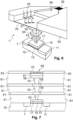
- Figures 6 to 8 illustrate a system-on-chip or a sensor-on-chip configuration according to the second embodiment of the present invention.
- the above teachings are thus in this embodiment applied in a sensor-on-chip system.
- Figure 6 shows the configuration in a schematic perspective view
- Figure 7 is a cross-sectional view
- Figure 8 is a top view of the sensor-on-chip configuration.
- the configuration comprises a fully 3D-integrated reference electrode 29 on top of an electronic silicon chip.
- the transducer gate electrode 17 is connected to the sensing electrode 21 by an electrically conductive structure forming an electrical connector comprising an alternating arrangement of electrically conductive vias 53 and other conductive elements 55 as shown in Figures 6 and 7 .
- the sensing electrode 21 in this example comprises a first electrically conductive element 57 and a second electrically conductive element 59.
- the first conductive element 57 is a platinum element which may thus be substantially identical to the platinum plate 45 used in the configuration of Figure 1 .
- the glass layer is replaced in the present embodiment with a metal plate, where the metal may be one of aluminium, aluminium-copper alloy, and copper.
- the conductive elements 55 may also be made of one of aluminium, aluminium-copper alloy, and copper.
- the electrically conductive structure may thus be understood to form an electrically conductive wire or electrical connector between the sensing electrode 21 and the transducer gate electrode 17.
- the electrically conductive structure is laterally fully or substantially fully encompassed or surrounded by an insulating element or dielectric 61 along the entire length or substantially entire length of the electrical connector.
- the insulating element may thus be called a lateral insulator.
- the insulating element is a low permittivity dielectric, such as a silicon oxide.
- the lateral insulators are omitted in Figure 6 for illustration purposes.
- the electrical connectors to the drain and source elements are also omitted in the figures.
- the electronic chip further comprises in its top part a microfluidic channel element 63 comprising one or more microfluidic channels 65, where also the sensing region is located.
- a microfluidic channel is understood to mean a hollowed-out space in the microfluidic channel element 63, and which has its cross-sectional dimension (when the cross section is taken orthogonally to the longitudinal axis of the channel) from tens to hundreds of micrometres, or more specifically between 10 micrometres and 500 micrometres.
- the sensing region comprises the functionalisation layer as described above.
- a reference electrode is also provided in the microfluidic channel as shown in Figure 8 . The solution 27 to be sensed flows into the sensing region according to the direction of the arrow shown in Figure 8 .
- V REF V G
- the configuration of Figures 6 to 8 may thus be used as a patch on a skin to measure the cortisol concentration in biofluids by following the principles explained above.
- the proposed configuration is particularly advantageous as it includes an integrated transistor transducer together with an integrated reference electrode, which is preferably placed in the microfluidic channel, and is advantageously in this example a thin plate-like element.
- Figure 9 schematically illustrates in a cross-sectional view the third embodiment of the present invention.
- the configuration of Figure 9 is somewhat similar to the configuration of Figures 6 to 8 . More specifically, the arrangement of Figure 9 is also a system-on-chip or a sensor-on-chip configuration.
- the configuration of Figure 9 comprises an array of needles 69 for collecting and guiding fluids, and more specifically interstitial fluids, to the sensing region of the sensor 1.
- the needles are thus configured to penetrate at least the topmost skin layer, i.e., the epidermis, but optionally without piercing any blood veins.
- the length of the needles may thus be designed so that they are only configured to pierce the topmost skin layer.
- the array of needles comprises one or more needles, and typically between 5 and 500 needles, or more specifically between 10 and 300 needles or between 50 and 250 needles.
- the needles are received in a skin interface element 71, which is placed directly or indirectly on the skin, when the sensor 1 is in use.
- the skin interface element 71 is made of any suitable biocompatible material, such as any suitable polymer, silicon, or metal.
- the fluids flow through the hollow needles thanks to the capillary effect to an internal (fluid) cavity 73 within the skin interface element, which in turn faces the sensing region comprising the functionalised sensing electrode 21, such that the internal cavity 73 is in fluid communication with the sensing region.
- the fluid flow direction is illustrated by the arrows in Figure 9 .
- a microfluidic interposer may optionally be placed between the skin interface element 71 and the microfluidic channel element 63 to hermetically seal the microfluidic channel element 63. Furthermore, as shown in Figure 9 , there may be a flexible substrate 75 on the substrate 19. It is to be noted that Figure 9 omits electrical connectors to the drain and source elements. The elements in Figure 9 apart from the flexible substrate 19, the needles 69, the skin interface element 71 and the microfluidic interposer may be considered to form an electronic chip.
- the sensory system of Figure 9 may be summarised as a sensor-on-chip system integrated as described above, and placed inside or on top of an array of needles that exploits microfluidics to collect and drain an external biofluid and uses microfluidic channels to wet the functionalised electrode in order to finally sense the cortisol concentration in the collected biofluid.
- Figure 9 also shows another microfluidic channel 74, which is an optional feature, and which is useful in the case where the sensing of the collected interstitial fluid is done continuously or substantially continuously.
- this channel is advantageously connected through the skin interface element 71 to an external adsorbent layer or to a micropump that would extract at a given flow rate the collected fluid in order to allow the liquid under test to be renewed, and to allow the cortisol concentration of a new solution sample to be measured.
- This kind of channel would thus form a fluid evacuation channel to remove the fluid or at least some of it from the internal cavity 73 through the channel 74.
- the present invention proposes a new design for an EGFET sensor 1 for selective recognition or sensing of cortisol hormones (or other hormones) by exploiting a single layer of graphene on a metal layer, and aptamers as the gate electrode and catch probes, respectively.
- the utilisation of the aptamers as the recognition elements make the proposed sensor highly sensitive, selective and stable.
- the proposed EGFET 1 is hysteresis-free and showed unique sub-nanomolar detection limit, negligible drift, and high selectivity over a wide dynamic range of concentrations. Its dynamic range and low detection limit make it a promising candidate for the detection of normal and abnormal amount of the cortisol in biofluids, such as sweat, saliva and serum.
Landscapes
- Health & Medical Sciences (AREA)
- Life Sciences & Earth Sciences (AREA)
- Physics & Mathematics (AREA)
- Engineering & Computer Science (AREA)
- Molecular Biology (AREA)
- Chemical & Material Sciences (AREA)
- Immunology (AREA)
- Pathology (AREA)
- General Health & Medical Sciences (AREA)
- Biomedical Technology (AREA)
- General Physics & Mathematics (AREA)
- Analytical Chemistry (AREA)
- Biochemistry (AREA)
- Chemical Kinetics & Catalysis (AREA)
- Veterinary Medicine (AREA)
- Heart & Thoracic Surgery (AREA)
- Surgery (AREA)
- Animal Behavior & Ethology (AREA)
- Optics & Photonics (AREA)
- Public Health (AREA)
- Biophysics (AREA)
- Medical Informatics (AREA)
- Hematology (AREA)
- Urology & Nephrology (AREA)
- Microelectronics & Electronic Packaging (AREA)
- Electrochemistry (AREA)
- Microbiology (AREA)
- Cell Biology (AREA)
- Biotechnology (AREA)
- Food Science & Technology (AREA)
- Medicinal Chemistry (AREA)
- Nanotechnology (AREA)
- General Chemical & Material Sciences (AREA)
- Spectroscopy & Molecular Physics (AREA)
- Investigating Or Analyzing Materials By The Use Of Electric Means (AREA)
Claims (15)
- Un biocapteur de cortisol (1) pour détecter la concentration de cortisol dans un biofluide (27), le biocapteur (1) comprenant :- un transducteur de transistor électrique (3) comprenant une électrode de grille de transistor (17) ;- un élément d'électrode de détection (21, 23) comprenant un élément métallique (45, 57) ayant une surface faisant face au biofluide, et une seule couche de graphène (23) sur la surface faisant face au biofluide de l'élément métallique (45, 57) formant ainsi une feuille de graphène monocouche sur l'élément métallique (45, 57), l'élément d'électrode de détection (21, 23) étant connecté à l'électrode de grille de transistor (17) par un connecteur électrique (33, 53, 55) pour former une configuration de grille étendue avec l'électrode de grille de transistor (17) ;- une électrode de référence (29) configurée pour être immergée dans, ou en contact avec le biofluide (27), et configurée pour polariser électriquement l'électrode de grille de transistor (17) à travers le biofluide (27),dans lequel l'élément d'électrode de détection (21, 23) est fonctionnalisé par au moins une couche d'aptamères (25) placés indirectement ou directement sur la seule couche de graphène (23), et configurée pour capturer des hormones cortisol dans le biofluide (27) pour changer ainsi le potentiel de surface de l'élément d'électrode de détection (21, 23).
- Le biocapteur (1) selon la revendication 1, dans lequel la seule couche de graphène (23) définit une région de détection, dans lequel le biocapteur (1) comprend un canal microfluidique (65), et dans lequel la région de détection et/ou l'électrode de référence (29) est/sont dans le canal microfluidique (65).
- Le biocapteur (1) selon la revendication 2, dans lequel le canal microfluidique (65) est formé dans un élément de canal microfluidique (63), dans lequel le canal microfluidique (65) est un espace évidé dans l'élément de canal microfluidique (63), et dans lequel le canal microfluidique (65) a un diamètre de section transversale orthogonalement à un axe longitudinal du canal microfluidique entre 10 micromètres et 500 micromètres, ou plus spécifiquement entre 50 micromètres et 300 micromètres.
- Le biocapteur (1) selon l'une quelconque des revendications précédentes, dans lequel l'élément métallique (45, 57) est un élément en métal noble, et en particulier un élément en platine.
- Le biocapteur (1) selon l'une quelconque des revendications précédentes, dans lequel les aptamères (25) ont une extrémité proximale fixée directement ou indirectement à la seule couche de graphène (23), et une extrémité distale opposée éloignée de la seule couche de graphène (23), et dans lequel les extrémités distales des aptamères (25) sont comprises entre 0.7 nm et 7.4 nm de la seule couche de graphène (23).
- Le biocapteur (1) selon l'une quelconque des revendications précédentes, dans lequel le biocapteur (1) comprend en outre un ensemble de molécules de liaison (49) placées entre la seule couche de graphène (23) et les aptamères (25) pour fixer les aptamères (25) aux molécules de liaison (49).
- Le biocapteur (1) selon la revendication 6, dans lequel les molécules de liaison (49) sont des molécules d'ester de N-hydroxysuccinimide d'acide 1-pyrènebutyrique.
- Le biocapteur (1) selon l'une quelconque des revendications précédentes, dans lequel l'électrode de référence (29) est un élément de type plaque, et dans lequel le transducteur de transistor électrique (3) est placé sous l'élément d'électrode de détection (21, 23).
- Le biocapteur (1) selon l'une quelconque des revendications précédentes, dans lequel le connecteur électrique (33, 53, 55) est entouré latéralement par un isolant électrique (61) le long de la longueur du connecteur électrique (33, 53, 55).
- Le biocapteur (1) selon l'une quelconque des revendications précédentes, dans lequel le biocapteur (1) comprend un réseau d'aiguilles creuses (69) pour collecter le biofluide (27) et guider le biofluide (27) vers l'élément d'électrode de détection (21, 23).
- Le biocapteur (1) selon la revendication 10, dans lequel le biocapteur (1) comprend un élément d'interface de peau (71) de sorte que le réseau des aiguilles (69) y soit au moins partiellement reçu, et dans lequel l'élément d'interface de peau (71) comprend une cavité (73) en communication fluidique avec l'élément d'électrode de détection (21, 23).
- Le biocapteur (1) selon l'une quelconque des revendications précédentes, dans lequel le biocapteur (1) comprend en outre un canal d'évacuation de fluide (74) pour retirer au moins une partie du biofluide (27) de la région de détection de fluide et/ou de la cavité (73).
- Le biocapteur (1) selon l'une quelconque des revendications précédentes, dans lequel le transducteur de transistor électrique (3) est un transistor à effet de champ ou un transistor à effet de champ tunnel.
- Le biocapteur (1) selon l'une quelconque des revendications précédentes, dans lequel les aptamères sont des aptamères à base de 40 nucléotides, de 61 nucléotides et/ou de 85 nucléotides.
- Un procédé de fabrication d'un biocapteur de cortisol (1) pour détecter une concentration d'hormone cortisol dans un biofluide (27), le procédé comprenant :- déposer une seule couche de graphène (23) sur une première couche de métal (44) ;- couvrir la seule couche de graphène (23) avec une couche de thermoplastique (43) ;- retirer la première couche de métal (44) ;- transférer la seule couche de graphène (23) conjointement avec la couche de thermoplastique (43) sur une deuxième couche de métal (45) ;- retirer la couche de thermoplastique (43) formant ainsi une feuille de graphène monocouche sur la deuxième couche de métal (45) ;- fonctionnaliser la seule couche de graphène (23) avec une couche d'aptamères (25) pour former un élément d'électrode de détection fonctionnalisé (21, 23), les aptamères (25) étant configurés pour capturer des hormones cortisol dans le biofluide (27) pour ainsi modifier un potentiel de surface de l'élément d'électrode de détection (21, 23) ;- connecter l'élément d'électrode de détection (21, 23) à une électrode de grille de transistor (17) d'un transducteur de transistor électrique (3) par un connecteur électrique (33, 53, 55) pour former une configuration de grille étendue avec l'électrode de grille de transistor (17) ; et- ajouter une électrode de référence (29) configurée pour être immergée dans, ou en contact avec le biofluide (27), et configurée pour polariser électriquement l'électrode de grille de transistor (17) à travers le biofluide.
Priority Applications (2)
| Application Number | Priority Date | Filing Date | Title |
|---|---|---|---|
| EP20211196.9A EP4009045B1 (fr) | 2020-12-02 | 2020-12-02 | Transistor à effet de champ à grille élargie avec couche de fonctionnalisation aptamère pour la mesure de la concentration d'hormones dans les biofluides et procédé de fabrication correspondant |
| US17/539,730 US12411134B2 (en) | 2020-12-02 | 2021-12-01 | Apparatus and method for measuring hormone concentration in biofluids |
Applications Claiming Priority (1)
| Application Number | Priority Date | Filing Date | Title |
|---|---|---|---|
| EP20211196.9A EP4009045B1 (fr) | 2020-12-02 | 2020-12-02 | Transistor à effet de champ à grille élargie avec couche de fonctionnalisation aptamère pour la mesure de la concentration d'hormones dans les biofluides et procédé de fabrication correspondant |
Publications (3)
| Publication Number | Publication Date |
|---|---|
| EP4009045A1 EP4009045A1 (fr) | 2022-06-08 |
| EP4009045C0 EP4009045C0 (fr) | 2024-11-13 |
| EP4009045B1 true EP4009045B1 (fr) | 2024-11-13 |
Family
ID=73694817
Family Applications (1)
| Application Number | Title | Priority Date | Filing Date |
|---|---|---|---|
| EP20211196.9A Active EP4009045B1 (fr) | 2020-12-02 | 2020-12-02 | Transistor à effet de champ à grille élargie avec couche de fonctionnalisation aptamère pour la mesure de la concentration d'hormones dans les biofluides et procédé de fabrication correspondant |
Country Status (2)
| Country | Link |
|---|---|
| US (1) | US12411134B2 (fr) |
| EP (1) | EP4009045B1 (fr) |
Families Citing this family (4)
| Publication number | Priority date | Publication date | Assignee | Title |
|---|---|---|---|---|
| US12031939B2 (en) * | 2021-05-31 | 2024-07-09 | Analog Devices, Inc. | Method of manufacturing a field effect transducer |
| JP2024118152A (ja) * | 2023-02-20 | 2024-08-30 | 株式会社東芝 | ケミカルセンサー、試薬、及び、安息香酸及び安息香酸誘導体の検出方法 |
| GB2633121A (en) * | 2023-05-17 | 2025-03-05 | Epinal Ltd | Biosensor apparatus and methods for manufacturing functionalised electrodes |
| CN116660355A (zh) * | 2023-06-27 | 2023-08-29 | 厦门睿科纳芯科技有限公司 | 一种延展式场效生物感测芯片及其成型工艺 |
Family Cites Families (8)
| Publication number | Priority date | Publication date | Assignee | Title |
|---|---|---|---|---|
| US20170089899A1 (en) * | 2015-09-28 | 2017-03-30 | Cyclic Solutions, LLC | Microfluidic capture and detection of biological analytes |
| CN109890286A (zh) * | 2016-08-22 | 2019-06-14 | 拉莫特特拉维夫大学有限公司 | 用于皮下传感的方法及系统 |
| WO2018153919A1 (fr) * | 2017-02-22 | 2018-08-30 | Roche Diagnostics Gmbh | Détecteur d'analyte pour détecter au moins un analyte dans au moins un échantillon de fluide |
| JP7229483B2 (ja) * | 2017-08-30 | 2023-02-28 | 国立大学法人東北大学 | 皮膚の疾患又は状態の検出、診断又は治療のための皮膚パッチデバイス及び皮膚パッチデバイスを備えたキット。 |
| US11857313B2 (en) * | 2017-09-11 | 2024-01-02 | University Of Cincinnati | Sweat biosensing companion devices and subsystems |
| US11331009B2 (en) * | 2017-10-16 | 2022-05-17 | Xsensio SA | Apparatus for non-invasive sensing of biomarkers in human sweat |
| CN112567238A (zh) * | 2018-06-22 | 2021-03-26 | 洛桑联邦理工学院 | 用于感测流体中的离子、分子或生物标志物的场效应晶体管器件或传感器 |
| JP7185141B2 (ja) * | 2019-04-25 | 2022-12-07 | 日本電信電話株式会社 | フレキシブルデバイスおよびフレキシブルデバイスの製造方法 |
-
2020
- 2020-12-02 EP EP20211196.9A patent/EP4009045B1/fr active Active
-
2021
- 2021-12-01 US US17/539,730 patent/US12411134B2/en active Active
Also Published As
| Publication number | Publication date |
|---|---|
| US12411134B2 (en) | 2025-09-09 |
| US20220170920A1 (en) | 2022-06-02 |
| EP4009045C0 (fr) | 2024-11-13 |
| EP4009045A1 (fr) | 2022-06-08 |
Similar Documents
| Publication | Publication Date | Title |
|---|---|---|
| Sheibani et al. | Extended gate field-effect-transistor for sensing cortisol stress hormone | |
| US12411134B2 (en) | Apparatus and method for measuring hormone concentration in biofluids | |
| Macchia et al. | About the amplification factors in organic bioelectronic sensors | |
| Hao et al. | Modulating the linker immobilization density on aptameric graphene field effect transistors using an electric field | |
| US11531003B2 (en) | Analyte detector for detecting at least one analyte in at least one fluid sample | |
| JP3874772B2 (ja) | 生体関連物質測定装置及び測定方法 | |
| US10274455B2 (en) | Nanoelectronic sensor pixel | |
| Gou et al. | Carbon nanotube chemiresistor for wireless pH sensing | |
| Kuo et al. | Improving sensitivity of a miniaturized label-free electrochemical biosensor using zigzag electrodes | |
| US11009482B1 (en) | Whole virus quantum mechanical tunneling current and electronic sensors | |
| Balakrishnan et al. | Development of highly sensitive polysilicon nanogap with APTES/GOx based lab-on-chip biosensor to determine low levels of salivary glucose | |
| Reddy Jr et al. | High-k dielectric Al2O3 nanowire and nanoplate field effect sensors for improved pH sensing | |
| GB2489504A (en) | A device for identifying the presence of a specific target molecule or biomarker by sensing an electrical property | |
| RU2650087C2 (ru) | Интегральная схема с матрицей сенсорных транзисторов, сенсорное устройство и способ измерения | |
| US10739305B1 (en) | Biosensing systems and methods using a FET | |
| JP2005513501A (ja) | 検体の高感度検出のために特別に構成されたゲート電極を有するfetセンサー | |
| JP2009543090A (ja) | 櫛形電極センサーユニットからなるバイオセンサー | |
| De et al. | Integrated label-free silicon nanowire sensor arrays for (bio) chemical analysis | |
| WO2015001286A1 (fr) | Biocapteur | |
| Liang et al. | Highly sensitive detection of malaria biomarker through matching channel and gate capacitance of integrated organic electrochemical transistors | |
| Rani et al. | Silicon nanowire field-effect biosensors | |
| Ahmadsaidulu et al. | Design and analysis of silicon nanowire FET for the detection of cardiac Troponin I biomarker | |
| Geiwitz et al. | Electrical readout strategies of GFET biosensors for real-world requirements | |
| RU242323U1 (ru) | Многослойный мемристивный биосенсор для детекции сосудистого эндотелиального фактора роста (vegf) | |
| Scarbolo | Electrical characterization and modeling of pH and microparticle nanoelectronic sensors |
Legal Events
| Date | Code | Title | Description |
|---|---|---|---|
| PUAI | Public reference made under article 153(3) epc to a published international application that has entered the european phase |
Free format text: ORIGINAL CODE: 0009012 |
|
| STAA | Information on the status of an ep patent application or granted ep patent |
Free format text: STATUS: THE APPLICATION HAS BEEN PUBLISHED |
|
| AK | Designated contracting states |
Kind code of ref document: A1 Designated state(s): AL AT BE BG CH CY CZ DE DK EE ES FI FR GB GR HR HU IE IS IT LI LT LU LV MC MK MT NL NO PL PT RO RS SE SI SK SM TR |
|
| STAA | Information on the status of an ep patent application or granted ep patent |
Free format text: STATUS: REQUEST FOR EXAMINATION WAS MADE |
|
| 17P | Request for examination filed |
Effective date: 20221110 |
|
| RBV | Designated contracting states (corrected) |
Designated state(s): AL AT BE BG CH CY CZ DE DK EE ES FI FR GB GR HR HU IE IS IT LI LT LU LV MC MK MT NL NO PL PT RO RS SE SI SK SM TR |
|
| RAP3 | Party data changed (applicant data changed or rights of an application transferred) |
Owner name: ECOLE POLYTECHNIQUE FEDERALE DE LAUSANNE (EPFL) |
|
| GRAP | Despatch of communication of intention to grant a patent |
Free format text: ORIGINAL CODE: EPIDOSNIGR1 |
|
| STAA | Information on the status of an ep patent application or granted ep patent |
Free format text: STATUS: GRANT OF PATENT IS INTENDED |
|
| INTG | Intention to grant announced |
Effective date: 20240618 |
|
| GRAS | Grant fee paid |
Free format text: ORIGINAL CODE: EPIDOSNIGR3 |
|
| GRAA | (expected) grant |
Free format text: ORIGINAL CODE: 0009210 |
|
| STAA | Information on the status of an ep patent application or granted ep patent |
Free format text: STATUS: THE PATENT HAS BEEN GRANTED |
|
| AK | Designated contracting states |
Kind code of ref document: B1 Designated state(s): AL AT BE BG CH CY CZ DE DK EE ES FI FR GB GR HR HU IE IS IT LI LT LU LV MC MK MT NL NO PL PT RO RS SE SI SK SM TR |
|
| REG | Reference to a national code |
Ref country code: GB Ref legal event code: FG4D |
|
| REG | Reference to a national code |
Ref country code: CH Ref legal event code: EP |
|
| REG | Reference to a national code |
Ref country code: IE Ref legal event code: FG4D |
|
| REG | Reference to a national code |
Ref country code: DE Ref legal event code: R096 Ref document number: 602020041218 Country of ref document: DE |
|
| U01 | Request for unitary effect filed |
Effective date: 20241125 |
|
| U07 | Unitary effect registered |
Designated state(s): AT BE BG DE DK EE FI FR IT LT LU LV MT NL PT RO SE SI Effective date: 20241202 |
|
| U20 | Renewal fee for the european patent with unitary effect paid |
Year of fee payment: 5 Effective date: 20241203 |
|
| PG25 | Lapsed in a contracting state [announced via postgrant information from national office to epo] |
Ref country code: IS Free format text: LAPSE BECAUSE OF FAILURE TO SUBMIT A TRANSLATION OF THE DESCRIPTION OR TO PAY THE FEE WITHIN THE PRESCRIBED TIME-LIMIT Effective date: 20250313 Ref country code: HR Free format text: LAPSE BECAUSE OF FAILURE TO SUBMIT A TRANSLATION OF THE DESCRIPTION OR TO PAY THE FEE WITHIN THE PRESCRIBED TIME-LIMIT Effective date: 20241113 |
|
| PG25 | Lapsed in a contracting state [announced via postgrant information from national office to epo] |
Ref country code: ES Free format text: LAPSE BECAUSE OF FAILURE TO SUBMIT A TRANSLATION OF THE DESCRIPTION OR TO PAY THE FEE WITHIN THE PRESCRIBED TIME-LIMIT Effective date: 20241113 |
|
| PG25 | Lapsed in a contracting state [announced via postgrant information from national office to epo] |
Ref country code: NO Free format text: LAPSE BECAUSE OF FAILURE TO SUBMIT A TRANSLATION OF THE DESCRIPTION OR TO PAY THE FEE WITHIN THE PRESCRIBED TIME-LIMIT Effective date: 20250213 |
|
| PG25 | Lapsed in a contracting state [announced via postgrant information from national office to epo] |
Ref country code: GR Free format text: LAPSE BECAUSE OF FAILURE TO SUBMIT A TRANSLATION OF THE DESCRIPTION OR TO PAY THE FEE WITHIN THE PRESCRIBED TIME-LIMIT Effective date: 20250214 |
|
| PG25 | Lapsed in a contracting state [announced via postgrant information from national office to epo] |
Ref country code: PL Free format text: LAPSE BECAUSE OF FAILURE TO SUBMIT A TRANSLATION OF THE DESCRIPTION OR TO PAY THE FEE WITHIN THE PRESCRIBED TIME-LIMIT Effective date: 20241113 |
|
| PG25 | Lapsed in a contracting state [announced via postgrant information from national office to epo] |
Ref country code: RS Free format text: LAPSE BECAUSE OF FAILURE TO SUBMIT A TRANSLATION OF THE DESCRIPTION OR TO PAY THE FEE WITHIN THE PRESCRIBED TIME-LIMIT Effective date: 20250213 |
|
| PG25 | Lapsed in a contracting state [announced via postgrant information from national office to epo] |
Ref country code: SM Free format text: LAPSE BECAUSE OF FAILURE TO SUBMIT A TRANSLATION OF THE DESCRIPTION OR TO PAY THE FEE WITHIN THE PRESCRIBED TIME-LIMIT Effective date: 20241113 |
|
| PG25 | Lapsed in a contracting state [announced via postgrant information from national office to epo] |
Ref country code: SK Free format text: LAPSE BECAUSE OF FAILURE TO SUBMIT A TRANSLATION OF THE DESCRIPTION OR TO PAY THE FEE WITHIN THE PRESCRIBED TIME-LIMIT Effective date: 20241113 |
|
| PG25 | Lapsed in a contracting state [announced via postgrant information from national office to epo] |
Ref country code: CZ Free format text: LAPSE BECAUSE OF FAILURE TO SUBMIT A TRANSLATION OF THE DESCRIPTION OR TO PAY THE FEE WITHIN THE PRESCRIBED TIME-LIMIT Effective date: 20241113 |
|
| PG25 | Lapsed in a contracting state [announced via postgrant information from national office to epo] |
Ref country code: MC Free format text: LAPSE BECAUSE OF FAILURE TO SUBMIT A TRANSLATION OF THE DESCRIPTION OR TO PAY THE FEE WITHIN THE PRESCRIBED TIME-LIMIT Effective date: 20241113 |
|
| PLBE | No opposition filed within time limit |
Free format text: ORIGINAL CODE: 0009261 |
|
| STAA | Information on the status of an ep patent application or granted ep patent |
Free format text: STATUS: NO OPPOSITION FILED WITHIN TIME LIMIT |
|
| 26N | No opposition filed |
Effective date: 20250814 |
|
| PG25 | Lapsed in a contracting state [announced via postgrant information from national office to epo] |
Ref country code: IE Free format text: LAPSE BECAUSE OF NON-PAYMENT OF DUE FEES Effective date: 20241202 |
|
| REG | Reference to a national code |
Ref country code: CH Ref legal event code: U11 Free format text: ST27 STATUS EVENT CODE: U-0-0-U10-U11 (AS PROVIDED BY THE NATIONAL OFFICE) Effective date: 20260101 |
|
| PGFP | Annual fee paid to national office [announced via postgrant information from national office to epo] |
Ref country code: GB Payment date: 20251207 Year of fee payment: 6 |
|
| U20 | Renewal fee for the european patent with unitary effect paid |
Year of fee payment: 6 Effective date: 20251207 |
|
| PG25 | Lapsed in a contracting state [announced via postgrant information from national office to epo] |
Ref country code: CY Free format text: LAPSE BECAUSE OF FAILURE TO SUBMIT A TRANSLATION OF THE DESCRIPTION OR TO PAY THE FEE WITHIN THE PRESCRIBED TIME-LIMIT; INVALID AB INITIO Effective date: 20201202 |
|
| PGFP | Annual fee paid to national office [announced via postgrant information from national office to epo] |
Ref country code: CH Payment date: 20260101 Year of fee payment: 6 |