EP4009209A1 - Verfahren zur bestimmung von grössen zur erkennung von angriffen in einem kommunikationsnetz und entsprechende bestimmungsvorrichtung - Google Patents
Verfahren zur bestimmung von grössen zur erkennung von angriffen in einem kommunikationsnetz und entsprechende bestimmungsvorrichtung Download PDFInfo
- Publication number
- EP4009209A1 EP4009209A1 EP21210409.5A EP21210409A EP4009209A1 EP 4009209 A1 EP4009209 A1 EP 4009209A1 EP 21210409 A EP21210409 A EP 21210409A EP 4009209 A1 EP4009209 A1 EP 4009209A1
- Authority
- EP
- European Patent Office
- Prior art keywords
- classifier
- class
- packet
- attributes
- transition
- Prior art date
- Legal status (The legal status is an assumption and is not a legal conclusion. Google has not performed a legal analysis and makes no representation as to the accuracy of the status listed.)
- Granted
Links
Images


Classifications
-
- G—PHYSICS
- G06—COMPUTING OR CALCULATING; COUNTING
- G06F—ELECTRIC DIGITAL DATA PROCESSING
- G06F21/00—Security arrangements for protecting computers, components thereof, programs or data against unauthorised activity
- G06F21/50—Monitoring users, programs or devices to maintain the integrity of platforms, e.g. of processors, firmware or operating systems
- G06F21/55—Detecting local intrusion or implementing counter-measures
- G06F21/554—Detecting local intrusion or implementing counter-measures involving event detection and direct action
-
- G—PHYSICS
- G06—COMPUTING OR CALCULATING; COUNTING
- G06F—ELECTRIC DIGITAL DATA PROCESSING
- G06F21/00—Security arrangements for protecting computers, components thereof, programs or data against unauthorised activity
- G06F21/50—Monitoring users, programs or devices to maintain the integrity of platforms, e.g. of processors, firmware or operating systems
- G06F21/55—Detecting local intrusion or implementing counter-measures
- G06F21/56—Computer malware detection or handling, e.g. anti-virus arrangements
- G06F21/566—Dynamic detection, i.e. detection performed at run-time, e.g. emulation, suspicious activities
-
- G—PHYSICS
- G06—COMPUTING OR CALCULATING; COUNTING
- G06N—COMPUTING ARRANGEMENTS BASED ON SPECIFIC COMPUTATIONAL MODELS
- G06N20/00—Machine learning
- G06N20/20—Ensemble learning
-
- G—PHYSICS
- G06—COMPUTING OR CALCULATING; COUNTING
- G06N—COMPUTING ARRANGEMENTS BASED ON SPECIFIC COMPUTATIONAL MODELS
- G06N3/00—Computing arrangements based on biological models
- G06N3/02—Neural networks
- G06N3/08—Learning methods
- G06N3/09—Supervised learning
-
- G—PHYSICS
- G06—COMPUTING OR CALCULATING; COUNTING
- G06N—COMPUTING ARRANGEMENTS BASED ON SPECIFIC COMPUTATIONAL MODELS
- G06N5/00—Computing arrangements using knowledge-based models
- G06N5/01—Dynamic search techniques; Heuristics; Dynamic trees; Branch-and-bound
-
- H—ELECTRICITY
- H04—ELECTRIC COMMUNICATION TECHNIQUE
- H04L—TRANSMISSION OF DIGITAL INFORMATION, e.g. TELEGRAPHIC COMMUNICATION
- H04L63/00—Network architectures or network communication protocols for network security
- H04L63/12—Applying verification of the received information
- H04L63/123—Applying verification of the received information received data contents, e.g. message integrity
-
- H—ELECTRICITY
- H04—ELECTRIC COMMUNICATION TECHNIQUE
- H04L—TRANSMISSION OF DIGITAL INFORMATION, e.g. TELEGRAPHIC COMMUNICATION
- H04L63/00—Network architectures or network communication protocols for network security
- H04L63/14—Network architectures or network communication protocols for network security for detecting or protecting against malicious traffic
- H04L63/1408—Network architectures or network communication protocols for network security for detecting or protecting against malicious traffic by monitoring network traffic
-
- G—PHYSICS
- G06—COMPUTING OR CALCULATING; COUNTING
- G06N—COMPUTING ARRANGEMENTS BASED ON SPECIFIC COMPUTATIONAL MODELS
- G06N20/00—Machine learning
- G06N20/10—Machine learning using kernel methods, e.g. support vector machines [SVM]
-
- G—PHYSICS
- G06—COMPUTING OR CALCULATING; COUNTING
- G06N—COMPUTING ARRANGEMENTS BASED ON SPECIFIC COMPUTATIONAL MODELS
- G06N3/00—Computing arrangements based on biological models
- G06N3/02—Neural networks
- G06N3/04—Architecture, e.g. interconnection topology
- G06N3/045—Combinations of networks
-
- G—PHYSICS
- G06—COMPUTING OR CALCULATING; COUNTING
- G06N—COMPUTING ARRANGEMENTS BASED ON SPECIFIC COMPUTATIONAL MODELS
- G06N7/00—Computing arrangements based on specific mathematical models
- G06N7/01—Probabilistic graphical models, e.g. probabilistic networks
Definitions
- the present invention belongs to the general field of computer security. It relates more particularly to a method for determining quantities for the detection of attacks in a communication network, said quantities characterizing attributes of data packets transmitted in said communication network and making it possible to establish whether or not these packets carry attacks. 'an attack. It also relates to a determination device configured to implement such a method.
- the invention finds a particularly advantageous application, although in no way limiting, in the context of monitoring (vis-à-vis potential attacks) of a communication network having an architecture capable of implementing an environment virtualized computing (virtualized network function(s), virtual machine(s), virtualized physical resource(s), etc.).
- IDS type detection systems analog for the English expression "Intrusion Detection System”
- an IDS system automatically locates, by means of an analysis of data packets transmitted over a communication network, malicious behavior within said network. More particularly, said analysis is based on a library of signatures specific to one or more known attacks, each signature associated with an attack being characterized by one or more detection rules (for example, situation with respect to a threshold, data pattern included in a packet, etc.) intended to be applied to packets transmitted over the network to detect this attack. He It is therefore possible, thanks to an IDS system according to this first variant, to establish the existence of malicious behavior within the network, but also to know more precisely the nature of the attack suffered by the network (example: attack by denial of service).
- an IDS system monitors a network on the basis of a behavioral model. This involves using techniques in the field of artificial intelligence, typically automatic learning algorithms (also called “Machine Learning” in the Anglo-Saxon literature), to learn to recognize a behavior called “normal” (as opposed to malicious behavior) within the network. In this way, any deviation from a normal behavior thus learned can then be signaled by means of an alert.
- artificial intelligence typically automatic learning algorithms (also called “Machine Learning” in the Anglo-Saxon literature)
- first and second alternatives of said IDS systems each have their own advantages.
- the first alternative makes it possible to very specifically target a limited quantity of attacks, thus generating a very low number of false positives during the detection of these attacks.
- the second alternative offers the possibility of discovering hitherto unknown attacks thanks to the artificial intelligence techniques implemented.
- IDS systems coming under the second alternative, it is understood that they are not implemented to recognize specific attacks, but to signal any activity perceived as abnormal, whether the latter is malicious or not. This results in an inability to know precisely the nature of the abnormal activity detected (is it an attack? if so, what attack is it?), and, above all, a rate of false particularly high positives.
- IDS systems may possibly be combined with other detection systems, for example of the SIEM type (acronym for the Anglo-Saxon expression "Security Information and Event Management") making it possible to collect, correlate and analyze alerts issued by said IDS systems.
- SIEM systems cannot be considered effective in terms of protection and defense strategy. Indeed, they rely, here again, on static detection rules.
- the present invention aims to remedy all or part of the drawbacks of the prior art, in particular those set out above, by proposing a solution which makes it possible to extract, from data packets transmitted in a communication network, quantities associated with said packets, these quantities carrying information from which it is possible to detect attacks in said communication network more effectively than the solutions of the prior art.
- more effective detection reference is made here to detection of a wide variety of attacks, generating few false positives and furthermore inexpensive in terms of expert time.
- Malignant behavior of a packet refers to the fact that said packet is used (as such or as part of a plurality of packets generating network traffic) to carry out an attack on the network Communication.
- normal behavior which can still be called “benign behavior” in the literature
- benign behavior is defined a contrario to that of malicious behavior.
- the determination method according to the invention relies on said transition attributes to automatically learn a behavioral classifier.
- the transition attributes Being extracted from packets, the transition attributes carry information from which it is possible to analyze the behavioral nature (normal or malicious) of the packets from which they come. It is important to note that the method according to the invention can be implemented whatever the application context linked to the transmission of the packets in the communications network. In fact, the transition attributes remain independent of such considerations and only attempt to represent a data pattern (this data pattern being composed of said sequence and of said at least one piece of data consecutive to this sequence) contained in the packets.
- a sentence of the text corresponds to a packet of data, the data corresponding to the words used to form sentences.
- a transition attribute can be seen as the association between a sequence of words of a sentence and at least one word directly following this sequence (while still belonging to the sentence considered ). Therefore, independently of the meaning that a sentence may have, it is nevertheless possible to judge its construction (analogy between a good/bad sentence construction and a normal/benign character of a packet) by analyzing the attributes of transition that can be extracted from it.
- the fact of using attributes makes it possible to take into account in the supervised learning process the internal dynamics of the packets in terms of succession of data (one piece of data corresponds for example to one byte ), without having to take into account the application framework linked to the transmission of the packets in the communication network.
- Such arrangements are therefore particularly advantageous in that they reinforce the generic character of the determination method, thus leading to the possibility of carrying out detections of attacks without bias.
- transition attributes likely to be extracted from a packet of data carry qualitative information with respect to the analysis that can be made of the behavioral nature of said packet.
- the determination method according to the invention also relies on quantities of at least one given type to make a selection from among said initial transition attributes.
- the quantities of said at least one type are quantities that can be used to characterize the behavior of a packet with respect to the set of transition attributes that can be extracted from a set of packets.
- quantities of said at least one given type correspond to frequencies of appearance of transition attributes in a set of data packets.
- quantities of said at least one given type correspond to information gains respectively associated with transition attributes in a set of data packets.
- Another advantageous aspect of the invention resides in the fact that using a first classifier constructed from such a selection of transition attributes makes it possible to generate few false positives (a false positive corresponding to a packet predicted as malicious then that it is actually normal). Furthermore, the invention also takes advantage of the ability of said first classifier to discover hitherto unknown attacks thanks to the artificial intelligence techniques implemented during learning.
- the invention proposes to exploit attributes (here the transition attributes) determined in an automated manner (as opposed to attributes defined by experts).
- the transition attributes used are duly selected from all the initial attributes, so as to form a representative and relevant part. In this way, the resources necessary to process the transition attributes are saved and the noise associated with transition attributes which are not relevant and do not provide information or useless or even noisy information is limited.
- the determination method may also comprise one or more of the following characteristics, taken in isolation or in any technically possible combination.
- one datum of a packet corresponds to one byte.
- the selection criterion is satisfied for an initial attribute if the initial quantity associated with said initial attribute is greater than a threshold.
- a transition attribute selected during the selection step corresponds either to a single association, or to a group formed of consecutive data sequences that can be obtained from a determined plurality of associations.
- Such arrangements are particularly advantageous insofar as they offer the possibility of further reducing the rate of false positives liable to be generated by the first classifier.
- the first classifier and said at least one other behavioral classifier can be seen as “a first layer of classifiers”.
- the determination method therefore relies, in these modes, on a "second layer of classifiers", in the sense that the behaviors predicted by the first layer, as well as the untagged packets with which they are associated, feed said generation classifier and said discrimination classifier.
- Said generation and discrimination classifiers operate for example in a collaborative manner, in the manner of a generative adversarial network GAN (acronym of the Anglo-Saxon expression “Generative Adversarial Network”).
- the discrimination classifier is configured to provide the generation classifier with feedback on the differences between the behaviors respectively predicted by said discrimination classifier and said generation classifier.
- said method comprises, if an update criterion is satisfied, a step of updating at least one of said selected transition attributes.
- the update criterion is satisfied for example if, for at least one unlabeled packet, the behavior predicted by the first classifier differs from behavior predicted by at least one other behavioral classifier.
- said update criterion is satisfied as a function, for example, of a result of comparison between behaviors respectively predicted by the classifiers of generation and discrimination for at least one untagged packet.
- the method proposes, under condition, to update all or part of the transition attributes selected during the selection step. Proceeding in this way offers the possibility of renewing all or part of the previously selected transition attributes, and therefore in particular of using attributes that are more relevant to construct one or more efficient behavioral classifiers.
- the fact that the update criterion is satisfied is, for example, a discrepancy between the behaviors predicted by said first classifier and said at least one other behavioral classifier, or else, where appropriate, between those predicted by said generation classifiers and discrimination.
- transition attributes can be carried out taking into account the opinion of computer security experts and/or analysis results provided by conventional IDS systems and/or an analysis provided by a trusted entity. This applies in particular, if necessary, when the behaviors respectively predicted by the generation and discrimination classifiers differ from each other, but can also apply when these behaviors are identical (for example if an expert decides to carry out a verification for s to ensure that the generation and discrimination classifiers work properly).
- the fact of updating the transition attributes comes from the desire to obtain, for a packet, a set of consistent behaviors between the different classifiers used by the determination method according to the invention, so to maximize confidence in the behavioral label intended to be ultimately assigned to an unlabeled packet. In other words, it is a question of reducing the number of false positives likely to be generated by the classifiers used.
- the update considered in the determination method concerns above all the selected transition attributes from which the first classifier is learned.
- the steps of selection, of learning of the first classifier and, if the update criterion is satisfied, of updating are iterated.
- said at least one other behavioral classifier comprises a classifier configured to predict a behavior of a packet from among at least one normal behavior and one malicious behavior from at least one detection rule defining at minus one attack signature.
- a signature is typically characterized by one or more detection rules intended to be applied to the packets transmitted over the communication network, these detection rules being defined in a forced manner.
- forced definition reference is made here to the fact that said rules are defined manually, typically by a network expert, and remain static. These may be detection rules conventionally integrated into a firewall, or else into intrusion detection software, such as for example open source software such as Snort, Suricata, etc., this type of software being well known in the context of computer security using an IDS type detection system.
- the set of packets from which said behavioral classifier is learned comprises at least one normal packet and at least one malicious packet.
- the invention relates to a computer program comprising instructions for implementing a determination method according to the invention or a detection method according to the invention when said computer program is executed by a computer.
- This program may use any programming language, and be in the form of source code, object code, or intermediate code between source code and object code, such as in partially compiled form, or in any other desirable form.
- the invention relates to a computer-readable information or recording medium on which a computer program according to the invention is recorded.
- the information or recording medium can be any entity or device capable of storing the program.
- the medium may include a storage medium, such as a ROM, for example a CD ROM or a microelectronic circuit ROM, or even a magnetic recording medium, for example a floppy disk or a disk. hard.
- the information or recording medium can be a transmissible medium such as an electrical or optical signal, which can be conveyed via an electrical or optical cable, by radio or by other means.
- the program according to the invention can in particular be downloaded from an Internet-type network.
- the information or recording medium may be an integrated circuit in which the program is incorporated, the circuit being adapted to execute or to be used in the execution of the method in question.
- the figure 1 schematically represents, in its environment, a particular embodiment of a system 10 for detecting attacks in a communication network according to the invention.
- the attacks considered are computer-type attacks.
- the notion of computer attack includes any behavior aimed at harming (i.e. malicious behavior) one or more entities (machines) deployed in the communication network, for example to target a user of a determined entity, or even the communication network itself to alter its operation.
- attack may be attacks belonging to either of the following two categories: opportunistic attacks that do not target any network entity in particular, but whose goal is to attack said network as a whole in order to achieve as many entities as possible; targeted attacks targeting one or more specific entities.
- opportunistic attacks that do not target any network entity in particular, but whose goal is to attack said network as a whole in order to achieve as many entities as possible; targeted attacks targeting one or more specific entities.
- virus infection
- a malicious circumvention of security means such as a firewall (“firewall” in the Anglo-Saxon literature), in which case reference is made to a “malicious intrusion”
- DoS denial of service attack (acronym of the English expression “Denial of Service Attack”); etc.
- the communication network (not shown on the figure 1 ) for which surveillance is sought (ie the communication network for which it is sought to determine whether it has been or will be the object of an attack), can correspond to a mobile network (2G, 3G, 4G, 5G ), LAN (Local Area Network), WAN (Wide Area Network), WLAN (Wireless LAN), Internet, etc. In general, no limitation is attached to the nature of said communication network.
- the architecture of said communication network also does not represent a limiting factor of the invention.
- the communication network has an architecture capable of implementing a virtualized computing environment (virtualized network function(s), virtual machine(s), resource(s) ) virtualized physical(s), etc.).
- said network architecture can be an MEC, SDN or NFV architecture (respective acronyms of the English expressions “Mobile Edge Computing”, “Software Defined Network, “Network functions virtualization”).
- the use of the invention in the context of a virtualized environment is particularly advantageous insofar as the protection (against attacks) of a network deployed in this type of environment is generally complex to ensure. .
- This complexity results from various factors, and in particular from the fact that one or more operating systems run as virtual machines, thus multiplying the number of potential entry points into the communication network.
- said communication network may comprise a plurality of entities, such as for example one or more servers, one or multiple client workstations, etc. (not shown on figure 1 ), able to communicate with each other. No limitation is attached to the nature, or even to the number, of the entities belonging to the communication network and able to communicate with each other.
- Each data packet (also known as a "network packet") is therefore configured to be transmitted in said communication network, and represents for this purpose the transmission unit of the network layer associated with the architecture on which s supports the communication network.
- the transmission of packets in the network is carried out in accordance with a given protocol.
- said protocol corresponds to the DIAMETER protocol or else to the GTP protocol (acronym of the English expression “GPRS Tunneling Protocol”).
- GTP GPRS Tunneling Protocol
- each packet corresponds to a sequence of bytes (or “bytes”, one byte being constituted in a manner known per se of 8 bits).
- These bytes represent data within the meaning of the invention and define, for example, a header comprising the information necessary for the routing of each packet to a determined entity of the communication network, as well as a message intended for said entity.
- each data packet may be assigned one of two possible behavioral labels.
- the fact of “assigning a label” to a packet refers here to an operation of classifying the behavior of said packet.
- a label of a packet qualifies either malicious or normal behavior of said packet. It is of course understood that by “malicious behavior”, it refers to the fact that said packet is used (as such or as part of a plurality of packets generating network traffic) to carry out an attack on the communication network. It is also understood that the notion of “normal behavior” is defined a contrario to that of malicious behavior.
- malicious behavior packet (respectively “normal behavior packet”) and “malicious packet” (respectively “normal packet”) are used in an equivalent manner.
- the invention is not however limited to the provisions according to which only two labels (normal or malicious) can be assigned to a data packet.
- no limitation is attached to the number of behaviors that can be envisaged within the framework of the invention, the person skilled in the art being able to adapt the description which follows and which focuses on only the two behaviors ( normal and malicious) above.
- the behavioral attributes, and/or the identification attributes can conventionally be used to determine detection rules intended to model known attacks in the form of signatures. It is also noted that obtaining a behavioral attribute or an identification attribute can for example be carried out by extraction using dedicated software known to those skilled in the art, such as Ngrep , TCPflow, Wireshark, TShark, etc.
- the detection system 10 comprises a determination device 11 configured to carry out processing operations making it possible to determine quantities of at least one given type and intended to be used for the detection of attacks in said communication network, by implementing a determination method according to the invention. Modes of implementation of this determination method are described in more detail later.
- the quantities of said at least one type in question are quantities which characterize the presence of transition attributes in a data packet.
- transition attribute the notion of quantity in connection with a transition attribute being specified later.
- a transition attribute of a packet corresponds to the association of a sequence of determined size (greater than or equal to 1) of consecutive data of said packet with at least one data of said packet consecutive to said sequence.
- a transition attribute can be seen as a pattern of data, this data pattern being composed of said sequence and of said at least one data item consecutive to this sequence.
- said packet P can be associated with three different transition attributes, namely ⁇ (B1, B2, B3) ⁇ B4 ⁇ , ⁇ (B2, B3, B4) ⁇ B5 ⁇ and ⁇ (B3, B4, B5) ⁇ B6 ⁇ , it being understood that the symbol " ⁇ " represents the transition between a sequence of bytes and the single byte consecutive to said sequence respectively arranged on the left side and on the right side of said symbol.
- transition attributes can be associated with the packet P depending on the size of the sequence considered, and the number of data consecutive to each sequence considered.
- the transition attributes of said packet P are: ⁇ (B1, B2, B3, B4) ⁇ B5 ⁇ and ⁇ (B2 , B3, B4, B5) ⁇ B6 ⁇ .
- the sequence size is equal to 3 and two consecutive bytes in each sequence are considered, the transition attributes of said packet P are: ⁇ (B1, B2, B3) ⁇ (B4, B5) ⁇ and ⁇ (B2 , B3, B4) ⁇ (B5, B6) ⁇ .
- transition attributes thus defined can be respectively associated with quantities of at least one given type and characterizing the presence of the transition attributes in a data packet.
- quantities of said at least one given type correspond to frequencies of appearance of transition attributes in a set of data packets.
- the quantities considered here correspond to the number of times transition attributes appear in a set of data packets.
- quantities of said at least one given type correspond to information gains (“information gain” in the English literature) respectively associated with transition attributes in a set of data packets.
- information gains information gain
- the notion of information gain is fundamentally linked to that of the entropy associated with a data set.
- the characterization of the transition attributes, via said quantities is limited to taking into account only their respective frequencies of appearance in sets of packets.
- the invention nevertheless remains applicable when said information gains and/or quantities of yet at least another type capable of characterizing the presence of transition attributes in a data packet are taken into account, in isolation or in addition to said frequencies of appearance.
- those skilled in the art know how to adapt the description which follows according to the alternative chosen.
- Said detection system 10 also comprises an attack detection device 12, distinct from said determination device 11, configured to carry out processing operations making it possible to detect attacks in the communication network from the quantities determined by the determination device 11 ( indirect approach mentioned in this embodiment), by implementing a detection method according to the invention. Modes of implementation of said detection method are also described in more detail later.
- said determination 11 and detection 12 devices belong to said communication network on which they can rely to communicate with each other, but also with the other entities sharing said network.
- said determination 11 and detection 12 devices belong to another communication network, or even in which each of these devices 11, 12 belongs to a communication network which is specific to it and distinct from the communication network intended to be monitored.
- the communication networks in question are interconnected in a manner known per se to allow the devices to determination 11 and detection 12 to communicate with each other as well as with the entities of the communication network intended to be monitored.
- the figure 2 schematically represents an example of hardware architecture of the determination device 11 according to the invention belonging to the computer system 10 of the figure 1 .
- the determination device 11 has the hardware architecture of a computer.
- the determination device 11 comprises, in particular, a processor 1_1, a random access memory 2_1, a read only memory 3_1 and a non-volatile memory 4_1. It further comprises a communication module 5_1.
- said frequencies of appearance associated with the initial attributes, updated if necessary, are intended to be used for the detection of attacks in said communication network (indirect approach in the present mode of realization), by said detection device 12 and during the implementation of said detection method.
- the communication module 5_1 allows in particular the determination device 11 to communicate, via the communication network, with the detection device 12, to transmit to it the frequencies of appearance associated with the initial attributes, updated if necessary.
- the communication module 5_1 comprises a communication interface, wired or wireless, able to implement any protocol supported by the communication network.
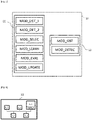
- the picture 3 represents, in the form of a flowchart, the main steps of the determination method according to the invention, implemented by the device 11 for determining the figure 2 .
- the determination method includes a step E10 of determining, for each packet of a first set E_1 comprising packets of respective normal behaviors, transition attributes, called “initial attributes” ATT_INI_i (i being an integer index).
- Said step E10 is implemented by the first determination module MOD_DET_1 equipping the determination device 11.
- Determining said initial attributes ATT_INI_i is an important step in the determination process in that it makes it possible to obtain a set of attributes, at least part of which is then used to learn a classification model capable of predicting the behavior of a unlabeled packet (“behavioral classifier” within the meaning of the present invention).
- Said first set E_1, from which said initial attributes ATT_INI_i are determined, can be obtained by the determination device 11 in different ways.
- the determination method comprises a prior step (ie implemented before step E10) of interception of data packets in the communication network, typically by means of a network probe of a type known per se fitted to the determination device 11.
- the term “obtaining” refers to the interception of the packets of the set E_1 directly by the determination device 11, during a step forming an integral part of the method of determination.
- a step of intercepting packets in the communication network is implemented by another device, distinct from said determining device 11. Then, said first set E_1 is transmitted from said other device to determining device 11 , this transmission being implemented by the communication module 5_1 equipping said determination device 11.
- the packets forming the set E_1 are normal. In order to obtain packets exhibiting such behavior, it is necessary to intercept part of the network traffic during a nominal operating phase of the communication network.
- nominal we refer here to the fact that no computer attack is in progress.
- computer attacks are in practice unpredictable, which can therefore complicate the task of intercepting normal packets. Consequently, it is possible to envisage a step of analyzing intercepted packets, for example implemented manually by a network expert, in order to sort the latter and thus ensure that the packets selected to form the set E_1 are many normal respective behaviors.
- a transition attribute consists, in the implementation considered here, of the association of a sequence of determined size of consecutive bytes of a packet (the size of the sequence is less than the size of the packet ) with a single byte consecutive to said sequence.
- the initial attributes ATT_INI_i are determined by extracting sequences of bytes, by means of a sliding window applied to the packets of the set E_1.
- the size of this sliding window is given, and defines the size of a sequence of consecutive bytes of a transition attribute.
- the initial attributes ATT_INI_i are all formed of sequences of consecutive bytes of identical size.
- the determination method according to the invention remains applicable whatever the size envisaged for the transition attributes (and therefore a fortiori whatever the size envisaged for a sequence of consecutive bytes). It is however necessary to consider the existence of a compromise between, on the one hand, risks related to aspects of spatial complexity (memory space required for the implementation of the determination method) and over-learning during the learning of a behavioral classifier, and on the other hand the quality of the information carried by the transition attributes during the implementation of the determination process. Also, the inventors have observed that the fact of considering sizes of transition attributes comprised between 2 and 4 made it possible to obtain an excellent compromise.
- the determination method comprises a step E20 of determining respective frequencies of appearance F_APP1_i of said initial attributes ATT_INI_i in said first set E_1. Said step E20 is implemented by the second determination module MOD_DET_2 equipping the determination device 11.
- Said step E20 therefore consists in counting how many times each initial attribute ATT_INI_i appears in the first set E_1.
- Such counting is for example implemented by means of a counting/naming algorithm of a type known per se.
- the determination method comprises a step E30 of selecting, from among said initial attributes ATT_INI_i, transition attributes satisfying a selection criterion CR_SELEC defined as a function of said frequencies of appearance F_APP1_i.
- Said step E30 is implemented by the selection module MOD_SELEC equipping the determination device 11.
- the selection criterion CR_SELEC is satisfied for an initial attribute ATT_INI_i if the frequency of appearance F_APP1_i associated with said initial attribute ATT_INI_i is greater than a threshold.
- Said threshold corresponds for example to a threshold given explicitly.
- said threshold corresponds to a threshold given implicitly.
- the selection criterion CR_SELEC consists in selecting the initial attributes ATT_INI_i whose respective frequencies of appearance F_APP1_i represent, in a given proportion, for example 80%, the highest frequencies of appearance among all the frequencies of appearance respectively associated with all the initial attributes determined during step E10 (in other words, the highest frequencies of appearance are accumulated until a given proportion of representativeness is reached).
- the threshold associated with the selection criterion CR_SELEC is not provided explicitly, contrary to the previous example, but implicitly since it corresponds to the lowest frequency of appearance among the occurrence frequencies associated with the initial attributes selected.
- the selection made here is based on a characterization of the initial attributes ATT_INI_i which is based solely on their respective frequencies of appearance F_APP1_i in the first set E_1.
- the selection criterion CR_SELEC is defined according to quantities of one or more other types, such as for example information gains respectively associated with said initial attributes ATT_INI_i.
- the selection criterion CR_SELEC could be defined according to a weighting between the frequencies of appearance and the quantities of one or more other types.
- ATT_SELEC_j the initial attributes selected at the end of selection step E30 are denoted ATT_SELEC_j (j being an integer index).
- the determination method also comprises a step E40 of supervised learning of a first behavioral classifier CLASS_1, from frequencies of appearance F_APP2_j respectively associated with the initial attributes ATT_SELEC_j selected during step E30 and present in packets of a second set E_2 comprising at least one normal packet and at least one malicious packet.
- Said step E40 is implemented by the learning module MOD_LEARN equipping the determination device 11.
- Said second set E_2 constitutes a training set of said first classifier CLASS_1. It should be noted that the fact that said second set E_2 comprises at least a normal packet and at least one malicious packet makes it possible to improve the robustness and the prediction reliability of said first classifier CLASS_1.
- the normal packet or packets comprised in said second set E_2 are, in whole or in part, derived from the first set E_1. However, nothing excludes considering a second set E_2 strictly distinct from said first set E_1. In this case, obtaining the normal packet(s) of said second set E_2 can be implemented in a manner similar to that described above for the first set E_1.
- At least one malicious packet used during the supervised learning of the first classifier CLASS_1 is for example obtained thanks to a method of generation by random mutations (“mutation -based fuzzing” in Anglo-Saxon literature).
- a method of generation by random mutations (“mutation -based fuzzing” in Anglo-Saxon literature).
- Such a method combines several techniques (inversion of a bit, substitution and/or random insertion of one or more bytes, deletion of a byte, etc.) and is well known to those skilled in the art, so that it is not further described here.
- the choice of a method of generation by random mutations to obtain at least one malicious packet from the second set E_2 only constitutes one implementation variant of the invention.
- Other variants can be envisaged, such as for example voluntarily inserting into the second set E_2 data packets already previously identified as belonging to an attack (such a prior identification being able for example to be implemented manually by a digital security expert) .
- this method can be directly applied, if technically possible, to one or more normal packets of the second set E_2 or even to normal packets not belonging not said second set E_2. Moreover, there is also nothing to exclude considering that one or more malicious packets have been generated beforehand and then stored in a dedicated database to then be transmitted to the determination device 11 during said step E40.
- the supervised learning of the first classifier CLASS_1 amounts to learning a function G configured to assign a behavioral label (normal or malicious) to an unlabeled packet. More precisely, such a function G is configured to provide probabilities that an unlabeled packet supplied as input to said function G is respectively normal or malicious, the decision as to the behavior of this packet (and therefore ultimately the label that should be assigned to it) being finally taken on the basis of these probabilities.
- the learning of such a function G is conventionally based on a so-called “features vector” representing the learning parameters of the classification model and intended to be weighted by coefficients specific to each packet supplied as input to said function G.
- the vector of characteristics considered comprises as many components as there are initial attributes ATT_SELEC_j selected during step E30. More particularly, each component of the vector of characteristics is a pair formed by an initial attribute ATT_SELEC_j selected during step E30 as well as the frequency of appearance of said initial attribute ATT_SELEC_j in a packet supplied as input to function G.
- the assignment of a behavioral label to an unlabeled packet firstly comprises an extraction of the frequencies of appearance F_APP2_j respectively associated with the initial attributes ATT_SELEC_j selected during step E30 and appearing in said untagged packet.
- the appearance frequencies F_APP2_j thus extracted form weighting coefficients of the feature vector and are used by the function G to assign a behavioral label to the unlabeled packet.
- step E40 to learn the first classifier CLASS_1, is of course also based on this process of extracting frequencies of appearance. More particularly, each labeled packet of the second set E_2 is associated with weighting coefficients of the feature vector. Consequently, the first classifier is learned in a supervised manner thanks to said weighting coefficients and to the labels respectively associated with the packets of the second set E_2.
- the learning module MOD_LEARN of the determination device 11 implements a supervised learning algorithm.
- said algorithm is a decision tree algorithm, the inventors having observed that this type of algorithm provided the best results in terms of prediction in the context of the present invention.
- step E40 relates to unsupervised learning of the first classifier CLASS_1 (in which case the configuration of the learning module MOD_LEARN equipping the determining device 11 is well adapted accordingly). It is also noted that, for this implementation alternative consisting in considering unsupervised learning, it is possible to consider a second training set E_2 comprising only normal packets, and that unsupervised learning can be carried out, for example, by means of a “K-means” algorithm (“K-means” in the Anglo-Saxon literature).
- the method proposes, under condition, to update at least the transition attributes ATT_SELEC_j selected during the selection step E30. Proceeding in this way offers the possibility of renewing all or part of the transition attributes previously selected, and therefore in particular of using attributes that are more relevant to build one or more efficient behavioral classifiers or even re-train a behavioral classifier already trained a first time during the implementation of the determination method (i.e. said first classifier CLASS_1).
- This update of the transition attributes ATT_SELEC_j makes it possible for example to take account of a divergence between the behaviors predicted by said first classifier CLASS_1 and at least one other behavioral classifier for at least one unlabeled packet.
- the determination method proposes, via such an update, to dynamically take account of classification information originating from classifiers other than said first classifier CLASS_1.
- the determination method proposes, via such an update, to dynamically take account of classification information originating from classifiers other than said first classifier CLASS_1.
- it is possible to increase the robustness and behavior prediction reliability of the first classifier CLASS_1, and therefore, ultimately, to reduce the rate of false positives (a false positive corresponding to a packet predicted as malicious whereas 'it is actually normal) generated by the latter.
- the update of the transition attributes ATT_SELEC_j is conditioned by the fact that the update criterion CR_UPDATE is satisfied.
- the fact that the update criterion CR_UPDATE is satisfied can for example trigger an update of the frequencies of appearance F_APP1_i as a function of packets transmitted in the communication network since the last determination of said frequencies of appearance.
- the update may result from a change in the frequencies of appearance F_APP1_j, such a change possibly resulting from a re-evaluation of these quantities (taking into account the packets transmitted in the meantime), or, if they are evaluated by continuously, taking into account their current values. It is in fact possible that the current values of the frequencies of appearance F_APP_1_i have changed with respect to the values determined during the last implementation of the selection step E30, such a change being able therefore to lead to the selection of new attributes of transition.
- the fact that the update criterion CR_UPDATE is satisfied can for example trigger an update of the selection criterion CR_SELEC.
- one or more thresholds different from those previously considered for the selection criterion CR_SELC can be considered.
- Checking the CR_UPDATE update criterion is not limited to triggering updates such as those described in the previous examples.
- other quantities and/or characteristics relating to the packets transiting in the communication network can also, possibly in combination with one or more of the previous examples, be the subject of updates, such as for example one or more behavioral attributes (re-evaluation of previously considered behavioral attributes, use of new behavioral attributes, etc.).
- said at least one other behavioral classifier comprises a classifier configured to predict the normal or malicious behavior of a packet from at least one detection rule defining at least one attack signature.
- said at least one other behavioral classifier comprises a classifier configured to predict the normal or malicious behavior of a packet from at least one predetermined attack signature.
- a classifier configured to predict the normal or malicious behavior of a packet from at least one predetermined attack signature.
- No limitation is attached to the number of predetermined signatures that can be envisaged in this first example of implementation.
- such a classifier is similar to a classifier implemented by an IDS system falling under the first alternative described above (example: firewall; intrusion detection software such as for example open source software such as Snort, Meerkat, etc.).
- the signature or signatures considered in said first example of implementation are constructed, in a manner known per se, by means of static detection rules listed (and added on a recurring basis) in databases by network experts. Said detection rules can have various natures (atomic, composite) depending on the attacks to which they relate. As already mentioned previously, a signature detection rule can be constructed from criteria relating to one or more behavioral attributes, and/or to one or more identification attributes.
- said at least one other behavioral classifier comprises at least one classifier learned in a supervised or unsupervised manner from one or more detection rules applied to packets of an E_BIS set.
- this involves choosing one or more detection rules, for example from among detection rules defining one or more attack signatures, then carrying out supervised training on the basis of the detection rules thus chosen.
- said set E_BIS forms a training set of the behavioral classifier learned from said detection rule(s).
- Said set E_BIS is for example equal to the second set E_2.
- said E_BIS set advantageously comprises, in the case of supervised learning, at least one normal packet and at least one malicious packet (for example obtained by means of a method generation by random mutations).
- any supervised or even unsupervised learning algorithm can be considered (naive Bayesian, vector machine of support, neural network, k nearest neighbors, decision trees, k-means, etc.) for learning said at least one other classifier from one or more detection rules.
- each classifier described above with reference to the first and second implementation examples can be the subject of a determination step specific to this classifier and integrated into the determination method.
- a classifier subject to one of said first and second examples can be determined during the execution of the determination method.
- a classifier that is the subject of one of said first and second examples can be determined during a step prior to the determination method, so that once said classifier has been determined, it is transmitted to the determination device 11 who can use it within the framework of the implementation of step E120.
- said at least one other behavioral classifier comprises a classifier configured to predict the normal or malicious behavior of a packet from at least one detection rule defining at least one attack signature
- said at least one other behavioral classifier comprises a classifier configured to predict the normal or malicious behavior of a packet from at least one detection rule defining at least one attack signature
- the figure 4 schematically represents, in the form of a flowchart, an implementation mode of the method for determining the picture 3 , called “first mode”, in which the update criterion CR_UPDATE is satisfied if, for said at least one untagged packet, the behavior predicted by the first classifier CLASS_1 differs from the behavior predicted by at least one behavioral classifier among the classifiers CLASS_2 and CLASS_3.
- the step E120 for evaluating the update criterion CR_UPDATE initially comprises a sub-step E120_1 for classifying said unlabeled packet P_NE by each of the classifiers CLASS_1, CLASS_2 and CLASS_3.
- the classifications respectively carried out by the classifiers CLASS_1, CLASS_2 and CLASS_3 can be implemented sequentially or else in parallel.
- step E120 includes a sub-step E120_2 for comparing the label ETI_1 with the other labels ETI_2, ETI_3.
- ETI_1 refers to a normal behavior predicted for said untagged packet P_NE. It is also assumed that at least one of the other labels ETI_2, ETI_3 refers to a malicious behavior predicted for said untagged packet P_NE. Consequently, the update criterion CR_UPDATE is satisfied, then leading to a new evaluation of the frequencies of appearance F_APP1_i, and then, if necessary, an update of the transition attributes ATT_SELEC_j (step E130).
- Said first mode of implementation has so far been described by considering an example in which the update criterion CR_UPDATE is evaluated for a single untagged packet P_NE. Said first mode nevertheless remains applicable when a plurality of unlabeled packets is considered.
- the update criterion CR_UPDATE is for example evaluated for each of the packets of said plurality of packets, and considered satisfied if the behaviors predicted by the first classifier CLASS_1 for all or part of the packets of said plurality differ from the behaviors corresponding predicted by the other classifiers CLASS_2 and CLASS_3.
- the first mode of implementation has also been described by considering that the evaluation of the update criterion CR_UPDATE was based solely on the search for a possible discrepancy between the behaviors predicted by the various behavioral classifiers.
- the decision to indicate that the update criterion is satisfied is based on an expertise (i.e. the decision to update the initial quantities is taken by an expert in computer security), this expertise based itself on the comparison result. In other words, in this case, the ultimate decision to execute the update of the initial quantities rests with the expert.
- the figure 5 schematically represents, in the form of a flowchart, another particular mode of implementation of the method for determining the picture 3 , called “second mode”.
- the determination method further comprises, following the obtaining of the classifier CLASS_3 (step E60 described above in the context of the first mode), a step E70 of classifying packets of a third set E_3 by said first classifier CLASS_1 and the classifiers CLASS_2 and CLASS_3.
- the packets of said third set E_3 are, before the implementation of said step E70, unlabeled given that they are the subject of a classification. These are conventionally packets intercepted in the communication network for a determined period.
- the determination method comprises a step E80 of supervised learning of a behavioral classifier called "generation classifier” CLASS_GEN from said set of predicted behaviors as well as classification parameters respectively associated with the classifiers CLASS_1, CLASS_2, CLASS_3 for the packets of said third set E_3.
- generation classifier CLASS_GEN from said set of predicted behaviors as well as classification parameters respectively associated with the classifiers CLASS_1, CLASS_2, CLASS_3 for the packets of said third set E_3.
- classification parameters depend on the nature of the classifier considered.
- said classification parameters correspond to frequencies of appearance F_APP4_j respectively associated with the initial attributes ATT_SELEC_j selected and present in the packets of said third set E_3.
- said classification parameters correspond to the behavioral attributes of the detection rule(s) from which the signature associated with said classifier CLASS_2 and/or of said signature itself is constructed.
- said classification parameters are the behavioral attributes corresponding to the number of altered packets and to the transmission duration considered in the communication network, as well as the comparison threshold.
- the learning algorithm used to learn said generation classifier CLASS_GEN is an algorithm of k nearest neighbors.
- the inventors have in fact observed that this type of algorithm provides excellent results in terms of prediction and is particularly well suited to the diversity of learning parameters taken into account to learn said classifier CLASS_GEN.
- the determination method includes a step E90 of classifying said at least one unlabeled packet (ie the one referred to in step E130 described above) by each of the classifiers CLASS_1, CLASS_2 and CLASS_3.
- step E90 is similar to that of step E120_1 described above in the context of the first mode of implementation. Also, at the end of said step E90, there is a set of behaviors respectively predicted by the classifiers CLASS_1, CLASS_2 and CLASS_3 for said unlabeled packet P_NE. These behaviors are represented by three behavioral labels ETI_1, ETI_2, ETI_3 respectively provided by the classifiers CLASS_1, CLASS_2, CLASS_3.
- the determination method includes a step E100 of classifying said untagged packet P_NE by the generation classifier CLASS_GEN, as a function of said set of behaviors predicted at the end of said step E90 for said at least one packet (ie according to the labels ETI_1, ETI_2, ETI_3).
- the behavior predicted by the generation classifier CLASS_GEN for said untagged packet P_NE is represented by a tag ETI_GEN.
- ETI_GEN refers to normal behavior.
- the determination method also comprises a step E110 of unsupervised learning of a behavioral classifier called “discrimination classifier” CLASS_DIS from said unlabeled packet P_NE as well as from the behavior predicted by the generation classifier CLASS_GEN for said at least one packet not labeled P_NE (ie from label ETI_GEN).
- a behavioral classifier called “discrimination classifier” CLASS_DIS from said unlabeled packet P_NE as well as from the behavior predicted by the generation classifier CLASS_GEN for said at least one packet not labeled P_NE (ie from label ETI_GEN).
- said unsupervised learning consists in determining groupings (also called “clusters” in the Anglo-Saxon literature) of packets.
- groupings also called “clusters” in the Anglo-Saxon literature
- R1 and R2 characterizing the respectively normal and malicious behaviors that can be attributed to a packet.
- the unsupervised learning algorithm used to learn said discrimination classifier CLASS_DIS can be a K-mean algorithm, an algorithm relying on a deep neural network, a hierarchical classification algorithm, a singular value decomposition algorithm, etc. .
- the update criterion CR_UPDATE is satisfied if, for said untagged packet P_NE, the behavior predicted by the generation classifier CLASS_GEN differs from the behavior predicted by the discrimination classifier CLASS_DIS.
- said step E120 for evaluating the update criterion CR_UPDATE initially comprises a sub-step E120_1 for classifying said untagged packet P_NE by the discrimination classifier CLASS_DIS and from the ETI_GEN label predicted by the CLASS_GEN generation classifier.
- step E120 includes a sub-step E120_2 for comparing the label ETI_GEN with the label ETI_DIS. Insofar as the behaviors respectively associated with these two labels differ from each other in the mode described here, the update criterion CR_UPDATE is satisfied, then resulting in an update of the transition attributes ATT_SELEC_j.
- the update criterion CR_UPDATE is for example evaluated for each of the packets of said plurality of packets, and considered to be satisfied if the behaviors predicted by the generation classifier CLASS_GEN for all or part of the packets of said plurality differ from the corresponding behaviors predicted by the discrimination classifier CLASS_DIS.
- said generation classifiers CLASS_GEN and discrimination CIASS_DIS can operate in a collaborative manner, like a generative adversarial network GAN (acronym of the Anglo-Saxon expression "Generative Adversarial Network ").
- the discrimination classifier CLASS_DIS is configured to provide the generation classifier CLASS_GEN with feedback on the differences between the behaviors respectively predicted by said discrimination classifier CLASS_DIS and said generation classifier CLASS_GEN. Such feedback can typically be used to adjust classification parameters of the generation classifier CLASS_GEN.
- a transition attribute corresponds to the association of a single consecutive data sequence of a packet with at least one data item of said packet consecutive to said sequence.
- the invention is also applicable, what is more particularly advantageously, when it is considered that a transition attribute can correspond either to a single such association, or to a plurality of such associations.
- the concept of group here takes into account the fact that if several groups are considered in said alternative mode, said groups are distinct from each other. Furthermore, it is also considered that the initial quantity associated with a group is equal to the sum of the initial quantities respectively associated with the initial attributes of said group.
- the most representative frequencies of appearance ie Is greater
- each initial attribute associated with such a frequency corresponds to a transition attribute selected during step E30.
- the initial attributes from which the 50% threshold is reached correspond to the attributes ATT_INI_i, for i ranging from 1 to 6 (36% of representativeness is achieved thanks to the attributes ATT_INI_i, for i ranging from 1 to 4, 14% of additional representativeness being provided by the attributes ATT_INI_5 and ATT_INI_6).
- the other initial attributes i.e. ATT_INI_i, for i ranging from 7 to 16
- ATT_INI_i for i ranging from 7 to 16
- Each group is composed of several initial attributes such that the sum of their frequencies of appearance reaches at least the threshold associated with said group. It is important to note that the thresholds of the groups are not necessarily identical between them.
- the update of the ATT_SELC_j transition attributes was conditioned by the fact that the CR_UPDATE update criterion is satisfied, and also that the fact that the CR_UPDATE update criterion is satisfied could for example triggering an update of the selection criterion CR_SELEC. It is then noted that it is possible to envisage an update of the selection criterion CR_SELEC so that groups of attributes different from those having been determined during a previous implementation are determined. For example, new groups of attributes can be formed due to an update of the thresholds from which the groups of attributes are constructed, and/or due to a modification of the first and second thresholds.
- said detection system 10 also comprises an attack detection device 12 configured to carry out processing operations making it possible to detect attacks in the communication network by using quantities determined by the determination device 11, in implementing a detection method according to the invention.
- an attack detection device 12 configured to carry out processing operations making it possible to detect attacks in the communication network by using quantities determined by the determination device 11, in implementing a detection method according to the invention.
- the characterization of the transition attributes is limited to taking into account only their respective frequencies of appearance in sets of packets.
- the quantities in question used (according to said indirect approach) by the detection device 12 correspond to said frequencies of appearance.
- quantities of another type such as for example information gains associated with the data packets.
- the figure 6 schematically represents an example of hardware architecture of the detection device 12 according to the invention belonging to the computer system 10 of the figure 1 .
- the detection device 12 has the hardware architecture of a computer.
- the detection device 12 comprises, in particular, a processor 1_2, a random access memory 2_2, a read only memory 3_2 and a non-volatile memory 4_2. It further comprises a communication module 5_2.
- the communication module 5_2 allows in particular the detection device 12 to exchange data, via the communication network, with the determination device 11.
- the communication module 5_2 comprises a communication interface, wired or wireless , able to implement any protocol supported by the communication network.
- the communication module 5_2 notably integrates the obtaining module MOD_OBT.
- said term “obtaining” only refers to the reception of data coming from the determination device 11. More particularly, the obtaining module MOD_OBT is configured to receive at least one behavioral classifier used during the implementation of the determination method. For example, it may only be said first behavioral classifier CLASS_1 learned (after several iterations of the supervised learning step E40 if applicable) by the determination device 11. It may also be classifiers CLASS_1, CLASS_2 and CLASS_3, or even all of the classifiers CLASS_1, CLASS_2, CLASS_3, CLASS_GEN and CLASS_DIS (the classifier CLASS_GEN relying on the behaviors predicted by the classifiers CLASS_1, CLASS_2, CLASS_3 to predict a behavior in turn).
- the obtaining module MOD_OBT is configured to obtain all of the classifiers CLASS_1, CLASS_2, CLASS_3, CLASS_GEN and CLASS_DIS.
- the figure 7 represents, in the form of a flowchart, a particular mode of implementation of the detection method according to the invention by the detection device 12 of the figure 6 .
- said detection method comprises a step F10 for obtaining the behavioral classifiers CLASS_1, CLASS_2, CLASS_3, CLASS_GEN and CLASS_DIS.
- Said step F10 is implemented by the MOD_OBT obtaining module equipping the detection device 12.
- This obtaining step F10 consists, in the present embodiment, of receiving said classifiers CLASS_1, CLASS_2, CLASS_3, CLASS_GEN and CLASS_DIS (possibly learned after several updates of the occurrence frequencies F_APP1_i for the classifiers determined by automatic learning) after the latter have been transmitted by the determination device 11, for example following a request sent by the detection device 12.
- Said method of detection also comprises a step F20 of detecting attacks in said communication network by means of the classifiers CLASS_1, CLASS_2, CLASS_3, CLASS_GEN and CLASS_DIS obtained following the implementation of said step F10 of obtaining.
- Said step F20 is implemented by the detection module MOD_DETEC equipping the detection device 12.
- a decision as to the presence or not of an attack is issued by the discrimination classifier CLASS_DIS from at least one behavior predicted by said discrimination classifier CLASS_DIS for at least least one unlabeled packet.
- a behavior predicted by the discrimination classifier CLASS_DIS for an unlabeled packet prevails over that predicted by another classifier, including in particular, for example, the generation classifier CLASS_GEN.
- the implementation of the detection method is not limited to such provisions. Indeed, nothing excludes considering attack detection based on one or more behaviors predicted by the plurality of classifiers CLASS_1, CLASS_2, CLASS_3, for example if at least two behaviors predicted for the same packet by two classifiers of said plurality differ among themselves.
- step F20 the detection of attacks carried out via the implementation of step F20 is based on behaviors predicted for at least one packet not labeled by the generation classifier CLASS_GEN and the discrimination classifier CLASS_DIS respectively. .
- step F20 To simplify the description of the implementation of step F20, consider that a single unlabeled packet P_NE is received by the detection device 12.
- said attack detection step F20 firstly comprises a sub-step F20_1 of classifying said untagged packet P_NE by each of the classifiers CLASS_1, CLASS_2, CLASS_3, by exploiting in particular the transition and/or behavioral attributes relating to this P_NE packet taken into account respectively by each of these classifiers.
- the classifications respectively carried out by the classifiers CLASS_1, CLASS_2, CLASS_3 can be implemented sequentially or else in parallel.
- said step F20 includes a substep F20_2 of classifying said untagged packet P_NE by the generation classifier CLASS_GEN, from said set of behaviors predicted at the end of said substep F20_1 for said untagged packet P_NE (i.e. as a function of the labels ETI_1, ETI_2, ETI_3) and the transition and/or behavioral attributes considered to predict said set of behaviors.
- the behavior predicted by the generation classifier CLASS_GEN for said untagged packet P_NE is represented by a tag ETI_GEN.
- said step F20 includes a sub-step F20_3 of classification of said untagged packet P_NE by the discrimination classifier CLASS_DIS from the behavior predicted by the generation classifier CLASS_GEN for said untagged packet P_NE (i.e. from the ETI_GEN label).
- the behavior predicted by the discrimination classifier CLASS_DIS for said untagged packet P_NE is represented by a label ETI_DIS.
- step F20 also includes a sub-step F20_4 for sending a decision as to whether or not there is an attack by the discrimination classifier from the label ETI_DIS.
- the ETI_DIS label is representative of malicious behavior (respectively normal)
- a decision as to the presence of an attack is issued.
- it may be an information message transmitted to a trusted entity (SIEM, SOC) which may possibly carry out additional analyzes as to the nature of the behavior predicted by the discrimination classifier CLASS_DIS or trigger a attack mitigation operation.
- SIEM trusted entity
- SOC trusted entity
- the detection method also comprises a step F30 of comparison between the predicted behaviors for said packet not labeled P_NE by respectively the generation classifier CLASS_GEN and the discrimination classifier CLASS_DIS.
- Such a comparison step F30 aims to determine whether there is a difference between the behaviors respectively associated with said labels ETI_GEN and ETI_DIS. Therefore, if these behaviors differ from each other, the detection method also includes, as illustrated by the figure 7 , a step F40 for updating one or more classification parameters used during the learning of the classifiers CLASS_1, CLASS_2, CLASS_3.
- Such an update can be carried out, according to a particular example of implementation, automatically (i.e. without the intervention of a computer security expert or a trusted entity (SIEM, SOC, etc. )).
- the expression “updating” does not only refer to the fact of re-evaluating one or more previously considered attributes and/or redefining one or more previously considered signatures, but also covers the use cases of new attributes and /or using new attack signatures.
- the classifiers obtained by the detection device 12, during step F10 are the classifiers CLASS_1, CLASS_2, CLASS_3, CLASS_GEN and CLASS_DIS. This being so, and as already mentioned previously, it is possible to envisage other modes in which the classifiers CLASS_GEN and CLASS_DIS are obtained as well as one or more classifiers whichever among the classifiers CLASS_1, CLASS_2 and CLASS_3.
- steps F30 and, where appropriate, F40 are optional steps of the detection method according to the invention.
- the invention is not limited to the detection of attacks in the communication network on the basis of a single data packet.
- the invention remains applicable when a plurality of packets is considered.
- the fact that an attack is detected from one or more packets classified as malicious may depend in particular on the nature of the attack.
- the discrimination classifier CLASS_DIS analyzes, during the classification of a packet, an alteration of at least one behavioral attribute of said packet (example: the size of said packet), it can then, for example, assign a malicious label to this packet and issue a decision as to the presence of a "fuzzing" type attack.
- the discrimination classifier CLASS_DIS analyses, during the classification of several packets, an alteration of at least one behavioral attribute of said packets (example: number of packets deleted and transmitted during a given time window), it can then, for example, assigning a malicious label to these packets and issuing a decision as to the presence of a “DoS” or “DDoS” type attack.
- the present invention has been described so far considering that the use of the quantities determined by the determination device 11, with a view to detecting attacks, is carried out according to an indirect approach consisting in using a behavioral classifier trained by means of said quantities.
- the invention also applies considering that the data determined by the determination device 11 are used according to a direct approach.
- the term "obtaining" refers not only to the reception, by the detection device 12, of the quantities determined by said determination device 11, and updates if necessary, but also to the learning of at least one behavioral classifier similar to those used during the implementation of the determination method.
- it could be a classifier similar to the first classifier CLASS_1, and learned from the frequencies F_APP1_i thus received. They can also be classifiers similar to the classifiers CLASS_1, CLASS_2, CLASS_3, CLASS_GEN and CLASS_DIS.
- said obtaining module MOD_OBT integrates said communication module 5_2 as well as a learning sub-module configured to learn said at least one behavioral classifier from quantities received from of the determining device 11.
- the invention also covers the case where the two direct and indirect approaches are used for the detection of attacks (at least one classifier used during the determination method is received from the determination device 11, and at least one classifier is learned automatically from the quantities determined by said determining device 11).
- Such "on-line” learning can be implemented continuously, at each detection, or alternatively, it can be decided, when it is considered that a classifier has been sufficiently learned, to pause this learning " on-line” until the detection of a determined event (for example verification of the CR_UPDATE update criterion).
Landscapes
- Engineering & Computer Science (AREA)
- Theoretical Computer Science (AREA)
- Computer Security & Cryptography (AREA)
- Software Systems (AREA)
- General Engineering & Computer Science (AREA)
- Physics & Mathematics (AREA)
- Computer Hardware Design (AREA)
- General Physics & Mathematics (AREA)
- Computing Systems (AREA)
- Artificial Intelligence (AREA)
- Evolutionary Computation (AREA)
- Data Mining & Analysis (AREA)
- Mathematical Physics (AREA)
- General Health & Medical Sciences (AREA)
- Computational Linguistics (AREA)
- Computer Networks & Wireless Communication (AREA)
- Signal Processing (AREA)
- Health & Medical Sciences (AREA)
- Biophysics (AREA)
- Medical Informatics (AREA)
- Computer Vision & Pattern Recognition (AREA)
- Molecular Biology (AREA)
- Biomedical Technology (AREA)
- Life Sciences & Earth Sciences (AREA)
- Virology (AREA)
- Data Exchanges In Wide-Area Networks (AREA)
Applications Claiming Priority (1)
| Application Number | Priority Date | Filing Date | Title |
|---|---|---|---|
| FR2012467A FR3116980A1 (fr) | 2020-12-01 | 2020-12-01 | Procédé de détermination de quantités pour la détection d’attaques dans un réseau de communication, dispositif de détermination associé |
Publications (2)
| Publication Number | Publication Date |
|---|---|
| EP4009209A1 true EP4009209A1 (de) | 2022-06-08 |
| EP4009209B1 EP4009209B1 (de) | 2026-02-18 |
Family
ID=74669014
Family Applications (1)
| Application Number | Title | Priority Date | Filing Date |
|---|---|---|---|
| EP21210409.5A Active EP4009209B1 (de) | 2020-12-01 | 2021-11-25 | Verfahren zur bestimmung von grössen zur erkennung von angriffen in einem kommunikationsnetz und entsprechende bestimmungsvorrichtung |
Country Status (2)
| Country | Link |
|---|---|
| EP (1) | EP4009209B1 (de) |
| FR (1) | FR3116980A1 (de) |
Citations (2)
| Publication number | Priority date | Publication date | Assignee | Title |
|---|---|---|---|---|
| US20130097706A1 (en) * | 2011-09-16 | 2013-04-18 | Veracode, Inc. | Automated behavioral and static analysis using an instrumented sandbox and machine learning classification for mobile security |
| US20180115567A1 (en) * | 2015-03-17 | 2018-04-26 | British Telecommunications Public Limited Company | Learned profiles for malicious encrypted network traffic identification |
-
2020
- 2020-12-01 FR FR2012467A patent/FR3116980A1/fr not_active Ceased
-
2021
- 2021-11-25 EP EP21210409.5A patent/EP4009209B1/de active Active
Patent Citations (2)
| Publication number | Priority date | Publication date | Assignee | Title |
|---|---|---|---|---|
| US20130097706A1 (en) * | 2011-09-16 | 2013-04-18 | Veracode, Inc. | Automated behavioral and static analysis using an instrumented sandbox and machine learning classification for mobile security |
| US20180115567A1 (en) * | 2015-03-17 | 2018-04-26 | British Telecommunications Public Limited Company | Learned profiles for malicious encrypted network traffic identification |
Non-Patent Citations (1)
| Title |
|---|
| JEAN GOUBAULT-LARRECQ AND JULIEN OLIVAIN: "Detecting Subverted Cryptographic Protocols by Entropy Checking", RESEARCH REPORT LSV-06-13, LABORATOIRE SP�CIFICATION ET V�RIFICATION, 1 June 2006 (2006-06-01), FR, pages 1 - 19, XP055216893, Retrieved from the Internet <URL:http://www.lsv.ens-cachan.fr/Publis/RAPPORTS_LSV/PDF/rr-lsv-2006-13.pdf> [retrieved on 20150929] * |
Also Published As
| Publication number | Publication date |
|---|---|
| FR3116980A1 (fr) | 2022-06-03 |
| EP4009209B1 (de) | 2026-02-18 |
Similar Documents
| Publication | Publication Date | Title |
|---|---|---|
| EP3957045B1 (de) | Verfahren und vorrichtung zur verarbeitung einer warnmeldung, welche die detektion einer anomalie in einem über ein netzwerk übertragenen verkehr anzeigt | |
| EP2548337B1 (de) | Verfahren zur identifizierung eines protokolls für die auslösung eines datenflusses | |
| Labonne | Anomaly-based network intrusion detection using machine learning | |
| WO2021152262A1 (fr) | Procede de surveillance de donnees echangees sur un reseau et dispositif de detection d'intrusions | |
| FR3143918A1 (fr) | Méthode et système de détection d’intrusions dans un réseau informatique par apprentissage automatique | |
| EP4021051A1 (de) | Verfahren zum kollaborativen lernen zwischen einer vielzahl von knoten eines netzwerks eines anomalieerkennungsmodells | |
| WO2015044595A1 (fr) | Procédé de détection d'anomalies dans un trafic réseau | |
| EP4009584A1 (de) | Verfahren zur bestimmung von klassifikatoren zur erkennung von angriffen in einem kommunikationsnetz und entsprechende bestimmungsvorrichtung | |
| EP2689560B1 (de) | Verfahren und vorrichtung zur extraktion von in einem ip-netwerk laufenden daten | |
| EP4009209B1 (de) | Verfahren zur bestimmung von grössen zur erkennung von angriffen in einem kommunikationsnetz und entsprechende bestimmungsvorrichtung | |
| EP3598330B1 (de) | Verfahren und vorrichtung zur störungserkennung | |
| WO2010037955A1 (fr) | Procede de caracterisation d'entites a l'origine de variations dans un trafic reseau | |
| EP3835985A1 (de) | Eine verfahren zur überwachung von daten die durch ein nutzergerät geleitet werden | |
| EP4449285A1 (de) | Verfahren zum trainieren eines autonomen agenten unter verwendung eines verstärkungslernalgorithmus, zugehöriger autonomer agent | |
| FR3094600A1 (fr) | Procédé d’extraction d’au moins un motif de communication dans un réseau de communication | |
| FR2902954A1 (fr) | Systeme et procede de stockage d'un inventaire des systemes et/ou services presents sur un reseau de communication | |
| EP2225853B1 (de) | Verbesserter monitor für ein meldungsbasiertes kommunikationssystem | |
| WO2025003195A1 (fr) | Classification d'un jeu de données multi-activités dans un réseau de télécommunications | |
| WO2009004234A1 (fr) | Detection d'anomalie dans le trafic d'entites de service a travers un reseau de paquets | |
| WO2019122241A1 (fr) | Procédé de construction automatique de scénarios d'attaques informatiques, produit programme d'ordinateur et système de construction associés | |
| FR3123527A1 (fr) | Procédé de surveillance d’un réseau, dispositif et système associés | |
| WO2006103337A1 (fr) | Procede de controle d’une table de flots adaptative et de detection d’une attaque par inondation d’un reseau de transmission de donnees par paquets a large bande et equipement d’analyse correspondant | |
| EP2257905B1 (de) | Verfahren und vorrichtung für passive wurmerkennung in einem peer-to-peer-netzwerk | |
| FR3161490A1 (fr) | Procédé de gestion de la communication d’une donnée sémantique | |
| EP4725182A1 (de) | Titel verfahren zum erhalten eines satzes von komprimierungsregeln für ein in einem netzwerk übertragenes datenpaket |
Legal Events
| Date | Code | Title | Description |
|---|---|---|---|
| PUAI | Public reference made under article 153(3) epc to a published international application that has entered the european phase |
Free format text: ORIGINAL CODE: 0009012 |
|
| STAA | Information on the status of an ep patent application or granted ep patent |
Free format text: STATUS: THE APPLICATION HAS BEEN PUBLISHED |
|
| AK | Designated contracting states |
Kind code of ref document: A1 Designated state(s): AL AT BE BG CH CY CZ DE DK EE ES FI FR GB GR HR HU IE IS IT LI LT LU LV MC MK MT NL NO PL PT RO RS SE SI SK SM TR |
|
| STAA | Information on the status of an ep patent application or granted ep patent |
Free format text: STATUS: REQUEST FOR EXAMINATION WAS MADE |
|
| 17P | Request for examination filed |
Effective date: 20221208 |
|
| RBV | Designated contracting states (corrected) |
Designated state(s): AL AT BE BG CH CY CZ DE DK EE ES FI FR GB GR HR HU IE IS IT LI LT LU LV MC MK MT NL NO PL PT RO RS SE SI SK SM TR |
|
| GRAP | Despatch of communication of intention to grant a patent |
Free format text: ORIGINAL CODE: EPIDOSNIGR1 |
|
| STAA | Information on the status of an ep patent application or granted ep patent |
Free format text: STATUS: GRANT OF PATENT IS INTENDED |
|
| INTG | Intention to grant announced |
Effective date: 20250924 |
|
| GRAS | Grant fee paid |
Free format text: ORIGINAL CODE: EPIDOSNIGR3 |
|
| GRAA | (expected) grant |
Free format text: ORIGINAL CODE: 0009210 |
|
| STAA | Information on the status of an ep patent application or granted ep patent |
Free format text: STATUS: THE PATENT HAS BEEN GRANTED |
|
| AK | Designated contracting states |
Kind code of ref document: B1 Designated state(s): AL AT BE BG CH CY CZ DE DK EE ES FI FR GB GR HR HU IE IS IT LI LT LU LV MC MK MT NL NO PL PT RO RS SE SI SK SM TR |
|
| REG | Reference to a national code |
Ref country code: CH Ref legal event code: F10 Free format text: ST27 STATUS EVENT CODE: U-0-0-F10-F00 (AS PROVIDED BY THE NATIONAL OFFICE) Effective date: 20260218 Ref country code: GB Ref legal event code: FG4D Free format text: NOT ENGLISH |
|
| REG | Reference to a national code |
Ref country code: IE Ref legal event code: FG4D Free format text: LANGUAGE OF EP DOCUMENT: FRENCH |
|
| REG | Reference to a national code |
Ref country code: DE Ref legal event code: R096 Ref document number: 602021048079 Country of ref document: DE |