EP4009214A1 - Contrôles administratifs de marché d'applications - Google Patents
Contrôles administratifs de marché d'applications Download PDFInfo
- Publication number
- EP4009214A1 EP4009214A1 EP22153421.7A EP22153421A EP4009214A1 EP 4009214 A1 EP4009214 A1 EP 4009214A1 EP 22153421 A EP22153421 A EP 22153421A EP 4009214 A1 EP4009214 A1 EP 4009214A1
- Authority
- EP
- European Patent Office
- Prior art keywords
- application
- applications
- user
- access
- policy
- Prior art date
- Legal status (The legal status is an assumption and is not a legal conclusion. Google has not performed a legal analysis and makes no representation as to the accuracy of the status listed.)
- Granted
Links
Images



Classifications
-
- G—PHYSICS
- G06—COMPUTING OR CALCULATING; COUNTING
- G06F—ELECTRIC DIGITAL DATA PROCESSING
- G06F21/00—Security arrangements for protecting computers, components thereof, programs or data against unauthorised activity
- G06F21/50—Monitoring users, programs or devices to maintain the integrity of platforms, e.g. of processors, firmware or operating systems
-
- G—PHYSICS
- G06—COMPUTING OR CALCULATING; COUNTING
- G06F—ELECTRIC DIGITAL DATA PROCESSING
- G06F21/00—Security arrangements for protecting computers, components thereof, programs or data against unauthorised activity
- G06F21/10—Protecting distributed programs or content, e.g. vending or licensing of copyrighted material ; Digital rights management [DRM]
-
- G—PHYSICS
- G06—COMPUTING OR CALCULATING; COUNTING
- G06F—ELECTRIC DIGITAL DATA PROCESSING
- G06F21/00—Security arrangements for protecting computers, components thereof, programs or data against unauthorised activity
- G06F21/10—Protecting distributed programs or content, e.g. vending or licensing of copyrighted material ; Digital rights management [DRM]
- G06F21/12—Protecting executable software
-
- G—PHYSICS
- G06—COMPUTING OR CALCULATING; COUNTING
- G06F—ELECTRIC DIGITAL DATA PROCESSING
- G06F21/00—Security arrangements for protecting computers, components thereof, programs or data against unauthorised activity
- G06F21/10—Protecting distributed programs or content, e.g. vending or licensing of copyrighted material ; Digital rights management [DRM]
- G06F21/12—Protecting executable software
- G06F21/121—Restricting unauthorised execution of programs
- G06F21/128—Restricting unauthorised execution of programs involving web programs, i.e. using technology especially used in internet, generally interacting with a web browser, e.g. hypertext markup language [HTML], applets, java
-
- G—PHYSICS
- G06—COMPUTING OR CALCULATING; COUNTING
- G06F—ELECTRIC DIGITAL DATA PROCESSING
- G06F21/00—Security arrangements for protecting computers, components thereof, programs or data against unauthorised activity
- G06F21/60—Protecting data
- G06F21/604—Tools and structures for managing or administering access control systems
-
- G—PHYSICS
- G06—COMPUTING OR CALCULATING; COUNTING
- G06F—ELECTRIC DIGITAL DATA PROCESSING
- G06F21/00—Security arrangements for protecting computers, components thereof, programs or data against unauthorised activity
- G06F21/60—Protecting data
- G06F21/62—Protecting access to data via a platform, e.g. using keys or access control rules
- G06F21/6218—Protecting access to data via a platform, e.g. using keys or access control rules to a system of files or objects, e.g. local or distributed file system or database
- G06F21/6245—Protecting personal data, e.g. for financial or medical purposes
-
- G—PHYSICS
- G06—COMPUTING OR CALCULATING; COUNTING
- G06F—ELECTRIC DIGITAL DATA PROCESSING
- G06F21/00—Security arrangements for protecting computers, components thereof, programs or data against unauthorised activity
- G06F21/60—Protecting data
- G06F21/62—Protecting access to data via a platform, e.g. using keys or access control rules
- G06F21/629—Protecting access to data via a platform, e.g. using keys or access control rules to features or functions of an application
-
- G—PHYSICS
- G06—COMPUTING OR CALCULATING; COUNTING
- G06F—ELECTRIC DIGITAL DATA PROCESSING
- G06F21/00—Security arrangements for protecting computers, components thereof, programs or data against unauthorised activity
- G06F21/30—Authentication, i.e. establishing the identity or authorisation of security principals
-
- G—PHYSICS
- G06—COMPUTING OR CALCULATING; COUNTING
- G06F—ELECTRIC DIGITAL DATA PROCESSING
- G06F2221/00—Indexing scheme relating to security arrangements for protecting computers, components thereof, programs or data against unauthorised activity
- G06F2221/21—Indexing scheme relating to G06F21/00 and subgroups addressing additional information or applications relating to security arrangements for protecting computers, components thereof, programs or data against unauthorised activity
- G06F2221/2141—Access rights, e.g. capability lists, access control lists, access tables, access matrices
Definitions
- the present disclosure relates generally to the management of access to information technology assets.
- IT administrators have the task of managing and securing access to an organization's information. To fulfill this obligation, IT administrators manage accounts and passwords for their users, and manage their users' ability to access the organization's various IT systems and data repositories.
- One source of risk to the security of IT assets arises when an employee uses personal hardware or software to access the organization's hardware or software systems.
- An example class of such hardware is smartphones. Specifically, and rather than carry a personal phone to perform personal functions and a corporate phone to perform corporate functions and access corporate data, some users use their personally-owned smartphones as "dual use" personal/business phones, that serve both personal and work needs.
- companies may allow their employees to access corporate data with their smartphones or other personally owned computing devices under predetermined conditions. For example, companies may make sure that their employee's devices have secure access codes, encrypted file systems, and trusted application sandboxes in place before access to the organization's data is granted. Alternatively, IT administrators may prescribe approved configurations of hardware and software that have been tested for use in accessing the organization's data.
- this document describes systems and methods for managing applications that may be purchase or otherwise distributed through an application marketplace, portal or store, and installed on user devices.
- an IT administrator may publish a policy to an application marketplace to identify permissions that may be accessed or restricted from access by the application distributed through the application marketplace.
- the policy may further specify which applications may access, or may not access, data, functions or operations that are associated with user device permissions, such as a permission to access calendar data or contact data.
- a security application or module associated with the application marketplace determines whether the policy allows or disallows such access before allowing the application to be downloaded or installed.
- the policy (or particular restrictions defined by the policy) may be configured to apply to all user accounts associated with the user device, or to a particular subset of the user accounts.
- a "permission” refers to a restriction that limits or otherwise governs access to a part of the code, to data, or to functionality on a device. Permissions, which may be defined by an operating system of the device, may restrict read or write access to particular data, such as a contact database or an email database or, for example, may limit access to device hardware resources or communication resources. A permission may, for example, govern an ability of a user device to access data generated by a particular hardware module, to operate in a "roaming" mode, or to access a 4G network.
- Permissions are imposed to protect critical data and code that could be misused to distort or damage the user experience. Permissions are identified by a unique name or label, which often suggests the function that is restricted by the permission, and specify or define an association with the restricted code, data, or function.
- a method includes receiving, by one or more servers associated with an application marketplace, a policy that includes data that identifies one or more users, and a restricted permission.
- a request is received, by the servers associated with the application marketplace, to access one or more applications that are distributed through the application marketplace, wherein the request includes data that identifies a particular one of the users.
- One or more of the applications that are associated with the restricted permission are identified by the servers associated with the application marketplace, and access by the particular user to the applications that are associated with the restricted permission is restricted by the servers associated with the application marketplace.
- Other embodiments of this aspect include corresponding systems and computer program products.
- the policy can be received from a server associated with an information technology administrator.
- the policy can be received from a mobile device that is associated with the particular user.
- the policy can be stored in a collection of policies; and in response to receiving the request, the policy can be selected from among the policies stored in the collection, using the data in the request that identifies the particular user.
- restricting access to the applications that are associated with the restricted permission can include providing a user interface that identifies the applications that are associated with the restricted permission, and that includes, for each of the identified applications, an indicator that indicates that access to each of the applications that are associated with the restricted permission is restricted.
- the indicator can further indicate that each of the applications are distributable through the application marketplace regardless of the restricted permission, and the user interface comprises a user-selectable control for requesting distribution of one or more of the applications regardless of the restricted permission.
- the indicator that indicates that access to each of the applications is restricted can be provided in a portion of the user interface that would otherwise be used to provide a user-selectable control for requesting distribution of one or more of the applications.
- the indicator that indicates that access to each of the applications is restricted can include a disabled control for requesting distribution of the applications.
- the user interface can comprise a user-selectable control for requesting moderation of the restricted permission.
- Restricting access to the applications that are associated with the restricted permission can include providing a user interface that identifies one or more applications that are not associated with the restricted permission, and that does not identify the applications that are associated with the restricted permission.
- Restricting access to the applications that are associated with the restricted permission can include providing a user interface that identifies the applications that are associated with the restricted permission, as restricted applications.
- providing the user interface that identifies the applications that are associated with the restricted permission can include greying out information that identifies the applications on the user interface. Identifying one or more of the applications that are associated with the restricted permission can include identifying one or more of the applications that perform one or more operations associated with the restricted permission. Identifying one or more of the applications that are associated with the restricted permission can include identifying one or more of the applications that declare use of the restricted permission. Restricting access to the applications that are associated with the restricted permission can include providing, by the servers associated with the application marketplace, indicia descriptive of each of the applications that are not associated with the restricted permission, and omitting indicia descriptive of each of the applications that are associated with the restricted permission.
- a system can restrict access to corporate data on a permission-by-permission basis, an application-by-application basis, and optionally an account-by-account basis, without overly restricting the user device's access to the rich marketplace of applications that are available for installation and use.
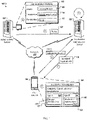
- FIG. 1 is a schematic diagram that shows an example system that implements permission-based administrative controls.
- the system 100 includes an administrator server 102, an application marketplace server 103, and a user device 104 that are connected by a network 130 .
- the administrator server 102 is a computer device that provides an administrator interface 106 for use by an employee that manages IT resources on behalf of an organization, e.g., an IT administrator.
- the network 130 includes a wired or wireless private network, e.g., a corporate local area network or intranet, a public network, e.g., the Internet, a cellular data network, or any other appropriate type of computer network.
- the user device 104 is a computing device that is used by the same or a different employee of the organization, and can be a smartphone, a traditional cellular telephone, a personal computer, a tablet computer, an e-book reader, a music player, or any other appropriate type of computing device.
- the user device 104 may be a dual use device, used by an owner of the device to serve both business and personal needs.
- the administrator interface 106 allows the IT administrator to configure settings that define a policy 107, which can at least partly determine the applications that the user device 104 is permitted to install.
- the IT administrator can use the administrator interface 106 to create the policy 107 that groups user domains, permissions, and applications, and/or that specifies a particular restriction for grouped permissions and applications.
- the policy 107 may restrict access to corporate data on a domain-by-domain, a permission-by-permission, and/or an application-by-application basis, without overly restricting the user device's access to the rich marketplace of applications that are available for installation and use.
- ⁇ contacts permission all applications ⁇ to allow all applications on the user device 104 to access functionality associated with a "contacts” permission
- ⁇ email permission application ABC ⁇ to only allow an application identified by the identifier "ABC” to access functionality associated with an "email” permission
- the policy 107 may specify a grouping to selectively allow, prevent, or alter the behavior or appearance of applications that are made available through the application marketplace 150 to selected users or groups of users.
- the administrator interface 106 shows that an administrator is creating the policy 107 that specifies a grouping such as ⁇ for all users within the "example.com” domain, "email data access” has been "disabled” ⁇ to cause applications that access email data as part of their functionality to be managed differently than unrestricted applications.
- the application marketplace server 103 may prevent such restricted applications from being presented in the application marketplace 150.
- the user of the user device 104 may be spared the effort of downloading applications that may have been restricted from being used on the user device 104.
- Several techniques for handling the presentation of restricted applications in application marketplaces are discussed in the descriptions of FIGs. 3A-3F .
- the administrator interface 106 provides a user input control 108, a permission input control 110, and a restriction input control 112.
- the IT administrator enters data into the user input control 108 to identify a user or groups of users for whom the policy 107 will apply.
- the user(s) may be identified by user name (e.g., "Nate Godbout,” “ngodbout,” “nathan@example.com”), or user domain (e.g., "*.example.com,” “hr.example.com”).
- the identified user group is all users within the "example.com” domain.
- the IT administrator enters a permission name into the permission input control 110 to specify the permission whose associated functionality, data, operations, or resources the identified application is permitted to access, or is restricted from accessing.
- the IT administrator has identified the "access email data" permission.
- the permissions, and the code, data, or functionality associated with each permission may be predefined by an application, operating system, or file system of the user device 104.
- the IT administrator may manually configure permissions associated with the use of data repositories stored on or accessed by the user device 104, user device functions (e.g., microphone, location awareness, wireless connectivity), device capabilities (e.g., text messaging, data connectivity, cellular roaming), or other application or user device 104 features.
- the IT administrator may use the administrator interface 106 to manually configure such permissions.
- the IT administrator enters data into the restriction input control 112 to identify the type of restriction that is to be associated with the application identified in the application input control 108.
- the restriction options may include "restrict,” “block,” “permit,” or “allow.”
- a “restrict” or “block” selection may result in an application being placed on a blacklist for an identified permission, or in the application being removed or omitted from a whitelist for the identified permission.
- a “permit” or “allow” selection may result in the application being placed on a whitelist for an identified permission, or in the application being removed or omitted from a whitelist for the identified permission.
- the IT administrator has selected to "disable” applications that are associated with an "access email data" permission.
- a restriction option is not specified by the IT administrator, and a default setting or a setting that is inherent to the type of permission is used.
- the IT administrator may instead specify, e.g., through a "seek approval" selection, that approval for an applications that "access email data" is to be sought when the user requests to download and install such an application.
- a request message may be sent across the network 130 from the application marketplace server 103 to the administrator server 102, and the IT administrator is presented with the option of allowing or disallowing the application from being downloaded and installed.
- the IT administrator selects an appropriate option, and an approval message or disapproval message is sent across the network 130 to the application marketplace server 103, and the user device 104 is allowed or disallowed to download and install the selected application based on the type or content of the message received by the application marketplace server 103.
- the administrator server 102 transmits the policy 107 identifying the specified user(s), restriction, and permission to the application marketplace server 103 through the network 130.
- the application marketplace server 103 stores the policy in a policy database.
- the policy database includes a data structure (e.g., a list) that identifies one or more policies, and a data structure that identifies one or more applications that may be available for download and installation on user devices.
- the policy list identifies policies that are to be applied to applications, and the application list identifies applications and the permissions associated with each respective application.
- the user interacts with the application marketplace 150 to send a request to the application marketplace sever 103 to browse an inventory of applications.
- the request includes an identifier 114 of the user domain associated with the user and/or the user device 104.
- the application marketplace server 103 selects applications that are responsive to the user's request.
- the application marketplace server 103 also determines that some of the applications requested for browsing are governed by one or more particular permissions. For example, the application marketplace server 103 may determine that the user is requesting to browse "communication" applications (e.g., instant messenger clients, email clients, chat clients), and determines that among the inventory of "communication" applications available through the application marketplace server 103 are "communication" applications that have registered with the application marketplace server 103 that they utilize the "access email data" permission.
- “communication” applications e.g., instant messenger clients, email clients, chat clients
- the application marketplace server 103 sends information 116 that describes the selected applications back to the user device 104.
- the information 116 includes information that describes applications that are responsive to the user's request and are not restricted by policies, such as the policy 107, on the application marketplace server 103.
- the information 116 may omit descriptions of applications that have been restricted by policies on the application marketplace server 103.
- the information 116 may include descriptions of both allowed and restricted applications, as well as descriptions of the allowed and/or restricted statuses of the selected applications. For example, the information 116 may describe that an "application A" exists among the "communication" applications available through the application marketplace server 103, but that the "application A" is blocked from being downloaded and installed on the user device 104.
- the application marketplace 150 presents a display of the selected applications described by the information 116.
- the application marketplace 150 presents an application description 152 and an application description 154.
- the application descriptions 152, 154 describe (e.g., provide an application name, summary, screen shot, ratings information) the "application A" and an "application B".
- “application A” and “application B” are both blocked from being downloaded and installed on the user device 104.
- "application A” and “application B” may both be email client applications, and as such both may use the "access email data" permission as part of their functionalities.
- the application descriptions 152, 154 both include an indicator 156 that the described applications have been blocked from being downloaded and installed on the user device 104.
- the application descriptions 152, 154 both also include a user control 158 that the user can activate to obtain more information about why the respective application has been blocked. For example, the user may click on one of the user controls 158 and in response, the application marketplace 150 may present an explanation that the corresponding application has been blocked because users who belong to the "example.com" domain are restricted from using applications that utilize the "access email data" permission.
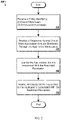
- FIG. 2 is a flow chart that shows an example process 200 for controlling access to applications.
- the process 200 can be performed by the application marketplace server 103 of FIG. 1 .
- a policy that includes data that identifies (i) one or more users and (ii) a restricted permission is received from over a network and by one or more servers associated with an application marketplace.
- the policy may be received from a server associated with an information technology administrator.
- the policy may be received from a mobile device that is associated with the particular user.
- the policy 107 may be provided to the application marketplace server 103 by the user device 104.
- a request to access one or more applications that are distributed through the application marketplace is received by the servers associated with the application marketplace, wherein the request includes data that identifies a particular one of the users.
- the user interacts with the application marketplace 150 to send the request to the application marketplace sever 103 to browse the inventory of applications.
- the request includes the identifier 114 of the user domain associated with the user and/or the user device 104.
- identifying one or more of the applications that are associated with the restricted permission can include identifying one or more of the applications that perform one or more operations associated with the restricted permission.
- the applications "A" and "B" described by the application descriptions 152 and 154 may perform operations that access email information, and are therefore restricted by the policy 107 that indicates that access to email data has been disabled for all users of the "example.com" domain.
- identifying one or more of the applications that are associated with the restricted permission may include identifying one or more of the applications that declare use of the restricted permission.
- the applications "A" and "B" described by the application descriptions 152 and 154 may declare their use of access to email data explicitly such as through a permission requirement manifest or through reflected metadata, or implicitly such as by being examined in an application "sandbox" provided by the application marketplace server, in which the application may be installed in a simulated deployment environment to detect the functions and resources that the application may attempt to access during execution.
- one or more of the applications that are associated with the restricted permission are identified by the servers associated with the application marketplace. For example, during state (d), the application marketplace server 103 selects the group of applications that are responsive to the user's request, and also determines that some of the applications requested for browsing are governed by one or more particular permissions.
- access by the particular user to the applications that are associated with the restricted permission is restricted by the servers associated with the application marketplace.
- the application marketplace server 103 provides the information 116 that includes information that describes applications that are responsive to the user's request.
- the user interface may identify the applications that are associated with the restricted permission, as restricted applications.
- the application descriptions 152 and 154 include the indicators 156 that indicate that application "A" and application "B" have been "blocked”.
- the user interface may identify one or more applications that are not associated with the restricted permission, and may not identify the applications that are associated with the restricted permission.
- the application marketplace 150 may show application descriptions for applications that are available for download and installation on the user device 104, and omit application descriptions for blocked applications.
- a user interface can be provided that identifies the applications that are associated with the restricted permission, and that includes indicia that specifies that access to each of the applications that are associated with the restricted permission is restricted.
- the application marketplace 150 is a user interface that displays the application descriptions 152 and 154, and includes the indicators 156 to indicate that the application descriptions 152 and 154 have been blocked for download and installation on the user device 104.
- the indicator that indicate that access to each of the applications is restricted may be provided in a portion of the user interface that would otherwise be used to provide a user-selectable control for requesting distribution of one or more of the applications.
- the indicators 156 may replace user controls that can be activated to download and install an unrestricted application (e.g., an "Install" button).
- the indicator that indicate that access to each of the applications is restricted may include a disabled control for requesting distribution of the applications.
- the application description 152 may include an "install" button that is grayed out and/or has otherwise been made visibly distinct to indicate the unavailability of the associated application. In other examples, the entire application description 152 may be grayed out and/or otherwise made visible distinct indicate the unavailability of the associated application.
- the user interface can include a user-selectable control for requesting moderation of the restricted permission.
- the application description 152 may include a button that lets the user request access to application "A".
- the request may be sent to the administrator server 102, or may be relayed to the administrator server 102 by the application marketplace server 103.
- the administrator may receive the request, and respond by creating or modifying a policy that would allow the requested application "A" to be deployed and installed on the user device 104.
- the servers associated with the application marketplace may provide indicia descriptive of each of the applications that are not associated with the restricted permission, and omitting indicia descriptive of each of the applications that are associated with the restricted permission.
- the application marketplace server 103 may search for and return to the application marketplace 150 application descriptions for applications that the user is allowed to install, and omit results that describe applications that have been blocked for the user.
- FIGs. 3A-3I show example screen shots 300a-300i of user interfaces for application marketplace that control access to applications.
- the screen shots 300a-300f may be views of the application marketplace 150 of FIG. 1 .
- FIG. 3A shows the example screen shot 300a.
- the screen shot 300a shows an application description 302 and an application description 304.
- the application description 304 includes a user control 306 that, when activated, will initiate the download and installation of the associated application "B" on a user device such as the user device 104.
- the application “A” represented by the application description 302 has been restricted by an application marketplace server such as the application marketplace server 103.
- the application description 302 includes an indicator 308 that indicates that the application "A” has been blocked.
- the indicator 308 replaces a user control, such as the user control 306, that would otherwise allow the installation of the application associated with the application description 302.
- FIG. 3B shows the example screen shot 300b.
- the screen shot 300b shows the application description 304 and an application description 310.
- the application description 310 describes the application "A", which has been restricted by the application marketplace server.
- the application description 310 is grayed out to indicate the restricted status of the application "A".
- graying out of an application description such as the application description 310 may include altering the color saturation, transparency, opacity, brightness, contrast, z-order depth, color scheme, or combinations of these and/or other appropriate visual attributes of the application description.
- FIG. 3C shows the example screen shot 300c.
- the screen shot 300c shows an application description 312.
- the application description 312 includes a warning indicator 314 that warns that the functionality of application "A" has been restricted by an administrator.
- the application description 312 also includes a user control 316 that, when activated, initializes the download and installation of the associated application.
- the user control 316 can allow the user to install an application despite the fact that some or all functions of the application may be restricted.
- application "A” may be a navigation application that provides a way to email the user's location to others.
- the user may still be able to install the application in order to use its navigation functions, but would be blocked from using the application's position emailing functions. Since the user would have previously seen the warning provided by the warning indicator 314, the user may experience less confusion or frustration over the blocked functionality than he or she may otherwise experience without being so forewarned.
- FIG. 3D shows the example screen shot 300d.
- the screen shot 300d shows an application description 320, an application description 322, and an application description 324.
- the application description 320 describes the allowed application "A”
- the application description 322 describes the blocked application "B”
- the application description 324 describes an allowed application "C”.
- the presentation of the application descriptions 320-324 is arranged in a modified alphabetical order. For example, without modification of the alphabetical presentation order, the application description 322 of the blocked application "B" would be displayed between the application descriptions 320 and 324.
- the alphabetical presentation order has been modified to rank and present the application descriptions 320 and 324 of the allowed applications "A” and “C” first, and to rank and present the application descriptions of blocked applications (e.g., the application description 322 of blocked application "B") lower than those of allowed applications.
- FIG. 3E shows the example screen shot 300e.
- the screen shot 300e shows an application description 330, an application description 332, and an application description 334.
- the application description 330 describes the allowed application "A”
- the application description 332 describes the blocked application “B”
- the application description 334 describes the allowed application "C”.
- the application descriptions 330 and 334 of the allowed applications "A” and “C” are included in a visibly distinct area 336.
- the application description 332 of the blocked application "B” is included in a visibly distinct area 338.
- the visibly distinct area 336 provides one or more visual cues that identify that the application descriptions 330 and 334 included within it describe applications that the user may download and install.
- the visibly distinct area 338 provides one or more visual cues that identify that the application description 332 included within it describes an application that is blocked for the user.
- FIG. 3F shows the example screen shot 300f.
- the screen shot 300f shows an application description 340, and an application description 342.
- the application description 340 describes the allowed application "A”
- the application description 342 describes the allowed application "C”.
- five other applications and their corresponding application descriptions have been blocked.
- the blocked applications are indicated by a blocked application summary 344.
- the blocked application summary 344 can inform the user that one or more applications have been blocked from the user and present such information substantially without consuming as much screen space as would be required to display application descriptions for each blocked application separately.
- the blocked application summary 344 includes a user control 346.
- the user control 346 when activated by the user, causes the blocked applications it describes to be presented. For example, the user may click the user control 346, and in response the screen shot 300f may be updated to resemble the screen shot 300d or the screen shot 300e.
- FIG. 3G shows the example screen shot 300g.
- the screen shot 300g shows an application description 350 for the application "A".
- the application description 350 includes an indicator 352 to indicate that application "A" has been blocked by the application marketplace server.
- a user control 354 when activated, causes additional information regarding the reason(s) why the associated application is restricted from the user. For example, the user may click the user control 354 to see a screen that displays information such as the privileges that have been restricted, the identity of the administrator or administrative authority that has restricted the privileges, the identity of scope of users who are affected by the restriction, and/or combinations of these and other appropriate information.
- the application description 350 includes a user control 356.
- the user control 356 when activated by the user, causes a request for approval for the application "A" to be sent. For example, the application “A” may have been blocked in the past because the application "A” required access to a sensitive function, but that requirement has since been removed. By clicking the user control 356, the user may draw an administrator's attention to the application “A” to re-evaluate and possibly unblock the application "A” so the user can download and install it.
- FIG. 3H shows the example screen shot 300h.
- the screen shot 300h shows an application description 360 for the application "A”, and an application description 362 for an application “C".
- a description for an application “B” which would otherwise be presented at a location 364 between the application description 360 and the application description 362, has been restricted by the application marketplace server.
- the application description for the application "B” is omitted at the location 364.
- FIG. 3I shows the example screen shot 300i.
- the screen shot 300i presents a collection 370 of application descriptions for applications that are associated with a selected application category 372 (e.g., email applications).
- An application description 374 for the application "A” includes a user control 376.
- the user control 376 when selected by the user, initiates a request to be sent to the application marketplace server for the download and installation of application "A”.
- an application description 378 for the application "C” includes a user control 380.
- the user control 380 when selected by the user, initiates a request to be sent to the application marketplace server for the download and installation of application "C”.
- An application description 382 for the application “B” includes an indicator 384.
- the application marketplace server has restricted the application “B”.
- the indicator 384 provides a visual notification that the application "B” described by the application description 382 has been blocked by the application marketplace server for download and installation by the user.
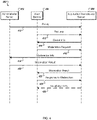
- FIG. 4 is a timeline diagram 400 that shows example interactions among systems for controlling access to application marketplace applications. The interactions occur among an administrator server 402, a user device 404, and an application marketplace server 406.
- the administrator server 402 may be the administrator server 102 of FIG. 1
- the user device 404 may be the user device 104
- the application marketplace server 406 may be the application marketplace server 103.
- the interactions begin at 410 when the administrator server 402 sends policy information to the application marketplace server 406.
- the policy information can be the policy 107 of FIG. 1 .
- the policy information describes users and privileges that an administrator has chosen to allow or disallow for the selected users.
- the policy information may express that all users of the "area51 .gov" domain are blocked from using the camera functions of the user device 404.
- the user device 404 sends a request to the application marketplace server 406.
- the request may be a request for information about a collection of applications for display in an application marketplace such as the application marketplace 150.
- the request may be a request to download and/or install a selected application.
- the application or applications requested by the user device 404 have been restricted by the policy sent at 410.
- the application marketplace server 406 therefore sends denial information to the user device 404 at 414.
- the user device 404 sends a moderation request to the application marketplace server 406.
- the application marketplace server 406 forwards the moderation request to the administrator server 402.
- the moderation request is a request for an administrator of the administrator server 402 to review and possibly modify existing policies regarding privilege restrictions.
- the user of the user device 404 may believe that the requested application has been blocked by a policy that is overly broad, and send the request in an attempt to have the policy reviewed and updated to allow the installation of a selected application or category of applications.
- the user may send the request to obtain an individual or group exemption from one or more policies. For example, users belonging to the group "generals.area51 .gov” may be allowed to install applications that access camera functions, while all other users of "area51 .gov” remain blocked (e.g., "privates.area51 .gov”).
- the user may request that an exemption be made for a particular application.
- the administrator may only allow "white-listed” (e.g., tested, trusted, approved) email applications to access email data on corporate user devices (e.g., to prevent malicious or poorly written applications from accessing sensitive data), and as such when a new email application appears in the application marketplace, it too is blocked by the existing policy.
- the user may send the request in an attempt to have the administrator review and/or add the new application to the "white list" of allowed applications.
- a moderation result is sent to the application marketplace server 406.
- the moderation result can include policy information that reflects the administrator's dispensation of the moderation request. For example, the administrator may update a policy to unblock selected permissions, may create a new policy to exempt selected users and/or applications from a restriction, may deny the request, and combinations of these and other appropriate responses to the moderation request. In some implementations, the administrator may simply ignore the moderation request. As such, the existing policies may remain unchanged and the application marketplace server 406 may treat the lack of response substantially the same as a denial of the moderation request.
- the moderation result is sent to the user device 402.
- the moderation result may indicate that the administrator has changed one or more policies in order to allow the download and installation of an application that was previous blocked for the user on the user device 404.
- a response to the moderation is sent from the user device 404 to the application marketplace server 406.
- the user may again attempt to download and install an application that was previously blocked, but is now allowed as a result of the moderation.
- installation information is sent from the application marketplace server 406 to the user device 404.
- the installation information may be an application description, or it may be installable application program code.
- FIG. 5 is a timeline diagram 500 that shows example interactions among systems for synchronizing policies for controlling access to application marketplace applications. The interactions occur among an administrator server 502, a user device 504, and an application marketplace server 506.
- the administrator server 502 may be the administrator server 102 of FIG. 1 or the administrator server 402 of FIG. 4
- the user device 504 may be the user device 104 or 404
- the application marketplace server 506 may be the application marketplace server 103 or 506.
- the administrator server 502 sends a policy "A" to the user device 504.
- the policy "A” includes information that describes privileges that have been restricted for applications running on the user device 504. For example, an administrator may push or otherwise install a policy description file on the user device 504 to cause the user device 504 to allow or prevent applications from accessing selected functions of the user device 504.
- the administrator server 502 sends a policy "B" to the application marketplace server 506.
- the policy "B” includes information that describes privileges that have been restricted for applications running on the user device 504.
- the policy “B” may direct the application marketplace server 506 to selectively allow or block applications that utilize selected functions of selected users' user devices.
- policy "A” may be different from policy “B”.
- policy "A” may grant a selected permission while policy “B” restricts it.
- the user device sends a policy request to the application marketplace server 506.
- the request includes the policy "A”.
- the policy request is a request for the application marketplace server 506 to synchronize or otherwise update the policy information present on the user device 504. For example, the administrator may have blocked a selected function in policy "A”, but later decided to allow the functionality in policy "B".
- the policies on the user device 504 may be updated to reflect current administrative restrictions, and may therefore allow the installation and operation of previously blocked applications on the user device 504.
- the application marketplace server 506 performs a policy synchronization operation.
- the policy synchronization operation may favor the most recent policy restrictions. For example, if policy "B" is more recent than policy "A", then the settings provided by policy “B” may be implemented for settings that are also found in policy "A”. In some implementations, the policy synchronization operation may favor the most restrictive policy restrictions. For example, if policy "A” restricts a privilege that policy "B” allows, then the settings provided by policy “A” may be implemented for settings that are also found in policy "B”.
- the application marketplace server 506 sends a response to the user device 504.
- the response includes information that describes the synchronized or otherwise updated policies that are to be applied to applications operating on the user device 504.
- the application marketplace server 506 sends policy synchronization information to the administrator server 502.
- the application marketplace server 506 may report conflicts that were determined to exist between policy "A" and policy "B".
- the administrator may use such information to update or otherwise modify permission policies for the user device 504 and/or the application marketplace server 506, or the administrator may be prompted to perform administrative actions directly upon the user device 504.
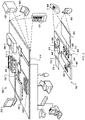
- FIG. 6 is a block diagram of computing devices 600, 650 that may be used to implement the systems and methods described in this document, either as a client or as a server or plurality of servers.
- Computing device 600 is intended to represent various forms of digital computers, such as laptops, desktops, workstations, personal digital assistants, servers, blade servers, mainframes, and other appropriate computers.
- Computing device 650 is intended to represent various forms of mobile devices, such as personal digital assistants, cellular telephones, smartphones, and other similar computing devices.
- the components shown here, their connections and relationships, and their functions, are meant to be exemplary only, and are not meant to limit implementations of the inventions described and/or claimed in this document.
- Computing device 600 includes a processor 602, memory 604, a storage device 606, a high-speed interface 608 connecting to memory 604 and high-speed expansion ports 610, and a low speed interface 612 connecting to low speed bus 614 and storage device 606.
- Each of the components 602, 604, 606, 608, 610, and 612 are interconnected using various busses, and may be mounted on a common motherboard or in other manners as appropriate.
- the processor 602 can process instructions for execution within the computing device 600, including instructions stored in the memory 604 or on the storage device 606 to display graphical information for a GUI on an external input/output device, such as display 616 coupled to high speed interface 608.
- multiple processors and/or multiple buses may be used, as appropriate, along with multiple memories and types of memory.
- multiple computing devices 600 may be connected, with each device providing portions of the necessary operations (e.g., as a server bank, a group of blade servers, or a multi-processor system).
- the memory 604 stores information within the computing device 600.
- the memory 604 is a non-transitory computer-readable medium.
- the memory 604 is a volatile memory unit or units.
- the memory 604 is a non-volatile memory unit or units.
- the storage device 606 is a non-transitory computer-readable medium capable of providing mass storage for the computing device 600.
- the storage device 606 is a computer-readable medium.
- the storage device 606 may be a floppy disk device, a hard disk device, an optical disk device, or a tape device, a flash memory or other similar solid state memory device, or an array of devices, including devices in a storage area network or other configurations.
- a computer program product is tangibly embodied in an information carrier.
- the computer program product contains instructions that, when executed, perform one or more methods, such as those described above.
- the information carrier is a computer- or machine-readable medium, such as the memory 604, the storage device 606, or memory on processor 602.
- the high speed controller 608 manages bandwidth-intensive operations for the computing device 600, while the low speed controller 612 manages lower bandwidth-intensive operations. Such allocation of duties is exemplary only.
- the high-speed controller 608 is coupled to memory 604, display 616 (e.g., through a graphics processor or accelerator), and to high-speed expansion ports 610, which may accept various expansion cards (not shown).
- low-speed controller 612 is coupled to storage device 606 and low-speed expansion port 614.
- the low-speed expansion port which may include various communication ports (e.g., USB, Bluetooth, Ethernet, wireless Ethernet) may be coupled to one or more input/output devices, such as a keyboard, a pointing device, a scanner, or a networking device such as a switch or router, e.g., through a network adapter.
- input/output devices such as a keyboard, a pointing device, a scanner, or a networking device such as a switch or router, e.g., through a network adapter.
- the computing device 600 may be implemented in a number of different forms, as shown in the figure. For example, it may be implemented as a standard server 620, or multiple times in a group of such servers. It may also be implemented as part of a rack server system 624. In addition, it may be implemented in a personal computer such as a laptop computer 622. Alternatively, components from computing device 600 may be combined with other components in a mobile device (not shown), such as device 650. Each of such devices may contain one or more of computing device 600, 650, and an entire system may be made up of multiple computing devices 600, 650 communicating with each other.
- Computing device 650 includes a processor 652, memory 664, an input/output device such as a display 654, a communication interface 666, and a transceiver 668, among other components.
- the device 650 may also be provided with a storage device, such as a microdrive or other device, to provide additional storage.
- a storage device such as a microdrive or other device, to provide additional storage.
- Each of the components 650, 652, 664, 654, 666, and 668 are interconnected using various buses, and several of the components may be mounted on a common motherboard or in other manners as appropriate.
- the processor 652 can process instructions for execution within the computing device 650, including instructions stored in the memory 664.
- the processor may also include separate analog and digital processors.
- the processor may provide, for example, for coordination of the other components of the device 650, such as control of user interfaces, applications run by device 650, and wireless communication by device 650.
- Processor 652 may communicate with a user through control interface 658 and display interface 656 coupled to a display 654.
- the display 654 may be, for example, a TFT LCD display or an OLED display, or other appropriate display technology.
- the display interface 656 may comprise appropriate circuitry for driving the display 654 to present graphical and other information to a user.
- the control interface 658 may receive commands from a user and convert them for submission to the processor 652.
- an external interface 662 may be provide in communication with processor 652, so as to enable near area communication of device 650 with other devices.
- External interface 662 may provide, for example, for wired communication (e.g., via a docking procedure) or for wireless communication (e.g., via Bluetooth or other such technologies).
- the memory 664 stores information within the computing device 650.
- the memory 664 is a computer-readable medium.
- the memory 664 is a volatile memory unit or units.
- the memory 664 is a non-volatile memory unit or units.
- Expansion memory 674 may also be provided and connected to device 650 through expansion interface 672, which may include, for example, a SIMM card interface. Such expansion memory 674 may provide extra storage space for device 650, or may also store applications or other information for device 650. Specifically, expansion memory 674 may include instructions to carry out or supplement the processes described above, and may include secure information also.
- expansion memory 674 may be provide as a security module for device 650, and may be programmed with instructions that permit secure use of device 650.
- secure applications may be provided via the SIMM cards, along with additional information, such as placing identifying information on the SIMM card in a non-hackable manner.
- the memory may include for example, flash memory and/or MRAM memory, as discussed below.
- a computer program product is tangibly embodied in an information carrier.
- the computer program product contains instructions that, when executed, perform one or more methods, such as those described above.
- the information carrier is a computer- or machine-readable medium, such as the memory 664, expansion memory 674, or memory on processor 652.
- Device 650 may communicate wirelessly through communication interface 666, which may include digital signal processing circuitry where necessary. Communication interface 666 may provide for communications under various modes or protocols, such as GSM voice calls, SMS, EMS, or MMS messaging, CDMA, TDMA, PDC, WCDMA, CDMA2000, or GPRS, among others. Such communication may occur, for example, through radio-frequency transceiver 668. In addition, short-range communication may occur, such as using a Bluetooth, WiFi, or other such transceiver (not shown). In addition, GPS receiver module 670 may provide additional wireless data to device 650, which may be used as appropriate by applications running on device 650.
- GPS receiver module 670 may provide additional wireless data to device 650, which may be used as appropriate by applications running on device 650.
- Device 650 may also communication audibly using audio codec 660, which may receive spoken information from a user and convert it to usable digital information. Audio codex 660 may likewise generate audible sound for a user, such as through a speaker, e.g., in a handset of device 650. Such sound may include sound from voice telephone calls, may include recorded sound (e.g., voice messages, music files, etc.) and may also include sound generated by applications operating on device 650.
- Audio codec 660 may receive spoken information from a user and convert it to usable digital information. Audio codex 660 may likewise generate audible sound for a user, such as through a speaker, e.g., in a handset of device 650. Such sound may include sound from voice telephone calls, may include recorded sound (e.g., voice messages, music files, etc.) and may also include sound generated by applications operating on device 650.
- the computing device 650 may be implemented in a number of different forms, as shown in the figure. For example, it may be implemented as a cellular telephone 680. It may also be implemented as part of a smartphone 682, personal digital assistant, or other similar mobile device.
- implementations of the systems and techniques described here can be realized in digital electronic circuitry, integrated circuitry, specially designed ASICs (application specific integrated circuits), computer hardware, firmware, software, and/or combinations thereof.
- ASICs application specific integrated circuits
- These various implementations can include implementation in one or more computer programs that are executable and/or interpretable on a programmable system including at least one programmable processor, which may be special or general purpose, coupled to receive data and instructions from, and to transmit data and instructions to, a storage system, at least one input device, and at least one output device.
- the systems and techniques described here can be implemented on a computer having a display device (e.g., a CRT (cathode ray tube) or LCD (liquid crystal display) monitor) for displaying information to the user and a keyboard and a pointing device (e.g., a mouse or a trackball) by which the user can provide input to the computer.
- a display device e.g., a CRT (cathode ray tube) or LCD (liquid crystal display) monitor
- a keyboard and a pointing device e.g., a mouse or a trackball
- Other kinds of devices can be used to provide for interaction with a user as well; for example, feedback provided to the user can be any form of sensory feedback (e.g., visual feedback, auditory feedback, or tactile feedback); and input from the user can be received in any form, including acoustic, speech, or tactile input.
- the systems and techniques described here can be implemented in a computing system that includes a back end component (e.g., as a data server), or that includes a middleware component (e.g., an application server), or that includes a front end component (e.g., a client computer having a graphical user interface or a Web browser through which a user can interact with an implementation of the systems and techniques described here), or any combination of such back end, middleware, or front end components.
- the components of the system can be interconnected by any form or medium of digital data communication (e.g., a communication network). Examples of communication networks include a local area network ("LAN”), a wide area network (“WAN”), and the Internet.
- LAN local area network
- WAN wide area network
- the Internet the global information network
- the computing system can include clients and servers.
- a client and server are generally remote from each other and typically interact through a communication network.
- the relationship of client and server arises by virtue of computer programs running on the respective computers and having a client-server relationship to each other.
Landscapes
- Engineering & Computer Science (AREA)
- Theoretical Computer Science (AREA)
- Software Systems (AREA)
- Computer Security & Cryptography (AREA)
- General Engineering & Computer Science (AREA)
- Computer Hardware Design (AREA)
- Physics & Mathematics (AREA)
- General Physics & Mathematics (AREA)
- General Health & Medical Sciences (AREA)
- Health & Medical Sciences (AREA)
- Bioethics (AREA)
- Multimedia (AREA)
- Technology Law (AREA)
- Medical Informatics (AREA)
- Databases & Information Systems (AREA)
- Automation & Control Theory (AREA)
- Stored Programmes (AREA)
- Information Transfer Between Computers (AREA)
Applications Claiming Priority (4)
| Application Number | Priority Date | Filing Date | Title |
|---|---|---|---|
| US13/270,457 US8239918B1 (en) | 2011-10-11 | 2011-10-11 | Application marketplace administrative controls |
| US13/552,985 US8832817B2 (en) | 2011-10-11 | 2012-07-19 | Application marketplace administrative controls |
| EP12773183.4A EP2766822B1 (fr) | 2011-10-11 | 2012-09-28 | Contrôles administratifs de marché d'applications |
| PCT/US2012/057883 WO2013055532A1 (fr) | 2011-10-11 | 2012-09-28 | Contrôles administratifs de marché d'applications |
Related Parent Applications (2)
| Application Number | Title | Priority Date | Filing Date |
|---|---|---|---|
| EP12773183.4A Division EP2766822B1 (fr) | 2011-10-11 | 2012-09-28 | Contrôles administratifs de marché d'applications |
| EP12773183.4A Division-Into EP2766822B1 (fr) | 2011-10-11 | 2012-09-28 | Contrôles administratifs de marché d'applications |
Publications (3)
| Publication Number | Publication Date |
|---|---|
| EP4009214A1 true EP4009214A1 (fr) | 2022-06-08 |
| EP4009214B1 EP4009214B1 (fr) | 2026-03-04 |
| EP4009214C0 EP4009214C0 (fr) | 2026-03-04 |
Family
ID=46583387
Family Applications (2)
| Application Number | Title | Priority Date | Filing Date |
|---|---|---|---|
| EP12773183.4A Active EP2766822B1 (fr) | 2011-10-11 | 2012-09-28 | Contrôles administratifs de marché d'applications |
| EP22153421.7A Active EP4009214B1 (fr) | 2011-10-11 | 2012-09-28 | Contrôles administratifs de marché d'applications |
Family Applications Before (1)
| Application Number | Title | Priority Date | Filing Date |
|---|---|---|---|
| EP12773183.4A Active EP2766822B1 (fr) | 2011-10-11 | 2012-09-28 | Contrôles administratifs de marché d'applications |
Country Status (5)
| Country | Link |
|---|---|
| US (4) | US8239918B1 (fr) |
| EP (2) | EP2766822B1 (fr) |
| CN (3) | CN107506620B (fr) |
| ES (1) | ES3064806T3 (fr) |
| WO (1) | WO2013055532A1 (fr) |
Families Citing this family (118)
| Publication number | Priority date | Publication date | Assignee | Title |
|---|---|---|---|---|
| US10460085B2 (en) * | 2008-03-13 | 2019-10-29 | Mattel, Inc. | Tablet computer |
| WO2012099617A1 (fr) | 2011-01-20 | 2012-07-26 | Box.Net, Inc. | Notification en temps réel d'activités qui se produisent dans un environnement de collaboration fondé sur le web |
| US8566175B1 (en) | 2011-04-04 | 2013-10-22 | Google Inc. | Common purchasing user interface |
| US9652741B2 (en) | 2011-07-08 | 2017-05-16 | Box, Inc. | Desktop application for access and interaction with workspaces in a cloud-based content management system and synchronization mechanisms thereof |
| WO2013025785A1 (fr) * | 2011-08-15 | 2013-02-21 | Arizona Board Of Regents, For And On Behalf Of, Arizona State University | Systèmes, procédés et média de surveillance et de commande d'applications basés sur des politiques |
| US20140032733A1 (en) | 2011-10-11 | 2014-01-30 | Citrix Systems, Inc. | Policy-Based Application Management |
| US9215225B2 (en) | 2013-03-29 | 2015-12-15 | Citrix Systems, Inc. | Mobile device locking with context |
| US20140053234A1 (en) | 2011-10-11 | 2014-02-20 | Citrix Systems, Inc. | Policy-Based Application Management |
| US8806570B2 (en) | 2011-10-11 | 2014-08-12 | Citrix Systems, Inc. | Policy-based application management |
| US9280377B2 (en) | 2013-03-29 | 2016-03-08 | Citrix Systems, Inc. | Application with multiple operation modes |
| US8869235B2 (en) | 2011-10-11 | 2014-10-21 | Citrix Systems, Inc. | Secure mobile browser for protecting enterprise data |
| US9098474B2 (en) | 2011-10-26 | 2015-08-04 | Box, Inc. | Preview pre-generation based on heuristics and algorithmic prediction/assessment of predicted user behavior for enhancement of user experience |
| WO2013062599A1 (fr) | 2011-10-26 | 2013-05-02 | Box, Inc. | Rendu de prévisualisation de contenu multimédia amélioré dans un système de gestion de contenu en nuage |
| US9773051B2 (en) | 2011-11-29 | 2017-09-26 | Box, Inc. | Mobile platform file and folder selection functionalities for offline access and synchronization |
| US9904435B2 (en) | 2012-01-06 | 2018-02-27 | Box, Inc. | System and method for actionable event generation for task delegation and management via a discussion forum in a web-based collaboration environment |
| US11232481B2 (en) | 2012-01-30 | 2022-01-25 | Box, Inc. | Extended applications of multimedia content previews in the cloud-based content management system |
| US8966632B1 (en) * | 2012-02-17 | 2015-02-24 | Trend Micro Incorporated | In-the-cloud sandbox for inspecting mobile applications for malicious content |
| US9965745B2 (en) | 2012-02-24 | 2018-05-08 | Box, Inc. | System and method for promoting enterprise adoption of a web-based collaboration environment |
| US9195636B2 (en) | 2012-03-07 | 2015-11-24 | Box, Inc. | Universal file type preview for mobile devices |
| US9575981B2 (en) | 2012-04-11 | 2017-02-21 | Box, Inc. | Cloud service enabled to handle a set of files depicted to a user as a single file in a native operating system |
| US9413587B2 (en) | 2012-05-02 | 2016-08-09 | Box, Inc. | System and method for a third-party application to access content within a cloud-based platform |
| WO2013166520A1 (fr) | 2012-05-04 | 2013-11-07 | Box, Inc. | Mise en œuvre de redondance de référentiel d'un système mettant à jour des clients par incréments avec des évènements qui sont survenus par l'intermédiaire d'une plateforme en nuage |
| US9691051B2 (en) | 2012-05-21 | 2017-06-27 | Box, Inc. | Security enhancement through application access control |
| US8914900B2 (en) | 2012-05-23 | 2014-12-16 | Box, Inc. | Methods, architectures and security mechanisms for a third-party application to access content in a cloud-based platform |
| GB2505072A (en) | 2012-07-06 | 2014-02-19 | Box Inc | Identifying users and collaborators as search results in a cloud-based system |
| US9712510B2 (en) | 2012-07-06 | 2017-07-18 | Box, Inc. | Systems and methods for securely submitting comments among users via external messaging applications in a cloud-based platform |
| US9794256B2 (en) * | 2012-07-30 | 2017-10-17 | Box, Inc. | System and method for advanced control tools for administrators in a cloud-based service |
| US9280789B2 (en) | 2012-08-17 | 2016-03-08 | Google Inc. | Recommending native applications |
| GB2513671A (en) | 2012-08-27 | 2014-11-05 | Box Inc | Server side techniques for reducing database workload in implementing selective subfolder synchronization in a cloud-based environment |
| US9135462B2 (en) | 2012-08-29 | 2015-09-15 | Box, Inc. | Upload and download streaming encryption to/from a cloud-based platform |
| US9117087B2 (en) | 2012-09-06 | 2015-08-25 | Box, Inc. | System and method for creating a secure channel for inter-application communication based on intents |
| US9195519B2 (en) | 2012-09-06 | 2015-11-24 | Box, Inc. | Disabling the self-referential appearance of a mobile application in an intent via a background registration |
| US9292833B2 (en) | 2012-09-14 | 2016-03-22 | Box, Inc. | Batching notifications of activities that occur in a web-based collaboration environment |
| US10915492B2 (en) | 2012-09-19 | 2021-02-09 | Box, Inc. | Cloud-based platform enabled with media content indexed for text-based searches and/or metadata extraction |
| US8938796B2 (en) | 2012-09-20 | 2015-01-20 | Paul Case, SR. | Case secure computer architecture |
| US9959420B2 (en) | 2012-10-02 | 2018-05-01 | Box, Inc. | System and method for enhanced security and management mechanisms for enterprise administrators in a cloud-based environment |
| US9495364B2 (en) | 2012-10-04 | 2016-11-15 | Box, Inc. | Enhanced quick search features, low-barrier commenting/interactive features in a collaboration platform |
| US9665349B2 (en) | 2012-10-05 | 2017-05-30 | Box, Inc. | System and method for generating embeddable widgets which enable access to a cloud-based collaboration platform |
| US8726343B1 (en) | 2012-10-12 | 2014-05-13 | Citrix Systems, Inc. | Managing dynamic policies and settings in an orchestration framework for connected devices |
| US9516022B2 (en) | 2012-10-14 | 2016-12-06 | Getgo, Inc. | Automated meeting room |
| US8910239B2 (en) | 2012-10-15 | 2014-12-09 | Citrix Systems, Inc. | Providing virtualized private network tunnels |
| US20140109171A1 (en) | 2012-10-15 | 2014-04-17 | Citrix Systems, Inc. | Providing Virtualized Private Network tunnels |
| US20140109176A1 (en) | 2012-10-15 | 2014-04-17 | Citrix Systems, Inc. | Configuring and providing profiles that manage execution of mobile applications |
| US20140109072A1 (en) | 2012-10-16 | 2014-04-17 | Citrix Systems, Inc. | Application wrapping for application management framework |
| US9971585B2 (en) | 2012-10-16 | 2018-05-15 | Citrix Systems, Inc. | Wrapping unmanaged applications on a mobile device |
| US20140108793A1 (en) | 2012-10-16 | 2014-04-17 | Citrix Systems, Inc. | Controlling mobile device access to secure data |
| US9606774B2 (en) | 2012-10-16 | 2017-03-28 | Citrix Systems, Inc. | Wrapping an application with field-programmable business logic |
| DE102012022874A1 (de) * | 2012-11-22 | 2014-05-22 | Giesecke & Devrient Gmbh | Applikationsinstallation |
| JP5971099B2 (ja) * | 2012-12-04 | 2016-08-17 | 富士通株式会社 | 情報処理装置、方法及びプログラム |
| US9762698B2 (en) | 2012-12-14 | 2017-09-12 | Google Inc. | Computer application promotion |
| US10235383B2 (en) | 2012-12-19 | 2019-03-19 | Box, Inc. | Method and apparatus for synchronization of items with read-only permissions in a cloud-based environment |
| US9396245B2 (en) | 2013-01-02 | 2016-07-19 | Box, Inc. | Race condition handling in a system which incrementally updates clients with events that occurred in a cloud-based collaboration platform |
| US9953036B2 (en) | 2013-01-09 | 2018-04-24 | Box, Inc. | File system monitoring in a system which incrementally updates clients with events that occurred in a cloud-based collaboration platform |
| EP2755151A3 (fr) | 2013-01-11 | 2014-09-24 | Box, Inc. | Fonctionnalités, les caractéristiques et l'interface utilisateur d'un client de synchronisation à un environnement en nuage |
| US10599671B2 (en) | 2013-01-17 | 2020-03-24 | Box, Inc. | Conflict resolution, retry condition management, and handling of problem files for the synchronization client to a cloud-based platform |
| US9361083B2 (en) * | 2013-03-06 | 2016-06-07 | Microsoft Technology Licensing, Llc | Enterprise management for devices |
| US9245128B2 (en) | 2013-03-06 | 2016-01-26 | Microsoft Technology Licensing, Llc | Limiting enterprise applications and settings on devices |
| US9455886B2 (en) | 2013-03-29 | 2016-09-27 | Citrix Systems, Inc. | Providing mobile device management functionalities |
| US9985850B2 (en) | 2013-03-29 | 2018-05-29 | Citrix Systems, Inc. | Providing mobile device management functionalities |
| US8813179B1 (en) | 2013-03-29 | 2014-08-19 | Citrix Systems, Inc. | Providing mobile device management functionalities |
| US9355223B2 (en) | 2013-03-29 | 2016-05-31 | Citrix Systems, Inc. | Providing a managed browser |
| US8910264B2 (en) | 2013-03-29 | 2014-12-09 | Citrix Systems, Inc. | Providing mobile device management functionalities |
| US9369449B2 (en) | 2013-03-29 | 2016-06-14 | Citrix Systems, Inc. | Providing an enterprise application store |
| US10284627B2 (en) | 2013-03-29 | 2019-05-07 | Citrix Systems, Inc. | Data management for an application with multiple operation modes |
| CN103226491B (zh) | 2013-04-08 | 2017-06-16 | 小米科技有限责任公司 | 一种设置应用程序状态的方法及装置 |
| US10725968B2 (en) | 2013-05-10 | 2020-07-28 | Box, Inc. | Top down delete or unsynchronization on delete of and depiction of item synchronization with a synchronization client to a cloud-based platform |
| US10846074B2 (en) | 2013-05-10 | 2020-11-24 | Box, Inc. | Identification and handling of items to be ignored for synchronization with a cloud-based platform by a synchronization client |
| US9225799B1 (en) | 2013-05-21 | 2015-12-29 | Trend Micro Incorporated | Client-side rendering for virtual mobile infrastructure |
| US9300720B1 (en) | 2013-05-21 | 2016-03-29 | Trend Micro Incorporated | Systems and methods for providing user inputs to remote mobile operating systems |
| US9444912B1 (en) | 2013-05-21 | 2016-09-13 | Trend Micro Incorporated | Virtual mobile infrastructure for mobile devices |
| US9049169B1 (en) | 2013-05-30 | 2015-06-02 | Trend Micro Incorporated | Mobile email protection for private computer networks |
| GB2515192B (en) | 2013-06-13 | 2016-12-14 | Box Inc | Systems and methods for synchronization event building and/or collapsing by a synchronization component of a cloud-based platform |
| US9805050B2 (en) | 2013-06-21 | 2017-10-31 | Box, Inc. | Maintaining and updating file system shadows on a local device by a synchronization client of a cloud-based platform |
| US9535924B2 (en) | 2013-07-30 | 2017-01-03 | Box, Inc. | Scalability improvement in a system which incrementally updates clients with events that occurred in a cloud-based collaboration platform |
| US10509527B2 (en) | 2013-09-13 | 2019-12-17 | Box, Inc. | Systems and methods for configuring event-based automation in cloud-based collaboration platforms |
| US9213684B2 (en) | 2013-09-13 | 2015-12-15 | Box, Inc. | System and method for rendering document in web browser or mobile device regardless of third-party plug-in software |
| US9535909B2 (en) | 2013-09-13 | 2017-01-03 | Box, Inc. | Configurable event-based automation architecture for cloud-based collaboration platforms |
| US10824756B2 (en) | 2013-09-20 | 2020-11-03 | Open Text Sa Ulc | Hosted application gateway architecture with multi-level security policy and rule promulgations |
| EP2851833B1 (fr) * | 2013-09-20 | 2017-07-12 | Open Text S.A. | Architecture de passerelle d'application avec promulgations de politique et de règles de sécurité multiples niveaux |
| US10116697B2 (en) | 2013-09-20 | 2018-10-30 | Open Text Sa Ulc | System and method for geofencing |
| US9507617B1 (en) | 2013-12-02 | 2016-11-29 | Trend Micro Incorporated | Inter-virtual machine communication using pseudo devices |
| US9679162B2 (en) * | 2014-02-24 | 2017-06-13 | Google Inc. | Application permission settings |
| US20150332030A1 (en) * | 2014-05-15 | 2015-11-19 | 42Gears Mobility Systems Private Limited | System for Locking Down a Computing Device for Restricted Access to End Users |
| US9754091B2 (en) | 2014-05-21 | 2017-09-05 | Google Inc. | Restricted accounts on a mobile platform |
| US9489524B2 (en) * | 2014-05-23 | 2016-11-08 | Blackberry Limited | Intra-application permissions on an electronic device |
| US10530854B2 (en) | 2014-05-30 | 2020-01-07 | Box, Inc. | Synchronization of permissioned content in cloud-based environments |
| US10375024B2 (en) * | 2014-06-20 | 2019-08-06 | Zscaler, Inc. | Cloud-based virtual private access systems and methods |
| US9600327B2 (en) | 2014-07-10 | 2017-03-21 | Oracle International Corporation | Process scheduling and execution in distributed computing environments |
| US10038731B2 (en) | 2014-08-29 | 2018-07-31 | Box, Inc. | Managing flow-based interactions with cloud-based shared content |
| US9894119B2 (en) | 2014-08-29 | 2018-02-13 | Box, Inc. | Configurable metadata-based automation and content classification architecture for cloud-based collaboration platforms |
| JP6499423B2 (ja) * | 2014-11-18 | 2019-04-10 | キヤノン株式会社 | 情報処理システム、情報処理装置、及びその制御方法とプログラム |
| US10986131B1 (en) * | 2014-12-17 | 2021-04-20 | Amazon Technologies, Inc. | Access control policy warnings and suggestions |
| US10043030B1 (en) | 2015-02-05 | 2018-08-07 | Amazon Technologies, Inc. | Large-scale authorization data collection and aggregation |
| JP6228573B2 (ja) * | 2015-06-26 | 2017-11-08 | 株式会社オプティム | アプリケーション提供サーバ、アプリケーション設定端末、アプリケーション提供システム、アプリケーション提供方法及びアプリケーション提供サーバ用プログラム。 |
| KR20170035294A (ko) * | 2015-09-22 | 2017-03-30 | 삼성전자주식회사 | 전자 장치 및 이의 보안을 제공하는 결제 방법 |
| US11593075B2 (en) | 2015-11-03 | 2023-02-28 | Open Text Sa Ulc | Streamlined fast and efficient application building and customization systems and methods |
| US9928230B1 (en) | 2016-09-29 | 2018-03-27 | Vignet Incorporated | Variable and dynamic adjustments to electronic forms |
| US10069934B2 (en) | 2016-12-16 | 2018-09-04 | Vignet Incorporated | Data-driven adaptive communications in user-facing applications |
| US9858063B2 (en) | 2016-02-10 | 2018-01-02 | Vignet Incorporated | Publishing customized application modules |
| US12217036B2 (en) | 2016-02-10 | 2025-02-04 | Vignet Incorporated | Automating interactions for health data collection and patient engagement |
| US11388037B2 (en) | 2016-02-25 | 2022-07-12 | Open Text Sa Ulc | Systems and methods for providing managed services |
| US10419488B2 (en) * | 2017-03-03 | 2019-09-17 | Microsoft Technology Licensing, Llc | Delegating security policy management authority to managed accounts |
| US10270784B1 (en) * | 2017-03-20 | 2019-04-23 | Cruzeiro Associates, Inc. | Systems, devices, software, and methods for location based device and application management |
| JP6640798B2 (ja) * | 2017-07-31 | 2020-02-05 | グリー株式会社 | アプリケーション利用管理プログラム、アプリケーション利用管理方法、サーバ、管理用プログラム及び管理ユーザ端末 |
| WO2019059880A1 (fr) * | 2017-09-19 | 2019-03-28 | Siemens Aktiengesellschaft | Appareil et procédé pour ajouter et supprimer de manière autonome une fonctionnalité dans des contrôleurs programmables (plc) |
| CN108920910A (zh) * | 2018-08-01 | 2018-11-30 | 北京奇安信科技有限公司 | 一种移动安全服务sdk授权管理方法及装置 |
| US10775974B2 (en) | 2018-08-10 | 2020-09-15 | Vignet Incorporated | User responsive dynamic architecture |
| US11082452B2 (en) * | 2018-10-15 | 2021-08-03 | Paypal, Inc. | Multi-dimensional drift nuance intelligence threat engine |
| KR102821559B1 (ko) | 2019-11-07 | 2025-06-19 | 삼성전자주식회사 | 컨텍스트에 기반하여 애플리케이션을 제공하는 서버 및 그 제어 방법 |
| CN111198771A (zh) * | 2019-11-29 | 2020-05-26 | 云深互联(北京)科技有限公司 | 一种平台通用服务实现方法、装置、设备和存储介质 |
| CN111224948A (zh) * | 2019-11-29 | 2020-06-02 | 云深互联(北京)科技有限公司 | 一种发现应用的方法、装置、设备和存储介质 |
| US11763919B1 (en) | 2020-10-13 | 2023-09-19 | Vignet Incorporated | Platform to increase patient engagement in clinical trials through surveys presented on mobile devices |
| US11678178B2 (en) * | 2020-12-14 | 2023-06-13 | T-Mobile Usa, Inc. | Application-based security monitoring application |
| CN114816779A (zh) * | 2021-01-21 | 2022-07-29 | 腾讯科技(深圳)有限公司 | 一种应用处理方法、装置、设备及计算机可读存储介质 |
| CN116340900A (zh) * | 2021-12-24 | 2023-06-27 | 华为终端有限公司 | 应用权限同步方法及相关设备 |
| US12566600B2 (en) * | 2023-04-19 | 2026-03-03 | Digital Turbine, Inc. | Limited use links for data item distribution |
| US20240414210A1 (en) * | 2023-06-09 | 2024-12-12 | Fortinet, Inc. | Systems and methods for edge processing using selectively suspended network security |
| US20250166060A1 (en) * | 2023-11-20 | 2025-05-22 | Salesforce, Inc. | Generative artificial intelligence (ai) contextual credit metering |
Citations (2)
| Publication number | Priority date | Publication date | Assignee | Title |
|---|---|---|---|---|
| US20020131404A1 (en) * | 2000-11-28 | 2002-09-19 | 4Thpass Inc. | Method and system for maintaining and distributing wireless applications |
| EP1950681A1 (fr) * | 2005-10-13 | 2008-07-30 | NTT DoCoMo, Inc. | Terminal mobile, dispositif de gestion de contrôle d accès et procédé de gestion de contrôle d accès |
Family Cites Families (44)
| Publication number | Priority date | Publication date | Assignee | Title |
|---|---|---|---|---|
| US5336870A (en) * | 1992-05-26 | 1994-08-09 | Hughes Thomas S | System for remote purchase payment transactions and remote bill payments |
| US6167520A (en) * | 1996-11-08 | 2000-12-26 | Finjan Software, Inc. | System and method for protecting a client during runtime from hostile downloadables |
| US5974549A (en) * | 1997-03-27 | 1999-10-26 | Soliton Ltd. | Security monitor |
| US5991877A (en) * | 1997-04-03 | 1999-11-23 | Lockheed Martin Corporation | Object-oriented trusted application framework |
| US6092196A (en) * | 1997-11-25 | 2000-07-18 | Nortel Networks Limited | HTTP distributed remote user authentication system |
| US6412070B1 (en) | 1998-09-21 | 2002-06-25 | Microsoft Corporation | Extensible security system and method for controlling access to objects in a computing environment |
| US6917923B1 (en) | 1999-02-01 | 2005-07-12 | Samsung Electronics Co., Ltd. | Approved web site file downloading |
| US20020083058A1 (en) * | 2000-12-27 | 2002-06-27 | Meng-Ling Hsiao | Method, apparatus and article for reference material management |
| US7610390B2 (en) * | 2001-12-04 | 2009-10-27 | Sun Microsystems, Inc. | Distributed network identity |
| US7155397B2 (en) * | 2002-01-22 | 2006-12-26 | Medco Health Solutions, Inc. | Apparatus and method for managing prescription benefits |
| US7149510B2 (en) | 2002-09-23 | 2006-12-12 | Telefonaktiebolaget Lm Ericsson (Publ) | Security access manager in middleware |
| US7353533B2 (en) | 2002-12-18 | 2008-04-01 | Novell, Inc. | Administration of protection of data accessible by a mobile device |
| US20050086391A1 (en) | 2003-09-30 | 2005-04-21 | International Business Machines Corporation | Location sensitive software download |
| US20050091658A1 (en) | 2003-10-24 | 2005-04-28 | Microsoft Corporation | Operating system resource protection |
| US20070180490A1 (en) | 2004-05-20 | 2007-08-02 | Renzi Silvio J | System and method for policy management |
| US7587755B2 (en) * | 2004-07-02 | 2009-09-08 | Citrix Systems, Inc. | System and method for executing interactive applications with minimal privileges |
| US7587676B2 (en) | 2004-08-31 | 2009-09-08 | Sap Ag | System and method for inhibiting interaction with malicious software |
| US7516477B2 (en) | 2004-10-21 | 2009-04-07 | Microsoft Corporation | Method and system for ensuring that computer programs are trustworthy |
| US20060130054A1 (en) | 2004-11-12 | 2006-06-15 | Research In Motion Limited | System and method for downloading or enabling download of a program from a program store location |
| US7802294B2 (en) * | 2005-01-28 | 2010-09-21 | Microsoft Corporation | Controlling computer applications' access to data |
| US8516583B2 (en) * | 2005-03-31 | 2013-08-20 | Microsoft Corporation | Aggregating the knowledge base of computer systems to proactively protect a computer from malware |
| US20090222907A1 (en) | 2005-06-14 | 2009-09-03 | Patrice Guichard | Data and a computer system protecting method and device |
| AU2005100653A4 (en) | 2005-08-12 | 2005-09-15 | Agent Mobile Pty Ltd | Mobile Device-Based End-User Filter |
| CN101005699A (zh) * | 2006-01-22 | 2007-07-25 | 华为技术有限公司 | 管理终端开放平台权限信息的方法和系统 |
| US20080052383A1 (en) | 2006-08-25 | 2008-02-28 | Gpxs Holding Ltd. | System and method for mobile device application management |
| US20080155647A1 (en) * | 2006-11-28 | 2008-06-26 | Toui Miyawaki | Access control system |
| US8370957B2 (en) | 2006-12-05 | 2013-02-05 | Samsung Electronics Co., Ltd | Method and apparatus for transmitting contents with limited system permissions |
| US20080148298A1 (en) | 2006-12-18 | 2008-06-19 | Palm, Inc. | System and Methods for Providing Granular Security for Locally Running Scripted Environments and Web Applications |
| US7908642B2 (en) * | 2007-04-18 | 2011-03-15 | Canon Kabushiki Kaisha | Policy store |
| US8150371B2 (en) | 2007-05-03 | 2012-04-03 | Qualcomm Incorporated | Interactive control of access to services and capabilities of a mobile device |
| US20090037492A1 (en) * | 2007-07-31 | 2009-02-05 | Ahmad Baitalmal | Framework for Synchronizing Applications |
| US20090157452A1 (en) * | 2007-12-17 | 2009-06-18 | American Express Travel Related Services Company, Inc. | Policy and contract compliance system and method |
| US7987140B2 (en) * | 2008-02-26 | 2011-07-26 | International Business Machines Corporation | Digital rights management of captured content based on criteria regulating a combination of elements |
| US8225390B2 (en) * | 2008-06-27 | 2012-07-17 | Microsoft Corporation | Licensing protected content to application sets |
| US8533844B2 (en) | 2008-10-21 | 2013-09-10 | Lookout, Inc. | System and method for security data collection and analysis |
| US8984628B2 (en) * | 2008-10-21 | 2015-03-17 | Lookout, Inc. | System and method for adverse mobile application identification |
| US9043919B2 (en) * | 2008-10-21 | 2015-05-26 | Lookout, Inc. | Crawling multiple markets and correlating |
| US20100131386A1 (en) | 2008-11-25 | 2010-05-27 | Digital River, Inc. | E-Commerce Purchase Eligibility Determination System and Method |
| KR101628361B1 (ko) | 2009-05-08 | 2016-06-08 | 삼성전자주식회사 | 리눅스 기반의 보안 운영 체제를 위한 보안 정책 제공 방법 및 시스템 |
| KR101632203B1 (ko) * | 2010-03-17 | 2016-06-22 | 삼성전자주식회사 | 휴대 단말기의 어플리케이션 실행 방법 및 장치 |
| US9154826B2 (en) * | 2011-04-06 | 2015-10-06 | Headwater Partners Ii Llc | Distributing content and service launch objects to mobile devices |
| EP2702524B1 (fr) * | 2011-04-27 | 2017-10-04 | Seven Networks, LLC | Détection et filtrage de logiciel malveillant sur la base d'observations de trafic réalisées dans un système de gestion de trafic mobile réparti |
| CA2844667C (fr) * | 2011-08-08 | 2018-07-17 | Gennady Slobodsky | Systeme et procede permettant une distribution electronique de logiciels et de donnees |
| US8959572B2 (en) * | 2011-10-28 | 2015-02-17 | Google Inc. | Policy enforcement of client devices |
-
2011
- 2011-10-11 US US13/270,457 patent/US8239918B1/en active Active
-
2012
- 2012-07-19 US US13/552,985 patent/US8832817B2/en active Active
- 2012-09-28 EP EP12773183.4A patent/EP2766822B1/fr active Active
- 2012-09-28 EP EP22153421.7A patent/EP4009214B1/fr active Active
- 2012-09-28 CN CN201710582417.7A patent/CN107506620B/zh active Active
- 2012-09-28 ES ES22153421T patent/ES3064806T3/es active Active
- 2012-09-28 CN CN201280057197.1A patent/CN103988198B/zh active Active
- 2012-09-28 WO PCT/US2012/057883 patent/WO2013055532A1/fr not_active Ceased
- 2012-09-28 CN CN201710580994.2A patent/CN107480517B/zh active Active
-
2014
- 2014-08-21 US US14/464,919 patent/US9721074B2/en active Active
-
2017
- 2017-06-29 US US15/636,879 patent/US9898592B2/en active Active
Patent Citations (2)
| Publication number | Priority date | Publication date | Assignee | Title |
|---|---|---|---|---|
| US20020131404A1 (en) * | 2000-11-28 | 2002-09-19 | 4Thpass Inc. | Method and system for maintaining and distributing wireless applications |
| EP1950681A1 (fr) * | 2005-10-13 | 2008-07-30 | NTT DoCoMo, Inc. | Terminal mobile, dispositif de gestion de contrôle d accès et procédé de gestion de contrôle d accès |
Also Published As
| Publication number | Publication date |
|---|---|
| US8832817B2 (en) | 2014-09-09 |
| US20170372044A1 (en) | 2017-12-28 |
| EP4009214B1 (fr) | 2026-03-04 |
| US9721074B2 (en) | 2017-08-01 |
| US9898592B2 (en) | 2018-02-20 |
| EP4009214C0 (fr) | 2026-03-04 |
| CN103988198B (zh) | 2017-08-15 |
| ES3064806T3 (en) | 2026-04-29 |
| CN107480517A (zh) | 2017-12-15 |
| US8239918B1 (en) | 2012-08-07 |
| CN103988198A (zh) | 2014-08-13 |
| EP2766822A1 (fr) | 2014-08-20 |
| CN107506620A (zh) | 2017-12-22 |
| CN107506620B (zh) | 2019-05-07 |
| CN107480517B (zh) | 2019-05-28 |
| EP2766822A4 (fr) | 2015-08-05 |
| WO2013055532A1 (fr) | 2013-04-18 |
| US20140366160A1 (en) | 2014-12-11 |
| EP2766822B1 (fr) | 2022-03-02 |
| US20130091542A1 (en) | 2013-04-11 |
Similar Documents
| Publication | Publication Date | Title |
|---|---|---|
| US9898592B2 (en) | Application marketplace administrative controls | |
| US20120291102A1 (en) | Permission-based administrative controls | |
| US20120291103A1 (en) | Permission-based administrative controls | |
| US8789144B2 (en) | Mediating resource access based on a physical location of a mobile device | |
| US10425423B2 (en) | Device access controls | |
| US10841342B2 (en) | Data driven user interfaces for device management | |
| CN114080594A (zh) | 用于工作空间或应用的通知标记 | |
| US20190215380A1 (en) | Data driven user interfaces for device management | |
| US11038892B2 (en) | Dynamically generating restriction profiles for managed devices | |
| JP2017529627A (ja) | 企業システム内の装置上のアプリケーションの統一準備 | |
| US11108831B2 (en) | Machine policy configuration for managed devices | |
| US10070315B2 (en) | Security management on a mobile device | |
| EP2725511B1 (fr) | Gestion de l'exécution d'une application et d'accès à des données sur un dispositif | |
| US10303343B1 (en) | Data driven user interfaces for device management | |
| US20130061330A1 (en) | Method and system for configuring constraints for a resource in an electronic device | |
| US11204984B2 (en) | Systems and methods for managing access to application data on computing devices | |
| Marczak et al. | Recipes |
Legal Events
| Date | Code | Title | Description |
|---|---|---|---|
| PUAI | Public reference made under article 153(3) epc to a published international application that has entered the european phase |
Free format text: ORIGINAL CODE: 0009012 |
|
| STAA | Information on the status of an ep patent application or granted ep patent |
Free format text: STATUS: THE APPLICATION HAS BEEN PUBLISHED |
|
| AC | Divisional application: reference to earlier application |
Ref document number: 2766822 Country of ref document: EP Kind code of ref document: P |
|
| AK | Designated contracting states |
Kind code of ref document: A1 Designated state(s): AL AT BE BG CH CY CZ DE DK EE ES FI FR GB GR HR HU IE IS IT LI LT LU LV MC MK MT NL NO PL PT RO RS SE SI SK SM TR |
|
| STAA | Information on the status of an ep patent application or granted ep patent |
Free format text: STATUS: REQUEST FOR EXAMINATION WAS MADE |
|
| 17P | Request for examination filed |
Effective date: 20221117 |
|
| RBV | Designated contracting states (corrected) |
Designated state(s): AL AT BE BG CH CY CZ DE DK EE ES FI FR GB GR HR HU IE IS IT LI LT LU LV MC MK MT NL NO PL PT RO RS SE SI SK SM TR |
|
| STAA | Information on the status of an ep patent application or granted ep patent |
Free format text: STATUS: EXAMINATION IS IN PROGRESS |
|
| 17Q | First examination report despatched |
Effective date: 20240628 |
|
| RAP1 | Party data changed (applicant data changed or rights of an application transferred) |
Owner name: TELEFONAKTIEBOLAGET LM ERICSSON (PUBL) |
|
| REG | Reference to a national code |
Ref country code: DE Ref legal event code: R079 Free format text: PREVIOUS MAIN CLASS: G06F0021620000 Ipc: G06F0021100000 Ref country code: DE Ref legal event code: R079 Ref document number: 602012081964 Country of ref document: DE Free format text: PREVIOUS MAIN CLASS: G06F0021620000 Ipc: G06F0021100000 |
|
| GRAP | Despatch of communication of intention to grant a patent |
Free format text: ORIGINAL CODE: EPIDOSNIGR1 |
|
| STAA | Information on the status of an ep patent application or granted ep patent |
Free format text: STATUS: GRANT OF PATENT IS INTENDED |
|
| RIC1 | Information provided on ipc code assigned before grant |
Ipc: G06F 21/10 20130101AFI20251004BHEP Ipc: G06F 21/12 20130101ALI20251004BHEP Ipc: G06F 21/50 20130101ALI20251004BHEP Ipc: G06F 21/60 20130101ALI20251004BHEP Ipc: G06F 21/62 20130101ALI20251004BHEP |
|
| INTG | Intention to grant announced |
Effective date: 20251015 |
|
| GRAS | Grant fee paid |
Free format text: ORIGINAL CODE: EPIDOSNIGR3 |
|
| GRAA | (expected) grant |
Free format text: ORIGINAL CODE: 0009210 |
|
| STAA | Information on the status of an ep patent application or granted ep patent |
Free format text: STATUS: THE PATENT HAS BEEN GRANTED |
|
| AC | Divisional application: reference to earlier application |
Ref document number: 2766822 Country of ref document: EP Kind code of ref document: P |
|
| AK | Designated contracting states |
Kind code of ref document: B1 Designated state(s): AL AT BE BG CH CY CZ DE DK EE ES FI FR GB GR HR HU IE IS IT LI LT LU LV MC MK MT NL NO PL PT RO RS SE SI SK SM TR |
|
| REG | Reference to a national code |
Ref country code: CH Ref legal event code: F10 Free format text: ST27 STATUS EVENT CODE: U-0-0-F10-F00 (AS PROVIDED BY THE NATIONAL OFFICE) Effective date: 20260304 Ref country code: GB Ref legal event code: FG4D |
|
| REG | Reference to a national code |
Ref country code: DE Ref legal event code: R096 Ref document number: 602012081964 Country of ref document: DE |
|
| REG | Reference to a national code |
Ref country code: IE Ref legal event code: FG4D |
|
| REG | Reference to a national code |
Ref country code: ES Ref legal event code: FG2A Ref document number: 3064806 Country of ref document: ES Kind code of ref document: T3 Effective date: 20260429 |
|
| U01 | Request for unitary effect filed |
Effective date: 20260325 |
|
| U07 | Unitary effect registered |
Designated state(s): AT BE BG DE DK EE FI FR IT LT LU LV MT NL PT RO SE SI Effective date: 20260331 |