EP4009558A1 - Procédé et dispositif de comptage de messages, station de base et support de stockage informatique - Google Patents
Procédé et dispositif de comptage de messages, station de base et support de stockage informatique Download PDFInfo
- Publication number
- EP4009558A1 EP4009558A1 EP20849725.5A EP20849725A EP4009558A1 EP 4009558 A1 EP4009558 A1 EP 4009558A1 EP 20849725 A EP20849725 A EP 20849725A EP 4009558 A1 EP4009558 A1 EP 4009558A1
- Authority
- EP
- European Patent Office
- Prior art keywords
- pdcchs
- pdschs
- order
- serving cell
- same
- Prior art date
- Legal status (The legal status is an assumption and is not a legal conclusion. Google has not performed a legal analysis and makes no representation as to the accuracy of the status listed.)
- Ceased
Links
Images



Classifications
-
- H—ELECTRICITY
- H04—ELECTRIC COMMUNICATION TECHNIQUE
- H04W—WIRELESS COMMUNICATION NETWORKS
- H04W72/00—Local resource management
- H04W72/12—Wireless traffic scheduling
- H04W72/1263—Mapping of traffic onto schedule, e.g. scheduled allocation or multiplexing of flows
- H04W72/1273—Mapping of traffic onto schedule, e.g. scheduled allocation or multiplexing of flows of downlink data flows
-
- H—ELECTRICITY
- H04—ELECTRIC COMMUNICATION TECHNIQUE
- H04L—TRANSMISSION OF DIGITAL INFORMATION, e.g. TELEGRAPHIC COMMUNICATION
- H04L1/00—Arrangements for detecting or preventing errors in the information received
- H04L1/12—Arrangements for detecting or preventing errors in the information received by using return channel
- H04L1/16—Arrangements for detecting or preventing errors in the information received by using return channel in which the return channel carries supervisory signals, e.g. repetition request signals
- H04L1/18—Automatic repetition systems, e.g. Van Duuren systems
- H04L1/1867—Arrangements specially adapted for the transmitter end
- H04L1/1896—ARQ related signaling
-
- H—ELECTRICITY
- H04—ELECTRIC COMMUNICATION TECHNIQUE
- H04L—TRANSMISSION OF DIGITAL INFORMATION, e.g. TELEGRAPHIC COMMUNICATION
- H04L1/00—Arrangements for detecting or preventing errors in the information received
- H04L1/12—Arrangements for detecting or preventing errors in the information received by using return channel
- H04L1/16—Arrangements for detecting or preventing errors in the information received by using return channel in which the return channel carries supervisory signals, e.g. repetition request signals
- H04L1/18—Automatic repetition systems, e.g. Van Duuren systems
- H04L1/1812—Hybrid protocols; Hybrid automatic repeat request [HARQ]
- H04L1/1816—Hybrid protocols; Hybrid automatic repeat request [HARQ] with retransmission of the same, encoded, message
-
- H—ELECTRICITY
- H04—ELECTRIC COMMUNICATION TECHNIQUE
- H04L—TRANSMISSION OF DIGITAL INFORMATION, e.g. TELEGRAPHIC COMMUNICATION
- H04L1/00—Arrangements for detecting or preventing errors in the information received
- H04L1/12—Arrangements for detecting or preventing errors in the information received by using return channel
- H04L1/16—Arrangements for detecting or preventing errors in the information received by using return channel in which the return channel carries supervisory signals, e.g. repetition request signals
- H04L1/1607—Details of the supervisory signal
-
- H—ELECTRICITY
- H04—ELECTRIC COMMUNICATION TECHNIQUE
- H04L—TRANSMISSION OF DIGITAL INFORMATION, e.g. TELEGRAPHIC COMMUNICATION
- H04L1/00—Arrangements for detecting or preventing errors in the information received
- H04L1/12—Arrangements for detecting or preventing errors in the information received by using return channel
- H04L1/16—Arrangements for detecting or preventing errors in the information received by using return channel in which the return channel carries supervisory signals, e.g. repetition request signals
- H04L1/18—Automatic repetition systems, e.g. Van Duuren systems
- H04L1/1812—Hybrid protocols; Hybrid automatic repeat request [HARQ]
-
- H—ELECTRICITY
- H04—ELECTRIC COMMUNICATION TECHNIQUE
- H04L—TRANSMISSION OF DIGITAL INFORMATION, e.g. TELEGRAPHIC COMMUNICATION
- H04L1/00—Arrangements for detecting or preventing errors in the information received
- H04L1/12—Arrangements for detecting or preventing errors in the information received by using return channel
- H04L1/16—Arrangements for detecting or preventing errors in the information received by using return channel in which the return channel carries supervisory signals, e.g. repetition request signals
- H04L1/18—Automatic repetition systems, e.g. Van Duuren systems
- H04L1/1812—Hybrid protocols; Hybrid automatic repeat request [HARQ]
- H04L1/1819—Hybrid protocols; Hybrid automatic repeat request [HARQ] with retransmission of additional or different redundancy
-
- H—ELECTRICITY
- H04—ELECTRIC COMMUNICATION TECHNIQUE
- H04L—TRANSMISSION OF DIGITAL INFORMATION, e.g. TELEGRAPHIC COMMUNICATION
- H04L1/00—Arrangements for detecting or preventing errors in the information received
- H04L1/12—Arrangements for detecting or preventing errors in the information received by using return channel
- H04L1/16—Arrangements for detecting or preventing errors in the information received by using return channel in which the return channel carries supervisory signals, e.g. repetition request signals
- H04L1/18—Automatic repetition systems, e.g. Van Duuren systems
- H04L1/1829—Arrangements specially adapted for the receiver end
- H04L1/1854—Scheduling and prioritising arrangements
-
- H—ELECTRICITY
- H04—ELECTRIC COMMUNICATION TECHNIQUE
- H04L—TRANSMISSION OF DIGITAL INFORMATION, e.g. TELEGRAPHIC COMMUNICATION
- H04L5/00—Arrangements affording multiple use of the transmission path
- H04L5/0001—Arrangements for dividing the transmission path
- H04L5/0003—Two-dimensional division
- H04L5/0005—Time-frequency
- H04L5/0007—Time-frequency the frequencies being orthogonal, e.g. OFDM(A) or DMT
- H04L5/001—Time-frequency the frequencies being orthogonal, e.g. OFDM(A) or DMT the frequencies being arranged in component carriers
-
- H—ELECTRICITY
- H04—ELECTRIC COMMUNICATION TECHNIQUE
- H04L—TRANSMISSION OF DIGITAL INFORMATION, e.g. TELEGRAPHIC COMMUNICATION
- H04L5/00—Arrangements affording multiple use of the transmission path
- H04L5/003—Arrangements for allocating sub-channels of the transmission path
- H04L5/0048—Allocation of pilot signals, i.e. of signals known to the receiver
-
- H—ELECTRICITY
- H04—ELECTRIC COMMUNICATION TECHNIQUE
- H04L—TRANSMISSION OF DIGITAL INFORMATION, e.g. TELEGRAPHIC COMMUNICATION
- H04L5/00—Arrangements affording multiple use of the transmission path
- H04L5/003—Arrangements for allocating sub-channels of the transmission path
- H04L5/0053—Allocation of signalling, i.e. of overhead other than pilot signals
-
- H—ELECTRICITY
- H04—ELECTRIC COMMUNICATION TECHNIQUE
- H04L—TRANSMISSION OF DIGITAL INFORMATION, e.g. TELEGRAPHIC COMMUNICATION
- H04L5/00—Arrangements affording multiple use of the transmission path
- H04L5/003—Arrangements for allocating sub-channels of the transmission path
- H04L5/0053—Allocation of signalling, i.e. of overhead other than pilot signals
- H04L5/0055—Physical resource allocation for ACK/NACK
-
- H—ELECTRICITY
- H04—ELECTRIC COMMUNICATION TECHNIQUE
- H04W—WIRELESS COMMUNICATION NETWORKS
- H04W24/00—Supervisory, monitoring or testing arrangements
- H04W24/08—Testing, supervising or monitoring using real traffic
-
- H—ELECTRICITY
- H04—ELECTRIC COMMUNICATION TECHNIQUE
- H04W—WIRELESS COMMUNICATION NETWORKS
- H04W72/00—Local resource management
- H04W72/04—Wireless resource allocation
- H04W72/044—Wireless resource allocation based on the type of the allocated resource
- H04W72/0446—Resources in time domain, e.g. slots or frames
-
- H—ELECTRICITY
- H04—ELECTRIC COMMUNICATION TECHNIQUE
- H04W—WIRELESS COMMUNICATION NETWORKS
- H04W72/00—Local resource management
- H04W72/20—Control channels or signalling for resource management
-
- H—ELECTRICITY
- H04—ELECTRIC COMMUNICATION TECHNIQUE
- H04L—TRANSMISSION OF DIGITAL INFORMATION, e.g. TELEGRAPHIC COMMUNICATION
- H04L5/00—Arrangements affording multiple use of the transmission path
- H04L5/0091—Signalling for the administration of the divided path, e.g. signalling of configuration information
- H04L5/0094—Indication of how sub-channels of the path are allocated
Definitions
- the present application relates to the field of wireless communication networks, for example, to an information counting method, an information counting apparatus, a base station, and a computer storage medium.
- SCS subcarrier spacings
- the SCSs that can be supported include 15kHz, 30kHz, 60kHz, 120kHz and 240kHz.
- Carriers with these different SCSs when being aggregated into a carrier aggregation (CA), may cause that within one transmission occasion of physical downlink control channel (PDCCH) of one component carrier (CC) in multiple carriers aggregated, multiple PDCCHs may be transmitted to schedule multiple time slots (slot) in multiple CCs.
- PDSCH physical downlink shared channels
- multiple PDCCHs are transmitted within one PDCCH monitoring occasion (MO), and the multiple PDCCHs respectively schedule PDSCHs in multiple CC, thus, in a case of hybrid automatic repeat request acknowledge (HARQ-ACK) codebook being dynamic, and if HARQ-ACKs of PDSCHs scheduled by the multiple PDCCHs transmitted within this MO are in one HARQ-ACK codebook, it is a problem to be addressed how to assign values to the counter downlink assignment indicator (DAI counter) fields in PDCCHs within this MO.
- DAI counter counter downlink assignment indicator
- An information counting method, an information counting apparatus, a base station, and a computer storage medium are provided according to the present application, which addresses a problem of determining an order of values of HARQ-ACKs in a case where multiple PDCCHs used for scheduling multiple PDSCHs are transmitted within one MO and HARQ-ACKs of the multiple PDSCHs are transmitted in one HARQ-ACK codebook, and provides support for transmission of the HARQ-ACKs.
- Embodiments of the present application provide an information counting method, which includes:
- Embodiments of the present application provide an information counting apparatus, which includes: a determination module and a value assigning module.
- the determination module is configured to determine multiple PDCCHs which are transmitted within one MO of a serving cell and used for scheduling multiple PDSCHs, where HARQ-ACKs of the multiple PDSCHs are transmitted in one HARQ-ACK codebook.
- the value assigning module is configured to determine, according to an order of indexes of serving cells to which the multiple PDSCHs belong, an order of values assigned to DAI counter fields in the multiple PDCCHs corresponding to the multiple PDSCHs.
- Embodiments of the present application further provide a base station, which includes:
- the one or more programs when executed by the one or more processors, cause the one or more processors to implement the information counting method according to any embodiment of the embodiments in the present application.
- Embodiments of the present application further provide a computer-readable storage medium storing a computer program.
- the computer program is executed by a processor, the information counting method according to any embodiment of the embodiments in the present application is implemented.
- a carrier aggregation includes multiple CCs, each CC includes same slots in time domain, and one slot includes multiple symbols.
- it is allowed to schedule and transmit PDSCHs in a certain number of symbol-level granularity within one slot.
- the PDCCHs used for scheduling multiple PDSCHs of multiple CCs can be transmitted within one PDCCH MO.
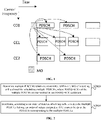
- FIG. 1 is a schematic diagram of scheduling PDSCHs in multiple CCs within one MO of one CC in a CA.
- the CA shown in FIG. 1 consists of three CCs, respectively, CC0, CC1 and CC2.
- the SCSs of CCO, CC1 and CC2 may be the same or different.
- PDCCH MO in CC0 not only PDSCHs in CC0 are scheduled, but also PDSCHs in CC1 and PDSCHs in CC2 are cross-carrier scheduled.
- the scheduled PDSCHs in one CC may be within one slot or may be in different slots.
- the three scheduled PDSCHs in CC1 may be in one slot in CC1, or may be in different slots in CC1.
- it is also applicable to a case of non-CA for example, if only one CC exists, it may also transmit multiple PDCCHs within one MO of the CC to schedule multiple PDSCHs to be transmitted in this CC.
- FIG. 2 is a flowchart of an information counting method according to an embodiment. As shown in FIG. 2 , the method according to this embodiment includes: determining (S2010) multiple PDCCHs which are transmitted within one MO of a serving cell and used for scheduling multiple PDSCHs, where HARQ-ACKs of the multiple PDSCHs are transmitted in one HARQ-ACK codebook.
- the information counting method is applied to a base station device, abbreviated as base station, in a wireless communication system.
- the base station allocates various transmission resources to the base station and a terminal, and transmits various configuring information to the terminals, to allow the base station and the terminal to determine resources used for transmission and various measurement or transmission instructions to be executed.
- Various messages transmitted from the base station to the terminal is transmitted through downlink channels, and various messages transmitted from the terminal to the base station is transmitted through uplink channels.
- the downlink messages transmitted by the base station to the terminals can be divided into two types of information: control information and service information.
- control information is carried in the PDCCHs
- service information is carried in the PDSCHs.
- the terminal needs to feed back the HARQ-ACK information to the base station through physical uplink control channels (PUCCH), but the terminal needs to use a certain codebook to feed back the HARQ-ACK information, and the HARQ-ACK codebook used by the terminal needs to be learned by the base station, so that the base station can use the same codebook as that used by the terminal to parse the HARQ-ACK information.
- PUCCH physical uplink control channels
- a CA After a CA is introduced, as shown in FIG. 1 , in a case where multiple PDCCHs used for scheduling multiple PDSCHs in multiple CCs are transmitted within one MO of one CC in the CA, and HARQ-ACKs of the multiple PDSCHs are transmitted in one HARQ-ACK codebook, since the multiple PDSCHs in the CCs are not transmitted sequentially in time domain, the order of the multiple PDCCHs transmitted within the MO is also not decided, then the base station and the terminal cannot determine the order of the HARQ-ACKs in the HARQ-ACK codebook used and fed back for each of the PDSCHs, which may lead to that the order of the HARQ-ACKs, fed back by the terminal, in the HARQ-ACK codebook used may be inconsistent with the order of the HARQ-ACKs in the HARQ-ACK codebook learned by the base station, and likely affects the feedback of the HARQ-ACKs.
- One carrier in a case of non-CA or one CC in a case of CA may both be referred to as one serving cell.
- a serving cell being one CC in CA is taken as an example for describing a method for assigning values to the DAI counter fields according to the embodiments of the present application.
- the base station determines multiple PDCCHs which are used for scheduling multiple PDSCHs and transmitted within one MO of a serving cell, and HARQ-ACKs of the multiple PDSCHs are transmitted in one HARQ-ACK codebook
- a special mechanism is used to sort the multiple PDCCHs transmitted within one MO.
- the serving cells, to which the multiple PDSCHs scheduled within the MO belong, may have same SCSs or different SCSs, and the multiple PDSCHs scheduled within the MO may be or may not be in one slot.
- the method according to this embodiment also includes: determining (S2020), according to an order of indexes of serving cells to which the multiple PDSCHs belong, an order of values assigned to DAI counter fields in the PDCCHs corresponding to the multiple PDSCHs.
- an order of indexes of serving cells to which the multiple PDSCHs belong may be determined firstly, and then an order of values assigned to the DAI counter fields in the multiple PDCCHs corresponding to the multiple PDSCHs may be determined.
- an order of values assigned to the DAI counter fields in the multiple PDCCHs corresponding to the multiple PDSCHs may be determined according to an ascending order of the indexes of the serving cells to which the multiple PDSCHs belong, or an order of values assigned to the DAI counter fields in the multiple PDCCHs corresponding to the multiple PDSCHs may be determined according to a descending order of the indexes of the serving cells to which the multiple PDSCHs belong.
- the values assigned to the DAI counter fields in the multiple PDCCHs corresponding to the multiple PDSCHs may be sorted in ascending order according to indexes of CCs to which the PDSCHs belong, sorting the value of the DAI counter field in the PDCCH corresponding to the PDSCH in the CC0 in the first, the PDCCH corresponding to the PDSCH in the CC1 in the next, and the PDCCH corresponding to the PDSCH in the CC2 further in the next.
- the values assigned to the DAI counter fields in the multiple PDCCHs corresponding to the multiple PDSCHs may also be sorted in descending order according to the indexes of the CCs to which the PDSCHs belong.
- the base station may sort values of DAI counter fields in the PDCCHs corresponding to the PDSCHs according to a default setting, for example, according to an order of the PDSCHs in time domain.
- the base station may determine an order of the values assigned according to any method in the following embodiments.
- the order of values assigned to the DAI counter fields in the multiple PDCCHs corresponding to the multiple PDSCHs may be determined according to the order of indexes of the serving cells to which the multiple PDSCHs belong, thereby addressing the problem of how to perform order determination in a case where multiple PDCCHs used for scheduling multiple PDSCHs are transmitted within one MO and HARQ-ACKs of the multiple PDSCHs are transmitted in one HARQ-ACK codebook, providing support for transmission of the HARQ-ACKs.
- FIG. 3 is a flowchart of another information counting method according to an embodiment. As shown in FIG. 3 , the method according to this embodiment includes:
- the MO when multiple PDCCHs which are used for scheduling multiple PDSCHs and transmitted in one MO of a serving cell are determined, and HARQ-ACKs of the multiple PDSCHs are transmitted in one HARQ-ACK codebook, if multiple PDCCHs for scheduling PDSCHs in a same serving cell are included within the MO, it may further determine an order of values assigned to DAI counter fields in the PDCCHs for scheduling the PDSCHs in the same serving cell according to an order of indexes of control resource sets (CORESET) to which the PDCCHs belong.
- CORESET control resource sets
- an order of values assigned to the DAI counter fields in the PDCCHs scheduling the PDSCHs in the same serving cell may be determined according to an ascending order of the indexes of the CORESETs to which the PDCCHs belong, and an order of values assigned to the DAI counter fields in the PDCCHs scheduling the PDSCHs in the same serving cell may also be determined according to a descending order of the indexes of the CORESETs to which the PDCCHs belong.
- the method according to this embodiment may also include, for PDCCHs that schedule PDSCHs in a same serving cell and correspond to a same CORSET index, determining (S3040), according to an order of indexes of minimum CCEs to which the PDCCHs belong, an order of values assigned to DAI counter fields in the PDCCHs that schedule the PDSCHs in the same serving cell and correspond to the same CORSET index.
- S3030 if multiple PDCCHs that schedule PDSCHs in a same serving cell still correspond to a same CORSET index, it may further determine, according to an order of indexes of minimum control channel elements (CCE) to which the PDCCHs belong, an order of values assigned to DAI counter fields in the PDCCHs that schedule the PDSCHs in the same serving cell and correspond to the same CORSET index.
- CCE minimum control channel elements
- an order of values assigned to the DAI counter fields in the PDCCHs that schedule the PDSCHs in the same serving cell and correspond to the same CORSET index may be determined according to an ascending order of the indexes of the minimum CCEs to which the PDCCHs belong, and an order of values assigned to the DAI counter fields in the PDCCHs that schedule the PDSCHs in the same serving cell and correspond to the same CORSET index may also be determined according to a descending order of the indexes of the minimum CCEs to which the PDCCHs belong.
- whether to execute S3030 and S3040 may be determined according to a practical order determination result. For example, if the order of values assigned to DAI counter fields in multiple PDCCHs corresponding to multiple PDSCHs can be determined after S3020, then S3030 and S3040 do not need to be executed; if the order of the values assigned to the DAI counter fields in the multiple PDCCHs corresponding to the multiple PDSCHs can be determined after S3020 and S3030, then S3040 does not need to be executed; otherwise, it S3040 also need to be executed.
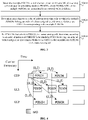
- FIG. 4 is a schematic diagram of an information counting scenario according to an embodiment. Similar with FIG. 1 , three carriers (respectively denoted as CC0, CC1 and CC2, where the carrier is an equivalent concept to a cell and a serving cell) are configured and activated for the user equipment (UE), and multiple PDCCHs are transmitted within one MO of the CC0, for scheduling PDSCHs in the CC0, CC1 and CC2 respectively. Specifically, two PDSCHs are scheduled for CC0, three PDSCHs are scheduled for CC1, and two PDSCHs are scheduled for CC2.
- UE user equipment
- HARQ-ACK information corresponding to these PDSCHs are indicated to be transmitted in one HARQ-ACK codebook, or HARQ-ACK information corresponding to these PDSCHs and HARQ-ACK information corresponding to PDSCHs scheduled by PDCCHs within other MOs are indicated to be transmitted in one HARQ-ACK codebook.
- CC0, CC1 and CC2 may have same SCSs or different SCSs, and the PDSCHs scheduled within this MO in these CCs may be in one slot or in different slots, which is not limited herein.
- the value assignment to DAI counter fields in these PDCCHs can be processed in the following manner, that is, when multiple PDCCHs are transmitted within one MO to respectively schedule one or more PDSCHs in one or more CCs, the value assignment to the DAI counter fields in the PDCCHs within this MO is processed as follows.
- An order of values assigned to DAI counter fields in the PDCCHs within this MO is determined according to an ascending order (or descending order, as long as it is negotiated in advance) of indexes of the CCs to which the PDSCHs scheduled by the PDCCHs belong; for PDCCHs that schedule PDSCHs in a same CC, an order of values assigned to DAI counter fields in the PDCCHs within this MO is further determined according to an ascending order (or descending order, as long as it is negotiated in advance) of indexes of CORSETs to which the PDCCHs belong, and then further according to an ascending order (or descending order, as long as it is negotiated in advance) of indexes of minimum CCEs to which the PDCCHs belong.
- the PDCCHs scheduling the two PDSCHs in the CC0 correspond to a same CORSET_2 (denoting a CORSET with an index as 2), and minimum CCEs with indexes as 0 and 5 respectively (assuming that the corresponding PDSCH whose time is earlier corresponds to a minimum CCE with a smaller index, and others likewise).
- the PDCCHs for scheduling the first two PDSCHs in the CC1 belongs to the same CORSET_2, and minimum CCEs with indexes as 3 and 7 respectively (assuming that the corresponding PDSCH whose time is earlier corresponds to a minimum CCE with a smaller index, and others likewise).
- the PDCCH for scheduling a third PDSCH in the CC1 corresponds to CORSET_1, and a minimum CCE with an index as 10.
- the PDCCHs for scheduling the two PDSCHs in the CC2 correspond to a same CORSET _3, and minimum CCEs with indexes as 12 and 14 respectively (assuming that the corresponding PDSCH whose time is earlier corresponds to a minimum CCE with a smaller index, and others likewise).
- the finally obtained DAI counter values are as shown in FIG. 4 , for example, a first bit in (0, 2) represents a DAI counter, a second bit in (0, 2) represents a DAI total (i.e. a total number of DAIs).
- the first bit and the second bit each is counted from 0, i.e. 0 represents a first one, and others likewise.
- values assigned to either the DAI total or the DAI counter are from 0 to 3 in turn and in circulation, e.g., 0, 1, 2, 3, 0, 1, 2, 3, 0.08.
- the value assignment order of DAI counter shown in FIG. 4 in turn is: the first PDSCH in CC0, the second PDSCH in CC0, the third PDSCH in CC1, the first PDSCH in CC1, the second PDSCH in CC1, the first PDSCH in CC2, and the second PDSCH in CC2.
- the value of DAI counter corresponding to the PDCCH for scheduling the second PDSCH in the CC 1 is 0, which actually represents the fifth one.
- FIG. 5 is a flowchart of another information counting method according to an embodiment. As shown in FIG. 5 , the method according to this embodiment includes:
- the MO when multiple PDCCHs which are used for scheduling multiple PDSCHs and transmitted in one MO of a serving cell are determined, and HARQ-ACKs of the multiple PDSCHs being transmitted in one HARQ-ACK codebook, if multiple PDCCHs for scheduling PDSCHs in a same serving cell are included within the MO, it may further determine an order of values assigned to DAI counter fields in the PDCCHs for scheduling the PDSCHs in the same serving cell according to an order of indexes of search spaces to which the PDCCHs belong.
- an order of values assigned to the DAI counter fields in the PDCCHs scheduling the PDSCHs in the same serving cell may be determined according to an ascending order of the indexes of the search spaces to which the PDCCHs belong, and an order of values assigned to the DAI counter fields in the PDCCHs scheduling the PDSCHs in the same serving cell may also be determined according to a descending order of the indexes of the search spaces to which the PDCCHs belong.
- the method according to this embodiment may further include, for PDCCHs that schedule PDSCHs in a same serving cell and correspond to a same search space index, determining (S5040), according to an order of indexes of minimum CCEs to which the PDCCHs belong, an order of values assigned to DAI counter fields in the PDCCHs that schedule the PDSCHs in the same serving cell and correspond to the same search space index.
- an order of values assigned to the DAI counter fields in the PDCCHs that schedule the PDSCHs in the same serving cell and correspond to the same search space index may be determined according to an ascending order of the indexes of the minimum CCEs to which the PDCCHs belong, and an order of values assigned to the DAI counter fields in the PDCCHs that schedule PDSCHs in the same serving cell and correspond to the same search space index may be determined according to a descending order of the indexes of the minimum CCEs to which the PDCCHs belong.
- whether to execute S5030 and S5040 may be determined according to a practical order determination result. For example, if the order of values assigned to DAI counter fields in multiple PDCCHs corresponding to multiple PDSCHs can be determined after execution of S5020, then S5030 and S5040 do not need to be executed; if the order of the values assigned to the DAI counter fields in the multiple PDCCHs corresponding to the multiple PDSCHs can be determined after execution of S5020 and S5030, then S5040 does not need to be executed; otherwise, it needs to continue to execute S5040.
- This embodiment is different from the embodiment shown in FIG.
- order of values of DAI counter fields in multiple PDCCHs corresponding to multiple PDSCHs are determined according to an order of indexes of serving cells to which the multiple PDSCHs belong, for PDCCHs that schedule PDSCHs in a same serving cell, order of values of DAI counter fields in the multiple PDCCHs corresponding to the multiple PDSCHs are determined according to an order of indexes of CORESETs to which the PDCCHs belong or according to an order of indexes of search spaces to which the PDCCHs belong.
- the PDCCHs scheduling the two PDSCHs in the CC0 correspond to a same search space_2 (indicating a search space with an index as 2), and minimum CCEs with indexes as 0 and 5 respectively (assuming that the corresponding PDSCH whose time is earlier, corresponds to a minimum CCE with a smaller index, and others likewise).
- the PDCCHs for scheduling the first two PDSCHs in the CC1 correspond to the same search space_2, and minimum CCEs with indexes as 3 and 7 respectively (assuming that the corresponding PDSCH whose time is earlier, corresponds to a minimum CCE with a smaller index, and others likewise).
- the PDCCH for scheduling a third PDSCH in the CC1 corresponds to search space_1, and the minimum CCE with an index as 10.
- the PDCCHs for scheduling the two PDSCHs in the CC2 correspond to a same search space_3, and minimum CCEs with indexes as 12 and 14 respectively (assuming that the corresponding PDSCH whose time is earlier, corresponds to a minimum CCE with a smaller index, and others likewise).
- the finally obtained DAI counter values are also as shown in FIG. 4 .
- FIG. 6 is a flowchart of another information counting method according to an embodiment. As shown in FIG. 6 , the method according to this embodiment includes:
- the MO when multiple PDCCHs which are used for scheduling multiple PDSCHs and transmitted in one MO of a serving cell are determined, and HARQ-ACKs of the multiple PDSCHs being transmitted in one HARQ-ACK codebook, if multiple PDCCHs for scheduling PDSCHs in a same serving cell are included within the MO, it may further determine an order of values assigned to DAI counter fields in the PDCCHs for scheduling the PDSCHs in the same serving cell according to an order of indexes of CORESETs to which the PDCCHs belong.
- an order of values assigned to DAI counter fields in the PDCCHs that schedule the PDSCHs in the same serving cell and correspond to the same CORSET index may be determined according to an order of indexes of search spaces to which the PDCCHs belong.
- an order of values assigned to DAI counter fields in the PDCCHs that schedule PDSCHs in the same serving cell, correspond to the same CORSET index and correspond to the same search space index may be determined according to an order of indexes of minimum CCEs to which the PDCCHs belong.
- the S6030 is similar to the S3030, the S6040 is similar to the S5030, the S6050 is similar to the S3040 and the S5040, which are not described in detail herein.
- whether to execute the S6030 to the S6050 may be determined according to a practical order determination result.
- the S6030 to S6050 do not need to be executed; if the order of the values assigned to the DAI counter fields in the multiple PDCCHs corresponding to the multiple PDSCHs can be determined after execution of the S6020 and S6030, then the S6040 and the 6050 do not need to be executed; otherwise, it needs to continue to execute the S5040 and the S6050; and if the order of the values assigned to the DAI counter fields in the multiple PDCCHs corresponding to the multiple PDSCHs can be determined after execution of the S6040, then the 6050 does not need to be executed; otherwise, it needs to continue to execute the S6050.
- the execution order of S6030 and S6040 in the embodiment shown in FIG. 6 may also be inversed, and thus, the information counting method may include: determining multiple PDCCHs which are transmitted within one MO of a serving cell and used for scheduling multiple PDSCHs, where HARQ-ACKs of the multiple PDSCHs are transmitted in one HARQ-ACK codebook; determining, according to an order of indexes of serving cells to which the multiple PDSCHs belong, an order of values assigned to DAI counter fields in the multiple PDCCHs corresponding to the multiple PDSCHs; for PDCCHs that schedule PDSCHs in a same serving cell, determining, according to an order of indexes of search spaces to which the PDCCHs belong, an order of values assigned to DAI counter fields in the PDCCHs that schedule the PDSCHs in the same serving cell; for PDCCHs that schedule PDSCHs in a same serving cell and correspond to a same search space index, determining, according to an order of indexes of C
- FIG. 7 is a flowchart of another information counting method according to an embodiment. As shown in FIG. 7 , the method according to this embodiment includes:
- the MO when multiple PDCCHs which are used for scheduling multiple PDSCHs and transmitted in one MO of a serving cell are determined, and HARQ-ACKs of the multiple PDSCHs being transmitted in one HARQ-ACK codebook, if multiple PDCCHs for scheduling PDSCHs in a same serving cell are included within the MO, it may further determine an order of values assigned to DAI counter fields in the PDCCHs for scheduling the PDSCHs in the same serving cell according to an order of time domain positions of the PDSCHs scheduled by the PDCCHs.
- an order of values assigned to the DAI counter fields in the PDCCHs scheduling the PDSCHs in the same serving cell may be determined according to an ascending order of the time domain positions of the PDSCHs scheduled by the PDCCHs, and an order of values assigned to the DAI counter fields in the PDCCHs scheduling the PDSCHs in the same serving cell may also be determined according to a descending order of the time domain positions of the PDSCHs scheduled by the PDCCHs.
- the time domain positions of the PDSCHs scheduled by the PDCCHs may be determined according to start positions of the PDSCHs in the time domain or end positions of the PDSCHs in the time domain.
- PDSCHs in one serving cell are generally in sequence in time domain, however, in some extreme cases, PDSCHs in a same serving cell may have a same start position and a same end position in time domain, in this way, the process may be carried out in any of the following ways.
- an order of values assigned to DAI counter fields in the PDCCHs that schedule the PDSCHs in the same serving cell and the PDSCHs having the same time domain position is determined according to an order of indexes of CORESETs to which the PDCCHs belong.
- an order of values assigned to DAI counter fields in the PDCCHs that schedule the PDSCHs in the same serving cell and the PDSCHs having the same time domain position is determined according to an order of indexes of search spaces to which the PDCCHs belong.
- an order of values assigned to DAI counter fields in the PDCCHs that schedule the PDSCHs in the same serving cell and the PDSCHs having the same time domain position is determined according to an order of indexes of minimum CCEs to which the PDCCHs belong.
- an order of values assigned to DAI counter fields in the PDCCHs that schedule the PDSCHs in the same serving cell and the PDSCHs having the same time domain position can be further respectively determined according to an order of indexes of CORSETs to which the PDCCHs belong, an order of indexes of the search spaces to which the PDCCHs belong, and an order of indexes of minimum CCEs to which the PDCCHs belong.
- the order of values assigned to the DAI counter fields in the PDCCHs that schedule PDSCHs in a same serving cell and the PDSCHs having a same time domain position may further be determined by performing any two ways or all of the above three ways.
- FIG. 8 is a schematic diagram of another information counting scenario according to an embodiment.
- three carriers (respectively denoted as CC0, CC1 and CC2, where the carrier is an equivalent concept to a cell and a serving cell) are configured and activated for the user equipment (UE), and multiple PDCCHs are transmitted within one MO of the CC0, for scheduling PDSCHs in the CC0, CC1 and CC2 respectively.
- UE user equipment
- HARQ-ACK information corresponding to these PDSCHs alone, or as well as HARQ-ACK information corresponding to PDSCHs scheduled by PDCCHs within other Mos are indicated to be transmitted in one HARQ-ACK codebook.
- the CC0, CC1 and CC2 may have same SCSs or different SCSs, and the PDSCHs scheduled within this MO in these CCs may be in one slot or in different slots, which is not limited herein.
- the value assignment to DAI counter fields in these PDCCHs can be processed in the following manner, that is, when multiple PDCCHs are transmitted within one MO to respectively schedule one or more PDSCHs in one or more CCs, the value assignment to the DAI counter fields in the PDCCHs within this MO is processed as follows.
- the DAI counters in the PDCCHs corresponding to the scheduled two PDSCHs in the CC0 are assigned with values first. Since the number of the DAI counters is more than one, according to an ascending order of time domain positions of the two PDSCHs, the DAI counter in the PDCCH corresponding to a first PDSCH in the CC0 is assigned with value 0 (assuming that it is numbered from 0), and the DAI counter in the PDCCH corresponding to a second PDSCH is assigned with value 1.
- the DAI counters in the PDCCHs corresponding to the three scheduled PDSCHs in the CC 1 are assigned with values. Since the number of the DAI counters is more than one, according to an ascending order of time domain positions of the three PDSCHs, the DAI counter in the PDCCH corresponding to a first PDSCH is assigned with value 2, the DAI counter in the PDCCH corresponding to a second PDSCH is assigned with value 3, and the DAI counter in the PDCCH corresponding to a third PDSCH is assigned with value 0 (as it is circulated by mod 4, it is actually a fifth DAI counter assigned with value 0, rather than a first DAI counter assigned with value 0).
- the DAI counters in the PDCCHs corresponding to the two scheduled PDSCHs in the CC2 are assigned with values. Since the number of the DAI counters is more than one, according to an ascending order of time domain positions of the two PDSCHs, the DAI counter in the PDCCH corresponding to a first PDSCH is assigned with value 1, and the DAI counter in the PDCCH corresponding to a second PDSCH is assigned with value 2.
- the finally obtained DAI counter values are as shown in FIG. 8 , specifically, for example, a first bit in (0, 2) represents a DAI counter, a second bit in (0, 2) represents a DAI total (i.e.
- the first bit and the second bit each is counted from 0, i.e. 0 represents the first one, and others likewise.
- values assigned to either the DAI total or the DAI counter are from 0 to 3 in turn and in circulation, e.g. 0, 1, 2, 3, 0, 1, 2, 3, 0.08.
- the value assignment order of DAI counter shown in FIG. 8 is in turn as: the first PDSCH in CC0, the second PDSCH in CC0, the first PDSCH in CC1, the second PDSCH in CC1, the third PDSCH in CC1, the first PDSCH in CC2, and the second PDSCH in CC2.
- the information counting method in an embodiment shown in FIG. 2 to FIG. 7 shows how to determine an order of values assigned to DAI counter fields in multiple PDCCHs corresponding to multiple PDSCHs only in the case where the PDCCHs for scheduling the multiple PDSCHs are transmitted within one MO in one serving cell.
- an order of values assigned to DAI counter fields in the PDCCHs transmitted within each of the multiple MOs may be determined according to a frequency domain first and then according to a time domain, or the order of values assigned to the DAI counter fields in the PDCCHs transmitted within the multiple MOs may be determined according to a time domain manner first and then a frequency domain manner between the multiple MOs.
- PDCCHs which corresponds to PDSCHs corresponding to a HARQ-ACK codebook belongs to at least one MO
- a last PDCCH within a last MO corresponding to the HARQ-ACK codebook may further be determined according to the order of values assigned to the DAI counter fields in the multiple PDCCHs corresponding to the multiple PDSCHs scheduled within one MO
- PUCCH physical uplink control channel
- the DAI counters in each PDCCH are assigned with values.
- the DAI counters are assigned with values actually in a sequence, that is, value assignment for the DAI counters in all the PDCCHs are performed according to the sequence.
- the last PDCCH in PDCCHs corresponding to a HARQ-ACK codebook is the last PDCCH.
- the last PDCCH in PDCCHs corresponding to one HARQ-ACK codebook can be determined simply according to the time sequence of MOs, that is, in the MOs corresponding to the PDCCHs corresponding to PDSCHs corresponding to one HARQ-ACK codebook, the PDCCH within the last MO is the last PDCCH.
- the last PDCCH needs to be determined by the solutions in the embodiments as shown in FIG. 2 to FIG. 7 . That is, the last MO is determined first, and then the last PDCCH within the last MO is determined according to the solutions provided in the embodiments as shown in FIG. 2 to FIG. 7 .
- the PUCCH resources transmitted in the HARQ-ACK codebook is thus determined by using relevant parameters in the last PDCCH.
- values of DAI counters in the PDCCHs may be set according to the following conditions such as: according to an ascending order of time domain positions of the PDSCHs (refers to according to an order of start positions or an order of end positions of the PDSCHs from earlier to later in time, similar principle thereof is also applicable for a descending order, as long as it is negotiated); for PDSCHs with a same time domain position (if any), further according to an ascending (or a descending) order of indexes of CCs to which the PDSCHs belong; for PDSCHs with a same time domain position and belonging to a same CC (if any), further according to an ascending (or descending) order of frequency domain start positions of these PDSCHs or according to frequency domain end positions of these PDSCHs, and alternatively, in this case, further according to an ascending order of time domain positions of the PDSCHs (refers to according to an order of start positions or an order of end positions of the PDSCHs from earlier to later in time, similar principle thereof
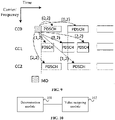
- FIG. 9 is a schematic diagram of another information counting scenario according to an embodiment, and FIG. 9 shows the values of DAI counters according to the rule in this embodiment.
- a start symbol of the PDSCHs is used as a reference for ascending order of time domain positions of the PDSCHs.
- the value assignment order of the DAI counters shown in FIG. 9 is as: a first PDSCH in CC0, a first PDSCH in CC1, a first PDSCH in CC2, a second PDSCH in CC1, a second PDSCH in CC0, a second PDSCH in CC2, and a third PDSCH in CC1.
- One embodiment is further provided according to the present application as follows.
- the multiple uplink physical channels are multiplexed into a new uplink physical channel after meeting a required timing sequence, and the new uplink physical channel may be one of the multiple uplink physical channels.
- the new uplink physical channel will carry uplink control information (UCI) in the multiple uplink physical channels, but an end position of the new uplink physical channel may be later than an end position of a channel A in the multiple uplink physical channels. In this way, when the data in the channel A is transmitted through the new uplink physical channel, a time delay is caused.
- UCI uplink control information
- the ultra-reliable and low-latency communications (URLLC) service is not supported, so that the time delay caused by the new uplink physical channel (for example, relative to the channel A) can be ignored.
- the URLLC service is introduced, if the channel A carries a URLLC-related channel (for example, a HARQ-ACK PUCCH, a scheduling request (SR) PUCCH, a channel state information (CSI) PUCCH, or an uplink data PUSCH), the time delay caused by the new uplink physical channel may be fatal in this case, and the problem needs to be addressed.
- a URLLC-related channel for example, a HARQ-ACK PUCCH, a scheduling request (SR) PUCCH, a channel state information (CSI) PUCCH, or an uplink data PUSCH
- the multiple uplink physical channels of the UE overlap in time domain, the multiple uplink physical channels are allowed to be multiplexed in a new uplink physical channel if the following conditions are met: an end symbol of the new uplink physical channel is not later than X symbols after the URLLC-related channel in the multiple uplink physical channels.
- X symbols can be determined (when multiple subcarrier spacings exist) to minimize the adverse effect on URLLC and support multiplexing of multiple uplink physical channels to the maximum extent?
- the base station and the UE negotiate to determine the value of X according to a minimum (or maximum) SCS in the SCSs of the multiple uplink physical channels. Alternatively, the base station and the UE negotiate to determine the value of X according to the SCS of the new uplink physical channel. Alternatively, the base station and the UE negotiate to determine the value of X according to a minimum (or maximum) SCS in the SCSs of the URLLC-related channels in the multiple uplink physical channels.
- corresponding values of X are configured, and the final value of X may be determined according to the above manners.
- X is 1 or 0, when SCS is 15KHz; X is 2, 1 or 0, when SCS is 30KHz; X is 4, 2, 1 or 0, when SCS is 60KHz; X is 8, 4, 2, 1 or 0, when SCS is 120KHz; or, X is 16, 8, 4, 2, 1 or 0, when SCS is 240KHz. In addition, X is allowed to be less than 0 for all SCS values.
- the base station may configure a value of X for the UE, for example, the value of X is configured by a radio resource control (RRC) or a media access control address control element (MAC CE).
- RRC radio resource control
- MAC CE media access control address control element
- the base station configures the value of X as n for the UE or the base station and the UE negotiate that the value of X is n.
- the base station and the UE negotiate as follows.
- FIG. 10 is a schematic structural diagram of an information counting apparatus according to an embodiment.
- the information counting apparatus includes a determination module 101 configured to determine multiple PDCCHs which are transmitted within one MO of a serving cell and used for scheduling multiple PDSCHs, where HARQ-ACKs of the multiple PDSCHs are transmitted in one HARQ-ACK codebook; and a value assigning module 102 configured to determine, according to an order of indexes of serving cells to which the multiple PDSCHs belong, an order of values assigned to DAI counter fields in the multiple PDCCHs corresponding to the multiple PDSCHs.
- the information counting apparatus is configured to implement the information counting method according to the embodiment as shown in FIG. 2 .
- the information counting apparatus according to this embodiment has implementation principles and technical effects similar to those of the method, and details of which will not be repeated herein.
- FIG. 11 is a schematic structural diagram of a base station according to an embodiment.
- the base station includes a processor 111, a memory 112, a transmitter 113, and a receiver 114.
- the number of processors 111 in the base station may be one or more, and one processor 111 is taken as an example in FIG. 11 .
- the processor 111, the memory 112, the transmitter 113 and the receiver 114 in the base station can be connected through a bus or other means.
- the processor 111, the memory 112, the transmitter 113 and the receiver 114 in the base station connected by a bus in FIG. 11 is taken as an example.
- the memory 112 may be configured to store a software program, a computer-executable program and a module, as the program instructions/modules corresponding to the information counting method in the embodiments shown in FIG. 2 to FIG. 7 (e.g., the determination module 101 and the value assigning module 102 in the information counting apparatus).
- the processor 111 executes software programs, instructions, and modules stored in the memory 112, to implement at least one functional application and data processing, that is, to implement the information counting method shown in FIG. 2 to FIG. 7 .
- the memory 112 may mainly include a program storage area and a data storage area, where the program storage area may store an operating system and an application program required for at least one function; and the data storage area may store data created in use of the terminal, etc. Further, the memory 112 may include a high-speed random access memory, and may further include a non-volatile memory, such as at least one magnetic disk storage apparatus, a flash memory device, or other non-volatile solid-state storage apparatus.
- the transmitter 113 is a combination of modules or devices which is capable of transmitting RF signals into air, such as a combination of a RF transmitter, an antenna, and other devices.
- the receiver 114 is a combination of modules or devices which is capable of receiving RF signals from air, such as a combination of a RF receiver, an antenna, and other devices.
- Embodiments of the present application further provide a storage medium including computer-executable instructions.
- the computer-executable instructions when executed by a computer processor, is configured to perform an information counting method.
- the information counting method includes: determining multiple PDCCHs which are used for scheduling multiple PDSCHs and are transmitted within one MO of a serving cell, where HARQ-ACKs of the multiple PDSCHs are transmitted in one HARQ-ACK codebook; and determining, according to an order of indexes of the serving cells to which the multiple PDSCHs belong, an order of values assigned to DAI counter fields in the multiple PDCCHs corresponding to the multiple PDSCHs.
- the term "user terminal” encompasses any appropriate type of radio user equipment, such as a mobile phone, a portable data processing apparatus, a portable web browser, or a vehicle-mounted mobile station.
- the various embodiments of the present application may be implemented in hardware, a dedicated circuit, software, logic, or any combination thereof.
- some aspects may be implemented in hardware while other aspects may be implemented in firmware or software that may be executed by a controller, a microprocessor, or other firmware or software executed by other computing apparatuses, although it is not limited thereto in the present application.
- Embodiments of the present application may be implemented by a data processor of a mobile apparatus executing computer program instructions, for example, may be implemented in a processor entity, or implemented by hardware, or a combination of software and hardware.
- the computer program instructions may be assembly instructions, instruction set architecture (ISA) instructions, machine instructions, machine-related instructions, micro-codes, firmware instructions, state setting data, or source codes or object codes written in one programming language or in any combination of multiple programming languages.
- ISA instruction set architecture
- the block diagrams of any logic flows in drawings of the present application may represent program steps, or may represent interconnected logic circuits, modules, and functions, or may represent a combination of program steps, logic circuits, modules, and functions.
- the computer program may be stored in a memory.
- the memory may be any type suitable for a local technical environment and may be implemented through any suitable data storage technology, such as, but not limited to, a read-only memory (ROM), a random-access memory (RAM) and an optical memory apparatus and system (digital video disc (DVD) or compact disc (CD)).
- the computer-readable storage medium may include a non-transitory storage medium.
- the data processor may be any type appropriate for the local technical environment such as, but not limited to, a general-purpose computer, a special purpose computer, a microprocessor, a digital signal processor (DSP), an application specific integrated circuit (ASIC), a field-programmable gate array (FPGA), and a processor based on a multi-core processor architecture.
- a general-purpose computer such as, but not limited to, a general-purpose computer, a special purpose computer, a microprocessor, a digital signal processor (DSP), an application specific integrated circuit (ASIC), a field-programmable gate array (FPGA), and a processor based on a multi-core processor architecture.
- DSP digital signal processor
- ASIC application specific integrated circuit
- FPGA field-programmable gate array
Landscapes
- Engineering & Computer Science (AREA)
- Signal Processing (AREA)
- Computer Networks & Wireless Communication (AREA)
- Mobile Radio Communication Systems (AREA)
- Detection And Prevention Of Errors In Transmission (AREA)
Applications Claiming Priority (2)
| Application Number | Priority Date | Filing Date | Title |
|---|---|---|---|
| CN201910723383.8A CN110535573A (zh) | 2019-08-02 | 2019-08-02 | 信息计数方法、装置和计算机存储介质 |
| PCT/CN2020/103002 WO2021022998A1 (fr) | 2019-08-02 | 2020-07-20 | Procédé et dispositif de comptage de messages, station de base et support de stockage informatique |
Publications (2)
| Publication Number | Publication Date |
|---|---|
| EP4009558A1 true EP4009558A1 (fr) | 2022-06-08 |
| EP4009558A4 EP4009558A4 (fr) | 2023-09-06 |
Family
ID=68661459
Family Applications (1)
| Application Number | Title | Priority Date | Filing Date |
|---|---|---|---|
| EP20849725.5A Ceased EP4009558A4 (fr) | 2019-08-02 | 2020-07-20 | Procédé et dispositif de comptage de messages, station de base et support de stockage informatique |
Country Status (6)
| Country | Link |
|---|---|
| US (1) | US12120679B2 (fr) |
| EP (1) | EP4009558A4 (fr) |
| JP (1) | JP7443490B2 (fr) |
| CN (2) | CN115276918B (fr) |
| TW (1) | TWI846918B (fr) |
| WO (1) | WO2021022998A1 (fr) |
Cited By (1)
| Publication number | Priority date | Publication date | Assignee | Title |
|---|---|---|---|---|
| WO2026072244A1 (fr) * | 2024-09-26 | 2026-04-02 | Apple Inc. | Systèmes et procédés pour des améliorations d'accusé de réception de demande à répétition automatique hybride pour une planification de canal partagé de liaison descendante physique à créneaux multiples avec une planification multi-cellule basée sur des informations de commande de liaison descendante unique |
Families Citing this family (11)
| Publication number | Priority date | Publication date | Assignee | Title |
|---|---|---|---|---|
| CN115276918B (zh) | 2019-08-02 | 2024-04-26 | 中兴通讯股份有限公司 | 信息计数方法、装置和计算机存储介质 |
| CN119697785A (zh) * | 2020-02-11 | 2025-03-25 | 中兴通讯股份有限公司 | 一种信息生成方法、设备和存储介质 |
| US11818723B2 (en) * | 2020-02-14 | 2023-11-14 | Qualcomm Incorporated | Downlink assignment index for multi-component carrier scheduling |
| CN115399011A (zh) * | 2020-03-26 | 2022-11-25 | Oppo广东移动通信有限公司 | 一种通信方法、终端设备和网络设备 |
| CN113572585B (zh) * | 2020-04-29 | 2022-11-08 | 大唐移动通信设备有限公司 | 一种反馈码本、反馈信息的确定方法、装置、设备及介质 |
| CN117750520A (zh) * | 2020-04-30 | 2024-03-22 | 大唐移动通信设备有限公司 | 物理下行共享信道接收、发送方法及设备、装置、介质 |
| US12402135B2 (en) * | 2020-07-17 | 2025-08-26 | Qualcomm Incorporated | Feedback schemes for multiple component carrier scheduling and joint feedback reporting |
| WO2022081621A2 (fr) * | 2020-10-14 | 2022-04-21 | Ofinno, Llc | Rétroaction de demande de répétition automatique hybride avec répétiion de canal de commande |
| US11558166B2 (en) | 2021-01-13 | 2023-01-17 | Qualcomm Incorporated | Assignment indexes for dynamic feedback |
| CN115347925B (zh) * | 2021-05-12 | 2024-12-31 | 中国移动通信有限公司研究院 | 确定反馈信息码本的方法、装置、通信设备和存储介质 |
| CN119946858A (zh) * | 2023-11-03 | 2025-05-06 | 维沃移动通信有限公司 | 资源调度的处理方法、参考资源对象确定方法及相关设备 |
Family Cites Families (36)
| Publication number | Priority date | Publication date | Assignee | Title |
|---|---|---|---|---|
| KR101838070B1 (ko) | 2010-09-30 | 2018-04-26 | 엘지전자 주식회사 | 제어 정보를 전송하는 방법 및 이를 위한 장치 |
| EP2709299B1 (fr) * | 2011-05-12 | 2016-04-13 | LG Electronics Inc. | Procédé et dispositif pour la transmission de données de contrôle |
| WO2013043025A2 (fr) * | 2011-09-23 | 2013-03-28 | 엘지전자 주식회사 | Procédé et appareil de transmission d'informations de commande |
| EP2814196B1 (fr) * | 2012-02-09 | 2018-07-11 | LG Electronics Inc. | Procédé d'émission-réception de signal et appareil correspondant |
| CN112910611A (zh) * | 2015-01-29 | 2021-06-04 | 北京三星通信技术研究有限公司 | 一种增强载波聚合系统的harq-ack传输方法和设备 |
| US11218254B2 (en) * | 2015-01-29 | 2022-01-04 | Samsung Electronics Co., Ltd | Method and apparatus for transmitting/receiving HARQ-ACK signal in wireless communication system supporting carrier aggregation |
| US9888465B2 (en) * | 2015-04-06 | 2018-02-06 | Samsung Electronics Co., Ltd. | Codeword determination for acknowledgement information |
| CN106301670A (zh) * | 2015-05-15 | 2017-01-04 | 中兴通讯股份有限公司 | 上行控制信息的发送方法及装置 |
| EP3309986B1 (fr) * | 2015-08-10 | 2020-07-29 | Huawei Technologies Co., Ltd. | Procédé d'envoi et de réception d'informations de rétroaction, et équipement d'utilisateur et dispositif de réseau d'accès |
| US10735146B2 (en) * | 2015-09-25 | 2020-08-04 | Samsung Electronics Co., Ltd. | Method and device for feeding back and receiving HARQ-ACK information |
| US10743310B2 (en) * | 2015-12-25 | 2020-08-11 | Ntt Docomo, Inc. | User terminal, radio base station and radio communication method |
| WO2017160350A1 (fr) * | 2016-03-17 | 2017-09-21 | Intel IP Corporation | Équipement utilisateur (ue), nœud b évolué (enb) et procédés de demande de répétition automatique hybride (harq) destinés aux aménagements d'agrégation de porteuse |
| US10568081B2 (en) | 2016-03-21 | 2020-02-18 | Samsung Electronics Co., Ltd. | Scheduling uplink transmissions |
| CN107231218B (zh) * | 2016-03-25 | 2021-07-30 | 大唐移动通信设备有限公司 | 一种ack/nack反馈方法及相关设备 |
| CN107370570B (zh) | 2016-05-13 | 2021-04-06 | 电信科学技术研究院 | 一种反馈信息传输方法、ue、基站和系统 |
| CN109474391B (zh) | 2017-09-08 | 2021-06-25 | 大唐移动通信设备有限公司 | 一种反馈信息传输方法、装置、终端、基站及存储介质 |
| US10750488B2 (en) * | 2017-09-11 | 2020-08-18 | Apple Inc. | Hybrid automatic repeat request (HARQ) based on codeblock groups in new radio systems |
| WO2019066630A1 (fr) | 2017-09-29 | 2019-04-04 | Samsung Electronics Co., Ltd. | Procédé de transmission en liaison montante et équipement correspondant |
| CN117318905A (zh) * | 2017-09-29 | 2023-12-29 | 北京三星通信技术研究有限公司 | 上行传输方法和相应设备 |
| ES3018785T3 (en) * | 2017-11-16 | 2025-05-19 | Lenovo Beijing Ltd | Method and apparatus for harq-ack codebook determination |
| EP3720208A4 (fr) | 2017-11-28 | 2020-11-04 | Beijing Xiaomi Mobile Software Co., Ltd. | Procédé d'indication d'informations en retour de liaison montante, et procédé de transmission d'informations en retour de liaison montante |
| CN117375773A (zh) * | 2018-01-11 | 2024-01-09 | 北京三星通信技术研究有限公司 | 传输harq-ack信息的方法及设备 |
| CN110035445B (zh) * | 2018-01-12 | 2022-04-19 | 中兴通讯股份有限公司 | 数据传输管理方法及装置、终端、基站及存储介质 |
| WO2019193688A1 (fr) * | 2018-04-04 | 2019-10-10 | 株式会社Nttドコモ | Terminal utilisateur et procédé de communication sans fil |
| US11528699B2 (en) * | 2018-07-20 | 2022-12-13 | Ntt Docomo, Inc. | Base station and user terminal |
| CN110061816B (zh) * | 2018-08-31 | 2020-07-14 | 中国信息通信研究院 | 一种移动通信系统、网络设备、终端设备和数据调度方法 |
| WO2020060367A1 (fr) * | 2018-09-21 | 2020-03-26 | 엘지전자 주식회사 | Procédé et dispositif d'émission et de réception d'un signal sans fil dans un système de communication sans fil |
| CN111525978B (zh) * | 2019-02-01 | 2022-11-08 | 中兴通讯股份有限公司 | 索引信息的发送方法及装置、存储介质、电子装置 |
| EP3926867A4 (fr) * | 2019-02-14 | 2022-09-21 | Ntt Docomo, Inc. | Terminal utilisateur et procédé de communication sans fil |
| CN113302864A (zh) * | 2019-04-30 | 2021-08-24 | Oppo广东移动通信有限公司 | 确定harq码本的方法和设备 |
| US12028290B2 (en) * | 2019-05-09 | 2024-07-02 | Ntt Docomo, Inc. | User terminal and radio communication method |
| WO2020245973A1 (fr) * | 2019-06-06 | 2020-12-10 | 株式会社Nttドコモ | Terminal et procédé de communication sans fil |
| EP4005128B1 (fr) * | 2019-07-26 | 2024-04-03 | Fg Innovation Company Limited | Procédé de génération de livre de codes de demande de répétition automatique hybride et dispositif associé |
| JP6967557B2 (ja) * | 2019-07-31 | 2021-11-17 | シャープ株式会社 | 端末装置、基地局装置、および、通信方法 |
| CN115276918B (zh) * | 2019-08-02 | 2024-04-26 | 中兴通讯股份有限公司 | 信息计数方法、装置和计算机存储介质 |
| JP7026087B2 (ja) * | 2019-09-27 | 2022-02-25 | 住友電装株式会社 | クランプ及びワイヤハーネス |
-
2019
- 2019-08-02 CN CN202211036967.6A patent/CN115276918B/zh active Active
- 2019-08-02 CN CN201910723383.8A patent/CN110535573A/zh active Pending
-
2020
- 2020-07-20 JP JP2022506628A patent/JP7443490B2/ja active Active
- 2020-07-20 US US17/632,282 patent/US12120679B2/en active Active
- 2020-07-20 WO PCT/CN2020/103002 patent/WO2021022998A1/fr not_active Ceased
- 2020-07-20 EP EP20849725.5A patent/EP4009558A4/fr not_active Ceased
- 2020-07-30 TW TW109125850A patent/TWI846918B/zh active
Cited By (1)
| Publication number | Priority date | Publication date | Assignee | Title |
|---|---|---|---|---|
| WO2026072244A1 (fr) * | 2024-09-26 | 2026-04-02 | Apple Inc. | Systèmes et procédés pour des améliorations d'accusé de réception de demande à répétition automatique hybride pour une planification de canal partagé de liaison descendante physique à créneaux multiples avec une planification multi-cellule basée sur des informations de commande de liaison descendante unique |
Also Published As
| Publication number | Publication date |
|---|---|
| US20220272733A1 (en) | 2022-08-25 |
| CN115276918A (zh) | 2022-11-01 |
| JP2022542474A (ja) | 2022-10-03 |
| WO2021022998A1 (fr) | 2021-02-11 |
| CN110535573A (zh) | 2019-12-03 |
| TWI846918B (zh) | 2024-07-01 |
| US12120679B2 (en) | 2024-10-15 |
| EP4009558A4 (fr) | 2023-09-06 |
| TW202110130A (zh) | 2021-03-01 |
| JP7443490B2 (ja) | 2024-03-05 |
| CN115276918B (zh) | 2024-04-26 |
Similar Documents
| Publication | Publication Date | Title |
|---|---|---|
| US12120679B2 (en) | Information counting method and apparatus, base station, and computer storage medium | |
| EP3457608A1 (fr) | Procédé de transmission d'informations de rétroaction harq, unité d'ue, station de base et système | |
| JP7350184B2 (ja) | 情報生成方法、機器および記憶媒体 | |
| EP4152852A1 (fr) | Procédé de détermination d'emplacement de transmission d'informations de retour et dispositif | |
| EP4221023A1 (fr) | Procédé de génération de livre de codes de rétroaction, procédé de réception de livre de codes de rétroaction, noeud de communication et support d'enregistrement | |
| EP4099790A1 (fr) | Procédé de planification de cellule de desserte, dispositif terminal et dispositif de réseau | |
| US12317107B2 (en) | Method and device for determining dynamic HARQ-ACK codebook | |
| US20200374884A1 (en) | Method and device for determining information domain value in dci | |
| EP3198961B1 (fr) | Procédé et station de base pour planification d'équipement utilisateur, et procédé et équipement utilisateur pour transmission harq | |
| CN110138523A (zh) | 一种反馈码本确定方法及装置 | |
| US11343806B2 (en) | Uplink control channel transmission method and device | |
| CN121569453A (zh) | 信息接收方法、信息发送方法、装置、设备及存储介质 | |
| US20200178229A1 (en) | Control Information Transmission Method and Apparatus | |
| US20260032680A1 (en) | Channel monitoring method, apparatus, terminal, network device, and storage medium | |
| CN115189844B (zh) | 混合自动重传请求反馈传输方法、终端、基站和通信系统 | |
| WO2023123438A1 (fr) | Procédé et appareil de détection de pdcch, procédé et appareil d'envoi de pdcch, dispositif et support de stockage | |
| EP3739988B1 (fr) | Procédé d'indication de position d'ensemble de ressources et d'adaptation de débit | |
| CA3263325A1 (fr) | Méthode de détection des canaux, appareil, terminal, dispositif réseau et support de stockage | |
| CN114287116A (zh) | 反馈信息生成方法、装置、终端和网络设备 |
Legal Events
| Date | Code | Title | Description |
|---|---|---|---|
| STAA | Information on the status of an ep patent application or granted ep patent |
Free format text: STATUS: THE INTERNATIONAL PUBLICATION HAS BEEN MADE |
|
| PUAI | Public reference made under article 153(3) epc to a published international application that has entered the european phase |
Free format text: ORIGINAL CODE: 0009012 |
|
| STAA | Information on the status of an ep patent application or granted ep patent |
Free format text: STATUS: REQUEST FOR EXAMINATION WAS MADE |
|
| 17P | Request for examination filed |
Effective date: 20220301 |
|
| AK | Designated contracting states |
Kind code of ref document: A1 Designated state(s): AL AT BE BG CH CY CZ DE DK EE ES FI FR GB GR HR HU IE IS IT LI LT LU LV MC MK MT NL NO PL PT RO RS SE SI SK SM TR |
|
| DAV | Request for validation of the european patent (deleted) | ||
| DAX | Request for extension of the european patent (deleted) | ||
| A4 | Supplementary search report drawn up and despatched |
Effective date: 20230804 |
|
| RIC1 | Information provided on ipc code assigned before grant |
Ipc: H04L 5/00 20060101ALI20230731BHEP Ipc: H04L 1/18 20060101AFI20230731BHEP |
|
| STAA | Information on the status of an ep patent application or granted ep patent |
Free format text: STATUS: EXAMINATION IS IN PROGRESS |
|
| 17Q | First examination report despatched |
Effective date: 20241008 |
|
| REG | Reference to a national code |
Ref country code: DE Ref legal event code: R003 |
|
| STAA | Information on the status of an ep patent application or granted ep patent |
Free format text: STATUS: THE APPLICATION HAS BEEN REFUSED |
|
| 18R | Application refused |
Effective date: 20250703 |