EP4009590A1 - Procédé de détection d'anomalie de trafic, et procédé et appareil d'entraînement de modèles - Google Patents
Procédé de détection d'anomalie de trafic, et procédé et appareil d'entraînement de modèles Download PDFInfo
- Publication number
- EP4009590A1 EP4009590A1 EP20852228.4A EP20852228A EP4009590A1 EP 4009590 A1 EP4009590 A1 EP 4009590A1 EP 20852228 A EP20852228 A EP 20852228A EP 4009590 A1 EP4009590 A1 EP 4009590A1
- Authority
- EP
- European Patent Office
- Prior art keywords
- time series
- target
- sub
- target time
- type
- Prior art date
- Legal status (The legal status is an assumption and is not a legal conclusion. Google has not performed a legal analysis and makes no representation as to the accuracy of the status listed.)
- Pending
Links
Images





Classifications
-
- H—ELECTRICITY
- H04—ELECTRIC COMMUNICATION TECHNIQUE
- H04L—TRANSMISSION OF DIGITAL INFORMATION, e.g. TELEGRAPHIC COMMUNICATION
- H04L41/00—Arrangements for maintenance, administration or management of data switching networks, e.g. of packet switching networks
- H04L41/14—Network analysis or design
- H04L41/145—Network analysis or design involving simulating, designing, planning or modelling of a network
-
- H—ELECTRICITY
- H04—ELECTRIC COMMUNICATION TECHNIQUE
- H04L—TRANSMISSION OF DIGITAL INFORMATION, e.g. TELEGRAPHIC COMMUNICATION
- H04L43/00—Arrangements for monitoring or testing data switching networks
- H04L43/02—Capturing of monitoring data
- H04L43/026—Capturing of monitoring data using flow identification
-
- H—ELECTRICITY
- H04—ELECTRIC COMMUNICATION TECHNIQUE
- H04L—TRANSMISSION OF DIGITAL INFORMATION, e.g. TELEGRAPHIC COMMUNICATION
- H04L41/00—Arrangements for maintenance, administration or management of data switching networks, e.g. of packet switching networks
- H04L41/06—Management of faults, events, alarms or notifications
- H04L41/0631—Management of faults, events, alarms or notifications using root cause analysis; using analysis of correlation between notifications, alarms or events based on decision criteria, e.g. hierarchy, tree or time analysis
- H04L41/064—Management of faults, events, alarms or notifications using root cause analysis; using analysis of correlation between notifications, alarms or events based on decision criteria, e.g. hierarchy, tree or time analysis involving time analysis
-
- H—ELECTRICITY
- H04—ELECTRIC COMMUNICATION TECHNIQUE
- H04L—TRANSMISSION OF DIGITAL INFORMATION, e.g. TELEGRAPHIC COMMUNICATION
- H04L43/00—Arrangements for monitoring or testing data switching networks
- H04L43/06—Generation of reports
- H04L43/067—Generation of reports using time frame reporting
-
- H—ELECTRICITY
- H04—ELECTRIC COMMUNICATION TECHNIQUE
- H04L—TRANSMISSION OF DIGITAL INFORMATION, e.g. TELEGRAPHIC COMMUNICATION
- H04L43/00—Arrangements for monitoring or testing data switching networks
- H04L43/08—Monitoring or testing based on specific metrics, e.g. QoS, energy consumption or environmental parameters
-
- H—ELECTRICITY
- H04—ELECTRIC COMMUNICATION TECHNIQUE
- H04L—TRANSMISSION OF DIGITAL INFORMATION, e.g. TELEGRAPHIC COMMUNICATION
- H04L43/00—Arrangements for monitoring or testing data switching networks
- H04L43/08—Monitoring or testing based on specific metrics, e.g. QoS, energy consumption or environmental parameters
- H04L43/0852—Delays
- H04L43/087—Jitter
-
- H—ELECTRICITY
- H04—ELECTRIC COMMUNICATION TECHNIQUE
- H04L—TRANSMISSION OF DIGITAL INFORMATION, e.g. TELEGRAPHIC COMMUNICATION
- H04L63/00—Network architectures or network communication protocols for network security
- H04L63/14—Network architectures or network communication protocols for network security for detecting or protecting against malicious traffic
- H04L63/1408—Network architectures or network communication protocols for network security for detecting or protecting against malicious traffic by monitoring network traffic
- H04L63/1425—Traffic logging, e.g. anomaly detection
Definitions
- This application relates to the field of machine learning, and more specifically, to a traffic anomaly detection method, and a model training method and apparatus.
- anomaly detection In the field of machine learning, anomaly detection refers to the detection of models, data, or time that do not conform to forecasting. Usually, in anomaly detection, professionals perform learning of historical data, and then find anomalous points. Data sources include applications, processes, operating systems, devices, or networks. As complexity of a computing system increases, manual work can no longer overcome the current difficulty of anomaly detection.
- the precondition is an assumption that in a short time, traffic data follows a normal distribution.
- the network traffic data distribution does not follow a normal distribution in a short time. Therefore, the accuracy of anomaly detection on network traffic data using the algorithm based on statistics and data distribution is not high.
- This application provides a traffic anomaly detection method, and a model training method and apparatus, so as to improve the accuracy of anomaly detection on network traffic data by a model.
- a traffic anomaly detection method including: obtaining a target time series, where the target time series includes N elements, the N elements correspond to N moments, and each of the N elements is traffic data received at a corresponding moment; obtaining a target parameter of the target time series based on the target time series, where the target parameter includes a periodic factor and/or a jitter density, the periodic factor is used to represent a wave-shaped change that is presented in the target time series and that is about a long-term trend, and the jitter density is used to represent a deviation between an actual value and a target value of the target time series within a target time; determining, from a plurality of types based on the target parameter, a first type to which the target time series belongs, where each of the plurality of types corresponds to one parameter set, and the target parameter belongs to a parameter set corresponding to the first type; and detecting an anomaly of the target time series based on a first-type decision model corresponding to the first type, where each
- the target parameter of the target time series is determined based on the obtained target time series; second, the first type to which the target time series belongs is determined based on the target parameter; and finally, traffic anomaly detection is performed on the target time series based on the first-type decision model corresponding to the first type. Therefore, the accuracy of traffic anomaly detection can be improved.
- the obtaining a target parameter of the target time series based on the target time series includes: decomposing each of the N elements in the target time series into a trend component, a periodic component, and a residual component; determining a first sub-time series including N periodic components and a second sub-time series including N residual components; and obtaining the target parameter of the target time series based on the first time sub-series or the second time sub-series.
- the obtaining the target parameter of the target time series based on the first time sub-series or the second time sub-series includes: determining, based on the first sub-time series, whether the target time series has the periodic factor.
- the determining, based on the first sub-time series, whether the target time series has the periodic factor includes: when the N periodic components in the first sub-time series exist, determining that the target time series has the periodic factor; and when the N periodic components in the first sub-time series do not exist, determining that the target time series does not have the periodic factor.
- the method further includes: determining, based on a first mapping relationship and the first type to which the target time series belongs, a second-type decision model corresponding to the first type, where the first mapping relationship includes correspondences between the plurality of types and a plurality of second-type decision models; and detecting an anomaly of the target time series based on the second sub-time series and the second-type decision model corresponding to the first type, where the second-type decision model is an N-sigma model.
- the obtaining the target parameter of the target time series based on the first time sub-series or the second time sub-series includes: determining the jitter density of the target time series based on the second sub-time series.
- the determining, from a plurality of types based on the target parameter, a first type to which the target time series belongs includes: determining, from the plurality of parameter sets based on the target parameter, a first parameter set to which the target parameter belongs; and determining, from the plurality of types based on a third mapping relationship and the first parameter set, the first type to which the target time series belongs, where the third mapping relationship includes correspondences between the plurality of parameter sets and the plurality of types.
- the type described above may include: periodic, aperiodic, stationary, spiky, periodic and stationary, periodic and spiky, aperiodic and stationary, or aperiodic and spiky.
- the periodic type and the aperiodic type may be determined based on the periodic factor. Specifically, when the periodic factor exists, the type is the periodic type; and when the periodic factor does not exist, the type is the aperiodic type.
- the stationary type and the spiky type may be determined based on the jitter density. Specifically, when the jitter density is greater than a second preset value, the type is the spiky type; and when the jitter density is less than or equal to the second preset value, the type is the stationary type.
- the first parameter set to which the target parameter belongs is determined from the plurality of parameter sets based on the target parameter; and then the first type to which the target time series belongs is determined from the plurality of types based on the third mapping relationship and the first parameter set. In this way, the type to which the target time series belongs can be obtained, thereby completing classification of the target time series.
- the detecting an anomaly of the target time series based on a first-type decision model corresponding to the first type includes: determining a third sub-time series including N trend components; dividing a second time series into M sub-series of a target length, where M is a positive integer, the second time series is the third sub-time series, or the second time series is formed based on the third sub-time series and a linear segmentation algorithm PLR; calculating matrix profile MP values of the M sub-series of the target length, where the matrix profile MP values of the M sub-series of the target length form an MP time series; and detecting an anomaly of the target time series based on the MP time series and an N-sigma algorithm
- the second time series is divided into the M sub-series of the target length, where the second time series is the third sub-time series, or the second time series is formed based on the third sub-time series and the linear segmentation algorithm PLR; second, the matrix profile MP values of the M sub-series of the target length are calculated; and finally, an anomaly of the target time series is detected based on the MP time series and the N-sigma algorithm, thereby improving the accuracy of traffic anomaly detection.
- the method further includes: determining, based on a second mapping relationship and the first type to which the target time series belongs, the first-type decision model corresponding to the first type, where the second mapping relationship includes correspondences between the plurality of types and a plurality of first-type decision models.
- the first-type decision model corresponding to the first type is determined based on the second mapping relationship and the first type to which the target time series belongs, so that a corresponding decision model can be determined for the type to which the target time series belongs, thereby improving the accuracy of traffic anomaly detection.
- a traffic anomaly detection method including: obtaining a target time series, where the target time series includes N elements, the N elements correspond to N moments, and each of the N elements is traffic data received at a corresponding moment; obtaining a target parameter of the target time series based on the target time series, where the target parameter includes a periodic factor and/or a jitter density, the periodic factor is used to represent a wave-shaped change that is presented in the target time series and that is about a long-term trend, and the jitter density is used to represent a deviation between an actual value and a target value of the target time series within a target time; determining, from a plurality of parameter sets, a first parameter set to which the target parameter belongs; and detecting an anomaly of the target time series based on a first-type decision model corresponding to the first parameter set, where each of the plurality of parameter sets corresponds to one type of decision model, and the decision model is used for traffic anomaly detection.
- the target parameter of the target time series is determined based on the obtained target time series; second, the first parameter set to which the target time series belongs is determined based on the target parameter; and finally, traffic anomaly detection is performed on the target time series based on the first-type decision model corresponding to the first parameter set. Therefore, the accuracy of traffic anomaly detection can be improved.
- the obtaining a target parameter of the target time series based on the target time series includes: decomposing each of the N elements in the target time series into a trend component, a periodic component, and a residual component; determining a first sub-time series including N periodic components and a second sub-time series including N residual components; and obtaining the target parameter of the target time series based on the first time sub-series or the second time sub-series.
- the obtaining the target parameter of the target time series based on the first time sub-series or the second time sub-series includes: determining, based on the first sub-time series, whether the target time series has the periodic factor.
- the determining, based on the first sub-time series, whether the target time series has the periodic factor includes: when the N periodic components in the first sub-time series exist, determining that the target time series has the periodic factor; and when the N periodic components in the first sub-time series do not exist, determining that the target time series does not have the periodic factor.
- the method further includes: detecting an anomaly of the target time series based on the second sub-time series and the second-type decision model corresponding to the first parameter set, where the second-type decision model is an N-sigma model.
- the method further includes: determining, based on a fourth mapping relationship and the first parameter set to which the target parameter belongs, a second-type decision model corresponding to the first parameter set, where the fourth mapping relationship includes correspondences between the plurality of parameter sets and a plurality of second-type decision models.
- the obtaining the target parameter of the target time series based on the first time sub-series or the second time sub-series includes: determining the jitter density of the target time series based on the second sub-time series.
- the detecting an anomaly of the target time series based on a first-type decision model corresponding to the first parameter set includes: determining a third sub-time series including N trend components; dividing a second time series into M sub-series of a target length, where M is a positive integer, the second time series is the third sub-time series, or the second time series is formed based on the third sub-time series and a linear segmentation algorithm PLR; calculating matrix profile MP values of the M sub-series of the target length, where the matrix profile MP values of the M sub-series of the target length form an MP time series; and detecting an anomaly of the target time series based on the MP time series and an N-sigma algorithm.
- the second time series is divided into the M sub-series of the target length, where the second time series is the third sub-time series, or the second time series is formed based on the third sub-time series and the linear segmentation algorithm PLR; second, the matrix profile MP values of the M sub-series of the target length are calculated; and finally, an anomaly of the target time series is detected based on the MP time series and the N-sigma algorithm, thereby improving the accuracy of traffic anomaly detection.
- the method further includes: determining, based on a fifth mapping relationship and the first parameter set to which the target parameter belongs, a first-type decision model corresponding to the first parameter set, where the fifth mapping relationship includes correspondences between the plurality of parameter sets and the plurality of first-type decision models.
- the first-type decision model corresponding to the first parameter set is determined based on the fifth mapping relationship and the first parameter set to which the target parameter belongs, so that a decision model corresponding to the target time series can be obtained, thereby improving the accuracy of traffic anomaly detection.
- a traffic anomaly detection method includes: obtaining a target time series, where the target time series includes N elements, the N elements correspond to N moments, and each of the N elements is traffic data received at a corresponding moment; decomposing each of the N elements in the target time series into a trend component, a periodic component, and a residual component; determining a third sub-time series including N trend components; dividing a second time series into M sub-series of a target length, where M is a positive integer, the second time series is the third sub-time series, or the second time series is formed based on the third sub-time series and a linear segmentation algorithm PLR; calculating matrix profile MP values of the M sub-series of the target length, where the matrix profile MP values of the M sub-series of the target length constitute an MP time series; and detecting an anomaly of the MP time series based on a third-type decision model.
- the target time series is obtained, and the second time series is divided into the M sub-series of the target length, where the second time series is the third sub-time series, or the second time series is formed based on the third sub-time series and the linear segmentation algorithm PLR, and the third sub-time series is a time series formed by trend components decomposed from each of the N elements in the target time series. Then, the matrix profile MP values of the M sub-series of the target length are calculated. Finally, an anomaly of the target time series is detected based on the third-type decision model.
- the method further includes: determining a second sub-time series including N residual components; and detecting an anomaly of the target time series based on the second sub-time series and the third-type decision model.
- the target length is specified by a communications protocol.
- the third-type decision model is an N-sigma model.
- a traffic pattern classification method including: obtaining a target time series, where the target time series includes N elements, the N elements correspond to N moments, and each of the N elements is traffic data received at a corresponding moment; obtaining a target parameter of the target time series based on the target time series, where the target parameter includes a periodic factor and/or a jitter density, the periodic factor is used to represent a wave-shaped change that is presented in the target time series and that is about a long-term trend, and the jitter density is used to represent a deviation between an actual value and a target value of the target time series within a target time; and classifying the target time series based on the target parameter.
- the target time series is obtained, and the target time series is classified based on the target parameter of the target time series, thereby facilitating subsequent processing on the classified target time series, and improving the accuracy of processing on the target time series.
- the obtaining a target parameter of the target time series based on the target time series includes: decomposing each of the N elements in the target time series into a trend component, a periodic component, and a residual component; determining a first sub-time series including N periodic components and a second sub-time series including N residual components; and obtaining the target parameter of the target time series based on the first time sub-series or the second time sub-series.
- the obtaining the target parameter of the target time series based on the first time sub-series or the second time sub-series includes: determining, based on the first sub-time series, whether the target time series has the periodic factor.
- the determining, based on the first sub-time series, whether the target time series has the periodic factor includes: when the N periodic components in the first sub-time series exist, determining that the target time series has the periodic factor; and when the N periodic components in the first sub-time series do not exist, determining that the target time series does not have the periodic factor.
- the classifying the target time series based on the target parameter includes: when the periodic factor exists, determining the target time series as periodic; and when the periodic factor does not exist, determining the target time series as aperiodic.
- the obtaining the target parameter of the target time series based on the first time sub-series or the second time sub-series includes: determining the jitter density of the target time series based on the second sub-time series.
- the classifying the target time series based on the target parameter includes: when the jitter density is greater than a second preset value, determining the target time series as spiky; and when the jitter density is less than or equal to the second preset value, determining the target time series as stationary
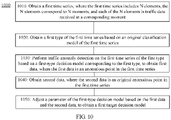
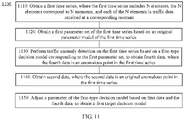
- a training method for a traffic anomaly detection model including: obtaining a first time series, where the first time series includes N elements, the N elements correspond to N moments, and each of the N elements is traffic data received at a corresponding moment; obtaining a first type of the first time series based on an original classification model of the first time series; performing traffic anomaly detection on the first time series of the first type based on a first-type decision model corresponding to the first type, to obtain first data, where the first data is an anomalous point in the first time series; obtaining second data, where the second data is an original anomalous point in the first time series; and adjusting a parameter of the first-type decision model based on the first data and the second data, to obtain a first target decision model.
- a plurality of first time series may be obtained, and the first target decision model is trained based on the plurality of first time series.
- the first type of the first time series is a periodic type or an aperiodic type, a spiky type, a stationary type, a periodic and stationary type, an aperiodic and stationary type, a periodic and spiky type, or an aperiodic and spiky type.
- a training method for a traffic anomaly detection model including: obtaining a first time series, where the first time series includes N elements, the N elements correspond to N moments, and each of the N elements is traffic data received at a corresponding moment; obtaining a first parameter set of the first time series based on an original parameter model of the first time series; performing traffic anomaly detection on the first time series based on a first-type decision model corresponding to the first parameter set, to obtain fourth data, where the fourth data is an anomalous point in the first time series; obtaining second data, where the second data is an original anomalous point in the first time series; and adjusting a parameter of the first-type decision model based on the second data and the fourth data, to obtain a first target decision model.
- a plurality of first time series may be obtained, and the first target decision model is trained based on the plurality of first time series.
- the first type of the first time series is a periodic type or an aperiodic type, a spiky type, a stationary type, a periodic and stationary type, an aperiodic and stationary type, a periodic and spiky type, or an aperiodic and spiky type.
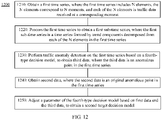
- a training method for a traffic anomaly detection model includes: obtaining a first time series, where the first time series includes N elements, the N elements correspond to N moments, and each of the N elements is traffic data received at a corresponding moment; processing the first time series to obtain a third sub-time series, where the third sub-time series is a time series formed by trend components decomposed from each of the N elements in the first time series; performing traffic anomaly detection on the first time series based on a fourth-type decision model, to obtain third data, where the third data is an anomalous point in the first time series; obtaining second data, where the second data is an original anomalous point in the first time series; and adjusting a parameter of the fourth-type decision model based on the second data and the third data, to obtain a second target decision model.
- a plurality of first time series may be obtained, and the second target decision model is trained based on the plurality of first time series.
- a training method for a traffic pattern classification model including: obtaining a first time series, where the first time series includes N elements, the N elements correspond to N moments, and each of the N elements is traffic data received at a corresponding moment; obtaining a first type of the first time series based on an original classification model of the first time series; obtaining an original type of the first time series; and adjusting parameters of an original model of the first time series based on the original type of the first time series and the first type of the first time series, to obtain a target classification model of the first time series.
- the first type of the first time series is a periodic type or an aperiodic type, a spiky type, a stationary type, a periodic and stationary type, an aperiodic and stationary type, a periodic and spiky type, or an aperiodic and spiky type.
- a traffic anomaly detection apparatus including: a memory, configured to store a program; and a processor, configured to execute the program stored in the memory, where when the processor executes the program stored in the memory, the processor is configured to: obtain a target time series, where the target time series includes N elements, the N elements correspond to N moments, and each of the N elements is traffic data received at a corresponding moment; obtain a target parameter of the target time series based on the target time series, where the target parameter includes a periodic factor and/or a jitter density, the periodic factor is used to represent a wave-shaped change that is presented in the target time series and that is about a long-term trend, and the jitter density is used to represent a deviation between an actual value and a target value of the target time series within a target time; determine, from a plurality of types based on the target parameter, a first type to which the target time series belongs, where each of the plurality of types corresponds to one parameter set, and the target parameter belongs
- the processor is further configured to: decompose each of the N elements in the target time series into a trend component, a periodic component, and a residual component; determine a first sub-time series including N periodic components and a second sub-time series including N residual components; and obtain the target parameter of the target time series based on the first time sub-series or the second time sub-series.
- the processor is further configured to: determine, based on the first sub-time series, whether the target time series has the periodic factor.
- the processor is further specifically configured to: when the N periodic components in the first sub-time series exist, determine that the target time series has the periodic factor; and when the N periodic components in the first sub-time series do not exist, determine that the target time series does not have the periodic factor.
- the processor is further configured to: determine, based on a first mapping relationship and the first type to which the target time series belongs, a second-type decision model corresponding to the first type, where the first mapping relationship includes correspondences between the plurality of types and a plurality of second-type decision models; and detect an anomaly of the target time series based on the second sub-time series and the second-type decision model corresponding to the first type, where the second-type decision model is an N-sigma model.
- the processor is further configured to: determine the jitter density of the target time series based on the second sub-time series.
- the processor is further configured to: determine, from the plurality of parameter sets based on the target parameter, a first parameter set to which the target parameter belongs; and determine, from the plurality of types based on a third mapping relationship and the first parameter set, the first type to which the target time series belongs, where the third mapping relationship includes correspondences between the plurality of parameter sets and the plurality of types.
- the type described above may include: periodic, aperiodic, stationary, spiky, periodic and stationary, periodic and spiky, aperiodic and stationary, or aperiodic and spiky.
- the periodic type and the aperiodic type may be determined based on the periodic factor. Specifically, when the periodic factor exists, the type is the periodic type; and when the periodic factor does not exist, the type is the aperiodic type.
- the stationary type and the spiky type may be determined based on the jitter density. Specifically, when the jitter density is greater than a second preset value, the type is the spiky type; and when the jitter density is less than or equal to the second preset value, the type is the stationary type.
- the processor is further specifically configured to: determine a third sub-time series including N trend components; divide a second time series into M sub-series of a target length, where M is a positive integer, the second time series is the third sub-time series, or the second time series is formed based on the third sub-time series and a linear segmentation algorithm PLR; calculate matrix profile MP values of the M sub-series of the target length, where the matrix profile MP values of the M sub-series of the target length constitute an MP time series; and detect an anomaly of the target time series based on the MP time series and an N-sigma algorithm
- the processor is further configured to: determine, based on a second mapping relationship and the first type to which the target time series belongs, the first-type decision model corresponding to the first type, where the second mapping relationship includes correspondences between the plurality of types and a plurality of first-type decision models.
- a traffic anomaly detection apparatus including: a memory, configured to store a program; and a processor, configured to execute the program stored in the memory, where when the processor executes the program stored in the memory, the processor is configured to: obtain a target time series, where the target time series includes N elements, the N elements correspond to N moments, and each of the N elements is traffic data received at a corresponding moment; obtain a target parameter of the target time series based on the target time series, where the target parameter includes a periodic factor and/or a jitter density, the periodic factor is used to represent a wave-shaped change that is presented in the target time series and that is about a long-term trend, and the jitter density is used to represent a deviation between an actual value and a target value of the target time series within a target time; determine, from a plurality of parameter sets, a first parameter set to which the target parameter belongs; and detect an anomaly of the target time series based on a first-type decision model corresponding to
- the processor is further configured to: decompose each of the N elements in the target time series into a trend component, a periodic component, and a residual component; determine a first sub-time series including N periodic components and a second sub-time series including N residual components; and obtain the target parameter of the target time series based on the first time sub-series or the second time sub-series.
- the processor is further configured to: determine, based on the first sub-time series, whether the target time series has the periodic factor.
- the processor is further specifically configured to: when the N periodic components in the first sub-time series exist, determine that the target time series has the periodic factor; and when the N periodic components in the first sub-time series do not exist, determine that the target time series does not have the periodic factor.
- the processor is further configured to: detect an anomaly of the target time series based on the second sub-time series and the second-type decision model corresponding to the first parameter set, where the second-type decision model is an N-sigma model.
- the processor is further configured to: determine, based on a fourth mapping relationship and the first parameter set to which the target parameter belongs, a second-type decision model corresponding to the first parameter set, where the fourth mapping relationship includes correspondences between the plurality of parameter sets and a plurality of second-type decision models.
- the processor is further configured to: determine the jitter density of the target time series based on the second sub-time series.
- the processor is further specifically configured to: determine a third sub-time series including N trend components; divide a second time series into M sub-series of a target length, where M is a positive integer, the second time series is the third sub-time series, or the second time series is formed based on the third sub-time series and a linear segmentation algorithm PLR; calculate matrix profile MP values of the M sub-series of the target length, where the matrix profile MP values of the M sub-series of the target length constitute an MP time series; and detect an anomaly of the target time series based on the MP time series and an N-sigma algorithm
- the processor is further specifically configured to: determine, based on a fifth mapping relationship and the first parameter set to which the target parameter belongs, a first-type decision model corresponding to the first parameter set, where the fifth mapping relationship includes correspondences between the plurality of parameter sets and the plurality of first-type decision models.
- a traffic anomaly detection apparatus including: a memory, configured to store a program; and a processor, configured to execute the program stored in the memory, where when the processor executes the program stored in the memory, the processor is configured to: obtain a target time series, where the target time series includes N elements, the N elements correspond to N moments, and each of the N elements is traffic data received at a corresponding moment; decompose each of the N elements in the target time series into a trend component, a periodic component, and a residual component; determine a third sub-time series including N trend components; divide a second time series into M sub-series of a target length, where M is a positive integer, the second time series is the third sub-time series, or the second time series is formed based on the third sub-time series and a linear segmentation algorithm PLR; calculate matrix profile MP values of the M sub-series of the target length, where the matrix profile MP values of the M sub-series of the target length constitute an MP time series; and detect
- the processor is further configured to: determine a second sub-time series including N residual components; and detect an anomaly of the target time series based on the second sub-time series and the third-type decision model.
- the target length is specified by a communications protocol.
- the third-type decision model is an N-sigma model.
- a traffic pattern classification apparatus including: a memory, configured to store a program; and a processor, configured to execute the program stored in the memory, where when the processor executes the program stored in the memory, the processor is configured to: obtain a target time series, where the target time series includes N elements, the N elements correspond to N moments, and each of the N elements is traffic data received at a corresponding moment; obtain a target parameter of the target time series based on the target time series, where the target parameter includes a periodic factor and/or a jitter density, the periodic factor is used to represent a wave-shaped change that is presented in the target time series and that is about a long-term trend, and the jitter density is used to represent a deviation between an actual value and a target value of the target time series within a target time; and classify the target time series based on the target parameter.
- the processor is further specifically configured to: decompose each of the N elements in the target time series into a trend component, a periodic component, and a residual component; determine a first sub-time series including N periodic components and a second sub-time series including N residual components; and obtain the target parameter of the target time series based on the first time sub-series or the second time sub-series.
- the processor is further specifically configured to: determine, based on the first sub-time series, whether the target time series has the periodic factor.
- the processor is further specifically configured to: when the N periodic components in the first sub-time series exist, determine that the target time series has the periodic factor; and when the N periodic components in the first sub-time series do not exist, determine that the target time series does not have the periodic factor.
- the processor is further specifically configured to: when the periodic factor exists, determine the target time series as periodic; and when the periodic factor does not exist, determine the target time series as aperiodic.
- the processor is further specifically configured to: determine the jitter density of the target time series based on the second sub-time series.
- the processor is further specifically configured to: when the jitter density is greater than a second preset value, determine the target time series as spiky; and when the jitter density is less than or equal to the second preset value, determine the target time series as stationary.
- a training apparatus for a traffic anomaly detection model including: a memory, configured to store a program; and a processor, configured to execute the program stored in the memory, where when the processor executes the program stored in the memory, the processor is configured to: obtain a first time series, where the first time series includes N elements, the N elements correspond to N moments, and each of the N elements is traffic data received at a corresponding moment; obtain a first type of the first time series based on an original classification model of the first time series; perform traffic anomaly detection on the first time series of the first type based on a first-type decision model corresponding to the first type, to obtain first data, where the first data is an anomalous point in the first time series; obtain second data, where the second data is an original anomalous point in the first time series; and adjust a parameter of the first-type decision model based on the first data and the second data, to obtain a first target decision model.
- the processor may obtain a plurality of first time series, and train the first target decision model based on the plurality of first time series.
- the first type of the first time series is a periodic type or an aperiodic type, a spiky type, a stationary type, a periodic and stationary type, an aperiodic and stationary type, a periodic and spiky type, or an aperiodic and spiky type.
- a training apparatus for a traffic anomaly detection model including: a memory, configured to store a program; and a processor, configured to execute the program stored in the memory, where when the processor executes the program stored in the memory, the processor is configured to: obtain a first time series, where the first time series includes N elements, the N elements correspond to N moments, and each of the N elements is traffic data received at a corresponding moment; obtain a first parameter set of the first time series based on an original parameter model of the first time series; perform traffic anomaly detection on the first time series based on a first-type decision model corresponding to the first parameter set, to obtain fourth data, where the fourth data is an anomalous point in the first time series; obtain second data, where the second data is an original anomalous point in the first time series; and adjust a parameter of the first-type decision model based on the second data and the fourth data, to obtain a first target decision model.
- the processor may obtain a plurality of first time series, and train the first target decision model based on the plurality of first time series.
- the first type of the first time series is a periodic type or an aperiodic type, a spiky type, a stationary type, a periodic and stationary type, an aperiodic and stationary type, a periodic and spiky type, or an aperiodic and spiky type.
- a training model for a traffic anomaly detection model including: a memory, configured to store a program; and a processor, configured to execute the program stored in the memory, where when the processor executes the program stored in the memory, the processor is configured to: obtain a first time series, where the first time series includes N elements, the N elements correspond to N moments, and each of the N elements is traffic data received at a corresponding moment; process the first time series to obtain a third sub-time series, where the third sub-time series is a time series formed by trend components decomposed from each of the N elements in the first time series; perform traffic anomaly detection on the first time series based on a fourth-type decision model, to obtain third data, where the third data is an anomalous point in the first time series; obtain second data, where the second data is an original anomalous point in the first time series; and adjust a parameter of the fourth-type decision model based on the second data and the third data, to obtain a second target decision model.
- the processor may obtain a plurality of first time series, and train the second target decision model based on the plurality of first time series.
- a training apparatus for a traffic pattern classification model including: a memory, configured to store a program; and a processor, configured to execute the program stored in the memory, where when the processor executes the program stored in the memory, the processor is configured to: obtain a first time series, where the first time series includes N elements, the N elements correspond to N moments, and each of the N elements is traffic data received at a corresponding moment; obtain a first type of the first time series based on an original classification model of the first time series; obtain an original type of the first time series; and adjust parameters of an original model of the first time series based on the original type of the first time series and the first type of the first time series, to obtain a target classification model of the first time series.
- the first type of the first time series is a periodic type or an aperiodic type, a spiky type, a stationary type, a periodic and stationary type, an aperiodic and stationary type, a periodic and spiky type, or an aperiodic and spiky type.
- a computer storage medium stores program code, and the program code is used to perform the method according to any one of the possible implementations in the first to the eighth aspects described above.
- a computer program product containing instructions is provided, where when the computer program product runs on a computer, the computer is enabled to perform the method according to any one of the possible implementations in the first to the eighth aspects described above.
- a chip is provided, where the chip includes a processor and a data interface, and the processor reads instructions stored in a memory through the data interface, to perform the method according to any one of the possible implementations in the first to the eighth aspects described above.
- the chip may further include a memory having instructions stored therein, where the processor is configured to execute the instructions stored in the memory, and when the instructions are executed, the processor is configured to perform the method according to any one of the possible implementations in the first to the eighth aspects described above.
- the chip may be specifically a field-programmable gate array FPGA or an application-specific integrated circuit ASIC.
- the data traffic x t to be detected is an anomalous point, that is: x t ⁇ ⁇ ⁇ > Y where Y is the preset value.
- the data traffic x t to be detected is a normal point, that is: x t ⁇ ⁇ ⁇ ⁇ Y
- anomaly detection is performed on network traffic data based on the assumption that the data traffic follows a normal distribution in a short time.
- the network traffic data distribution does not follow a normal distribution in a short time. Therefore, the accuracy of anomaly detection on network traffic data using the algorithm based on statistics and data distribution is not high.
- FIG. 1 is a schematic diagram of a system architecture according to an embodiment of this application.
- the system architecture 100 includes an execution device 110, a training device 120, a database 130, a network device 140, a data storage system 150, and a data collection device 160.
- the execution device 110 includes a computing module 111, an I/O interface 112, a preprocessing module 113, and a preprocessing module 114.
- the computing module 111 may include a target model/rule 101, and the preprocessing module 113 and the preprocessing module 114 are optional.
- the data collection device 160 is configured to collect training data.
- the training data may include a first time series, where the first time series includes N elements, the N elements correspond to N moments, and each of the N elements is traffic data received at a corresponding moment.
- the data collection device 160 stores the training data into the database 130, and the training device 120 obtains the target model/rule 101 by training based on the training data maintained in the database 130.
- the training device 120 obtains the target model/rule 101 based on the training data.
- the training device 120 performs traffic anomaly detection on the first time series, and compares an output traffic anomaly detection result of the first time series with an original traffic anomaly result of the first time series until the traffic anomaly detection result of the first time series that is output by the training device 120 and the original traffic anomaly result of the first time series are less than a specific threshold, thereby completing the training of the target model/rule 101.
- the original traffic anomaly result of the first time series is obtained by an operator through analysis of the first time series.
- the foregoing target model/rule 101 can be used to implement the traffic anomaly detection method in the embodiments of this application.
- a target time series (after related preprocessing) is input to the target model/rule 101, and a detection result of the target time series can be obtained.
- the first time series maintained in the database 130 may not all come from time series collected by the data collection device 160, and may also be from time series received from other devices.
- the training device 120 does not necessarily perform the training of the target model/rule 101 completely based on the first time series maintained in the database 130, but may also obtain the first time series from the cloud or other places for model training.
- the foregoing description should not be construed as a limitation to the embodiments of this application.
- the target model/rule 101 obtained based on training by the training device 120 may be applied to different systems or devices, for example, to the execution device 110 shown in FIG. 1 .
- the execution device 110 may be a server, a cloud, or the like.
- the execution device 110 is configured with an input/output (input/output, I/O) interface 112 for data exchange with external devices.
- the network device 140 inputs data to the I/O interface 112, and the input data in the embodiments of this application may include: a target time series input by the network device.
- the network device 140 herein may be specifically a terminal device.
- the preprocessing module 113 and the preprocessing module 114 are configured to perform preprocessing according to the input data (for example, the target time series) received by the I/O interface 112.
- the preprocessing module 113 and the preprocessing module 114 may not be provided (or there may be only one of the preprocessing modules), but the computing module 111 is directly used to process the input data.
- the execution device 110 may invoke data, code, and the like in the data storage system 150 for corresponding processing, or may store data, instructions, and the like obtained by corresponding processing to the data storage system 150.
- the I/O interface 112 presents a processing result, such as the detection result of the target time series obtained above, to the network device 140, so as to provide to a user.
- the training device 120 may generate corresponding target models/rules 101 based on different training data for different goals or tasks, and the corresponding target models/rules 101 can be used to achieve the goals or complete the tasks, so as to provide the user with a desired result.
- the network device 140 may automatically send input data to the I/O interface 112.
- the user may view, on the network device 140, a result output by the execution device 110, and a specific presentation form may be a display, a sound, an action, or other specific forms.
- the network device 140 may alternatively serve as a data collection terminal to collect the input data input to the I/O interface 112 and the output result output from the I/O interface 112 as shown in FIG. 1 as new sample data, and store the sample data into the database 130.
- the network device 140 is not used for collection, but the I/O interface 112 directly uses the input data input to the I/O interface 112 and the output result output from the I/O interface 112 as shown in the figure as new sample data, and stores the sample data into the database 130.
- FIG. 1 is merely a schematic diagram of a system architecture provided in an embodiment of this application, and a positional relationship between the devices, modules, and the like shown in the figure does not constitute any limitation.
- the data storage system 150 is an external memory relative to the execution device 110. In other cases, the data storage system 150 may also be placed in the execution device 110.
- a traffic pattern classification method 200 provided in an embodiment of this application is described in detail below with reference to FIG. 2 .
- the method shown in FIG. 2 may be performed by a traffic pattern classification apparatus, and the traffic pattern classification apparatus may be a server or a cloud having a traffic pattern classification function.
- the method 200 shown in FIG. 2 includes steps 210 to 230. These steps are separately described in detail below.
- the target time series includes N elements, the N elements correspond to N moments, and each of the N elements is traffic data received at a corresponding moment.
- the target time series may be sent by a first network device.
- the server may further obtain other time series on which traffic anomaly detection is to be performed in addition to the target time series.
- the other time series on which traffic anomaly detection is to be performed may be from a same network device.
- the same network device may be the first network device, or the same network device may be any other network device different from the first network device.
- the other time series on which traffic anomaly detection is to be performed may come from different network devices. This is not limited in this application.
- each of the N elements is traffic data received at a corresponding moment
- each of the N elements is traffic data of the first network device in a unit time (second) collected by the server.
- each of the N elements may be traffic data of the first network device collected by the server every 1s.
- the target time series may include four elements, that is, the server needs to collect traffic data of the first network device every 1s to obtain the target time series collected within 4s.
- the target time series may be ⁇ 1 MB , 2 MB , 5 MB , 9 MB ⁇ , where 1 MB is traffic data of the first network device in the 1st second, 2 MB is traffic data of the first network device in the 2nd second, 5 MB is traffic data of the first network device in the 3rd second, and 9 MB is traffic data of the first network device in the 4th second.
- the target time series may also be ⁇ 1.2 MB , 2 MB , 3 MB , 5 MB ⁇ , where 1.2 MB is traffic data of the first network device in the 1st second, 2 MB is traffic data of the first network device in the 2nd second, 3 MB is traffic data of the first network device in the 3rd second, and 5 MB is traffic data of the first network device in the 4th second.
- each of the N elements is traffic data received at a corresponding moment may also be understood as that each of the N elements is total traffic data of the first network device within a preset time collected by the server, where the preset time is greater than the unit time.
- the target time series may include six elements, that is, the server needs to collect traffic data of the first network device every preset time to obtain the target time series within six preset times. For example, when N is 6 and the preset time is 10s, the server collects traffic data of the first network device every 10s to obtain the target time series collected within 1 min.
- the target time series may be ⁇ 1 MB , 2.5 MB , 5 MB , 8 MB , 12 MB , 18 MB ⁇ , where 1 MB is traffic data of the first network device in 1s to 10s, 2.5 MB is traffic data of the first network device in 11s to 20s, 5 MB is traffic data of the first network device in 21s to 30s, 8 MB is traffic data of the first network device in 31s to 40s, 12 MB is traffic data of the first network device in 41s to 50s, and 18 MB is traffic data of the first network device in 51s to 60s.
- the target time series may also be ⁇ 1 MB , 2 MB , 3.5 MB , 6 MB , 8 MB ⁇ , where 1 MB is traffic data of the first network device in 1s to 5s, 2 MB is traffic data of the first network device in 6s to 10s, 3.5 MB is traffic data of the first network device in 11s to 15s, 6 MB is traffic data of the first network device in 16s to 20s, and 8 MB is traffic data of the first network device in 21s to 25s.
- the target parameter includes a periodic factor and/or a jitter density
- the periodic factor is used to represent a wave-shaped change that is presented in the target time series and that is about a long-term trend
- the jitter density is used to represent a deviation between an actual value and a target value of the target time series within a target time.
- each of the N elements in the target time series is decomposed into a trend component, a periodic component, and a residual component; a first sub-time series including N periodic components and a second sub-time series including N residual components are determined; and the target parameter of the target time series is obtained based on the first time sub-series or the second time sub-series.
- the N periodic components decomposed from each of the N elements in the target time series are the same, that is, each periodic component decomposed from each element in one time series is the same.
- x n is an element in the target time series, and x n is decomposed into a trend component T n , a periodic component S n , and a residual component C n , where S n is an element in the first sub-time series, and C n is an element in the second sub-time series.
- the server may decompose each of the N elements in the target time series into a trend component, a periodic component, and a residual component by using a time series decomposition (Time Series Decompose, TSD) algorithm
- whether the target time series has the periodic factor is determined based on the first sub-time series.
- the target time series has the periodic factor
- the N periodic components in the first sub-time series do not exist it is determined that the target time series does not have the periodic factor.
- the N periodic components exist may be understood as that all the N periodic components are valid values; for example, the periodic component may be 1, or the periodic component may be 3. That the N periodic components do not exist may be understood as that all the N periodic components are invalid values; for example, the periodic component may be 0. That all the N periodic components are valid values may be understood as that all the N periodic components obtained by decomposing the time series are non-zero values; and that all the N periodic components are invalid values may be understood as that all the N periodic components obtained by decomposing the time series are zero values.
- a time series shown in FIG. 3(c) is a periodic time series. When the time series shown in FIG.
- N periodic components of the time series obtained are zero values, that is, the N periodic components of the time series are invalid values, and therefore the periodic components do not exist.
- a time series shown in FIG. 3(b) is an aperiodic time series.
- N periodic components of the time series obtained are non-zero values, that is, the N periodic components of the time series are valid values, and therefore the periodic components exist.
- the periodic factor may be set to 1; and if the target time series does not have the periodic factor, the periodic factor may be set to 0.
- the jitter density of the target time series is determined based on the second sub-time series.
- the target time series is determined as periodic; and when the periodic factor does not exist, the target time series is determined as aperiodic.
- the target time series is determined as spiky; and when the jitter density is less than or equal to the second preset value, the target time series is determined as stationary
- the method 200 may further include step 230.
- the output classification result is that the target time series is periodic or aperiodic; or that the target time series is stationary or spiky; or the target time series is periodic and spiky, periodic and stationary, aperiodic and spiky, or aperiodic and stationary
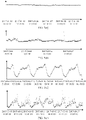
- FIG. 3 shows network traffic series of four network devices. It can be seen from FIG. 3(a), FIG. 3(b), FIG. 3(c), and FIG. 3(d) that characteristics of network traffic vary greatly. Traffic of a network device shown in FIG. 3(a) is relatively stationary at each moment, that is, the traffic series may be stationary; traffic of a network device shown in FIG. 3(b) has an evident local traffic jitter, that is, the traffic series may be spiky; traffic of a network device shown in FIG. 3(c) presents extremely strong periodic characteristics (daily and weekly), that is, the traffic series may be periodic; and traffic of a network device shown in FIG. 3(d) does not present evident periodic characteristics (daily and weekly), that is, the traffic series may be aperiodic.
- the target time series is classified, so that a foundation can be laid for subsequent traffic anomaly detection on the classified target time series, thereby improving the accuracy of traffic anomaly detection on the target time series.
- a traffic anomaly detection method 400 provided in an embodiment of this application is described in detail below with reference to FIG. 4 .
- the method shown in FIG. 4 may be performed by a traffic anomaly detection apparatus, and the traffic anomaly detection apparatus may be a server having a traffic anomaly detection function.
- the method shown in FIG. 4 includes steps 410 to 440. These steps are separately described in detail below.
- An anomaly of a time series described in this embodiment of this application may be understood as a traffic anomaly of the time series.
- the target time series includes N elements, the N elements correspond to N moments, and each of the N elements is traffic data received at a corresponding moment.
- the target series may be sent by a first network device.
- the server may further obtain other time series on which traffic anomaly detection is to be performed in addition to the target time series.
- the other time series on which traffic anomaly detection is to be performed may be from a same network device.
- the same network device may be the first network device, or the same network device may be any other network device different from the first network device.
- the other time series on which traffic anomaly detection is to be performed may come from different network devices.
- the target parameter includes a periodic factor and/or a jitter density
- the periodic factor is used to represent a wave-shaped change that is presented in the target time series and that is about a long-term trend
- the jitter density is used to represent a deviation between an actual value and a target value of the target time series within a target time.
- each of the N elements in the target time series is decomposed into a trend component, a periodic component, and a residual component; a first sub-time series including N periodic components and a second sub-time series including N residual components are determined; and the target parameter of the target time series is obtained based on the first time sub-series or the second time sub-series.
- x n is an element in the target time series, and x n is decomposed into a trend component T n , a periodic component S n , and a residual component C n , where S n is an element in the first sub-time series, and C n is an element in the second sub-time series.
- the server may decompose each element in the target time series into a trend component, a periodic component, and a residual component by using a time series decomposition (Time Series Decompose, TSD) algorithm
- whether the target time series has the periodic factor is determined based on the first sub-time series.
- the target time series has the periodic factor
- the N periodic components in the first sub-time series do not exist it is determined that the target time series does not have the periodic factor.
- periodic components decomposed from each element in one time series are the same, that is, one time series corresponds to one periodic component.
- all the periodic components decomposed from each element in the time series may be 1, or all the periodic components decomposed from each element in the time series may be 2.
- the N periodic components exist may be understood as that all the N periodic components are valid values; for example, the periodic component may be 0.5, or the periodic component may be 2. That the N periodic components do not exist may be understood as that all the N periodic components are invalid values; for example, the periodic component may be 0.
- the periodic factor may be set to 1; and if the target time series does not have the periodic factor, the periodic factor may be set to 0.
- the jitter density of the target time series is determined based on the second sub-time series.
- steps 410 and 420 For content not described in steps 410 and 420, refer to the descriptions of steps 210 and 220 in the foregoing method 200, and details are not described herein again.
- the type described above may include: periodic, aperiodic, stationary, spiky, periodic and stationary, periodic and spiky, aperiodic and stationary, or aperiodic and spiky.
- the periodic type and the aperiodic type may be determined based on the periodic factor. Specifically, when the periodic factor exists, the type is the periodic type; and when the periodic factor does not exist, the type is the aperiodic type.
- the stationary type and the spiky type may be determined based on the jitter density. Specifically, when the jitter density is greater than a second preset value, the type is the spiky type; and when the jitter density is less than or equal to the second preset value, the type is the stationary type.
- S is the periodic factor
- a first parameter set to which the target parameter belongs is determined from the plurality of parameter sets based on the target parameter; and then the first type to which the target time series belongs is determined from the plurality of types based on a third mapping relationship and the first parameter set, where the third mapping relationship includes correspondences between the plurality of parameter sets and the plurality of types.
- the target parameter is obtained through calculation, and the first parameter set is determined based on a parameter set to which the target parameter belongs, and the first type to which the target time series belongs is determined based on the first type corresponding to the first parameter set.
- the decision model 440 Detect an anomaly of the target time series based on a first-type decision model corresponding to the first type, where each of the plurality of types corresponds to one type of decision model, and the decision model is used for traffic anomaly detection.
- the first-type decision model corresponding to the first type may be determined based on a second mapping relationship and the first type to which the target time series belongs, where the second mapping relationship includes correspondences between the plurality of types and a plurality of first-type decision models.
- the first-type decision model may be specifically as follows: first, determining a third sub-time series including N trend components; and dividing a second time series into M sub-series of a target length, where M is a positive integer, the second time series is the third sub-time series, or the second time series is formed based on the third sub-time series and a (Linear Segmentation Algorithms, PLR) linear segmentation algorithm; then, calculating matrix profile MP values of the M sub-series of the target length, where the matrix profile MP values of the M sub-series of the target length constitute an MP time series; and finally, detecting an anomaly of the target time series based on the MP time series and an N-sigma algorithm
- a quantity of line segments determines an approximation granularity of an original series.
- a larger quantity of line segments indicates a shorter average length of the line segments, reflecting short-term fluctuations of the time series.
- a smaller quantity of line segments indicates a longer average length of the line segments, reflecting a medium- and long-term trend of the time series.
- a PLR representation method is to approximately identify a time series of length m (m>>M) by using M straight line segments connecting the consecutive vertices.
- a trend component reflects overall changes of a time series. Therefore, the third sub-time series including the N trend components is used for anomaly detection, so that the accuracy of an anomaly detection result of the time series can be improved.
- a PLR representation of the third sub-time series (a time series composed of trend components decomposed from each of the N elements in the target time series) is implemented by using a top-down algorithm.
- a start point and an end point of traffic data are piecewise points that are first selected. Then, all points between the two points are traversed to find a point with the largest distance from a line connecting the two points. If the distance from this point to the line is greater than a predetermined threshold, this point is used as a third piecewise point. In this case, there are two line segments, that is, two line segments from this new point to an adjacent point on the left and an adjacent point on the right. A point with the largest distance keeps being searched for, and two points are found.
- the point is used as a fourth piecewise point.
- the loop is repeated until no point with a distance greater than the threshold is found, and then segmentation is completed.
- This threshold namely, a distance from a point to a line segment, uses the Euclidean distance.
- the second time series is divided into the M sub-series of the target length by using a matrix profile (Matrix Profile, MP), and the matrix contour MP values of the M sub-series of the target length are calculated by using MP.
- MP is a method for describing a series profile from a structure of a time series, and is often used in time series clustering, density estimation, graph discovery, and the like.
- traffic data received at a moment corresponding to an i th element in the target time series is anomalous data; or if mp i ⁇ ⁇ mp ⁇ mp ⁇ ⁇ , traffic data received at a moment corresponding to an i th element in the target time series is normal data.
- ⁇ is a preset value.
- an anomalous traffic point in the MP time series can be detected, and a moment corresponding to the anomalous traffic point in the MP time series is a moment of an anomalous traffic point in the target time series, so that the anomalous traffic point of the target time series can be obtained based on the anomalous traffic point in the MP time series.
- the figure above shows a graph of the original time series; the figure in the middle shows a graph of a time series obtained after the original series is represented by PLR; and the figure below shows a graph of a time series obtained after the time series represented by PLR is divided into M sub-series, and the MP values of the M sub-series are calculated.
- the original series has a sudden change when the abscissa is around 60, and after the original time series is represented by PLR, the sudden change when the abscissa is around 60 can be filled in.
- a traffic time series may fluctuate in a short time, but traffic returns to normal in a short time.
- the anomalous point in the target time series may be output.
- the server may further perform another traffic anomaly detection on the target time series, that is, the server may further perform step 450.
- Step 450 Detect an anomaly of the target time series based on the second sub-time series and a second-type decision model corresponding to the first type, where the second-type decision model is an N-sigma model.
- the second-type decision model corresponding to the first type is determined based on a first mapping relationship and the first type to which the target time series belongs, where the first mapping relationship includes correspondences between the plurality of types and a plurality of second-type decision models.
- an anomalous traffic point in the second sub-time series can be detected, and a moment corresponding to the anomalous traffic point in the second sub-time series is a moment of an anomalous traffic point in the target time series, so that the anomalous traffic point of the target time series can be obtained based on the anomalous traffic point in the second sub-time series.
- the anomalous point in the target time series may be output.
- anomaly detection is performed based on a type of the time series and a decision model corresponding to the type of the time series, where each type of time series corresponds to a type of decision model, that is, each type of time series has a first-type decision model and a second-type decision model corresponding to the type of time series.
- each type of time series corresponds to a type of decision model
- each type of time series has a first-type decision model and a second-type decision model corresponding to the type of time series.
- time series anomaly detection may be performed for each type of time series and a decision model corresponding to each type of time series, thereby improving the accuracy of time series anomaly detection.
- Another traffic anomaly detection method 600 provided in an embodiment of this application is described in detail below with reference to FIG. 6 .
- the method shown in FIG. 6 may be performed by a traffic anomaly detection apparatus, and the traffic anomaly detection apparatus may be a server having a traffic anomaly detection function.
- the method shown in FIG. 6 includes steps 610 to 640. These steps are separately described in detail below.
- the target time series includes N elements, the N elements correspond to N moments, and each of the N elements is traffic data received at a corresponding time point.
- the target parameter includes a periodic factor and/or a jitter density
- the periodic factor is used to represent a wave-shaped change that is presented in the target time series and that is about a long-term trend
- the jitter density is used to represent a deviation between an actual value and a target value of the target time series within a target time.
- each of the N elements in the target time series is decomposed into a trend component, a periodic component, and a residual component; a first sub-time series including N periodic components and a second sub-time series including N residual components are determined; and the target parameter of the target time series is obtained based on the first time sub-series or the second time sub-series.
- whether the target time series has the periodic factor is determined based on the first sub-time series.
- the target time series has the periodic factor
- the N periodic components in the first sub-time series do not exist it is determined that the target time series does not have the periodic factor.
- the periodic factor S when the target time series has the periodic factor, the periodic factor S may be equal to 1 by default; and when the target time series does not have the periodic factor, the periodic factor S may be equal to 0 by default.
- the jitter density of the target time series is determined based on the second sub-time series.
- steps 610 and 620 For content not described in steps 610 and 620, refer to the descriptions of steps 210 and 220 in the foregoing method 200, and details are not described herein again.
- ⁇ is equal to 2
- the determined jitter density of the target time series is 4, it can be determined that the first parameter set is ⁇ R > ⁇ ⁇ ; and is the determined jitter density of the target time series is 1, it can be determined that the first parameter set is ⁇ R ⁇ ⁇ ⁇ .
- 640 Detect an anomaly of the target time series based on a first-type decision model corresponding to the first parameter set, where each of the plurality of parameter sets corresponds to one type of decision model, and the decision model is used for traffic anomaly detection.
- a first-type decision model corresponding to the first parameter set is determined based on a fifth mapping relationship and the first parameter set to which the target parameter belongs, where the fifth mapping relationship includes correspondences between the plurality of parameter sets and the plurality of first-type decision models.
- a third sub-time series including N trend components is determined; a second time series is divided into M sub-series of a target length, where M is a positive integer, the second time series is the third sub-time series, or the second time series is formed based on the third sub-time series and a linear segmentation algorithm PLR; matrix profile MP values of the M sub-series of the target length are calculated, where the matrix profile MP values of the M sub-series of the target length constitute an MP time series; and an anomaly of the target time series is determined based on the MP time series and an N-sigma algorithm.
- an anomalous traffic point in the MP time series can be detected, and a moment corresponding to the anomalous traffic point in the MP time series is a moment of an anomalous traffic point in the target time series, so that the anomalous traffic point of the target time series can be obtained based on the anomalous traffic point in the MP time series.
- the anomalous point in the target time series may be output.
- the foregoing method 600 may further include step 650.
- 650 Detect an anomaly of the target time series based on the second sub-time series and a second-type decision model corresponding to the first parameter set, where the second-type decision model is an N-sigma model.
- the second-type decision model corresponding to the first parameter set is determined based on a fourth mapping relationship and the first parameter set to which the target parameter belongs, where the fourth mapping relationship includes correspondences between the plurality of parameter sets and a plurality of second-type decision models.
- an anomalous traffic point in the second sub-time series can be detected, and a moment corresponding to the anomalous traffic point in the second sub-time series is a moment of an anomalous traffic point in the target time series, so that the anomalous traffic point of the target time series can be obtained based on the anomalous traffic point in the second sub-time series.
- the anomalous point in the target time series may be output.
- an embodiment of this application provides another traffic anomaly detection method 800, to perform baseline traffic anomaly detection.
- Another traffic anomaly detection method 800 provided in an embodiment of this application is described in detail below with reference to FIG. 8 .
- the method shown in FIG. 8 may be performed by a traffic anomaly detection apparatus, and the traffic anomaly detection apparatus may be a server having a traffic anomaly detection function.
- the method described in FIG. 8 includes steps 810 to 840. These steps are separately described in detail below.
- the target time series includes N elements, the N elements correspond to N moments, and each of the N elements is traffic data received at a corresponding moment.
- each of the N elements in the target time series is decomposed, based on a TSD algorithm, into a trend component, a periodic component, and a residual component.
- the target length is specified by a communications protocol.
- steps 810 and 840 For content not described in steps 810 and 840, refer to the descriptions of corresponding steps in the foregoing method 400, and details are not described herein again.
- 850 Detect an anomaly of the MP time series based on a third-type decision model.
- the third-type decision model is an N-sigma model.
- an anomalous traffic point in the MP time series can be detected, and a moment corresponding to the anomalous traffic point in the MP time series is a moment of an anomalous traffic point in the target time series, so that the anomalous traffic point of the target time series can be obtained based on the anomalous traffic point in the MP time series.
- a traffic anomaly of the target time series can be obtained, and then an anomalous point in the target time series may be output.
- the foregoing method 800 may further include step 860.
- an anomalous traffic point in the second sub-time series can be detected, and a moment corresponding to the anomalous traffic point in the second sub-time series is a moment of an anomalous traffic point in the target time series, so that the anomalous traffic point of the target time series can be obtained based on the anomalous traffic point in the second sub-time series.
- the anomalous point in the second sub-time series may be output.
- the traffic pattern classification method in the embodiments of this application is described in detail above with reference to FIG. 2
- the traffic anomaly detection method in the embodiments of this application is described in detail above with reference to FIG. 4 to FIG. 8 .
- a training method for a traffic pattern classification model provided in the embodiments of this application is described in detail below with reference to FIG. 9
- a training method for a traffic anomaly detection model provided in the embodiments of this application are described in detail below with reference to FIG. 10 to FIG. 12 .
- FIG. 9 is a schematic flowchart of a training method 900 for a traffic pattern classification model according to an embodiment of this application.
- the method shown in FIG. 9 may be performed by a device, such as a computer device, a server device, or a computing device, that has relatively strong computing capabilities.
- the method shown in FIG. 9 includes steps 910 to 940, and these steps are separately described in detail below.
- each element in the first time series is traffic data received at a corresponding moment
- each element in the first time series is historical traffic data received at the corresponding moment.
- a plurality of first time series may be obtained.
- steps of the original classification model include step 1 to step 4.
- Step 1 Decompose, based on a TSD algorithm, each of the N elements in the first time series into a trend component, a periodic component, and a residual component, and determine a first sub-time series including N periodic components and a second sub-time series including N residual components.
- Step 2 Determine a periodic factor of the first time series based on the N periodic components in the first sub-time series.
- the periodic factor may be determined as 1; and when the N periodic components in the first sub-time series do not exist, it is determined that the first sub-time series does not have the periodic factor, and the periodic factor may be determined as 0.
- Step 3 Determine a jitter density of the first time series based on the N residual components in the second sub-time series.
- Step 4 Determine the first type of the first time series based on the periodic factor S and the jitter density R.
- the first type of the first time series is a periodic type; when S does not exist, the first type of the first time series is an aperiodic type; when R is greater than a second preset value, the first type of the first time series is a spiky type; when R is less than or equal to the second preset value, the first type of the first time series is a stationary type; when S exists, and R is greater than the second preset value, the first type of the first time series is a periodic and spiky type; when S exists, and R is less than or equal to the second preset value, the first type of the first time series is a periodic and stationary type; when S does not exist, and R is greater than the second preset value, the first type of the first time series is an aperiodic and spiky type; and when S does not exist, and R is less than or equal to the second preset value, the first type of the first time series is an aperiodic and stationary type.
- the parameters of the original model of the first time series are adjusted, where the parameters of the original model of the first time series include a first preset value and a second preset value. If the original type of the first time series is the spiky type, and the first type of the first time series is the stationary type, the first preset value may be adjusted to be smaller accordingly, or the second preset value may be adjusted to be smaller accordingly.
- a server may obtain a plurality of first time series, and train the target classification model of the first time series based on the plurality of first time series, that is, constantly optimize the target classification model of the first time series based on the plurality of first time series models.
- FIG. 10 is a schematic flowchart of another training method 1000 for a traffic anomaly detection model according to an embodiment of this application.
- the method shown in FIG. 10 may be performed by a device, such as a computer device, a server device, or a computing device, that has relatively strong computing capabilities.
- the method shown in FIG. 10 includes steps 1010 to 1050, and these steps are separately described in detail below.
- each element in the first time series is traffic data received at a corresponding moment
- each element in the first time series is historical traffic data received at the corresponding moment.
- a plurality of first time series may be obtained.
- steps of the original classification model include step 1 to step 4.
- Step 1 Decompose, based on a TSD algorithm, each of the N elements in the first time series into a trend component, a periodic component, and a residual component, and determine a first sub-time series including N periodic components and a second sub-time series including N residual components.
- Step 2 Determine a periodic factor of the first time series based on the N periodic components in the first sub-time series.
- the periodic factor may be determined as 1; and when the N periodic components in the first sub-time series do not exist, it is determined that the first sub-time series does not have the periodic factor, and the periodic factor may be determined as 0.
- Step 3 Determine a jitter density of the first time series based on the N residual components in the second sub-time series.
- Step 4 Determine the first type of the first time series based on the periodic factor S and the jitter density R.
- the first type of the first time series is a periodic type; when S does not exist, the first type of the first time series is an aperiodic type; when R is greater than a second preset value, the first type of the first time series is a spiky type; when R is less than or equal to the second preset value, the first type of the first time series is a stationary type; when S exists, and R is greater than the second preset value, the first type of the first time series is a periodic and spiky type; when S exists, and R is less than or equal to the second preset value, the first type of the first time series is a periodic and stationary type; when S does not exist, and R is greater than the second preset value, the first type of the first time series is an aperiodic and spiky type; and when S does not exist, and R is less than or equal to the second preset value, the first type of the first time series is an aperiodic and stationary type.
- steps of the first-type decision model include step A to step D.
- Step A Determine a third sub-time series including N trend components.
- Step B Divide a second time series into M sub-series of a target length, where M is a positive integer, the second time series is the third sub-time series, or the second time series is formed based on the third sub-time series and a linear segmentation algorithm PLR.
- Step C Calculate matrix profile MP values of the M sub-series of the target length, where the matrix profile MP values of the M sub-series of the target length constitute an MP time series.
- Step D Detect an anomaly of the first time series based on the MP time series and an N-sigma algorithm
- a parameter of an original model of the first time series is adjusted, where the parameter of the original model of the first time series includes a sensitivity. If a quantity of pieces of data in the first data is greater than a quantity of pieces of data in the second data, the sensitivity of the original model of the first time series may be lowered accordingly; if the quantity of pieces of data in the first data is less than the quantity of pieces of data in the second data, the sensitivity of the original model of the first time series may be increased accordingly; and if the quantity of pieces of data in the first data is equal to the quantity of pieces of data in the second data, there is no need to adjust the sensitivity of the original model of the first time series.
- a server may obtain a plurality of first time series, and train the first target decision model based on the plurality of first time series, that is, constantly optimize the first target decision model based on the plurality of first time series.
- FIG. 11 is a schematic flowchart of still another training method 1100 for a traffic anomaly detection model according to an embodiment of this application.
- the method shown in FIG. 11 may be performed by a device, such as a computer device, a server device, or a computing device, that has relatively strong computing capabilities.
- the method shown in FIG. 11 includes steps 1110 to 1150, and these steps are separately described in detail below.
- 1110 Obtain a first time series, where the first time series includes N elements, the N elements correspond to N moments, and each of the N elements is traffic data received at a corresponding moment.
- each element in the first time series is traffic data received at a corresponding moment
- each element in the first time series is historical traffic data received at the corresponding moment.
- a plurality of first time series may be obtained.
- 1120 Obtain a first parameter set of the first time series based on an original parameter model of the first time series.
- the original parameter model of the first time series decision model may include step a to step d:
- Step a Decompose, based on a TSD algorithm, each of the N elements in the first time series into a trend component, a periodic component, and a residual component, and determine a first sub-time series including N periodic components and a second sub-time series including N residual components.
- Step b Determine a periodic factor of the first time series based on the N periodic components in the first sub-time series.
- the periodic factor may be determined as 1; and when the N periodic components in the first sub-time series do not exist, it is determined that the first sub-time series does not have the periodic factor, and the periodic factor may be determined as 0.
- Step c Determine a jitter density of the first time series based on the N residual components in the second sub-time series.
- Step d Determine the first parameter set of the first time series based on the periodic factor S and the jitter density R.
- 1130 Perform traffic anomaly detection on the first time series based on a first-type decision model corresponding to the first parameter set, to obtain fourth data, where the fourth data is an anomalous point in the first time series.
- steps of the first-type decision model include step A to step D.
- Step A Determine a third sub-time series including N trend components.
- Step B Divide a second time series into M sub-series of a target length, where M is a positive integer, the second time series is the third sub-time series, or the second time series is formed based on the third sub-time series and a linear segmentation algorithm PLR.
- Step C Calculate matrix profile MP values of the M sub-series of the target length, where the matrix profile MP values of the M sub-series of the target length constitute an MP time series.
- Step D Detect an anomaly of the first time series based on the MP time series and an N-sigma algorithm
- 1150 Adjust a parameter of the first-type decision model based on the second data and the fourth data, to obtain a first target decision model.
- the parameter of the first-type decision model is adjusted, where the parameter of the first-type decision model includes a sensitivity. If a quantity of pieces of data in the first data is greater than a quantity of pieces of data in the second data, the sensitivity of the first-type decision model may be lowered accordingly; if the quantity of pieces of data in the first data is less than the quantity of pieces of data in the second data, the sensitivity of the first-type decision model may be increased accordingly; and if the quantity of pieces of data in the first data is equal to the quantity of pieces of data in the second data, there is no need to adjust the sensitivity of the first-type decision model.
- a server may obtain a plurality of first time series, and train the first target decision model based on the plurality of first time series, that is, constantly optimize the first target decision model based on the plurality of first time series.
- FIG. 12 is a schematic flowchart of still another training method 1200 for a traffic anomaly detection model according to an embodiment of this application.
- the method shown in FIG. 12 may be performed by a device, such as a computer device, a server device, or a computing device, that has relatively strong computing capabilities.
- the method shown in FIG. 12 includes steps 1210 to 1250, and these steps are separately described in detail below.
- each element in the first time series is traffic data received at a corresponding moment
- each element in the first time series is historical traffic data received at the corresponding moment.
- a plurality of first time series may be obtained.
- each of the N elements in the first time series is decomposed, based on a TSD algorithm, into a trend component, a periodic component, and a residual component; and the third sub-time series including N trend components is determined.
- the fourth-type decision model includes step A' to step D'.
- Step A' Determine a third sub-time series including N trend components.
- Step B' Divide a second time series into M sub-series of a target length, where M is a positive integer, the second time series is the third sub-time series, or the second time series is formed based on the third sub-time series and a linear segmentation algorithm PLR.
- Step C' Calculate matrix profile MP values of the M sub-series of the target length, where the matrix profile MP values of the M sub-series of the target length constitute an MP time series.
- Step D' Detect an anomaly of the first time series based on the MP time series and an N-sigma algorithm
- the parameter of the fourth-type decision model is adjusted, where the parameter of the fourth-type decision model includes a sensitivity. If a quantity of pieces of data in the first data is greater than a quantity of pieces of data in the second data, the sensitivity of the fourth-type decision model may be lowered accordingly; if the quantity of pieces of data in the first data is less than the quantity of pieces of data in the second data, the sensitivity of the fourth-type decision model may be increased accordingly; and if the quantity of pieces of data in the first data is equal to the quantity of pieces of data in the second data, there is no need to adjust the sensitivity of the fourth-type decision model.
- a server may obtain a plurality of first time series, and train the second target decision model based on the plurality of first time series, that is, constantly optimize the second target decision model based on the plurality of first time series.
- FIG. 13 is a schematic block diagram of a traffic pattern classification apparatus 1300 according to an embodiment of this application.
- the traffic pattern classification apparatus 1300 shown in FIG. 13 includes a memory 1301, a processor 1302, a communications interface 1303, and a bus 1304.
- the memory 1301, the processor 1302, and the communications interface 1303 are communicatively connected to each other through the bus 1304.
- the memory 1301 may be a read-only memory (read-only memory, ROM), a static storage device, a dynamic storage device, or a random access memory (random access memory, RAM).
- the memory 1301 may store a program, and when the program stored in the memory 1301 is executed by the processor 1302, the processor 1302 and the communications interface 1303 are configured to perform the steps of the traffic pattern classification method in the embodiments of this application.
- the communications interface 1303 may obtain a target time series from the memory or other devices, and then the processor 8002 classifies the target time series.
- the processor 1302 may be a general-purpose central processing unit (central processing unit, CPU), a microprocessor, an application-specific integrated circuit (application specific integrated circuit, ASIC), a graphics processing unit (graphics processing unit, GPU), or one or more integrated circuits, to execute related programs to implement functions required to be performed by units in the traffic pattern classification apparatus in the embodiments of this application, or perform the traffic pattern classification method in the embodiments of this application.
- CPU central processing unit
- ASIC application specific integrated circuit
- GPU graphics processing unit
- the processor 1302 may alternatively be an integrated circuit chip and has a signal processing capability.
- the steps of the traffic pattern classification method in the embodiments of this application may be completed by a hardware integrated logic circuit or instructions in the form of software in the processor 1302.
- the foregoing processor 1302 may alternatively be a general-purpose processor, a digital signal processor (digital signal processing, DSP), an ASIC, a field programmable gate array (field programmable gate array, FPGA) or another programmable logic device, a discrete gate or transistor logic device, or a discrete hardware component.
- the foregoing general-purpose processor may be a microprocessor or the processor may alternatively be any conventional processor or the like. Steps of the methods disclosed with reference to the embodiments of this application may be directly executed and accomplished by using a hardware decoding processor, or may be executed and accomplished by using a combination of hardware and software modules in the decoding processor.
- the software module may be located in a mature storage medium in the art, for example, a random access memory, a flash memory, a read-only memory, a programmable read-only memory, an electrically erasable programmable memory, or a register.
- the storage medium is located in the memory 1301.
- the processor 1302 reads information in the memory 1301, and combines its hardware to complete the functions required to be performed by the units included in the object detection apparatus in the embodiments of this application, or perform the object detection method in the embodiments of this application.
- the communications interface 1303 uses a transceiving apparatus such as, but not limited to, a transceiver to implement communication between the apparatus 1300 and other devices or communications networks.
- a transceiving apparatus such as, but not limited to, a transceiver to implement communication between the apparatus 1300 and other devices or communications networks.
- the target time series may be obtained through the communications interface 1303.
- the bus 1304 may include a path for transferring information between various components (for example, the memory 1301, the processor 1302, and the communications interface 1303) of the apparatus 1300.
- FIG. 14 is a schematic block diagram of a traffic anomaly detection apparatus 1400 according to an embodiment of this application.
- the traffic anomaly detection apparatus 1400 shown in FIG. 14 includes a memory 1401, a processor 1402, a communications interface 1403, and a bus 1404.
- the memory 1401, the processor 1402, and the communications interface 1403 are communicatively connected to each other through the bus 1404.
- the memory 1401 may be a read-only memory (read-only memory, ROM), a static storage device, a dynamic storage device, or a random access memory (random access memory, RAM).
- the memory 1401 may store a program, and when the program stored in the memory 1401 is executed by the processor 1402, the processor 1402 and the communications interface 1403 are configured to perform the steps of the traffic anomaly detection method in the embodiments of this application.
- the communications interface 1403 may obtain a target time series from the memory or other devices, and then the processor 8002 classifies the target time series.
- the processor 1402 may be a general-purpose central processing unit (central processing unit, CPU), a microprocessor, an application-specific integrated circuit (application specific integrated circuit, ASIC), a graphics processing unit (graphics processing unit, GPU), or one or more integrated circuits, to execute related programs to implement functions required to be performed by units in the traffic pattern classification apparatus in the embodiments of this application, or perform the traffic pattern classification method in the embodiments of this application.
- CPU central processing unit
- ASIC application specific integrated circuit
- GPU graphics processing unit
- the processor 1402 may alternatively be an integrated circuit chip and has a signal processing capability.
- the steps of the traffic pattern classification method in the embodiments of this application may be completed by a hardware integrated logic circuit or instructions in the form of software in the processor 1402.
- the foregoing processor 1402 may alternatively be a general-purpose processor, a digital signal processor (digital signal processing, DSP), an ASIC, a field programmable gate array (field programmable gate array, FPGA) or another programmable logic device, a discrete gate or transistor logic device, or a discrete hardware component.
- the foregoing general-purpose processor may be a microprocessor or the processor may alternatively be any conventional processor or the like. Steps of the methods disclosed with reference to the embodiments of this application may be directly executed and accomplished by using a hardware decoding processor, or may be executed and accomplished by using a combination of hardware and software modules in the decoding processor.
- the software module may be located in a mature storage medium in the art, for example, a random access memory, a flash memory, a read-only memory, a programmable read-only memory, an electrically erasable programmable memory, or a register.
- the storage medium is located in the memory 1401.
- the processor 1402 reads information in the memory 1401, and combines its hardware to complete the functions required to be performed by the units included in the object detection apparatus in the embodiments of this application, or perform the object detection method in the embodiments of this application.
- the communications interface 1403 uses a transceiving apparatus such as, but not limited to, a transceiver to implement communication between the apparatus 1400 and other devices or communications networks.
- a transceiving apparatus such as, but not limited to, a transceiver to implement communication between the apparatus 1400 and other devices or communications networks.
- the target time series may be obtained through the communications interface 1403.
- the bus 1404 may include a path for transferring information between various components (for example, the memory 1401, the processor 1402, and the communications interface 1403) of the apparatus 1400.
- FIG. 15 is a schematic diagram of a hardware structure of a training apparatus 1500 for a traffic pattern classification model according to an embodiment of this application. Similar to the foregoing apparatus 1300, the training apparatus 1500 for a traffic pattern classification model shown in FIG. 15 may include a memory 1501, a processor 1502, a communications interface 1503, and a bus 1504. The memory 1501, the processor 1502, and the communications interface 1503 are communicatively connected to each other through the bus 1504.
- the memory 1501 may store a program, and when the program stored in the memory 1501 is executed by the processor 1502, the processor 1502 is configured to perform the steps of the training method for a traffic pattern classification model in the embodiments of this application.
- the processor 1502 may be a general-purpose CPU, a microprocessor, an ASIC, a GPU, or one or more integrated circuits, to execute related programs to implement the training method for a traffic pattern classification model in the embodiments of this application.
- the processor 1502 may alternatively be an integrated circuit chip and has a signal processing capability.
- the steps of the training method for a traffic pattern classification model in the embodiments of this application may be completed by a hardware integrated logic circuit or instructions in the form of software in the processor 1502.
- the training apparatus 1500 for a traffic pattern classification model shown in FIG. 15 trains a traffic pattern classification model, and the traffic pattern classification model obtained by training can be used to perform the traffic pattern classification method in the embodiments of this application.
- the apparatus shown in FIG. 15 may obtain a first time series from the outside through the communications interface 1503, and then the processor trains, based on the first time series, a traffic pattern classification model to be trained.
- FIG. 16 is a schematic diagram of a hardware structure of a training apparatus 1600 for a traffic anomaly detection model according to an embodiment of this application. Similar to the foregoing apparatus 1400, the training apparatus 1600 for a traffic anomaly detection model shown in FIG. 16 may include a memory 1601, a processor 1602, a communications interface 1603, and a bus 1604. The memory 1601, the processor 1602, and the communications interface 1603 are communicatively connected to each other through the bus 1604.
- the memory 1601 may store a program, and when the program stored in the memory 1601 is executed by the processor 1602, the processor 1602 is configured to perform the steps of the training method for a traffic anomaly detection model in the embodiments of this application.
- the processor 1602 may be a general-purpose CPU, a microprocessor, an ASIC, a GPU, or one or more integrated circuits, to execute related programs to implement the training method for a traffic anomaly detection model in the embodiments of this application.
- the processor 1602 may alternatively be an integrated circuit chip and has a signal processing capability.
- the steps of the training method for a traffic pattern classification model in the embodiments of this application may be completed by a hardware integrated logic circuit or instructions in the form of software in the processor 1602.
- the training apparatus 1600 for a traffic pattern classification model shown in FIG. 16 trains a traffic anomaly detection model, and the traffic anomaly detection model obtained by training can be used to perform the traffic anomaly detection method in the embodiments of this application.
- the apparatus shown in FIG. 16 may obtain a first time series from the outside through the communications interface 1603, and then the processor trains, based on the first time series, a traffic anomaly detection model to be trained.
- apparatus 1300, the apparatus 1400, the apparatus 1500, and the apparatus 1600 described above show only a memory, a processor, and a communications interface, in a specific implementation process, persons skilled in the art should understand that the apparatus 1300, the apparatus 1400, the apparatus 1500, and the apparatus 1600 may further include other components necessary for normal operation. In addition, based on a specific requirement, a person skilled in the art should understand that the apparatus 1300, the apparatus 1400, the apparatus 1500, and the apparatus 1600 may further include hardware components that implement other additional functions. In addition, persons skilled in the art should understand that the apparatus 1300, the apparatus 1400, the apparatus 1500, and the apparatus 1600 may alternatively include only components necessary for implementing the embodiments of this application, and not necessarily include all the components shown in FIG. 13, FIG. 14 , FIG. 15, and FIG. 16 .
- the disclosed system, apparatus, and method may be implemented in other manners.
- the described apparatus embodiment is merely an example.
- division into the units is merely logical function division and may be other division in an actual implementation.
- a plurality of units or components may be combined or integrated into another system, or some features may be ignored or not performed.
- the displayed or discussed mutual couplings or direct couplings or communication connections may be implemented through some interfaces.
- the indirect couplings or communication connections between the apparatuses or units may be implemented in electronic, mechanical, or other forms.
- the units described as separate parts may or may not be physically separate, and parts displayed as units may or may not be physical units, may be located in one position, or may be distributed on a plurality of network units. Some or all of the units may be selected based on actual requirements to achieve the objectives of the solutions of the embodiments.
- the functions When the functions are implemented in a form of a software functional unit and sold or used as an independent product, the functions may be stored in a computer-readable storage medium. Based on such an understanding, the technical solutions of this application essentially, or the part contributing to the conventional technology, or some of the technical solutions may be implemented in a form of a software product.
- the computer software product is stored in a storage medium, and includes several instructions for instructing a computer device (which may be a personal computer, a server, or a network device) to perform all or some of the steps of the methods described in the embodiments of this application.
- the foregoing storage medium includes any medium that can store program code, for example, a USB flash drive, a removable hard disk, a read-only memory (read-only memory, ROM), a random access memory (random access memory, RAM), a magnetic disk, or an optical disc.
- a USB flash drive for example, a USB flash drive, a removable hard disk, a read-only memory (read-only memory, ROM), a random access memory (random access memory, RAM), a magnetic disk, or an optical disc.
Landscapes
- Engineering & Computer Science (AREA)
- Computer Networks & Wireless Communication (AREA)
- Signal Processing (AREA)
- Environmental & Geological Engineering (AREA)
- Computer Security & Cryptography (AREA)
- Computer Hardware Design (AREA)
- Computing Systems (AREA)
- General Engineering & Computer Science (AREA)
- Testing And Monitoring For Control Systems (AREA)
- Data Exchanges In Wide-Area Networks (AREA)
- Traffic Control Systems (AREA)
Applications Claiming Priority (2)
| Application Number | Priority Date | Filing Date | Title |
|---|---|---|---|
| CN201910752193.9A CN110266552B (zh) | 2019-08-15 | 2019-08-15 | 流量异常检测的方法、模型训练方法和装置 |
| PCT/CN2020/107627 WO2021027697A1 (fr) | 2019-08-15 | 2020-08-07 | Procédé de détection d'anomalie de trafic, et procédé et appareil d'entraînement de modèles |
Publications (2)
| Publication Number | Publication Date |
|---|---|
| EP4009590A1 true EP4009590A1 (fr) | 2022-06-08 |
| EP4009590A4 EP4009590A4 (fr) | 2022-09-28 |
Family
ID=67912122
Family Applications (1)
| Application Number | Title | Priority Date | Filing Date |
|---|---|---|---|
| EP20852228.4A Pending EP4009590A4 (fr) | 2019-08-15 | 2020-08-07 | Procédé de détection d'anomalie de trafic, et procédé et appareil d'entraînement de modèles |
Country Status (4)
| Country | Link |
|---|---|
| US (1) | US12237981B2 (fr) |
| EP (1) | EP4009590A4 (fr) |
| CN (2) | CN112398677A (fr) |
| WO (1) | WO2021027697A1 (fr) |
Families Citing this family (10)
| Publication number | Priority date | Publication date | Assignee | Title |
|---|---|---|---|---|
| CN112398677A (zh) * | 2019-08-15 | 2021-02-23 | 华为技术有限公司 | 流量异常检测的方法、模型训练方法和装置 |
| CN110781433B (zh) * | 2019-10-11 | 2023-06-02 | 腾讯科技(深圳)有限公司 | 数据类型的确定方法和装置、存储介质及电子装置 |
| CN112819491B (zh) * | 2019-11-15 | 2024-02-09 | 百度在线网络技术(北京)有限公司 | 一种转化数据处理的方法、装置、电子设备及存储介质 |
| CN113079129B (zh) * | 2020-01-06 | 2023-08-08 | 阿里巴巴集团控股有限公司 | 数据异常检测方法、装置、系统及电子设备 |
| CN113328872B (zh) | 2020-02-29 | 2023-03-28 | 华为技术有限公司 | 故障修复方法、装置和存储介质 |
| CN112134862B (zh) * | 2020-09-11 | 2023-09-08 | 国网电力科学研究院有限公司 | 基于机器学习的粗细粒度混合网络异常检测方法及装置 |
| CN112153044B (zh) * | 2020-09-23 | 2021-11-12 | 腾讯科技(深圳)有限公司 | 流量数据的检测方法及相关设备 |
| CN113420070B (zh) * | 2021-06-24 | 2023-06-30 | 平安国际智慧城市科技股份有限公司 | 排污监测数据处理方法、装置、电子设备及存储介质 |
| CN113852603B (zh) * | 2021-08-13 | 2023-11-07 | 京东科技信息技术有限公司 | 网络流量的异常检测方法、装置、电子设备和可读介质 |
| US20250126143A1 (en) * | 2023-10-17 | 2025-04-17 | Dell Products L.P. | Anomaly detection at scale |
Family Cites Families (55)
| Publication number | Priority date | Publication date | Assignee | Title |
|---|---|---|---|---|
| US6263290B1 (en) * | 1995-02-22 | 2001-07-17 | Michael K. Williams | Process and machine for signal waveform analysis |
| US6493169B1 (en) * | 2000-04-19 | 2002-12-10 | Western Digital Technologies, Inc. | Disk drive employing spindle motor commutation time variation for reducing acoustic noise |
| US6832172B2 (en) * | 2001-06-15 | 2004-12-14 | Tektronix, Inc. | Apparatus and method for spectrum analysis-based serial data jitter measurement |
| US7254168B2 (en) * | 2002-10-29 | 2007-08-07 | Tektronix, Inc. | Method for decomposing timing jitter on arbitrary serial data sequences |
| JP3790741B2 (ja) * | 2002-12-17 | 2006-06-28 | アンリツ株式会社 | ジッタ測定装置およびジッタ測定方法 |
| US7388937B1 (en) * | 2003-04-21 | 2008-06-17 | Pmc-Sierra, Inc. | Systems and methods for jitter analysis of digital signals |
| US6898535B2 (en) * | 2003-10-14 | 2005-05-24 | Agilent Technologies, Inc. | Method and apparatus for decomposing signal jitter using multiple acquisitions |
| US20050234920A1 (en) * | 2004-04-05 | 2005-10-20 | Lee Rhodes | System, computer-usable medium and method for monitoring network activity |
| US20050232345A1 (en) * | 2004-04-16 | 2005-10-20 | Ward Benjamin A | Histograms, trends and spectrums of random and deterministic jitter |
| US7512196B2 (en) * | 2004-06-28 | 2009-03-31 | Guidetech, Inc. | System and method of obtaining random jitter estimates from measured signal data |
| US7400988B2 (en) * | 2004-12-08 | 2008-07-15 | Guide Technology, Inc. | Periodic jitter (PJ) measurement methodology |
| US7899638B2 (en) * | 2005-10-18 | 2011-03-01 | Lecroy Corporation | Estimating bit error rate performance of signals |
| JP2008058667A (ja) * | 2006-08-31 | 2008-03-13 | Sony Corp | 信号処理装置および方法、記録媒体、並びにプログラム |
| KR20090041198A (ko) * | 2007-10-23 | 2009-04-28 | 한국정보보호진흥원 | 추이성분 필터링을 이용한 시계열 모델 기반의 네트워크공격 탐지 방법 |
| US8594169B2 (en) * | 2010-05-27 | 2013-11-26 | Tektronix, Inc. | Method for decomposing and analyzing jitter using spectral analysis and time-domain probability density |
| CN102111312B (zh) * | 2011-03-28 | 2013-05-01 | 钱叶魁 | 基于多尺度主成分分析的网络异常检测方法 |
| US9363045B2 (en) * | 2011-12-05 | 2016-06-07 | Tektronix, Inc. | Bounded uncorrelated signal impairment deconvolution for total signal impairment extrapolation |
| US9787416B2 (en) * | 2012-09-07 | 2017-10-10 | Apple Inc. | Adaptive jitter buffer management for networks with varying conditions |
| US20160164721A1 (en) * | 2013-03-14 | 2016-06-09 | Google Inc. | Anomaly detection in time series data using post-processing |
| US20170011299A1 (en) * | 2014-11-13 | 2017-01-12 | Purdue Research Foundation | Proactive spatiotemporal resource allocation and predictive visual analytics system |
| WO2016082899A1 (fr) * | 2014-11-28 | 2016-06-02 | Advantest Corporation | Suppression de la gigue d'horloge d'échantillonnage induite dans un signal de sortie d'un convertisseur analogique-numérique |
| US10261851B2 (en) | 2015-01-23 | 2019-04-16 | Lightbend, Inc. | Anomaly detection using circumstance-specific detectors |
| US9506951B2 (en) * | 2015-01-26 | 2016-11-29 | Guzik Technical Enterprises | Method and apparatus for data acquisition with waveform trigger |
| US10108978B2 (en) * | 2015-03-31 | 2018-10-23 | Adobe Systems Incorporated | Methods and systems for collaborated change point detection in time series |
| CN106685750B (zh) * | 2015-11-11 | 2019-12-24 | 华为技术有限公司 | 系统异常检测方法和装置 |
| US10530422B2 (en) * | 2016-02-18 | 2020-01-07 | International Business Machines Corporation | Behavioural circuit jitter model |
| CN109565239B (zh) * | 2016-03-19 | 2021-08-06 | 川斯普公司 | 时域和频域信号调节装置、电路布置及制造该装置的方法 |
| CN106095655B (zh) * | 2016-05-31 | 2018-06-12 | 北京蓝海讯通科技股份有限公司 | 一种异常检测方法、应用和监控设备 |
| US10340734B2 (en) * | 2016-08-22 | 2019-07-02 | Nec Corporation | Power generation systems with monitoring for anomaly detection via nonlinear relationship modeling |
| US10917419B2 (en) * | 2017-05-05 | 2021-02-09 | Servicenow, Inc. | Systems and methods for anomaly detection |
| CN107528722B (zh) * | 2017-07-06 | 2020-10-23 | 创新先进技术有限公司 | 一种时间序列中异常点检测方法及装置 |
| CN107633254A (zh) * | 2017-07-25 | 2018-01-26 | 平安科技(深圳)有限公司 | 建立预测模型的装置、方法及计算机可读存储介质 |
| CN108804731B (zh) * | 2017-09-12 | 2021-08-13 | 中南大学 | 基于重要点双重评价因子时间序列趋势特征提取方法 |
| US10635565B2 (en) * | 2017-10-04 | 2020-04-28 | Servicenow, Inc. | Systems and methods for robust anomaly detection |
| US10628435B2 (en) * | 2017-11-06 | 2020-04-21 | Adobe Inc. | Extracting seasonal, level, and spike components from a time series of metrics data |
| US20190228296A1 (en) | 2018-01-19 | 2019-07-25 | EMC IP Holding Company LLC | Significant events identifier for outlier root cause investigation |
| US12468951B2 (en) * | 2018-06-12 | 2025-11-11 | Ciena Corporation | Unsupervised outlier detection in time-series data |
| US11620528B2 (en) * | 2018-06-12 | 2023-04-04 | Ciena Corporation | Pattern detection in time-series data |
| CN109902703B (zh) * | 2018-09-03 | 2021-09-21 | 华为技术有限公司 | 一种时间序列异常检测方法及装置 |
| CN109783876B (zh) * | 2018-12-19 | 2024-02-06 | 平安科技(深圳)有限公司 | 时间序列模型建立方法、装置、计算机设备和存储介质 |
| CN109871401B (zh) * | 2018-12-26 | 2021-05-25 | 北京奇安信科技有限公司 | 一种时间序列异常检测方法及装置 |
| CN109862129A (zh) * | 2018-12-26 | 2019-06-07 | 中国互联网络信息中心 | Dns流量异常检测方法、装置、电子设备及存储介质 |
| CN109784042B (zh) * | 2018-12-29 | 2021-02-23 | 奇安信科技集团股份有限公司 | 时间序列中异常点的检测方法、装置、电子设备及存储介质 |
| US10958551B2 (en) * | 2019-01-23 | 2021-03-23 | Rohde & Schwarz Gmbh & Co. Kg | Jitter determination method and measurement instrument |
| IL290376B2 (en) * | 2019-08-06 | 2025-01-01 | Verint Americas Inc | System and method for selecting anomaly detection methods in a person's time series in a loop |
| CN112398677A (zh) | 2019-08-15 | 2021-02-23 | 华为技术有限公司 | 流量异常检测的方法、模型训练方法和装置 |
| US11777966B2 (en) * | 2019-11-25 | 2023-10-03 | Cisco Technology, Inc. | Systems and methods for causation analysis of network traffic anomalies and security threats |
| EP3916667A1 (fr) * | 2020-05-29 | 2021-12-01 | Fortia Financial Solutions | Prédiction de série temporelle en temps réel pour la détection d'anomalies |
| CN112131274B (zh) * | 2020-09-22 | 2024-01-19 | 平安科技(深圳)有限公司 | 时间序列异常点的检测方法、装置、设备及可读存储介质 |
| WO2022197739A1 (fr) * | 2021-03-16 | 2022-09-22 | Tektronix, Inc. | Instrument et procédés de mesure de gigue à compensation de bruit |
| KR102525187B1 (ko) * | 2021-05-12 | 2023-04-24 | 네이버클라우드 주식회사 | 시계열 기반 이상 탐지 방법 및 시스템 |
| KR102897335B1 (ko) * | 2021-05-25 | 2025-12-05 | 구글 엘엘씨 | 머신 러닝 시계열 이상 검출 |
| FI20225225A1 (en) * | 2022-03-14 | 2023-09-15 | Elisa Oyj | Method and system for detecting anomaly in time series data |
| CN114925811A (zh) * | 2022-05-16 | 2022-08-19 | 北京火山引擎科技有限公司 | 一种多变量时间序列处理方法、装置、设备及介质 |
| WO2024057063A1 (fr) * | 2022-09-14 | 2024-03-21 | Telefonaktiebolaget Lm Ericsson (Publ) | Détection et isolation d'anomalies opérationnelles dans des réseaux de communication multi-domaines |
-
2019
- 2019-08-15 CN CN202010260339.0A patent/CN112398677A/zh active Pending
- 2019-08-15 CN CN201910752193.9A patent/CN110266552B/zh active Active
-
2020
- 2020-08-07 EP EP20852228.4A patent/EP4009590A4/fr active Pending
- 2020-08-07 WO PCT/CN2020/107627 patent/WO2021027697A1/fr not_active Ceased
-
2022
- 2022-02-11 US US17/669,638 patent/US12237981B2/en active Active
Also Published As
| Publication number | Publication date |
|---|---|
| WO2021027697A1 (fr) | 2021-02-18 |
| CN110266552A (zh) | 2019-09-20 |
| CN110266552B (zh) | 2020-04-21 |
| US20220166681A1 (en) | 2022-05-26 |
| US12237981B2 (en) | 2025-02-25 |
| EP4009590A4 (fr) | 2022-09-28 |
| CN112398677A (zh) | 2021-02-23 |
Similar Documents
| Publication | Publication Date | Title |
|---|---|---|
| EP4009590A1 (fr) | Procédé de détection d'anomalie de trafic, et procédé et appareil d'entraînement de modèles | |
| CN110399347B (zh) | 告警日志压缩方法、装置及系统、存储介质 | |
| EP3796176A1 (fr) | Procédé et appareil d'analyse de cause fondamentale de défaut | |
| EP4020315A1 (fr) | Procédé, appareil et système de détermination d'étiquette | |
| CN112911627B (zh) | 无线网络性能检测方法、装置以及存储介质 | |
| CN111082966A (zh) | 基于批量告警事件的定位方法、装置、电子设备及介质 | |
| WO2021184727A1 (fr) | Procédé et appareil de détection d'anomalies dans des données, dispositif électronique et support d'informations | |
| CN113099476B (zh) | 网络质量检测方法、装置、设备及存储介质 | |
| CN119672932B (zh) | 基于多视频图像分析的异常行为安防预警系统 | |
| WO2019019749A1 (fr) | Procédé et appareil de détection d'anomalies de mémoire | |
| CN115794578A (zh) | 一种电力系统的数据管理方法、装置、设备及介质 | |
| CN116150666A (zh) | 储能系统故障检测方法、装置及智能终端 | |
| CN115033463A (zh) | 一种系统异常类型确定方法、装置、设备和存储介质 | |
| CN116074215A (zh) | 网络质量检测方法、装置、设备及存储介质 | |
| CN109657711A (zh) | 一种图像分类方法、装置、设备及可读存储介质 | |
| CN116129679B (zh) | 一种航路规划裁剪参数获取方法、装置、设备及存储介质 | |
| CN114548843A (zh) | 风力发电机功率数据的处理方法、计算机设备及介质 | |
| CN107122475A (zh) | 大数据异常点检测方法及其系统 | |
| CN110378543A (zh) | 离职风险预测方法、装置、计算机设备和存储介质 | |
| CN119155706B (zh) | 基于智能ai实现5g通信质量分析方法及系统 | |
| CN119128766A (zh) | 交易数据的异常检测方法及装置、程序产品、存储介质 | |
| CN118940113A (zh) | 告警降噪的方法及装置、电子设备和存储介质 | |
| CN112541708A (zh) | 一种指标确定方法、装置及电子设备 | |
| CN114501520A (zh) | 一种网络异常的检测方法、装置及网络设备 | |
| CN113874888A (zh) | 信息处理装置、生成方法和生成程序 |
Legal Events
| Date | Code | Title | Description |
|---|---|---|---|
| STAA | Information on the status of an ep patent application or granted ep patent |
Free format text: STATUS: THE INTERNATIONAL PUBLICATION HAS BEEN MADE |
|
| PUAI | Public reference made under article 153(3) epc to a published international application that has entered the european phase |
Free format text: ORIGINAL CODE: 0009012 |
|
| STAA | Information on the status of an ep patent application or granted ep patent |
Free format text: STATUS: REQUEST FOR EXAMINATION WAS MADE |
|
| 17P | Request for examination filed |
Effective date: 20220304 |
|
| AK | Designated contracting states |
Kind code of ref document: A1 Designated state(s): AL AT BE BG CH CY CZ DE DK EE ES FI FR GB GR HR HU IE IS IT LI LT LU LV MC MK MT NL NO PL PT RO RS SE SI SK SM TR |
|
| REG | Reference to a national code |
Ref country code: DE Ref legal event code: R079 Free format text: PREVIOUS MAIN CLASS: H04L0012240000 Ipc: H04L0009400000 |
|
| A4 | Supplementary search report drawn up and despatched |
Effective date: 20220831 |
|
| RIC1 | Information provided on ipc code assigned before grant |
Ipc: H04L 43/087 20220101ALI20220825BHEP Ipc: H04L 43/067 20220101ALI20220825BHEP Ipc: H04L 43/026 20220101ALI20220825BHEP Ipc: H04L 41/0631 20220101ALI20220825BHEP Ipc: H04L 9/40 20220101AFI20220825BHEP |
|
| DAV | Request for validation of the european patent (deleted) | ||
| DAX | Request for extension of the european patent (deleted) | ||
| STAA | Information on the status of an ep patent application or granted ep patent |
Free format text: STATUS: EXAMINATION IS IN PROGRESS |
|
| 17Q | First examination report despatched |
Effective date: 20260323 |