EP4009611A1 - Verfahren zur benachrichtigung über dienstprüfungen, gateway, elektronische vorrichtung und lesbares medium - Google Patents
Verfahren zur benachrichtigung über dienstprüfungen, gateway, elektronische vorrichtung und lesbares medium Download PDFInfo
- Publication number
- EP4009611A1 EP4009611A1 EP21823720.4A EP21823720A EP4009611A1 EP 4009611 A1 EP4009611 A1 EP 4009611A1 EP 21823720 A EP21823720 A EP 21823720A EP 4009611 A1 EP4009611 A1 EP 4009611A1
- Authority
- EP
- European Patent Office
- Prior art keywords
- audit
- message
- business
- gateway
- notifying
- Prior art date
- Legal status (The legal status is an assumption and is not a legal conclusion. Google has not performed a legal analysis and makes no representation as to the accuracy of the status listed.)
- Withdrawn
Links
Images




Classifications
-
- H—ELECTRICITY
- H04—ELECTRIC COMMUNICATION TECHNIQUE
- H04L—TRANSMISSION OF DIGITAL INFORMATION, e.g. TELEGRAPHIC COMMUNICATION
- H04L67/00—Network arrangements or protocols for supporting network services or applications
- H04L67/50—Network services
- H04L67/51—Discovery or management thereof, e.g. service location protocol [SLP] or web services
-
- H—ELECTRICITY
- H04—ELECTRIC COMMUNICATION TECHNIQUE
- H04L—TRANSMISSION OF DIGITAL INFORMATION, e.g. TELEGRAPHIC COMMUNICATION
- H04L67/00—Network arrangements or protocols for supporting network services or applications
- H04L67/50—Network services
- H04L67/55—Push-based network services
-
- G—PHYSICS
- G06—COMPUTING OR CALCULATING; COUNTING
- G06Q—INFORMATION AND COMMUNICATION TECHNOLOGY [ICT] SPECIALLY ADAPTED FOR ADMINISTRATIVE, COMMERCIAL, FINANCIAL, MANAGERIAL OR SUPERVISORY PURPOSES; SYSTEMS OR METHODS SPECIALLY ADAPTED FOR ADMINISTRATIVE, COMMERCIAL, FINANCIAL, MANAGERIAL OR SUPERVISORY PURPOSES, NOT OTHERWISE PROVIDED FOR
- G06Q10/00—Administration; Management
- G06Q10/06—Resources, workflows, human or project management; Enterprise or organisation planning; Enterprise or organisation modelling
- G06Q10/063—Operations research, analysis or management
- G06Q10/0639—Performance analysis of employees; Performance analysis of enterprise or organisation operations
-
- H—ELECTRICITY
- H04—ELECTRIC COMMUNICATION TECHNIQUE
- H04L—TRANSMISSION OF DIGITAL INFORMATION, e.g. TELEGRAPHIC COMMUNICATION
- H04L63/00—Network architectures or network communication protocols for network security
- H04L63/10—Network architectures or network communication protocols for network security for controlling access to devices or network resources
-
- H—ELECTRICITY
- H04—ELECTRIC COMMUNICATION TECHNIQUE
- H04L—TRANSMISSION OF DIGITAL INFORMATION, e.g. TELEGRAPHIC COMMUNICATION
- H04L67/00—Network arrangements or protocols for supporting network services or applications
- H04L67/50—Network services
- H04L67/60—Scheduling or organising the servicing of application requests, e.g. requests for application data transmissions using the analysis and optimisation of the required network resources
Definitions
- the present disclosure relates to a field of a computer technology, in particular to a cloud computing and cloud platform technology, and specifically to a method of notifying of a business audit, a gateway, an electronic device, and a readable medium.
- an applet may save a time cost of a user and a memory space of a mobile phone, and greatly reduce a research and development cost and a promotion cost of a developer.
- an applet developer and a third-party service provider may provide a variety of access and use methods, which may not only support an operation through a platform interface, but also enable a use of the applet capability by calling an open application programming interface (API) provided by a platform.
- API application programming interface
- a method of notifying of a business audit including: transmitting a business audit request to an audit platform in response to an operation request of a user terminal; generating a to-be-issued message based on an audit task identification returned by the audit platform; generating an audit notifying message based on an audit result acquired and the to-be-issued message; and pushing the audit notifying message to the user terminal.
- a method of notifying of a business audit including: receiving a business audit request, wherein the business audit request is a message transmitted by a gateway in response to an operation request of a user terminal; and acquiring and storing an audit result so that the gateway generates an audit notifying message based on the audit result and a to-be-issued message, wherein the to-be-issued message is generated by the gateway for the business audit request.
- a gateway including: a submission module configured to transmit a business audit request to an audit platform in response to an operation request of a user terminal, and generate a to-be-issued message based on an audit task identification returned by the audit platform; and a push module configured to generate an audit notifying message based on an audit result acquired and the to-be-issued message, and push the audit notifying message to the user terminal.
- an electronic device including: at least one processor; and a memory communicatively connected to the at least one processor, wherein the memory stores instructions executable by the at least one processor, and the instructions, when executed by the at least one processor, cause the at least one processor to implement any of the method of notifying of the business audit described above.
- non-transitory computer-readable storage medium having computer instructions stored thereon, wherein the computer instructions allow a computer to implement any of the method of notifying of the business audit described above.
- a computer program product containing a computer program, wherein the computer program, when executed by a processor, causes the processor to implement any of the method of notifying of the business audit described above.
- the method of notifying of the business audit may be implemented to transmit a business audit request to an audit platform in response to an operation request initiated by a user terminal, generate a to-be-issued message based on an audit task identification returned by the audit platform, generate an audit notifying message based on an audit result and the to-be-issued message, and push the audit notifying message to the user terminal.
- the method is universal and may support any type of business audit (such as an audit for the applet capability), and may further reduce a labor cost of the developer, reduce a code redundancy and improve a maintainability of a business code.
- An applet mentioned in the embodiments of the present disclosure refers to an application that may run on an instant messaging application without downloading and installing, which is generally loaded in a third-party application. Most modifications or operations on the applet need to be manually audited by an audit platform. Therefore, when calling an open API gateway, the applet developer or the third-party service provider may fail to immediately acquire an audit result, and the audit result needs to be informed by an asynchronous notification mechanism.
- a current open API gateway may not support the asynchronous notification mechanism. Therefore, in a research and development process of an applet capability, an asynchronous notification function needs to be customized for each operation scenario involving an audit, which may waste a research and development manpower, result in a code redundancy, and affect a maintainability of an overall server architecture. Moreover, because asynchronous notification codes developed by different developers do not have a unified mechanism to ensure a delivery of a notifying message, there may be a missing push of the notifying message, which may affect a use of the applet capability by the applet developer or the third-party service provider.
- the present disclosure provides a method of notifying of a business audit, which may be implemented to achieve a closed function loop of an API gateway call and an asynchronous notification, reduce a labor cost of the developer, reduce the code redundancy, and improve the maintainability of the business code.
- FIG. 1 shows a schematic diagram of an application scenario of a method of notifying of a business audit provided by the embodiments of the present disclosure.
- the application scenario may include at least one user terminal 11, a gateway 12, and an audit platform 13.
- the user terminal 11, the gateway 12 and the audit platform 13 may communicate through a network.
- the user terminal 11 may be a terminal used by the applet developer or the third-party service provider.
- the applet developer and the third-party service provider may develop one or more applets or modify an existing applet on the user terminal 11.
- the applet developer and the third-party service provider may modify the applet capability through an applet development platform.
- the applet development platform may be a platform operated independently by an operator of an application (APP) in which the applet is loaded, or may be a third-party applet development platform that has a cooperative relationship with the operator of the APP in which the applet is loaded.
- the applet development platform is also called an applet developer tool, which is a tool for producing the applet and modifying the applet.
- a specific form of the applet development platform is not limited in the present disclosure.
- the gateway 12 may receive an operation request for the applet capability submitted by the user terminal 11, such as publishing an applet package, modifying an applet name, etc., and transmit a business audit request to an audit platform based on the operation request, so as to audit whether the operation request for the applet meets relevant regulations or not; and further generate a to-be-issued message, so as to generate an audit notifying message subsequent to acquiring an audit result.
- an operation request for the applet capability submitted by the user terminal 11 such as publishing an applet package, modifying an applet name, etc.
- the audit platform 13 may audit whether the applet capability is legal or not according to a specific content of the business audit request, and store the audit result in a message queue.
- the audit platform 13 may be a cloud server.
- the embodiments of the present disclosure do not limit a specific form of the audit platform, which may be determined according to the actual needs and will not be described in detail here.
- the gateway 11 may acquire the audit result from the message queue, stitch the audit result and the to-be-issued message so as to obtain the audit notifying message, and then transmit the audit notifying message to the user terminal.
- the user may know the audit result from the user terminal.
- the embodiments of the present disclosure provide a method of notifying of a business audit, which may be applied to a gateway.
- the gateway may be an API gateway or other gateways that may be used to transmit a signal.
- FIG. 2 shows a flowchart of a method of notifying of a business audit provided by the embodiments of the present disclosure.
- the method of notifying of the business audit provided by the embodiments of the present disclosure may include following steps.
- step 201 a business audit request is transmitted to an audit platform in response to an operation request initiated by a user terminal.
- the operation request is initiated by the user through the user terminal used by the user.
- the operation request may be a request for an applet business or a request for other applications.
- the operation request includes but is not limited to modifying a basic information (such as name, avatar, profile, industry category, etc.) of the applet, publishing an applet package, submitting a material distribution (search/recommendation feed), opening a payment service, and so on.
- a basic information such as name, avatar, profile, industry category, etc.
- the embodiments of the present disclosure describe the operation request initiated by the user through the user terminal as the operation request initiated by the user terminal.
- the user terminal may be a mobile phone, a pocket PC, a personal computer (PC), an all-in-one PC or other terminals with a communication function.
- the user may be an applet developer or a third-party service provider.
- the applet developer is an owner or a manager of the applet.
- the third-party service provider is a third-party service provider authorized by the applet developer or a third-party service provider authorized by the applet manager.
- the applet developer or the applet manager may authorize all or part of use rights to the third-party service provider.
- the third-party service provider may manage the applet capability within an authorization of the applet developer or the applet manager.
- the applet developer or the applet manager needs to submit an audit request to the audit platform, so that the audit platform may audit a legality of the applet capability.
- the applet platform may provide a variety of access and use methods, which may not only support an operation through an applet platform interface, but also enable a use of the applet capability by calling an open API provided by the applet platform.
- the user may initiate the operation request to the gateway.
- the operation request includes but is not limited to modifying a basic information (such as name, avatar, profile, industry category, etc.) of the applet, publishing the applet package, submitting a material distribution (search/recommendation feed), opening a payment service, and so on.
- a user identification and an application identification may be carried in the operation request.
- the application identification may be any form of applet identification.
- the user identification is an identification used to identify a user identity
- the applet identification is an identification used to identify an applet identity.
- An operation type includes but is not limited to the applet package, the basic information setting, the information flow/material search service, the order/payment service, and the message service.
- An operation parameter is related to the operation type, and each operation type may correspond to a different parameter. For example, in a case of publishing the applet package, it is needed to provide a parameter of an applet package identification (package_id) and a parameter of an applet package version (package_version), and in a case of modifying the applet name, it is needed to provide a parameter of the applet name (app_name).
- the gateway in response to receiving the operation request initiated by the user terminal, may transmit a business audit request to the audit platform.
- the audit platform may audit the applet through a manual audit or a combination of machine audit and manual audit.
- the audit request corresponds to the operation request.
- a type of the audit request includes but is not limited to an applet package audit, a name audit, an industry category audit, an avatar and profile audit, a (recommendation/search) material audit, a payment account audit, and so on.
- step 202 a to-be-issued message is generated based on an audit task identification returned by the audit platform.
- the audit task identification is an identification assigned by the audit platform for the business audit request.
- the audit platform may return the audit task identification to the gateway after receiving the business audit request from the gateway. After receiving the audit task identification, the gateway may generate the to-be-issued message.
- the to-be-issued message is stored in a to-be-issued message library, and the to-be-issued message contains a field including the audit task identification, the user identification, a time of submitting the business audit, an audit notification template, the operation parameter and an audit result message item.
- the audit notification template may be pre-configured, and each operation type is separately configured with an audit notification template.
- Each audit notification template may include an audit success sub-template and an audit fail sub-template.
- a json structure may be adopted for the audit notification template.
- a following format may be adopted for an applet package audit fail sub-template.
- step 203 an audit notifying message is generated based on an audit result acquired and the to-be-issued message.
- the audit result may include an audit success and an audit fail.
- the audit result is the audit success.
- the audit result is the audit fail.
- the audit platform may perform a manual audit on a page of the audit platform by an auditor.
- the auditor determines that the applet capability meets the set requirement
- the audit result is the audit success.
- the auditor determines that the applet capability does not meet the set requirement
- the audit result is the audit fail.
- the gateway may stitch the audit result and the to-be-issued message, so as to generate the audit notifying message. For example, after acquiring the audit result, the gateway may fill the audit result into a corresponding field of the to-be-issued message, so as to obtain the audit notifying message.
- a following format may be adopted for the audit notifying message.
- step 204 the audit notifying message is pushed to the user terminal.
- the gateway may push the audit notifying message to the user terminal, and the user may view the audit result through the user terminal.
- the transmitting a business audit request to an audit platform in response to an operation request of a user terminal may include following steps.
- step 301 the operation request is parsed to obtain the user identification and the applet identification.
- the gateway may parse the operation request so as to obtain the user identity, the applet identification, the operation type and the operation parameter.
- the operation type includes but is not limited to the applet package management, the basic information setting, the information flow/material search service, the order/payment service, and the message service.
- the operation parameter is related to the operation type, and each operation type may correspond to a different parameter.
- the operation request initiated by the user terminal is a request to modify the applet name
- the operation request may contain the user identification, the applet identification, the operation type (a name modification) and a name parameter (a new name of the applet).
- the operation parameter may further include a timestamp used to identify an authorization time for the third-party service provider, that is, the third-party service provider may develop and modify the applet within the authorization time.
- step 302 the user identity is verified based on the user identification and the applet identification.
- the user identity may be authenticated based on the user identification and the applet identification.
- the gateway may verify a permission relationship with the applet identification according to the user identification. If the user does not have an operation permission for the applet corresponding to the applet identification, a no-permission message may be directly returned to the user terminal. If the user has the operation permission for the applet corresponding to the applet identification, a subsequent operation may be performed.
- step 303 the business audit request is transmitted to the audit platform in response to the user identity being verified successfully.
- the gateway may transmit the business audit request to the audit platform.
- the business audit request may contain the user identification, the operation type (the name modification) and the name parameter (the new name of the applet).
- the audit platform may return an audit task identification to the gateway after receiving the business audit request.
- the gateway may acquire an audit notification template corresponding to the operation type from the notification template library, generate the to-be-issued message based on the audit notification template and the audit task identification, and store the to-be-issued message in a to-be-issued message library.
- the to-be-issued message may contain the audit task identification, the user identification, the time of submitting the business audit, the audit notification template, the operation parameter and the audit result message item.
- the audit notification template is preset and stored in the notification template library.
- Each operation type may correspond to an audit notification template.
- the audit notification template is a template determined according to the operation type and is universal.
- the gateway may query the audit notification template library based on the type of the operation request so as to acquire an audit notification template matching the operation request, and then generate the to-be-issued message based on the audit task identification, the user identification, the time of submitting the business audit, the audit notification template, the operation parameter and the audit result message item.
- the audit platform transmits the audit result to a message queue after auditing a to-be-audited content in the business audit request.
- the message queue is a queue for storing the audit result, and each message in the message queue contains the audit task identification and the audit result.
- an audit result may be pushed to multiple parties at the same time.
- both the applet developer and the third-party service provider need to obtain the audit result.
- the audit result needs to be transmitted to both the applet developer and the third-party service provider.
- the message queue may be used to isolate the gateway from the audit platform, so as to achieve a purpose of pushing the audit result to multiple parties at the same time.
- the gateway may subscribe to the audit result from the message queue, and stitch the audit result and the to-be-issued message, so as to obtain the audit notifying message.
- the gateway may acquire the audit result from the message queue according to the audit task identification and acquire the to-be-issued message from the to-be-issued message library, and stitch the audit result into the audit result message item in the to-be-issued message, so as to obtain the audit notifying message.
- the gateway may subscribe to the audit result from the message queue multiple times, so that the audit notifying message may be pushed to the user terminal multiple times, which may effectively avoid a problem of missing push.
- the user terminal may fail to receive the audit notifying message due to a network failure or other reasons. Therefore, the gateway may push the audit notifying message to the user terminal at a preset time interval for preset push times.
- the preset maximum push times may be 5, and the preset time interval may be 1 minute, 5 minutes, 15 minutes, 1 hour or 6 hours.
- the gateway may perform a first additional push one minute after a first push of the audit notifying message to the user terminal, perform a second additional push five minutes after the first additional push, perform a third additional push fifteen minutes after the second additional push, perform a fourth additional push one hour after the third additional push, and perform a fifth additional push six hours after the fourth additional push.
- a push success rate may be improved.
- the pushing the audit notifying message to the user terminal includes following steps.
- step 401 a push address of the user terminal is acquired from a push address library.
- the push address library is a database for storing the push address.
- the address of the user terminal is stored in the push address library, so as to facilitate the gateway to push the audit notifying message to the user terminal according to the push address.
- the user may pre-store the address in the push address library through the user terminal, so that the gateway may call the address from the push address library when needed.
- step 402 the audit notifying message is pushed to the user terminal according to the push address.
- the gateway may subscribe to the corresponding audit result from the message queue according to the audit task identification, acquire the corresponding to-be-issued message from the to-be-issued message library according to the audit task identification, and stitch the audit result and the to-be-issued message corresponding to the audit task identification, so as to obtain the audit notifying message.
- the gateway may acquire the push address of the user terminal from the push address library, and transmit the audit notifying message to the user terminal according to the push address.
- the gateway may push the audit notifying message to the user terminal multiple times according to the push address, so as to improve the push success rate.
- the gateway may directly query the audit platform to obtain the audit result, stitch the audit result and the to-be-issued message, and push the audit notifying message to the user terminal, so as to avoid a missing push of message.
- the method of notifying of the business audit may be implemented to transmit a business audit request to an audit platform in response to an operation request initiated by a user terminal, generate a to-be-issued message based on an audit task identification returned by the audit platform, acquire an audit result and generate an audit notifying message based on the audit result and a to-be-issued message, and push the audit notifying message to the user terminal.
- the method may support an asynchronous notification mechanism for any applet capability, reduce a labor cost of the developer, reduce a code redundancy and improve a maintainability of a business code.
- the embodiments of the present disclosure provide a method of notifying of a business audit, which is applied to an audit platform.
- FIG. 5 shows a flowchart of a method of notifying of a business audit provided by the embodiments of the present disclosure.
- the method of notifying of the business audit provided by the embodiments of the present disclosure may include following steps.
- step 501 the business audit request is received.
- the business audit request is transmitted by the gateway in response to the operation request initiated by the user terminal.
- the gateway may initiate the business audit request to the audit platform after receiving the operation request initiated by the user terminal.
- the operation request includes but is not limited to modifying the basic information (such as name, avatar, profile, industry category, etc.) of the applet, publishing the applet package, submitting the material distribution (search/recommendation feed), opening the payment service, and so on.
- the business audit request is based on the operation request, that is, the business audit request corresponds to the operation request.
- the type of the business audit request includes the applet package audit, the name audit, the industry category audit, the avatar and profile audit, the (feed/search) material audit, the payment account audit, and so on.
- step 502 the audit result is acquired and stored, so that the gateway generates the audit notifying message based on the audit result and the to-be-issued message.
- the to-be-issued message is generated by the gateway for the business audit request.
- the audit platform performs the audit by an auditor. Therefore, after receiving the business audit request, the audit platform may display the business audit request to the auditor through a display device.
- the auditor may audit the audit type in the business audit request, and determine an audit success for an audit type meeting the relevant regulations, or determine an audit fail for an audit type not meeting the relevant regulations.
- the audit platform may transmit the audit result to the message queue, so that the gateway may acquire the audit result when needed, or the message queue may actively push the audit result to the gateway.
- the audit platform may return the audit task identification to the gateway.
- the audit task identification is a unique identification of the audit task.
- the gateway may acquire the to-be-issued message and the audit result according to the audit task identification.
- the gateway may subscribe to the corresponding audit result from the message queue according to the audit task identification, acquire the corresponding to-be-issued message from the to-be-issued message library according to the audit task identification, and stitch the audit result and the to-be-issued message, so as to obtain the audit notifying message.
- the method of notifying of the business audit may be implemented to receive the business audit request, receive the audit result and store the audit result, so that the gateway may generate the audit notifying message based on the audit result and the to-be-issued message; and push the audit notifying message to the user terminal.
- the method may support an asynchronous notification mechanism for any business audit, reduce the labor cost of the developer, reduce the code redundancy and improve the maintainability of the business code.
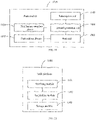
- FIG. 6 shows a functional block diagram of a gateway provided by the embodiments of the present disclosure.
- the gateway provided by the embodiments of the present disclosure may include a submission module 601 and a push module 602.
- the submission module 601 is configured to transmit a business audit request to an audit platform in response to an operation request of a user terminal, and generate a to-be-issued message based on an audit task identification returned by the audit platform.
- the push module 602 is configured to generate an audit notifying message based on an audit result acquired and the to-be-issued message, and push the audit notifying message to the user terminal.
- the audit result is acquired from the message queue.
- the audit platform may store the audit result in the message queue after acquiring the audit result.
- the message queue may transmit the audit result to the push module 602.
- the push unit 602 may actively pull the audit result from the message queue according to a preset condition. For example, a preset pull time may be from 8:00 to 18:00 every day, a pull time interval may be 30 minutes, then the push unit 602 may pull the audit result at the preset time interval during the preset time.
- the submission module 700 may include a submission-for-audit unit 701 and a first generation unit 702.
- the submission-for-audit unit 701 is configured to transmit the business audit request to the audit platform.
- the submission-for-audit unit 701 may transmit the business audit request to the audit platform based on the operation request initiated by the user terminal.
- the user terminal may be a terminal used by the applet developer or the third-party service provider for developing the applet.
- the user may develop or modify the applet in order to enrich the applet capability such as the applet package management, the basic information setting, the information flow/material search service, the order/payment service, and the message service. All developments and modifications need to be audited by the audit platform.
- the operation request includes but is not limited to modifying the basic information (such as name, avatar, profile, industry category, etc.) of the applet, publishing the applet package, submitting the material distribution (search/recommendation feed), opening the payment service, and so on.
- basic information such as name, avatar, profile, industry category, etc.
- the business audit request corresponds to the operation request, and different operation requests correspond to different business audit requests.
- the business audit request includes but is not limited to the applet package audit, the name audit, the industry category audit, the avatar and profile audit, the (recommendation/search) material audit, the payment account audit, and so on.
- the first generation unit 702 is configured to generate the to-be-issued message based on the audit task identification returned by the audit platform.
- the audit platform may return the audit task identification to the gateway.
- the audit task identification is an identification assigned by the audit platform for the business audit request.
- the first generation unit 702 may generate the to-be-issued message.
- the first generation unit 702 may acquire an audit notification template based on the type of the operation request, and generate the to-be-issued message based on the audit task identification, the user identification, the time of submitting the business audit, the audit notification template, the operation parameter and the audit result message item.
- the user identification is the unique identification for representing the user identity.
- the time of submitting the business audit is a time when the submission unit submits the audit task to the audit platform.
- the audit notification template may be pre-configured, and each operation type is separately configured with an audit notification template. Each audit notification template may include an audit success sub-template and an audit fail sub-template.
- the operation parameter is a requested content in the operation request, and the operation parameter is different according to the operation type. For example, in a case of publishing the applet package, it is needed to provide the parameter of the applet package identification (package_id) and the parameter of the applet package version (package_version), and in a case of modifying the applet name, it is needed to provide the parameter of the applet name (app_name).
- the audit result message item is an item used to fill the audit result. In the to-be-issued message generated by the first generation unit 702, the audit result message item is empty.
- the submission module 601 may further include an authentication unit configured to authenticate an identity of the user terminal.
- the authentication unit 800 includes a parsing sub-unit 801 and a verification sub-unit 802.
- the parsing sub-unit 801 is configured to parse the operation request so as to obtain the user identification and the applet identification.
- the operation request contains the user identification and the applet identification.
- the parsing sub-unit 801 may obtain the user identification and the applet identification by parsing the operation request.
- the verification sub-unit 802 is configured to verify the user identity based on the user identification and the applet identification.
- the verification sub-unit 802 may verify the permission relationship with the applet identification according to the user identification. If the user does not have an operation permission for the applet corresponding to the applet identification, a no-permission message may be directly returned to the user terminal. If the user has the operation permission for the applet corresponding to the applet identification, a subsequent operation may be performed.
- the push module 900 includes a second generation unit 901 and a push unit 902.
- the second generation unit 901 is configured to generate the audit notifying message based on the audit result acquired and the to-be-issued message.
- the audit result may include the audit success and the audit fail.
- the audit platform may obtain the audit result of the audit success.
- the audit platform may obtain the audit result of the audit fail.
- the second generation unit 901 may fill the audit result into the audit notifying message item in the to-be-issued message, so as to generate the audit notifying message.
- the push unit 902 is configured to push the audit notifying message to the user terminal.
- the push unit 902 may acquire the address of the developer or the address of the third-party service provider from the push address library, and push the audit notifying message to the developer or the third-party service provider.
- a push module 1000 includes a second generation unit 1001, a push unit 1002 and a subscription unit 1003.
- a principle and a function of the second generation unit 1001 and the push unit 1002 are the same as those of the second generation unit 901 and the push unit 902, which will not be repeated here.
- the subscription unit 1003 is configured to subscribe to the audit result from the message queue, and transmit the audit result to the second generation unit.
- the message queue is a queue for storing the audit result.
- the message queue may be provided on the audit platform or in the gateway, or may be provided independent of the audit platform and the gateway.
- the message queue may be used to decouple the audit platform and the gateway, so as to achieve the purpose of one-push multi-party-consumption.
- the gateway may further include a notification template library 1004 configured to store the audit notification template.
- the audit notification template may be pre-configured and stored in the notification template library 1004.
- the audit notification template matches the type of the operation request, and each operation type may correspond to two audit notification templates, including an audit success template and an audit fail template.
- An arrangement form of the audit success template and the audit fail template has been mentioned in a part of method of the present disclosure and will not be repeated here.
- notification template library 1004 may be provided in the gateway or in other units or modules independent of the gateway, as long as the notification template may be stored and the submission module and the push module are allowed to access the notification template library.
- the push address library 1005 is configured to store the push address of the user terminal.
- the push address is pre-configured by the user to receive a notification.
- the applet developer and the third-party service provider may pre-arrange their respective addresses in the push address library, so that the push module may acquire the address of the applet developer or the address of the third-party service provider when needed.
- the push address library 1005 may be provided in the gateway or in other units or modules independent of the gateway, as long as the address may be stored and the submission module and the push module are allowed to access the push address library.
- the gateway provided by the embodiment may be implemented to use the submission module to transmit the business audit request to the audit platform in response to receiving the operation request of the user terminal, and generate the to-be-issued message based on the audit task identification returned by the audit platform; and use the push module to generate the audit notifying message based on the audit result acquired and the to-be-issued message, and push the audit notifying message to the user terminal.
- the gateway is universal and may support any type of business audit (such as the audit for the applet capability), and may further reduce the labor cost of the developer, reduce the code redundancy and improve the maintainability of the business code.
- the embodiments of the present disclosure provide an audit platform, which may audit a business of an application, such as a business of an applet.
- FIG. 11 shows a functional block diagram of an audit platform provided by the embodiments of the present disclosure.
- the audit platform 1100 includes a receiving module 1101, an acquisition module 1102, and a storage module 1103,
- the receiving module 1101 is configured to receive the business audit request.
- the business audit request is a message transmitted by the gateway in response to the operation request of the user terminal.
- the acquisition module 1102 is configured to acquire the audit result.
- the audit platform may perform a manual audit by an auditor.
- the audit result is a result obtained after the audit request is audited by the auditor.
- the audit platform may display the audit request, that is, an audit item in the audit request, to the auditor.
- the auditor may audit the audit item, obtain the audit result, and transmit the audit result to the audit platform.
- the audit platform may perform the audit in other ways, such as by a combination of manual audit and machine audit.
- the storage module 1103 is configured to store the audit result.
- the storage module 1103 may store the audit result in the form of a message queue.
- the storage module 1103 may be provided on the audit platform or in other modules or units independent of the audit platform.
- the audit platform may further include a task identification generation module configured to return the audit task identification to the gateway.
- the audit task identification is the unique identification of the audit task.
- the audit platform may use the receiving module to receive the business audit request, use the acquisition module to acquire the audit result, and use the storage module to store the audit result.
- the audit platform may audit any type of business, reduce the labor cost of a gateway developer, reduce the code redundancy, and improve the maintainability of the business code.
- the method of notifying of the business audit will be further introduced below in combination with the user terminal, the gateway and the audit platform.
- FIG. 12 shows a flowchart of a method of notifying of a business audit provided by the embodiments of the present disclosure. As shown in FIG. 12 , the method of notifying of the business audit includes following steps.
- step 1201 the user terminal transmits the operation request to the submission module of the gateway.
- the operation request may contain the user identification, the applet identification, the operation type (the name modification) and the name parameter (the new name of the applet).
- step 1202 the gateway authenticates the user identity.
- the gateway may parse the user identification and the applet identification from the operation request, and verify the permission relationship with the applet identification according to the user identification.
- a verification fail message may be returned to the user terminal.
- a verification success message may be returned to the user terminal and a subsequent step may be performed; or the subsequent step may be performed directly without returning the verification success message to the user terminal.
- step 1203 the submission-for-audit unit of the gateway transmits the business audit task to the audit platform.
- the business audit task is an audit task obtained by the gateway based on the operation request.
- the business audit task may contain the applet identification, the operation type (the name modification) and the name parameter.
- the gateway may transmit the business audit request to the audit platform.
- step 1204 the audit platform returns the audit task identification to the gateway.
- the audit platform may assign a unique identification to the business audit task for use in a subsequent process.
- step 1205 the gateway acquires the audit notification template from the notification template library.
- the audit notification template is preset by the developer or the third-party service provider and stored in the notification template library.
- step 1206 the to-be-issued message is generated based on the audit task identification, the user identification, the time of submitting the business audit, the audit notification template, the operation parameter and the audit result message item.
- the gateway may acquire the audit notification template from the notification template library based on the audit task identification returned by the audit platform, and generate the to-be-issued message by combining the user identification transmitted by the user terminal, the time of submitting the business audit, the operation parameter and the audit result message item.
- step 1207 the audit platform receives the audit result from the auditor.
- the audit platform may display the operation parameter to the auditor, and the auditor may audit the business audit request according to the operation parameter and transmit the audit result to the audit platform.
- step 1208 the audit platform stores the audit result in the message queue.
- step 1209 the gateway acquires the audit result from the message queue.
- step 1210 the gateway acquires the corresponding to-be-issued message from the to-be-issued message library according to the audit task identification, and stitches the audit result and the to-be-issued message, so as to obtain the notifying message.
- step 1211 the gateway acquires the push address of the user terminal from the push address library.
- the push address of the user terminal is pre-configured in the push address library by the user.
- step 1212 the gateway pushes the notifying message to the user terminal according to the push address.
- the present disclosure further provides an electronic device and a readable storage medium.
- FIG. 13 shows a block diagram of an electronic device for implementing the method of notifying of the business audit according to the embodiments of the present disclosure.
- the electronic device is intended to represent various forms of digital computers, such as a laptop computer, a desktop computer, a workstation, a personal digital assistant, a server, a blade server, a mainframe computer, and other suitable computers.
- the electronic device may further represent various forms of mobile devices, such as a personal digital assistant, a cellular phone, a smart phone, a wearable device, and other similar computing devices.
- the components as illustrated herein, and connections, relationships, and functions thereof are merely examples, and are not intended to limit the implementation of the present disclosure described and/or required herein.
- the electronic device may include one or more processors 1301, a memory 1302, and interface(s) for connecting various components, including high-speed interface(s) and low-speed interface(s).
- the various components are connected to each other by using different buses, and may be installed on a common motherboard or installed in other manners as required.
- the processor may process instructions executed in the electronic device, including instructions stored in or on the memory to display graphical information of GUI (Graphical User Interface) on an external input/output device (such as a display device coupled to an interface).
- GUI Graphic User Interface
- a plurality of processors and/or a plurality of buses may be used with a plurality of memories, if necessary.
- a plurality of electronic devices may be connected in such a manner that each device providing a part of necessary operations (for example, as a server array, a group of blade servers, or a multi-processor system).
- a processor 1301 is illustrated by way of example.
- the memory 1302 is a non-transitory computer-readable storage medium provided by the present disclosure.
- the memory stores instructions executable by at least one processor, to cause the at least one processor to perform the method of notifying of the business audit provided in the present disclosure.
- the non-transitory computer-readable storage medium of the present disclosure stores computer instructions for allowing a computer to perform the method of notifying of the business audit provided in the present disclosure.
- the memory 1302 may be used to store non-transitory software programs, non-transitory computer-executable programs and modules, such as program instructions/modules corresponding to the method of notifying of the business audit in the embodiments of the present disclosure.
- the processor 1301 executes various functional applications and data processing of the server by executing the non-transient software programs, instructions and modules stored in the memory 1302, thereby implementing the method of notifying of the business audit in the embodiments of the method mentioned above.
- the memory 1302 may include a program storage area and a data storage area.
- the program storage area may store an operating system and an application program required by at least one function.
- the data storage area may store data etc. generated by using the electronic device according to the method of notifying of the audit.
- the memory 1302 may include a high-speed random access memory, and may further include a non-transitory memory, such as at least one magnetic disk storage device, a flash memory device, or other non-transitory solid-state storage devices.
- the memory 1302 may optionally include a memory provided remotely with respect to the processor 1301, and such remote memory may be connected through a network to the electronic device. Examples of the above-mentioned network include, but are not limited to the Internet, intranet, local area network, mobile communication network, and combination thereof.
- the electronic device for implementing the method of notifying of the business audit may further include an input device 1303 and an output device 1304.
- the processor 1301, the memory 1302, the input device 1303 and the output device 1304 may be connected by a bus or in other manners. In FIG. 13 , the connection by a bus is illustrated by way of example.
- the input device 1303 may receive input information of numbers or character, and generate key input signals related to user settings and function control of the electronic device for implementing the method of notifying of the business audit, such as a touch screen, a keypad, a mouse, a track pad, a touchpad, a pointing stick, one or more mouse buttons, a trackball, a joystick, and so on.
- the output device 1304 may include a display device, an auxiliary lighting device (for example, LED), a tactile feedback device (for example, a vibration motor), and the like.
- the display device may include, but is not limited to, a liquid crystal display (LCD), a light emitting diode (LED) display, and a plasma display. In some embodiments, the display device may be a touch screen.
- Various embodiments of the systems and technologies described herein may be implemented in a digital electronic circuit system, an integrated circuit system, an application specific integrated circuit (ASIC), a computer hardware, firmware, software, and/or combinations thereof. These various embodiments may be implemented by one or more computer programs executable and/or interpretable on a programmable system including at least one programmable processor.
- the programmable processor may be a dedicated or general-purpose programmable processor, which may receive data and instructions from the storage system, the at least one input device and the at least one output device, and may transmit the data and instructions to the storage system, the at least one input device, and the at least one output device.
- machine-readable medium and “computer-readable medium” refer to any computer program product, apparatus and/or device (for example, magnetic disk, optical disk, memory, programmable logic device (PLD)) for providing machine instructions and/or data to a programmable processor, including a machine-readable medium for receiving machine instructions as machine-readable signals.
- machine-readable signal refers to any signal for providing machine instructions and/or data to a programmable processor.
- a computer including a display device (for example, a CRT (cathode ray tube) or LCD (liquid crystal display) monitor) for displaying information to the user, and a keyboard and a pointing device (for example, a mouse or a trackball) through which the user may provide the input to the computer.
- a display device for example, a CRT (cathode ray tube) or LCD (liquid crystal display) monitor
- a keyboard and a pointing device for example, a mouse or a trackball
- Other types of devices may also be used to provide interaction with users.
- a feedback provided to the user may be any form of sensory feedback (for example, visual feedback, auditory feedback, or tactile feedback), arid the input from the user may be received in any form (including acoustic input, voice input or tactile input).
- the systems and technologies described herein may be implemented in a computing system including back-end components (for example, a data server), or a computing system including middleware components (for example, an application server), or a computing system including front-end components (for example, a user computer having a graphical user interface or web browser through which the user may interact with the implementation of the system and technology described herein), or a computing system including any combination of such back-end components, middleware components or front-end components.
- the components of the system may be connected to each other by digital data communication (for example, a communication network) in any form or through any medium. Examples of the communication network include a local area network (LAN), a wide area network (WAN), and the Internet.
- LAN local area network
- WAN wide area network
- the Internet the global information network
- the computer system may include a client and a server.
- the client and the server are generally far away from each other and usually interact through a communication network.
- the relationship between the client and the server is generated through computer programs running on the corresponding computers and having a client-server relationship with each other.
- the embodiments of the present disclosure provide a computer-readable medium having a computer program stored thereon, and the program, when executed by a processor, causes the processor to implement any of the method of notifying of the business audit described above.
- steps of the processes illustrated above may be reordered, added or deleted in various manners.
- the steps described in the present disclosure may be performed in parallel, sequentially, or in a different order, as long as a desired result of the technical solution of the present disclosure may be achieved. This is not limited in the present disclosure.
Landscapes
- Engineering & Computer Science (AREA)
- Computer Networks & Wireless Communication (AREA)
- Signal Processing (AREA)
- Business, Economics & Management (AREA)
- Human Resources & Organizations (AREA)
- Strategic Management (AREA)
- Entrepreneurship & Innovation (AREA)
- Economics (AREA)
- Development Economics (AREA)
- Educational Administration (AREA)
- General Engineering & Computer Science (AREA)
- Quality & Reliability (AREA)
- Computer Security & Cryptography (AREA)
- Game Theory and Decision Science (AREA)
- Computer Hardware Design (AREA)
- Marketing (AREA)
- Operations Research (AREA)
- Computing Systems (AREA)
- Tourism & Hospitality (AREA)
- Physics & Mathematics (AREA)
- General Business, Economics & Management (AREA)
- General Physics & Mathematics (AREA)
- Theoretical Computer Science (AREA)
- Management, Administration, Business Operations System, And Electronic Commerce (AREA)
- Computer And Data Communications (AREA)
Applications Claiming Priority (2)
| Application Number | Priority Date | Filing Date | Title |
|---|---|---|---|
| CN202011081246.8A CN112333239B (zh) | 2020-10-10 | 2020-10-10 | 业务审核通知方法及网关、电子设备、可读介质 |
| PCT/CN2021/098031 WO2022073354A1 (zh) | 2020-10-10 | 2021-06-03 | 业务审核通知方法及网关、电子设备、可读介质 |
Publications (2)
| Publication Number | Publication Date |
|---|---|
| EP4009611A1 true EP4009611A1 (de) | 2022-06-08 |
| EP4009611A4 EP4009611A4 (de) | 2022-09-14 |
Family
ID=79347166
Family Applications (1)
| Application Number | Title | Priority Date | Filing Date |
|---|---|---|---|
| EP21823720.4A Withdrawn EP4009611A4 (de) | 2020-10-10 | 2021-06-03 | Verfahren zur benachrichtigung über dienstprüfungen, gateway, elektronische vorrichtung und lesbares medium |
Country Status (4)
| Country | Link |
|---|---|
| US (1) | US20230188620A1 (de) |
| EP (1) | EP4009611A4 (de) |
| JP (1) | JP2023501850A (de) |
| KR (1) | KR102651156B1 (de) |
Families Citing this family (4)
| Publication number | Priority date | Publication date | Assignee | Title |
|---|---|---|---|---|
| CN114666350A (zh) * | 2022-01-21 | 2022-06-24 | 北京健康之家科技有限公司 | 保险业务变更提醒方法、服务器和存储介质 |
| CN114721955A (zh) * | 2022-04-11 | 2022-07-08 | 携程科技(上海)有限公司 | 任务内容审核方法、系统、电子设备及存储介质 |
| CN116595126A (zh) * | 2023-05-17 | 2023-08-15 | 内蒙古电力(集团)有限责任公司内蒙古电力经济技术研究院分公司 | 基于电网企业科技项目申请资料查重的方法 |
| CN116846611B (zh) * | 2023-06-20 | 2023-12-12 | 国网浙江省电力有限公司宁波供电公司 | 适用于工程前置审计的数据处理方法及系统,存储介质 |
Family Cites Families (13)
| Publication number | Priority date | Publication date | Assignee | Title |
|---|---|---|---|---|
| JP2004213422A (ja) * | 2003-01-06 | 2004-07-29 | Hitachi Ltd | 情報検索サーバ及び情報検索方法 |
| JP2005078168A (ja) * | 2003-08-28 | 2005-03-24 | Canon Inc | 情報処理装置、情報処理方法、プログラム及び記憶媒体 |
| US8769127B2 (en) * | 2006-02-10 | 2014-07-01 | Northrop Grumman Systems Corporation | Cross-domain solution (CDS) collaborate-access-browse (CAB) and assured file transfer (AFT) |
| US20130110943A1 (en) * | 2011-11-02 | 2013-05-02 | Apple Inc. | Notification and reminder generation, distribution, and storage system |
| CA2801659A1 (en) * | 2012-01-09 | 2013-07-09 | Ezshield, Inc. | Identity management system and method including architecture for the same |
| US9674123B2 (en) * | 2012-03-13 | 2017-06-06 | Semotus Inc. | System and method for message dispatching and communication |
| KR20140076827A (ko) * | 2012-12-13 | 2014-06-23 | 에스케이플래닛 주식회사 | 애플릿 관리 시스템 및 방법 |
| US9336248B2 (en) * | 2013-04-24 | 2016-05-10 | The Boeing Company | Anomaly detection in chain-of-custody information |
| US10991014B2 (en) * | 2017-07-26 | 2021-04-27 | Solstice Equity Partners, Inc. | Templates and events for customizable notifications on websites |
| US11061929B2 (en) * | 2019-02-08 | 2021-07-13 | Oracle International Corporation | Replication of resource type and schema metadata for a multi-tenant identity cloud service |
| US20210110330A1 (en) * | 2019-10-15 | 2021-04-15 | Citrix Systems, Inc. | Skill-set score based intelligent case assignment system |
| CN111667334B (zh) * | 2020-04-27 | 2022-11-18 | 苏宁云计算有限公司 | 审核失败订单处理方法、装置、计算机设备和存储介质 |
| CN111597113B (zh) * | 2020-05-18 | 2023-08-15 | 北京百度网讯科技有限公司 | 小程序的验证方法、装置、设备及存储介质 |
-
2021
- 2021-06-03 EP EP21823720.4A patent/EP4009611A4/de not_active Withdrawn
- 2021-06-03 US US17/597,084 patent/US20230188620A1/en not_active Abandoned
- 2021-06-03 JP JP2021578248A patent/JP2023501850A/ja active Pending
- 2021-06-03 KR KR1020217042890A patent/KR102651156B1/ko active Active
Also Published As
| Publication number | Publication date |
|---|---|
| JP2023501850A (ja) | 2023-01-20 |
| KR20220006126A (ko) | 2022-01-14 |
| EP4009611A4 (de) | 2022-09-14 |
| KR102651156B1 (ko) | 2024-03-26 |
| US20230188620A1 (en) | 2023-06-15 |
Similar Documents
| Publication | Publication Date | Title |
|---|---|---|
| CN112333239B (zh) | 业务审核通知方法及网关、电子设备、可读介质 | |
| EP4009611A1 (de) | Verfahren zur benachrichtigung über dienstprüfungen, gateway, elektronische vorrichtung und lesbares medium | |
| US9825964B2 (en) | External platform extensions in a multi-tenant environment | |
| CN111752587B (zh) | 小程序的批量处理方法、装置、电子设备以及可读存储介质 | |
| US10572575B2 (en) | System independent font rendering | |
| US12487996B2 (en) | Low-development system for dynamic information queries | |
| AU2016100635A4 (en) | Software creation system | |
| CN119003023A (zh) | 用于任务处理的方法、装置、设备和存储介质 | |
| JP2025102759A (ja) | オブジェクト属性動的検証 | |
| CN116455950A (zh) | 一种请求响应方法、装置、计算机设备及存储介质 | |
| EP4423689A1 (de) | System und verfahren zur schnittstellenverwaltung zur anwendungsprogrammierung | |
| US12536013B2 (en) | Systems and methods for device configuration using a configuration normalization platform | |
| US12008342B2 (en) | Package conversions for procedural language extensions | |
| US12619481B2 (en) | Data-streaming system overlay infrastructure for deployment pipelines | |
| CN111401825A (zh) | 一种实例化方法和装置 | |
| US12287841B2 (en) | Runtime completion of web component metadata | |
| CN114185604B (zh) | 金融服务舱系统及其运用方法、装置、电子设备和介质 | |
| US20240370316A1 (en) | Data-streaming system overlay infrastructure for deployment pipelines | |
| CN121031561A (zh) | 服务注册方法、装置、设备和介质 | |
| CN119690446A (zh) | 参数校验方法、装置、设备、存储介质及计算机程序产品 | |
| CN120234164A (zh) | 数据反馈方法、装置、计算机设备及存储介质 | |
| CN121858524A (zh) | 数据库账号管理方法、系统、设备、存储介质及程序产品 | |
| CN119090449A (zh) | 工程项目管理方法、任务编辑方法、装置、设备和系统 | |
| CN112486709A (zh) | 一种基于具象状态传输服务进行作业管理的方法和装置 |
Legal Events
| Date | Code | Title | Description |
|---|---|---|---|
| STAA | Information on the status of an ep patent application or granted ep patent |
Free format text: STATUS: UNKNOWN |
|
| STAA | Information on the status of an ep patent application or granted ep patent |
Free format text: STATUS: THE INTERNATIONAL PUBLICATION HAS BEEN MADE |
|
| PUAI | Public reference made under article 153(3) epc to a published international application that has entered the european phase |
Free format text: ORIGINAL CODE: 0009012 |
|
| STAA | Information on the status of an ep patent application or granted ep patent |
Free format text: STATUS: REQUEST FOR EXAMINATION WAS MADE |
|
| 17P | Request for examination filed |
Effective date: 20211222 |
|
| AK | Designated contracting states |
Kind code of ref document: A1 Designated state(s): AL AT BE BG CH CY CZ DE DK EE ES FI FR GB GR HR HU IE IS IT LI LT LU LV MC MK MT NL NO PL PT RO RS SE SI SK SM TR |
|
| A4 | Supplementary search report drawn up and despatched |
Effective date: 20220817 |
|
| RIC1 | Information provided on ipc code assigned before grant |
Ipc: H04L 67/60 20220101ALI20220810BHEP Ipc: H04L 67/55 20220101ALI20220810BHEP Ipc: H04L 67/51 20220101ALI20220810BHEP Ipc: H04L 65/40 20220101AFI20220810BHEP |
|
| STAA | Information on the status of an ep patent application or granted ep patent |
Free format text: STATUS: EXAMINATION IS IN PROGRESS |
|
| 17Q | First examination report despatched |
Effective date: 20230605 |
|
| STAA | Information on the status of an ep patent application or granted ep patent |
Free format text: STATUS: THE APPLICATION HAS BEEN WITHDRAWN |
|
| 18W | Application withdrawn |
Effective date: 20230725 |