EP4009631B1 - Verfahren und vorrichtung zur bestimmung von weissabgleichsabnormalität, speichermedium und elektronische vorrichtung - Google Patents
Verfahren und vorrichtung zur bestimmung von weissabgleichsabnormalität, speichermedium und elektronische vorrichtung Download PDFInfo
- Publication number
- EP4009631B1 EP4009631B1 EP20850622.0A EP20850622A EP4009631B1 EP 4009631 B1 EP4009631 B1 EP 4009631B1 EP 20850622 A EP20850622 A EP 20850622A EP 4009631 B1 EP4009631 B1 EP 4009631B1
- Authority
- EP
- European Patent Office
- Prior art keywords
- target block
- channel image
- image
- white balance
- color feature
- Prior art date
- Legal status (The legal status is an assumption and is not a legal conclusion. Google has not performed a legal analysis and makes no representation as to the accuracy of the status listed.)
- Active
Links
Images



Classifications
-
- H—ELECTRICITY
- H04—ELECTRIC COMMUNICATION TECHNIQUE
- H04N—PICTORIAL COMMUNICATION, e.g. TELEVISION
- H04N23/00—Cameras or camera modules comprising electronic image sensors; Control thereof
- H04N23/80—Camera processing pipelines; Components thereof
- H04N23/84—Camera processing pipelines; Components thereof for processing colour signals
- H04N23/88—Camera processing pipelines; Components thereof for processing colour signals for colour balance, e.g. white-balance circuits or colour temperature control
-
- G—PHYSICS
- G06—COMPUTING OR CALCULATING; COUNTING
- G06T—IMAGE DATA PROCESSING OR GENERATION, IN GENERAL
- G06T7/00—Image analysis
- G06T7/0002—Inspection of images, e.g. flaw detection
-
- G—PHYSICS
- G06—COMPUTING OR CALCULATING; COUNTING
- G06T—IMAGE DATA PROCESSING OR GENERATION, IN GENERAL
- G06T7/00—Image analysis
- G06T7/90—Determination of colour characteristics
-
- H—ELECTRICITY
- H04—ELECTRIC COMMUNICATION TECHNIQUE
- H04N—PICTORIAL COMMUNICATION, e.g. TELEVISION
- H04N1/00—Scanning, transmission or reproduction of documents or the like, e.g. facsimile transmission; Details thereof
- H04N1/387—Composing, repositioning or otherwise geometrically modifying originals
- H04N1/3876—Recombination of partial images to recreate the original image
-
- H—ELECTRICITY
- H04—ELECTRIC COMMUNICATION TECHNIQUE
- H04N—PICTORIAL COMMUNICATION, e.g. TELEVISION
- H04N1/00—Scanning, transmission or reproduction of documents or the like, e.g. facsimile transmission; Details thereof
- H04N1/46—Colour picture communication systems
- H04N1/56—Processing of colour picture signals
- H04N1/60—Colour correction or control
- H04N1/6077—Colour balance, e.g. colour cast correction
-
- H—ELECTRICITY
- H04—ELECTRIC COMMUNICATION TECHNIQUE
- H04N—PICTORIAL COMMUNICATION, e.g. TELEVISION
- H04N23/00—Cameras or camera modules comprising electronic image sensors; Control thereof
- H04N23/10—Cameras or camera modules comprising electronic image sensors; Control thereof for generating image signals from different wavelengths
-
- H—ELECTRICITY
- H04—ELECTRIC COMMUNICATION TECHNIQUE
- H04N—PICTORIAL COMMUNICATION, e.g. TELEVISION
- H04N23/00—Cameras or camera modules comprising electronic image sensors; Control thereof
- H04N23/60—Control of cameras or camera modules
- H04N23/698—Control of cameras or camera modules for achieving an enlarged field of view, e.g. panoramic image capture
-
- H—ELECTRICITY
- H04—ELECTRIC COMMUNICATION TECHNIQUE
- H04N—PICTORIAL COMMUNICATION, e.g. TELEVISION
- H04N9/00—Details of colour television systems
- H04N9/64—Circuits for processing colour signals
- H04N9/73—Colour balance circuits, e.g. white balance circuits or colour temperature control
-
- G—PHYSICS
- G06—COMPUTING OR CALCULATING; COUNTING
- G06T—IMAGE DATA PROCESSING OR GENERATION, IN GENERAL
- G06T2207/00—Indexing scheme for image analysis or image enhancement
- G06T2207/10—Image acquisition modality
- G06T2207/10024—Color image
-
- G—PHYSICS
- G06—COMPUTING OR CALCULATING; COUNTING
- G06T—IMAGE DATA PROCESSING OR GENERATION, IN GENERAL
- G06T2207/00—Indexing scheme for image analysis or image enhancement
- G06T2207/30—Subject of image; Context of image processing
- G06T2207/30168—Image quality inspection
Definitions
- the present application relates to the field of image processing, for example, a white balance abnormality determination method and apparatus, a storage medium, and an electronic device.
- one channel of images of the multi-ocular camera may easily undergo abnormal white balance, which has a certain impact on the display effect of multi-channel images.
- the ability to quickly and accurately determine images having abnormal white balance in multi-channel images is the key factor in improving the display effect of multi-channel images.
- the reference document CN110009701A discloses a white balance adjustment method for multi-lens shooting.
- the white balance adjustment method comprises the following steps: 1, calibrating an overlapped area of multi-camera shooting; 2, carrying out white balance difference evaluation on the overlapped area; and 3, performing inter-camera color cast adjustment based on the white balance difference camera.
- the reference document CN106937102A discloses a color balance adjusting method of a panoramic backing-up system.
- Cameras collect image data of N paths of videos and spliced image data respectively; according to R, G and B (three primary colors) proportions of the spliced image data and image data, a splicing module determines R, G and B gains of an image, compares the gains with a preset adjusting threshold, and determines whether to adjust the three primary colors of the image.
- the reference document CN108833874A discloses a panoramic image color correction method adjusting the color gamut difference of the stitched mage, so that the stitched image tends to be uniform in color.
- the invention is defined by a method according to claim 1, a strage medium accorindg to claim 7 and an electric device according to claim 8. Further embodiments of the method are defined by the dependent claims 2-6.
- FIG. 1 is a flowchart of a white balance abnormality determination method according to an embodiment of the present application.
- the method can be applied to the case of identifying white balance abnormality of images.
- the method can be performed by a white balance abnormality determination apparatus, and the apparatus can be implemented by software and/or hardware and that can be integrated into an electronic device such as a smart terminal.
- the white balance abnormality determination method includes S110, S120, S130, and S140.
- At least one target block in a first channel image is acquired, and at least one reference block in a second channel image is acquired for each target block, where each reference block is associated with the position of a respective target block, and the first channel image is adjacent to the second channel image.
- the first channel image being adjacent to the second channel image may mean that the contents in the first channel image and the contents in the second channel image may be spliced to form a complete image.
- at least one target block may be acquired from the first channel image.
- the target block may be an image block of a preset shape, the preset shape, for example, may be a circle, a rectangle or a square, and in this embodiment, the preset shape may be set to a rectangle.
- the position of each target block may be set nearby or adjacent to the second channel image.
- reference blocks associated with the position of each target block may be determined from the second channel image.
- the position association may be reflected in the distance between the reference block and the target block, and for example, the determined reference block may be a reference block closest to the target block.
- One reference block may be set for one target block, or two or three reference blocks may be set for one target block.
- the above-described arrangement has the advantage that in a case where the image in one reference block is different from the image content of the target block, the information of another reference block may be used, or the information of multiple reference blocks may be used for weighted calculation, so that the obtained result has higher accuracy and better robustness.
- a color feature representative value of each target block and a color feature representative value of each reference block associated with the position of the respective target block are determined.
- the color feature representative value of a target block may be an average value of color values of all pixels in the target block, such as the average value of values of red (R), green (G), and blue (B) primary colors of all pixels in the target block, and the color feature representative value may be determined in other manners.
- the color feature representative values of one or more reference blocks associated with the target block may be determined in the same manner.
- a color feature difference value between the first channel image and the second channel image is determined according to a difference between the color feature representative value of each target block and the color feature representative value of each reference block associated with the position of the respective target block.
- the color feature difference value between the first channel image and the second channel image may be determined according to the difference between the color feature representative value of each target block and the color feature representative value of the corresponding reference block. For example, according to the difference value between the color feature representative value of each target block and the color feature representative value of a corresponding reference block associated with the position of each target block, all difference values between the target blocks and the reference blocks are accumulated to determine the color feature difference value between the first channel image and the second channel image.
- the preset threshold may be determined according to prior statistics of a large number of images of two adjacent channels, and may be a value representing the color feature difference of the images of the two channels. After the color feature difference value between the first channel image and the second channel image is determined, the difference value may be compared with a preset threshold. If the difference value exceeds the preset threshold, it is determined that white balance abnormality exists between the images of the two channels, and it may be further determined the image of which channel image is the white balance abnormality image. For example, there is a wide-angle image consisting of images of four channels, which are a first channel image, a second channel image, a third channel image and a fourth channel image sequentially from left to right.
- the first channel image is the white balance abnormality image.
- the images are compared sequentially from left to right to determine the white balance abnormality image among multiple channels. After the white balance abnormality image is determined, the parameters of the camera that shoots this image are adjusted so that the white balance of the image shot by the camera is consistent with that of images shot by other cameras, thereby improving the image acquisition effect.
- At least one target block in a first channel image is acquired, and at least one reference block in a second channel image is acquired for each target block, where each reference block is associated with the position of a respective target block, and the first channel image is adjacent to the second channel image; a color feature representative value of each target block and a color feature representative value of each reference block associated with the position of the respective target block are determined; a color feature difference value between the first channel image and the second channel image is determined according to a difference between the color feature representative value of each target block and the color feature representative value of each reference block associated with the position of the respective target block; and whether a white balance abnormality image exists in the first channel image and the second channel image is determined according to a magnitude relationship between the color feature difference value and a preset threshold, and in a case where a white balance abnormality image exists in the first channel image and the second channel image, the white balance abnormality image is adjusted.
- the effect of quickly and accurately determining white balance abnormality images in the multi-channel image can be achieved, and the effect of supplementarily adjusting white balance abnormality channel images can be achieved, thereby ensuring the consistency of image effects after multi-channel image splicing.
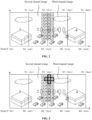
- FIG. 2 is a schematic diagram of a position relationship between target blocks and reference blocks according to an embodiment of the present application.
- the connecting line between the point M2 and the point N2 is an adjacent line between the second channel image and the third channel image.
- the target blocks in the second channel image may be set at a position adjacent to the adjacent line.
- the image blocks may be set in two columns, and when the image block a2 in the second channel image is the target block, the image blocks b1, b2 and b3 and the image block on the right of b2, which are closest to the target block a2 in the third channel image, may be selected as reference blocks.
- the position of the reference blocks may be determined.
- the advantage of selecting the target block and the reference block according to the distance is that the image contents of the two blocks are more likely to represent the same content, for example, the contents of the target block a2 and the reference block b2 are both blue sky, and with the same contents, whether there is a white balance difference between the two blocks can be determined more accurately.
- FIG. 3 is a schematic diagram of the selection effect of target blocks and reference blocks according to an embodiment of the present application.
- the image block a2 in the second channel image is the target block
- the image blocks b1, b2 and b3 and the image block on the right of b2, which are closest to the target block a2 in the third channel image may be selected as reference blocks.
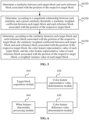
- FIG. 4 is a flowchart of another white balance abnormality determination method according to an embodiment of the present application. As shown in FIG. 4 , the method includes S410, S420, S430, S440, and S450.
- At least one target block in a first channel image is acquired, and at least one reference block in a second channel image is acquired for each target block, where the at least one reference block is associated with a position of a respective target block, and the first channel image is adjacent to the second channel image.
- a color feature representative value of each target block and a color feature representative value of each reference block associated with the position of the respective target block are determined.
- a weighted variance value of each target block is determined according to the color feature representative value of each target block and the color feature representative value of each reference block associated with the position of the respective target block.
- the resulting variance value of each target block may be (P-Q) 2 .
- the number of the reference block of the target block is one.
- the color feature difference value between the first channel image and the second channel image is determined according to weighted variance values of all of the at least one target block based on a preset rule.
- the color feature difference value between the first channel image and the second channel image may be obtained by accumulating the obtained weighted variance values of all the target blocks or by calculating the average value of the obtained weighted variance values.
- the technical solution herein provides a method for determining a color feature difference value between two channel images based on a weighted variance value of each target block.
- the above-described arrangement has the advantage that the difference between two channel images can be represented by the difference between the target block and the reference block, so that the determination result of whether a white balance difference exists between two channel images is more accurate.
- FIG. 5 is a flowchart of another white balance abnormality determination method according to an embodiment of the present application.
- FIG. 5 is the illustration of S430 in FIG. 4 , and as shown in FIG. 5 , S430 includes S4310, S4320 and S4330.
- the similarity may be expressed by S, and if one target block corresponds to multiple reference blocks, the similarity between each reference block and the target block may be determined.
- the similarity may be determined by image recognition, grayscale histogram extraction and other methods, may be calculated according to object characteristics, brightness information, color information and other information, and may also be calculated by deep learning, which will not be repeated here.
- a similarity weighted coefficient between each target block and each reference block associated with the position of the respective target block is determined according to a magnitude relationship between each similarity and a preset similarity threshold.
- the similarity weighted coefficient of each reference block may be determined by using the magnitude relationship between the similarity and the preset similarity threshold, and the similarity weighted coefficient be expressed by F.
- the similarity threshold is 0.8
- the similarity weighted coefficient is 1, and if the similarity between the reference block and the target block does not exceed 0.8, the similarity weighted coefficient is 0.
- a weighted variance value of each target block is determined according to the similarity between each target block and each reference block associated with the position of the respective target block, the similarity weighted coefficient between each target block and each reference block associated with the position of the respective target block, the color feature representative value of each target block, and the color feature representative value of each reference block associated with the position of the respective target block.
- the weighted variance value of the target block may be determined based on the relationship.
- the accuracy of the determination result of the weighted variance value of the target block can be improved, and the weighted variance value can be calculated by using the reference block related to the content of the target block, so that the obtained result is more in line with the reality.
- the step that the color feature difference value between the first channel image and the second channel image is determined according to weighted variance values of all of the at least one target block based on a preset rule includes the following step: the weighted variance values of all of the at least one target block are subjected to weighted accumulation, and a result of the weighted accumulation is taken as the color feature difference value between the first channel image and the second channel image. After the weighted variance values of multiple target blocks are obtained, the weighted variance values may be accumulated to obtain the color feature difference value between two channel images.
- the above-described arrangement has the advantage that the white balance difference degree between images of the two channels can be determined according to the difference between the target block and the reference block, and since the positions and contents of the target block and the reference block are interrelated, the determination result can be more accurate.
- the method further includes the following steps: a to-be-adjusted white balance abnormality image is determined according to a position of the first channel image and a position of the second channel image in a multi-channel image; and a color feature representative value of the to-be-adjusted white balance abnormality image is adjusted according to a color feature difference value between the to-be-adjusted white balance abnormality image and an adjacent channel.
- the adjustment of white balance may be determined according to the color feature difference value. In this manner, the white balance between multiple channels is basically the same or similar after adjustment, thereby improving the acquired multi-channel image effect.
- the color feature representative value includes a color ratio value, where a color ratio value of each target block is an average value of R/G and an average value of B/G in three primary colors of red, green and blue (RGB) of pixels in each target block, and a color ratio value of each reference block is an average value of R/G and an average value of B/G in three primary colors of RGB of pixels in each target block.
- the color conditions of the target block and the reference block may be expressed according to the average value of R/G and the average value of B/G.
- the similarity between a2 and each of the reference blocks b1, b2, b3 and 0 is calculated (the similarity may be calculated in various methods, which are not described herein), and the calculation results are recorded as S 1 , S 2 , S 3 and S 4 . If the similarity is greater than the threshold Thr1, the two blocks are considered to be similar and the similarity is marked as 1, otherwise the similarity is marked as 0.
- the label of the similarity between the block a2 and each of four blocks b1, b2, b3 and 0 is F 1 , F 2 , F 3 and F 4 whose values are all 0 or 1.
- the color ratio values of four blocks b1, b2, b3 and 0 are RG 1 and BG 1 , RG 2 and BG 2 , RG 3 and BG 3 , and RG 4 and BG 4 , respectively.
- the variance value C 23 is greater than the threshold Thr2, the white balance of the second channel image and the white balance of the third channel image are considered to be inconsistent.
- the color ratio variance value between an i th channel image and adjacent channel images on both sides of the i th channel image is C i and C i +1 . If C i is greater than Thr2 and C i +1 is greater than Thr2, it is considered that the white balance of the i th channel image has a color cast.
- the i th channel is a channel of the most edge, if the color ratio variance value between the i th channel and an adjacent image channel is greater than Thr2, whether the white balance of the i th channel image has a color cast is determined according to whether the white balance of the adjacent channel has a color cast.
- the white balance of the adjacent channel is adjusted and then whether the white balance of the i th channel image has a color cast is determined. If the adjacent channel does not have a color cast, it is considered that the white balance of the i th channel image has a color cast.
- color ratio variance value may also be calculated in the following manner.
- the weighting is unnecessary. If C i is greater than Thr2, it is considered that the white balance of the i th channel image has a color cast.
- the method for determining the color cast of a channel image is not limited to the above-described method, and the color cast may be determined by looking for a maximum value in C i . If the multi-ocular camera is not arranged horizontally, for example, it is in a rectangular arrangement, the similarity between a channel image and adjacent channel images on the left and right of the channel image may be calculated, and the similarity between a channel image and adjacent channel images above and below the channel image may also be calculated. In addition, during the calculation of the color ratio variance value, the proportion of each adjacent channel image may be set according to the actual situation.
- FIG. 6 is a structural schematic diagram of a white balance abnormality determination apparatus according to an embodiment of the present application.
- the white balance abnormality determination apparatus includes a target block acquisition module 610, a color feature representative value determination module 620, a color feature difference value determination module 630, and a white balance abnormality processing module 640.
- the target block acquisition module 610 is configured to acquire at least one target block in a first channel image, and acquire at least one reference block in a second channel image for each target block, where the at least one reference block is associated with a position of a respective target block, and the first channel image is adjacent to the second channel image.
- the color feature representative value determination module 620 is configured to determine a color feature representative value of each target block and a color feature representative value of each reference block associated with the position of the respective target block.
- the color feature difference value determination module 630 is configured to determine, according to a difference between the color feature representative value of each target block and the color feature representative value of each reference block associated with the position of the respective target block, a color feature difference value between the first channel image and the second channel image.
- the white balance abnormality processing module 640 is configured to determine, according to a magnitude relationship between the color feature difference value and a preset threshold, whether a white balance abnormality image exists in the first channel image and the second channel image, and in a case where a white balance abnormality image exists in the first channel image and the second channel image, adjust the white balance abnormality image.
- At least one target block in a first channel image is acquired, and at least one reference block in a second channel image is acquired for each target block, where each reference block is associated with the position of a respective target block, and the first channel image is adjacent to the second channel image; a color feature representative value of each target block and a color feature representative value of each reference block associated with the position of the respective target block are determined; a color feature difference value between the first channel image and the second channel image is determined according to a difference between the color feature representative value of each target block and the color feature representative value of each reference block associated with the position of the respective target block; and whether a white balance abnormality image exists in the first channel image and the second channel image is determined according to a magnitude relationship between the color feature difference value and a preset threshold, and in a case where a white balance abnormality image exists in the first channel image and the second channel image, the white balance abnormality image is adjusted.
- the effect of quickly and accurately determining white balance abnormality images in the multi-channel image can be achieved, and the effect of supplementarily adjusting white balance abnormality channel images can be achieved, thereby ensuring the consistency of image effects after multi-channel image splicing.
- the color feature difference value determination module 630 includes a weighted variance value calculation unit and a color feature difference value calculation unit.
- the weighted variance value calculation unit is configured to determine a weighted variance value of each target block according to the color feature representative value of each target block and the color feature representative value of each reference block associated with the position of the respective target block.
- the color feature difference value calculation unit is configured to determine the color feature difference value between the first channel image and the second channel image according to weighted variance values of all of the at least one target block based on a preset rule.
- the weighted variance value calculation unit is configured to: determine a similarity between each target block and each reference block associated with the position of the respective target block; determine, according to a magnitude relationship between each similarity and a preset similarity threshold, a similarity weighted coefficient between each target block and each reference block associated with the position of the respective target block; and determine, according to the similarity between each target block and each reference block associated with the position of the respective target block, the similarity weighted coefficient between each target block and each reference block associated with the position of the respective target block, the color feature representative value of each target block, and the color feature representative value of each reference block associated with the position of the respective target block, a weighted variance value of each target block.
- the color feature difference value calculation unit is configured to: Perform weighted accumulation on the weighted variance values of all of the at least one target block, and take a result of the weighted accumulation as the color feature difference value between the first channel image and the second channel image.
- the apparatus further includes a white balance abnormality image determination module and a white balance adjustment module.
- the white balance abnormality image determination module is configured to determine a to-be-adjusted white balance abnormality image according to a position of the first channel image and a position of the second channel image in a multi-channel image.
- the white balance adjustment module is configured to adjust, according to a color feature difference value between the to-be-adjusted white balance abnormality image and a channel adjacent to a channel where the to-be-adjusted white balance abnormality image is located, a color feature representative value of the to-be-adjusted white balance abnormality image.
- the color feature representative value includes a color ratio value, where a color ratio value of each target block is an average value of R/G and an average value of B/G in three primary colors of RGB of pixels in each target block, and a color ratio value of each reference block is an average value of R/G and an average value of B/G in three primary colors of RGB of pixels in each target block.
- the above-described product may perform the method provided by any embodiment of the present application and has function modules and beneficial effects corresponding to the method.
- the embodiments of the present application further provide a storage medium including computer-executable instructions.
- the computer-executable instructions are used for, when executed by a computer processor, performing a white balance abnormality determination method, and the method includes the steps described below.
- At least one target block in a first channel image is acquired, and at least one reference block in a second channel image is acquired for each target block, where each reference block is associated with the position of a respective target block, and the first channel image is adjacent to the second channel image; a color feature representative value of each target block and a color feature representative value of each reference block associated with the position of the respective target block are determined; a color feature difference value between the first channel image and the second channel image is determined according to a difference between the color feature representative value of each target block and the color feature representative value of each reference block associated with the position of the respective target block; and whether a white balance abnormality image exists in the first channel image and the second channel image is determined according to a magnitude relationship between the color feature difference value and a preset threshold, and in a case where a white balance abnormality image exists in the first channel image and the second channel image, the white balance abnormality image is adjusted.
- the storage medium is any one of various types of memory devices or storage devices.
- the term "storage medium” is intended to include an installation medium, such as a compact disc read-only memory (CD-ROM) and a floppy disk or a magnetic tape apparatus; a computer system memory or a random access memory, such as a dynamic random-access memory (DRAM), a double data rate random-access memory (DDR RAM), a static random-access memory (SRAM), an extended data out random-access memory (EDO RAM) and a Rambus random-access memory (Rambus RAM); a non-volatile memory, such as a flash memory and a magnetic medium (such as a hard disk drive and an optical storage); a register or other similar types of memory elements, and the like.
- DRAM dynamic random-access memory
- DDR RAM double data rate random-access memory
- SRAM static random-access memory
- EEO RAM extended data out random-access memory
- Rambus RAM Rambus random-access memory
- non-volatile memory such as a flash
- the computer-executable instructions included in the storage medium provided by the embodiment of the present application are not limited to perform the operation of determining white balance abnormality as described above, and may also perform related operations in the white balance abnormality determination method provided by any embodiment of the present application.
- FIG. 7 is a structural schematic diagram of an electronic device according to an embodiment of the present application. As shown in FIG. 7 , this embodiment provides an electronic device 700, which includes: one or more processors 720 and a storage apparatus 720 which is configured to store one or more programs. The one or more programs, when executed by the one or more processors 720, cause the one or more processors 720 to perform the whiter balance abnormality determination method, and the method includes the steps described below.
- At least one target block in a first channel image is acquired, and at least one reference block in a second channel image is acquired for each target block, where each reference block is associated with the position of a respective target block, and the first channel image is adjacent to the second channel image; a color feature representative value of each target block and a color feature representative value of each reference block associated with the position of the respective target block are determined; a color feature difference value between the first channel image and the second channel image is determined according to a difference between the color feature representative value of each target block and the color feature representative value of each reference block associated with the position of the respective target block; and whether a white balance abnormality image exists in the first channel image and the second channel image is determined according to a magnitude relationship between the color feature difference value and a preset threshold, and in a case where a white balance abnormality image exists in the first channel image and the second channel image, the white balance abnormality image is adjusted.
- the processor 720 further performs the technical solutions of the white balance abnormality determination method provided by the embodiments of the present application.
- the electronic device displayed in FIG. 7 is just an example and is not intended to limit the functions and the usage scope of the embodiments of the present application.
- the electronic device 700 includes a processor 720, a storage apparatus 710, an input apparatus 730, and an output apparatus 740.
- the number of processors 720 in the electronic device may be one or more, and FIG. 7 is illustrated using one processor 720 as an example.
- the processor 720, the storage apparatus 710, the input apparatus 730, and the output device apparatus 740 in the electronic device may be connected via a bus or in other manners, with the connection via a bus 750 as an example in FIG. 7 .
- the storage apparatus 710 may be configured to store software programs and computer executable programs and modules, such as program instructions/modules corresponding to the white balance abnormality determination method in the embodiments of the present application.
- the storage apparatus 710 may mainly include a program storage region and a data storage region.
- the program storage region may store an operating system and an application program required for at least one function
- the data storage region may store data or the like created according to the use of the terminal.
- the storage apparatus 710 may include a high-speed random-access memory, and may further include a non-volatile memory such as at least one disc storage device, a flash memory or other non-volatile solid-state memories.
- the storage apparatus 710 may include memories which are remotely disposed with respect to the processors 720. These remote memories may be connected to the terminal via a network.
- the examples of the preceding network include, but are not limited to, the Internet, an intranet, a local area network, a mobile communication network, and a combination thereof.
- the input apparatus 730 may be configured to receive inputted digital, character or speech information and generate key signal input related to user settings and function control of the electronic device.
- the output apparatus 740 may include display devices such as display screens and speakers.
- the electronic device 700 includes a processor 720, a storage apparatus 710, an input apparatus 730, and an output apparatus 740.
- the number of processors 720 in the electronic device may be one or more, and FIG. 7 is illustrated using one processor 720 as an example.
- the processor 720, the storage apparatus 710, the input apparatus 730, and the output device apparatus 740 in the electronic device may be connected via a bus or in other manners, with the connection via a bus 750 as an example in FIG. 7 .
- the storage apparatus 710 may be configured to store software programs and computer executable programs and modules, such as program instructions/modules corresponding to the white balance abnormality determination method in the embodiments of the present application.
- the storage apparatus 710 may mainly include a program storage region and a data storage region.
- the program storage region may store an operating system and an application program required for at least one function
- the data storage region may store data or the like created according to the use of the terminal.
- the storage apparatus 710 may include a high-speed random-access memory, and may further include a non-volatile memory such as at least one disc storage device, a flash memory or other non-volatile solid-state memories.
- the storage apparatus 710 may include memories which are remotely disposed with respect to the processors 720. These remote memories may be connected to the terminal via a network.
- the examples of the preceding network include, but are not limited to, the Internet, an intranet, a local area network, a mobile communication network, and a combination thereof.
- the input apparatus 730 may be configured to receive inputted digital, character or speech information and generate key signal input related to user settings and function control of the electronic device.
- the output apparatus 740 may include display devices such as display screens and speakers.
Landscapes
- Engineering & Computer Science (AREA)
- Multimedia (AREA)
- Signal Processing (AREA)
- Computer Vision & Pattern Recognition (AREA)
- Physics & Mathematics (AREA)
- General Physics & Mathematics (AREA)
- Theoretical Computer Science (AREA)
- Quality & Reliability (AREA)
- Color Television Image Signal Generators (AREA)
- Processing Of Color Television Signals (AREA)
- Testing, Inspecting, Measuring Of Stereoscopic Televisions And Televisions (AREA)
Claims (8)
- Weißabgleichsabnormalitätsanpassungsverfahren, umfassend:
einen Prozess zum Bestimmen, ob eine Weißabgleichsabnormalität zwischen einem Kanalbild und einem anderen Kanalbild existiert, umfassend:Erfassen (S110) mindestens eines Zielblocks in dem Kanalbild und Erfassen mindestens eines Referenzblocks in dem anderen Kanalbild für jeden Zielblock, wobei der mindestens eine Referenzblock mit einer Position eines jeweiligen Zielblocks assoziiert ist und das Kanalbild an das andere Kanalbild angrenzt, wobei sich das Kanalbild auf ein erstes Bild bezieht, das von einer ersten Kamera eingefangen wurde, und sich das andere Kanalbild auf ein zweites Bild bezieht, das von einer zweiten Kamera eingefangen wurde;Bestimmen (S120) eines Farbmerkmalrepräsentationswerts jedes Zielblocks und eines Farbmerkmalrepräsentationswerts jedes Referenzblocks, der mit der Position des jeweiligen Zielblocks assoziiert ist;Bestimmen (S130), entsprechend einer Differenz zwischen dem Farbmerkmalrepräsentationswert jedes Zielblocks und dem Farbmerkmalrepräsentationswert jedes Referenzblocks, der mit der Position des jeweiligen Zielblocks assoziiert ist, eines Farbmerkmaldifferenzwertes zwischen dem Kanalbild und dem anderen Kanalbild; und falls der Farbmerkmaldifferenzwert einen voreingestellten Schwellenwert überschreitet, wird bestimmt, dass eine Weißabgleichsabnormalität zwischen dem Kanalbild und dem anderen Kanalbild existiert,für ein Weitwinkelbild, bestehend aus einer Vielzahl von Kanalbildern, das Durchführen der folgenden SchritteDurchführen, auf einem n-ten Kanalbild und einem (n+1)-ten Kanalbild, des Prozesses zum Bestimmen, ob eine Weißabgleichsabnormalität existiert;in einem Fall, in dem eine Weißabgleichsabnormalität zwischen dem n-ten Kanalbild und dem (n+1)-ten Kanalbild existiert, Durchführen, auf dem (n+1)-ten Kanalbild und einem (n+2)-ten Kanalbild, des Prozesses zum Bestimmen, ob eine Weißabgleichsabnormalität existiert;in einem Fall, in dem eine Weißabgleichsabnormalität zwischen dem (n+1)-ten Kanalbild und dem (n+2)-ten Kanalbild existiert, Bestimmen, dass das (n+1)-te Kanalbild ein Weißabgleichsabnormalitätsbild ist, und in einem Fall, in dem keine Weißabgleichsabnormalität zwischen dem (n+1)-ten Kanalbild und dem (n+2)-ten Kanalbild existiert, Bestimmen, dass das n-te Kanalbild ein Weißabgleichsabnormalitätsbild ist;auf den Kanalbildern sequentiell von links nach rechts, um das Weißabgleichsabnormalitätsbild aus der Vielzahl von Kanalbildern zu bestimmen undAnpassen (S140) der Weißabgleichsabnormalität. - Verfahren nach Anspruch 1, wobei das Bestimmen (S130), gemäß einer Differenz zwischen dem Farbmerkmalrepräsentationswert jedes Zielblocks und dem Farbmerkmalrepräsentationswert jedes Referenzblocks, der mit der Position des jeweiligen Zielblocks assoziiert ist, eines Farbmerkmaldifferenzwertes zwischen dem Kanalbild und dem anderen Kanalbild, Folgendes umfasst:Bestimmen (S430), gemäß dem Farbmerkmalrepräsentationswert jedes Zielblocks und dem Farbmerkmalrepräsentationswert jedes Referenzblocks, der mit der Position des jeweiligen Zielblocks assoziiert ist, eines gewichteten Differenzmaßes jedes Zielblocks; und in einem Fall, in dem eine Anzahl des mindestens einen Referenzblocks für einen Zielblock gleich 1 ist, wird das gewichtete Differenzmaß des Zielblocks gemäß dem Farbmerkmalrepräsentationswert des Zielblocks und dem Farbmerkmalrepräsentationswert eines Referenzblocks bestimmt, der mit der Position des Zielblocks assoziiert ist, undBestimmen (S440), gemäß den gewichteten Differenzmaßen aller des mindestens einen Zielblocks, des Farbmerkmaldifferenzwertes zwischen dem Kanalbild und dem anderen Kanalbild basierend auf einer voreingestellten Regel,
- Verfahren nach Anspruch 2, wobei das Bestimmen (S430), gemäß dem Farbmerkmalrepräsentationswert jedes Zielblocks und dem Farbmerkmalrepräsentationswert jedes Referenzblocks, der mit der Position des jeweiligen Zielblocks assoziiert ist, eines gewichteten Differenzmaßes jedes Zielblocks Folgendes umfasst:Bestimmen (S4310) einer Ähnlichkeit zwischen jedem Zielblock und jedem Referenzblock, der mit der Position des jeweiligen Zielblocks assoziiert ist;Bestimmen (S4320), gemäß einer Größenordnungsbeziehung zwischen der Ähnlichkeit zwischen jedem Zielblock und jedem Referenzblock, der mit der Position des jeweiligen Zielblocks assoziiert ist und eines voreingestellten Ähnlichkeitsschwellenwerts, eines Ähnlichkeitskoeffizienten zwischen jedem Zielblock und jedem Referenzblock, der mit der Position des jeweiligen Zielblocks assoziiert ist; undBestimmen (S4330), gemäß einer Gewichtung durch den Ähnlichkeitskoeffizienten eines Differenzmaßes zwischen dem Farbmerkmalrepräsentationswert jedes Zielblocks und dem Farbmerkmalrepräsentationswert jedes Referenzblocks, der mit der Position des jeweiligen Zielblocks assoziiert ist, eines gewichteten Differenzmaßes jedes Zielblocks.
- Verfahren nach Anspruch 2, wobei das Bestimmen (S440), gemäß gewichteten Differenzmaßen aller des mindestens einen Zielblocks, des Farbmerkmaldifferenzwertes zwischen dem Kanalbild und dem zweiten Kanalbild basierend auf einer voreingestellten Regel Folgendes umfasst:
Durchführen einer gewichteten Akkumulation der gewichteten Differenzmaße aller des mindestens einen Zielblocks und Verwenden eines Ergebnisses der gewichteten Akkumulation als den Farbmerkmaldifferenzwert zwischen dem Kanalbild und dem anderen Kanalbild, wobei in einem Fall, in dem eine Anzahl des mindestens einen Zielblocks gleich 1 ist, das gewichtete Differenzmaß des einen Zielblocks als der Farbmerkmaldifferenzwert zwischen dem Kanalbild und dem anderen Kanalbild verwendet wird. - Verfahren nach Anspruch 1, wobei das Anpassen (S140) des Weißabgleichsabnormalitätsbildes Folgendes umfasst:Bestimmen eines anzupassenden Weißabgleichsabnormalitätsbildes gemäß einer Position des Kanalbildes in einem Mehrkanalbild und einer Position des anderen Kanalbildes in einem Mehrkanalbild; undAnpassen, gemäß einem Farbmerkmalsdifferenzwert zwischen dem anzupassenden Weißabgleichsabnormalitätsbild und einem Kanal, der an einen Kanal angrenzt, in dem das anzupassende Weißabgleichsabnormalitätsbild lokalisiert ist, eines Farbmerkmalrepräsentationswerts des anzupassenden Weißabgleichsabnormalitätsbildes.
- Verfahren nach Anspruch 1, wobei der Farbmerkmalrepräsentationswert einen Farbverhältniswert umfasst;
wobei ein Farbverhältniswert jedes Zielblocks ein Durchschnittswert von R/G und ein Durchschnittswert von B/G in den drei Primärfarben Rot, Grün und Blau (RGB) von Pixeln in jedem Zielblock ist, und ein Farbverhältniswert jedes Referenzblocks ein Durchschnittswert von R/G und ein Durchschnittswert von B/G in den drei Primärfarben von RGB von Pixeln in jedem Zielblock ist. - Computerlesbares Speichermedium, das ein Computerprogramm speichert, wobei das Computerprogramm, wenn es von einem Prozessor ausgeführt wird, das Weißabgleichsabnormalitätsanpassungsverfahren gemäß einem der Ansprüche 1 bis 6 durchführt.
- Elektronische Vorrichtung (700), umfassend einen Speicher (710), einen Prozessor (720) und ein in dem Speicher (710) gespeichertes und von dem Prozessor (720) ausführbares Computerprogramm, wobei der Prozessor das Weißabgleichsabnormalitätsanpassungsverfahren nach einem der Ansprüche 1 bis 6 durchführt, wenn das Computerprogramm ausgeführt wird.
Applications Claiming Priority (2)
| Application Number | Priority Date | Filing Date | Title |
|---|---|---|---|
| CN201910712098.6A CN112312108B (zh) | 2019-08-02 | 2019-08-02 | 一种白平衡的异常确定方法、装置、存储介质及电子设备 |
| PCT/CN2020/082099 WO2021022820A1 (zh) | 2019-08-02 | 2020-03-30 | 白平衡异常的确定方法、装置、存储介质及电子设备 |
Publications (4)
| Publication Number | Publication Date |
|---|---|
| EP4009631A1 EP4009631A1 (de) | 2022-06-08 |
| EP4009631A4 EP4009631A4 (de) | 2023-06-14 |
| EP4009631B1 true EP4009631B1 (de) | 2025-06-11 |
| EP4009631C0 EP4009631C0 (de) | 2025-06-11 |
Family
ID=74486516
Family Applications (1)
| Application Number | Title | Priority Date | Filing Date |
|---|---|---|---|
| EP20850622.0A Active EP4009631B1 (de) | 2019-08-02 | 2020-03-30 | Verfahren und vorrichtung zur bestimmung von weissabgleichsabnormalität, speichermedium und elektronische vorrichtung |
Country Status (7)
| Country | Link |
|---|---|
| US (1) | US12039711B2 (de) |
| EP (1) | EP4009631B1 (de) |
| CN (1) | CN112312108B (de) |
| ES (1) | ES3034531T3 (de) |
| HU (1) | HUE072596T2 (de) |
| PL (1) | PL4009631T3 (de) |
| WO (1) | WO2021022820A1 (de) |
Families Citing this family (2)
| Publication number | Priority date | Publication date | Assignee | Title |
|---|---|---|---|---|
| CN113596426B (zh) * | 2021-08-17 | 2023-04-07 | 浙江大华技术股份有限公司 | 图像的白平衡值的确定方法及装置、存储介质、电子装置 |
| CN114040179B (zh) * | 2021-10-20 | 2023-06-06 | 重庆紫光华山智安科技有限公司 | 一种图像的处理方法及装置 |
Family Cites Families (14)
| Publication number | Priority date | Publication date | Assignee | Title |
|---|---|---|---|---|
| KR101600312B1 (ko) * | 2009-10-20 | 2016-03-07 | 삼성전자주식회사 | 영상처리장치 및 영상처리방법 |
| CN103916603B (zh) * | 2013-01-07 | 2019-01-15 | 华为终端(东莞)有限公司 | 逆光检测方法及设备 |
| US9361670B2 (en) * | 2014-09-04 | 2016-06-07 | National Taipei University Of Technology | Method and system for image haze removal based on hybrid dark channel prior |
| CN106303483B (zh) * | 2015-05-20 | 2019-05-24 | 浙江大华技术股份有限公司 | 一种图像处理方法及装置 |
| CN105894449B (zh) * | 2015-11-11 | 2019-11-08 | 法法汽车(中国)有限公司 | 克服图像融合中颜色突变的方法及系统 |
| US20170163952A1 (en) * | 2015-12-08 | 2017-06-08 | Le Holdings (Beijing) Co., Ltd. | Method and electronic device for calibrating image white balance |
| CN105654520B (zh) * | 2015-12-28 | 2021-09-14 | 联想(北京)有限公司 | 一种图像处理方法和电子设备 |
| WO2017130639A1 (ja) | 2016-01-28 | 2017-08-03 | 株式会社リコー | 画像処理装置、撮像装置、移動体機器制御システム、画像処理方法、及びプログラム |
| CN105898230B (zh) * | 2016-05-20 | 2019-02-05 | 深圳英飞拓科技股份有限公司 | 基于多输入通道的拼接图像亮度均衡方法及装置 |
| CN106937102B (zh) * | 2016-12-25 | 2019-01-22 | 惠州市德赛西威汽车电子股份有限公司 | 一种全景倒车系统色彩平衡调节方法 |
| TWI664860B (zh) * | 2017-12-04 | 2019-07-01 | 瑞昱半導體股份有限公司 | 影像調整裝置與方法 |
| CN108462866A (zh) * | 2018-03-26 | 2018-08-28 | 福州大学 | 一种基于匹配和优化的3d立体图像颜色校正方法 |
| CN108833874B (zh) * | 2018-07-04 | 2020-11-03 | 长安大学 | 一种用于行车记录仪的全景图像色彩校正方法 |
| CN110009701B (zh) * | 2019-04-10 | 2021-03-30 | 北京易诚高科科技发展有限公司 | 一种针对多镜头拍摄的白平衡调整方法 |
-
2019
- 2019-08-02 CN CN201910712098.6A patent/CN112312108B/zh active Active
-
2020
- 2020-03-30 WO PCT/CN2020/082099 patent/WO2021022820A1/zh not_active Ceased
- 2020-03-30 PL PL20850622.0T patent/PL4009631T3/pl unknown
- 2020-03-30 EP EP20850622.0A patent/EP4009631B1/de active Active
- 2020-03-30 HU HUE20850622A patent/HUE072596T2/hu unknown
- 2020-03-30 US US17/631,867 patent/US12039711B2/en active Active
- 2020-03-30 ES ES20850622T patent/ES3034531T3/es active Active
Also Published As
| Publication number | Publication date |
|---|---|
| CN112312108B (zh) | 2022-09-13 |
| CN112312108A (zh) | 2021-02-02 |
| HUE072596T2 (hu) | 2025-11-28 |
| ES3034531T3 (en) | 2025-08-19 |
| EP4009631A4 (de) | 2023-06-14 |
| EP4009631A1 (de) | 2022-06-08 |
| WO2021022820A1 (zh) | 2021-02-11 |
| US20220284564A1 (en) | 2022-09-08 |
| PL4009631T3 (pl) | 2025-10-20 |
| US12039711B2 (en) | 2024-07-16 |
| EP4009631C0 (de) | 2025-06-11 |
Similar Documents
| Publication | Publication Date | Title |
|---|---|---|
| US12198301B2 (en) | Image fusion method and apparatus, storage medium, and electronic device | |
| EP3477931B1 (de) | Bildverarbeitungsverfahren und -vorrichtung, lesbares speichermedium und elektronische vorrichtung | |
| CN110136071B (zh) | 一种图像处理方法、装置、电子设备及存储介质 | |
| EP2849431B1 (de) | Verfahren und vorrichtung zur erkennung von hintergrundbeleuchtung | |
| US8094211B2 (en) | Method and apparatus for obtaining image using entropy | |
| US10719730B2 (en) | Image processing apparatus, image processing method, and non-transitory storage medium | |
| US20190297310A1 (en) | Device and method for shadow correction verification parameter determination and shadow correction verification | |
| EP3554070A1 (de) | Fotoaufnahmeverfahren, vorrichtung, endgerät und speichermedium | |
| KR20170019359A (ko) | 국부적 적응형 히스토그램 등화 | |
| US10645304B2 (en) | Device and method for reducing the set of exposure times for high dynamic range video/imaging | |
| CN112351195A (zh) | 图像处理方法、装置和电子系统 | |
| US20180115694A1 (en) | Apparatus for controlling exposure of multi-view camera, system including the same, and method for controlling exposure of multi-view camera | |
| CN113313626A (zh) | 图像处理方法、装置、电子设备及存储介质 | |
| CN114866754A (zh) | 自动白平衡方法、装置及计算机可读存储介质和电子设备 | |
| US8482630B2 (en) | Apparatus and method for adjusting automatic white balance by detecting effective area | |
| EP4009631B1 (de) | Verfahren und vorrichtung zur bestimmung von weissabgleichsabnormalität, speichermedium und elektronische vorrichtung | |
| US9832395B2 (en) | Information processing method applied to an electronic device and electronic device having at least two image capturing units that have the same image capturing direction | |
| US7305124B2 (en) | Method for adjusting image acquisition parameters to optimize object extraction | |
| US20130287254A1 (en) | Method and Device for Detecting an Object in an Image | |
| CN113962844B (zh) | 一种图像融合方法、存储介质及终端设备 | |
| US12112461B2 (en) | Adaptive image shading correction method and adaptive image shading correction system | |
| US12035033B2 (en) | DNN assisted object detection and image optimization | |
| US11871119B2 (en) | Method for calculating exposure evaluation value and imaging device | |
| CN108833874A (zh) | 一种用于行车记录仪的全景图像色彩校正方法 | |
| CN114463219A (zh) | 图像色彩调整方法及装置、计算机可读存储介质、终端 |
Legal Events
| Date | Code | Title | Description |
|---|---|---|---|
| STAA | Information on the status of an ep patent application or granted ep patent |
Free format text: STATUS: THE INTERNATIONAL PUBLICATION HAS BEEN MADE |
|
| PUAI | Public reference made under article 153(3) epc to a published international application that has entered the european phase |
Free format text: ORIGINAL CODE: 0009012 |
|
| STAA | Information on the status of an ep patent application or granted ep patent |
Free format text: STATUS: REQUEST FOR EXAMINATION WAS MADE |
|
| 17P | Request for examination filed |
Effective date: 20220302 |
|
| AK | Designated contracting states |
Kind code of ref document: A1 Designated state(s): AL AT BE BG CH CY CZ DE DK EE ES FI FR GB GR HR HU IE IS IT LI LT LU LV MC MK MT NL NO PL PT RO RS SE SI SK SM TR |
|
| DAV | Request for validation of the european patent (deleted) | ||
| DAX | Request for extension of the european patent (deleted) | ||
| A4 | Supplementary search report drawn up and despatched |
Effective date: 20230515 |
|
| RIC1 | Information provided on ipc code assigned before grant |
Ipc: H04N 23/698 20230101ALI20230509BHEP Ipc: H04N 1/387 20060101ALI20230509BHEP Ipc: H04N 23/88 20230101ALI20230509BHEP Ipc: H04N 9/73 20060101AFI20230509BHEP |
|
| STAA | Information on the status of an ep patent application or granted ep patent |
Free format text: STATUS: EXAMINATION IS IN PROGRESS |
|
| 17Q | First examination report despatched |
Effective date: 20240412 |
|
| GRAP | Despatch of communication of intention to grant a patent |
Free format text: ORIGINAL CODE: EPIDOSNIGR1 |
|
| STAA | Information on the status of an ep patent application or granted ep patent |
Free format text: STATUS: GRANT OF PATENT IS INTENDED |
|
| RIC1 | Information provided on ipc code assigned before grant |
Ipc: H04N 1/60 20060101ALI20250206BHEP Ipc: H04N 23/88 20230101ALI20250206BHEP Ipc: H04N 1/387 20060101ALI20250206BHEP Ipc: H04N 23/698 20230101ALI20250206BHEP Ipc: H04N 9/73 20060101AFI20250206BHEP |
|
| INTG | Intention to grant announced |
Effective date: 20250213 |
|
| GRAS | Grant fee paid |
Free format text: ORIGINAL CODE: EPIDOSNIGR3 |
|
| GRAA | (expected) grant |
Free format text: ORIGINAL CODE: 0009210 |
|
| STAA | Information on the status of an ep patent application or granted ep patent |
Free format text: STATUS: THE PATENT HAS BEEN GRANTED |
|
| AK | Designated contracting states |
Kind code of ref document: B1 Designated state(s): AL AT BE BG CH CY CZ DE DK EE ES FI FR GB GR HR HU IE IS IT LI LT LU LV MC MK MT NL NO PL PT RO RS SE SI SK SM TR |
|
| REG | Reference to a national code |
Ref country code: GB Ref legal event code: FG4D |
|
| REG | Reference to a national code |
Ref country code: CH Ref legal event code: EP |
|
| REG | Reference to a national code |
Ref country code: IE Ref legal event code: FG4D |
|
| REG | Reference to a national code |
Ref country code: DE Ref legal event code: R096 Ref document number: 602020052726 Country of ref document: DE |
|
| U01 | Request for unitary effect filed |
Effective date: 20250702 |
|
| U07 | Unitary effect registered |
Designated state(s): AT BE BG DE DK EE FI FR IT LT LU LV MT NL PT RO SE SI Effective date: 20250708 |
|
| REG | Reference to a national code |
Ref country code: ES Ref legal event code: FG2A Ref document number: 3034531 Country of ref document: ES Kind code of ref document: T3 Effective date: 20250819 |
|
| PG25 | Lapsed in a contracting state [announced via postgrant information from national office to epo] |
Ref country code: NO Free format text: LAPSE BECAUSE OF FAILURE TO SUBMIT A TRANSLATION OF THE DESCRIPTION OR TO PAY THE FEE WITHIN THE PRESCRIBED TIME-LIMIT Effective date: 20250911 Ref country code: GR Free format text: LAPSE BECAUSE OF FAILURE TO SUBMIT A TRANSLATION OF THE DESCRIPTION OR TO PAY THE FEE WITHIN THE PRESCRIBED TIME-LIMIT Effective date: 20250912 |
|
| PG25 | Lapsed in a contracting state [announced via postgrant information from national office to epo] |
Ref country code: HR Free format text: LAPSE BECAUSE OF FAILURE TO SUBMIT A TRANSLATION OF THE DESCRIPTION OR TO PAY THE FEE WITHIN THE PRESCRIBED TIME-LIMIT Effective date: 20250611 |
|
| PG25 | Lapsed in a contracting state [announced via postgrant information from national office to epo] |
Ref country code: RS Free format text: LAPSE BECAUSE OF FAILURE TO SUBMIT A TRANSLATION OF THE DESCRIPTION OR TO PAY THE FEE WITHIN THE PRESCRIBED TIME-LIMIT Effective date: 20250911 |
|
| REG | Reference to a national code |
Ref country code: HU Ref legal event code: AG4A Ref document number: E072596 Country of ref document: HU |
|
| PG25 | Lapsed in a contracting state [announced via postgrant information from national office to epo] |
Ref country code: IS Free format text: LAPSE BECAUSE OF FAILURE TO SUBMIT A TRANSLATION OF THE DESCRIPTION OR TO PAY THE FEE WITHIN THE PRESCRIBED TIME-LIMIT Effective date: 20251011 |
|
| PG25 | Lapsed in a contracting state [announced via postgrant information from national office to epo] |
Ref country code: SM Free format text: LAPSE BECAUSE OF FAILURE TO SUBMIT A TRANSLATION OF THE DESCRIPTION OR TO PAY THE FEE WITHIN THE PRESCRIBED TIME-LIMIT Effective date: 20250611 |
|
| PG25 | Lapsed in a contracting state [announced via postgrant information from national office to epo] |
Ref country code: CZ Free format text: LAPSE BECAUSE OF FAILURE TO SUBMIT A TRANSLATION OF THE DESCRIPTION OR TO PAY THE FEE WITHIN THE PRESCRIBED TIME-LIMIT Effective date: 20250611 |
|
| PG25 | Lapsed in a contracting state [announced via postgrant information from national office to epo] |
Ref country code: SK Free format text: LAPSE BECAUSE OF FAILURE TO SUBMIT A TRANSLATION OF THE DESCRIPTION OR TO PAY THE FEE WITHIN THE PRESCRIBED TIME-LIMIT Effective date: 20250611 |
|
| PGFP | Annual fee paid to national office [announced via postgrant information from national office to epo] |
Ref country code: GB Payment date: 20260324 Year of fee payment: 7 |
|
| PGFP | Annual fee paid to national office [announced via postgrant information from national office to epo] |
Ref country code: HU Payment date: 20260323 Year of fee payment: 7 |
|
| PLBE | No opposition filed within time limit |
Free format text: ORIGINAL CODE: 0009261 |
|
| STAA | Information on the status of an ep patent application or granted ep patent |
Free format text: STATUS: NO OPPOSITION FILED WITHIN TIME LIMIT |
|
| PGFP | Annual fee paid to national office [announced via postgrant information from national office to epo] |
Ref country code: TR Payment date: 20260326 Year of fee payment: 7 |
|
| REG | Reference to a national code |
Ref country code: CH Ref legal event code: L10 Free format text: ST27 STATUS EVENT CODE: U-0-0-L10-L00 (AS PROVIDED BY THE NATIONAL OFFICE) Effective date: 20260423 |
|
| PGFP | Annual fee paid to national office [announced via postgrant information from national office to epo] |
Ref country code: PL Payment date: 20260319 Year of fee payment: 7 |
|
| U20 | Renewal fee for the european patent with unitary effect paid |
Year of fee payment: 7 Effective date: 20260326 |