EP4009696A1 - Kommunikationsverfahren und -vorrichtung - Google Patents
Kommunikationsverfahren und -vorrichtung Download PDFInfo
- Publication number
- EP4009696A1 EP4009696A1 EP20850016.5A EP20850016A EP4009696A1 EP 4009696 A1 EP4009696 A1 EP 4009696A1 EP 20850016 A EP20850016 A EP 20850016A EP 4009696 A1 EP4009696 A1 EP 4009696A1
- Authority
- EP
- European Patent Office
- Prior art keywords
- node
- compression
- information
- decompression
- data packet
- Prior art date
- Legal status (The legal status is an assumption and is not a legal conclusion. Google has not performed a legal analysis and makes no representation as to the accuracy of the status listed.)
- Granted
Links
Images







Classifications
-
- H—ELECTRICITY
- H04—ELECTRIC COMMUNICATION TECHNIQUE
- H04W—WIRELESS COMMUNICATION NETWORKS
- H04W28/00—Network traffic management; Network resource management
- H04W28/02—Traffic management, e.g. flow control or congestion control
- H04W28/06—Optimizing the usage of the radio link, e.g. header compression, information sizing, discarding information
-
- H—ELECTRICITY
- H04—ELECTRIC COMMUNICATION TECHNIQUE
- H04L—TRANSMISSION OF DIGITAL INFORMATION, e.g. TELEGRAPHIC COMMUNICATION
- H04L69/00—Network arrangements, protocols or services independent of the application payload and not provided for in the other groups of this subclass
- H04L69/04—Protocols for data compression, e.g. ROHC
-
- H—ELECTRICITY
- H03—ELECTRONIC CIRCUITRY
- H03M—CODING; DECODING; CODE CONVERSION IN GENERAL
- H03M7/00—Conversion of a code where information is represented by a given sequence or number of digits to a code where the same, similar or subset of information is represented by a different sequence or number of digits
- H03M7/30—Compression; Expansion; Suppression of unnecessary data, e.g. redundancy reduction
- H03M7/3084—Compression; Expansion; Suppression of unnecessary data, e.g. redundancy reduction using adaptive string matching, e.g. the Lempel-Ziv method
- H03M7/3088—Compression; Expansion; Suppression of unnecessary data, e.g. redundancy reduction using adaptive string matching, e.g. the Lempel-Ziv method employing the use of a dictionary, e.g. LZ78
-
- H—ELECTRICITY
- H04—ELECTRIC COMMUNICATION TECHNIQUE
- H04L—TRANSMISSION OF DIGITAL INFORMATION, e.g. TELEGRAPHIC COMMUNICATION
- H04L63/00—Network architectures or network communication protocols for network security
- H04L63/04—Network architectures or network communication protocols for network security for providing a confidential data exchange among entities communicating through data packet networks
- H04L63/0428—Network architectures or network communication protocols for network security for providing a confidential data exchange among entities communicating through data packet networks wherein the data content is protected, e.g. by encrypting or encapsulating the payload
-
- H—ELECTRICITY
- H04—ELECTRIC COMMUNICATION TECHNIQUE
- H04L—TRANSMISSION OF DIGITAL INFORMATION, e.g. TELEGRAPHIC COMMUNICATION
- H04L65/00—Network arrangements, protocols or services for supporting real-time applications in data packet communication
- H04L65/1066—Session management
- H04L65/1101—Session protocols
- H04L65/1104—Session initiation protocol [SIP]
-
- H—ELECTRICITY
- H04—ELECTRIC COMMUNICATION TECHNIQUE
- H04L—TRANSMISSION OF DIGITAL INFORMATION, e.g. TELEGRAPHIC COMMUNICATION
- H04L67/00—Network arrangements or protocols for supporting network services or applications
- H04L67/50—Network services
- H04L67/56—Provisioning of proxy services
- H04L67/565—Conversion or adaptation of application format or content
- H04L67/5651—Reducing the amount or size of exchanged application data
-
- H—ELECTRICITY
- H04—ELECTRIC COMMUNICATION TECHNIQUE
- H04W—WIRELESS COMMUNICATION NETWORKS
- H04W28/00—Network traffic management; Network resource management
- H04W28/02—Traffic management, e.g. flow control or congestion control
- H04W28/10—Flow control between communication endpoints
- H04W28/14—Flow control between communication endpoints using intermediate storage
Definitions
- This application relates to the field of communication technologies, and in particular, to a communication method and apparatus.
- a current communication system may support both an uplink data compression (uplink data compression, UDC) function and a downlink data compression function.
- uplink data compression uplink data compression
- UDC uplink data compression
- a terminal compresses uplink data packet and sends a compressed data packet to a network device, and the network device decompresses the received compressed data packet.
- different parts between data packets are transmitted to reduce an amount of data that needs to be transmitted.
- content with a high repetition rate in a data packet is defined as a compression dictionary.
- the terminal compresses the data packet by using the compression dictionary for sending.
- the terminal updates the compression dictionary based on the original uncompressed data packet. Accordingly, the network device decompresses the received data packet by using a compression dictionary same as that of the terminal.
- the network device Each time the network device receives the data packet, the network device updates the compression dictionary based on a decompressed data packet.
- the compression dictionary on the terminal side is stored in a compression buffer (buffer). Updating the compression dictionary may alternatively be understood as updating the compression buffer, and compressing the data packet by using the compression dictionary may alternatively be referred to as compressing the data packet by using the compression buffer.
- the compression dictionary on the network device side is stored in a decompression buffer. Updating the compression dictionary may alternatively be understood as updating the decompression buffer, and decompressing the data packet by using the compression dictionary may alternatively be referred to as decompressing the data packet by using the decompression buffer.
- the compression dictionary maintained by the terminal is the same as the compression dictionary maintained by the network device.
- a receiving failure may occur.
- the network device cannot update the compression dictionary based on the decompressed data packet, while the terminal may have updated the compression dictionary based on an uncompressed data packet corresponding to a data packet that fails to be received. Consequently, the compression dictionary maintained by the terminal is inconsistent with the compression dictionary maintained by the network device. In this way, subsequent data packets may fail to be received, and a data packet receiving correct rate is reduced.
- Embodiments of this application provide a communication method and apparatus, to ensure that compression dictionaries maintained by a terminal and a network device are consistent.
- an embodiment of this application provides a communication method.
- the method may be performed by a compression node or a communication apparatus (for example, a chip system) that can support the compression node in implementing the method.
- the compression node may be a terminal or a network device.
- the compression node is the terminal.
- the compression node is the network device.
- the method includes: The compression node obtains a first compression dictionary; compresses a first data packet by using the first compression dictionary, and sends, to a decompression node, a data packet obtained by compressing the first data packet; and compresses a second data packet by using the first compression dictionary, and send, to the decompression node, a data packet obtained by compressing the second data packet.
- an embodiment of this application provides a communication method.
- the method may be performed by a decompression node or a communication apparatus (for example, a chip system) that can support the decompression node in implementing the method.
- the decompression node may be a terminal or a network device.
- the decompression node is the network device.
- the decompression node is the terminal.
- the method includes: The decompression node obtains a first compression dictionary; receives a compressed first data packet from a compression node, and decompresses the first data packet by using the first compression dictionary; and receives a compressed second data packet from the compression node, and decompresses the second data packet by using the first compression dictionary.
- this application provides a communication system.
- the system includes a compression node and a decompression node.
- the compression node and the decompression node separately obtain a first compression dictionary.
- the compression node compresses a first data packet by using the first compression dictionary, and sends, to the decompression node, a data packet obtained by compressing the first data packet, and the decompression node decompresses the compressed data packet to obtain the uncompressed first data packet.
- the compression node compresses a second data packet by using the first compression dictionary, and sends, to the decompression node, a data packet obtained by compressing the second data packet, and the decompression node decompresses the compressed data packet to obtain the uncompressed second data packet.
- this application provides a communication apparatus.
- the communication apparatus includes units or means (means) configured to perform the steps in the first aspect or the second aspect.
- this application provides a communication apparatus.
- the communication apparatus includes at least one processor and a memory.
- the at least one processor is configured to perform the method according to the first aspect or the second aspect.
- this application provides a communication apparatus.
- the communication apparatus includes at least one processor and an interface circuit.
- the at least one processor is configured to perform the method according to the first aspect or the second aspect.
- this application provides a communication program.
- the program When the program is executed by a processor, the program is configured to perform the method according to the first aspect or the second aspect.
- a program product such as a computer-readable storage medium is provided, and includes the program according to the sixth aspect.
- a compression dictionary is updated based on a first data packet and then a second data packet is compressed by using an updated compression dictionary; however, in the method provided in this application, a compression dictionary is not updated based on the first data packet, the second data packet is not compressed by using an updated compression dictionary, and the compression dictionaries maintained by the compression node and the decompression node can still be consistent even if the first data packet is not correctly received by the decompression node.
- the method before the compression node performs data packet compression, the method further includes: The compression node receives indication information from the decompression node, where the indication information is used to indicate the compression node not to update the first compression dictionary, that is, the compression node may be configured to be prohibited from updating the first compression dictionary.
- the compression node compresses a second data packet by using the first compression dictionary includes: The compression node compresses, based on the indication information, the second data packet by using the first compression dictionary
- that the compression node and the decompression node obtain a first compression dictionary includes: The compression node and the decompression node obtain information about the first compression dictionary, and determine the first compression dictionary based on the information about the first compression dictionary.
- the information about the first compression dictionary may include but is not limited to the first compression dictionary or an identifier of the first compression dictionary
- the compression node may obtain the information about the first compression dictionary by using the following method 1 or method 2.
- Method 1 The compression node locally obtains preconfigured information about the first compression dictionary, or the compression node receives the information about the first compression dictionary from a third-party node. Based on the method 1, to ensure that original first compression dictionaries obtained by the compression node and the decompression node are consistent, the compression node may further send the information about the first compression dictionary to the decompression node.
- Method 2 The compression node receives the information about the first compression dictionary from the decompression node.
- the decompression node may obtain the information about the first compression dictionary by using the following method 1 or method 2.
- Method 1 The decompression node locally obtains preconfigured information about the first compression dictionary, or the decompression node receives the information about the first compression dictionary from a third-party node. Based on the method 1, to ensure that original first compression dictionaries obtained by the compression node and the decompression node are consistent, the decompression node may further send the information about the first compression dictionary to the compression node.
- Method 2 The decompression node receives the information about the first compression dictionary from the compression node.
- the compression node and the decompression node may always compress or decompress a data packet by using the initially obtained first compression dictionary. Subsequently, when the first compression dictionary is no longer suitable for to-be-compressed services of the compression node and the decompression node, the compression node and the decompression node may further exchange a new second compression dictionary by using signaling. Two manners for exchanging the information about the second compression dictionary are provided below.
- the compression node sends the information about the second compression dictionary to the decompression node, where the information about the second compression dictionary is used to indicate the second compression dictionary used to subsequently compress a data packet. After exchanging the information, the compression node may compress a subsequent third data packet by using the second compression dictionary. Correspondingly, after receiving the information about the second compression dictionary, the decompression node may decompress, by using the second compression dictionary, a compressed third data packet subsequently received from the compression node.
- the compression node receives the information about the second compression dictionary from the decompression node, where the information about the second compression dictionary is used to indicate the second compression dictionary used to subsequently compress a data packet. After exchanging the information, the compression node may compress a subsequent third data packet by using the second compression dictionary. Correspondingly, the decompression node may decompress, by using the second compression dictionary, a compressed third data packet subsequently received from the compression node.
- the compression node may receive configuration information from the decompression node, where the configuration information is used to indicate to-be-compressed information, and the compression node compresses the to-be-compressed information based on the configuration information.
- the compression node may be configured to perform content compression on some of specified information, to reduce signaling sending overheads.
- the to-be-compressed information may include but is not limited to at least one of the following: capability information, assistance information, a measurement log, and a measurement reporting message.
- an embodiment of this application provides another communication method.
- the method may be performed by a compression node or a communication apparatus (for example, a chip system) that can support the compression node in implementing the method.
- the compression node may be a terminal or a network device.
- the compression node is the terminal.
- the compression node is the network device.
- the method includes: The compression node compresses a data unit by using a compression dictionary, sends a compressed data unit to a decompression node, determines a data unit correctly received by the decompression node, and updates the compression dictionary based on the correctly received data unit.
- an embodiment of this application provides another communication method.
- the method may be performed by a decompression node or a communication apparatus (for example, a chip system) that can support the decompression node in implementing the method.
- the decompression node may be a terminal or a network device.
- the decompression node is the network device.
- the decompression node is the terminal.
- the method includes: The decompression node receives, from the compression node, a data unit compressed by using a compression dictionary, determines a correctly received data unit, and updates the compression dictionary based on the correctly received data unit.
- this application provides a communication system.
- the communication system includes the compression node according to the ninth aspect and the decompression node according to the tenth aspect.
- this application provides a communication apparatus.
- the communication apparatus includes units or means (means) configured to perform the steps in the ninth aspect or the tenth aspect.
- this application provides a communication apparatus.
- the communication apparatus includes at least one processor and a memory.
- the at least one processor is configured to perform the method according to the ninth aspect or the tenth aspect.
- this application provides a communication apparatus.
- the communication apparatus includes at least one processor and an interface circuit.
- the at least one processor is configured to perform the method according to the ninth aspect or the tenth aspect.
- this application provides a communication program.
- the program When the program is executed by a processor, the program is configured to perform the method according to the ninth aspect or the tenth aspect.
- a program product such as a computer-readable storage medium is provided, and includes the program according to the fifteenth aspect.
- the compression node and the decompression node may update the compression dictionary based on the data unit correctly received by the decompression node. In this way, a problem that the compression dictionaries maintained by the compression node and the decompression node are inconsistent because the decompression node fails to receive the data packet can be avoided.
- the compression node may determine, by using any one of the following methods, the data unit correctly received by the decompression node.
- Method a The compression node receives first feedback information from the decompression node, where the first feedback information is used to indicate the correctly received data unit, and the compression node determines the correctly received data unit based on the first feedback information.
- Method b The compression node receives second feedback information from the decompression node, where the second feedback information is used to indicate correct receiving, and the compression node determines, based on the second feedback information, that the sent data unit is the correctly received data unit.
- Method c After sending the compressed data unit, if the compression node does not receive, within preset duration, receiving failure information fed back by the decompression node, the compression node determines that the sent data unit is the correctly received data unit.
- the preset duration in the method c may be determined by a timer, may be determined by a quantity of preset data units, or may be determined by a preset periodicity.
- the decompression node when determining that at least one of the data units fails to be received, triggers generation of the first feedback information or the second feedback information.
- the decompression node triggers, based on a periodicity, generation of the first feedback information or the second feedback information.
- the decompression node triggers, based on a quantity of correctly received data units, generation of the first feedback information or the second feedback information.
- an embodiment of this application provides still another communication method.
- the method may be performed by a compression node or a communication apparatus (for example, a chip system) that can support the compression node in implementing the method.
- the compression node may be a terminal or a network device.
- the compression node is the terminal.
- the compression node is the network device.
- the method includes: The compression node compresses a data packet by using an original compression dictionary, and updates the original compression dictionary based on the uncompressed data packet, to obtain a first compression dictionary; the compression node sends a compressed data packet to the decompression node, and receives feedback information from the decompression node, where the feedback information is used to indicate a data unit that fails to be received and that is in the data packet; and the compression node updates the first compression dictionary or retransmits the data unit based on the data unit that fails to be received.
- an embodiment of this application provides still another communication method.
- the method may be performed by a decompression node or a communication apparatus (for example, a chip system) that can support the decompression node in implementing the method.
- the decompression node may be a terminal or a network device.
- the decompression node is the network device.
- the decompression node is the terminal.
- the method includes: The decompression node receives a data packet from a compression node, where the data packet is a data packet compressed by using an original compression dictionary; the decompression node sends feedback information to the compression node, where the feedback information is used to indicate a data unit that fails to be received and that is in the data packet; and the decompression node receives a retransmitted data unit of the data unit from the compression node or updates the compression dictionary based on the data unit that fails to be received.
- this application provides a communication system.
- the communication system includes the compression node according to the seventeenth aspect and the decompression node according to the eighteenth aspect.
- this application provides a communication apparatus.
- the communication apparatus includes units or means (means) configured to perform the steps in the seventeenth aspect or the eighteenth aspect.
- this application provides a communication apparatus.
- the communication apparatus includes at least one processor and a memory.
- the at least one processor is configured to perform the method according to the seventeenth aspect or the eighteenth aspect.
- this application provides a communication apparatus.
- the communication apparatus includes at least one processor and an interface circuit.
- the at least one processor is configured to perform the method according to the seventeenth aspect or the eighteenth aspect.
- this application provides a communication program.
- the program When the program is executed by a processor, the program is configured to perform the method according to the seventeenth aspect or the eighteenth aspect.
- a program product such as a computer-readable storage medium is provided, and includes the program according to the twenty-third aspect.
- the compression node may update the first compression dictionary or retransmit the data unit based on the data unit that fails to be received.
- the decompression node updates the first compression dictionary or may receive the retransmitted data unit based on the data unit that fails to be received, to ensure that the compression dictionaries are consistent.
- the compression node and the decompression node may update, by using the following method, the first compression dictionary based on the data unit that fails to be received: updating the first compression dictionary to the original compression dictionary, or resetting a part corresponding to the data unit in the first compression dictionary.
- the decompression node when the decompression node does not receive the data packet within a preset periodicity, the decompression node triggers generation of the feedback information.
- the preset periodicity may be a customized survival (survival) periodicity or a periodicity at which the data packet is periodically sent.
- an embodiment of this application provides still another communication method.
- the method may be performed by a terminal or a communication apparatus (for example, a chip system) that can support the terminal in implementing the method.
- the method includes: The terminal receives first configuration information from a network device, where the first configuration information is used to indicate to-be-compressed information; and the terminal compresses the to-be-compressed information based on the first configuration information.
- an embodiment of this application provides still another communication method.
- the method may be performed by a network device or a communication apparatus (for example, a chip system) that can support the network device in implementing the method.
- the method includes: The network device determines to-be-compressed information, and sends first configuration information to a terminal, where the first configuration information is used to indicate the to-be-compressed information.
- this application provides a communication system.
- the communication system includes the compression node according to the twenty-fifth aspect and the decompression node according to the twenty-sixth aspect.
- this application provides a communication apparatus.
- the communication apparatus includes units or means (means) configured to perform the steps in the twenty-fifth aspect or the twenty-sixth aspect.
- this application provides a communication apparatus.
- the communication apparatus includes at least one processor and a memory.
- the at least one processor is configured to perform the method according to the twenty-fifth aspect or the twenty-sixth aspect.
- this application provides a communication apparatus.
- the communication apparatus includes at least one processor and an interface circuit.
- the at least one processor is configured to perform the method according to the twenty-fifth aspect or the twenty-sixth aspect.
- this application provides a communication program.
- the program When the program is executed by a processor, the program is configured to perform the method according to the twenty-fifth aspect or the twenty-sixth aspect.
- a program product such as a computer-readable storage medium is provided, and includes the program according to the thirty-first aspect.
- the terminal may specifically perform content compression on some of reporting information, to reduce signaling sending overheads.
- the to-be-compressed information may include but is not limited to at least one of the following: capability information of the terminal, assistance information, a measurement log, and a measurement reporting message.
- the first configuration information may be further used to indicate the terminal to compress some or all content of the capability information of the terminal.
- the terminal receives second configuration information from the network device, where the second configuration information is used to indicate a compression position, and the compression position includes a radio resource control (radio resource control, RRC) layer, a packet data convergence protocol (packet data convergence protocol, PDCP) layer, or a non-access stratum (non-access stratum, NAS) layer.
- RRC radio resource control
- PDCP packet data convergence protocol
- NAS non-access stratum
- the first configuration information and the second configuration information may be carried in a same configuration message, or may be carried in different configuration messages.
- the terminal may send compression capability information to the network device, where the compression capability information is used to indicate that the terminal supports compression of the to-be-compressed information.
- ordinal numbers such as “first” and “second” in the embodiments of this application are used to distinguish between a plurality of objects, but are not intended to limit a sequence, a time sequence, priorities, or importance of the plurality of objects.
- a first data packet and a second data packet are merely used to distinguish between different data packets, but do not indicate a difference in content, priorities, sending orders, importance degrees, or the like of the two data packets.
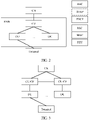
- FIG. 1 is a schematic diagram of a communication system to which an embodiment of this application may be applied.
- a terminal 130 may access a wireless network, to obtain a service from an external network (for example, the Internet) through the wireless network, or communicate with another device through the wireless network, for example, may communicate with another terminal.
- the wireless network includes a RAN 110 and a CN 120.
- the RAN 110 is used to connect the terminal 130 to the wireless network
- the CN 120 is used to manage the terminal and provide a gateway for communicating with the external network.
- a quantity of devices in the communication system shown in FIG. 1 is merely used as an example. This embodiment of this application is not limited thereto.
- the communication system may further include more terminals 130 and more RANs 110, and may further include another device.
- a type of the communication system shown in FIG. 1 is not limited in this application.
- the communication system may be an LTE system, may be an NR system, or certainly may be a future communication system.
- the CN 120 may include a plurality of CN devices.
- the CN 120 may include an AMF entity, a UPF entity, an SMF entity, or the like.
- the CN 120 may include a mobility management entity (mobility management entity, MME), a serving gateway (serving gateway, S-GW), or the like.
- mobility management entity mobility management entity, MME
- serving gateway serving gateway
- FIG. 2 is a schematic diagram of a network architecture according to an embodiment of this application.
- the network architecture includes a CN device and a RAN device.
- the RAN device includes a baseband apparatus and a radio frequency apparatus.
- the baseband apparatus may be implemented by one node, or may be implemented by a plurality of nodes.
- the radio frequency apparatus may be independently implemented remotely from the baseband apparatus, or may be integrated into the baseband apparatus, or some remote parts are integrated into the baseband apparatus.
- a RAN device eNB
- the radio frequency apparatus may be remotely disposed relative to the baseband apparatus.
- a remote radio unit remote radio unit, RRU
- RRU remote radio unit
- a control plane protocol layer structure may include functions of protocol layers such as a radio resource control (radio resource control, RRC) layer, a packet data convergence protocol (packet data convergence protocol, PDCP) layer, a radio link control (radio link control, RLC) layer, a media access control (media access control, MAC) layer, and a physical layer.
- RRC radio resource control
- PDCP packet data convergence protocol
- RLC radio link control
- MAC media access control
- a user plane protocol layer structure may include functions of protocol layers such as the PDCP layer, the RLC layer, the MAC layer, and the physical layer.
- a service data adaptation protocol service data adaptation protocol, SDAP
- SDAP service data adaptation protocol
- the RAN device may implement the functions of the protocol layers such as the RRC layer, the PDCP layer, the RLC layer, and the MAC layer by using one node; or may implement the functions of these protocol layers by using a plurality of nodes.
- the RAN device may include a centralized unit (centralized unit, CU) and a distributed unit (distributed unit, DU), and a plurality of DUs may be centrally controlled by one CU.
- a CU and a DU may be divided based on a protocol layer of a wireless network. For example, functions of both the PDCP layer and a layer above the PDCP layer are set on the CU, and functions of protocol layers below the PDCP layer, such as the RLC layer and the MAC layer, are set on the DU.
- Division based on the protocol layer is merely an example, and division may alternatively be performed based on another protocol layer, such as the RLC layer. Functions of both the RLC layer and a protocol layer above the RLC layer are set on the CU, and a function of a protocol layer below the RLC layer is set on the DU. Alternatively, division is performed based on a protocol layer. For example, some functions of the RLC layer and a function of a protocol layer above the RLC layer are set on the CU, and a remaining function of the RLC layer and a function of a protocol layer below the RLC layer are set on the DU. In addition, the division may alternatively be performed in another manner. For example, the division is performed based on a latency. A function whose processing time needs to satisfy a latency requirement is set on the DU, and a function whose processing time does not need to satisfy the latency requirement is set on the CU.
- the radio frequency apparatus may be not placed in the DU but is placed remotely from the DU, or may be integrated into the DU, or a part is placed remotely from the DU and a remaining part is integrated into the DU. This is not limited herein.
- a control plane (CP) and a user plane (UP) of a CU may further be separated into different entities for implementation, and the different entities are a control plane CU entity (CU-CP entity) and a user plane CU entity (CU-UP entity).
- signaling generated by the CU may be sent to a terminal by using a DU, or signaling generated by a terminal may be sent to the CU by using a DU.
- the DU may transparently transmit the signaling to the terminal or the CU by directly encapsulating the signaling at a protocol layer without parsing the signaling.
- sending or receiving the signaling by the DU includes this scenario.
- signaling at an RRC layer or a PDCP layer is finally processed as signaling at a PHY layer and sent to the terminal, or is converted from received signaling at a PHY layer.
- the signaling at the RRC layer or the PDCP layer is sent by the DU, or sent by the DU and the radio frequency apparatus.
- the CU may be classified as a network device on a RAN side.
- the CU may alternatively be classified as a network device on a CN side. This is not limited herein.
- An apparatus in the following embodiments of this application may be located in a terminal or a network device based on functions implemented by the apparatus.
- a network device may be a CU node, a DU node, or a RAN device including a CU node and a DU node.
- an UDC technology is introduced in acknowledged mode (acknowledged mode, AM) transmission in an LTE system, and the technology is implemented at the PDCP layer.
- the UDC technology is mainly for some data packets with a large amount of repeated content, for example, a data packet for transmitting a SIP in a voice over long term evolution (voice over long term evolution, VoLTE) service. Different parts between the data packets are transmitted, to reduce an amount of data that needs to be transmitted.
- the UDC is an uplink compression technology.
- a terminal functioning as a compression node compresses a data packet
- a network device functioning as a decompression node decompresses the data packet. Both compression and decompression are performed by using a same buffer (buffer) jointly maintained by the compression node and the decompression node.
- the compression node compresses the data packet by using the current buffer. After the compression succeeds, the compression node places, into the buffer from the tail of the buffer, uncompressed original information corresponding to a currently compressed data packet. For the 1 st data packet, the buffer does not include original information about a previous data packet during compression.
- the compression node may compress the sent 1 st data packet by using original content stored in the buffer.
- the original content stored in the buffer is referred to as a compression dictionary, an original compression dictionary, or the like in a related protocol.
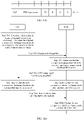
- a compression dictionary "abc" is stored in an original buffer.
- the compression node may compress the data packet "def' by using the "abc", to obtain a compressed data packet 1.
- the compression node may place the "def' into the buffer from the tail of the buffer, which may be understood as updating the buffer based on the data packet "def'.
- the compression node compresses the data packet "ghijkl” by using "abcdef' in the buffer, to obtain a compressed data packet 2.
- the compression node may place the data packet "ghijkl” into the buffer from the tail of the buffer, which may be understood as updating the buffer based on the data packet "ghijkl”.
- the compression node may compress a next data packet by using "efghijkl” in the buffer when sending the next data packet. That is, the compression node compresses a data packet by using all content in the current buffer each time.
- the compression node compresses the next data packet of the data packet by using an updated buffer of the current data packet. Because storage of the buffer is limited, “abcd” is squeezed out of the buffer according to a first in first out (first in first out, FIFO) principle. In this case, if the compression node needs to compress other data packets, the compression is performed by using "efghijkl” included in the buffer. For the decompression node, after receiving the compressed data packet 1, the decompression node may perform decompression by using the compression dictionary "abc" in the buffer to obtain the data packet "def', and place the data packet "def' into the buffer from the tail of the buffer.
- the decompression node may perform decompression by using the information "abcdef' in the buffer to obtain the data packet "ghijkl", and place the data packet "ghijkl” into the buffer from the tail of the buffer, so that the "abcd” is squeezed out of the buffer. It can be learned that the decompression node can correctly perform decompression only when the buffer of the decompression node is always consistent with the buffer of the compression node.
- a data packet may fail to be received.
- the network device cannot update the buffer.
- the terminal may have updated the buffer based on an uncompressed data packet corresponding to the data packet that fails to be received.
- buffers maintained by the terminal and the network device are inconsistent, and the network device fails to decompress a subsequently received data packet. Consequently, a problem that a plurality of subsequently received data packets fail to be decompressed because one data packet is lost may occur, and air interface transmission reliability is reduced.
- embodiments of this application provide a plurality of communication methods, to ensure that the compression dictionaries or the buffers maintained by the terminal and the network device are consistent. It should be noted that the plurality of communication methods provided in this application are applicable to both an uplink communication scenario and a downlink communication scenario. This is not limited in this application. The following describes the plurality of communication methods provided in this application one by one.
- a compression node always compresses a data packet by using an original compression dictionary or an original buffer (which is equivalent to the "abc" in FIG. 4 above), and the decompression node always decompresses the data packet by using the original compression dictionary or the original buffer. That is, each time the compression node sends a compressed data packet, the compression node does not update the original compression dictionary or the original buffer based on the uncompressed data packet; correspondingly, each time the decompression node receives the compressed data packet, the decompression node does not update the original compression dictionary or the original buffer based on a decompressed data packet.
- the original compression dictionaries or the original buffers of the compression node and the decompression node are consistent. Therefore, according to this method, even if some data packets fail to be received, the compression dictionaries or the buffers maintained by the compression node and the decompression node can still be consistent, so that a decoding correct rate of the decompression node can be ensured, and air interface transmission reliability can be ensured.
- a compression node and a decompression node update a compression dictionary or a buffer based on an uncompressed data packet corresponding to a compressed data packet only when ensuring that the compressed data packet is correctly received by the decompression node.
- the compression node and the decompression node do not update the compression dictionary or the buffer based on a data packet that fails to be received. Therefore, according to this method, even if some data packets fail to be received, it can still be ensured that the compression node and the decompression node update the compression dictionary or the buffer based on the same data packet. In this way, updated compression dictionaries or buffers of the compression node and the decompression node can be consistent, a decoding correct rate of the decompression node can be ensured, and air interface transmission reliability can be ensured.
- a compression node retransmits a data packet that fails to be received by a decompression node, so that the decompression node can update a compression dictionary or a buffer based on the retransmitted data packet.
- the compression node and the decompression node update the compression dictionary or the buffer based on the same data packet, and the compression dictionaries or the buffers of the compression node and the decompression node are consistent.
- the compression node and the decompression node reset a data packet that fails to be received and that is stored in the buffer, to ensure that only a correctly received data packet is stored in the buffer, so that the compression dictionaries or the buffers of the compression node and the decompression node are consistent. Therefore, a decoding correct rate of the decompression node can be ensured, and air interface transmission reliability can be ensured.
- Various communication methods provided in the embodiments of this application may be applied to an NR system, an LTE system, an LTE vehicle-to-everything (vehicle-to-everything, V2X) system, an NR vehicle-to-everything system, a next-generation wireless local area network system, or an integrated access backhaul (integrated access backhaul, IAB) system.
- V2X vehicle-to-everything
- IAB integrated access backhaul
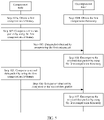
- FIG. 5 is an implementation flowchart of a communication method according to an embodiment of this application. Refer to FIG. 5 . The method includes the following steps.
- Step 101a A compression node obtains a first compression dictionary
- Step 101b A decompression node obtains the first compression dictionary
- the compression node and the decompression node before the compression node and the decompression node transmit a data packet by using a compression technology, to ensure that the decompression node can correctly decompress a compressed data packet, the compression node and the decompression node need to maintain a same buffer, and need to store a same compression dictionary in the buffer.
- the compression node and the decompression node After the compression node and the decompression node enable a compression function and before the compression node and the decompression node transmit the data packet, the compression node and the decompression node maintain a same original buffer, and respective original buffers store a same original compression dictionary.
- the original compression dictionary may be described as the first compression dictionary.
- the first compression dictionary may be understood as the "abc" in FIG. 4 . Meanings of the first compression dictionary related in the following descriptions are the same as meanings of the first compression dictionary herein. Details are not described again when the first compression dictionary appears again.
- the first compression dictionary may be an uplink data compression dictionary or a downlink data compression dictionary.
- the first compression dictionary is the uplink data compression dictionary.
- the first compression dictionary is the downlink data compression dictionary.
- both the compression node and the decompression node may obtain the first compression dictionary by using the following method: first obtaining information about the first compression dictionary, and then determining the first compression dictionary based on the information about the first compression dictionary.
- the information about the first compression dictionary may include but is not limited to the first compression dictionary or an identifier of the first compression dictionary.
- the compression node and the decompression node may obtain the information about the first compression dictionary in the following manners.
- Manner 1 Both the compression node and the decompression node locally obtain preconfigured information about the first compression dictionary. It may be understood that the information about the first compression dictionary is predefined, and the same information about the first compression dictionary is predefined for the compression node and the decompression node, to ensure that the compression node and the decompression node obtain the same first compression dictionary.
- the compression node receives the information about the first compression dictionary from a third-party node or locally obtains preconfigured information about the first compression dictionary, and sends the information to the decompression node, to ensure that the compression node and the decompression node can obtain the same first compression dictionary based on the information.
- the decompression node receives the information about the first compression dictionary from a third-party node or locally obtains preconfigured information about the first compression dictionary, and sends the information to the compression node, to ensure that the compression node and the decompression node can obtain the same first compression dictionary based on the information.
- the decompression node is the network device and the compression node is the terminal.
- the network device may send the information about the first compression dictionary to the terminal by using RRC signaling, a NAS message, PDCP control signaling, MAC signaling, or physical layer signaling.
- the third-party node in the manner 2 and the manner 3 may include but is not limited to a server, a controller, a network management device, an access network device, a core network device, a time-sensitive networking (time-sensitive networking, TSN) device, or the like.
- the third-party node in the manner 2 may include but is not limited to a server, a controller, a TSN device, or the like.
- the decompression node is a RAN device
- the third-party node in the manner 3 may include but is not limited to a device such as a server, a network management device, or a core network device.
- the third-party node in the manner 3 may include but is not limited to a device such as a server, a network management device, or an access network device.
- Step 102 The compression node compresses a first data packet by using a first compression dictionary, to obtain a data packet obtained by compressing the first data packet.
- Step 103 The compression node sends, to the decompression node, the data packet obtained by compressing the first data packet.
- Step 104 The decompression node decompresses, by using the first compression dictionary, the data packet obtained by compressing the first data packet.
- Step 105 The compression node compresses a second data packet by using the first compression dictionary, to obtain a data packet obtained by compressing the second data packet.
- the second data packet and the first data packet may be different data packets.
- Step 106 The compression node sends, to the decompression node, the data packet obtained by compressing the second data packet.
- Step 107 The decompression node decompresses, by using the first compression dictionary, the data packet obtained by compressing the second data packet.
- the compression node and/or the decompression node may perform some or all of the steps in the embodiments of this application. These steps or operations are merely examples. In this embodiment of this application, other operations or variations of various operations may be further performed. In addition, the steps may be performed in a sequence different from a sequence presented in the embodiments of this application, and not all operations in the embodiments of this application may be performed.
- step 102 to step 107 an example in which only two data packets are sent is used for description.
- the compression node always compresses the data packet by using the first compression dictionary, and the decompression node always decompresses the data packet by using the first compression dictionary. That is, each time the compression node sends a compressed data packet, the compression node does not update the first compression dictionary based on an uncompressed data packet; correspondingly, each time the decompression node receives the compressed data packet, the decompression node does not update the first compression dictionary based on a decompressed data packet. In this way, the compression dictionaries maintained by the compression node and the decompression node are always consistent.
- the foregoing compression manner provided in this application may be predefined, or may be triggered by indication information.
- the foregoing compression manner is predefined.
- the compression node and the decompression node may be preconfigured to be prohibited from updating the first compression dictionary, preconfigured not to update the compression dictionary based on the original data packet of the compressed data packet, preconfigured not to update the compression dictionary based on the first data packet, or preconfigured to compress the second data packet by using the first compression dictionary.
- the foregoing compression manner is triggered by the indication information, the compression node is the terminal, and the decompression node is the network device.
- the terminal Before compressing the data packet, the terminal may further receive the indication information from the network device, where the indication information is used to indicate the compression node not to update the first compression dictionary, used to indicate that the terminal is prohibited from updating the first compression dictionary, used to indicate the terminal not to update the compression dictionary based on the original data packet of the compressed data packet, used to indicate the terminal not to update the compression dictionary based on the first data packet, or used to indicate the terminal to compress the second data packet by using the first compression dictionary.
- the indication information may be carried in the RRC signaling, the NAS message, the PDCP control signaling, the MAC signaling, or the physical layer signaling.
- the compression node is the terminal and the decompression node is the network device.
- the network device may further send a radio bearer mode indication to the terminal, where the radio bearer mode indication is used to indicate a radio bearer mode for implementing the compression manner.
- the radio bearer mode may include an unacknowledged mode (unacknowledged mode, UM), an acknowledged mode (acknowledged mode, AM), or a transparent mode (transparent mode, TM).
- the network device may further send a bearer type indication to the terminal, where the bearer type indication is used to indicate a radio bearer type for implementing the compression manner.
- the radio bearer type may include a data radio bearer (data radio bearer, DRB) or a signaling radio bearer (signaling radio bearer, SRB), where the SRB may include, for example, an SRB1, an SRB2, or an SRB3.
- DRB data radio bearer
- SRB signaling radio bearer
- the compression node compresses, based on the indication information, the second data packet by using the first compression dictionary
- both the first data packet and the second data packet are data packets after the 1 st data packet sent by the compression node in the foregoing compression manner, and the foregoing compression manner is triggered by the indication information
- the compression node compresses, based on the indication information, the first data packet by using the first compression dictionary
- the compression node compresses, based on the indication information, the second data packet by using the first compression dictionary.
- the compression node and the decompression node may always compress or decompress the data packet by using the initially obtained first compression dictionary. Subsequently, when the first compression dictionary is no longer suitable for to-be-compressed services of the compression node and the decompression node, the compression node and the decompression node may further exchange a new second compression dictionary by using signaling, and compress or decompress a subsequent data packet by using the new second compression dictionary. Two manners for exchanging information about the second compression dictionary are provided below.
- the compression node sends the information about the second compression dictionary to the decompression node, where the information about the second compression dictionary is used to indicate the second compression dictionary used to subsequently compress a data packet. After exchanging the information, the compression node may compress a subsequent third data packet by using the second compression dictionary. Correspondingly, after receiving the information about the second compression dictionary, the decompression node may determine the second compression dictionary based on the information, and further may decompress, by using the second compression dictionary, the third data packet subsequently received from the compression node. Based on the manner 1, in a possible implementation, for example, the compression node is the terminal and the decompression node is the network device.
- the terminal may update the first compression dictionary or update the buffer based on the reported second compression dictionary. For example, after receiving a response message from the network device, the terminal may determine that the network device correctly receives the information about the second compression dictionary. Alternatively, after sending the information about the second compression dictionary, if the terminal does not receive a negative acknowledgment within preset duration, the terminal determines that the network device correctly receives the information about the second compression dictionary.
- the decompression node sends the information about the second compression dictionary to the compression node, where the information about the second compression dictionary is used to indicate the second compression dictionary used to subsequently compress a data packet.
- the compression node may compress a subsequent third data packet by using the second compression dictionary.
- the decompression node may decompress, by using the second compression dictionary, the third data packet subsequently received from the compression node.
- the network device may send the information about the second compression dictionary to the terminal by using a reconfiguration message or a handover command. Based on the manner 2, in a possible implementation, for example, the compression node is the terminal and the decompression node is the network device.
- the network device may update the first compression dictionary or update the buffer based on the second compression dictionary. For example, after receiving an acknowledgment response message from the terminal, the network device may determine that the terminal correctly receives the information about the second compression dictionary. Alternatively, after sending the information about the second compression dictionary, if the network device does not receive a negative acknowledgment within preset duration, the network device determines that the terminal correctly receives the information about the second compression dictionary. Optionally, after receiving an RLC ACK or a HARQ ACK of the acknowledgment response message, the terminal may update the first compression dictionary or update the buffer based on the second compression dictionary.
- the compression node may further receive configuration information from the decompression node, where the configuration information is used to indicate to-be-compressed information, and the compression node compresses the to-be-compressed information based on the configuration information.
- the compression node may perform compression on protocol-defined content, and may further perform content compression on some information specified by the configuration information. In this way, signaling sending overheads can be reduced.
- the to-be-compressed information may include but is not limited to at least one of the following: capability information, assistance information, a measurement log, and a measurement reporting message.
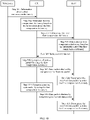
- FIG. 6a is an implementation flowchart of a communication method according to an embodiment of this application.
- a compression node is UE
- a decompression node is a RAN
- a first compression dictionary is an uplink data compression dictionary
- a compression manner is triggered by indication information is used for description. The method includes the following steps.
- Step 201a The RAN obtains information about the first compression dictionary from a CN.
- the information about the first compression dictionary is, for example, an identifier of the first compression dictionary
- Step 201b The RAN obtains the information about the first compression dictionary from a controller.
- step 201a or step 201b is performed, and a purpose of performing step 201a or step 201b is to enable the RAN to obtain the first compression dictionary. It may be understood that in this example, only the two obtaining manners shown in FIG. 6a are used as examples. In practice, the RAN may alternatively obtain the information about the first compression dictionary in another manner. For details, refer to related descriptions in FIG. 5 . Details are not described herein again.
- Step 202 After obtaining the information about the first compression dictionary, the RAN may determine the first compression dictionary based on the information about the first compression dictionary. Further, the first compression dictionary may be inserted into a buffer from the tail of the buffer.
- Step 203 After obtaining the information about the first compression dictionary, the RAN sends the information about the first compression dictionary to the UE.
- a sequence of performing step 202 and step 203 is not limited in this application.
- Step 204 After receiving the information about the first compression dictionary, the UE may determine the first compression dictionary based on the information about the first compression dictionary. Further, the first compression dictionary may be inserted into the buffer from the tail of the buffer.
- Step 205 The RAN sends the indication information to the UE, where the indication information is used to indicate that the compression node is prohibited from updating the first compression dictionary.
- the indication information is used to indicate that the compression node is prohibited from updating the first compression dictionary.
- the UE may further send an acknowledgment response message to the RAN, to indicate that the UE acknowledges the reception of the indication information.
- the RAN may send the information about the first compression dictionary and the indication information to the UE by using same signaling or different signaling.
- FIG. 6a an example in which the sending is performed by using different signaling is used.
- step 203 and step 205 are combined into one step for performing.
- Step 206 to step 211 are the same as step 102 to step 107 in FIG. 5 .
- Step 206 to step 211 are the same as step 102 to step 107 in FIG. 5 .
- Step 206 to step 211 are the same as step 102 to step 107 in FIG. 5 .
- Step 206 to step 211 are the same as step 102 to step 107 in FIG. 5 .
- Step 206 to step 211 are the same as step 102 to step 107 in FIG. 5 .
- Step 206 to step 211 are the same as step 102 to step 107 in FIG. 5 .
- FIG. 6b is an implementation flowchart of a communication method according to an embodiment of this application.
- a compression node is UE
- a decompression node is a RAN
- a first compression dictionary is an uplink data compression dictionary
- a compression manner is triggered by indication information is used for description. The method includes the following steps.
- Step 301 UE obtains information about the first compression dictionary from a TSN device.
- the information about the first compression dictionary is, for example, an identifier of the first compression dictionary.
- the manner for obtaining the information about the first compression dictionary shown in FIG. 6b is used as example.
- the UE may alternatively obtain the information about the first compression dictionary in another manner. For details, refer to related descriptions in FIG. 5 . Details are not described herein again.
- Step 302 After obtaining the information about the first compression dictionary, the UE may determine the first compression dictionary based on the information about the first compression dictionary. Further, the first compression dictionary may be inserted into a buffer from the tail of the buffer.
- Step 303 After obtaining the information about the first compression dictionary, the UE sends the information about the first compression dictionary to the RAN. For example, the UE may report the information about the first compression dictionary to the RAN by using assistance information. A sequence of performing step 302 and step 303 is not limited in this application. In a possible implementation, the UE may first perform step 303. After receiving an acknowledgment response message from the RAN, the UE performs step 302, where the acknowledgment response message is used to acknowledge the reception of the information about the first compression dictionary
- Step 304 After receiving the information about the first compression dictionary, the RAN may determine the first compression dictionary based on the information about the first compression dictionary. Further, the first compression dictionary may be inserted into the buffer from the tail of the buffer.
- Step 305 is the same as step 205 in FIG. 6a .
- Step 306 to step 311 are the same as step 102 to step 107 in FIG. 5 .
- step 102 to step 107 in FIG. 5 For details, refer to related descriptions in FIG. 5 . Details are not described herein again.
- FIG. 7 is an implementation flowchart of another communication method according to an embodiment of this application. Refer to FIG. 7 . The method includes the following steps.
- Step 401 A compression node compresses a data unit by using a compression dictionary.
- the compression node may obtain the compression dictionary.
- the data unit may be understood as a data unit with a smaller granularity than that of a data packet, and one data packet may include a plurality of data units.
- Step 402 The compression node sends a compressed data unit to a decompression node, and correspondingly, the decompression node receives the compressed data unit from the compression node.
- Step 403a The compression node determines a data unit correctly received by the decompression node.
- Step 403b The decompression node determines the correctly received data unit.
- the correctly received data unit may include a correctly decompressed data unit.
- the compression node and the decompression node may determine the correctly received data unit by using any one of the following methods.
- Method a The compression node receives first feedback information from the decompression node, where the first feedback information is used to indicate the correctly received data unit, and the compression node determines the correctly received data unit based on the first feedback information.
- the decompression node notifies the compression node of a specific correctly received data unit. For example, if the compression node sends five data units: a data unit 1, a data unit 2, a data unit 3, a data unit 4, and a data unit 5, and the decompression node correctly receives the first four data units, the decompression node may notify, by using the first feedback information, the compression node that the data unit 1, the data unit 2, the data unit 3, and the data unit 4 are correctly received.
- the decompression node may determine that the correctly received data unit indicated by the first feedback information is the data unit correctly received by the decompression node.
- the first feedback information may be used to indicate sequentially correctly received data units.
- the first feedback information may be sequence number information corresponding to the sequentially correctly received data units.
- the sequence number information may include but is not limited to: sequence numbers of the sequentially correctly received data units, sequence numbers of the first and last sequentially correctly received data units, the first sequentially correctly received data unit and a quantity of sequentially correctly received data units, and the last sequentially correctly received data unit and the quantity of sequentially correctly received data units.
- the first feedback information is used to indicate a data unit that fails to be received.
- the compression node determines, based on the first feedback information and sent data units, the data unit correctly received by the decompression node.
- the decompression node may send information about the data unit 2 that fails to be received to the compression node. For example, the decompression node sends an SN of the data unit 2, and the compression node may determine, based on the information about the data unit 2 that fails to be received and the three sent data units, that the decompression node correctly receives the data unit 1 and the data unit 3.
- Method b The compression node receives second feedback information from the decompression node, where the second feedback information is used to indicate correct receiving, and the compression node determines, based on the second feedback information, that the sent data unit is the correctly received data unit.
- the decompression node only notifies the compression node that the data units are correctly received, and does not notify the compression node of a specific correctly received data unit.
- the compression node considers that all the sent data units are correctly received.
- the decompression node may determine, based on the second feedback information, that the received data unit is the correctly received data unit.
- the second feedback information is used to indicate a receiving failure.
- the compression node may determine, based on the second feedback information, that a data unit fails to be received by the decompression node in such a time period. In this case, the compression node may not update a compression buffer based on the sent data unit.
- Method c After sending the compressed data unit, if the compression node does not receive, within preset duration, receiving failure information fed back by the decompression node, the compression node determines that the sent data unit is the correctly received data unit.
- the receiving failure information may include verification failure information, packet loss information, or the like.
- the preset duration in the method c may be determined by using any one or a combination of the following: a timer, a quantity of preset data units, or a preset periodicity. Duration of the timer, the quantity of preset data units, and the preset periodicity may be predefined or agreed upon, or may be configured by the compression node or the decompression node. This is not limited in this application. For example, if the compression node does not receive, within the preset periodicity, the receiving failure information fed back by the decompression node, the compression node may determine that the sent data unit is the correctly received data unit.
- the compression node may determine that the K (where K is an integer greater than or equal to 2) data units or M (where M is a positive integer less than K) data units that have been sent are correctly received data units. For another example, after sending K data units to the decompression node, if the compression node does not receive, within the preset periodicity, the receiving failure information fed back by the decompression node, the compression node may determine that the K (where K is an integer greater than or equal to 2) data units or M (where M is a positive integer less than K) data units that have been sent are correctly received data units.
- the preset periodicity may be a survival (survival) periodicity obtained from a data receive end or the decompression node (an application server, a terminal application layer, or a core network device), and may also be referred to as a survival time (survival time).
- a survival (survival) periodicity obtained from a data receive end or the decompression node (an application server, a terminal application layer, or a core network device), and may also be referred to as a survival time (survival time).
- this implementation may be applied to a periodic service sending scenario.
- the data receive end has a deterministic transmission requirement for arrival time of a data packet.
- the survival periodicity is set by the data receive end to satisfy the deterministic transmission requirement.
- a protocol defines a maximum quantity of consecutive packets that fail to be received within the survival periodicity.
- the receiving failure may be packet loss or incorrect receiving.
- the decompression node may send feedback information (for example, the first feedback information and/or the second feedback information) to the compression node by using RRC signaling, RLC layer signaling, a NAS message, PDCP control signaling, MAC signaling, or physical layer signaling.
- feedback information for example, the first feedback information and/or the second feedback information
- RRC signaling for example, the first feedback information and/or the second feedback information
- RLC layer signaling for example, RLC layer signaling, a NAS message, PDCP control signaling, MAC signaling, or physical layer signaling.
- the PDCP entity may notify an entity at a physical layer to send the feedback information.
- the MAC entity may notify an entity at a physical layer to send the feedback information.
- the feedback information may be carried in a PDCP status report, a UDC status report, or a physical layer report.
- the feedback information may be carried in a UDC status FE report included in the UDC status report.
- the feedback information and an FE field in the UDC status FE report are carried in a same PDCP PDU or different PDCP PDUs.
- the decompression node when determining that at least one of the received data units fails to be received, triggers generation of the first feedback information or the second feedback information.
- the decompression node triggers, based on a periodicity, generation of the first feedback information or the second feedback information.
- the decompression node triggers, based on a quantity of correctly received data units, generation of the first feedback information or the second feedback information. That the decompression node determines that the at least one of the data units fails to be received may include: No data unit or data packet arrives at an expected moment or on a preconfigured time-frequency resource.
- the expected moment may be determined by the decompression node based on a periodicity and an arrival start moment of the data packet that is of the compression node and that is sent by the compression node or the core network device.
- the periodicity may be the survival periodicity obtained from the application server, the terminal application layer, or the core network device.
- Step 404a The compression node updates the compression dictionary based on the correctly received data unit. For example, the compression node may determine a sequence number of the correctly received data unit, and may further search, based on the sequence number, for an uncompressed original data unit corresponding to the sequence number. Further, the compression node may update the compression dictionary based on the original data unit, or place the original data unit into a buffer that stores the compression dictionary from the tail of the buffer.
- the decompression node may further determine the correctly received data unit based on third feedback information sent by the compression node. For example, after updating the compression dictionary, the compression node may further send the third feedback information to the decompression node, where the third feedback information indicates a data unit placed into the buffer by the compression node. The decompression node may determine that the data unit placed into the buffer by the compression node is the correctly received data unit.
- the third feedback information may include but is not limited to a sequence number corresponding to the data unit placed into the buffer by the compression node, a sequence number corresponding to the first data unit placed into the buffer by the compression node and a sequence number corresponding to the last data unit, the sequence number corresponding to the first data unit placed into the buffer by the compression node and a quantity of data units placed into the buffer by the compression node, or the sequence number corresponding to the last data unit placed into the buffer by the compression node and the quantity of data units placed into the buffer by the compression node.
- Step 404b The decompression node updates the compression dictionary based on the correctly received data unit.
- the correctly received data unit is the correctly decompressed data unit.
- the decompression node updates the compression dictionary based on the correctly decompressed data unit, or places the correctly decompressed data unit into the buffer that stores the compression dictionary from the tail of the buffer.
- sequence numbers of the correctly received data units are consecutive, that is, the correctly received data units are consecutive correctly received data units.
- the compression node and the decompression node may store, according to a first rule, the uncompressed original data unit corresponding to the correctly received data unit into the buffer.
- the first rule may be an ascending order, a descending order, or another order of the sequence numbers of the correctly received data units. For example, after determining the correctly received data units, the compression node and the decompression node sequentially place the uncompressed original data units corresponding to the correctly received data units into the buffer from the tail of the buffer in ascending order of the sequence numbers.
- FIG. 8 is an implementation flowchart of another communication method according to an embodiment of this application.
- a compression node is UE
- a decompression node is a RAN
- a first compression dictionary is an uplink data compression dictionary
- Step 501 The UE compresses a data unit by using the compression dictionary.
- Step 502 The UE sends a compressed data unit to the RAN.
- Step 503 The RAN triggers generation of first feedback information.
- the first feedback information may be carried in a PDCP status report, a UDC status report, or a physical layer report.
- the first feedback information is a sequence number N (where N is an integer greater than 1) of the last sequentially correctly received data unit is used for description.
- the RAN may trigger, based on a preset timer at a periodicity, the generation of the first feedback information.
- Duration of the timer may be pre-agreed on by the UE and the RAN or configured by the RAN for the UE.
- the periodicity may be a survival periodicity obtained from an application server, a UE application layer, or a core network device.
- the RAN may trigger, based on a quantity of correctly received data units, the generation of the first feedback information. The quantity may be pre-agreed on by the UE and the RAN or configured by the RAN for the UE.
- Step 504 The RAN sends the first feedback information to the UE.
- Step 505 The UE determines, based on the first feedback information, a data unit correctly received by the RAN.
- the first feedback information is the sequence number N of the last sequentially correctly received data unit.
- the UE may determine that a data unit corresponding to a sequence number N of the first data unit that is not previously stored in the buffer is the data unit correctly received by the RAN.
- Step 506 The UE updates the compression dictionary based on the correctly received data unit. For example, the UE sequentially places uncompressed original data units corresponding to the correctly received data units into the buffer from the tail of the buffer in ascending order of sequence numbers.
- Step 507 The UE sends third feedback information to the RAN.
- the third feedback information is a sequence number corresponding to a data unit placed into the buffer by the compression node is used for description.
- Step 508 The RAN determines the correctly received data unit based on the third feedback information. For example, the RAN determines that a data unit corresponding to a sequence number indicated by the third feedback information is the correctly received data unit.
- Step 509 The RAN updates the compression dictionary based on the correctly received data unit. For example, after determining the correctly received data units, the RAN sequentially place the uncompressed original data units corresponding to the correctly received data units into the buffer from the tail of the buffer in ascending order of the sequence numbers.
- FIG. 9 is an implementation flowchart of still another communication method according to an embodiment of this application. Refer to FIG. 9 . The method includes the following steps.
- Step 601 A compression node compresses a data packet by using an original compression dictionary, and updates the original compression dictionary based on the uncompressed data packet, to obtain a new compression dictionary.
- the compression node and the decompression node before the compression node and a decompression node transmit the data packet by using a compression technology, to ensure that the decompression node can correctly decompress a compressed data packet, the compression node and the decompression node maintain a same buffer, and store the same original compression dictionary in the buffer.
- FIG. 4 is used as an example.
- the original compression dictionary may be understood as the "abc" in FIG. 4 .
- Step 602 The compression node sends the compressed data packet to the decompression node.
- Step 603 The decompression node determines that the compressed data packet fails to be received, and triggers generation of feedback information, where the feedback information is used to indicate a data unit that fails to be received and that is in the data packet.
- the data unit that fails to be received may be a data unit that fails to be verified or a lost data unit. For example, if the decompression node determines that at least one data unit included in the compressed data packet fails to be received, the decompression node may determine that the data packet fails to be received, and further trigger the generation of the feedback information.
- That the decompression node determines that at least one data unit included in the compressed data packet fails to be received may include: The at least one data unit does not arrive at an expected moment or on a preconfigured time-frequency resource.
- the expected moment may be determined by the decompression node based on a periodicity and an arrival start moment of the data packet that is of the compression node and that is sent by the compression node or a core network device.
- the periodicity may be a survival periodicity obtained from an application server, a terminal application layer, or the core network device, or a data packet transmission periodicity. The following uses an example for description. Refer to FIG. 10a .
- FIG. 10a An example in which the compression node is UE, the decompression node is a RAN, and the UE periodically transmits a data packet or a data unit is used in FIG. 10a .
- An application server is a device that finally receives or uses data, and the UE sends the data unit at a periodicity of 0.5 ms. It can be learned from FIG. 10a that the first to the third data units are correctly received, and the fourth data unit is lost.
- the RAN determine, based on inconsecutive sequence numbers of the third data unit and the fifth data unit, that the fourth data unit is not received. In this case, a reordering timer is started.
- the RAN determines that the fourth data unit is lost, and is triggered to send data unit receiving failure information to the UE. Then, the UE updates an original compression dictionary based on the receiving failure information. It is clear that in the method in the conventional technology, a delay in feeding back the information by the RAN is relatively long, and further a delay in updating the original compression dictionary is relatively long.
- the RAN may determine, based on a moment at which the first data unit is received, and a data unit sending periodicity of 0.5 ms or a survival periodicity obtained from the application server or a periodicity that is less than the survival periodicity and that is determined based on the survival periodicity, an expected moment of arrival of a subsequent data unit. If the RAN does not receive the corresponding data unit at the expected moment, the RAN may be triggered to send, to the UE, feedback information used to indicate a data unit that fails to be received and that is in the data packet. Alternatively, if the RAN does not receive the corresponding data unit at the expected moment, the reordering timer may be started.
- the RAN is triggered to send, to the UE, feedback information used to indicate a data unit that fails to be received and that is in the data packet.
- the RAN may quickly feed back information about the data unit that fails to be received to the UE. In this way, the UE can quickly detect UDC out-of-synchronization, and then synchronize the compression dictionary in a timely manner.
- the feedback information may be used to indicate sequence number information of the data unit that fails to be received.
- the feedback information may indicate a sequence number x corresponding to the data unit that fails to be received or y least significant bits of the sequence number x, where y is a positive integer.
- the feedback information may be used to indicate sequence number information of the data unit that fails to be verified based on verification information (for example, checksum).
- Step 604 The compression node receives the feedback information from the decompression node.
- the feedback information may be carried in a PDCP status report, a UDC status report, or a physical layer report.
- the feedback information may be carried in a data packet that includes an FE field and that is in the UDC status report.
- FIG. 10b shows the data packet that includes the FE field and that is in the UDC status report.
- the feedback information may be carried in three R bits. When the feedback information is a sequence number of the data unit that fails to be received, the three R bits in FIG. 10b may be used to carry three least significant bits of the sequence number.
- the feedback information and the FE field are carried in different data packets.
- Step 605a The compression node updates the new compression dictionary based on the data unit that fails to be received.
- the compression node and the decompression node may update, by using the following method, a first compression dictionary based on the data unit that fails to be received: updating the new compression dictionary to the original compression dictionary, or resetting a part corresponding to the data unit that fails to be received in the new compression dictionary to 0.
- Step 606a The compression node retransmits the data unit that fails to be received to the decompression node.
- Step 606b The decompression node updates the new compression dictionary based on the retransmitted data unit. For example, if the decompression node does not store the data unit that fails to be received in the buffer before, the decompression node may decode the retransmitted data unit and store a decoded data unit in the buffer from the tail of the buffer. For another example, if the decompression node has stored the data unit that fails to be received in the buffer before, the decompression node may decode the retransmitted data unit and replace the data unit that fails to be received and that is stored in the buffer with a decoded data unit.
- the compression node may be configured to send the retransmitted data unit without being constrained by a discard timer, or may configure an infinite discard timer for the retransmitted data unit.
- the decompression node may be configured to receive the retransmitted data unit without being constrained by the reordering timer. Even if the reordering timer expires, the decompression node may still update the buffer based on the decompressed data unit of the retransmitted data unit.
- the decompression node may configure a separate window/queue to maintain the received retransmitted data unit, so that the retransmitted data unit is not constrained by the reordering timer, and it is ensured that the decompression node definitely does not discard the retransmitted data unit.
- the function is configured for the compression node, when the compression node sends the retransmitted data unit, even if the discard timer configured for the retransmitted data unit has expired, the compression node sends the retransmitted data unit, to ensure that the retransmitted data unit can be sent to the decompression node.
- the decompression node may still update the buffer based on the decompressed data unit of the retransmitted data unit.
- FIG. 11a is an implementation flowchart of still another communication method according to an embodiment of this application.
- a compression node is UE
- a decompression node is a RAN
- a first compression dictionary is an uplink data compression dictionary
- Step 701 to step 703 are the same as step 601 to step 603 in FIG. 9 .
- Step 701 to step 703 are the same as step 601 to step 603 in FIG. 9 .
- Step 701 to step 703 are the same as step 601 to step 603 in FIG. 9 .
- Step 704 The RAN sends feedback information to the UE by using a UDC status report, and correspondingly, the UE receives the feedback information from the RAN.
- a manner for carrying the feedback information in the UDC status report refer to related descriptions in FIG. 9 .
- Step 705a and step 706b are the same as step 605a and step 606b in FIG. 9 .
- Step 705a and step 706b are the same as step 605a and step 606b in FIG. 9 .
- Step 705a and step 706b are the same as step 605a and step 606b in FIG. 9 .
- Step 705a and step 706b are the same as step 605a and step 606b in FIG. 9 .
- Step 804 The RAN sends feedback information to the UE by using a PDCP status report, and correspondingly, the UE receives the feedback information from the RAN.
- a manner for carrying the feedback information in the PDCP status report refer to related descriptions in FIG. 9 .
- Step 805a and step 806b are the same as step 605a and step 606b in FIG. 9 .
- Step 805a and step 806b are the same as step 605a and step 606b in FIG. 9 .
- Step 805a and step 806b are the same as step 605a and step 606b in FIG. 9 .
- Step 805a and step 806b are the same as step 605a and step 606b in FIG. 9 .
- FIG. 12 is an implementation flowchart of still another communication method according to an embodiment of this application. Refer to FIG. 12 . The method includes the following steps.
- Step 901 A network device determines to-be-compressed information.
- the to-be-compressed information may include but is not limited to at least one of the following: capability information of a terminal, assistance information, a measurement log, and a measurement reporting message.
- the to-be-compressed information may include some or all information in RRC reconfiguration signaling.
- the capability information of the terminal may include one or more radio access technology standard capabilities, for example, an NR standard capability, an LTE standard capability, a UMTS standard capability, or an MR-DC standard capability.
- Step 902 The network device sends first configuration information to the terminal.
- the terminal receives the first configuration information from the network device, where the first configuration information is used to indicate the to-be-compressed information.
- the terminal may further receive second configuration information from the network device, where the second configuration information is used to indicate a compression position, and the compression position includes an RRC layer, a PDCP layer, or a NAS layer.
- the terminal may further receive third configuration information from the network device, where the third configuration information is used to indicate the terminal to compress some or all content of the capability information of the terminal.
- the third configuration information may indicate the terminal to compress at least one of a PDCP layer parameter, an RLC parameter, a MAC parameter, a PHY parameter, an RF parameter, a measurement mobility parameter, a feature set parameter, or a feature set combination parameter.
- the terminal may further receive fourth configuration information from the network device, where the fourth configuration information is used to indicate the terminal to compress a RAT capability, for example, compress at least one of the NR standard capability, the LTE standard capability, the MR-DC standard capability, an ED-DC standard capability, or the UMTS standard capability.
- a RAT capability for example, compress at least one of the NR standard capability, the LTE standard capability, the MR-DC standard capability, an ED-DC standard capability, or the UMTS standard capability.
- the terminal may further receive fifth configuration information from the network device, where the fifth configuration information is used to indicate the terminal to compress a UE radio capability or a CN capability.
- the terminal may further receive sixth configuration information from the network device, where the sixth configuration information is used to indicate information about a compression dictionary, and the information may be, for example, a dictionary type, a dictionary identifier, or content in the dictionary.
- the dictionary may be a compression dictionary for the UE radio capability or a compression dictionary for the CN capability.
- the first configuration information, the second configuration information, the third configuration information, the fourth configuration information, the fifth configuration information, or the sixth configuration information may be located in a same configuration message, or may be located in different configuration messages.
- the configuration message may be NAS signaling, a broadcast message, RRC dedicated signaling, PDCP signaling, MAC signaling, physical layer signaling, or the like. This is not limited in this application.
- the terminal may send compression capability information to the network device, where the compression capability information is used to indicate that the terminal supports compression of the to-be-compressed information.
- Step 903 After receiving configuration information (at least one of the first configuration information, the second configuration information, the third configuration information, the fourth configuration information, the fifth configuration information, or the sixth configuration information), the terminal compresses the to-be-compressed information based on the configuration information.
- configuration information at least one of the first configuration information, the second configuration information, the third configuration information, the fourth configuration information, the fifth configuration information, or the sixth configuration information
- the terminal receives the first configuration information, the second configuration information, the third configuration information, the fifth configuration information, and the sixth configuration information from the network device, where the first configuration information is used to indicate that the to-be-compressed information is the capability information of the terminal, the second configuration information is used to indicate the terminal to perform compression at the RRC layer, the third configuration information is used to indicate the terminal to compress the MAC parameter in the capability information of the terminal, the fifth configuration information is used to indicate the terminal to compress the UE radio capability, and the sixth configuration information is used to indicate the compression dictionary for the UE radio capability.
- the terminal configures a buffer, places the compression dictionary for the UE radio capability into the buffer from the tail of the buffer, and further compresses the MAC parameter in the UE radio capability at the RRC layer by using the buffer.
- the terminal receives the first configuration information, the second configuration information, the third configuration information, the fifth configuration information, and the sixth configuration information from the network device, where the first configuration information is used to indicate that the to-be-compressed information is the capability information of the terminal, the second configuration information is used to indicate the terminal to perform compression at the NAS layer, the third configuration information is used to indicate the terminal to compress all content of the capability information of the terminal, the fifth configuration information is used to indicate the terminal to compress the CN capability, and the sixth configuration information is used to indicate the compression dictionary for the CN capability.
- the terminal configures a buffer, places the compression dictionary for the CN capability into the buffer from the tail of the buffer, and further compresses the CN capability of the UE at the NAS layer by using the buffer.
- the terminal receives the first configuration information, the second configuration information, the third configuration information, the fifth configuration information, and the sixth configuration information from the network device, where the first configuration information is used to indicate that the to-be-compressed information is the capability information of the terminal, the second configuration information is used to indicate the terminal to perform compression at the PDCP layer, the third configuration information is used to indicate the terminal to compress all content of the capability information of the terminal, the fifth configuration information is used to indicate the terminal to compress the UE radio capability, and the sixth configuration information is used to indicate the compression dictionary for the UE radio capability.
- the terminal configures a buffer, places the compression dictionary for the UE radio capability into the buffer from the tail of the buffer, and further compresses the UE radio capability at the PDCP layer by using the buffer.
- a PDCP entity of the terminal may receive a content compression indication from the RRC entity of the terminal, where the content compression indication is used to indicate the PDCP entity to compress the to-be-compressed information.
- the PDCP entity may determine, according to the content compression indication, to compress the to-be-compressed information.
- Step 904 After compressing the to-be-compressed information based on the configuration information, the terminal sends compressed information to the network device.
- the method provided in FIG. 12 in this application may be implemented in combination with any method provided above, or may be independently implemented. This is not limited in this application.
- the compression node and the decompression node include corresponding hardware structures and/or software modules for performing the functions.
- the embodiments of this application can be implemented in a form of hardware or hardware and computer software. Whether a function is performed by hardware or hardware driven by computer software depends on particular applications and design constraints of the technical solutions. A person skilled in the art may use different methods to implement the described functions for each particular application, but it should not be considered that the implementation falls beyond the scope of the technical solutions in the embodiments of this application.
- function unit division may be performed on the compression node and the decompression node based on the foregoing method examples.
- each function unit may be obtained through division based on a corresponding function, or two or more functions may be integrated into one processing unit.
- the integrated unit may be implemented in a form of hardware, or may be implemented in a form of a software function unit.
- the embodiments of this application further provide an apparatus configured to implement any one of the foregoing methods.
- an apparatus is provided, and includes units (or means) configured to implement the steps performed by the compression node in any one of the foregoing methods.
- another apparatus is further provided, and includes units (or means) configured to implement the steps performed by the decompression node in any one of the foregoing methods.
- an embodiment of this application provides a communication apparatus 100.
- the communication apparatus 100 may be used in a compression node.
- FIG. 13 is a schematic diagram of a structure of the communication apparatus 100 according to an embodiment of this application. Refer to FIG. 13 .
- the communication apparatus 100 includes a processing unit 110 and a sending unit 120. In an implementation, the communication apparatus 100 may further include a receiving unit 130.
- the processing unit 110 may be configured to: obtain a first compression dictionary, and compress a first data packet by using the first compression dictionary, and the sending unit 120 may be configured to send, to a decompression node, a data packet obtained by compressing the first data packet; the processing unit 110 may be further configured to compress a second data packet by using the first compression dictionary, and the sending unit 120 may be further configured to send, to the decompression node, a data packet obtained by compressing the second data packet.
- the processing unit 110 may be configured to compress a data unit by using a compression dictionary, and the sending unit 120 may be configured to send a compressed data unit to a decompression node; the processing unit 110 may be further configured to: determine a data unit correctly received by the decompression node, and update the compression dictionary based on the correctly received data unit.
- the processing unit 110 may be configured to: compress a data packet by using an original compression dictionary, and update the original compression dictionary based on the uncompressed data packet, to obtain a first compression dictionary; the sending unit 120 may be configured to send a compressed data packet to a decompression node; the receiving unit 130 may be configured to receive feedback information from the decompression node, where the feedback information is used to indicate a data unit that fails to be received and that is in the data packet; the processing unit 110 may be further configured to update the first compression dictionary or retransmit the data unit based on the data unit that fails to be received.
- an embodiment of this application further provides a communication apparatus 200.
- the communication apparatus 200 may be used in a decompression node.
- FIG. 14 is a schematic diagram of a structure of the communication apparatus 200 according to an embodiment of this application. Refer to FIG. 14 .
- the communication apparatus 200 includes a processing unit 210 and a receiving unit 220.
- the communication apparatus 200 may further include a sending unit 230.
- the processing unit 110 may be configured to obtain a first compression dictionary; the receiving unit 220 may be configured to receive a first data packet from a compression node, where the first data packet is a compressed data packet, and the processing unit 110 may be further configured to decompress the first data packet by using the first compression dictionary; the receiving unit 220 may be further configured to receive a second data packet from the compression node, where the second data packet is a compressed data packet, and the processing unit 110 may be further configured to decompress the second data packet by using the first compression dictionary.
- the receiving unit 220 may be configured to receive, from a compression node, a data unit that is compressed by using a compression dictionary
- the processing unit 110 may be configured to: determine a correctly received data unit, and update the compression dictionary based on the correctly received data unit.
- the receiving unit 220 may be configured to receive a data packet from a compression node, where the data packet is a data packet compressed by using an original compression dictionary; the sending unit 230 may be configured to send feedback information to the compression node, where the feedback information is used to indicate a data unit that fails to be received and that is in the data packet; the receiving unit 220 may be further configured to receive a retransmitted data unit of the data unit from the compression node, or update the compression dictionary based on the data unit that fails to be received.
- the communication apparatus 100 When the communication apparatus 100 is used in the compression node, the communication apparatus 200 is used in the decompression node, and the method shown in FIG. 5 is performed, the following operations may be further performed.
- the receiving unit 130 may be further configured to receive indication information from the decompression node, where the indication information is used to indicate not to update the first compression dictionary
- the information about the first compression dictionary may be obtained by using the following methods.
- the processing unit 110 may be configured to locally obtain preconfigured information about the first compression dictionary, or the receiving unit 130 is configured to receive the information about the first compression dictionary from a third-party node. Further, the sending unit 120 may further send the information about the first compression dictionary to the decompression node.
- Method 2 The receiving unit 130 receives the information about the first compression dictionary from the decompression node.
- the information about the first compression dictionary may be obtained by using the following methods.
- Method 1 The processing unit 210 locally obtains preconfigured information about the first compression dictionary, or the receiving unit 220 receives the information about the first compression dictionary from a third-party node. Further, the sending unit 230 may further send the information about the first compression dictionary to the compression node.
- Method 2 The receiving unit 220 receives the information about the first compression dictionary from the compression node.
- the sending unit 120 sends information about a second compression dictionary to the decompression node, where the information about the second compression dictionary is used to indicate the second compression dictionary used to subsequently compress a data packet, and the processing unit 110 may compress a subsequent third data packet by using the second compression dictionary.
- the processing unit 210 may decompress the subsequently received third data packet by using the second compression dictionary
- the receiving unit 130 receives information about a second compression dictionary from the decompression node, where the information about the second compression dictionary is used to indicate the second compression dictionary used to subsequently compress a data packet, and the processing unit 110 may compress a subsequent third data packet by using the second compression dictionary.
- the processing unit 210 may decompress the subsequently received third data packet by using the second compression dictionary
- the receiving unit 130 may receive configuration information from the decompression node, where the configuration information is used to indicate to-be-compressed information, and the processing unit 110 compresses the to-be-compressed information based on the configuration information.
- the to-be-compressed information may include but is not limited to at least one of the following: capability information, assistance information, a measurement log, and a measurement reporting message.
- the communication apparatus 100 When the communication apparatus 100 is used in the compression node, the communication apparatus 200 is used in the decompression node, and the method shown in FIG. 7 is performed, the following operations may be further performed.
- the communication apparatus 100 may determine, by using any one of the following methods, the data unit correctly received by the decompression node.
- Method a The receiving unit 130 receives first feedback information from the decompression node, where the first feedback information is used to indicate the correctly received data unit, and the processing unit 110 determines the correctly received data unit based on the first feedback information.
- Method b The receiving unit 130 receives second feedback information from the decompression node, where the second feedback information is used to indicate correct receiving, and the processing unit 110 determines, based on the second feedback information, that the sent data unit is the correctly received data unit.
- Method c After the sending unit 120 sends the compressed data unit, if the receiving unit 130 does not receive, within preset duration, receiving failure information fed back by the decompression node, the processing unit 110 determines that the sent data unit is the correctly received data unit.
- the processing unit 210 when determining that at least one of the data units fails to be received, the processing unit 210 triggers generation of the first feedback information or the second feedback information. Alternatively, the processing unit 210 triggers, based on a periodicity, generation of the first feedback information or the second feedback information. Alternatively, the processing unit 210 triggers, based on a quantity of correctly received data units, generation of the first feedback information or the second feedback information.
- the communication apparatus 100 When the communication apparatus 100 is used in the compression node, the communication apparatus 200 is used in the decompression node, and the method shown in FIG. 9 is performed, the following operations may be further performed.
- the communication apparatus 100 and the communication apparatus 200 may update, by using the following method, the first compression dictionary based on the data unit that fails to be received:
- the processing unit 110 and the processing unit 210 update the first compression dictionary to the original compression dictionary; or the processing unit 110 and the processing unit 210 reset a part corresponding to the data unit in the first compression dictionary
- the processing unit 210 when the receiving unit 220 does not receive the data packet within a preset periodicity, the processing unit 210 triggers generation of the feedback information.
- division into the units in the foregoing apparatuses is merely logical function division. In an actual implementation, all or some of the units may be integrated into a physical entity, or may be physically separate. In addition, all the units in the apparatuses may be implemented in a form of software invoked by a processing element, or may be implemented in a form of hardware; or some units may be implemented in a form of software invoked by a processing element, and some units may be implemented in a form of hardware. For example, each unit may be an independently disposed processing element, or may be integrated into a chip of the apparatuses for implementation.
- each unit may be stored in a memory in a form of a program to be invoked by a processing element of the apparatuses to perform a function of the unit.
- all or some of the units may be integrated together, or may be implemented independently.
- the processing element herein may also be referred to as a processor, and may be an integrated circuit having a signal processing capability.
- the steps in the foregoing methods or the foregoing units may be implemented by using a hardware integrated logic circuit of the processor element, or may be implemented in a form of software invoked by the processing element.
- a unit in any one of the foregoing apparatuses may be one or more integrated circuits configured to implement the foregoing methods, for example, one or more specific integrated circuits (application-specific integrated circuits, ASICs), one or more microprocessors (digital signal processors, DSPs), one or more field programmable gate arrays (field programmable gate arrays, FPGAs), or a combination of at least two of these types of integrated circuits.
- ASICs application-specific integrated circuits
- DSPs digital signal processors
- FPGAs field programmable gate arrays
- FPGAs field programmable gate arrays
- the processing element may be a general-purpose processor, for example, a central processing unit (central processing unit, CPU) or another processor that can invoke the program.
- the units may be integrated and implemented in a form of a system-on-a-chip (system-on-a-chip, SoC).
- the foregoing receiving unit is an interface circuit of the apparatus, and is configured to receive a signal from another apparatus.
- the receiving unit is an interface circuit that is of the chip and that is configured to receive a signal from another chip or apparatus.
- the foregoing sending unit is an interface circuit of the apparatus, and is configured to send a signal to another apparatus.
- the sending unit is an interface circuit that is of the chip and that is configured to send a signal to another chip or apparatus.
- the compression node exchanges information with the decompression node by using an interface protocol.
- the compression node may be a terminal or a network device, and the decompression node may also be a terminal or a network device.
- FIG. 15 is a schematic diagram of structures of the compression node and the decompression node.
- FIG. 16 or FIG. 17 is a schematic diagram of structures of the compression node and the decompression node.
- FIG. 15 is a schematic diagram of a structure of a terminal according to an embodiment of this application.
- the terminal may be the compression node or the decompression node in the foregoing embodiments, and is configured to implement operations of the compression node or the decompression node in the foregoing embodiments.
- the terminal includes an antenna 1501, a radio frequency part 1502, and a signal processing part 1503.
- the antenna 1501 is connected to the radio frequency part 1502.
- the radio frequency part 1502 receives, by using the antenna 1501, information sent by a network device; and sends, to the signal processing part 1503 for processing, the information sent by the network device.
- the signal processing part 1503 processes information about the terminal device, and sends the information to the radio frequency part 1502.
- the radio frequency part 1502 processes the information about the terminal device, and then sends the processed information to the network device through the antenna 1501.
- the signal processing part 1503 may include a modem subsystem, configured to process each communication protocol layer of data.
- the signal processing part 1503 may further include a central processing subsystem, configured to process an operating system and an application layer of the terminal.
- the signal processing part 1503 may further include another subsystem, for example, a multimedia subsystem or a peripheral subsystem.
- the multimedia subsystem is configured to control a camera, a screen display, and the like of the terminal.
- the peripheral subsystem is configured to implement a connection to another device.
- the modem subsystem may be a separately disposed chip.
- the foregoing apparatus used for the terminal may be located in the modem subsystem.
- the modem subsystem may include one or more processing elements 15031, for example, a main control CPU and another integrated circuit.
- the modem subsystem may further include a storage element 15032 and an interface circuit 15033.
- the storage element 15032 is configured to store data and a program. However, a program used to perform the methods performed by the terminal in the foregoing methods may not be stored in the storage element 15032, but is stored in a memory outside the modem subsystem, and is loaded and used by the modem subsystem when to be used.
- the interface circuit 15033 is configured to communicate with another subsystem.
- the foregoing apparatus used for the terminal may be located in the modem subsystem.
- the modem subsystem may be implemented by using a chip.
- the chip includes at least one processing element and an interface circuit.
- the processing element is configured to perform the steps of any method performed by the terminal.
- An interface circuit is configured to communicate with another apparatus.
- units of the terminal that implement the steps in the foregoing methods may be implemented by a processing element scheduling a program.
- an apparatus used in the terminal includes a processing element and a storage element.
- the processing element invokes a program stored in the storage element, to perform the methods performed by the terminal in the foregoing method embodiments.
- the storage element may be a storage element located on a same chip as the processing element, that is, an on-chip storage element.
- the program used to perform the methods performed by the terminal in the foregoing methods may be in a storage element located on a different chip from the processing element, namely, an off-chip storage element.
- the processing element invokes or loads the program from the off-chip storage element to the on-chip storage element, to invoke and perform the methods performed by the terminal in the foregoing method embodiments.
- units that implement the steps in the foregoing methods and that are in the apparatus used in the terminal may be configured as one or more processing elements. These processing elements are disposed in the modem subsystem.
- the processing element herein may be an integrated circuit, for example, one or more ASICs, one or more DSPs, one or more FPGAs, or a combination of these types of integrated circuits. These integrated circuits may be integrated together to form a chip.
- Units of the terminal that implement the steps in the foregoing methods may be integrated together, and implemented in a form of a system-on-a-chip (system-on-a-chip, SoC).
- SoC system-on-a-chip
- the SoC chip is configured to implement the foregoing methods.
- At least one processing element and storage element may be integrated into the chip, and the processing element invokes a program stored in the storage element to implement the foregoing methods performed by the terminal.
- at least one integrated circuit may be integrated into the chip, to implement the foregoing methods performed by the terminal.
- functions of some units may be implemented by invoking a program by the processing element, and functions of some units may be implemented by the integrated circuit.
- the foregoing apparatus used in the terminal may include at least one processing element and an interface circuit.
- the at least one processing element is configured to perform any method performed by the terminal provided in the foregoing method embodiments.
- the processing element may perform some or all steps performed by the terminal, in a first manner, to be specific, by invoking the program stored in the storage element; or may perform some or all steps performed by the terminal, in a second manner, to be specific, by using a hardware integrated logic circuit in the processor element in combination with instructions; or may certainly perform, by combining the first manner and the second manner, some or all steps performed by the terminal.
- the processing element herein may be a general-purpose processor, for example, a CPU, or may be one or more integrated circuits configured to implement the foregoing methods, for example, one or more ASICs, one or more microprocessors DSPs, one or more FPGAs, or a combination of at least two of the integrated circuits.
- the storage element may be one memory, or may be a general term of a plurality of storage elements.
- FIG. 16 is a schematic diagram of a structure of a network device according to an embodiment of this application.
- the network device is configured to implement operations of the network device in the foregoing embodiments.
- the network device includes an antenna 1601, a radio frequency apparatus 1602, and a baseband apparatus 1603.
- the antenna 1601 is connected to the radio frequency apparatus 1602.
- the radio frequency apparatus 1602 receives, by using the antenna 1601, information sent by a terminal, and sends, to the baseband apparatus 1603 for processing, the information sent by the terminal.
- the baseband apparatus 1603 processes the information about the terminal, and sends the information to the radio frequency apparatus 1602.
- the radio frequency apparatus 1602 processes the information about the terminal, and then sends the processed information to the terminal through the antenna 1601.
- the baseband apparatus 1603 may include one or more processing elements 16031, for example, a main control CPU and another integrated circuit.
- the baseband apparatus 1603 may further include a storage element 16032 and an interface 16033.
- the storage element 16032 is configured to store a program and data.
- the interface 16033 is configured to exchange information with the radio frequency apparatus 1602.
- the interface is, for example, a common public radio interface (common public radio interface, CPRI).
- the foregoing apparatus used in the network device may be located in the baseband apparatus 1603.
- the foregoing apparatus used in the network device may be a chip in the baseband apparatus 1603.
- the chip includes at least one processing element and an interface circuit.
- the processing element is configured to perform the steps of any method performed by the network device.
- the interface circuit is configured to communicate with another apparatus.
- units of the network device that implement the steps in the foregoing methods may be implemented by a processing element scheduling a program.
- an apparatus used in the network device includes a processing element and a storage element.
- the processing element invokes a program stored in the storage element, to perform the methods performed by the network device in the foregoing method embodiments.
- the storage element may be a storage element located on a same chip as the processing element, that is, an on-chip storage element, or may be a storage element located on a different chip from the processing element, that is, an off-chip storage element.
- units that implement the steps in the foregoing methods and that are in the apparatus used in the network device may be configured as one or more processing elements. These processing elements are disposed in the baseband apparatus.
- the processing element herein may be an integrated circuit, for example, one or more ASICs, one or more DSPs, one or more FPGAs, or a combination of these types of integrated circuits. These integrated circuits may be integrated together to form a chip.
- Units of the network device that implement the steps in the foregoing methods may be integrated together, and implemented in a form of a system-on-a-chip (system-on-a-chip, SoC).
- the baseband apparatus includes the SoC chip, configured to implement the foregoing methods.
- At least one processing element and storage element may be integrated into the chip, and the processing element invokes a program stored in the storage element to implement the foregoing methods performed by the network device.
- at least one integrated circuit may be integrated into the chip, to implement the foregoing methods performed by the network device.
- functions of some units may be implemented by invoking a program by the processing element, and functions of some units may be implemented by the integrated circuit.
- the foregoing apparatus used in the network device may include at least one processing element and an interface circuit.
- the at least one processing element is configured to perform any method performed by the network device provided in the foregoing method embodiments.
- the processing element may perform some or all steps performed by the network device, in a first manner, to be specific, by invoking the program stored in the storage element; or may perform some or all steps performed by the network device, in a second manner, to be specific, by using a hardware integrated logic circuit in the processor element in combination with instructions; or may certainly perform, by combining the first manner and the second manner, some or all steps performed by the network device.
- the processing element herein may be a general-purpose processor, for example, a CPU, or may be one or more integrated circuits configured to implement the foregoing methods, for example, one or more ASICs, one or more microprocessors DSPs, one or more FPGAs, or a combination of at least two of the integrated circuits.
- the storage element may be one memory, or may be a general term of a plurality of storage elements.
- FIG. 17 is a schematic diagram of a structure of another network device according to an embodiment of this application.
- the network device may be the network device in the foregoing embodiments and is configured to implement operations of the network device in the foregoing embodiments.
- the network device includes a processor 1710, a memory 1720, and an interface 1730.
- the processor 1710, the memory 1720, and the interface 1730 are signal-connected.
- Functions of the units may be implemented by the processor 1710 by invoking a program stored in the memory 1720. That is, the foregoing apparatus includes a memory and a processor. The memory is configured to store a program, and the program is invoked by the processor to perform the methods in the foregoing method embodiments.
- the processor herein may be an integrated circuit having a signal processing capability, for example, a CPU.
- functions of the foregoing units may be implemented by one or more integrated circuits configured to implement the foregoing methods, for example, one or more ASICs, one or more microprocessors DSPs, one or more FPGAs, or a combination of at least two of the integrated circuits. Alternatively, the foregoing implementations may be combined.
- this application may be provided as a method, a system, or a computer program product. Therefore, this application may use a form of hardware only embodiments, software only embodiments, or embodiments with a combination of software and hardware. In addition, this application may use a form of a computer program product that is implemented on one or more computer-usable storage media (including but not limited to a magnetic disk memory, a CD-ROM, an optical memory, and the like) that include computer-usable program code.
- computer-usable storage media including but not limited to a magnetic disk memory, a CD-ROM, an optical memory, and the like
- These computer program instructions may be provided for a general-purpose computer, a dedicated computer, an embedded processor, or a processor of another programmable data processing device to generate a machine, so that the instructions executed by the computer or the processor of the another programmable data processing device generate an apparatus for implementing a specific function in one or more processes in the flowcharts and/or in one or more blocks in the block diagrams.
- These computer program instructions may be stored in a computer-readable memory that can indicate the computer or the another programmable data processing device to work in a specific manner, so that the instructions stored in the computer-readable memory generate an artifact that includes an instruction apparatus.
- the instruction apparatus implements the specific function in one or more processes in the flowcharts and/or in one or more blocks in the block diagrams.
- These computer program instructions may alternatively be loaded onto a computer or another programmable data processing device, so that a series of operations and steps are performed on the computer or the another programmable device, thereby generating computer-implemented processing. Therefore, the instructions executed on the computer or the another programmable device provide steps for implementing a specified function in one or more processes in the flowcharts and/or in one or more blocks in the block diagrams.
Landscapes
- Engineering & Computer Science (AREA)
- Computer Networks & Wireless Communication (AREA)
- Signal Processing (AREA)
- Computer Security & Cryptography (AREA)
- Computer Hardware Design (AREA)
- Computing Systems (AREA)
- General Engineering & Computer Science (AREA)
- Theoretical Computer Science (AREA)
- Business, Economics & Management (AREA)
- General Business, Economics & Management (AREA)
- Multimedia (AREA)
- Mobile Radio Communication Systems (AREA)
Applications Claiming Priority (2)
| Application Number | Priority Date | Filing Date | Title |
|---|---|---|---|
| CN201910718222.XA CN112333769B (zh) | 2019-08-05 | 2019-08-05 | 一种通信方法和装置 |
| PCT/CN2020/104839 WO2021023044A1 (zh) | 2019-08-05 | 2020-07-27 | 一种通信方法和装置 |
Publications (3)
| Publication Number | Publication Date |
|---|---|
| EP4009696A1 true EP4009696A1 (de) | 2022-06-08 |
| EP4009696A4 EP4009696A4 (de) | 2022-09-14 |
| EP4009696B1 EP4009696B1 (de) | 2024-09-11 |
Family
ID=74319794
Family Applications (1)
| Application Number | Title | Priority Date | Filing Date |
|---|---|---|---|
| EP20850016.5A Active EP4009696B1 (de) | 2019-08-05 | 2020-07-27 | Aktualisierungen von kompressionswörterbüchern in drahtlosen kommunikationen |
Country Status (4)
| Country | Link |
|---|---|
| US (1) | US20220159100A1 (de) |
| EP (1) | EP4009696B1 (de) |
| CN (1) | CN112333769B (de) |
| WO (1) | WO2021023044A1 (de) |
Families Citing this family (9)
| Publication number | Priority date | Publication date | Assignee | Title |
|---|---|---|---|---|
| AU2018443582B2 (en) * | 2018-09-28 | 2022-10-27 | Guangdong Oppo Mobile Telecommunications Corp., Ltd. | Communication method, terminal device, and network device |
| CN114828089B (zh) * | 2021-01-22 | 2026-04-24 | 华为技术有限公司 | 一种通信方法及装置 |
| CN113411837B (zh) * | 2021-06-23 | 2025-10-03 | 素泰智能科技(上海)有限公司 | 一种udc更新解压缩字典的数据传输方法和终端 |
| CN113377553B (zh) * | 2021-06-23 | 2024-03-22 | 浙江素泰智能电子有限公司 | 一种基于压缩字典的在线传输压缩机制 |
| WO2023001250A1 (en) * | 2021-07-21 | 2023-01-26 | FG Innovation Company Limited | Method and user equipment for handling a survival time state |
| US12212556B2 (en) * | 2021-12-02 | 2025-01-28 | Itron, Inc. | Efficient transmission of compressed certificates in a low bandwidth mesh environment |
| EP4518209A4 (de) * | 2022-05-17 | 2025-07-02 | Huawei Tech Co Ltd | Kommunikationsverfahren und -vorrichtung |
| CN117134865A (zh) * | 2022-05-17 | 2023-11-28 | 华为技术有限公司 | 一种通信方法及装置 |
| CN116405049B (zh) * | 2023-03-06 | 2026-04-03 | 新华三技术有限公司 | 移动通信报文收发系统及方法 |
Family Cites Families (17)
| Publication number | Priority date | Publication date | Assignee | Title |
|---|---|---|---|---|
| US7348904B2 (en) * | 2004-02-19 | 2008-03-25 | Telefonaktiebolaget Lm Ericsson (Publ) | Selective updating of compression dictionary |
| CN1780296B (zh) * | 2004-11-26 | 2010-08-04 | 华为技术有限公司 | 一种快速恢复压缩解压缩上下文的方法 |
| US7953881B1 (en) * | 2008-06-12 | 2011-05-31 | Juniper Networks, Inc. | Network characteristic-based compression of network traffic |
| US20120296983A1 (en) * | 2011-05-17 | 2012-11-22 | Microsoft Corporation | Managing compression dictionaries |
| US9646015B1 (en) * | 2014-06-03 | 2017-05-09 | Amazon Technologies, Inc. | Digital work compression |
| US10341466B2 (en) * | 2014-11-14 | 2019-07-02 | Qualcomm Incorporated | Evolved data compression scheme signaling |
| US10638353B2 (en) * | 2014-11-14 | 2020-04-28 | Qualcomm Incorporated | Evolved data compression scheme for unreliable transmission modes |
| JP6735469B2 (ja) * | 2016-03-22 | 2020-08-05 | パナソニックIpマネジメント株式会社 | ログ収集装置、監視カメラ、およびログ収集方法 |
| CN108347468B (zh) * | 2017-01-25 | 2021-07-13 | 大唐移动通信设备有限公司 | 一种进行数据同步的方法及设备 |
| US10187081B1 (en) * | 2017-06-26 | 2019-01-22 | Amazon Technologies, Inc. | Dictionary preload for data compression |
| CN109219078B (zh) * | 2017-07-04 | 2020-07-28 | 大唐移动通信设备有限公司 | 语音丢包处理方法及装置 |
| CN107645538A (zh) * | 2017-08-14 | 2018-01-30 | 阿里巴巴集团控股有限公司 | 提供动态压缩字典的方法及装置和电子设备 |
| EP3707875B1 (de) * | 2017-11-10 | 2023-06-14 | Telefonaktiebolaget LM Ericsson (Publ) | Sendevorrichtung, empfangsvorrichtung und darin ausgeführte verfahren zur behandlung von uplink-datenkompression |
| CN109802922A (zh) * | 2017-11-16 | 2019-05-24 | 电信科学技术研究院 | 一种缓存同步异常的处理方法和设备 |
| CN109842653B (zh) * | 2017-11-27 | 2022-04-01 | 大唐移动通信设备有限公司 | 一种进行数据传输的方法和设备 |
| CN109842905B (zh) * | 2017-11-28 | 2021-08-06 | 中国移动通信有限公司研究院 | 字典配置方法、网络侧设备及用户终端 |
| CN108092956B (zh) * | 2017-12-01 | 2020-12-04 | 北京奇艺世纪科技有限公司 | 一种获取压缩字典的方法和装置 |
-
2019
- 2019-08-05 CN CN201910718222.XA patent/CN112333769B/zh active Active
-
2020
- 2020-07-27 WO PCT/CN2020/104839 patent/WO2021023044A1/zh not_active Ceased
- 2020-07-27 EP EP20850016.5A patent/EP4009696B1/de active Active
-
2022
- 2022-02-03 US US17/591,855 patent/US20220159100A1/en not_active Abandoned
Also Published As
| Publication number | Publication date |
|---|---|
| WO2021023044A1 (zh) | 2021-02-11 |
| EP4009696A4 (de) | 2022-09-14 |
| CN112333769A (zh) | 2021-02-05 |
| CN112333769B (zh) | 2022-10-11 |
| EP4009696B1 (de) | 2024-09-11 |
| US20220159100A1 (en) | 2022-05-19 |
Similar Documents
| Publication | Publication Date | Title |
|---|---|---|
| US20220159100A1 (en) | Communication Method And Apparatus | |
| US12425917B2 (en) | Method and apparatus for performing feedback-based ethernet header compression or decompression in wireless communication system | |
| CN114503631B (zh) | 用于在支持高可靠性低延迟服务的系统中处理完整性验证失败的方法和装置 | |
| CN113543217B (zh) | 数据传输方法及通信装置 | |
| EP4510529A1 (de) | Kommunikationsverfahren und -vorrichtung | |
| EP4009603B1 (de) | Verfahren und vorrichtung zur durchführung von umordnungen in pdcp | |
| CN116114254B (zh) | 一种通信方法及装置 | |
| JP2025528125A (ja) | データ処理方法及び機器 | |
| US20230198671A1 (en) | Method and apparatus for configuring network coding and controlling network coding activation | |
| EP4152806A1 (de) | Datenübertragungsverfahren und -vorrichtung | |
| WO2021208863A1 (zh) | 数据传输方法及通信装置 | |
| WO2021027854A1 (zh) | 一种通信方法及设备 | |
| US20240080729A1 (en) | Communication Method and Apparatus | |
| US20250227244A1 (en) | Communication method and apparatus | |
| US12587832B2 (en) | Method and apparatus for signaling network coding capabilities | |
| CN118339876A (zh) | 无线通信方法和通信设备 | |
| CN114270792A (zh) | 一种传输信息的方法和装置 | |
| EP4322606A1 (de) | Kommunikationsverfahren und -vorrichtung | |
| EP4693981A1 (de) | Kommunikationsverfahren und kommunikationsvorrichtung | |
| US20250055605A1 (en) | Communication control method | |
| US20250056523A1 (en) | Communication control method | |
| EP4576926A1 (de) | Datenübertragungsverfahren und -vorrichtung | |
| WO2024093725A1 (zh) | 数据包的处理方法和通信装置 | |
| WO2023150997A1 (zh) | 通信方法及通信装置 | |
| GB2643249A (en) | Informing of discarded data unit |
Legal Events
| Date | Code | Title | Description |
|---|---|---|---|
| STAA | Information on the status of an ep patent application or granted ep patent |
Free format text: STATUS: THE INTERNATIONAL PUBLICATION HAS BEEN MADE |
|
| PUAI | Public reference made under article 153(3) epc to a published international application that has entered the european phase |
Free format text: ORIGINAL CODE: 0009012 |
|
| STAA | Information on the status of an ep patent application or granted ep patent |
Free format text: STATUS: REQUEST FOR EXAMINATION WAS MADE |
|
| 17P | Request for examination filed |
Effective date: 20220303 |
|
| AK | Designated contracting states |
Kind code of ref document: A1 Designated state(s): AL AT BE BG CH CY CZ DE DK EE ES FI FR GB GR HR HU IE IS IT LI LT LU LV MC MK MT NL NO PL PT RO RS SE SI SK SM TR |
|
| A4 | Supplementary search report drawn up and despatched |
Effective date: 20220811 |
|
| RIC1 | Information provided on ipc code assigned before grant |
Ipc: H04L 69/04 20220101ALI20220805BHEP Ipc: H04L 67/5651 20220101ALI20220805BHEP Ipc: H03M 7/30 20060101ALI20220805BHEP Ipc: H04W 28/14 20090101ALI20220805BHEP Ipc: H04W 28/06 20090101AFI20220805BHEP |
|
| DAV | Request for validation of the european patent (deleted) | ||
| DAX | Request for extension of the european patent (deleted) | ||
| REG | Reference to a national code |
Ref legal event code: R079 Free format text: PREVIOUS MAIN CLASS: H04W0028060000 Ipc: H04L0069040000 Ref country code: DE Ref legal event code: R079 Ref document number: 602020037706 Country of ref document: DE Free format text: PREVIOUS MAIN CLASS: H04W0028060000 Ipc: H04L0069040000 |
|
| GRAP | Despatch of communication of intention to grant a patent |
Free format text: ORIGINAL CODE: EPIDOSNIGR1 |
|
| STAA | Information on the status of an ep patent application or granted ep patent |
Free format text: STATUS: GRANT OF PATENT IS INTENDED |
|
| RIC1 | Information provided on ipc code assigned before grant |
Ipc: H04L 9/40 20220101ALI20240129BHEP Ipc: H04L 67/5651 20220101ALI20240129BHEP Ipc: H03M 7/30 20060101ALI20240129BHEP Ipc: H04W 28/14 20090101ALI20240129BHEP Ipc: H04W 28/06 20090101ALI20240129BHEP Ipc: H04L 69/04 20220101AFI20240129BHEP |
|
| INTG | Intention to grant announced |
Effective date: 20240228 |
|
| GRAS | Grant fee paid |
Free format text: ORIGINAL CODE: EPIDOSNIGR3 |
|
| GRAA | (expected) grant |
Free format text: ORIGINAL CODE: 0009210 |
|
| STAA | Information on the status of an ep patent application or granted ep patent |
Free format text: STATUS: THE PATENT HAS BEEN GRANTED |
|
| AK | Designated contracting states |
Kind code of ref document: B1 Designated state(s): AL AT BE BG CH CY CZ DE DK EE ES FI FR GB GR HR HU IE IS IT LI LT LU LV MC MK MT NL NO PL PT RO RS SE SI SK SM TR |
|
| REG | Reference to a national code |
Ref country code: GB Ref legal event code: FG4D |
|
| REG | Reference to a national code |
Ref country code: CH Ref legal event code: EP |
|
| REG | Reference to a national code |
Ref country code: DE Ref legal event code: R096 Ref document number: 602020037706 Country of ref document: DE |
|
| REG | Reference to a national code |
Ref country code: IE Ref legal event code: FG4D |
|
| REG | Reference to a national code |
Ref country code: LT Ref legal event code: MG9D |
|
| PG25 | Lapsed in a contracting state [announced via postgrant information from national office to epo] |
Ref country code: NO Free format text: LAPSE BECAUSE OF FAILURE TO SUBMIT A TRANSLATION OF THE DESCRIPTION OR TO PAY THE FEE WITHIN THE PRESCRIBED TIME-LIMIT Effective date: 20241211 |
|
| REG | Reference to a national code |
Ref country code: NL Ref legal event code: MP Effective date: 20240911 |
|
| PG25 | Lapsed in a contracting state [announced via postgrant information from national office to epo] |
Ref country code: GR Free format text: LAPSE BECAUSE OF FAILURE TO SUBMIT A TRANSLATION OF THE DESCRIPTION OR TO PAY THE FEE WITHIN THE PRESCRIBED TIME-LIMIT Effective date: 20241212 Ref country code: FI Free format text: LAPSE BECAUSE OF FAILURE TO SUBMIT A TRANSLATION OF THE DESCRIPTION OR TO PAY THE FEE WITHIN THE PRESCRIBED TIME-LIMIT Effective date: 20240911 |
|
| PG25 | Lapsed in a contracting state [announced via postgrant information from national office to epo] |
Ref country code: BG Free format text: LAPSE BECAUSE OF FAILURE TO SUBMIT A TRANSLATION OF THE DESCRIPTION OR TO PAY THE FEE WITHIN THE PRESCRIBED TIME-LIMIT Effective date: 20240911 |
|
| PG25 | Lapsed in a contracting state [announced via postgrant information from national office to epo] |
Ref country code: LV Free format text: LAPSE BECAUSE OF FAILURE TO SUBMIT A TRANSLATION OF THE DESCRIPTION OR TO PAY THE FEE WITHIN THE PRESCRIBED TIME-LIMIT Effective date: 20240911 |
|
| PG25 | Lapsed in a contracting state [announced via postgrant information from national office to epo] |
Ref country code: HR Free format text: LAPSE BECAUSE OF FAILURE TO SUBMIT A TRANSLATION OF THE DESCRIPTION OR TO PAY THE FEE WITHIN THE PRESCRIBED TIME-LIMIT Effective date: 20240911 |
|
| PG25 | Lapsed in a contracting state [announced via postgrant information from national office to epo] |
Ref country code: ES Free format text: LAPSE BECAUSE OF FAILURE TO SUBMIT A TRANSLATION OF THE DESCRIPTION OR TO PAY THE FEE WITHIN THE PRESCRIBED TIME-LIMIT Effective date: 20240911 Ref country code: RS Free format text: LAPSE BECAUSE OF FAILURE TO SUBMIT A TRANSLATION OF THE DESCRIPTION OR TO PAY THE FEE WITHIN THE PRESCRIBED TIME-LIMIT Effective date: 20241211 |
|
| PG25 | Lapsed in a contracting state [announced via postgrant information from national office to epo] |
Ref country code: RS Free format text: LAPSE BECAUSE OF FAILURE TO SUBMIT A TRANSLATION OF THE DESCRIPTION OR TO PAY THE FEE WITHIN THE PRESCRIBED TIME-LIMIT Effective date: 20241211 Ref country code: NO Free format text: LAPSE BECAUSE OF FAILURE TO SUBMIT A TRANSLATION OF THE DESCRIPTION OR TO PAY THE FEE WITHIN THE PRESCRIBED TIME-LIMIT Effective date: 20241211 Ref country code: LV Free format text: LAPSE BECAUSE OF FAILURE TO SUBMIT A TRANSLATION OF THE DESCRIPTION OR TO PAY THE FEE WITHIN THE PRESCRIBED TIME-LIMIT Effective date: 20240911 Ref country code: HR Free format text: LAPSE BECAUSE OF FAILURE TO SUBMIT A TRANSLATION OF THE DESCRIPTION OR TO PAY THE FEE WITHIN THE PRESCRIBED TIME-LIMIT Effective date: 20240911 Ref country code: GR Free format text: LAPSE BECAUSE OF FAILURE TO SUBMIT A TRANSLATION OF THE DESCRIPTION OR TO PAY THE FEE WITHIN THE PRESCRIBED TIME-LIMIT Effective date: 20241212 Ref country code: FI Free format text: LAPSE BECAUSE OF FAILURE TO SUBMIT A TRANSLATION OF THE DESCRIPTION OR TO PAY THE FEE WITHIN THE PRESCRIBED TIME-LIMIT Effective date: 20240911 Ref country code: ES Free format text: LAPSE BECAUSE OF FAILURE TO SUBMIT A TRANSLATION OF THE DESCRIPTION OR TO PAY THE FEE WITHIN THE PRESCRIBED TIME-LIMIT Effective date: 20240911 Ref country code: BG Free format text: LAPSE BECAUSE OF FAILURE TO SUBMIT A TRANSLATION OF THE DESCRIPTION OR TO PAY THE FEE WITHIN THE PRESCRIBED TIME-LIMIT Effective date: 20240911 |
|
| REG | Reference to a national code |
Ref country code: AT Ref legal event code: MK05 Ref document number: 1723690 Country of ref document: AT Kind code of ref document: T Effective date: 20240911 |
|
| PG25 | Lapsed in a contracting state [announced via postgrant information from national office to epo] |
Ref country code: NL Free format text: LAPSE BECAUSE OF FAILURE TO SUBMIT A TRANSLATION OF THE DESCRIPTION OR TO PAY THE FEE WITHIN THE PRESCRIBED TIME-LIMIT Effective date: 20240911 |
|
| PG25 | Lapsed in a contracting state [announced via postgrant information from national office to epo] |
Ref country code: IS Free format text: LAPSE BECAUSE OF FAILURE TO SUBMIT A TRANSLATION OF THE DESCRIPTION OR TO PAY THE FEE WITHIN THE PRESCRIBED TIME-LIMIT Effective date: 20250111 Ref country code: PT Free format text: LAPSE BECAUSE OF FAILURE TO SUBMIT A TRANSLATION OF THE DESCRIPTION OR TO PAY THE FEE WITHIN THE PRESCRIBED TIME-LIMIT Effective date: 20250113 |
|
| PG25 | Lapsed in a contracting state [announced via postgrant information from national office to epo] |
Ref country code: RO Free format text: LAPSE BECAUSE OF FAILURE TO SUBMIT A TRANSLATION OF THE DESCRIPTION OR TO PAY THE FEE WITHIN THE PRESCRIBED TIME-LIMIT Effective date: 20240911 Ref country code: SM Free format text: LAPSE BECAUSE OF FAILURE TO SUBMIT A TRANSLATION OF THE DESCRIPTION OR TO PAY THE FEE WITHIN THE PRESCRIBED TIME-LIMIT Effective date: 20240911 |
|
| PG25 | Lapsed in a contracting state [announced via postgrant information from national office to epo] |
Ref country code: EE Free format text: LAPSE BECAUSE OF FAILURE TO SUBMIT A TRANSLATION OF THE DESCRIPTION OR TO PAY THE FEE WITHIN THE PRESCRIBED TIME-LIMIT Effective date: 20240911 Ref country code: AT Free format text: LAPSE BECAUSE OF FAILURE TO SUBMIT A TRANSLATION OF THE DESCRIPTION OR TO PAY THE FEE WITHIN THE PRESCRIBED TIME-LIMIT Effective date: 20240911 |
|
| PG25 | Lapsed in a contracting state [announced via postgrant information from national office to epo] |
Ref country code: CZ Free format text: LAPSE BECAUSE OF FAILURE TO SUBMIT A TRANSLATION OF THE DESCRIPTION OR TO PAY THE FEE WITHIN THE PRESCRIBED TIME-LIMIT Effective date: 20240911 Ref country code: PL Free format text: LAPSE BECAUSE OF FAILURE TO SUBMIT A TRANSLATION OF THE DESCRIPTION OR TO PAY THE FEE WITHIN THE PRESCRIBED TIME-LIMIT Effective date: 20240911 |
|
| PG25 | Lapsed in a contracting state [announced via postgrant information from national office to epo] |
Ref country code: SK Free format text: LAPSE BECAUSE OF FAILURE TO SUBMIT A TRANSLATION OF THE DESCRIPTION OR TO PAY THE FEE WITHIN THE PRESCRIBED TIME-LIMIT Effective date: 20240911 Ref country code: IT Free format text: LAPSE BECAUSE OF FAILURE TO SUBMIT A TRANSLATION OF THE DESCRIPTION OR TO PAY THE FEE WITHIN THE PRESCRIBED TIME-LIMIT Effective date: 20240911 |
|
| REG | Reference to a national code |
Ref country code: DE Ref legal event code: R097 Ref document number: 602020037706 Country of ref document: DE |
|
| PG25 | Lapsed in a contracting state [announced via postgrant information from national office to epo] |
Ref country code: DK Free format text: LAPSE BECAUSE OF FAILURE TO SUBMIT A TRANSLATION OF THE DESCRIPTION OR TO PAY THE FEE WITHIN THE PRESCRIBED TIME-LIMIT Effective date: 20240911 |
|
| PLBE | No opposition filed within time limit |
Free format text: ORIGINAL CODE: 0009261 |
|
| STAA | Information on the status of an ep patent application or granted ep patent |
Free format text: STATUS: NO OPPOSITION FILED WITHIN TIME LIMIT |
|
| 26N | No opposition filed |
Effective date: 20250612 |
|
| PG25 | Lapsed in a contracting state [announced via postgrant information from national office to epo] |
Ref country code: SE Free format text: LAPSE BECAUSE OF FAILURE TO SUBMIT A TRANSLATION OF THE DESCRIPTION OR TO PAY THE FEE WITHIN THE PRESCRIBED TIME-LIMIT Effective date: 20240911 |
|
| PGFP | Annual fee paid to national office [announced via postgrant information from national office to epo] |
Ref country code: DE Payment date: 20250604 Year of fee payment: 6 |
|
| REG | Reference to a national code |
Ref country code: CH Ref legal event code: H13 Free format text: ST27 STATUS EVENT CODE: U-0-0-H10-H13 (AS PROVIDED BY THE NATIONAL OFFICE) Effective date: 20260224 |
|
| PG25 | Lapsed in a contracting state [announced via postgrant information from national office to epo] |
Ref country code: LU Free format text: LAPSE BECAUSE OF NON-PAYMENT OF DUE FEES Effective date: 20250727 |
|
| GBPC | Gb: european patent ceased through non-payment of renewal fee |
Effective date: 20250727 |
|
| REG | Reference to a national code |
Ref country code: BE Ref legal event code: MM Effective date: 20250731 |
|
| PG25 | Lapsed in a contracting state [announced via postgrant information from national office to epo] |
Ref country code: GB Free format text: LAPSE BECAUSE OF NON-PAYMENT OF DUE FEES Effective date: 20250727 |
|
| PG25 | Lapsed in a contracting state [announced via postgrant information from national office to epo] |
Ref country code: BE Free format text: LAPSE BECAUSE OF NON-PAYMENT OF DUE FEES Effective date: 20250731 |
|
| PG25 | Lapsed in a contracting state [announced via postgrant information from national office to epo] |
Ref country code: FR Free format text: LAPSE BECAUSE OF NON-PAYMENT OF DUE FEES Effective date: 20250731 |
|
| PG25 | Lapsed in a contracting state [announced via postgrant information from national office to epo] |
Ref country code: CH Free format text: LAPSE BECAUSE OF NON-PAYMENT OF DUE FEES Effective date: 20250731 |