EP4009970B1 - Système et procédé d'évaluation des risques d'un trouble du spectre autistique - Google Patents
Système et procédé d'évaluation des risques d'un trouble du spectre autistique Download PDFInfo
- Publication number
- EP4009970B1 EP4009970B1 EP20850060.3A EP20850060A EP4009970B1 EP 4009970 B1 EP4009970 B1 EP 4009970B1 EP 20850060 A EP20850060 A EP 20850060A EP 4009970 B1 EP4009970 B1 EP 4009970B1
- Authority
- EP
- European Patent Office
- Prior art keywords
- bacterial
- compounds
- neuroactive
- compound
- risk
- Prior art date
- Legal status (The legal status is an assumption and is not a legal conclusion. Google has not performed a legal analysis and makes no representation as to the accuracy of the status listed.)
- Active
Links
Images


Classifications
-
- G—PHYSICS
- G16—INFORMATION AND COMMUNICATION TECHNOLOGY [ICT] SPECIALLY ADAPTED FOR SPECIFIC APPLICATION FIELDS
- G16B—BIOINFORMATICS, i.e. INFORMATION AND COMMUNICATION TECHNOLOGY [ICT] SPECIALLY ADAPTED FOR GENETIC OR PROTEIN-RELATED DATA PROCESSING IN COMPUTATIONAL MOLECULAR BIOLOGY
- G16B30/00—ICT specially adapted for sequence analysis involving nucleotides or amino acids
-
- C—CHEMISTRY; METALLURGY
- C12—BIOCHEMISTRY; BEER; SPIRITS; WINE; VINEGAR; MICROBIOLOGY; ENZYMOLOGY; MUTATION OR GENETIC ENGINEERING
- C12Q—MEASURING OR TESTING PROCESSES INVOLVING ENZYMES, NUCLEIC ACIDS OR MICROORGANISMS; COMPOSITIONS OR TEST PAPERS THEREFOR; PROCESSES OF PREPARING SUCH COMPOSITIONS; CONDITION-RESPONSIVE CONTROL IN MICROBIOLOGICAL OR ENZYMOLOGICAL PROCESSES
- C12Q1/00—Measuring or testing processes involving enzymes, nucleic acids or microorganisms; Compositions therefor; Processes of preparing such compositions
- C12Q1/68—Measuring or testing processes involving enzymes, nucleic acids or microorganisms; Compositions therefor; Processes of preparing such compositions involving nucleic acids
- C12Q1/6869—Methods for sequencing
-
- C—CHEMISTRY; METALLURGY
- C12—BIOCHEMISTRY; BEER; SPIRITS; WINE; VINEGAR; MICROBIOLOGY; ENZYMOLOGY; MUTATION OR GENETIC ENGINEERING
- C12Q—MEASURING OR TESTING PROCESSES INVOLVING ENZYMES, NUCLEIC ACIDS OR MICROORGANISMS; COMPOSITIONS OR TEST PAPERS THEREFOR; PROCESSES OF PREPARING SUCH COMPOSITIONS; CONDITION-RESPONSIVE CONTROL IN MICROBIOLOGICAL OR ENZYMOLOGICAL PROCESSES
- C12Q1/00—Measuring or testing processes involving enzymes, nucleic acids or microorganisms; Compositions therefor; Processes of preparing such compositions
- C12Q1/68—Measuring or testing processes involving enzymes, nucleic acids or microorganisms; Compositions therefor; Processes of preparing such compositions involving nucleic acids
- C12Q1/6876—Nucleic acid products used in the analysis of nucleic acids, e.g. primers or probes
- C12Q1/6888—Nucleic acid products used in the analysis of nucleic acids, e.g. primers or probes for detection or identification of organisms
-
- G—PHYSICS
- G16—INFORMATION AND COMMUNICATION TECHNOLOGY [ICT] SPECIALLY ADAPTED FOR SPECIFIC APPLICATION FIELDS
- G16B—BIOINFORMATICS, i.e. INFORMATION AND COMMUNICATION TECHNOLOGY [ICT] SPECIALLY ADAPTED FOR GENETIC OR PROTEIN-RELATED DATA PROCESSING IN COMPUTATIONAL MOLECULAR BIOLOGY
- G16B40/00—ICT specially adapted for biostatistics; ICT specially adapted for bioinformatics-related machine learning or data mining, e.g. knowledge discovery or pattern finding
- G16B40/20—Supervised data analysis
-
- G—PHYSICS
- G16—INFORMATION AND COMMUNICATION TECHNOLOGY [ICT] SPECIALLY ADAPTED FOR SPECIFIC APPLICATION FIELDS
- G16H—HEALTHCARE INFORMATICS, i.e. INFORMATION AND COMMUNICATION TECHNOLOGY [ICT] SPECIALLY ADAPTED FOR THE HANDLING OR PROCESSING OF MEDICAL OR HEALTHCARE DATA
- G16H20/00—ICT specially adapted for therapies or health-improving plans, e.g. for handling prescriptions, for steering therapy or for monitoring patient compliance
- G16H20/10—ICT specially adapted for therapies or health-improving plans, e.g. for handling prescriptions, for steering therapy or for monitoring patient compliance relating to drugs or medications, e.g. for ensuring correct administration to patients
-
- G—PHYSICS
- G16—INFORMATION AND COMMUNICATION TECHNOLOGY [ICT] SPECIALLY ADAPTED FOR SPECIFIC APPLICATION FIELDS
- G16H—HEALTHCARE INFORMATICS, i.e. INFORMATION AND COMMUNICATION TECHNOLOGY [ICT] SPECIALLY ADAPTED FOR THE HANDLING OR PROCESSING OF MEDICAL OR HEALTHCARE DATA
- G16H50/00—ICT specially adapted for medical diagnosis, medical simulation or medical data mining; ICT specially adapted for detecting, monitoring or modelling epidemics or pandemics
- G16H50/30—ICT specially adapted for medical diagnosis, medical simulation or medical data mining; ICT specially adapted for detecting, monitoring or modelling epidemics or pandemics for calculating health indices; for individual health risk assessment
-
- C—CHEMISTRY; METALLURGY
- C12—BIOCHEMISTRY; BEER; SPIRITS; WINE; VINEGAR; MICROBIOLOGY; ENZYMOLOGY; MUTATION OR GENETIC ENGINEERING
- C12Q—MEASURING OR TESTING PROCESSES INVOLVING ENZYMES, NUCLEIC ACIDS OR MICROORGANISMS; COMPOSITIONS OR TEST PAPERS THEREFOR; PROCESSES OF PREPARING SUCH COMPOSITIONS; CONDITION-RESPONSIVE CONTROL IN MICROBIOLOGICAL OR ENZYMOLOGICAL PROCESSES
- C12Q2600/00—Oligonucleotides characterized by their use
- C12Q2600/118—Prognosis of disease development
Definitions
- the embodiments herein generally relate to the field of autism spectrum disorder (ASD), and, more particularly, to a method, a system and one or more non-transitory machine readable information storage media for assessing the risk of an individual for autism spectrum disorder using the metabolic potential of the resident gut bacteria.
- ASD autism spectrum disorder
- ASD Autism Spectrum Disorder
- ASD is a neurological and developmental disorder that impacts behaviour and social communication of an individual.
- ASD covers a wide array of conditions with varied symptoms and severity. Some of the primary symptoms include difficulty in communication, restricted interest, repetitive behaviour, making little or inconsistent eye contact etc.
- ASD is categorized as a developmental disorder as the symptoms usually appear at the childhood (around the age of 2 years). In case of high-functioning ASD with mild challenges, symptoms may emerge at an adult age. ASD, at the current scenario, is not curable, but early treatment can potentially improve the quality of a child's life.
- a wide variety of treatment strategies are adopted in practice based on the type/ severity of the disease which may include behavioural, psychological, and/ or educational interventions.
- ASD autism spectrum disorder
- the microbial community residing on and within human body is increasingly being acknowledged for its role in health and disease. Disruption in the healthy composition of the microbial community is referred to as dysbiotic condition.
- a wide range of studies have indicated association between the microbial cohort in the gastrointestinal tract (gut) (which constitutes a major portion of the total resident microbiome) and the etiology of diseases (or disorders) like diabetes, obesity, colorectal cancer (CRC), inflammatory bowel disease (IBD). Alterations in microbial community composition has also been reported in fecal and intestinal tissue samples obtained from ASD patients compared to those obtained from healthy individuals.
- United States Application US2014/0179726 describes a systems biology approach which is used to characterize and relate the intestinal (gut) microbiome of a host organism (e.g. a patient) to physiological processes within the host in order to determine the patient's risk of developing a disease or condition.
- a host organism e.g. a patient
- a system for risk assessment of autism spectrum disorder (ASD) in a person comprises a sample collection module, a DNA extractor, a sequencer, one or more hardware processors, and a memory.
- the sample collection module obtains a sample from a body site of the person.
- the DNA extractor extracts Deoxyribonucleic Acid (DNA) from the obtained sample.
- the sequencer sequences the isolated DNA using a sequencer to obtain stretches of DNA sequences.
- the memory in communication with the one or more hardware processors, wherein the one or more first hardware processors are configured to execute programmed instructions stored in the memory, to: analyze the stretches of DNA sequences to identify a plurality of bacterial taxa present in the sample, wherein the analysis results in the generation of a bacterial abundance profile having a bacterial abundance value of each of the plurality of bacterial taxa in the sample; pre-process the bacterial abundance profile to obtain scaled bacterial abundance values of the bacterial abundance profile; evaluate a score for each bacterial taxa of the plurality of bacterial taxa for producing a set of neuroactive compounds, wherein the set of neuroactive compounds are compounds which influences the functioning of a gut-brain axis and wherein the score is evaluated independently for each compound of the set of neuroactive compounds and stored in a bacteria-function matrix; calculate a metabolic potential (MP) corresponding to each compound of the set of neuroactive compounds using the bacteria function matrix and the scaled bacterial abundance values, wherein the metabolic potential (MP) is indicative of the capability of the bacterial community
- a method for risk assessment of autism spectrum disorder (ASD) in an individual has been provided. Initially, a sample is obtained from a body site of the person. The obtained sample is then used to extract Deoxyribonucleic Acid (DNA). In the next step, the isolated DNA is sequenced using a sequencer to obtain stretches of DNA sequences. Further, the stretches of DNA sequences are analyzed to identify a plurality of bacterial taxa present in the sample, wherein the analysis results in the generation of a bacterial abundance profile having a bacterial abundance value of each of the plurality of bacterial taxa in the sample. Further, the bacterial abundance profile is pre-processed to obtain scaled bacterial abundance values of the bacterial abundance profile.
- ASD autism spectrum disorder
- a score is evaluated for each bacterial taxa of the plurality of bacterial taxa for producing a set of neuroactive compounds, wherein the set of neuroactive compounds are compounds which influence the functioning of a gut-brain axis and wherein the score is evaluated independently for each compound of the set of neuroactive compounds and stored in a bacteria-function matrix.
- a metabolic potential (MP) is calculated corresponding to each compound of the set of neuroactive compounds using the bacteria function matrix and the scaled bacterial abundance values, wherein the metabolic potential (MP) is indicative of the capability of the bacterial community for producing the neuroactive compound.
- a classification model is generated utilizing the metabolic potential (MP) of each compound of the set of neuroactive compounds using machine learning techniques.
- the risk of the person to develop or suffering from ASD in a significant risk, a low risk or no risk is predicted using the classification model based on a predefined set of conditions.
- therapeutic approaches are designed, through targeting the bacterial groups that are capable of producing a set of neurotoxic compounds or facilitating growth of healthy microbes, wherein the set of neurotoxic compounds are compounds which negatively affects the functioning of the gut-brain axis.
- one or more non-transitory machine readable information storage media comprising one or more instructions which when executed by one or more hardware processors cause risk assessment of autism spectrum disorder (ASD) in an individual.
- ASD autism spectrum disorder
- a sample is obtained from a body site of the person.
- the obtained sample is then used to extract Deoxyribonucleic Acid (DNA).
- DNA Deoxyribonucleic Acid
- the isolated DNA is sequenced using a sequencer to obtain stretches of DNA sequences.
- the stretches of DNA sequences are analyzed by the above-mentioned one or more instructions to identify a plurality of bacterial taxa present in the sample, wherein the analysis results in the generation of a bacterial abundance profile having a bacterial abundance value of each of the plurality of bacterial taxa in the sample.
- the bacterial abundance profile is pre-processed to obtain scaled bacterial abundance values of the bacterial abundance profile.
- a score is evaluated for each bacterial taxa of the plurality of bacterial taxa for producing a set of neuroactive compounds, wherein the set of neuroactive compounds are compounds which influence the functioning of a gut-brain axis and wherein the score is evaluated independently for each compound of the set of neuroactive compounds and stored in a bacteria-function matrix.
- a metabolic potential (MP) is calculated corresponding to each compound of the set of neuroactive compounds using the bacteria function matrix and the scaled bacterial abundance values, wherein the metabolic potential (MP) is indicative of the capability of the bacterial community for producing the neuroactive compound.
- a classification model is generated utilizing the metabolic potential (MP) of each compound of the set of neuroactive compounds using machine learning techniques. Later, the risk of the person to develop or suffering from ASD in a significant risk, a low risk or no risk, is predicted using the classification model based on a predefined set of conditions. And finally, therapeutic approaches are designed, through targeting the bacterial groups that are capable of producing a set of neurotoxic compounds or facilitating growth of healthy microbes, wherein the set of neurotoxic compounds are compounds which negatively affects the functioning of the gut-brain axis.
- microbiome or "microbial genome” in the context of the present disclosure refers to the collection of genetic material of a community of microorganism that inhabit a particular niche, like the human gastrointestinal tract.
- neuroactive compound in the context of the present disclosure refers to the compounds that have the capability to regulate/ interfere with neurotransmission, thus affecting brain function.
- FIG. 1 and FIG. 3 where similar reference characters denote corresponding features consistently throughout the figures, there are shown preferred embodiments and these embodiments are described in the context of the following exemplary system and/or method.
- a system 100 for risk assessment of an individual for autism spectrum disorder is shown in the block diagram of FIG. 1 .
- the system 100 is using a non-invasive method for risk assessment of the individual, especially children, for ASD through prediction of metabolic potential of the bacteria residing in gastrointestinal tract (gut) of the individual.
- gut gastrointestinal tract
- the other microbes in the gut can also be considered for the diagnosis and risk assessment of the individual for ASD.
- the present disclosure also provides bacterial community based therapeutic approaches that can potentially minimize the side effects through maintaining the healthy cohort of bacteria in gut.
- the system 100 is configured to calculate a score, named as 'SCORBPEO' ( Scor e for B acterial P roduction of N e uroactive C o mpounds) is evaluated from the gut bacterial community's taxonomic abundance profile, which is indicative of its metabolic potential for production of a particular neuroactive compound. This score is subsequently used to predict the probability of the individual for ASD.
- the individual here may be referred as a child, though the inidividual may also be an adult. Since the scheme proposed in the present disclosure doesn't rely on the behavioural aspects of the child, it can potentially be an effective component of ASD diagnosis process in children of age less than four years.
- the system 100 entails therapeutic regimes through targeting the bacterial groups (residing in gut) that are capable of producing neurotoxic compounds or facilitating growth of healthy microbes (including those producing neuro-protective compounds), wherein neuro-protective compounds refer to the compounds which positively affect the functioning of gut-brain axis.
- a set of metabolic pathways harboured by the bacterial community residing in gut has been utilized to develop an ASD diagnosis scheme that, when applied with the conventional screening tests, may help in early diagnosis of the ASD.
- the set of metabolic pathways utilized in the current invention pertain to degradation of tryptophan leading to production of neuro-active compounds. Since, the microbiome's metabolic repertoire is a deeper reflector of the host-microbiome interplay than only the taxonomic groups, analysis of metabolomics of the resident microbiome is increasingly being acknowledged for understanding 'disease-microbiome' association.
- the system 100 consists of a sample collection module 102, a DNA extractor 104, a sequencer 106, a memory 108 and a processor 110 as shown in FIG. 1 .
- the processor 110 is in communication with the memory 108.
- the processor 110 is configured to execute a plurality of algorithms stored in the memory 108.
- the memory 108 further includes a plurality of modules for performing various functions.
- the memory 108 may include a bacterial abundance calculation module 112, a pre-processing module 114, a score evaluation module 116, a metabolic potential (MP) evaluation module 118, a model generation module 120 and a diagnosis/ risk assessment module 122.
- the system 100 further comprises a therapeutic module 124 as shown in the block diagram of FIG. 1 .
- the bacterial sample is collected using the sample collection module 102.
- the sample collection module 102 is configured to obtain a sample from a body site of the individual. Normally, the sample is collected in the form of saliva! stool/ blood/ tissue/ other body fluids/ swabs from at least one body site/ location viz. gut, oral, skin, urinogenital tract etc.
- the system 100 further comprises the DNA (Deoxyribonucleic acid) extractor 104 and the sequencer 106.
- DNA is first extracted from the microbial cells constituting the bacterial sample using laboratory standardized protocols by employing the DNA extractor 104. DNA isolation process using standard protocols based on the isolation kits (like Norgen, Purelink, OMNI gene/ Epicentre etc.). Next, sequencing of the bacterial DNA is performed using the sequencer 106.
- the extracted bacterial DNA, after purification is subjected to NGS (Next Generation Sequencing) technology for generating human readable form of short stretches of DNA sequence called reads.
- NGS Next Generation Sequencing
- the said NGS technology involves amplicon sequencing targeting bacterial marker genes (such as 16S rRNA, 23S rRNA, rpoB, cpn60 etc.).
- sequencer 106 may involve Whole Genome Sequencing (WGS) where the reads are generated for the total DNA content of a given sample.
- set of microbial genes involved in the production of the neuroactive compounds may be sequenced using targeted PCR (Polymerase Chain Reaction).
- RNA-seq. technology may be used to sequence the microbial RNA (Ribonucleic acid) content of a given sample. This can be performed targeting the whole bacterial RNA content or a particular set of RNAs. RNA-seq provides insights into the active genes in a sample.
- RNA-seq may be performed targeting the microbial RNAs (or transcripts) corresponding to the set of genes.
- the extracted and sequenced DNA sequences are then provided to the processor 110.
- the system 100 further comprises the bacterial abundance calculation module 112.
- the bacterial abundance calculation module 112 is configured to analyze the stretches of DNA sequences to identify a plurality of bacterial taxa present in the sample, wherein the analysis results in the generation of a bacterial abundance profile having a bacterial abundance value of each of the plurality of bacterial taxa in the sample.
- the generation of bacterial abundance profile involves computationally analyzing one or more of a microscopic imaging data, a flow cytometry data, a colony count and cellular phenotypic data of microbes grown in in-vitro cultures, a signal intensity data, wherein these data are obtained by applying one or more of techniques including culture dependent methods, one or more of enzymatic or fluorescence assays, one or more of assays involving spectroscopic identification and screening of signals from complex microbial populations
- the bacterial abundance profile is generated, though it should be appreciated that the bacterial abundance module 112 is not limited to only bacteria in the gut, other microbes in the gut can also be considered for analysis.
- the bacterial abundance calculation module 112 utilizes widely accepted methods/ similar frameworks for calculation of abundance profile.
- the raw abundance profile, thus obtained, is further processed to obtain the relative abundance (RA) of each of the bacterial taxa, wherein taxa or taxon refers to individual taxonomic groups.
- taxa or taxon refers to individual taxonomic groups.
- Each characterized microbe from the sample can be associated to a taxonomic group.
- the methodology for calculation of relative abundance (RA) has been provided in the later part of the disclosure.
- the abundances of the bacterial groups at the taxonomic level of 'genus' have been considered. It should be appreciated that in another embodiment, other microbes in the gut can also be considered for diagnosis and risk assessment of the individual for ASD.
- the abundances of bacterial groups corresponding to other taxonomic levels such as, but not limited to, phylum, class, order, family, species, strain, OTUS (Operational Taxonomic Units), Asvs (Amplicon sequence variant) etc. may be considered.
- the system 100 also comprises the pre-processing module 114.
- the pre-processing module is configured to pre-process the bacterial abundance profile to obtain normalized/ scaled bacterial abundance values of the bacterial abundance profile.
- the pre-processing of the microbial abundance data comprises normalizing to represent the abundance in form of scaled values, wherein the normalization on microbial counts is performed through one or more of a rarefaction, a quantile scaling, a percentile scaling, a cumulative sum scaling or an Aitchison's log-ratio transformation.
- the system 100 further comprises the score evaluation module 116.
- the score evaluation module 116 is configured evaluate a score for each bacterial taxa of the plurality of bacterial taxa for producing a set of neuroactive compounds, wherein the set of neuroactive compounds are compounds which influences the functioning of a gut-brain axis and wherein the score is evaluated independently for each compound of the set of neuroactive compounds and stored in a bacteria-function matrix.
- the gut-brain axis refers to a bi-directional link between the central nervous system (CNS) and the enteric nervous system (ENS).
- the GBA enables communication of emotional and cognitive centres of the brain with peripheral intestinal functions. This communication primarily involves neural, endocrine and immune pathways.
- the score evaluation module 116 may also utilize any other microorganism for the evaluation of score. It should be appreciated that the bacteria-function matrix can also be made using other microorganisms in the gut. In an example, the score can be referred as the "SCORBPEO ( Scor e for B acterial P roduction of N e uroactive C o mpounds)" value.
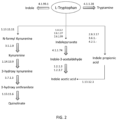
- the set of neuroactive compounds include (but not limited to) Kynurenine, Quinolinate, Indole, Indole Acetic Acid (IAA), Indole propionic acid (IPA) and Tryptamine. The biochemical pathways for production of these six compounds (through tryptophan utilization) in bacteria are depicted in FIG. 2 .
- SCORBPEO Scor e for B acterial P roduction of N e uroactive C o mpounds
- SCORBPEO ij P ⁇ ⁇ ⁇ ⁇
- P represents the proportion of strains belonging to the genus 'j' that have been predicted with compound 'i' producing capability (value of P ranges between '0' and '1').
- Prediction of compound 'i' producing capability involves computational identification of the enzymes (proteins) involved in conversion of tryptophan to compound 'i'.
- Identification of enzymes was performed using widely accepted tools/packages (such as, but not limited to, Blast, HMMER, Pfam, etc.) which employ protein sequence/ functional domain similarity search algorithms. Further, in order to increase the prediction efficiency, a filtration step was included (wherever applicable) based on presence of the genes/ functional domains (of a particular pathway) in proximity to each other in the genome of a particular organism.
- tools/packages such as, but not limited to, Blast, HMMER, Pfam, etc.
- a filtration step was included (wherever applicable) based on presence of the genes/ functional domains (of a particular pathway) in proximity to each other in the genome of a particular organism.
- computational identification of enzymes can also be performed using any one or a combination of gene/ protein sequence similarity search algorithms, gene' protein sequence composition based algorithms, protein domain/ motif similarity search algorithms, protein structure similarity search algorithms.
- the enzymes, thus obtained, may further be filtered using any one or a combination of genomic proximity analysis, functional association analysis, catalytic site analysis, sub-cellular localization prediction and secretion signal prediction.
- identification of enzyme can also be performed using lab experiments which involves enzyme characterization assays.
- the memory 108 further comprises the metabolic potential (MP) evaluation module 118.
- the metabolic potential evaluation module 118 is configured to predict the metabolic potential for each of the neuroactive compounds using the bacteria function matrix and the normalized abundance values, wherein the metabolic potential is indicative of the capability of the bacterial community (derived from the sequence data of the extracted DNA) for producing the neuroactive compound.
- the set of neuroactive compounds include (but not limited to) Kynurenine, Quinolinate, Indole, Indole Acetic Acid (IAA), Indole propionic acid (IPA), and Tryptamine.
- the metabolic potential (MP) for production of a particular metabolite (by the bacterial community of interest) is calculated based on - (i) the relative abundance of the bacterial genera predicted to have the corresponding metabolic pathway and (ii) a predefined score referred to as (in the current invention) 'SCORBPEO' which represents the potential of a particular genus for production of the metabolite.
- the MP for production of a particular metabolite by the bacterial community (of interest) can be written as follows in equation (2).
- the equation (2) has been provided for the calculation of metabolic potential (MP) for Kynurenine.
- the MP is calculated for six neuroactive compounds, i.e. for Kynurenine, Quinolinate, Indole, Indole Acetic Acid (IAA), Indole propionic acid (IPA), and Tryptamine.
- These six 'MP' values are used further.
- the values of the computed MP scores ranges between 0 and 50. Though it should be appreciated that the range of MP values may vary in other examples.
- the values were further rescaled to ⁇ 0 - 10'. For a particular pathway, a bacterial taxon having a higher MP would indicate a greater capability of production of a particular compound as compared to a taxon with a lower MP.
- MP score or any other score related to microbial production of any other products/ by-products of amino acid metabolism are well within the scope of the present disclosure.
- the system 100 further comprises the model generation module 120.
- the model generation module 120 is configured to generate a classification model utilizing the MP of each of the plurality of compounds using a machine learning technique.
- the model generation module 120 builds the classification model for predicting the risk of the individual to be suffering from ASD.
- the classification model is generated using machine learning techniques may be performed using one or more of classification algorithms which include decision trees, random forest, linear regression, logistic regression, naive Bayes, linear discriminant analyses, k-nearest neighbour algorithm, Support Vector Machines and Neural Networks.
- the model for prediction of ASD is generated based on the MP (Metabolic potential) values corresponding to each of the six neuroactive compounds. These six compounds include Kynurenine, Quinolinate, Indole, Indole acetic acid (IAA), Indole propionic acid (IPA), and Tryptamine.
- the publicly available gut microbiome data (16SrRNA sequences) pertaining to ASD patients and matched healthy individuals was used to validate the efficiency of the ASD diagnosis and risk assessment scheme proposed in the present disclosure.
- the prediction outcome of the current module indicates the risk of disease development.
- the current module can be used as a non-invasive diagnostic measure as an adjunct to the behavioural screening i.e. commonly practiced.
- the system 100 also comprises the risk assessment module 122.
- the risk assessment module 122 is configured to predict the risk of the individual to develop or suffering from ASD in a significant risk, a low risk or no risk, using the classification model based on a predefined set of conditions.
- the prediction outcome of the risk assessment module 122 indicates the probability of having the disease or the risk of disease development.
- the risk assessment module 122 can be used as an initial non-invasive diagnostic measure.
- the predefined set of condition comprises comparing the metabolic potential for production of one of the set of neuroactive compounds with a threshold value, wherein the result of comparison is: no risk of ASD if the metabolic potential is less than the threshold value, the low risk if the metabolic potential is between the threshold value and a third quartile value of a data set containing the metabolic potential values of the neuroactive compound, and the significant risk if the metabolic potential is more than the third quartile value of a data set containing the metabolic potential values of the neuroactive compound.
- the system 100 also comprises the therapeutic module 124.
- the therapeutic module 124 is configured to design therapeutic approaches through targeting the bacterial groups that are capable of producing a set of neurotoxic compounds or facilitating growth of healthy microbes, wherein the set of neurotoxic compounds are compounds which negatively affects the functioning of the gut-brain axis.
- the therapeutic intervention is provided to the individual wherein the symptoms of ASD may be alleviated through minimizing the side effects of conventional therapies through maintaining a 'healthy' microbiome.
- the therapeutic module 124 involves identification of a consortium of microbes which can be used (in form of pre-/ probiotic/ synbiotic) in order to - (i) reduce the growth of bacteria (in the gut) which are capable of producing neurotoxic compounds and (ii) enhance the growth of beneficial bacteria (in the gut) which can help maintaining a healthy gut or produce neuroactive compounds which are beneficial for functioning and regulation of gut-brain axis.
- This consortium of microbes can be administered either alone or as an adjunct to the conventional antibiotic drugs for improved treatment of ASD and also the gastrointestinal problems associated to ASD.
- identification of the consortium of bacteria is performed based on the SCORBPEO values of the bacterial genera identified in a particular sample. Though it should be appreciated that the MP values of other microorganisms can also be considered.
- consortium of bacteria that can potentially facilitate improved therapy of Autism Spectrum Disorder (ASD) was performed based on the following two aspects - (i) differentially abundant bacterial taxa in cohorts of Autism patients and healthy individuals (The microbiome data provided in one of the research paper has been considered as a case study) and (ii) the 'SCORBPEO' values of the differentially abundant taxa corresponding to the production of neuroactive compounds under the current disclosure.
- the abundant genera in healthy cohort which are not able to produce any neurotoxic compound may help maintaining a 'healthy' microbiome in gut and thus might aid in prevention or alleviating symptoms of ASD. These genera are listed in TABLE 1. Any pre/ probiotic/ synbiotic formulation which facilitates growth of the above mentioned healthy microbiome can also be used as a therapeutic adjunct for ASD.
- the differentially abundant taxa (genera in the current disclosure) in healthy cohort were identified using state-of-art statistical test. TABLE 1: List of genera helpful in maintaining the healthy microbiome in the gut Genera P-value Eubacterium 0.003 Parvimonas 0.029 Paraprevotella 0.045 Clostridium_ XIVa 0.019
- the proposed probiotic formulation may be composed of bacterial strains belonging to the genera listed in Table 1.
- the strains with known beneficial effects are most probable candidates for probiotic formulation.
- certain strains under the genera Eubacterium and Clostridium XIVa have been reported to have beneficial role in the gut.
- these strains may be provided as probiotic formulation in order to maintain a healthier gut microbiome, thus improving the efficiency of current therapeutic approaches or minimizing the side effects of the conventional therapies of ASD.
- the bacterial strains belonging to the genera Eubacterium and Clostridium XIVa that are commonly found in gut are listed in TABLE 2.
- a flowchart 300 illustrating the steps involved for combating.
- the sample is obtained from a body site of the individual.
- the DNA is extracted from the obtained sample.
- the obtained sample is then sequencing the isolated DNA using the sequencer * to obtain stretches of DNA sequences.
- the stretches of DNA sequences are analyzed to identify a plurality of bacterial taxa present in the sample. The analysis results in the generation of a bacterial abundance profile having a bacterial abundance value of each of the plurality of bacterial taxa in the sample.
- the bacterial abundance profile is pre-processed to obtain normalized/ scaled bacterial abundance values of the bacterial abundance profile.
- the score such as SCORBPEO is evaluates for each bacterial taxa of the plurality of bacterial taxa for producing a set of neuroactive compounds.
- the set of neuroactive compounds are compounds which influences the functioning of a gut-brain axis and wherein the score is evaluated independently for each compound of the set of neuroactive compounds and stored in a bacteria-function matrix;
- the metabolic potential (MP) is calculated corresponding to each compound of the set of neuroactive compounds using the bacteria function matrix and the scaled bacterial abundance values.
- the metabolic potential (MP) is indicative of the capability of the bacterial community for producing the neuroactive compound.
- the classification model is generated by utilizing the metabolic potential (MP) of each compound of the set of neuroactive compounds using machine learning techniques.
- the classification model is generated using machine learning techniques may be performed using one or more of classification algorithms which include decision trees, random forest, linear regression, logistic regression, naive Bayes, linear discriminant analyses, k-nearest neighbour algorithm, Support Vector Machines and Neural Networks.
- the risk of the individual to develop or suffering from ASD is predicted.
- the prediction says about the individual to in one of a significant risk, a low risk or no risk, using the classification model based on a predefined set of conditions.
- a therapeutic approach is designed, through targeting the bacterial groups that are capable of producing a set of neurotoxic compounds or facilitating growth of healthy microbes, wherein the set of neurotoxic compounds are compounds which negatively affects the functioning of the gut-brain axis.
- the system 100 for risk assessment of autism spectrum disorder (ASD) in the individual can also be explained with the help of following example.
- ASD autism spectrum disorder
- the prediction of the bacterial community metabolic potential for the production of neuroactive compounds requires the (bacterial) taxonomic abundance data, generated using one of the state-of-art algorithms, as an input.
- An example of the bacterial taxonomic abundance data (obtained from a published study) has been shown below in TABLE 3.
- Bacterial community data pertaining to a total of 30 Autism samples and corresponding 24 healthy samples are provided in the study.
- TABLE 3 shows a subset of the taxonomic abundance at genera level corresponding to one autism and one healthy sample.
- the raw abundance data was then normalized to represent the relative abundance values as shown in TABLE 4. It should be noted that any kind of normalization or scaling of bacterial abundance values, including percentage, cumulatitive sum scaling, minmax scaling, maxAbs scaling, robust scaling, percentile, quantile, Atkinson's log transformation, etc., can be employed. Such representation provides an easy interpretation of the relative contribution of each taxa in the total bacterial abundance in a sample.
- 'Metabolic potential (MP)' The normalized abundance values were then used to evaluate the score referred to as 'Metabolic potential (MP)' in the present disclosure.
- MP 'Metabolic potential
- the present invention includes 'MP' scores for six compounds belonging to tryptophan metabolism. These six compounds include Kynurenine, Quinolinate, Indole, Indole acetic acid (IAA), Indole propionic acid (IPA) and Tryptamine. These compounds have been reported to affect neurological functions through direct or indirect routes.
- 'MP' score or any other score related to microbial production of any other products/ by-products of amino acid metabolism (apart from the above mentioned six compounds) for risk assessment diagnosis/ therapeutics of autism are well within the scope of the present invention.
- a model for diagnosis and risk assessment of Autism is generated based on the 'Metabolic potential (MP)' values corresponding to each of the six neuroactive compounds.
- MP 'Metabolic potential
- These six compounds include Kynurenine, Quinolinate, Indole, Indole acetic acid (IAA), Indole propionic acid (IPA), and Tryptamine.
- 'MP' score or any other score related to microbial production of any other products/ by-products of amino acid metabolism are well within the scope of the present invention.
- the dataset involves publicly available gut microbiome sequence data samples from 30 individuals suffering from Autism and corresponding 24 healthy controls from Indian population.
- the 16S rRNA data from the study was analyzed in order to obtain the 'MP' values for the six neuroactive compounds under the invention. These values corresponding to a subset of samples from the study is provided in TABLE 6.
- TABLE 6 'Metabolic potential (MP)' values corresponding to the six neuro-active compounds evaluated for a subset of samples mentioned from the study.
- a model for classification (disease or healthy) of the samples was generated using state-of-art machine learning algorithm considering the six 'MP' values as the feature set for each of the sample.
- the classification was performed (on the total 54 samples as mentioned in Table 5) for 1000 iterations with randomly chosen 80% (from each of disease and healthy cohorts) of the samples as training set and the remaining 20% (from each of disease and healthy cohorts) as the test set in each iteration.
- the model sensitivity and specificity were used for choosing the best parameters that are able to classify diseased samples from healthy ones.
- kynurenine was observed to be the best classifier for healthy and diseased samples as shown in TABLE 7.
- the diagnosis and prediction of the risk of Autism could be performed based on the 'MP' value and a threshold value corresponding to the above-mentioned feature 'kynurenine' according to the following rules -
- any other neuroactive compound(s) or any other compound belonging to amino acid metabolism either alone or in combination with one or more of Kynurenine, Quinolinate, Indole, Indole acetic acid, Indole propionic acid, and Tryptamine may prove to be efficient risk assessment factors for ASD or any other neuro-developmental disease/ disorder for individuals from a different geography or/ and of different ethnicity/ lifestyle.
- TABLE 8 Details on the bacterial genes involved in production of neuro-active compounds under the invention Metabolic pathways Gene name Enzyme Id Functional domain (obtained from Pfam database) Tryptophan -> Kynurenine kynA 1.13.11.11 Trp_dioxygenase kynB 3.5.1.9 Cyclase Tryptophan ->Quinolinate kynA 1.13.11.11 Trp_dioxygenase kynB 3.5.1.9 Cyclase kmo 1.14.13.9 FAD_binding_3 kynU 3.7.1.3 Aminotran_5 HAAO 1.13.11.6 3-HAO Tryptophan -> Indole TnaA 4.1.99.1 Beta_elim_lyase Tryptophan -> Indole acetic acid ipdC 4.1.1.74 TPP_enzyme_C TPP_enzyme_M TPP
- the embodiments of present disclosure herein address unresolved problem of early diagnosis of the ASD, especially in child.
- the embodiment provides a system and method for risk assessment of autism spectrum disorder (ASD) in an individual
- the hardware device can be any kind of device which can be programmed including e.g. any kind of computer like a server or a personal computer, or the like, or any combination thereof.
- the device may also include means which could be e.g. hardware means like an application-specific integrated circuit (ASIC), a field-programmable gate array (FPGA), or a combination of hardware and software means, e.g.
- ASIC application-specific integrated circuit
- FPGA field-programmable gate array
- the means can include both hardware means and software means.
- the method embodiments described herein could be implemented in hardware and software.
- the device may also include software means.
- the embodiments may be implemented on different hardware devices, e.g. using a plurality of CPUs.
- the embodiments herein can comprise hardware and software elements.
- the embodiments that are implemented in software include but are not limited to, firmware, resident software, microcode, etc.
- the functions performed by various components described herein may be implemented in other components or combinations of other components.
- a computer-usable or computer readable medium can be any apparatus that can comprise, store, communicate, propagate, or transport the program for use by or in connection with the instruction execution system, apparatus, or device.
- a computer-readable storage medium refers to any type of physical memory on which information or data readable by a processor may be stored.
- a computer-readable storage medium may store instructions for execution by one or more processors, including instructions for causing the processor(s) to perform steps or stages consistent with the embodiments described herein.
- the term "computer-readable medium” should be understood to include tangible items and exclude carrier waves and transient signals, i.e., be non-transitory. Examples include random access memory (RAM), read-only memory (ROM), volatile memory, nonvolatile memory, hard drives, CD ROMs, DVDs, flash drives, disks, and any other known physical storage media.
Landscapes
- Engineering & Computer Science (AREA)
- Life Sciences & Earth Sciences (AREA)
- Health & Medical Sciences (AREA)
- Chemical & Material Sciences (AREA)
- Medical Informatics (AREA)
- Physics & Mathematics (AREA)
- General Health & Medical Sciences (AREA)
- Proteomics, Peptides & Aminoacids (AREA)
- Bioinformatics & Cheminformatics (AREA)
- Public Health (AREA)
- Organic Chemistry (AREA)
- Analytical Chemistry (AREA)
- Biotechnology (AREA)
- Biophysics (AREA)
- Data Mining & Analysis (AREA)
- Epidemiology (AREA)
- Wood Science & Technology (AREA)
- Zoology (AREA)
- Spectroscopy & Molecular Physics (AREA)
- Bioinformatics & Computational Biology (AREA)
- Evolutionary Biology (AREA)
- Databases & Information Systems (AREA)
- Theoretical Computer Science (AREA)
- Primary Health Care (AREA)
- Biochemistry (AREA)
- Genetics & Genomics (AREA)
- Immunology (AREA)
- Microbiology (AREA)
- Molecular Biology (AREA)
- General Engineering & Computer Science (AREA)
- Artificial Intelligence (AREA)
- Software Systems (AREA)
- Computer Vision & Pattern Recognition (AREA)
- Bioethics (AREA)
- Evolutionary Computation (AREA)
- Biomedical Technology (AREA)
- Pathology (AREA)
- Medicinal Chemistry (AREA)
- Measuring Or Testing Involving Enzymes Or Micro-Organisms (AREA)
Claims (15)
- Procédé (300) d'évaluation du risque de trouble du spectre de l'autisme (TSA) chez un individu, le procédé comprenant :l'extraction d'acide désoxyribonucléique (ADN) à partir d'un échantillon (304), l'échantillon ayant été obtenu à partir d'un site corporel de la personne ;le séquençage de l'ADN isolé au moyen d'un séquenceur pour obtenir des segments de séquences d'ADN (306) ;l'analyse, via un ou plusieurs processeurs matériels, des segments de séquences d'ADN pour identifier une pluralité de taxons bactériens présents dans l'échantillon, l'analyse conduisant à la génération d'un profil d'abondance bactérienne ayant une valeur d'abondance bactérienne de chacun de la pluralité de taxons bactériens dans l'échantillon (308) ;le prétraitement, via les un ou plusieurs processeurs matériels, du profil d'abondance bactérienne pour obtenir des valeurs d'abondance bactérienne mises à l'échelle du profil d'abondance bactérienne (310) ;l'évaluation, via les un ou plusieurs processeurs matériels, d'un score pour chaque taxon bactérien de la pluralité de taxons bactériens pour produire un ensemble de composés neuroactifs, l'ensemble de composés neuroactifs étant des composés qui influencent le fonctionnement d'un axe intestin-cerveau et le score étant évalué indépendamment pour chaque composé de l'ensemble de composés neuroactifs et stocké dans une matrice de fonctions bactériennes (312) ;le calcul, via les un ou plusieurs processeurs matériels, d'un potentiel métabolique (MP) correspondant à chaque composé de l'ensemble de composés neuroactifs au moyen de la matrice de fonctions bactériennes et des valeurs d'abondance bactérienne mises à l'échelle, le potentiel métabolique (MP) indiquant la capacité de la communauté bactérienne à produire le composé neuroactif (314) ;la génération, via les un ou plusieurs processeurs matériels, d'un modèle de classification au moyen du potentiel métabolique (MP) de chaque composé de l'ensemble de composés neuroactifs au moyen de techniques d'apprentissage automatique (316) ;la prédiction, via les un ou plusieurs processeurs matériels, du risque que la personne développe ou souffre d'un TSA comme étant un risque important, un risque faible ou un risque nul, au moyen du modèle de classification basé sur un ensemble prédéfini de conditions (318) ; etla conception d'approches thérapeutiques, par ciblage des groupes bactériens qui sont capables de produire un ensemble de composés neurotoxiques ou de faciliter la croissance de microbes sains, l'ensemble de composés neurotoxiques étant des composés qui affectent négativement le fonctionnement de l'axe intestin-cerveau (320).
- Procédé selon la revendication 1, dans lequel l'ensemble prédéfini de conditions comprend la comparaison du potentiel métabolique pour la production de l'un des composés neuroactifs à une valeur seuil, le résultat de la comparaison étant :aucun risque de TSA si le potentiel métabolique est inférieur à la valeur seuil,un risque faible si le potentiel métabolique est compris entre la valeur seuil et une valeur du troisième quartile d'un ensemble de données contenant les valeurs de potentiel métabolique du composé neuroactif, etun risque significatif si le potentiel métabolique est supérieur à la valeur du troisième quartile d'un ensemble de données contenant les valeurs de potentiel métabolique du composé neuroactif.
- Procédé selon la revendication 1, dans lequel la génération d'un profil d'abondance bactérienne met en oeuvre l'analyse informatique de l'un ou plusieurs parmi des données d'imagerie microscopique, des données de cytométrie en flux, des données de comptage de colonies et phénotypiques cellulaires de microbes cultivés dans des cultures in vitro, des données d'intensité de signal, ces données étant obtenues par application d'une ou plusieurs techniques comprenant des procédés dépendants d'une culture, un ou plusieurs dosages enzymatiques ou par fluorescence, un ou plusieurs dosages mettant en oeuvre une identification spectroscopique et un criblage de signaux provenant de populations microbiennes complexes.
- Procédé selon la revendication 1, dans lequel l'isolement et le séquençage de segments d'ADN comprennent en outre au moins l'un parmi :l'amplification et le séquençage des gènes marqueurs bactériens ARNr 16S, ARNr 23S, rpoB, cpn60 à partir de l'ADN bactérien,l'amplification et le séquençage d'une ou plusieurs régions de pleine longueur ou une ou plusieurs régions spécifiques de l'ARNr 16S, l'ARNr 23S, les gènes marqueurs rpoB, cpn60 bactériens à partir de l'ADN microbien,l'amplification et le séquençage d'un ou plusieurs gènes marqueurs phylogénétiques à partir de l'ADN bactérien, oudes données de séquençage shotgun du génome entier (WGS) correspondant à l'ADN bactérien, isolé à partir du site corporel d'une personne.
- Procédé selon la revendication 1, dans lequel le séquençage est effectué via l'un ou plusieurs parmi un séquençage d'amplicons, un séquençage shotgun du génome entier (WGS), une technique de séquençage basée sur une banque de fragments, une technique de séquençage basée sur une banque de type mate-pair ou une banque de type paired-end, une réaction en chaîne par polymérase (PCR), un séquençage d'ARN ou une technique à base de microréseau.
- Procédé selon la revendication 1, dans lequel l'étape de prétraitement des données d'abondance microbienne comprend la normalisation pour représenter l'abondance sous la forme de valeurs mises à l'échelle, dans lequel la normalisation des comptages microbiens est effectuée par l'un ou plusieurs parmi une raréfaction, une mise à l'échelle par quantile, une mise à l'échelle par centile, une mise à l'échelle par somme cumulée ou une transformation log-rapport d'Aitchison.
- Procédé selon la revendication 1, dans lequel l'ensemble de composés neuroactifs comprend l'un ou plusieurs parmi la kynurénine, le quinolinate, l'indole, l'acide indole-acétique (IAA), l'acide indole-propionique (IPA) et la tryptamine.
- Procédé selon la revendication 1, dans lequel l'évaluation du score (SCORBPEO) comprend le calcul au moyen de la formule :
 où P - proportion de souches appartenant au genre « j » dont la capacité de production du composé neuroactif « i » a été prédite,α - valeur de confiance du groupe bactérien correspondant, où la valeur de confiance est évaluée sur la base du nombre relatif de souches appartenant à un genre particulier,β - « poids » qui représente une valeur d'enrichissement d'une voie particulière dans un site corporel particulier.
 - Procédé selon la revendication 1, dans lequel le potentiel métabolique (MP) est calculé au moyen de la formule :
 Où, MPNAC - Potentiel métabolique de la communauté bactérienne (d'intérêt) pour la production d'un composé neuroactif particulier,n - numéro du composé neuroactif particulier produisant des genres bactériens présents dans la communauté bactérienne d'intérêt,RA - abondance relative mise à l'échelle d'un genre bactérien particulier « i » chez lequel la présence de la voie métabolique pour la production du composé neuroactif, etSCORBPEO[NAC][i] - Le score « SCORBPEO (Score for Bacterial Production of Neuro-active Compound : score de production bactérienne de composé neuroactif) » du genre « i » pour la production du composé neuroactif particulier « NAC ».
 - Procédé selon la revendication 1, dans lequel la génération d'un modèle de classification au moyen de techniques d'apprentissage automatique peut être effectuée au moyen de l'une ou plusieurs parmi une forêt aléatoire, des techniques d'arbres de décision, une régression linéaire, une régression logistique, une classification naïve bayésienne, des analyses discriminantes linéaires, un algorithme des k plus proches voisins, des machines à vecteurs de support et des techniques à base de réseaux de neurones.
- Procédé selon la revendication 1, dans lequel l'échantillon est un échantillon de salive, de selles, de sang, de fluide corporel, de tissu ou d'écouvillon.
- Procédé selon la revendication 1, dans lequel le site corporel est l'un parmi l'intestin, la cavité buccale, la peau ou l'appareil génito-urinaire de la personne.
- Procédé selon la revendication 1, dans lequel les microbes sains comprennent des microbes produisant des composés neuroprotecteurs qui ont des effets bénéfiques sur l'axe intestin-cerveau.
- Système (100) pour l'évaluation du risque de trouble du spectre de l'autisme (TSA) chez une personne, le procédé comprenant :un extracteur d'ADN (104) pour extraire l'acide désoxyribonucléique (ADN) à partir d'un échantillon, l'échantillon étant obtenu à partir d'un site corporel de la personne ;un séquenceur (106) pour séquencer l'ADN isolé au moyen d'un séquenceur pour obtenir des segments de séquences d'ADN ;un ou plusieurs processeurs matériels (110) ; etune mémoire (108) en communication avec les un ou plusieurs processeurs matériels, dans lequel les un ou plusieurs premiers processeurs matériels étant configurés pour exécuter des instructions programmées stockées dans la mémoire, pour :analyser les segments de séquences d'ADN pour identifier une pluralité de taxons bactériens présents dans l'échantillon, l'analyse conduisant à la génération d'un profil d'abondance bactérienne ayant une valeur d'abondance bactérienne de chacun de la pluralité de taxons bactériens dans l'échantillon ;prétraiter le profil d'abondance bactérienne pour obtenir des valeurs d'abondance bactérienne mises à l'échelle du profil d'abondance bactérienne ;évaluer un score pour chaque taxon bactérien de la pluralité de taxons bactériens pour produire un ensemble de composés neuroactifs, l'ensemble de composés neuroactifs étant des composés qui influencent le fonctionnement d'un axe intestin-cerveau et le score étant évalué indépendamment pour chaque composé de l'ensemble de composés neuroactifs et stocké dans une matrice de fonctions bactériennes ;calculer un potentiel métabolique (MP) correspondant à chaque composé de l'ensemble de composés neuroactifs au moyen de la matrice de fonctions bactériennes et des valeurs d'abondance bactérienne mises à l'échelle, le potentiel métabolique (MP) indiquant la capacité de la communauté bactérienne à produire le composé neuroactif ;générer un modèle de classification au moyen du potentiel métabolique (MP) de chaque composé de l'ensemble de composés neuroactifs au moyen de techniques d'apprentissage automatique ;prédire le risque que la personne développe ou souffre d'un TSA comme étant un risque important, un risque faible ou un risque nul, au moyen du modèle de classification basé sur un ensemble prédéfini de conditions ; etconcevoir des approches thérapeutiques, par ciblage des groupes bactériens qui sont capables de produire un ensemble de composés neurotoxiques ou de faciliter la croissance de microbes sains, l'ensemble de composés neurotoxiques étant des composés qui affectent négativement le fonctionnement de l'axe intestin-cerveau.
- Un ou plusieurs supports de stockage d'informations non transitoires lisibles par machine comprenant une ou plusieurs instructions qui lorsqu'elles sont exécutées par un ou plusieurs processeurs matériels, provoquent :l'analyse des segments de séquences d'ADN, les segments d'ADN étant obtenus par extraction de l'acide désoxyribonucléique (ADN) à partir d'un échantillon, l'échantillon ayant été obtenu à partir d'un site corporel de l'individu et par séquençage de l'ADN isolé au moyen d'un séquenceur, pour identifier une pluralité de taxons bactériens présents dans l'échantillon, l'analyse conduisant à la génération d'un profil d'abondance bactérienne ayant une valeur d'abondance bactérienne de chacun de la pluralité de taxons bactériens dans l'échantillon ;le prétraitement du profil d'abondance bactérienne pour obtenir des valeurs d'abondance bactérienne mises à l'échelle du profil d'abondance bactérienne ;l'évaluation d'un score pour chaque taxon bactérien de la pluralité de taxons bactériens pour produire un ensemble de composés neuroactifs, l'ensemble de composés neuroactifs étant des composés qui influencent le fonctionnement d'un axe intestin-cerveau et le score étant évalué indépendamment pour chaque composé de l'ensemble de composés neuroactifs et stocké dans une matrice de fonctions bactériennes ;le calcul d'un potentiel métabolique (MP) correspondant à chaque composé de l'ensemble de composés neuroactifs au moyen de la matrice de fonctions bactériennes et des valeurs d'abondance bactérienne mises à l'échelle, le potentiel métabolique (MP) étant indicatif de la capacité de la communauté bactérienne à produire le composé neuroactif ;la génération d'un modèle de classification au moyen du potentiel métabolique (MP) de chaque composé de l'ensemble de composés neuroactifs au moyen de techniques d'apprentissage automatique ;la prédiction du risque que la personne développe ou souffre d'un TSA comme étant un risque important, un risque faible ou un risque nul, au moyen du modèle de classification basé sur un ensemble prédéfini de conditions ; etla conception d'approches thérapeutiques, par ciblage des groupes bactériens qui sont capables de produire un ensemble de composés neurotoxiques ou de faciliter la croissance de microbes sains, l'ensemble de composés neurotoxiques étant des composés qui affectent négativement le fonctionnement de l'axe intestin-cerveau.
Applications Claiming Priority (2)
| Application Number | Priority Date | Filing Date | Title |
|---|---|---|---|
| IN201921031560 | 2019-08-05 | ||
| PCT/IB2020/057397 WO2021024198A2 (fr) | 2019-08-05 | 2020-08-05 | Système et procédé d'évaluation des risques d'un trouble du spectre autistique |
Publications (4)
| Publication Number | Publication Date |
|---|---|
| EP4009970A2 EP4009970A2 (fr) | 2022-06-15 |
| EP4009970A4 EP4009970A4 (fr) | 2023-08-16 |
| EP4009970B1 true EP4009970B1 (fr) | 2024-07-31 |
| EP4009970C0 EP4009970C0 (fr) | 2024-07-31 |
Family
ID=74503930
Family Applications (1)
| Application Number | Title | Priority Date | Filing Date |
|---|---|---|---|
| EP20850060.3A Active EP4009970B1 (fr) | 2019-08-05 | 2020-08-05 | Système et procédé d'évaluation des risques d'un trouble du spectre autistique |
Country Status (3)
| Country | Link |
|---|---|
| US (1) | US20250356948A1 (fr) |
| EP (1) | EP4009970B1 (fr) |
| WO (1) | WO2021024198A2 (fr) |
Families Citing this family (9)
| Publication number | Priority date | Publication date | Assignee | Title |
|---|---|---|---|---|
| CN113077885A (zh) * | 2021-03-12 | 2021-07-06 | 中山大学附属第七医院(深圳) | 一种基于肠道代谢物的数据分析方法及装置 |
| CN113889190B (zh) * | 2021-10-22 | 2024-12-24 | 浙江大学 | 一种基于肠道微生物信息预测犊牛腹泻抗性的方法 |
| EP4469607A4 (fr) * | 2022-01-24 | 2026-01-07 | Gusto Global Llc | Séquençage de fragment d'amplicon à point unique ciblé à loci uniques et à loci multiples |
| CN114891904A (zh) * | 2022-04-29 | 2022-08-12 | 上海金域医学检验所有限公司 | 用于儿童asd诊断的母源肠道菌群标志物及其应用 |
| IT202200008708A1 (it) * | 2022-04-29 | 2023-10-29 | Wellmicro S R L | Metodo per intervenire su una popolazione batterica e dispositivo, programma per computer, e mezzo leggibile da un computer per eseguire detto metodo |
| CN115060557B (zh) * | 2022-06-08 | 2025-01-24 | 中国农业科学院农业质量标准与检测技术研究所 | 一种基于多组学分析微生物群-肠-脑轴信号与斑马鱼神经行为关系的方法 |
| CN115547413A (zh) * | 2022-10-13 | 2022-12-30 | 深圳谱元科技有限公司 | 一种微生态定量检测方法及其应用 |
| CN117854720A (zh) * | 2023-12-06 | 2024-04-09 | 广州达安临床检验中心有限公司 | 基于菌属特征的自闭症风险预测装置和计算机设备 |
| CN118053500B (zh) * | 2024-02-23 | 2024-09-03 | 深圳微伴医学检验实验室 | 一种基于多层神经网络的菌群丰度预测方法及系统 |
Family Cites Families (3)
| Publication number | Priority date | Publication date | Assignee | Title |
|---|---|---|---|---|
| WO2012159023A2 (fr) * | 2011-05-19 | 2012-11-22 | Virginia Commonwealth University | Microflore de l'intestin servant de biomarqueur dans le pronostic de la cirrhose et du dysfonctionnement cérébral |
| AU2016321334A1 (en) * | 2015-09-09 | 2018-04-26 | Psomagen, Inc. | Method and system for microbiome-derived diagnostics and therapeutics for bacterial vaginosis |
| KR102359013B1 (ko) * | 2017-03-21 | 2022-02-04 | 콰드런트 바이오사이언시즈 인코포레이티드 | 자폐 스펙트럼 장애의 분석 |
-
2020
- 2020-08-05 EP EP20850060.3A patent/EP4009970B1/fr active Active
- 2020-08-05 WO PCT/IB2020/057397 patent/WO2021024198A2/fr not_active Ceased
- 2020-08-05 US US17/633,138 patent/US20250356948A1/en active Pending
Also Published As
| Publication number | Publication date |
|---|---|
| WO2021024198A3 (fr) | 2021-04-22 |
| EP4009970A4 (fr) | 2023-08-16 |
| WO2021024198A2 (fr) | 2021-02-11 |
| EP4009970A2 (fr) | 2022-06-15 |
| EP4009970C0 (fr) | 2024-07-31 |
| US20250356948A1 (en) | 2025-11-20 |
Similar Documents
| Publication | Publication Date | Title |
|---|---|---|
| EP4009970B1 (fr) | Système et procédé d'évaluation des risques d'un trouble du spectre autistique | |
| JP7208223B2 (ja) | 疾患関連マイクロバイオーム特徴解析プロセス | |
| US20210057046A1 (en) | Methods and systems for analyzing microbiota | |
| US12060599B2 (en) | Method and system for microbiome-derived diagnostics and therapeutics for bacterial vaginosis | |
| US20190172555A1 (en) | Method and system for microbiome-derived diagnostics and therapeutics for oral health | |
| CN107075446B (zh) | 用于肥胖症相关疾病的生物标记物 | |
| US20220293217A1 (en) | System and method for risk assessment of multiple sclerosis | |
| CA3005985C (fr) | Procédé et système pour diagnostics dérives du microbiome et agents thérapeutiques pour une maladie infectieuse ou d’autres états de santé associés à l’utilisation d’antibiotiques | |
| EP4010487B1 (fr) | Système et procédé d'évaluation du risque de la maladie de parkinson | |
| JP2025508057A (ja) | アルツハイマー病認知症を発症するリスクを決定する方法 | |
| Omrani et al. | Machine learning-driven diagnosis of multiple sclerosis from whole blood transcriptomics | |
| US20250285756A1 (en) | Two competing guilds as core microbiome signature for human diseases | |
| EP4450649B1 (fr) | Procédé et système d'évaluation de risque de trouble du spectre autistique chez un sujet | |
| US20230230655A1 (en) | Methods and systems for assessing fibrotic disease with deep learning | |
| Lytkin et al. | Expanding the understanding of biases in development of clinical-grade molecular signatures: a case study in acute respiratory viral infections | |
| US20260085355A1 (en) | Method for identifying dementia with lewy bodies in a subject | |
| US20240355443A1 (en) | Method and system for stratification of subjects as responders and non-responders for a therapy | |
| Shafik et al. | GENETIC BIOMARKERS DETECTION FOR ALZHEIMER’S DISEASE | |
| HK40121482A (zh) | 两个相互竞争的菌群作为针对人类疾病的核心微生物组特徵 | |
| CN118843698A (zh) | 确定发展成阿尔茨海默病性痴呆的风险的方法 | |
| Li et al. | Shared and Distinctive Microbial Biomarkers Enhance Precision Diagnostics of Inflammatory Bowel Disease and its Subtypes |
Legal Events
| Date | Code | Title | Description |
|---|---|---|---|
| STAA | Information on the status of an ep patent application or granted ep patent |
Free format text: STATUS: THE INTERNATIONAL PUBLICATION HAS BEEN MADE |
|
| PUAI | Public reference made under article 153(3) epc to a published international application that has entered the european phase |
Free format text: ORIGINAL CODE: 0009012 |
|
| STAA | Information on the status of an ep patent application or granted ep patent |
Free format text: STATUS: REQUEST FOR EXAMINATION WAS MADE |
|
| 17P | Request for examination filed |
Effective date: 20220203 |
|
| AK | Designated contracting states |
Kind code of ref document: A2 Designated state(s): AL AT BE BG CH CY CZ DE DK EE ES FI FR GB GR HR HU IE IS IT LI LT LU LV MC MK MT NL NO PL PT RO RS SE SI SK SM TR |
|
| DAV | Request for validation of the european patent (deleted) | ||
| DAX | Request for extension of the european patent (deleted) | ||
| REG | Reference to a national code |
Ref country code: DE Ref legal event code: R079 Free format text: PREVIOUS MAIN CLASS: A61K0031437000 Ref country code: DE Ref legal event code: R079 Ref document number: 602020035024 Country of ref document: DE Free format text: PREVIOUS MAIN CLASS: A61K0031437000 Ipc: G16B0030000000 |
|
| A4 | Supplementary search report drawn up and despatched |
Effective date: 20230714 |
|
| RIC1 | Information provided on ipc code assigned before grant |
Ipc: G16H 20/10 20180101ALN20230711BHEP Ipc: G16B 40/20 20190101ALI20230711BHEP Ipc: G16H 50/30 20180101ALI20230711BHEP Ipc: G16B 30/00 20190101AFI20230711BHEP |
|
| REG | Reference to a national code |
Ref country code: DE Ref legal event code: R079 Free format text: PREVIOUS MAIN CLASS: G16B0030000000 Ipc: G16B0040200000 Ref document number: 602020035024 Country of ref document: DE |
|
| GRAP | Despatch of communication of intention to grant a patent |
Free format text: ORIGINAL CODE: EPIDOSNIGR1 |
|
| STAA | Information on the status of an ep patent application or granted ep patent |
Free format text: STATUS: GRANT OF PATENT IS INTENDED |
|
| RIC1 | Information provided on ipc code assigned before grant |
Ipc: G16H 20/10 20180101ALN20240130BHEP Ipc: G16B 30/00 20190101ALI20240130BHEP Ipc: G16H 50/30 20180101ALI20240130BHEP Ipc: G16B 40/20 20190101AFI20240130BHEP |
|
| INTG | Intention to grant announced |
Effective date: 20240219 |
|
| GRAS | Grant fee paid |
Free format text: ORIGINAL CODE: EPIDOSNIGR3 |
|
| GRAA | (expected) grant |
Free format text: ORIGINAL CODE: 0009210 |
|
| STAA | Information on the status of an ep patent application or granted ep patent |
Free format text: STATUS: THE PATENT HAS BEEN GRANTED |
|
| AK | Designated contracting states |
Kind code of ref document: B1 Designated state(s): AL AT BE BG CH CY CZ DE DK EE ES FI FR GB GR HR HU IE IS IT LI LT LU LV MC MK MT NL NO PL PT RO RS SE SI SK SM TR |
|
| REG | Reference to a national code |
Ref country code: CH Ref legal event code: EP Ref country code: GB Ref legal event code: FG4D |
|
| REG | Reference to a national code |
Ref country code: DE Ref legal event code: R096 Ref document number: 602020035024 Country of ref document: DE |
|
| REG | Reference to a national code |
Ref country code: IE Ref legal event code: FG4D |
|
| U01 | Request for unitary effect filed |
Effective date: 20240826 |
|
| U07 | Unitary effect registered |
Designated state(s): AT BE BG DE DK EE FI FR IT LT LU LV MT NL PT RO SE SI Effective date: 20240904 |
|
| U20 | Renewal fee for the european patent with unitary effect paid |
Year of fee payment: 5 Effective date: 20240926 |
|
| PG25 | Lapsed in a contracting state [announced via postgrant information from national office to epo] |
Ref country code: NO Free format text: LAPSE BECAUSE OF FAILURE TO SUBMIT A TRANSLATION OF THE DESCRIPTION OR TO PAY THE FEE WITHIN THE PRESCRIBED TIME-LIMIT Effective date: 20241031 |
|
| PG25 | Lapsed in a contracting state [announced via postgrant information from national office to epo] |
Ref country code: GR Free format text: LAPSE BECAUSE OF FAILURE TO SUBMIT A TRANSLATION OF THE DESCRIPTION OR TO PAY THE FEE WITHIN THE PRESCRIBED TIME-LIMIT Effective date: 20241101 Ref country code: PL Free format text: LAPSE BECAUSE OF FAILURE TO SUBMIT A TRANSLATION OF THE DESCRIPTION OR TO PAY THE FEE WITHIN THE PRESCRIBED TIME-LIMIT Effective date: 20240731 |
|
| PG25 | Lapsed in a contracting state [announced via postgrant information from national office to epo] |
Ref country code: IS Free format text: LAPSE BECAUSE OF FAILURE TO SUBMIT A TRANSLATION OF THE DESCRIPTION OR TO PAY THE FEE WITHIN THE PRESCRIBED TIME-LIMIT Effective date: 20241130 |
|
| PG25 | Lapsed in a contracting state [announced via postgrant information from national office to epo] |
Ref country code: HR Free format text: LAPSE BECAUSE OF FAILURE TO SUBMIT A TRANSLATION OF THE DESCRIPTION OR TO PAY THE FEE WITHIN THE PRESCRIBED TIME-LIMIT Effective date: 20240731 |
|
| PG25 | Lapsed in a contracting state [announced via postgrant information from national office to epo] |
Ref country code: ES Free format text: LAPSE BECAUSE OF FAILURE TO SUBMIT A TRANSLATION OF THE DESCRIPTION OR TO PAY THE FEE WITHIN THE PRESCRIBED TIME-LIMIT Effective date: 20240731 Ref country code: RS Free format text: LAPSE BECAUSE OF FAILURE TO SUBMIT A TRANSLATION OF THE DESCRIPTION OR TO PAY THE FEE WITHIN THE PRESCRIBED TIME-LIMIT Effective date: 20241031 |
|
| PG25 | Lapsed in a contracting state [announced via postgrant information from national office to epo] |
Ref country code: RS Free format text: LAPSE BECAUSE OF FAILURE TO SUBMIT A TRANSLATION OF THE DESCRIPTION OR TO PAY THE FEE WITHIN THE PRESCRIBED TIME-LIMIT Effective date: 20241031 Ref country code: PL Free format text: LAPSE BECAUSE OF FAILURE TO SUBMIT A TRANSLATION OF THE DESCRIPTION OR TO PAY THE FEE WITHIN THE PRESCRIBED TIME-LIMIT Effective date: 20240731 Ref country code: NO Free format text: LAPSE BECAUSE OF FAILURE TO SUBMIT A TRANSLATION OF THE DESCRIPTION OR TO PAY THE FEE WITHIN THE PRESCRIBED TIME-LIMIT Effective date: 20241031 Ref country code: IS Free format text: LAPSE BECAUSE OF FAILURE TO SUBMIT A TRANSLATION OF THE DESCRIPTION OR TO PAY THE FEE WITHIN THE PRESCRIBED TIME-LIMIT Effective date: 20241130 Ref country code: HR Free format text: LAPSE BECAUSE OF FAILURE TO SUBMIT A TRANSLATION OF THE DESCRIPTION OR TO PAY THE FEE WITHIN THE PRESCRIBED TIME-LIMIT Effective date: 20240731 Ref country code: GR Free format text: LAPSE BECAUSE OF FAILURE TO SUBMIT A TRANSLATION OF THE DESCRIPTION OR TO PAY THE FEE WITHIN THE PRESCRIBED TIME-LIMIT Effective date: 20241101 Ref country code: ES Free format text: LAPSE BECAUSE OF FAILURE TO SUBMIT A TRANSLATION OF THE DESCRIPTION OR TO PAY THE FEE WITHIN THE PRESCRIBED TIME-LIMIT Effective date: 20240731 |
|
| PG25 | Lapsed in a contracting state [announced via postgrant information from national office to epo] |
Ref country code: SM Free format text: LAPSE BECAUSE OF FAILURE TO SUBMIT A TRANSLATION OF THE DESCRIPTION OR TO PAY THE FEE WITHIN THE PRESCRIBED TIME-LIMIT Effective date: 20240731 |
|
| PG25 | Lapsed in a contracting state [announced via postgrant information from national office to epo] |
Ref country code: MC Free format text: LAPSE BECAUSE OF FAILURE TO SUBMIT A TRANSLATION OF THE DESCRIPTION OR TO PAY THE FEE WITHIN THE PRESCRIBED TIME-LIMIT Effective date: 20240731 |
|
| PG25 | Lapsed in a contracting state [announced via postgrant information from national office to epo] |
Ref country code: CZ Free format text: LAPSE BECAUSE OF FAILURE TO SUBMIT A TRANSLATION OF THE DESCRIPTION OR TO PAY THE FEE WITHIN THE PRESCRIBED TIME-LIMIT Effective date: 20240731 |
|
| PG25 | Lapsed in a contracting state [announced via postgrant information from national office to epo] |
Ref country code: SK Free format text: LAPSE BECAUSE OF FAILURE TO SUBMIT A TRANSLATION OF THE DESCRIPTION OR TO PAY THE FEE WITHIN THE PRESCRIBED TIME-LIMIT Effective date: 20240731 |
|
| PLBE | No opposition filed within time limit |
Free format text: ORIGINAL CODE: 0009261 |
|
| STAA | Information on the status of an ep patent application or granted ep patent |
Free format text: STATUS: NO OPPOSITION FILED WITHIN TIME LIMIT |
|
| 26N | No opposition filed |
Effective date: 20250501 |
|
| PG25 | Lapsed in a contracting state [announced via postgrant information from national office to epo] |
Ref country code: IE Free format text: LAPSE BECAUSE OF NON-PAYMENT OF DUE FEES Effective date: 20240805 |
|
| U20 | Renewal fee for the european patent with unitary effect paid |
Year of fee payment: 6 Effective date: 20250825 |
|
| PGFP | Annual fee paid to national office [announced via postgrant information from national office to epo] |
Ref country code: GB Payment date: 20250826 Year of fee payment: 6 |
|
| PGFP | Annual fee paid to national office [announced via postgrant information from national office to epo] |
Ref country code: CH Payment date: 20250901 Year of fee payment: 6 |
|
| PG25 | Lapsed in a contracting state [announced via postgrant information from national office to epo] |
Ref country code: CY Free format text: LAPSE BECAUSE OF FAILURE TO SUBMIT A TRANSLATION OF THE DESCRIPTION OR TO PAY THE FEE WITHIN THE PRESCRIBED TIME-LIMIT; INVALID AB INITIO Effective date: 20200805 |
|
| PG25 | Lapsed in a contracting state [announced via postgrant information from national office to epo] |
Ref country code: HU Free format text: LAPSE BECAUSE OF FAILURE TO SUBMIT A TRANSLATION OF THE DESCRIPTION OR TO PAY THE FEE WITHIN THE PRESCRIBED TIME-LIMIT; INVALID AB INITIO Effective date: 20200805 |