EP4010625B1 - Leuchtfolie mit mikrooptischer struktur - Google Patents
Leuchtfolie mit mikrooptischer struktur Download PDFInfo
- Publication number
- EP4010625B1 EP4010625B1 EP20757230.6A EP20757230A EP4010625B1 EP 4010625 B1 EP4010625 B1 EP 4010625B1 EP 20757230 A EP20757230 A EP 20757230A EP 4010625 B1 EP4010625 B1 EP 4010625B1
- Authority
- EP
- European Patent Office
- Prior art keywords
- layer
- light
- luminous film
- luminous
- micro
- Prior art date
- Legal status (The legal status is an assumption and is not a legal conclusion. Google has not performed a legal analysis and makes no representation as to the accuracy of the status listed.)
- Active
Links
Images

Classifications
-
- F—MECHANICAL ENGINEERING; LIGHTING; HEATING; WEAPONS; BLASTING
- F21—LIGHTING
- F21S—NON-PORTABLE LIGHTING DEVICES; SYSTEMS THEREOF; VEHICLE LIGHTING DEVICES SPECIALLY ADAPTED FOR VEHICLE EXTERIORS
- F21S4/00—Lighting devices or systems using a string or strip of light sources
- F21S4/20—Lighting devices or systems using a string or strip of light sources with light sources held by or within elongate supports
- F21S4/22—Lighting devices or systems using a string or strip of light sources with light sources held by or within elongate supports flexible or deformable, e.g. into a curved shape
-
- F—MECHANICAL ENGINEERING; LIGHTING; HEATING; WEAPONS; BLASTING
- F21—LIGHTING
- F21S—NON-PORTABLE LIGHTING DEVICES; SYSTEMS THEREOF; VEHICLE LIGHTING DEVICES SPECIALLY ADAPTED FOR VEHICLE EXTERIORS
- F21S4/00—Lighting devices or systems using a string or strip of light sources
- F21S4/20—Lighting devices or systems using a string or strip of light sources with light sources held by or within elongate supports
-
- F—MECHANICAL ENGINEERING; LIGHTING; HEATING; WEAPONS; BLASTING
- F21—LIGHTING
- F21S—NON-PORTABLE LIGHTING DEVICES; SYSTEMS THEREOF; VEHICLE LIGHTING DEVICES SPECIALLY ADAPTED FOR VEHICLE EXTERIORS
- F21S4/00—Lighting devices or systems using a string or strip of light sources
- F21S4/20—Lighting devices or systems using a string or strip of light sources with light sources held by or within elongate supports
- F21S4/22—Lighting devices or systems using a string or strip of light sources with light sources held by or within elongate supports flexible or deformable, e.g. into a curved shape
- F21S4/24—Lighting devices or systems using a string or strip of light sources with light sources held by or within elongate supports flexible or deformable, e.g. into a curved shape of ribbon or tape form, e.g. LED tapes
-
- F—MECHANICAL ENGINEERING; LIGHTING; HEATING; WEAPONS; BLASTING
- F21—LIGHTING
- F21V—FUNCTIONAL FEATURES OR DETAILS OF LIGHTING DEVICES OR SYSTEMS THEREOF; STRUCTURAL COMBINATIONS OF LIGHTING DEVICES WITH OTHER ARTICLES, NOT OTHERWISE PROVIDED FOR
- F21V11/00—Screens not covered by groups F21V1/00, F21V3/00, F21V7/00 or F21V9/00
-
- F—MECHANICAL ENGINEERING; LIGHTING; HEATING; WEAPONS; BLASTING
- F21—LIGHTING
- F21V—FUNCTIONAL FEATURES OR DETAILS OF LIGHTING DEVICES OR SYSTEMS THEREOF; STRUCTURAL COMBINATIONS OF LIGHTING DEVICES WITH OTHER ARTICLES, NOT OTHERWISE PROVIDED FOR
- F21V5/00—Refractors for light sources
- F21V5/002—Refractors for light sources using microoptical elements for redirecting or diffusing light
-
- F—MECHANICAL ENGINEERING; LIGHTING; HEATING; WEAPONS; BLASTING
- F21—LIGHTING
- F21V—FUNCTIONAL FEATURES OR DETAILS OF LIGHTING DEVICES OR SYSTEMS THEREOF; STRUCTURAL COMBINATIONS OF LIGHTING DEVICES WITH OTHER ARTICLES, NOT OTHERWISE PROVIDED FOR
- F21V5/00—Refractors for light sources
- F21V5/002—Refractors for light sources using microoptical elements for redirecting or diffusing light
- F21V5/004—Refractors for light sources using microoptical elements for redirecting or diffusing light using microlenses
-
- F—MECHANICAL ENGINEERING; LIGHTING; HEATING; WEAPONS; BLASTING
- F21—LIGHTING
- F21V—FUNCTIONAL FEATURES OR DETAILS OF LIGHTING DEVICES OR SYSTEMS THEREOF; STRUCTURAL COMBINATIONS OF LIGHTING DEVICES WITH OTHER ARTICLES, NOT OTHERWISE PROVIDED FOR
- F21V5/00—Refractors for light sources
- F21V5/002—Refractors for light sources using microoptical elements for redirecting or diffusing light
- F21V5/005—Refractors for light sources using microoptical elements for redirecting or diffusing light using microprisms
-
- F—MECHANICAL ENGINEERING; LIGHTING; HEATING; WEAPONS; BLASTING
- F21—LIGHTING
- F21V—FUNCTIONAL FEATURES OR DETAILS OF LIGHTING DEVICES OR SYSTEMS THEREOF; STRUCTURAL COMBINATIONS OF LIGHTING DEVICES WITH OTHER ARTICLES, NOT OTHERWISE PROVIDED FOR
- F21V7/00—Reflectors for light sources
-
- F—MECHANICAL ENGINEERING; LIGHTING; HEATING; WEAPONS; BLASTING
- F21—LIGHTING
- F21V—FUNCTIONAL FEATURES OR DETAILS OF LIGHTING DEVICES OR SYSTEMS THEREOF; STRUCTURAL COMBINATIONS OF LIGHTING DEVICES WITH OTHER ARTICLES, NOT OTHERWISE PROVIDED FOR
- F21V7/00—Reflectors for light sources
- F21V7/0008—Reflectors for light sources providing for indirect lighting
-
- F—MECHANICAL ENGINEERING; LIGHTING; HEATING; WEAPONS; BLASTING
- F21—LIGHTING
- F21V—FUNCTIONAL FEATURES OR DETAILS OF LIGHTING DEVICES OR SYSTEMS THEREOF; STRUCTURAL COMBINATIONS OF LIGHTING DEVICES WITH OTHER ARTICLES, NOT OTHERWISE PROVIDED FOR
- F21V7/00—Reflectors for light sources
- F21V7/0008—Reflectors for light sources providing for indirect lighting
- F21V7/0016—Reflectors for light sources providing for indirect lighting on lighting devices that also provide for direct lighting, e.g. by means of independent light sources, by splitting of the light beam, by switching between both lighting modes
-
- F—MECHANICAL ENGINEERING; LIGHTING; HEATING; WEAPONS; BLASTING
- F21—LIGHTING
- F21V—FUNCTIONAL FEATURES OR DETAILS OF LIGHTING DEVICES OR SYSTEMS THEREOF; STRUCTURAL COMBINATIONS OF LIGHTING DEVICES WITH OTHER ARTICLES, NOT OTHERWISE PROVIDED FOR
- F21V9/00—Elements for modifying spectral properties, polarisation or intensity of the light emitted, e.g. filters
-
- F—MECHANICAL ENGINEERING; LIGHTING; HEATING; WEAPONS; BLASTING
- F21—LIGHTING
- F21V—FUNCTIONAL FEATURES OR DETAILS OF LIGHTING DEVICES OR SYSTEMS THEREOF; STRUCTURAL COMBINATIONS OF LIGHTING DEVICES WITH OTHER ARTICLES, NOT OTHERWISE PROVIDED FOR
- F21V9/00—Elements for modifying spectral properties, polarisation or intensity of the light emitted, e.g. filters
- F21V9/14—Elements for modifying spectral properties, polarisation or intensity of the light emitted, e.g. filters for producing polarised light
-
- H—ELECTRICITY
- H05—ELECTRIC TECHNIQUES NOT OTHERWISE PROVIDED FOR
- H05K—PRINTED CIRCUITS; CASINGS OR CONSTRUCTIONAL DETAILS OF ELECTRIC APPARATUS; MANUFACTURE OF ASSEMBLAGES OF ELECTRICAL COMPONENTS
- H05K1/00—Printed circuits
- H05K1/18—Printed circuits structurally associated with non-printed electric components
- H05K1/182—Printed circuits structurally associated with non-printed electric components associated with components mounted in printed circuit boards [PCB], e.g. insert-mounted components [IMC]
- H05K1/185—Printed circuits structurally associated with non-printed electric components associated with components mounted in printed circuit boards [PCB], e.g. insert-mounted components [IMC] associated with components encapsulated in the insulating substrate of the PCBs; associated with components incorporated in internal layers of multilayer circuit boards
-
- F—MECHANICAL ENGINEERING; LIGHTING; HEATING; WEAPONS; BLASTING
- F21—LIGHTING
- F21Y—INDEXING SCHEME ASSOCIATED WITH SUBCLASSES F21K, F21L, F21S and F21V, RELATING TO THE FORM OR THE KIND OF THE LIGHT SOURCES OR OF THE COLOUR OF THE LIGHT EMITTED
- F21Y2115/00—Light-generating elements of semiconductor light sources
- F21Y2115/10—Light-emitting diodes [LED]
-
- G—PHYSICS
- G10—MUSICAL INSTRUMENTS; ACOUSTICS
- G10K—SOUND-PRODUCING DEVICES; METHODS OR DEVICES FOR PROTECTING AGAINST, OR FOR DAMPING, NOISE OR OTHER ACOUSTIC WAVES IN GENERAL; ACOUSTICS NOT OTHERWISE PROVIDED FOR
- G10K11/00—Methods or devices for transmitting, conducting or directing sound in general; Methods or devices for protecting against, or for damping, noise or other acoustic waves in general
- G10K11/16—Methods or devices for protecting against, or for damping, noise or other acoustic waves in general
- G10K11/162—Selection of materials
-
- G—PHYSICS
- G10—MUSICAL INSTRUMENTS; ACOUSTICS
- G10K—SOUND-PRODUCING DEVICES; METHODS OR DEVICES FOR PROTECTING AGAINST, OR FOR DAMPING, NOISE OR OTHER ACOUSTIC WAVES IN GENERAL; ACOUSTICS NOT OTHERWISE PROVIDED FOR
- G10K11/00—Methods or devices for transmitting, conducting or directing sound in general; Methods or devices for protecting against, or for damping, noise or other acoustic waves in general
- G10K11/18—Methods or devices for transmitting, conducting or directing sound
- G10K11/20—Reflecting arrangements
-
- H—ELECTRICITY
- H05—ELECTRIC TECHNIQUES NOT OTHERWISE PROVIDED FOR
- H05K—PRINTED CIRCUITS; CASINGS OR CONSTRUCTIONAL DETAILS OF ELECTRIC APPARATUS; MANUFACTURE OF ASSEMBLAGES OF ELECTRICAL COMPONENTS
- H05K1/00—Printed circuits
- H05K1/18—Printed circuits structurally associated with non-printed electric components
- H05K1/189—Printed circuits structurally associated with non-printed electric components characterised by the use of flexible or folded printed circuits
-
- H—ELECTRICITY
- H05—ELECTRIC TECHNIQUES NOT OTHERWISE PROVIDED FOR
- H05K—PRINTED CIRCUITS; CASINGS OR CONSTRUCTIONAL DETAILS OF ELECTRIC APPARATUS; MANUFACTURE OF ASSEMBLAGES OF ELECTRICAL COMPONENTS
- H05K2201/00—Indexing scheme relating to printed circuits covered by H05K1/00
- H05K2201/01—Dielectrics
- H05K2201/0104—Properties and characteristics in general
- H05K2201/0108—Transparent
-
- H—ELECTRICITY
- H05—ELECTRIC TECHNIQUES NOT OTHERWISE PROVIDED FOR
- H05K—PRINTED CIRCUITS; CASINGS OR CONSTRUCTIONAL DETAILS OF ELECTRIC APPARATUS; MANUFACTURE OF ASSEMBLAGES OF ELECTRICAL COMPONENTS
- H05K2201/00—Indexing scheme relating to printed circuits covered by H05K1/00
- H05K2201/10—Details of components or other objects attached to or integrated in a printed circuit board
- H05K2201/10007—Types of components
- H05K2201/10106—Light emitting diode [LED]
-
- H—ELECTRICITY
- H05—ELECTRIC TECHNIQUES NOT OTHERWISE PROVIDED FOR
- H05K—PRINTED CIRCUITS; CASINGS OR CONSTRUCTIONAL DETAILS OF ELECTRIC APPARATUS; MANUFACTURE OF ASSEMBLAGES OF ELECTRICAL COMPONENTS
- H05K2201/00—Indexing scheme relating to printed circuits covered by H05K1/00
- H05K2201/10—Details of components or other objects attached to or integrated in a printed circuit board
- H05K2201/10007—Types of components
- H05K2201/10121—Optical component, e.g. opto-electronic component
Definitions
- the invention relates to a multi-layer luminous foil with several light-emitting diodes, a conductor layer for electrically connecting the light-emitting diodes and a carrier layer as is sufficiently known from the prior art.
- Luminous foils are, for example, from the US 2018/0245754 A1 , the WO 2015/176972 A1 , the WO 2011/114263 A1 , the WO 2014/155237 A1 , the WO 2016/131819 A1 , the FR 2 992 401 A1 and the US 2017/0254518 A1 became known.
- Conventional luminous films are manufactured by coating a flexible substrate with light-emitting diodes.
- the uniform illumination of the films depends largely on the number of LEDs on the substrate and their spacing.
- the measure of the coverage of the substrate with LEDs is the fill factor. Achieving the highest possible uniformity in light emission requires either the highest possible fill factor, i.e., a very large number of LEDs and very close spacing between the LEDs, or additional diffusely translucent layers that scatter the light entering the diffuser.
- the micro-optical layer according to the invention comprises micro-optical components that have lens, prism, polarizer, filter, phase plate, mirror, aperture, grating structures, fibers, and/or light guides for directing the light introduced into the micro-optical layer.
- the micro-optical components obtain their micro-optical function by shaping and/or changing the refractive index of an optically uniform starting material, in particular an acrylic film.
- Shaping can be achieved using conventional processes such as melting, grinding, drawing, etching, pressing, and/or polishing. This list is not intended to be exhaustive with regard to the processes mentioned.
- the micro-optical layer uses micro-optical components, particularly by arranging a large number of micro-optical structures, to direct the light introduced into the micro-optical layer along defined optical paths.
- An optical path determines the exit point and exit angle of a light beam depending on the entry point and the entry angle.
- the difference from a conventional diffuser lies in the inhomogeneous beam guidance through the optical layer, whereas a diffuser is characterized by a homogeneous beam path.
- the micro-optical layer has a structured surface with repeating micro-optical regions.
- the micro-optical regions serve to redirect the light introduced into the micro-optical layer at different angles. Starting from an optical center located directly above a light-emitting diode, the micro-optical regions are predominantly rotationally symmetrical, particularly circular and/or elliptical. The micro-optical regions have a larger surface area than the light-emitting diodes.
- the dimensions of the micro-optical regions are adapted to the LED spacing and can vary in the direction of extension of the micro-optical layer.
- the direction-dependent dimensions of the micro-optical regions correspond at least to the LED spacing in this direction of extension of the micro-optical layer. This ensures that the light emitted by the LEDs is reliably redirected at least up to half the LED spacing.
- the light emitted by the LEDs is used particularly effectively because the adjacent micro-optical regions overlap. This allows light to be used at very large beam angles.
- the micro-optical layer can be made of glass, quartz glass, polymers, especially acrylic, and/or silicon.
- the use of crystals is also conceivable.
- the use of polymers can be particularly advantageous in reducing the costs of manufacturing the micro-optical layer.
- light-emitting diode is used here to represent all light-emitting diodes, diode modules, diode components (dies), etc. Those skilled in the art will be aware that the use of more specialized light-emitting diode components may lead to modifications of the luminescent film according to the invention. Likewise, the term “light-emitting diode” refers to all colors of light-emitting diodes as well as combined colors in light-emitting diode components.
- a preferred embodiment is one in which the film has a textile or nonwoven layer on the light-emitting film surface.
- a textile or nonwoven layer enables particularly homogeneous illumination of the luminous film and also offers acoustic advantages.
- a preferred embodiment provides for the textile layer or nonwoven layer to be formed by flocking the film. Flocking allows the textile layer or nonwoven layer to be produced particularly easily and cost-effectively during film production. It is also conceivable to apply the flocking at a later point in time after film production, for example, after film installation. This provides particularly good protection for the textile layer or nonwoven layer against damage.
- the flocking consists of a mixed granulate of various granulate bodies and/or fibers. This allows for an especially advantageous irregular formation of the flocking, which promotes particularly high sound absorption of the luminous film.
- the granulate can be made of translucent, in particular transparent, granulate bodies and/or fibers, which can also improve the illumination of the film.
- a fleece and/or a fabric a top layer, in particular a silicate plaster, liquid wallpaper, anti-bacterial and/or an anti-adherent layer can be provided.
- the first micro-optical layer predominantly, in particular completely, encloses the light-emitting diodes. This allows the light emitted by the light-emitting diodes to be directed particularly effectively through the micro-optical layer, reducing light loss and further increasing the uniformity of the film's illumination.
- the micro-optical layer is preferably formed in the form of a stamped and/or pressed layer. Alternatively or additionally, the micro-optical layer can be formed in one piece.
- the micro-optical components can be formed in the form of a planar, integrated optic of the micro-optical layer.
- the film has a mirror layer located behind the LEDs in the direction of radiation of the film.
- a mirror layer reflects light emitted against the direction of radiation of the film, ensuring even more effective and lower-loss utilization of the light emitted by the LEDs.
- the mirror layer and the carrier layer form a single layer. This enables particularly effective and cost-effective production of the film, since the mirror layer is already created during the production of the carrier layer. This also allows the mirror layer to be made particularly thin.
- the micro-optical layer can be arranged particularly effectively in the radiation direction of the luminescent film behind the LEDs and in front of the mirror layer. This allows the optical path through the micro-optical layer to be extended or the micro-optical layer to be made particularly thin.
- the light emitted by the LEDs against the radiation direction of the luminescent film is first directed through the micro-optical layer against the radiation direction of the luminescent film to the mirror layer.
- the mirror layer reflects the incoming light in the direction of the radiation direction of the luminescent film, whereby the light is directed once more through the micro-optical layer and finally exits at the surface of the luminescent film. This further increases the effectiveness of the light guidance by the micro-optical layer and the proportion of light used.
- a preferred embodiment is one in which the film has an additional micro-optical layer with micro-optical components, with the light-emitting diodes arranged between the two micro-optical layers. This allows for particularly cost-effective light guidance, and the manufacturing effort can be reduced to the arrangement of the layers.
- the carrier layer consists of a film, a nonwoven, and/or a woven fabric, in particular a textile, particularly preferably paper.
- the carrier layer can be translucent, in particular completely transparent. This allows the luminous effect of the film to be implemented on both sides.
- the conductor track layer is partially translucent, in particular completely translucent.
- the translucency of the conductor track layer allows it to be arranged in front of the light-emitting diodes in the radiation direction of the luminous film without the conductor tracks interfering with the luminous effect of the film.
- the conductor layer may consist of copper, electrically conductive ink, indium zinc oxide and/or silver oxide.
- a further preferred embodiment is one in which the textile layer or nonwoven layer is unidirectionally translucent, particularly aligned in the radiation direction of the film. This allows the luminous effect of the luminous film to be particularly uniform.
- the textile layer or the nonwoven layer is at least partially acoustically hard and/or soft. This allows the luminous film to be used in areas with acoustic requirements or to improve the acoustic conditions. Depending on the requirements, the textile layer can therefore be designed to be sound-absorbing and/or sound-reflecting.
- the LEDs have a distance between 8 millimeters and 100 millimeters.
- the fill factor of the luminous film with homogeneous illumination is between 5 and 50%, in particular between 7 and 25%, particularly preferably between 9 and 15%.
- a preferred embodiment is one in which the film thickness is 0.1 millimeters to 40 millimeters, in particular 0.2 millimeters to 30 millimeters, particularly preferably 0.3 millimeters to 20 millimeters.
- the thickness of the film refers to the predominant film thickness without taking into account an optional textile layer.
- the film is designed to be rollable.
- the bending and/or rolling radius is between 1 centimeter and 10 centimeters, particularly preferably between 2 centimeters and 5 centimeters.
- control of the LEDs is arranged on the film, in particular in the film, particularly preferably directly on the LEDs.
- a control arranged in this way simplifies the installation and delivery of the LED film and reduces the space required for attaching the LED film.
- Fig. 1 shows the schematic side view of a first embodiment of a luminous foil 10 with several light-emitting diodes 12 (for reasons of clarity, only one light-emitting diode has been provided with a reference number), a conductor track layer 14 which electrically connects the light-emitting diodes 12, a carrier layer 16 and a micro-optical layer 18.
- the schematic diagram shows the luminous effect of the LEDs with and without the micro-optical layer 18.
- the prior art either reduces the spacing A between the LEDs or uses a diffuser layer (not shown) to scatter the light.
- a micro-optical layer 18 is arranged downstream of the light-emitting diodes 12 in the emission direction R of the film.
- the micro-optical layer 18 has micro-optical components through which the unidirectionally emitted light of the light-emitting diodes 12 is coupled into the micro-optical layer 18 and guided through the micro-optical layer 18 on optical paths 20.
- the formation of the micro-optical layer 18 according to Fig. 1 leads to a predominantly unidirectional radiation at the exit of the light from the micro-optical layer 18. With the same LED spacing A, a higher homogeneity of the illumination of the luminous film can thus be achieved.
- the LED spacing A also corresponds to the width of the micro-optical regions B.
- the micro-optical region B comprises the region of the micro-optical layer 18 in which incoming light is directed via the micro-optical structures to the light-emitting surface.
- Fig. 1 shows adjacent micro-optical areas B.
- the embodiment according to Fig. 1 The light-emitting film surface O also has a textile layer/nonwoven 22.
- the use of such a textile layer/nonwoven 22 further improves the homogeneity of the film illumination by scattering the emitted light on the surface.
- the luminous film 10 can be designed with acoustic requirements in mind, which further increases the usability of the luminous film 12.
- control unit 24 which is electrically connected to the conductor track structure 14 and serves to control the LEDs 12.
- the control unit 24 can be implemented as a central control unit 24, as shown, or can be implemented decentrally using a series of control units located near the LEDs. Alternatively or additionally, the control unit can be arranged on the film surface, in particular on the carrier layer (shown with dashed lines).
- Fig. 2 shows a schematic representation of a second embodiment of the luminous film 10 according to the invention.
- the luminous film 10 has a mirror layer 26 , which is arranged behind the light-emitting diodes 12, opposite to an emission direction R of the luminous film 10.
- the micro-optical layer 18 is arranged between the light-emitting diodes 12 and the mirror layer 18.
- the light emitted by the light-emitting diodes 12, opposite to the emission direction R of the luminous film 10 is directed by the micro-optical layer 18, opposite to the emission direction R, and reflected by the mirror layer 26.
- the reflected light is deflected in the emission direction R and directed in the emission direction R by the micro-optical layer 18 to the emitting surface O.
- the light-emitting surface O is formed by a light-permeable, in particular transparent, conductor track layer 14, which is additionally flocked with a textile layer/nonwoven 22.
- a light-permeable, in particular transparent, conductor track layer 14 which is additionally flocked with a textile layer/nonwoven 22.
- the optical paths 20 which are greatly extended by the reflection at the mirror layer 26 (for reasons of clarity, only one optical path 20 has been provided with a reference symbol).
- the schematic representation of the luminous foil 10 shows overlapping micro-optical regions B.
- highly scattered emitted light which under conventional circumstances counts as a loss—can still be directed particularly effectively to the light-emitting surface O. This effect is particularly pronounced when the light-emitting diodes 12 are enclosed by the micro-optical layer 18.
- the diagram again shows the beam path under the influence of the micro-optical layer 18 (light-emitting diodes 12 on the left in the schematic representation) and without its influence (light-emitting diodes 12 on the right in the schematic representation).
- Fig. 3 shows a schematic representation of a third embodiment of the luminous foil 10.
- the luminous foil 10 has a further micro-optical layer 18.
- the light-emitting diodes 12 and the conductor track layer 14 are arranged between the two micro-optical layers 18.
- the conductor layer 14 is translucent, in particular transparent, so as not to interfere with the transmission.
- the arrangement of the two micro-optical layers 18 enables the formation of a wide micro-optical area B and, accordingly, a low density of light-emitting diodes 12—illustrated by the LED spacing A—while still providing homogeneous illumination of the luminous foil 10.
Landscapes
- Engineering & Computer Science (AREA)
- General Engineering & Computer Science (AREA)
- Physics & Mathematics (AREA)
- Spectroscopy & Molecular Physics (AREA)
- Microelectronics & Electronic Packaging (AREA)
- Led Device Packages (AREA)
- Planar Illumination Modules (AREA)
- Illuminated Signs And Luminous Advertising (AREA)
Description
- Die Erfindung betrifft eine mehrlagige Leuchtfolie mit mehreren Leuchtdioden, einer Leiterbahnenlage zur elektrischen Verbindung der Leuchtdioden und einer Trägerlage wie sie aus dem Stand der Technik hinlänglich bekannt ist.
- Leuchtfolien sind beispielsweise aus der
US 2018/0245754 A1 , derWO 2015/176972 A1 , derWO 2011/114263 A1 , derWO 2014/155237 A1 , derWO 2016/131819 A1 , derFR 2 992 401 A1 US 2017/0254518 A1 bekannt geworden. - Herkömmliche Leuchtfolien werden durch Besatz eines flexiblen Trägermaterials mit Leuchtdioden hergestellt. Die gleichmäßige Ausleuchtung der Folien hängt dabei maßgeblich von der Anzahl der auf dem Trägermaterial befindlichen Leuchtdioden und deren Abständen untereinander ab. Das Maß für den Besatz des Trägermaterials mit Leuchtdioden ist der Füllfaktor. Soll eine höchstmögliche Gleichmäßigkeit in der Lichtabstrahlung erreicht werden, führt dies entweder zu einem größtmöglichen Füllfaktor, also einer sehr großen Anzahl an Leuchtdioden und sehr geringen Abständen zwischen den Leuchtdioden oder zu zusätzlichen diffus lichtdurchlässigen Schichten, die das in den Diffusor eintretende Licht streuen.
- Während das Erhöhen der Leuchtdiodenanzahl die elektrische Leistungsaufnahme der Leuchtfolie und damit die thermischen Belastungen erhöht, führen zusätzlich angebrachte Diffusorschichten zu einer starken Erhöhung der Foliendicke sowie zu einer Abschwächung der Leuchtstärke. Üblicherweise werden daher beide Lösungswege kombiniert angewandt, was jedoch keine zufriedenstellenden Resultate ergibt.
- Beide üblichen Lösungen führen zu erhöhten Fertigungskosten sowie zu einer gesteigerten Leistungsaufnahme der Folie. Zudem besteht ein weiterer Nachteil herkömmlicher Leuchtfolien mit einer großen Anzahl an Leuchtdioden in der Umsetzung von damit verbundenen Maßnahmen zur Kühlung der Leuchtfolie, was wiederum zur Verringerung der Folienformbarkeit führt. Der nachteilige Effekt reduzierter Folienformbarkeit tritt ebenfalls in Verbindung mit dicken Diffusorschichten, die bis zu sieben Zentimeter betragen können, umso verstärkter ein und kann zur kompletten Versteifung der Folie führen. Mitunter werden Diffusorschichten daher erst nach der Positionierung der Leuchtfolien angebracht.
- Es ist Aufgabe der Erfindung, eine Leuchtfolie bereitzustellen, die mit einem geringen Füllfaktor, also einer geringen Dichte an Leuchtdioden sowie einer geringen Folienstärke eine gute Verformbarkeit und dabei eine verlustarme homogene Ausleuchtung der Leuchtfolie ermöglicht.
- Diese Aufgabe wird erfindungsgemäß gelöst durch eine Leuchtfolie gemäß Anspruch 1. Die abhängigen Ansprüche geben bevorzugte Ausgestaltungen wieder.
- Die erfindungsgemäße mikrooptische Lage weist mikrooptische Bauelemente auf, die zur Lenkung des in die mikrooptische Lage eingeleiteten Lichts Linsen-, Prismen-, Polarisator-, Filter-, Phasenplatten-, Spiegel-, Blenden-, Gitterstrukturen, Fasern und/oder Lichtleiter aufweisen. Die mikrooptischen Bauelemente erhalten ihre mikrooptische Funktion durch Formgebung und/oder Änderung der Brechzahl eines optisch gleichmäßigen Ausgangswerkstoffs, insbesondere einer Acrylfolie.
- Die Formgebung kann mittels klassischer Verfahren wie Aufschmelzen, Schleifen, Ziehen, Ätzen, Pressen und/oder Polieren erfolgen. Die Aufzählung soll hinsichtlich der genannten Verfahren nicht abschließend verstanden werden.
- Die mikrooptische Lage lenkt unter Verwendung der mikrooptischen Bauelemente, insbesondere durch Anordnung einer Vielzahl mikrooptischer Strukturen, das in die mikrooptische Lage eingeleitete Licht über festgelegte optische Pfade. Ein optischer Pfad legt dabei den Austrittspunkt und Austrittswinkel eines Lichtstrahls in Abhängigkeit des Eintrittspunkts und des Eintrittswinkels fest. Der Unterschied zu einem gewöhnlichen Diffusor liegt dabei in der inhomogenen Strahlenführung durch die optische Lage, während einen Diffusor ein homogener Strahlengang charakterisiert.
- Hierzu weist die mikrooptische Lage eine strukturierte Oberfläche mit sich widerholenden mikrooptischen Bereichen auf. Die mikrooptischen Bereiche dienen zur Umlenkung des unter verschiedenen Winkeln in die mikrooptische Lage eingeleiteten Lichts. Die mikrooptischen Bereiche sind, ausgehend von einem optischen Zentrum, welches genau über einer Leuchtdiode liegt, überwiegend rotationssymmetrisch, insbesondere kreisförmig und/oder elliptisch, ausgebildet. Die mikrooptischen Bereiche weisen eine größere Fläche als die Leuchtdioden auf.
- Die Abmessungen der mikrooptischen Bereiche sind an den Leuchtdiodenabstand angepasst und können in den Erstreckungsrichtungen der mikrooptischen Lage unterschiedlich sein. Insbesondere entsprechen die mikrooptischen Bereiche in ihrem richtungsabhängigen Maß mindestens dem Leuchtdiodenabstand in dieser Erstreckungsrichtung der mikrooptischen Lage. Hierdurch kann gewährleistet werden, dass zumindest bis zu einem halben Leuchtdiodenabstand das von den Leuchtdioden abgestrahlte Licht zuverlässig umgelenkt wird.
- Besonders effektiv wird das von den Leuchtdioden abgestrahlte Licht genutzt, da die benachbarten mikrooptischen Bereiche überlappen. Hierdurch kann Licht unter sehr großen Abstrahlwinkeln genutzt werden.
- Die mikrooptische Lage kann aus Glas, Quarzglas, Polymeren, insbesondere Acryl, und/oder Silicium bestehen. Ebenfalls denkbar ist die Verwendung von Kristallen. Durch Verwendung von Polymeren können die Kosten für die Herstellung der mikrooptischen Lage besonders vorteilhaft gesenkt werden.
- Der Begriff Leuchtdiode wird hier stellvertretend für alle lichtemittierenden Dioden, Diodenmodule, Diodenbausteine (Dies) usw. verwendet. Dem Fachmann ist bewusst, dass die Verwendung von spezielleren Leuchtdiodenbausteinen zu Modifikationen der erfindungsgemäßen Leuchtfolie führt kann. Ebenfalls werden unter dem Begriff der Leuchtdiode alle Farben von Leuchtdioden sowie kombinierte Farben in Leuchtdiodenbausteinen verstanden.
- Bevorzugt ist eine Ausführungsform, bei der die Folie an der lichtabstrahlenden Folienoberfläche eine textile Lage oder eine Vlieslage aufweist. Eine textile Lage oder Vlieslage ermöglicht eine besonders homogene Ausleuchtung der Leuchtfolie und weist zudem akustische Vorteile auf.
- Eine bevorzugte Weiterbildung sieht vor, dass die textile Lage oder die Vlieslage durch Beflockung der Folie ausgebildet ist. Mittels Beflockung lässt sich die textile Lage oder die Vlieslage besonders einfach und kostengünstig bereits während der Fertigung der Folie herstellen. Ebenso ist denkbar, die Beflockung erst zu einem späteren Zeitpunkt nach Fertigung der Folie, beispielweise nach Montage der Folie aufzubringen. Hierdurch kann die textile Lage oder Vlies besonders gut vor Beschädigungen geschützt werden.
- In einer besonders bevorzugten Weiterbildung besteht die Beflockung aus einem Mischgranulat unterschiedlichster Granulatkörper und/oder Fasern. Hierdurch lässt sich besonders vorteilhaft eine unregelmäßige Ausbildung der Beflockung realisieren, was eine besonders hohe Schallabsorption der Leuchtfolie begünstigt. Alternativ oder zusätzlicher kann das Granulat aus lichtdurchlässigen, insbesondere transparenten, Granulatkörpern und/oder Fasern bestehen, wodurch die Ausleuchtung der Folie ebenfalls verbessert werden kann.
- Alternativ oder zusätzlich zu einer textilen Lage, einem Vlies und/oder einem Gewebe kann eine oberseitige Schicht, insbesondere ein Silikatputz, Flüssigtapete, anti-bakterielle und/oder eine anti-haftende Schicht vorgesehen sein.
- Weiterhin bevorzugt ist eine Ausführungsform, bei der die erste mikrooptische Lage die Leuchtdioden überwiegend, insbesondere vollständig, umschließt. Hierdurch kann das von den Leuchtdioden abgestrahlte Licht besonders effektiv durch die mikrooptische Lage gelenkt, der Lichtverlust gesenkt und die Gleichmäßigkeit der Ausleuchtung der Folie weiter erhöht werden.
- Die mikrooptische Lage ist vorzugsweise in Form einer gestempelten und/oder gepressten Lage ausgebildet. Alternativ oder zusätzlich dazu kann die mikrooptische Lage einstückig ausgebildet sein. Die mikrooptischen Bauelemente können in Form einer planaren, integrierten Optik der mikrooptischen Lage ausgebildet sein.
- In einer bevorzugten Ausführungsform, weist die Folie eine Spiegellage auf, die sich in Abstrahlrichtung der Folie hinter den Leuchtdioden befindet. Eine derartige Spiegellage reflektiert, gegen die Leuchtrichtung der Leuchtfolie abgestrahltes Licht und gewährleistet eine noch effektivere und verlustärmere Nutzung des abgestrahlten Lichts der Leuchtdioden.
- In einer besonders bevorzugten Ausführungsform bildet die Spiegellage und die Trägerlage eine gemeinsame Lage. Dies ermöglicht die besonders effektive und kostengünstige Fertigung der Folie, da die Spiegellage bereits bei der Fertigung der Trägerlage entsteht. Hierdurch kann die Spiegellage zudem besonders dünn ausgeführt werden.
- Bei Nutzung einer Spiegellage kann die mikrooptische Lage besonders effektiv in Abstrahlrichtung der Leuchtfolie hinter den Leuchtdioden und vor der Spiegellage angeordnet werden. Hierdurch kann der optische Pfad durch die mikrooptische Lage verlängert oder die mikrooptische Lage besonders dünn ausgebildet werden. Das von den Leuchtdioden entgegen der Abstrahlrichtung der Leuchtfolie abgestrahlte Licht wird in diesem Fall zuerst entgegen der Abstrahlrichtung der Leuchtfolie durch die mikrooptische Lage bis zu der Spiegellage gelenkt. Die Spiegellage reflektiert das ankommende Licht in Richtung der Abstrahlrichtung der Leuchtfolie, wodurch das Licht ein weiteres Mal durch die mikrooptische Lage gelenkt wird, um schließlich an der Oberfläche der Leuchtfolie auszutreten. Hierdurch wird die Effektivität der Lichtlenkung durch die mikrooptische Lage sowie der Anteil des genutzten Lichts weiter gesteigert.
- Bevorzugt ist eine Ausführungsform, bei der die Folie eine weitere mikrooptische Lage mit mikrooptischen Bauelementen aufweist, wobei die Leuchtdioden zwischen den zwei mikrooptischen Lagen angeordnet sind. Hierdurch kann eine effektive Lichtlenkung besonders günstig realisiert werden und der Aufwand der Fertigung kann sich auf die Anordnung der Lagen reduzieren.
- Besonders bevorzugt ist eine Ausführungsform, bei der die Trägerlage aus einer Folie, einem Vlies und/oder einem Gewebe, insbesondere einem Textil, besonders bevorzugt einem Papier, besteht. Dies bietet den Vorteil eines breiten Anwendungsbereichs, da die Trägerlage auf die vorherrschenden Bedingungen des Einsatzortes angepasst werden können. In besonderer Weiterbildung kann die Trägerlage lichtdurchlässig, insbesondere vollständig transparent, ausgebildet sein. Hierdurch kann die Leuchtwirkung der Folie beidseitig ausgeführt werden.
- Bevorzugt ist weiterhin eine Ausführungsform, bei der die Leiterbahnenlage teilweise lichtdurchlässig, insbesondere vollständig lichtdurchlässig, ausgebildet ist. Die Lichtdurchlässigkeit der Leiterbahnenlage ermöglicht deren Anordnung, in Abstrahlrichtung der Leuchtfolie, vor den Leuchtdioden, ohne dass die Leiterbahnen zur Störung der Leuchtwirkung der Folie führen.
- In einer bevorzugten Ausführungsform kann die Leiterbahnenlage aus Kupfer, elektrisch leitender Tinte, Indium-Zinkoxid und/oder Silberoxid bestehen.
- Weiterhin bevorzugt ist eine Ausführungsform, bei der die textile Lage oder die Vlieslage unidirektional lichtdurchlässig, insbesondere in Abstrahlrichtung der Folie, ausgerichtet ist. Hierdurch kann die Leuchtwirkung der Leuchtfolie besonders gleichmäßig ausgeführt werden.
- Besonders bevorzugt ist eine Ausführungsform, bei der die textile Lage oder die Vlieslage zumindest teilweise akustisch schallhart und/oder schallweich ist. Dies ermöglicht den Einsatz der Leuchtfolie in Bereichen mit akustischen Vorgaben oder zur Verbesserung der akustischen Bedingungen. Je nach Vorgabe kann die textile Lage daher schallabsorbierend und/oder schallreflektierend ausgebildet werden.
- Es ist vorgesehen, dass die Leuchtdioden einen Abstand zwischen 8 Millimeter und 100 Millimeter aufweisen.
- In besonderer Ausführungsform beträgt der Füllfaktor der Leuchtfolie bei homogener Ausleuchtung zwischen 5 und 50%, insbesondere zwischen 7 und 25%, besonders bevorzugt zwischen 9 und 15%.
- Bevorzugt ist eine Ausführungsform, bei der die Foliendicke 0,1 Millimeter bis 40 Millimeter, insbesondere 0,2 Millimeter bis 30 Millimeter, besonders bevorzugt 0,3 Millimeter bis 20 Millimeter, beträgt. Die Dicke der Folie bezieht sich dabei auf die überwiegende Foliendicke ohne Berücksichtigung einer optionalen textilen Lage.
- Die Folie ist rollbar, ausgebildet. Dabei beträgt der Biege- und/oder Rollradius zwischen 1 Zentimeter und 10 Zentimeter, besonders bevorzugt zwischen 2 Zentimeter und 5 Zentimeter.
- Weiterhin bevorzugt ist eine Ausführungsform, bei der die Steuerung der Leuchtdioden an, insbesondere in, besonders bevorzugt direkt an den Leuchtdioden, der Folie angeordnet ist. Eine derart angeordnete Steuerung vereinfacht die Installation sowie die Lieferung der Leuchtfolie und verringert den benötigten Platz zur Anbringung der Leuchtfolie.
-
-
Fig. 1 zeigt eine schematische Ansicht einer ersten Ausführungsform einer nicht beanspruchten Leuchtfolie; -
Fig. 2 zeigt eine schematische Ansicht einer zweiten Ausführungsform der erfindungsgemäßen Leuchtfolie; -
Fig. 3 zeigt eine schematische Ansicht einer dritten Ausführungsform einer nicht beanspruchten Leuchtfolie. -
Fig. 1 zeigt die schematische Seitenansicht einer ersten Ausführungsform einer Leuchtfolie 10 mit mehreren Leuchtdioden 12 (aus Gründen der Übersichtlichkeit wurde lediglich eine Leuchtdiode mit einem Bezugszeichen versehen), einer Leiterbahnenlage 14, die die Leuchtdioden 12 elektrisch verbindet, eine Trägerlage 16 sowie einer mikrooptischen Lage 18. - Zur anschaulichen Darstellung der Wirkung durch die mikrooptische Lage 18 zeigt die schematische Darstellung die Leuchtwirkung der Leuchtdioden ohne und mit mikrooptischer Lage 18. Die beiden Leuchtdioden 12, rechts auf der Leiterbahnenlage 14 angeordnet, weisen ein streuendes Lichtbild auf. Ausgehend von den Leuchtdioden 12 wird das Licht mit unterschiedlicher Intensität multidirektional abgestrahlt. Um eine möglichst homogene Ausleuchtung der Leuchtfolie 10 zu erreichen, wird daher im Stand der Technik entweder der Abstand A der Leuchtdioden verkleinert oder eine Diffusorschicht (nicht gezeigt) zur Lichtstreuung verwendet.
- Auf der linken Seite des schematischen Abbildung wird den Leuchtdioden 12 eine mikrooptische Lage 18 in Abstrahlrichtung R der Folie nachgeschalten. Die mikrooptische Lage 18 weist dabei mikrooptische Bauelemente auf, durch die das unidirektional abgestrahlte Licht der Leuchtdioden 12 in die mikrooptische Lage 18 eingekoppelt und auf optischen Pfaden 20 durch die mikrooptische Lage 18 gelenkt wird. Die Ausbildung der mikrooptischen Lage 18 gemäß
Fig. 1 führt zu einer überwiegend unidirektionalen Abstrahlung am Austritt des Lichts aus der mikrooptischen Lage 18. Bei gleichem Leuchtdiodenabstand A kann somit eine höhere Homogenität der Ausleuchtung der Leuchtfolie erreicht werden. - Der Leuchtdiodenabstand A entspricht in der Ausführungsform zudem der Breite der mikrooptischen Bereiche B. Der mikrooptische Bereich B umfasst den Bereich der mikrooptischen Lage 18, in dem eintretendes Licht über die mikrooptischen Strukturen zur lichtabstrahlenden Oberfläche gelenkt wird.
Fig. 1 zeigt nebeneinander liegende mikrooptische Bereiche B. - Die Ausführungsform gemäß
Fig. 1 weist zudem an der lichtabstrahlenden Folienoberfläche O eine textile Lage / Vlies 22 auf. Die Verwendung einer derartigen textilen Lage / Vlies 22 verbessert die Homogenität der Folienausleuchtung mittels Streuung des abgestrahlten Lichts an der Oberfläche zusätzlich. Zudem kann die Leuchtfolie 10 hinsichtlich akustischer Anforderungen gestaltet werden, was die Einsetzbarkeit der Leuchtfolie 12 weiter erhöht. - Weiterhin weist die Ausführungsform ein Steuergerät 24 auf, welches mit der Leiterbahnenstruktur 14 elektrisch verbunden ist und zur Steuerung der Leuchtdioden 12 dient. Das Steuergerät 24 kann dabei als zentrales Steuergerät 24, wie abgebildet, ausgeführt sein oder mittels einer Reihe von leuchtdiodennahen Steuergeräten dezentral ausgebildet sein. Alternativ oder zusätzlich kann das Steuergerät an der Folienoberfläche, insbesondere an der Trägerlage, angeordnet sein (mit gestrichelten Linien dargestellt).
-
Fig. 2 zeigt eine schematische Darstellung einer zweiten Ausführungsform der erfindungsgemäßen Leuchtfolie 10. Die Leuchtfolie 10 weist eine Spiegellage 26 auf, welche entgegen einer Abstrahlrichtung R der Leuchtfolie 10 hinter den Leuchtdioden 12 angeordnet ist. Die mikrooptische Lage 18 ist zwischen den Leuchtdioden 12 und der Spiegellage 18 angeordnet. Das, entgegen der Abstrahlrichtung R der Leuchtfolie 10, abgestrahlte Licht der Leuchtdioden 12 wird dabei entgegen der Abstrahlrichtung R durch die mikrooptische Lage 18 gelenkt und an der Spiegellage 26 reflektiert. Das reflektierte Licht wird dabei in Abstrahlrichtung R umgelenkt und in Abstrahlrichtung R durch die mikrooptische Lage 18 bis zur abstrahlenden Oberfläche O gelenkt. Die lichtabstrahlende Oberfläche O wird hierbei durch eine lichtdurchlässige, insbesondere transparente, Leiterbahnenlage 14 ausgebildet, welche zusätzlich mit einer textilen Lage / Vlies 22 beflockt ist. Hierbei werden, bei ähnlicher Dicke der mikrooptischen Lage wie in Ausführungsform 1 (Fig. 1 ), die durch die Reflektion an der Spiegellage 26 stark verlängerten optischen Pfade 20 deutlich (aus Gründen der Übersicht wurde nur ein optischer Pfad 20 mit Bezugszeichen versehen). - Zudem zeigt die schematische Darstellung der Leuchtfolie 10 überlappende mikrooptische Bereiche B. Durch Überlappung der mikrooptischen Bereiche B kann besonders effektiv stark streuendes abgestrahltes Licht - welches unter herkömmlichen Umständen als Verlust zählt - dennoch an die lichtabstrahlende Oberfläche O gelenkt werden. Dieser Effekt ist besonders ausgeprägt, wenn die Leuchtdioden 12 von der mikrooptischen Lage 18 umschlossen sind.
- Zur Anschauung zeigt das Schema wiederrum den Strahlengang unter Einfluss der mikrooptischen Lage 18 (Leuchtdioden 12 links in der schematischen Darstellung) und ohne deren Einfluss (Leuchtdioden 12 rechts in der schematischen Darstellung).
-
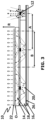
Fig. 3 zeigt eine schematische Darstellung einer dritten Ausführungsform der Leuchtfolie 10. Die Leuchtfolie 10 weist eine weitere mikrooptische Lage 18 auf. Die Leuchtdioden 12 sowie die Leiterbahnenlage 14 sind zwischen den beiden mikrooptischen Lagen 18 angeordnet. Die Leiterbahnenlage 14 ist lichtdurchlässig, insbesondere transparent, ausgebildet, um die Durchstrahlung nicht zu stören. Die Anordnung der beiden mikrooptischen Lagen 18 ermöglicht die Ausbildung eines breiten mikrooptischen Bereichs B und dementsprechend eine geringe Dichte an Leuchtdioden 12 - verdeutlicht durch den Leuchtdiodenabstand A - bei dennoch homogener Ausleuchtung der Leuchtfolie 10. - Aus der Darstellung der Leuchtfolie 10 in
Fig. 3 ist außerdem ersichtlich, dass das abgestrahlte Licht der Leuchtdioden 12 sowohl bei Abstrahlung entgegen der Abstrahlrichtung R der Leuchtfolie als auch bei Abstrahlung in Abstrahlrichtung R der Leuchtfolie 10 oder quer dazu eine Lichtlenkung durch die mikrooptischen Strukturen der mikrooptischen Lagen 18 erfährt. -
- 10
- Leuchtfolie;
- 12
- Leuchtdioden;
- 14
- Leiterbahnenlage;
- 16
- Trägerlage;
- 18
- mikrooptische Lage;
- 20
- optische Pfade;
- 22
- textile Lage / Vlies;
- 24
- Steuergerät;
- 26
- Spiegellage;
- A
- Abstand der Leuchtdioden;
- B
- Breite des mikrooptischen Bereichs;
- O
- lichtabstrahlende Folienoberfläche;
- R
- Abstrahlrichtung der Leuchtfolie.
Claims (13)
- Mehrlagige Leuchtfolie (10) mit mehreren Leuchtdioden (12), einer Leiterbahnenlage (14) zur elektrischen Verbindung der Leuchtdioden (12) und einer Trägerlage (16), wobei die Leuchtfolie (10) eine mikrooptische Lage (18) mit mikrooptischen Bauelementen zur Erzeugung einer homogenen Ausleuchtung aufweist, wobei die Leuchtdioden (12) einen Abstand (A) zwischen 8 Millimeter und 100 Millimeter aufweisen, wobei die mikrooptische Lage (18) eine strukturierte Oberfläche mit sich wiederholenden mikrooptischen Bereichen (B) aufweist, wobei die mikrooptischen Bereiche (B) ausgehend von einem optischen Zentrum, welches genau über einer Leuchtdiode (12) liegt, überwiegend rotationssymmetrisch ausgebildet sind, wobei die mikrooptischen Bereiche (B) eine größere Fläche aufweisen als die Leuchtdioden (12), wobei die benachbarten mikrooptischen Bereiche (B) überlappen und wobei die Leuchtfolie (10) rollbar ausgebildet ist, wobei der Biege- und/oder Rollradius zwischen 1cm und 10cm beträgt.
- Leuchtfolie gemäß Anspruch 1, dadurch gekennzeichnet, dass die Leuchtfolie (10) an der lichtabstrahlenden Folienoberfläche (O) eine textile Lage oder eine Vlieslage (22) aufweist.
- Leuchtfolie gemäß Anspruch 2, dadurch gekennzeichnet, dass die textile Lage oder die Vlieslage (22) durch Beflockung der Leuchtfolie (10), insbesondere der lichtabstrahlenden Folienoberfläche (O), ausgebildet ist.
- Leuchtfolie gemäß einem der vorhergehenden Ansprüche, dadurch gekennzeichnet, dass die erste mikrooptische Lage (18) die Leuchtdioden (12) überwiegend, insbesondere vollständig, umschließt.
- Leuchtfolie gemäß einem der vorhergehenden Ansprüche, dadurch gekennzeichnet, dass die Leuchtfolie (10) eine Spiegellage (26) aufweist, die sich in Abstrahlrichtung (R) der Leuchtfolie (10) hinter den Leuchtdioden (12) befindet.
- Leuchtfolie gemäß einem der vorhergehenden Ansprüche, dadurch gekennzeichnet, dass die Spiegellage (26) und die Trägerlage (16) eine gemeinsame Lage bilden.
- Leuchtfolie gemäß einem der vorhergehenden Ansprüche, dadurch gekennzeichnet, dass die Leuchtfolie (10) eine weitere mikrooptische Lage (18) mit mikrooptischen Bauelementen aufweist, wobei die Leuchtdioden (12) zwischen den beiden mikrooptischen Lagen (18) angeordnet sind.
- Leuchtfolie gemäß einem der vorhergehenden Ansprüche, dadurch gekennzeichnet, dass die Trägerlage (16) aus einer Folie, einem Vlies und/oder einem Gewebe, insbesondere einem Textil, besonders bevorzugt einem Papier, besteht.
- Leuchtfolie gemäß einem der vorhergehenden Ansprüche, dadurch gekennzeichnet, dass die Leiterbahnenlage (14) teilweise lichtdurchlässig, insbesondere vollständig lichtdurchlässig, ausgebildet ist.
- Leuchtfolie gemäß einem der vorhergehenden Ansprüche, dadurch gekennzeichnet, dass die Leiterbahnenlage (14) aus Kupfer, elektrisch leitender Tinte, Indium-Zinkoxid und/oder Silberoxid besteht.
- Leuchtfolie gemäß einem der vorhergehenden Ansprüche, dadurch gekennzeichnet, dass die textile Lage oder die Vlieslage (22) unidirektional lichtdurchlässig, insbesondere in Abstrahlrichtung (R) der Leuchtfolie (10), ausgerichtet ist.
- Leuchtfolie gemäß einem der vorhergehenden Ansprüche, dadurch gekennzeichnet, dass die textile Lage oder die Vlieslage (22) zumindest teilweise akustisch schallhart und/oder schallweich ist.
- Leuchtfolie gemäß einem der vorhergehenden Ansprüche, dadurch gekennzeichnet, dass die Foliendicke 0,1 Millimeter bis 40 Millimeter, insbesondere 0,2 Millimeter bis 30 Millimeter, besonders bevorzugt 0,3 Millimeter bis 20 Millimeter, beträgt.
Applications Claiming Priority (2)
| Application Number | Priority Date | Filing Date | Title |
|---|---|---|---|
| DE102019211703.1A DE102019211703A1 (de) | 2019-08-05 | 2019-08-05 | Leuchtfolie mit mikrooptischer Struktur |
| PCT/EP2020/071906 WO2021023743A1 (de) | 2019-08-05 | 2020-08-04 | Leuchtfolie mit mikrooptischer struktur |
Publications (3)
| Publication Number | Publication Date |
|---|---|
| EP4010625A1 EP4010625A1 (de) | 2022-06-15 |
| EP4010625C0 EP4010625C0 (de) | 2025-06-04 |
| EP4010625B1 true EP4010625B1 (de) | 2025-06-04 |
Family
ID=72088053
Family Applications (1)
| Application Number | Title | Priority Date | Filing Date |
|---|---|---|---|
| EP20757230.6A Active EP4010625B1 (de) | 2019-08-05 | 2020-08-04 | Leuchtfolie mit mikrooptischer struktur |
Country Status (5)
| Country | Link |
|---|---|
| US (1) | US11598506B2 (de) |
| EP (1) | EP4010625B1 (de) |
| CN (1) | CN114207347B (de) |
| DE (1) | DE102019211703A1 (de) |
| WO (1) | WO2021023743A1 (de) |
Families Citing this family (4)
| Publication number | Priority date | Publication date | Assignee | Title |
|---|---|---|---|---|
| US20220379807A1 (en) * | 2021-05-25 | 2022-12-01 | Ait Co., Ltd. | Vehicle lighting device and vehicle including the same |
| DE102022102368A1 (de) * | 2022-02-01 | 2023-08-03 | OSRAM Opto Semiconductors Gesellschaft mit beschränkter Haftung | Bedienelement und verfahren |
| EP4483091A1 (de) * | 2022-02-21 | 2025-01-01 | LightnTec GmbH | Leuchtfolie zur gerichteten abstrahlung von licht |
| IT202300000864A1 (it) * | 2023-01-20 | 2024-07-20 | Lodes S R L | Dispositivo di illuminazione |
Citations (3)
| Publication number | Priority date | Publication date | Assignee | Title |
|---|---|---|---|---|
| US20130026504A1 (en) * | 2011-07-27 | 2013-01-31 | Grote Industries, Llc | Lighting device utilizing light active sheet material with integrated light emitting diode, disposed in seam and/or in low profile application |
| FR2992401A1 (fr) * | 2012-06-20 | 2013-12-27 | Ldf Pro | Unite lumineuse, son procede de fabrication et son utilisation |
| US20170254518A1 (en) * | 2016-03-06 | 2017-09-07 | Sergiy Vasylyev | Flexible solid-state illumination devices |
Family Cites Families (12)
| Publication number | Priority date | Publication date | Assignee | Title |
|---|---|---|---|---|
| DE10308866A1 (de) * | 2003-02-28 | 2004-09-09 | Osram Opto Semiconductors Gmbh | Beleuchtungsmodul und Verfahren zu dessen Herstellung |
| JP2009540355A (ja) * | 2006-06-08 | 2009-11-19 | コーニンクレッカ フィリップス エレクトロニクス エヌ ヴィ | テキスタイル製品及びそれを製造する方法 |
| CN103097804A (zh) * | 2010-03-16 | 2013-05-08 | 皇家飞利浦电子股份有限公司 | 基于发光织物的建筑元件 |
| DE102012223162B4 (de) * | 2012-12-14 | 2022-08-25 | Pictiva Displays International Limited | Flächenlichtsystem |
| WO2014155237A1 (en) * | 2013-03-26 | 2014-10-02 | Koninklijke Philips N.V. | Lighting device |
| KR102239367B1 (ko) * | 2013-11-27 | 2021-04-09 | 가부시키가이샤 한도오따이 에네루기 켄큐쇼 | 터치 패널 |
| JP6312862B2 (ja) * | 2014-05-20 | 2018-04-18 | フィリップス ライティング ホールディング ビー ヴィ | 共形コーティングされた照明又はイルミネーションシステム |
| US20150360606A1 (en) * | 2014-06-12 | 2015-12-17 | Nthdegree Technologies Worldwide Inc. | Thin flexible led light sheet applications |
| DE102015102407A1 (de) * | 2015-02-20 | 2016-09-08 | Deutsche Institute Für Textil- Und Faserforschung Denkendorf | Flexible Flächenleuchte, insbesondere zur Verwendung in einem Bekleidungsstück |
| FR3054288B1 (fr) | 2016-07-20 | 2018-11-16 | L'air Liquide, Societe Anonyme Pour L'etude Et L'exploitation Des Procedes Georges Claude | Dispositif de fourniture de fluide |
| US20180245754A1 (en) * | 2017-02-27 | 2018-08-30 | Elemental LED, Inc. | Linear LED Lighting with Built-In Light Modifiers |
| DE102017003362A1 (de) * | 2017-04-06 | 2018-10-11 | Carl Freudenberg Kg | Element zur Lichtmanipulation |
-
2019
- 2019-08-05 DE DE102019211703.1A patent/DE102019211703A1/de active Pending
-
2020
- 2020-08-04 CN CN202080055425.6A patent/CN114207347B/zh active Active
- 2020-08-04 EP EP20757230.6A patent/EP4010625B1/de active Active
- 2020-08-04 WO PCT/EP2020/071906 patent/WO2021023743A1/de not_active Ceased
-
2022
- 2022-01-28 US US17/649,348 patent/US11598506B2/en active Active
Patent Citations (3)
| Publication number | Priority date | Publication date | Assignee | Title |
|---|---|---|---|---|
| US20130026504A1 (en) * | 2011-07-27 | 2013-01-31 | Grote Industries, Llc | Lighting device utilizing light active sheet material with integrated light emitting diode, disposed in seam and/or in low profile application |
| FR2992401A1 (fr) * | 2012-06-20 | 2013-12-27 | Ldf Pro | Unite lumineuse, son procede de fabrication et son utilisation |
| US20170254518A1 (en) * | 2016-03-06 | 2017-09-07 | Sergiy Vasylyev | Flexible solid-state illumination devices |
Also Published As
| Publication number | Publication date |
|---|---|
| EP4010625A1 (de) | 2022-06-15 |
| EP4010625C0 (de) | 2025-06-04 |
| CN114207347B (zh) | 2025-07-22 |
| DE102019211703A1 (de) | 2021-02-11 |
| CN114207347A (zh) | 2022-03-18 |
| US11598506B2 (en) | 2023-03-07 |
| WO2021023743A1 (de) | 2021-02-11 |
| US20220154911A1 (en) | 2022-05-19 |
Similar Documents
| Publication | Publication Date | Title |
|---|---|---|
| EP4010625B1 (de) | Leuchtfolie mit mikrooptischer struktur | |
| EP1231430B1 (de) | Beleuchtungseinrichtung mit punktförmigen Lichtquellen | |
| DE69122075T2 (de) | Dünne Plattenleuchte | |
| DE60208934T2 (de) | Beleuchtungsvorrichtung und Flüssigkristallanzeige | |
| DE3240942C2 (de) | ||
| EP2561270B1 (de) | Flächenlichtquelle | |
| EP1231428A1 (de) | Beleuchtungseinrichtung mit linienförmigen Lichtquellen | |
| DE102010018033A1 (de) | Flächenlichtleiter und Flächenstrahler | |
| WO2015173695A2 (de) | Anzeigevorrichtung, rückblickvorrichtung und kraftfahrzeug | |
| DE102013204476B4 (de) | Optisches Element und optoelektronisches Bauelement mit optischem Element | |
| DE102010018034A1 (de) | Flächenlichtleiter und Flächenstrahler | |
| EP2955062A2 (de) | Beleuchtungsvorrichtung für ein fahrzeug | |
| EP3071879A1 (de) | Optisches element und beleuchtungsvorrichtung mit optischem element | |
| DE202012100508U1 (de) | LED-Leuchte mit Lichtbeeinflussungselement | |
| WO2008040306A1 (de) | Optischer lichtleiter und optische vorrichtung | |
| EP2955554A1 (de) | Beleuchtungsvorrichtung für ein fahrzeug | |
| EP3477193B1 (de) | Abdeckung für ein leuchtmodul und leuchtmodul | |
| EP2826080B1 (de) | Lichtabgabeanordnung mit einer oled oder qled mit verbesserter lichtausbeute | |
| DE102010001266B4 (de) | Anordnung zur Lichtabgabe | |
| EP1574880B2 (de) | Sendeelement für Lichtschranken, Lichtgitter und dergleichen | |
| WO2024104750A1 (de) | Optisches element, optisches system und fahrzeugscheibe und/oder scheibenlaminat | |
| EP1674899B1 (de) | Beleuchtungseinrichtung | |
| WO2022238185A1 (de) | Anzeigeeinheit mit wechselsymbolen | |
| DE202012101129U1 (de) | Beleuchtungsgerät | |
| EP4055315B1 (de) | Leuchtsystem zur gleichmässig verteilten abstrahlung von licht aus lichtquellen |
Legal Events
| Date | Code | Title | Description |
|---|---|---|---|
| STAA | Information on the status of an ep patent application or granted ep patent |
Free format text: STATUS: UNKNOWN |
|
| STAA | Information on the status of an ep patent application or granted ep patent |
Free format text: STATUS: THE INTERNATIONAL PUBLICATION HAS BEEN MADE |
|
| PUAI | Public reference made under article 153(3) epc to a published international application that has entered the european phase |
Free format text: ORIGINAL CODE: 0009012 |
|
| STAA | Information on the status of an ep patent application or granted ep patent |
Free format text: STATUS: REQUEST FOR EXAMINATION WAS MADE |
|
| 17P | Request for examination filed |
Effective date: 20220117 |
|
| AK | Designated contracting states |
Kind code of ref document: A1 Designated state(s): AL AT BE BG CH CY CZ DE DK EE ES FI FR GB GR HR HU IE IS IT LI LT LU LV MC MK MT NL NO PL PT RO RS SE SI SK SM TR |
|
| DAV | Request for validation of the european patent (deleted) | ||
| DAX | Request for extension of the european patent (deleted) | ||
| STAA | Information on the status of an ep patent application or granted ep patent |
Free format text: STATUS: EXAMINATION IS IN PROGRESS |
|
| 17Q | First examination report despatched |
Effective date: 20230428 |
|
| RAP3 | Party data changed (applicant data changed or rights of an application transferred) |
Owner name: LIGHTNTEC GMBH |
|
| GRAP | Despatch of communication of intention to grant a patent |
Free format text: ORIGINAL CODE: EPIDOSNIGR1 |
|
| STAA | Information on the status of an ep patent application or granted ep patent |
Free format text: STATUS: GRANT OF PATENT IS INTENDED |
|
| INTG | Intention to grant announced |
Effective date: 20250207 |
|
| GRAS | Grant fee paid |
Free format text: ORIGINAL CODE: EPIDOSNIGR3 |
|
| GRAA | (expected) grant |
Free format text: ORIGINAL CODE: 0009210 |
|
| STAA | Information on the status of an ep patent application or granted ep patent |
Free format text: STATUS: THE PATENT HAS BEEN GRANTED |
|
| AK | Designated contracting states |
Kind code of ref document: B1 Designated state(s): AL AT BE BG CH CY CZ DE DK EE ES FI FR GB GR HR HU IE IS IT LI LT LU LV MC MK MT NL NO PL PT RO RS SE SI SK SM TR |
|
| REG | Reference to a national code |
Ref country code: GB Ref legal event code: FG4D Free format text: NOT ENGLISH |
|
| REG | Reference to a national code |
Ref country code: CH Ref legal event code: EP |
|
| REG | Reference to a national code |
Ref country code: DE Ref legal event code: R096 Ref document number: 502020011170 Country of ref document: DE |
|
| REG | Reference to a national code |
Ref country code: IE Ref legal event code: FG4D Free format text: LANGUAGE OF EP DOCUMENT: GERMAN |
|
| U01 | Request for unitary effect filed |
Effective date: 20250701 |
|
| U07 | Unitary effect registered |
Designated state(s): AT BE BG DE DK EE FI FR IT LT LU LV MT NL PT RO SE SI Effective date: 20250716 |
|
| U20 | Renewal fee for the european patent with unitary effect paid |
Year of fee payment: 6 Effective date: 20250825 |
|
| PG25 | Lapsed in a contracting state [announced via postgrant information from national office to epo] |
Ref country code: ES Free format text: LAPSE BECAUSE OF FAILURE TO SUBMIT A TRANSLATION OF THE DESCRIPTION OR TO PAY THE FEE WITHIN THE PRESCRIBED TIME-LIMIT Effective date: 20250604 |
|
| PG25 | Lapsed in a contracting state [announced via postgrant information from national office to epo] |
Ref country code: NO Free format text: LAPSE BECAUSE OF FAILURE TO SUBMIT A TRANSLATION OF THE DESCRIPTION OR TO PAY THE FEE WITHIN THE PRESCRIBED TIME-LIMIT Effective date: 20250904 Ref country code: GR Free format text: LAPSE BECAUSE OF FAILURE TO SUBMIT A TRANSLATION OF THE DESCRIPTION OR TO PAY THE FEE WITHIN THE PRESCRIBED TIME-LIMIT Effective date: 20250905 |
|
| PG25 | Lapsed in a contracting state [announced via postgrant information from national office to epo] |
Ref country code: PL Free format text: LAPSE BECAUSE OF FAILURE TO SUBMIT A TRANSLATION OF THE DESCRIPTION OR TO PAY THE FEE WITHIN THE PRESCRIBED TIME-LIMIT Effective date: 20250604 |
|
| PGFP | Annual fee paid to national office [announced via postgrant information from national office to epo] |
Ref country code: GB Payment date: 20250822 Year of fee payment: 6 |
|
| PG25 | Lapsed in a contracting state [announced via postgrant information from national office to epo] |
Ref country code: HR Free format text: LAPSE BECAUSE OF FAILURE TO SUBMIT A TRANSLATION OF THE DESCRIPTION OR TO PAY THE FEE WITHIN THE PRESCRIBED TIME-LIMIT Effective date: 20250604 |
|
| PG25 | Lapsed in a contracting state [announced via postgrant information from national office to epo] |
Ref country code: RS Free format text: LAPSE BECAUSE OF FAILURE TO SUBMIT A TRANSLATION OF THE DESCRIPTION OR TO PAY THE FEE WITHIN THE PRESCRIBED TIME-LIMIT Effective date: 20250904 |
|
| PG25 | Lapsed in a contracting state [announced via postgrant information from national office to epo] |
Ref country code: IS Free format text: LAPSE BECAUSE OF FAILURE TO SUBMIT A TRANSLATION OF THE DESCRIPTION OR TO PAY THE FEE WITHIN THE PRESCRIBED TIME-LIMIT Effective date: 20251004 |
|
| PG25 | Lapsed in a contracting state [announced via postgrant information from national office to epo] |
Ref country code: SM Free format text: LAPSE BECAUSE OF FAILURE TO SUBMIT A TRANSLATION OF THE DESCRIPTION OR TO PAY THE FEE WITHIN THE PRESCRIBED TIME-LIMIT Effective date: 20250604 |
|
| PG25 | Lapsed in a contracting state [announced via postgrant information from national office to epo] |
Ref country code: CZ Free format text: LAPSE BECAUSE OF FAILURE TO SUBMIT A TRANSLATION OF THE DESCRIPTION OR TO PAY THE FEE WITHIN THE PRESCRIBED TIME-LIMIT Effective date: 20250604 |
|
| PG25 | Lapsed in a contracting state [announced via postgrant information from national office to epo] |
Ref country code: SK Free format text: LAPSE BECAUSE OF FAILURE TO SUBMIT A TRANSLATION OF THE DESCRIPTION OR TO PAY THE FEE WITHIN THE PRESCRIBED TIME-LIMIT Effective date: 20250604 |
|
| REG | Reference to a national code |
Ref country code: CH Ref legal event code: H13 Free format text: ST27 STATUS EVENT CODE: U-0-0-H10-H13 (AS PROVIDED BY THE NATIONAL OFFICE) Effective date: 20260324 |
|
| PG25 | Lapsed in a contracting state [announced via postgrant information from national office to epo] |
Ref country code: MC Free format text: LAPSE BECAUSE OF FAILURE TO SUBMIT A TRANSLATION OF THE DESCRIPTION OR TO PAY THE FEE WITHIN THE PRESCRIBED TIME-LIMIT Effective date: 20250604 |
|
| PLBE | No opposition filed within time limit |
Free format text: ORIGINAL CODE: 0009261 |
|
| STAA | Information on the status of an ep patent application or granted ep patent |
Free format text: STATUS: NO OPPOSITION FILED WITHIN TIME LIMIT |
|
| REG | Reference to a national code |
Ref country code: CH Ref legal event code: L10 Free format text: ST27 STATUS EVENT CODE: U-0-0-L10-L00 (AS PROVIDED BY THE NATIONAL OFFICE) Effective date: 20260416 |
|
| PG25 | Lapsed in a contracting state [announced via postgrant information from national office to epo] |
Ref country code: CH Free format text: LAPSE BECAUSE OF NON-PAYMENT OF DUE FEES Effective date: 20250831 |